The Kingdom of Dreams and Madness (2013) ☆☆☆(3/4): Studio Ghibli in Twilight

thekingdomofdreamandmadness01As a gentle tribute to one great animation director who has been one of the key leading figure in Studio Ghibli, Japanese documentary “The Kingdom of Dreams and Madness” has a bittersweet quality considering the uncertain future of Studio Ghibli at present. While it is entertaining to watch how the people in Ghibli Studio work on the various levels of production before their completed work is finally shown to the audiences, we are reminded that this may be the last chapter of its era, and that gives a sad, elegiac quality to the documentary.

With the courteous narration by the director/writer Mami Sunada, “The Kingdom of Dreams and Madness” looks inside Studio Ghibli in the middle of its simultaneous production of two animation films around late 2012. They were “The Wind Rises” (2013) and “The Tale of Princess Kaguya” (2013), and the documentary mainly focuses on the production process of “The Wind Rises”, which will be Hayao Miyazaki’s last film unless he revokes his retire announcement before his death.

Miyazaki, who is currently 74 years old, does not look sad or depressed about that, and we see how this gentle old artist prepares the basis for his last work. Rather than writing his story, he carefully envisions it through the storyboard consisting of many small watercolor sketches drawn by him, and he sometimes checks the pace and timing of each scene with his stopwatch. This work process with sketch pencils and watercolor paints surely looks old-fashioned in the age of digital animation film, but it is fascinating to watch a master concentrated on shaping his artistic vision through his own mastery, and we also meet a number of employees who are happy to work for him although he will soon demand a lot as trying to complete the film before the scheduled local release date in 2013 summer.

Their studio building looks plain from the outside, but it is a comfortable workplace you may want to look around just for appreciating its peaceful environment. The building has a nice rooftop garden where they can have some rest, and there is also a cute cat which frequently appears throughout the film (it seems to be a pretty smart cat, for we are told that it never annoys Miyazaki or others when they are busy). When the work time is over, Miyazaki goes to his private atelier, which looks rather plain but is decorated with a couple of things to amuse you if you are a fan of Miyazaki’s works.
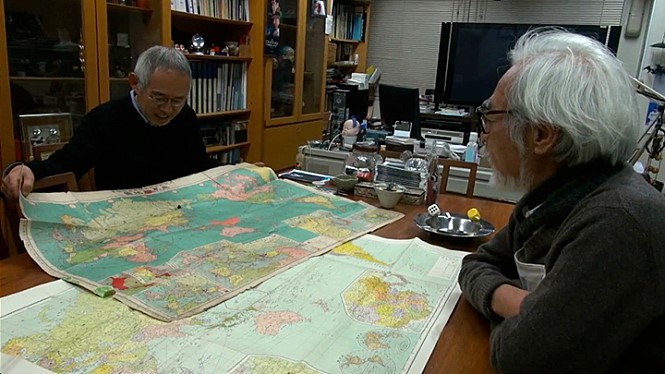
thekingdomofdreamsandmadness03While Miyazaki and other animators are going through their daily work as usual, there are also other activities in Studio Ghibli, and we are introduced to Toshio Suzuki, Miyazaki’s longtime producer who was crucial in the foundation of Studio Ghibli in 1985 right after the success of “Nausicca of the Valley of the Wind” (1984). He and Miyazaki already acquainted with each other around the late 1970s, and the old photos from their past provide interesting glimpses into their respective early years when they were young and ready for challenges.

And we are also told a bit about another important figure of Studio Ghibli – Isao Takahata. Before Suzuki and Miyazaki found Studio Ghibli along with Takahata, Takahata was Miyazaki’s senior during their early days in Toei Animation, and that was the beginning of their long personal/professional relationship somewhere between friendship and competition. Like Miyazaki, Takahata has made several memorable animation films during his years at Studio Ghibli, and one of them was “Grave of the Fireflies” (1988), a great animation film which happened to be released with Miyazaki’s equally great film “My Neighbor Totoro” (1988) in the same year.

Now they come to release their respective works in the same year again, but Takahata, who has been rather quiet since “My Neighbors the Yamadas” (1999), has been slow in his work on “The Tale of Princess Kaguya”, and his slow work style becomes a sort of running gag in the documentary. His animation film was planned several years ago, but he is still working behind the schedule, and it becomes clear to everyone including his long-suffering producer Yoshiaki Nishimura that they will not be able to release it with “The Wind Rises” at the same time (it was eventually completed and then released in 2013 November).
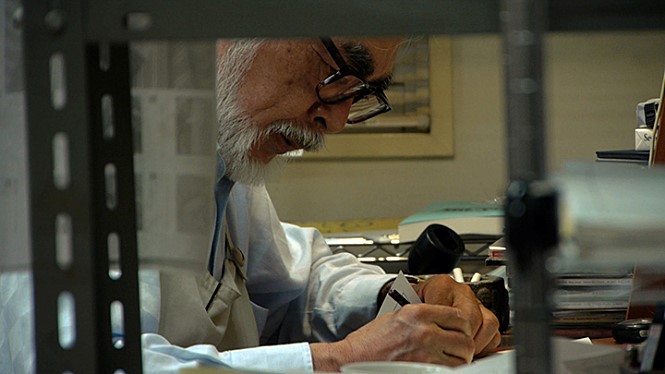
thekingdomofdreamsandmadness04 Meanwhile, the production of “The Wind Rises” is continued smoothly under Miyazaki’s direction. He gives his animators a small but important instruction on the characters’ movements, and that brief moment shows well his meticulous attention to details. After some discussion on the casting, Miyazaki and Suzuki agree that Hideaki Anno, another famous Japanese animation director, will be ideal for the hero for “The Wind Rises”, and we later see Anno trying his best during the recording session attended by Miyazaki, Suzuki, and Miyazaki’s regular composer Joe Hisaishi.

As the production of “The Wind Rises” is approaching to the finish line, Miyazaki reveals his personal aspects, and that gives some insights on this mild animation film I admired but did not like enough. While being a well-known pacifist, Miyazaki has always been fascinated with fighter planes, and that interesting contradiction of his probably made him feel close to his hero Jiro Horikoshi, a real-life engineer who designed the Zero fighter plane eventually used during the World War II. I still wonder whether Miyazaki felt a little too close to his hero to give a more objective/balanced view on the dark results of his hero’s dream, but “The Wind Rises” is still his personal work, and that becomes more apparent as we come to observe the overlap between Horikoshi and Miyazaki’s father, who worked at a factory making rudders for Zero fighter planes during the war.

“The Kingdom of Dreams and Madness” will not give much new information to you if you are already familiar with the illustrious history of Studio Ghibli, but it is a sincere, respectful documentary which deserves to be watched for its close, intimate look at Miyazaki and his people at Studio Ghibli. It is sad to see the approaching end of a great era which has given us so much during last three decades, but it was a really wonderful time for us, wasn’t it?

thekingdomofdreamsandmadness02

Posted in Movies | Tagged , | 1 Comment

The Hundred-Foot Journey (2014) ☆☆(2/4) : A sweet but mellow cuisine conflict

thehundredfootjourney03  “The Hundred-Foot Journey” is a sweet but mellow cuisine conflict which gets clumsily overcooked during its first half and then gets tediously undercooked during its second half. I like some ingredients of its main course, and it is surely not without charm, but I began to feel more bored as the movie was serving its treacle a way too long.

At the beginning, we hear about how Hassan (Manish Dayal) and his family come into the Europe continent after their temporary stay in UK. After losing their family restaurant business due to a violent mob attack involved with the local conflict between Hinduism and Islam in India, Hassan’s father, who also lost his dear wife because of this terrible incident, decided to move to England, but their settlement attempt in England was not very successful, and now they are going to move around the Europe continent for finding a new place they can settle, though they cannot speak foreign languages well except English (but we all know that this is the film where nearly everyone can speak English while occasionally switching to other languages).

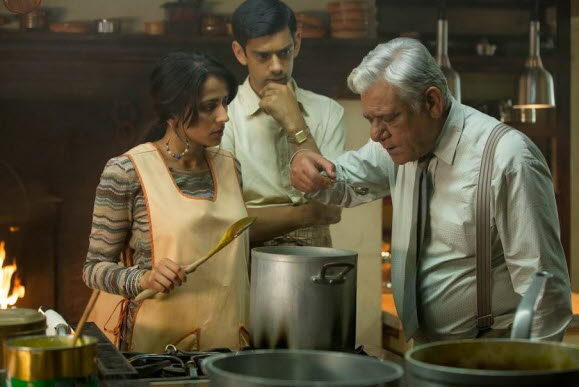
After moving around for a while with their shabby van, Hassan’s family happen to come upon a small country village in France, and Papa (Om Puri) decides that this is a right place where they should resume their good old Indian restaurant business. To Hassan and his other siblings, their father’s decision is not very practical to say least, Papa is a stubborn codger usually adamant about whatever he decides from the first place, and Hassan and others have no choice but to follow their father’s decision.

Through a kind, helpful young woman named Marguerite (Charlotte Le Bon), who incidentally came across Hassan’s family when they had a trouble with their van on their first day in the village, Hassan and others see that this village can be an ideal place for restaurant business considering all those fresh ingredients available around the village, but they have one big problem they cannot possibly ignore. While Papa manages to buy a shabby place which was once a restaurant years ago (this curmudgeon seems to be as good at cutting price as my mother, who is always willing to take any troubles for paying as less as possible just like him), there is an upscale French restaurant right across the road, and we hear later that this very respectable restaurant, named “Le Saule Pleureur” (it means “The Weeping Willow”), was the main reason behind the closure of its competitor.

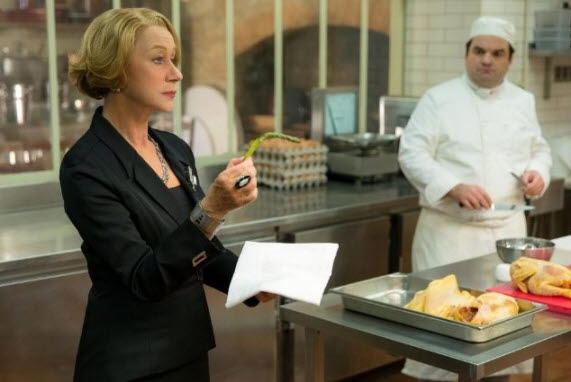
thehundredfootjourney01 Le Saule Pleureur is strictly managed by Madame Mallory (Helen Mirren), and she is not very pleased by her new neighbours across the road. While her proud restaurant got one sole Michelin star coveted by many restaurateurs around the world, she has desired for another Michelin star which is far harder to acquire (three-star rating is the highest as some of you know, but two-star rating is still a great honor to boast none the less), and she certainly does not welcome Papa’s new Indian restaurant, named “Maison Mumbai”, especially when it looks more likely than before that she will finally get her longtime wish.

The first half of the movie revolves around the barbed conflict between Papa and Madame Mallory, and we are served with a number of comic moments as both of them become more determined to tackle each other by any means necessary. While Madame Mallory seems to have the upper hand at first, Papa is someone who will not easily step back in front of obstacles, and Madame Mallory comes to see that her Indian opponent is not an easy match at all – especially when she gets an unexpected counterattack from Papa.

And then the movie suddenly halts and changes its direction in the middle of the story after the circumstance becomes a little darker to the dismay of both sides, and, sadly, it becomes less spicy than before as gradually focusing on Hassan’s burgeoning career. As an unqualified but talented cook who has grown his interest and skills since he was encouraged by his deceased mother, Hassan begins to extend his interest into the area of Western cuisine, and, not so surprisingly, he turns out to be very good at learning new things and mixing them with old things he learned before – and he becomes a serious competitor to Marguerite, who has worked as a promising sous chef in Madame Mallory’s restaurant.

thehundredfootjourney02 Now you will get a pretty good idea about what will come next, but the screenplay by Steven Knight, which is adapted from Richard C. Morais’ novel, reaches to the point of resolution too early, and the rest of the movie is filled with softy moments which flow across the screen without much dramatic weight. Besides being quite predictable, its plot becomes dragged as the circumstance around its characters are getting gentler and mellower, and the second half of the movie feels more like an extended epilogue stretched to one hour as a result.

As he did in his previous work “Salmon Fishing in the Yemen” (2011), the director Lasse Hallström made a whimsical comedy film here, and it does have some appeal inside its half-baked overall result. Compared to those lovely cooking scenes in Jon Favreau’s “Chef” (2014), his movie does not look that delicious despite its nice occasional shots of cooking process, but the juxtaposition between two different cultures on the screen works at times. Helen Mirren and Om Puri, two veteran performers who can possibly be different from each other, play off well against each other during their scenes, and A.R. Rahman’ rambunctious ethnic score also makes an odd cultural mix with the peaceful rural atmosphere of French countryside.

“The Hundred-Foot Journey” is drenched in an appealing mood, but its story and characterization are too thin to maintain our interest (Although Manish Dayal and Charlotte Le Bon look good together, their characters’ romantic subplot is flat and uneventful even with their professional competition), and it even dilutes its flavors with more sappiness in the end. This is not an awful film at all, but its pot loses its steam too quickly, and I am afraid it will probably make you feel empty rather than hungry when it is over.

thehundredfootjourney04

Posted in Movies | Tagged , , , , | Leave a comment

Million Dollar Arm (2014) ☆☆1/2(2.5/4) : Another outsourcing from India

milliondollararm03 “Million Dollar Arm” is a mild sports movie with a little dose of good will and local flavor. You can easily guess what you are going to get if you are aware of that this is your average Disney family movie, but it is disappointing to see the movie staying on its formulaic playbook packed with bland strategies including clichés and stereotypes, and that is really a shame considering that its story is about an interesting case of outsourcing which did happen in real life as shown at the end of the movie.

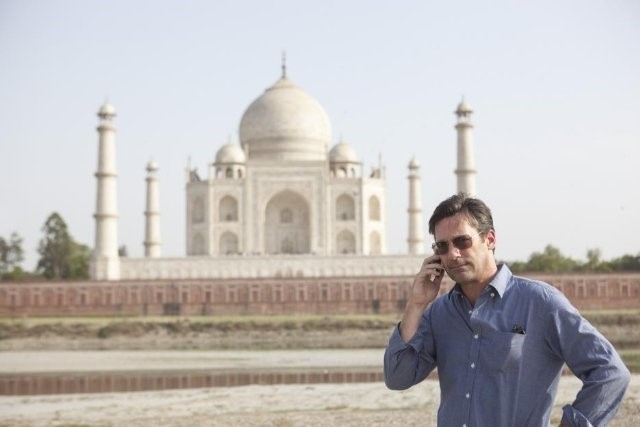
John Hamm, who will soon go through the last season of acclaimed TV series “Mad Men”, plays J.B. Bernstein, a successful sports agent who recently decided to run the agency company of his own with his partner/friend Ash Vasudevan (Aasif Mandvi) but has faced various troubles in their initial step. While they have to compete with a bigger agency which has far more resources, their financial situation is getting worse day by day, and they may not even afford their small office someday.

After going through another frustrating moment of failure during the opening scene, Bernstein comes to have more doubt on his business, but then he gets one unlikely but brilliant idea while watching an Indian cricket bowler on TV. It goes without saying that cricket and baseball are different kinds of sports, but Bernstein sees the possibility of discovering Indian cricket players who can pitch as fast as American major league pitcher, and he immediately goes for his idea. He manages to get a rich investor interested in this possibility, and he also persuades Tom House (Bill Paxton), an unorthodox baseball coach/trainer who is naturally skeptical about Bernstein’s plan but eventually agrees to join him.

milliondollararm02  The most amusing part in the film is about a culture shock Bernstein experiences right after he arrives in Mumbai. While trying to understand how things can be worked out in the city where everything looks busy and messy on the streets, he meets his local assistant Vivek (Darshan Jariwala), and then he comes across Amit Rohan (Pitobash Tripathy), a baseball fan who mainly functions as a comic relief in the film as always behaving like an eager, bumbling puppy dog ready to impress its owner. Amiable in his broad role, Tripathy often looks so goofy in his performance that I was actually surprised to know later that this character does have a real-life counterpart, who is probably a lot different from how he is depicted in the film.

Anyway, after Ray Poitevint (Alan Arkin, who literally sleeps through his usual deadpan mode at times), an old, cranky veteran scouter who does not look that interested in recruitment, arrives as the last member of Bernstein’s recruitment team, Bernstein and others embark on their long search for finding their potential candidates, but their first days turn out to be disappointing to say the least. They successfully promote their talent contest on the local media, and many participants are gladly willing to try themselves, but none of them can pitch faster than at least 80 miles (about 130 km) per hour.

However, they soon find a bunch of suitable recruits as they continue their journey around India, and the screenplay by Tom McCarthy focuses on two of these recruits because, well, these two lads are going to win the ticket to America at the final contest to be held (is that a spoiler?). Dinesh Patel (Madhur Mittal from “Slumdog Millionaire” (2008)) is happy to get a big chance for him and his poor family, and the same thing can be said about Rinku Singh (Suraj Sharma from “Life of Pi” (2012)).

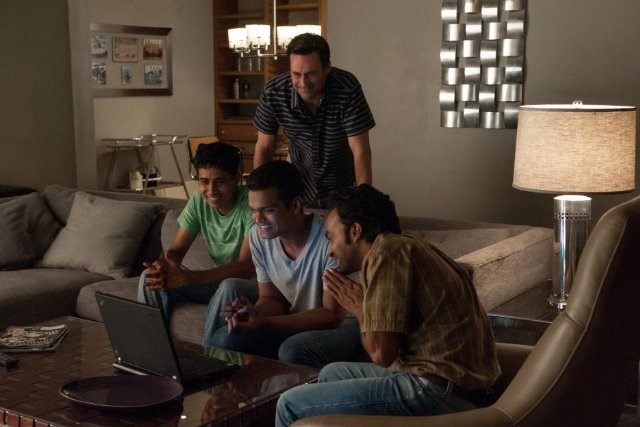
milliondollararm04 The rest of the movie becomes very predictable after Bernstein returns to US along with Patel, Singh, and Rohan, who works as the translator for these two young men while they learn more to speak English. While we definitely get the comic moments of cultural/social differences, there will also be a couple of big dramatic circumstances as you can expect from an underdog sports movie, and it is not much of a spoiler to tell you that our ambitious sports agent will be more dedicated to his potential clients like Jerry McGuire as learning to be a better person from those decent outsiders and his kind tenant Brenda Fenwick (Lake Bell, who is under-utilized in her thankless role), a young hospital intern girl who is destined be his love interest despite his current preference to bachelorhood.

John Hamm does as much as he can with his dashing likability, but his performance is often disrupted by the uneven characterization and narrative in the screenplay, and his character’s changes along the plot feel artificial and disjointed rather than organic. Bernstein behaves like a jerk in front of his recruits at one point, and then he becomes caring after being reminded that he forgets what is really important, and then he becomes less caring later when that is required by the plot. While stuck in their stereotype roles, Pitobash Tripathy, Madhur Mittal, and Suraj Sharma acquit themselves well on the whole, and I appreciate that the movie does not overlook Patel and Singh’s personal struggle as the strangers in a world very unfamiliar to them.

The movie is directed by Craig Gillespie, who previously directed a quirky comedy film “Lars and the Real Girl” (2007). That movie works despite its outrageous fictional premise while being quite funny and poignant, but “Million Dollar Arm” does not leave much impression on me, and I must say I was far more entertained by what is shown around its end credits. Yes, those two Indian guys really got such a dramatic chance of lifetime in reality, but this passable sports film looks far more synthetic compare to their truly interesting real-life story.

milliondollararm01

Posted in Movies | Tagged , , , , | Leave a comment

Big Eyes (2014) ☆☆☆(3/4) : Behind those big eyes

bigeyes01 What is the standard of good art? Or is there really such a standard like that? Mostly shying away from these interesting questions evoked by its fascinating real-life story, Tim Burton’s new film “Big Eyes” takes a rather plain, earnest approach to the story in which the art of painting and the art of deception are interestingly intertwined with each other. The result is a bit disappointing while looking quite ordinary compared to Burton’s other notable works, but it is entertaining as supported by its two good lead performances, and it works as a tale of one struggling artist who managed to retain her artistic identity despite all those years of coercion and manipulation put upon her.

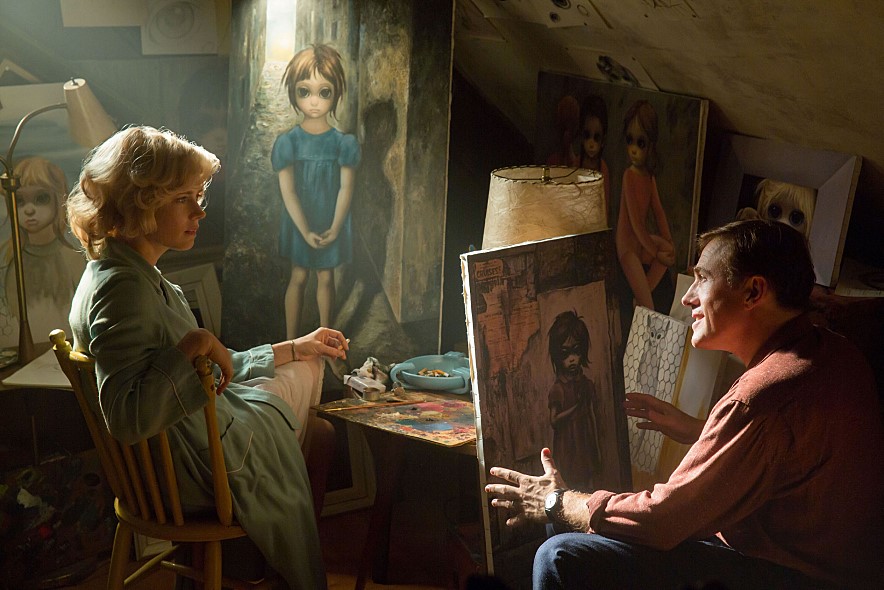
When Margaret Ulbrich (Amy Adams) finally left her first husband with her young daughter in 1958, she did not probably imagine that she would soon be in the grip of another guy coming into her life. While trying to build her new life in San Francisco through her menial painting job in some furniture factory, she also tries to earn extra money through her paintings at a local public park, and that is how she comes across Walter Keane (Christoph Waltz), another painter trying to sell his paintings on the same spot. Walter is a smooth charmer who also works as a successful realtor, and it does not take much time for him to win the affection of Margaret, who eventually accepts his impromptu proposal later when she is notified that she may lose her child custody to her ex-husband.

While they do not get any success yet, everything looks fine for Margaret and Walter as Walter keeps trying to promote their respective painting careers, and then there comes a good chance after he is allowed to hang their paintings on the wall of a popular jazz club owned by Enrico Banducci (Joe Polito). While his paintings of the streets of Paris do not draw much attention, Margaret’s simple but impressive paintings of sad little girls with big, doleful pancake eyes become very popular, and Margaret and Walter get more money than they have ever imagined through selling them to the club’s visitors.

bigeyes03 However, there is one problem. Walter lies to others that Margaret’s paintings are his works, and he keeps sticking to this small lie which becomes bigger and bigger along with the increasing popularity of Margaret’s paintings. Margaret naturally becomes angry about this, but, after persuaded by her Svengali husband that they will get more success through his name and promotion skill, she unwisely goes along with his deception – even when there is a very good chance to rectify her situation right in front of her eyes.

And that is the beginning of another misery in her life. As demanded by her husband, Margaret hides everything about her work from others including her own daughter, and she looks more like a prisoner as she works alone inside her house and Walter gets all the fame and attention outside. Besides more paintings of big-eyed girls, Walter also demands other things necessary for maintaining his false career and reputation, and Margaret belatedly realizes later that she is trapped in a virulent relationship which is probably worse than her former marriage. She becomes more angered and frustrated day by day, but, like many abused wives, she is also resigned and helpless as mired in her gloomy situation, and she continues her utterly thankless work as before.

As the popularity of her paintings keeps rising, the screenplay by Scott Alexander and Larry Kareszewski, who previously collaborated with the director Tim Burton in “Ed Wood” (1994), also focuses on the different reactions on Margaret’s paintings during that time. While the general public is enthusiastic about her paintings, Ruben (Jason Schwartzman), a snobbish gallery owner more interested in modern abstract art, observes this new popular trend with dismay, and John Canaday (Terence Stamp), a stern prominent art critic in New York, shows nothing but disgust and contempt toward the paintings which look very childish and kitsch in his opinion.

bigeyes05 A funny thing is, although he usually cares about earning more money and fame as much as he can through snatching his wife’s works, Walter also becomes a prisoner of his own lie as much as his wife. Although this lying bastard cannot even distinguish acrylic paint from watercolor paint as shown during one funny moment, he still desires to be recognized as a first-rate artist, and there is an ironic scene in which he furiously reacts to Canaday’s ruthless piece on his wife’s latest work although he is not entitled to do that considering his ongoing deception.

While equally looking at the opposite side presented by Ruben and Canaday, “Big Eyes” does not show any direct opinion on whether Margaret’s paintings deserve to be recognized as good art, but it cares about Margaret’s long personal struggle, and Any Adams steadily holds our attention with her likable performance while her co-star Christoph Waltz, who has always been a natural scene-stealer since his Oscar-winning turn in “Iglourious Basterds” (2009), enjoys a number of juicy scenes as an impertinent fraud we love to hate and watch. Even when he is in a situation way over his head during his courtroom battle with Margaret later in the story, Walter pathetically squiggles to get out of the trouble he asked for, and we even get an absurd moment reminiscent of that bizarre courtroom scene from Orson Welles’ classic noir film “The Lady from Shanghai” (1947).

“Big Eyes” is as sincere as “Ed Wood”, but it is less colorful and memorable in comparison, and the result is not exactly the best moment for the people behind its making. Its ending feels a little too abrupt, and I still think the movie could have dug deeper into its themes, but I enjoyed its good parts including Adams’ and Waltz’s performances. Margaret Keane, who is still active in her career and also briefly appears in the film as an extra, may not be remembered as a great artist, but her works deserve to be respected as art regardless of whether they are really good or not, and the movie shows its light but sincere homage to her artistic passion.

bigeyes06

Posted in Movies | Tagged , , , , , | Leave a comment

Beyond the Lights (2014) ☆☆☆(3/4) : A Star is Reborn

beyondthelights02“Beyond the Lights” gave me two things to remember. First, while reminding me again of my serious lack of knowledge on pop songs, it enlightened me a bit on Nina Simone, an African American singer I was not so familiar with until I watched the movie, and her soulful song “Blackbird”. Second, it is anchored by a terrific performance at its center, and this is one of the reasons which make this seemingly average show business drama film quite heartfelt at times.

There was a time when she and her mother struggled a lot in some shabby neighbourhood of London during their early years, but Noni (Gugu Mbatha-Raw) is now almost close to stardom as a new pop singer to watch in US after having been pushed for years by her mother Macy (Minnie Driver), a feisty woman who has relentlessly driven not only her daughter but also herself as Noni’s manager. While Noni is not very comfortable with her tawdry public image manufactured by her label, she sings and dances as demanded by her label and her mother, and we see a gaudy music video sequence which disturbingly reminds me of how female entertainers are usually sexualized as mere objects of desire in our current pop culture.

Even after receiving the Billboard Music award for her recent work with a rapper star named Kid Culprit (Richard Colson Baker, a.k.a. Machine Gun Kelly), Noni looks depressed and unhappy, and she eventually reaches to the breaking point when she returns to her hotel room. She goes out to the balcony, and then she is about to jump over the railing when Macy senses something wrong and then goes inside the room with Kaz (Nate Parker), a young hunky police officer who happens to guard the room at that point.

Fortunately, Noni is saved by Kaz in the last minute, and the aftermath of her ‘accident’ is handled well on the media thanks to Macy and Kaz, but many tabloid reporters are still sniffing around her for any possible scoop while Noni and Kaz find themselves getting more involved with each other after their incident. Their initial interactions are strained, but Noni approaches toward Kaz even though she is virtually followed by many paparazzi everyday, and Kaz cannot say no to her because, besides their mutual attraction, he sees from Noni a sad, unhappy woman who really needs some help and comfort.

beyondthelights01 However, his circumstance is not exactly ideal for this kind of romance. Backed by his influential police chief father, Kaz is at the crucial point of his life which may lead to the beginning of his possible political career in the future, and his father, played by Danny Glover, advises to his son that getting involved with a scandalous entertainer can be a very unwise move for his career because, after all, politics depend on public image as much as show business.

Anyway, Noni and Kaz feel happy whenever they get a chance to be with each other alone, and, through her growing intimate relationship with Kaz, Noni rediscovers herself as well as her artistic need. As a talented girl who has personally written a number of songs, she has always wanted to express herself in her own way, and she is willing for that more than ever as becoming truer to herself during her own private time with Kaz.

After giving a moving performance as a young British lady struggling with her social/biological identity in British period drama “Belle” (2013), Gugu Mbatha-Raw shows more of her acting range here in this film. Besides being believable as a promising pop star during a couple of stage performance scenes in the film (she also sang for herself), this wonderful British actress is also engaging in her lead performance which is both sensitive and dynamic, and the gradual transformation process inside her vulnerable but ultimately resilient character is touching to watch especially when she finally grabs a small but precious chance to sing with real feelings and no pretension.

beyondthelights04 The supporting performers around Mbatha-Raw are also good as ably supporting her on the screen. Nate Parker has nice chemistry with his co-star, and he gets his own moment when Kaz presents his potential as a young hopeful politician in front of his possible backers. Richard Colson Baker is despicable as a rude rapper who surely deserves what he gets at the end of his very unpleasant stage performance with Noni, and that hurtful moment certainly made me hope that Baker is a nicer person in reality.

Minnie Driver, whom I noticed for the first time through her Oscar-nominated turn in “Good Will Hunting” (1997) when I was becoming more serious about watching movies, is standout as a mother who confuses her wish for her daughter’s success with her ambition for her own success. While recognizing her selfish and manipulative aspects, the movie does not overlook how much Macy has worked and fought hard for her only daughter, and Driver’s brief last scene in the film gives us a short but meaningful glimpse into the complex relationship between Macy and her daughter.

The director/writer Gina Prince-Bythewood tried hard to get her film made as she envisioned from the very beginning, and her efforts are translated well into a good music drama whose music actually serves as an important part of its narrative (it recently received a Best Song Oscar nomination, by the way). While not that flashy or showy compared to other recent music drama films, “Beyond the Lights” has its own way to play familiar music, and it does its job well enough to touch us in the end.

beyondthelights06

Posted in Movies | Tagged , , , | Leave a comment

The Water Diviner (2014) ☆☆1/2(2.5/4) : A father’s search for his fallen sons

thewaterdiviner01  As a seasoned moviegoer, I usually ignore “Inspired by a true story/true stories” at the beginning of movies supposedly based on real-life incidents, and I am always ready to enjoy any fictional elements in them, but “The Water Diviners” demanded too much of the suspension of disbelief from me as a fiction. There is an interesting drama worthwhile to tell within its first two solid acts, but then, sadly, it digresses into a bunch of contrivances during its third act, and that is where I began to lose my interest with more disbelief to be piled.

Its story mainly revolves around Joshua Connor (Russell Crowe), an Australian farmer who lost all of his three young sons after encouraging them to enroll in the Army during the World War I. They all died along with thousands of other British, Australian, and New Zealander soldiers during the Battle of Gallipoli in Turkey (it was one of the most devastating defeats for the British Army and its allies during the war), and his wife Eliza (Jacqueline McKenzie) has not yet been recovered from their loss while he keeps doing his farm works including finding a right spot for digging his new well.

After Eliza kills herself on one day, Connor, who becomes more morose than before, decides to take a long journey to Turkey for recovering their sons’ bodies which are probably buried somewhere in Gallipoli with other fallen soldiers. When he arrives in Istanbul after several weeks, he comes across a local boy named Orhan (Dylan Georgiades), and this plucky boy leads Connor to a hotel managed by his mother Ayshe (Olga Kurylenko), a war widow who does not welcome Connor for an understandable reason but accepts him as a guest because of her boss/brother-in-law (he is considering taking her as his second wife, by the way).

Connor wants to go to Gallipoli for himself, but he comes into a situation which is not exactly ideal for his search. While the war is over, Turkey is going through a very uneasy period with the beginning of the national movement, and there is even a growing conflict between Turkey and Greece. Because the British Army is currently doing a massive evacuation in Gallipoli with the cooperation of the Turkish Army for making the proper graveyard for the fallen, Connor is not allowed to go there, but he is still determined to take care of his personal matter for himself, and he soon finds a way to go to Gallipoli.

thewaterdiviner03   He is certainly not welcomed right from when he arrives in Gallipoli, but Lieutenant Colonel Cyril Hughes (Jai Courtney) is a sensible man who sees no point in blocking or holding Connor. He and his soldiers and Turkish workers are already busy with excavating countless remains of their soldiers as well as Turkish soldiers, and their wide area looks more like a big burial site with those heaps of bones dug out from the ground.

And we meet Major Hasan (Yilmaz Erdogan from “Once Upon a Time in Anatolia” (2011)) and his deputy Cemal (Cem Yilmaz, who is one of the better elements in the film along with his co-star Erdogan), two Turkish soldiers who return to their old battleground for assisting Hughes and his soldiers. Although there is still some visible tension between these two guys and Hughes’ men, Hasan is a practical man willing to help Hughes, and he also wants to help Connor after he learns about Connor’s motive.

While the Battle of Gallipoli is mostly remained as the past hovering over the characters in the movie, we get the glimpses of its horror during the scene in which Hasan recollects his dark memories of the battle as looking around an excavation site with Hughes. This scene is intercut with flashback shots to generate a striking contrast between past and present, and then there is a harrowing moment which shows us what probably happened to Connor’s sons during that hellish battle.

And that is the point where the movie starts to become tricky. That scene of Connor’s sons looks like as if what it depicts had really happened like what is remembered by Hasan and Cemal, and there are also several other things which cannot be possibly imagined or remembered in Connor’s mind or others’. Maybe I can believe that Coonor is capable of finding where his boys were buried just like he could intuitively detect a water vein below his farmland, but I cannot believe how he becomes so sure about an unlikely hope later in the story.

thewaterdiviner02  To make the matters worse, the screenplay by Andrew Anastasios and Andrew Knight has more plot contrivances to follow during its third act. I cannot describe this part in details for the reasons you may understand, but I can tell you that the movie awkwardly shifts its gear into a louder mode with some actions and then resolves its story too quickly during its unconvincing finale.

This is the first feature film directed by Russell Crowe (he previously co-directed documentary film “Texas” (2002)). While the result is a good-looking period drama hampered by its weak story and characterization, it is not boring to watch at least mainly thanks to his technical crew including the cinematographer Andrew Lesnie, who provides several nice location shots along the story. The movie was shot in the locations in Australia and Turkey, but I must confess that I had an odd feeling during a number of certain scenes in Turkey and then could not help but wonder whether they were shot in Australia instead.

Like Angelina Jolie’s “Unbroken” (2014), another film which drew attention as a major work directed by a major Hollywood star, “The Water Diviner” is a well-made flawed work which was made with sincerity but is not strong enough to engage me on the emotional level despite its good technical aspects. Regardless of whether its story is entirely true or fictional, all I want from a movie is a good, truthful story I can believe at least during its running time, and “The Water Diviner” fails to find an emotional vein below my seasoned skin.

thewaterdiviner05


Posted in Movies | Tagged , , | Leave a comment

Love is Strange (2014) ☆☆☆1/2(3.5/4) : More than longtime companions

loveisstrange01  “Love is Strange” is a small intimate drama about two good people who have loved and lived with each other for almost 40 years and then suddenly have to deal with a trouble suddenly coming into their happy life. As observing how they try to cope with the resulting inconvenience, the movie gives a warm, sensitive portrayal of one long, enduring human relationship, and it is quite touching to see more of how deep their mutual love and understanding are.

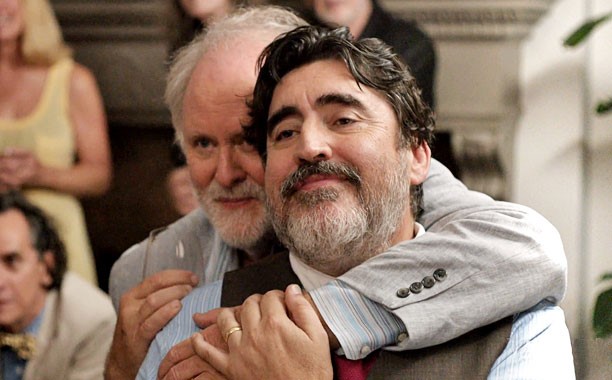
At the beginning, Ben (John Lithgow) and George (Alfred Molina), an aging gay couple living in Manhattan, are about to begin a very special day for both of them. Thanks to the recent legalization of gay marriage in US, they are going to get married today, and we soon see their private wedding ceremony where many of their close friends and relatives are happy to see their long relationship getting officially recognized at last.

But then they come across a serious problem not long after their wedding day. George has worked as the music teacher of a local Catholic school and everybody in the school knows well of his relationship with Ben, but Father Raymond (John Cullum), the principle of the school, notifies that Georges has to be fired just because of his wedding. Although he does not want to fire George, he received an order from the archdiocese, and both George and Father Raymond see that there is nothing they can do about it at present.

Because their life has depended on George’s salary during recent years (Ben was a painter, but he has been retired for a while), they have to move out of their dear apartment, and, after having some talk with their friends and Ben’s nephew Elliot (Darren Burrows), Ben and George decide that they should live separately for a while until they find a new apartment they can afford. Ben is going to stay at Elliot’s apartment, and George is going to be the guest of Ted (Cheyenne Jackson) and Roberto (Manny Perez), another gay couple in their apartment building.

loveisstrange04 Although they initially thought it would be just temporary, this separation period becomes longer as Ben and George keep looking for any good apartment in New York without much success. They manage to sell their apartment, but they get less money than expected, and that makes it all the more difficult to find a new place both suitable and affordable for them. In addition, they begin to miss each other more every night, and they also feel more uncomfortable in their respective staying places as becoming more conscious of their current homeless state.

Ben and George’s hard situation may remind you of Yasujirō Ozu’s “Tokyo Story” (1953) or Leo McCarey’s “Make Way for Tomorrow” (1937), two classic films which depict generation gap mainly from the viewpoint of their aging characters. Ben finds himself becoming a sort of unwelcomed father-in-law to Elliot’s writer wife Kate (Marisa Tomei) despite good intentions on both sides, and he is not exactly on good terms with Elliot’s adolescent son Joy (Charlie Tahan) either, a smart but problematic kid who is not very pleased about sharing his bedroom with Ben. While George is gladly welcomed by Ted and Roberto, the generation gap between him and his generous young neighbours is apparent, and George feels lonelier even when he is surrounded by many people during the occasional evening parties at Ted and Roberto’s apartment.

The director Ira Sachs, who wrote the screenplay with Mauricio Zacharias, lets his main characters’ situation roll by itself without forcing it into contrived plot. The loose narrative of the film provides some space for its supporting characters, and Marisa Tomei is excellent as a woman who slowly becomes frustrated with her difficult circumstance in spite of her good will. Kate does care about her husband’s dear uncle, but she has a work to do at her home beside paying attention to her son and his recent friend, and Ben looks more like another burden in her view while her husband is mostly absent due to his latest project. The discord around their household is further increased by Joey’s trouble at his school, and then there is a very uncomfortable scene in which Ben is helpless and embarrassed in front of a family conflict erupted on the dinner table.

loveisstrange03 Nevertheless, the tone of the film remains gentle and contemplative, and it is effortlessly maintained by a beautifully nuanced duo performance from two veteran character actors with whom I have been familiar for many years. After he gave me a big impression through his terrific performance in Brian De Palma’s “Raising Caine” (1992) when I was 13, John Lithgow became one of my favorite actors, and then I watched more of this wonderful actor through many other movies and, of course, that absolutely hilarious TV comedy series “3rd Rock from the Sun”. Although I came to recognize Alfred Molina much later, this equally talented actor has also been someone interesting to watch on the screen, and some of you may be surprised to learn that this actor has done a lot more than his memorable villainous turn in “Spider-man 2” (2004) during his long career (he was that treacherous guide during the opening sequence of “Raiders of the Lost Ark” (1981), by the way).

What Lithgow and Molina achieves in “Love is Strange” is so subtle and so delicate that I am afraid my feeble words will not do enough justice to their commendable work in the film. Right from the tentative opening scene of the film, they embody not only their respective characters but also the long relationship between them, and we can sense two different individuals who have probably gone through many good or bad times together with love and understanding. Lithgow and Molina have a quiet tentative scene when their characters finally get a small chance to sleep together later in the story, and we simply see two human beings happy to spend night with each other as before.

Sachs’ previous work “Keep the Lights On” (2012), another sensitive tale of a homosexual relationship, reminded me of how gay characters in movies have relatively become more usual than before in these days, and the same thing can be said about “Love is Strange”, whose poignancy has grown on me after its final scene. Its details are specific, but its human matters are something universal we can easily relate to, and Lithgow and Molina give us two real human beings to remember as a loving couple.

loveisstrange02

Posted in Movies | Tagged , , | Leave a comment

The Equalizer (2014) ☆☆1/2(2.5/4) : Washington and Fuqua back in action together

theequalizer02 Maybe because I have reviewed films more frequently than ever during this month, I have so far watched no less than 3 action movies which are notably similar to each other in several aspects. First, I watched “Taken 3” (2015) on the first Sunday of this year, and then I watched “Falcon Rising” (2014) a few days later, and then I watched “John Wick” (2014) in last week. All of them are virtually based on the same premise which has also been used by many, many previous action flicks for years: a formidable tough guy ready to kill all those bad guys who dare to mess with him.

And now I watched “The Equalizer”, Antoine Fuqua’s new action film which is, again, basically based on that ever-reliable action movie premise. There is nothing particularly new here, and its plot is quite predictable from the beginning to the ending, but it does a fairly competent job of serving us with slick style and gritty action for our entertainment, and that makes it a little more enjoyable than many other bland, forgettable action films I vaguely remember.

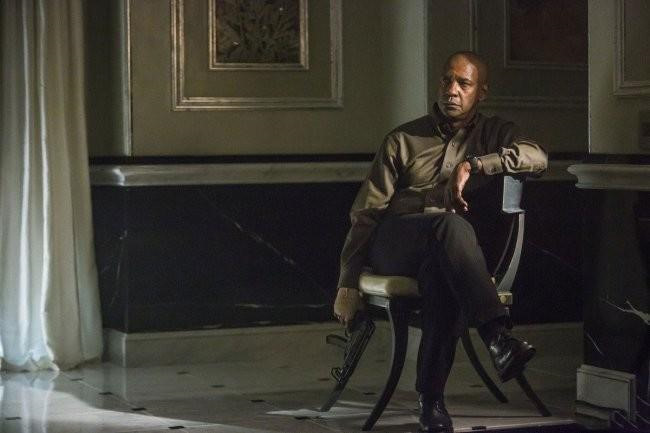
When he is introduced to us during the opening scene, Robert McCall (Denzel Washington) merely looks like a decent anonymous citizen living alone somewhere in Boston. While he does not have anyone particularly close to him, he is a model employee who gets along well with his co-workers at a big hardware shopping mall, and he is currently helping a young chubby employee named Ralphie (Johnny Skourtis), who wants to pass the upcoming qualification test for security guard but is not very confident about whether he can do it or not (in the other words, he is someone who will be *very* important later in the story).

After his work time at the mall, McCall usually spends his nighttime on reading book in a diner whose lonely nocturnal mood on its urban street is reminiscent of Edward Hopper’s famous painting “Nighthawks”. While there are not many people in the diner around this late time, there is a young prostitute who routinely frequents this place, and Teri (Chloë Grace Moretz) and McCall have developed a sort of friendship as getting accustomed to each other’s presence.

theequalizer01 But then Teri is badly beaten by her cruel pimp on one day, and, after seeing her injured state at the hospital, McCall decides that he must do something for her, and, not so surprisingly, he turns out to be far more than what he looks like on the surface. He instantly goes to her Russian pimp with an offer, but, as soon as he clearly sees that there is no possibility of negotiation, his mind quickly spins in a hyperactive visual way not so far from Guy Ritches’ “Sherlock Holmes” (2009), and then his body swiftly executes a merciless punishment on the pimp and the other Russian gangs who unfortunately happen to be on the spot (two of them get killed in particularly nasty ways involved with a corkscrew, by the way).

And that is the beginning of his big trouble with some powerful Russian gang organization. As its resourceful fixer, Teddy (Marton Csokas) is immediately sent from Russia for taking care of the problem as soon as possible, and we also meet a bunch of corrupt local cops who have no choice but to assist this sinister fixer who will not tolerate anything stupid or foolish. Exuding menace and malevolence whenever he appears, Marton Csokas is effective the main villain of the movie, and it is quite apparent from his very first appearance that this smart, ruthless villain is going to confront his match sooner or later.

As Teddy approaches closer to McCall step by step, McCall, who turns out to be a former special government agent, begins to realize that he can use his skills for others as, uh, community service. He indirectly helps Ralphie after he happens to learn of the ongoing trouble of Ralphie’s mother (no, she does not need medical help), and he also gives some lesson to a robber who took something valuable from one of cashiers at the mall besides the money in her cash register (a certain tool at the mall comes handy to McCall, of course).

theequalizer04

Based on the popular TV series of the 1980s which I am not that familiar with (I only indirectly encountered it through its brief appearance in “The Wolf of Wall Street” (2013)), “The Equalizer” is improvement compared to the director Antoine Fuqua’s previous film “Olympus Has Fallen” (2013), which was quite ludicrous in addition to the unintentionally hilarious Korean dialogues of its North Korean bad guys. Compared to that brainlessly overblown action film, “The Equalizer” is a calmer piece focused on building up mood and tension rather than action during most of its running time, and Fuqua, who is a skillful action movie director, makes it sure that it delivers a nice dramatic payoff in the end when the story eventually accumulates to a tense action climax.

While he is passing 60, Denzel Washington, who gave an electrifying Oscar-winning performance as the charismatic corrupt cop in Fuqua’s “Training Day” (2001), is believable as a stoic tough guy hero although the performance is pretty much same as his previous works in other gritty action films such as “Man on Fire” (2004). His performance in “The Equalizer” is less compelling than his recent Oscar-nominated turn in “Flight” (2012), but Washington is an actor who can always grab our attention through his magnetic star presence, and the movie is supported and fueled well by his solid performance.

Overall, “The Equalizer” is a slick, well-made product which gives you as much as you pay for your ticket price, but it is a little too long for me with several disappointments to note. While I noticed a number of plot holes during my viewing (I could not help but amused by the glaring inefficiency of the bad guys around the climax, for instance), it is also a bit shame that its good actors including Chloë Grace Moretz, Melissa Leo, David Harbour, and Bill Pullman are not utilized well in their underdeveloped roles. I will not deny that I enjoyed “The Equalizer” to some degrees, and it is certainly better than “Taken 3”, but I must be fair; considering that I gave “John Wick” and “Falcon Rising” 3 stars while giving “Taken 3” 1.5 star, “The Equalizer” deserves 2.5 stars according to my quite meaningless star rating, and you may take it as a mild recommendation.

theequalizer05

Posted in Movies | Tagged , , | Leave a comment

Mr. Turner (2014) ☆☆☆1/2(3.5/4) : That sublime beauty amidst his mundane life

mrturner01 Mike Leigh’s “Mr. Turner” is an atypical biography drama about the life and career of a flawed but talented artist. Rather than focusing on the highlights of his career like average biography movies would, this somber film slowly lets us immerse into the daily mood of its period background, and it sometimes captures moments of sublime beauty amidst its hero’s ungainly mundane daily life. The movie is slow and restrained throughout its long running time, but it comes with small but insightful glimpses into the passion and dedication inside its plain, sullen, and cranky hero, whose blunt personality makes a fascinating contrast with his inspiring art.

While some famous artists like Van Gogh were never recognized during their life, many others enjoyed success along with growing reputation in contrast, and British painter J.M.W. Turner (1775-1851) belongs to the latter group. Highly regarded by his contemporary peers and others, this artist, who was called ‘the painter of light’, had a successful career during his life, and many of his works have been regarded as precursor to Impressionism for their striking painting style.

After the pastoral opening scene which shows Turner (Timothy Spall, who won Best Actor award for this film at the Cannes Film Festival in last year) being occupied with sketching one quiet morning on the countryside of Holland, we see him returning to his home in London. Turner has lived closely with his aging father William (Paul Jesson) for many years, and it can easily be inferred that Turner depends a lot on William and their middle-aged housemaid Hannah Danby (Dorothy Atkinson) in many ways. As a matter of fact, William and Hannah sometimes look like Turner’s servants as we observe their daily life, and it turns out Hannah is also sexually exploited by Turner at times – but she does not mind that much probably because of her personal feeling toward him.

mrturner03 While William goes outside for buying color pigments and works on wooden frames for his son and Hannah takes care of their house, Turner can fully focus on painting at his house unless he has to deal with visitors who may buy his recently completed works. He also meet his several peers or attend the exhibitions held at the Royal Academy, and we cannot help but notice Benjamin Robert Haydon (Martin Savage), a struggling painter who always needs money but never dials down his stubbornness in spite of his desperate economic situation. When Turner offers 50 pound instead of 100 pound to him, he becomes angry and refuses it even though he really needs money right now (Haydon’s real life was usually in such financial troubles as depicted in the film, and that eventually led to his tragic suicide in 1846).

A couple of crucial turns in Turner’s life happen in the meanwhile, but the movie maintains its reserved attitude while not underlying them, and they are viewed equally along with the other small moments in the film as slices of his life to give us some insights on his problematic personality. Being a very unhappy man with lot of unresolved feelings accumulated inside him, Turner shows his unpleasant sides especially when he is visited by his former mistress and their two illegitimate daughters, and he never recognizes his daughters as his children while keeping whatever he feels and thinks to himself as usual.

It is implied that his abrasive/eccentric sides have been tolerated by others because of his artistic genius and reputation, and Turner probably knows that he would become just like Hayden if he were without his fame and success. While it certainly hurts him when his later works get ridicules once Queen Victoria throws a snarky comment on one of his latest works, he sticks to his artistic integrity even when a rich man offers him a handsome payment for every remaining work of his, and he continues to work in his way until he is no longer healthy enough to go around the country for inspiration, let alone to hold a brush.

mrturner07 Compared to the director/writer Mike Leigh’s notable modern urban dramas such as “Secrets & Lies” (1996) and “Another Year” (2010), “Mr. Turner” looks like an abnormality, but Leigh previously made a fabulous period film “Topsy-Turvy” (1999), and “Mr. Turner” is also a superb technical achievement decorated with vivid period details. The cinematographer Dick Pope provides a number of remarkable visual sights which function as the window to Turner’s artistic inspiration, and he deservedly received a special award at the Cannes Film Festival in last year for his superlative work in this film and then recently garnered an Oscar nomination in this year (the movie was also Oscar-nominated for Best Costume, Best Production Design, and Best score).

The cast of the film includes many of Mike Leigh’s usual collaborators, and Timothy Spall, a dependable British actor whom I noticed for the first time in “Secrets & Lies”, gives one of the best performances in his career as a talented but miserable man who has been mired in emotional suffocation throughout his life. Even when it looks like he gets a chance of ventilation during his brief time with some young prostitute at a local brothel, Turner still does not know what to do with his deep grief, and we come to see more misery and sadness from his teary, disoriented face. He always feels unhappy in his life, and that is probably why he becomes closer to Mrs. Booth (Marion Bailey), who provides him an unburdened alternative life hidden from others including Hannah.

At least, he is brightened up a little whenever his interest is perked up. When his scientist friend Mary Somerville (Lesley Manville) visits him, they enthusiastically share their fascination with the nature of sunlight, and then we get an amusing moment later in the film when Turner encounters an early form of camera, which he cannot help but be curious about as an optical expert of his own.

“Mr. Turner” is a beautiful film as humble as Spall’s deftly understated performance, which effortlessly holds everything in the film while never drawing attention to itself. Its dry, austere approach demands a certain degree of patience, and you will be disappointed if you expect something dramatic, but this arthouse film works as a thoughtful look into the creation of art. It is not ‘entertaining’, but it is a rewarding experience thanks to those beautifully haunting moments when everything simply looks perfect in its hero’s view. After all, isn’t it the purpose of art to capture such sublime moments we sometimes come upon in our seemingly banal, meaningless life?

mrturner02

Posted in Movies | Tagged , | 1 Comment

Wild (2014) ☆☆☆(3/4) : Hiking into the Wild

wild06  As a tale of healing process and self-discovery, “Wild” looks plain and conventional from the very beginning, but it is entertaining to watch mainly because of several strong points which considerably enliven its conventions. Although there is nothing new or fresh in the story itself, the movie earnestly observes its struggling heroine’s long, difficult journey with honesty and sincerity, and its emotional loads are carried well on the back of its solid lead performance.

The movie is based on a real-life story of Cheryl Strayed (Reese Witherspoon), who was at the bottom of her life before she decided to hike along the Pacific Crest Trail in 1995. After her dear mother was suddenly diagnosed of terminal spinal cancer and then died several months later, Cheryl was tumbled into the wild, dark period of sex and drug, and that ultimately ruined the relationship between her and her husband Paul (Thomas Sadoski), which was another precious thing in her life.

Through Paul’s help and support, Cheryl has recently managed to lift herself up from her bottom, and now she is about to start a 1,100-mile (1,800 km) hike which will begin from the Mojave Desert and then end on the state line of Washington State. This can be very difficult and dangerous for her considering that she will have to go through several remote areas alone, but she really wants to pull herself together through this arduous journey, so she takes the first step into the wild although she is still not quite sure about whether she will succeed in the end.

Of course, the first days are not easy due to her lack of experience. For instance, her backpack turns out to be heavier than she thought, so she struggles for a while as trying to carry it on her back. When she spends her first evening in the wilderness, she belatedly discovers that she bought a wrong gas can for her burner, so she has no choice but to eat cold dinners instead – and it is certainly not easy to sleep alone in the darkness while animal sounds are often heard from the outside of her tent.

wild03 As her body gets exhausted every day, Cheryl considers giving up her plan from time to time, but she becomes more determined to keep going on as she advances more along the Pacific Crest Trail, and she also gets some help from others on her route. She meet more experienced hikers who gladly give her some useful advices, and she later learns how to pack up her backpack as little as possible. While receiving the constant support from her ex-husband, she gets more accustomed to several usual difficulties during her hike (they remind me again of why I am not enthusiastic about long-distance hike and other kinds of outdoor activities), and she finds her spirit still intact even after one cringe-inducing moment involved with her bloody toenail.

Nevertheless, her journey in the wilderness is always accompanied with the possibility of sudden danger, and that aspect is exemplified well by a short but tense scene in which Cheryl happens to encounter two suspicious men on one day. This scene only implies what these two guys might think of her, but the sense of possible danger is palpable on the screen as Cheryl understandably becomes more nervous about them.

The director Jean-Marc Vallée, who recently had a notable critical/commercial success with his Oscar-winning film “Dallas Buyers Club” (2013), takes an unobtrusive approach to the story, and the screenplay by Nick Hornby, which is based on Cheryl Strayed’s bestseller memoir “Wild: From Lost to Found on the Pacific Crest Trail”, focuses on small character moments as its episodic narrative leisurely rolls along Chery’s journey. Through its occasional flashback scenes, the movie shows us her close relationship with her mother Bobbi (Laura Dern) as well as her destructive fall into despair after her mother’s death, and we come to understand more about her and her urge to restart her life after that dark time of hers.

wild02  As it did in many other road movies, the journey itself matters more than the eventual arrival point waiting for Cheryl, and Reese Witherspoon’s unadorned performance conveys well her character’s gradual inner changes to us. Although she may not be wholly believable during the flashback scenes in which her character is hitting her bottom, Witherspoon is more effective instead as her character slowly gains more will and confidence through small and big difficulties on her journey, and she ably carries the film with her performance for which she recently received an Oscar nomination.

Most of the other actors in the film fill their small parts as required while supporting Witherspoon. W. Earl Brown, whom I always remember for his sweet comic supporting role in “There’s Something About Mary” (1998), has a small wonderful moment as a middle-aged guy who turns out to be far different from how he looks at first, and Thomas Sadoski is a decent guy who still cares a lot about his ex-wife as her friend, and the special mention goes to Laura Dern, who fills her thankless role with a warm, haunting presence and accordingly received an Oscar nomination for her neat work.

Although its ending feels a little too abrupt, “Wild” is a good road movie on the whole, and I like the way it takes its time for smoothly delivering its expected life-affirming message without making it feel too overwrought or artificial. While it is not as memorable as other similar films such as Sean Penn’s “Into the Wild” (2007) and it is surely safe and conventional to say the least, I enjoyed its intimate drama along with Witherspoon’s likable performance, and it serves us with a journey as good as planned.

wild01


Posted in Movies | Tagged , , , | Leave a comment