Southside with You (2016) ☆☆☆1/2(3.5/4): One day of Barack and Michelle in Chicago

southsidewithyou02.jpg
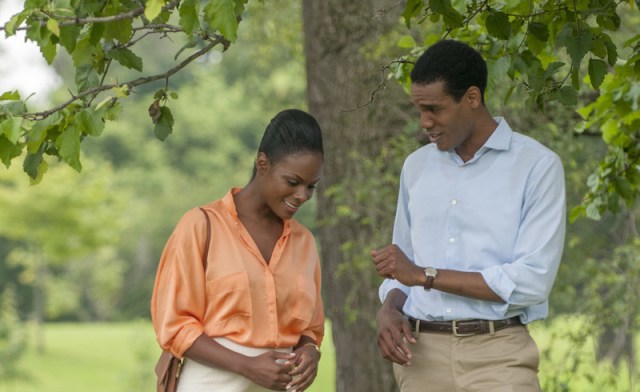
“Southside with You” is a small, humble drama about one day experienced by two people who would become one of the most famous couples in the world. I had no idea on how much the movie is close to what actually happened between them on that supposedly lovely day in Chicago, but it works thanks to its smart screenplay and two likable lead performances, and you will have no problem with enjoying it even if you are not so familiar with their early years. As the movie vividly presents them as engaging three-dimensional characters with humanity and personality, we are frequently amused by their genuine human interactions, and then we are reminded of the remarkable future ahead of them as their day is being over.

It is the summer of 1989 in Chicago, and the opening sequence of the movie shows how Barack Obama (Parker Sawyers) and Michelle Robinson (Tika Sumpter) begin that day respectively. Barack is a summer associate at a Chicago law firm where Michelle is a second-year associate, and she has been his advisor since his first day at the law firm. While she agreed to spend a day with him, she makes it clear to her parents that this is not a date, but then we cannot help but notice how much she tries to look good before leaving her family house.

In case of Barack, he looks relatively more relaxed as a confident, good-looking guy who can easily give you favorable impression within minutes. We see him casually beginning the day with smoking a cigarette, and we cannot help but amused by how shabby his car looks as he goes out to pick up Michelle. There is no serious problem with driving it, but it looks quite old and tattered to say the least, and the hole in the floor certainly draws Michelle’s attention when she gets into his car.
southsidewithyou01

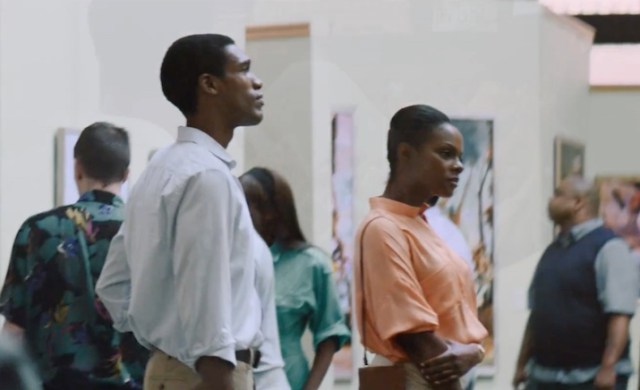
Although Michelle keeps emphasizing that this is not a date (it becomes a sort of running gag throughout the first half of the movie), Barack suggests that they should spend some time together before attending a community meeting to be held in a neighborhood of the South Side area in Chicago, so they go to an art exhibition held at the Chicago Cultural Center, which was one of my favorite places during my visit to Chicago in 2010 April. At one point during the scene where they look around the exhibited paintings of Ernie Barnes and then talk a bit about Barnes’ striking artworks, the camera looks up to one of those big, beautiful glass domes in the building which I still remember well, and I must tell you that I became a little nostalgic during that brief moment.

When Barack mentions a previous case she handled, Michelle points out how difficult it is for her to deal with the obstacles at her workplace. As a female employee, she must work harder to prove herself to her male senior partners, and, not so surprisingly, her race is another handicap she has to overcome. She is demanded to do a lot as she expected, but she is usually underestimated and overlooked, and she knows well that dating Barack may negatively affect her position in the law firm.

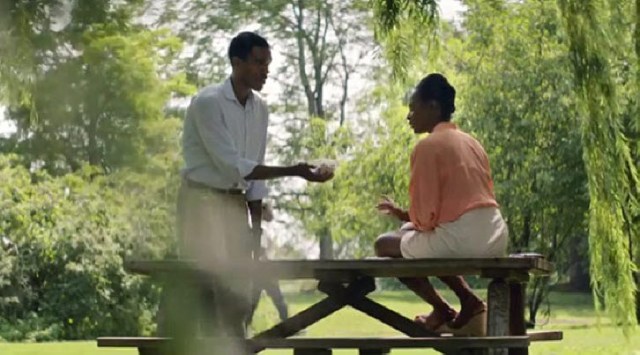
As they get to know more about each other, Barack and Michelle come to see more of how much they are different from each other (he does not like ice cream while she does not like pie, for example), but Michelle finds herself attracted to Barack as he approaches closer to her, and she is surely impressed by how he smoothly handles a difficult matter at the community meeting. Although he intended to woo her right from the beginning, Barack comes to like Michelle more than before, and there is a lovely scene when he watches her participating in an impromptu dance driven by African music.
southsidewithyou04

Leisurely focusing on small moments between them, the movie is naturally reminiscent of Richard Linklater’s Before Trilogy in many aspects. The dialogues in the screenplay by the director Richard Tanne feel spontaneous and intelligent, and his lead performers Tika Sumpter and Parker Sawyers embody their respective roles without any self-conscious tone. Sumpter gives a warm, amiable performance while never neglecting her character’s inner strength, and it is a pleasure to watch how her performance gradually becomes the heart of the movie. On the opposite, Sawyers effectively complements his co-star with his equally well-rounded performance, and he ably exudes his character’s undeniable charm and charisma as required, especially when his character shrewdly persuades disgruntled community members step by step through common sense and empathy.

I also enjoyed some amusing period details in the movie including Spike Lee’s great film “Do the Right Thing” (1989), which Michelle and Barack watch at a downtown theater later in the story. While many black audiences around Michelle and Barack cheer and applaud when Mookie, the pizza delivery hero of the movie, throws a trash can into his employer’s shop, Michelle’s senior associate, who happens to watch the movie at the same time, feels uncomfortable with that moment, and this leads to one of the most humorous moments as Barack gives the guy a comfortable false explanation.

If you expect anything political or historical from “Southside with You”, you may be disappointed with what it intends to do, but its priority is presenting a vivid depiction of two smart, interesting human beings interacting with each other. It did its job quite well while entertaining us with humor and human intimacy, and its good story indirectly reminds us of how much they have achieved since that point. It has been pretty good for us with this wonderful couple living in the White House, hasn’t it?

southsidewithyou03

Posted in Movies | Tagged , , | Leave a comment

La La Land (2016) ☆☆☆1/2(3.5/4): Lively, Colorful, and Sweet

lalaland01

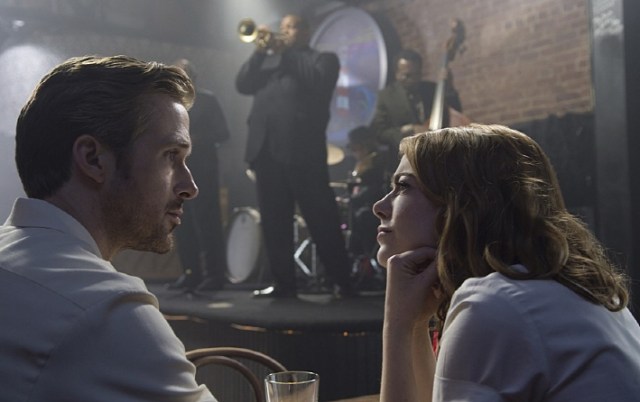
Lively, colorful, and sweet, “La La Land” tries old and new things together to entertain us. While clearly influenced by numerous classic musical films such as “An American in Paris” (1951) and “Singin’ in the Rain” (1952), the movie is as fresh and vibrant as recent modern musical films like “Once” (2006) and “Sing Street” (2016), and it is an utter pleasure to watch how it delightfully and skillfully dances on the line between fantasy and reality along with its two engaging stars. Sure, this is indeed a fairy tale, but it has lots of heart and spirit while also grounded in enough realism, and we gladly go along with its musical exuberance.

The movie instantly sets the tone during its opening sequence. As the camera passes along a long line of traffic jam on an LA highway for a while, bored and frustrated drivers begin to sing one by one in broad daylight, and then there comes a vigorous and rapturous moment of song and dance, which is fluidly and dynamically presented via the effortlessly continuous camera work around vehicles and performers on the screen.

Right after this awesome beginning, we are introduced to the two main characters of the movie: Mia (Emma Stone) and Sebastian (Ryan Gosling). Like any young aspiring performers in Hollywood, Mia has been trying as much as she can while earning her living as an on-studio barista, but her dream still seems to be out of her reach no matter how much she prepares for those countless auditions which do not promise anything but a tiny hope for career breakthrough. During one audition, she tries really hard to impress the casting director, but then her attempt is interrupted by a sudden phone call, and that leads to her another frustrating moment to endure.

Like Mia, Sebastian has been driven by his own dream which is not fulfilled yet. As a jazz pianist, he has been hoping to own a jazz club for him and his music someday, but his situation is not exactly good at present. As implied from his conversation with his sister played by Rosemarie DeWitt, he lost a considerable amount of money due to some scam, and that means he has to take any job available to him regardless of whether he likes it or not. His recent job is playing platitudinous Christmas season music at some posh restaurant, and J.K. Simmons is amusing in his brief appearance as a restaurant manager who will not tolerate any change in the playlist.

lalaland03

The first chapter of the movie shows us how Mia and Sebastian come to acquaint themselves with each other via a series of your average Meet Cute moments. During their first encounter, they briefly pass by each other as total strangers who happen to be driving along the same route. When she later comes into the very restaurant where he works, she instantly recognizes him from the distance, and that happens to be when he decides that enough is enough and then plays the music he wants to play. She is impressed by his music, but their second encounter ends up being as brief and disagreeable as their first one.

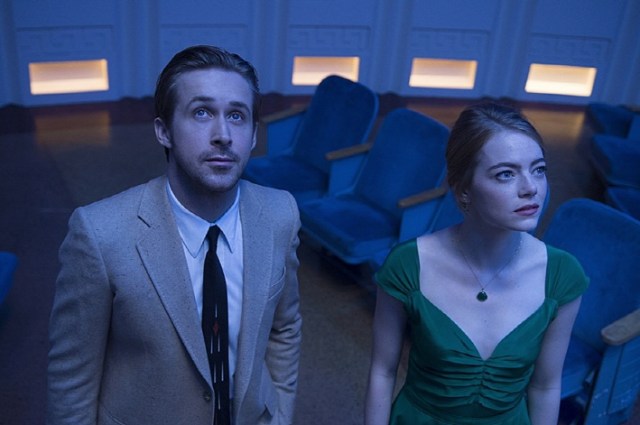
Several months later, they encounter each other again at a party where she is a guest and he is one of hired musicians. As they talk with each other, they feel more of the mutual attraction between them, and we get a series of charming scenes with each own different flavor. There is a lovely evening song and dance scene reminiscent of Fred Astaire and Ginger Rogers’ movies, and then there comes an equally romantic scene unfolded at the Griffith Observatory, which was one of the main locations in “Rebel Without a Cause” (1955). With deliberately old-fashioned touches popping up here and there, these moments may not feel that realistic on the surface, but they do feel real as music and choreography convey much more than mere words, and we cannot help but be enthralled as watching our young lead characters falling more in love with each other.

As encouraged by their growing relationship, Mia and Sebastian keep pursuing each own dream. While she decides that she should go on her own way via a single performer play based on her personal life, he decides to compromise a bit, so he comes to accept an offer from his friend Keith (John Legend), whose band music absolutely sounds nothing like the more old-fashioned jazz music Sebastian cherishes. Not so surprisingly, Mia and Sebastian begin to feel distant to each other as they focus more on their respective careers, and then there comes an eventual moment of painful realization for both of them.

This is indeed a typical show business romance tale which is inherently predictable to the bone, but Chazelle and his technical crew keep throwing entertaining elements to savor. The composer Justin Hurwitz’s score deftly shifts itself between different musical modes, and the songs written by Hurwitz and others are enjoyable while also functioning well as effective narrative materials. The cinematographer Linus Sandgren did a commendable job of establishing a vivid, colorful atmosphere amidst the various locations around LA, and, thanks to him and the editor Tom Cross, every beat and movement during the musical sequences in the film is palpably conveyed to us without any sense of interruption or confinement. This is particularly exemplified well by when Mia and her fellow young actresses let themselves swept by the excited atmosphere of a party they attend. While everybody is having a fun at the party, Sandgren’s camera sweeps around here and there as if it were another guest, and this exhilarating sequence eventually culminates to a dizzy visual moment to behold.

lalaland04

Like any good musical movies about romance would, “La-La Land” depends a lot on the chemistry between its two lead performers, and they do deliver that as much as demanded. Since I came to notice her through “Zombieland” (2009) and “Easy A” (2010), Emma Stone has always radiated her breezy star presence in the following films including “The Help” (2011) and “Birdman or (The Unexpected Virtue of Ignorance)” (2014), and she is more prominent than ever here in a lovable performance which will garner her an Oscar nomination in next year (She already won the Best Actress award at the Venice Film Festival in this year, by the way). In addition to singing and dancing as well as required, Stone fully inhabits her archetype role, and she is simply fantastic during one showstopper moment which solely depends on her acting and singing talent. At that point during my viewing, I wrote in my mental note: ““Les Misérables” (2012) has nothing on this.”

Exuding his natural easygoing charm, Ryan Gosling, who has recently shown more of his lightweight side with “The Big Short” (2015) and “The Nice Guys” (2016), stably holds and supports his co-star during their scenes, and their chemistry on the screen is particularly evident during the climactic musical sequence which feels, I dare to say, less redundant than the similar one in “An American in Paris” (1951). Although they do not say anything as bouncing from one spot to another, their physical movements and nuances show and tell everything we need for sensing what is really exchanged between their characters, and that is why their last moment is not only poignant but also somehow optimistic.

In comparison to the director/writer Damien Chazelle’s previous film “Whiplash” (2014), which was one of the best films I saw in 2015, “La-La Land” is a less intense work in comparison, but its deft mastery of music and image confirms again that Chazelle is a very talented filmmaker. Although his story stumbles a bit around its last act and I noticed that most of the supporting characters in the movie are more or less than background details, the overall result is filled with enough charm and energy to compensate for these notable narrative flaws which thankfully remain to be minor problems at least during its running time, and his two performers’ charismatic performance certainly boosts the movie further to many high points to remember.

Musical films have been less frequent in these days compared to those golden years of Hollywood musicals, and “La La Land” joyously reminds us that the genre is still alive and well, and I enjoyed how the movie brings out new things while recognizing old things. Maybe it is a mere piece of entertainment as fluffy as cotton candy, but its sweet, jubilant spirit is infectious to say the least, and we definitely need more of such good musical films which can excite and rapture us like this superlative work. After all, that’s entertainment, you know.

lalaland02

Posted in Movies | Tagged , , , | Leave a comment

Indignation (2016) ☆☆☆1/2(3.5/4): An elegiac tale of youth and romance

indignation03.jpg

Based on the novel of the same name by Philip Roth, “Indignation” engaged me more than I expected. Haunting and poignant as an elegiac tale of youth and romance, the movie is equipped well with evocative period mood and excellent performances, and it also has several calm but memorable dialogue scenes which are some of the most intelligent ones I have ever encountered in this year. This is a smart, thoughtful film where dialogues really convey to us what characters think or feel, and I could not help but pay more attention to those well-written scenes while also observing how deftly they are handled on the screen.

After the prologue part which later turns out to be significant as expected, the movie moves onto the scene where our young working-class hero Marcus Messner (Logan Lerman) attends the funeral of one of his neighborhood friends, which is held at the synagogue of their Jewish neighborhood in New Jersey. It is 1951, and that dead friend was one of many young Americans who were sent to the ongoing war in Korea and did not come back alive from there.

In case of Marcus, he does not have to worry because he is going to Winesburg college in Ohio thanks to his scholarship, but his father still cannot help but worry about Marcus. When Marcus comes back to his home late after having some fun with his friends during one evening, he and his father come to argue with each other mainly due to his father’s rather compulsive concern. His father later apologizes to his son, and Marcus understands his father’s emotional state to some degrees, but it is apparent that he aspires to get away from his hometown and parents as soon as possible.

Beginning his first year at Winesburg college, Marcus acquaints himself with his two Jewish roommates, but he is not particularly interested in socializing with others besides them, and that took me back to when I began my first year in the campus of Korean Advanced Institute of Science and Technology in 2000. Like Marcus, I only cared about studying hard, and the interactions between me and my roommates were usually kept to the minimum level as we all were busy for each own business. I was also amused by the scenes of Marcus having a phone conversation with his parents, for they reminded me of when I had to make a routine phone call to my parents during every weekend for confirming them that there was nothing to worry about.

indignation01

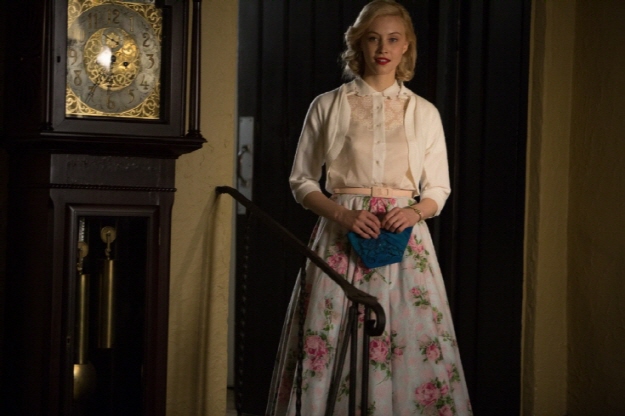
On one day, someone draws Marcus’ attention. He happens to spot a pretty girl named Olivia Hutton (Sarah Gadon), and he feels attracted to her as he appreciates her alluring presence from the distance at the campus library. To his surprise, she not only agrees to go out with him but also moves toward him faster than he expected, and he comes to experience something he will never forget for the rest of his life.

As a lad who is pretty inexperienced in romantic relationship, Marcus is naturally baffled by Olivia’s forthright approach, but he also becomes drawn more to her – even when she reveals some of her hidden sides and then suggests that they should stop seeing each other. Although Olivia frequently looks vague and elusive as we regard her through Marcus’s viewpoint, Sarah Gadon imbues her character with enough grace and charm, and she and Logan Lerman click together well as two kindred spirits ahead of their time. As they interact more with each other, it becomes clearer to us that Marcus and Olivia too independent-minded for their conservative social surroundings, and it is too bad that the era of Jack Kerouac and Allen Ginsberg has not arrived yet for them.

Meanwhile, Marcus finds himself in an adversary position to the dean of the college, who comes to pay extra attention to Marcus just because it seems to him that Marcus is having some problem in adjusting to his new environment. Mainly due to the mandatory chapel attendance demanded to him and all other students in the college, Marcus does not like the dean much. He is an atheist in fact, and he personally feels offended whenever he goes to the campus chapel along with other students.

indignation02

As Marcus and the dean talk with each other in the dean’s ornate but stuffy office at one point, they disagree with each other more as adamantly sticking to each own position on religion and faith, and this increasingly dynamic scene virtually sparks with intensity and intelligence until it eventually culminates to a moment which is somehow reminiscent of a similar punchline moment in “Animal House” (1978). Lerman, who has shown more of his considerable potential especially since his heartfelt lead performance in “The Perks of Being a Wallflower” (2012), is convincing as his character is agitated and frustrated step by step, and Tracy Letts, a veteran actor/playwright who is born to play oppressive authoritarian characters, is formidably unflappable as Lerman’s equal acting match.

“Indignation” is the first film directed by James Schamus, who also adapted Roth’s novel for the movie. Besides participating in the production of many critically acclaimed films as the CEO of Focus Features, Schamus has worked with Ang Lee as his frequent producer/screenplay writer, and “Indignation” shows that he is also a competent director who knows how to engage us via the intelligent handling of story and characters. For instance, Marcus’ parents initially look like stereotypes, but they are allowed to show their own human depth through their respective small moments, and the same thing can be said about the dean, who is not a villain to be despised despite his stiff, overbearing attitude.

Overall, I admire the intelligence of Schamus’ adapted screenplay as well as his restrained but sensitive direction, and I was touched by how the movie comes to make its conclusion effortlessly during its quiet but powerful ending. Life is indeed short and tricky, but we can remember at least, even though we will not matter at all in the end.

indignation04

Posted in Movies | Tagged , | Leave a comment

O.J.: Made in America (2016) ☆☆☆☆(4/4): See O.J. run and rise – and fall

ojmadeinamerica01

Documentary film “O.J.: Made in America” is not only impressive for its ambitious scope but also remarkable for its revealing insight. Besides its detailed examination of the dramatic rise and fall of O.J. Simpson, the documentary also provides us an enlightening commentary on its main issues, and its superlative juxtaposition of individual and social narratives is compelling enough to hold our attention throughout its 467-minute running time divided into five parts.

The first part focuses on Simpson’s athletic career during the 1960-70s, which was a glorious emblem of American dream considering his poor early years in San Francisco. When he started to play for University of Southern California (USC) in 1967, Simpson had already drawn lots of attention as a promising football player to watch, and then he quickly rose as a nationwide star athlete mainly thanks to his memorable play during the 1967 USC vs. UCLA football game. Although he did not win the Heisman Trophy in that year despite that exceptional feat, he won the trophy in the next year instead, and everyone expected greatness from him as he moved onto professional football in 1969.

Mainly because of the incompetence of coach John Rauch, Simpson’s first three years in the Buffalo Bills were disappointing to say the least, but he soon came back in his element after Rauch was replaced by Lou Saban in 1972, and nothing seemed to stop him since that point. After breaking Jim Brown’s single-season rushing record in 1973, he appeared in the commercial advertisements for Hertz rental car company in 1975, which further boosted his celebrity status in the American society. In addition, he also appeared in several movies including “The Towering Inferno” (1974) and, yes, “The Naked Gun: From the Files of Police Squad!” (1988) and its two sequels.

ojmadeinamerica02

Contrasting Simpson with other notable contemporary black athletes including Jim Brown and Muhammad Ali, the documentary makes a critical point on the unmistakable racial background behind Simpson’s fame and success. Unlike many other black athletes who were more defiant against the establishment as supporting the Civil Rights Movement during the 1960s, Simpson was a ‘counter-revolutionary athlete’ who had no problem with being a conformist, and he was certainly good at playing a non-controversial black figure to be widely accepted around the nation. In fact, he was so good at embodying his non-racial public persona that even he was swallowed by that fiction as driven by his growing ego as usual. When he was asked to join the boycott of the 1968 Olympic along with other prominent black athletes, he replied, “I’m not black. I’m O.J.”

In addition to looking into Simpson’s tumultuous relationship with his second wife Nicole Brown Simpson, the second part also presents the worsening race relations between the LA police department and minorities during the 1980-90s. It presents several infuriating incidents of police brutality in the black neighborhood of LA, and then we get a vivid glimpse into how the Rodney King Incident in 1992 came to be a breaking point for what had been accumulated for years. As many people were horrified and outraged by that shocking video clip showing King brutalized by several LAPD officers, LAPD could not cover up its offense as before, and its serious misjudgment on the public reaction after the following trial led to a disastrous outcome on April 29th, 1992.

Around that time, the relationship between Simpson and Nicole was deteriorated beyond repair. Even when they began to meet each other during the late 1970s, his abusive attitude to Nicole was evident, and things got only worse after they married in 1985. It is really disturbing to see the photos of her bruised faces shot not long after she called the police on New Year’s Day in 1989, and it is also chilling to see how Simpson was neither arrested nor punished for this and several other incidents of spousal abuse just because of his status as a male celebrity. Nicole eventually divorced Simpson in early 1992, and their relationship seemed to be completely over after their failed reconciliation in the next year, but, as many people around them worried, a tragedy came to happen on June 12th, 1994.

ojmadeinamerica04

The third part gives us a detailed account of what happened after the bodies of Nicole and her boyfriend Ronald Goldman were found in her house. As evidences were collected during the following investigation, Simpson quickly became the prime suspect of this terrible murder case, and he was going to be prosecuted for the murder of his second ex-wife and her boyfriend, but then he tried to run away by his car. Many TV viewers around the country watched his vehicle being ‘escorted’ back to his residence by several police cars, and this was followed by a tense standoff between him and the police, which lasted for a while until he was persuaded not to kill himself with his gun and then surrendered himself to the police.

We see how the race factors presented in the second part played a key role during what would be remembered as the Trial of the Century. Because it was only two years after the Rodney King incident, the prosecution knew well that they should be careful and discreet, but District Attorney Gil Garcetti and his prosecutors Marcia Clark, Bill Hodgman, and Christopher Durden soon came to face a number of difficult obstacles including the frustrating selection process of jury members. On the opposite, Simpson’s defense attorneys including F. Lee Bailey, Robert Schapiro, and Johnnie Cochran were ready to use race card as expected, and the documentary does not miss a rich irony in the absurdity of their defense strategy. Simpson had usually stayed away from anything associated with race or civil rights, but now he came to be regarded as someone as symbolic as Rodney King, and many of black people were willing to believe his lawyers’ argument during that time just because they wished for a payback moment for what they had endured because of LAPD.

As following the progress of the trial, the fourth part goes deeper in the murder of Nicole and Goldman, and it has some of the most gut-wrenching moments in the documentary. The photos from that bloody murder scene are horrible to watch to say the least, and we also get an unnerving forensic description of how Nicole and Goldman were killed by Simpson, who is indubitably guilty of this savage murder as we all know at present.

ojmadeinamerica03

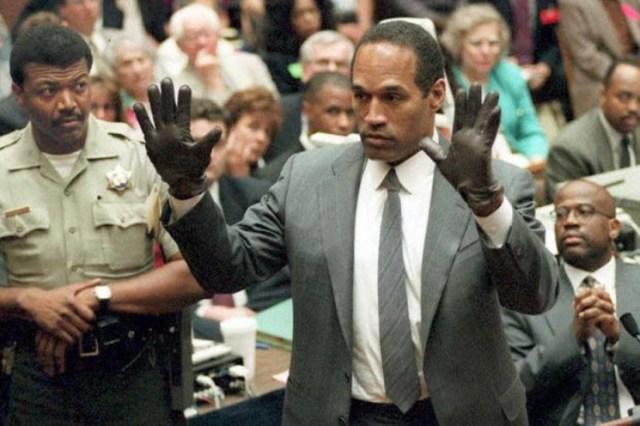
However, as his trial became a big national media circus beyond their control, the prosecution made several crucial mistakes and misjudgments, and Cochran and other defense lawyers strategically muddled up the trial at every turn. It is undeniable that the murder scene was not properly handled by LAPD, and it is also inarguable that Mark Fuhrman, a police officer who found those famous bloodied gloves in question, was a downright racist even though he denies that during his interview. As a result, Simpson and his defense lawyers could induce more reasonable doubts among the jury members, and Clark and Darden knew they lost when the defense team showed the jury members that the gloves did not fit to Simpson’s hands (we learn later that Simpson deliberately had his fingers swelled up through not taking his arthritis medicine).

After showing Simpson’s eventual acquittal and the following public reaction, the fifth part feels like an overlong epilogue at times, but it has another share of dark absurdity as showing us Simpson’s subsequent downward spiral which ultimately sealed his fate. With his completely changed celebrity status which made him far less welcoming than before, he went down and down into more troubles and debaucheries, and some of archival footage clips from that period are utterly cringe-inducing for the hedonistic despair glimpsed from him.

Simpson was eventually arrested for armed robbery in Las Vegas in 2007 and then sentenced to 33 years imprisonment, and there was quite an absurd poetic justice in that mainly because of how silly the motive behind his crime was – and how thoughtless he and his accomplices were. As shown at the beginning of the documentary, he is still in a state penitentiary, and he will be eligible for parole around the end of the next year.

Skillfully mixing heaps of various interview and archival clips together into a clear and engaging narrative flow, the director Ezra Edelman gives us what is akin to a top-notch nonfiction novel which would make you want more in the end, and I came to learn a lot more than expected from his complex tapestry of race, celebrity, and crime. “O.J.: Made in America” is a superb achievement on the whole, and I must say that this great documentary is all the more relevant considering how the absurdities shown from the documentary are not so far from the ones we recently saw from the deranged result of the US presidential election in this year, which clearly demonstrated to many of us that race and celebrity still matter much more than they admit in the American society. They still have the same old issues to deal with, and they will probably need to talk about them more than ever.

ojmadeinamerica05

Posted in Movies | Tagged , , , | 2 Comments

Elle (2016) ☆☆☆1/2(3.5/4): A twisted mid-life crisis thriller from Verhoeven and Huppert

elle02

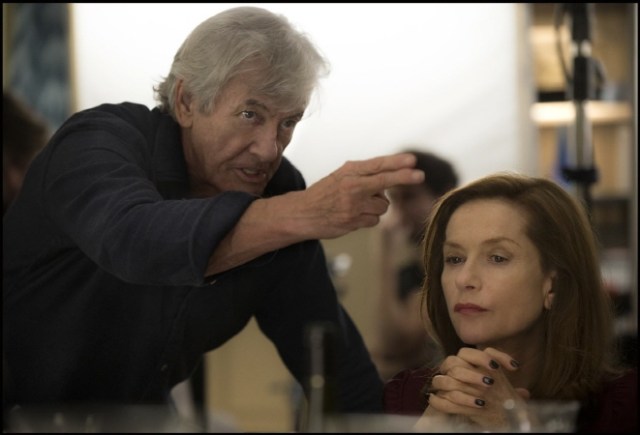
The opening scene of Paul Verhoeven’s new film “Elle” is so striking and disturbing that you cannot help but admire how firmly and effortlessly he and his lead performer Isabelle Huppert establish the overall tone of their movie without any fatal blink. They are willing to shock and disturb us right from the very first shot, and we can clearly discern that they are fully prepared for going all the way for more challenging things to unnerve and fascinate us.

Now some of you are probably hesitating to watch “Elle”, but I must tell you that this twisted mid-life crisis thriller is too good to miss for many reasons. While unusually restrained compared to Verhoeven’s previous sensational thriller films like “The 4th Man” (1983) or “Basic Instinct” (1992), the movie is thoroughly provocative and compelling for its unforgettable mix of disturbing psychological morbidity and naughty black humor, and Verhoeven and Huppert are utterly fearless with their tricky story materials.

Huppert plays Michèle Leblanc, a single middle-aged woman running a video game company. During that opening scene unfolded at her house located in an urban neighborhood of Paris, she is brutally raped by an unknown male invader wearing a ski mask, but, to our bafflement, she does not report this terrible incident to the police after the man is gone. After pulling herself together for a while, she cleans the mess, and then she takes a bath before her loser son comes to her house. When her son notices a bruise on her face, she lies that she had a bicycle accident.

elle03

As we are baffled more by this strange behavioral response of Michèle, Huppert, a master of elusive human compulsions, keeps her appearance tight and straight while her character goes on with her daily life. She is assertive and demanding as usual to her technical employees during their meeting on a new video game still stuck in its development stage, and she curiously looks unperturbed by its blatantly violent contents. When she has a dinner with her ex-husband, her co-worker/best friend, and her current sex partner who is incidentally her co-worker’s husband, she frankly tells them about her rape, and her revelation surely makes their dinner quite awkward although she remains distant to her incident as if it were a minor incident to be soon forgotten.

However, it looks like the incident will not simply go away from her. Like any rape victims, she feels anger and regret as recollecting what happened on that terrible day, and then she finds herself stalked by someone who is apparently the one who attacked and raped her. At first, it is just a simple texting message, but then this hideous man in question seems to be somewhere around her, so she becomes more suspicious about several men around her than before. Besides her ex-husband and her current sex partner, there are other potential suspects, and one of them particularly looks fishy for good reasons – or is he just your average red herring?

Now this sounds like a typical revenge thriller movie plot, but Daivd Birke’s adapted screenplay, which is based on “Oh…” by Philippe Djian, takes a far more interesting route as focusing more on what is gradually revealed from its complex heroine. As her life and personality are examined and reflected via several important supporting characters in the story, it is implied that Michèle has already had survivor’s instincts behind her frigid façade for a long time, and we are not surprised to learn later about a certain fact in her past. In the ironic contrast to her misanthropic attitude, she adores her black cat, and her capability of compassion is evident during a brief scene involved with one unfortunate little bird, which is one of rare gentle moments in the film.

elle01

Magnificently embodying the edgy, stark, and resilient humanity of her character, Huppert gives another superlative performance to remember along with her recent lead performance in “Things to Come” (2016), which is also about a female mid-life crisis accompanied with one cute black cat. Watching these two quite different but equally excellent performances together, you will behold the wide, impressive acting range of an exceptional performer who can naturally convey to us so many things via her detached but expressive face. While never seeming to try hard, she can be very funny or touching as shown in “Things to Come”, but then she also can be supremely creepy or disturbing as shown in “Elle”.

With Huppert’s performance functioning as the strong dark heart of the movie, Verhoeven dexterously plays with our expectation. While there is the constant amount of subtle tension around the screen, he does not hesitate to throw a few effective shocks to jolt us, and he also tickles us with several naughty moments of acerbic black humor. While I chuckled at a couple of sly visual cues shown during the scene where the neurotic girlfriend of Michèle’s son gives a birth to her child, the most viciously humorous moment in the movie comes from Michèle’s Christmas party, which suddenly ends with an unexpected happening which surprises everyone including Michèle.

Around that point, Verhoeven and Huppert keep going further with no compromise at all. I don’t dare to reveal anything about the second half of the movie, except that 1) it defies our expectation again when the identify of her rapist is fully exposed in front of Michèle and us and 2) that fascinating ambiguity of Huppert’s performance keeps us guessing about her character’s motives and intentions even during the finale.

After his critical/commercial success of “Blackbook” (2006), Verhoeven has been rather silent during last 10 years except making a short film “Tricked” (2012). While he is no longer that bloody naughty boy who made “Robocop” (1987) and “Total Recall” (1987), “Elle” shows us that he is still a master filmmaker who can play the audiences like a piano, and he and Huppert did a terrifically provocative job to stupefy and excite us all here.

elle05

Posted in Movies | Tagged , | Leave a comment

Little Men (2016) ☆☆☆1/2(3.5/4): As their little life becomes more complicated

littlemen01

Intimate and sensitive in its low-key approach, “Little Men” quietly shines with small precious moments to be appreciated for the keen depiction of the emotional undercurrents flowing around and between its two young heroes. The movie maintains its gentle, thoughtful attitude even when their relationship is inexorably affected by the conflict between their parents, and we come to emphasize with not only them but also their parents, while fully understanding their respective positions in a difficult situation with no easy solution.

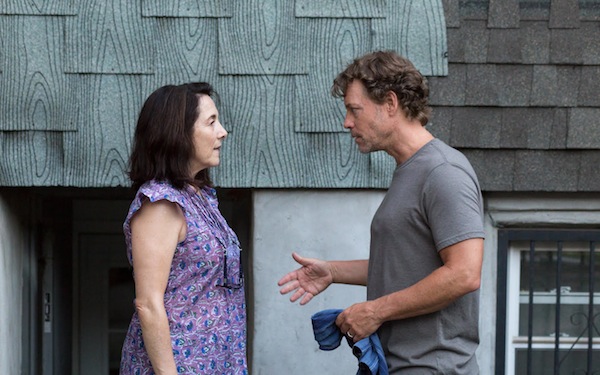
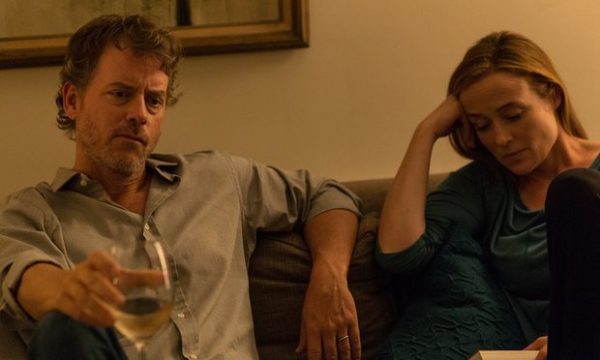
The movie begins with an unexpected change coming into the daily life of Jake (Theo Taplitz), a 13-year-old kid living with his parents in the Manhattan neighborhood of New York City. His grandfather suddenly died, and Jake’s family soon moves from their Manhattan apartment to a two-story building in the Brooklyn neighborhood which was owned by his grandfather but now is passed down to Jake’s actor father Brian (Greg Kinnear).

As the family settles in their new home on the second floor which was formerly the residence of Jake’s grandfather, Brian and his psychotherapist wife Kathy (Jennifer Ehle) come to see that there is a financial matter which should be handled as soon as possible. There is a woman’s clothing shop on the first floor which is run by a middle-aged woman named Leonor (Paulina García), and we hear from Leonor that she was like a close family member to Brian’s father. In fact, Brian’s father kindly allowed her to pay him an exceptionally low rent for years, and she expects the same kindness from her new neighbor/landlord.

littlemen04

Unfortunately, Brian cannot afford that at present even if he wants. Maybe he can ignore the fact that the average rent around the neighbourhood has been raised pretty high thanks to its ongoing gentrification during recent years, but he cannot possibly overlook the current financial status of his family. His acting career has seemed to be going nowhere for several years without making much money, and his family has mostly depended on Kathy’s income. He cannot simply drop a significant financial opportunity for his family just because of following what his father might have wished, and both Kathy and his sister Audrey (Talia Balsam) agree to that.

As Brian and Leonor try to deal with this problem nicely as good neighbors, Jake begins to hang around with Leonor’s son Tony (Michael Barbieri), who quickly becomes his close friend via their common interest in art. While Jake wants to be a painter, Tony aspires for acting career, and they even consider going together to Fiorello H. LaGuardia High School of Music & Art and Performance Arts someday.

The more they spend time with each other, the more we notice how different they are. While Jake is a sensitive kid who usually looks shy and reserved compared to his friend, Tony is more outgoing and confident with his talkative attitude, and their different personalities are evident particularly during the Sunday night party scene filled with various kids around their age. While Jake just stays at the fringe, Tony actively approaches to a girl he is interested in, and what happens between him and that girl leads to a wordless but profound moment feeling as loud as its exuberant surrounding.

Meanwhile, their parents continue to be embroiled in their business conflict. Brian tries to be reasonable with Leonor, but there is the limit on how much he can step back for her, and the same thing can be said about Leonor, who simply cannot afford to pay the rent as much as Brian requests. After being more aware of their parents’ conflict, Jake and Tony respond to this situation through their defiant silence toward their parents, but their action only reminds their parents more of how frustrating the situation is.

littlemen03

The director Ira Sachs, who wrote the screenplay with his frequent collaborator Mauricio Zacharias, keeps everything calm and gentle even around that point, but the emotional intensity of his characters’ conflict is more palpable than before. During one of their conversation scenes, Leonor reveals something personal about Brian’s father after being more frustrated with Brian, and we can see how much that hurts him even though he merely gives a flat response to her. In the end, there comes the inevitable moment of hard decision, and we can sense the pain and guilt from the characters in that crucial moment as the performers stay true to their characters without any misstep.

While Greg Kinnear, Paulina García, Jennifer Ehle, Talia Balsam, and Alfred Molina (He plays an old friend of Leonor, by the way) are dependable in their respective roles, the movie ultimately belongs to young performers Theo Taplitz and Michael Barbieri, and they are fabulous in their unadorned natural acting which fits well with the realistic atmosphere of the movie. I also admire how deftly Sachs handles other young performers in the movie as interesting human details to observe, and this is exemplified well especially during one brief passing shot which possibly suggests Jake’s awakening sexuality.

Like Sachs’ previous films “Keep the Lights On” (2012) and “Love Is Strange” (2014), “Little Men” so effortlessly unfolds its understated drama that, to be frank with you, I struggled to some degrees for describing how it did its job well enough to touch me a lot. You may not be convinced enough to watch it yet, but I assure you again that you will be surprised by its rich human experience generated from modest but undeniably powerful moments. In short, this is one of the small gems of this year you cannot miss.

littlemen02

Posted in Movies | Tagged , , , , | Leave a comment

Tale of Tales (2015) ☆☆1/2(2.5/4): Three bizarre fairy tales

taleoftales02

“Tale of Tales” is one of the most visually impressive films I have ever watched during this year. Based on three stories from the 17th century fairy tale collection by Neapolitan poet Giambattista Basile, the movie wields plenty of memorable scenes of beauty or grotesque on the screen, and I could not help but marvel at each of them during my viewing. Unfortunately, these wonderful moments do not generate enough power together to engage me as being hampered by scattershot storytelling and languid narrative pace, and this is really a shame especially considering the painstaking efforts shown from them.

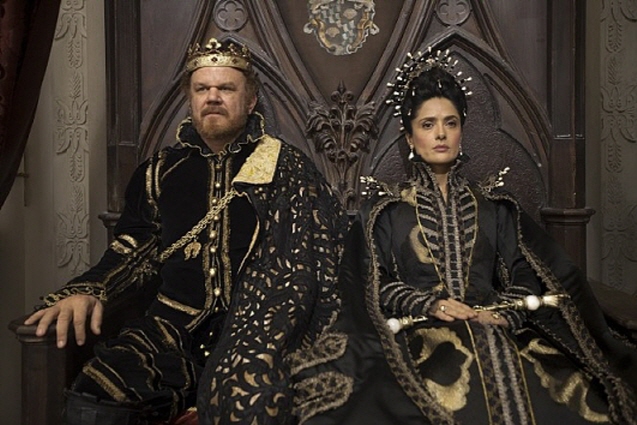
In the beginning of the first tale, we are introduced to the King and Queen of Longtrellis, played by Salma Hayek and John C. Reilly. While they are very unhappy due to her continuing infertility, the queen happens to encounter a sinister necromancer, and he offers her an odd solution to her unhappiness. There is some big sea monster at the bottom of the sea, and its heart will help her get pregnant.

As a man who loves and cares about his queen, the king instantly goes to the bottom of the sea while wearing a diving suit, and, after one of a few suspenseful moments in the movie, he eventually succeeds in having her get what she wants. As the necromancer instructed in advance, the heart of the sea monster is promptly cooked by a virgin woman alone and then served to the queen, who soon becomes quite happy to see what she has wished for so long.

However, she later comes to realize that her happiness comes with more price than she expected. Her dear son, whose appearance is as pale as that sea monster, grows up to be a young man on the verge of adulthood, and he is virtually inseparable from someone who happened to be linked with him at the time of their birth. The more the queen tries to separate them from each other, the more they tightly stick together.

taleoftales04

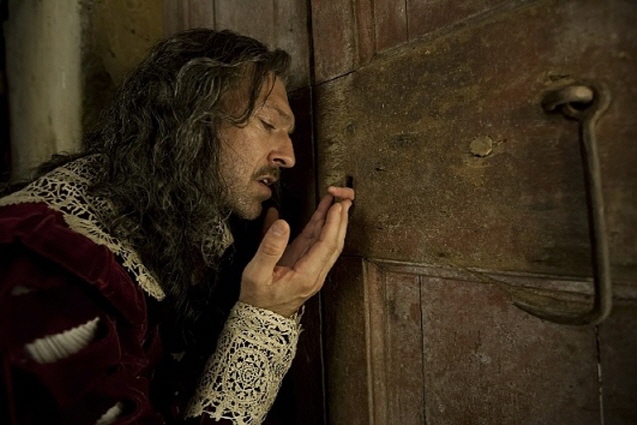
In the meantime, the movie also unfolds two other fairy tales in parallel, which are slightly connected with the first one via its one early scene. In case of the second tale, we meet the King of Strongcliff (Vincent Cassel) and then are later introduced to two other main characters Dora (Hayley Carmichael) and Imma (Shirley Henderson). In case of the third tale, we meet the King of Highhills (Toby Jones) and his little daughter Violet, who later grows up to become a fair young lady played by Bebe Cave.

The second tale starts with the King of Strongcliff waking up early in the morning after his another lustful night of debaucheries. As he looks upon the city from his place, he happens to hear a lovely singing voice coming from some alley, and he soon spots the very woman who enchants his heart from the distance, but it is soon revealed to us that this woman, named Dora, is not as beautiful as he believes. She is actually an old dyer lady living and working with her sister Imma, and she is at a loss as the king persists in his blind courtship.

At that point, Imma comes to have an idea which may benefit herself as well as her sister. As presenting herself to the king instead of Dora, she exposes only one finger to him, but then the King understandably wants more, so Imma must do something to hide the truth from him. As she tries to make her look, uh, more presentable to the king, we get an amusingly grotesque moment to watch, and then there comes a sudden plot turn leading to a far more disturbing one which will certainly make you cringe for good reasons.

The third tale also turns out to be equally dark and brutal after its own bizarre setup process. While his daughter performs a song for him, the King of Highhills happens to be distracted by a flea which somehow keeps evading getting squashed by him, and this very tiny insect eventually becomes an object of his obsession after he decides to keep it under his care. Constantly getting fed by him, the flea keeps growing more and more to his delight, and we cannot help but be amused by how bigger it becomes everytime we see it.

taleoftales05

Meanwhile, the princess is left overlooked and neglected while her father is occupied with his private pet, and then she finds herself in a difficult circumstance when her father decides to hold an absurd contest for her future groom. Although the contest is started like a practical joke for the king’s own amusement, it becomes quite less funny when somebody comes in and then gives the right answer for his question, and this cruel reversal is followed by scary moments as barbaric and ruthless as you can expect from fairy tales.

“Tale of Tales” is directed by Matteo Garrone, who previously impressed me with his gritty crime drama “Gomorrah” (2008). While the movie deliberately emphasizes the unrealistic aspects of its stories, its special effects and make-ups feel quite realistic on the screen along with several real locations used for the production, and the overall result is weird and vivid as filled with various visual goodies to enjoy. Its production design and costumes are pleasures to behold in their details, and the cinematographer Peter Suschitzky and the composer Alexandre Desplat also make considerable contributions to the overall atmosphere of the film.

Despite all these enjoyable things, I only observed the movie from the distance while not caring much about its stories and characters. Juggling its three stories together instead of handling them one by one, the movie keeps losing its focus as dragging its multiple plotlines, and we only come to be more aware of how thin each story inherently is.

“Tale of Tales” is rather dissatisfying on the whole, but I will probably remember some of its memorable elements for a while. I enjoyed the scene unfolded inside a maze reminiscent of “The Shining” (1980), I was horrified by how one character mindlessly pushes herself to the bloody extreme just because of one casual remark, and I was amused to some degrees as watching how everything comes together as expected during the final scene. I just wish these things and many other things in the movie would add up to more than the sum of them.

taleoftales01

Posted in Movies | Tagged , , | Leave a comment

Captain Fantastic (2016) ☆☆1/2(2.5/4): An atypical family’s wacky journey

captainfantastic

I remain unsure and baffled about how “Captain Fantastic” is about, even though I was well aware of what it is about. I guess it is supposed to be a whimsical comedy drama about a quirky alternative family lifestyle, but I often found its occasional shifts in tone and mood too distracting and disorienting to engage me. At first, it looks like a comic cross between “The Mosquito Coast” (1986) and Wes Anderson movies, and then it becomes your average family road movie, and then it tries to be as serious as “Running on Empty” (1988), and then it even comes to be reminiscent of Japanese film “Departures” (2008) around the finale. In other words, this is something I come across from time to time: a typically oddball Sundance film which is merely whimsical for the sake of whimsy.

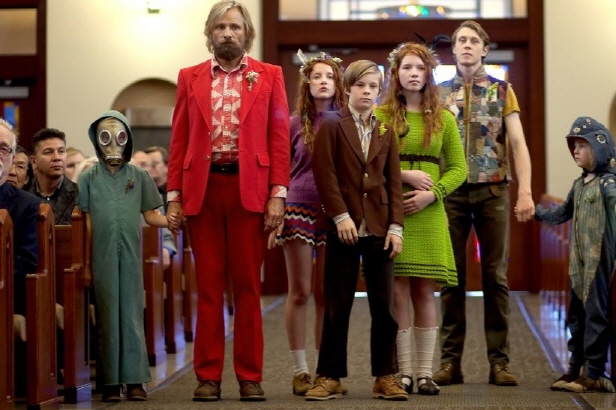
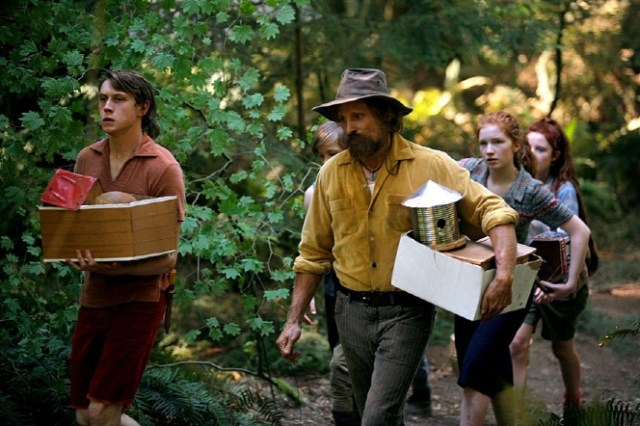
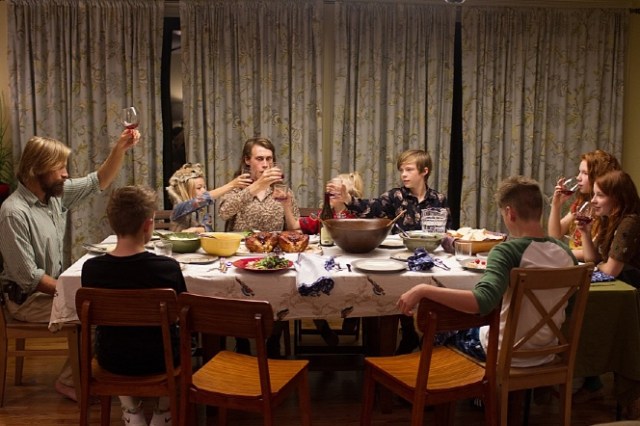
The first 30 minutes of the movie, which will surely determine your inclination for it, is alternatively amusing and uncomfortable as introducing us to the unorthodox family lifestyle of Ben Cash (Viggo Mortensen) and his children. Not long after their first child Bodevan (George MacKay) was born, Ben and his wife Leslie (Trin Miller) moved to a remote mountainous forest area in the Pacific Northwest region, and they were happy together with their seven children for several years until Leslie had to leave their place due to her worsening mental illness.

While they have not had any formal school education, the children have learned not only survival skills but also many other various things under their unusual but smart parents’ guidance. The opening sequence shows Bodevan doing a ritual forest hunt for his approaching manhood, and then we see them going through their daily physical training routines under Ben’s strict but caring supervision. At one point, they climb up along a stiff rocky cliff together, and you may cringe when one of them happens to face a perilous situation and then has to take care of it for himself just because his father says so.

During evening, they read books or play music, and they are quite knowledgeable as expected. Due to their extensive knowledge on emergency medical treatments, all of them often speak like walking human anatomy textbooks, so we have a line like “If you hit the rocks below you, you’ll die from blunt force trauma. Or internal bleeding from massive bone fracturing. Or splenic flexure of the large intestine.” They also can speak several different foreign languages including French, German, and Esperanto, and, not so surprisingly, they all are heavily influenced by their parent’s radical liberal philosophy (“Power to the people!” – “Stick it to the man!”).

captainfantastic03

Despite his wife’s absence, life seems to continue as usual for Ben and his children. He is pretty frank to his children about their mother’s bipolar disorder problem (“Mom does not have enough of the neurotransmitter serotonin to conduct electrical signals in her brain.”), and the children mostly keep their spirit high as occupying themselves with tasks given to them respectively. In case of Zaja (Shree Crooks), she reads her book while wearing a gas mask for no apparent reason, and that is one of many eccentric touches tacked onto the film just for our amusement.

And then their little cozy world is shaken by a sudden sad news. Ben hears from his sister Harper (Kathryn Hahn) that Leslie killed herself at a hospital where she was admitted, and he is also notified that her funeral is going to be held in her hometown in New Mexico as wanted by her parents. While devastated by this news as much as his children, Ben is reluctant to go there because he knows well that he will not be welcomed by her father Jack (Frank Langella), but he eventually decides to attend the funeral along with his children.

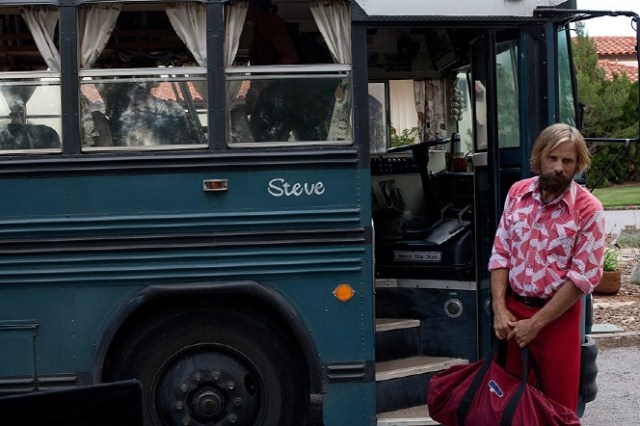
As Ben and his children are going to New Mexico by their shabby school bus, the movie generates another series of small quirky scenes from the awkward interactions between the family and the world outside. When he comes across a pretty girl around his age, Bodevan is naturally attracted to that girl like any teenager boy would, but then he only comes to make himself look silly and strained in front of her while trying to articulate his feelings toward her. When the family drop by Harper’s house, the contrast between them and Harper’s average middle-class family is quite clear from the start, and this accordingly leads to a few funny moments to watch.

I was indeed amused at times during this part, but I must also admit that I also felt some reservation on Ben and his children’s lifestyle, which often induced an urge to call Child Protection Services during my viewing. While it goes without saying that his children have been taught quite well in many aspects, it can also be said that whatever potential they have is blocked by their nearly isolated daily life, and that is exemplified well by Bodevan’s aspiration for higher learning. He wants to study at an Ivy League college, but that means he has to leave his family, so he naturally becomes conflicted when he gets quite a good chance for that. It is disappointing that this personal conflict of his is eventually resolved in a way too trite and convenient, and the same thing can be said about a trouble involved with Bodevan’s younger brother Rellian (Nicholas Hamilton), who has more difficulty in dealing with grief and anger than his siblings.

captainfantastic04

When it later shifts itself to a more serious mode as Ben and his children finally arrive in New Mexico and attend Leslie’s funeral, the movie often stumbles despite its good intentions. What is supposed to be a scathing comment on the hypocrisy of funeral attendees feels more like a rude exercise in self-righteousness, and this jarring impression is further emphasized as Viggo Mortensen’s whimsical performance is rubbed against the no-nonsense acting of Frank Langella, who is actually welcoming as the voice of common sense in the movie. Although Jack dislikes his son-in-law a lot for good reasons, he and his wife Abigail (Ann Dowd) clearly care about their grandchildren, and it is not so difficult to understand their concern and practical view even though they supposedly stand for everything Ben and his wife despised. Now I remember the closing sentence of my late critic friend Roger Ebert’s two-star review on “I Am Sam” (2001): “You can’t have heroes and villains when the wrong side is making the best sense.”

Under the director/writer Matt Ross’ competent direction, Mortensen shows us an unexpected comic side, and he and his young co-performers carry the film well via their natural chemistry clearly shown on the screen, but their admirable acting is unfortunately hampered by weak characterization. Sure, I remember how Ben’s children respectively look like to some degrees, but their personalities are so thin that it was sometime difficult for me to tell who is who despite their deliberately odd names (Can somebody please tell me which one is Kielyr or Vespyr?).

Considering heaps of positive responses it has received since its premiere at the Sundance Film Festival early in this year (it also received the Directing Prize at the Un Certain Regard section of the Cannes Film Festival in this year, by the way), you may regard “Captain Fantastic” more favorably than me. The movie somehow failed to hold my interest, but it tries to bounce along with its quirky characters at least, and I did have some odd fun with that even though I did not connect well with its story and characters. I do not think the movie is that fantastic as others think, but I sort of understand its appeals anyway.

captainfantastic05

Posted in Movies | Tagged , , | Leave a comment

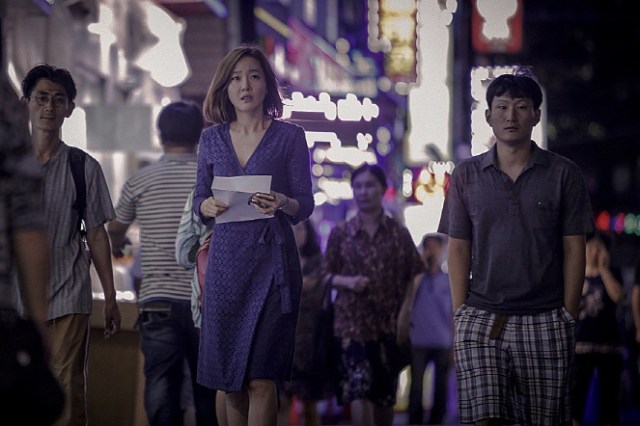
Missing Woman (2016) ☆☆☆(3/4): Her babysitter is missing…

missingwoman01

South Korean film “Missing Woman” begins as a seemingly conventional mystery thriller and then reveals darker elements which later turn the story into a sort of social horror tale which is often frighteningly realistic to me and other South Korean audiences. At first, we fear for what can possibly happen to one of two main characters in the movie, and then we are also horrified and saddened to learn about the other character’s madness which is as stark as “The Hand That Rocks the Cradle” (1992).

For Ji-seon (Eom Ji-won), Han-mae (Kong Hyo-jin) has been like a gift from heaven. Due to her demanding work schedule, Ji-seon is usually too busy to spend time with her baby daughter even after she returns to her apartment, and this certainly does not make her look that good in her ongoing custody battle with her ex-husband at the court.

Han-mae looks like a perfect babysitter any mother would hire without hesitation. When she was introduced to Ji-seon via the recommendation from some other babysitter working in the same apartment building, Ji-seon did not have much confidence on a Chinese woman who barely speaks Korean, but Han-mae quickly impressed Ji-seon with her effortless way of calming Ji-seon’s daughter, and Han-mae soon becomes indispensable to Ji-seon in many aspects.

When Ji-seon goes to work during one morning, everything looks fine and busy for her as usual except her daughter seems to have a cold, but then a strange thing happens. When Ji-seon comes back to her apartment during late evening, she is baffled to find that her daughter and Han-mae are not there. Mainly because she is too exhausted after another busy day, Ji-seon just assumes that they went to the hospital, but she does not hear anything from Han-mae even during the next day.

missingwoman04

As Ji-seon gradually comes to realize that her daughter has been kidnapped, her situation only gets worse hour by hour. Everything she knows about Han-mae turns out to be false, and it is also revealed later that Han-mae is associated with some seedy people in the Chinatown area, who are not so willing to tell everything to Ji-seon for good reasons.

The first half of the movie steadily keeps its tension level high as pushing Ji-seon into her nightmarish circumstance, and Eom Ji-won, who previously appeared as one of the crucial supporting characters in “The Silenced” (2015), is believable in her increasingly neurotic performance. Although Ji-seon makes several unwise choices along the plot, Eom’s forthright acting lets us understand Ji-seon’s frantic state of mind at least, and we come to emphasize with Ji-seon’s terrible plight as watching her desperate search for any possible clue which may lead her to Han-mae and her daughter.

And we also come to reflect on how much Ji-seon has been pressured as a single working mother. She simply wants to go on her way independently for herself as well as her daughter, but the kidnapping incident painfully reminds her of how vulnerable and disadvantaged her social position is. While I am glad to see that more and more people in South Korea recognize women’s rights in these days, misogyny remains a serious problem in the South Korea society, and the movie has a number of cringe-inducing moments as observing how Ji-seon is unfairly treated by other characters. Due to her belated report to the police, the detectives in charge of the case are rather suspicious about Ji-seon, and so are Ji-seon’s ex-husband and his mother, who understandably suspect that Ji-seon conspired with her babysitter for not losing her custody. In case of Ji-seon’s direct boss, he is very inconsiderate in front of her, and his brief callous comment is probably not so different from what many working mothers in South Korea often hear at their workplace.

missingwoman02

As Ji-seon manages to gather some clues during the second half, we get to know more about Han-mae along with Ji-seon, and that is where the movie enters another dark territory to chill the audiences. I am not going to tell you anything for avoiding spoilers, but I can tell you that Ji-seon finds herself getting to know and understand Han-mae more than expected – and that there are a few harrowing moments to strike you for their utter despair and desperation.

While I must point out that casting a South Korean actress as a Chinese character looks inherently problematic from the beginning, Kong Hyo-jin, who was unforgettable as the hilariously deranged heroine of “Crush and Blush” (2008), gives an effective performance which is somehow both chilling and poignant. What Han-mae committed is inexcusable to say the least, but we cannot help but feel sorry for her as her past is revealed bit by bit. There have been many poor foreign women coming to South Korea for better future during recent years, and Han-mae’s unjust ordeal reminds me of those horrific news reports on how some of them only found themselves exploited and mistreated in the end with no future for them at all.

It is pretty easy to guess what is really going on even before its half point, but “Missing Woman” has enough emotional ground to hold our attention, and that is why its unabashedly melodramatic climax works although we already know its inevitable destination. The director Lee Eon-hee, who also adapted the screen story by Hong Eue-mee, handles well the dark, uncomfortable aspects of the story, and her two talented performers ably carry the movie on their opposite positions.

2016 has been a wonderful year for South Korean movie audiences because there have been many distinctive female dramas and comedies such as “The Handmaiden” (2016) and “Queen of Walking” (2016). “Missing Woman” surely deserves to be mentioned along with these films, and I really hope its success will contribute to this welcoming change as well.

missingwoman03

Posted in Movies | Tagged , , , , | Leave a comment

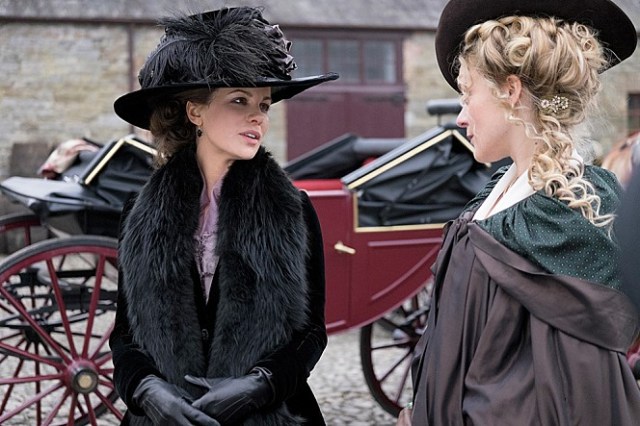
Love & Friendship (2016) ☆☆☆ (3/4): Stillman & Austen

loveandfriendship03.jpg
“Love & Friendship” is as witty and delightful as we can expect from the combination between Jane Austen and Whit Stillman, who fit well with each other as much as Cormac McCarthy and the Coen Brothers in “No Country for Old Men” (2007). Like Austen, Stillman is an astute, intelligent storyteller who is good at handling smart, haughty characters, and his new movie has a small naughty fun with its heroine who is a lot different from the more good-hearted and well-mannered heroines of Austen’s novels

Based on Austen’s short novel “Lady Susan”, which was written before her six novels but was published more than 50 years after her death, the movie mainly revolves around the schemes of Lady Susan Vernon (Kate Beckinsale). As a sassy woman who is still young and beautiful despite being recently widowed, Lady Susan has no qualms about using her wit and beauty to charm guys around her, and we hear later that she has had a certain reputation around London since her husband’s early death.

While she needs to marry again for her economic stability, her priority at present is marrying off her daughter Frederica (Morfydd Clark) to a wealthy suitor, but, as shown from the opening sequence of the movie, things did not go well for her recently. While she tried to get Frederica engaged with Sir James Martin (Tom Bennett) during her stay at the Manwaring estate, Lady Susan happened to get herself involved with Lord Manwaring (Lochlann O’Mearáin) instead, so now she has to leave the estate as his wife is quite upset about her husband’s infidelity.

loveandfriendship02

After consoled a bit by her American friend Alicia (Chloë Sevigny), Lady Susan comes down to Churchill, where the estate belonging to her brother-in-law Charles (Justin Edwards) is located. Although his wife Catherine (Emma Greenwell) does not like Lady Susan for good reasons, Charles cordially welcomes his sister-in-law into his house anyway, and Lady Susan soon sees another opportunity from Catherine’s brother Reginald DeCourcy (Xavier Samuel). While he is apparently around Frederica’s age, he also looks like someone who can marry Lady Susan, and she is certainly motivated by the fact that he is the sole heir of his family estate.

Even though he is well aware of her reputation, Reginald finds himself quickly charmed by Lady Susan as spending more time with her, and this certainly alarms not only Catherine and but also his parents. While Reginald emphasizes that he and Lady Susan are just friends, but what is happening between them is pretty clear to Catherine while Charles remains oblivious to how selfish and opportunistic his sister-in-law actually is.

Of course, the situation becomes more complicated than expected for Lady Susan, and Stillman’s adapted screenplay gives us several funny moments as she and other characters maintain their civilized attitude as usual. While trying to get Reginald closer to her, Lady Susan faces another difficulty when her daughter turns out to be reluctant about marrying Sir James, and then there also comes another private matter she has to deal with.

Deliciously wily and devious in her edgy comic performance, Kate Beckinsale reminds us again that she is too talented to be remembered only for “Underworld” (2002) and its following sequels. As a matter of fact, she was wonderfully haughty and snobbish in Stillman’s previous work “The Last Days of Disco” (1998), and “Friends & Friendship” gives her another fun role to play with gusto. Lady Susan is not exactly a likable character, but she is witty and charming enough to watch at least thanks to Beckinsale, and we come to enjoy how she attempts to manipulate everyone around her including her own daughter.

loveandfriendship04

The supporting performers surrounding Beckinsale are effective in their broad archetype roles. Chloë Sevigny, who previously co-starred along with Beckinsale in “The Last Days of Disco”, complements Beckinsale well during their scenes, and Stephen Fry is unflappable as Alicia’s businessman husband, who does not approve of his wife’s relationship with her close friend at all for an understandable personal reason. While Morfydd Clark and Xavier Samuel are sympathetic as the least jaded characters in the movie, Tom Bennett is simply hilarious as an ebullient but incorrigibly dim-witted guy who has no idea on how silly and embarrassing he is in front of others. One of his best moments comes from when Sir James tries to impress Frederica and others in the drawing room, and I and other audiences could not help but chuckle as watching the other characters flabbergasted by Sir James’ cheerful ignorance on a certain piece of biblical knowledge.

After making his first three films “Metropolitan” (1990), “Barcelona” (1994), and “The Last Days of Disco”, Stillman had remained silent for more than 10 years, and then he came back with “Damsels in Distress” (2011). After watching “Damsels in Distress”, I belatedly watched “Metropolitan” and “The Last Days of Disco”, and I admired their witty, intelligent comedy although I was not that wholly enthusiastic about them as a foreign audience not so familiar with their cultural backgrounds.

Maybe because of my familiarity with Austen’s novels (I read all of them except “Northanger Abbey”), I found that “Love & Friendship” is a little more enjoyable than Stillman’s other works. Austen’s characters are always fun to watch whenever they say one thing while not saying another thing, and Stillman, Beckinsale, and the other cast members did a nice job of conveying that sense of fun to us.

Sidenote: The title of the movie is changed to “Lady Susan” here in South Korea.

loveandfriendship01

Posted in Movies | Tagged , | Leave a comment