13th (2016) ☆☆☆1/2(3.5/4): From Slavery to Mass Incarceration

13th03

At the beginning, Netflix documentary film “13th” presents an alarming piece of statistical data. While the population of US is merely 5% of the entire human population in the world, 20% of the prisoners in the world are incarcerated in American prisons. Any sensible American citizen can see that this is a terribly absurd fact considering that their nation has often been regarded as the land of freedom.

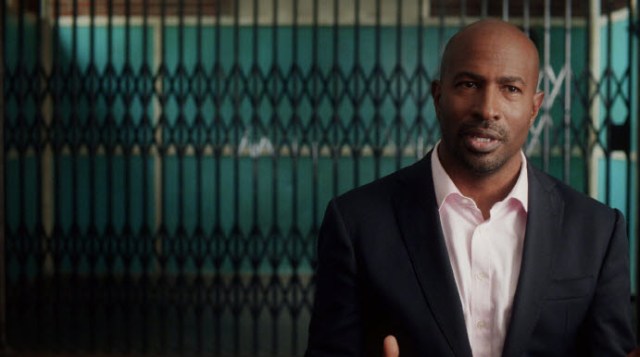
Mainly through various interviewees ranging from Angel Davis to Newt Gingrich, the director/co-writer Ava DuVernay, who previously directed “Selma” (2014), gives us a clear, persuasive argument on this serious social problem, which is in fact much more complex and stubborn than you might think. Although it was merely a small overlooked glitch in the US constitution at first, this seemingly inconsequential but fundamental fault has been exploited through a vicious systemic cycle of racism and incarceration, and it is really chilling and daunting to see that this may be continued as usual without any legal measures to stop it.

Everything was originated from one particular clause in the 13th Amendment to the US Constitution, which surely outlaws slavery as President Abraham Lincoln intended in 1865 but unfortunately contains one serious loophole in that clause. While the amendment makes it clear that slavery is banned in US or any place subject to its jurisdiction, it does not ban involuntary servitude as “a punishment for crime whereof the party shall have been duly convicted”.

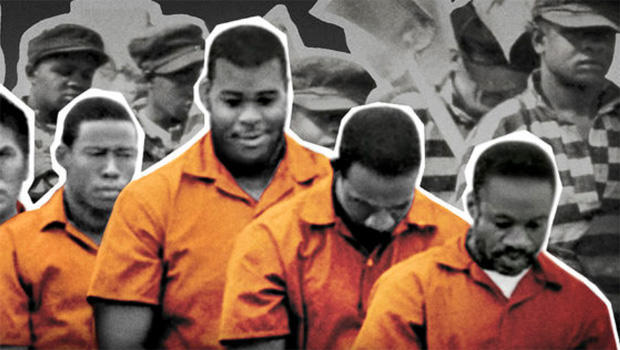
This loophole was quickly exploited not long after the end of the Civil War, when the infrastructure of the former Confederate States of America was completely collapsed while the free labor force via slavery was not available any more. Although thousands of emancipated slaves in the South were technically free as protected by the 13th Amendment, they were still penniless and helpless at the bottom of their society, so they became easy targets for arrest and incarceration. Once they were arrested just for minor misdemeanors like loitering or vagrancy, they were sent to prisons where they could be used as cheap labor force. Of course, this alternative form of slavery was perfectly legal according to that problematic clause in the 13th Amendment.
13th02

The documentary gives us a pointed explanation on how this social injustice caused more racism – and how these two factors further solidified the lower social status of black people via their toxic positive feedback. The more black people were labelled as criminals, the more they were disregarded and despised as second-rated citizens. This virulent trend kept being continued in the American society even while it entered the 20th century, and that was the main reason why D.W. Griffith’s controversial cinematic milestone “The Birth of a Nation” (1915) could get away with its blatant racist messages while praised by many white people including President Woodrow Wilson, who even reportedly said that the movie was “like writing history with lightning”. As a matter of fact, the enormous popularity of this very inconvenient masterpiece eventually led to the second rise of Ku Klux Klan, a horrible example of life imitating art.

Around the late 20th century, the situation finally started to look better for black people and other minority people in the American society. Martin Luther King Jr. and many other civil rights activists won their long, difficult battle against racism as the Civil Rights Act and the Voting Rights Act were passed in the US congress during the 1960s, and it looked like the American society seemed to be ready for a new beginning while leaving behind the era of Jim Crow laws.

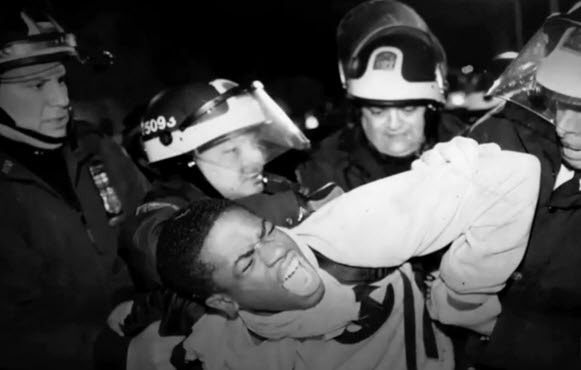
However, the system struck back harder as politicians boasted their law and order policies for their political gains. President Richard Nixon successfully used that tactic for being elected twice, and so did President Ronald Reagan. As they declared the war on crime and drug in public, many poor black people were arrested and sent to prison just because of drug possession, while white people were usually punished lightly in contrast. As a result, the criminal prejudice on black people was kept being amplified by the media and the government, and that was exemplified well by the maddening case of the Central Park Five, one of the most shameful historical cases of racism and prejudice.

While the Republican gets a fair share of blames through Nixon and Reagan, the documentary is not kind to the Democratic either. President Bill Clinton made sure that he looked tough on crime and drug as much as his predecessors, and that was how that infamous three-strikes law and the Federal Crime Bill in 1994 came into the picture. Clinton recently admitted that his policies on crime were a mistake, but it was already too late considering what his administration inadvertently accelerated. While the number of US prisoners was only 357,292 in 1970, it was increased to around 1 million in 1990, and then it was further increased to around 2 million in 2000.
13th05

As the increasing number of prisoners became a huge problem for the US federal government, American corporations saw golden opportunities from that, and the documentary gives us several infuriating cases of how they profited from their prison business as forming a massive industry complex feeding on mass incarceration. For instance, the privatization of prisons by incarceration firms led to the serious decline in the quality of prison environment in many aspects as they heartlessly pursued profit, and this disturbing tendency extended even to immigrant facilities as shown in the documentary.

Again, prisoners became suitably cheap labor force, and the movie shows us how they were exploited by prominent American corporations including Walmart –and how that was possible thanks to an organization called American Legislature Exchange Council (ALEC), which helped building laws to enrich its associated corporations as a legitimate but shady connection between corporations and lawmakers. Many of these corporations eventually distanced themselves away from using prisoners, but some of them still stick to their usual business mode as pointed out in the documentary, and you will be probably surprised to know who they are.

As it reaches to its devastating conclusion, all of the interviewees in “13th” agree that the system must be fixed as soon as possible, but the prospect does not look that good at this point. While the number of prisoners has been decreased during the Obama Presidency, the American society has kept being shaken by the sad, tragic cases of many young black people shot by the police or guys who supposedly followed that ‘stand your ground’ law, and now racism rises again on full throttle mode with the vile ascension of Donald Trump and his deplorable far-right cronies.

Although things will not probably be changed much for next several years as many of the interviewees in the documentary worry, there is still some hope as shown from the Black Lives Matter movement or the recent nationwide demonstrations protesting against Trump and what he despicably represents. Let’s hope that, after fully recognizing their worsening problem and its undeniable racist origin, the American society and its people shall overcome in the end.

13th06

Posted in Movies | Tagged , , , | 1 Comment

Into the Inferno (2016) ☆☆☆1/2(3.5/4): Volcanic awes presented by Werner Herzog

intotheinferno02

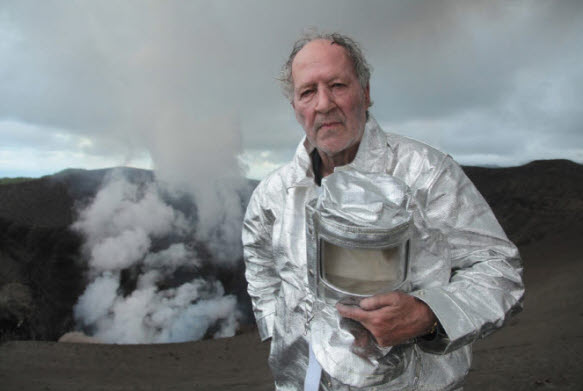
Looking around several different volcanoes around the world, Werner Herzog’s documentary film “Into the Inferno” serves us with many awe-inspiring moments which will definitely look more awesome and terrifying on the big screen. As watching its spectacular sights of smoldering magma pools, undulating lava flows, and towering volcanic smokes, I could not help but think about how dynamic the Earth has been for last 4.5 billion years – and how trivial our history on the planet has been in comparison.

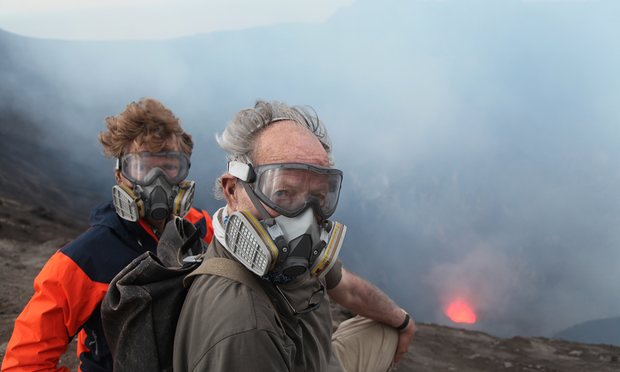
The opening sequence of the documentary instantly grabs our attention with the sweeping continuous aerial shot of a big active volcano in Ambrym Island of the Vanuatu Archipelago, 1,600 km (1,000 mile) east of Northern Australia. After briefly looking over the surrounding area, the camera eventually arrives at the wide crater of the volcano, whose huge scale is quite clear to us as we spot a group of researchers overlooking it from the rim. We soon get a closer look at the bottom of the crater, and then we behold the fearful majesty of the exposed magma pool at the bottom, which is constantly swelling or popping with infernal crimson fury.

There is a village located around the volcano, and we meet its chief, who tells us about how he and other villagers have lived with their dangerous volcano which has been the center of their spiritual belief. After a big eruption in 1968, tourists were prevented from going up to the crater for several years just because villagers believed outsiders were not welcomed by the volcano. They also believe that they will go to the bottom of the crater after they die, and the chief even claims that some of villagers including his own brother are spiritually connected with the volcano.

intotheinferno03
The chief is interviewed by Clive Oppenheimer, a British volcanologist who happened to acquaint himself with Herzog when Herzog was shooting his Oscar-nominated documentary “Encounter at the End of the World” (2007) in the Antarctic. As he and Herzog spent some time together while he helped the shooting at Mountain Erebus, both recognized a common bond between themselves as guys driven by what they are respectively fascinated with. In case of Oppenheimer, it is volcanoes and their grand mysteries of nature to be discovered and learned. In case of Herzog, it is those endlessly compelling aspects of human compulsion and obsession, which can be glimpsed from not only Oppenheimer but also the unforgettable heroes of Herzog’s many notable works such as “Aguirre, the Wrath of God” (1972) and “Grizzly Man” (2005).

As they go around other volcanic regions around the world, Oppenheimer comes to take the center along with Herzog’s narration in the documentary. He tells us how he came to be interested in volcanoes after visiting a vast Indonesian lake, which was created by a gigantic volcanic eruption around 74,000 years ago. He visits a conservatory near one of the prominent active volcanoes in Indonesia, and he cannot help but be excited when he shows us one of the important measurement equipments in the conservatory, which was in fact invented by him and his colleagues.

While admiring the passion and dedication shown from Oppenheimer and other volcanologists, Herzog also reminds us of the constant dangers in approaching very close to volcanic activities, and this is exemplified well by several clips of remarkable archival footage shot by Katia and Maurice Krafft, who, as Herzog’s narration duly notes, were unfortunately killed along with 41 people by the sudden pyroclastic current erupted from Mountain Unzen in Japan. Pyroclastic current may merely look like a big smokey thing when it is observed from the distance, but I must tell you that this is a very rapid current of hot gas and rock, and, according to Wikipeida, the temperature of the gas can reach to about 1,000 °C (1,830 °F).

intotheinferno03

Besides the dangerous epic beauty of volcanoes viewed through him and Oppenheimer, there are also interesting human sights Herzog cannot help but notice. In Indonesia, he looks around a local religious ritual for pacifying a nearby volcano, and then he shows us a big edifice which may be useless in the end but is rather amusing to watch for its odd exterior appearance. In Ethiopia, we meet a team of palaeoanthropologists looking for any valuable hominid fossils in a local volcanic area, and their leader Tim White’s professional enthusiasm is as irrepressible as Herzog’s or Oppenheimer’s. When White and his team luckily discover something priceless after brushing away fine soil on the ground, Herzog dryly muses: “Why this particular spot, and not back there where the goats are roaming?”

In case of Mountain Paektu in North Korea, this volcano is currently dormant with its big, tranquil lake in its crater although there is still the possibility of eruption. Herzog is understandably fascinated with how this mountain has been used as an outrageous propaganda tool for the insane dictatorship in North Korea. This part is surely quite familiar to me and other South Korean audiences, but it feels more amusing than usual thanks to Herzog’s distinctive voice, which can effortlessly hold our attention while often providing sly amusement via its deadpan undertone.

“Into the Inferno” is another mesmerizing work from Herzog, and my only complaint is that I could not watch it at a big theater, but I am glad that this wonderful documentary is widely available via Netflix. While he may be less prominent than before during recent years, Herzog still goes for what interests and fascinates him, and “Into the Inferno” shows us that he has lost none of his mojos yet.

intotheinferno01

Posted in Movies | Tagged , , | Leave a comment

Lo and Behold, Reveries of the Connected World (2016) ☆☆☆(3/4): Herzog on the Net

loandbehold01

“Lo and Behold, Reveries of the Connected World”, one of two Werner Herzog’s documentary films which were released in this year, freely flows from one section to another in its amused reflection on the past, present, and future of the Internet. While it often meanders or stumbles as going astray a bit too much at several points, the documentary is still compelling none the less mainly because of Herzog’s own offbeat approach to his thought-provoking subject, which alternatively fascinates and alarms him for good reasons.

Consisting of ten sections, the documentary begins its first section at the campus of University of California, Los Angeles (UCLA), where the history of the Internet was started during one night of 1969 October. As the camera looks around a tacky office area where the Internet at its most rudimentary level was tested, we meet Leonard Kleinrock, and this old computer scientist, who participated in that milestone development project, cannot help but be enthusiastic as showing us an old preserved computer equipment developed by him and his colleagues and recollecting their first online communication.

As reflected by an amusing episode told by Kleinrock, even typing and sending three characters in row could be quite burdensome to computers during that old time, but things have been evolved far faster than expected since that small but significant first step. Boosted by the rapid development of computer technology, the Internet has become a big part of our daily life as making the global community smaller than ever through its ever-increasing webs of digital networks around the world, and it keeps becoming wider, bigger, and faster even at this point.

loandbehold04

In one section, Herzog calmly and wryly observes the bright sides of this ongoing technological advance which will change our world a lot within next 50 years. Sebastian Thrun, the CEO and cofounder of Udacity, tells us a good example of how the Internet can be a useful portal for finding and recruiting creative minds. Adrien Treuille, the creator of science game EteRNA, shows us what was obtained from the countless trials of his many online game users, and we see how that can be applied to an actual biology research.

Observing the exponential evolution of the Internet, Herzog muses at one point on whether the Internet may gain its own consciousness someday, and this is naturally associated with two cases of artificial intelligence development presented in the documentary. In case of a vehicle which can be automatically driven by a computer inside it, its demonstration is followed by a discussion on whether it can be as capable and ethical as human drivers. As constantly monitoring its surroundings as programmed, it can avoid any possibility of accident on the road, but can it possibly be capable of ethical choices under certain circumstances?

Anyway, computers may learn more rapidly and efficiently than us someday, as implied by small robots which can play football for themselves. They remain on a basic level, but their developer confidently predicts that they will play better than human soccer players within less than 50 years. This may sound silly to you, but think about how computer has surpassed human brain in several notable fields including chess, go, and lip-reading during recent years.

loandbehold03

Not so surprisingly, Herzog also looks around the dark sides of the Internet, but the documentary occasionally loses its focus during this part. We hear about online game addiction, and Herzog mentions how serious this problem has been especially in South Korea, but he only comes to scratch the surface before moving onto other things to show and tell. While privacy and security are indeed relevant issues associated with the Internet, the documentary does not present anything revealing to most of us (the interview clip featuring former hacker Kevin Mitnick ends up providing no more than an amusing anecdote, for instance), and I am not that sure about whether a part involved with several people hypersensitive to electromagnetic wave is necessary, though they are surely interesting enough to observe.

One of the most effective moments in the documentary comes from a family tragedy which induced the worse sides of human nature during the aftermath. After a teenager girl named Nikki Catsouras died because of a horrible car accident, the pictures shot at the site of her accident happened to be leaked and then spread around the Internet, and this accordingly led to more shock and pain for her grieving family. As they flatly recollect their terrible experience caused by those anonymous Internet users, we cannot help but be horrified by how awful people can be, and Herzog wisely avoids making this moment too sensational or exploitative.

Considering that it is intended as a promotional film (its production was mostly financed by the cybersecurity firm NetScout), “Lo and Behold, Reveries of the Connected World” did its job while functioning as the overview of many different aspects of the Internet. I wish that it were more focused and coherent in its storytelling, but it is still an interesting documentary thanks to Herzog’s distinctive presence hovering around the screen. Although he mostly stays behind the camera throughout the film, his narration always attracts our attention, and his occasional odd questions and comments seldom disappoint us. This is not one of his better documentaries, but, folks, has Herzog ever been boring?

loandbehold02

Posted in Movies | Tagged , , , | Leave a comment

Justin Timberlake + the Tennessee Kids (2016) ☆☆☆(3/4): The final tour evening

justintimberlakethetennesseekids03

Let me get this straight to you first. While I have heard about Justin Timberlake or NSYNC a few times since his first solo album “Justified” was released in 2002, I have been rather more familiar with his acting career due to my serious lack of interest in pop music. Not long after I noticed him in “Alpha Dog” (2006), he surprised me with his breakthrough supporting turn in “The Social Network” (2010), and he was also entertaining in his small but crucial role in the Coen Brothers’ dry music comedy drama “Inside Llewyn Davis” (2013), in which he contributed to its funniest song.

As an actor, Timberlake has a charismatic screen presence to engage the audiences, and his concert film “Justin Timberlake + the Tennessee Kids” confirms that again to me while also showing other interesting things to notice from this renowned international pop star. As far as I can observe from him performing on the stage, he is a talented and electrifying entertainer who will probably keep going further after what will be remembered as another major highlight in his remarkable music career, and the movie did a good job of entertaining us with his undeniable star quality as well as numerous fabulous moments shown from his first-class concert.

The main title sequence of the movie shows us the final preparation stage during the last day of “20/20 Experience World Tour”. Initiated in 2013 November for the promotion of Timberlake’s third and fourth solo albums “20/20 Experience” and “20/20 Experience – 2 of 2”, this tour took more than one year as he and his tour members went around many different cities around US and the rest of the world, and it was concluded with two consecutive evening concerts at MGM Grand Garden Arena in Las Vegas, Nevada during the first two days of 2015.

justintimberlakethetennesseekids05

As the camera goes around inside the arena along with Timberlake, we come across management crew members, technical crew members, and, above all, various backup singers, dancers, and band players who are briefly introduced one by one. It goes without saying that those musicians and dancers have been doing the same concert performance over and over under their demanding tour schedule for a long time, but their morale are kept high despite that, and we get a little glimpse on how Timberlake and others ready and fortify themselves for their final concert.

We soon see Timberlake in backstage position during a few minutes before showing himself up on the stage, and he looks cool and dashing in his neat, impeccable suit designed by Tom Ford. Right from the first song performed on the stage, he grabs the attention of the audiences, and it is then followed by a series of dizzy, dazzling moments pulsating with spirited instrument performances, dexterous dance movements, and busy light beams. Confidently holding everything as the center of the concert, Timberlake also lets others on the stage have their own moments, and they all look effortless as deftly balancing themselves between control and spontaneity.

Appreciating their enormous efforts put into the concert, I admired several big moments to remember. There is a wonderful moment when the arena is lighted by thousands of smartphones from the audiences, and then there is an awesome scene showing Timberlake and his backup singers performing right on a panel which can be moved back and forth between the stage and the audience area. To be frank with you, this moment is so naturally presented that it took some time for me to notice the panel slowly being moved across the arena, and the end credits gives us a detailed look on how the technical crew prepared this before the concert.

2013 American Music Awards - Roaming Show

The director Jonathan Demme is no stranger to concert films. While making acclaimed films including “Melvin and Howard” (1980), “The Silence of the Lambs”, “Philadelphia” (1993), and “Rachel Getting Married” (2008), he also made a number of notable documentary films, and he recently directed three Neil Young concert films “Neil Young: Heart of Gold” (2006), “Neil Young Trunk Show” (2009), and “Neil Young Journey” (2012).

With his cinematographer Declan Quinn, Demme did a lot more than merely presenting a concert performance on the screen. With 14 cameras operated around the stage, Quinn and Demme vividly captured many exciting moments during the concert, and these terrific moments come and go smoothly thanks to the precise, efficient editing by Paul Snyder. While we get the clear whole picture of the concert through frequent wide shots showing the entire stage, we also get a fair number of closer glimpses of Timberlake and others on the stage via different camera positions and angles, and the dynamic and intimate sense of joy and excitement feels quite palpable to us as a result.

Regardless of whether Justin Timberlake’s music career will eventually be as enduring as, say, Frank Sinatra, “Justin Timberlake + the Tennessee Kids” showed me that he has all the right stuffs for his advancing stardom, and I came to have more admiration toward his considerable talent as charmed by his likable personality. This enjoyable concert film does not make me want to buy his albums at this point, but I think I will probably attend his concert someday for getting more direct fun.

justintimberlakethetennesseekids01

Posted in Movies | Tagged , , | Leave a comment

Victoria (2015) ☆☆☆(3/4): A crime thriller presented via a single continuous take

victoria02

Although I do not think German film “Victoria” intends to be a cautionary moral tale, it can be said that there is a familiar moral to be learned from its heroine’s unfortunate plight during a few hours: Be discreet about whom you befriend. Even though there are already signs of a trouble to come, she keeps hanging around a stranger and his unreliable friends while making a few unwise choices, and, of course, she eventually finds herself stuck in a dire situation she never imagined in the beginning.

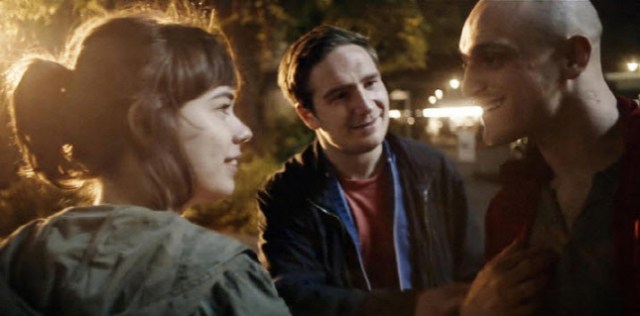
The opening minutes of the movie shows its young heroine enjoying herself at a nightclub somewhere in Berlin during late dawn. Victoria (Laia Costa) is a Spanish girl who recently came into Germany after giving up her music career in Spain as mentioned later, and she currently works at a nearby cafe without any particular plan about her uncertain future. Although she still needs to learn German more, she can at least communicate with others in English instead as shown from her brief conversation with a bartender working at the nightclub, so most of dialogues in the movie are spoken in English instead of German as it revolves around her viewpoint (and that was the main reason why it was not eligible to be Germany’s official submission for the Academy Award for Best Foreign Language Film in last year).

When Victoria is about to leave the nightclub and have a few hours of nap at the cafe before it opens at AM 7:00, she happens to encounter Sonne (Frederick Lau) and his three friends, who are prevented from entering the place for an unspecified reason. Not long after leaving the nightclub, she meets them again, and she soon comes to enjoy their company although it is quite apparent from their impromptu attempt to steal a car that these lads are too reckless and irresponsible to hang around with.

victoria01

Victoria becomes attracted to Sonne particularly, and he persuades her to have a little extra fun with him and his friends before having her nap. They try thievery at a convenient store just because, well, they can. They also sneak inside an apartment building and then go up to its rooftop, where they come to have their own quiet but jolly moment together with stolen goods and marijuana. Victoria gets to know a bit about Sonne and his friends including Boxer (Franz Rogowski), who was recently released from prison but mostly looks like a nice guy as far as she can see.

The mutual feeling between Victoria and Sonne becomes more evident when Sonne later decides to spend a more intimate time alone with her before leaving along with his friends for some urgent business. He goes to her cafe along with her, and they sense more of the attraction felt between them as playfully interacting with each other in the cafe, and it looks like this short moment of theirs can lead to them a more serious stage.

Anyway, Sonne suddenly comes back not long after leaving the cafe, and Victoria gets involved with him much more than expected. Sonne and his friends are supposed to meet someone associated with Boxer, but one of them is too drunk for that important meeting, and somebody must fill the spot as soon as possible. While not fully grasping what is really going on, Victoria decides to do the job mainly because Sonne and his friends are clearly in the urgent need of help. It initially looks like a simple matter of driving them to some place, but then she belatedly realizes she made a big mistake when she comes to the meeting along with others.

So far, “Victoria” surely sounds like a conventional crime thriller, but the director/co-writer Sebastian Schipper and his cast and crew try here something quite challenging in numerous technical aspects. They shot the movie in one single continuous take around several different locations in the Kreuzberg and Mitte neighborhoods of Berlin, and what is presented in the movie is the third take which was in fact their last chance after two previous unsatisfying attempts.

victoria03

Reminiscent of a few other successful cases including Alexander Sokurov’s “Russian Ark” (2002), the overall result is technically commendable to say the least. The cinematographer Sturla Brandth Grøvlen’s digital camera fluidly moves around or along with the performers on the screen without drawing attention to itself at all, and the dramatic tension of the movie is steadily accumulated as Victoria and the other main characters are gradually pushed into more danger and desperation along the plot. Grøvlen deservedly received the Silver Bear for Outstanding Artistic Contribution for Cinematography at the Berlin International Film Festival early in last year, and the movie also won several prizes including the Best Feature Film Award at the 2015 German Film Awards.

Under Schipper’s skillful direction, his cast members look spontaneous enough on the screen while they certainly prepared themselves a lot in advance before their demanding shooting. As the emotional anchor of the story, Laia Coast is believable in every step of her character’s dramatic physical/emotional journey along the plot, and she and her co-star Frederick Lau have nice chemistry between their performances.

While not only admirable but also successful overall in its daring filmmaking experiment, the movie sometimes gets itself confined by its technical and narrative limits. Besides several dragging parts which could be easily cut or trimmed if it were a more conventional work, the movie is sometimes hampered by thin characterization and glaring plot contrivances, and I must point out that Sonne’s friends frequently look more like tools existing solely for causing more troubles rather than believable characters we can care about besides Sonne and Victoria.

Being a bit too long in its running time (138 minutes), “Victoria” begins to lose its grip around its last 30 minutes, but I enjoyed it anyway while admiring what was achieved on the screen. They willingly went for sheer verisimilitude via an unconventional cinematic approach, and they did succeed as providing us an interesting movie experience to remember and talk about. To me, that is a lot more engaging than usual blockbuster action products – and you may agree to that after watching it.

victoria04

Posted in Movies | Tagged , | Leave a comment

The Triplets Of Belleville (2003) ☆☆☆1/2(3.5/4): Meet Sylvain Chomet

thetripletsofbelleville01

While I was aware of its presence as it came out in 2003 and then was nominated for Best Animation Feature Film Oscar in the next year, I only came to watch Sylvain Chomet’s first animation feature film “The Triplets of Belleville” in 2010. During that belated viewing, I was instantly charmed by its distinctive cell animation style, and I was amused by several quirky scenes tinged with its own morbid sense of dark humor.

Sadly, “The Triplets of Belleville” did not get the chance of theatrical release in South Korea around the time when it came out, but it was finally released in South Korean theaters a few weeks ago, and I did not hesitate at all when I happened to get a chance to see this wonderful animation film on the big screen at a local arthouse theater. Although I must confess that I felt a bit drowsy during the Sunday morning screening I attended, my mind was delighted by many of its fun moments despite that problem, and I was happily confirmed that it is still one of the best animation films of the 2000s.

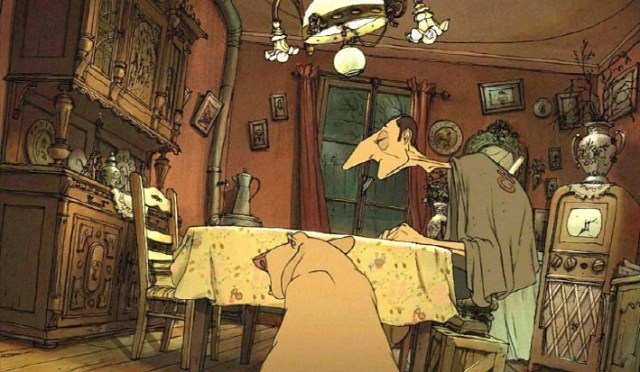
After the spirited black-and-white opening sequence literally pulsating with the swinging jazzy mood of the 1920-30s, we meet two main characters of the story: Madame Souza and her young grandson Champion. Probably because of losing his parents not so long ago, Champion is usually withdrawn to himself in his speechless attitude, and his grandmother tries several things for her grandson while living with him in her shabby but cozy house. When he seems to be interested in playing piano, she puts a piano in front of him, but he does not show much interest. She also gives him a puppy and a train set, but he is not particularly excited about them either.

On one day, Madame Souza gets an accidental idea while cleaning her grandson’s room. She buys him a tricycle, and, as she expected, her gift ignites something inside Champion, who quickly becomes more excited and joyful than usual while riding his tricycle. After several years, Champion grows up to be a professional cyclist riding a bicycle instead of a tricycle, and we see him constantly and mindlessly pushing himself under his grandmother’s persistent assistance.

thetripletsofbelleville05

We notice that he looks a lot different than before. Looking grotesquely thin and spindly except his bulging muscular calves and shins, Champion pays a lot of attention to his weight because of the upcoming Tour de France race, and how he and her grandmother monitor his weight during their dinner time is one of many whimsical wordless moments in the movie which are reminiscent of those effortlessly comic moments in Jacques Tati’s great comedy film “Monsieur Hulot’s Holiday” (1953).

Their world is filled with various figures who look equally weird or grotesque in their broad caricature appearance. The cyclists participating in the Tour de France race look as exaggerated as Champion, and so do many people cheering along their arduous race course, which goes up steeply to its peak point and then goes straight down to the finishing line in Marseille.

And then there come an insidious duo of mafia henchmen, who are two of the most striking figures in the movie as evoking those trump cards in Lewis Carroll’s “Alice in Wonderland” via their flat gestures and movements. For the diabolical business plan of their boss, they kidnap three cyclists during the race, and Champion happens to be one of them. After belatedly realizing that her grandson has been kidnapped, Madame Souza instantly goes after the criminal duo along with his pet dog Bruno, and she is not stopped at all even when her grandson is shipped along with the other kidnapped cyclists to Belleville, a metropolitan city located across the ocean.

thetripletsofbelleville02

As a charmingly surreal composite of Montreal, Quebec City, and New York City, Belleville is full of oddities and grotesques with morbid grandeur. Besides more amusingly ungainly caricatures including a chubbier version of the Statue of Liberty, the city is a huge forest of lean, towering skyscrapers to behold, and we also get a dark, twisted fun from how Champion and the other kidnapped cyclists are going to be mercilessly exploited.

While wandering around the city, Madame Souza comes across the Belleville triplets, a trio of old ladies who were once popular music hall singers but are barely earning their living now as humble musicians. Although their singing ability is less stellar than before, they still retain most of their musical talent, and there is a creative performance scene consisting of several different sounds respectively made by the triplets and Madame Souza. I also enjoyed how the triplets prepare their unspeakable meal in a rather unpleasant way, and the climax sequence where they and Madame Souza risk themselves for rescuing Champion has one of the most amusing vehicle chases I have ever seen during recent years.

Deliberately mordant and melancholic in its gray brown nostalgic ambience, “The Triplets of Belleville” does not try to be cute or likable, but that does not hurt its unique charm at all. Its striking visual moments remain vividly in my mind, and its Oscar-nominated song “Belleville Rendez-vous” is so catchy with its bouncy rhythm that I mumbled its French lyrics after my recent viewing although I do not speak French at all. If you want something different from those mundane digital animation products, I can assure you that “The Triplets of Belleville” is a pretty good one for you – and your children, maybe.

thetripletsofbelleville04

Posted in Movies | Tagged , , , , | Leave a comment

Tangerine (2015) ☆☆☆(3/4): One day of two transgender sex workers in Hollywood

tangerine02

When “Tangerine” was shown at the Sundance Film Festival early in last year, this low-budget independent film drew lots of attention for not only what it was about but also how it was made. The movie is certainly interesting for its unconventional story subject, and it is all the more commendable considering that the movie does not look that shabby even though it was actually shot by three smartphones. While it is not entirely without flaws, its raw realism and authentic sense of people and location are admirable to say the least, and that is why it can function as a vivid window into the daily life of its interesting human characters to watch.

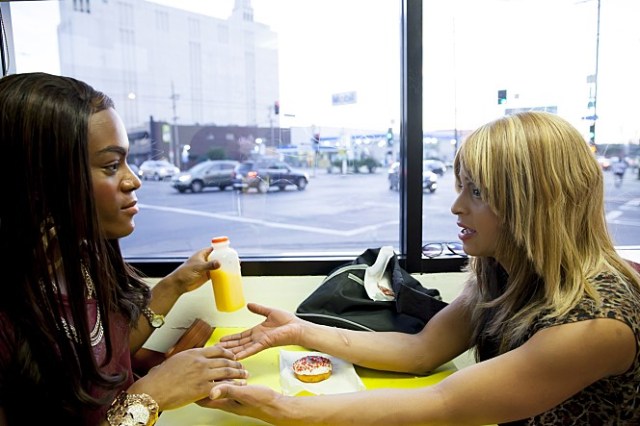
After the deliberately old-fashioned main title, we are introduced to Sin-Dee (Kitana Kiki Rodriguez) and Alexandra (Mya Taylor), two transgender sex workers operating in a neighborhood area of Hollywood, California. Having just been released on Christmas Eve after finishing her 28-day jail sentence, Sin-Dee is glad to have a talk with her close friend at some donut shop in their neighbourhood, and we get to know a bit about them as listening to their conversation.

During their conversation, Alexandra mentions that Chester (James Ransone), a guy who is Sin-Dee’s pimp and current boyfriend, has been cheating on Sin-Dee since she went to jail. Instantly becoming furious about this, Sin-Dee decides to take care of this matter for herself, and Alexandra reluctantly joins her friend’s search for a cisgender girl who gets involved with Chester, though she is more occupied with her upcoming evening performance.

Observing Sin-Dee and Alexandra going around their neighborhood here and there, the movie gives us an engaging anthropological presentation of their small world which is quite unfamiliar to most of us. We frequently meet other transgender sex workers on the streets, and there are also other different characters including a small-time drug dealer, a duo of police officers, and a group of cisgender prostitutes working at a seedy place.

tangerine03

While the sense of tough life is palpable on the screen, the movie is buoyed by its vibrant visual style and irrepressible personality, and it is remarkable that the director/co-writer Sean Baker, who also produced and edited his film besides working as the co-cinematographer along with Radium Cheung, succeeds in making a slick, competent work which does not look deficient at all in technical aspects. While he chose to shoot his film with three iPhone 5s smartphones due to his tight production budget amounting only to $100,00, his smartphones equipped with anamorphic lens, a $8 video app, and Steadicam produced the result a lot better than you might think. Although its several scenes understandably look rough, the movie mostly looks fine and clear with occasionally striking color scheme on the screen, and this level of visual quality is maintained well even during the evening scenes later in the movie.

And it surely helps that two heroines of the movie are played by real transgender actresses. Before being cast for the movie via a happy coincidence, Kitana Kiki Rodriguez and Mya Taylor actually worked as street workers probably not so far from Sin-Dee and Alexandra, and they certainly bring a considerable amount of authenticity and truthfulness to their respective roles as non-professional performers.

I have no idea on how much their performances are based on their life experiences, but Rodriguez and Taylor are terrific as complementing each other on the screen. Brash and tempestuous at times, Sin-Dee is certainly not someone we can like easily, but Rodriguez imbues her character with humanity and dignity, so we come to respect Sin-Dee’s gender identity as well as her personality. Sin-Dee can be very harsh especially when she finally meets the girl she is looking for, but she can also be nice and generous, and there is an unexpected moment of hazy tenderness as she and two other characters happen to be together within a small place.

tangerine04

Ably supporting her co-star, Mya Taylor, who deservedly received several awards including the Independent Spirit Award for Best Supporting Female for the film, is the voice of common sense in the movie. While Sin-Dee simply lives her life day by day, Alexandra has aspired to a singer career even though there is not much possibility for her out there, and there is a poignant moment when she sings in front of a few audiences including her friend. Life disappoints her again, but she does not let herself daunted by that at least, and we cannot help but smile as listening to her singing.

The screenplay written by Baker and his co-writer Chris Bergoch is not without problems to notice, and the most prominent one is involved with Razmik (Karren Karagulian), an Armenian taxi driver who turns out to be a longtime customer of Sin-Dee and Alexandra. While Karagulian is fine as a man who is not very honest to himself as well as his family, his character’s subplot feels like coming from a different kind of movie, and the climax scene involved with him and other characters approaches to the realm of sitcom although it is intended to be funny.

Nevertheless, the emotional power and technical prowess of “Tangerine” remain intact despite its noticeable imperfect sides, and I was particularly touched by the last scene between Sin-Dee and Alexandra. Regardless of whatever will happen to them, these ladies will keep going on together – and you will never forget them after the movie is over.

tangerine01

Posted in Movies | Tagged | Leave a comment

Vanishing Time: A Boy Who Returned (2015) ☆☆☆(3/4): When he returns older

vanishingtime02.jpg

South Korean film “Vanishing Time: A Boy Who Returned” is a fantasy melodrama constantly swinging between its dark premise and sentimental mood. Although the mysterious situation surrounding its young heroine has inherently uncomfortable aspects for good reasons, the movie believes in its premise as much as her, and it manages to earn a fair share of weepy moments as earnestly pushing its premise to the end.
When Soo-rin (Sin Eun-soo) arrives at some big offshore island along with her stepfather, she does not look that happy about this removal. Since her mother’s recent death, she and her stepfather have been more estranged from each other than before, but he tries to make her feel comfortable at least, while beginning his first working day at a tunnel construction site in the mountainous region of the island.

As the new student in a local elementary school, Soo-rin does not get along well with her schoolmates, and she is ridiculed for her personal interest in supernatural phenomena, which was probably originated from her grief over her mother’s death. Fortunately, she befriends an orphan boy named Seong-min (Lee Hyo-je, who previously played a minor supporting character in “The Throne” (2015)) after their accidental encounter in front of the school, and he soon becomes someone with whom she can share her fascination with those preposterous things like out-of-body experience. As they spend more time together around the island, they happen to discover a shabby abandoned house located within a mountain forest near the tunnel construction site, and it quickly becomes their own private place as they feel more of the innocent affection being developed between them.

vanishingtime01

And then something very strange happens during one fateful day. Soo-rin goes into the forest along with Seong-min and his two friends for watching the detonation process at the tunnel construction site from the distance, and they come across a small, narrow burrow somewhere in the forest. Although it looks dark and ominous to say the least, they eventually crawl inside the burrow and then arrive at an underground chamber with the pond containing a mysterious shining object. After they come outside with this object, they become more curious about it, and Seong-min tells others about a weird story he heard from his grandfather before. Is it possible that the burrow is the one described in that story? And does the object in question really belong to a ‘time-eating monster’?

Anyway, not long after Soo-rin goes back into the burrow to find her lost hairpin, Seong-min and two other boys are vanished without any trace, and this incident surely shakes up the whole island community. As the search around the island is continued without any success, there comes a grim possibility that the boys will never return – especially after a terrible discovery on the beach.

While understandably shocked and devastated, Soo-rin also becomes more frustrated because nobody believes her story, and then a more unbelievable thing happens to her. When an unknown man breaks into her house while she is alone at one point, she follows after him as he runs away into the forest, but then she finds herself getting caught by this guy. He claims that he is none other than Seong-min, but, of course, Soo-rin does not believe at all what he desperately tries to tell her, and he is soon hunted by the police as the prime suspect.

vanishingtime0

However, after the discovery of a definite proof she cannot deny, she comes to see that he is really Seong-min, and the following flashback part gives us the glimpse into an amusingly odd but ultimately despairing circumstance in which Seong-min and two friends were trapped for more than 15 years. They initially had a fun with a sort of alternative world where everything including time was stopped except them, but they eventually became more acutely aware of the horror of their possibly infinite isolation in the dimension of time and space, and that leads to some of the most poignant moments in the film.

Now played by Kang Dong-won, Seong-min is not a little boy he used to be, but Soo-rin still sees his younger self from Seong-min’s changed appearance. While Kang’s boyish looks effectively convey the innocence remained intact inside his character’s adult body, his co-star Sin Eun-soo’ strong performance firmly holds our attention as the emotional anchor of the story, and we become more involved in Soo-rin’s desperate attempt to save her friend during its second half. Clearly identifying with their desperation and frustration, the movie also lets us understand why the other characters in the movie regard Soo-rin and Seong-min’s situation quite differently. Yes, they could consider her rather improbable story more seriously, but even she did not trust him at first. And, after all, who can possibly be unsuspicious about the sight of an underage girl being closely associated with an unknown man who looks more than 25 at least?

Although I have some reservation on several shaky aspects of its premise, that remains a minor flaw at least, and there is enough amount of sensitivity to engage us in “Vanishing Time: A Boy Who Returned” mainly thanks to the director Eom Tae-hwa and his two dependable lead performers. This is sappy indeed, but it is sincere about their extraordinary circumstance, and we come to care more about them as following their desperate drama – and that is what a good melodrama movie is expected to do, you know.

vanishingtime04

Posted in Movies | Tagged , , | Leave a comment

Fantastic Beasts and Where to Find Them (2016) ☆☆1/2(2.5/4): Not So Fantastic

fantasticbeastsandwheretofindthem02

Based on the book which was developed from one of numerous small details in the wondrous fantasy world created by J.K. Rowling, “Fantastic Beasts and Where to Find Them” gives us an engaging variation of elements familiar to many of us during its first half. I felt delighted and entertained by some of its good scenes, but I also came to be confused and disoriented as its weak, overstuffed plot tried to juggle too many things together, and I eventually became disheartened to see its second half being devolved into something I had to endure many times during this summer.

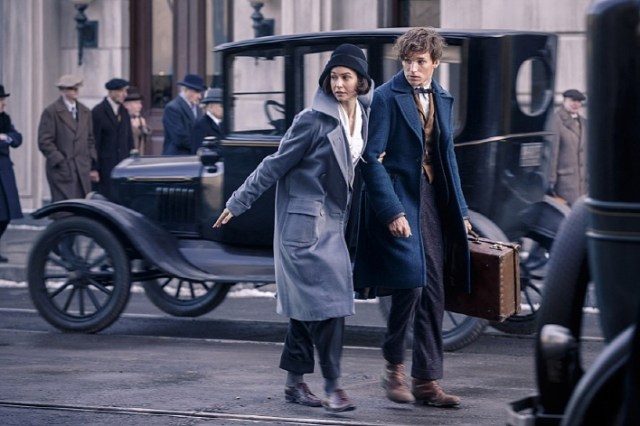
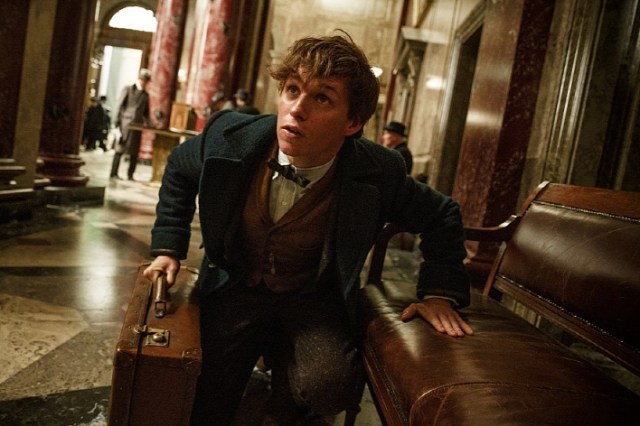
Its story is about an accidental adventure of Newt Scamander (Eddie Redmayne), a young British wizard who comes into New York City for some private business in 1926. As he arrives in the city by a ship and goes through the US customs along with other passengers, he has a little trouble with his seemingly plain suitcase, but he can easily hide whatever is contained inside that suitcase, even when a customs officer becomes a bit suspicious about it.

However, he inadvertently gets himself into a big trouble. When he is momentarily distracted by the anti-witch movement led by Mary Lou Barebone (Samantha Morton), one of the living creatures contained in his suitcase, called Niffler, manages to escape from the suitcase. Looking like a cross between mole and duckbill, Niffler has an irrepressible kleptomaniac tendency toward gold or shiny things, and it surely cannot resist its nature when it happens to sneak into a nearby big bank.

fantasticbeastsandwheretofindthem03

Once he notices that Niffler has escaped, Scamander follows it to the bank for preventing any possible problem which may draw the unnecessary attention of normal people without magic ability, who are called ‘Muggles’ in Britain while being called ‘No-Majs’ in US. While searching for Niffler, he comes to encounter a No-Maj factory worker named Jacob Kowalski (Dan Fogler), who comes with his suitcase to the bank for applying for business loan around that point. Thanks to Scamander, Kowalski happens to see what he is not supposed to witness, and the situation becomes more complicated when he manages to run away from Scamander with, of course, the wrong suitcase.

Even before fully grasping what is going wrong, Scamander is arrested by Porpentina “Tina” Goldstein (Katherine Waterston), a young woman who is a recently downgraded employee of the Magical Congress of the United States of America (MACUSA). She takes him to the MACUSA headquarters hidden somewhere in the middle of Manhattan, and we soon behold its busy inner space clearly imbued with the contemporary Art Deco style, which is one of the most impressive elements in the movie.

While Goldstein is eager to report Scamander to her superiors, President Seraphina Picquery (Carmen Ejogo) and other high-ranking officials do not care much about that mainly because they are currently dealing with a more urgent problem. A mysterious dark force is on the loose for no apparent reason, and this can endanger the magic world if it continues to create more havocs in the world of No-Majs. Percival Graves (Colin Farrell), the director of Magical Security, is determined to find its cause, but then it is revealed later that this shady, ruthless guy has some other plan behind his back, which is associated with Barebone’s adopted son Credence (Ezra Miller).

In the meantime, Kowalski gets himself more involved with Scamander after more creatures get out of Scamander’s suitcase. When he goes to Goldstein’s residence along with Scamander, he is introduced to Goldstein’s younger sister Queenie (Alison Sudol), and it does not take much time for them to be attracted to each other, though it is already ordered that his memories of Queenie and many other things he saw will be erased once the situation is over.

fantasticbeastsandwheretofindthem04

The movie works best when it focuses on awe and wonder, and that aspect is exemplified well by the sequence unfolded within Scamander’s suitcase, which actually contains a far bigger space than it seems on the surface. As various odd creatures appear here and there, we cannot help but admire rich, imaginative details, and then we get a couple of action sequences as Scamander and other characters try to retrieve a few escaped creatures.

However, Rowling’s adapted screenplay fails to establish enough narrative momentum to grab our attention to the end. Compared to Harry Potter or other colorful characters in the Harry Potter movies, the characters are relatively less distinctive although Eddie Redmayne and his co-performers convincingly inhabit their characters’ world. With his likable screen presence, Redmayne is certainly well-cast in his role, and it is nice to see Katherine Waterston getting more exposure through this movie after her solid supporting turns in “Inherent Vice” (2014) and “Steve Jobs” (2015). While Dan Fogler and Alison Sudol provide comical moments as demanded, Colin Farrell, Carmen Ejogo, Samantha Morton, Ezra Miller, Ron Perlman, and Jon Voight are seriously under-utilized due to their flat characters, and I must tell you that a certain well-known actor who plays the villain in the movie is far less impressive compared to Ralph Fiennes’ diabolical turn as Lord Voldemort in the Harry Potter movies.

The director David Yates, who directed no less than four Harry Potter movies, is no stranger to Rowling’s fantasy world, and he gives us a competent blockbuster product. Unfortunately, he lets its third act dominated by dizzy, bland CGI spectacles, and I did not get much fun or excitement while not caring a lot about how the story would end. I have been more tired of CGI actions in these days, and the climax sequence in the movie only confirmed my exhaustion, without any dramatic impact.
In conclusion, “Fantastic Beasts and Where to Find Them” is not as fantastic or spirited as it could be. After the screening during last night, I came to miss more the awe and wonder I observed from the Harry Potter movies, and I felt growing dissatisfaction although it was not a total waste of time. Now I am reminded of what Roger Ebert once said after watching “Harry Potter and the Half-Blood Prince” (2009): “There is still much to be revealed, but little to be discovered.”

fantasticbeastsandwheretofindthem01

Posted in Movies | Tagged , | Leave a comment

Almost Holy (2015) ☆☆☆(3/4): A gritty, tough shepherd in Ukraine

almostholy03.jpg

Documentary film “Almost Holy”, currently available on Netflix, gives us a darkly complex portrayal of a man of the cloth determined to fight against evil in his own unorthodox way. As the documentary shows more of the gritty, uncomfortable sides of his drastic but somehow effective measures, we observe more of what has motivated him for many years, and we cannot help but be fascinated with this compelling human being compulsively driven by his faith and integrity.

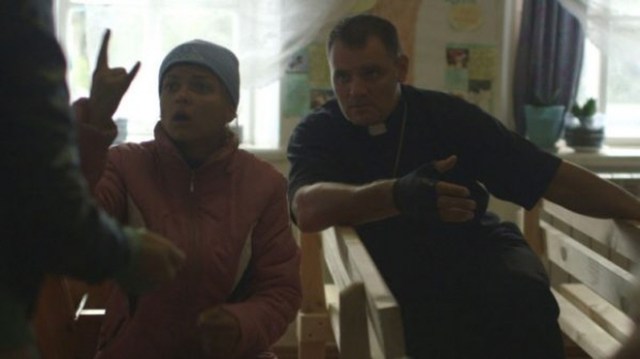
He is Gennadiy Mokhnenko, a radical pastor who has gained a fair share of reputation and controversy in Mariupol, Ukraine since he founded Pilgrim Republic Children Rehabilitation Center in 2000. Around that time when Ukraine was still suffering from the social/economic blow from the collapse of the Soviet Union in 1991, the streets of Mariupol were riddled with young addicts, and he decided to do something far more than taking care of addict kids at his rehabilitation center. As shown from his archival video footage clips, he routinely goes around crime-ridden areas for nabbing them, and he also confronts drug dealers and other offenders for further driving drug away from his city. He can be quite intimidating if necessary, and he looks more like a cop at times with his plain clothes and black fingerless gloves.

As Pastor Mokhnenko frankly admits in front of the camera, his rehabilitation center is often like both hospital and prison. While many of those unfortunate underage addicts are helped a lot under his protection, some of them are eager to get out. He can be very tough and strict if anyone steps out of line, and there is a harsh scene where he openly scolds a young addict who has been a bad influence to himself as well as some other kids. The boy may deserve that because he ruined a good chance given to him, but does he really have to be humiliated like that in front of others?

almostholy01

Of course, Pastor Mokhnenko has drawn lots of controversy and criticism for his crusade against drug in public, and his critics do have good points on the inherent dangers inside his vigilantism. His motive may be sincere, and his actions can be regarded as brave and heroic, but, as many of you know, there is always something troubling about enforcing law and order to others in unauthorized ways, which can possibly cause more chaos.

However, it is undeniable that the system itself has been failing for a long time in the city, and the documentary has a number of devastating human sights to haunt us. Around its beginning, Pastor Mokhnenko is with a badly injured girl whose silent appearance speaks volume, and we see how she gets some necessary help thanks to him. We later meet a physically handicapped woman who has been abused by a despicable guy who does not show any remorse about his heinous deeds, and then there is the heartbreaking case of a little girl who really needs to be separated from her lousy addict parents but does not feel so happy about that. We also notice numerous needle marks from various young addicts, and one of the most harrowing moments in the documentary involves with an unfortunate boy who was already too late despite the pastor’s efforts.

As a guy who unhappily grew up under alcoholic parents, Pastor Mokhnenko really understands and cares about those poor kids under his supervision, and we come to understand that saving and rehabilitating them for new, if not better, life has been something he has lived for. In my opinion, he looks like a sort of addict not so different from Nicholas Cage’s character in “Bringing Out the Dead” (1999), but I admire his care and dedication shown from how he spends time with kids outside. While he and his wife have their own children, he adopted no less than 32 homeless children, and his wife had no problem with that because she cares about his mission as much as him.

almostholy023

Meanwhile, things get worse outside, and Pastor Mokhnenko becomes more aware of his limits than before. The political turmoil in his country eventually culminates to the Euromaidan Revolution in 2014, and its brief resulting optimistic mood is quickly shattered by the following civil war, which happens to put Mariupol right in the center of the conflict. As the city becomes more dangerous than ever, the pastor has no choice but to close the rehabilitation center and move kids away from the city for safety, and his frustration is evident as he glumly recollects that depressing time later.

Deftly shuffling between archival footage and interview clips, the director Steve Hoover creates a moody, unnerving atmosphere fitting well to Pastor Mokhnenko’s intense presence and his gloomy environment. The ambient electronic score by Bobby Krlic, Atticus Ross, and Leopold Ross generates uneasy melancholy along with the occasional shots of the gray industrial landscapes of Mariupol, and we come to feel more of despair and hopelessness around those shabby corners of the city. The documentary is sometimes a bit humorous with the clips from a classic Soviet animated film from which the pastor’s nickname came, and Pastor Mokhnenko also shows his jollier side at times – particularly when he drops by a local rest-stop.

Maintaining its calm, clinical attitude, “Almost Holy” mostly lets its human subject present himself to us, and the result is fascinating and thought-provoking to say the least. Regardless of what you think of him, he is indeed someone interesting enough to watch, and I must tell you that he particularly reminds me of what one character said in Agatha Christie’s “At Bertram’s Hotel” (1965): “You can’t tame them, you can’t bring them into the community and make them live in law and order. They go their own way. If they’re saints they go and tend lepers or something, or get themselves martyred in jungles. If they’re bad lots they commit the atrocities that you don’t like hearing about: And sometimes – they’re just wild!”

As far as we can see from the documentary, we can say that he is on the good side at least, right?

almostholy02

Posted in Movies | Tagged , , , , , | Leave a comment