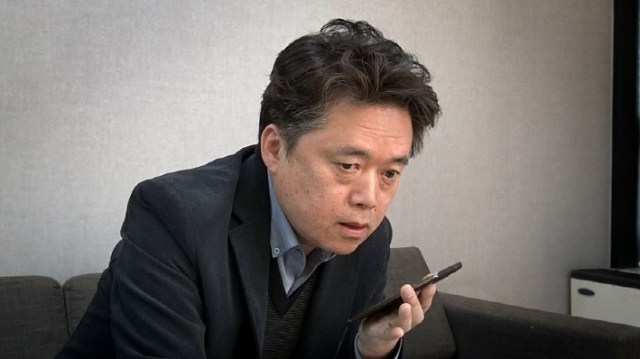
Our Love Story (2016) ☆☆☆1/2(3.5/4): Their Plain Love Story

ourlovestory01

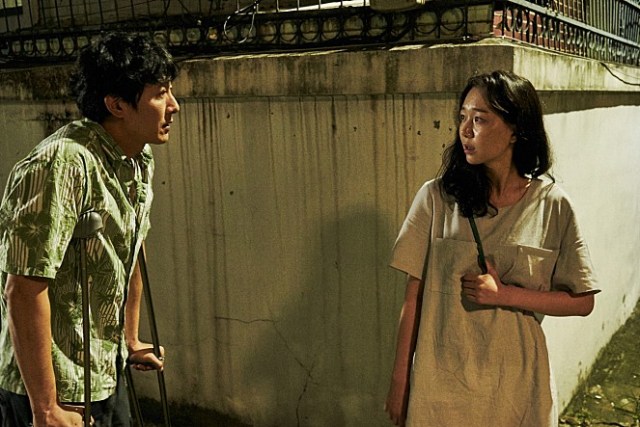
South Korean film “Our Love Story” is a wonderfully intimate drama revolving around one specific romantic relationship. As they get closer to each other after their incidental encounter, they move onto the next step, but then there is always the reality they must deal with everyday – even when they are happy together. As they become confused or frustrated with their relationship, they come to arrive at the universal point any couple would go through at least once. Can they possibly continue their relationship? And can they accept their relationship as something more mundane and enduring than a mere sweet romance?

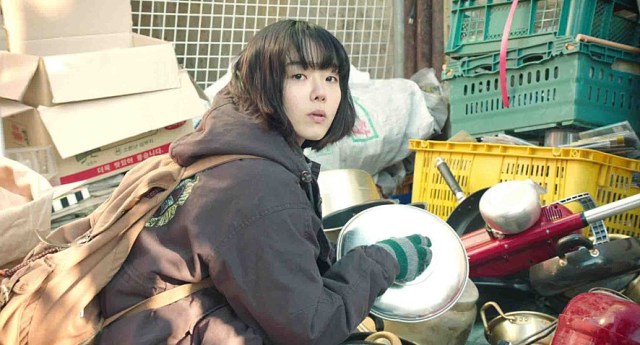
The first half of the movie is mainly told via the viewpoint of Yoon-joo (Lee Sang-hee), an art college student preparing for the exhibition project for graduation along with her schoolmates. They are going to present their respective works under the guidance of their adviser professor, and Yoon-joo is planning to make her work from various metallic junks to be obtained from a nearby junkyard.

When she is looking for anything useful at the junkyard, a young woman around her age comes, and Yoon-joo later encounters her again at a convenience store. When Ji-soo (Ryoo Seon-yeong) has a small trouble with buying a pack of cigarette, Yoon-joo gives her a little help, and then she gets to know a bit about Ji-soo as smoking together. While she turns out to be younger than Yoon-joo, Ji-soo looks more assured and confident compared to Yoon-joo, and she seems to sense something from her new acquaintance. When she suggests that Yoon-joo should drop by one of the bars where she works during evening and night, Yoon-joo seems reluctant, but she eventually goes there along with her two colleagues during one evening.
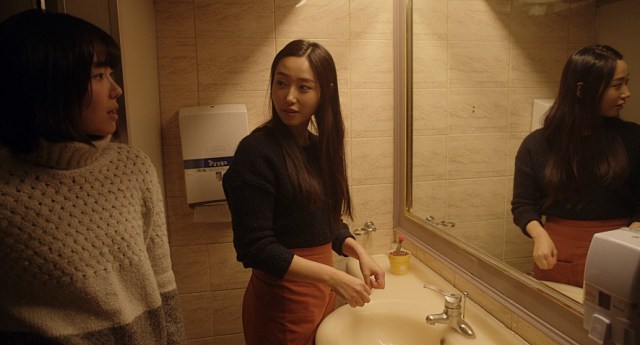
ourlovestory06.jpg

While that small evening drinking meeting does not end well to Yoon-joo’s dismay, Yoon-joo finds herself more attracted to Ji-soo, but she is still not so sure about what she wants. Unlike her ebullient roommate who is quite forthright about the ongoing relationship with her current boyfriend, Yoon-joo is not interested in dating boys, but then she has never dated boys or girls before, and her doubt and hesitation feel palpable to us as we look at her shy, passive appearance.

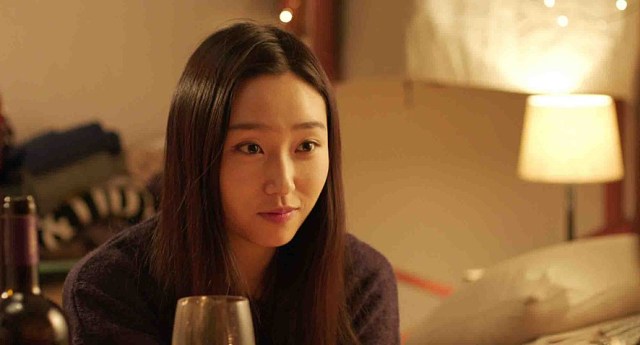
In contrast, as a more sexually experienced woman, Ji-soo knows what she wants and, perhaps, what Yoon-joo wants. Not long after Yoon-joo goes back to sleep, she calls and invites Yoon-joo to another drinking meeting. As they drink wine together at her residence, they get to know more about each other, and they soon sleep together and then move onto the next logical step as driven by what is clearly being felt between them.

The sequence showing their first sex is tastefully and realistically handled with considerable warmth and sensitivity, and I cannot help but admire what the director/writer Lee Hyeon-joo and her two performers achieve here. While the characters are not completely naked, their intimate emotional connection is evident in front of our eyes, and the handheld camera feels like an unseen companion as closely watching their progress. After the Q&A session followed by the screening I attended during this Saturday evening, I told Lee how much I was impressed by this vivid, realistic sequence, and I also pointed out to her that some of the sounds heard during the sequence felt like the noises being made by her cinematographer Son Jin-yong, who did a terrific job of capturing the characters’ dynamic emotional interactions on the screen. I do not know whether it was joking or not, but Lee replied to me that my impression might be correct at least partially.
ourlovestory05

And I was touched by how Ji-soo respects Yoon-joo’s hesitation and following request at one point. When Yoon-joo clearly expresses no during their first trial, Ji-soo agrees to that without any complaint at all, and they later have a sex under mutual consent when Yoon-joo says she is ready. I think there is an important lesson to be learned by any teenagers regardless of their sexuality, and the 18-rating of the movie, which will unfortunately prevent South Korean adolescents from watching it during its upcoming theatrical release in South Korea, is rather unfair in my humble opinion considering that.

In addition, the movie is also about other things besides sexuality. After their first sex, Yoon-joo and Ji-soo begin to consider living together as a couple, but they are also reminded of each own matters of reality. Ji-soo is going to move back to her family home in Inchon where she is going to live with her Christian widower father, who has no idea on his daughter’s sex life and is still expecting that she will marry someday. Frequently occupied with her first romantic relationship, Yoon-joo comes to struggle a lot in her assignment, and then she feels like being drifted apart from her girlfriend especially after Ji-soo moves back to Inchon. Although they continue to meet each other from time to time, Yoon-joo is disappointed and frustrated when Ji-soo hides their relationship from her father, and that makes their relationship more strained than before.

While it is basically a melodramatic love story, the movie maintains its unadorned, restrained storytelling approach, and the emotional undercurrents surrounding its two heroines are further supported by numerous realistic details to notice. I appreciated the myriad details shown at a workshop for Yoon-joo and her colleagues, and Lee later told me about how she tried to make that place realistic with several authentic artworks specially prepared for her movie. I must tell you that the workshop does look like a real place where aspiring young artists like Yoon-joo would spend many hours, and the same thing can be said about other places and locations shown in the movie, which effectively function as realistically mundane parts of our heroines’ ongoing daily life.

ourlovestory04

As the heart and soul of the movie, Lee Sang-hee and Ryoo Seon-yeong are natural and engaging in their nuanced performances which constantly generate subtle emotional dynamics based on their undeniable chemistry. While the movie is basically Lee and Ryoo’s show, the supporting performers surrounding them are also excellent in their respective roles, and I was especially amused by the reversal of a certain movie cliché shown from Yoon-joo’s former schoolmate.

Because it is released in South Korea in the same year, “Our Love Story” is inevitably compared with Park Chan-wook’s “The Handmaiden” (2016), though they are different from each other as much as apple and orange. While the latter is a lavish, steamy, and kinky erotic period thriller, the former is a warm, modest, and earnest romantic contemporary drama, and both of them have each own things to distinguish themselves as two of the most memorable South Korean films of this year – and their success may open more doors to diversity to enjoy and appreciate for South Korean audiences.

By the way, as watching the indeterminate finale of “Our Love Story”, I was reminded of what my late friend Roger Ebert wrote in his review for Woody Allen’s “Husbands and Wives” (1992): “True love involves loving another’s imperfections, which are the parts that tend to endure.” I do not know what future lies before them, but I sincerely hope that Yoon-joo and Ji-soo will agree to his words.
ourlovestory03

Posted in Movies | Tagged , , | 1 Comment

Ouija: Origin of Evil (2016) ☆☆☆(3/4): A creepy prequel to surprise you

ouijaoriginofevil02

A major surprise of “Ouija: Origin of Evil” is that it is not only good enough to be scary and entertaining but also actually better than its forgettable predecessor. While it is an origin story preceding “Ouija” (2014) as reflected by its title, the movie is enjoyable even when it is heading toward its predetermined ending, and, above all, you can have a spooky fun with it regardless of whether you have watched the 2014 film or not.

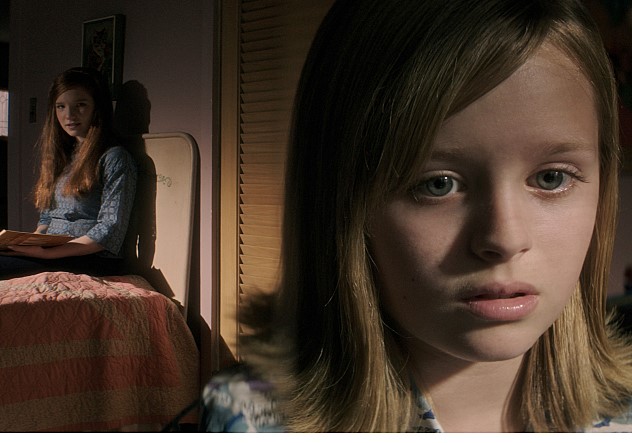
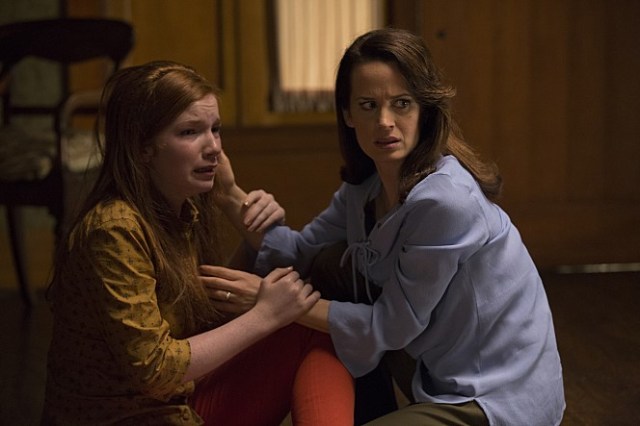
Its background is a suburban area in California in 1967, and we meet Alice Zander (Elizabeth Reaser) and her two daughters Lina (Annalise Basso) and Doris (Lulu Wilson). After her husband suddenly died, Alice has to work for earning the money to support her family and keep their family house, and the opening sequence shows us how she works as a ‘medium’ in front of her latest client while secretly assisted by Lina and Doris. This is indeed a scam as she later admits to Doris, but both Lina and Doris understand well their difficult family situation, and they feel less guilty in this time because they serve their latest client with free extra service.

Like any good horror films, the movie pays considerable attention to characters during its first act which feels plain and mundane on the surface. Although her scam has gone well thanks to her daughters, Alice is still struggling with bills to pay, and she often clashes with her older daughter Lina, who has been rebellious as your average adolescent girl with issues. Like her mother, she has not recovered completely from her dear father’s death, and neither has her younger sister Doris, a little adorable girl who still does not fully grasp the loss felt by her mother and sister.

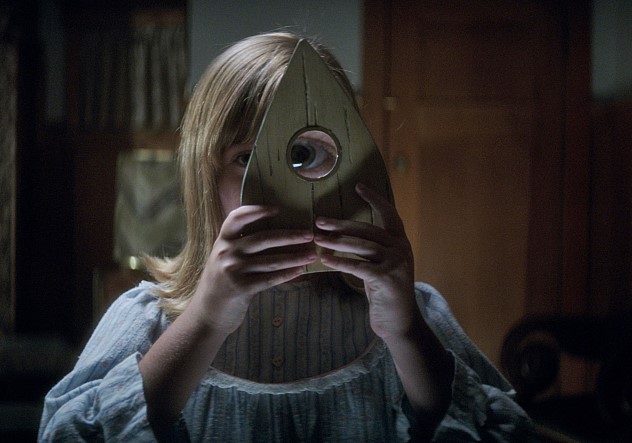
And then there comes a little thing which will change their life completely. After she happens to come across a Ouija board at her friend’s house, Lina suggests to her mother that she should spice their usual scam with Ouija board, and Alice goes along with her daughter’s suggestion. She equips it with a few small magnets for her scam, and we see her testing it alone in the drawing room while her daughters are in their upstairs bedroom.

ouijaoriginofevil03Of course, she should have been more serious about three things its users are forbidden to do, and weird things begin to happen in the house not long after her testing. After starting to show strange behaviors, Doris surprises her family with her seemingly genuine medium ability, and this certainly shakes up Alice and Lina’s longtime skepticism. Fully convinced of the existence of the afterlife, Alice is glad to use Doris’ newfound talent for helping her clients instead of cheating them, but Lina remains a bit skeptical even though she also witnesses a certain proof which shows that her little sister can really connect with dead souls out there.
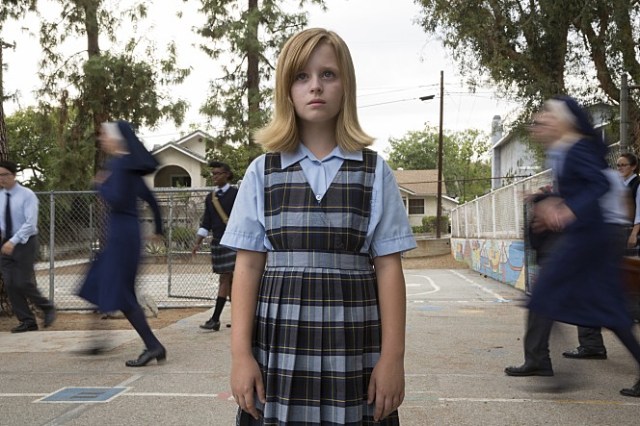
Meanwhile, what is happening in their house comes to draw the attention of Father Hogan (Henry Thomas – remember Elliot in “E.T. the Extra-Terrestrial” (1982)?), the principal of the school attended by Lina and Doris. As an expert of spiritual business, he naturally becomes curious about Doris’ ability, and he also gets himself acquainted more with Alice, though both of them are well aware of the boundary between them despite their growing affection to each other.

During their private meeting, Father Hogan warns Alice of possible unknown dangers, and the situation surely becomes more sinister and ominous along with alarming signs reminiscent of those countless horror films about, yes, demonic possession. Under some dark influence, Doris begins to look more detached and disturbed than before, and we get a number of creepy moments such as a calm but insidious scene between Doris and Lina’s unsuspecting boyfriend Mikey (Parker Mack).

ouijaoriginofevil01

The director/co-writer/editor Mick Flanagan, who previously made “Oculus” (2013), steadily dials up the sense of menace and dread along the plot. Even when things get quite darker around its third act, the movie holds itself well while throwing several terrifying moments to jolt the audiences, and the overall result is as effective as “The Conjuring” (2013) and its recent sequel. Besides establishing the authentic period mood of the 1960s well on the screen, Flanagan also imbues the movie with interestingly old-fashioned visual touches including the old Universal Pictures logo, and I was often amused to notice a custom signal for film reel change on the upper right side of the screen (The movie was shot on digital film, by the way).

Elizabeth Reaser, Annalise Basso, and Lulu Wilson are convincing as human characters we can care and worry about, and their good performances are the main reason why their characters’ drama works with considerable emotional effects during the climax part. Henry Thomas and Parker Mack are also fine in their respective supporting roles, and some of you may be delighted to notice that Doug Jones, who has been mainly known for his collaborations with Guillermo del Toro, appears in the movie.

As a horror film, “Ouija: Origin of Evil” is stuffed well with adequate amount of style and substance. While it is less distinctive compared to other notable horror movies of this year such as “The Witch” (2015), but I like its efficient handling of mood and narrative, which is a definite improvement compared to the 2014 film. If you have not watched “Ouija”, you may be interested in watching it in advance, but, believe me, you will not miss anything for skipping it.

ouijaoriginofevil04

Posted in Movies | Tagged , , | Leave a comment

Yourself and Yours (2016) ☆☆☆(3/4): Herself and His

Yourselfandyours02.jpg

Baffling and playful, South Korean film “Yourself and Yours” has a little fun with those familiar matters of heart. Because I did not know much about its plot when I watched the movie during this Thursday evening, I initially felt confused and a bit frustrated with its odd set-up without any explanation, but then I came to go along with its repetitive narrative as enjoying several humorous moments, and I eventually got its insightful points on how a romantic relationship often demands a lot more than love.

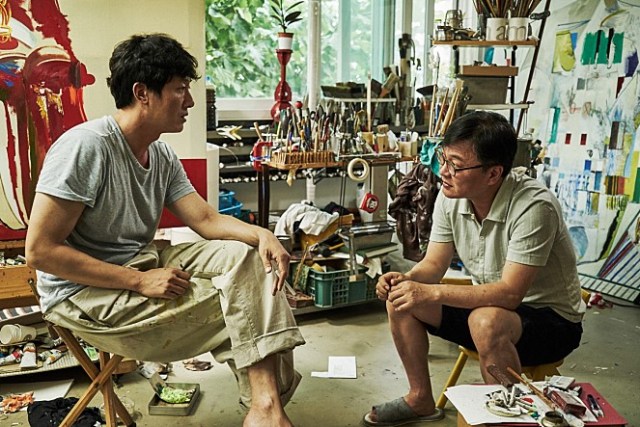
Young-soo (Kim Joo-hyeok) is a painter living in a neighborhood area of Yeon-nam dong in Seoul, and the opening scene shows Young-soo’s afternoon conversation with his close friend at his studio. Their conversation is initially about Young-soo’s ill mother, but the conversation soon revolves around a certain rumor about Young-soo’s girlfriend Min-jeong (Lee Yoo-young). According to Young-soo’s friend, she caused some trouble a few days ago while drinking a lot with some other guy, and Young-soo naturally comes to have doubts on her although he cannot believe the rumor at first. He surely loves her, but what if she is much different from what he thinks of her? Does she drink behind her back as the rumor suggests? And is it true that she has a bad reputation around the neighborhood for her drinking?

When he and Min-jeong are about to sleep together later in his small residence, Young-soo brings out his growing suspicion to her, and that leads to a very awkward circumstance. He demands her to tell the truth, but she does not give any clear answer to his questions, and that results in a tense, frustrating quarrel between them. As he alternates between anger and pettiness, she eventually says that she needs temporary separation from him, and then she promptly leaves him without any hesitation.

Yourselfandyours04.jpg

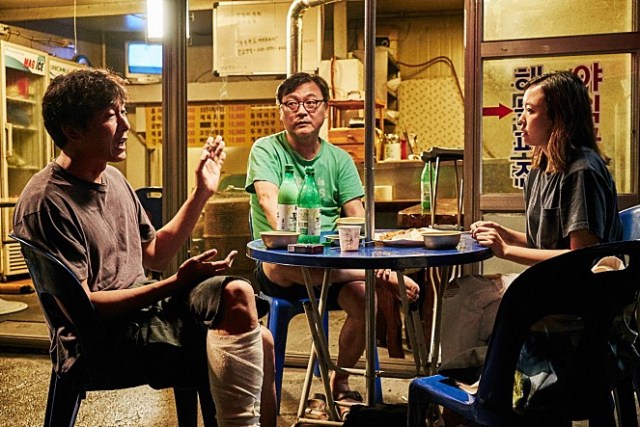
During the following parts, Young-soo is shown with the injury in his left foot (the movie never tells us how that happened), but that does not stop him from searching for his girlfriend around his neighborhood. Accompanied with his friend, he goes to her residence not so far from his place, but it looks like she is not there, and she is not even at her nearby workplace. Becoming more frustrated and depressed than before, he spends the rest of the day with his friend at a local bar, and we get a typical drunken conversation scene we can expect from the director/writer Hong Sang-soo. Young-soo says that he loves Min-jeong despite all that happened between them, but it is apparent that, while mired in drunken self-pity, he is still struggling with who she really is.

As his search for Min-jeong continues during next few days, we get a series of delightfully confounding sequences involved with her – or someone else, perhaps. When a guy drops by a local coffee shop, he notices ‘Min-jeong’ in the shop, and he asks her whether they met before, but she does not seem to recognize him at all. He rather rudely insists that he knows her, and he also mentions an incident not so different from the aforementioned rumor. She eventually replies that he mistakes her for her twin sister Min-jeong, but we cannot help but wonder whether she lies or not. Does Min-jeong really has a twin sister? Or is it just a simple convenient lie to avoid any embarrassment? And did they really meet before?

Like Hong’s previous film “The Day He Arrives” (2011), the movie repeatedly rolls its characters within its small background while doing some variations here and there. At one point later in the movie, ‘Min-jeong’ encounters another guy at the same coffee shop, and this is also developed into a circumstance not so different from the previous case. While Young-soo keeps going around same places, we notice how each day of his goes differently at key points, and there is a small surprise around the end of the scene in which Young-soo goes to Min-jeong’s residence again.

yourselfandyours03
As we keep wondering about Min-jeong as much as Young-soo, the movie finds a witty and clever way to end the story while not sacrificing its ambiguity at all. I am not going to describe its finale in details for not spoiling your entertainment, but I can tell you that its two lead performers are believable in their ambiguous but somehow clear interactions. While Kim Joo-hyeok, who recently gave a nice supporting performance in “The Truth Beneath” (2016), is both silly and sympathetic as a guy who really needs to understand woman more, Lee Yoo-young is charming to watch even when we are not exactly sure about who she is playing. Kwon Hae-hyo and Yoo Joon-sang appear as two crucial supporting characters, and Kim Ee-seong, who has been more notable since his solid supporting performances in “The Day He Arrives”, “Architecture 101” (2012), and “The Face Reader” (2013), holds his own place as Young-soo’s friend.

“Yourself and Yours” is Hong’s 18th feature film, and that reminds me of how I have been accustomed to his works and their consistent subjects as he has kept releasing one or two films every year. I only admired his early works such as “Tale of Cinema” (2005) and “Woman on the Beach” (2006), but I came to enjoy his later works such as “In Another Country” (2011) and “Right Now, Wrong Then” (2015). Drinking and woman have been his usual story elements, and I must tell you that Isabelle Huppert drinking a bottle of soju in “In Another Country” is something we do not see everyday.

“Yourself and Yours” does not have something as memorable as that priceless moment, but this lightweight comedy is as enjoyable as you can expect from Hong’s movie, and you may learn something important about love and relationship as having small good laughs from it. They say love is blind, but it takes some extra efforts to be blind enough for maintaining a romantic relationship, you know.

yourselfandyours01

Posted in Movies | Leave a comment

The Sky Does Not Fall Yet (but….)

potd-lightning_2805473k

Like many people around the world, I am still trying to deal with what has been determined today with grim, inexorable certainty. As some people have feared, Donald Trump is elected as the next US president now, and it has already begun to show its hugely devastating effects around not only US but also the global country. Here is an unhinged guy who probably serves no one but himself, and we have no idea on what kind of mess he will inadvertently or willfully cause during the next 4 years while living in the White House.

After recklessly fueled by his desire for more money and power, he somehow gets the biggest social/political prize on the Earth in the end, and he will become far more dangerous than ever because he is full of wrong stuffs for his upcoming new job. With his rotten cronies eager to intoxicate themselves with that sweet smell of power, he will spread more bigotry, hatred, and oppression around his country, and he will destabilize the global community thanks to his sheer impertinent lack of empathy and knowledge. To be frank with you, I sincerely hope that he will always think about big, those shiny buildings of his if he is ever compelled to push nuclear missile buttons just because of a temporary pique. They are tasteless to say the least, but they are too huge to get destroyed, right?

The next year will be a lot more troubling for many people out there in US, and the Trump administration in the future has already revealed its virulent aspects. For example, his vice president Mike Pence is virtually the epitome of the loony conservatism against many progressive social matters including human rights and global climate, and he and Trump openly promised that they will nullify all the social/political achievements done during last 8 years – including Obamacare, of course.

pad4k

Anyway, the sky does not fall yet after the news of Trump’s election, and life goes on as usual here, though people around me keep mentioning his name with considerable uneasiness. We all cannot believe what happened, and I could not help but feel fear and depression as watching America resorting to the worst sides of our human nature. It goes without saying that Hilary Clinton is a smart, competent, and experienced professional who has served the country for many years, but her country lets her down just because of trivial flaws which look a lot smaller compared to heaps of despicable aspects shown from her bullying competitor.

While the world outside is being trembled by the fearful uncertainty represented by Trump, my inconsequential life has been less eventful compared to that difficult time I went through a few weeks ago for coming out of the closet. I am still living with my parents in our family apartment, and they do not talk about my homosexuality while hoping for a ‘change’. I am also taking a driving lesson, and I turned out to be pretty clumsy to my instructor’s frustration. The paper based on my Ph.D thesis might be published around the next year, and another paper will be published around that time if I complete a certain experiment within this year.

As my country and people are being shaken more and more by an unprecedented scandal involved with our pathetic, incompetent president who turns out to have been under the influence of the greedy daughter of a cult leader, I wish more to get out of my country for my life and career, but I am also disturbed by the prospect of the Trump administration as well as several equally alarming signs of nationalism and fascism around the world. As many of my friends worried, is this just the first step toward our inevitable doom?

potd-lightning_2979083c

Many ordinary people in US are rightfully terrified of Trump and what he represents, and all I can say to them for now is that I also worry a lot about this increasingly scary situation. As an Asian gay man saddled with Asperger’s syndrome and depression problem, I know I can be very vulnerable to the surrounding environment, and that is why I will think twice about moving to US – or attending a certain film festival founded by my late dear friend Roger Ebert (I am too depressed to mention its name, sorry).

While thinking about these daunting things, I felt quite numb, but I got good advices from YA fantasy writer L.D. Lapinski and my fellow movie critic friend Michael Mirasol. Lapinski’s helpful twits recommended me to stop the online activity for a while and then take care of myself while concentrating on something else – and that is why I am now focusing on this writing. Michael’s twit mentioned his activist friend who chose to move on for another day to come because he would go insane if he did not, and I guess Michael is probably sticking to that persistent mindset right now – and so am I at this point.

Here is what I am going to do. I will sleep after taking my medication as I do in these days. I will wake up in the next morning as usual. I will work in my laboratory as before. I will pass the driving lesson test probably around the last week of this month. I will give my parents a guidebook for parents of sexual minorities for helping them. I will try to go further for my life and career while enjoying books and movies because, well, I think time feels shorter than ever. And I will not succumb to anger and despair while always reminding myself of the importance of compassion and kindness. Things may be irrevocably falling apart and our world may be destined to be turned into the one shown in “Children of Men” (2006), but I only hope that I can retain my humanity even when I and others are doomed.

Am I worrying too much? Well, we will see, as we keep moving on during next several years to come.

4400182-3x2-940x627

Posted in Personal | Tagged | 1 Comment

Rams (2015) ☆☆☆(3/4): Two estranged sheep farmer brothers

rams01

It was during my undergraduate school years that I heard about scrapie for the first time. Due to its elusive origin of infection somehow highly resistant to common disinfection methods, this neurodegenerative disease observed from sheep and goats had been shrouded in mystery for many years, and it was only after Stanley B. Prusiner’s study in 1982, which would garner him a Nobel Prize in 1997, that scientists came to confirm and conclude that the cause of not only scrapie and but also other notable similar human and animal neurodegenerative diseases such as ‘mad cow disease’ or Alzheimer’s disease is not bacteria or virus but abnormal protein particles which can be transmitted between individuals and then amplified in body with slow but devastating neurodegenerative effects.

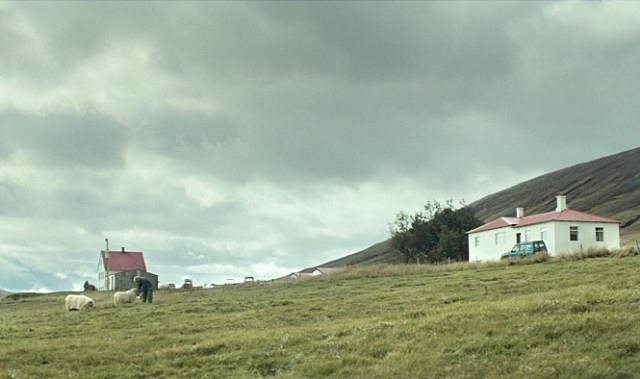
While it initially attracted my old scientific curiosity which is incidentally associated with my current postdoctoral research, there are also other things to like in small, modest Icelandic film “Rams”, which was chosen as the Icelandic entry for the Best Foreign Language Film at the 2016 Academy Awards. The movie takes its time as establishing the background along a simple plot revolving around one old love/hate relationship, and you may be surprised by how it effortlessly lets its plot and characters roll with small, intimate moments of humor and drama until it arrives at an unexpected dramatic point.

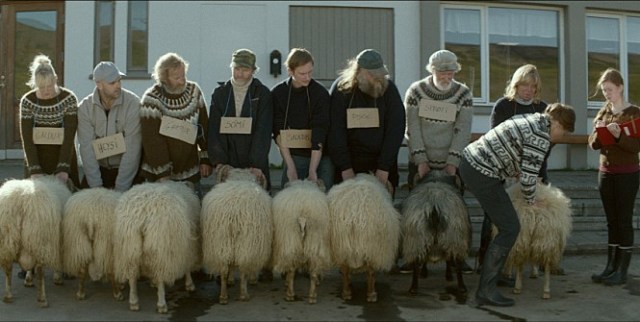
The background of the movie is a remote valley region located somewhere in the northern rural region of Iceland. Many of its residents have earned their living through sheep farming, and we see a number of local sheep farmers gathering for a regional competition. As they stand in row with their best rams, the rams are carefully and thoroughly evaluated by a local veterinarian for deciding on which is the best one among them, and the winner is subsequently announced in front of the competitors and others.

rams06

While his neighbors/friends are enjoying the event regardless of the final result, Gummi (Sigurður Sigurjónsson), a middle-aged bachelor who has devoted himself to sheep farming for many years like most of his fellow sheep farmers, does not look that happy to see that his ram receives the second prize instead of the first prize, which goes to none other than the one belonging to Kiddi (Theodór Júlíusson), his estranged brother who has lived right next to Gummi’s farm residence. For some private reason, they have not spoken with each other at all for 40 years, and the only connection between them besides sheep farming is Kiddi’s sheepdog, which sometimes functions as an intermediary between these two grumpy old bachelors.

When Gummi later tells one of his neighbors about the possibility of scrapie in Kiddi’s farm, he seems to be motivated by the personal grudge toward his brother at first. However, as subtly implied by a few earlier scenes, he is really concerned about the worst possible situation, and, unfortunately, it turns out he is right about that. Every sheep farmer in the valley region is soon notified that they must slaughter and bury every sheep they have, and they all devastated by this sudden catastrophe.

Calmly observing the consequent devastation further accentuated by the cold, harsh weather of winter days, the movie lets us discern the gloomy circumstance surrounding Gummi, Kiddi, and other sheep farmer characters in the film. Although they are going to receive the considerate financial compensation from the government at least, they are depressed to see that they have no choice but to wipe out their meager but proud work of many years as ordered by authorities, and there is a sad, heartbreaking moment involved with a herd of sheep to be slaughtered and buried for preventing further infection. This is cruel indeed for these innocent sheep, but, sadly, it is one of the absolutely necessary procedures for removing any possible source of those highly transmissible scrapie proteins, for which any possible cure has not been developed yet even at this point (Fortunately, this is not an airborne disease).

rams05

Meanwhile, Gummi and Kimmi begin to face their old mutual resentment they have left alone for many years while concentrating on their work. Both of them are too proud and stubborn to bend themselves in front of each other, and the director/writer Grímur Hákonarson throws small funny moments of low-key humor into the quiet conflict growing between his two characters. While these moments may not be as uproarious as you think, they look so straightforward in their deadpan attitude that you may chuckle as enjoying their somberly hilarious elements.

Lead actors Sigurður Sigurjónsson and Theodór Júlíusson believably inhabit their respective roles, and so do the other performers in the movie. With those wide landscapes of stark beauty, the cinematographer Sturla Brandth Grøvlen vividly conveys to us the gray, moody solitary ambience surrounding the characters in the film, and the animal performers including that plucky sheepdog are also handled well as another crucial part of the story.

“Rams”, which received the Prix Un Certain Regard at the Cannes Film Festival in last year, is one of a very few Icelandic films I saw during last 10 years (I only watched “Noi the Albino” (2003), to be frank with you). Because of its glacial plot progress, the movie demands some patience from you during its first half, but this is a rewarding experience on the whole for taking us to a different place and lifestyle via its good story, and you will find its ending literally heartwarming. After all, blood is warmer than snow, isn’t it?
rams03


Posted in Movies | Tagged , , | Leave a comment

Hell or High Water (2016) ☆☆☆(3/4): A familiar Texan genre exercise

hellorhighwater01

A few weeks ago, I had an interesting online chat with one of my acquaintances. He told me that it is not easy for him to enjoy movies because he is always aware of their inherent artificial sides shown from the screen, no matter how much they try to look real. In fact, that is why he usually prefers stage play performances, which do not hide their fake aspects at all from the beginning.

Like him, I am often quite conscious of those artificial aspects whenever I watch movies, and one of my dependable reviewing standards is whether they can get me involved in their plot or mood enough to make me less aware of their artificiality during my viewing. For example, I remember well how “Crash” (2004) annoyed me with contrived aspects during its first 30 minutes – and how it came to blow me away later with a number of elevating moments which were powerful enough for me to forgive its glaring weak points.

In case of “Hell or High Water”, this is a well-made crime drama with lots of things to enjoy and appreciate, and I could not help but be impressed by its vivid local sense of people and background, but I also found myself becoming rather distant to its occasionally tense but ultimately loose narrative. While I admire its technical aspects and performances, the movie sometimes seems to try a little too hard as brandishing its gritty style and mood, and I only observed its plot progress from the distance even though I did have a fairly good time with this familiar genre exercise.

During most of its running time, the movie alternates between two opposite positions, and one of them belongs to two desperate brothers who will do anything in the name of family. After their ailing mother recently died, their family ranch located in the West Texas region is going to be foreclosed unless they take care of their mortgage debt to a local bank within a week, and Toby (Chris Pine) and Tanner (Ben Foster) want to keep their land because they know that the bank wants to own the land for the oil to be pumped out from it. If they can just pay off the bank debt, they may be the one who gets the oil money in question, which will certainly benefit Toby’s kids a lot in many ways.

hellorhighwater02

For getting the money for that within a week, they have a risky but clever criminal plan. During the memorable long take opening sequence, they rob one of several branches belonging to that local bank, and that is merely the first step of their plan. Targeting specific bunches of cash for safety, they also do not steal too much for avoiding the attention of the federal government, and the stolen money is promptly laundered at a casino in Oklahoma. Before local authorities can notice any sign of pattern, they must quickly carry out the rest of their plan at the other branches of the bank during the next few days.

Right from their first appearance, the contrasting personalities of Toby and Tanner are quite apparent to us. While Toby is the one who makes sure that everything goes well according to their plan, Tanner, an ex-con who was recently released after serving his long jail sentence, is a volatile, quick-tempered guy, and it goes without saying that his uncontrollable impulsive behaviors often exasperate his younger brother, though there is no doubt about the love and loyalty between these two criminal brothers.

Meanwhile, the movie shifts its focus to the other position from time to time. Marcus Howard (Jeff Bridges), an old veteran Texas Ranger who is about to retire, happens to be assigned to the case of Tanner and Toby’s first bank robberies, and it does not take much time for this seemingly goofy but wise, experienced codger to discern what is really going on. While others around him believe that it is just a simple small-time robbery case, Howard thinks otherwise, and, of course, he comes to get more confirmation on his intuition as investigating the case along with his partner Alberto (Gil Birmingham).

The movie maintains its leisurely narrative pace as its two plot lines are slowly and inevitably converging on their destination, and the same thing can be said about Jeff Bridges, who clearly enjoys playing his colorful character as exuding his ever-reliable star quality. The way Howard repeatedly teases his partner with blatant racist remarks could become pretty irksome after two or three scenes, but Bridges somehow makes that clichéd stereotype trait engaging to watch, and his co-star Gil Birmingham is effective as his no-nonsense foil during their scenes.

hellorhighwater03

As the intense center of the film, Chris Pine and Ben Foster are convincing in the terse depiction of their characters’ strained but strong relationship. As a dependable actor who has been good at playing high-strung characters with unpredictable sides, Foster always keeps the plot on the edge, and Pine is surprisingly believable in his shabby but steely appearance, which shows us that he can do other things well besides Captain Kirk in the recently rebooted Star Trek series.

The director David Mackenzie, who previously made an electrifying prison drama “Starred Up” (2013), did a good job of establishing the authentic atmosphere around the screen. As the score by Nick Cave and Warren Ellis adds an extra local flavor to the mood, the cinematographer Giles Nuttgens, who previously collaborated with Mackenzie in “Young Adam” (2003) and “Hallam Foe” (2007), often dazzles our eyes with the wide shots of vast, barren landscapes, and the hard economic situation surrounding its characters and many other people feel palpable on the screen as we continue to notice certain advertisement boards placed along roads.

The screenplay was written by Taylor Sheridan, who previously wrote the screenplay for “Sicario” (2015). That was another familiar crime drama which was not that refreshing, but it did have some dark dramatic surprises boosted by its style and substance. Compared to that, “Hell or High Water” is less satisfying for being all about style rather than substance, and it did not surprise me much even while juggling the recognizable influences from the works of Michael Mann, Terrence Malick, and the Coen Brothers. Sometimes you can create something new from being eclectic, but you can also end up being merely eclectic in other times.

Anyway, thanks to its competent direction and commendable performances, “Hell or High Water“ is not mediocre at all although the overall result is not as distinctive as its makers intended. They may not succeed in bringing anything new to the genre, but, at least, they know how to handle its elements well, so I recommend the movie with some reservation.

hellorhighwater04

Posted in Movies | Tagged , , | Leave a comment

Louder than Bombs (2015) ☆☆☆(3/4) : They need to talk about her…

louderthanbombs01

Her absence has been felt around them since she died, and they still struggle with themselves while barely connected with each other. As a somber drama about one problematic family dealing with the void left by their loved one, “Louder than Bombs” looks closely at its main characters as they come to face a certain fact, and there are thoughtful emotional moments to admire for low-key sensitivity reminiscent of “Ordinary People” (1980). Although it is not entirely successful especially during its third act, its emotional base remains strong thanks to its good direction and performance, and we come to care more about their characters’ emotional difficulties.

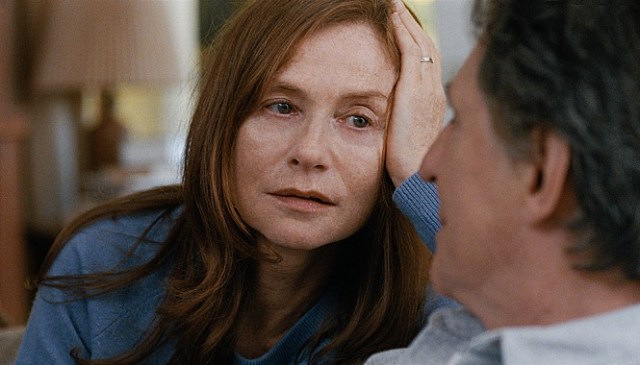
Before her sudden death, Isabelle Reed (Isabelle Huppert) was a renowned photographer who was always ready to fly to any dangerous conflict areas. She had an ex-actor husband who gave up his career and took care of their two sons while she went around the world, and she and her family had been happy together despite her frequent absence. Sadly, she had a fatal car accident not long after her retirement for spending more time with her family, and we come to learn later that there is something her husband Gene (Gabriel Byrne) decided not to tell his younger son Conrad (Devin Druid).

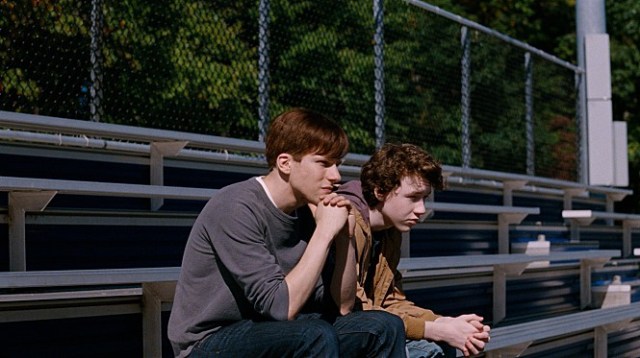
Now three years have passed, but Gene and Conrad have remained distant to each other without much interaction. As a patient and understanding father, Gene tries to come closer to his son, but Conrad, who still feels angry and hurt for his mother’s death, usually stays away from his father while mostly occupied with online video games whenever he is at home. Although he is understandably exasperated by this, Gene keeps trying to understand his son none the less, and we get little humorous moments involved with his failed attempt to connect with Conrad.

Meanwhile, there will soon be a memorial exhibition for Isabelle to be held by her colleagues including Richard (David Strathairn), who frequently worked along with her for his reporting jobs. Planning to write a New York Times article for remembering Isabelle, he notifies to Gene in advance that he is going to present her as honestly as possible in his article, and that means he will certainly talk about that accident.

louderthanbombs05

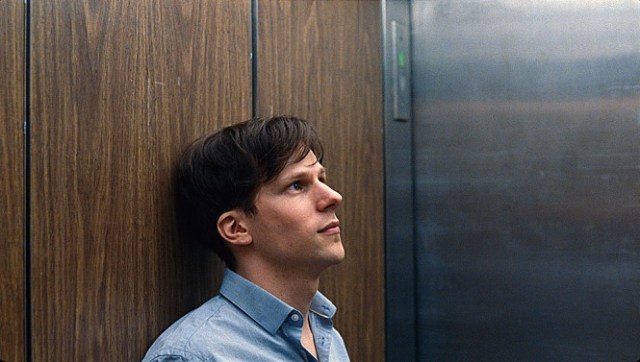
In case of Gene’s older son Jonah (Jesse Eisenberg), he seems more focused on moving forward with his own life, while taking his first step as not only a college professor and but also a father. The opening scene shows him being with his wife and their first child at a hospital, and he is surely happy to carry his baby daughter in front of his wife who has just given birth to their child, but his face suggests other feelings to us as the camera calmly observes him alone in an elevator for a while.

Helping his father sort out the remains in his mother’s workplace initially looks like an easy job to be handled within a few days, but Jonah finds himself agitated by his accidental discovery of what Isabelle kept hidden from her family. He also begins to feel less sure about his life than before, and there comes a funny, intimate scene where he confides many of his private feelings to his ex-girlfriend whom he previously happened to come across at the hospital.

Occasionally shifting the position around its partially non-chronological narrative, the movie is often a little baffling during early scenes, but then it gradually builds up its emotional momentum as letting us getting to know more about its complex human characters. While trying to help Conrad as much as he can, Gene has been at a loss about himself, and that led to his unofficial relationship with Hannah (Amy Ryan), who works with him at the same high school and is currently Conrad’s English literature teacher. Behind his incommunicative attitude, Conrad, whose name instantly reminds me of the troubled adolescent hero of the same name in “Ordinary People”, is a smart, sensitive kid who has let himself isolated with emotional issues, and we are not surprised to see him committing a striking act of insult at one point. Although he is not that close to his younger brother, Johah gives some pep talks to Conrad, and there is a poignant scene when he gives a small advice to his brother as someone who probably had a similar high school experience in the past.

louderthanbombs03

The movie is the first English feature film made by Norwegian director Joachim Trier, and he made a successful transition here on the whole. As he did in his previous work “Oslo, August 31st” (2011), Trier earnestly and effortlessly establishes story and characters via small moments and tiny details, and he also tries a number of wonderful visual moments such as a haunting stream-of-consciousness sequence which reflects Conrad’s detached mind revolving around what might be the last living minute of his mother.

Trier also draws solid performances from his cast members. While Isabelle Huppert hovers around the movie, Gabriel Byrne is reliable as an understated master of depressed feelings, and Jesse Eisenberg and newcomer Devin Druid are believable as two brothers who have known each other for years. David Strathairn has a nice scene when his character is visited by Gene later in the story, and Amy Ryan is rather under-utilized in comparison, though this wonderful performer has more things to do here compared to her recent thankless supporting jobs in “Goosebumps” (2015) and “The Infiltrator” (2016).

While Trier’s acclaimed debut work “Reprise” (2006) did not impress me much due to its distant cerebral storytelling, I was touched a lot by his next movie “Oslo, August 31st”, which I chose as one of my best 10 films of 2012 with no hesitation. In terms of achievement, “Louder than Bombs” is somewhere between them, and I was involved in its drama although being distracted at times by its few heavy-handed aspects including overused narration. His third work may be a mere test run, but Trier did far better than my recent clumsy driving attempts at least.

louderthanbombs02

Posted in Movies | Tagged , , , | Leave a comment

Kubo and the Two Strings (2016) ☆☆☆1/2(3.5/4): The Adventure of a storyteller boy

kuboandtwostrings01

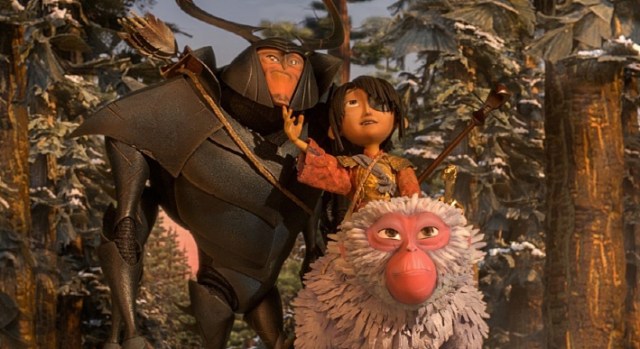
The word ‘story’ is frequently mentioned throughout animation feature film “Kubo and the Two Strings”, and that word always generate certain tingling feelings while reminding us of the power of good storytelling inside and outside its deceptively simple but immensely enchanting and compelling fairy tale. After my hurried entrance to the screening room, my beating heart and sweating body soon became relaxed as my mind was soothed by its gorgeous visual moments decorated with stylish cultural touches, and I was enthralled by its superb artistic achievement while also touched by its affecting mix of adventure story and coming-of-age drama.

The story begins with the prologue scene which shows how Kubo and his mother came to hide away from their dangerous family when he was a young baby. His mother was once one of immortal entities under the command of her powerful father Moon King, but then she found herself fatefully falling in love with a samurai warrior who was supposed to be eliminated as ordered by her father. Not long after her son was born, she and her son had to run away from her father after Kubo’s father sacrificed himself to save his wife and son, and she eventually managed to find their shelter in a small cave located in some beach area.

Several years have passed since that, and Kubo (voiced by Art Parkinson) grows up a lot. This plucky one-eyed boy can excite and enthrall the people of a nearby town with his fabulous storytelling accompanied with a series of magical origami shows and his precious three-string instrument which originally belonged to his mother, and this exquisite sequence is just one of many visual pleasures to be savored in the film.

Meanwhile, Kubo’s mother has recently become more fragile and deteriorated than before, and the absence of the father he never knew only accentuates the growing concern and grief inside Kubo. That leads him to a ritual at the local cemetery, which is held for the memories of the departed during the town festival day. As many paper lanterns are floated along the river at the end of the ritual, we cannot help but be drawn to this lovely moment in sunset although we are also well aware of the danger of which Kubo’s mother has always warned him.

kuboandtwostrings04

She has told him that he must come back to their home before night begins, and we see the reason as soon as the sunset is immediately followed by the moonrise. His grandfather is still looking for them because he needs his grandson’s right eye besides the other eye he took away in the past, and Kubo’s twin aunts are promptly dispatched to Kubo, who belatedly realizes the importance of his mother’s stories as confronting the danger approaching toward him.

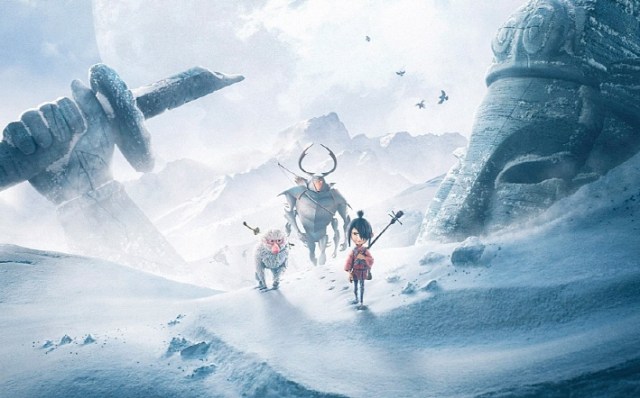
Fortunately, he is saved by his mother’s sacrifice at the last minute, and then he finds himself transported to a cold, snowy place far away from his home. As he is confounded by this sudden change, he comes across Monkey (voiced by Charlize Theron), who was initially a small mascot but is now turned into a talking entity with no-nonsense attitude. As the weather gets colder with approaching night, Monkey leads Kubo to a shelter which simultaneously reminded me of “Pinocchio” (1940) and “The Revenant” (2015), and Kubo comes to accept Monkey as his protector while spending the night along with her.

Following the direction from a small moving origami figure in the red shape of his father, Kubo and Monkey happen to encounter Beetle (voiced by Matthew McConaughey), a giant bug figure who boasts that he once served at the place of Kubo’s father before he got cursed along with almost complete memory loss. Considering his silly pomps and swaggers, Beetle does not look that reliable to Monkey, but he eventually joins Kubo’s quest for three valuable things which are necessary for his upcoming confrontation with Moon King.

kuboandtwostrings02

“Kubo and the Two Strings” is based on stop-motion animation, and this aspect imbues the film with that distinctive 3D physical quality of stop-motion animation while it mostly looks as smooth as digital animation films thanks to advanced digital special effects. The director Travis Knight and his crew provide a terrific action sequence for each risky step Kubo and his two animal companions take along their adventurous journey, but there are also other notable moments which are as visually impressive as the action sequences in the film. While I was excited by the action sequence involved with a nice big surprise you will appreciate more via a video clip of its long, painstaking production process shown in the middle of the end credits, I enjoyed how one of the most enchanting things in the film is finally revealed with its full glory after an amusing indirect build-up process on the beach.

The voice cast of the film is uniformly excellent on the whole. While Art Parkinson is likable as a young hero who comes to discover his own inner strength through his journey, Charlize Theron and Matthew McConaughey complement each other well as having a fun with their contrasting characters. Rooney Mara is spooky and menacing as Kubo’s twin aunts who look like creepy Japanese dolls, and Ralph Fiennes has his own moment as his evil character reveals himself around the climax sequence which is more poignant than expected in its resolution.

With the modest but significant success of its first three stop-motion animation films “Coraline” (2009), “ParaNorman” (2012), and “The Boxtrolls” (2014), Laika Entertainment has been reaching to the prestigious rank belonging to Pixar Animation Studios, Studio Ghibli, and Aardman Animations during recent years, and “Kubo and the Two Strings” further solidifies this status as an animation film brimming with more style and personality than many other ones which came out in this year. I know it is a cliché to say it, but this is the best animation film of this year, and it certainly earns its last word which reminds us of why we should value good storytelling more. It simply shows and tells via its wonderful visual moments, and we get its points even when it does not explain much. And that’s how a good story works, you know.

kuboandtwostrings03

Posted in Movies | Tagged , , , | 1 Comment

Doctor Strange (2016) ☆☆☆(3/4): The origin story of another Marvel Comics hero

drstrange02

“Doctor Strange” is your average origin story of another Marvel Comics hero. Again, we get 1) a long background story on how our hero comes to accept his destiny, 2) an obligatory middle part where he learns more about his awesome power, 3) a ritual cameo appearance by Stan Lee, 4) an expected climax part surrounding the showdown between our hero and some big bad guy who wants, yes, the end of the world as we know, and 5) a couple of teaser scenes during its end credits. While I was constantly aware of how much it sticks to this increasingly familiar storytelling formula which has become rather tiresome to me in these days, the movie is fortunately equipped with some goodies to amuse and entertain me although it often tries too hard for not being too serious.

The first part of the movie looks like a variation of “Grey’s Anatomy” episode. Dr. Stephen Strange (Benedict Cumberbatch) is one of the best brain surgeons working in New York City, and the early scenes in the movie show him enjoying his prominent professional position as usual. He is cool, arrogant, and confident at his work while occasionally showing his sense of humor which is actually not as funny as he thinks, and his colleagues including Dr. Christine Palmer (Rachel McAdams) are surely impressed whenever he performs a highly risky and demanding surgery to be added to his distinguished reputation.

But then there comes an unexpected incident which shatters almost everything in his life. While driving his sports car to somewhere during one night, Strange happens to have an accident, and he is devastated to know later that his dexterous hands are permanently damaged due to irrevocable nerve severance. The more he desperately tries to regain his lost ability, the more it becomes apparent to him that there is really nothing he can do about his injury.

While he becomes more sullen and morose with his physically and financially broken status, Strange comes to learn about one unlikely possibility through a man who miraculously recovered despite his hopeless spinal injury. The guy tells him about a hidden place somewhere in Katmandu, Nepal, and Strange decides to search for that place although he is understandably skeptical about a healer who cured that guy.

drstrange03

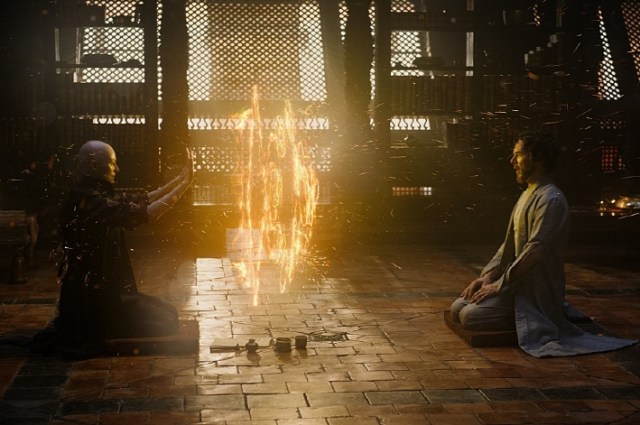
After wandering around the streets and alleys of Katmandu for a while, Strange encounters a guy named Mordo (Chiwetel Ejiofor), who leads him to the secret place where his mentor the Ancient One (Tilda Swinton) and her disciples reside. Strange’s skepticism is literally blown away as the Ancient One demonstrates something which completely changes his worldview, and he soon becomes her latest pupil.

As depicting Strange’s training under the guidance of the Ancient One and Mordo, the movie has a fun with establishing its fascinating world of time and dimension which is protected by the Ancient One and her trusted disciples while the Avengers are taking care of more, uh, physical troubles on the Earth. I was amused by the dizzy mind-bending sequence where Strange experiences something as overwhelming as the climax sequence of “2001: A Space Odyssey” (1968), and there are several brief wondrous CGI shots which took me back to those beautiful mathematical graphics I saw from James Gleick’s “Chaos: Making a New Science”. I also liked the antique library filled with curious books containing many secrets and knowledges from the ancient time, and Benedict Wong is hilariously unflappable in his deadpan performance as its supervisor.

Rapidly absorbing everything he can read and steadily improving his abilities including getting out of his own body or conjuring a portal to distant place, Strange comes to learn about an immense threat somewhere beyond time and space – and someone very determined to unleash that dark force which can destroy not only the universe but also other universes out there. Kaecilius (Mads Mikkelsen), a former disciple of the Ancient One, and his group of followers recently snatched an important piece of knowledge from the library, and that is just the first step of his deranged plan.

drstrange04.jpg
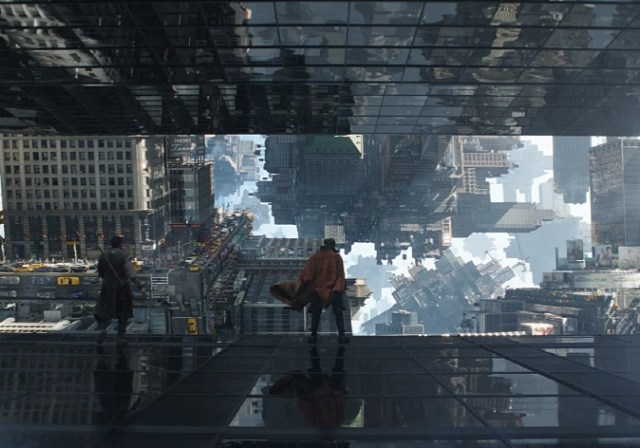
Not so surprisingly, Strange finds himself being the only one who can stop Kaecilius (is this a spoiler?), and the director Scott Derrickson, who wrote the screenplay with C. Robert Cargill, provides us a series of exciting action sequences reminiscent of “Dark City” (1998), “Matrix” (1999), and “Inception” (2010). With some degrees of wonder and fascination, I observed how streets and buildings are dynamically folded or shaped around characters during these action sequences, and it is a shame that their wonderful sights are frequently interrupted by busy, disorienting actions.

Benedict Cumberbatch has always been good at playing cool, smart characters, and he is well-cast in the title role while showing considerable potential for fun and drama along with his cape which looks amusing as that carpet in “Aladdin” (1992). While Rachel McAdams, Michael Stuhlbarg, and Mads Mikkelsen are rather wasted in their thankless roles, Chiwetel Ejiofor and Benedict Wong are solid as the substantial supporting characters who will return with our hero. In case of Tilda Swinton, she deftly balances her character between humor and dignity, and you may forgive the whitewashing of her character thanks to her undeniable charismatic presence on the screen.

“Doctor Strange” is not as strange as it can be, and some of its humorous moments feel too much like self-conscious winks to the audiences (Too bad nobody mentions how much it sucks to be called ‘Master Strange’ instead of ‘Doctor Strange’ for a dude with Ph.D and MD degree), but it works thanks to its good cast and some distinctive flavor to distinguish itself from other Marvel Comics movies. As shown from this film, the Marvel Comics Universe has been mostly fine and entertaining with its new superheroes (or new flavors, shall we say) to be introduced to us, but will there be anything new to surprise or awe us during next several years? We will see.

drstrange01

Posted in Movies | Tagged , , | Leave a comment

Spy Nation (2016) ☆☆☆(3/4): A persistent journalistic record against injustices

Spynation05.jpg

Because I heard numerous news reports about its subject, there are not many things to surprise or enlighten me in South Korean documentary “Spy Nation”, but I could not help but be angry about a number of infuriating cases presented in the documentary, which are in fact a tip of a far bigger problem. Those people shown in the documentary and many other people were heartlessly victimized just because they looked suitable as ‘spies’ to be exposed in public, and it is all the more chilling and exasperating to see that government officials responsible for this are not punished at all while maintaining their impertinent façade as usual.

The director Choi Seung-ho, who has been known well as a journalist of Korea Center for Investigative Journalism (KCIJ) in South Korea, opens his documentary with the audio recording excerpt from a trial which drew lots of public attention in early 2013. In late 2012, a Korean Chinese woman named Yoo Ga-ryeo arrived in South Korea to see her older brother Yoo Woo-seong, and she was soon arrested by the agents of National Intelligence Service (NIS). Because she and her brother were born and lived in North Korea before they eventually ran away to China, NIS agents suspected that her brother, who subsequently moved to South Korea and had worked as a public servant in Seoul for years, was an undercover North Korean agent instructed to gather the information on North Korean defectors living in South Korea.

Yoo seemed to be guilty because her sister confessed to NIS agents during her interrogation, but then the situation was changed when she revealed that she gave a false testimony during the trial. According to her, she was forced to make a fake confession while incarcerated by NIS for more than 5 months without any consideration on her legal/human rights. While relentlessly bullying and manipulating her, her interrogators lied to her that it would be all right for her and her brother in the end if she just cooperated with them, and it is apparent from her haggard appearance that she has been struggling with guilt and grief since that.

spynation04

Choi and his colleagues confront not only the prosecutor handling the case but also several NIS agents including the ones who interrogated Yoo’s sister, but all of these government officials keep evading them, and he does not get much result from his attempts except getting more confirmation on his reasonable doubt about Yoo’s guilty. After Yoo’s sister is eventually deported back to China, Yoo later finds himself in a more difficult circumstance thanks to the prosecution, and then there comes a certain piece of evidence which eventually surprises everyone much more than expected.

While investigating Yoo’s case, Choi comes to learn about a sad incident reminiscent of a striking violent scene in Kim Ki-duk’s recent film “The Net” (2016). A North Korean defector named Han Jong-soo killed himself while being interrogated by NIS agents, and we see his grave placed along with other lonely, abandoned graves for the dead with no family connection. Choi later meets a North Korean guy who was with Han at the NIS interrogation center, and the guy tells a bit about what happened to his ill-fated friend although he does not want to help Choi more for good reasons.

The documentary spends a significant portion of its time on reminding us that the injustice represented by Yoo Woo-seong and Han Jong-soo has continued for a long time in the South Korean society. While there were indeed numerous North Korean agents operating inside and outside South Korea, innocent people were often wrongfully labeled as North Korean spies by the South Korean government for political purposes especially during the 1960-80s, and those unfortunate people were mercilessly tortured by government agents until they gave the full admission of what they did not commit. Once the job was done, the government proudly announced its latest successful ‘investigation’, and it surely got lots of support from alarmed and scared citizens.

spynation02

We meet two old Korean Japanese men who had to go through a dreadful experience like that when they were in South Korea for study during the 1970s. While one guy comes to find belated peace through his successful appeal in South Korea, the other one is still suffering a lot from his past. He became mentally broken even before he was sent to jail, and he had to spend many years around mental institutions after returning to Japan. He is now living in a cozy environment, but his fidgety appearance is heartbreaking to say the least.

Mainly consisting of the footage clips shot during Choi’s investigation process, the documentary feels rough and coarse at times, but his passion and dedication are clearly felt from the documentary, and that is exemplified well by one ambush interview scene, where he persistently throws questions to a prominent high-ranking government official who does not admit any wrongdoing at all. There is also a dramatic moment when Choi tries to make a contact with someone close to Han Jong-soo, and he admirably maintains his calm professionalism in front of the camera even though we can sense how difficult it is for him to do what should be done.

The production of “Spy Nation” was mainly funded by small donations from citizens who are acknowledged all during its end credits, and they will be glad to see that the documentary does its reporting job as well as expected. While its ending bitterly recognizes that the system has not been changed at all despite what Choi and his colleagues exposed, but its engaging journalism tale was more than enough to remind me and other audiences around me that we should not give up while hoping for the changes our society really needs at this point. Considering a recent big political scandal which is happening right now while making many of us angry and furious about our seriously corrupt and incompetent government, changes may come sooner than expected, and I sincerely hope for that despite my usual reservation.

spynation01

Posted in Movies | Tagged , , , | Leave a comment