Krisha (2015) ☆☆☆1/2(3.5/4): An unwanted guest in one Thanksgiving family dinner

krisha01

The opening shot of “Krisha” caught me off guard during my first viewing. At the beginning, ominous music is played on the soundtrack, and then there comes the close-up shot of an old woman who clearly looks disturbed and devastated. Watching her unnerving glare on the screen, I could not help but think of a similar scene in Stanley Kubrick’s “The Shining” (1980). Remember that disturbing scene where Jack Nicholson’s character rigidly glares at something for a while?

Although I assure you that “Krisha” is actually not a horror movie but a small family drama, it does feel like a horror movie from time to time as observing what may be another bad day of its deeply troubled heroine. The more we get to know about her, the more it is apparent to us that she is a walking mess of troubles, and we cannot help but brace ourselves as watching her in an environment which is not suitable for her at all for good reasons.

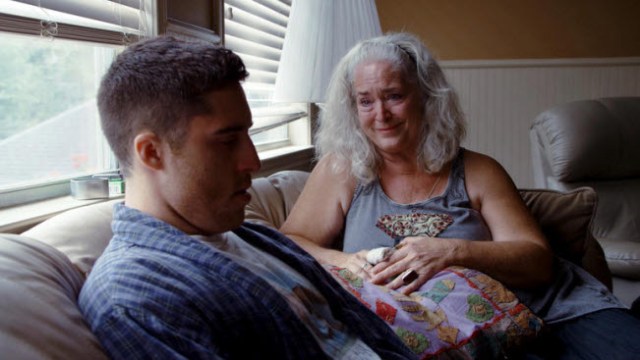
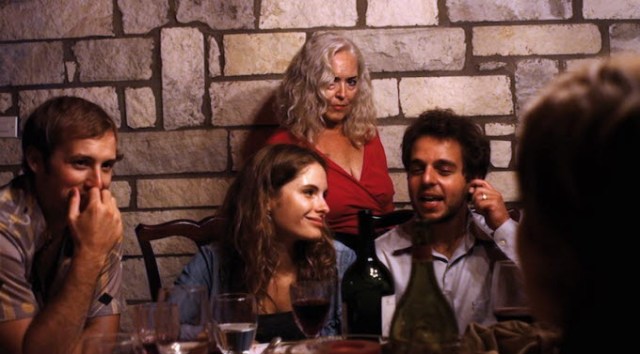
At first, Krisha (Krisha Fairchild) believes that she can control herself well for the upcoming family dinner on Thanksgiving Day, and everything seems to be fine as she arrives at a big suburban house where her sister Robyn (Robyn Fairchild) lives with her family. Other family members are already there, and they all greet Krisha along with Robyn, but we come to gather that Krisha has been a black sheep of the family for many years due to her alcohol and drug addiction problem. It is implied that she was not a very good mother to her son Trey (Trey Edward Shults) in the past, and she really wants to reconnect with her estranged grownup son through this time.

However, her current condition is not so ideal to say the least. Krisha manages to look sober and well on the surface, but she constantly feels agitated just like many alcoholics without drink. Her private metal box is full of medicine pills which are probably for calming her nerve, and we notice the missing tip of her right index finger covered in a bandage. When she later leaves a voice message to a guy who is probably her boyfriend, it looks like she recently hit another bottom and made a big mess again as a consequence.
krisha06

As many of her family members are busy with preparing for the dinner or watching a football game on TV, Krisha participates in cooking a big turkey to be served, and she feels a bit better as being around her family members, but she still remains on the edge while being in the middle of the noisy domestic environment. She finally gets a private moment with her son, but then she overlooks how much her son has felt hurt by her mistakes in the past, and that certainly puts another strain on her unstable mind, which feels more like a ticking bomb as the dinner time approaches.

For effectively reflecting its heroine’s nervous state of mind, the director/writer/editor Trey Edward Shults tries some notable stylish touches. Via sound design and editing, the movie throws us into disorienting moments especially during its early part, and the sense of confusion and nervousness is further accentuated by Brian McOmber’s edgy, percussive score. Some of you may be flabbergasted by this offbeat approach and find it rather gratuitous, but I think it serves well the drama of the movie, because, besides surely making the movie feel as jumpy as its heroine, it helps us sensing more of the emotional tension around her and the other characters in the film.

As his camera unobtrusively stays or moves around Krisha and the other characters in the film like another guest in the house, the cinematographer Drew Daniels gives us a number of impressive visual moments including the long-take opening scene, and I also appreciate how he and Shults effortlessly utilize three different screen ratios for dramatic effects. As far as I could see, the movie never looks rough or cheap, and I was later surprised to learn that it was actually shot during only 9 days.

krisha02

Consisting of both professional and non-professional performers, the cast look uniformly believable as family members with a long history among them, even when we cannot exactly grasp how they are related to each other. As a matter of fact, Krisha Fairchild is Shults’ aunt while Robyn Fairchild is his mother, and Trey’s grandmother in the film is played by Shults’ grandmother, who is really as senile as shown in the movie.

Full of raw spontaneity and emotional intensity reminiscent of Gena Rowlands in John Cassavetes’ “A Woman Under the Influence” (1974), Krisha Fairchild is utterly captivating in an honest, fearless performance which may be a breakthrough for her long acting career. Krisha is frequently unlikable and pathetic, but she comes to us as a flawed, complex character to observe thanks to Fairchild’s compelling nuanced acting, and we come to understand Krisha’s desperate human need at least. In case of supporting performers, Robyn Fairchild holds her own place well as Krisha’s caring sister, and the special mention goes to Bill Wise, who gives a colorful supporting performance as a sardonic family member who does not like Krisha much.

“Krisha” is not a comfortable film to watch at all, but it is one of most harrowing dramas about addiction I have ever seen during recent years, and it will give you some human understanding on how alcoholics can cause troubles for not only themselves but also people around them. In my humble opinion, Krisha really should begin to take the twelve steps of Alcoholics Anonymous for herself and others, and I hope she will agree to that. After all, it is never too late as long as you are alive, isn’t it?
krisha03

Posted in Movies | Tagged , , | 1 Comment

Under the Shadow (2016) ☆☆☆1/2(3.5/4): Something wicked this way comes with the war

undertheshadow01

There are two different types of horror in “Under the Shadow”. One comes from a stark, harrowing allegory based on one harsh, gloomy historical background. The other comes from a creepy, insidious tale about the possibility of some unknown evil influence. As they resonate with each other in their grim juxtaposition, the movie tightly grips us with the increasing sense of dread and anxiety, and then it strikes us hard with several tense, scary moments to remember.

The movie takes place in Tehran during the late 1980s, when the Iraq-Iran War was going through the phase of “the War of the Cities”. As the city is frequently shaken by air raid or missile attack, things seem to be getting only worse with no end in sight, and the repressive mood of the post-revolution era adds more gloom to this unstable situation.

In the opening scene, we meet a young married woman named Shideh (Narges Rashidi). Probably motivated by her mother’s recent death, she wants to resume her study at the medical university she quitted several years ago, but her aspiration is quickly dashed when she talks with a university administrator. The administrator points out her left-wing activities during the revolution, and he makes it clear to her that there will not be any chance for her in the future.

Quite frustrated about this, Shideh returns to her apartment where she lives with her doctor husband Iraj (Bobby Naderi) and their young daughter Dorsa (Avin Manshadi). Iraj initially shows some compassion to his wife, but he does not fully understand how exasperated she is. It is evident that she has felt suffocated by her surroundings, and we observe how ferociously she does her private home exercise with a Jane Fond workout video, which seems to be the only way to ventilate her anger and frustration.

undertheshadow03

When Iraj is about to be sent away to the front line, he suggests that his wife and daughter should go to his family living outside Tehran, but Shideh does not want to go there, and she thinks she can take care of herself and Dorsa at their home. After he leaves, she continues her usual daily life with Dorsa, and it looks like they will be mostly fine together although the war feels closer to them and other people in the apartment building day by day.

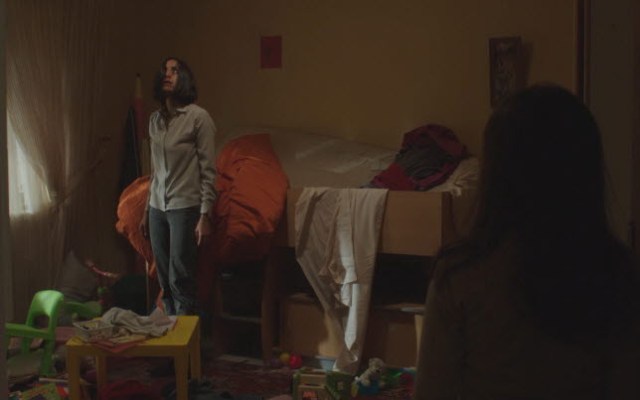
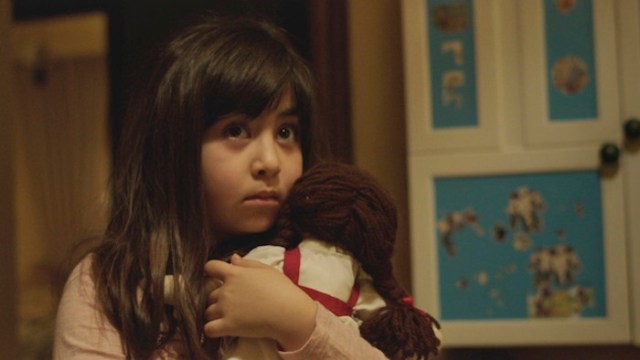
And then strange things begin to happen around Shideh and Dorsa. Dorsa has a night terror during one night, and she later tells her mother that she is scared of an evil spirit called ‘djinn’. She said that a mute boy living with the landlord’s family told her about djinn, and, as briefly shown during an earlier scene, he even gave her a tiny talisman for protection. Shideh simply dismisses what her daughter tells her, but then she finds herself frequently getting nervous and disturbed after one terrifying incident which shocks everyone in the apartment building with devastating effects, and it seems increasingly possible to her that there is indeed something wicked lurking around her apartment.

Via his skillful handling of space and mood, the director/writer Babak Anvari patiently dials up the level of tension. His cinematographer Kit Fraser’s camera is initially stable and unobtrusive as we get accustomed to the interior of Shideh’s apartment, but then it gradually shifts to a more agitated mode as generating a dark, claustrophobic atmosphere on the screen. Supposedly mundane details including the constant sound of wind come to feel more sinister as Shideh and Dorsa become more isolated and terrified later in the story, and the movie also serves us with several effective moments to jolt us while never interrupting its steady narrative pace.

undertheshadow04

Since it was shown at the Sundance Film Festival early in this year, “Under the Shadow” has been compared with “The Babadook” (2014), and that is not so surprising considering that both of them couple problematic motherhood with frightening supernatural elements. Like the heroine of “The Babadook”, Shideh is full of anxiety and frustration with many mental buttons to be pushed, and she come to be more reminded of her inadequacies as a mother as feeling more threatened by the unseen force of evil. The movie wisely lets us interpret its story for ourselves; we can simply regard it as a psychological horror movie reminiscent of Roman Polanski’s “Repulsion” (1965) and “The Tenant” (1976), and we can also appreciate how it metaphorically reflects the destructive social/historical reality coming into her apartment from outside.

The final act of the movie pushes us further to the apparently unhinged viewpoint of its two main characters, and we naturally come to question what exactly happens during this part, but the movie is firmly held by the stellar performance from its two lead performers. Narges Rashidi is believable in every step of her neurotic character’s gradual psychological transition along the plot, and her performance eventually becomes the emotional anchor we can hold onto throughout the film. Avin Manshadi is equally good in her natural performance, and her character comes to us as another active part of the story while she effortlessly moves around different emotional states.

Overall, “Under the Shadow” is a small but smart horror movie equipped with spooky ambience, solid performance, and interesting subjects, and Anvari made a successful debut here with his first feature film. Like any good fillmakers, he understands well the value of mood and storytelling, and the result is one of the scariest movies I saw in this year.

undertheshadow02

Posted in Movies | Tagged , , , | 1 Comment

Certain Women (2016) ☆☆☆(3/4): A trio of haunting human dramas set in Montana

certainwomen03

Looking over a train passing by a vast, remote landscape, the main title sequence of “Certain Women” hauntingly sets the tone for three stories to be unfolded one by one in a rural area of Montana. While not all of its stories are satisfying, the movie works thanks to its restrained but sensitive storytelling approach as well as the solid performances from its main cast members, and it is often touching to watch small moments of human emotions glimpsed from its characters.

The first story is about a lawyer working in Livingston, Montana and her problematic client. While Laura (Laura Dern) has tried her best to persuade him of his hopeless legal situation, Fuller (Jared Harris) has stubbornly stuck to his misguided belief that he might receive another compensation for the work injury on his head which has gotten worse than before, so she comes to set up his meeting with another lawyer, who confirms to Fuller of what she has told him again and again during last several months.

However, Fuller remains undeterred while only exasperating Laura more than before, and Jarred Harris is alternatively maddening and pitiful as a desperate man helplessly struggling with his damaged state of mind which keeps pushing him into more anger and despair. Fuller eventually comes to attempt a drastic measure to Laura’s dismay, and Harris and his co-star Laura Dern have a quietly tense moment as their characters try to deal with his impossible situation.

certainwomen01

In the second story, we meet Gina (Michelle Williams) and her family. Gina and her husband Ryan (James LeGros) are planning to build a new house at a site outside Livingston, and she wants to buy a bunch of sandstone blocks belonging to an old man named Albert (René Auberjonois). While the movie does not tell us much about why those plain sandstone blocks are so particularly precious to her, Albert does not seem to mind Gina taking them away from him, though he shows some regret about what he could have done with them in the past. He is more interested in having a conversation with Gina and Ryan, and she is annoyed by this even though she is going to get what she wants in a way far easier than expected.

The second story is the weakest part of the movie, and Michelle Williams, who previously collaborated with the director/editor/adapted screenplay writer Kelly Reichardt in “Wendy and Lucy” (2008) and “Meek’s Cutoff” (2010), is under-utilized here due to her rather superficial character, but this part is not entirely without good elements. The barren sense of loneliness is palpable especially when the cinematographer Christopher Blauvelt’s camera looks around the remote surroundings of Albert’s house, and René Auberjonois is excellent as he gradually reveals his character’s longtime solitude.

The third story, which is the strongest part of the movie in contrast, introduces us to Jaime (Lily Gladstone), a young female ranch hand working in a farm located outside a small town named Belfry. As we watch her going through her daily routine at the farm, we cannot help but notice how isolated she is. When she is tending horses outside in the daytime, there is no one around her except her dog, and then we see her spending the nighttime alone with TV at her sleeping place.

During one night, Jamie stumbles upon a school law class at a local school, and that is how she comes to meet its new teacher Beth (Kristen Stewart), a young lawyer who drove from Livingston for the class. After the class is over, she takes Beth to a nearby diner, and they have a brief conversation at the diner before Beth drives back to Livingston.

certainwomen02

We observe how attentively Jamie listens to every word from Beth. She does not speak much during their conversation, but it is apparent that she is simply happy to be with someone who may make her life less monotonous than before. Already being tired of her job which demands her to make 8-hour round trip between Livingston and Belfry twice a week, Beth does not mind taking the kindness of a stranger, and that makes Jamie approach a little closer to Beth during their next encounter, which is accompanied with a brief moment of quiet tenderness between these two young women.

While Kristen Stewart, who has kept impressing us with a series of good performances during recent years, is effective in her role, Gladstone remains as the heart and soul of the third story, and she is particularly excellent during the most powerful moment in the movie. As the camera keeps focusing on her calm, wordless face for a while, she does not signify anything during that moment, but we can clearly feel her character’s emotional state thanks to what her beautifully understated performance has steadily built up along the story, and that is why her last scene is quite poignant.

“Certain Women” is based on three short stories from Maile Meloy’s collection “Both Ways Is the Only Way I Want.” Although I have not read them yet, I can tell you that the movie vividly evokes the sense of locations and people, and Reichardt and her talented performers give us intimate dramas to which we can relate via their universal human emotions. It is not perfect, but it is affecting on the whole none the less.

certainwomen04

Posted in Movies | Tagged , , , , | Leave a comment

Don’t Think Twice (2016) ☆☆☆(3/4): Comedy is hard….

dontthinktwice01

I know it is a cliché to say “dying is easy, comedy is hard”, but I could not help but think of that phrase as watching the struggling improvisational comedy group members in “Don’t Think Twice”, which is both funny and insightful in its witty, heartfelt depiction of their daily aspiration and frustration. Sure, they are mostly funny people as far as I can see, but most of them may never get a breakthrough they have yearned for years, and they now have to face that fact as changes come into their work and life.

After we are told a bit about improvisational theater and its three golden rules, we see how the members of an improvisational comedy group called ‘The Commune’ prepare themselves before their latest evening performance. Headed by Miles (Mike Birbiglia), they fluidly interact with each other in their improvisational sketch on the stage, and the easy rapport among them is evident as they entertain the audiences with their quick, sharp delivery of improvised lines.

But their situation is not so good despite the positive responses from their audiences. While he is the most experienced member in the group, Miles has not gotten any chance to advance his career for many years, and neither have his colleagues. They already passed their 20s, and most of them still depend on day jobs they do not like much. In addition, their usual theater in Brooklyn will be soon closed, and that means they will have to find another place for their performance.

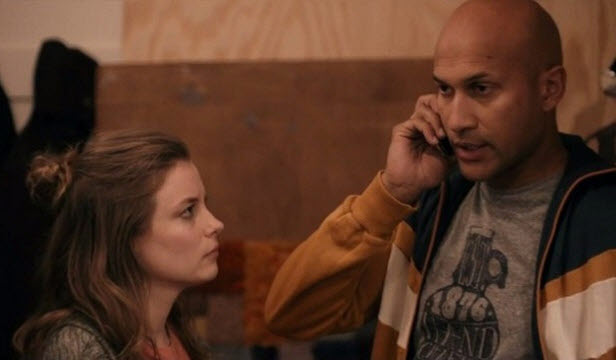
We get to know them bit by bit as observing their daily life. Miles has earned his living through his improvisational comedy class, and he is dating one of his students. While Jack (Keegan-Michael Key), who once attended Miles’ class, is currently living with Samantha (Gillian Jacobs), Lindsay (Tami Sagher) has relied on her wealthy parents, and Allison (Kate Micucci) occasionally works on her graphic novel which has not been finished for years. In case of Bill (Chris Gethard), it may be prudent of him to follow his father’s suggestion instead of pursuing his dream, but he adamantly sticks to what he loves although he looks like the least likely one to succeed in the group.

dontthinktwice03

During one evening, there comes a possible big chance for them. The producers of Weekend Live, which is clearly a fictional version of Saturday Night Live, come to see their performance, so they are ready to try their best, but then the spotlight eventually goes to Jack, who cannot resist a chance to show off himself in the middle of their performance. Not long after the performance, Jack is invited to the audition along with Samantha, who also showed some considerable potential during that performance.

Everyone is happy for Jack’s lucky opportunity and they become more excited when he is hired thanks to his successful audition, but this also brings considerable shifts into the group. As more focusing on Weekend Live with his more prominent status, Jack slowly begins to drift away from the group, and the other members of the group cannot help but be envious of his little success, as reminded again of how miserable they have been with their small hopes which may never be fulfilled. At one point, one of them says: “I feel like your 20s are all about hope, and then your 30s are all about realizing how dumb it was to hope.”

While honestly recognizing their frustration and bitterness through such melancholic moments like that, the movie delightfully bounces along its loose narrative flow as driven by the dynamic interactions between its main characters. Their performance scenes spark with joyous spontaneity, and these scenes never feel repetitive or perfunctory as providing good laughs for us. As your average seasoned comedians, Miles and his gangs seldom pass by any chance to be funny even when they are not on the stage, and that amusing tendency of theirs is exemplified well by when they bring out some laughs from one very unfortunate accident.

dontthinktwice02

The movie also shows a surprising amount of sensitivity in several personal moments shown from some of its main characters. When Miles receives a surprise news from his latest girlfriend who is also his old flame, her decision on that news sharply reminds him that he is no longer young as before. Although Bill’s father does not regard highly of his son’s profession, he respects his son’s choice, and Bill cares about his father even though they are not that close to each other. As Jack advances more with his career, the relationship between Jack and Samantha is inevitably affected by that change, and there is a poignant scene where they truthfully and sincerely interact with each other in front of the audiences.

With their vibrant chemistry on the screen, the director/writer Mike Birbiglia and his co-performers effortlessly swing back and forth between drama and comedy. While Keegan-Michael Key naturally draws more attention from us considering his showy character as well as his current rising career outside the movie, the other main cast members are equally engaging as having each own moment, and there are also a couple of entertaining cameo appearances to notice.

As a comedy about a specific type of people, “Don’t Think Now” can be alien to you if you are not so familiar with improvisational comedy (Full disclosure: I am not either), but you can enjoy its bouncy comic spirit while getting to know more about its interesting main subject. Comedy is indeed hard and so is life – but they go on anyway as reaching for those precious laughs.

dontthinktwice04

Posted in Movies | Tagged | Leave a comment

Swiss Army Man (2016) ☆☆☆(3/4) : A bromance with one multi-functional corpse

swissarmyman01

What a bizarre movie “Swiss Army Man” is. Its premise is so offbeat that you may have no particular desire to see the movie once you hear about its premise, and it is rather amazing that its two directors and their two lead performers somehow succeed in making something inherently morbid but strangely engaging. Although I had no idea on how to deal with this odd comedy film at first, I came to appreciate how deftly its directors balance their movie well between humor and pathos at least during its first two acts, and I certainly came to enjoy how willingly its two lead performers throw themselves into their challenging roles.

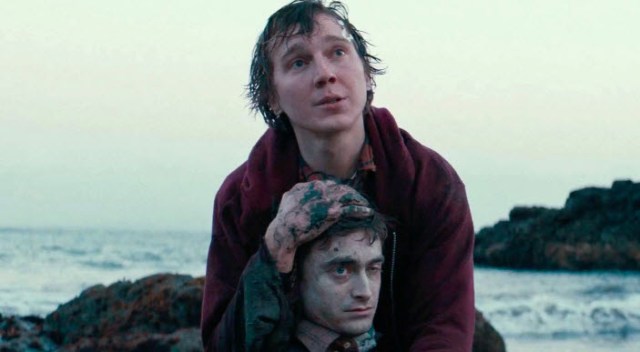
When we meet Hank (Paul Dano) during the opening scene, this depressed young man is about to hang himself at the beach, but then he notices something being drifted from the sea. It is the decaying corpse of some drowned young man around his age, and its status of putrefaction is pretty evident from the intestine gas frequently emanating from its anus.

Now it sounds gross to some of you, but the directors/writers Daniel Scheinert and Daniel Kwan make this scatological running gag work with considerable wit and imagination, and you can see right from the beginning that they are ready to do anything to make us cringe or laugh. As the corpse keeps drawing his attention, Hank eventually fails in committing suicide, and then he comes to enjoy a sort of jet ski with the corpse thanks to its seemingly bountiful amount of intestine gas. I initially found it too exaggerative, but I must confess that I also could not help but amused a bit as a guy whose intestine gas often demonstrates Newton’s Third Law on treadmill (It just smells while not boosting my running that much, by the way).

swissarmyman02

After being drifted away to some other remote beach area along with the corpse, Hank searches for any way out in a nearby forest while carrying the corpse on his back, and the corpse turns out to be pretty useful for him as a ‘multipurpose tool guy’. For example, it can function as a sort of water tank although its water quality is questionable to say the least in my opinion, and the movie has lots of morbid fun with how the corpse can be used in many different weird ways you have to see for yourself.

To Hank’s surprise, the corpse comes to gain its own consciousness at one point and begins to talk to him. While the movie is ambiguous about how that can be possible, Hank does not have much problem with this outrageous happening mainly because he is really in the need of someone to talk with. It may be merely his lonely delusion, but his talking corpse soon becomes his best friend anyway, and it even gets its name during their first communication.

‘Manny’ is played Daniel Radcliffe, who surely looks quite different from his most famous role here in this film. While maintaining his character’s unpleasant appearance as demanded, Radcliffe keeps his acting straight even during the silliest scenes in the movie, and we get several hilarious deadpan moments as Radcliffe wryly delivers his loony lines without any self-conscious wink.

His co-star Paul Dano, who has always been good at playing emotionally troubled characters as recently shown from “Love & Mercy” (2014), is convincing in his character’s quiet desperation, and he and Radcliffe click together well as their characters’ bizarre relationship is developed further with more offbeat humor. As Hank and Manny spend more time with each other in their isolated situation, Manny’s presence comes to spark Hank’s artistic instinct, and we get a series of amusing scenes as Hank freely projects his artistic sensibility onto Manny. With Manny, he does not feel lonely anymore, and he is more excited than before as decorating their own small world with various things which seem to come from those idiosyncratic films by Michel Gondry.

SWISS ARMY MAN (2016) Daniel Radcliffe and Paul Dano

And we come to learn that Hank has had a crush on a young woman he happened to notice during his bus ride on one day. He was too afraid to approach to her, and he is still reluctant to express his feelings even at present, but he chooses to transfer his feelings to Manny. Through a number of cleverly staged moments, he provides Manny false memories of her, and one of these moments earned a giggle from me for being accompanied with John William’s score for “Jurassic Park” (1993), which is incidentally one of my favorite movie scores by Williams.

Unfortunately, the zany spirit of the movie begins to be decreased as it approaches to its inevitable narrative point. After all, this is basically a one-joke comedy, so it naturally starts to feel tiresome during its last act, and its last 15 minutes is particularly disappointing although it recovers to some degrees during its ending.

Even after the second viewing, I still have some reservation on “Swiss Army Man” because I observed its comic moments from the distance, but it does its job mostly well enough for my enjoyment despite its weak third act, so I guess I can recommend it especially if you are looking for something truly odd and weird. Regardless of whatever you may think of the movie, it is undeniable that Scheinert and Kwan show us something we cannot see everyday, and they certainly made an impressive debut to remember here. What will they possibly show us in next time, I wonder?

swissarmyman04

Posted in Movies | Tagged , | Leave a comment

I, Daniel Blake (2016) ☆☆☆1/2(3.5/4): Small daily struggles against an unfair system

idanielblake

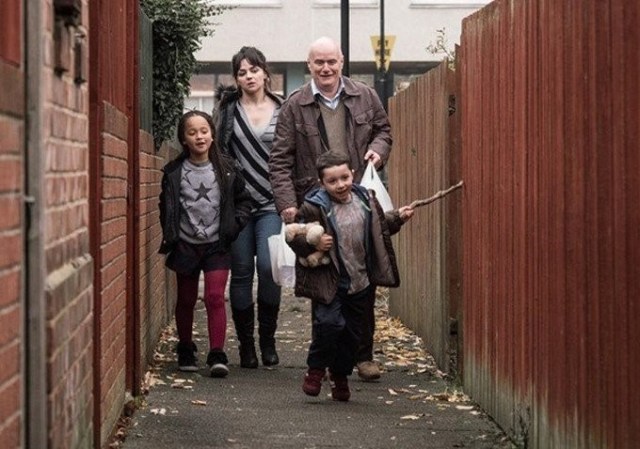
Ken Roach’s new film “I, Daniel Blake”, which won the Palme d’Or award at the Cannes Film Festival early in this year, is angry about the maddening incompetence of a system which is supposed to help and support people. Watching its aging hero’s small struggles against this unfair system, you will certainly feel the same anger unless you are totally heartless, and then you will also be touched by how he and other characters around him help each other as trying to live through another hard day.

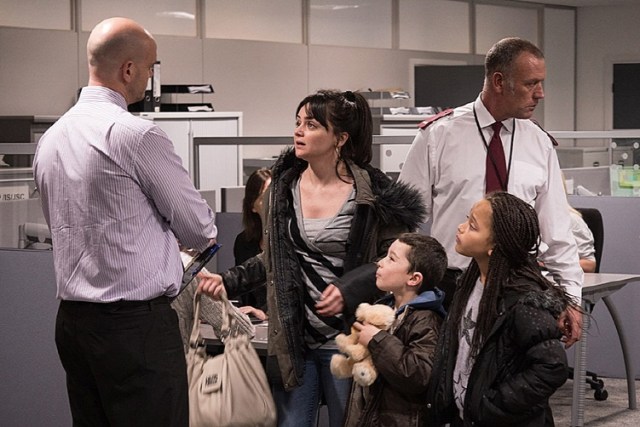
The movie begins with the frustrating conversation between a middle-aged carpenter named Daniel Blake (Dave Johns) and a healthcare service worker who keeps throwing formal questions at him for determining his eligibility for the sickness benefit called ‘Employment and Support Allowance’. While mostly looking fine at present, Daniel recently had a serious heart attack at his workplace, and he really needs this benefit because, as reflected by the subsequent scene with his doctor, he is not yet fully recovered enough to work and earn his living.

Daniel tries to be patient, but he only becomes more frustrated with the tepid bureaucratic process he has no choice but to endure, but then he is notified that his health problem is not severe enough to make him eligible for the sickness benefit. While waiting for a chance to lodge an appeal, he must apply for ‘Jobseekers Allowance’ as an unemployed man, but that means he must seek for a job as demanded in the meantime despite his current health condition.

idanielblake02

The screenplay by Paul Laverty, who wrote the screenplays from Roach’s recent films including “The Wind That Shakes the Barley” (2006) and “The Angel’s Share” (2012), generates acerbic moments of dark absurdity as observing not only how helpless Daniel is in front of the system but also how heartless the system is to many desperate people like Daniel. As an old-fashioned guy who is not so familiar with the Internet, Daniel experiences lots of difficulty when he has to do an online application, and I must tell you that the scene where he attempts to use a computer drew some big chuckles from me and the audiences around me during the screening. At a local job center, one of its employees turns out to be more caring and helpful than others, but then she is later chided by her superior just because she helped Blake a bit more than necessary. I understand that following regulations is crucial for any bureaucratic system, but, folks, what good can a system possibly do if it cares more about regulations than people?

Anyway, Daniel keeps trying while doing whatever he is required to do. He attends a shoddy class where he and others are lectured on how to make good impressions on their potential employers. With his rather rudimentary curriculum vitae, he casually goes around his neighborhood for his perfunctory job-seeking, and there is an ironic moment when he happens to get a very good opportunity of employment at one point.

Meanwhile, he comes to acquaint himself with Katie (Hayley Squires), a young struggling mother of two children who becomes more desperate after her benefit is suspended just because she was late for her appointment at the same job center Daniel went to. Although they came across each other as total strangers, Daniel and Katie soon connect with each other as two working class people coping with each own economic difficulty, and Daniel helps her a bit as befriending her and her children day by day.

idanielblake04

However, things remain difficult as usual for Daniel and Katie, and we see more of their continuing hardships. When they go to a local food bank, other poor people have already lined up there, and then there comes a sudden heartbreaking moment when Katie finds herself succumbing to what she has tried to suppress for days. While you may be surprised by that, the food bank workers are neither shocked nor outraged at all, probably because they have handled such a situation like that many times before.

While never overlooking its main characters’ harsh reality, the movie is occasionally warm and humorous, and Dave Johns, a veteran stand-up comedian who makes a theatrical movie debut here in this film, gives an engaging performance as a likable guy who will not easily step back in front of obstacles. While being effortlessly amusing from time to time, Johns is very good when he subtly conveys us the frustration gradually accumulated inside his character, and we come to empathize with Daniel more especially when he eventually decides that enough is enough. He surely demonstrates in front of others that he will not be ignored at any chance, and we cannot help but root for him during that pivotal moment.

The other performers in the movie look as unadorned and realistic as Johns. Hayley Squires is believable as a woman with a very few options for her hard, messy life, and she is simply devastating when her character comes to make a certain choice for providing a stable place for her children. As Blake’s young black neighbor, Kema Sikazwe brings some cheer to the movie at times, and young performers Briana Shann and Dylan McKiernan are also impressive in their natural rapport with Johns and Squires.

“I, Daniel Blake” may not be Roach’s best work, but it is as excellent as we can expect from a master filmmaker who has consistently shown lots of care and attention to his ordinary but memorable working class characters. Although the movie stumbles and then becomes a little contrived during its third act, that flaw does not seriously hurt its several powerful moments, and it surely earns the sentiments palpably felt during its quiet but moving finale.

idanielblake03

Posted in Movies | Tagged , , | Leave a comment

Zero Days (2016) ☆☆☆1/2(3.5/4): Welcome to the era of cyber warfare

zerodays04.png

Documentary film “Zero Days” presents an inconvenient truth to chill and alarm us. While cyber-attack has been a familiar issue during recent years, the documentary shows us that cyber-attack technology has advanced far more than we think, and it is quite disturbing to see what will be the beginning of a new era of modern warfare. This is no longer what may happen in the distant future; it is happening around us even at this point, with more dangerous possibilities to come.

In 2010 June, a malware which was later named Stuxnet was detected in Belarus, and we meet several technicians who analyzed this malware at that time. During their analysis, they were quite amazed by its many sophisticated technical aspects, and it became quite clear to them that Stuxnet was not a mere work of some cyber criminals or hacker activists but a cyber weapon on the level of state-nation.

It was virtually impossible to pinpoint which government agency was involved in the development and release of Stuxnet, but its insidious purpose was gradually revealed through several months of analysis and research. Although it was designed to infiltrate into a common control hardware widely used in various industrial fields, Stuxnet did not cause any particular damage to many computer networks infected with it while being quickly spread around the world, and it looked like it had some specific target to attack.

As the aforementioned technicians gathered the numerous cases of Stuxnet infection around the world step by step, it turned out that the country with the most infected cases was none other than Iran, and they came to notice several questionable malfunction incidents which recently happened there. One of them happened at one of the main nuclear facilities in Iran, and this suggested that Stuxnet was developed by the US government, and, possibly, the Israeli government.

zerodays03

Neither the US government nor the Israeli government has ever recognized that, but there is not much doubt about their culpability considering their geopolitical conflict with Iran. The nuclear program of Iran has been a serious trouble for them since the 1980s, and, as Iran came quite closer to having nuclear weapons during the 2000s, the US government concluded that something should be done as soon as possible for avoiding far worse situations.

Mainly due to his increasingly difficult political circumstance due to the wars in Iraq and Afghanistan, President George W. Bush was reluctant to bomb the nuclear facilities in Iran, and that was how cyber-attack came into the picture as another option. When the decisive power came to President Barack Obama a few years later, he showed some misgivings, but that did not stop him from authorizing the use of Stuxnet, which was called ‘Olympic Games’ by its developers.

The documentary gives us a detailed account of how the fuel enrichment plant located in Natanz, Iran was infiltrated and then damaged by Stuxnet. The target of Stuxnet was the control system for the uranium gas centrifuges in the plant, and we get a graphic presentation of how the system in question malfunctioned as covertly manipulated by Stuxnet. Once the right condition was set, Stuxnet started to increase or decrease the speed of those ultrahigh-speed centrifuges too much while nothing seemed to be wrong in the control room, and then the centrifuges eventually broke themselves apart as causing considerable damages to the system.

This cyber-attack itself was as successful as intended while the Iranian government and its scientists and engineers were baffled by what happened, but this did not deter Iran at all. Sure, it did put a temporary dent on the nuclear program of Iran, but then the nuclear program of Iran came to be far more accelerated than before – especially after Stuxnet came to be exposed in public to the embarrassment of US and Israel. In addition, Iran also established its own cyber military unit, and it soon gave a clear warning to the US government via two massive cyber-attacks.

zerodays012

Several US government officials, who are anonymously represented by one actress as acknowledged at the end of the documentary, talked to the director Alex Gibney about Stuxnet and their classified cyber programs, and their testimonies reveal that Stuxnet is just a tip of iceberg. As a matter of fact, they already developed a far more powerful cyber weapon called ‘Nitro Zeus’, and Stuxnet looks like a child’s play compared to what Nitro Zeus is capable of.

It is apparent that there should be more open debates on cyber weapon, but US and many other countries around the world are still reluctant to recognize this urgent matter. As many things remain classified in the name of national security, most of government officials interviewed in the documentary are evasive to Gibney’s questions on Stuxnet, but they show concerns over that dangerously uncertain territory of cyber warfare. Like nuclear weapon or chemical weapon, cyber weapon definitely needs to be regulated via something like international treaty, but that will not be easy at all as cyber-attack technology rapidly keeps advancing as usual. After all, how can you possibly trace or inspect something which can be easily hidden in any computer or storage device?

After drawing my attention for the first time through “Enron: The Smartest Guys in the Room” (2005) and “Taxi to the Dark Side” (2007), Gibney has continued to impressed me with his subsequent documentary films including “Going Clear: Scientology and the Prison of Belief” (2015), a scathing and alarming exposé on the Church of Scientology. What he reveals here in “Zero Days” is equally alarming to say the least, and it also chillingly resonates with that recent hacking case possibly associated with the Russian government, which might have attempted to influence the US presidential election of this year as circumstantial evidences suggest. Yes, we have indeed entered the era of cyber warfare, and we can only hope we will be able to do something about that before it is too late for us.

Sidenote: As explained in the documentary, zero day is a technical term for undisclosed computer-software vulnerabilities which can be exploited by hackers.

zerodays04

Posted in Movies | Tagged , | 1 Comment

Life, Animated (2016) ☆☆☆1/2(3.5/4): Reaching out to life through Disney animations

lifeanimated01

As a guy diagnosed as having Asperger’s syndrome, I am not very good at communicating with others including my family members, but I found a way to reach to others through writing and talking about movies. Although I must admit that my intense interest in movies almost ruined my education course and academic career at several points of my messy, inconsequential life, I do not regret at all because I always felt happy and excited while sharing my feelings and thoughts on movies with others, and, as you see at this moment, I still do.

That was why I was quite touched by the autistic hero of documentary film “Life, Animated”, who found his own way of reaching to others via Disney animation films he has watched since his childhood. I could not help but notice how much he looks happy whenever he shares his enthusiasm with others, and it was a really moving experience for me to observe him taking his first steps into the world outside.

Before he suddenly showed the signs of autism, Owen Suskind was just like any other kids around his age. As shown from his family’s home movie clips shot during his pre-autism period, he was an active and chirpy kid at the beginning, but then he became increasingly gibberish and clumsy at some point when he was 3, and his parents Ron and Cornelia were devastated to hear from specialists that their son’s mind might be irreversibly stuck in incommunicado state for the rest of his life.

While his family was at a loss with Owen’s autism, one year passed along with the uncomfortable silence in their household, and then there came a small but significant breakthrough. When Owen uttered a strange, seemingly incomprehensible word, his parents did not understand it at first, but then they came to realize that it was actually a phrase from “The Little Mermaid” (1989), one of Disney animation films Owen had compulsively watched.

lifeanimated02

Although specialists cautioned to Owen’s parents that it could be mere echolalia, they began to see a small sign of hope from it, and then they experienced another remarkable moment a few years later. During the birthday party of his older brother Walter, Owen made a clear, complete comment on Walter’s unhappy attitude, and his parents could not be more amazed by what they had just witnessed from Owen.

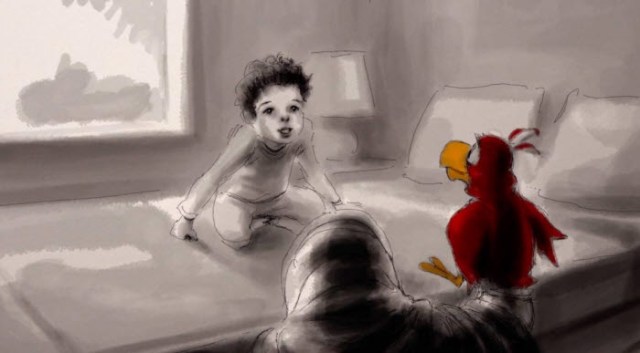
It turned out that Owen had learned how to speak and read through Disney animation films as trying to grasp their plot and dialogues, and those animation films were certainly good guides for him. The bold, simple emotional expressions of animation characters functioned as easy cues to be processed by his autistic mind, and every line absorbed and then memorized by him became the means of communication for him. When Ron approached to his son via one of supporting characters in “Aladdin” (1992), he soon came to find an opening to his son’s mind, and that amazing moment is still vividly remembered by him.

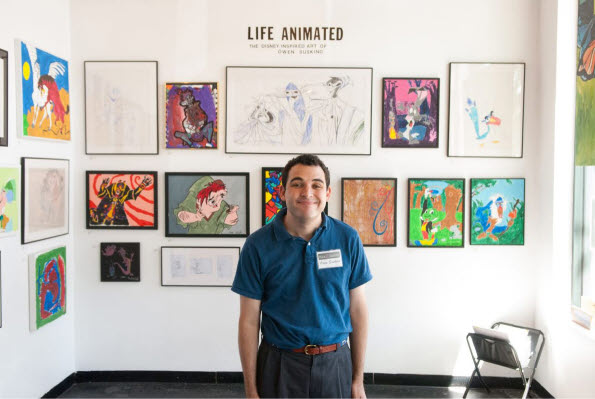
While he came to be more supported by his family than before, Owen had problems with following the education courses at his school, and he became more withdrawn to himself as frequently bullied by other students. Again, he was helped a lot by Disney Animations films; he came to focus on drawing animation characters, and he created his own fantasy world where he is the protector of his favorite animation characters.

For presenting the state of Owen’s autistic mind for our more understanding, the director Roger Ross Williams incorporates a number of animation sequences into his documentary, and the most colorful ones give us the glimpses into Owen’s fantasy world. Interestingly, most of his favorite characters are sidekick characters, and I must say I totally understand his preference. After all, sidekick characters are much more fun to imitate than straightforward heroes/heroines, aren’t they?

lifeanimated03

As Owen’s high school graduation is approaching, his parents and his brother see that there will be far more struggles for him as he is coming out to the world outside. Although he is constantly helped by counselors and he also has a girlfriend he really likes, he still needs to learn more about complex human matters which Disney animation films cannot teach, and there is an small amusing scene where Walter muses on how he can teach his brother how to move onto the next steps after kissing his girlfriend.

As expected, it turns out to be quite difficult for Owen to start to live independently at an assisted living community far from his family home. He is clumsy and awkward as usual, and then there comes a painful moment when he struggles to process a sudden change coming upon him. Although my case is milder compared to his, I had similar experiences which threw my mind off balance like that, and I really felt sorry for him as watching that scene.

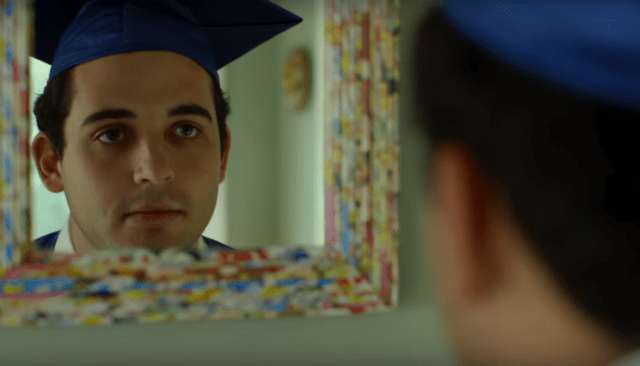
Nevertheless, “Life, Animated” mostly feels optimistic with its warm, heartfelt moments observed from Owen and his family. While he may look and sound odd at first, Owen is a likable lad we cannot help but root for, and I would love to hear his opinion on “Inside Out” (2015). It is fortunate that he has a good family who has always encouraged him to take more forward steps into life, and you can clearly see how much his family are proud and supportive of him when they attend his high school graduation ceremony.

Although I am still frequently baffled about the complexities of life and people out there (my latest challenge is driving a car, by the way), good movies helped me have more empathy and understanding on various people different from me, and “Life, Animated” is another good example besides being a very moving documentary film. Life will certainly continue to be a challenge for Owen, but he will go on – with his family and animation friends at his side as always.

lifeanimated04

Posted in Movies | Tagged , , , , | 1 Comment

De Palma (2015) ☆☆☆1/2(3.5/4): From the master of macabre

depalma02.png

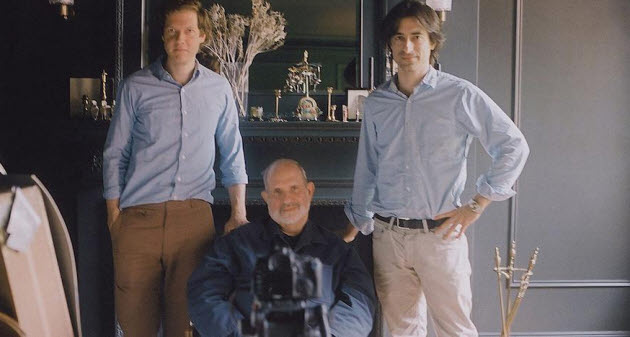
Noah Baumbach and Jake Paltrow’s documentary film “De Palma” is as informative and entertaining as you can expect from the illustrious career of Brian De Palma, who surely deserves to be called “the Master of the Macabre” for many of his films which are as distinctively personal and stylish as Alfred Hitchcock’s. Looking around the filmmaking career spanning no less than six decades, the documentary puts De Palma in front of the camera, and he does have plenty of interesting things to tell us.

During the first part of the documentary, De Palma talks about his early life. While he was your typical science nerd not so different from Keith Gordon’s character in “Dressed to Kill” (1980), he became interested in making movies after enrolling at Columbia University, and he tells us how much he was impressed by “Vertigo” (1958) when he happened to watch it at the time of its initial release in US. After watching that great film, he became more aware of filmmaking techniques and personalities behind them, and his interest in filmmaking grew further while he subsequently enrolled at Sarah Lawrence College.

During the 1960s, he made a number of short films in addition to documentary film “The Responsive Eye” (1966), and then he made his first three feature films “Murder a la Mod” (1968), “Greetings” (1968), and “The Wedding Party” (1969). In case of “Greetings” and “The Wedding Party”, they were also two early movies in Robert De Niro’s acting career, and De Palma fondly remembers how De Niro caught him off guard with a sudden demonstration of acting during their meeting.

After Pauline Kael gave an enthusiastic review to “Greetings”, things looked promising to De Palma at first, but then he went through the problematic production of “Get to Know Your Rabbit” (1972), during which he often clashed with not only its lead performer Tom Smothers but also Orson Welles, who was not very cooperative during the shooting of his scenes. Fortunately, De Palma bounced back with “Sisters” (1973), and that little thriller film was where he showed more of the influences from Hitchcock’s films while also skillfully mixing them into his own distinctive personal style.

depalma04

One of the definite Hitchcockian touches in “Sisters” was the chilling score by Bernard Herrmann, who composed a number of unforgettable scores for Hitchcock movies during the 1950-60s. Herrmann was going through his few remaining years as a fragile but irascible old man when De Palma sought for his service, but he surely delivered far more than De Palma expected, and he later worked with De Palma again in “Obsession” (1976), another movie heavily influenced by Hitchcock films. While talking about “Obsession”, De Palma confirms what I read from the autobiography of John Lithgow, who played one of supporting characters in that film. He had to cast Cliff Robertson in the lead role for getting it produced, but Robertson frequently inhibited the shooting process just because his co-star Geneviève Bujold looked more prominent than him, and that certainly exasperated De Palma and others in the production.

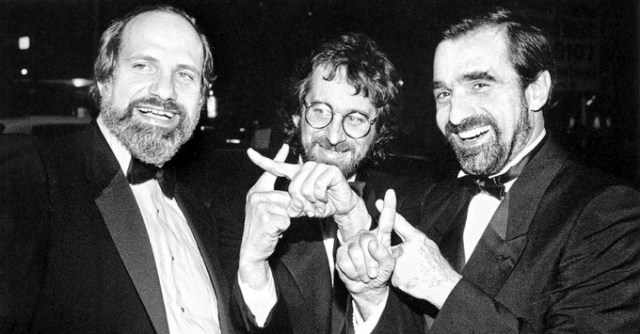
“Sisters” was followed by unforgettably bizarre musical movie “Phantom of the Paradise” (1974), and then, after “Obsession”, there came “Carrie” (1976), one of the most critically and financially successful movies in De Palma’s career. The 1970s was indeed a great time for him and his close filmmaker friends Martin Scorsese, Francis Ford Coppola, Steven Spielberg, George Lucas, and Paul Schrader, and De Palma recollects how freely and successfully he and his friends could make something not only entertaining but also personal during that wonderful period – until Hollywood eventually became more business-minded.

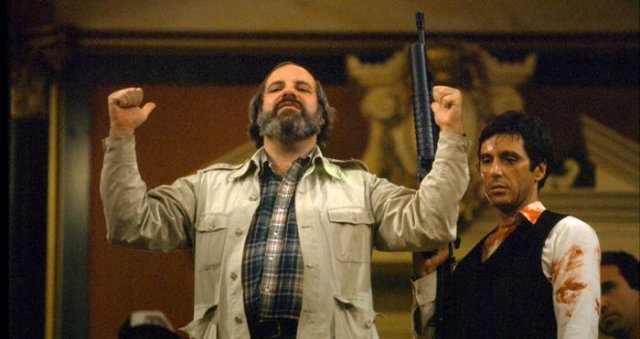
During the 1980s, De Palma went through a fair share of ups and downs. He gloriously started with “Dressed to Kill”, but then it was followed by the commercial failure of “Blow Out” (1981), which is now regarded as one of his best works. His excessively stylish approach to sex and violence in “Scarface” (1983) and “Body Double” (1984) caused lots of controversies and troubles which could have sunken his career, but then he rose again with “Wise Guys” (1986) and “The Untouchables” (1987), which were then followed by a fiasco named “Bonfire of the Vanities” (1990) as he entered the 1990s.

depalma03

This bumpy career trend of his was repeated throughout the 1990s and the 2000s. After “Raising Cain” (1992), he made “Carlito’s Way” (1993), and then he was luckily hired to direct “Mission: Impossible” (1996). After the failures in “Snake Eyes” (1998) and “Mission to Mars” (2000), it looked like his career was coming closer to the end, but then there came “Femme Fatale” (2002), which may be his best film during last 20 years.

After “The Black Dahlia” (2006) and “Redacted” (2007), De Palma had been rather silent for several years, but then he delightfully surprised us with “Passion” (2012), a modest but enjoyable film which showed De Palma back in his element as usual. According to IMDB, he is planning to make his next film which will probably be released around 2017, and I cannot help but admire him more than before as observing how he still remains to be passionate about filmmaking.

Will “De Palma” be another interesting turn in De Palma’s eventful career? I cannot give a definite answer for that question, but I can tell you that Baumbach and Paltrow give us a compelling summary of his career deliciously peppered with considerable amount of insights, and I thoroughly and gleefully enjoyed it as an admirer of many of his notable works. Please keep going, Mr. De Palma, you dirty old man.

depalma01

Posted in Movies | Tagged , , , | 1 Comment

Loving (2016) ☆☆☆1/2(3.5/4): On their quiet love and struggle

loving01I admire the simple but profound storytelling of “Loving”. At first, the movie looks conventional on the surface, but then it slowly reveals itself as an intimate and sensitive portrayal of one plain relationship between two ordinary good people who find themselves in a very difficult situation just because of their love, and it is touching to observe small universal human details from them. Like any couple, they simply love each other, and that is all they can show to us, while enduring and then prevailing in their unjust plight.

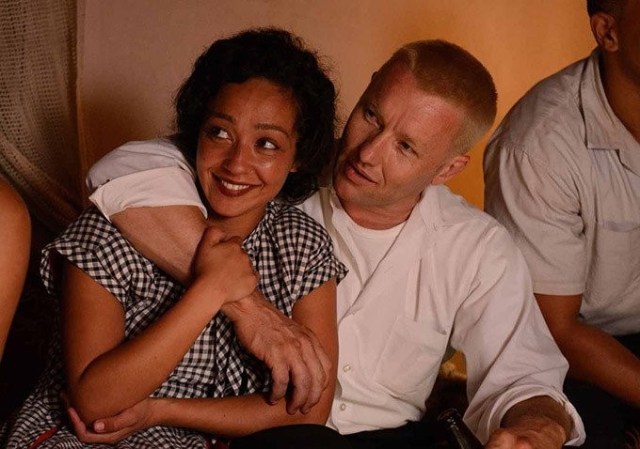
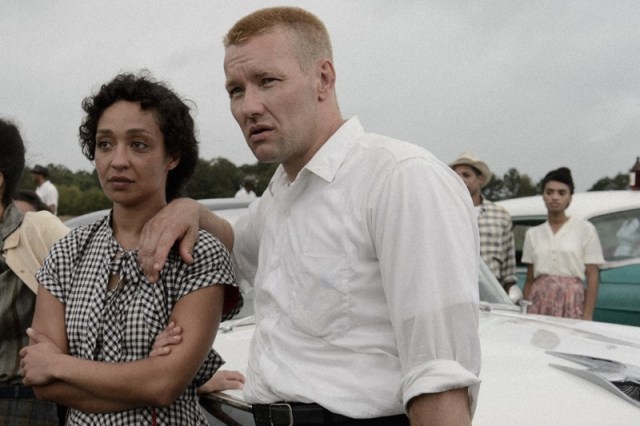
The movie begins with a turning point for the life of Richard Loving (Joel Edgerton) and his girlfriend Mildred Jeter (Ruth Negga), who live in a small rural county of Virginia, 1958. Its first shot shows us her serene but concerned face, and then she notifies Richard that she is pregnant. Happy to hear that news, Richard decides to do something which he has probably wanted to do since he fell in love with her. He buys a piece of land, and then he proposes to her as telling her about his future plan; he is going to build a house there, and that house will be a new home for them and their baby.

Mildred says yes without hesitation, but there is one big problem evident right from their very first scene. While Richard is white, Mildred is black, and their marriage is not legally possible in their state because of Virginia’s Racial Integrity Act of 1924. Because their relationship is not so secret among their families and many other people around them, Richard and Mildred do not mind the violation of this old racist law although they have to go outside the state for getting married. With Mildred’s father being their witness, they have a wedding in Washington D.C., and then they happily come back to their hometown with their marriage certificate, which is hung on the wall of their bedroom in Mildred’s family house.

loving02But troubles come to them sooner than expected. During one night when Richard is sleeping with Mildred in her house, the town sheriff and his deputies break into the house, and Mildred and Richard are promptly arrested and then incarcerated. While he is released on the next day, she is jailed for several days in contrast, and he is frustrated to see that there is nothing he can do except waiting for his wife to be released.

As advised by their lawyer, Richard and Mildred plead guilty to “cohabiting as man and wife, against the peace and dignity of the Commonwealth” and then are sentenced to one-year imprisonment, which can be suspended on the condition that they leave the state and then will never return for at least 25 years. They have no choice but to move to Washington D.C., and they eventually come to settle in their new place as having three children between them.

While never overlooking their pain and frustration, the movie subtly but profoundly depicts the resilient bond between Richard and Mildred via small, succinct moments which contribute to our gradual understanding of their deep love. Whenever they are together on the screen, their mutual affection always feels palpable to us, and that is why even a brief close-up shot of his hand tenderly holding her hand means much with considerable emotional resonance.

The two lead performances are as subtle and understated as their movie. Joel Edgerton, who has been more notable since his small supporting role in “Star Wars: Episode II – Attack of the Clones” (2002), gives one of his best performances as a decent man who would rather keep his thoughts and feelings to himself even when he is trying his best to endure all the oppressions coming upon him and his wife. Never being showy or silly at all, Edgerton also captures well his character’s introvert side, and he is very good especially when Richard struggles to suppress his fears and anxieties behind his taciturn façade which speaks volumes through its rigid silence.

loving04Supported well by her dependable co-star, Ruth Negga gives a gracefully nuanced performance which quietly radiates further during the second half of the movie. Compared to her reluctant husband, Mildred is more willing to fight for their right, and Negga, who will probably be Oscar-nominated along with Edgerton in next year, is believable as Mildred comes to take a more active role in the slow but steady struggle toward the legal recognition of her marriage.

In the end, everything culminates to the point where Richard and Mildred’s case is sent to the US Supreme court in 1967, but the movie keeps its calm, restrained attitude even at that point, and the director/writer Jeff Nichols wisely sidesteps clichés while occasionally allowing several moments of low-key humor into the story. The most amusing moment comes from when photographer Grey Villet visits Richard and Mildred for shooting their photographs for Life magazine, and Michael Shannon, who has been Nichols’ regular actor since “Shotgun Stories” (2007), has a little fun with his scene-stealing role while never overshadowing Edgerton and Negga.

Since his remarkable debut with “Shotgun Stories”, Nichols has continued to advance with his next two films “Take Shelter” (2011) and “Mud” (2012), and he surprises us again in this year with “Midnight Special” (2016) and “Loving”. While “Loving” may look less distinctive than “Midnight Special” in comparison, this is another impressive work from one of the best American filmmakers in our time, and its powerful human drama is certainly one of the most memorable ones in this year.
loving03

Posted in Movies | Tagged , , | 1 Comment