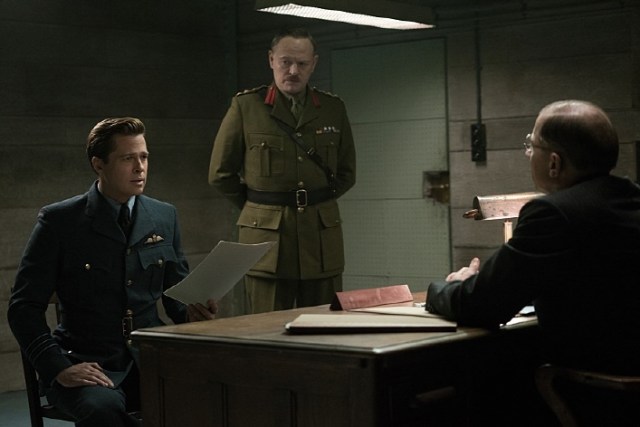
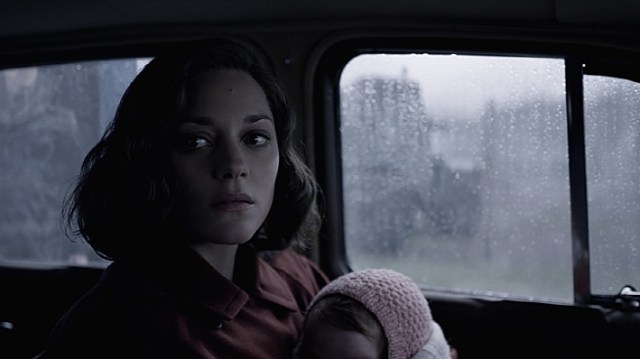
Maggie’s Plan (2015) ☆☆☆(3/4): That was her plan, but…

maggiesplan02

“Maggie’s Plan” is full of lightweight comic touches to delight and tickle you. As smart, witty, and charming as you can expect from your average sassy New Yorker comedy movie, it serves us with a number of hilarious moments to savor and appreciate, and we cannot help but chuckle while its funny, colorful New Yorker characters bounce around each other in their amusingly complicated circumstance.

When we meet Maggie (Greta Gerwig) at the beginning of the movie, she has a simple and straightforward plan for her life. While she does not want marriage, she wants to have a baby, so she needs a guy who will donate the sperms for her pregnancy, and she has a suitable man for that. Although he may look shaggy and dopey on the surface, Guy (Travis Fimmel), one of her college acquaintances, is a smart entrepreneur currently running his small artisanal pickle business, and this nice dude even has no qualms about giving up any rights he may have as the biological father of her future child.

But then there comes an unexpected happening. When she is dealing with an error involved with her salary check at a New York college where she works as one of its administration department employees, she comes across John (Ethan Hawke), an anthropologist who teaches ‘ficto-critical anthropology’ at the college (Please don’t ask me what the heck it is). As they get friendly with each other after their accidental encounter, John shows her the excerpt of a novel he has been writing, and that makes him look more attractive to Maggie.

maggiesplan01

However, there is one problem. John is married to Georgette (Julianne Moore with), a Danish woman who is a tenured professor of Columbia University and is also rumored to be an icy lady dominating over her husband. That rumor seems to be true when we see John’s domestic life with his wife and their two children; he wants to complete his novel someday, but helping and supporting his busy wife always comes first, and he is not so happy about that. In the end, he announces to Maggie that he is really in love with her, when she happens to be in a hilariously awkward circumstance you have to see for yourself.

As a consequence, Maggie’s life is totally changed three years later. She married John right after his divorce, and she and he came to have a little cute daughter between them, but she is not exactly happy. Her husband is now fully occupied with writing his novel as he always wanted, but he has been going nowhere with his novel which has been only increased in volume, and he also turns out to be as selfish as his ex-wife. That means Maggie has to take care of everything for him just like he did that for his ex-wife, and she accordingly becomes more tired and frustrated day by day.

Meanwhile, Maggie comes to see that Georgette is actually a pretty cool woman to talk with. Although she recently publishes a novel inspired by her break-up with John as she openly admits in front of others, Georgette turns out to have no hard feeling against Maggie now, so Maggie suggests to her a rather outrageous idea when they have a private meeting at Georgette’s posh apartment. She wants to have John go back to Georgette, and she absolutely needs Georgette’s help for manipulating John’s heart.

maggiesplan03

Georgette disapproves it at first, but then she comes to have second thoughts mainly because she still loves her ex-husband, so she and Maggie quickly embark on setting a right circumstance to rekindle John’s remaining feelings toward Georgette. Fortunately, there is an upcoming conference supervised by Georgette, and she surely knows what can irresistibly attract her husband’s academic attention – and all Maggie should do is indulging his selfish side a little more than usual.

Georgette and John consequently spend some time together at the conference, but, of course, Maggie’s plan does not go as well as she wants, and the director Rebecca Miller and her main cast members bring more laughs for us. Indubitably well-cast as a likable but self-absorbed intellectual, Ethan Hawke wisely plays his character straight on the screen, and that is why it is a fun to watch his character being unwittingly manipulated by Maggie and Georgette. Equipped with a foreign accent as required, Julianne Moore definitely has a fun with playing her seemingly silly but surprisingly lovable character, and I certainly enjoyed the scene in which Georgette gives her ex-husband a very productive advice on his work in progress.

In case of Greta Gerwig, she is simply warm, charming right from the first scene of the movie. When I recently happened to watch Noah Baumbach’s “Frances Ha” (2012), I could not help but be charmed by her delightfully spirited performance, and I observed the same amiable spirit from her performance in “Maggie’s Plan”. We may laugh as things do not go right for Maggie, but, thanks to Gerwig’s performance, we come to root for her a lot as she comes to learn a little life lesson not so far from the one learned by the heroine of Jane Austen’s “Emma”.

“Maggie’s Plan” is funny enough to recommend, and I was entertained by its performances as well as its small details. Like any good New Yorker movies, it is filled with the authentic sense of people and locations, and I also like the supporting performances by Bill Hader and Maya Rudolph, who deftly bring extra humor to the movie as a couple close to Maggie. The ending may be a little too neat, but it is delivered with precision and inevitability, and I must admit that I found myself smiling during its last shot. That was not her plan, but it works for everyone anyway, right?

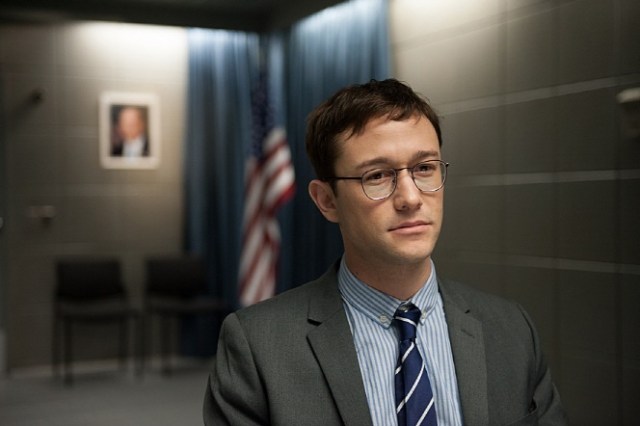
maggiesplan04

Posted in Movies | Tagged , | Leave a comment

Snowden (2016) ☆☆1/2(2.5/4): The Snowden Files

snowden02

As a story about one famous real-life whistleblower, Oliver Stone’s new film “Snowden” often feels redundant despite some fascinating parts. While its subjects are certainly relevant especially at this point, the movie does not have many things to surprise or enlighten me, and I came to notice more of its weak aspects even while recognizing its several good aspects including its solid lead performance.

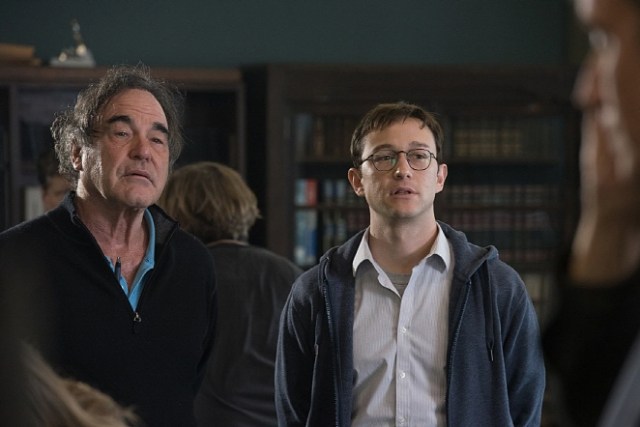
After its opening sequence which shows documentary filmmaker Laura Poitras (Melissa Leo) and journalist Glenn Greenwald (Zachary Quinto) meeting Edward Snowden (Joseph Gordon-Levitt) directly for the first time in Hong Kong on June 3rd, 2013, the movie goes back to 2004, when Snowden was undergoing a basic training for joining the US Army Special Forces. He was as eager and determined as other trainees, but then he was discharged due to a serious injury in his right leg, so he had to find another way to serve his country.

That is how he comes to apply for a position at the CIA, and his considerable talent in computer technology is soon noticed by Deputy Director Corbin O’Brian (Rhys Ifan), who is in charge of Snowden and other recruits at the CIA training center in Virginia. Although Snowden is not exactly ideal for the agency considering his rather unsatisfying result from lie detector screening, O’Brian decides to take a chance with Snowden, so he gives Snowden the first taste of the dark, shady sides of global surveillance. In O’Brian’s jaded view, the ends justify the means, and he emphasizes that to Snowden and other recruits at one point when their agency is criticized on the media for its massive wiretapping on civilians.

snowden03

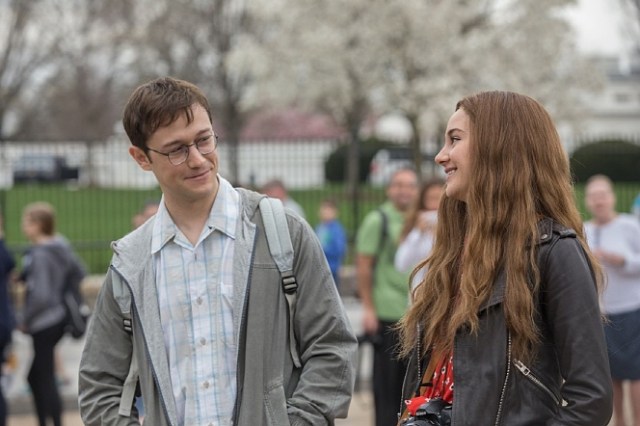
Meanwhile, Snowden begins a relationship with Lindsay Mills (Shailene Woodley), a girl with whom he has corresponded for a while through a dating website. Despite their difference in political views, they find themselves drawn to each other as they meet each other for the first time, and she has no problem with his occupation while not asking too much about that. When he is later assigned to a post in Geneva, she willingly moves along with him, and she even helps his work a bit during one amusing scene unfolded at a party full of potential targets to be exploited by his agency.

After getting himself involved in one small covert operation, Snowden comes to know more about what the US government has been doing without public knowledge, and there is a disturbing scene where an NSA employee shows him how easily he can acquire the personal information of various people around Snowden’s target. After a few search words and clicks, they quickly get what they are looking for, and Snowden is understandably disturbed as realizing how that certain piece of acquired information is used to manipulate their target.

As he becomes disillusioned about his work, Snowden decides to leave CIA, but then he finds himself working for NSA as a contractor employee, and he continues to do the jobs he does not like much. As nothing is changed much even under the Obama administration, he becomes more conflicted than before, and that eventually leads him to a fateful decision which changes his life forever.

The director Oliver Stone does not hesitate to take sides with Snowden from the beginning, but the adapted screenplay by Stone and his co-writer Kieran Fitzgerald, which is based on two nonfiction books “The Snowden Files” by Luke Harding and “Time of the Octopus” by Anatoly Kucherena, does not provide enough human dimension to its hero. We get lots of information about Snowden’s career as it is chronicled in the movie, but we never get to know much about him on the whole although he comes to us as a decent, conscientious hero thanks to Joseph Gordon-Levitt’s nice understated acting.

snowden01

The movie tries to keep things rolling as often going back and forth between the main plotline and the other plotline associated with Poitras and Greenwald, but it only comes to lose more narrative momentum due to the lack of suspense in both parts, and it is inevitably compared with Poitra’s Oscar-winning documentary film “Citizenfour” (2014), which vividly captures the progress of her meeting with Snowden on the screen. Although the movie recreates well a few moments from Poitra’s documentary, it fails to reach to that nervous verisimilitude of the documentary, and then it is further hampered by its overlong ending which could be trimmed a bit.

The performers surrounding Gordon-Levitt fill their supporting roles as required. While Rhys Ifan effectively exudes the gray cynicism of his character, Nicholas Cage briefly appears as a veteran CIA guy on the opposite position of Ifan’s character, Timothy Olyphant plays an untrustworthy CIA agent with whom Snowden works in Geneva. Melissa Leo, Zachary Quinto, Tom Wilkinson, and Joely Richardson are under-utilized in their thankless roles, and so is Shailene Woodley, who does not have many things to do except looking concerned or frustrated during her scenes with Gordon-Levitt.

Since “Nixon” (1995), Stone’s career has been rather bumpy during recent years. While there were entertaining films like “Any Given Sunday” (1999), “W.” (2008), and “Savages” (2012), there were also a fair share of disappointments like “U Turn” (1997), “World Trade Center” (2006), and “Wall Street: Money Never Sleeps” (2010). While it is not entirely a failure, “Snowden” belongs to the latter group, and I think it could be improved by tighter and more focused storytelling. Sure, it is about the important issues we should care about, but it is not engaging enough to make us more aware of them.

snowden04

Posted in Movies | Tagged , , | Leave a comment

It’s Only the End of the World (2016) ☆☆(2/4): It’s only the end of his life….

itsonlytheendoftheworld04

The characters in “It’s Only the End of the World” talk a lot throughout the film, but their words signify nothing but sound and fury as they go through one miserable day together. Maybe that is its whole point, but the movie is merely sour and frustrating without enough interest to hold our attention, and we only come to watch its superficial characters from the distance while not caring much about them or what is going to happen between them.

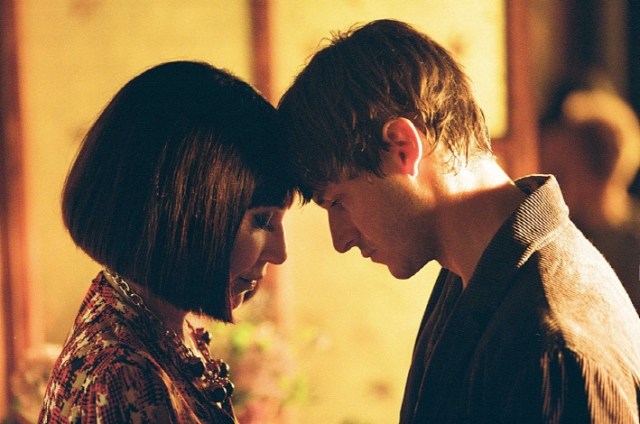
The movie opens with the melancholic musing of Louis (Gaspard Ulliel), a 34-year-old gay writer who is soon going to reunite with his family he left 12 years ago. As reflected by his words, he is dying due to some unspecified terminal illness, and he wants to break this bad news to his family directly although he has not corresponded with them much during last 12 years.

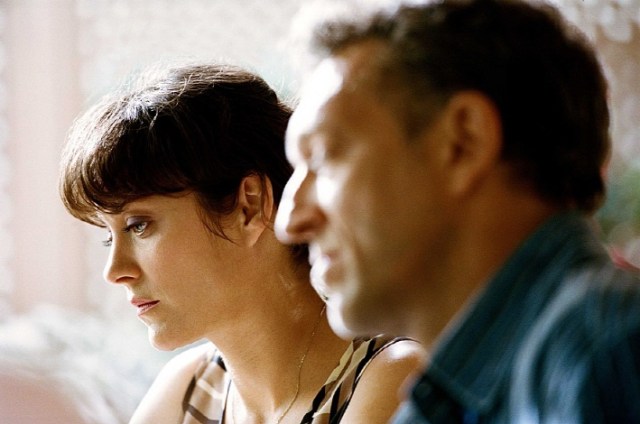
How he came to leave his family at that time is never explained, but it is apparent from his family’s first appearance that they are a typical case of dysfunctional family. While his mother Martine (Nathalie Baye) is a neurotic and flamboyant woman as reflected by her gaudy attire and hair style, his younger sister Suzanne (Léa Seydoux) is your average spunky lass who does not get along well with her mother, and his older brother Antoine (Vincent Cassel) is a sullen, grumpy guy who is often not so good to his insecure wife Catherine (Marion Cotillard).

When Louis finally arrives at Martine’s house, he is greeted by everyone in the house, but this supposedly happy moment does not last long as his family members constantly generate discord among them, and he gradually finds himself getting isolated as feeling more of the gap between him and his family. When he gets a chance to talk with Suzanne in her room, the mood feels easy and comfortable with her casual pot-smoking, and she rambles about several things in front of him, but nothing much is revealed or changed between them in the end. Martine is also willing to have a private conversation with her prodigal son, but that does not help him or her much as their talk goes nowhere, and he remains indecisive about when he should reveal his illness to her and other family members.

itsonlytheendoftheworld02

He does not get much help from his older brother either. While resenting Louis for some personal reason, Antoine is not very nice to other family members either, and, not so surprisingly, he causes a very awkward moment during the family lunch. When Louis later tries to talk with his brother, that turns out to be a pretty unwise choice, and we accordingly get one of the shrillest scenes in the film.

In case of Katherine, she remains passive and unsure as browbeaten by her husband at times, but there is a small moment which suggests that she guesses why Louis suddenly comes to see his family. When she and Louis look at each other briefly during one early scene, something seems to dawn upon her, but she never brings it out, and neither does he.

All these elements could be mixed together into a compelling family drama, but the movie only keeps spinning its wheels while never fully developing its characters into real ones to engage us. As they are constantly vague and elusive in their relentless series of talks, they eventually become bland talking devices, and it does not help much that most of them are not that likable on the whole.

To make matters worse, the director Xavier Dolan, who also edited the film besides adapting Jean-Luc Lagarce’s play “Juste la fin du monde” for the film, and his cinematographer André Turpin use close-up as frequently as, say, “Les Misérables” (2012). Rather than bringing any emotional intensity to the screen, this misguided visual approach only makes the movie look stuffy and constrained, and we become more aware of the heavy-handed aspects of the film as the circumstance becomes more unpleasant for everyone around its final act.

itsonlytheendoftheworld03.jpg

The performers in the movie try as much as they can, but I cannot help but think of their respective better moments. I later realized that Nathalie Baye appeared in “The Return of Martin Guerre” (1982), and then I came to recall how she was as good as her co-star Gérard Depardieu in that movie. Gaspard Ulliel previously appeared in “A Very Long Engagement” (2004), and some of you probably know that Marion Cotillard appeared as a crucial supporting character in that wonderful film. Besides her terrific performance in “Blue is the Warmtest Color” (2013), Léa Seydoux has delighted us with several other interesting performances during recent years since we noticed her in “Mission: Impossible – Ghost Protocol” (2011), and Vincent Cassel certainly utilized his distinctive caddish persona more effectively in other films including “Black Swan” (2010) and “A Dangerous Method” (2011).

Above all, Dolan made films more interesting than this tepid piece of work. I enjoyed the colorfully stylish scenes in “Laurence Anyways” (2012), I was amused by the odd, tense moments in “Tom at the Farm” (2013), and I appreciated the raw energy of “Mommy” (2014). Compared to these three striking films, “It’s Only the End of the World” is curiously subdued and lifeless, and but it somehow received the Grand Prix at the Cannes Film Festival in last year (it also received the Ecumenical Jury prize at the festival and then was chosen as Canada’s official submission for the Best Foreign Language Film category of the 2017 Academy Awards, by the way).

Anyway, I had one valuable experience with the movie at least. When I watched the movie during last Sunday afternoon, I thought the movie was terrible, but I came to have second thoughts because I was not in a very good condition. I came to watch the movie again during this Tuesday evening, and I am happy to report that I could watch it with less sleepy eyes, but I still do not like it although it is not as awful as it looked at first. I guess my gut feeling worked well despite my bad condition during that time.

itsonlytheendoftheworld01

Posted in Movies | Tagged , | Leave a comment

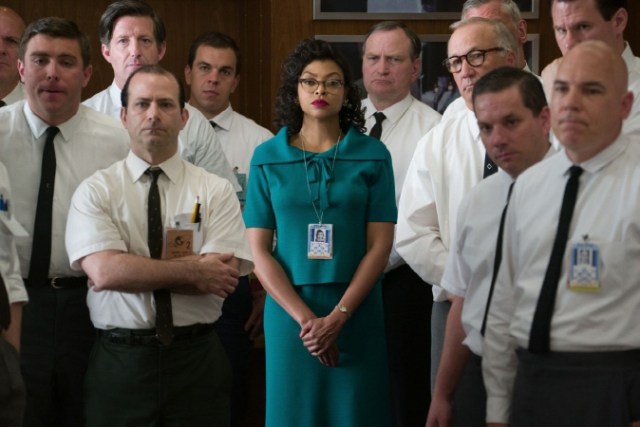
Hidden Figures (2016) ☆☆☆(3/4): Three black female figures in NASA

hiddenfigures02

Based on the remarkable professional careers of three real-life figures who worked in NASA in the early 1960s, “Hidden Figures” confidently moves forward along with its three main characters. While never overlooking how things were hard and difficult for them and many other African American people, it gives us an interesting social/historical perspective via their story which reflects the best and worst sides of the American society during that period, and we get a fair share of genuine feel-good moments as watching how these exceptional women overcome many obstacles while reaching for their dream and ambition.

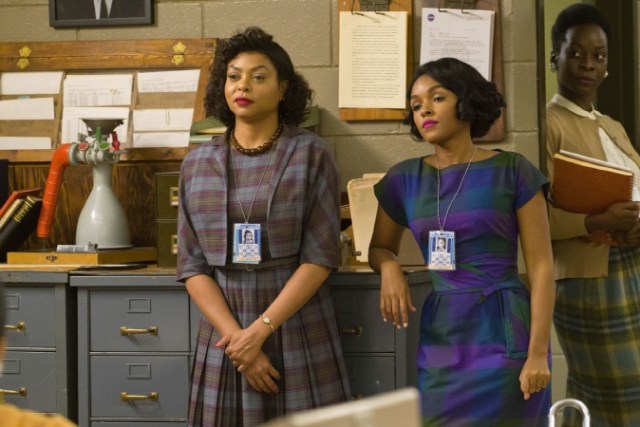
After the prologue showing the childhood years of Katherine Goble (Taraji P. Henson) when she already showed her prodigious talent in mathematics, the movie moves forward to 1961, and we see Goble and two close colleagues/friends Mary Jackson (Janelle Monáe) Dorothy Vaughan (Octavia Spencer) having a little trouble with their car on the way to their workplace. When a white cop comes along the road, they naturally become nervous because they are black, but the initially awkward situation between them and the cop is resolved better than expected when the cop comes to know where they work. In fact, he even escorts them to their workplace.

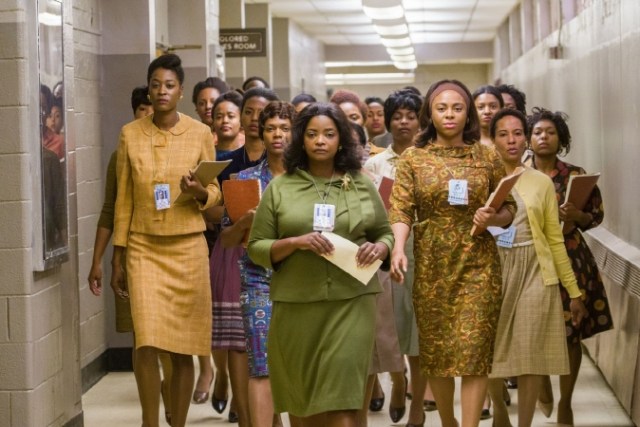
They work in the West Area Computers division of NASA Langley Research Center in Hampton, Virginia, and I must tell you in advance that their division does not have computer machines but *human computers* instead. Computers machines are still new, unfamiliar things in their era, and that period aspect is amusingly reflected by when an IBM computer is delivered to the research center. Sure, it can calculate faster than human, but, alas, nobody in the research center knows well how to operate this big, complicated computer machine.

hiddenfigures023.jpg

The West Area Computers division is a segregated section for African American women like Gobel and her friends, and they are constantly aware of the career ceiling above them. Johnson has aspired to be a NASA engineer someday, but then it turns out that, because of the segregation law in Virginia, she cannot attend the college classes required for her qualification. Having worked well as the de facto supervisor of the division since her predecessor became ill, Vaughn believes she deserves promotion, but her white boss thinks otherwise, and that means she will probably be stuck in her ‘temporary’ position without any change.

However, things slowly begin to change. When Goble is assigned to the Space Task Group division, her presence is not so welcomed by many white male mathematicians working there right from her first day, but she soon demonstrates her considerable intelligence and intuition, and that is how she come to be noticed by Al Harrison (Kevin Costner), the director of the division who quickly becomes her main supporter.

In case of Jackson, she is encouraged by a NASA engineer to find any possible way to realize her dream. For gaining the permission to attend the classes at a college which has accepted only white students, she goes to the state court, and she succeeds in convincing a conservative judge in a shrewd, reasonable way which will bring some smile into your face.

Meanwhile, Vaughan sees the future from that IBM computer machine brought into the research center, and she instantly prepares for that. She learns computer programming language for herself, and then she teaches it to her colleagues. When NASA really needs to use the IBM computer machine for the Friendship 7 space mission, she is ready to come forward along with her colleagues, and that moment is certainly one of the most exhilarating moments in the movie.

hiddenfigures04

Adapted from the non-fiction book of the same name by Margot Lee Shetterly, the screenplay by the director Theodore Melfi and his co-writer Allison Schroeder is balanced well between comedy and drama. The mood is mostly gentle and pleasant, but then we occasionally get the glimpses of the prevalent social injustices of the American society in the 1960s. As shown from the movie, colored people were not allowed to share many different public spaces with white people during that time, and that is particularly exemplified well by Goble’s absurd circumstance involved with the only bathroom for colored women in the research center.

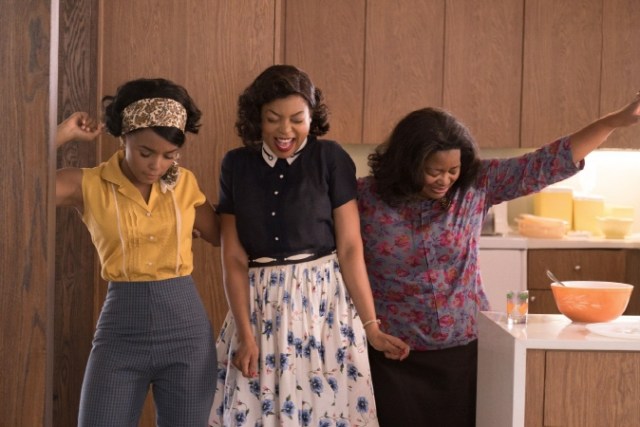
Playing well along with each other, Taraji P. Henson, Octavia Spencer, and Janelle Monáe bring lots of spirit and personality to their respective characters. Henson, who has been more prominent since her Oscar-nominated supporting turn in “The Curious Case of Benjamin Button” (2008), is engaging as a smart woman who will not be easily daunted by her obstacles at all, and Spencer and Monáe are also entertaining to watch in their equally strong performances. While Kirsten Dunst and Jim Parsons are rather wasted due to their flat characters, Kevin Costner effortlessly embodies the no-nonsense authority of his character, and Mahershala Ali, who will surely be Oscar-nominated for his supporting work in “Moonlight” (2016), is also fine in his small supporting role.

While it is often predictable and conventional, “Hidden Figures” works well thanks to good storytelling and enjoyable performances, and you will be moved by its obligatory epilogue scene. It is always fun and interesting to watch professionals doing their job well, and these three ladies certainly prove that point pretty well.

hiddenfigures01

Posted in Movies | Tagged , , , , | Leave a comment

Fences (2016) ☆☆☆1/2(3.5/4): At the backyard of his house

fences02

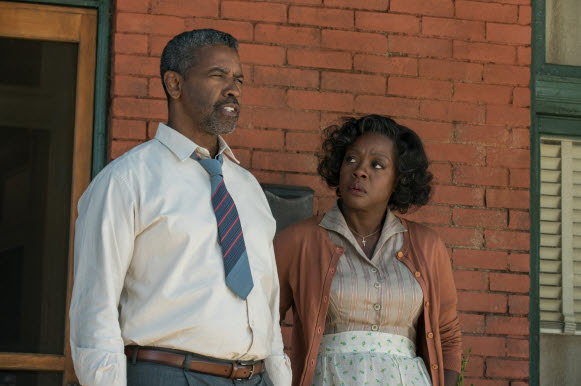
“Fences” trusts its performers, and we gladly go along with that. Even if you are not that familiar with August Wilson’s Tony and Pulitzer Prize-winning play, you can easily notice a number of theatrical aspects on the screen, but this is a solid, respectable movie adaptation packed with powerful scenes, and it wisely allows enough space for its exceptional cast while never interrupting their fabulous performances. Right from the beginning, the performers are convincing as inhabiting their characters’ small, specific world, and we accordingly become involved in their characters’ universal human matters which are touchingly presented in the film.

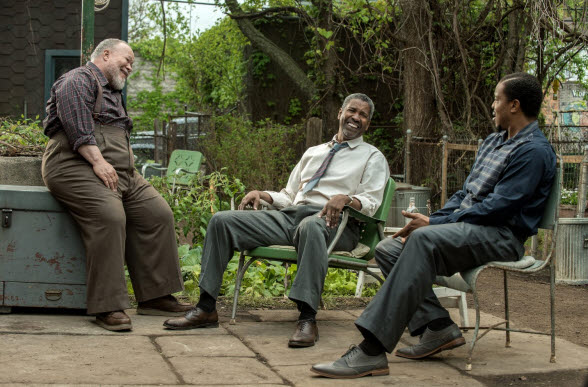
Set in Pittsburgh, Pennsylvania in the 1950s, the movie opens with another usual working day for its African American hero Troy Maxson (Denzel Washington) and his close friend/co-worker Jim Bono (Stephen McKinley Henderson). They are waste collectors, and we learn from the opening scene that Troy has hoped that he will drive a garbage truck someday instead of working at the tail of truck. His friend is skeptical for good reasons; beside the fact that Troy is black, he does not have a driving license, and he even cannot read.

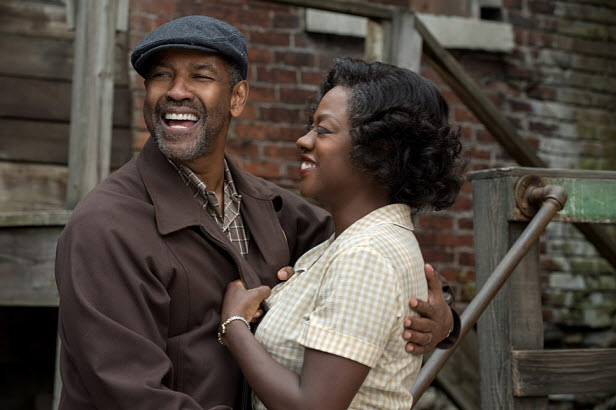
Anyway, life has been fairly good for Troy at his house located in a black neighborhood of the city. There was a time when he was young and wild and subsequently went to a prison for his crime, but he has been in a stable relationship with his wife Rose (Viola Davis) for 18 years since he married her not long after his release from the prison. When their working hour is over, he and Bono go to the backyard of Troy’s house, and that place is where he can be the center of the universe at least for a while with a bottle of gin in his hand. Bono and Rose watch and listen to Troy with occasional amusement and knowing looks; they have probably seen him telling same things many times, but they do not mind that as two people who have known for him for a long time.

fences03

To his two different sons, Troy is often harsh and severe in the name of tough love, and we see how that attitude of his frustrates his sons. When Lyons (Russell Hornsby), the son from Troy’s previous relationship, comes to Troy’s house for borrowing some money from his father, the situation becomes less pleasant for everyone in the house as Troy refuses to borrow the money to his son. As a man who believes in hard, diligent working, he sees no good from his son’s musician career, and he even rejects an opportunity to see his son’s performance at a local club.

In case of Cory (Jovan Adepo), the high school athlete son of Rose and Troy, he recently gets a good opportunity which may lead him to not only higher education but also professional football career, but Troy adamantly blocks his son’s way mainly because of his own bitter experience in the past. He once played in the professional Negro Leagues briefly after discovering his athletic talent in baseball while serving his time in the prison, but he could not go up to the Major League because it was the time before Jackie Robinson. As reflected by his frequent use of baseball terms, he still clings to his lost dream, and it is also implied that he envies his son’s chance for athletic success.

While Cory’s resentment toward his stern father grows further as a result, there comes a crisis for Troy and Rose’s relationship. It turns out Troy has had an affair with some other woman, and, as Bono tactfully points out to him during their private conversation, he should face the consequence of his indiscretion now. When he confesses everything to her, Rose naturally feels hurt, and there is a devastating moment when she angrily responds to her husband’s pathetic excuse during their argument. She has always stood by her man while putting up with lots of things, but now she is not so sure about their relationship as struggling with her anger and confusion.

fences04

The movie is the third feature film directed by Denzel Washington, who previously directed “Antwone Fisher” (2002) and “The Great Debaters” (2007). Those two wholesome films showed that he is a good filmmaker besides being one of the best American performers, and he did a modest but commendable job of bringing Wilson’s play to the screen here in this film. While its many scenes are unfolded in and around Troy’s house with some stagy touches, the movie seldom feels constrained within its small background, and we always get the sense of ongoing life around the characters in the film thanks to the considerable realism generated from its authentic period atmosphere.

Washington and the other performers in the movie ably deliver the undeniable emotional power of Wilson’s adapted screenplay (Wilson wrote it before his death in 2005). Washington, who played Troy in the 2010 Broadway revival and won a Tony for that, certainly has several juicy moments as his complex hero captivates us with his good and bad sides, but he also has his fellow cast members hold each own place around him. Stephen McKinley Henderson, Russell Hornsby, Jovan Adepo, and Mykelti Williamson (he plays Troy’s veteran brother who is mentally impaired due to his war injury) are all fine in their respective roles, and Viola Davis, who acted along with Washington, Henderson, Hornsby and Williamson in the same Broadway revival and won a Tony like Washington, is impeccable as Washington’s equal acting match, especially during the aforementioned scene between Troy and Rose.

While it is not completely free from its theatrical origin, “Fences” works well thanks to its competent direction and top-notch performances, and I will not be surprised if the movie receives Oscar nominations for Washington and Davis on next Tuesday. This is an intelligent and thoughtful family drama, and it is surely something you cannot encounter at movie theater everyday.

fences01

Posted in Movies | Tagged , | 1 Comment

Toni Erdmann (2016) ☆☆☆1/2(3.5/4): Along comes her prankster father…

tonierdmann01

In comedy, timing is always important. Not only you have to find the exact right moment to draw maximum laughs from your audiences, but also you have to make it sure that your audiences never see that coming beforehand. In case of German film “Toni Erdmann”, it has a number of nice examples of good comic timing to savor, and it is alternatively funny and poignant thanks to its effortless mix of humor and pathos. Despite its rather long running time (162 minutes), the movie never feels tedious thanks to its steady narrative pacing and rich character details, and the result is a humorous and thoughtful character comedy drama revolving around one interesting father and daughter relationship to observe.

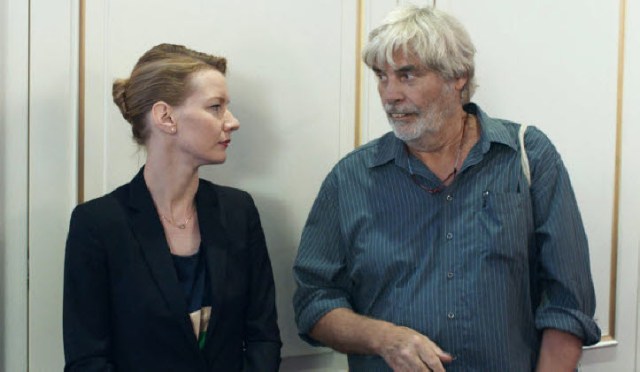
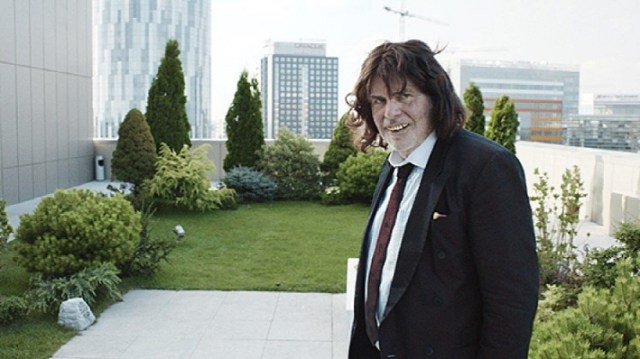
As shown from the opening scene, Toni Erdmann is the comic alter ego of Winfried Conradi (Peter Simonischek), a middle-aged music teacher who frequently attempts silly practical jokes in front of others. He may look plain weird at first, but there is something endearing about his earnest attempts, and it is no wonder that others around him including his ex-wife are not that bothered when he tries his latest prank prompted by a ceremony at his school.

He has a daughter named Ines (Sandra Hüller), who is a consultant currently working on a contract extension with an oil company in Bucharest, Romania. She is so busy with her work that she is not relaxed at all even when she comes back to see her family for a while, and Winfried decides to visit his daughter not long after she goes back to Bucharest.

He simply wants to have some time with his daughter, but she is still occupied with her work. She has worked hard for her career advance, but she only finds herself being frustrated with how she is frequently underestimated by her boss as well as her client, and there is an indirectly revealing scene where she and her father attend a reception along with her client. When Ines tries to talk with her client about their business, she is casually dismissed by him and then asked to do a shopping with his wife. In contrast, Winfried is easily accepted by Ines’ client even though he tells an outrageous joke, and he is even asked to join a late drinking meeting.

tonierdmann02

Through such small moments like that, the movie patiently establishes its two different main characters during its first act. Even before he leaves for Bucharest, Winfried is already presented as an engaging human character, and we come to accept and like him as we see more of his quirky, easygoing personality. While Ines is surely your average fastidious workaholic, we come to understand and emphasize with her nonetheless as observing the pressure and frustration she feels at her workplace, and we come to learn a lot about her relationship with her father around the end of the first act.

And then the movie goes into a more comic mode as Winfried begins to do something for his daughter during its second act. With his false teeth and black wig, he becomes Tony Erdmann again, and the moment when he ambushes Ines with his disguise is so precisely and effortlessly executed by the director/writer Maren Ade and her performers that I was really caught off guard and then chuckled during that point.

Ines is understandably annoyed and embarrassed, but she lets her father hang around her, and then she finds herself gradually going along with his disguise. At one point, she even takes him to an important business meeting, and that leads to a series of interesting moments which indirectly show how much her work will affect many people once her client accepts her proposal on the outsourcing project of his oil company.

tonierdmann04

As Ade’s screenplay leisurely bounces from one moment to another along with Ines and Winfried, Peter Simonischek and Sandra Hüller ably carry the film together. Never looking too silly or goofy, Simonischek brings shaggy charm to his character, and his delightful performance is packed with small nuances and gestures to appreciate. Even when Winfried attempts the most outrageous prank in the movie, we can feel his warm humanity from Simonischek’s acting, and Simonischek is touching especially when Winfried later tells Ines about what motivated him to do all those silly antics in front of her.

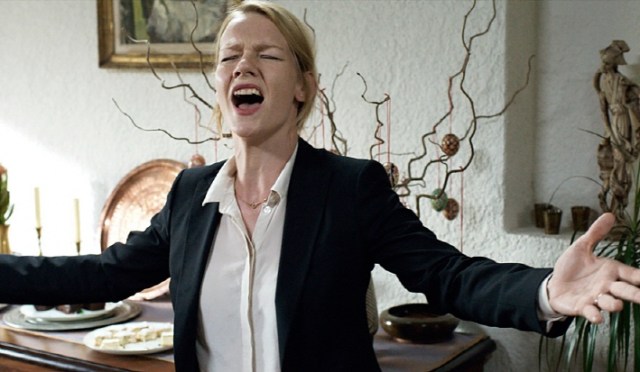
On the opposite, Sandra Hüller is equally fabulous as a daughter who comes to learn an important life lesson from her eccentric father. During one of the memorable scenes in the movie, Winfried deliberately pushes Ines to a musical moment which makes her ventilate whatever has been accumulated inside her, and Hüller is simply fantastic with her emotional rendition of Whitney Houston’s “Greatest Love of All”. We can feel the sense of release from her character during that moment, and we are not so surprised when Ines impulsively decides to do something quite bold in the subsequent sequence. I will not go into details for not spoiling your fun, but I want to tell you that I am more amused now as reflecting on how this sequence is skillfully handled while delivering more surprises and laughs from a seemingly loose but increasingly absurd circumstance, which eventually culminates to a bizarre but undeniably powerful moment.

“Toni Erdmann”, which was selected as Germany’s official submission to the Best Foreign Language Film category of the 2017 Academy Awards in last year and will probably be nominated in this week, may demand some patience from you during its first 20 minutes, but it is a rewarding emotional journey on the whole once you go along with its slow rhythm, and you will be moved by its modest but heartfelt last scene. The movie is indeed long, but no good movie is too long, and this is another good example for that.

tonierdmann03

Posted in Movies | Tagged , | 1 Comment

Moana (2016) ☆☆☆(3/4): When she follows the Ocean’s call

moana03

“Moana” is a model Disney animation feature film which dutifully follows its familiar storytelling formula with a number of nice changes and variations. Again, we have a spirited young heroine who comes to find her inner strength through one adventurous journey, but her conventional story is presented with lots of distinctive style and personality, and the film steadily entertains us from the beginning to the end.

Set in Ancient Polynesia, the film begins its story with the opening sequence presenting a legend about the goddess Te Fiti and the demigod Maui (voiced by Dwayne Johnson). When Maui stole Te Fiti’s small but precious stone heart which is the origin of her enormous power, the world created by her instantly lost its balance, and then there came the lava demon Te Kā. As a result, Maui lost not only the heart of Te Fiti but also his magical hook, which is the source of his shapeshifting power.

For the people of Island Motunui, the legend of Te Fiti and Maui has been no more than a folk tale to entertain kids. They have been fine and happy in their small but beautiful island which has provided enough food and place for them, and Chief Tui (voiced by Temuera Morrison) firmly believes that they will be all right as long as they stay in the island as following the tradition which has been maintained by them and their ancestors for many years.

However, his 16-year-old daughter Moana (voiced by Auli’i Cravalho) has a different thought. Even when she was very young, her heart was drawn to the ocean even though sailing beyond the reef surrounding the island is strictly forbidden, and that aspect of hers has remained same as before even after she comes to accept her responsibility as her father’s future successor.

moana02

And then strange things start to happen in the island. Crops become withered for no apparent reason, and villagers are also confounded by the sudden decrease of fish around the island. Moana’s grandmother Tala (voiced by Rachel House), who has shared her passion toward the ocean with Moana, knows what is happening; the darkness resulted from Maui’s thievery a long time ago is now spreading toward the island, and the heart of Te Fiti must be put back into where it belongs before it is too late for the island and its people.

Through her grandmother, Moana discovers the hidden past of her ancestors during a grand sequence unfolded at a place hidden in the island, and she also comes to realize that, as already shown from an earlier scene, she was chosen as the one who will do that challenging task in question. With the heart of Te Fiti given to her by her grandmother and the guidance of the spirit of the ocean which took me back to “The Abyss” (1989), she sails away from the island for finding Maui and Maui’s magical hook, which is absolutely necessary for the success of her quest.

After experiencing a rough moment with the unforgiving side of the ocean, Moana fortunately arrives in an island where Maui has been stuck for many centuries. Maui, a big dude covered with lots of tattoos individually representing his many heroic exploits in the past, is not exactly cooperative right from his first encounter with Moana, but he is eventually persuaded to help her mainly because he needs to retrieve his magical hook.

As they sail along together across the ocean, the film provides several exhilarating sequences packed with wonder, amusement, and excitement. While I suspect that a certain bunch of creatures appearing during one sequence are a rip-off version of Minions, they are utilized well for action and comedy, and I was more amused and excited than expected as watching that sequence. I also appreciated the colorful details shown from the Realm of Monsters, and there is a funny scene involved with a big, greedy monster voiced by Jemaine Clement, who has a hilarious showstopper musical moment during that scene.

moana01

It helps that the story is anchored by the strong personality of its two contrasting lead characters. Like the two princess characters of “Frozen” (2013), Moana is a brave, independent girl who does not need any Prince Charming, and newcomer performer Auli’i Cravalho imbues pluck and charm into her character while showing her considerable singing talent during several musical scenes in the film. Although he can be quite vain and buffoonish, Maui comes to us as a jolly, likable guy, and Dwayne Johnson proves again his undeniable comic talent through a role perfectly fitting to his bulky screen persona. He clearly relishes his role during numerous comic scenes including the one which fully demonstrates his singing ability, and I certainly enjoyed how a moving tattoo figure on Maui’s skin functions as a sidekick character like Moana’s pet chicken Heihei (voiced by Alan Tudyk), whose silly odd behaviors always drew laughs from the audiences around me.

“Moana” is directed by John Musker and Ron Clement, who made a number of notable Disney animation films including “The Little Mermaid” (1989), “Aladdin” (1992), “Hercules” (1997), “Treasure Planet” (2002), and “The Prince and the Frog” (2009). Like these animations films, “Moana” is fun to watch thanks to its exuberant mood and lively energy, and I was entertained by its animation style and soundtrack aptly influenced by traditional South Pacific culture. Sure, it breaks no new ground, but it shows that there is still much fun and excitement to have in its familiar ground.

Sidenote: Short animation film “Inner Working” is shown before the screening of the film. It does not feel that fresh considering “Inside Out” (2015), but it is fun to watch anyway.

moana04

Posted in Movies | Tagged , | Leave a comment

Nocturnal Animals (2016) ☆☆☆(3/4): Deliberate nastiness

nocturnalanimals01

“Nocturnal Animals” makes it very clear from the beginning that it will not be a pleasant experience at all. As reflected by the bold, striking opening sequence which shows an intentionally tasteless art exhibition featuring naked overweight women, this is a stylish work of deliberate nastiness, and some of you may not like its dark, twisted aspects which gradually emerge from its plot.

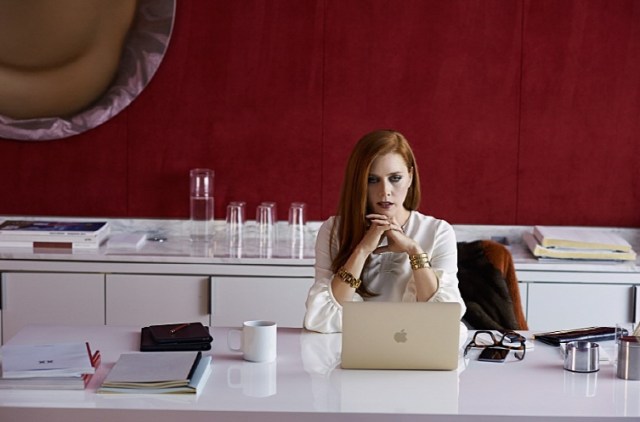
The art exhibition in question is held at a posh modern art gallery in LA which is owned by Susan Morrow (Amy Adams), and the main story begins when she receives a package from her novelist ex-husband Edward Sheffield (Jake Gyllenhaal), who has been estranged from her for nearly 20 years since their divorce. The package contains the manuscript of his novel which will be soon published according to his accompanying letter, and the novel, titled “Nocturnal Animals”, is dedicated to none other than Susan.

Edward’s novel is about the unfortunate ordeal of its ordinary hero Tony Hastings, who is also played by Gyllenhaal. When Tony is driving along a remote road somewhere in Texas with his wife and daughter in the car during one night, they happen to encounter a trio of vicious thugs on the road, and this results in a horrific situation where Tony’s wife and daughter are kidnapped and then brutally raped and murdered. Tony luckily manages to avoid getting killed during that dreadful night, but he is devastated by this irreversible loss, and he gets some sympathy from Lieutenant Bobby Andes (Michael Shannon), a local cop assigned to the case.

nocturnalanimals04

While Edward’s novel is wholly fictional, Susan becomes uncomfortable due to what is felt between lines, and we get several flashback scenes which give us the glimpses into what happened between her and Edward in the past. Not long after they came across each other in New York City as old hometown friends, they fell in love with each other, and they eventually married despite her mother’s objection, but they soon found themselves being disappointed with each other. In the end, she broke up with him and moved onto her second husband Hutton (Armie Hammer), and, as she admits at one point, she came to commit something which was quite hurtful to Edward.

As it becomes apparent that the novel is the indirect demonstration of Edward’s deep anger and grief caused by their breakup, the movie also focuses on how life is not that good for Susan. Although she has been rich and successful for years, she is usually alone in her big, slick modern house which sometimes feels like an empty art gallery rather than an actual living place. She and Hutton seldom spend time together, and there is a bitter moment when she happens to be painfully reminded again of how distant they have been to each other.

The director Tom Ford, who also wrote the adapted screenplay based on Austin Wright’s novel “Tony and Susan”, deftly juggles the multiple plotlines of his movie through impeccable mood and style to engage us. The cinematography by Seamus McGarvey is striking in its vivid visual contrast between the different backgrounds in the film, and McGarvey especially did a terrific job of establishing the stark rural atmosphere surrounding the characters of Edward’s novel. The production design by Shane Valentino and Meg Everist is impressive with those modern artworks and designs surrounding Susan, and the score by Abel Korzeniowski constantly generates the sense of agitation as suggesting the emotional undercurrents swirling below the screen.

nocturnalanimals02

The performers in the movie are interesting to watch. Since her endearing supporting performance in “Junebug” (2005), Amy Adams has impressed us with a number of wonderfully various performances during last several years, and she is engaging as usual here in a role which could be pretty thankless. She simply reacts during many scenes in the film, but her wordless reactions convey us the growing emotional turmoil insider her character, and her performance eventually functions as a strong emotional link to connect the different elements of the movie together. On the opposite, Jake Gyllenhaal is equally solid in his dual roles, and he is particularly good when Tony struggles with his overwhelming grief, which comes to resonate with whatever was felt by Edward during that painful time.

The movie has many notable performers around Adams and Gyllenhaal. While Andrea Riseborough, Michael Sheen, Armie Hammer, Jena Malone, Laura Linney, and Isla Fisher fill their respective supporting roles as required, Aaron Taylor-Johnson, who unexpectedly won the Best Supporting Actor award at the Golden Globe Awards ceremony on last Sunday, is effectively hateful with his ungainly appearance. In case of Michael Shannon, he steals the show with his own distinctive presence, and his several scenes in the movie remind me again of why he is one of the most interesting character actors in our time.

On the whole, “Nocturnal Animals”, which received the Jury Prize at the Venice International Film Festival in last year, is a mean exercise in style, but I enjoyed its style, mood, and acting even though I was also bothered by its misanthropic attitude to some degrees. When I watched the movie during this Wednesday night, there was only a young couple besides me in the screening room, and now I wonder how they felt about the movie. They probably felt bad, but they were warned from the start, weren’t they?

nocturnalanimals03

Posted in Movies | Tagged , | 1 Comment

Allied (2016) ☆☆1/2(2.5/4): Pitt and Cotillard in old-fashioned World War II movie

allied01

“Allied” attempts to be an old-fashioned World War II movie, and I enjoyed it to some degrees. During its first half, it tries a classic wartime romance, and this is mostly successful thanks to its authentic period atmosphere and two charismatic lead performers. During its second half, it shifts its gear to espionage thriller mode, and this adds more intrigue to what has been established well during the first half. Unfortunately, the movie starts to falter around that point, and this is really a shame considering its lead performers’ good efforts.

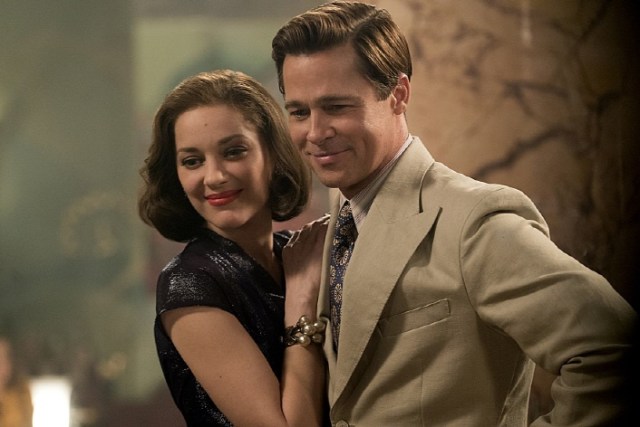
It is 1942, and the opening scene shows Canadian intelligence officer Max Vatan (Brad Pitt) infiltrating into French Morocco for a highly risky mission. Shortly after he safely arrives in Casablanca, Max contacts a female French Resistance fighter named Marianne Beausejour (Marion Cotillard), and then he is introduced as her husband to several people Marianne has befriended for the mission.

Because they can be exposed at any point, Max and Marianne maintain their disguise even while they are in Marianne’s small apartment. Trying to look more believable as a husband and a wife, they become a little playful with each other while being constantly watchful, and then they come to feel something mutual between them although both of them know too well that emotion may seriously jeopardize their mission if they are not careful.

With top-notch production design and costumes, the first half of the movie did a good job of evoking the mood and texture of classic World War II films such as “Casablanca” (1942), and Brad Pitt and Marion Cotillard look as smooth and classy as their surroundings. Although he is a bit strained whenever he handles French lines, Pitt fits well to his archetype role as much as he did in “Inglourious Basterds” (2009) and “Fury” (2014), and Cotillard is effortlessly graceful as a beautiful woman who can be both sincere and deceptive. When Marianne happens to have a short, direct eye contact with a minor character during one particular sequence, it is clear that Marianne genuinely cares about that character she has deceived for her mission, and Cotillard deftly handles her character’s complex feeling during that brief moment.

allied03

After they not only accomplish their mission but also succeed in escaping without getting killed, Max suggests to Marianne that they should go to London together. They get married several weeks after their arrival in London, and then they come to have a little baby daughter between them. They move to a suburban area, and everything looks fine to them although the war is still going on as usual and Max is frequently busy with his military intelligence work.

But then a trouble suddenly comes one year later. An espionage activity is recently detected around their neighbourhood area, and it is quite possible that Marianne is not who she seems to be on the surface. According to a certain piece of information, she may actually be a German spy, and she is going to be eliminated once a sting operation planned by Max’s superiors confirms their growing suspicions on her.

After hearing about this, Max understandably becomes confused and conflicted. While trying to look all right in front of his wife, he sets a deliberate trap for her as instructed, but he also begins to look for any possibility to prove her innocence. When it later turns out that there is a slim chance to confirm her identity once for all, he does not hesitate at all to grab that chance although he is warned in advance that he should not do anything to interfere with the ongoing investigation on Marianne.

allied02

Looking moodier compared to its first half, the second part of the movie is filled with that familiar gray, melancholic ambience shown from many other World War II espionage movies such as “Eye of the Needle” (1981), and the movie sometimes goes a little further with a few notable modern touches. We notice how casually Max’s lesbian sister hangs around with her lover in front of others, and one short but crucial scene between Max and a young pilot reminds us that drug use was a pretty common thing among pilots during that period.

Despite such a nice background setup like this, Steven Knight’s screenplay only comes to spin its wheel while not generating enough tension or interest to hold our attention, and the movie becomes more disappointing due to the lackluster finale which resolves everything too conveniently without much satisfaction. Pitt and Cotillard carry the movie as much as they can, but there are not many things to do for either of them, and the same thing can be said about the supporting performers including Jared Harris, Matthew Goode, Lizzy Caplan, and Simon McBurney. While Harris is stuck in a bland, thankless role, Caplan brings some chirpy spirit into her underdeveloped character, and Goode and McBurney manage to leave some impression despite their very brief appearance in the film.

“Allied” is directed by Robert Zemeckis, who has steadily tried various interesting things especially since his Oscar-winning film “Forrest Gump” (1994). While “Contact” (1997) has been regarded as one of the most thoughtful SF films during last 20 years, “Cast Away” (2000), “The Polar Express” (2004), and “Flight” (2012) showed a first-rate filmmaker willing to expand his range, and I was usually entertained by that. I admire that he tries something different again here, but the result is not good enough to engage me.

allied04

Posted in Movies | Tagged , , | Leave a comment

Your Name (2016) ☆☆1/2(2.5/4): A pretty and sappy body swap romance

yourname04.jpg

Japanese animation film “Your Name” is as pretty and sappy as it can be as a fantasy romance tale. There are a number of beautiful moments to impress you with their colors and details, and then there are also several music montage sequences accompanied with mellow pop songs to entertain you. I was constantly aware of its numerous plot holes and contrivances during my viewing, but I will not deny that it works to some degrees.

The premise of the film is based on one time-honored storytelling device familiar to many of us. Although there is no apparent connection between them, Mitsuha (voiced by Mone Kamishiraishi), a high school girl living in a rural town, and Taki (voiced by Ryûnosuke Kamiki), a high school boy living in Tokyo, start to experience frequent body swap between them, and this mysterious happening certainly causes lots of confusion and bafflement. When Mitsuha’s friends tell her about how she looks and feels different during the previous day, Mistuha is confounded because she cannot remember anything about that day, and then she comes across a question written on her notebook by someone: “Who are you?”

Not long after that point, Mitsuha wakes up to find herself inside Taki’s body during one morning. She initially thinks it is merely a long, vivid dream, but it does not take much time for her as well as Taki to realize what is really going on between them. Using their smartphones and bodies, they begin indirect communication between them, and it looks like they can get things under control while helping each other a little. Taki makes Mitsuha more active and popular in her school, and Mitsuha has Taki get closer to an older girl who works with Taki at an Italian restaurant.

yourname02

Like many comedy films about body swap, the first act of “Your Name” generates a number of funny moments as Mitsuha and Taki cope with their extraordinary situation, but I must confess that some of them are a bit too broad for my taste. Maybe you will have some chuckles from a running gag involved with Taki getting accustomed to Mistuha’s bosoms, but then this gag eventually becomes tiresome although there is actually one moment which ignited a big laugh from the audiences around me. While the film has a fun with Mistuha’s understandable awkwardness with Taki’s body, it is curiously superficial about Taki’s experience in Mistuha’s body without presenting any notable challenge for him, and that is a rather disappointing waste of comic potential in my opinion.

The story goes into a more serious mode around its second act, and that is where the film demands a lot more suspension of disbelief from us than before. For instance, we have to accept and believe that 1) Mitsuha and Taki have never considered directly contacting each other although they have corresponded with each other for around one month, 2) Taki has never been curious about where exactly Mitsuha lives, and 3) a certain mythical place has been hidden from almost everyone for years although, as far as I could see from the screen, it is pretty big enough to be found on Google Earth (the background of the story is the 2010s, by the way).

This could be a mere minor problem if the film were equipped with solid story and characters, but the director/writer Makoto Shinkai’s screenplay frequently suffers from weak characterization and increasingly contrived narrative. While Mitsuha is allowed to show some personality, Taki feels rather bland in comparison beside looking handsome as demanded, and the film also does not utilize well most of its supporting characters. For example, Taki’s relationship with that older girl remains underdeveloped although she turns out to understand him better than expected, and the film also does not explain enough how Mitsuha’s friends come to believe her enough to help her during the climatic third act. In addition, it never explores enough Mitsuha’s strained relationship with her estranged father, and that is the major reason why a brief but crucial scene between them during the third act is not as dramatic as it is supposed to be.

yourname03

Nonetheless, I admire the gorgeous cell animation style of “Your Name”. I liked the aesthetic contrast between the busy urban landscapes of Tokyo and the quiet rural sceneries of Mitsuha’s town, and I enjoyed many painstaking details in the film including Taki’s pencil sketches of Mitsuha’s town and those traditional braids made by Mitsuha and her family. The scene where Taki and Mitsuha finally face each other in a way I still cannot explain well is filled with ethereal beauty, and the film does not disappoint the audiences when it eventually delivers its big visual climax as promised from the beginning.

Although I am not that familiar with most of Shinkai’s previous works, I remember well his short animation film “The Garden of Words” (2013). While that film is basically a naughty story about its young hero’s fetishistic infatuation with a beautiful and sophisticated woman he happens to encounter, the story is depicted with enough taste and romanticism via its lovely cell animation, and I was entertained and impressed enough by that.

“Your Name” is not as successful as “The Garden of Words”, but this is still a well-made animation film although I wish it could go further with more wit and imagination instead of resorting to sappy, platitudinous storytelling. Due to its shallow handling of story and characters, I cannot recommend it, but it has considerable charm and style anyway, and you will probably like it more than me if you are less critical of its flaws.

yourname01


Posted in Movies | Tagged , , , , | Leave a comment