Silence (2016) ☆☆☆1/2(3.5/4): That deepening silence on human suffering

silence01

At the beginning of Martin Scorsese’s “Silence”, we hear the sound of insects on the soundtrack. Recurring throughout the film, that plain sound of nature becomes more chilling as accentuating the deepening silence on human suffering in the film, and the grim, daunting moral dilemma of its story feels more palpable to us as we observe its Christian hero relentlessly pushed against this dilemma which has no easy answer at all. How much one can endure and persist in the name of God? Can one’s faith remain intact even after committing sins against God? And what if God is not merely silent but does not exist at all?

Set in the mid-17th century, the movie begins with Father Cristóvão Ferreira (Liam Neeson) describing what he witnessed in Japan, 1633. Since Portuguese Jesuit priests came into Japan during the mid-16th century, Christianity had spread widely in Japan for next several decades, but then the Japanese government eventually decided to ban Christianity for blocking unwanted foreign influence, and that led to the mass persecution of European priests and friars as well as Japanese Christians. Many of these people were demanded to apostatize, and people who refused to do that were mercilessly punished, as shown during the opening sequence unfolded at a volcanic hot spring.

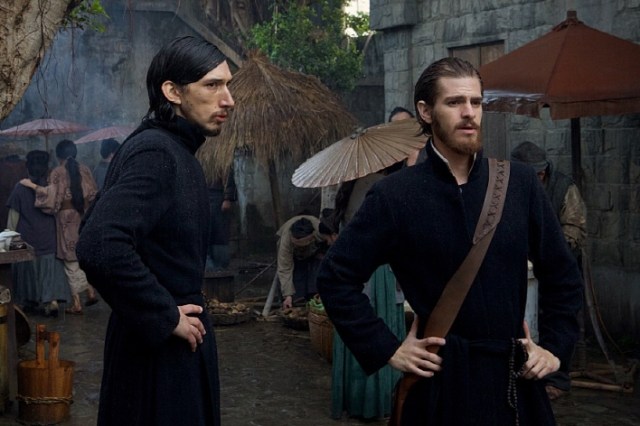
Along with Ferreira’s letter which was belatedly sent to Macao several years later, there comes another news on Father Ferreira, and Father Sebastião Rodrigues (Andrew Garfield) and Father Francisco Garupe (Adam Driver), two young Jesuit priests who were once Father Ferreira’s pupil, cannot believe the news. It seems their mentor apostatized in the end, and that makes their mission more urgent than before; they must go to Japan for not only remaining Japanese Christians but also their mentor who they think needs to be saved if that new is indeed true.
silence02

In Macao, they meet a Japanese Christian guy named Kichijiro (Yôsuke Kubozuka), who is not that trustworthy considering his wretched, drunken state but seems to be the only one who can guide them in Japan. Not long after they and Kichijiro manage to sneak into a rural beach area near Nagasaki, they encounter a bunch of village people who have kept their faith in secret, and Father Rodrigues feels some fulfillment as doing religious services for those poor people who are glad to receive his blessing.

Not so surprisingly, the circumstance soon becomes quite gloomy as the village is shaken by the search for Christians by a Japanese government official named Inoue Masashige (Issey Ogata). During one horrific sequence, three villagers meet their long, torturous death on the beach after being exposed as Christians, and Father Rodrigues and his colleague helplessly watch all of this from the distance as tormented by their growing guilt.

And that is just the prelude to the other grueling moments in the film which are often quite difficult to watch. After parting with his colleague for each other’s safety, Father Rodrigues becomes more desperate and helpless than before as struggling with more doubt and conflict. When he is finally captured, he thinks he is ready for sacrificing himself, but then he finds himself in an impossible moral circumstance while watching local Christians suffering or being executed in front of him.

All he has to do for saving those suffering Christians is putting his foot on a picture of Christ just like his mentor did in a similar situation, but that means officially denying his god, and he naturally agonizes over his increasingly unbearable circumstance. Maybe this is the ultimate test for his faith, and he surely wants to endure like Jesus did when he carried his cross to Golgotha and then died for the mankind, but Jesus at least knew that God was watching over his suffering. Rodrigues continues to pray, but his god gives no answer while being silent as before – and there only come more suffering and despair to tremble his conviction.

silence03

Firmly maintaining its calm, austere attitude, the movie observes all these dark sights of human agony and brutality from the distance, but we cannot help but feel their sheer horror as everything is vividly conveyed via its detached viewpoint which often evokes God’s solemn, objective viewpoint. As the music is sparsely utilized without any emotional touch, the sound in the film becomes a more prominent element in the background of silence, and it is particularly exemplified well during the eventual meeting between Father Rodrigues and Father Ferreira – or a gut-chilling moment involved with what initially seems like the mere sound of snoring.

It should be noted that Inoue, the man chiefly responsible for Father Rodrigues’ predicament and the suffering of local Christians, is not a one-dimensional villain at all but a wise, reasonable guy who knows what should be done – and what will happen. While making a good point on why Christianity is not suitable for his country during one scene, he does try to persuade his foreign prisoner as gently as possible, but he already knows well what he will have to order in the end, and he does not hesitate at all when it is the time to push Father Rodrigues further for ‘cutting the root’.

“Silence” is based on the novel of the same name written by Shūsaku Endō, and the adapted screenplay by Scorsese and his co-adapter Jay Cocks is mostly faithful to its source. Scorsese wanted to make this film for more than 20 years, and that is no surprise at all considering that many of his films are linked with Catholic themes in one way or another. While “The Last Temptation of Christ” (1988) surely comes closest to the theological intensity of “Silence”, Father Rodrigues’ inner conflict around sin and guilt is not so far from the psychological/spiritual tumults observed from the troubled heroes of Scorsese’s other films including “Mean Streets” (1973), “Taxi Driver” (1976), “Raising Bull” (1980), and “Bringing Out the Dead” (1999).

Watching “Silence” is not a comfortable experience at all, but it is another superlative work from Scorsese, and it never steps back from its hard questions even during the phlegmatic finale, which feels a bit too long at first but then becomes more haunting and thought-provoking as we reflect more on its ambiguous aspects open to different interpretations. I am still not so sure about what can be inferred from the last shot of the film, but I think I will not forget its silence for a long time.
silence04

Posted in Movies | Tagged , , , | 2 Comments

Personal Shopper (2016) ☆☆☆1/2(3.5/4): Shrouded in odd, nervous ambiguity

personalshopper01

Shrouded in odd, nervous ambiguity, “Personal Shopper” floats around several different story elements as alternatively baffling and fascinating us. While it is basically a ghost story, the movie also works as not only a clinical character study but also a creepy thriller, and I like its evocative mood and amorphous storytelling, even though I am still scratching my head about many things left unanswered even at the end of the film.

Kristen Stewart plays Maureen, a young American woman who has worked in Paris as the personal shopper of some famous French actress. The movie often shows her handling clothes, shoes, and accessories to be worn by her busy employer who does not interact with her much, and it is apparent from Maureen’s detached attitude that she does not like her job.

She could just quit her job and go to Oman where her boyfriend works, but she has a personal reason to stay in Paris for a while. While believing in the spiritual world, she also believes that she is a medium who can communicate with dead people, and she has waited for the signal from her recently diseased twin brother, who died because of a minor cardiac defect she also has. During her routine cardiac examination at a hospital, her doctor assures her that she can live a long life despite that, but she cannot help but aware of that small possibility of death which will always be inside her for the rest of her life.

As a fellow medium, her brother promised that he will send her his signal after his death, and that reminds me of that well-known arrangement made between Harry Houdini, a famous magician who debunked many spiritualists, and his wife before his death. They agreed that he would send her their secret code if he found it possible to communicate with her after his death, but she did not receive any confirmative message from her husband during next 10 years except one case which later turned out to be a fake.

personalshopper03

In case of Maureen, it turns out that she does not have to wait that long. For getting any chance to contact with her brother’s spirit, she sometimes spends night alone in his empty house located outside the city, and she experiences weird things during her respective attempts. She notices a sign on the wall which seems to have never been there before. She witnesses a possible spiritual signal in the bathroom. And, above all, she beholds a very vivid and spooky happening in the middle of one night.

As she becomes more obsessed with contacting with her dead brother, we cannot help but wonder about these strange incidents. Are they really caused by her brother’s spirit? Are they simply the mental projection of her deep grief and loneliness following his death? While not giving any clear answers to these questions and many other ones, the movie focuses more on her obsession with the spiritual world as doling out some interesting things such as a TV movie about Victor Hugo, and that makes a curious contrast with the hollow materialistic side of Maureen’s daily work.

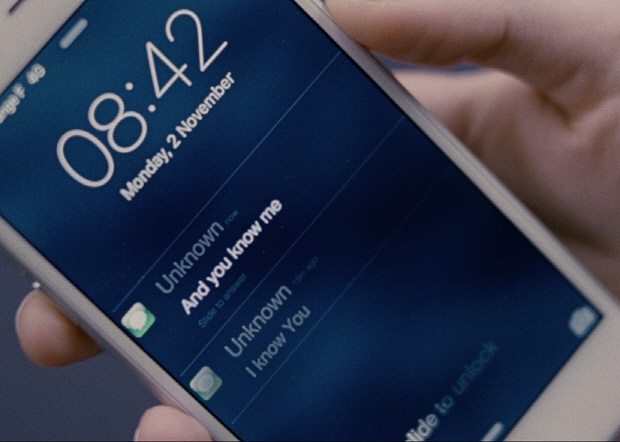
Meanwhile, another weird thing happens to Maureen when she is going to London for her work. Someone approaches to her via a text message, and the situation becomes more disturbing as she interacts more with that unknown figure, who is evasive, teasing, and a bit menacing without revealing anything substantial to Maureen (“I know you. And you know me.”)

Whoever is on the other end of the line, Maureen finds herself more affected by this sinister influence. When she happens to be alone in her employer’s apartment, she tries to look different with several things belonging to her employer, and she is later pushed further by that unknown figure, who sends a key card to a luxurious hotel room and instructs her to go there with one of her employer’s expensive garments.

personalshopper04

After a sudden plot turn, her situation becomes darker and creepier than before, and the director/writer Olivier Assayas, who won the Best Director Award for his film at the Cannes Film Festival in last year (he shared the award with Cristian Mungiu, who won for his film “Graduation” (2016)), gives us a number of suspenseful scenes to admire for the deft handling of mood and tension on the screen. In case of one particularly scene, it is merely driven by a series of text messages automatically appearing one by one, but it is as terrifying as that scary scene in “Halloween” (1978) where Jamie Lee Curtis’ character is helplessly cornered by a figure slowly approaching to her step by step.

As the center of the movie, Kristen Stewart is superb in her nuanced performance which is as excellent as her stellar supporting turn in Assayas’ previous film “Clouds of Sils Maria” (2014). While she was one of many ambiguous elements in that film, she is always clear and direct here in this film as steadily conveying to us her character’s emotional state, and we come to care about Maureen even though we are as confounded as her.

“Personal Shopper” can be a very frustrating experience to some of you, but it will be a rewarding experience if you are well aware of what it intends to do as an unconventional film willing to go for something different. Although I remain as baffled as when I walked out of the screening room in last evening, I admire the movie a lot, and I think you should give it a chance at least.

personalshopper02

Posted in Movies | Tagged , , | 1 Comment

The Lego Batman Movie (2017) ☆☆☆(3/4): Batman’s relationship matters

legobatmanmovie05.jpg

As I was watching “The Lego Batman Movie”, my mind often went back to when I watched “The Lego Movie” three years ago. I did not expect much when I watched its trailer, but then I heard some good words from others, and, what do you know, it turned out to be one of my favorite animation feature films of 2014. While it is essentially a lightweight parody filled with lots of gags and references, watching its loony story bouncing around here and there was a pretty awesome experience, and it is a shame that I have not revisited this hilarious animation yet since I watched it at a local movie theater near my college campus.

One of the most humorous elements in that animation film was Batman/Bruce Wayne voiced by Will Arnett, who clearly had a ball as parodying that coarse, gravelly voice in Christopher Nolan’s Batman movies. Now he takes the main stage here in “The Lego Batman Movie”, and the movie is as funny and outrageous as you can expect from a Lego animation film. Although it is not as fresh and inspired as those numerous uproarious moments in “The Lego Movie”, most of its gags work well enough to elicit good chuckles from me at least, and the result is something a lot more fun and entertaining than that grim, joyless dud called “Superman v Batman: Dawn of Justice” (2016).

After the deliberately self-conscious opening monologue, the movie quickly starts with Batman’s latest adventure in Gotham City. His arch-nemesis Joker (voiced by Zach Galifianakis) attempts to endanger the city again as assisted by a bunch of various villains, but then, yes, Batman comes to take care of all of these bad guys and save the day as usual, and Joker is particularly insulted when he learns how much he is disregarded by Batman. After all, how can a comic book villain fully live the life of evil without the opponent’s recognition?

legobatmanmovie03

While he enjoys his another glorious triumph, Batman is reminded again of how his life has been glum and lonely. When he comes back to the Batcave which is hidden right below Wayne Manor, there is no one waiting for him there except his artificial intelligence computer, and he has to dine alone on a lobster dish prepared in advance by his faithful butler Alfred Pennyworth (voiced by Ralph Fiennes). Alfred genuinely worries about his master’s solitude which has lasted for many years, and we get a wry montage scene consisting of the recreation of several recent Batman movies – and an archival clip from that campy old TV series starring Adam West.

Alfred suggests that his master should be more social than before, and the chance comes faster than Batman expected. Jim Gordon (voiced by Héctor Elizondo), the commissioner of the Gotham City Police Department, is going to retire, and his successor is none other than his daughter Barbara Gordon (Rosario Dawson). Batman is instantly smitten with her right from their first encounter at the party for Jim Gordon’s retirement where he attends as Bruce Wayne, but then she announces her plan to have Batman in legal cooperation with the Gotham City Police Department, and that is the last thing wanted by Batman, who prefers to operate alone in his fight against crime.

Meanwhile, Batman comes across Dick Grayson (voiced by Michael Cera), an orphan boy who approaches to Wayne for getting some advices on adoption and then finds himself casually adopted by Wayne. Not so surprisingly, Dick gets involved with Batman not long after he begins to live in Wayne Manor, and we soon see how he comes to have that colorful uniform along with his new name.

While the plot thickens with Joker’s another devious plan, the movie keeps throwing many gags and references to be recognized. When Joker deliberately has himself banished to the Phantom Zone, we meet many familiar movie villains who have been incarcerated there for years, and the movie has a big chaotic fun as Joker unleashes all of them onto the Gotham City.

legobatmanmovie04

The action scenes in the film are quite busy and frantic, and I felt a bit exhausted during my viewing, but the movie fortunately does not lose its sense of humor even when it throws its characters into lots of crashes and bangs. I was tickled by the intentionally cheesy mode of the fight scene which is clearly influenced by West’s TV series, and I also like how a certain physical feature of Lego characters is unexpectedly utilized around the end of the climax sequence.

The cast members of the film are delightful on the whole. Will Arnett has a number of funny moments as wielding his character’s perpetual sullen side, and I must say his Batman performance is more engaging than Ben Affleck’s in “Superman v Batman: Dawn of Justice”. While Zach Galifianakis gives a zany villain performance, Rosario Dawson and Michael Cera are fine in their respective comic performance, and Ralph Fiennes, who has shown more of his unexpected comic side during recent years, gives a deliciously deadpan performance to savor. Many of the small supporting roles in the film are filled by notable performers such as Mariah Carey, Jenny Slate, Billy Dee Williams, Héctor Elizondo, Conan O’Brien, Zoë Kravitz, Channing Tatum, Jonah Hill, Eddie Izzard, Seth Green, and Jemaine Clement, and they also bring some extra jolliness to the film.

Although it is one or two step below the charm and energy of “The Lego Movie” and you may have some background knowledge for more appreciation of its countless gags, “The Lego Batman Movie” generates enough laughs to entertain its audiences. I was a bit disappointed because it does not have something as memorable as that hideously catchy theme song of “The Lego Movie” (Oh, no! It is played in my head again!), but it is still a nice, enjoyable animation film, and I hope other Lego movies to come in the future will be as entertaining as this at least.

legobatmanmovie02

Posted in Movies | Tagged , , | 1 Comment

Hacksaw Ridge (2016) ☆☆☆(3/4): A pacifistic medic struggling in a brutal war movie

hacksawridge04

“Hacksaw Ridge” is rather interesting for its ironic contradiction. While evoking those sincere old-fashioned Hollywood war films such as Howard Hawks’ “Sergeant York” (1941) on one side, the movie is also far more brutal and sanguinary than them on the other side, and that aspect often contradicts with the gentle bravery of its noble hero, who adamantly sticks to his pacifistic belief even when he is in the middle of the sheer horror of war.

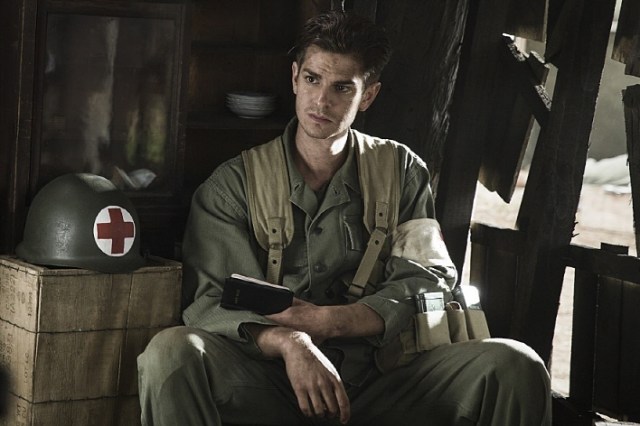
The movie is based on the real-life story of Desmond Doss, an American medic who participated in the World War II. As a Seventh-day Adventist Christian, Doss, who is played by Andrew Garfield in the film, refused to carry any kind of weapons and kill enemy soldiers, but, as mentioned at the end of the film, he saved the lives of 75 infantrymen during the Battle of Okinawa and then became the first conscientious objector to be awarded the Medal of Honor.

After the opening battle sequence, the movie moves back to Doss’ childhood in Blue Ridge, Virginia, and it show us how young Doss was deeply affected by an accident which was inadvertently caused by him while he played with his older brother. Although his brother only suffered a minor injury, this consequence made young Doss more conscious of one of the ten commandments, and it came to be the base of his religious faith.

15 years later, many young men enlist in the US Army because of the World War II, and Doss is willing to be a solider just like his brother, but he wants to serve for the country in his way without violating his faith. Since he saved a seriously injured man’s life through one quick measure, he has been interested in first-aid treatment while dating a hospital nurse named Dorothy Schutte (Teresa Palmer), so he decides to participate in the war as a combat medic, but that is not accepted well by his father Tom (Hugo Weaving), a bitter, troubled man who has struggled with his alcoholism and post-traumatic stress order for years due to his combat experiences during the World War I. During one scene, Tom takes his son to a local cemetery where his fallen friends were buried, and Weaving is poignant as conveying his character’s longtime guilt and torment. He surely knows that war is hell, and, though he has not been a good father and husband to his family at all, losing both of his two sons to a war is the last thing he wants.

hacksawridge03

When Doss enters the training camp in Fort Jackson, we meet a bunch of stock war movie characters including Sergeant Howell (Vince Vaughn), who is as tough and intimating as your typical drill instructor. Howell is definitely not so pleased when Doss refuses to carry a rifle right from the first day of training, and neither is Captain Glover (Sam Worthington), Howell’s direct superior who tries to discharge Doss after a failed attempt to persuade him but then comes to make some compromise with him in the end.

As he is allowed to continue his military training without any compromise on his faith, Doss is naturally alienated and harassed by other trainees in his barrack, but he gradually comes to earn their grudging admiration as he keeps going on, and he also get some respect from Howell. Surprisingly effective in his against-the-type dramatic role, Vince Vaughn imbues his stereotype character with considerable intensity, and he is good particularly when Howell comes to recognize Doss’ integrity and determination.

After an inevitable narrative point where Doss is court-martialed for being a conscientious objector but eventually acquitted (this is not a spoiler at all), the movie promptly moves forward to 1945 May, and we see Doss and other soldiers arriving in Okinawa. Their army has fought the Japanese Army over a stiff rocky ridge called Hacksaw Ridge, and there has not been much progress for them except increasing casualties, as reflected by one brief, harrowing moment which shows a group of soldiers returning with many dead bodies.

hacksawridge01

During the following battle sequences unfolded on the ridge, the director Mel Gibson goes all the way for bombarding us with numerous moments as gritty and gruesome as we can expect from modern war films. We frequently see many soldiers killed or maimed amidst lots of bullets and explosions, and there are a number of moments which will certainly make you cringe for their graphic details. Even during the most frantic moments during these sequences, the physical impact of the actions shown on the screen is always palpable to us, and we come to feel the real sense of danger around Doss and other characters in the film.

This unflinching depiction of the brutality of war in the film is supposed to accentuate Doss’ courageous dedication, and that storytelling strategy works when it focuses on his heroic one-man feat, but then the movie sometimes goes to the overkill mode which generates a glaring contradictory impression. While it surely wants to honor his faith and courage, it sometimes seems to be more interested in its brutal and bloody spectacles, and that aspect made me a bit uncomfortable during my viewing.

I am not so sure about whether “Hacksaw Ridge” entirely succeeds in what it intends to do, but I recommend it mainly because it is a competent war film on the whole. I admired the visceral quality of its battle sequences, and I also appreciated the earnest lead performance by Garfield, who was nominated for Best Actor Oscar in last month (The movie received total 6 Oscar nominations including the one for Best Picture). I still think there is a better (and more coherent) movie somewhere inside it, but I am so far content with it – with some reservation.

hacksawridge02

Posted in Movies | Tagged , , | Leave a comment

Moonlight (2016) ☆☆☆1/2(3.5/4): A specific lifetime observed in three acts

moonlight02

Sensitive and empathetic, “Moonlight” is a simple but eloquent coming-of-age tale packed with haunting human moments. While its hero and background are quite specific, we notice universal themes from its intimate drama as watching its hero struggling to find his place in the world, and the movie thoughtfully and poignantly presents how his identity is shaped by his harsh environment – and how he comes to find some hope in the end.

Mainly set in Liberty City, a black neighborhood in Miami which has been notorious for crime and poverty for many years, the movie is divided into three episodic parts, and the first part, titled “Little”, opens with the sequence showing the accidental encounter between Chiron (Alex Hibbert) and Juan (Mahershala Ali). Chiron is a little young elementary school kid, and we see him being chased by other boys and then hiding inside one of nearby boarded-up apartments. Juan is a local drug dealer who happens to be around there while taking care of his criminal business, and he kindly approaches to Chiron after those boys eventually go away. Although he remains mostly silent and awkward during his encounter with Juan, Chiron gradually opens up himself to Juan and his girlfriend Teresa (Janelle Monáe), and Juan becomes a sort of father figure to Chiron as they spend more time together.

Meanwhile, we observe how hard it is for Chiron to go through everyday in his poor neighborhood. Nicknamed “Little”, he is alienated from most of his schoolmates except his only friend Kevin (Jaden Piner), and his mother Paula (Naomie Harris) does not help him much as she begins to tumble into the pit of drug addiction. She happens to be one of Juan’s usual customers, and there is a quiet but painful moment when Chiron asks Juan some simple but hard questions not long after he endures his mother’s worst side fueled by her drug addiction.

As beginning its second part, titled “Chiron”, the movie moves forward to several years later. Played by Ashton Sanders from this point, Chiron now becomes a teenager boy, but life is still difficult for him as before. He is tormented by his schoolmates just for not looking tough and masculine enough, and his mother keeps going down to another bottom while being mean and vicious to her own son.

moonlight04

And then there comes an unexpected moment. During one night, Chiron happens to spend some time with Kevin, who is played by Jharrel Jerome during the second part. As they talk with each other alone on a local beach, they come to feel a certain mutual feeling they cannot understand well but follow anyway without much hesitation, but then their relationship is broken due to a cruel incident at their school, and that eventually leads to a harrowing scene of pent-up fury which ends with an irreversible consequence.

The third part of the story, titled “Black”, shows Chiron after another several years, played by Trevante Rhodes from this point. After being released from jail, Chiron has been involved in drug dealing around Atlanta, and now he is in a position not so different from Juan’s. He looks quite different in a hardened appearance mainly represented by his muscular body and gold false teeth, and he goes by his new name “Black”, which is actually a nickname given to him by Kevin in that time.
However, there is still a lonely, wounded boy remained inside him, and that aspect is accentuated by the reappearance of two people from his past. Paula, who has recently recovered from her addiction, wants to meet her estranged son for apologizing for her abusive behaviors in the past, and then there is Kevin, played by André Holland during the third part. Like Paula, he wants to meet Chiron for reconciliation, and he suggests that Chiron drop by a diner in Miami where he works.

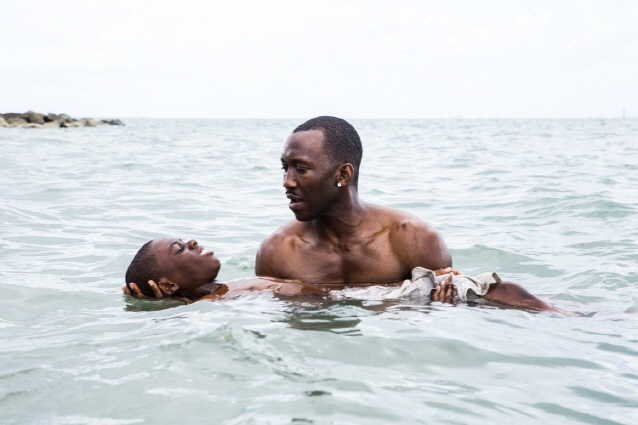
So far, I have only described the plot of the film without delving much into many of its memorable moments, which are so simple and delicate with their lyrical touches that I can only enumerate some of them one by one. I found myself touched a lot by Juan’s fatherly care and attention during the scene where he teaches young Chiron how to swim. I could sense how much young Chiron feels hurt and angry during his gut-wrenching scene with his mother, even though we do not hear the words she spews out toward him. The night beach scene between Chiron and Kevin is subtly and tenderly handled as these adolescent boys’ frank conversation about themselves leads to the awakening of their sexuality, and it is devastating to see what transpired between them being cruelly crushed later. While the scene between Chiron and his recovering mother is sad and poignant as they painfully confront their shared past, the scene unfolded at Kevin’s diner is gentle and tentatively hopeful as we observe Chiron’s face being gradually softened in front of his old friend.

moonlight03

Based on Alvin McCraney’s play “In Moonlight Black Boys Look Blue”, the movie is the second work from the director/adapter Barry Jenkins, who previously made an impressive debut with “Medicine for Melancholy” (2008). Like that small but lovely romance film set in San Francisco, “Moonlight” is imbued with the distinctive sense of locations, and the cinematographer James Laxton did a superb job of establishing the vivid, realistic atmosphere around the real locations in Miami and South Florida. With its rich color scheme further emphasized by the high contrast between light and shade, the movie often feels like a series of lucid pieces of memories unfolded onto the screen, and the restrained score by Nicholas Britell adds more poetic quality to that.

The cast is flawless with no particular weak spot to notice. Trevante Rhodes, Ashton Sanders, and Alex Hibbert are effortlessly connected together in their performance, and the same can be said about Jaden Piner, Jharrel Jerome, and André Holland. While Mahershala Ali, who has been more notable since his supporting role in TV series “House of Cards”, is fantastic in his nuanced performance, Naomi Harris, who was Oscar-nominated along with Ali, brings considerable amount of humanity to her character, and the special mention goes to Janelle Monáe, a popular singer who definitely demonstrates her other talent through her enjoyable debut performances in this film and “Hidden Figures” (2016).

Good movies can be windows to the life of people different from us, and “Moonlight” is one of such fine, beautiful examples. Around the end of the film, we already come to know a lot about Chiron and his life, and that is why it is very touching to watch him making small, honest forward steps for himself. We understand how hard that is for him – and we know how much he finally feels all right with being himself.

moonlight01

Posted in Movies | Tagged , | 2 Comments

Manchester by the Sea (2016) ☆☆☆1/2(3.5/4): Living with broken heart

manchesterbythesea01

They say time can heal us, but that is not true for the gloomy hero of “Manchester by the Sea”. Gradually revealing the emotional scar and pain in his heart, the movie gives us a vivid, intimate slice of his life while deftly balancing itself between humor and pathos, and we come to know and understand this broken man as he faces his old past which still feels painful to him.

The movie opens with Lee Chandler (Casey Affleck) going through his usual daily routine during one cold, snowy winter day as the janitor of several apartment buildings in Quincy, Massachusetts, and the movie effortlessly sets its tone as watching him doing fixing jobs for several different tenants. While they briefly appear in their respective scenes, the tenants in the movie are all presented with the realistic sense of ongoing life around them, and there is an amusing moment when one of them shows some interest toward Lee and then he responds to her in a rather clumsy way.

Living alone in his stark basement apartment, Lee is not particularly social to say the least. We see him chided by his boss for being not so nice to tenants, and then we watch him spending his time alone at a bar. When a woman makes a blatant attempt to get into conversation with him, he shows no interest at all as maintaining his sullen attitude, and it also turns out that he has some serious anger issue.

manchesterbythesea03

On one day, he gets an emergency call, and he is notified that his older brother Joe (Kyle Chandler), who lives in their hometown Manchester, was taken to a hospital due to his chronic heart problem. When Lee arrives at the hospital, Joe already died, and Lee has to take care of many things including Joe’s funeral on behalf of Patrick (Lucas Hedges), Joe’s teenage son who was once close to Lee as shown from a flashback scene showing their happy time on the sea with Joe.

While the process of Joe’s funeral turns out to be slower than expected, Lee gets a surprise news. Joe’s lawyer informs him that Joe appointed Lee as his son’s legal guardian in advance. Joe’s decision seems sensible considering that the only close relative besides Lee recently moved out of Massachusetts and his alcoholic ex-wife left him and Patrick some years ago, but there is one problem; moving back to Manchester is the last thing Lee wants, and Patrick does not want to leave Manchester for living with his uncle.

Via a series of flashback scenes, we get to know more about Lee’s past in Manchester. There was a time when he happily lived with his wife Randi (Michelle Williams) and their three kids, but then their relationship was shattered forever by one tragic incident, and that incident is still hurtfully remembered by him as reflected by one harrowing sequence. Many people in the town also remember that incident well, and one brief scene later in the movie shows us how much he is unwelcomed in the town.

Anyway, Lee continues to stay in Joe’s house while not knowing how to handle this complicated situation, and he reluctantly takes the role of Patrick’s temporary guardian although they do not get along well with each other. They particularly disagree with each other on the matter of Joe’s old family fishing boat; Patrick wants to keep it, but Lee does not care much about it, and he may sell it if that seems necessary.

manchesterbythesea02

Letting his characters freely rolling along the plot, the director/writer Kenneth Lonergan brings out small but precious human moments to appreciate. While frankly recognizing the pain and grief observed from its characters, the movie often generates unexpected moments of humor, and that is exemplified well by when Lee and Patrick go to the house of Patrick’s girlfriend at one point. Patrick wants his uncle to hold his girlfriend’s mother downstairs because he and his girlfriend are going to have a very friendly time together upstairs, but, not so surprisingly, Lee cannot be that cooperative, and that leads to one of the most humorous moments in the movie.

The performers in the movie are flawless in their nuanced performance while never feeling like trying too hard or too little. Casey Affleck masterfully embodies his character’s guilt and grief in his understated performance, and he has a heartbreaking scene with Michelle Williams when their characters come across each other by coincidence. Affleck is simply devastating as his character tries to look away from what has tormented him, and Williams is equally good as an emotional counterpart to Affleck’s character. While Lucas Hedges, who was deservedly Oscar-nominated along with Affleck and Williams in last month, holds his own place well as another crucial part of the story, Kyle Chandler is poignant in his gentle supporting performance, and other performers including C.J. Wilson, Tate Donovan, Gretchen Mol, and Matthew Broderick are also solid in their respective supporting roles.

Lonergan drew my attention with his wonderful debut feature film “You Can Count on Men” (2000), but then he remained rather silent for more than 10 years until he came back with “Margaret” (2011), a seriously overlooked gem worthwhile to watch for many reasons including Anna Paquin’s compelling performance. “Manchester by the Sea” is another exquisite human drama from Lonergan, and I admire how aptly his story arrives at the final scene with open possibilities for Lee and Patrick. Nothing is certain for them even at that point, but we come to know a lot about them while hoping for the best. That is what a good drama movie does to us, you know.

manchesterbythesea04

Posted in Movies | Tagged | 1 Comment

Arrival (2016) ☆☆☆1/2(3.5/4): When they arrive…..

arrival02

Can we possibly communicate with aliens if they ever come to our planet? Can we and they really understand and emphasize with each other even if that were possible? “Arrival” begins with these familiar but undeniably fascinating questions which have inspired numerous science fiction fictions and movies for many years, and this smart, intelligent film distinguishes itself with compelling ideas and thoughtful storytelling. While impressed a lot by its evocative mood and striking visual moments, I observed its ideas with interest and curiosity, and then I appreciated its storytelling more around its finale as I came to get the full sense of what is about as well as how it is about.

After the prologue sequence which gives us a glimpse into the personal life of its linguist heroine Dr. Louise Banks (Amy Adams), the movie succinctly establishes the premise during its early scenes. Huge, oblong-shaped extraterrestrial spacecrafts suddenly appear on the twelve seemingly random locations around the world, and the human society is naturally shaken and overwhelmed by this inarguable proof of the existence of extraterrestrials. As these spacecrafts silently hover just above the ground without giving any noticeable signal, the governments around the world go into emergency mode, and they may take action against the aliens if there comes any sign to suggest that the aliens do not come in peace.

Unlike many other people, Banks does not look that perturbed. Although she leaves her workplace early along with others as the state of emergency is announced, she comes back to her office on the next day as if nothing serious happened, and you may wonder whether her rather detached attitude is associated with what we observed from her at an earlier point in the movie.

arrival03

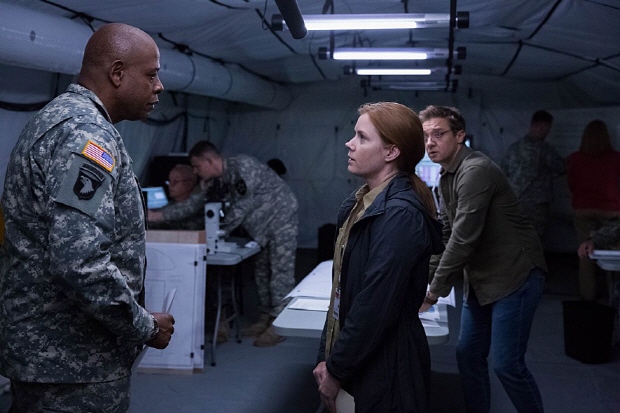
While she is in her office, she is visited by Colonel Weber (Forest Whitaker), who is in the charge of the US military operation on one of the spacecrafts which is located on a remote spot in Montana. He needs Banks’ linguistic expertise for deciphering the aliens’ language, and she is soon brought to the operation base near the spacecraft while accompanied with Weber and theoretical physicist Dr. Ian Donnelly (Jeremy Renner).

Not long after she arrives in the operation base, she goes inside the spacecraft along with others including Donnelly, and the sequence showing her first contact with the aliens, which are called ‘Heptapods’ because of their seven-legged shape, is filled with tense awe and ambiguity as she approaches to the unknown step by step. In a big chamber space inside the spacecraft, she and others behold two Heptapods appearing inside the foggy space behind a transparent wall, and she finds herself quite agitated by this experience even after she safely returns to the base along with others.

While her first encounter with Heptapods has no particular success, Banks thinks of a possible way to communicate with Heptapods on elementary level, and that leads to one of the most interesting moments in the movie. As teaching those two Heptapods, nicknamed Abbot and Costello by Donnelly, basic English vocabulary, Banks comes to get the clues to Heptapods’ language which are quite alien to human beings in many aspects, and we soon see how that Rosetta Stone moment is followed by more progress, as conveniently explained to us by Donnelly during one obligatory montage sequence.

arrival01

However, the situation remains volatile and uncertain even while many governments around the world work together for figuring out what is the real purpose of Heptapods’ visit to the Earth. The third act of the movie becomes more suspenseful as human fear and distrust seriously threaten what may be the real communication between humankind and Heptapods, and that reminds us of how we tend to succumb to our worst sides when confronting the unknown.

But we can also do better as following our best sides, which are exemplified well as Banks rises to the occasion through her strenuous efforts for communicating with Heptapods. Amy Adams is simply superb as the human anchor of the movie, and you will admire her excellent performance especially after understanding her character’s emotional state more later in the story. Although their roles feel more like plot tools at times, Jeremy Renner, Forest Whitaker, and Michael Stuhlbarg did a solid supporting job around Adams, and Renner and Adams play well with each other as ably conveying to us the growing rapport between their characters.

The movie is based on Ted Chiang’s short story “Story of Your Life”. I must confess that I have not read that acclaimed short story yet, but I can tell you at least that the adapted screenplay by Eric Heisserer keeps intriguing us throughout its plot, and the director Denis Villeneuve, who was recently Oscar-nominated for his film (the movie received total 8 Oscar nominations including the one for Best Picture), did a superlative job of presenting the story with his own style which has been consistently shown from his previous works including “Incendies” (2010) and “Sicario” (2015). As special effects are judiciously utilized throughout the film, the cinematography by Bradford Young serves us a number of stunning visual moments to admire, and the ambient score by Jóhann Jóhannsson further accentuates the ambiguous and nervous atmosphere surrounding the characters in the film.

During recent years, there have been some exceptional science fiction films such as “Gravity” (2013), “Interstellar” (2014), and “The Martian” (2015), and “Arrival” deserves to be mentioned along with them, considering how it powerfully resonates with ideas and images while making us reflect on our existence in the universe. In short, this is one of the most interesting films which came out during 2016, and you should not miss its thought-provoking cinematic experience.

arrival05

Posted in Movies | Tagged , | 1 Comment

Lion (2016) ☆☆☆(3/4) : A long way to his hometown

lion05

Based on one remarkable real-life story, “Lion” tries to tug at our heartstrings, and it succeeds with several powerful moments during its first half. Although it stumbles a bit during the second half which is more conventional in comparison, the movie remains engaging to watch thanks to the lasting emotional resonance of its first half, and we cannot help but moved as it eventually arrives at the expected but undeniably poignant end of its hero’s long journey.

Set in 1986, the first half of the movie depicts how Saroo (Sunny Pawar) comes to be separated from his family. He is a little 5-year-old boy living in a rural region of Khandwa, India, and the opening scene shows him and his older brother Guddu (Abhishek Bharate) stealing coal from a moving freight train. They later exchange their stolen coal with two packets of milk, and these are barely enough for their poor family living in a slum neighborhood.

When Guddu is about to go to a distant place for getting any chance to earn more money, Saroo insists that he should go along with Guddu. They take a train together as night begins, but then Saroo has become too drowsy to go around with his brother when the train arrives at a station. Guddu has no choice but to leave his sleepy brother on a bench in the station, and Saroo later finds himself alone in the empty station while his brother has not returned yet.

Looking for his brother, Saroo happens to go inside a train stopping in the station, and that turns out to be a serious mistake. When he wakes up in that train in the next morning, the train is rapidly running to somewhere along its railroad as he is trapped inside it. When he finally can get out of the train after it arrives in Calcutta (it is called Kolkata at present, by the way), he is around 1600 km from his hometown, and he even cannot ask for help mainly because he cannot speak Bengali.

lion03

As his desperate situation is continued on the streets and alleys of Calcutta, the movie gives us a number of Dickensian moments peppered with gritty realism. At one point, Saroo comes across a woman who can speak Hindi, and she shows him the kindness of stranger at first, but then it turns out that she and her associate have a sinister intention which is disturbingly implied to us during their scene. After managing to run away from them, he gets real help from a young man who kindly takes him to a police station, but then he is eventually sent to a big, shabby orphanage where he indirectly witnesses a horrific case of child abuse along with many other kids during one night.

Fortunately, Saroo is later adopted by an upper middle-class couple living in Hobart, Australia, and we see the gradual process of his adaptation to a new environment. John and Sue Brierley, played by David Wenham and Nicole Kidman with genuine warmness, are ready to welcome him into their cozy household, and it does not take much time for Saroo to get closer to his new parents. Around the time when John and Sue come to adopt another Indian kid, Saroo looks happy and well-adjusted, and the bond between him and Sue is palpable during one private moment between them.

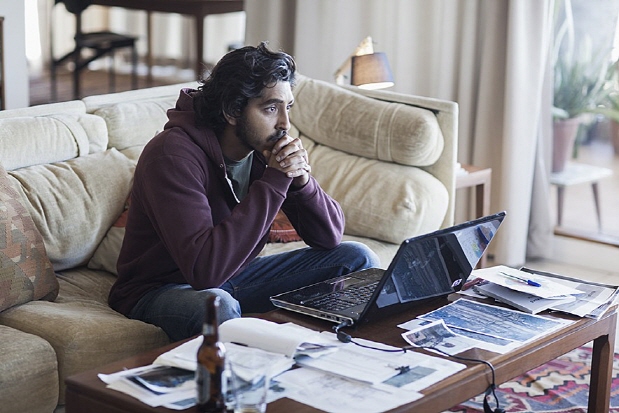
The movie moves forward to 2007 at the beginning of its second half, and Saroo, who is played by Dev Patel from this point, now becomes a lad with the promising future ahead of him. He is going to study hotel management in Melbourne, and his adoptive parents are proud of their son. While he is studying in Melbourne, he befriends several Indian students attending his class, and he also begins a relationship with a young woman named Lucy (Rooney Mara).

When he is at a house party held by his Indian friends, a moment equivalent to that famous madeleine cake moment in Marcel Proust’s “In Search of Lost Time” occurs to him, and he soon finds himself overwhelmed by the sudden recollection of what he has forgotten for years since his adoption. He can only remember vaguely how his hometown looked, but, thanks to the considerable advance of contemporary technology, finding his hometown seems actually possible. Via the calculations based on the speed of trains in the 1980s, he estimates the distance between Calcutta and his hometown, and he also searches through Google Earth for finding any landscape he may recognize.

lion02

As he becomes more obsessed with finding his hometown and biological family, he becomes more distant from his girlfriend as well as his adoptive parents. The adapted screenplay by Luke Davis, which is based on “A Long Way Home” written by Saroo Brierley and Larry Buttrose, is contrived especially during this part, and Rooney Mara is rather wasted in her underdeveloped role. The depiction of her character’s relationship with Saroo is not convincing enough to engage me, and it is also disappointing that the movie does not pay more attention to Saroo’s troubled adoptive brother, a damaged man still struggling with whatever he experienced during his childhood years in India.

While Patel and Kidman were recently Oscar-nominated for their respective earnest performances, the best performance in the film comes from young newcomer Sunny Pawar. The director Garth Davis wisely lets Pawar’s unadorned acting carry the first half of his movie, and Pawar’s effortless performance reminds me again of how child performers always surprise us. Sure, they certainly need good directors who can handle them well, but they never fail to amaze us with the simplicity and directness of their performance.

Although it is riddled with flaws at times, “Lion” still works because of its sincere human drama and several touching performances. It is certainly as sentimental as you can expect, but its heart is in right place, and it surely earns all the emotions unfolded during its dramatic finale which reveals one small but important thing associated with its title in the end. I could see through it from the start, but it did its job fairly well, so I will not complain.
lion01

Posted in Movies | Tagged , , | Leave a comment

Jackie (2016) ☆☆☆(3/4): Who is Jackie?

jackie01

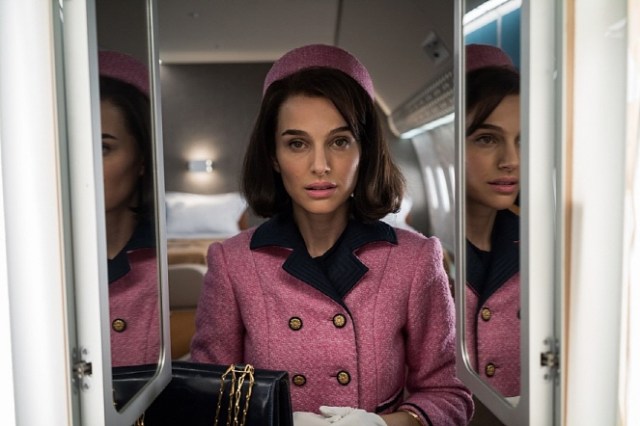
Calmly examining the formation of that lasting public image of Jacqueline Kennedy, “Jackie” works as a compelling observation on a woman who happened to be in the middle of one of the darkest historical moments in the 20th American history. While understandably struggling with grief and confusion resulted from her husband’s shocking death, she tries to find a way to control her life and public image as well as her husband’s legacy, and the movie is poignant at times as we watch her virtually enshrining herself along with her husband in an enduring modern legend created by her.

The movie opens with Jacqueline Kennedy (Natalie Portman) being visited by a journalist played Billy Crudup for their private interview not long after the assassination of President Kennedy and the following state funeral. Although his name is never mentioned in the film, the journalist in the film is a fictional version of real-life journalist Theodore H. White, and White really interviewed Jacqueline Kennedy at her residence located in Massachusetts as shown in the film and then published his interview article “For President Kennedy: An Epilogue” on Life magazine.

As he asks some important questions and she tactfully responds to them, the movie frequently looks around her life at several different time points, and, not so surprisingly, the most prominent flashback part is about that fateful day in Dallas and its dramatically devastating aftermath. We see how everything seemed to be fine for her and her husband as they arrived in Dallas on November 22nd, 1963, and then we look at her traumatized (and bloodied) state not long before Vice President Lyndon B. Johnson (John Carroll Lynch) is ordained as the next president of the United States on the plane.

jackie02

The movie closely observes how she feels disoriented by the sudden void in her world which is resulted from her husband’s death. When she finally returns to the White House after her husband’s body goes through the autopsy at a hospital, the White House looks far less familiar to her than before, and Mica Levi’s nervous and ambiguous score further accentuates her disoriented state of mind as she grapples with her suddenly changed status.

This part is contrasted with when she made “A Tour of the White House” for TV broadcast in 1961, which is partially recreated in the film with painstaking details. She put considerable efforts into the restoration of the legacy of the White House, and she knew exactly how to present not only herself but also the interior of the White House newly decorated by her to the American public. She did her job gracefully and flawlessly in front of camera, and the result was a big success as mentioned at one point in the film.

That part resonates with the scenes showing her shrewdly discerning her role in her husband’s legacy. She discusses with others including her brother-in-law Robert Kennedy (Peter Sarsgaard) on the details of her husband’s state funeral, and there is a melancholic scene in which she actively determines a burial spot for her husband at Arlington National Cemetery. She leads the public mourning as the casket containing her husband is carried to the US Capitol, and then she certainly maintains her composure well during the funeral procession on the next day as the whole nation is watching her.

The interview scenes in the film look perfunctory at first, but they gradually become more interesting as another layer of narrative while we come to see how much she holds herself with the absolute control over what will be published or not. As creating a myth out of her husband’s presidency and then associating it with the idea of Camelot, she finds herself becoming an icon just like her husband, and that aspect is wryly reflected by a brief later moment when she happens to notice a bunch of mannequins dressed in her fashion style.

jackie04

Subtly and thoughtfully depicting how she has her humanity enveloped forever in her myth, the director Pablo Larraín and his screenplay writer Noah Oppenheim give us an elusive but engaging mix of history and fiction which freely flows along its non-linear narrative. The period atmosphere of the movie is authentic thanks to excellent production design and costumes, and Larraín and his editor Sebastián Sepúlveda did a fine job of seamlessly blending archival footage shots into the film.

With meticulous character details, Natalie Portman’s superb performance, which was recently Oscar-nominated, is vivid, convincing right from her first scene, and she is particularly marvelous during a number of crucial scenes where she has to suggest feelings and thoughts her character would rather keep to herself. During one scene where her character wordlessly wanders alone around in the White House while a song from musical “Camelot” is played in the background, she does not signify a lot, but we cannot help but wonder about what is going on in her character’s mind. Portman is also supported well by a group of various supporting performers on the fringe including Peter Sarsgaard, Greta Gerwig, John Carroll Lynch, Richard E. Grant, Billy Crudup, and John Hurt, and it should be noted that the movie is one of the last films in Hurt’s illustrious acting career before his recent death.

Overall, “Jackie” is an unconventional biographical drama film with an interesting perspective on its fascinating human subject, and I admire its mood, storytelling, and performance. Although Jacqueline Kennedy died more than 20 years ago, what she created has lasted and remained intact, and the movie ironically reminds that to us via its attempt to reexamine her public image. She is still Jackie the First Lady, and we will probably keep wondering about who really existed behind that.
jackie03


Posted in Movies | Tagged , , , | Leave a comment

Deepwater Horizon (2016) ☆☆(2/4): Lots of mud, water, oil, and fire

deepwaterhorizon01

When I heard the news about the explosion on Deepwater Horizon for the first time, I was about to begin the first day of the 2010 Eberfest along with my critic friends and acquaintances. I thought it was just a minor accident which would be taken care of within a few days, but, as many of you know, its disastrous consequence lasted for next several months, and it eventually became the biggest oil disaster in the US history, with about 210 million gallons (about 794 million liters) of crude oil spilt into the gulf of Mexico.

Mainly focusing on how that catastrophic accident happened, “Deepwater Horizon” tries to be vivid and realistic, and it is successful to some degrees considering a number of intense moments, but it disappointingly stays on the level of standard disaster film. While we certainly see dangers on the screen as many characters are suddenly and helplessly thrown into their perilous circumstance during its second half, its story is rote and platitudinous due to thin characterization and numerous clichéd elements, and it ultimately feels rather hollow and superficial as being no more than a mere recreation of one devastating real-life incident.

The early scenes of the movie introduce several key figures of the story one by one. In the beginning, we see Mike Williams (Mark Wahlberg) starting the morning of April 20th, 2010 along with his dear family, and we get some basic information about his oil drilling job via his little daughter who is eager to present her father in her school class. He is going to begin his 21-day-stint on an oil drilling rig located at a spot which is 41 miles (about 66 km) southeast off to the Louisiana coast, and everything looks fine and usual as he rides a helicopter along with other crew members including Jimmy Harrell (Kurt Russell) and Andreas Fleytas (Gina Rodriguez).

deepwaterhorizon02

However, there is already a trouble on the rig, and the first half of the movie invests considerable time on how the situation gets worsened as time goes by. After learning about the serious safety negligence associated with the concrete foundation of the oil well, Harrell, who is the chief supervisor of the rig, wants to do a pressure test before starting the drilling process, but then he has to persuade Donald Vidrine (John Malkovich), a short-sighted BP executive who only cares about how much financial loss the delayed process can cause to his company. Vidrine wants to start the drilling process as much as possible, so he willingly ignores bad signs even as Harrell and other crew members have more reasonable doubts on the safety of the drilling process.

Looking here and there around the rig, the movie tries to present a big picture of how the rig is operated by its crew members, and it does a fairly nice job of giving us some technical details without confusing us, but it falls short in terms of characters. While the main characters do not have any notable human quality to engage us, the other characters in the film are defined only by their work and position, and we only come to observe all these characters from the instance without much interest in them – even as we are more aware of the accumulating danger below them.

The cast of the movie do as much as they can do with their characters. In case of more recognizable performers like Mark Wahlberg, Kurt Russell, John Malkovich, and Kate Hudson, they carry their roles via each own presence, but their characters remain to be mediocre at best and anonymous at worst. Wahlberg and Russell surely fit to their respective roles considering their working class screen persona, but their earnest efforts cannot compensate for their inherently flat, bland characters. Malkovich is suitably despicable, but then there is nothing much he can do besides that, and it is really disappointing to see this wonderful performer wasted in an one-dimensional role. Hudson is stuck with the most thankless job in the film, and I must say that her perfunctory role cannot possibly be improved by any other female performer out there.

deepwaterhorizon03

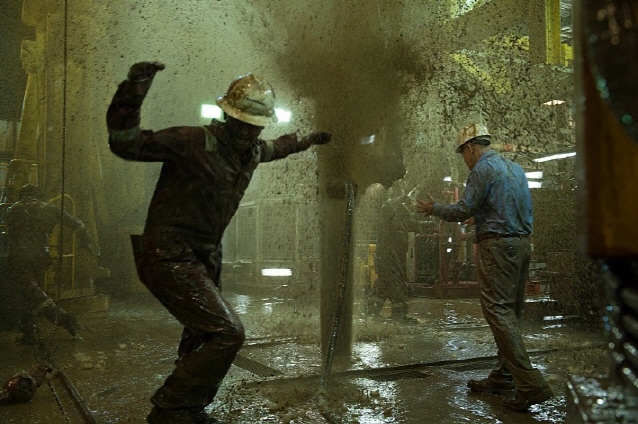
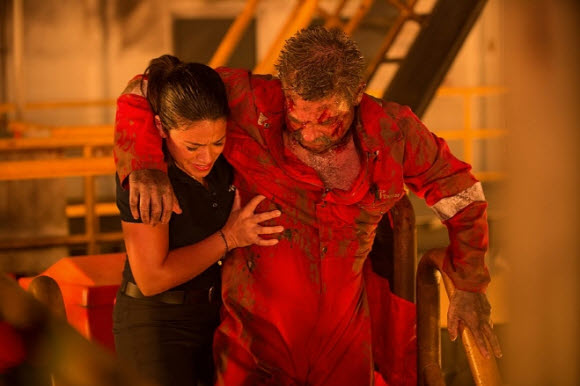
In comparison to the first half, the second half of the movie works better once all hell breaks loose on the rig. The director Peter Berg and his crew pull all the stops during the explosion sequence, and the result is quite impactful to say the least. As mud, water, and oil are rapidly and mercilessly spurted from the well below, we can really sense the ensuing panic and chaos around the characters on the screen, and then the sequence eventually culminates to a big explosion which turns the rig into a big, fiery mess.

This is indeed impressive in technical aspects, but then the movie gets lost amid lots of crashes and bangs in the end. As the characters in the film struggle to survive, most of them are usually indistinguishable from each other while the movie throws more special effects around them, and it is also often difficult to tell what is going on the screen because of busy, frantic editing and shaky camerawork.

While I did not like Berg’s previous film “Lone Survivor” (2013) much, that movie shows that Berg is a competent director who knows how to handle action scenes effectively, and the several scenes in that film actually made me cringe for their visceral physical impacts. “Deepwater Horizon” does deliver the impacts of a similar degree, but it is hampered by its weak story like “Lone Survivor”, and it eventually fails to convey us the tragic scale of its subject. It is probably worthwhile to tell the story of the people who were in the middle of that hellish pandemonium, but the movie merely scratches the ground into which it wants to dig, and, to our disappointment, that is all.

deepwaterhorizon05

Posted in Movies | Tagged , , | Leave a comment