Ferdinand (2017) ☆☆☆(3/4): A predictable but entertaining work from Blue Sky Studios

ferdinand02

“Ferdinand”, the latest animation feature film from Blue Sky Studios, is predictable but entertaining work coupled with nice lessons for its target audiences. While it is hampered by its thin plot and weak characterization at times, the film mostly works thank to several inspired funny scenes and a number of engaging voice performances, and I had a fairly good time with it even though I was distracted by its flaws from time to time.

The story of the film is mainly about Ferdinand (voiced by John Cena), a bull who is far more docile than he looks on the surface. Even when he was a little calf living in a ranch somewhere in Spain, he was not particularly interested in bullfighting while usually more interested in enjoying peace and flowers, and that certainly drew the ridicules from his fellow calves eager to be as big and prominent as Ferdinand’s father.

On one day, Ferdinand’s father was selected for an upcoming bullfighting match. He was confident that he would come back with victory, but, of course, he never came back, and Ferdinand was devastated by that. Eventually, Ferdinand escaped and then went far away from the ranch, and that is how he came to be under the care of Juan (voiced by Juanes) and his little daughter Nina (voiced by Lily Day). Because Juan had run a flower farm, he and Nina could provide an ideal new home for Ferdinand, and Ferdinand was certainly happy about that.

After several years, Ferdinand becomes a big, ginormous bull, but he is still adored by Nina, and he also enjoys hanging out with Nina’s dog Paco (voiced by Jerrod Carmichael), whom he has regarded as a sort of brother. While annoyed at times by Ferdinand’s cheerful attitude, Paco cannot possibly disregard Ferdinand’s sweet nature, and that is amusingly reflected by one small funny moment involved with his wagging tail.
ferdinand04

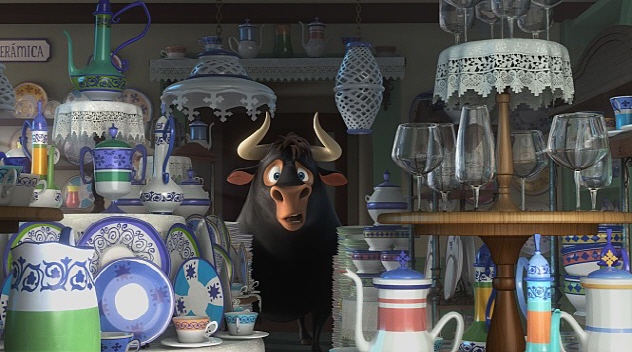
While appreciating lots of colorful flowers in the farm as usual, Ferdinand is eager to go to the flower festival to be held in a nearby town as he did with Juan and Nina many times before, but Juan decides not to take Ferdinand to the festival this time because he thinks Ferdinand is now too big for that, and both Nina and Ferdinand are disappointed. Not long after Juan and Nina leave for the festival, Ferdinand comes to decide to go to the festival for himself, but, as you have already guess, that turns out to be a disastrous decision. Right from when he enters the town, he quickly draws the attention of many people in the town, and they are all alarmed by his presence. In addition, he inadvertently causes a big commotion after being stung by a bee at one point, and we get a hilarious slapstick moment apparently inspired by that familiar phrase associated with bull and china shop.

After that commotion, Ferdinand is immediately captured by the police and then sent to the very ranch from which he escaped a long time ago. Besides his old stablemates Bones (voiced by Anthony Anderson), Guapo (voiced by Peyton Manning), and Valiante (voiced by Bobby Cannavale), he encounters two other bulls named Maquina (voiced by Tim Nordquist) and Angus (voiced by David Tennant), and he also comes to befriend Lupe (voiced by Kate McKinnon), a ‘calming goat’ who is willing to coach Ferdinand on bullfighting.

In the meantime, the situation becomes quite serious in the ranch as an important guest comes. He is a famous matador named El Primero (voiced by Miguel Ángel Silvestre), and he is going to select a suitable bull for his farewell event to be held in Madrid. While Valiante and other bulls in the ranch are determined to try as much as they can for being selected by El Primero, Ferdinand keeps sticking to his pacifistic position, but, not so surprisingly, he soon finds himself chosen by El Primero in the end, and he comes to see later that he must do something for not only him but also his fellow bulls.

ferdinand03

The film often trudges down its expected narrative course, but it constantly provides humorous moments to us. I was surely tickled by a trio of hedgehogs voiced by Gina Rodriguez, Daveed Diggs, and Gabriel Iglesias, and I did have some chuckles as watching the impromptu dance showdown between our bull characters and a trio of haughty Lippizan horses. Although the vehicle chase sequence during the second half of the film is a little too overlong in my inconsequential opinion, it is packed with a substantial amount of wits and energy at least, and the following climax part is handled well with enough humor and drama to engage us, though we can clearly see from the beginning that how it will eventually end.

Director Carlos Saldanha, who was the co-director of “Ice Age” (2002) and “Robots” (2005) and recently directed “Rio” (2011) and its 2014 sequel, assembled an impressive array of performers for his film. John Cena, who previously showed his considerable comic talent in “Trainwreck” (2015), is earnest and amiable in his excellent voice performance, and he is complemented well by the loony chirpiness of Kate McKinnon, who has a lot of fun with many silly moments of her character. The other cast members are also effective in their respective supporting roles, and the special mention goes to David Tennant, who virtually steals the show with his exaggerated Scottish accent.

“Ferdinand”, which was recently nominated for Best Animated Feature Film Oscar, is based on Munro Leaf and Robert Lawson’s children’s book “The Story of Ferdinand”, which was also the basis of Oscar-winning Disney short animation “Ferdinand the Bull” (1938). While relatively less distinctive and memorable compared to its fellow Oscar nominees “Coco” (2017), “The Breadwinner” (2017), and “Loving Vincent” (2017), the film is still recommendable considering its good elements, and I appreciate its sincere storytelling and lively moments. It is familiar and predictable indeed, but I had enough entertainment at least, so I will not grumble here for now.


ferdinand01


Posted in Movies | Tagged , | 1 Comment

Little Forest (2018) ☆☆☆(3/4): One year in her rural hometown

littleforest01

Watching South Korean film “Little Forest” was a relaxing experience for me. When I came into the screening room in last evening, I happened to feel tired and a bit drowsy, but then I found myself gradually refreshed and entertained by numerous small nice moments in the movie, and I was pleased and satisfied when its end credits rolled.

Kim Tae-ri, who previously drew our attention via her terrific performance in “The Handmaiden” (2016), plays Hye-won, a young woman who comes back to her remote rural hometown on one cold winter day. When she was very young, she and her parents came to this village due to the illness of her father, who came to die a few years later. After his death, young Hye-won and her mother lived together in their cozy house for next several years, but then Hye-won’s mother suddenly left Hye-won when Hye-won was about to graduate from her high school, and Hye-won has never seen her mother again since she also left the village for going to a college in Seoul.

After her college graduation, Hye-won and her boyfriend took a civil service examination together, but only her boyfriend passed the examination. While not so sure about what to do next, she eventually decided that she needs some free private time for relaxing herself and thinking over her future, and her family house, which looks fairly nice although nobody has lived there for several years, looks like an ideal place for that.

Although she wants to be alone for a while, a few people in the village soon come to see her. She is greeted by her aunt who also lives in the village, and then she meets her two old friends Jae-ha (Ryu Jun-yeol) and Eun-sook (Jin Ki-joo). While Jae-ha has worked as a farmer since he returned from Seoul a few years ago, Eun-sook has worked in a local bank, and she often complains to Hye-won about how boring and annoying her job is.

littleforest04

Hye-won’s first days in the house do not look that good as it seems there is nothing to eat in the house, but, as a woman who learned a lot from her mother’s skillful cooking, she soon finds ways to solve that problem. During her very first day, she picks a frozen Chinese cabbage from a vegetable garden near the house, and then she makes a bowl of modest vegetable soup from that. Although the result does not look particularly tasty, she feels satisfied as filling her stomach enough, and she soon goes further as getting more cooking materials for her later.

She initially thought that she would stay in the village just for a few weeks, but then she finds herself spending time there more than expected. When spring eventually comes, she plants potatoes in a nearby field, and that is just one of many things to be done by her during spring days. While she still lives alone in her house, there is a dog given to her by Jae-ha, and he and Eun-sook often visit her for spending time with her.

Meanwhile, Hye-won’s cooking becomes more interesting with this seasonal change. I like her creative way of preparing a good dish from cabbage, and I also enjoyed watching how she makes homemade rice wine. At one point, she deep-fries not only vegetables but also little tree flowers, and I was certainly curious about how those deep-fried flowers actually taste like.

As summer comes, Hye-won becomes more active than before as getting more accustomed to her new environment. She frequently works on fields, and she also spends more time with her friends. When she officially breaks up with her boyfriend, that certainly brings her a bit closer to Jae-ha, who seems to have some feeling toward her but still does not completely end the relationship with his ex-girlfriend as shown from one amusing scene in the film.

littleforest06

While steadily maintaining its leisurely narrative pacing, the screenplay by Hwang Seong-gu, which is based on the Japanese novel of the same name by Daisuke Igarashi, slowly glides from one moment to another, and director Yim Soon-rye did a competent job of vividly establishing different seasonal moods on the screen. While the cold ambiance of winter scenes makes a good visual contrast with the warmth of spring scenes, the hot but lively atmosphere of summer scenes is palpable to say the least, and the bountifulness of autumn scenes is exemplified well by a lovely wide shot showing wide rice paddies almost ready for harvest.

As the emotional center of the movie, Kim Tae-ri brings lots of spirit to her character, and she gives another good performance in her advancing career. Right from her very first scene, she instantly earns our affection, and she effortlessly conveys Hye-won’s gradual change through her emotional journey. In case of the supporting performers in the movie, Ryu Jun-yeol and Jin Ki-joo are solid in their respective roles, and Moon So-ri is also fine as Hye-won’s mother.

Overall, “Little Forest” is a modest but charming product which simply does as much as intended, but it has a number of good things to cherish, and I appreciate that although I still do not have much interest in spending time in countryside as your typical urban guy. To me, the movie often feels like a fantasy with some unrealistic aspects, but it is enjoyable as well as soothing at least, and I am fine with that.

littleforest07

Posted in Movies | Tagged , , | Leave a comment

The Force (2017) ☆☆☆1/2(3.5/4): Can the system be fixed?

theforce01

Documentary film “The Force”, which is currently available on Netflix, gives us a clear-eyed glimpse into the ongoing problematic status of the Oakland Police Department, which was put under federal oversight in 2003 but has only drawn more public attentions due to numerous cases of misconduct and brutality without much progress. As closely looking into the considerable efforts for reforming the system, the documentary also shows us how difficult and complicated the situation is in many aspects, and its several memorable moments make us wonder whether it is really possible to fix the system from the beginning.

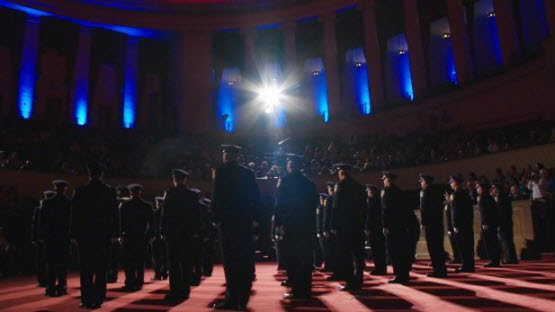
The documentary focuses on the 2-year period which began with Sean Whent being installed as the new chief of the Oakland Police Department in 2014 Fall. Whent promised the immediate reform of his police department, but there were many problems including the public mistrust toward the police department, and we observe how Whent and his police department tried to deal with these problems. For example, one scene in the documentary shows police academy students receiving the special education on the importance of their public image, and we later see Whent trying to bridge the gap between the police department and citizens through a community meeting.

In that community meeting, Whent is confronted by several citizens who have lots of discontent toward the police department. He keeps emphasizing that he and others in his police department will do as much as they can, but he also frankly admits that he cannot promise anything easily. Being usually understaffed, the Oakland police department cannot handle every reported criminal incident, and many people in the city continue to distrust the police department as before.

Anyway, things began to look a bit better in early 2015. As the police-related shooting incidents were considerably decreased, the public image of the Oakland police department was significantly improved along with the praises from several federal government officials, and there is a rather amusing moment which shows Whent being interviewed by a French TV reporter for what he achieved during a short period.

theforce03

However, as some of you already know, things soon became bad as before. A number of police-related shooting incidents happened during next several months, and that was a major blow to whatever Whent and his police department had managed to accomplish. In case of one unfortunate incident where a suspect happened to die while pursued by police officers, Whent tried to demonstrate transparency via the public release of a video clip shot by police body cameras during that time, but the public opinion on the Oakland Police Department remained to be negative, and many citizens consequently protested against the police department on streets.

In 2016 May, there came another blow to Whent and his police department. Over 30 police officers were charged together for a serious case of sexual misconduct, and Whent eventually resigned from the position not long after that as he was faulted for covering up this case. After his resignation, two acting chiefs had to resign during next 8 days due to each own trouble, and that further damaged the public image of the police department.

This bumpy trajectory of Whent and the Oakland Police Department is often intercut with two other narrative lines in the documentary. We watch the training courses of a group of police academy students who are going to serve in the Oakland Police Department, and there is an illuminating moment when they discuss on a shocking video clip which shows a potentially dangerous suspect being shot no less than 13 times by a police officer. While it is quite clear to us that the officer in question overreacted to the circumstance, many students say that they would do the same thing in such a situation like that, and they casually disregard a reasonable opinion from one dissenting student.

theforce02

And we also observe the daily work of a young police officer in Oakland. Things are usually mundane during his work hours, but there is always constant possibilities of danger around him and other police officers, and they sometimes have to handle very tricky situations. When he and several other police officers are handling a simple car accident at one point, a guy who is the brother of an injured woman comes to the scene, and the mood becomes tense as that guy becomes more aggressive in front of them.

Director Peter Nicks, who receives the Director Award for his documentary at the Sundance Film Festival early in last year, steadily maintains his objective attitude. While letting us appreciate the efforts for reform in the Oakland Police Department, the documentary also observes and listens to community activists, and we come to sense a big, complex picture surrounding its social issues. Although I must point out that the documentary falters as cramming too many things into its last 20 minutes, its overall result is mostly well-balanced, and it also functions as an interesting counterpart to “Whose Streets?” (2017), another recent acclaimed documentary film which presents the same social issues from the opposite perspective.

Although the circumstance does not look that optimistic at present, “The Force” provides a little glimmer of hope during its closing moment. While the Oakland Police Department is still under federal oversight, the Civilian Police Commission was recently established as demanded by citizens, and the documentary indirectly suggests that it may bring some real changes in the end. Considering what I observed from the documentary, I am rather skeptical, but I hope that things will get better for everyone in Oakland someday.

theforce04

Posted in Movies | Tagged , , | Leave a comment

Voyeur (2017) ☆☆☆(3/4): The confession of a voyeur

voyeur01

Netflix documentary film “Voyeur” gives us a fascinating story coupled with considerable morbidity and absurdity. Here are two different men who happened to get associated with each other after one tried to approach to the other with a story to tell, and the documentary closely observes how their long relationship went through several unexpected ups and downs as the story in question came to be widely known in public.

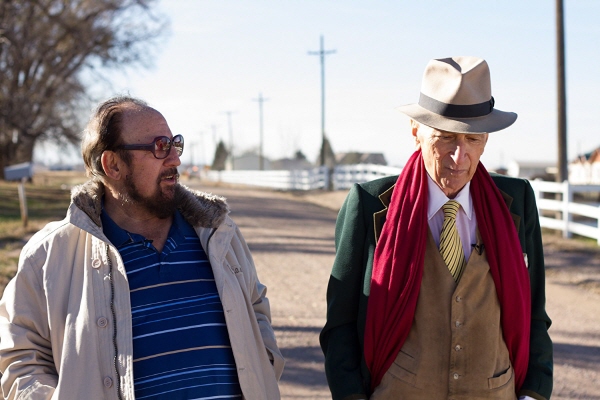
They are Gay Talese and Gerald Foos, and the early part of the documentary focuses on how Talese came to know Foos in the early 1980s. Around that time, Talese drew lots of attention thanks to his nonfiction book “Thy Neighbor’s Wife”, which explored the sexual culture of the contemporary American society. For the research for his book, he even spent several months in a famous open sexuality resort in LA, and that certainly raised the eyebrows of many people when the book came out.

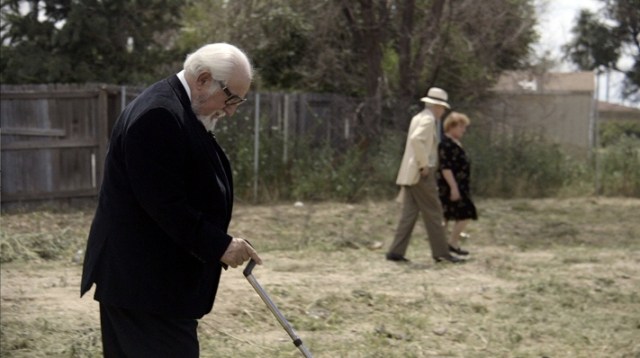
Not long after the publication of that book, Talese received a letter from Foos, who was eager to tell what he had done for many years since he bought a motel in Aurora, Colorado around the 1960s. As a longtime voyeur, Foss built an ‘observation platform’ in the attic right above the rooms in the motel, and he secretly watched his motel guests through ceiling vents from time to time.

In his interview clips, Foos frankly tells us many things including how he discovered his naughty desire when he just entered adolescence, but he emphasizes that he was not just a voyeur but also a sort of researcher. According to him, he observed some weird things as many different people came and went at his motel, and there is an amusing moment when he tells us an anecdote on two certain male motel guests and their rather odd sexual play. He also talks about his several ‘social experiments’ on motel guests, and he cheerfully describes to us the results of his experiments.

voyeur02

While listening more and more to Foos, we cannot help but wonder how much of his story is true, and Talese also had some reasonable doubt while preparing an article on Foos for the New Yorker magazine in 2016. Although he did go to Foos’ motel in Colorado and then observed his voyeuristic activity after receiving Foos’ letter, there was no other reliable source to support the veracity of Foos’ story, and, like any good journalist, Talese saw possible problems inherent in the story.

We see the employees of the New Yorker magazine beginning their fact-checking on Talese’ article, and some notable discrepancies are soon revealed. For example, an unsolved criminal case Foos claimed that he witnessed is not found in the local police record, and it seems quite possible that Foos fabricated that anecdote from a real incident which happened in the other place not so far from his motel. In addition, Foos’ motel, which he eventually sold to a Korean family around 1997, is now completely gone at present, and that leaves a big hole in Foos’ story.

As we keep wondering as before, Talese and Foos come to us as two compelling human figures to watch, and we come to notice common aspects between these two vastly different men. When we look at Talese’s private space in his posh residence in Manhattan, New York City, we are astounded by his vast collection of articles, notes, and photographs, and we cannot help but admire his thoroughness. When we look into the basement of Foos’ suburban house, we are astonished by his huge collection of many different items including collectible baseball cards, and we cannot help but notice a parallel between his collection and Talese’s.

There is a certain irony in Foos’ decision to come out as a longtime voyeur. Once that New Yorker article on him was eventually published in 2016 April, he and his secret came to be fully exposed in public, and the relationship between Foos and the world was completely reversed as a result. As Talese wryly points out, Foos will be associated with this notoriety for the rest of his life, and he will probably get obituary articles from major newspapers when he dies someday.

voyeur03

During the second half of the documentary, the mood becomes tense as showing the growing strain in the relationship between Foos and Talese. While Talese is busy with preparing for the publication of his book on Foos, Foos becomes nervous due to the growing attention toward him, and we later get an awkward moment between Foos and Talese as they try to be candid and honest in front of the camera. There are still many unresolved or unclarified matters between them, and Talese becomes quite exasperated at one point when he does not get a satisfying answer from Foos.

As some of you may remember, there eventually came a big problem shortly before the publication of Talese’s book. Talese hurriedly disavowed his book, but his distinguished career was irrevocably tarnished as a result. In case of Foos, he regretted over his mistake of not telling one crucial fact to Talese, but there was nothing he could do about the consequence of his mistake.

Although it tries a little too hard for drawing our attention at times, “Voyeur” is worthwhile to watch for its morbid but engaging presentation of human nature, and director Myles Kane and Josh Koury, who also edited their documentary together, tactfully handle their subjects without resorting to cheap sensationalism. You may not like Foos much in the end, but he is pretty interesting to observe at least, and you will not forget him easily after watching the documentary.

voyeur04

Posted in Movies | Tagged , , , | Leave a comment

The Polka King (2017) ☆☆☆(3/4): A goofy American tale of greed and delusion

thepolkaking01

Based on a fascinating real-life criminal case, “The Polka King”, which is currently available on Netflix, tells us a goofy American tale of greed and delusion. Here is a nice guy who simply wanted to achieve his success as trying to reach for American Dream as much as he could, but he only found himself mired in more lies and deceptions, and we cannot help but amused as watching him going further and further with his criminal scheme for getting bigger and richer.

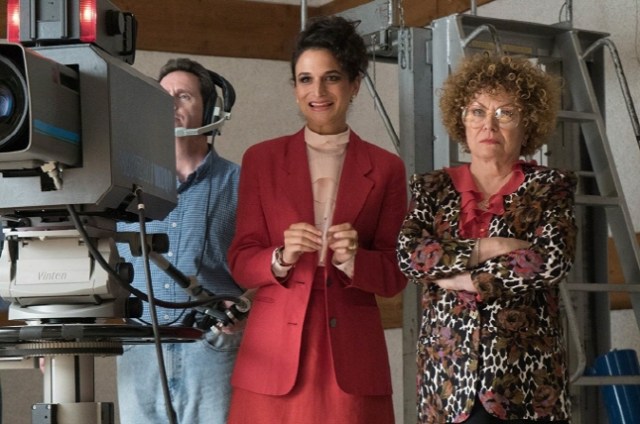
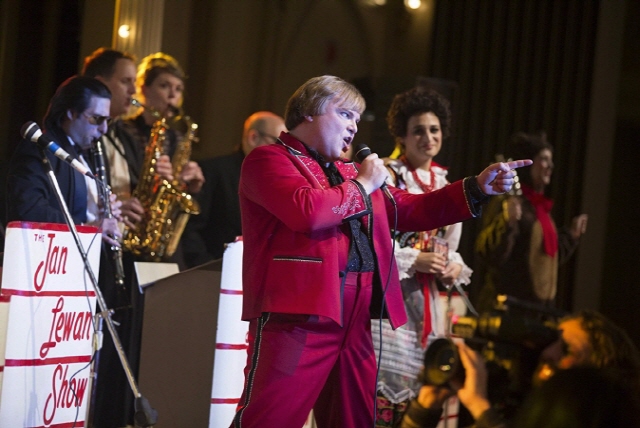
In the beginning, the movie shows the early struggling years of its hero Jan Lewan (Jack Black), a first-generation Polish immigrant who mainly works as the band leader of his modestly popular polka band in Pennsylvania. As a guy strongly believing in American Dream, Jan has tried hard for many years since he came to US, but his current situation is not exactly good for him. He wants to be a good father and husband, but he is frequently busy as trying to make ends meet, and his mother-in-law Bard (Jacki Weaver) is always ready to criticize him in contrast to his devoted wife Marla (Jenny Slate), a former beauty queen who believes in American Dream as much as her husband and often takes care of their small gift shop instead of him.

In case of Jan’s polka band, he and his band members seem to have a good time together as entertaining their audiences, but his friend/colleague Mickey (Jason Schwartzman) has a bad news for him. No matter how much Jan has tried with his brash, enthusiastic attitude, the business has not been that good for his band, and some of the band members, including Mickey, are considering leaving the band.

thepolkaking02

As being in the need of money more than ever, Jan soon embarks on a Ponzi scheme. As promising a significantly high interest rate, he convinces an old couple to invest a considerable amount of money into his business, and then more money comes into his hand as he attracts a bunch of other people who are also eager to get richer. While sincerely hoping that he will pay all the money back to his investors someday, Jan does not feel any qualms about freely spending money, and he is surely excited as he and his band becomes a lot more famous mainly thanks to his illegal wealth.

Of course, his Ponzi scheme comes to draw the attention of Securities and Exchange Committee (SEC), so he is subsequently visited by an SEC officer, who warns that he must give all the money back to his investors within three days. After checking his account book, Jan comes to realize that he is in a big trouble because there is not enough money available to him, but then he decides to do a bigger Ponzi scheme. After lying to the SEC officer, he promises another investment opportunity to his investors, and his investors are willing to give him more money.

As Jan’s financial crime grows bigger and bigger, the screenplay by director Maya Forbes and her co-writer Wallace Wolodarsky, which is based on Joshua Brown and John Mikulak’s documentary “The Man Who Would Be Polka King” (2009), provides a series of silly but hilarious moments. At one point, Jan plans a big group tour to various places in Europe including Vatican, and he even promises his tour members, who are mostly his investors, that they will have an audience with the Pope during their tour in Vatican. Although he is basically lying to them, he does not mind mainly because he firmly believes that he will make that happen, and what will happen in the end is a priceless moment I will not reveal here.

thepolkaking03

Another funny moment in the film is involved with Marla, who becomes dissatisfied with merely being Mrs. Lewan and then comes to decide to get her own fame through a local beauty contest. As a good husband, Jan is willing to do anything he can do for his wife, but then he goes a little too far when he sees that his wife does not have much chance of winning the contest.

Around that narrative point, the movie begins to lose its comic momentum, and, unfortunately, it does not recover much from that during the rest of the story. Compared to the wry hilarity of its first two acts, the third act is less funny as taking an expected narrative course, and the finale feels clumsy and half-baked without enough comic impact to linger on us.

At least, this weak aspect is compensated to some degrees with the solid performance from Jack Black and other main cast members in the film. Like “Bernie” (2011), another funny movie based on an outrageous real-life crime case, the movie gives Black another opportunity to expand the range of his acting talent, and he did a good job of balancing his flawed character between humor and sincerity. The supporting characters surrounding Jan are rather underdeveloped, but Jenny Slate, Jason Schwartzman, and Jacki Weaver hold their respective places well around Black, and Slate, who previously drew my attention via her breakthrough turn in “Obvious Child” (2014), has her own funny moment when her character happens to ramble about her discontent in front of many audiences.

Although it is not entirely successful on the whole, “The Polka King” is still an enjoyable comedy film in my trivial opinion. It could be sharper and more biting in its comic approach, but I recommend the film mainly for its several inspired moments and Black’s spirited performance, and you will probably enjoy its lively outrageousness as much as I did.

thepolkaking04

Posted in Movies | Tagged , , , | Leave a comment

The Breadwinner (2017) ☆☆☆(3/4): The story of a young girl in Kabul

thebreadwinner01

“The Breadwinner”, a little animation feature film which was recently nominated for Best Animated Feature Oscar, distinguishes itself with its simple but appealing storytelling coupled with an impressive animation style. While its story often feels bleak and desperate for good reasons, the film holds our attention through its sensitive depiction of its young heroine’s struggle in her harsh world, and it is surely one of more notable animation films during 2017.

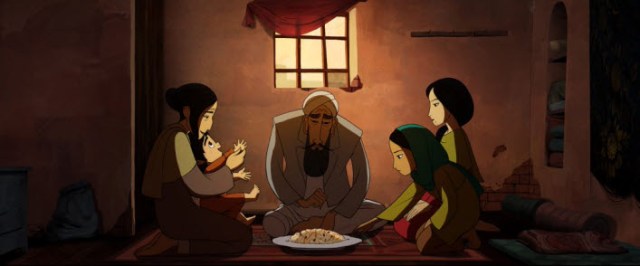
Its story is mainly about Parvana (voiced by Saara Chaudry), a young girl living in Kabul, Afghanistan around the early 2000s. As many of you know, the country was under the Taliban regime during that dark, gloomy period, and the early part of the film shows us how things have been hard and difficult for Parvana’s family. Because women are strictly forbidden to go outside, her family has to depend only on her father Nurullah (voiced by Ali Badshah), but he cannot work due to his old war injury, and all he can do at a local marketplace is trying to sell a few precious things left to his family or provide a reading/writing service to illiterate people.

As a former teacher, Nurullah knows a lot about many things including the history of Afghanistan. While spending his time along with Parvana at the marketplace, he tells her a story which is the summary of numerous turmoils their country went through for many centuries, and we are served with a vibrant sequence full of colors, patterns, and figures, which makes a striking contrast with the drab atmosphere surrounding Parvana and other characters living in Kabul.

thebreadwinner03

And then something unfortunate happens. When a young Taliban solider who is also Nurullah’s former student spots Parvana, he immediately bullies Nurullah and Parvana, and he later has Nurullah arrested and then taken to a prison outside the city. Parvana’s mother Fattema (voiced by Laara Sadiq) tries to get her husband back, but she only finds herself cruelly beaten by a Taliban solider during her attempt, and that accordingly causes more sorrow and desperation in her household.

Parvana sees that she is the only one who can possibly support her mother and siblings, but she is soon reminded again of how dangerous and difficult it is for her to go outside alone. Even when she manages to avoid Taliban soldiers on streets, nobody in the marketplace wants to deal with her because they do not want to get into any trouble, and the situation accordingly becomes more daunting for her family as days go by.

In the end, Parvana comes to get an idea, and she immediately acts on it with her family’s consent. She cuts her hair, and she also wears the clothes left by his recently diseased older brother. Although she is naturally nervous when she goes outside with her disguise, she soon gets accustomed to her fake identity once she sees that marketplace people have no problem with dealing with her now, and she certainly feels proud and exalted when she succeeds in buying the food for her family without any trouble.

In addition, she comes across Shauzia (voiced by Soma Bhatia), her old friend who has also disguised herself as a boy for supporting her family. As a more experienced girl, Shauzia shows Parvana how to get more food and earn more money, and they also come to spend more time together as renewing their friendship. At one point, Shauzia shares her modest innocent hope with Parvana, and that is one of the most poignant moments in the film.

thebreadwinner02

Meanwhile, Parvana keeps hoping to see her father again, but the circumstance remains gloomy as before. When she goes to the prison with some money to be used as the bribe, she is heartlessly rejected by a vicious guard. She is not daunted at all by this incident, but then she and Shauzia almost get themselves exposed and killed during one very precarious moment, and we also notice small but significant signs of another turmoil to come upon Kabul.

As coping with the constant danger around her everyday, Parvana often tells a story to herself and others around her, and the mood becomes brightened for a while whenever her story, which is about a young man going through a perilous journey for saving his village, is beautifully unfolded on the screen. Director Nora Twomey, who previous co-directed “The Secret of Kells” (2009) and also participated in the production of “Song of the Sea” (2014), and her crew did a good job of mixing a broad but distinctive cell animation style with colorful cultural details, and the score by Jeff and Mychael Danna is an effective accompaniment to that.

I must point out that “The Breadwinner” is not entirely without weak aspects. The screenplay by Anita Doron and Deborah Ellis, which is based on the acclaimed children’s book of the same name written by Ellis, is sincere and heartfelt on the whole, but it is notably predictable and contrived from time to time, and, above all, it tries a bit too hard to induce our emotional response during its expectedly climactic finale.

Nevertheless, this is still an admirable piece of work to be appreciated for its style and mood, and it is definitely more interesting than many forgettable blockbuster animation films such as “Despicable Me 3” (2017). Yes, it is imperfect indeed, but it has personality and heart at least, and that is more than enough for recommendation in my inconsequential opinion.

thebreadwinner05


Posted in Movies | Tagged , , , | 1 Comment

Victoria & Abdul (2017) ☆☆☆(3/4): Judi Dench still has it

victoriaandabdul01

During my viewing of “Victoria & Abdul”, I could not help but think about what a remarkable movie acting career Judi Dench has built during last 23 years. When she played James Bond’s direct boss in “GoldenEye” (1995), she was already over 60 at that time, but this old British actress who had been mainly known for her significant stage career instantly captured our attention, and that was just the beginning for her unlikely stardom in movie business. Two years later, she received her first Oscar nomination for playing Queen Victoria in “Mrs. Brown” (1997) and then won an Oscar for playing Queen Elizabeth I in “Shakespeare in Love” (1998) in the very next year, and she has kept going as your average British trouper while also receiving no less than five subsequent Oscar nominations.

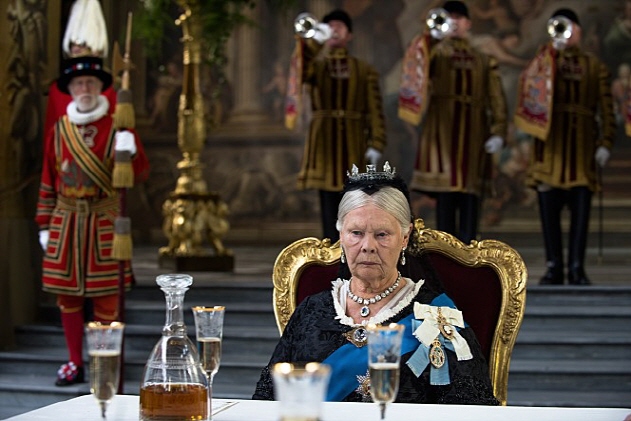
Although she is now over 80 and recently had her 83th birthday in last year, Dench is still active as usual, and “Victoria & Abdul”, which is a sort of sequel to “Mrs. Brown”, shows that she has not lost any of her talent yet. As Queen Victoria, she is simply fun and engaging in her every moment in the film, and her good acting compensates for a number of notable flaws in the film.

The movie opens in 1887, which is not long after the story of “Mrs. Brown” ends. Abdul Karim (Ali Fazal), a young Indian Muslim clerk living in Agra, India, happens to be selected as one of two local servants who will deliver a ceremonial gold coin to Queen Victoria in London, and he and the other servant, named Mohammed (Adeel Akhtar), are soon sent to Britain as receiving some education on how properly they should behave in front of the queen and other very important figures around her.

victoriaandabdul05

When they are finally presented to the queen along with that ceremonial coin, Abdul inadvertently does a little transgression. He happens to look directly at the queen shortly after presenting the coin to her, and, instead of feeling violated or insulted, the queen is rather amused by this because she has been tired of being fawned upon by many people around her including Prince of Wales (Eddie Izzard). She orders that Abdul and Mohammed should serve her at the upcoming luncheon, and Abdul goes further when he presents a dessert to the queen along with his colleague. Not only he kneels right in front of the queen, but also he kisses her shoe, and everyone around the queen is certainly caught off guard by this bold act of his.

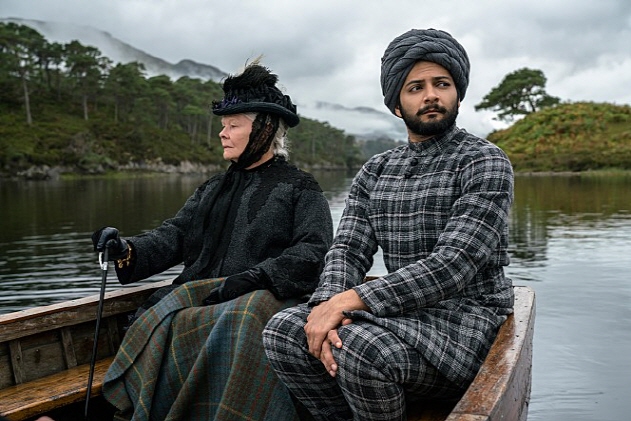
Becoming more curious about Abdul, Victoria instructs Abdul and Mohammed to stay longer around her. While Mohammed is not that pleased about this as he does not like the cold weather in Britain, Abdul is delighted to see more of the queen, and Victoria is eager to learn more about Adbul and India. Besides teaching her Urdu, he tells her a lot about the Qur’an and the history of India, and the queen comes to enjoy more of his companionship as days goes by. To her, Abdul is another precious friend/servant in her life after John Brown, whose close relationship with her is dramatized well in “Mrs. Brown”, and she even takes him to her own private place in a rural area at one point.

Of course, Prince of Wales and many other people in the court including the queen’s secretary Sir Henry Ponsonby (Tim Pigott-Smith) and the queen’s personal doctor Sir James Reid (Paul Higgins) are not amused by this change much. They become determined to do everything they can do for stopping the growing relationship between Victoria and Abdul, but, not so surprisingly, they soon come to face a dead end. Even though she feels disappointed and disillusioned when she later comes to learn of a few things Abdul did not tell her in advance, she chooses to stand by him nonetheless, and she makes it quite clear to her son and others when they blatantly try to pressure her into letting Abdul go.

victoriaandabdul02

The screenplay by Lee Hall, which is based on the book of the same name by Shrabani Basu, is often too heavy-handed around this part, but it gives Dench several juicy scenes at least, and she nails them all with intelligence and authority. When the camera closely looks at her face during one particular scene, she firmly holds our attention as gradually revealing her character’s indomitable spirit on the screen, and that moment surely confirms to us again that she is indeed a great actress to behold.

Compared to Dench’s commanding acting, her co-star Ali Fazal looks bland in his earnest but ultimately colorless performance, and that is the main weak point of the movie. As being monotonously sincere and decent, his character is frequently overshadowed by not only Dench’s character but also other supporting characters in the film, who are broad but more colorful than his character in comparison. Eddie Izzard, Tim Pigott-Smith, Paul Higgins, Adeel Akhtar, Olivia Williams, Simon Callow, and Michael Gambon do as much as they can with their caricature characters, and they thankfully provide some extra fun whenever that is necessary for us.

“Victoria & Abdul” is directed by Stephen Frears, who previously collaborated with Dench in “Mrs. Henderson Presents” (2005) and “Philomena” (2013). Under his competent direction, the movie mostly works as a well-made period drama, but I must point out that the lightweight treatment of its fascinating historical subject is rather disappointing at times. Anyway, the movie is still an interesting companion piece to “Mrs. Brown” at least, and it is certainly worthwhile to watch Dench’s another solid performance. According to IMDB, she is still working even at this point, and I hope she will abide with us as long as she can.

victoriaandabdul03

Posted in Movies | Tagged , , | 1 Comment

Mrs. Brown (1997) ☆☆☆1/2(3.5/4): Queen and her Highlander servant

mrsbrown01

Although it has been more than 20 years since it came out, “Mrs. Brown” remains as one of better British period drama films made during the 1990s. Inspired by a fascinating human relationship in the life of one of the most famous monarchs in the British history, the movie gives us a restrained but intimate drama mainly driven by the emotional undercurrents swirling around its two main characters, and it surely helps that the movie is supported well by its lead performers’ top-notch acting.

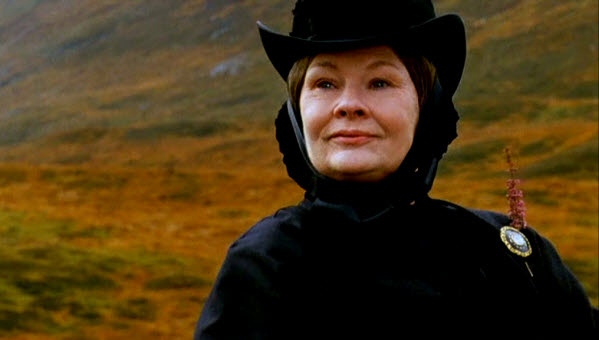
In the beginning, the movie gives us a bit of historical background information about the life of Queen Victoria (Judi Dench). Not long after she came to the throne in 1837 at the age of 18, she married Prince Albert of Saxe-Coburg and Gotha in 1840, and they were quite happy together in their marriage for next 21 years, but, unfortunately, Albert suddenly died in 1861 due to typhoid fever. Devastated by this sudden sad loss, Victoria came to seclude herself from public life and duty, and her family members and servants had no choice but to maintain the status quo as she continued her secluded status during next 3 years.

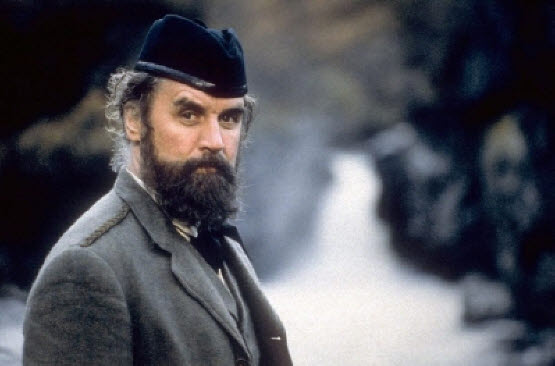
The movie begins its story in 1864, when Victoria’s personal secretary Henry Ponsonby (Geoffrey Palmer) decides to do something for bringing some fresh air into her life. A Highlander servant named John Brown (Billy Connolly) is sent from Balmoral Castle in Scotland, and Ponsonby hopes that, as a servant who was trusted and esteemed a lot by Albert, Brown can console and comfort the queen while accompanying her outside the court.

However, right from the very first day, things do not work out as well as Ponsonby wishes. When he is formally presented to the queen, Brown does not hesitate to speak out his opinion: “Honest to God woman, I never thought I’d see you in such a state. You must miss him dreadfully.” His rather blunt words surely feel like a big slap to the queen as well as Ponsonby and others around her, and he does not even regret at all because, well, he simply speaks the truth which is shown right in front of his eyes.

mrsbrown03

Soon, he comes to engage in a sort of mental tug-of-war with his queen, who is certainly not amused when she sees Brown being ready for her in the courtyard along with her horse. After he refuses to follow Ponsonby’s order, the queen eventually comes to confront Brown, but Brown remains adamant as before (“The queen will ride out if and when she chooses” – “And I intend to be there when she is ready.”).

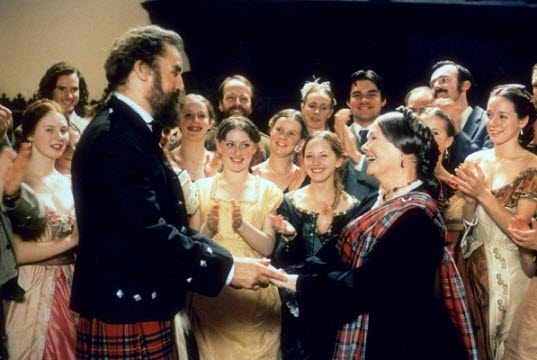
In the end, Victoria comes to decide to go outside the court, and that is the beginning of her close relationship with Brown, who quickly becomes someone to trust and depend on for her as they spend more time with each other during next two years. While remaining loyal to his queen as before, Brown cannot help but thrilled by being his queen’s most trusted servant, and there is an amusing scene where he expresses his excitement during his skinny dipping on a nearby beach.

Meanwhile, Ponsonby and many other people including Prince of Wales (David Westhead) are not so amused about what is going on between Victoria and Brown, who exerts considerable influence over the court through his relationship with her. Prince of Wales hates to see his mother getting more attached to Brown, but he cannot do anything about that, and neither does Ponsonby, who is frequently annoyed by Brown’s constant presence around Victoria.

In case of Prime Minister Benjamin Disraeli (Antony Sher), he has to deal with a tricky political circumstance which may lead to the disestablishment of the monarch in the worst case. As Victoria’s relationship with Brown draws many gossips, she is often referred to as ‘Mrs. Brown’ behind her back, and Disraeli and many other politicians are alarmed by her increasing unpopularity in public. Later in the story, he goes to Balmoral Castle to see Brown as well as the queen, and he comes to have a private conversation with Brown while they go hunting together outside. He sees that Brown really cares about his queen, but he also tactfully reminds Brown of what must be done for her and her monarchy, and Brown certainly gets the message.

mrsbrown04

Steadily maintaining the low-key tone of his movie, director John Madden, who would become more prominent with his next film “Shakespeare in Love” (1998), did a good job of establishing of vivid period atmosphere on the screen. The silent gloominess surrounding Victoria during the first half of the movie is palpable enough as the background for the dynamic relationship between Victoria and Brown, and I enjoyed how the mood is occasionally brightened by several lightweight scenes including the one in which Victoria and Brown visit a house belonging to one of Brown’s family members.

For Judi Dench and Billy Connolly, the movie is a milestone in their respective careers. Looking as regal and commanding as required, Dench, who received her first Oscar nomination for this film, brings considerable human complexity to her character, and Connolly, who was mainly known as a comedy actor before this film, deftly complements his co-star’s performance with his equally nuanced acting. Thanks to their good on-screen chemistry, we can always sense unspoken emotions surrounding their characters, and it is poignant whenever their characters are allowed to reveal a bit of their hidden feelings to each other.

Overall, “Mrs. Brown” is an engaging drama packed with a number of admirable elements, and it deserves to be watched along with “Victoria & Abdul” (2017), which is a sort of sequel to “Mrs. Brown” in many aspects. The movie is indeed your typical British period drama film, but it is a very good one nonetheless, so I wholeheartedly recommend it to you.

mrsbrown02

Posted in Movies | Tagged , , | Leave a comment

Ingrid Goes West (2017) ☆☆☆(3/4): A little morbid comedy on social media stalking

ingridgoeswest01

As an uneasy satire on social media stalking, “Ingrid Goes West” is not a pleasant experience at all. Yes, you will probably be disturbed a lot by how its pathetically unhinged heroine goes further and further into her obsession and madness, but the movie observes her pathological state of mind with humor and fascination at least, and you may come to enjoy it as a little morbid comedy of deranged human behaviors in our digital era.

Aubrey Plaza, who has been one of the most notable comedy performers since her impressive deadpan supporting turn in TV series in “Parks and Recreation”, plays Ingrid Thorburn, a young woman who evidently needs some serious psychiatric help as shown from the opening scene. She is quite upset just because her ‘friend’ does not invite her to her wedding, and we soon see her crashing into that woman’s wedding party and then attacking her with pepper spray.

After that unpleasant incident, Ingrid comes to spend some time at a mental hospital for therapy, and she keeps writing apology letters to her ‘friend’, but, not so surprisingly, she does not get any reply from her. As a matter of fact, Ingrid had stalked on her for a while since they briefly interacted with each other via Instagram, and she already put a restraining order on Ingrid.

After coming back to her home where she lived with her recently diseased mother, Ingrid instantly searches for someone else to fixate on, and she soon finds a woman who seems suitable as her new best friend. After reading a magazine article on an Instagram celebrity named Taylor Sloane (Elizabeth Olsen), Ingrid instantly follows Sloane’s Instagram account, and she soon gets herself absorbed in a fancy Californian lifestyle presented via numerous cool photographs posted by Sloane.

ingridgoeswest04

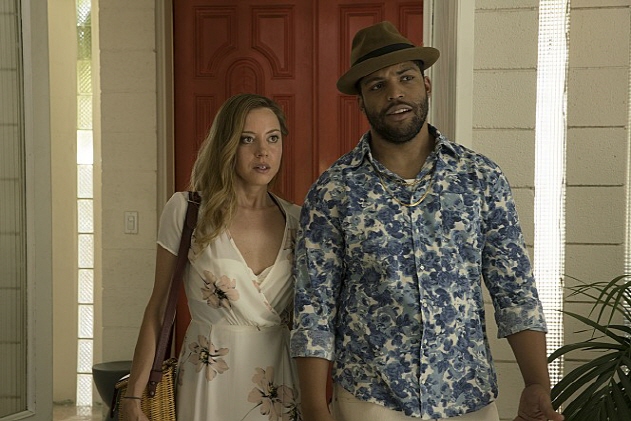
Ingrid eventually decides to move to a Californian neighborhood where Sloane and her artist husband Ezra (Wyatt Russell) resides, and she happens to have enough money for that. She recently inherited around $ 60,000 from her dead mother, so she immediately goes to California along with a bag full of cash, and she instantly rents a house right after she arrives in Sloan’s neighborhood. The landlord of the house, a young aspiring screenplay writer named Dan Pinto (O’Shea Jackson Jr.), may have some reservation, but he accepts Ingrid’s direct offer anyway because he cannot possibly refuse it and, above all, he is a bit curious about her.

Once she settles in her new place, Ingrid begins to approach to Sloane. While watching Sloane from the distance, she absorbs many things from Sloane including her attire and hairdo, and there is a humorously awkward moment when she happens to be around Sloane at a local shop. She does not want to draw Sloane’s attention yet, so she tries to hide herself as much as she can, but, to our amusement, that only draws more attention from Sloane and others.

Not long after that, Ingrid comes to find a right opportunity for approaching to Sloane. After kidnapping Sloane’s dog and then ‘returning’ it to her on the next day, she quickly gets closer to Sloane and Ezra, and she soon comes to spend more time with them. Besides buying one of Ezra’s artworks, she is willing to listen to whatever Sloane says, and she is also ready to provide some help when Sloane needs to take her several personal things to a private place outside the city.

Of course, it gradually turns out that Sloane and Ezra’s life is not as good as it looks on the surface. As we observe Sloane, we come to notice more of how banal and superficial she is, and that is exemplified well by when she tries to record her special moment with Ingrid. Regardless of how she feels about her relationship with Ingrid, all she cares about at that moment is getting a photograph good enough for her Instagram account, and Ingrid goes along with that without any hesitation. In case of Ezra, he has been unhappy as going nowhere in his life and career, and there is a small bitter scene where he confides his growing discontent to Ingrid.

ingridgoeswest02

Nevertheless, Ingrid keeps fixating on Sloane with more lies and deceptions, and the situation becomes more troubling when she attempts to deal with a sudden problem involved with Sloane’s reckless brother Nicky (Billy Magnussen). Although the screenplay by director Matt Spicer and his co-writer David Branson Smith falters after that narrative point, Plaza’s uncompromising comic performance continues to engage us as before, and she did a good job of balancing her character well between humor and morbidity. Although we never get to know much about her, Ingrid still comes to us as a horrifyingly interesting case study to watch, and Plaza is fabulous as effortlessly dialing up and down her character’s manic intensity throughout the film.

The supporting performers around Plaza are solid on the whole. While Elizabeth Olsen is pitch-perfect as a woman who is all style but no substance, Wyatt Russell, Billy Magnussen, and Pom Klementieff are convincing in their respective supporting roles, and O’Shea Jackson Jr., who was wonderful in “Straight Outta Compton” (2015), gives a nice low-key comic performance, which clicks well with Plaza’s acting as their characters get a little closer to each other later in the story.

While it may be too disturbing and uncomfortable for some of you, “Ingrid Goes West” earns its dark laughs thanks to its twisted sense of humor and Plaza’s commendable performance, and it surely deserves to be mentioned along with several notable antisocial comedy films such as “The King of Comedy” (1982), “Observe and Report” (2009), and “Young Adult” (2011). Although it has some glaring flaws including its rather abrupt finale, the movie still works as an engaging satire, and I will not deny that I had some naughty fun with it.

ingridgoeswest05


Posted in Movies | Tagged , , | Leave a comment

Marshall (2017) ☆☆☆(3/4): Young Mr. Marshall

marshall01

When I watched the trailer of “Marshall” several months ago, I was caught off guard because it looked like the movie did not intend to be your average biographical drama film. Looking quite bold and confident, the movie seemed to want to be something more exciting and energetic, and that certainly drew my attention even though I was not that sure about whether the movie would work as well as intended.

After quickly going down despite considerable positive responses from critics and audiences, the movie was released on DVD and Blu-ray in US during last month, and I am happy to report that the movie is worthwhile to watch on the whole. Although it feels heavy-handed at times, the movie mostly works well thanks to its competent direction and solid performances, and it is engaging to see how it plays well with its genre conventions while paying enough attention to its social/historical subjects.

As reflected by its title, the movie is about Thurgood Marshall (Chadwick Boseman), and its story focuses on the early period of Marshall’s distinguished legal career. Before eventually becoming the first African-American Supreme Court Justice in 1967, Marshall were known well for his numerous legal fights against racial segregation, and, as shown from the opening scene of the film, he already distinguished himself a lot as a prominent lawyer/activist working for the National Association of the Advancement of Colored People (NACCP) in 1940.

marshall04

While he has just completed his latest legal task in Oklahoma, Marshall gets another case to handle as soon as he returns to New York City. In Bridgeport, Connecticut, an uneducated black man named Joseph Spell (Sterling K. Brown) stands accused of the rape and attempted murder of Eleanor Strubing (Kate Hudson), the wife of a rich white man for whom Spell has worked as a chauffeur. Although the chance of winning the case is not so big as many white people already believe that Spell is guilty as charged, Marshall’s boss sends Marshall to Bridgeport anyway because it is an important case which will affect the lives of many black people out there in one way or another.

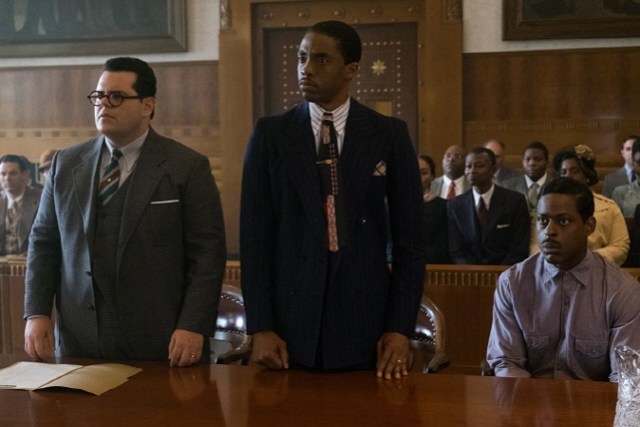
Not long after arriving in Bridgeport, Marshall meets Sam Friedman (Josh Gad), a Jewish insurance lawyer who happens to be assigned to the task of getting Marshall admitted to the local bar. Because he virtually has no experience in criminal law, Friedman wants to hand the case to Marshall as soon as possible, but, unfortunately, the situation does not go well for him right from the first day of the trial. Judge Foster (James Cromwell) does not allow Marshall to speak at the trial just because Marshall is technically not licensed to practice law in Connecticut, so Friedman has no choice but to become Spell’s lead counsel instead.

At least, Marshall is allowed to give advices to Friedman during the trial, so Friedman always has to pay attention to Marshall before making any crucial decision, and the screenplay by Michael and Jacob Koskoff generates considerable humor from their rather strained partnership. While Marshall frequently gives Friedman signals or advices, Friedman feels more nervous and agitated even as trying his best, and there eventually comes a point where he makes a major mistake while Marshall happens to be absent for a while.

marshall02

Nevertheless, as they constantly pull and push each other in their common legal struggle, Marshall and Friedman comes to respect each other. While Friedman finds himself influenced more and more by Marshall’s integrity and dignity, Marshall comes to appreciate his accidental partner’s diligence and dedication, and the movie makes sharp points on the racism in the American society during the 1940s through their respective viewpoints. There is a brief but pointed scene where a minor supporting black character tells Marshall about how he is not allowed to practice law despite his license, and then there is also a small dramatic moment when Friedman is unexpectedly approached by a fellow Jewish guy at their local synagogue.

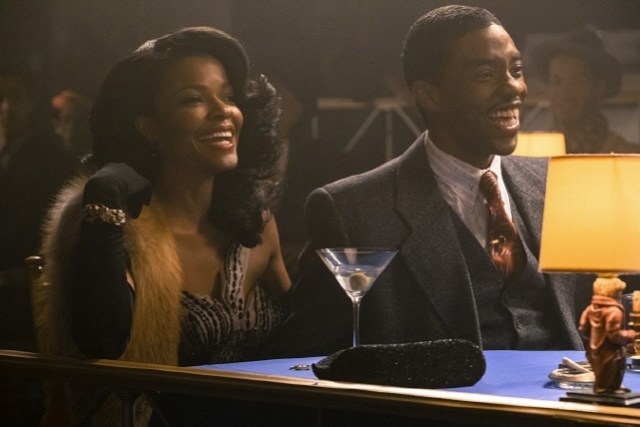
The courtroom scenes in the film are often clichéd with expected twists, but they are still effective thanks to the talented cast members assembled by director Reginald Hudlin. Chadwick Boseman, who has risen up to his stardom as playing Jackie Robinson in “42” (2013) and James Brown in “Get on Up” (2014), is cool and charismatic as required, and Josh Gad effectively complements his co-star while showing his more serious side as he previously did in “Jobs” (2013). As a prosecutor who is determined to make the trial into another stepping stone for his ambition, Dan Stevens is as odious as demanded, and James Cromwell sternly presides over the case except one silent dramatic moment when his character chooses to follow his conscience and compassion. Sterling K. Brown, who has been notable since his acclaimed performance in TV series “This Is Us”, brings some human nuances to his character, and so does Kate Hudson, who makes her character more sympathetic than expected.

While as old-fashioned as, say, John Ford’s “Young Mr. Lincoln” (1939), “Marshal” has enough energy and sincerity to support its conventional story, and the overall result is an engaging genre product with a number of enjoyable elements to appreciate. Sure, I did see through its manipulation right from the start, but I went along with that anyway, and I got a fair share of entertainment in the end.

marshall05

Posted in Movies | Tagged , , , | 1 Comment