Microhabitat (2017) ☆☆☆1/2(3.5/4): As she sticks to her simple pleasures

Microhabitat01

Alternatively funny and melancholic, South Korean comedy film “Microhabitat” presents an unconventional heroine to remember. Here is a young, resourceful woman determined to stick to her simple pleasures as much as she can, and the movie is often amusing as generating a number of humorous moments between her and other characters around her, but it is also quite poignant at times as we come to see how adamantly she tries to maintain her modest happiness in her tough daily life.

When we meet Mi-so (Esom) for the first time during the opening scene, she is in the middle of her cleaning work in the house belonging to some affluent girl around her age. Although the money she earns everyday from cleaning several places is not that much, that has been more than enough for paying the monthly rent for her shabby one-room residence located somewhere in Seoul, and she usually spends the rest of her earnings on cigarette and whiskey, which have been the only joy in her life besides her nice boyfriend Han-sol (Ahn Jae-hong).

However, the situation becomes more difficult for Mi-so when the new year arrives. The price of cigarettes is increased as a part of governmental non-smoking policy, and then her landlord notifies to her that she will have to pay more money for her rent. As checking her account book, she soon comes to see that she must decrease her spending in one way or another, and then she makes a rather drastic choice; instead of quitting cigarette and whiskey, she decides to be homeless for a while, and she instantly packs her suitcase and then leaves her current residence.

Microhabitat03

All Mi-so needs is now someone willing to provide her a place to stay temporarily, and it initially seems that she can get such persons easily. While her boyfriend cannot do that as he currently resides in a factory dormitory, there are five old friends who were very close to her during those fun days of their college band, and all of these friends happen to live in Seoul, though there has not been much correspondence among them since their good old college years.

As Mi-so drifts from one place to another, we meet her five friends one by one. After flatly rejected by Moon-yeong (Kang Jin-ah), Mi-so goes to Hyeon-jeong (Kim Gook-hee), and she is wholeheartedly welcomed by Hyeon-jeong, but Hyeon-jeong’s home turns out to be not a very good place to stay for her. Living with not only her husband but also her parents-in-law, Hyeong-jeong has felt bitter about her disappointing married life, and there is a tender scene between her and Mi-so when they become a bit nostalgic about their college years.

In case of Dae-yong (Lee Sung-wook), his apartment looks better in comparison, but he has recently been daunted a lot by his separation from his wife, and it does not take much time for Mi-so to see how messy his life has been. After cleaning his apartment, she also cooks a breakfast for him, and he certainly appreciates her kindness despite still being depressed as before.

The funniest moment in the movie comes from Mi-so’s odd encounter with Rok-i (Choi Deok-moon) and his parents. Right from when she arrives in their house, his parents greet her a little too enthusiastically, and the circumstance later becomes hilariously weirder when Mi-so belatedly comes to realize what they really want from her (No, this is not the South Korean version of “Get Out” (2017)).

Microhabitat06

When she eventually comes to Jeong-mi (Kim Jae-hwa), Mi-so feels more comfortable than before because Jeong-mi is your average affluent housewife who has a very big house thanks to her rich parents-in-law, but then she somehow begins to feel uncomfortable. In the end, there comes a hurtful conversation scene between her and Jeong-mi, who has not been that pleased about Mi-so’s casual lifestyle.

Meanwhile, the relationship between Mi-so and her boyfriend is seriously tested when he makes an important decision after getting frustrated more and more with his life going nowhere. While Mi-so is not very glad about that, she decides to respect his choice anyway, and we subsequently get a small touching scene in which she reminds him that he should not give up his aspiration just because of that decision.

As lightly gliding around these and other episodic moments, the screenplay by director Jeon Go-woon did a commendable job of fleshing out its heroine and other characters. While Mi-so comes to us as a vivid, likable human character to watch, the other substantial characters in the movie are depicted with considerable humor and personality, and its main cast members are all wonderful in their respective roles. While Esom, who previously played a supporting character in “The Queen of Crime” (2016), ably carries the film with her charming performance, Ahn Jae-hong, Kang Jin-ah, Kim Gook-hee, Lee Sung-wook, Choi Deok-moon, Kim Jae-hwa, and Jo Soo-hyang have each own moment to shine around her, and I particularly enjoyed the unaffected screen chemistry between Esom and Ahn Jae-hong, who has been one of new interesting South Korean performers since his lively breakout performance in “The King of Jokgu” (2013).

Overall, “Microhabitat” is an impressive comedy film balancing itself well between hilarity and poignancy, and I especially admire unexpected poetic moments during its final act. To be frank with you, I have often wondered whether South Korean movies are actually going downhill these days due to their serious lack of diversity, but there are still some excellent ones out there, and I can assure you that “Microhabitat” is one of such fabulous films.

Microhabitat05

Posted in Movies | Tagged , | 3 Comments

The Midwife (2017) ☆☆☆(3/4): A midwife and her father’s mistress

themidwife01

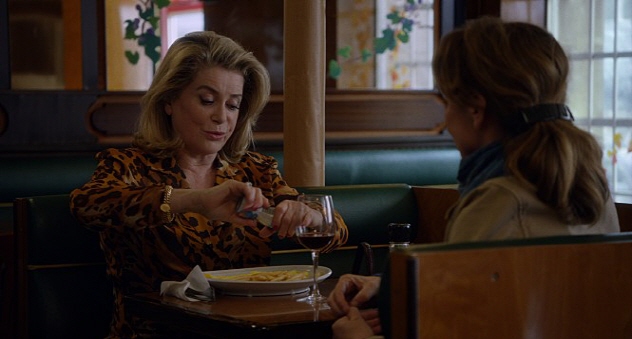
While it is basically a conventional drama, French film “The Midwife” is an enjoyable experience for several good reasons. Yes, its story is predictable at times, but its two contrasting main characters are vivid and engaging enough to hold our attention, and the movie is simply delightful as intimately observing what is happening between them. In addition, these two characters are incidentally played by two of the best actresses in France, and, in my inconsequential opinion, that makes the film worthwhile to watch at least.

In the beginning, we are introduced to Claire (Catherine Frot), a middle-aged midwife who has worked at a maternity clinic for many years. Although the circumstance has been not very bright for her and her several colleagues as the clinic will soon be shut down, they keep diligently working as usual, and the opening scene of the movie shows Claire handling another case of delivery with compassionate professionalism.

Outside her workplace, Claire has led a plain, uneventful private life alone since her son moved out from her residence, but then it is disrupted by an unexpected phone call from a figure in her old past. The figure in question is an old woman named Béatrice (Catherine Deneuve), and she was the mistress of Claire’s dead father, who killed himself not long after Béatrice suddenly left him and young Claire.

Of course, Claire is not so eager to meet Béatrice, but she agrees to meet her anyway, and Béatrice reveals that she may not live long due to brain cancer. As your average free spirit, she casually talks about her illness, but it made her look back on her wild, messy life, and now she wants to have sort of reconciliation with the daughter of a man whom, as she admits to Claire at one point, she loved more than any other guys in her life.

themidwife03

Although she still does not like Béatrice much, Claire gradually lets Béatrice coming into her life. When Béatrice later happens to lose her current residence, Claire allows Béatrice to stay at her apartment, and it is not much of a spoiler to tell you that Béatrice brings some lively spirit into Claire’s apartment when she feels relatively better. She is surely well aware of that there may not be many days left for her, but that still does not stop her from reaching for joie de vivre as before, and Claire comes to enjoy being with Béatrice more than before.

While its plot feels clichéd on the surface, the screenplay by director Martin Provost, who previously impressed me a lot with “Séraphine” (2008), takes time in establishing its main characters with details and nuances, and there are a number of nice human moments which let us get to know more about Claire and Béatrice. As we observe more of Claire’s work at the clinic, we sense how much she is dedicated to her profession, and we later get a sweet, poignant moment when she encounters someone who really appreciates her work for a personal reason. Although she is often capricious and self-absorbed, Béatrice comes to us as a complex human character nonetheless, and, as observing how she firmly keeps her spirit high despite her increasingly precarious life, we come to care about her as much as Claire does.

In contrast, the other parts of the movie do not work as well as intended. For example, a subplot involved with Claire’s son does not go anywhere once he tells Claire about an important decision for his life and career, and the same thing can be said about Claire’s attempt to get a new job later in the film. In case of her romantic involvement with the son of one of her neighbours, it feels rather redundant from time to time, and Olivier Gourmet, a Belgian actor who has usually been reliable since I saw him in the Dardenne Brothers’ great film “The Son” (2002), is under-utilized in his thankless role.

themidwife02

Nevertheless, the movie remains to be entertaining thanks to its two main performers. While she drew my attention for the first time through her hilarious performance in “Marguerite” (2015), Catherine Frot is actually a veteran movie actress who has worked for more than 35 years since she appeared in Alain Resnais’ “My American Uncle” (1980), and the movie shows me again that she is indeed an interesting performer to watch. Steadily maintaining her no-nonsense character’s staid façade, Frot did a good job of conveying different emotions inside her character, and her low-key performance effectively functions as a solid ground for her co-star’s relatively showier acting.

On the opposite, Catherine Deneuve instantly exudes her indelible star quality right from the beginning. While her peak period represented by many notable films such as “The Umbrellas of Cherbourg” (1964), “Repulsion” (1965), and “Belle de Jour” (1967) has already passed, Deneuve can still grab our attention as shown from her recent films such as “A Christmas Tale” (2008) and “The Brand New Testament” (2015), and she gives another fine performance here in this film as effortlessly complementing Frot on the screen.

In conclusion, “The Midwife” is not entirely successful, but it is still an intimate female drama to be appreciated for its earnest storytelling as well as its two commendable lead performances, and I was mostly satisfied with its overall result even while recognizing its weak aspects during my viewing. Its achievement may be modest, but I still had a good time mainly thanks to Frot and Deneuve, and you will probably enjoy the movie as much as me if you are familiar with either of them.

themidwife04

Posted in Movies | Tagged , | Leave a comment

The Remnants (2017) ☆☆☆1/2(3.5/4): The aftermath of the Yongsan Tragedy

theremnants03.jpg

South Korean documentary film “The Remnants” closely looks into the bitter aftermath of one tragic incident which shocked the whole nation at that time. What happened in Yongsan district of Seoul during the early of January 20th, 2009 was indeed terrible, but the incident has been forgotten too quickly by the South Korean society and its people without any more investigation during next several years, and the survivors who were at the middle of the incident still suffer from their trauma and guilt.

The documentary is a sort of sequel to its co-director Kim Il-rhan’s previous documentary film “Two Doors” (2012), which gave us a vivid, detailed presentation on the Yongsan Tragedy. On January 19th, 2009, a group of evictees in the Yongsan district of Seoul began their demonstration on an abandoned building because they did not receive fair compensation for their relocation due to the redevelopment of their neighborhood, and the police swiftly responded to this with harsh tactics including water cannon and SWAT team. Although it was apparent that there were considerable potentials for danger, police authorities ordered immediate suppression, and all hell broke loose when police officers and hired goons tried to enter the building and then catch demonstrators around AM 7:00, January 20th.

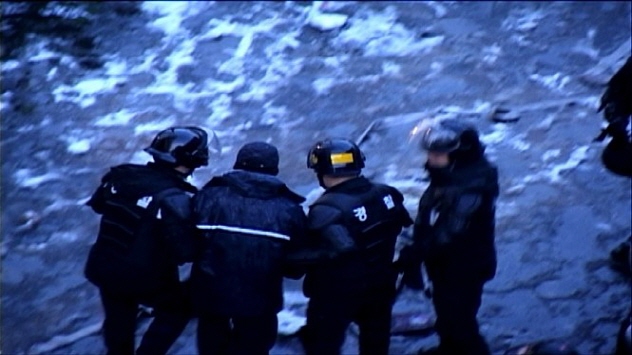
Relentlessly cornered by the police, most of the demonstrators went up to a four-story makeshift watchtower they built on the rooftop of the building, and, as shown from the video footage clip shown at the beginning of the documentary, it was during that time when a disaster suddenly happened. As things became more chaotic due to the continuing clash between the demonstrators and the police officers, the watchtower began to burn for some unknown reason around AM 7:20, and that eventually led to the death of five demonstrators and one police officer.

theremnants05

As the incident drew lots of public attention, the police and the government instantly embarked on saving their face and avoiding any responsibility. While 5 demonstrators were swiftly brought to a trial, nobody in the police was investigated or charged for any misconduct in the incident, and the government even tried to divert the media attention from the incident through the sensational news about a serial killer. In the end, all of those charged demonstrators were sentenced to several years of incarceration at their trial, but they were later pardoned and released 4 years later.

The documentary observes how these five people have respectively struggled to live since their release. In case of Kim Chang-soo, he belatedly came to learn that his wife became ill due to cancer while he was in prison, and he tried to compensate for his absence as much as he could, but he and his wife remain estranged to each other as before. At one point during his interview, he cannot help but wonder whether it was really worthwhile to follow his belief, and we sense bitter regret from his resigned face.

In case of Cheon Joo-seok, he lives in a shabby house located in a neighborhood which is almost abandoned due to imminent redevelopment. He looks mostly fine on the surface, but he still feels damaged inside as remembering the incident from time to time, and so does his fellow demonstrator Kim Joo-hwan, who is revealed to have a serious drinking problem. We later see how he got himself into an embarrassing minor trouble while being quite drunk, and that is one of the most painful moments in the film.

In case of Ji Seok-joon, he was severely injured at that time, and the documentary pays some considerable attention to what he exactly saw during that incident. As far as he remembers, he was on the fourth floor of the building along with two fellow demonstrators after getting out of the burning watchtower, but those two guys in question were found dead later in the collapsed watchtower, and that says a lot about how messy and chaotic it was for him and everyone else in the building during the incident.

theremnants04

Lee Choong-yeon, who was the leader of demonstrators, has tried his best to draw more attention to the Yongsan Tragedy, but, not so surprisingly, he only finds himself getting more exasperated and frustrated. As time goes by, the Yongsan Tragedy is forgotten more and more, and government and police authorities who were responsible for the incident in one way or another continue to avoid their responsibility as before. In case of a man who was the Police Commissioner at that time, he was later appointed as the new president of Korean Airport Corporation, and then he easily won a seat in the parliament after a few years.

And there is the ongoing conflict between Lee and other surviving demonstrators. While other surviving demonstrators want more public attention to their pain and struggle, Lee believes they should be more focused on demanding a close examination on the Yongsan Tragedy, and he and several surviving demonstrators clash with each other hard when they have a private meeting together in October 2015. As watching their increasingly volatile exchanges, we can clearly see that their wounds are not healed yet as filled with blame and resentment, and that is why a certain scene later in the documentary is so dramatically effective.

Like “Two Doors”, “The Remnants” is an important South Korean documentary film, and Kim Il-rhan and her co-director Lee Hyuk-sang did an admirable job of bringing complex human aspects to their subject. It is a shame that this good documentary did not reach to more target audiences when it was released two months ago in South Korea, and I wholeheartedly recommend you to watch it along with “Two Doors” if you have ever heard about the Yongsan Tragedy.

theremnants02

Posted in Movies | Tagged , , | 1 Comment

BPM (Beats Per Minute) (2017) ☆☆☆1/2(3.5/4): Their dynamic fight against AIDS epidemic

BPMBeatsPerMinute01.jpg

French film “BPM (Beats Per Minute)”, which is released here in South Korea as “120 BPM”, gives us a vivid glimpse into the activities of the Paris chapter of AIDS Coalition to Unleash Power (ACT UP) in the early 1990s. As constantly cornered by the continuing spread of the AIDS epidemic and the frustratingly slow response of pharmaceutical companies and their government during that dark, desperate time, those people of the Paris chapter of ACT UP kept trying to bring out changes nonetheless, and the movie powerfully presents their struggle, pain, and spirit while dexterously mixing personal and social/political elements together in its compelling human drama.

The movie opens with a group of ACT UP members preparing for their another public demonstration, which is soon going to be committed at a government conference on the ongoing AIDS epidemic. Shortly after one key speaker starts his presentation on the stage, they suddenly appear from the backstage with their urgent slogans and messages, and they surely capture everyone’s attention right from the start, but then they find themselves going a little too far with fake blood bombs.

In the following scene, we see a routine evening meeting among ACT UP members, and their heated discussion is intercut with the flashback shots of the aforementioned demonstration. While some members think that accidental moment involved with fake blood bombs does not help their cause much as generating more negative public image, other members believe that it will bring more public attention to their cause at least, and Thibault (Antoine Reinartz), a no-nonsense gay guy who has been the official leader of the group, and other several key members try their best for balancing their group between pragmatism and idealism.

BPMBeatsPerMinute02.jpg

As the movie engages us more via the raw spontaneity generated on the screen during this wonderfully unaffected scene, we get to know a little more about a number of notable ACT UP members besides Thibault. Sophie (Adèle Haenel), one of a few female members in the group, is honest and passionate whenever she speaks in front of other members, and that is why she often finds herself in opposition to Thibault’s moderate position. In case of a gentle middle-aged woman named Hélène (Catherine Vinatier), she joined the group after her hemophiliac teenager son Marco (Théophile Ray) became HIV positive due to contaminated blood, and Marco is also active in the group as shown from a brief amusing scene where he shows other member how to make good fake blood in a bathtub.

And we also get to know Sean (Nahuel Pérez Biscayart), a young, spirited gay man who has struggled with his HIV positive status like many ACT UP members. Although always well aware that he may die within a few years, he maintains his outspoken attitude in the group meetings, and he keeps his spirit high when he and his fellow ACT UP members try to spread their messages during the annual gay pride parade held in Paris.

Meanwhile, Sean gets romantically involved with Nathan (Arnaud Valois), a handsome dude who recently joins the group. Because Nathan is HIV negative, Sean is rather reluctant to open himself to Nathan despite their apparent mutual attraction, but then they soon find themselves together in Sean’s small residence. Of course, they use condoms for safety, and they also have a frank conversation on how Sean got himself infected with HIV during his adolescent years.

BPMBeatsPerMinute04.jpg

As sensitively depicting the development of their relationship, the movie continues to focus on the ongoing efforts of ACT UP members, and director Robin Camapillo, who wrote the screenplay along with his co-writer Philippe Mangeot, provides a number of riveting dramatic moments. At one point, ACT UP members go to a high school for imparting more knowledge on AIDS to its students, and they surely make a big impression on many students. While they often do aggressive demonstrations against a big pharmaceutical company for demanding the public release of its recent AIDS drug research, they also have a modest private meeting along with its representatives and other AIDS activist groups, which are also not so pleased about the slow response from the government and pharmaceutical companies.

While it often seems that there is not much progress, time keeps running out for many ACT UP members as usual. There is a sad, poignant moment involved with one young member who unfortunately succumbs to a health complication resulted from AIDS, and then there comes an inevitable point where Sean and Nathan’s relationship is severely tested. The final part of the movie is melodramatic indeed, but it is somberly handled with considerable restraint, and the result is emotionally resonant to say the least.

Overall, “BPM (Beats Per Minute)”, which received four awards including the Grand Prix award at the Cannes Film festival early in last year and was also selected as the French entry for the Best Foreign Language Film at the 2018 Academy Awards, is a powerful work to admire for its sensitive and thoughtful storytelling as well as its well-rounded performances, and it deserves to be watched with along with HBO film “The Normal Heart” (2014) and Oscar-nominated documentary film “How to Survive a Plague” (2012). While things have changed a lot during last two decades, its subjects feel timeless with its palpable human heart beats considering that our world still needs more progress for sexual minority people, and it surely reminds us that we all must strive for that instead of silence and negligence.

BPMBeatsPerMinute03

Posted in Movies | Tagged , , | Leave a comment

Annihilation (2018) ☆☆☆1/2(3.5/4): Into the alien land of annihilation

annihilation01

“Annihilation” is something we do not see everyday: a smart, intelligent SF film packed with mood and ideas. While it may require some patience from you due to not only its glacial narrative pacing but also the baffling ambiguity surrounding its premise, it will impress you with a number of engrossing moments of awe and mystery, and you will eventually appreciate how much it is willing to be challenging and though-provoking in many aspects.

During the opening scene, we see a small meteor falling onto some beach area in US. Right after the meteor hit a lighthouse near the beach, a mysterious electromagnetic field nicknamed ‘The Shimmer’ was generated, and the US government has monitored the Shimmer after blocking the area from the world outside, but there has not been much progress during next three years. Several teams of soldiers were sent into the Shimmer, but they all did not return without any message, and the Shimmer continues to expand its region as before.

And then a weird thing happens on one day. A soldier named Kane (Oscar Isaac), who was sent into the Shimmer along with several other soldiers around one year ago, suddenly appears in his house, and his wife Lena (Natalie Portman) is certainly surprised by this. She has still struggled with her husband’s sudden disappearance, but now he is back, and she does not know what to do as sensing something odd from her husband, who looks mostly fine on the surface but flatly says that he does not remember what happened to him or how the hell he came back to his house.

annihilation04

Anyway, their situation is abruptly changed not long after that, and Lena soon finds herself inside an army base built near the Shimmer. From Dr. Ventress (Jennifer Jason Leigh), Lena comes to learn more about the Shimmer, and she is eventually allowed to join a new expedition team as a biology expert with considerable military experience. Besides Dr. Ventress, there are Anya Thorensen (Gina Rodriguez), Josie Radek (Tessa Thomspon), and Cass Sheppard (Tuva Novotny), and Lena instantly gets closer to these three team members during her first encounter with them, though she chooses not to reveal her personal relationship with Kane to them.

Once Lena and other team members leave the base and then go through the visible barrier of the Shimmer, they come to see that they are in a very extraordinary circumstance which may also be quite dangerous. Because of the electromagnetic distortion caused by the Shimmer, they are virtually cut off from the outside, and they become more aware of the mysterious aura hovering over the region of the Shimmer. At one point, they are surprised by how the Shimmer distorts their sense of time, and that is just the beginning of what they are going to experience as they go deeper into its region for reaching to their final destination.

For not spoiling your entertainment, I will not go further into details here, but I can tell you instead that the movie constantly engages and intrigues us via its palpable atmosphere and tension. Although we keep wondering about what is exactly going on around its main characters, the movie steadily holds our attention as slowly accumulating its narrative momentums, and there are also a few effective moments which will definitely catch you off guard. Cinematographer Rob Hardy did a commendable job of establishing the swampy alien atmosphere on the screen, and the score by Ben Salisbury and Geoff Barrow adds extra nervousness to the growing tension behind the screen,

annihilation02

As its main character move from one place to another in their increasingly perilous journey, the movie provides to us several striking visual moments somewhere between Frances Ford Coppola’s “Apocalypse Now” (1979) and “Andrei Tarkovsky’s Stalker” (1979). While the special effects in the movie may look modest compare to what we usually see from blockbuster films, they are succinctly used for intended dramatic effects, and I particularly like one certain scene which reminded me of J.G. Ballard’s SF novel “The Crystal World”.

Thanks to its good main cast members, the movie also works on the emotional level. As the center of the movie, Natalie Portman is convincing in her character’s gradual emotional development along the story, and she and Oscar Isaac are believable in several intimate flashback scenes between their characters. Jennifer Jason Leigh, who has recently rejuvenated her career through her Oscar-nominated turn in “The Hateful Eight” (2015), is compelling with her seemingly detached attitude, and Gina Rodriguez, Tessa Thompson, and Tuva Novotny also hold their own places well around Portman.

“Annihilation”, which was released in US around the end of last month and then recently released outside US via Netflix a few days ago, is based on the SF novel of the same name by Jeff VanderMeer, which is the first book of the Southern Rich trilogy. I have not read the novel yet, but, as far as I can see, director/adapter Alex Garland succeeds in making a very interesting work from VanderMeer’s novel, and I was really surprised as finding myself more involved in its mood and narrative than expected. Like Garland’s previous film “Ex Machina” (2015), this is one of more memorable SF films during this decade, and I think you should not miss its unforgettable experience at any chance.

annihilation05

Posted in Movies | Tagged , | 2 Comments

Logan Lucky (2017) ☆☆☆(3/4): Can they be lucky?

loganlucky01

Steven Soderbergh’s new film “Logan Lucky” is entertaining for its slick efficiency and laid-back fun. While cheerfully bouncing from one amusing moment to another along with colorful silliness, it works as a smart, lively heist flick which turns out to be defter and slier than expected, and that is more than enough to compensate for its several minor weak points.

During the first act of the film, we get to know a bit about its two main characters: Jimmy Logan (Channing Tatum) and his younger brother Clyde Logan (Adam Driver). They live in Boone County, West Virginia, and we cannot help but notice their respective injuries which sort of complement each other. Jimmy was once a promising high school football player, but then he got his right leg injured, and that was the end of his athlete career. In case of Clyde, he lost his left hand and forearm not long after he joined the army and then was sent to Iraq, but he does not have any particular problem in tending a local bar alone, and there is a small nice moment when he demonstrates how he makes a glass of cocktail by himself.

Jimmy has worked as a construction site worker, but then he is fired on one day simply because his injured leg is regarded as a liability for the company, and then there comes another bad news. His ex-wife Boobie Jo (Katie Holmes) notifies him that she and her new husband Moody (David Denman) will soon move to a new place outside West Virginia, and that means he will not be able to meet their young daughter Sadie (Farrah Mackenzie) as often as he wants – unless if he also moves to that place and finds a new job there.

loganlucky04

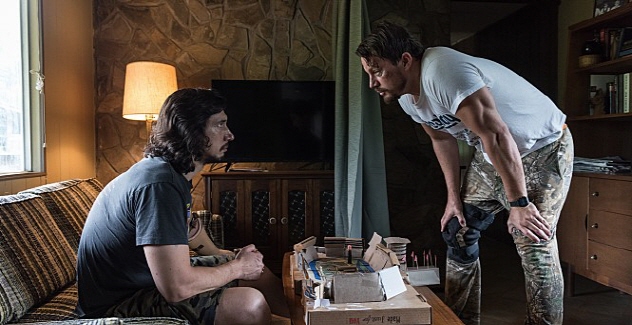
When he comes to the bar where Clyde works, Jimmy indirectly conveys to his brother that he has a criminal plan to be executed, and he subsequently explains his plan to his brother during their private meeting on the next day. Jimmy’s former workplace is a construction site right below the Charlotte Speed Motorway in North Carolina, and that construction site happens to be near the pneumatic tube system for sending heaps of cash from concessions to a safety vault during competition days. Because the construction site is not closed yet, all Jimmy and Clyde will have to do is sneaking into the construction site and then extracting the money via the pneumatic tube system during one certain competition day.

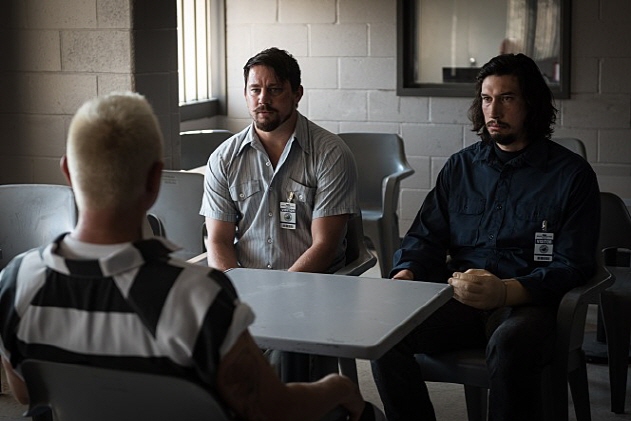
Of course, Clyde and Jimmy need several accomplices for the success of their plan, and they go to Joe Bang (Daniel Craig), a criminal expert on cracking vaults. While Joe is definitely interested in participating in their plan, there is one big problem; he is currently serving his time in a local prison, and he still has several months to spend there.

Nevertheless, because they already have a solution for that problem, Jimmy and Clyde keep sticking to their plan as assisted by other accomplices. They recruit Joe’s two dim-witted brothers Sam (Brian Gleeson) and Fish (Jack Quaid), and they also get some help from their sassy sister Mellie (Riley Keough), who is pretty knowledgeable about vehicles and roads as shown from her several saucy scenes.

The screenplay by Rebecca Blunt, who is rumored to be a pseudonym for Soderbergh’s wife Jules Asner, takes time in establishing its broad but colorful characters, and it has lots of fun with the goofy aspects of its plot and characters. While Jimmy and Clyde are quite serious about their criminal plan, the movie constantly generates comic moments from their interactions with other characters surrounding them, so we come to wonder whether their rather preposterous plan will really work as well as they intended.

loganlucky02

Soderbergh, who also worked as the editor and cinematographer of his film, skillfully balances the movie well between humor and suspense. After steadily accumulating narrative momentum, the movie smoothly moves onto the expected climactic part to be unfolded at the Charlotte Motor Speedway, and Soderbergh confidently handles this part via precise editing and assured camerawork. We get a number of good moments as he deftly plays with our expectation, and I especially like one particular scene which turns out to be surprisingly effective with John Denver’s certain famous song.

As many of Soderbergh’s recent works, the movie is packed with numerous talented performers. While Channing Tatum, who has shown considerable growth as a performer through several recent acclaimed films including “Foxcatcher” (2014), gives another commendable performance in his career, Adam Driver is hilarious with his deadpan attitude, and Daniel Craig, who looks quite different from his polished appearance in recent James Bond movies, chews his every juicy moment with gusto. In case of other substantial supporting performers in the film, Brian Gleeson, Jack Quaid, Riley Keough, Katie Holmes, Farrah Mackenzie, Katherine Waterston, Dwight Yoakam, Seth MacFarlane, Sebastian Stan, David Denman, Mason Blair, and Hilary Swank fill their broad characters as much as they can, and Keough and Waterston are especially good as instantly bringing life and personality to their respective characters.

As I said before, “Logan Lucky” is not without flaws. For example, its third act could be shortened a bit for a tighter finale, and I was also a little disappointed to see that Swank and some other supporting performers are rather under-utilized due to their underdeveloped characters. Anyway, the overall result is as fun as “Ocean’s Eleven” (2001), and Soderbergh surely shows here that he is still a dexterous filmmaker as before.

loganlucky03

Posted in Movies | Tagged , , , , | Leave a comment

Two Doors (2012) ☆☆☆1/2(3.5/4): A sobering documentary on Yongsan Tragedy

twodoors01

South Korean documentary film “Two Doors” reminds me again of how terrible and infuriating the Yongsan Tragedy was. In the early morning of January 19th, 2009, the police attempted to suppress a group of evictees who simply demanded fair treatment, but the excessive use of force by the police led to a horrific incident at the building occupied by the evictees for their desperate demonstration, and the incident resulted in the death of 5 evictees and one police officer. While it was apparent that the police were responsible for this disastrous outcome in one way or another, police authorities were ready to cover up their fault, and they were in turn backed by the government as well as the justice system.

While showing us how thing went quite wrong on that day, the documentary doles out the background information bit by bit for our understanding of a big social/political picture surrounding the Yongsan Tragedy. After the redevelopment boom of several big areas in Yongsan district was initiated in 2003, numerous people living and working there had to be relocated to somewhere else, but they usually did not get enough financial compensation for that, and that was why some of these people came to do their defiant demonstration on that building on January 18th, 2009.

As shown from the opening scene of the documentary, President Lee Myung-bak made it clear to everyone that his government would not tolerate any illegal gathering or demonstration in public. In the view of his government, what was happening in Yongsan on that day was an illegal public activity which should be suppressed as soon as possible for the economic good of the country, and a police SWAT team was swiftly brought to the demonstration site on the very next day.

twodoors03

Through a number of raw video footage clips shot by reporters and police officers during the demonstration, the documentary makes a good point on how incompetently and recklessly the police handled the circumstance. While the evictees kept their defiant position at their watchtower built on the rooftop of the building, the police did not consider any possible negotiation with the evictees, and they did not even consider the potential dangers in the situation. It was apparent that the evictees had a considerable stash of handmade firebombs made from paint thinners, but police authorities ordered the immediate suppression of the evictees nonetheless, and they did not even block the surrounding area for public safety when the operation eventually began at 6:00 AM, January 19th.

Deftly juxtaposing video footage clips with the testimonies from various people who were there during that time, the documentary gives us an indirect but vivid glimpse into the following chaos. When police officers and hired goons tried to enter the building around 7:00 AM, there were already clear signs of danger, but they did not reconsider their tactic at all, and then they began their second attempt at AM 7:18. Around 2 minutes later, the evictees’ watchtower was on fire for some unknown reason, and the situation soon became irreversible after that fateful point.

As the resulting incident shocked the whole nation during several days, the police and the government tried to save their position by any means necessary. Once the investigation on the incident was hurriedly done, some of surviving evictees were subsequently sent to a trial, but nobody in the police was investigated or charged for any misconduct in the incident, and the government even tried to divert the media attention from the incident through the sensational news about a serial killer.

twodoors04

The following trial was not so fair from the beginning. Not so surprisingly, the police were pretty uncooperative to say the least, and they did not even fully provide their investigation record to the defendants’ lawyers. In case of the prosecutor and the judge presiding over the trial, they were already on the side of the police and the government, and we are not so surprised to learn later that both of them received a significant political reward after they got the defendants sentenced to several years of incarceration in the end.

While its sympathy clearly lies on the side of the evictees, the documentary also shows considerable empathy toward those police officers put into the building. As several interviewees in the documentary point out, those police officers suffered lots of traumas just like evictees during that chaotic and hellish moment, and that aspect is exemplified well by a harrowing written testimony from one police officer who participated in the suppression of the evictees.

Although more than 5 years have passed since it came out to South Korean audiences in 2012, “Two Doors” remains as effective as intended by its directors Hong Ji-you and Kim Il-rhan, who did a commendable job of making a calm but sobering presentation of their subject. After the documentary was released in South Korea, things only became worse as Park Geun-hye got elected as the new President of South Korea in late 2012, and I and many other South Korean witnessed more social injustices which were as infuriating as the Yongsan Tragedy. After the historic impeachment of Park Geun-hye and the following election of President Moon Jae-in, we came to have some hope and there have indeed been some considerable changes, but the Yongsan Tragedy is still left without any clear closure, and the documentary powerfully demonstrates that to its audiences.

twodoors02

Posted in Movies | Tagged , , | Leave a comment

Only the Brave (2017) ☆☆☆(3/4): Against the fires

onlythebrave01

While thoroughly conventional in many aspects, “Only the Brave” works better than expected. The movie indeed is your typical human drama based on a real-life story, but it is engaging nonetheless thanks to its earnest storytelling and solid performances, and it also gives us a number of impressive moments as its brave good characters try their best in their dangerous and difficult work.

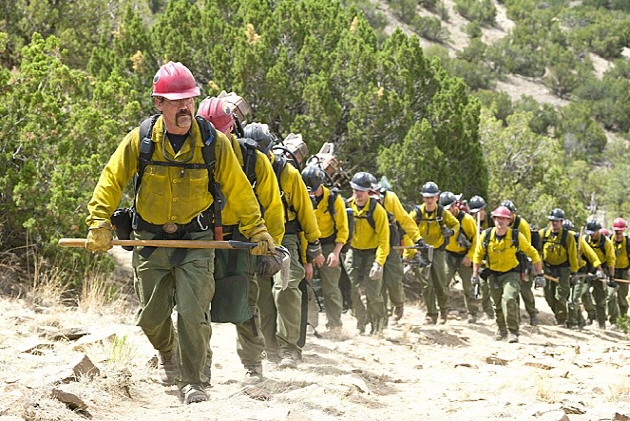
Based on Sean Flynn’s GQ article “No Exit”, the movie is mainly about a crew of wildland firefighters in the municipal fire department for the city of Prescott, Arizona, and its first act focuses on their collective efforts for advancing their status. Despite their considerable experience with wildland fires, they have often been put aside whenever an interagency hotshot crew (IHC) comes, and Superintendent Eric Marsh (Josh Brolin) is determined to get his crew evaluated and then certified as a hotshot crew someday.

While Marsh’s crew is about to get evaluated thanks to the help from his boss Duane Steinbrink (Jeff Bridges, who looks less shaggy than usual), there comes a young man who wants to join the crew. He is Brendan McDonough (Miles Teller), and it is apparent right from his very first scene that he has been an addict loser, but Marsh recognizes that McDonough is really determined to do something for his life. Although he recently hit another bottom, McDonough becomes more serious when he comes to learn about his ex-girlfriend’s pregnancy, and he sincerely wants to be better than his absent father.

onlythebrave02

Of course, things are not so easy for McDonough at first. As a recovering addict, he is not as able-bodied as other crew members, and there is an amusing moment when he gets himself left far behind others during their training time. Nevertheless, he gradually earns respect and recognition from Marsh and other crew members as showing his stubborn determination, and he also gets closer again to his ex-girlfriend.

Eventually, there comes an important moment when Marsh and his crew are evaluated for their certification. It seems that Marsh almost ruins their chance when he stubbornly sticks to his instant strategy against the ongoing wildland fire, but, not so surprisingly, his instinct turns out to be right, and his crew finally succeeds in getting certified as a hotshot crew.

Now becoming the Granite Mountain Hotshots, they soon get far busier than before as they begin their first year as a hotshot crew. Moving from one wildfire incident to another, the second act of the movie gives us a vivid and close look into their work process, and I particularly like a nice dramatic moment involved with a big old historic tree outside Prescott.

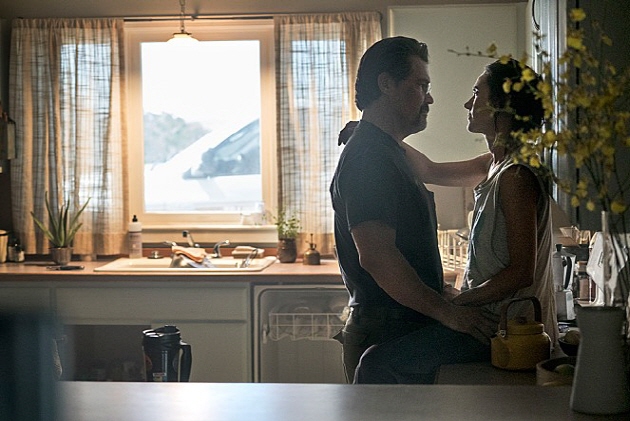
In the meantime, the movie pays considerable attention to the relationship between Marsh and his wife Amanda (Jennifer Connelly). While usually occupied with healing wounded horses in their ranch, Amanda has accepted her husband’s professional dedication for many years, but then she comes to want something more from him, and they accordingly find themselves getting estranged from each other. The movie thankfully avoids getting too melodramatic here, and we later get a restrained but tender moment when Marsh eventually comes to mend his fence with Amanda while recognizing what she wants from him.

onlythebrave06

After steadily establishing its story and characters during its first two acts, the movie goes all the way for the climactic part involved with the Yarnell Hill Fire in June 2013, and director Joseph Kosinski, who previously directed “Tron: Legacy” (2010) and “Oblivion” (2013), effectively utilizes special effects for sheer verisimilitude during this part. While I surely noticed numerous CGI shots during my viewing, the fire scenes in the movie feel quite realistic, and the result is as good as other notable movies about firefighters such as “Backdraft” (1991) and “Ladder 49” (2004).

It is a bit shame that the adapted screenplay by Ken Nolan and Eric Warren Singer is merely functional on the whole. Besides Marsh and a few substantial characters, most of the supporting characters in the film are mostly underdeveloped, and I must confess that it was often hard for me to distinguish one crew member from another, though James Badge Dale, Taylor Kitsch, and other minor supporting performers who play Granite Mountain Hotshots members are believable with their characters’ palpable camaraderie on the screen.

The main cast members of the movie ably carry the movie via their enjoyable performance. As effortlessly exuding gruff authority, Josh Brolin functions well as the center of the movie, and he and Jennifer Connelly smoothly interact with each other in several intimate scenes between their characters. While Miles Teller is convincing in his character’s dramatic arc, Jeff Bridges has a laid-back fun with his character, and he even has a small entertaining musical moment which may remind you of his Oscar-winning performance in “Crazy Heart” (2009).

Although I still think it could be more effective if it put more efforts on plot and characterization, “Only the Brave” gets its job done as much as intended, and I enjoyed its strong points which are good enough to compensate for its weak points. Compared to many notable Oscar season films I saw during last two months, the movie looks less distinctive, but it is still a good film nevertheless, and its sincere tribute to those real-life firefighters will definitely make you appreciate the valiant efforts of many firefighters out there.

onlythebrave05

Posted in Movies | Tagged , , | Leave a comment

Disturbing the Peace (2016) ☆☆☆1/2(3.5/4): Combatants for the Peace

disturbingthepeace01

Documentary film “Disturbing the Peace” looks into the unlikely solidarity between two different groups of people jointly pursuing the idea of peace in their violent world which has been torn by conflict for many years. As frequently going back and forth between these two groups’ seemingly opposing narratives, the documentary engages and then touches us via their emerging story of empathy and hope, and it eventually makes us have some optimism even while clearly recognizing how the situation has constantly been desperate and hopeless in their world.

The documentary opens with the depiction of one meeting held in the West Bank region of Palestine in 2005. A group of Israeli soldiers who had openly shown their opposition against the oppressive policy of their government on Palestine were invited to meet a number of Palestinian fighters who came to have a different idea on how they should resist against the Israeli government, and, as a number of interviewees in the documentary recollect, the mood was pretty tense from the beginning. The Israeli group had to take a considerable risk as going into an area which is surely not safe for Israelis, and the Palestinian group did not have much faith in whether this private meeting worked out well for both sides.

The uncertainty and anxiety between them are originated from the violent past of their world, and the early part of the documentary gives us the succinct background information mixed with personal stories from both sides. An Israeli interviewee tells us how his family came to have a strong Zionist viewpoint since their grandfather immigrated to Palestine around the 1930s, and we get some glimpse into those turbulent early years of Israel, which had to defend itself from surrounding Arab countries not long after its establishment in 1948. An Palestinian interviewee describes to us how his family and many other Palestinians came to lose their home and then were forced to live in a refugee camp which eventually became their new settlement, and several archival footage clips show us how things were quite bad for Palestinians during that period.

disturbingthepeace03

As many of you know, the resulting conflict between Israel and Palestine has only gotten worse during next several decades. While numerous terror attacks have happened in Israel, Palestine has frequently been struck by retaliation attacks, and this virulent cycle of violence is still going on even at this point as neither side is willing to step back.

Both Israeli and Palestinian interviewees in the documentary frankly reveal to us how much they all were motivated by ‘It’s-us-or-them’ mentality. The Israeli guys had no doubt on defending their country from Palestinians as much as they could, and Palestinian guys strongly believed that they had to fight against Israeli oppressors by any means necessary.

They also tell us about how they came to see things differently. In case of a Palestinian woman who was incarcerated in jail for 6 years due to her attempted suicide bombing, she reminisces when she tried to say a goodbye to her young daughter before her bombing attempt, and she later tells us how a small but significant exchange between her and a female prison guard changed her view on Israelis. In case of one Israeli guy, he remembers when he casually blocked a desperate Palestinian father and his sick children at a checkpoint, and he tells us how much he felt ashamed later as a family man.

When he and several other Israeli soldiers who have the same view on the conflict decided to express their political opinion in public, they received a considerable amount of criticism from many Israeli right-wing figures, but they also drew the attention of their Palestinian counterpart, and that was how the first meeting was held between these two groups. Both sides felt pretty awkward to say the least, but they soon found many common things between them as they began to talk with each other, and that led to the foundation of ‘Combatants for Peace’.

disturbingthepeace04

Of course, their organization is not so welcomed by many people on both sides. At one point, there is a heated conversation between one key Palestinian member and his wife who apparently does not agree to his belief, and I cannot help but wonder how much opposition he has to deal with outside. In case of Israeli members, they also have to deal with the opposition from a lot of people in their country, and they are even labelled as traitors by those people.

And the situation continues to get worse for Israel and Palestine as before. As there comes a possibility of peace talk between Israel and Palestine, the members of Combatants for Peace become hopeful and stage a non-violent demonstration on the both sides of the West Bank wall, but then Israel and Palestine eventually go back to their usual violent mode as refusing to negotiate with each other. That certainly frustrates many members of Combatants for Peace, but they do not give up their hope for peace, and it is really touching to see them keeping going with their strong belief in humanity.

Overall, “Disturbing the Peace”, which is currently available on Netflix, is worthwhile to watch for its moving human story, and directors Stephen Apkon and Andrew Young did a skillful job of weaving various interviews and footage clips into a compelling narrative. To be frank with you, I sometimes doubt whether humanity will survive the increasing chaos and danger of the 21st century, but “Disrupting the Peace” and other similar good documentaries remind me that we still can do better for ourselves, and I really hope that we will prevail through our better sides.

disturbingthepeace02

Posted in Movies | Tagged , , | Leave a comment

My prediction on the 90th Annual Academy Awards

threebillboardsoutsideebbingmissouri03

Oscar season has been less predictable these days. When we thought “The Revenant” would won the Best Picture award in early 2016, “Spotlight” surprised us at the last minute. When we did not have much doubt on the victory of “La La Land” over “Moonlight” in early 2017, we had an unbelievably dramatic moment at the very end of the ceremony, thanks to that unfortunate confusion over the envelope containing the name of the Best Picture award winner.

The Best Picture Oscar race of this year is as unpredictable as previous two years. Around last August, we thought “Dunkirk” would win the award, but then there came “The Shape of Water”, and then there came “Three Billboards Outside Ebbing, Missouri”. In the meantime, “Get Out” has slowly gained momentum through its timely subject and widening word of mouth, and it might actually win the award even though it garnered only two other nominations besides its Best Picture and Best Director nomination.

Will “The Shape of Water” prevail as boosted by its 13 nominations? Will “Three Billboards Outside Ebbing, Missouri” snatch the victory from its main competitor? And will “Get Out” surprise us in the end? I have no idea, but I am at least sure about many other categories although I have never been entirely correct in my prediction. Anyway, here is my 2018 Oscar prediction, and I hope I will get some surprise during the upcoming ceremony.

Continue reading →

Posted in Movies | Tagged | 1 Comment