Eyelids (2015) ☆☆☆(3/4): A Requiem for Sewol

eyelids05.jpg

Calmly isolating itself within its small solitary background, South Korean independent film “Eyelids” presents an austere but haunting poetic requiem for the victims of one horrible incident which shocked the whole nation a few years ago. Although the incident in question is briefly mentioned only once in the film, that is more than enough for me and other South Korean audiences, and the deep sadness glimpsed from the final scene of the movie lingered on me for a while as I walked out of the screening room.

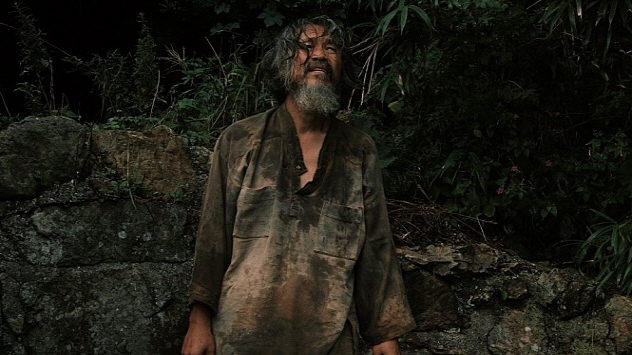
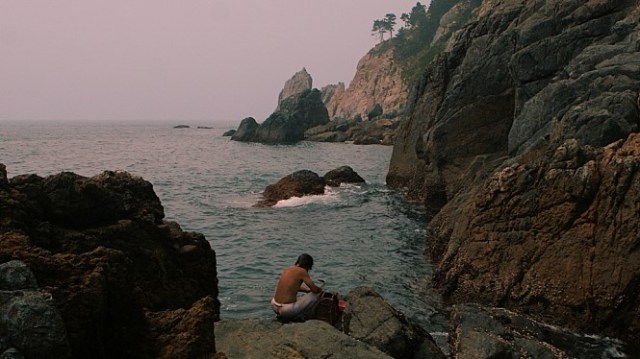
The movie mainly revolves around the ascetic daily life of an old man who has lived alone in a remote sea island. While not revealing much about himself, the old man silently leads a self-sufficient life in his isolated nature environment, and that reminds me of similar isolated nature environments shown in several notable works of Kim Ki-duk such as “Spring, Summer, Fall, Winter… and Spring” (2003).

As slowly getting us accustomed to its hero’s small world, the movie gradually reveals his main job. Not long after the phone in his shabby house rings at one point, an angler comes to the island, and the old man is ready to prepare a piece of rice cake for the angler, who turns out to be a recently diseased man and is soon gone from the island once the rice cake is ready for him.

Now this sounds pretty preposterous to some of you, but the movie keeps its attitude straight as before. Although still not explaining anything to us, it engages us via its vivid natural atmosphere and some interesting things to observe, and we come to accept the unrealistic aspects of its premise. While I was amused a bit by several animals in the island including a black goat who seems to be under the old man’s care, I observed a few abandoned small stone statues with curiosity, and I liked how one of these stone statues is effectively used for dramatic purpose later in the movie.
eyelids06

The mood becomes a little tenser when a storm comes, and then the old man hears a tragic news from his radio. A ferry ship named Sewol was sunken at a spot not so far from the island, and the old man is visibly agitated by that. Not long after the news came out, a rat comes into the island, and then there also comes a mysterious red suitcase. When the old man brings the suitcase to his house and then opens it, we only see water inside it, but the old man seems to feel something else from it. He tries to ignore the suitcase, but it constantly draws his attention nonetheless, and he feels exasperated because of that.

And then there comes a young teacher and her two students, who apparently represent many unfortunate victims on that ferry ship. Like that angler who came before them, they wait for rice cake to be served to them, but, alas, the situation becomes not so good for the old man due to one accidental reason, and that results in more frustration and exasperation for him.

In the end, the movie strikes us hard with its final sequence, and that made me reflect again on how horrible that real-life sinking incident was. When the sinking of Sewol was reported in the morning of April 16th, 2014, the situation seemed to be under control at first, but then it turned out that many passengers on the ferry ship were drowned mainly due to the incompetent handling of the situation by President Park Geun-hye and her corrupt government. After she was eventually impeached and then sent to a trial in early 2017 thanks to our mass public demonstration, we came to learn more of how ineffectual and irresponsible she and her government were during that time, and I must tell you here that I do not have any pity on her imprisoned status at present.

eyelids02

The movie is written and directed by Meul O, who previously impressed me with “Jiseul” (2012). Although I was initially not as enthusiastic about that movie as other critics because of its glacial narrative pacing and minimalistic storytelling, I admired how thoughtfully and beautifully it handles the tragedy of the Jeju Uprising in 1948, and I appreciated its strong elements more during my second viewing. In fact, I later added it to my list of notable South Korean films of 2013, and it is certainly one of those good films I am willing to re-evaluate someday.

Compared to “Jiseul”, “Eyelids” is relatively modest in comparison, but it is still an interesting work accompanied with several good things to admire. Besides working as the editor of his movie, Meul O also worked as one of the co-cinematographers of the movie, and he gives us a number of stunning shots of unadorned natural beauty. I particularly remember well one brief shot of sea urchins slowly moving together, and I am still tickled by several funny moments associated with that rat.

Although it was shown at the Busan International Film Festival in late 2015, “Eyelids” had been somehow held in limbo for next several years, and I am glad that it finally gets a chance for more audiences in South Korea during this week. Although I am not that sure about whether it will work as well as for the audiences outside South Korea, the movie fulfills its purpose while also working as a solid arthouse film to be admired for its mood and poetic beauty, so I guess the audiences outside South Korea can also appreciate its achievement just like me and other South Korean audiences. Yes, it surely requires considerable patience as your typical ‘slow film’, but you will not easily forget it after watching it.

eyelids04

Posted in Movies | Tagged | Leave a comment

A Quiet Place (2018) ☆☆☆1/2(3.5/4): Be Silent – Be Very Silent

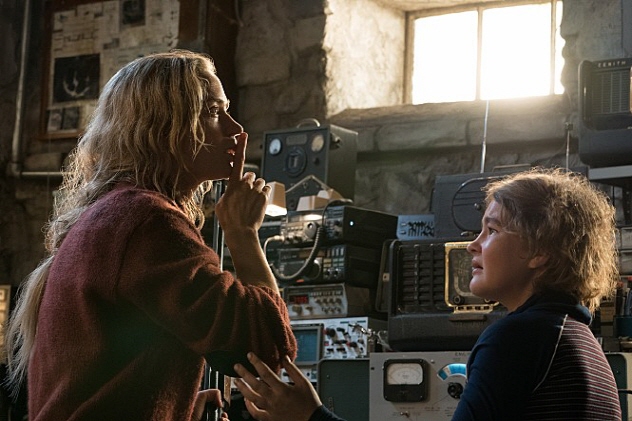
aquietplace02.jpg

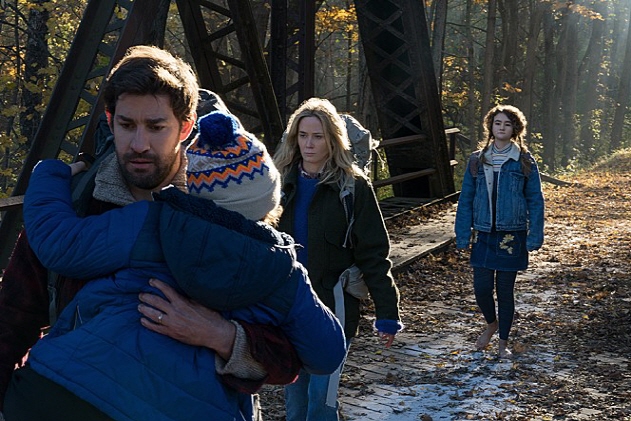
Rarely have I been so constantly quiet like I and several audiences were during the evening screening of “A Quiet Place”, a small horror film which is seemingly modest on the surface but undeniably intense and terrifying for many good reasons. Thoughtfully and efficiently rolling its horror story premise via its economic narrative, the movie provides a number of truly scary and suspenseful moments which will hold you tight in your seat, and I admire how successfully it achieves its goals while never resorting to cheap tactics and clichés.

In the beginning, we come to get to know a bit about one desperate family and the gloomy circumstance of their constantly perilous world. Due to a sudden unknown threat which is gradually revealed to us along the story, the human civilization has been driven near to its end for several months, and remaining survivors must be quiet and silent as much as they can for continuing their survival. Any single noise to break silence can lead to certain death, and the opening scene observes how cautiously Lee Abbott (John Krasinski) and his family are as they stay for a while in a deserted town. Besides usually using sign language instead of talking, they are always wary of any possibility of loud noise, and that is exemplified well by when Lee does not allow his youngest son Beau (Cade Woodward) to have a toy too loud for them.

After the opening scene, the movie moves forward to around one year later, and we observe how the Abbotts have settled well in one abandoned farm. They look well-adjusted to their ongoing circumstance while being silent and cautious as usual, and everything seems nice and cozy when they quietly gather together for a dinner in their house, but then the mood becomes quite tense and ominous when their silence is accidentally broken at one point. Deftly playing with our expectation, the movie smoothly dials up and down the level of suspense during this scene, and the eventual moment of shock and awe at the end of this scene is as precise and effective as intended.

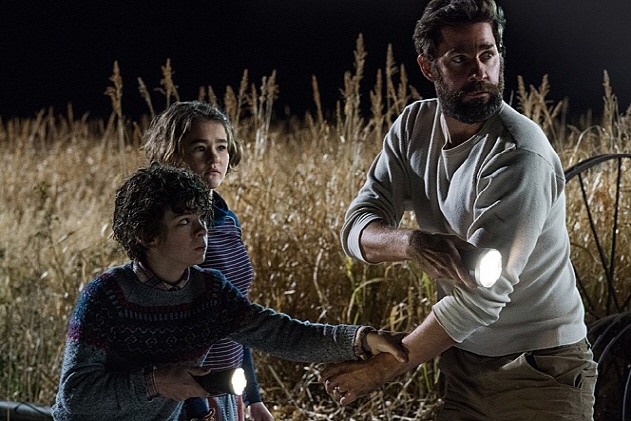
aquietplace05

While keeping trying to search for any possible help via radio communication, Lee focuses on finding any potential solution for that menace out there, but the situation remains as gloomy as before, and there is also a serious impending matter for him and his family. His wife Evelyn (Emily Blunt) is soon going to give birth to their new child, and it goes without saying that their new child may seriously threaten the safety of the family. Although Evelyn will probably be able to prevent herself from making any noise during her delivery, the baby can inadvertently be very noisy at any point, no matter how much they are prepared for raising their new child.

In the meantime, their deaf daughter Regan (Millicent Simmonds) becomes more willing to get closer to her father and help him, but she is disappointed when her father chooses to go outside along with her younger brother Marcus (Noah Jupe) instead. As feeling quite disappointed, Regan defiantly goes outside alone while her mother is busy with domestic works, and we accordingly get a few nice, sensitive moments as Regan spends some time alone by herself.

Of course, the movie inevitably shifts its gear into full-throttle mode later in the story, and director/lead performer/co-writer John Krasinski, who wrote the screenplay with Bryan Woods and Scott Beck, pushes further what has been palpably established on the screen. There is a frightening moment involved with a seemingly abandoned house in a nearby forest, and then there comes a sequence which has a series of striking moments which will surely overwhelm you with sheer terror and suspense.

aquietplace01

Although he has been mainly known for his acting works in American TV comedy series “The Office” and several notable comedy films such as “Leatherheads” (2008), “It’s Complicated” (2009), and “Away We Go” (2009), Krasinski also started his directing career with “Brief Interviews with Hideous Men” (2009) and then made “The Hollars” (2016). I have not seen these two previous works of his yet, but “A Quiet Place” shows me that he is a competent filmmaker, and I appreciate the superlative achievement from him and his technical crew. While cinematographer Charlotte Bruus Christensen, who previously worked in “The Hunt” (2012) and “Fences” (2016), frequently generates nervous ambience around the characters in the film, the editing by Christopher Tellefsen, who was Oscar-nominated for “Moneyball” (2011), succinctly delivers several impactful moments to jolt us, and Marco Beltrami’s menacingly dissonant score always keeps us on the edge whenever it is played on the soundtrack.

Besides demonstrating well his acting range beyond his familiar comic persona, Krasinski also draws convincing performances from his fellow cast members. While he and his wife Emily Blunt are natural and intimate in their characters’ private scenes, three young performers in the film are solid as other crucial parts of the story, and Millicent Simmonds, a young deaf performer who previously appeared in “Wonderstruck” (2017), is particularly excellent as bringing considerable pluck and authenticity to her character.

Overall, “A Quiet Place” is a superlative genre piece which is definitely better than many lesser horror movies out there. I still feel excited and shaken as remembering its many well-made moments, and that is far more than enough for me to recommend it wholeheartedly to you. Believe me, you will be very silent within its first 15 minutes – and you will get one hell of experience to remember.

aquietplace06

Posted in Movies | Tagged , | 3 Comments

You Were Never Really Here (2017) ☆☆☆1/2(3.5/4): Brutal and feverish

youwereneverreallyhere01.jpg

Often brutal and feverish, Lynne Ramsay’s new film “You Were Never Really Here” grabs our attention right from the very beginning with its vivid, striking mix of unnerving character study and grim noir thriller. Firmly sticking itself to its deeply disturbed and traumatized man who is somewhere between Lou Archer and Travis Bickle, the movie alternatively unnerves and fascinates us with a number of tense, harrowing moments of human darkness, and the result is one of the most unforgettable films of this year.

The movie begins at the point not long after its hero, named Joe (Joaquin Phoenix), finished his latest job. While living with his aging mother in their cozy house located somewhere in New York City, Joe works for a private detective, and his specialty is finding missing young girls who are usually caught in sex trafficking business. Although the movie does not show us much of how he got things done in his latest job, the close-up shots of a hammer and several other stuffs he subsequently discards are more than enough for us to sense the violent aspects of his current occupation, and we later notice a bruise and old scars on his body when he takes some rest in a sauna.

While Joe looks rather mild and tender when he is with his mother, there is always the gloomy intensity hovering around him, and the movie occasionally suggests his boiling inner struggle through brief flashback shots. He was apparently very unhappy due to his father’s domestic violence onto his mother, and we gather that there was also a traumatizing experience during his military tour in Afghanistan. Furthermore, it is apparent that he has seen many ghastly things as hurling himself into criminal world, and there is a brief but striking moment when a group of young girls on the street happen to evoke one of his unpleasant memories.

youwereneverreallyhere04

As Joe continues to struggle with his personal demons, there comes another case to be handled. The adolescent daughter of a prominent local politician has been missing for several days since she ran away from her home, and it is quite possible that she is caught in sex trafficking business. Because he is about to take a major forward step in his promising political career, her father wants to get back his daughter as soon as possible without making any fuss, and he gives some useful clues to Joe during their private meeting.

Although it takes some time, Joe eventually locates a clandestine place where the girl is possibly being held, and he immediately prepares for whatever should be done. Again, he buys a hammer and other usual stuffs which may be necessary for his job, and he patiently waits for an opportunity to break into that place in question. When he finally gets the chance and then goes into his usual violent mode, the movie phlegmatically and succinctly depicts his brutal actions from the distance while never allowing any cheap thrill or excitement, and the result is a sort of antithesis to “Taken” (2008) and other similar action thriller filcks.

When Joe finds the girl and then takes her to a safe place in the end, it looks like his job is done well, but, of course, he soon finds himself in a situation more dangerous than expected. I will not go into details here, but I can tell you instead that Ramsay’s screenplay, which is adapted from Jonathan’s Ames’ novella of the same name, will serve you with a series of chilling and devastating moments, which will definitely hold your attention tightly to whatever is going on around Joe.

As desperately trying to get out of this perilous circumstance, Joe’s mind becomes more agitated and disturbed than before, and Ramsay and her technical crew never hesitate to emphasize his increasingly unhinged psychological state. While cinematographer Thomas Townend subtly establishes nervous ambience on the screen, the editing by Joe Bini is superlative in its economical handling of actions and moods, and Jonny Greenwood’s atmospheric score provides extra nervousness to several key scenes in the film.

youwerenevereallyhere06

Joaquin Phoenix, who received the Best Actor award for this film at the Cannes Film Festival early in this year (the movie also received the Best Screenplay award, which it shared with Yorgos Lanthimos’ “The Killing of a Sacred Deer” (2017)), is simply compelling to watch. Especially since his memorable Oscar-nominated turn in “The Master” (2012), Phoenix has shown more skill and confidence as shown from several recent films including “Her” (2013) and “Inherent Vice” (2014), and he demonstrates here again that he is indeed a very talented actor to watch. While effortlessly embodying his character’s tortured soul, he is flawless in conveying his character’s vulnerability to us, and we come to care about not only Joe but also his relationship with a few other characters in the film.

As Phoenix diligently carries the film, several notable supporting performers hold each own small place around him. As Joe’s mother, Judith Roberts brings some genuine sweetness to her scenes with Phoenix, and that is the main reason why a certain scene later in the movie is quite poignant. As a girl who turns out to be much more than what she seems on the surface, Ekaterina Samsonov is solid with her elusive appearance, and Alessandro Nivola is suitably sleazy in his small but substantial supporting role.

Like Ramsay’s previous film “We Need to Talk about Kevin” (2011), “You Were Never Really Here” is an edgy and uncomfortable piece of work, but it is also quite absorbing mainly thanks to Ramsay’s top-notch direction and Phoenix’s electrifying performance. While it is essentially your typical arthouse film, it is a lot more interesting than those brainless action movies out there, and I think you will appreciate it a lot especially if you are looking for something new and different.

youwereneverreallyhere03

Posted in Movies | Tagged , , | 1 Comment

6 Balloons (2018) ☆☆☆(3/4): A problematic day with her addict brother

6ballons01

Movies about addiction are usually uncomfortable to watch, and “6 Balloons”, which is currently available on Netflix, is no exception. As closely observing its heroine’s problematic relationship with her addict brother, the movie gives us several unflinching moments which will make you cringe for good reasons, but it also presents some sharp, honest insights on how addicts often drag down not only themselves but also others caring for them to another bottom to hit, and it surely helps that the movie is supported well by two solid lead performances to remember.

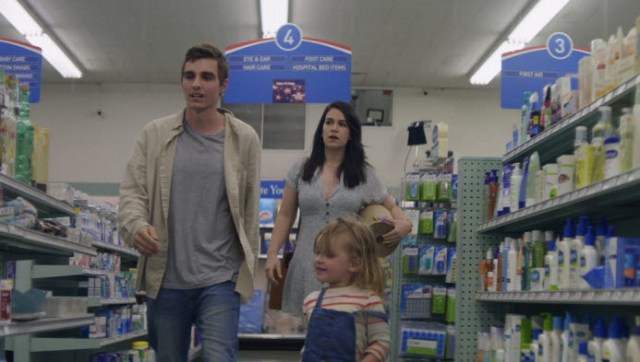
As the beginning of the movie, we are introduced to Katie (Abbi Jacobson), a young woman who is in the middle of her preparation for the surprise birthday party for her boyfriend. As she goes to a store along with her mother for buying several stuffs for the party and then comes back to her residence full of other guests, everything seems fine on the surface, but there is one small problem. Her brother Seth (Dave Franco) has not come yet, and she eventually goes to Seth’s residence for herself.

As it is gradually revealed to us, Seth is an addict recovering from his latest relapse, and Katie comes to find that Seth has just relapsed again even though he tried to restart his life with his young daughter Ella (Charlotte Carel and Madeline Care). Looking helpless and confused, Seth pleads for help, and Katie comes to decide to help him as much as she can because, well, she cannot possibly say no to her dear brother.

6ballons04

However, as some of you already expected, their circumstance becomes more complicated. Katie’s initial plan is simply taking Seth to a nearby detox center and then going back to her residence along with Ella, but, alas, it turns out that the detox center does not accept Seth’s new insurance company. Because she cannot pay $ 5,000 in cash for his detox treatment right now, she has no choice but to send Seth alone to another detox center far away from her neighborhood.

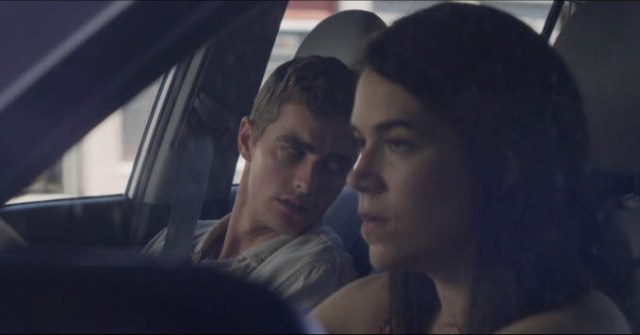
When Katie eventually comes back to her residence along with Ella after sending Seth away to that detox center, the circumstance seems to be under control, but, of course, Seth soon comes to pull her toward himself again as struggling with acute withdrawal symptoms. With Ella in the backseat of her car, she drives back to him while not telling anything to others including her parents, and she tries her best for handling the situation as quick as possible, but then she finds herself bending to her brother’s agonized need. At one point, she is demanded to get drug for him, and that leads to a dark, disturbing scene where she has to go around alone in a slum area strewn with junkies and drug dealers.

As Katie is gradually dragged down into the darkness of her brother’s addiction, the movie often inserts the excerpts from her self-help audiobook. Although this feels rather blatant at first, it works better than expected as juxtaposed with the recurring watery images of Katie being literally sunken along with her brother, and we subsequently get a nice dramatic payoff moment when Katie must make an important decision for not only her brother but also herself.

Although her screenplay occasionally feels like a short film extended a little too long, director/writer Marja-Lewis Ryan keeps her two main characters’ circumstance rolling along expected narrative points, and she maintains well the level of verisimilitude on the screen. Although we do not get to know a lot about Katie and Seth, they come to as nuanced human characters who are engaging enough to observe, and I also appreciate that Seth’s daughter is presented as another substantial character in the story instead of a mere plot element.

6ballons03

Above all, the movie gives its two lead performers a chance to do something different, and they did a fabulous job with their respective characters. Effortlessly conveying to us her character’s growing frustration and exhaustion, Abbi Jacobson, who has mainly been known for her comic performance in TV comedy series “Broad City”, is commendable in her unadorned acting, and I like how naturally she and her co-star suggest the long history between their characters. As watching their dynamic interactions on the screen, we come to sense the strong emotional bond between Katie and Seth, and we come to understand why Katie lets herself pushed or manipulated by her brother.

On the opposite, David Franco, who has mostly been known for several notable comedy films such as “21 Jump Street” (2012), is surprisingly convincing in his demanding role. Looking quite gaunt as required, he deftly alternates between his character’s helplessness and selfishness, and we often feel sorry for his character’s miserable status even though we usually observe him from the distance. When Seth tries to be jolly and pleasant with his daughter during one particular scene, we get the glimpse of his likable side, but his addiction is still on his back as usual, and Franco embodies his character’s inner struggle well while never exaggerating it.
Although it feels a bit overlong despite its notably short running time (74 minutes) and I was often bothered by its contrived aspects during my viewing, “6 Balloons” mostly works well thanks to Ryan’s competent direction and her lead performers’ strong performances. It is a tough stuff indeed, but it is handled with enough sensitivity and honesty to hold our attention, and you will get more understanding on addiction – and how it can damage human relationship in one way or another.

6ballons05

Posted in Movies | Tagged , , | Leave a comment

First Match (2018) ☆☆☆(3/4): Wrestling for her father

firstmatch04.jpg

“First Match”, which is currently available on Netflix, initially draws our attention through its supposedly unconventional promise. Here is a young girl who has struggled a lot in her tough environment, and it is often poignant to observe how she tries hard in her own way for what matters much to her. Although the movie eventually becomes quite conventional with its expected plot turns, it still maintains considerable realism to engage us at least, and it is also supported well by its lead performer’s strong acting, which is indubitably the best part of the movie.

When we see Mo (Elvire Emanuelle) at the beginning of the movie, this adolescent black girl living in a Brooklyn neighborhood of New York City is in the middle of her latest trouble. Since her parents became absent several years ago, she has bounced from one foster home to another as causing troubles, and she is now being kicked out of her latest foster home due to her inappropriate relationship with her carer’s boyfriend. Thanks to her kind, patient social service worker, Mo is soon sent to other foster home, but, not so surprisingly, she is not interested much in getting along well with her new carer, who looks nicer compared to her predecessor but quickly becomes frustrated with Mo.

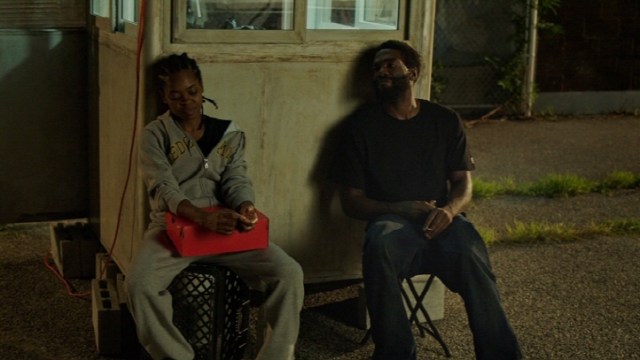
All Mo wants is living with her father Darrel (Yahya Abdul-Mateen II), but that does not look possible at present. While he was once a promising wrestling player, Darrel went astray after his wife was gone, and then he was sent to prison due to an unspecified criminal deed. When she finds that he was recently released, Mo is delighted to see her father again, but he is not so eager to spend time with his daughter because he is mostly occupied with finding any possible way for restarting his life.

firstmatch01

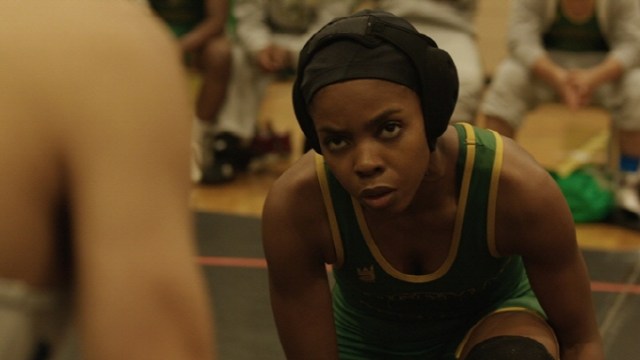
Meanwhile, Mo comes to get an idea for getting closer to him. She attempts to join the all-male wrestling team of her high school, and that surely raises the eyebrows of not only Coach Castile (Colman Domingo) but also his team players including Omari (Jharrel Jerome), who has been Mo’s best friend since their childhood. Although the mood is understandably awkward at first, Mo soon proves herself well to the coach and the team players, who initially do not welcome her much but then come to recognize her stubborn spirit in the end.

I must point out that the tension between Mo and other team members is too conveniently resolved, but the movie continues to maintain its level of interest as Mo gradually becomes one of the key players in her team, and we get a series of wresting match scenes as she and her team advance more and more. These wrestling match scenes may look modest, but they are handled quite realistically, and that is more than enough to make us care much about Mo’s ongoing efforts toward her father. While he is not particularly enthusiastic, Darrel cannot help but excited as watching his daughter’s wrestling matches, and it seems Mo finally attains what she has yearned so much from him.

Of course, there comes a trouble as expected, and that is the point where director Olivia Newman’s screenplay, which is expanded from her short film of the same name, begins to falter. The plot often feels contrived and predictable as Mo lets herself pushed into a number of wrong choices and then comes to face the consequences, and the movie is also considerably hampered by its rather thin characterization. For instance, we never get the full understanding of Darrel’s personal struggle, and the same thing can be said about the possible mutual attraction between Mo and a certain team member, which is abruptly halted after one dramatic scene later in the movie and then is conveniently discarded away in the end.

firstmatch03

Nevertheless, the movie remains interesting because of its notable strong points. Right from the very first scene, the movie attracts our interest with its vivid, palpable realistic atmosphere, which is then maintained well throughout its running time. Newman and her cinematographer Ashley Connor did a good job of capturing intimate moments from the performers in the film, and they are all believable in their respective roles thanks to their unadorned natural acting.

As the emotional center of the movie, newcomer Elvire Emanuelle, who previously played a small supporting role in “Rock of Ages” (2012), leaves an indelible impression as balancing her performance well between her character’s strength and vulnerability. While Mo is not particularly likable because of her temper and stubbornness, we come to root for her as empathizing with her desperate emotional need, and Emanuelle is especially good when Mo makes a hard choice around the ending of the movie.

Although most of them are under-utilized due to their underdeveloped characters, the supporting performers in the film acquit themselves well. While Jharrel Jerome, who previously played a substantial supporting character in “Moonlight” (2016), is amiable as Mo’s best friend, Colman Domingo is also fine as a no-nonsense wrestling coach, and Yahya Abdul-Mateen II suggests well his character’s regretful past while never spelling it out to us.

“First Match” is the first feature film directed by Newman, and the overall result shows that she is a promising filmmaker to watch. Although it is definitely flawed in several aspects, I appreciated and enjoyed its good elements nonetheless, and I was touched by the small poignancy felt from its last shot. Yes, things remain quite uncertain for our heroine as before, but she will go on anyway, you know.

firstmatch02

Posted in Movies | Tagged , , , | Leave a comment

The Death of Stalin (2017) ☆☆☆1/2(3.5/4): A political satire set in the Soviet era

thedeathofstalin01

Some black comedies dare to generate laughs from dark, ghastly subjects, and “The Death of Stalin” is one of such interesting cases. Focusing on the human absurdities and inhuman horrors inside one of the most infamous totalitarian regimes in the 20th century history, the movie alternatively chills and tickles us through its ruthless black humor rivaling “Dr. Strangelove or: How I Learned to Stop Worrying and Love the Bomb” (1964), and the result is one of the funniest films of this year.

Mainly set in Moscow, the Soviet Union around early 1953, the movie opens with the live radio broadcast of a performance of Mozart’s Piano Concerto No.23 in A Major (K. 488). Everything seems to be going well, but then a guy supervising the radio broadcast receives a phone call during the middle of the performance, and he is soon thrown into panic as the performance is about to be finished. The call comes from none other than Joseph Stalin (Adrian McLoughlin), and he demands a recording of the performance, which, unfortunately, is not being recorded.

What follows after that is pretty absurd to say the least. For recreating the exact same performance, audiences are hurriedly brought back to the studio while orchestra members are ready for their second performance, but there come two big problems. While so nervous about what may happen if he does not pull it off well, the conductor gets himself knocked out by accident, and the pianist, who does not like Stalin much for a personal reason, is not so eager to play for him.

This farcical moment is juxtaposed with a chilling sequence depicting the daily horror under Stalin’s dictatorship. As soon as Stalin approves of another list of people to be incarcerated or executed, the secret police headed by his righthand guy Lavrentiy Beria (Simon Russell Beale) instantly goes outside for arresting them all. Knowing that they can be arrested at any moment, everyone in the country is constantly watchful of their words and behaviors, and that is particularly true in case of the members of Stalin’s inner circle. When they have a drinking time with Stalin at his dacha outside Moscow, they look jolly and drunken on the surface, but they are also nervous about their powerful and ruthless leader, and they are all relieved when their another evening with Stalin is over without any serious trouble to get any of them eliminated.

thedeathofstalin03

However, something quite unexpected happens not long after that. When he finally receives the recording of that concerto performance in question and then reads a note sent along with it, Stalin is collapsed on the floor of his office due to sudden cerebral haemorrhage, and this serious health state of his is belatedly discovered only after a maid comes into the office in the next morning. Once he is notified of this serious situation, Beria immediately goes to Stalin’s dacha, so do Nikita Khrushchev (Steve Buschemi) and the other members of the Central Committee.

The movie, which is adapted from graphic novel “La mort de Staline” by Fabien Nury and Thierry Robindeal by director Armando Iannucci and his co-writers David Schneider, Ian Martin, and Peter Fellows, gives us numerous acerbic moments of ironies and absurdities as its apparatchik characters clumsily try to deal with this urgent circumstance they have probably never imagined. At one point, they try to get doctors to examine Stalin, but then they are reminded that they executed most of good doctors in Moscow, and a bunch of doctors they later manage to gather are understandably reluctant to examine Stalin.

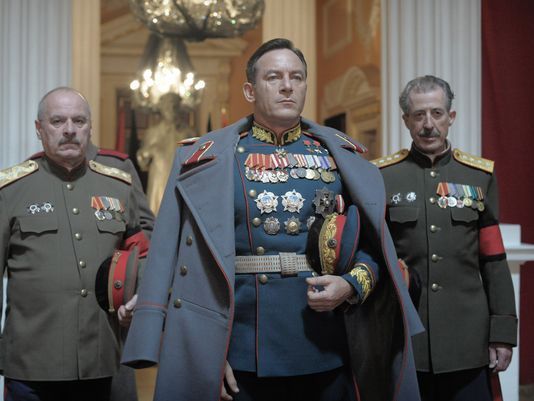
Once Stalin eventually passes away, the situation becomes more complicated due to the following conflict between Beria and Khrushchev. Although Deputy General Secretary Georgy Malenkov (Jeffrey Tambor) fills Stalin’s empty position for now, he is utterly ineffectual and spineless without much presence or leadership to hold the Central Committee under his control, and both Beria and Khrushchev try to manipulate him as well as other several key figures for their ultimate political goal. Besides Foreign Minister Vyacheslav Molotov (Michael Palin) and other Central Committee members, they also have to deal with Stalin’s two children Svetlana (Andrea Riseborough) and Vasily (Rupert Friend), and there is also Field Marshal Georgy Zhukov (Jason Isaacs), a volatile World War II hero who forcefully struts into the ongoing circumstance as quite determined to do something about it.
thedeathofstalin04

Wryly depicting the silliness of this absurd power struggle, the movie never overlooks the atrocities casually committed by its main characters’ monstrous political system, and Iannucci deftly balances his story and characters between humor and horror. While we get lots of laughs from how silly and petty its main characters are, what is being at stake in their inner world remains quite serious nonetheless, and we are often chilled by how their political chaos mercilessly affects the world outside.

Rather than using fake Russian accent, the performers in the movie speak with each own natural English accent, and this wise acting choice makes them more fluent and effortless in their line delivery and timing. While Steve Buscemi, who is the last performer you can imagine playing Khrushchev, is superlative in his role, Simon Russell Beale is effectively despicable, and the other main cast members including Michael Palin, Jeffrey Tambor, Rupert Friend, Andrea Riseborough, Olga Kurylenko, Paddy Considine, and Jason Isaacs have each own moment to shine.

Like Iannucci’s previous work “In the Loop” (2009), “The Death of Stalin” is a smart, intelligent political satire which distinguishes itself with its sharp, uninhibited sense of black humor, and you will be simultaneously amused and chilled by its barbed insights on dictatorship and accompanying sycophancy. They say anything can be a subject for comedy, and this bitingly funny movie surely proves that with truly dark laughs to be savored and appreciated.

thedeathofstalin02

Posted in Movies | Tagged , , , , | 1 Comment

Ready Player One (2018) ☆☆☆1/2(3.5/4): Ready for entertainment?

readyplayer01

Steven Spielberg’s new film “Ready Player One” is an exhilarating eye candy stuffed with various goodies to enjoy and appreciate. Although this is not something as sublime as Spielberg’s great blockbuster films such as “Jaws” (1975) and “Raiders of the Lost Ark” (1981), it is still quite entertaining nonetheless as bouncing from one spirited visual moment to another, and I was enthralled by that process as appreciating Spielberg’s undeniable mastery of special effects and storytelling. While it goes overboard for its digital fun around the expected climactic finale, the movie never loses its jubilant sense of entertainment at least, and I eventually came out of the screening room with lots of excitement and satisfaction.

Based on the SF novel of the same by Ernest Cline, who adapted his novel with Zak Penn, the movie is mainly about the adventure of Wade Watts (Tye Sheridan), an adolescent orphan boy living with his aunt in a poor trailer neighborhood of Columbus, Ohio. It is 2045, and the world has become your average dystopia due to overpopulation and many other unspecified social/geopolitical problems during last two decades. Rather than coping with the daunting hardships in their daily life, many people choose to spend most of their time in virtual reality (VR), and the opening scene of the movie amusingly shows us many of Wade’s neighbors occupying themselves in VR as Wade climbs down along a stack of trailers, which is just one of many stacks in his neighborhood.

Within an auto junkyard near his residence, Wade has his own private place for VR experience. In a vast VR world called the OASIS, he is represented by an avatar named Parzival, and we get some glimpses into this seemingly boundless fantasy world as he shows and tells us about some of its most exciting places. While freely roaming here and there in the OASIS, he and many other VR users always have more fun and excitement everyday, and that certainly feels better than their mundane and depressing real world out there.

readyplayer04

The OASIS was originally owned by James Halliday (Mark Rylance), a brilliant programmer/entrepreneur who co-created it with his friend/partner Ogden Morrow (Simon Pegg) many years ago. Shortly before he died in 2040, Halliday hid three keys somewhere in the OASIS and then announced in public that whoever wins in the quest for these keys will receive the sole ownership of the OASIS. That surely made many VR users eagerly search for any possible clue which may led to these keys, but nothing significant has been found yet during next five years, and they accordingly become less enthusiastic as time goes by.

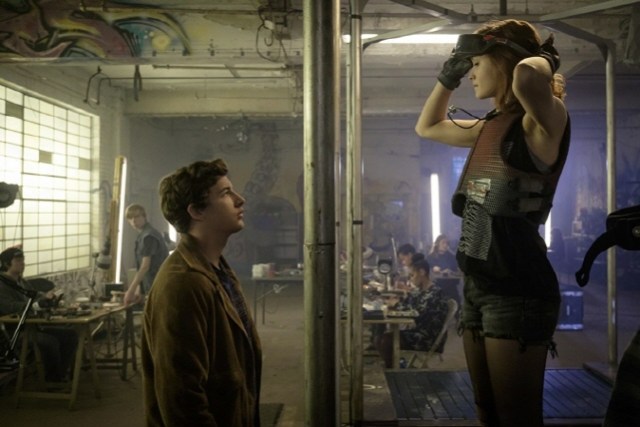
However, Wade still does not give up the hope of finding a clue someday. As your typical nerdy geek, he has accustomed himself to the numerous details in Halliday’s life and career, and that is how he accidentally comes upon a small but crucial clue to the first key of the quest. As soon as he is announced as the first one to acquire the first key, he instantly becomes far more famous and popular than before, and he also draws the attention of Art3mis (Olivia Cooke), a well-known VR user to whom he has recently been attracted.
While Wade simply wins the quest, Art3mis turns out to be far more serious than him. Nolan Sorrento (Ben Mendelsohn), Halliday’s former employee who is currently the CEO of a competing company named Innovative Online Industries (IOI), has been trying to win the quest by any means necessary, and Art3mis and several other rebellious VR users have tried to outsmart Sorrento and his countless employees, many of whom have been his miserable VR slaves as bound by their financial debts to his company (Isn’t it amusing that the movie seemingly delivers anti-corporate messages while apparently being a big corporate product?).

readyplayer03

As Wade inevitably gets involved into the conflict between IOI and the rebellion group, the movie keeps things rolling through a series of exciting sequences which are packed with many notable cultural references from the 1970-90s. I will not spoil your fun here in this review, but I guess I can tell you that there is a direct reference to “Back to the Future” (1985), and I must confess that I chuckled a lot when the movie tries something quite surprising through a certain classic horror film from the 1980s. The production design by Adam Stockhausen, who won an Oscar for Spielberg’s previous film “Lincoln” (2012), is bountiful in styles and details, and the score by Alan Silvestri, who worked here instead of Spielberg’s usual collaborator John Williams, is also very good while holding its own place among a number of period pop songs from the 1980s.

However, the movie feels a bit superficial in terms of story and characters while also being a little too long. Wade is rather bland compared to relatively more colorful characters surrounding him, and it is a shame that the movie does not delve enough into the existing difference between the OASIS and the real world, though it generates some amusement from how Wade’s fellow VR users actually look in the real world. In case of the finale sequence, it is surely overpowering as pouring lots of different elements onto the screen, but it also feels numbing at times with excessive CGIs, and we accordingly become less involved in what is being at stake for the characters in the film.

Nevertheless, in many aspects, “Ready Play One” is a commendable blockbuster film a lot better than many other ones out there, and I observed its world and details with curiosity and excitement. Along with “The Post” (2017), the movie demonstrates to us Spielberg’s immense talent and skill, and it is certainly nice to see again that he still can thrill and excite us as he did many times before. He simply wants us to be entertained, and we gladly go along with that as he dexterously pulls strings as usual.

readyplayer02

Posted in Movies | Tagged , , | 4 Comments

The Greatest Showman (2017) ☆☆☆(3/4): Schmaltzy but energetic

thegreatestshowman01

“The Greatest Showman” is willing to bet almost everything on song and dance as throwing itself into its saccharine show business story which is supposedly inspired by the life and career of P.T. Barnum, an infamous showman known for promoting various hoaxes and human curiosities such as the Feejee mermaid and General Tom Thumb. While its attempt is not entirely successful due to its thin narrative and characterization, and I was also often bothered by its schmaltzy treatment of its subject matters, the movie is still an energetic musical film thanks to its spirited soundtrack and solid performance, and I came to admire its gamely efforts despite reasonable reservation.

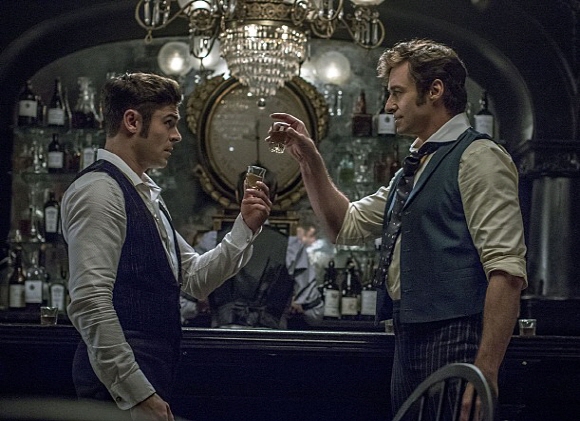
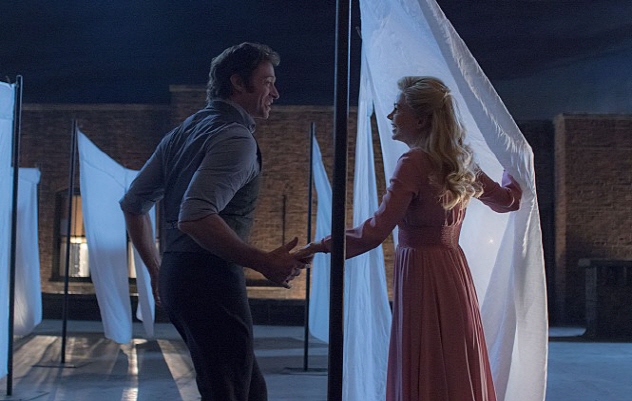
After opening with its first musical number “The Greatest Show”, the movie goes back to its hero’s early years. As the son of a poor tailor, Young Barnum (Ellis Rubin), does not look like a suitable match for a rich pretty girl named Charity (Skylar Dunn), but something instantly clicks between them when he and his father come to her father’s big house, and they soon come to spend lots of time with each other. Even after Charity is later sent away to her finishing school, they keep corresponding with each other during next several years, and Barnum, played by Hugh Jackman from this point, eventually marries Charity, who is now played by Michelle Williams, and then raises their two cute daughters along with her in New York City.

While he is happy in his modest family life, Barnum wants to achieve a lot more as an ambitious dreamer, and then there comes a big change which gives him an unexpected chance. A shipping company where he has worked is suddenly shut down, and, as trying to find any possible way to support his family, he decides to do something quite risky. After managing to get a big bank loan, he buys a shabby wax museum located in Manhattan and then promotes it as much as he can, but not many people come to the museum despite his efforts, and that is certainly daunting for not only him but also his supportive family.

thegreatestshowman03

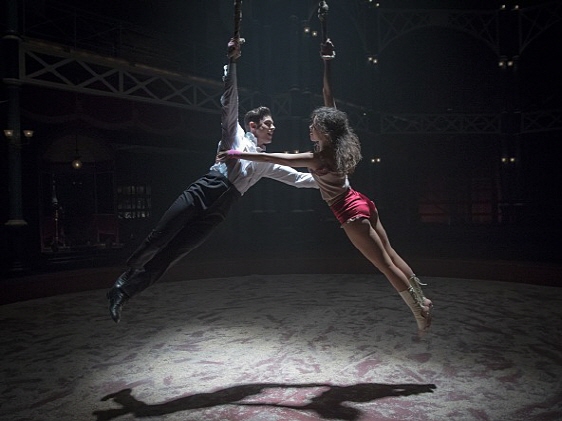
When one of his daughters suggests that he should present something ‘alive’, Barnum goes all the way with that idea as assembling a group of ‘freaks’ including a bearded lady named Lettie Lutz (Keala Settle), a dwarf who is later nicknamed General Tom Thumb (Sam Humphrey), and a black trapeze artist named W. D. Wheeler (Yahya Abdul-Mateen II) and his sister/colleague Anne (Zendaya). Many of them are understandably reluctant at first, but Barnum persuades them all to appear in front of their audiences to be shocked and amazed, and we are served with another lively musical number “Come Alive”.

As his freak show draws more money and attention in spite of considerable disdains from many people including prominent newspaper publisher James Gordon Bennett (Paul Sparks), Barnum comes to want some respectability, so he approached to Philip Carlyle (Zac Efron), a young hotshot playwright who is also the member of a respectable high society family. Carlyle is not so interested at first when Barnum offers him partnership, but then, what do you know, he finds himself being swiftly persuaded by Barnum. Like Hugh Jackman, Zac Efron is no stranger to song and dance, so we get a fun musical moment as they smoothly sing and dance together in “The Other Side”.

After Carlyle joins Barnum’s business, Barnum and his freak show become more popular than ever (Don’t ask me how that happens). They are even invited to the royal court of Queen Victoria of England, and that is where Barnum comes across a beautiful Swedish singer named Jenny Lind (Rebecca Ferguson). Smitten by her beauty, he brings Lind to US for promoting her talent, and she does not disappoint him and others at all during her first concert performance in US.

Feeling all the more exalted by his continuing rise, Barnum becomes distant to not only his family but also the members of his freak show. This is certainly a predictable plot turn, but it leads to a showstopper moment coupled with Oscar-nominated song “This is Me”, and Keala Settle, a veteran Tony-nominated actress, did a commendable job of imbuing this moment with real passion and sincerity.

thegreatestshowman04

In the meantime, the movie pays some attention to the growing affection between Carlyle and Anne. At one point, they are painfully reminded of their racial difference, but then they are reminded again of how much they love each other as singing “Rewrite the Stars”, which is definitely another memorable highlight in the soundtrack by Benj Pasek and Justin Paul, who previously won an Oscar for “City of Stars” in “La La Land” (2016).

While I must point out that P.T. Barnum in real life was a sleazy, exploitative guy in many aspects, the movie does not try to be a realistic biography drama from the very beginning, and it actually flaunts its artificial sides right in front of our eyes and ears with all those flashy musical sequences in the film. As busily hopping from one musical sequence to another, the movie often suffers from plot contrivance and half-baked characterization, but director Michael Gracey did a fairly good job of maintaining narrative momentum during its rather short running time (104 minutes), and I was seldom bored during my viewing.

I do not think that “The Greatest Showman” is as good as it aims to be, but it is still a recommendable musical film which is relatively less cumbersome than “Mamma Mia!” (2008) and “Les Misérables” (2012), and, above all, it mostly works as an enjoyable showcase of Hugh Jackman’s undeniable musical talent, which, unfortunately, has not been used that frequently for many years. Considering the considerable box office success of “The Greatest Showman”, he may get another good chance to show off his talent, and I sincerely wish that will happen as soon as possible.

thegreatestshowman02

Posted in Movies | Tagged , , | 1 Comment

Pacific Rim: Uprising (2018) ☆☆1/2(2.5/4): More Jaegers – and more Kaijus

pacificrimuprising01

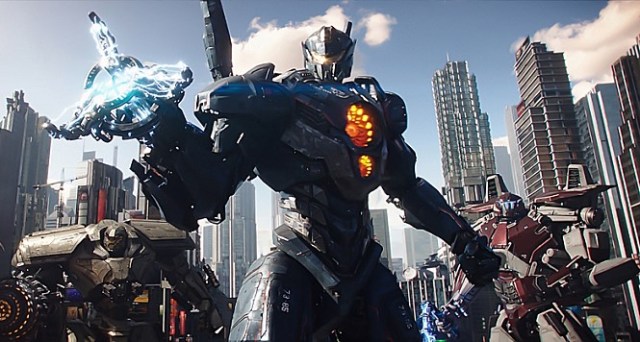
“Pacific Rim: Uprising” is as good as you can expect from a conventional but serviceable blockbuster product. While it is not as ambitious or spirited as its predecessor, the movie provides enough amount of action to entertain you, and I must admit that I was not that bored during my viewing although it does not have enough energy and personality to engage me.

The prologue part of the movie explains to us what happened after the big climactic ending of “Pacific Rim” (2013). During the next 10 years, the humanity has gradually recovered from the damages resulted from its long war with huge alien monsters called ‘Kaiju’. and the Pan-Pacific Defense Corps (PPDC) and its big robots called ‘Jaeger’, which were crucial in the victory of the war, have become far less necessary than before. While the PPDC is still maintained, some of Jaegers became retired and abandoned, and the following scene shows an attempt to steal some important component from one of those abandoned Jaegers.

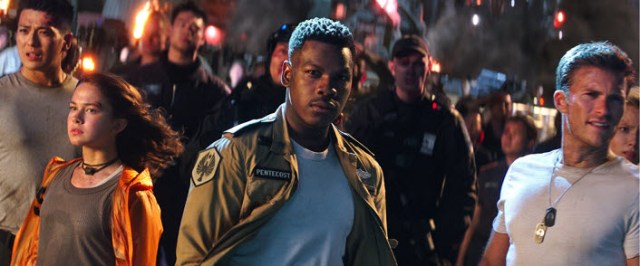
To Jake Pentecost (John Boyega), the son of legendary war hero Stacker Pentecost (Idris Elba), Jaegers once meant a lot to him when he was a PPDC trainee during the war, but he has been a small-time scrapper stealing and selling components from Jaegers since he was kicked out of the PPDC for some disagreeable incident. When he tries to steal that important component from the abandoned Jaeger, it is just another opportunity to earn money, but then he finds himself getting involved with a teenager girl named Amara Namani (Caliee Spaeny), who needs that component for building her own Jaeger. In the end, they are arrested together, and Jake’s adopted sister Mako Mori (Rinko Kikuchi), who is currently the leader of the PPDC, gives him an offer he cannot refuse; instead of going to prison, he will go back to the PPDC as a training instructor, and Amara will accompany him as a new trainee.

pacificrimuprising04

Right from their first day at the PPDC headquarters near Hong Kong, the situation does not look that good for both Jake and Amara. While she cannot help but enthusiastic as looking around a number of Jaegers in the PPDC headquarters, Amara soon faces a serious difficulty as going through the training along with other trainees, and she also has to cope with an aggressive trainee who is rather harsh and hostile to her. In case of Jake, he has to work with his old friend and colleague Nate Lambert (Scott Eastwood), and it is pretty clear that there are some bad feelings remained between them.

Meanwhile, the PPDC comes to face a possible change which is not welcomed much by Mako and some others in the PPDC. Liwen Shao (Jing Tian), an ambitious entrepreneur who is the CEO of a big global technology company, proposes the replacement of Jaegers with her drone robots developed by her technicians including Dr. Newton Geiszler (Charlie Day), and Mako may not be able to stop this change no matter how much she tries.

And then, of course, there comes a sudden unexpected threat, and, yes, Jake and other characters around him surely come to see that they must band together for stopping another big crisis of the humanity. After a major action sequence unfolded in Sydney, the movie keeps trying one thing after another for entertaining us, and everything eventually culminates to a long action sequence featuring no less than three Kaijus and four Jaegers.

While being as big and loud as required, the action sequences in the movie are skillfully handled on the whole, but I was somehow not very impressed by that. Sure, “Pacific Rim” also has many similarly bombastic action sequences, but these sequences are presented with not only skills but also personality and style under Guillermo del Toro’s spirited direction, and I also admired his considerable attention to mood and details. In contrast, “Pacific Rim: Uprising” looks less distinctive and passionate as mechanically moving from one narrative point to another, and the result is less memorable in comparison despite its well-made aspects.

pacificrimuprising01.png

In addition, the screenplay by director Steven S. DeKnight and his co-writers Emily Carmichael, Kira Snyder, and T.S. Nowlin often stumbles in its clumsy attempt to provide engaging story and characters. Besides Amara and Jake, the other characters around them are mostly flat and underdeveloped, and the dramas generated among them are not engaging enough to hold our attention. While “Pacific Rim” is also rather weak in terms of storytelling and characterization, many of its characters are presented with distinctive personality at least, and that was the main reason I could care about what is being at stake for them.

The main performers in the movie fill their respective roles as much as they can. While John Boyega, who has been more notable thanks to recent Star Wars film, is reliable as before, Caliee Spaeny is as plucky as demanded, and Scott Eastwood and Jing Tian acquit themselves well in spite of being stuck with their thankless roles. In case of Rinko Kikuchi, Charlie Day, and Burn Gorman, they merely function as plot elements, and that reminds me of how much they were better in the previous film.

Overall, “Pacific Rim: Uprising” is one or two steps below “Pacific Rim”, so I give it 2.5 stars, but I must tell you that it is a better alternative to those dreadful Transformer movies. Although I still think it could be better with more style and substance, I am actually relieved to see that it is not as bad as I feared, and I sincerely hope that the possible next sequel will fix that problem.

pacificrimuprising02

Posted in Movies | Tagged , , , | Leave a comment

Being There (1979) ☆☆☆☆(4/4): Still being there

beingthere01.jpg

Although more than 35 years have passed since it came out, “Being There”, which is based on Jerzy Kosiński’s novel of the same name, remains as a brilliant satire with timeless insights on media and celebrity. Gently strolling along with its adamantly elusive hero, the movie is funny and absurd as he quickly and unbelievably rises from obscurity to nationwide fame, and I could not help but chuckle during my recent viewing as admiring again how it slyly makes sharp points on its subjects via inspired comic moments to be cherished.

Its hero is an illiterate gardener named Chance (Peter Sellers), and the movie opens with how he begins another usual day of his insulated daily life within a cozy house located somewhere in Washington D.C., where he has lived for many years since he was brought by the owner of the house when he was very young. He wakes up shortly after a TV alarm in his bedroom is set off, and then he goes through his morning routines including taking care of plants in the greenhouse, and then he waits for breakfast to be brought by an old black maid, while passively watching whatever is shown on a small TV on the table.

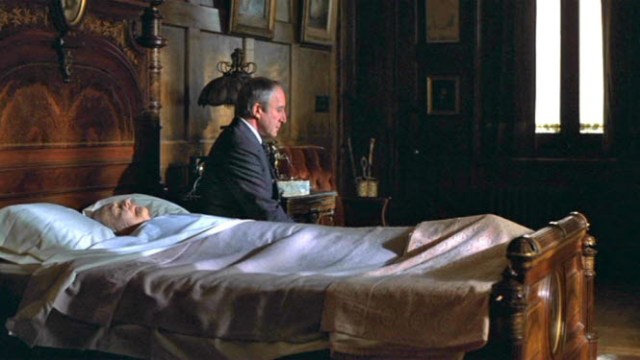
When the maid comes to Chance, she is visibly disturbed as she has just found that the owner of the house, called ‘the old man’, is dead, but, to our small amusement, Chance does not respond much to this sad news. Even when he later goes upstairs and then sees the dead body of the old man, he does not look like feeling anything except, probably, curiosity, and then he occupies himself in watching TV. From this odd behavior of his, anyone familiar with autistic spectrum will get some idea of how his simple mind works. He just sticks to what he likes most, not interested much in the situation which may be beyond his understanding.

beingthere05

He continues to do his gardening work as usual, but there soon comes an inevitable change. Two lawyers handling the old man’s estate come to the house, and they notify to him that he should leave the house. Chance acquiesces without any complain; he packs his suitcase on the next day, and then he walks out of the house for the first time in his life while wearing the old man’s suit as before. As he walks around the surrounding neighborhood areas of Washington D.C., the movie makes a humorous nod to “2001: A Space Odyssey” (1968) through the pop version of Richard Strauss’ “Also sprach Zarathustra”, and Chance’s child-like attitude is instantly linked with the image of the Star Child of “2001: A Space Odyssey” in our mind. Everything looks new and wondrous to this manchild, and there is a priceless moment of self-recognition when he sees himself on a displayed TV connected with a video camera and then tries to have some fun with that.

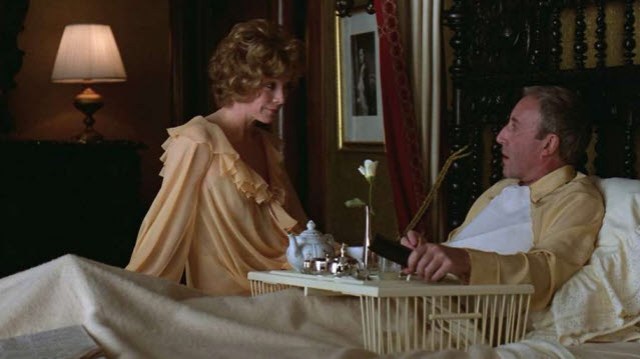
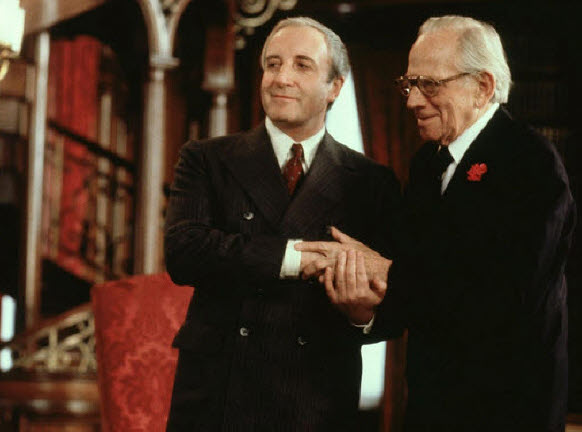
And that is when he happens to encounter Eve Rand (Shirley MacLaine), who is the wife of Benjamin Rand (Melvyn Douglas), a dying old man who is also one of the most powerful industrialists in the country. Due to his minor leg injury caused by Eve’s car, Eve brings Chance to a huge manor where she and her husband live, and, after accidentally mishearing his name, she introduces him as ‘Chauncey Gardiner’ to her husband and others in the manor. Just because of how his mild, courteous attitude and dapper appearance. Chance is mistaken for a man of substance, and Rand, who comes to like Chance a lot after having a dinner with him, is willing to give some boost to his new friend as a prominent kingmaker with many strings to be pulled. In fact, he is a very close friend of the US President, and the President is about to visit him for having a serious conversation on the current problems of national economy.

This is surely a classic case of mistaken identity which has been utilized in countless comedy films, and we get lots of wry fun as the situation surrounding Chance becomes more absurd step by step. When he is asked about an economic policy by the President, Chance gives a plain response consisting of bland horticultural terms (“As long as the roots are not severed, all is well. And all will be well in the garden.”), but the President and Rand interprets it as a wise, no-nonsense comment on national economy, and the President even embellishes it further when he makes a speech at the following public conference. Once he mentions Chauncey Gardiner during his speech, everyone is curious about who the hell is Chauncey Gardiner is, and Chance soon becomes a new celebrity in the town as touted as a brilliant and interesting man to watch.

beingthere03.jpg

Director Hal Ashby, an idiosyncratic filmmaker who had a remarkably productive period during the 1970s with a string of acclaimed works including “The Last Detail” (1973), “Bound for Glory” (1976), and “Coming Home” (1978), trusts us to get this hilarious irony for ourselves. He and his cinematographer Caleb Deschanel steadily maintain a calm, muted tone throughout the film, and everything on the screen is presented with phlegmatic realism. Like its hero, the movie sticks to its neutral position without telling us how to respond to it, and many comic moments generated from Chance’s unbelievable social/political ascent subtly deliver biting messages along with a sly sense of humor. As a cipher doling out simple, banal words with no apparent inclination, Chance is a perfect blank figure for not only media but also politics, and he is even considered as a strong candidate for the upcoming US Presidential election later in the story. This might look silly in the 1970s, but it does not look that outrageous these days considering the absurd superficiality of George W. Bush, and our reality recently surpassed fiction with the horrifying rise of Donald Trump, who, as many people pointed out, frequently talks like an evil twin of Chance nurtured by those hateful right-wing media companies.

From time to time, the movie goes for broader farcical moments, which are not as successful as subtler ones in the film. A subplot involved with the President’s sexual dysfunction caused by the prospect of Chance being his possible political rival is rather underdeveloped, and the one associated with Eve’s increasing sexual obsession with Chance feels too blatant at times compared to the serene ambiance of the movie, though it is uproarious to watch her going all the way with her another misinterpretation of Chance’s words. In case of a brief scene where that old black maid throws an acerbic comment on Chance’s TV appearance, it makes its point on race a little too directly to us, but I must admit that it still rings true even at present (“Yes, sir, all you’ve gotta be is white in America, to get whatever you want.”)

beingthere02

Anyway, the movie keeps its overall tone mostly intact thanks to Peter Sellers, who was deservedly Oscar-nominated for his committed performance. As a chameleon-like performer of anonymous comic persona (He once said, “When I am not playing a role, I am nobody.”), he instinctively saw that Chance is a role he was born to play when he encountered Kosiński’s novel, and he gave what would be remembered as the final great performance in his distinguished career. Yes, his acting in the film is essentially one-note, but it is a finely calibrated one-note performance which ably carries the movie from the beginning to the end, and his character comes to function as a sort of mirror to project not only others around him but also ourselves. We are amused to observe how other characters vastly overestimate Chance as believing whatever they want to see from him, but then we are also reminded that we may not be so different from Chance, considering how often we mindlessly absorb those endless streams of soundbites from media everyday.

The other performers in the film are credible in their comic interactions with Sellers on the screen. While Shirely MacLaine brings warm humanity to her rather broad character, and Jack Warden is convincing as his character feels confounded and then threatened by Chance, and Melvyn Douglas, who won the Supporting Actor Oscar for his performance, is poignant especially during a crucial dramatic scene, where we possibly observe a brief glimpse of genuine emotional response from Chance.

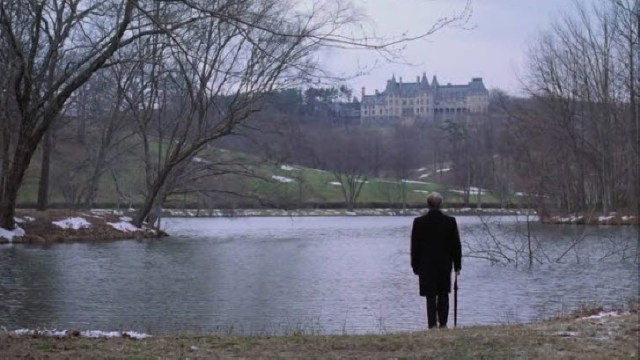
Although it goes on a bit too long with its one-joke premise and is occasionally hampered by its minor flaws, “Being There” is still a great comedy film worthwhile to be watched and discussed, and its thought-provoking finale will linger on you for a long time, even though the spell of this confounding moment is broken to some degrees by a series of outtakes shown during the following end credits. Is it merely another unbelievable moment of sheer luck? Or, does it mean that Chance is actually a lot more than what we have observed from him? Regardless of how we should interpret it, he will simply be there as usual.

beingthere04

Posted in Movies | Tagged , | Leave a comment