A Skin So Soft (2017) ☆☆☆(3/4): Of muscle and masculinity

skinsosoft02.jpg

Going to the Jeonju International Film Festival has been a sort of ritual for me. After I watched Ramin Bahrani’s “Goodbye Solo” (2008) there, I have made a regular visit to the festival during last 8 years, and I was seldom disappointed although I could only watch one or two films there. In 2010, I was fortunate enough to get a chance to watch the newly restored version of “Metropolis” (1927), and I later wrote an enthusiastic essay which was subsequently posted on the website of my late friend/mentor Roger Ebert. In 2014, I watched “At Berkeley” (2013) and “The Unknown Known” (2013), and they were two of the best documentary films I saw during that year. In case of last year, I watched “The Student” (2016) and “Menashe” (2017), and I still remember many memorable moments in these two different but equally interesting films.

In this year, I chose to watch Canadian documentary film “A Skin So Soft”, which drew my attention after I read an article about it and several other documentary films shown at the 2017 Toronto International Film Festival. I immediately checked its trailer, and it looked intriguing to me while also reminding me of other similar documentary films such as “Pumping Iron” (1977) and “Generation Iron” (2013).

As some of you have already guessed from these two documentary films, “A Skin So Soft”, whose original French title is “Ta peau si lisse” (It means “Your Skin So Smooth”, which is a more appropriate title than the English one in my trivial opinion), is about bodybuilding, and it focuses on six different bodybuilders who are diverse in terms of physique and many other things but share common traits among themselves. Most of them are driven to push themselves toward each own physical limit, and how much they are devoted to their muscular bodies often reminds us of that fascinating contradiction in their field, where masculinity is not so far from femininity at times.

skinsosoft03

The documentary opens with a series of scenes which introduce us to its six bodybuilders one by one. Jean-François Bouchard, a guy who instantly draws our attention with his bulky, tanned appearance as well as his bushy beard, begins his day with smoothing his skin, and his scene becomes all the more amusing as he tries to decide which clothes and shoes he is going to wear for this day. While he is the youngest and leanest one of the bunch, Alexis Légaré has diligently trained hard for making his body bigger and stronger, and the same thing can be said about Ronald Yang, a Chinese Canadian guy who has been preparing for the upcoming national competition.

In case of Cédric Doyon, who has many tattoos on his brawny body, he has one of the most memorable moments in the documentary. Not long after he wakes up in the morning, he begins to eat his first meal of the day while watching some YouTube clip via his laptop computer. As he relentlessly chewing and munching his meal, his rather hardened face gradually shows an emotional response, but neither he nor the documentary tells us the reason, so we cannot help but wonder. Is it because of what he sees from that YouTube clip? Or is there some other reason?

Maxim Lemire, the bulkiest one in the bunch, is relatively less concerned about how his humongous body looks, but he is equally competitive in his own field. As a strongman, he mainly focuses on increasing body strength, and we get a couple of scenes where he demonstrates his enormous strength in public. We see him pulling away a six-wheel truck alone by himself, and we later see him participating in a wresting show. Before walking up to the ring, he is visibly nervous and anxious, but then he soon shifts himself to an aggressive mode as required, and the crowd cheers for that.
skinsosoft05

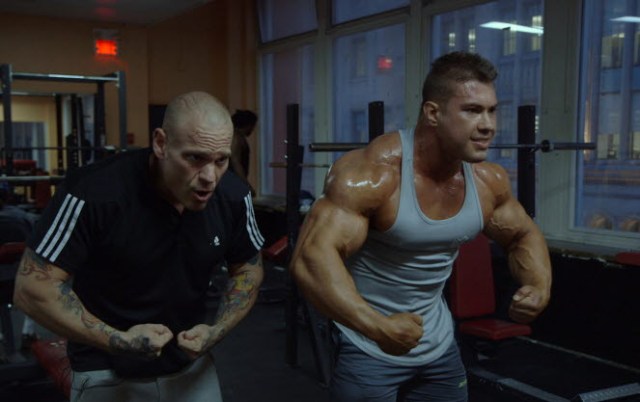
Compared to other guys, Benoit Lapierre is less competitive because he retired from his bodybuilding career some years ago. Now he works as a New Age therapist, but he also works as a gym trainer, and we see him teaching a young bodybuilder at a gym. Around the time when a competition is held, he comes to several competing bodybuilders for helping them getting better physical condition and demonstration, and that is another amusing moment in the documentary.

While not making any particular comment on them, director Denis Côté is clearly fascinated with the lifestyle of his human subjects, and his fascination is gradually conveyed to us via a number of introspective personal moments where his cinematographer François Messier-Rheault’s camera calmly looks at their faces. They usually do not tell much about themselves, but they come to us interesting guys to observe nonetheless, and Côté did a competent job of presenting them with honesty and respect.

Around the end of the documentary, all of them gather for spending a brief time together at some rural retreat. It is apparent that this is mainly for providing the obligatory ending to the free-flowing narrative of the documentary, but it is a bit touching nonetheless to see these guys becoming a little more relaxed and cheerful than before, though they will surely go back to their demanding lifestyle once this short rest is over.

Because of its dry, austere approach, “A Skin So Soft” will probably require some patience from you, but it is an engaging documentary film which works as a close, intimate glimpse on bodybuilding and masculinity via its lean, efficient storytelling. After it was over, I walked out of the screening room with considerable satisfaction, and that surely reminded me again that the Jeonju International Film Festival is indeed something worthwhile to be cherished. Yes, the festival still needs to be improved in several aspects, but it has given me many chances to watch something new and different during last 8 years, and I am grateful for that.

skinsosoft01

Posted in Movies | Tagged , , , | Leave a comment

Dangal (2016) ☆☆☆(3/4): Two wrestler girls pushed by their father

dangal03.jpg

Indian film “Dangal”, which is belatedly released here in South Korea during last weekend, is a conventional sports drama which turns out to be better than I thought. Although there are numerous clichéd moments here and there in the film, they are handled well enough to amuse and entertain us throughout its 161-minute running time, and we come to root for its main characters as enjoying its spirit and personality.

The movie opens with the prologue scene set in 1988, and we meet Mahavir Singh Phogat (Aamir Kahn), a former wrestler who wanted to win an Olympic gold medal for his country but had to give up his ambition because of his father’s demand. After marrying his wife Daya (Sakshi Tanwar), Mahavir becomes determined to realize his dream through his future son, but, alas, he only ends up being the father of four daughters, and that certainly daunts him a lot.

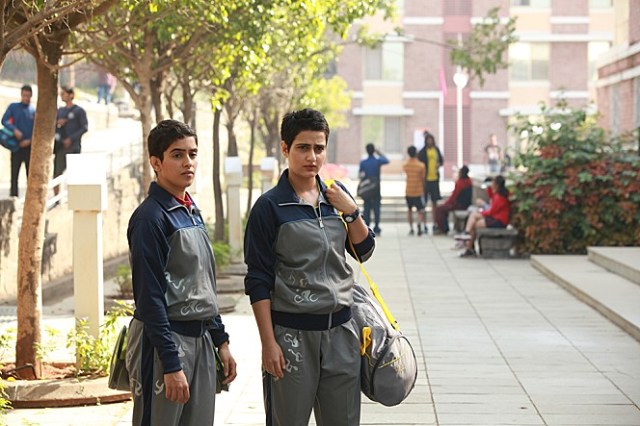
However, there comes a sudden idea to him on one day when he learns that his two older daughters Geeta (Zaira Wasim) and Babita (Suhani Bhatnagar) got themselves into a fight with two local boys and then beat them up pretty hard. Coming to see that Geeta and Babita may be able to be wrestlers, Mahavir pushes them into a rigorous training process right from the very next morning, and Geeta and Babita are not so pleased by this drastic change coming upon them. With their mother standing by their father’s decision, they have no choice but to follow their father’s instructions along with their male cousin (Ritwik Sahore), who reluctantly joins Geeta and Babita’s training when Mahavir realizes that his daughters need a training partner for improving their physical strength and athletic skill.

dangal01

The more their father demand from them, the more Geeta and Babita become exhausted and frustrated. Besides going through grueling early morning workouts everyday, the girls are also demanded to stick to strict diet, and they are even forced to cut their hair short for a practical reason. Furthermore, they have to endure the constant ridicules from their neighbors and schoolmates, and that surely makes them all the more miserable and exasperated.

However, Geeta and Babita come to realize that they are relatively more fortunate compared to many other girls in their neighborhood, who, as pointed out during a small poignant moment in the middle of their friend’s early wedding, are only expected to be no more than a dutiful wife. Yes, it goes without saying that Mahavir is too harsh to his daughters at times and his motive is not entirely without selfishness, but he does care about them, and, above all, he really wants them to have a better life through wrestling.

Once Geeta and Babita become far more motivated than before, things begin to go pretty well for them. Geeta’s first match in public is not exactly successful, but that first experience gives her more confidence, and she soon starts to advance further along with her sister. Thanks to their continuing wins at several major competitions, nobody ridicules them now, and their father is surely proud of them more than ever.

After several years, Geeta, now played by Fatima Sana Shaikh, goes to the National Sports Academy in Patiala, and Babita, now played by Sanya Malhotra, also goes to the Academy not long after that. Mainly because of their coach, a petty guy who does not give a damn about what they experienced and learned before, Geeta keeps losing matches, and she becomes quite frustrated while also becoming distant to her father due to her disregard of his lessons.

dangal02

It is not much of a spoiler to tell you that she and her father eventually come to have a tearful moment of reconciliation, but the movie, which is loosely based on a real-life story, earns that moment thanks to its good storytelling and solid characterization, and then it goes all the way during the expected climax sequence. We can clearly see how it is trying to pull our heartstrings, but we cannot help but cheer for its main characters in the end, and the movie also shows some thoughtfulness as emphasizing the feminist aspect of its story.

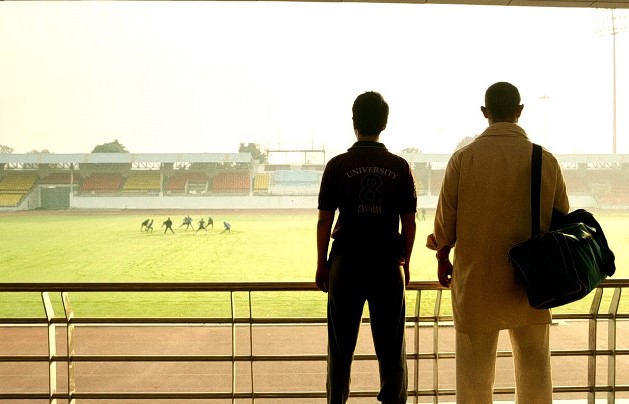
Under the competent direction of director/co-writer Nitesh Tiwari, several match scenes in the film are presented well enough to excite and thrill us, and I particularly enjoyed how these scenes are shown with each own mood and personality. While early match scenes in the film are accompanied with rough qualities as required, the subsequent match scenes are depicted with more agility and smoothness, and the movie also makes sure that we understand basic rules of wrestling matches in advance.

The cast members of the film are engaging on the whole. Firmly holding the center with his charismatic presence, Aamir Khan, who also produced the film, often stands aside for his co-performers, who ably hold their respective places well around Khan. While Zaira Wasim and Suhani Bhatnagar are flawlessly connected to Fatima Sana Shaikh and Sanya Malhotra, Sakshi Tanwar is effective as Mahavir’s understanding wife, and Aparshakti Khurana and Ritwik Sahore are also fine as functioning as the main comic relief of the story.

Although mostly staying inside its genre conventions, “Dangal” did its job as well as intended, and I surely appreciated that while being surprised to find myself becoming more emotionally involved in its drama than expected. It is a bit too long in my inconsequential opinion, but that is just one of several minor flaws in the film, and I guarantee you that you will gladly go along with its bouncing spirit.

dangal06

Posted in Movies | Tagged , , , , | Leave a comment

Human Flow (2017) ☆☆☆1/2(3.5/4): A wide, intimate look into global refugee crisis

humanflow04

As a wide, intimate look into the ongoing refugee crisis around our world, Ai Weiwei’s documentary film “Human Flow” is sometimes difficult to watch. Moving around here and there around the world, the documentary frequently shows us vivid, harrowing moments of human despair and desperation, and we come to worry more about the future of humanity while gradually being reminded again that we really must do something about this increasingly serious global problem sooner or later.

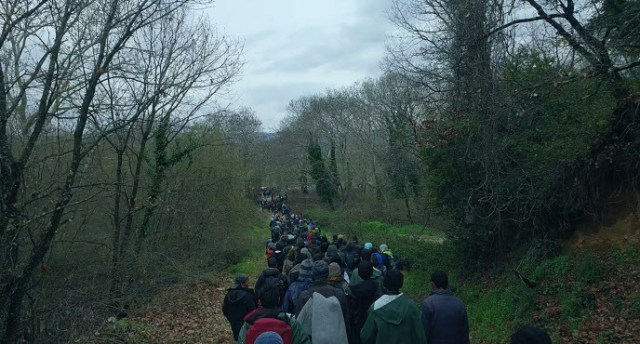
The documentary opens with a group of refugees crossing the trait between Turkey and Greece. Since Afghanistan and Iraq were shaken up by the US invasion during the early 2000s, thousands of refugees from these two countries have tried to enter the Europe continent via Turkey and Greece every year, and that has been a big problem for many European countries which are not prepared well for such a massive human migration like that. As sharply pointed out by one interviewee in the documentary, their dated asylum systems do not suit well to this situation, and the situation becomes all the more complicated as the number of refugees is further increased due to the ongoing civil war in Syria.

After managing to arrive in Greece, refugees soon embark on their journey to European countries which may accept them, but then they only find themselves stopped at the Greece-Macedonia border, and the documentary shows us how some European countries including Hungary become quite stringent to refugees trying to go through them. Blocked with iron fences, their borders are constantly guarded by soldiers, and refugees have no choice but to stay around border regions while desperately hoping for any change in their bleak circumstance.

humanflow01

The documentary pays some attention to a small Greek border town where thousands of refugees have struggled with their very poor living condition. They lack many necessary things including food, clean water, and electricity, and they do not get much medical help either when they happen to get sick. They do get some help from UN and other non-governmental organizations, but that is far less than enough, and we do not see much optimism when some of them talk directly to the camera.

We also look around other places with equally serious refugee problems. In Bangladesh, we see a big refugee camp filled with many Rohingya people who fled from the ongoing genocide in Myanmar, and we listen to a community leader who tries to be hopeful about his people’s future despite what he and they went through. In South Italy, thousands of African refugees try to sail across the Mediterranean Sea every year, and we hear about one harrowing story involved with a pregnant refugee who could have died along with her baby if she had been less fortunate. In Jordan, refugees are treated relatively better as the country has been accustomed to its longtime role as a shelter for thousands of Palestinian refugees, but we also observe how its borders have been more restricted than before due to the Syrian civil war and the rise of ISIS.

The most depressing sights in the documentary come from Lebanon and Gaza and West Bank areas. In case of Lebanon, the third of its whole population is Palestinian refugees and their descendants, but many of these people have been stuck in their slum areas for many years without getting any significant help, and we are told about how such a despairing living condition like that can lead to more despair and hopelessness in the future. In case of Gaza and West Bank areas, many Palestinian people living there are virtually blockaded by Israel and Egypt everyday, and there is an ironic but poignant moment when a tiger is allowed to be shipped away to South Africa thanks to the joint effort of Palestinian and Israeli people.

humanflow05

The documentary also points out another crucial factor in the refugee crisis besides wars and conflicts, and that is, yes, climate change. This will certainly be a far bigger threat to humanity during next several decades, and we may face a refugee crisis of unprecedented scale if we are not prepared for that, but, as many of you know, some prominent politicians in our world are still in denial while further damaging our world as usual.

Steadily maintaining the calm, meditative tone of his documentary, Ai seldom overlooks the humanity of many different people shown in the documentary. While he appears in front of the camera from time to time, he never attempts to draw our attention as sticking to his gentle low-key presence, and I was particularly touched when he quietly consoles a woman who is emotionally overwhelmed during her interview. In addition, he provides a number of stunning visual moments to remember (The movie was shot by him and his 11 cinematographers including Christopher Doyle, by the way), and I especially like one superb moment which was captured by a drone camera slowly descending from the sky to the middle of a refugee camp.

“Human Flow”, which was included in the short list for Best Documentary Oscar early in this year but was unfortunately not nominated, is a slow but unforgettable experience on the whole, and it is surely one of the best documentary films of last year. As observing the increasing danger and uncertainty in our current time, I often doubt whether we will survive the 21st century, but I also think we can do better for our future with more compassion and empathy, and the documentary powerfully conveys that to us while soberly recognizing our imminent problem. We still have a chance to do right things for us as well as our planet, and I sincerely hope that we will not only survive but also prevail with our humanity.

humanflow03


Posted in Movies | Tagged , | Leave a comment

Wonderstruck (2017) ☆☆1/2(2.5/4): Not wondrous enough

wonderstruck01

Todd Haynes’ latest film “Wonderstruck” is not as wondrous as its very title suggests. Although there are a number of nice moments of charm and innocence, the movie is unfortunately hampered by its rather flat, contrived storytelling, and I must confess that it was sometimes difficult for me to care about its story and characters even though I admired some of its good elements including authentic period atmosphere and solid lead performances.

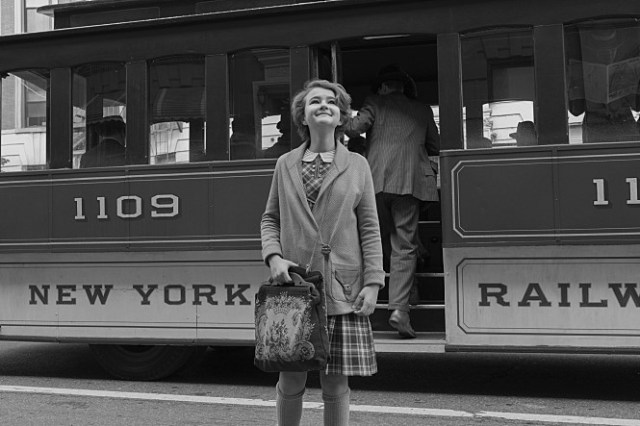
During the first two acts of its story, the movie alternates between two different storylines. While the first storyline is about a young boy living in Gunflint Lake, Minnesota, 1977, the second one is about a young deaf girl living in Hoboken, New Jersey, 1922, and they are respectively presented via each own distinctive style and mood. While the first one is shot in color, the second one is shot in black and white, and it has no sound except music for not only evoking the silent black and white film of the 1920s but also reflecting its young heroine’s disability.

In the beginning, we get to know a bit about how Ben (Oakes Fegley), the young boy in the first storyline, has been haunted by the memories of his mother Elaine (Michelle Williams), who recently died because of a tragic car accident. While his aunt’s family provides him a comfortable place to live, Ben cannot help but think more of his mother, and he also becomes more curious about his absent father, about whom his mother did not talk much for some reason.

On one day, while searching through his mother’s belongings, Ben comes across a clue which may lead him to his father. It is a small book about museum, and the book contains the address of a certain bookshop located in New York City. Convinced that the bookshop is where his father lives, Ben decides to go to New York City alone, even though he happens to lose his hearing due to an unlucky incident.

wonderstruck03

Of course, things do not go well for Ben right from when he eventually arrives in New York City, and he soon finds himself lost in this big city, but then he comes across a black kid named Jamie (Jaden Michael). Although their first encounter is a little awkward due to Ben’s acquired disability, they get closer to each other after a playful moment unfolded around in the American Museum of Natural History, where Jamie usually spends time while his divorce father is working there. Jamie later shows Ben his private place somewhere in the museum, and Ben comes to get some rest there although he is still determined to find where his father is.

Ben’s journey is frequently intercut with the journey of Rose (Millicent Simmonds), the young deaf girl of the second storyline. For a personal reason which will be revealed later, Rose has been obsessive about a famous silent movie star named Lillian Mayhew (Julianne Moore), and we observe how adamant Rose is in her yearning toward Mayhew. She attentively watches Mayhew’s latest silent film at a local theater even though she cannot hear the accompanying organ performance, and she has also collected many newspaper and magazine articles about Mayhew in her scrapbook.

While she lives in an affluent environment thanks to her rich father, Rose feels suffocated especially when her father pushes herself into a private lesson, so she decides to run away from her house to go to New York City and then meet Mayhew. As soon as she arrives in New York City, she sees how vulnerable she is as a deaf person, but that does not daunt her at all, and it is not much of a spoiler to tell you that 1) she finally comes to meet Mayhew and 2) her journey also comes to overlap with Ben’s.

The movie is based on the book of the same name by Brian Selznick, who is the author of “The Invention of Hugo Cabret”, which is, as some of you already know, the basis of Martin Scorsese’s “Hugo” (2011). Like “Hugo”, “Wonderstruck” attempts to generate the sense of innocent wonder to engage and touch us, but Selznick’s adapted screenplay fails to maintain enough narrative momentum to hold our attention, and the movie stumbles from time to time as awkwardly going back and forth between its two storylines. While these two storylines eventually converge on the last act as expected, the result feels perfunctory instead of being satisfactory, and the final scene coupled with a certain big incident which did happen in New York City in 1977 does not feel as magical as intended.

wonderstruck02

At least, the movie is admirable on technical aspects. While cinematographer Edward Lachman, who was Oscar-nominated for his previous collaboration with Haynes in “Carol” (2015), did an impeccable job of establishing two very different period atmospheres on the screen, the production design by Mark Friedberg and the costume by Sandy Powell are bounteous with small and big details to notice, and Carter Burwell’s score is impressive especially during the scenes associated with Rose.

The main cast members of the movie handle well their archetype characters. Oakes Fegley, Millicent Simmonds, and Jaden Michael are believable in their respective roles, and Simmonds, who recently drew more attention thanks to her fine performance in “A Quiet Place” (2018), is simply wonderful as deftly carrying her part in the movie alone. While never overshadowing the young performers in the film, Julianne Moore, Michelle Williams, Tom Noonan, and Cory Michael Smith fill their supporting roles as required, and Moore has some fun with her movie star character.

“Wonderstruck” is not a total failure at all, but it is not as successful as Haynes’s best works such as “Far from Heaven” (2002) and “Carol”. I clearly saw what the movie attempted to do, and I was ready to become emotionally involved in its story and characters, but I only felt disappointed and dissatisfied mainly due to its weak narrative. There is some magic indeed, but that is not enough in my trivial opinion, and I think you will have a more satisfying time with “Hugo”, which is certainly a better film in comparison.

wonderstruck04

Posted in Movies | Tagged , | Leave a comment

Avengers: Infinity War (2018) ☆☆1/2(2.5/4): An ambitious but mixed cliffhanger

avengersinfinitywar03

“Avengers: Infinity War”, the 19th feature film of the Marvel Cinematic Universe (MCU), attempts to be a big, ambitious cliffhanger for whatever will come in the next year, but it does not entirely work well as trying to juggle too many different things together during its 150-minute running time. While there is nothing particularly wrong in its individual moments, they do not cohere well with each other to become something truly distinctive and impressive on the whole, and the resulting mediocrity is a disappointment compared to the vibrant style and personality observed from some of recent MCU movies.

Like “The Avengers” (2012), “Avengers: Age of Ultron” (2015), and “Captain America: Civil War” (2016), the movie is filled with numerous superheroes, and it surely surpasses the predecessors in terms of quantity. Besides nearly all of the Avenger members presented in the previous three films, we also have 1) Dr. Stephen Strange (Benedict Cumberbatch) from “Doctor Strange” (2016), 2) a group of oddball space rogue characters from “Guardians of the Galaxy” (2014) and its 2017 sequel, and 3) T’Challa/Black Panther (Chadwick Boseman) from “Black Panther” (2018), and 4) a bunch of substantial supporting characters from all the MCU franchises except the Ant-Man series. I did not count them all, but, according to others, there are total 76 main characters in the film, and that is certainly quite a huge group to say the least.

The villain against whom our bunch of heroes come to fight together is a big bad alien named Thanos (voiced by Josh Brolin), who was briefly introduced in “The Avengers” and “Guardians of the Galaxy”. For his deranged Malthusian plan on the whole universe, he is determined to have all of six powerful stones called ‘Infinity Stone’, and, as shown from the opening scene of the movie, nothing seems to be capable of stopping the advance of him and his ruthless minions.

Because, as some of you already know, two Infinity Stones happen to be on the Earth, Thanos sends his minions to the Earth. After fortunately learning of this dangerous situation in advance, Dr. Strange and his friend/colleague Wong (Benedict Wong), who have protected one of two Infinity Stones, immediately approach to Tony Stark/Iron Man (Robert Downey Jr.). As shown from the trailer of the movie, these three guys and Dr. Bruce Banner/Hulk (Mark Ruffalo) and Peter Parker/Spider-Man (Tom Holland) soon find themselves confronting a big threat from the outer space while New York City and its citizens are thrown into panic, and we accordingly get the first major action sequence in the film.

avengersinfinitywar02

Meanwhile, Steve Rogers/Captain America (Chris Evans) and other several Avenger members also get involved in this circumstance. After Wanda Maximoff/Scarlet Witch (Elizabeth Olsen) and Vision (Paul Bettany) are attacked during their secret romantic meeting because of the Infinity Stone on the forehead of Vision, Rogers and his colleagues go to Wakanda for getting some important technical help from T’Chlla, and Rogers is certainly glad to meet again his old friend Bucky Barnes/White Wolf (Sebastian Stan), who has been protected and cured there since what happened in the finale of “Captain American: Civil War”.

There is also a subplot involved with Thor (Chris Hemsworth), who is luckily rescued by the gangs of “Guardians of the Galaxy” after his confrontation with Thanos. Once he sees that he needs something as mighty as his hammer which was destroyed in “Thor: Ragnarok” (2017), Thor instantly goes to a certain place somewhere in the corner of the universe, and we get some amusement from the gradual camaraderie between him and Rocket (voiced by Bradley Cooper), who accompanies Thor along with Groot (voiced by Vin Diesel).

In the meantime, the other members of Guardians of the Galaxy including Peter Quill/Star-Lord (Chris Pratt) and Gamora (Zoe Saldana) try to track down Thanos, who is quite formidable in many aspects although he does not collect all of six Infinity Stones yet. While effectively exuding steely menace and authority, Brolin also brings Shakespearean pathos to his fanatic character, and he is particularly good during the scenes involved with Gamora, who is, this is not a spoiler at all, his stepdaughter and still struggles with her conflicted feelings toward her abusive stepfather.

The movie tries to roll all these subplots into one big package, but it does not succeed much while notably failing in several aspects. Trying to be as grim and serious as demanded by the story, the screenplay by Christopher Markus and Stephen McFeely also tries to lighten up the mood with the constant supply of quips and wisecracks from not only Stark but also several other characters, but these two contrasting sides do not mix well together, and this resulting discord is sometimes quite distracting. In addition, the movie handles most of its characters merely as pieces to be moved here and there without much development, and that is one of the main reasons why the finale is not as impactful as intended.

avengersinfinitywar04

Directors Anthony Russo and Joe Russo, who previously directed “Captain America: Civil War”, keep things rolling via a series of big action sequences, but these action sequences mostly lack style and personality. They are certainly well-made, but they feel numbingly repetitive with scattershot editing and shaky camerawork, and that monotonous aspect is only more highlighted by a few good moments which do show some style and personality. For example, I enjoyed the unbridled fun of a sequence unfolded in a sort of space blacksmith’s shop, and I also liked how several main characters attempt to overpower Thanos at one point later in the story.

The cast members of the movie try their best as filling their respective spots. While Robert Downey Jr. and Benedict Cumberbatch have numerous moments for wielding their sardonic wit as usual, Chris Hemsworth shows more of his humorous side which was wonderfully utilized in “Thor: Ragnarok”, and he clicks pretty well with Bradley Cooper in their comic interactions. In case of the rest of the cast members, most of them are under-utilized to say the least, but Zoe Saldana and Elizabeth Olsen manage to leave some impression even though there are not many things to do for them.

Unlike “Black Panther” and “Thor: Ragnarok”, recent MCU movies which tried to do something different than usual and succeeded more than expected, “Avengers: Infinity War” seems to be merely content with bulking up itself within its genre boundaries, and the result is a product which is a little too bland and long for me to care enough about its story and characters. Because of the lack of synergy between its assembled elements, I guess I can do a simple calculation based on six recent MCU movies released after “Avengers: Age of Ultron” (2015). I gave 3.5 stars to “Black Panther”, 3 stars to “Doctor Strange”, “Guardians of Galaxy Vol. 2” (2017), and “Thor: Ragnarok”, and 2.5 stars to “Captain America: Civil War” and “Spider-Man: Homecoming” (2017), so the average score is 2.9 stars, and I accordingly give “Avengers: Infinity War” 2.5 stars. If you do not agree with me, please do your own math and then decide whether you will watch it or not.

avengersinfinitywar05

Posted in Movies | Tagged , , , , , | 3 Comments

Happy End (2017) ☆☆1/2(2.5/4): The clinical examination of a loveless family

happyend01.jpg

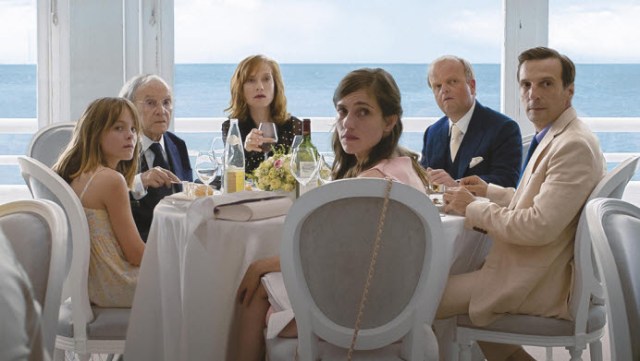
As shown from many of his notable works, Michael Haneke has always been fascinated with the dark, uncomfortable aspects of human nature, and his latest film “Happy End”, which was the Austrian entry for the Best Foreign Language Oscar in last year, is no exception. Calmly and coldly looking into one loveless family, the movie attempts to strike us with several edgy moments generated among its main characters, and it works to some degrees although its good individual scenes do not build up to something coherent and interesting enough to hold our attention throughout its running time.

At first, the movie shows us a series of increasingly disturbing smartphone video footage clips, which are shot by a 13-year-old girl named Eve (Fantine Harduin). As living with her mother after her mother’s divorce, Eve has felt lots of resentment toward her mother, and that is the main motive behind her decision to poison her mother. After testing her lethal plan with her pet rodent, she promptly moves onto the next step, and we soon witness the following consequence along with her.

While her mother remains unconscious in a hospital, Eve is brought to a big, luxurious house where her doctor father Thomas (Mathieu Kassovitz) and his other family members live, but her new environment is not exactly comfortable for her. Everyone in the house does not care much about her as usually being occupied with each own matter, and the only consolation comes from her infant half-brother, who reminds her of her older brother who unfortunately died several years ago due to his illness.

happyend02

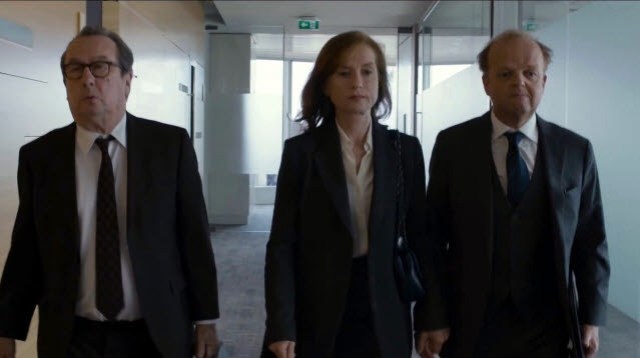
As Eve tries to be accustomed to her changed circumstance, the movie gradually reveals the cracks behind the seemingly stable façade of her family. Although he seems to be happy with his second wife Anaïs (Laura Verlinden) and their baby son, Thomas turns out to be having an affair with some woman, and the movie phlegmatically observes their naughty online chatting at one point. Always busy with running the family company, Thomas’ sister Anne (Isabelle Huppert) is distant to everyone including her own son Pierre (Franz Rogowski), and Pierre does not like much working in the family company – especially after an unfortunate incident happens at the construction site of the company.

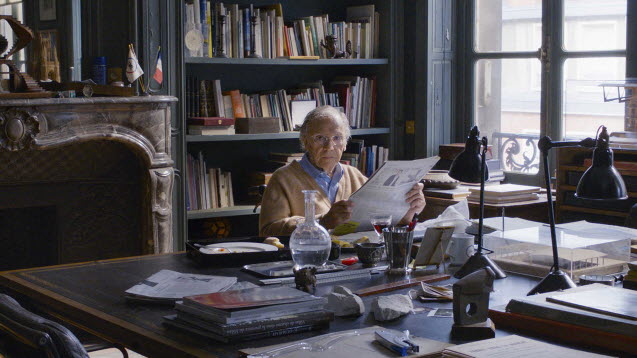
And there is Georges (Jean-Louis Trintignant), the aging patriarch of the family who has been going through the early stage of senility. Although he is forgettable at times, he is well aware of his irreversibly fading status, and we are not so surprised when an ‘accident’ occurs during one night. As reflected by what he says to his granddaughter later, he knows too well how miserable and helpless he will eventually be, and he surely prefers to go gently into darkness without any unnecessary pain and misery.

Sternly maintaining the detached mood surrounding its main characters, the movie gives us exactly what we can expect from Haneke’s work. While we come to observe many of its main characters from the distance, there is always a subtle sense of tension on the screen, and that makes us keep wondering what can possibly happen next among them. The cinematography by Haneke’s usual collaborator Christian Berger, who was Oscar-nominated for “The White Ribbon”, is fluid and unobtrusive in several notable long-take scenes, and there are a couple of impressive scenes which took me back to how effortlessly Haneke intrigued and then surprised us in “The Piano Teacher” (2001), “Caché” (2005), and “The White Ribbon” (2009).

happyend03

However, unlike these three memorable masterworks, the movie does not have enough narrative cohesion to hold its story and characters together. I often felt impatient with its rather scattershot narrative and thin characterization, and, though it provides some nasty moments as expected in the end, the movie eventually fizzles while merely showing more of its weak aspects including its rote, perfunctory critique of social media.

The main cast members do as much as they can do with their respective roles, and some of them acquit themselves well. Although she does not have many things to do except looking frigid and detached, Isabelle Huppert, who was simply magnificent in Haneke’s “The Piano Teacher”, is engaging as usual with her own distinctive presence, and the same thing can be said about Jean-Louis Trintignant, who was quite unforgettable with late Emmanuelle Riva in Haneke’s previous work “Amour” (2012). While Mathieu Kassovitz, Franz Rogowski, Laura Verlinden, and Toby Jones are stuck in their thankless roles, young performer Fantine Harduin holds her place well among her co-performers, and she is convincing in her character’s gradual change toward amorality, insensitivity, and, above all, lovelessness.

On the whole, “Happy End” is a disappointing misfire, but it is not as abysmal as “Funny Games” (1997) and its totally unnecessary 2007 remake version, which are still two of the worst films I have ever watched. Although it is not wholly without interesting elements to observe and talk about, the movie frequently stumbles and falters in its attempt, and I was only left with an urge to revisit Haneke’s better works out there. I was not bored at least, but he could do better than this, you know.

happyend04

Posted in Movies | Tagged | Leave a comment

Duck Town (2017) ☆☆(2/4): Whimsical and suicidal

ducktown01

“Duck Town” rubbed me in a wrong way, and I did not like that. Although I was amused by its several whimsical moments to some degrees, I was annoyed and offended by a number of broad, superficial moments associated with its dark, uncomfortable main subject, and that is quite a disappointment considering a few good elements in the film which deserve better than this.
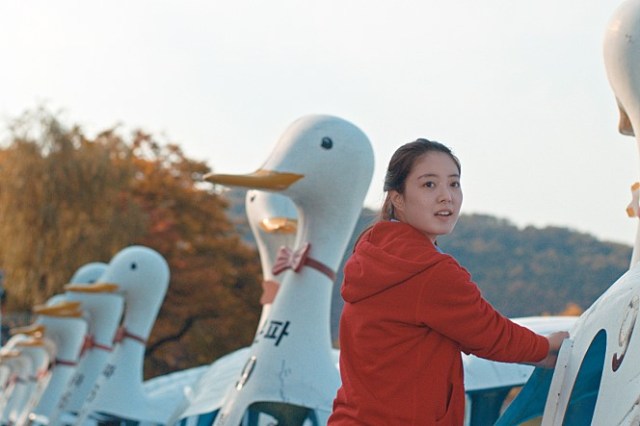
At first, the movie is mainly about the daily life of a young woman named Hee-jeong (Lee Se-young) and her small struggle toward a life outside her hometown Deagu. She wants to be transferred to some big university in Seoul, so she has been diligently preparing for the upcoming transfer examination, and she is very determined to pass the examination although her family does not care much about her aspiration. While her mother is usually blunt and unfriendly to her, her father is nearly non-existent (he only appears briefly in a couple of short scenes), and her older brother is a sullen, depressed loser who has been going nowhere since his college graduation.

Because her family cannot afford to provide her tuition, Hee-jeong has to save up the money for herself, so she works at a ticket office for duck-shaped paddle boats, which is located on the rim of a big pond in Deagu. Watching the pond in the film, I could not help but be reminded of a similar pond in my hometown Jeonju; that place also has many duck-shaped paddle boats, and I accordingly became a little nostalgic as remembering those jolly moments I had at that pond during my innocent childhood years.

While Hee-jeong goes through another monotonous afternoon at the ticket office as usual, something unexpected happens. When she happens to be asleep in the middle of her working hour, a man comes to the ticket office. After finding that Hee-jeong is sleeping, he gets on one of the paddle boats and then paddles it away to a small island in the middle of the pond. He immediately jumps into the water, and his suicidal attempt is subsequently reported by a local evening TV news program.

ducktown02

Certainly surprised by what happened due to her small negligence, Hee-jeong tries to cover up her mistake during that night because she may lose her job, but, alas, she comes to have another moment of bad luck. She is spotted by a weird guy named Yeong-mok (Kim Hyun-joon), and Yeong-mok virtually blackmails her into doing something for him, though it is apparent to us that he comes to the pond for some naughty reason.

All Yeong-mok wants from Hee-jeong is spending some time with him while also doing a job for him. It turns out that he is working at a public counseling center for suicidal people, and Hee-jeong is requested to transcribe the individual interviews from those suicidal people, most of whom surely have many things to talk about in front of the camera.

Now you may expect the movie to take a more serious narrative turn, but, no, the movie instead takes a broader storytelling approach coupled with its whimsical sense of humor, and the result often feels like an obnoxious Sundance comedy. Not only Yeong-mok but also a group of suicidal characters around him are more or less than superficial caricatures we do not care much about, and the movie does not even try to delve into their personal darkness. We never get to know or understand these suicidal characters enough, and we are just reminded again and again of how silly and ridiculous they are in their pathetic behaviors. Sure, suicide is bad indeed, but isn’t it important to have some compassion and understanding on how some people get themselves driven to it?

ducktown03

And there is a sequence which is probably the most insulting moment in the film in my inconsequential opinion. At one particularly narrative point, Hee-jeong and Yeong-mok happen to encounter a certain suicidal character, and, after listening to that character’s story, they decide to ‘assist’ that character. In a hotel room, they have that character go through a mock ritual of suicide in front of a digital camera, and, what do you know, that character comes to see how silly the ritual looks, but then there comes what is supposed to be a comic moment of irony. Maybe I seriously lack a sense of humor, but, folks, that moment is not funny to me at all while also being very insensitive to people who managed to avoid committing suicide – including me.

As depressed further by all of these bad things during my viewing, I was sort of consoled by the undeniable charming presence of Lee Se-young, who is not daunted at all by numerous contrived moments in the film as giving a performance which promises us more interesting things to come from her. Thanks to her good acting, I came to root for her plucky character although I did not believe her character’s relationship with Yeong-mok (Kim Hyun-joon frequently seems to try too hard to look quirky at times, by the way), and that is the main reason why I was so exasperated by a totally unnecessary moment of violence before the ending part of the movie.

“Duck Town” is the first feature film by director/writer Yu Ji-young. I guess her movie intends to be an odd, funny comedy about the hard reality for young people in South Korean society, but the result is half-baked at best and offensive at worst, and I only hope that she will soon move onto better things, while also wanting to tell her a few personal things about suicide. I surely see how absurd my several suicidal attempts in the past were, and I do laugh about them at times while also being quite frank about them, but those laughs of mine are always accompanied with the painful understanding of despair and desperation. Seriously, am I demanding too much as wishing that the movie showed some empathy and understanding before making laughs from its gloomy main subject?

ducktown04

Posted in Movies | Tagged , | 2 Comments

Mothers (2017) ☆☆☆(3/4): As they become a family

mothers02

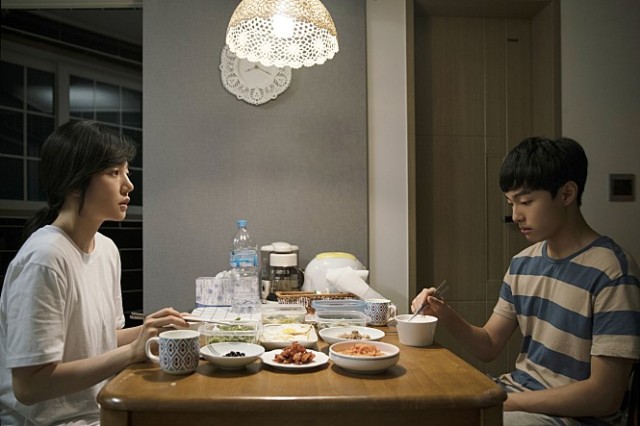
South Korean film “Mothers”, which is released as “Your Request” in South Korea, is an intimate character drama about the emotional journey of two different characters who happen to live together by accident. While calmly establishing the emotional distance between them, the movie sensitively depicts how they come closer to each other bit by bit, and then it surprises us with some unexpected plot developments which certainly reflect its English title.

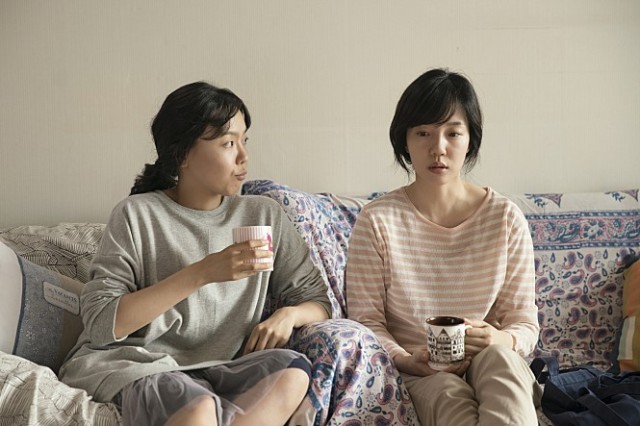
In the beginning, we get to know a bit about Hyo-jin (Im Soo-jung), a 32-year-old woman who has run a small academy for elementary school kids along with her pregnant friend/co-worker Mi-ran (Lee Sang-hee). Summer has just begun, and Hyo-jin has been considering moving her academy to some other place, but she is not so sure about whether she really wants to continue her business. In fact, she frequently seems tired and disinterested, and it is looks like she has not completely recovered from the death of her husband, who died around 2 years ago.

And then there comes an unexpected change into her mundane life. A long time ago, her husband married some woman and then had a son between them, and now her husband’s family asks Hyo-jin to take care of that boy because there is not anyone in the family who can take care of him after his maternal grandmother is sent to a facility for old people due to her senility. Although she only saw Jong-wook (Yoon Chan-yong) a couple of times before and does not know much about this adolescent stepson of hers, Hyo-jin agrees to take him to her home anyway, and that is the beginning of their rather uneasy relationship. While she tries to be as nice as possible, Jong-wook mostly remains sullen and passive except when he reluctantly shows some appreciation to her, and this often frustrates her a lot.

mothers05

As Hyo-jin and Jong-wook respectively try to deal with their changed circumstance, the movie slowly lets us get to know more about them via several supporting characters in the story. When Hyo-jin happens to spend some time with her busybody mother, it is apparent that they have not got along well with each other for many years, and we later get a bitter moment when Hyo-jin and her mother come to hurt each other’s feeling more than expected. Although she is mostly occupied with her upcoming delivery, Mi-ran is usually someone to listen to Hyo-jin, and their scenes are the most cheerful part in the film. In addition, Hyo-jin has been close to a psychology graduate student who works in her frequent coffee shop, and he is clearly interested in moving their relationship to the next level, though she has so far been content with being his ‘patient’.

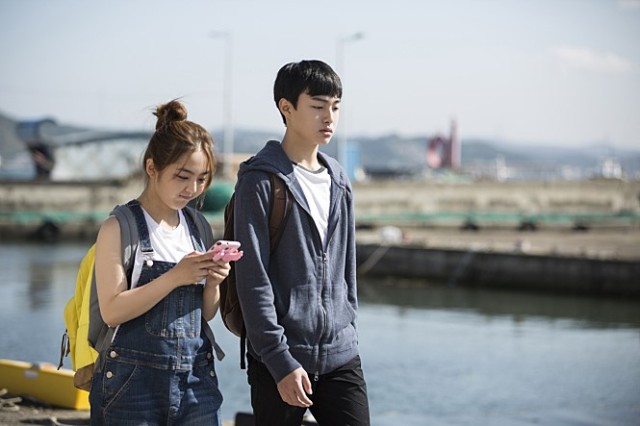
In case of Jong-wook, it turns out that he has a personal matter which he has kept to himself. He wants to find someone who was very important to him during his childhood, and we soon see him searching around in some beach town along with his friend Joo-mi (Seo Shin-ae), a plucky female schoolmate who understands his motive well probably because her status is not so different from his. While she still needs to grow up more as your average teenager girl, Joo-mi turns out to be more matured and thoughtful than him, and that aspect of hers is exemplified well by when she later notifies him of an unexpected news.

The movie could easily slip into sentimental melodrama, but the screenplay by director Lee Dong-eun wisely avoids unnecessary sappiness as constantly providing intimate emotional moments to cherish. For instance, the scene in which Jong-wook eventually comes to meet that person in question is presented with considerable restraint, but what is churning below the surface feels palpable to us nonetheless, and that is why it works as a quiet but dramatic point in the story. I also appreciate how thoughtfully the movie handles the subplot involved with Joo-mi, and I was particularly touched by a small but poignant scene where she sticks to her certain pragmatic decision regardless of whether she actually regrets it or not.

mothers06

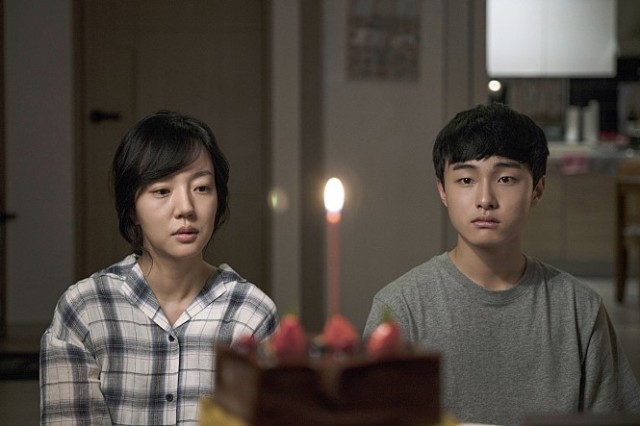
Like any good character drama films, the movie is supported well by the solid performances from its cast members. Ably holding the center with her nuanced low-key performance, Im Soo-jung, who has been one of the most prominent South Korean actresses since “A Tale of Two Sisters” (2003), subtly conveys her character’s thoughts and feelings while never emphasizing them too much, and young actor Yoon Chan-young holds his own place well as another main part of the story. Thanks to their believable interactions on the screen, we gradually come to sense the tentative relationship development between their characters, and they surely make a lasting impression on us as the camera looks at them from the distance during their last shot.

The supporting performers in the film are also wonderful in their respective roles. While Lee Sang-hee, who previously drew my attention via her breakthrough performance in “Our Love Story” (2016), enlivens her every scene in the movie, Oh Mi-yeon imbues her busybody character with considerable personality, and Han Joo-wan did a good job of balancing her character well between humor and sympathy.

“Mothers” is the second feature film directed by Lee, who previously made “In Between Seasons” (2016). Although I could not get a chance to watch that film when it was released in South Korea two months ago, I heard some good words about it, and, considering his modest but commendable achievement in “Mothers”, I think I should check it out someday. He is a good storyteller in my inconsequential opinion, and it will be interesting to see whatever will come next from him.

mothers01

Posted in Movies | Tagged , , | 2 Comments

Hostiles (2017) ☆☆☆(3/4): A somber but brutal Western drama

hostiles02

“Hostiles” is a somber but brutal Western drama about a man with the long history of violence and a risky journey he goes through along with a bunch of various figures. Now you get a pretty idea about what you will get from the movie, and it does not exceed our expectation a lot, but it is still an interesting genre piece thanks to its vivid period mood, engaging storytelling, and admirable performance. Phlegmatically observing a wild world which is still violent and ruthless despite the ongoing advance of civilization, the movie gives us a stark moral drama to linger on our mind, and it is often sad and poignant while also tense and melancholic as expected.

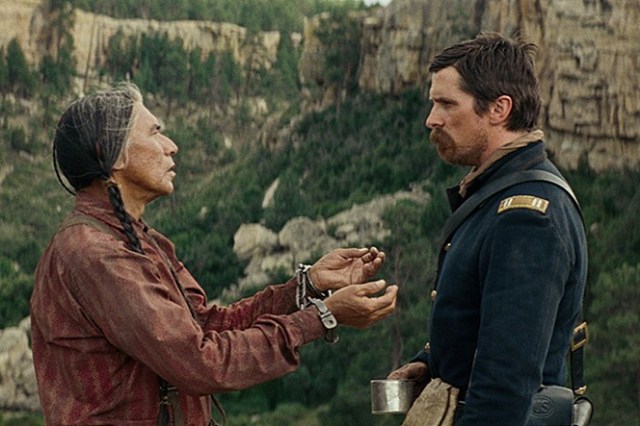
After the shocking opening scene in which a family living in a remote area of New Mexico is suddenly attacked by a group of local Native American gangs, the movie shows us another kind of brutality. It is 1892, and the American Indian Wars is almost over, but nothing seems to be changed much for Captain Joseph J. Blocker (Christian Bale) and his men at Fort Berringer in New Mexico. We see them mercilessly handling several Native Americans they have just cornered, and then we observe the helpless and hopeless status of Native American prisoners incarcerated in Fort Berringer.

During his private time at night, Blocker drinks with his old comrade Master Sergeant Thomas Metz (Rory Cochrane), and they come to reflect morosely on their violent past. Although they survived the war, they have been haunted by what they experienced as following orders and trying to survive, and the only possible consolation for Blocker is that he is soon going to get retired.

And then there comes an unexpected order sent directly from the US government. Chief Yellow Hawk (Wes Studi), a Cheyenne war chief who has been incarcerated at Fort Berringer along with his family for several years, is going to be released mainly due to his terminal illness, and Blocker is ordered to escort the chief and the chief’s family to the chief’s native province in Montana. Because he has a bad history with Yellow Hawk, Blocker initially refuses to follow the order, but he has no choice but to follow it, as his direct superior reminds him that he can not only be court-martialed but also lose the pension for his disobedience.

hostiles03

As Blocker assembles his detail for what will probably be his last mission, we get to know a bit about several other members of the detail besides Metz. They are 1) a loyal black soldier who is also a devout Christian, 2) a lieutenant who recently graduated from West Point, and 3) an awkward young soldier who is clearly much less experienced than other members of the detail. It goes without saying that they are your average stock supporting characters, but they are presented with distinctive personality at least, and the same can be said about other supporting characters including Yellow Hawk’s family members, who are depicted with care and respect even though they are usually put in the background.

As going through the first day of his mission along with others, Blocker shows no mercy or consideration to Yellow Hawk and his family, but he soon comes to see that he and his old enemy should stick together for a while during their increasingly perilous journey. There is always the possibility of danger around their long route, and that aspect is exemplified well by when they and others get caught off guard by a sudden ambush at one point.

Meanwhile, Blocker and his soldiers encounter Rosalee Quaid (Rosamund Pike), a young widow who has been quite devastated since she lost her whole family during that Indian attack shown in the opening scene. While she still struggles to process what happened to her, she slowly begins to recover as being under the protection of Blocker and his soldiers, and we subsequently see the possibility of romance between her and Blocker, though they are later reminded again of how harsh their world can be.

hostiles04

Leisurely rolling along with its characters, the movie continues to dole out nice individual moments, and we are accordingly more absorbed into its characters’ journey. There is a welcoming moment of respite when they drop by a fort in Colorado, and then it is followed by a bitter moment of irony when Blocker comes to escort a prisoner with whom he once fought during the war. The mood becomes a little more peaceful around the expected end of the journey, but then, not so surprisingly, there comes another harsh dose of reality, and Blocker comes to face more of his dark side.

As the master of intense stoicism, Christian Bale is perfectly cast in his lead role, and director Scott Cooper, whose screenplay is based on the manuscript of late Donald E. Stewart, surrounds Bale with a heap of good performers. While Rosamund Pike is convincing in her character’s dramatic arc along the story, Wes Studi effortlessly imbues his character with serene dignity, and the other notable supporting performers including Rory Cochrane, Jesse Plemons, Adam Beach, Q’orianka Kilcher, Timothée Chalamet, Peter Mullan, Ben Foster, Stephen Lang, Bill Camp, and Scott Wilson are also fine in their respective supporting roles.

Although it is a little too long in my inconsequential opinion, “Hostiles” handles its genre elements well enough to engage us during its journey, and I enjoyed its excellent technical aspects including the crisp cinematography by Masanobu Takayanagi and the moody score by Max Richter. Yes, this is surely a familiar genre stuff, and it did its job as well as required, and I do appreciate that.

hostiles06

Posted in Movies | Tagged , , , | Leave a comment

Professor Marston and the Wonder Women (2017) ☆☆☆(3/4): Behind Wonder Woman

ProfessorMarstonandtheWonderWomen01

It is no secret that there are indeed kinky aspects in Wonder Woman, one of the most famous superheroes in the American comic book history. Look at many obviously fetishistic elements such as her famous lasso of truth, and you will understand why she had been regarded as an unwholesome influence on children since she made her first appearance in October 1940.

Digging into the unconventional personal life of a man who created Wonder Woman and two women surrounding him, “Professor Marston and the Wonder Women” is an engaging romantic drama which also gives amusing and fascinating insights into the inspiration behind Wonder Woman. While it sometimes falters especially during its second half, the movie mostly works well thanks to a trio of good performances at its center, and the result is interesting enough to watch along with, yes, “Wonder Woman” (2017).

After opening with Dr. William Moulton Marston (Luke Evans) facing an important interview with the representatives of the Child Study Association of America in 1945, the movie cuts back to when he was a psychology professor teaching at Harvard and Radcliffe Colleges in 1928. As an expert on a behavioral theory called D.I.S.C. (Dominance, Inducement, Submission, and Compliance), Marston is particularly interested in developing lie detector along with his wife and co-worker Elizabeth Holloway Marston (Rebecca Hall), and they are about to hire one of his female students as their new research assistant.

The student in question is Olive Byrne (Bella Heathcote), and this young, beautiful woman comes to interest both Marston and Elizabeth more than they expected. At first, they amusedly observe her tricky interaction with male students from the distance, but then they become more fascinated as getting to know more about her. Besides being quite intelligent, Olive is frank and forthright in her unadorned attitude, and Marston and Elizabeth are delighted to learn that Olive’s mother and aunt are in fact renowned figures well known for their feminist activities.

ProfessorMarstonandtheWonderWomen03

As these three main characters come to spend more time together, a certain complicated mutual feeling is gradually developed among them. Elizabeth correctly sees from the beginning that her husband is smitten with Olive, but then she is surprised to realize later that she is also attracted to Olive, and Olive turns out to have feelings toward both Marston and Elizabeth. Not long after they come to have a breakthrough in their lie detector development, there accordingly comes a moment of truth for all of them, and they soon find themselves happily beginning their very unconventional relationship.

Of course, the rapturous mood among them does not last long as their relationship is regarded as something immoral and perverted by many others. Marston soon gets fired, so Elizabeth has to work as a plain secretary for supporting not only them but also Olive, who agrees to live with them as Elizabeth’s ‘companion’ and subsequently gives birth to Marston’s first child.

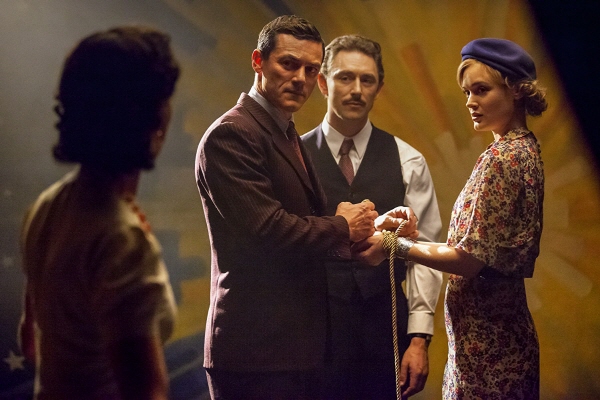
While they continue to maintain their necessary façade of normality with more children, Marston struggles to publish his academic books on the DISC theory, but then there comes an odd moment of inspiration for him around 1940. After taking a brief look into a fetish shop owned by Charles Guyette (JJ Felid), he takes Elizabeth and Olive to the shop when Guyette gives his several customers a kinky presentation involved with bondage, and he comes to imagine a female superhero as watching Olive try a fetishistic experiment in front of him and Elizabeth. When he suggests this comic book idea of his to Max Gaines (Oliver Pratt), the publisher of National Periodical Publication (It is DC Comics at present, by the way), Gaines is not that enthusiastic, but Marston pushes his idea as hard as he can, and, as shown from the following exuberant sequence, his superhero figure, renamed as ‘Wonder Woman’ after Gaines’ small suggestion, turns out to be a big hit comparable to Superman and Batman.

ProfessorMarstonandtheWonderWomen05

However, Wonder Woman soon comes to receive criticism for its apparent sexual undertone, and that is where the screenplay by director Angela Robinson becomes shaky and contrived in terms of storytelling. While the scenes involved with the Child Study Association of America are more or less than obligatory narrative hangers, a dramatic conflict among our three main characters later in the story feels artificial especially during its eventual resolution, and that is why the epilogue part does not feel as emotionally resonant as intended.

Nevertheless, the movie is still entertaining on the whole thanks to the commendable acting of its three main performers. Although his performance is the weakest one in the bunch, Luke Evans maintains his rather neutral character well in his position, and Rebecca Hall and Bella Heathcote shine whenever their respective characters have to deal with their emotional matters. Thanks to Hall and Heathcote’s strong performance, we can really sense how much Elizabeth and Olive inspire their man’s creation, and we come to agree with Marston when he shows his sincere appreciation to them around the ending of the movie.

Overall, “Professor Marston and the Wonder Women”, which goes straight to DVD/Blu-ray here in South Korea, handles its intriguing subject well with enough respect and intelligence, and I was alternatively amused and touched by the complex emotional dynamics among its three smart, intelligent main characters. Considering the enormous box office success of “Wonder Woman”, this small but interesting movie deserves more attention, and I guarantee you that you will come to observe Wonder Woman with more understanding and amusement.

ProfessorMarstonandtheWonderWomen02

Posted in Movies | Tagged , , , | Leave a comment