Ethel & Ernest (2016) ☆☆☆(3/4): The life story of one ordinary couple

ethelandernest05

British animation feature film “Ethel & Ernest” is about one ordinary couple who lived together for more than 40 years. Based on Raymond Briggs’ acclaimed graphic novel which was based on the life story of his parents in real life, the film works as a heartfelt drama filled with many small lovely moments to cherish, and it is particularly poignant when its two main characters later come to the eventual end point of their long marital relationship.

After its prologue scene showing Briggs reflecting on his parents, the movie proceeds to a part describing how his parents Ernest (voiced by Jim Broadbent) and Ethel (voiced by Brenda Blethyn) became familiar to each other in London, 1928. Whenever he goes to his workplace, Ernest usually passes by an upper-class residence where Ethel has worked as a maid, and they get fond of each other although they have merely recognized each other without formal introduction. In the end, Ernest makes an active forward step toward to Ethel on one day, and, without any hesitation, she agrees to have an evening movie date with him.

Shortly after Ethel quits her job, Ernest marries her, and they subsequently move together to a house located in a suburban area outside London. Although the house does not look exactly nice, it is better than their former residences at least, and they are ready to make their new place happier and cozier. She begins to take care of the house as your average housewife, and he works as a milkman in their neighborhood while occasionally fixing things for his dear wife.

Of course, they hope to have children someday, but it turns out to be not so easy for them. Even after two years, Ethel shows no sign of pregnancy, and she becomes worried as she is approaching to 40. Eventually, she gets pregnant, and she gives birth to her son several months later, but their doctor tells Ernest that she cannot have a child anymore due to her age.

ethelandernest04

Anyway, Ethel and Ernest are happy to see their son growing up day by day, but, as often reflected by what he reads from newspaper or they hear from radio, the gloom of the World War II is approaching to them and many other people in Britain and Europe step by step. Things quickly become quite serious when the war eventually begins in 1939, and Ethel and Ernest have to send their son away to a rural area for his safety.

As they and others prepare for the war and then try to endure it, the film often gives us some serious moments as required while not wholly losing its sense of humor. It is sometimes amusing to see their several safety measures including a makeshift shelter and gas masks, but we are also reminded that it was indeed a dangerous and fearful time for everyone in Britain. While working as a volunteer fireman, Ernest goes through some devastating experiences, and Ethel is always someone he can lean on.

As the situation becomes more hopeful a few years later, they go to see their son, and they are later permitted to spend some time with him. There is still considerable danger as reflected by when Ernest and his son luckily avoid a sudden threat crashing down from the sky, but everyone becomes more optimistic than before, and the war eventually ends in 1945.

The rest of the story focuses on how Ethel and Ernest’s life goes through rapid social changes after the war. While Ethel continues to do housework as usual, Ernest begins to drive a vehicle for his milk delivery, and they soon come to have not only their own car but also a TV. They sometimes disagree with each other on political matters, but it is just the mild, affectionate bicker between them, and they feel happy together as before.

ethelandernest02

In case of their son, Ethel and Ernest surely expect a lot from him, but then they are surprised and disappointed when their son announces to his parents that he is going to an art school instead of more supposedly prestigious schools like Oxford and Cambridge, and that is just the beginning of the generation gap between him and his parents. When he introduces his parents to his girlfriend who is going to be his wife, the mood is pretty awkward to say the least, but Ethel and Ernest accept what their son is going to do with his life – including his understandable decision for not having a child with his wife.

Meanwhile, Ethel and Ernest feel more of their aging status. As they are about to enter the 1970s, Ethel becomes more weakened than before, and then there comes a heartbreaking moment when her mind turns out to be not as keen as before. Wisely avoiding any sappy sentimentality, the movie calmly and quietly handles the following scenes, and that is why it is touching to see a number of photographs shown during the end credits.

“Ethel & Ernest” is directed by Roger Mainwood, who also adapted Briggs’ graphic novel for the film. This is his first animation feature film, and he did a competent job of vividly presenting Briggs’ story and characters. Like any good cell animation film, the film is distinctive in terms of mood and details, and Jim Broadbent and Brenda Blethyn are also fine in their respective voice performances. Although its achievement is rather modest, this is a charming crowd pleaser nonetheless, and it is certainly a better alternative to those run-of-the-mill blockbuster digital animation films.

ethelandernest03

Posted in Movies | Tagged , , , | Leave a comment

Burning (2018) ☆☆☆(3/4): A slow-burning thriller from Lee Chang Dong

burning01

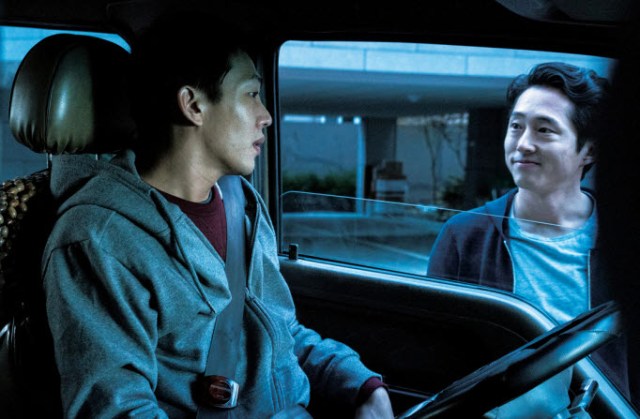
South Korean film “Burning”, which was recently shown at the Cannes Film Festival and is also currently being shown here in South Korea, is a slow but steady thriller drama which constantly baffles us throughout its 148-minute running time. Although it is often difficult for me to become emotionally involved in its drama for several reasons I will later talk about, I admire its skillful handling of mood and story at least, and I think it is another interesting work from one of the best filmmakers in South Korea.

The story of the movie mainly revolves around Jong-soo (Yoo Ah-in), a young man who wants to be a writer someday but has been so far stuck in menial low-wage jobs. During the opening long-take scene, the camera patiently follows him as he is delivering some goods to a shop, and then he is recognized in front of the shop by Hae-mi (Jun Jong-seo), a plucky young woman who was his old hometown friend. Although he did not recognize her well at first because of her minor plastic surgery, they soon come to have a private talk together, and then she takes him to her small one-room residence, where they eventually have a sex as the sunshine reflected from outside briefly brightens her residence a bit.

Now you may wonder like I did during my viewing: what exactly did Hae-mi see from Jong-soo? While the movie does not explain much, she later tells him that she needs someone to take care of her cat while she is traveling in Africa for a while, and Jong-soo, who is clearly smitten with her, agrees to do that, but then he does not see any particular sign of her cat except its litter box under her bed when he comes to her residence not long after she leaves for Africa. Did she actually lie to him? If so, why the hell did she do that?

burning03

Anyway, Jong-soo has the other matter to deal with besides that. His father, who has raised cows in his rural village which is not so far from North Korea, was recently sent to a trial on the charge of beating some local official, and that means Jong-soo must take care of whatever is remained in his father failing farming business. As Jong-soo looks around the shabby and messy interior of his old home, the movie succinctly conveys to us some information on his father’s life. and there is a small but crucial moment when Jong-soo later comes inside a storage and then finds a number of sharp objects, which feel as disturbing as the loud sound of propaganda broadcast from North Korea or a mysterious phone call which frequently annoys Jonh-soo.

Meanwhile, Hae-mi comes back from Africa, but she is not alone. During her trip, she happened to encounter a handsome guy named Ben (Steven Yeun), and she eagerly introduces him to Jong-soo, who does not particularly welcome this stranger much but comes to spend more time with him and Hae-mi because, well, that is what she wants.

As clearly shown from his posh apartment and expensive sports car, Ben is a very affluent guy, but he is usually vague about the source of his considerable wealth. While feeling more of the class gap between him and Ben, Jong-soo becomes more suspicious of Ben when Ben reveals his rather morbid side to Jong-soo during their personal conversation, but Hae-mi does not seem to sense anything particularly wrong from Ben, and she continues to enjoy her free-spirit status, as reflected by a nervously beautiful twilight scene where she dances to music in front of her two guys while incidentally being half-naked.

burning05

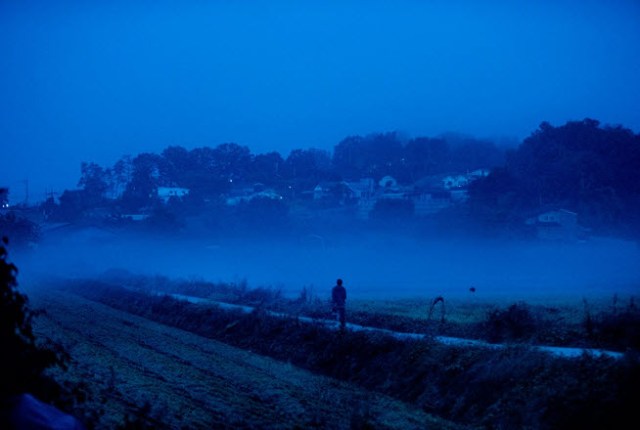
And then something strange happens as the story enters its second half. I will not go into details here, but I can tell you instead that Jong-soo gets himself slowly mired in a dark territory of obsession and confusion as struggling to reach for whatever is hidden from him, and director Lee Chang-dong, who also adapted Haruki Murakami’s short story “Barn Burning” along with Oh Jung-mi, did a deft job of slowly dialing up the level of tension beneath the screen. Despite its long running time, the movie seldom lags in its stable narrative pacing, and its technical aspects are superb to say the least. Cinematographer Hong Kyung-pyo, who previously worked in “Snowpiercer” (2013), “Sea Fog” (2014), and “The Wailing” (2016), effectively establishes the moody but realistic atmosphere around the main characters in the film via his impeccable utilization of lights and shadows, and that unnerving mood is further accentuated by Mowg’s ambiguous score on the soundtrack.

While appreciating its strong points including the good acting from its three lead performers, I was also bothered by a number of weak points of the movie. For instance, its depiction of female characters besides Hae-mi is one-dimensional at best and misogynistic at worst, and Hae-mi remains to be more or less than your average dream girl beyond reach. Pushing its symbols and metaphors a little too blatantly at times (my personal favorite scene of unintentional hilarity is the one where an act of masturbation is juxtaposed with the wide shot of, what do you know, a tower), the movie is also hampered by several stilted dialogue scenes, and the finale feels rather muddled instead of dramatically impactful. In addition, it is not very comfortable for me and some other South Korean audiences to watch Yoo Ah-in, who has impertinently revealed himself as a deplorable misogynist jerk in public, or Steven Yeun, who was recently criticized for his insincere public apology on a serious mistake involved with a Japanese flag.

Considering that it received lots of praises at the Cannes Film Festival, I guess “Burning” will probably not be empty-handed tomorrow, but it looks like a minor work compared to Lee Chang-dong’s previous works such as “Secret Sunshine” (2007) and “Poetry” (2010), which I chose as the best South Korean film of 2010. The movie is surely an engaging work, but it did not affect me as powerfully as these two films, and I was only reminded that there have been heaps of South Korean films about angry, disaffected young men. Sure, this is a well-made one, but, seriously, do South Korean audiences need to be served with another familiar male narrative?

burning02

Posted in Movies | Tagged , | Leave a comment

Deadpool 2 (2018) ☆☆(2/4): Cynical, irreverent, and tiresome as before

deadpool201

Whether you will like “Deadpool 2” or not depends on how much fun you had with “Deadpool” (2016). Unlike many others, I did not enjoy “Deadpool” much while also quite annoyed by its increasingly obnoxious self-conscious attitude, so I became annoyed again during my viewing of “Deadpool 2”, which is as cynical, irreverent, and tiresome as its predecessor while not bringing anything particularly new or surprising to its genre. Although I must admit that I chuckled during its few inspired comic moments, I also got tired and numbed as the movie constantly and distractingly threw its self-conscious wink at me throughout its running time, and it only came to leave a rather disagreeable impression on me in the end.

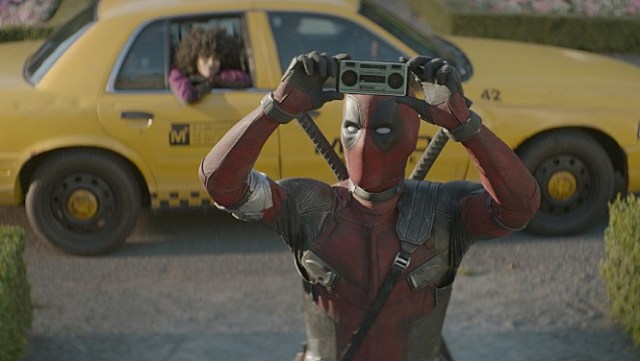
The movie opens with Wade Wilson/Deadpool (Ryan Reynolds) becoming quite morose and then attempting suicide for a clichéd reason I will not reveal here. Of course, he cannot possibly die because, as many of you remember from the previous film, he is nearly indestructible thank to his acquainted superpower, and the movie gleefully decorates this moment with a mock main title sequence, which is clearly a cheap send-up of the main title sequences of James Bond movies but has a little touch of class thanks to Céline Dion’s deadpan singing on the soundtrack.

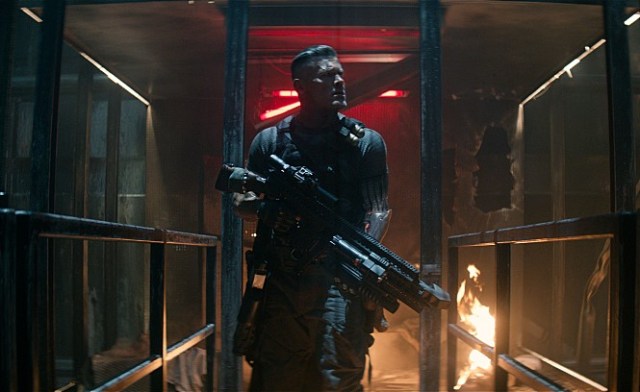
Anyway, Wade soon recovers after brought to the headquarters of the X-men by a big metallic mutant named Colossus (voiced by Stefan Kapičić). Although he is not so interested in joining the group, Wade soon gets himself involved in an emergent circumstance along with Colossus and Negasonic Teenage Warhead (Brianna Hildebrand), and that eventually leads him to the encounter with Nathan Summers/Cable (Josh Brolin), who, as clearly shown from his very first scene, comes from the future and is going to kill a certain mutant character in the story for a personal reason which you can easily guess within a minute if you have ever watched “The Terminator” (1984) and “Looper” (2012).

deadpool202

As Wade and other crucial characters in the story bounce from one narrative point to another, the screenplay by Ryan Reynolds and his co-writers Rhett Reese and Paul Wernick relentlessly fires numerous jokes and gags at us. Besides lots of jokes on “Logan” (2017) and many other recent superhero movies, there are also the ones inspired by “Yentl” (1983) and “Frozen” (2013), and I must confess that I was amused a lot when I heard Jerry Goldsmith’s certain Oscar-nominated score being played during one wacky scene involved with Wade’s very awkward physical condition.

However, many of these jokes are unfortunately undercut by the constant self-conscious attitude of the movie. Frequently trying too hard in its irreverent comic approach, the movie ultimately cheapens whatever is being at stake for Wade and other characters, and it eventually resorts to a big, mindless CGI climax as it knowingly admits to us.

At least, director David Leitch, who co-directed “John Wick” (2014) and then made “Atomic Blonde” (2017), is a good action movie director, and “Deadpool 2” has a couple of well-made action sequences. In case of the one unfolded in a prison for criminal mutants, its physical action moments are as brutal, gritty, and dynamic as you can expect from Leitch, and I appreciate how he makes sure that we are always well aware of what is going on even during its most chaotic moments. In case of a vehicle chase sequence later in the movie, I was amused to some degrees by how a character played by Zazie Beetz manages to be lucky at every dangerous moment of hers, and I did snicker as watching Wade’s very unorthodox driving method at one point.

deadpool203

As he previously did in “Deadpool”, Ryan Reynolds demonstrates considerable comic intensity here in this film. Even while I was annoyed again and again by his character’s grating personality, I appreciated nonetheless how much Reynolds is willing to go for more gags and jokes, and I wish that he will do something better like “The Voices” (2014), an overlooked comedy film about a serial killer who often cannot help himself while just trying to be nice and endearing to others around him.

The supporting performers surrounding Reynolds acquit themselves well on the whole. While Brianna Hilderbrand, Stefan Kapičić, Leslie Uggams, T.J. Miller, Karan Soni, and Morena Baccarin fill their respective roles as before without many things to do, Zazie Beetz brings some spunky spirit to her character, and Josh Brolin, who recently played a big villain role in “Avengers: Infinity War” (2018), did a good job of imbuing his character with enough gravitas as required. In case of Julian Dennison, a young New Zealand actor who drew my attention for the first time via his hilarious performance in “Hunt for the Wilderpeople” (2016), he shows again here that he is indeed an interesting actor to watch, and, considering his undeniable screen presence, I certainly hope for better things in his promising movie career.

Overall, “Deadpool 2” is occasionally amusing, but it is not so funny in my trivial opinion, and I give it two stars for being not particularly better than its predecessor. I understand how subversive it wants to be with its supposedly irreverent anti-superhero, but it is just content with merely being silly and violent, and it does not do anything really fresh or subversive at all. You may laugh more than me, but its laughs are pretty shallow ones, and my displeasure only increases as I think of it more.

deadpool204

Posted in Movies | Tagged , , , | Leave a comment

The Wound (2017) ☆☆☆1/2(3.5/4): A queer drama film from South Africa

thewound03.jpg

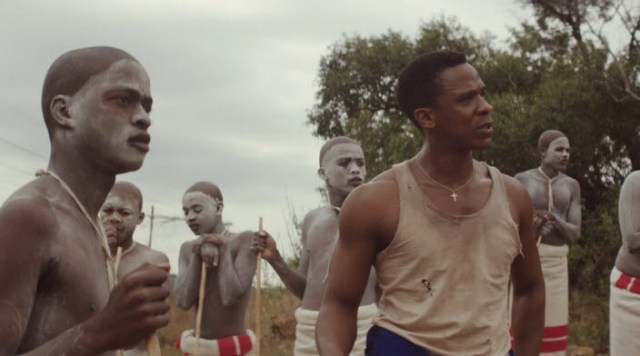
South African film “The Wound”, which was selected as South Africa’s entry for the Best Foreign Language Film Oscar in last year, is exceptional in many aspects. While intriguing us a lot with its vivid anthropological observation of a tribal initiation ritual in South Africa, the movie also examines the closeted sexuality of its three main characters who are respectively struggling with what it means to be a man, and we come to brace ourselves as sensing what can possibly result from the increasingly unstable dynamics among them.

After the opening scene showing a waterfall in some rural area of the Eastern Cape province of South Africa, the movie promptly introduces us to Xolani (Nakhane Touré), a closeted gay man who has lived alone while working as a menial factory worker in Queenstown. After his another mundane workday is over, he soon goes to his rural hometown area outside the city, and he is going to work as one of the mentors for the adolescent boys who will soon go through ‘Ulwaluko’, the traditional initiation ritual of his Xhosa tribe.

Among the initiates assigned to Xolani and other mentors, there is a boy named Kwanda (Niza Jay Ncoyini), who is the son of one of Xolani’s close relatives. Before the ritual is officially started, Kwanda’s father, who is apparently an affluent urban guy, has a private talk with Xolani. It is clear that the guy decided to thrust his son into the ritual because his son is ‘too soft’ and needs to be, well, manlier, and Xolani assures his relative that he will do as much as he can for making a man out of Kwanda.

The ritual is subsequently begun with the swift circumcision process on the initiates, and that will probably make some of you cringe even though the movie does not graphically depict this process. One by one, the initiates get their genitalia cut by the prepared sharp blade of a hired doctor, and they all have to shout “I’m a man!” as trying to endure the resulting pain. To be frank with you, this moment took me back to my circumcision experience in 1989, and it surely reminded me that what I had to endure at that time was pretty mild and safe in comparison.

thewound04

While their genital wound is naturally healed during next several days, Kwanda and other initiates are required to do several things in the mountain under the guidance of their mentors, but this urban boy does not get along well with other initiates, most of whom are from rural areas in contrast to him. Because he does not look that tough enough, he often becomes a target of ridicules, but he is not someone who is easily daunted by that, and he sometimes shows his rebellious side. At one point, every other initiate makes a proud speech on family in front of elders and mentors, but Kwanda defiantly refuses to do the same, and that certainly causes a disagreeable moment for everyone else except Xolani, who feels some sympathy toward Kwanda because he already sensed Kwanda’s homosexuality from the beginning.

However, the object of Xolani’s desire is Vija (Bongile Mantsai), another mentor in the group who looks like your average alpha male but then turns out to be Xolani’s old lover. Although he is a family guy with wife and three kids at present, Vija does not hesitate at all whenever he gets a chance to be alone with Xolani, and we come to gather that the ritual has been sort of Brokeback Mountain for them.

While Xolani feels good to be with Vija again, it is apparent that he has also been dissatisfied with how his relationship with Vija has been going nowhere. Because homosexuality is an unspeakable taboo in their world, they have accepted their closeted status for years, but Xolani wants to go a little further in their relationship, and that later leads to an emotionally tense moment between them.

thewound01

In case of Kwanda, it does not take much time for him to realize what is going on between Xolani and Vija, and their secret and hypocrisy further fuel his rebellious spirit. Ironically, he comes to be quite sure of himself after being pushed to a bloody deed by Vija later in the story, and he accordingly becomes determined to reveal his true self openly to others.

As its main characters continue to pull or push each other, the movie slowly dials up the level of tension while steadily sticking to its realism. Occasionally providing several beautiful wide shots, cinematographer Paul Ozgur vividly captures small details and nuances to observe, and we gradually get ourselves immersed in the world inhabited by the characters in the movie. The three main performers in the film are all convincing in their respective roles; while Nakhane Touré, a well-known South African artist who has been quite open about his homosexuality unlike his character, is effective in his phlegmatic appearance which often speaks volumes, Bongile Mantsai complements Touré well with swaggering machismo, and Niza Jay Ncoyini holds his own place well between his two co-stars.

“The Wound” is the first feature film by director/co-writer John Trengove, who made several short films and TV drama series before making this debut of his. While the screenplay written by him and his co-writers Thando Mgqolozana and Malusi Bengu are a bit too blatant at times, he did a competent job of handling sensitive subjects with enough respect and consideration, and the result is another recent notable queer film which deserves to be mentioned along with “Call Me by Your Name” (2017), “God’s Own Country” (2017) and “BPM (Beats Per Minute)” (2017). This is a tough stuff indeed, but it is an interesting and thought-provoking drama about sexuality and masculinity, and you will not forget easily what it presents to you.

thewound05

Posted in Movies | Tagged , | Leave a comment

Lean on Pete (2017) ☆☆☆1/2(3.5/4): A boy and the horse

leanonpete03.jpg

“Lean on Pete” surprised me with its considerable sensitivity and thoughtfulness. Here is a simple but heartfelt character drama which simply goes its own way as wisely avoiding clichés and conventions, and I was both entertained and touched by how it slowly but steadily builds up its narrative momentum as tenderly depicting its adolescent hero’s emotional journey.

Charlie Plummer, who recently played J. Paul Getty’s kidnapped grandson in “All the Money in the World” (2017) and is not related to another Plummer appearing in that movie, plays Charley Thompson, a meek 15-year-old boy who recently moved to Portland, Oregon along with his single father Ray (Travis Fimmel). While their new house is still in disarray, Ray is frequently absent due to whatever he does outside, but Charley does not mind that much because he knows that his father cares about him much despite his flaws, and he often spends his ongoing summer days on doing exercise outside as hoping to play football in his new high school during the next semester.

On one day, Charley comes across a middle-aged guy named Del (Steve Buscemi), who has a trouble with his truck while taking two of his racehorses to a nearby stable. After Charley helps him fix his truck, Del offers him a job, and Charley instantly accepts the offer because that means extra money for him and his father.

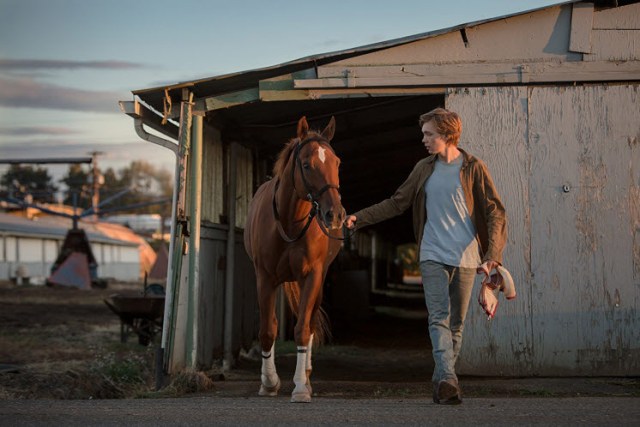
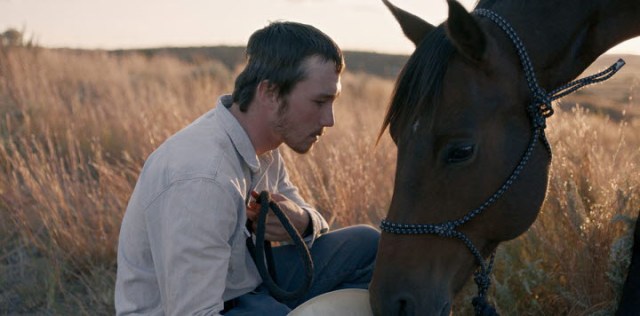
While working for Del day by day, Charley gradually learns how to handle horses, and then he finds himself particularly attached to one of the horses in Del’s possession. It is an aging racehorse named Lean on Pete, and how Charley gets closer to this horse bit by bit is one of nice subtle touches in the movie. Although there is not any ‘big’ moment between the horse and Charley, the movie subtly conveys to us Charley’s growing affection toward the horse through small moments such as when he gently looks at it for a while, and we come to sense that it becomes another important thing in his lonely life besides his father.

leanonpete02

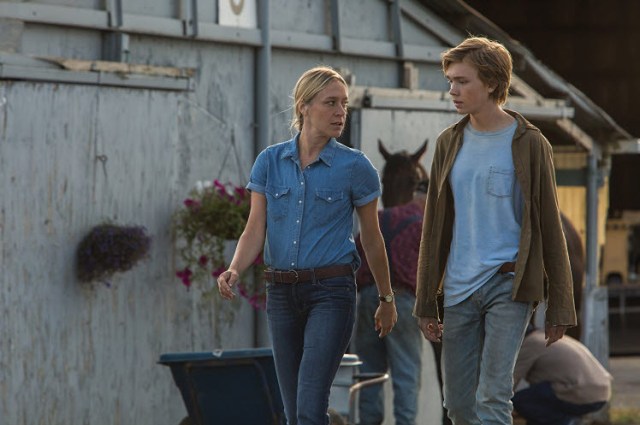
Of course, there soon comes a harsh moment of reality through Del, who may understand well Charley’s emotional attachment to Lean on Pete but is also a hardened businessman who is always ready to do whatever he should do for making ends meet. When one of his horses becomes useless at one point, Del does not hesitate at all to send it to Mexico for a heartless reason, and we guess that it is probably one of many unsavory things he has done for keeping his diminishing business afloat. As Del’s frequent jockey, Bonnie (Chloë Sevigny) knows that too well, and she phlegmatically reminds Charley that he should not get emotionally involved too much with the horses under his care.

Meanwhile, the situation becomes more complicated for Charley due to a sudden narrative turn I will not reveal here. All I can tell you is that 1) Lean on Pete becomes more important for Charley after this happening and 2) that prompts Charley to make a rather unwise impromptu decision on Lean on Pete shortly after what turns out to be its last race.

Even after that plot turn, the movie sticks to its leisurely narrative pacing, and the adapted screenplay by director Andrew Haigh, which is based on Willy Vlautin’s novel of the same name, gives a series of nice human moments while never resorting to cheap sentimentality. I like a part involved with Charley’s accidental encounter with two guys living alone in a remote ranch, and I appreciate the following small moment between Charley and a female character who wearily reveals to him her despair and resignation. Even when it is around its expected arrival point, the movie continues to take its time as before, and that is the main reason why its last scene is emotionally resonant.

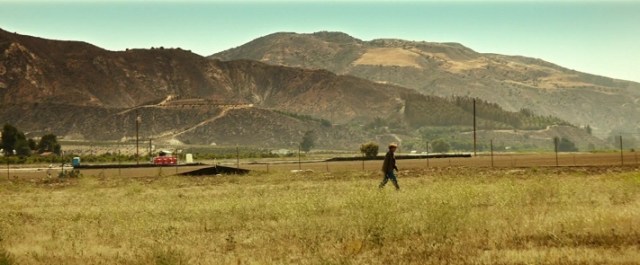
As shown from his previous works “Weekend” (2011) and “45 Years” (2015), Haigh is a good filmmaker who has shown considerable strength in intimate character drama, and that aspect of his is evident in “Lean on Pete”. He and his cinematographer Magnus Nordenhof Jønck effectively establish realistic mood and background for his story and characters, and we are instantly immersed into our young hero’s situation. As the story later rolls into a wider territory, Jønck vividly captures wide, beautiful landscapes on his camera, and that further enhances the quiet but palpable emotional intensity during the second half of the story.

leanonpete05

The movie demands a lot from Plummer especially during its second half, and he is quite good in his nuanced low-key performance which received the Marcello Mastroianni Award at the Venice International Film Festival in last year. Considering what he demonstrated in this film and “All the Money in the World”, Plummer is surely an interesting new actor to watch, and I hope that he will soon move onto bigger things to come.

Haigh assembles several notable performers around Plummer. While Travis Fimmel, who previously drew my attention via his small role in “Maggie’s Plan” (2015), brings considerable humanity to his flawed character, Steve Buscemi and Chloë Sevigny show us again why they are two of the most dependable performers in American independent movie industry, and Steven Zhan, who has shown more of his serious side during recent years, is also effective in his supporting role.

On the whole, “Lean on Pete” is another commendable work from Haigh, who drew my attention with the sensitive gay romance of “Weekend” and then struck me hard with the sobering marital drama of “45 Years”. With the significant achievement in “Lean on Pete”, he confirms again that he is one of the prominent British filmmakers during this decade, and I think I can have some expectation whenever his new work comes out.

leanonpete01

Posted in Movies | Tagged , | 1 Comment

The Rider (2017) ☆☆☆1/2 (3.5/4): The tale of a young rodeo cowboy

therider01

“The Rider”, a small independent film which was recently shown at the Jeonju International Film Festival, is a quiet but mesmerizing work of haunting beauty and aching poetry. Calmly and closely looking into a plain young hero and how he struggles to keep going on with his life, the movie gives us a number of indelible moments to linger on our mind for a long time, and I was quite impressed by its humble but effortless mix of realism and lyricism. I observed the movie with considerable curiosity and empathy as coming to care a lot about its ordinary hero, and I was touched a lot by how he slowly comes to find a way to move onto whatever will be next in his life.

After opening with what its hero seems to dream during his sleep, the movie gradually presents the details of his life as he begins another day of uncertainty and frustration. Brady Blackburn (Brady Jandreau) is a rodeo cowboy living in the Pine Ridge Indian Preservation, South Dakota, and this Native American lad has been going through a recuperation period followed by his unfortunate accident during a recent rodeo competition. Due to his severe injury on the right side of his skull, he had an extensive surgery which implanted a metal plate on his skull, and there is a cringe-inducing moment when he removes the bandage on his head and then reveals a long scar still needed to be healed more.

He lives with his widower father Wayne (Tim Jandreau) and his sister Lilly (Lilly Jandreau). Frequently drunk, Wayne does not get along well with his son from time to time, and he is also not good at managing their difficult economic situation (we later come to learn that they are behind four months in paying the rent for their trailer house). In case of Lilly, she is evidently on autistic spectrum, so she often gets agitated, but she mostly feels fine and comfortable with her dear bother, who cares about her more than anyone else.

therider03

Often watching the YouTube video clips of his rodeo play, Brady wishes to go back to riding bronco as soon as possible, but then he comes to realize that he may not be able to do that ever again. Although he looks completely recovered some time later, there is something wrong with his right hand, and, not so surprisingly, he is later told by a doctor that his brain is not wholly healed yet and he should not ride horse for his safety and health.

While quite frustrated about this situation, Brady is quite well aware of that things could have been far worse for him. At one point, he visits a close friend/colleague who has been a rehabilitation center since he became mute and paraplegic due to his rodeo accident, and there is a sad, poignant moment when they watch together a YouTube video clip showing Brady’s friend before his accident. In the video clip, his friend looks cheerful, confident, and charismatic as brimming with spirit, but now he can barely control his body while occasionally communicating via sign language.

Facing the possible end of his rodeo career, Brady tries to find another job for supporting his family, but there are not many options for him mainly due to his lack of any other professional skill. He eventually comes to get a menial job at a local supermarket and seems content with it, but he often comes across people recognizing him during his working hour, and that certainly makes him yearn for riding horse again.

As a matter of fact, it looks like there is a possible alternative for him. As a guy who has devoted his whole life to horses, he surely knows how to handle and tame wild horses, and his skill is demonstrated well by one extraordinary scene involved with a very touchy horse. As he patiently and carefully approaches to the horse, it becomes milder and tamer than before, and what he feels from this sensitive process is palpable thanks to the considerable verisimilitude generated from the documentary-like approach of the movie.

therider04

“The Rider” is the second feature film by director/writer Chloé Zhao, a Chinese filmmaker who drew critics’ attention through her previous film “Song My Brothers Taught Me” (2015). I have not watched that movie yet, but it is quite clear from “The Rider” that she is indeed a talented filmmaker to watch. Filled with vivid, realistic atmosphere, the movie is an absorbing experience to say the least, and there are plenty of small nuances and details to be appreciated throughout the film. Thanks to cinematographer Joshua James Richards, who previously did a fabulous job in “God’s Own Country” (2017), there are several wonderful wide shots of natural beauty, and I especially like a somber but dramatic wide shot showing Brady and his father from the distance after their certain hard choice.

Zhao draws unadorned natural performance from her non-professional cast members, who ably project their real life into the movie to considerable degrees. Brady Jandreau, who was really a rodeo player in real life and actually had a serious rodeo accident not long after he met Zhao in 2015, is engaging to watch in his gentle, earnest acting. Tim Jandreau and Lilly Jandreau, who are indeed Jandreau’s father and sister in real life, are also fine in their supporting roles, and Lane Scott, who is really Jandreau’s close friend in real life, is unforgettable to say the least.

Overall, “The Rider”, which won the Art Cinema Award when it premiered in the Directors’ Fortnight section at the Cannes Film Festival early in last year, is commendable in many aspects, and I was glad to see this powerful film on the last day of the Jeonju Film Festival. 2018 is far from being over yet, but we already have a number of terrific movies including this one, and I am certainly looking forward to what we may get during the rest of this year.

therider05

Posted in Movies | Tagged , | 1 Comment

Stronger (2017) ☆☆☆(3/4): Stumbling and struggling toward recovery

stronger02

Based on an inspiring real-life story, “Stronger” wants to engage you and then touch you, and it did its job mostly well although it sometimes stumbles as much as its ordinary hero. While some parts in the movie feel artificial and heavy-handed in my inconsequential opinion, there are also good parts which made me emotionally involved in its earnest drama, and I came to appreciate its strong elements including its lead actor’s solid performance.

In the beginning, the movie shows us the mundane daily life of Jeff Bauman (Jake Gyllenhaal) in Boston. Although he recently broke up with his girlfriend Erin Hurley (Tatiana Maslany), this 27-year-old working-class lad hopes that she will resume their relationship someday, and he surely tries hard to win her heart again when he comes across her at a local bar. After learning that she will participate in the upcoming marathon competition in the city, he becomes determined to show his love again to her, and that is how he happens to be around the finishing line during that fateful afternoon of April 15th, 2013. Shortly before she and other participants arrive at the finishing line, two bombs are suddenly exploded around the finishing line, and, though he luckily survives, he finds his two legs amputated when he regains his consciousness at a local hospital a few days later.

While he remains to be disoriented and devastated by what happened to him, Bauman finds himself suddenly becoming a national hero as what he happened to witness right before the bombing leads to the arrest of one of the two Kyrgyz-American brothers responsible for the bombing (As many of you remember, the other one was killed during a shootout with the police). Everyone around him is excited to see him on the spotlight, but he feels quite awkward with that overwhelming attention toward him, and he also finds himself struggling a lot with his changed physical state, which demands lots of effort and patience from him as shown from several scenes including the ones involved with his prosthetic legs.

stronger04

Furthermore, he suffers post-traumatic stress disorder (PTSD) as often haunted by his painful memory of the bombing incident. When he is about to present himself in front of lots of people at a major hokey game, he suddenly finds himself overwhelmed by what he still vividly remembers from the bombing incident, and it is fortunate for him that he is accompanied with Erin, who stands by him as he manages to present himself well before the game begins.

After coming to see that her ex-boyfriend really needs help, Erin comes to live in his residence where he has lived with his divorced mother Patty (Miranda Richardson), but she soon finds herself running out of patience as he continues his downward spiral coupled with heavy drinking. While not showing much will and effort in his rehabilitation process, he frequently drinks a lot with his friends, and there is a morbidly amusing moment when he tries to drive a car with some assistance from one of his drinking buddies.

The screenplay by John Pollono, which is adapted from the book of the same name by Bauman and his co-writer Bret Witter, does not hesitate in its ‘warts-and-all’ approach. When Erin finally decides that enough is enough, we get a very hurtful moment unfolded between her and Bauman, and that will remind you that relationship sometimes demands a lot more than love (Although it is not mentioned in the movie, Erin and Bauman in real life eventually divorced in 2017 after a short period of marriage). The movie also pays considerable attention to that slow, excruciating rehabilitation process Bauman must endure, and it did a good job of palpably conveying the sheer hardships of that process to us.

stronger01

As the center of the film, Jake Gyllenhaal, who has recently shown notably committed performances in “Nightcrawler” (2014) and “Southpaw” (2015), gives another compelling performance to watch. Besides looking physically convincing on the screen, he is also believable as a likable ordinary guy suddenly facing many difficult obstacles to overcome, and he is especially fine when his character gradually comes to find a way to climb up from the bottom of despair and moroseness after his meeting with a decent man who helped him a lot shortly after the bombing.

On the opposite, Tatiana Maslany, a wonderful Canadian actress who has been more prominent thanks to her Emmy-winning performance in TV series “Orphan Black”, also gives a fine performance, and she and Gyllenhaal click well with each other during their intimate scenes. In case of other notable performers in the film including Miranda Richardson and Clancy Brown, they are rather under-utilized in their broad supporting roles, and that weak aspect is more glaring compared to the unadorned acting of several non-professional performers playing themselves in the film.

Despite its weak points, “Stronger” earns its moving final scene thanks to its strong points including Gyllenhaal’s commendable performance and the competent direction of director David Gordon Green, who has frequently gone up and down as making various films ranging from “Pineapple Express” (2008) to “Joe” (2013) since he debuted with “George Washington” (2000). I don’t think “Stronger” is one of his better works, but he did as much as he could with what was given to him, and the result is familiar but engaging enough for recommendation. Sure, it may be another ‘disability of the week’ movie, but it is a well-made one at least.

stronger03


Posted in Movies | Tagged , , , | Leave a comment

God’s Own Country (2017) ☆☆☆(3/4): An unadorned gay romance in countryside

godsowncountry01

As watching “God’s Own Country”, I thought about how much we have been accustomed to queer movies since “Brokeback Mountain” (2005) came out. After the considerable critical and financial success of that haunting gay romance drama, there came many other notable queer movies such as “Blue Is the Warmest Color” (2013) and “Call Me by Your Name” (2017), and now they are as common as movies about heterosexual relationship these days.

While it is certainly your typical gay romance drama, “God’s Own Country” distinguishes itself with its raw realism and sensitive storytelling, and it instantly immerses us into the cold, lonely world of its young gay hero right from its very first shot. As closely observing his gloomy daily life, we come to understand how suffocating and frustrating it has been for him to live there, and that is the main reason why it is poignant to watch the development of his unexpected romance with a stranger coming into his life.

During the first act of the movie, we get to know a bit about Johnny Saxby (Josh O’Connor) and his depressingly mundane life with his father and grandmother in some remote rural town of Yorkshire. When we see him for the first time, he is suffering the consequence of another wild drinking night, but he manages to pull up himself barely enough to start another day for working in his family farm. It is apparent that he does not like his work much, but he has no choice mainly because of the poor health of his father Martin (Ian Hart), and he does not particularly get along well with his father, who usually chides his son for working not enough to maintain their farm and getting drunk every night. Between them, Johnny’s grandmother Deidre (Gemma Jones) quietly takes care of everything inside the house, and we sense from her rather detached attitude that she has been a sort of buffer between her son and grandson.

As a bitter, self-loathing guy who does not like anything much in his miserable life, Johnny is not so interested in having any serious relationship, but he does not hesitate when he comes across a chance to satisfy his sexual urge at one point. Once he and some young man look at each other from the distance with instant mutual recognition, they soon come to have a quick sex together, but then he coldly refuses his accidental sex partner’s suggestion of spending more time together.

godsowncountry02

Meanwhile, because extra help is needed for taking care of the sheep in the farm, Martin hires a young Romanian guy named Gheorghe (Alec Secareanu). Johnny does not care much about Gheorghe, and he even disregards Gheorghe blatantly, but we gradually come to sense the growing sexual tension between them – especially when they happen to spend several days together alone somewhere in the farm. We get an erotically charged moment reminiscent of a similar one in “Brokeback Mountain”, and then there eventually comes a sudden rough moment of impulse between them.

Steadily maintaining the chilly, desolate ambience around them, the movie gives us several tender and sensitive moments as they approach closer to each other. As feeling his hardened heart slowly softened through his relationship with Gheorghe, Johnny becomes less bitter and sullen than before, and he even considers having Gheorghe stay longer in the farm.

Of course, not so surprisingly, there comes a serious matter Johnny must deal with in one way or another, and that surely leads to a conflict between him and Gheorghe, but the movie keeps sticking to its low-key tone while vividly conveying the emotional tumults in their relationship. In addition, it also gives some space to Martin and Deidre, and I admire how it deftly handles a wordless scene where one of them accidentally comes to realize what is going on between Johnny and Gheorghe.

godsowncountry07

This is the first feature film by writer/director Francis Lee, and it is evident from the result that he is a competent director who knows how to tell a story via nuances and details to observe. Thanks to his cinematographer Joshua James Richards, there are a number of impressive moments of rough natural beauty in the film, and I particularly like when the camera looks around a wide landscape along with Gheorghe and Johnny for a while. People say that things look different to you when you fall in love, and that plain but beautiful moment exemplifies that well.

As the heart and soul of the movie, Josh O’Connor and Alec Secareanu complement each other well with nice onscreen chemistry. While O’Connor ably delivers complex emotions swirling inside his character, Secareanu is effective in his gentle and thoughtful appearance, and it is constantly engaging to see how their characters push and pull each other on the emotional level. In case of Ian Hart and Gemma Jones, they are also convincing in their respective solid roles, and Hart has a touching scene where his character and Johnny come to have an awkward but honest personal conversation.

Considering the increasing prominence of queer cinema during recent years, “God’s Own Country”, which won the World Cinema Directing Award at the Sundance Film Festival early in last year, does not exactly break any new ground, and I do not know whether it will be remembered as much as “Brokeback Mountain” or “Call Me by Your Name”, but I enjoyed its mood, storytelling, and performance nonetheless. It is familiar indeed, but it is distinctive enough to leave considerable impression on me, and that is not a small achievement at all.

godsowncountry05

Posted in Movies | Tagged , | Leave a comment

Lucky (2017) ☆☆☆1/2(3.5/4): So long, Mr. Stanton

lucky01.jpg

Harry Dean Stanton, who died at the age of 91 in last September, was always interesting to watch throughout his long, illustrious acting career spanning six decades. Since I came to notice this veteran character actor for the first time via his supporting performance in “Wild at Heart” (1990), I encountered his many other fine performances through various movies including “Alien” (1979), “Escape from New York” (1981), “The Last Temptation of Christ” (1988), “The Straight Story” (1999), and, of course, “Paris, Texas” (1984), and these performances of his surely confirmed to me what my late friend/mentor Roger Ebert said about him: “No movie featuring either Harry Dean Stanton or M. Emmet Walsh in a supporting role can be altogether bad.”

And that is why it is often sad and poignant to watch Stanton in “Lucky”, a small but precious character drama film which was released in US not long before his death. In what will be remembered as one of his best performances, he humbly and effortlessly strolls around humor and pathos as presenting a plain but vivid human character to remember, and his sublime acting reminds us again of what a treasure he was to us for many years.

In the movie, Stanton plays an old man named Lucky, who lives alone in a small, remote desert town. During the opening scene, we see how Lucky begins another day of his mundane daily life at his home, and then we observe his daily routine mainly revolving around a few places in the town. In the morning, he usually drops by a local diner for coffee, and the diner owner always greets Lucky with jokingly saying “You’re nothing”. After spending most of his daytime on crossword puzzle or TV, he goes to a local bar in the evening, and the bar is always populated with people who have known him for a long time.

lucky05

And then a minor incident happens to Lucky in the next morning. He suddenly faints, so he later goes to his doctor, but the doctor assures to him that there is nothing particularly wrong in his body, which has been surely getting older day by day but has also been quite healthy despite his current age. A little amused about his patient’s rather remarkable health, the doctor makes a humorous comment on Lucky’s certain unhealthy habit, and that is one of small funny moments in the movie.

Although he continues his daily life as before, Lucky cannot help but aware of the possibility of death, and he often finds himself being reflective about his life. When he calls a friend and then reminisces about one particular childhood memory, the camera merely looks at Stanton’s face, but, thanks to Stanton’s subtle acting, that is more enough for us to sense and feel the emotions stirred behind his character’s phlegmatic façade.

Now some of you may expect a dramatic plot turn to come later, but the screenplay by Logan Sparks and Drago Sumonja simply sticks to its leisurely narrative pacing as continuing to dole out lovely individual moments generated around Lucky. We are tickled by a silly bar scene involved with a lawyer hired by one of Lucky’s friends, and then we are more amused by how this scene is eventually developed into an unexpectedly surreal moment. When Lucky later meets the lawyer again, we get another moment for laughs as expected, but then it turns out to be a little more serious than expected as he and Lucky come to have a brief conversation on life and death.

lucky02

And there is a wonderful scene where Lucky has a short talk with an old guy who happens to stop by the diner. Recognizing that the guy fought in the World War II, Lucky shares his memory of the war with him, and the guy tells Lucky what he experienced during the war. As calmly observing their conversation, the movie conveys well to us their sincere interactions on the screen, and we are accordingly touched a lot by their momentary but meaningful bond.

These moments and other good moments in the film are deftly handled by first-time director John Carroll Lynch, a veteran actor who has been mainly known for his supporting turns in “Fargo” (1996) and “Zodiac” (2007). He did an exemplar job of establishing realistic mood and background for story and characters, and he also assembled a group of reliable performers around Stanton. As the diner owner, Barry Shabaka Henley, whom I noticed for the first time through his small but substantial supporting roles in “The Terminal” (2004) and “Collateral” (2004), is constantly amusing in his scenes, and Tom Skerritt, Ed Begley Jr., Ron Livingston, James Darren, Beth Grant, and Yvonne Huff are also fine in their respective supporting roles. In case of David Lynch, who has recently been prominent again thanks to the long-awaited return of his acclaimed TV series “Twin Peaks”, he is alternatively quirky and sincere in his offbeat supporting role, and his scenes with Stanton are certainly enhanced by a long history of collaboration between them, which was started with “Wild at Heart”.

While it is definitely one of overlooked gems of 2017, “Lucky” is a haunting showcase of Stanton’s undeniable presence and talent, and it made me reflect more on how steady and tenacious he was during recent years. Even after he passed 80, he kept working as usual, and I and many others were delighted to see him appearing in several recent films including “The Avengers” (2012) and “The Last Stand” (2013). Now he is gone forever, but he leaves behind many good performances to be appreciated at least, and his superlative achievement in “Lucky” deserves to be around the top of the list.

lucky06

Posted in Movies | Tagged , | Leave a comment

Detroit (2017) ☆☆1/2(2.5/4): Visceral but unfocused

detroit01

Kathryn Bigelow’s latest film “Detroit” is a visceral but unfocused work which made me feel rather ambivalent about it after my viewing. While it is as vivid and tense as required during many of its key moments, it does not succeed well in presenting its big picture of infuriating social injustice and devastating human tragedy, and I must confess that I was often confused as wondering whether its rather sprawling storytelling approach really works as well as intended.

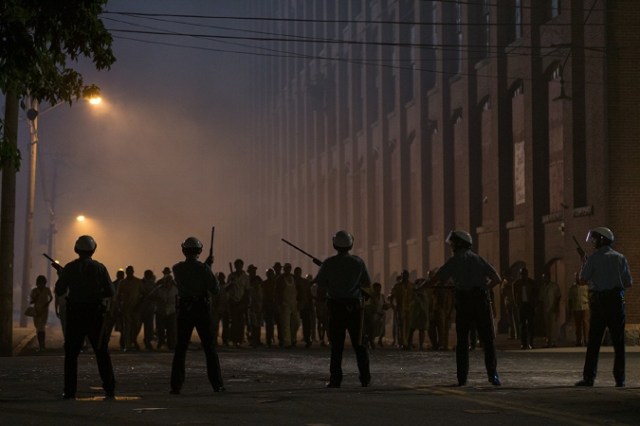
After the prologue animation sequence which gives us the basic background information on Detroit, Michigan and its racial inequality during the 1960s, the movie puts us right into a situation which led to that infamous riot on July 23rd, 1967. When the Detroit Police Department stage a raid on an unlicensed nightclub in one black neighborhood of Detroit and then arrest a bunch of people who happen to be there at that time, many people in that black neighborhood are quite enraged, and we soon see local shops being attacked and pillaged by angry rioters. As this riot is continued to rock the whole city day by day, not only the State Police but also the State National Guard are brought into the city after the authorization from Governor George W. Romney (yes, he is the father of Mitt Romney), and there even come military paratroopers later as authorized by President Lyndon B. Johnson.

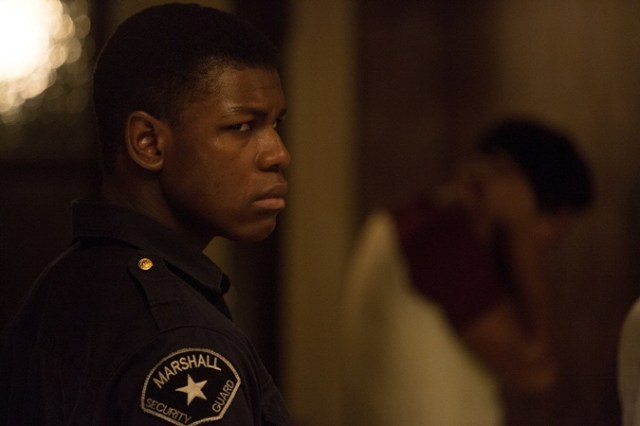
During its first act, the movie introduces us to its three main characters: Melvin Dismukes (John Boyega), Larry Reed (Algee Smith), and Philip Krauss (Will Poulter). When he is told to do the night shift at a local grocery store on July 25th, Dismukes, a black private security guard who also works as a factory worker during daytime, surely has reasonable concerns due to the ongoing riot. During his working hours, he shows some goodwill to a group of National Guard soldiers when they happen to be near the grocery store, but then they hear several sudden gunshots from somewhere, and that is how he inadvertently gets himself into a trouble far more serious than expected.

detroit03

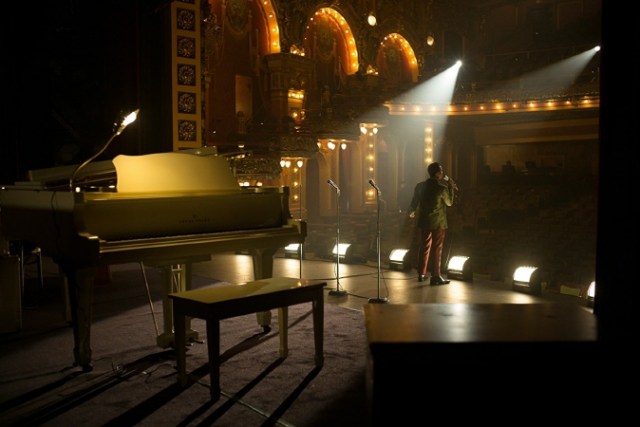
In case of Reed, this black lad and his musician colleagues are about to have their first big moment at a local music hall during the evening of July 25th, but, unfortunately, they are prevented from appearing on the stage in the last minute just because the police demand that the audiences should leave the hall as soon as possible for a security reason. While quite disappointed by this, Reed lets out his frustration to some degrees in the empty music hall, and this is one of a few genuine emotional moments in the film.

And then the evening turns out to be more unfortunate than they thought. Shortly after the bus they ride along with several other citizens is attacked by rioters, Reed and Fred Temple (Jacob Latimore) find themselves being separated from other members, and they have no choice but to stay at a nearby motel due to the curfew. The motel looks safe and fine, but then we instantly sense a problem when one black guy tries to pull a prank on others with a starter gun, which is harmless but makes a loud noise just like a real gun.

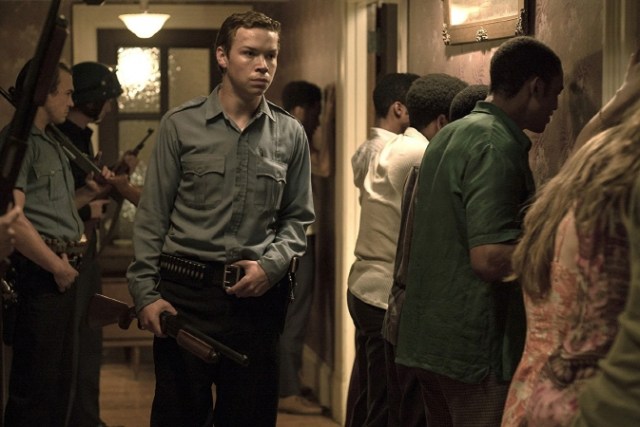
Once that guy shoots several times in the air, not only Detroit Police officers but also National Guard soldiers promptly search for the ‘sniper’, and they all come to converge on the motel. Krauss, a police officer who is also your average hateful racist, arrives at the motel first along with his partner, and they soon round up all the ‘suspects’ in the motel shortly after Krauss shoots down one of them. Quite determined to get the ‘sniper’ by any means necessary, Krauss and his partner are ready to do anything, and other police officers and National Guard soldiers merely stand back from the scene because they do not want to get involved in any serious problem.

The second act of the movie mainly consists of brutal and cruel moments which are surely going to disturb and exasperate you a lot. As Krauss and his partner relentlessly harass and intimidate Larry and others in the motel, Dismukes, who comes into the motel not long after Krauss, tries his best to deal with this circumstance, but he only comes to see how passive and helpless he is. He certainly sees injustice, but he does not want to draw unwanted attention at all, and it is already too late for him when he eventually tries to do the right thing later in the story.

detroit07

Around its third act which revolves around the aftermath of the incident, the movie attemps to stand back and then observe the incident from a wider viewpoint, but the screenplay by writer/co-producer Mark Boal, who previously collaborated with Bigelow in “The Hurt Locker” (2008) and “Zero Dark Thirty” (2012), does not provide enough emotional depth for that. While many of characters in the movie are too flat or broad to hold our attention, the movie also feels superficial at times without much understanding on the social/racial aspects of the riot, and I must tell you that the movie does not show me anything beyond what I can learn from Wikipedia.

The main performers in the movie try to fill their roles as much as they can, and some of them acquit themselves well compared to others. While John Boyega brings some nuanced humanity to his rather bland character, Will Poulter seems to try too hard for his detestable role, and Algee Smith is solid in a role which could be a strong center to hold everything in the story. In case of other notable performers such as Jason Mitchell, Anthony Mackie, Jack Reynor, Jacob Latimore, John Krasinski, and Laz Alonso, they are mostly under-utilized on the whole, and Mitchell, who was wonderful in “Straight Outta Compton” (2015) and “Mudbound” (2017), is particularly wasted here in this film.

Overall, “Detroit” is considerably hampered by several glaring problems including its flawed storytelling and weak characterization, and the result is two or three steps below “The Hurt Locker” and other better works from Bigelow. It is surely as gritty and intense as expected with considerable verisimilitude, but it lacks focus and human dimension to engage us, and that is a shame considering its undeniably timely subject.

detroit05

Posted in Movies | Tagged , , , , , | Leave a comment