Mid90s (2018) ☆☆1/2(2.5/4): Growing up with skateboarding in the mid-1990s

“Mid90s” works best when it gives us a glimpse into its specific subculture in the mid-1990s. Because I am not that familiar with its subject, I observed the film with anthropological curiosity as enjoying its authentic mood and laid-back style to some degree, but I was also distracted by several weak aspects including insufficient storytelling and thin characterization, and I felt rather dissatisfied even while admiring its strong elements to some degree.

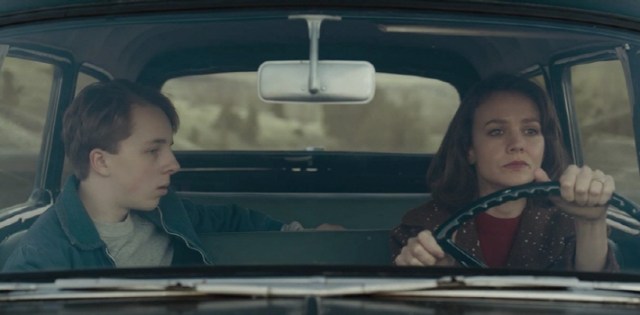
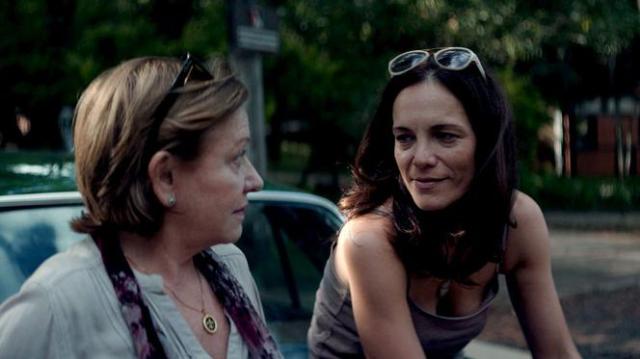
The story of the movie is mainly told through the viewpoint of Stevie (Sunny Suljic), a 13-year-old boy residing in a neighborhood of LA in the mid-1990s. He has lived with his single mother Dabney (Katherine Waterson) and his older brother Ian (Lucas Hedges), and the early scenes in the film succinctly show how unhappy and lonely he is in his mundane daily life. While his mother is usually absent in their home, his older brother frequently abuses and bullies him, and he does not say anything nice to Stevie even when Stevie gives him a little present for his birthday.

On one day, Stevie happens to pass by a local skateboard shop, and he comes to notice a group of adolescent skateboarders killing time together outside the shop. As watching them from the distance, he finds himself drawn to the camaraderie among these older boys, and he subsequently approaches closer to them when they are spending their another day at the shop. To him, they look very cool with their laid-back attitude and frequent use of many expletives I do not dare to say here, and they allow him to join them when he later comes with an old-fashioned skateboard which he manages to obtain from his older brother.

As spending more time with these older boys, Stevie get to know more of them bit by bit. They are Ray (Na-kel Smith), a black dude who is the de facto leader of the group; his best friend played by Olen Prenatt, whose name I cannot write here because it is a composite of two common offensive four-letter words; Fourth Grade (Ryder McLaughlin), a white boy who often shoots their activities as an aspiring amateur filmmaker; and Ruben (Gio Galicia), who was the youngest member in the group before Stevie joined them. Whenever he is with them outside, Stevie feels free and happy, and he continues to hang around with them even after he gets himself injured seriously due to his reckless act of skateboarding at one point.

As Stevie and his new friends skateboard around here and there in their neighborhood, the movie serves us a number of nice moments to be appreciated for good period atmosphere and details. Shot in 16mm film of 1.33:1 ratio by cinematographer Christopher Blauvelt, the movie is often reminiscent of low-budget independent films made during the 1980-90s with its grainy texture and raw ambience, and I was not so surprised to learn later that it was mistaken for some newly discovered movie from the 1990s during one test screening. While I was impressed by the effective use of several pop songs in the 1990s which are mixed well with the ambient score by Trent Reznor and Atticus Ross, I also appreciated several small period details shown on the screen, and I felt a bit nostalgic when a certain type of portable music player was mentioned during one short scene in the film.

As the center of the movie, Sunny Suljic, who previously appeared in “The Killing of a Sacred Deer” (2017), is engaging in his unadorned acting, and he has a memorable scene where his character happens to have an experience to be remembered thanks to an older girl whom he meets at a party later in the story. What they come to do during their little private time may feel inappropriate to some of you, but it is presented with considerable sensitivity and restraint at least, and we get some laugh when they later talk about their experience to their respective friends.

In case of the four other main performers surrounding Suljic, they are mostly solid with their effortless interactions on the screen, though the movie does not give them many things to do besides looking convincing in their skateboarding scenes. While there is a small nice scene where Ray gives Stevie a sincere pep talk as revealing himself a bit more to him, Ray remains to be an underdeveloped character, and so do the other members of his group. During its last act, the movie attempts to generate some drama among them and Stevie through a couple of sudden conflicts, but the result is contrived to say the least, and that is the main reason why the ending does not work as well as intended.

Furthermore, the movie seriously wastes the talent of its two notable cast members. While Katherine Waterson, a wonderful actress who has been more notable since her breakthrough supporting turn in “Inherent Vice” (2014), manages to bring some life to her bland character, Lucas Hedges, a young promising actor who drew our attention via his Oscar-nominated supporting turn in “Manchester by the Sea” (2016), is unfortunately stuck in his functional role, and he is merely demanded to look mean and aggressive except a few brief moments implying pain and vulnerability behind his character’s bullying attitude.

“Mid90s” is written and directed by Jonah Hill, who has steadily expanded the range of his talent especially since his Oscar-nominated supporting turn in “Moneyball” (2011). Although this directorial debut of his is not successful enough for recommendation, he shows here some potential as a filmmaker at least, and I can only hope that he will advance further with whatever he is going to direct next.

Posted in Movies | Tagged , | Leave a comment

Bumblebee (2018) ☆☆☆(3/4): A girl meets Bumblebee

When I heard about “Bumblebee” for the first time early in this year, I did not have much expectation on this prequel/spin-off of the Transformers series. After all, I suffered no less than four sequels after “Transformers” (2007) came out, and I was understandably worried about the possibility of enduring another brainless SF action movie filled with lots of noises and explosions to numb and bore me.

Fortunately, as other reviewers have already said, “Bumblebee” is a fairy good blockbuster product. Sure, it does not break any particularly new ground as serving us some familiar elements and then providing several action sequences as required, but the movie is still entertaining while equipped with enough personality and spirit to hold our attention, and it is surely better than the previous Transfromers films in my trivial opinion.

The movie opens with a prologue showing how its titular robot character came to Earth around the 1980s. After being defeated by a bunch of bad robots named Decepticons, Bumblebee (voiced by Dylan O’Brien) and his fellow good robots, named Autobots, had no choice but to retreat from their home planet Cybertron, and he fled alone to Earth with a certain message from their leader Optimus Prime (voiced by Peter Cullen). Shortly after his arrival in Earth, Bumblebee happens to clash with a bunch of special forces soldiers led by Jack Burns (John Cena), and then, to makes matters worse, he is also attacked by a Decepticon robot following after him. Although he manages to survive in the end, Bumblebee gets himself seriously damaged besides losing his voice, and he is eventually transformed into a rusty yellow 1967 Volkswagen Beetle before his system is shut down.

And then the movie introduces us to Charlie Watson (Hailee Steinfeld), a teenage girl living in a suburban area near San Francisco. While her 18th birthday is approaching, Charlie is not exactly happy as still missing her dear father who suddenly died a few years ago, and that certainly affects her relationship with her mother and stepfather. They try their best for getting along well with her, but they have not succeeded yet as shown from their strained interaction with her, and she is not so pleased when they give her rather disappointing birthday presents instead of what she really wants: her own vehicle.

However, she unexpectedly gets her wish later. There is an old abandoned vehicle at a local junkyard she has frequented, and the owner of the junkyard kindly lets her have it for free. Of course, that old abandoned vehicle in question is none other than Bumblebee in disguise, and Charlie soon has a big surprise when she takes Bumblebee to the garage of her house and then tries to fix him a bit. Although he cannot speak, Bumblebee gradually becomes a new friend to Charlie while she repairs him bit by bit, but, of course, their circumstance becomes quite serious later as a pair of Decepticon robots, voiced by Angela Bassett and Justin Theroux, come to Earth after accidentally receiving a signal inadvertently transmitted from Bumblebee.

Instead of hurrying itself into action mode, the movie takes its time for further developing the relationship between Bumblebee and Charlie, and the screenplay by Christina Hodson imbues their relationship with humor and warmth. While it is amusing to observe how Bumblebee finds a new way of communication via various popular pop songs of the 1980s, the intimate depiction of his growing friendship with Charlie in the film will probably take you back to “E.T. the Extra-Terrestial” (1982) and “The Iron Giant” (1999), and the movie is also filled with nice cultural period details such as the poster of “The Thing” (1982).

Furthermore, unlike the previous Transformers movies, “Bumblebee” has human characters we can care about. While Charlie comes to us as a likable heroine who comes to regain her spirit via her special friendship with Bumblebee, several other human characters around her such as a boy who has carried a torch for her are not mere plot elements at all, and they are surely more engaging than any cardboard character in the previous Transformers films. As Hailee Steinfeld, who has steadily advanced since her Oscar-nominated turn in “True Grit” (2010) as shown from her wonderful performance in “The Edge of Seventeen” (2016), ably holds the center along with her CGI co-star, Pamela Aldon, Jason Drucker, Stephen Schneider, Jorge Lendeborg Jr., and Len Cariou fill their respective small spots around Steinfield, and John Cena tackles his thankless role as much as he can while looking quite serious as demanded.

The movie becomes relatively less interesting when it eventually shifts itself onto full-throttle action mode during its last act as expected, but its action sequences are at least skillfully handled under the competent direction of director Travis Knight, who previously made Oscar-nominated animation feature film “Kubo and the Two Strings” (2016). With a vivid, palpable sense of physical impact and movement, these action sequences are effective without confusing us at all, and the overall result is far more impressive than those messy action sequences shown in the previous Transformers films.

In conclusion, “Bumblebee” is a small nice surprise at the end of this year, and I had a satisfying time along with other audiences when I watched it at a local theater this morning. Although its goal was not that high from the start, it did its job as well as intended while also giving us real fun and excitement, and I sincerely hope that its modest but significant success will lead to more better things to come in the future.

Posted in Movies | Tagged , , , | Leave a comment

The Guilty (2018) ☆☆☆1/2(3.5/4): A taut, suspenseful thriller on the phone

“The Guilty”, which was selected as the Danish entry for the Best Foreign Language Film at the 2019 Academy awards and was recently included in the category short-list early in this month, is a taut, suspenseful thriller which is quite impressive in many aspects. While tightly confined in a single setting, the movie dexterously increases the level of suspense along its increasingly tense plot, and the overall result surely exemplifies well the power of efficient storytelling via editing, sound design, and performance.

In the beginning, we are introduced to Asger Holm (Jakob Cedergren), a police officer who has recently worked at an Emergency Services call center due to some problematic incident. As going through the last hour of his monotonous worktime, he callously handles a couple of phone calls received by him, and we gradually come to sense that he does not like this job at all and is prone to make quick assumptions on those people at the other end of the line. For instance, he virtually disregards the phone call from a drug addict who seems to be in a serious need of help after using drug, and then he deliberately lets some mugged guy agitated for a while just because he thinks that guy had it coming.

After he gets asleep for a few minutes, Asger receives another phone call, and it comes from a woman who is quite scared and frantic as being taken to somewhere against her will. Once he comes to see that how serious her situation is, Asger does everything he can do in his position. While getting some necessary pieces of information from her, he tries to locate where she exactly is at present, and he also makes sure that her children, who happen to be left at her residence, are visited by the police.

Once the police begin to search for that woman and a certain guy involved with her, it looks like Asger did as much as he could do for her, but he cannot help but become more occupied with this ongoing circumstance mainly because he feels more responsibility after he promises to that woman’s young daughter that her mother will return to home safely. He keeps focusing on finding any possible way to locate and then save that woman, and he becomes more determined to solve this situation even though he can possibly cross some lines for that.

As Asger gets himself involved more and more into this circumstance, the movie steadily accumulates tension on the screen step by step through a series of superb scenes which are solely based on his reactions and what he hears from the other end of the line. In case of one particular scene, we merely listen to the phone along with Asger while a certain place is being searched by the police, but we gradually come to brace ourselves for fearing for the worst, and then the movie delivers one of its most dramatically impactful moments while still focusing on Asger as usual.

And we also get to know more about Asger as he comes to show more of himself along the story. Pressured a lot by the consequence of the aforementioned incident, he has been nervous about going to the court for his testimony on that incident, and so has his partner, who reluctantly helps Asger for finding any possible clue to that woman’s whereabout. As a flawed man consumed by growing guilt, he clearly wants to do the right thing for getting a sort of redemption, but then, like Harry Caul in “The Conversation” (1974) or J.J. Gittes in “Chinatown” (1974), he belatedly comes to realize that he does not know what is exactly going on out there, and we get a gut-chilling moment when he faces the price of his hasty assumption and judgement later in the story.

While providing a few little moments of humor, the movie continues to hold our attention during its short running time (85 minutes), and director Gustav Möller, who wrote the screenplay with his co-writer Emil Nygaard Albertsen, skillfully maintains its sharp, focused intensity via a succinct but effective visual approach. While there are several other people at the Emergency Services call center besides Asger, the camera seldom looks at them, and this visual approach further emphasizes his isolated status as well as his accumulating anxiety and frustration.

As the center of the movie, Jakob Cedergren ably carries the film alone with his strong performance, and he is as impressive as Tom Hardy in “Locke” (2013), which is also solely driven by a series of urgent phone conversations between its hero confined in a single setting and some other characters at the other end of the line. Cedergren is terrific as subtly conveying to us the feelings and thoughts churning behind his character’s seemingly calm façade, and the finale of the movie works mainly thanks to what he and the movie have diligently built up to that point. He and other several performers who provide voice performances for the film are believable in their interactions on the phone, and Jessica Dinnage, Omar Shargawi, Johan Olsen, and Katinka Evers-Jahnsen are solid as the unseen key characters of the story.

On the whole, “The Guilty” thrilled and entertained me a lot through its masterful execution of its simple premise. While its chance of getting Oscar-nominated in next year looks rather slim compared to other strong contenders including “Roma” (2018) and “Shoplifters” (2018), it is definitely one of better thriller films of this year, and I sincerely recommend you to not to miss this superlative genre piece.

Posted in Movies | Tagged , | 1 Comment

The Sisters Brothers (2018) ☆☆☆(3/4): Two hitman brothers in the West

Jacques Audiard’s new film “The Sisters Brothers” is an offbeat work which has a small fun with its familiar genre elements. As leisurely rolling its main characters along their long, perilous journey, the movie deftly balances itself between gritty violence, introspective drama, and black humor, and then it surprises us via several unexpected moments of irony and poignancy later in the film. Although it demands some patience due to its slow narrative plot, it is still an interesting experience thanks to its mood, storytelling, and performance, and I admired its good elements even though I am not wholly enthusiastic about it.

The movie opens with the latest job of Eli and Charlie Sisters (John C. Reilly and Joaquin Phoenix), two hitman brothers who have worked together for a man called Commodore (Rutger Hauer). It is around the 1850s, and the West remains brutal and violent despite the ongoing advance of civilization, as reflected from how Eli and Charlie swiftly and ruthlessly eliminate their opponents including the main target one by one.

Not long after finishing their latest job and then returning to a city where Commodore lives, Eli and Charlie receive a new order from Commodore. There is a chemist named Hermann Kermit Warm (Riz Ahmed), and, as revealed later in the story, he has a certain chemical formula which is priceless considering the ongoing Gold Rush in California. He is currently being pursued by a detective named John Morris (Jake Gyllenhaal), and all Eli and Charlie have to do is extracting that formula in question from Warm once Morris catches and then hands down Warm to them.

The job seems to be easy at first, but, of course, Eli and Charlie come across several troubles while following after Warm and Morris. During one small amusing moment, Eli gets very sick due to a poison spider, and there is also an incident involved with a big bear. In addition, it later turns out that there is the other figure who is also quite interested in Warm’s formula, and that certainly makes the situation more complicated.

While finding themselves more stuck in their mission, Eli and Charlie come to have a growing conflict between them. While Eli talks about how much he has been tired of their dirty and dangerous job and also considers changing his profession more than before, Charlie does not give a damn about their future as frequently drinking a lot as usual, and Eli does not like that much, though he still feels obliged to stand by his younger brother as before.

Meanwhile, Morris comes closer to Warm as introducing himself as a fellow traveler, and Warm is grateful to the unexpected help from Morris, but, not so surprisingly, there comes a moment when Warm realizes Morris’ real intention. I will not describe in detail what subsequently happens between them, but I can tell you instead that the adapted screenplay by Audiard and his co-adaptor Thomas Bidegain, which is based on the novel of the same name by Patrick deWitt, surprises us more when their storyline eventually crosses with the main storyline belonging to Eli and Charlie. While watching the second half of the movie, I could not help but reminded of John Huston’s “The Treasure of the Sierra Madre” (1948), and Audiard and Bidegain’s adapted screenplay did not disappoint me at all during a key scene involved with Warm’s formula.

The movie also distinguishes itself via its vivid, realistic period atmosphere accompanied with a number of nice touches to be appreciated. I enjoyed a small moment associated with a certain modern item, and I also like a short scene where Eli and Charlie come to enjoy many modern stuffs including a water closet during their brief respite in San Francisco. While cinematographer Benoît Debie provides numerous wide landscape shots as required, the score by Alexandre Desplat, who has been one of Audiard’s usual collaborators, is mostly effective although it does not sound much like your typical western movie score, and the production design by Michel Barthélémy and the costume by Milena Canonero are also impeccable on the whole.

The main cast members of the movie are well-cast in their respective roles. While John C. Reilly, who has been one of the most dependable character actors working in Hollywood, holds the ground well with his diligent performance, Joaquin Phoenix, who is no stranger to troubled characters as shown from “The Master” (2012) and “You Were Never Really Here” (2017), perfectly complements Reilly’s acting, and we can always sense a long history between their characters even when they do not talk much with each other. Jake Gyllenhaal and Riz Ahmed, who previously worked together in “Nightcrawler” (2014), are also entertaining to watch as their characters interact more with each other along the story, and it is nice to see Rutger Hauer, Allison Tolman, and Carol Kane briefly appearing as small but crucial supporting characters in the film.

In conclusion, “The Sisters Brothers”, which recently garnered the Silver Lion for Best Director at the Venice International Film Festival, is a well-made western film packed with enjoyable goodies, and it is a shame that it is quickly forgotten due to its box office failure in US. Although it is less impressive than Audiard’s previous works such as “A Prophet” (2009) and “Rust and Bone” (2012), I had a fairly good time with it at least, and I think it deserves more attention as a curious genre exercise.

Posted in Movies | Tagged , , , | Leave a comment

When Jeff Tried to Save the World (2018) ☆☆☆(3/4): Meet Jeff the Manager

“When Jeff Tried to Save the World” is about an ordinary guy who tries to save his workplace, and it did its job a little better than expected. Leisurely observing his diligent efforts, the movie often gives us small humorous moments to be enjoyed, and we are also often touched as getting to know more of its modest hero.

Jon Heder, who looks quite different from his clownish appearance in “Napoleon Dynamite” (2004), plays Jeff, the manager of a shabby bowling alley named Winky’s World. While he once studied computer engineering, Jeff has been pretty content with his current position, and we see how he goes through his daily work routines along with his fellow employees. He always comes first in the morning, and then he fastidiously prepares for the opening hour, and then we soon watch him working along with other employees including Stanford (Brendan Meyer), a laid-back lad who is incidentally the nephew of Carl (Jim O’Heir), the owner of Winky’s World.

When his worktime is about to be over, Jeff receives a bad news from his boss Sheila (Cardi Milo), who is Carl’s ex-wife, and Carl. Because the business has recently been going down and it is quite expensive to repair and remodel Winky’s World, Carl comes to decide to sell his bowling alley to some buyers who are willing to demolish it and then build something else on the spot. As a guy who has been comfortable with his workplace for years, Jeff does not like this change at all, but, as Sheila sardonically points out to him, it seems there is nothing he can do for making Carl change his mind.

Meanwhile, Jeff’s solitary personal life becomes a little complicated when his sister Samantha (Maya Erskine) and her roommate friend Lindy (Anna Konkle) unexpectedly come to stay at his apartment for a few days. Because he has been hiding his current job from his sister and parents, Jeff cannot help but awkward in front of his sister, but then he finds himself attracted to Lindy, and that feeling turns out to be mutual when they happen to work on a kitchen problem together later in the story.

Although he becomes quite anxious about losing his dear workplace, Jeff decides to be a little more active than usual. For persuading Carl and dissuading his potential buyers, Jeff promptly announces a special Friday event in front of the remaining customers in Winky’s world, and it seems his strategy works when Friday comes. He and his colleagues are delighted to handle a lot more customers than usual, and, thanks to Stanford, they even have a band to perform music.

Of course, things do not go as well as Jeff wants, but the movie does not hurry itself at all while slowly establishing its mood and characters more. While we come to empathize more with Jeff’s circumstance, we also come to like several other characters including Carl, who is not a bad man at all and simply wants to walk away from his bowling alley for moving onto another phase of his life. Although the bowling alley in the film looks quite old and dated at first, it feels more cheerful and spirited as filled with more people, and the electronic score by Hannah Parrott adds considerable old-fashioned style to the movie.

Above all, the movie is anchored well by Heder’s understated lead performance, which is one of his best acting turns during recent years. Although I was rather annoyed by “Napoleon Dynamite” unlike many others, Heder’s odd comic performance in that movie gave me a glimpse of his acting talent at least, and he surprises me here in this film as showing how deftly he can dial down his comic persona for playing his introverted character. While never directly striving for laugh or sympathy, he brings considerable life and personality to his character, and we come to root for his character a lot even though we can clearly see from the beginning that his character is bound to face a hard fact he cannot possibly ignore.

Director Kendal Goldberg, who wrote the screenplay with Rachel Borgo, assembles good performers around Heder. While Brendan Meyer and Steve Berg often provide broad moments of humor, Candi Milo has her own moments as a bitter, jaded boss, and Jim O’Heir, who previously played one of many funny supporting characters in TV sitcom series “Parks and Recreation”, did a commendable job of making his character more likable and understandable than expected. In case of Maya Erskine and Anna Konkle, they are also fine in their respective supporting roles, and Konkle effortlessly click well with Heder during their few intimate scenes in the film.

I must point out that the movie is not entirely without flaws. For example, a subplot involved with a mysterious old man who always comes to the bowling alley everyday is rather contrived and predictable, though this part subsequently leads to a nice feel-good moment around the finale. In addition, despite its short running time (93 minutes), the movie sometimes lags due to its slow narrative pacing, and you may feel impatient from time to time.

Nevertheless, “When Jeff Tried to Save the World” is still worthwhile to watch on the whole, and it is a shame that this little independent movie did not get much exposure when it was released early in this month. Besides Heder’s solid performance, the movie has enough good things for recommendation, so I suggest that you should give it a chance someday.

Posted in Movies | Tagged , | Leave a comment

The Party (2017) ☆☆☆(3/4): One eventful evening meeting

Sally Potter’s latest film “The Party”, which received the Guild Film Prize at the Berlin International Film Festival early in last year, is a little enjoyable experience to be savored and appreciated. While it simply puts several various characters into one limited space and then observes what happens among them during their one eventful evening, the movie constantly generates engaging moments as smoothly going back and forth between comedy and drama, and it is also strongly supported by its small group of talented cast members, who frequently provide something interesting to watch and observe throughout its short running time (71 minutes).

Kristin Scott Thomas plays Janet, a prominent British politician who receives a good news when she is preparing for a small evening meeting for several friends of hers. She has just been selected as the new minister of the Ministry of Health, and she is certainly happy to hear this wonderful news, but her professor husband Bill (Timothy Spall) does not seem to be cheered up much by another success in his wife’s distinguished political career. Simply sitting down on a chair in the living room, he pensively looks outside as his wife continues to prepare for the upcoming evening meeting, and we come to sense that there is some problem in his relationship with Janet.

Meanwhile, April (Patricia Clarkson) and her current boyfriend Gottfried (Bruno Ganz) come to Janet’s house. As your average cynical realist, April gives Janet some barbed congratulation, but it is apparent that she and Janet have maintained a good friendship between them despite their different viewpoints on life and politics. While Janet still remains to be an idealist with a strong belief on making a better society, April does not believe much in the bureaucratic system of the government, though she still supports her friend as before.

In case of Janet and Bill’s mutual friend Martha (Cherry Jones) and her younger wife Jinny (Emily Mortimer), they announce their happy news not long after they arrive in Janet’s house. Through in vitro fertilization (IVF), Jinny gets successfully pregnant, and it turns out that she is bearing no less than three babies in her womb. While she expects that her relationship with Jinny will be more solidified through the birth of their babies, Martha is rather uncertain about their future, and that later leads to a small personal conflict between them after Jinny comes to know more about Martha’s past.

When Tom (Cillian Murphy) arrives at last, he is not accompanied with his wife, who has incidentally worked under Janet for years. While he looks quite agitated for some reason, he instantly goes to a bathroom alone for inhaling cocaine, and it also turns out that he has a gun, which is already shown to us during the brief opening shot of the film.

Once everything is set in its small place, Potter’s screenplay begins to throw one comic situation after another. When Bill reveals a bad news he recently received, the mood surely becomes sad and depressing for a while, but then there comes another unexpected moment of revelation, and, to our amusement, that moment is followed by more things to be exposed and revealed.

As its supposedly sophisticated characters struggle with their difficult matters of heart, the movie cheerfully presents a series of arguments among them, and Potter effectively utilizes various pieces of music for maximum comic/dramatic effects. I like how the movie sardonically uses “What Is This Thing Called Love” and “My One and Only Live”, and I could not help but amused by how Henry Purcell’s “When I Am Laid in Earth (Dido’s Lament)” is hilariously used during one darkly humorous moment later in the film.

And the main cast members are all fabulous in their respective roles. Kristin Scott-Thomas ably handles her character’s different emotional states along the narrative of the film, and her edgy performance is well matched by the deliciously acerbic performance by Particia Clarckson, who throws her numerous sarcastic lines with considerable gusto while maintaining well her deadpan appearance. Cherry Jones, whom drew my attention for the first time via her Emmy-winning supporting turn in the seventh season of TV series “24”, and Emily Mortimer, a wonderful British actress who has steadily advanced since her touching performance in “Dear Frankie” (2004), are also solid as holding their own small places, and they are particularly good when their characters happen to get a chance to be more honest to each other.

Compared to their female co-performers, the male cast members of the movie have less juicy moments, but they are equally good on the whole. While Timothy Spall, who has always been good at playing unhappy and miserable characters, is excellent when his character reluctantly admits a personal secret hidden from Janet, Bruno Ganz, a dependable Swiss actor who has mainly been known for his unforgettable performances in “Wings of Desire” (1987) and “Downfall” (2004), somehow makes his seemingly goofy character sort of endearing, and Cillian Murphy, who has been always compelling since his breakthrough turns in “Batman Begins” (2005) and “Breakfast on Pluto” (2005), conveys well his character’s growing agitation to us.

Overall, “The Party” succinctly accomplishes its goal without any unnecessary element, and it surely delivers enough comic/dramatic impact in the end as announced from the very beginning. In short, this is another interesting work from Potter, and I am now reminded that I should check out more of her previous works as soon as possible.

Posted in Movies | Tagged , | 1 Comment

Bird Box (2018) ☆☆1/2 (2.5/4): Don’t open your eyes…

“Bird Box”, which was released in US in last week and then became widely available via Netflix this Friday, begins with a chilling premise and then provides a number of good moments to scare and unnerve us. I was entertained by these good moments to some degrees while appreciating the considerable efforts and skills put into them, but then I got impatient as watching the movie losing tension around its last act, and I also felt dissatisfied with its several weak aspects including its rather artificial ending.

After the opening scene showing its heroine hurriedly leaving along with two kids to somewhere, we see how everything looked fine and normal for her around five years ago. Although she has been pregnant for several years, Malorie Hayes (Sandra Bullock) has been mostly occupied with her artistic career while quite content with living alone in her studio/residence (Her baby’s father is vaguely mentioned only once, by the way), and she does not pay much attention to a TV news report on the spreading wave of inexplicable mass suicide across Europe and Russia.

Of course, things become quite serious and urgent not long after Malorie and her sister Jessica (Sarah Paulson) go to a local hospital for the routine examination of her baby. As many people around them begin to kill themselves without no apparent reason, Malorie and Jessica instantly try to get away from the pandemonium, but then Jessica suddenly comes to be under some strange influence after seeing something, and she eventually kills herself right in front of Malorie.

While quite shocked by her sister’s death, Malorie fortunately finds a shelter in a nearby house, where a group of people are already hiding from the ongoing pandemonium outside. Once she and others in the house see that they are safe in the house for a while, they become a bit calmer than before, but they are still afraid of whatever is making many people suicidal outside. All they know about it is that they must not see it for avoiding becoming suicidal just like many others out there, so they naturally shut down and cover up every window in the house for their safety.

As Malorie and other main characters in the film try to survive as long as they can, the movie slowly increases the level of suspension through a series of visually limited but undeniably effective scenes. There is a nice scene involved with several video cameras installed outside the house, and then there later comes a tense, creepy sequence where Malorie and several other characters try to go to a certain nearby place by a vehicle thoroughly covered with paint and papers.

As time goes by, the situation gets worse as Malorie and others in the house become more isolated from the outside world without much hope. While they still have water and electricity, their circumstance remains as uncertain as before, and then they come to learn about another kind of danger when a frantic stranger comes into the house later in the story.

Their situation is frequently intercut with a part showing Malorie’s long, desperate journey with the two kids mentioned above. She recently received a radio message which seems to come from a safer place located somewhere around the downstream of a nearby river, and she hopes to get there along with the kids as soon as possible, but, of course, it is not so easy for her to sail a small boat along the river while she and the kids remain in their blindfolded state. In addition, there are many possible dangers here and there around the river, and we subsequently get a tense, unnerving scene where she has to leave the kids alone for a while as searching for some necessary items in an abandoned building.

Although the movie becomes more predictable as its two main storylines approach to their respective arrival points, it keeps things rolling via its vivid, palpable atmosphere at least, and its technical aspects are commendable on the whole. While cinematographer Salvatore Tontino constantly immerses the screen in the grey sense of dread and desolation, the moody electronic score by Trent Reznor and Atticus Ross is mixed well with disturbing sound effects on the soundtrack, and the movie also did a good job of handling the occasional shots emphasizing its heroine’s frequently limited viewpoint, which add more tension and suspense to the screen.

As the center of the movie, Sandra Bullock steadily carries the film with her engaging performance, and she is also surrounded by a bunch of notable performers. While John Malkovich is as sour and cynical as we can expect from him, Trevante Rhodes, who has been more prominent since his breakthrough turn in “Moonlight” (2016), clicks well with Bullock in several intimate moments between their characters, and Sarah Paulson, Lil Rel Howery, Jacki Weaver, Tom Hollander, Danielle Macdonald, BD Wong, and Pruitt Taylor Vince fill their broad supporting roles as much as they can.

“Bird Box”, which is based on the novel of the same name by Josh Malerman, is directed by Susanne Bier, who previously made “Brothers” (2004), “After the Wedding” (2006), and Oscar-winning film “In a Better World” (2010). Although it is not good enough for recommendation, the movie is not entirely without good things at least, and I will not stop you if you just want to compare it with “A Quiet Place” (2018), which is a better film in my inconsequential opinion. While that movie really terrified me, “Bird Box” just mildly entertained me, and that was all.

Posted in Movies | Tagged , | Leave a comment

Swing Kids (2018) ☆☆☆(3/4): Tap dancing at a Korean War prison camp

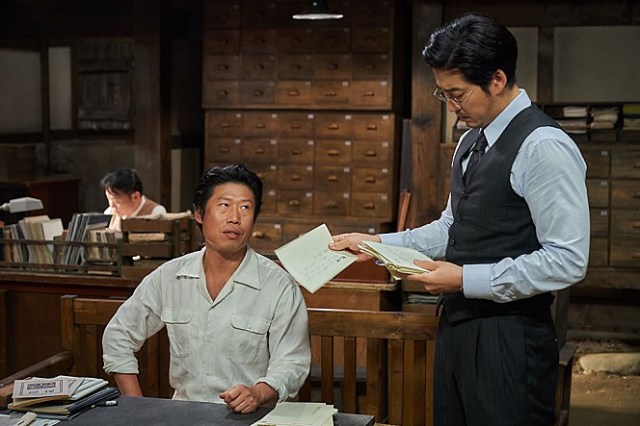
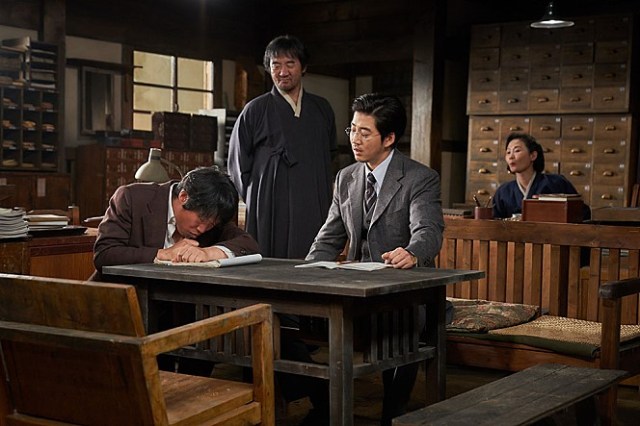
There are several spirited moments in South Korean film “Swing Kids”, a funny, delightful comedy drama movie about a group of different characters trying to do a tap dance performance at a Korean War prison camp. Although it starts to lose its comic momentum during its second half and its melodramatic ending feels rather jarring compared to the climatic performance sequence preceding it, the movie is still one of more enjoyable South Korean movies during this year, and I had a fairly good time on the whole.

The movie is set in Geoje prison camp in South Korea, 1952. While the Korean War reached to stalemate around that time, thousands of North Korean and Chinese prisoners of war were sent to that prison camp located in Geoje Island, and things do not particularly good when the new warden of the prison comes not long after a massive violent conflict between two opposing groups of North Korean prisoners. While one group still sticks to North Korea, the other group decides to stay in South Korea, and these two groups constantly clash with each other even though they are now separated from each other.

For improving the public image of his prison camp, the warden comes to plan a special entertainment event to be watched by not only prisoners but also a bunch of international reporters, and he soon approaches to Jackson (Jared Grimes), an African American sergeant who was a professional Broadway dancer before joining the US Army. While he is not so eager to prepare for a tap dance performance as ordered by the warden, Jackson has no choice but to follow the order as the warden suggests a reward he cannot refuse, so he starts to look for anyone who can dance well enough with him, but, of course, he soon gets frustrated while joylessly watching many clumsy attempts to dance in front of him.

However, fortunately, he comes to find three candidates good enough for him. While Byung-sam (Oh Jung-se), a civilian who happens to be stuck in the prison camp by misfortune, impresses Jackson a lot with his strenuous dance, Xiao Fang (Kim Min-ho), a chubby Chinese prisoner with some health problem, shows considerable agility in his dance movements, and Pan-rae (Park Hye-su), a young South Korean girl who often come to the prison camp along with other pretty South Korean women ready to entertain and attract American soldiers, easily joins the group because she can speak not only Korean and English but also Japanese and Chinese.

Meanwhile, Jackson wants to recruit another figure into his group, and that person is none other than Ki-soo (Do Kyung-soo), a young, rebellious North Korea soldier who showed his notable dancing skill at an unauthorized dance party for American soldiers. Because he is not much interested in tap dance mainly due to his ideological position opposing to US and capitalism, Kyung-soo refuses to join Jackson’s group, but, as shown from one humorous scene pulsating with an impressively rhythmic mix of sound effects, he cannot help but think more and more of tap dane after Jackson demonstrates his tap dance skill to Kyung-soo at one point, and he eventually comes to decide to join the group.

As these five main characters come to stick together through the joy of music and dance despite many differences among them (is this a spoiler?), the movie bounces from one amusing moment to another while also providing plenty of dance scenes. While I enjoyed a sudden unexpected dance battle unfolded in a storage, I found myself smiling a lot during a silly but uproarious sequence where Ki-soo and other two main characters attempt an impromptu performance in front of many people including the warden, and the effective use of music during these and other key scenes in the film further increases the level of hilarity.

However, the movie becomes quite more serious around the middle point of the story. As a couple of certain North Korean supporting characters enter the picture, the circumstance becomes quite dangerous for Ki-soo, and, not so surprisingly, there inevitably comes a point where he must make a choice as he and his other group members are finally ready to present their performance on the stage.

Although its second half does not entirely work due to its incoherent mix of comedy and melodrama, the movie remains to be engaging enough to hold our attention thanks to the joyful efforts from its five main cast members, who prepared a lot for their tap dance scenes in the movie and, as far as I could see from the film, look quite convincing together with good chemistry among them. While Do Kyung-soo is the most prominent one in the bunch as a singer/actor who has been quite popular in South Korea, Jared Grimes, who is actually a professional dancer and choreographer from Broadway, gives an earnest performance holding the ground well for his co-performers, and Park Hye-su, Oh Jung-se, and Kim Min-ho are also solid in their respective colorful roles.

“Swing Kids” is directed and written by Kang Hyeong-cheol, who previously made “Scandal Makers” (2008) and “Sunny” (2011). Although I did not like “Scandal Makers” enough for recommendation, I had some good laughs while recognizing Kang’s considerable skill and talent, and I was certainly delighted and entertained a lot by many funny moments in “Sunny”, which was one of my best South Korean films of 2011. “Swing Kids” is less successful compared to “Sunny” mainly due to its several notable flaws including its uneven storytelling, but I will not deny that I had enough fun and entertainment at last night.

Posted in Movies | Tagged , , , , , | 1 Comment

The House That Jack Built (2018) BOMB: A dreary exercise in cruelty and depravity

To be frank with you, I had some serious concern before watching Lars von Trier’s latest film “The House That Jack Built”. I heard that many audiences walked out of the screening room when it was shown at the Cannes Film Festival early in this year, so I was not so sure about whether I could endure whatever von Trier was going to hurl at me during 2.5 hours.

To my horror and astonishment, the movie turned out to be far worse than I ever imagined. While it is surely as unpleasant, vicious, nihilistic, and misogynistic as we can expect from a work by von Trier, the movie is hopelessly dull, dreary, and drowsy in its pedantic and pretentious presentation of human cruelty and depravity, and it sometimes feels like a tediously rambling class presentation which would make you get asleep at times (Full disclosure: That did happen to me several times, no matter how much I tried to concentrate on whatever was told and shown on the screen).

Mainly consisting of five acts, the movie chronicles several crucial acts of killing in the life of its serial killer hero, who is named, yes, Jack (Matt Dillon). As he flatly and constantly discusses with a certain character played by Bruno Ganz on the soundtrack, each of the five acts of the movie presents his growing depravity and cruelty step by step, and then it is followed by a sanctimonious epilogue which is laughable at best and offensive at worst.

During the first act, Jack is driving on a road when he comes across a woman played by Uma Thurman. Because not only her car but also her jack are broken, she asks him to take her to a nearby blacksmith’s shop where she can get her jack fixed, and he agrees to do that, but then, while talking a bit with him in his vehicle, she blatantly wonders whether he is a serial killer, which is, of course, true. Jack keeps himself cool and detached for a while, but, what do you know, he eventually hits her head hard with that jack (Isn’t it too symbolic?), and then he takes care of the aftermath without leaving anything to incriminate him.

In case of the second act, Jack approaches to a middle-aged woman played by Siobhan Fallon Hogan. Once he confirms that she is alone in her house, he embarks on a rather silly act of deception to baffle and confuse her, and she comes to let him into her house when he suggests the possibility of getting more insurance money. While Jack’s eventual killing of that poor woman is surely unpleasant and reprehensible to say the least, we are also served with an insipid scene where he manages to evade a policeman’s suspicion even while snooping around at a crime scene right in front of that policeman, and then there later come a couple of bloody and gruesome moments which will probably make you cringe and disgusted for good reasons.

Around that part, Jack reflects a bit on his childhood years via several flashback scenes, and von Trier pushes the film further into his mean, vicious bad taste. At first, he shows us young Jack freely running around in a bush and then leisurely watching a bunch of guys mechanistically working on a meadow, but then he shocks and repels us as showing young Jack casually committing a cruel, sadistic act upon a duckling.

Not long after that reprehensible moment, the movie enters its third act, which initially shows Jack befriending a mother with two children, played by Sofie Gråbøl. He later takes them to a remote place around a forest where he demonstrates his shooting skill in front of them, and, not so surprisingly, he comes to kill all of them while also showing more of his cruelty and depravity in front of us.

I forgot to tell you that, around this narrative point, Jack already killed more than 10 people at least while also gaining his own nickname in public: Mr. Sophistication. As your average obsessive-compulsive disorder case, he always makes sure that his crime scenes look neat and clean, and he also has a big cold storage room hidden from outside, where he not only stores the bodies of some of his victims but also expresses more of his evil nature in an, uh, artistic way.

During the fourth act of the movie, Jack happens to spend a little private time with a woman played Riley Keough. She is genuinely interested in getting to know him more, but then he gradually reveals his dark side to her as viciously and sadistically mistreating her, and what eventually happens is another repellent example of how misogynistic and nihilistic the movie can be.

Around its fifth act, the movie keeps droning on as before, even though Jack attempts to do something different for his latest act of killing. When Ganz’s character finally appears on the screen, the movie literally plunges its hero and itself into a certain kind of bottom, and then it slaps its audiences again during the end credits, which is accompanied with the most contemptuous utilization of a certain famous pop song.

Like von Trier’s recent works such as “Antichrist” (2009), “Melancholia” (2011), and “Nymphomaniac” (2013), “The House That Jack Built” surely shows us what a troubled artist he is, but it is so tepid, superficial, and incompetent that I only left with unpleasant and hollow impressions, and I am now reminded of the opening paragraphs of Roger Ebert’s review on Roman Polanski’s infamous flop “Diary of Forbidden Dreams” (1973). The more I reflect on “The House Jack Built”, the more it seems to fit to what Ebert said in his scathing review.

“There’s probably a level of competence beneath which bad directors cannot fall. No matter how dreary their imaginations, how stupid their material, how inept their actors, how illiterate their scripts, they’ve got to come up with something that can at least be advertised as a motion picture, released and forgotten.

But a talented director is another matter. If he’s made several good films, chances are that sooner or later someone will give him the money to make a supremely bad one. I wonder how much Carlo Ponti gave Roman Polanski to make “Diary of Forbidden Dreams”. Ten cents would have been excessive.”

In conclusion, “The House That Jack Built” is a cinematic disaster which shows its director at the rock bottom of his artistic sensibility and creativity, and it is not even competent enough to earn zero star from me despite its many reprehensible aspects. This is indeed one of the most uninteresting experiences during recent years, and I am only consoled by the fact that there are far more interesting films to watch out there.

Posted in Movies | Tagged , | Leave a comment

Aquaman (2018) ☆☆1/2(2.5/4): Aquaman Cometh

If “Aquaman” came 10 years ago, I would probably be more generous to it. Sure, it has several spectacular sequences to be enjoyed on a big screen, and it has more sense of fun and humor compared to that solemn dreck called “Batman v Superman: Dawn of Justice” (2016), but it unfortunately suffers from its overlong plot stuffed with too many elements to my distraction. Besides, it does not bring anything particularly new to its increasingly familiar genre territory, and I often found myself rather distant to its story and characters even though I appreciated its more enjoyable moments.

In the beginning, the movie establishes the background of the birth of its superhero Arthur Curry/Aquaman (Jason Momoa). During one stormy dark night in some seaside area of Maine, 1985, a lighthouse keeper named Thomas Curry (Temuera Morrison) happened to rescue a mysterious woman named Atlanna (Nicole Kidman), who was running away from her underwater kingdom Atlantis because she did not want to marry its king. As spending more time with each other, Thomas and Atlanna quickly fell in love, but, sadly, their days of happiness with their young son Arthur did not last long, and Atlanna had no choice but to walk away from her dear husband and son and then go back to Atlantis for saving them.

Around 30 years later, Arthur is now a hulking muscular dude with superpower as previously shown from “Batman v Superman: Dawn of Justice” and “Justice League” (2017), and we behold his power and abilities during an action sequence where he swiftly rescues the crew of a Russian submarine from a bunch of ruthless pirates. Once his job is done, he comes back to his hometown for spending some time with his old father at a local bar, and we get an amusing moment when he happens to be recognized by a group of tough guys.

Not long after that, Arthur is approached by Mera (Amber Heard), an Atlantean princess who is urgently looking for him for a very serious matter. Orm (Patrick Wilson), who is Arthur’s half-brother and also going to marry Mear soon, recently becomes the ruler of Atlantis, and he is about to gather Atlantis and other several underwater kingdoms, including the one ruled by Mera’s father King Nereus (Dolph Lundgren), for starting a big massive war on the humanity. Mera asks Arthur to stop Orm before Orm causes too much damage on both sides, but Arthur is not so eager to do that because he still feels resentful about what happened to his mother after she went back to Atlantis.

Of course, once he comes to see that he cannot ignore the situation anymore, Arthur agrees to help Mera and Vulko (Willem Dafoe), the counselor of Atlantis who was also, as shown from a couple of flashback scenes, Arthur’s longtime mentor. As he arrives in Atlantis along with Mera, the movie serves us with visually epic and enchanting shots full of big, shiny, and colorful details in underwater landscapes, and they are certainly lovely to watch although they are essentially derivatives from “Avatar” (2009) and “Tron: Legacy” (2010).

Vulko informs Arthur that he must find and obtain a mythic trident which is far more powerful than the one he inherited from his mother, and the middle part of the movie mainly revolves around Arthur and Mera’s bumpy journey around various spots including a hidden underground city located somewhere in the Sahara. As they advance step by step through several clues on their way, you may be reminded of “National Treasure” (2004) and other similar films, and I must confess that I particularly like a complex device which requires a certain kind of liquid substance for operation.

While pursuing after Arthur and Mera, Orm continues to focus on having the underwater kingdoms under his control, so we get to know more about several other underwater kingdoms besides Atlantis. There is a kingdom populated by humanoid creatures who may be related to the one shown in “The Shape of Water” (2017), and then there is also a realm filled with big talking crustacean creatures. In addition, the movie has 1) a big herd of very nasty creatures with sharp teeth, 2) various prehistorical creatures inhabiting in an ancient subterranean world, and 3) a humongous and fearsome creature voiced by a certain legendary actress, who is certainly the last one you can imagine voicing that creature in question.

Despite all these fun stuffs presented on the screen, the movie frequently stumbles and trudges as losing its narrative pacing, and the weak aspects of the screenplay by David Leslie Johnson-McGoldrick and Will Beall, which is based on the story by Beall and his co-writers Geoff Johns and director James Wan, become more evident. As trying to do too many different things together during 143 minutes, the movie eventually comes to lose its balance and focus especially during its last act, and I felt exhausted instead of enthralled when the movie went all the way for lots of flashes and explosions during its obligatory climactic action sequence.

Anyway, the main cast members of the movie deserve to be commended for their game efforts. While Jason Momoa, who drew my attention for the first time via his striking supporting performance in the first season of HBO TV series “Game of Thrones”, is well-cast in the title role, Amber Heard is sexy and feisty as holding her own place well next to Momoa, and other notable performers including Patrick Wilson, Dolph Lundgren. Willem Dafoe, Temuera Morrison, and Nicole Kidman are adequate in their functional roles.

While it is not entirely without fun and excitement, “Aquaman” still feels relatively less memorable and entertaining compared to what was achieved in “Wonder Woman” (2017), “Black Panther” (2018), and “Spider-Man: Into the Spider-Verse” (2018), which is probably the best superhero film of the 2010s. Unlike these distinctive superhero films I am willing to watch again and again, “Aquaman” fails to engage and invigorate me enough, and I can only hope that I will be more entertained by whatever will come next after this.

Posted in Movies | Tagged , , | Leave a comment