Ralph Breaks the Internet (2018) ☆☆☆(3/4): Ralph and Vanellope’s another adventure

ralphbreakstheinternet02

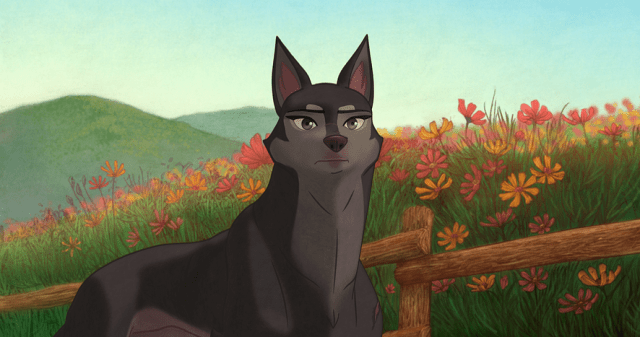
Animation feature film “Ralph Breaks the Internet” amuses us a lot for good reasons. After throwing its two broad but endearing main characters into that vast world of the Internet, the movie serves us a number of colorful and spirited scenes to be savored, and the result is a bit more entertaining than its predecessor on the whole.

In the beginning, the film shows us how things have been mostly fine after what happened in “Wreck-It Ralph” (2012). Quite more comfortable with his programmed role than before, Ralph (voiced by John C. Reilly), a gigantic but soft-hearted video game figure who is the antagonist of an old but popular arcade game called “Fix-It Felix Jr.”, often spends free time along with his best friend Vanellope (voiced by Sarah Silverman), and we get a series of amusing moments showing how they have a fun together whenever the arcade is closed at night.

However, Vanellope has recently become rather bored with her arcade game called “Sugar Rush”, where she usually wins as driving her racing car along the same course again and again. For his dear friend, Ralph tries to bring some exciting change to her latest racing competition, but, unfortunately, his good-willed act leads to a disastrous outcome. The arcade cabinet of Sugar Rush is seriously broken as a result, and there is no way to replace its broken part because the owner of the arcade is not so willing to buy a new part, which, due to the defunct status of a company which manufactured Candy Crush, is currently available only on eBay at the price of $ 200.

As Vanellope and other video game figures of Sugar Rush have no choice but to relocate to other arcade video games including Fix-It Felix Jr., Ralph feels guilty about that, and then he gets a seemingly good idea for saving Sugar Rush. The owner of the arcade recently installed a Wi-Fi equipment in the arcade, and it looks like all Ralph and Vanellope have to do is entering the Internet via that Wi-Fi equipment and then going to eBay for getting that new part in question.

ralphbreakstheinternet03

Once they successfully get themselves transferred to the Internet, Ralph and Vanellope come to behold many amazing things they have never seen before, and we get plenty of amusement as spotting famous brand names shown here and there in the Internet. As far as I remember, there are YouTube, Google, Twitter, Instagram, Amazon, Wikipedia, and, yes, Google, and my biggest amusement come from the website of Disney Studios, which is full of its countless properties including Star Wars, Marvel Cinematic Universe, and, yes, those many recognizable Disney animation films ranging from “Snow White and Seven Dwarfs” (1937) and “The Many Adventures of Winnie the Pooh” (1977) to “Toy Story” (1995) and “Zootopia” (2016).

While quite confused in front of this new world at first, Ralph and Vanellope manage to go to eBay in the end, but then they get themselves into another trouble. As competing with some human user at the auction for that new part, they inadvertently raise the price up to no less than $27,001, and they belatedly come to realize that they must pay $27,001 within 24 hours.

As looking for any possible way to obtain $27,001 as soon as possible, Ralph and Vanellope come upon a good chance via an algorithm figure who has busily managed trending videos on a popular website called BuzzzTube. Once discerning that he can earn money quickly via videos to go viral on the Internet, Ralph goes all the way for getting far more money, and we accordingly get a wryly hilarious sequence which shows how Ralph’s numerous videos get rapidly popular outside.

ralphbreakstheinternet01

As Ralph is constantly occupied with making videos and checking his online popularity, Vanellope spends her own time alone in the website of Disney Studios. By accident, she comes across a bunch of Disney animation film princess characters, and the movie surely has lots of fun with these characters as they talk with Vanellope, who eventually gives us a lovely and hilarious musical moment as advised by her new friends.

Of course, there subsequently comes a narrative point where a conflict is generated between Ralph and Vanellope, and the story, which is written by director Phil Johnston and Rich Moore and their co-writers Jim Reardon, Pamela Ribon, and Josie Trinidad, takes a dark narrative turn as Ralph commits something bad later in the film. After that, the film predictably reaches to a big action climax, but it does not lose its humor and spirit even during this part, and it also gives some valuable lesson on friendship in the end.

The main cast members of the film are all enjoyable in their voice performance. While John C. Reilly and Sarah Silverman effortlessly complement each other as the contrasting duo of the story, Jack McBrayer and Jane Lynch fill their parts as well as before, and Taraji P. Henson, Gal Gadot, Alan Tudyk, Alfred Molina, Ed O’Neill, and Bill Hader are also effective in their respective supporting roles.

Overall, “Ralph Breaks the Internet” is a solid sequel packed with enough goodies to support its rather simple plot. Although it is not better than “Incredibles 2” (2018) or “Spider-Man: Into the Spider-Verse” (2018), the film is a fairly competent animation film equipped with style, energy, and personality, and I am sure that aspect will be appreciated by both young and adult audiences.

ralphbreakstheinternet04

Posted in Movies | Tagged , , , | 2 Comments

The Old Man and the Gun (2018) ☆☆☆(3/4): An old man living through bank robbery

theoldmanandthegun01

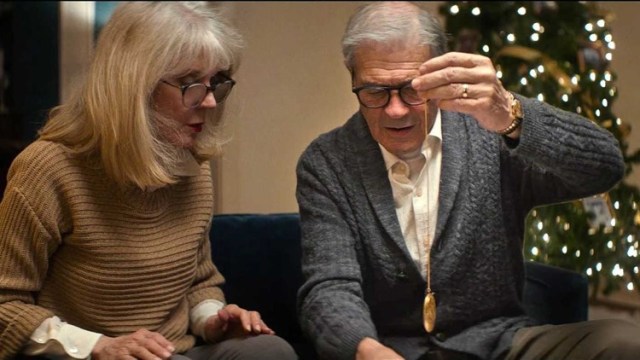
“The Old Man and the Gun” is a little offbeat film which leisurely takes its time along with its aging criminal hero for its laid-back fun. Mainly working as a quirky and amusing character study, the movie gives us a number of small but lovely moments to be appreciated for nuances and details, and it also earns some extra poignancy mainly thanks to what will probably be remembered as the last movie performance from its legendary lead actor.

Robert Redford, who recently announced the retirement from his long, illustrious acting career, plays Forrest Tucker, a septuagenarian ex-con who has been quite active in his criminal career despite his old age. In the opening scene which begins at a big bank in Texas, 1981, he has just committed his latest bank robbery, and we later come to know more about how effortlessly he has done his bank robberies for years. All he has to do is walking into a bank alone with a briefcase and, of course, a gun, and we cannot help but amused as watching how smoothly and gently he handles frightened bank employees with his own charm and confidence.

Tucker is sometimes assisted by his two fellow old ex-cons: Teddy (Danny Glover) and Waller (Tom Waits). When they rob another bank together, they happen to draw the attention of a police detective named John Hunt (Casey Affleck), who is coincidentally at that bank but belatedly realizes what happens shortly after Tucker and his accomplices get away from the crime scene. As delving deeper into the case, Hunt comes to discover a long track of Tucker and his accomplices’ criminal activities around Texas and several other states in US, and he is surely impressed a lot when they commit a bigger bank robbery in Missouri.

theoldmanandthegun06

Meanwhile, Tucker finds himself in an unexpected romantic situation after accidentally encountering an old woman named Jewel (Sissy Spacek). Although they are total strangers to each other at first, something clicks between them as they spend more time with each other, and he later contacts her not long after his bank robbery in Missouri. Although he is quite frank about how he is not so honest with her from the beginning, Jewel does not mind that at all because she really likes him, and it seems possible that they may live together if she allows him to get a bit closer to her.

While slowly rolling its plot, the screenplay by director/writer David Lowery, which is based on the New Yorker article of the same name written by David Grann in 2003, keeps focusing on its main characters and their interactions instead of going for cheap thrill and excitement, and we accordingly get several enjoyable moments as getting to know more of its main characters. There is an absurd scene where Tucker’s sincere attempt to solve Jewel’s financial problem behind her back is blocked by bank regulations, and we later get a warm, humorous scene where he and Jewel almost get away with their small act of theft before changing their mind. While Hunt initially looks like a rather plain character, the movie pays considerable attention to his personal life, and his wife and their two kids are thankfully free from genre clichés and conventions.

Above all, it is a pleasure to watch how Redford ably carries the film via his undeniably engaging presence on the screen. While his prime period mainly represented by several classic films such as “Butch Cassidy and the Sundance Kid” (1969), “The Sting” (1973), and “All the President’s Men” (1976) already passed away many years ago, Redford is still a charismatic movie star as recently shown from his unforgettable solo performance in “All Is Lost” (2013), and he is surely as charming as expected here while having a lot of fun with his character. Even after we come to learn of how incorrigible Tucker has been throughout his criminal life and career, he remains as likable as before thanks to Redford’s amiable performance, and we are not so surprised to see that Hunt comes to like and respect Tucker to some degree while getting to know more of Tucker via his investigation.

theoldmanandthegun03

Redford is surrounded by a bunch of good performers, who fill their respective roles around Redford as required. Sissy Spacek, a wonderful actress who has seldom disappointed us since she appeared in “Badlands” (1973) and “Carrie” (1976), has a good chemistry with Redford during their several intimate scenes, and she and Redgord are particularly terrific when their characters find themselves swept by their mutual feeling at one point later in the story. While Casey Affleck, who previously collaborated with Lowery in “Ain’t Them Bodies Saints” (2013) and “A Ghost Story” (2017), is effective in his humble but solid performance, Tika Sumpter holds her own small place as Hunt’s caring wife, and it is certainly nice to see notable performers such as Danny Glover, Tom Waits, Elisabeth Moss, Isiah Whitlock, Jr., Keith Carradine, and John David Washington, who recently rose to prominence thanks to his breakout performance in Spike Lee’s “BlacKkKlansman” (2018).

After drawing my attention via his second feature film “Ain’t Them Bodies Saints”, Lowery impressed me more with “Pete’s Dragon” (2016), and then there came “A Ghost Story”, which was one of the best films I saw during 2017. While these three films and “The Old Man and the Gun” look quite different from each other in many aspects, they are all imbued with Lowery’s distinctive talent and sensitivity, and I agree with others that he is indeed one of the most interesting American filmmakers at present.

In conclusion, “The Old Man and the Gun” is funny and entertaining thanks to Lowery’s competent direction and the commendable performances from Redford and several other main cast members, and I had a fairly good time along with my parents and other audiences this afternoon. Maybe he will change his mind later, but Redford presents a fitting swan song here in this film, and that is more than enough for recommendation in my inconsequential opinion.

theoldmanandthegun05

Posted in Movies | Tagged , , , , , | Leave a comment

Happy as Lazzaro (2018) ☆☆☆1/2(3.5/4): A tale of one simple but decent lad

happyaslazzaro

Italian film “Happy as Lazzaro” initially baffles us with its odd but realistic background during its first half and then moves onto a stranger territory during its second half. At first, the movie looks like a humorous fable about one simple but decent lad, but then, after a sudden unexpected narrative turn in the middle of the story, it eventually presents itself as an idiosyncratic mix of social drama and fairy tale, and I was quite impressed by that in the end.

During the opening part, we gradually get to know a small community residing and working in a tobacco farm, which is located in some remote rural region. As a young man and his friends perform a serenade in front of a house packed with many people including a young woman whom that young man loves, the movie looks around here and there in that big house, and we cannot help but wonder about the period background of the movie as observing many details which look quite old-fashioned to us. While these people have electricity, there are only a few light bulbs in their shabby house, and it looks like they have been stuck in their small world for many decades without much change.

When the manager representing the owner of the tobacco farm comes on the next day, he condescendingly treats the community people as if they were medieval peasants. He reminds them that they are still in debt as usual despite their hard work, and they all conform to this without much complain. When the aforementioned young couple later tries to leave the community for their better future, the manager warns that they must get the permission from the owner first, and the couple has no choice but to give up their plan.

happyaslazzaro02

Meanwhile, we come to notice a lad named Lazzaro (Adriano Tardiolo), and then we observe how happily this good-natured dude does whatever he is asked to do by others around him. As the owner cynically points out while watching him from the distance, he is constantly exploited as being at the bottom of his class system, but he has no anger or grudge about that at all, and we come to observe him with amusement instead of pity while he consistently remains simple and decent as a sort of holy fool.

And then there comes a significant change via Tancredi (Luca Chikovani), the owner’s willful young son who is going to spend some time in the mansion belonging to the owner. As your typical urban lad, he becomes quite bored right from when he arrives in the farm, and then he comes to befriend Lazzaro, who is certainly eager to do anything for him and also shows him his little private place somewhere around the top of a nearby mountain. When Tancredi later attempts to fake his own kidnapping for having some rebellious fun, Lazzaro willingly goes along with Tancredi’s plan, and he becomes more loyal to Tancredi after Tancredi jokingly suggests that they could be half-brothers.

As everyone else in the community looks for Tancredi, we get a series of amusing moments including the one involved with a pack of wolves somewhere out there, but then the movie jolts us when something shocking and tragic happens to Lazzaro. I will not describe that incident in detail here, but I can tell you instead that the movie effortlessly shifts itself onto a different mode as Lazzaro’s community is inevitably turned upside down after Tancredi’s plan goes wrong more than he and Lazzaro every imagined.

Anyway, the second half of the movie puts Lazzaro in a situation quite alien to him in many aspects. Baffled by how things have changed a lot during his longtime absence, he comes across a couple of guys when he is aimlessly wandering around in the owner’s mansion, and they subsequently take him to a big modern city. He soon encounters his community people who were relocated to the city after that incident, and they all surprised to see how he still looks same as before even though a considerable amount of time has passed since that incident.

happyaslazzaro03

While occasionally implying Lazzaro’s ghostly status, the movie continues to engage us via several nice moments to be savored. There is a funny scene where Lazzaro gladly shows his community people some edible plants to eat, and there later comes a fateful moment when Lazzaro happens to encounter Tancredi, who surely looks quite different after getting older. It seems they can be friends again, but, not so surprisingly, Tancredi soon shows what a lousy human being he has become, and we get a very awkward moment when Lazzaro and a group of his community people try to visit Tancredi’s current residence at one point later in the story.

Nevertheless, Lazzaro does not lose any of his benign innocence, and Adriano Tardiolo, a young non-professional actor who never acted before appearing in this film, is credible in his beautiful natural performance shining with genuine goodwill and gentle humanity. In addition, he is supported well by several good performers including Luca Chikovani, Nicoletta Braschi, Sergi López, and Alba Rohrwacher, and Rohrwacher, who is incidentally the sister of director/writer Alice Rohrwacher, is particularly wonderful as a jaded but good-hearted character who comes to care about Lazzaro a lot.

Although I have not watched Alice Rohrwacher’s previous films “Heavenly Body” (2011) and “The Wonders” (2014) yet, “Happy as Lazzaro”, which won the Best Screenplay award at the Cannes Film Festival early in this year, shows me that she is a talented filmmaker to watch, and I enjoyed its offbeat ambience which is established well on the screen thanks to cinematographer Hélène Louvart, who previously worked in “Beach Rats” (2017). Although the movie falters a bit around its finale due to heavy-handed symbolism, it is still one of more memorable films of this year, and I am glad that I could watch it before the end of this year.

happyaslazzaro04

Posted in Movies | Tagged , | 1 Comment

10 movies of 2018 – and more: Part 3

Now here are 12 South Korean films of this year. Continue reading →

Posted in Movies | Tagged | 1 Comment

10 movies of 2018 – and more: Part 2

And here are the other 5 movies in my list – with other films good enough to be mentioned. Continue reading →

Posted in Movies | Tagged | Leave a comment

10 movies of 2018 – and more: Part 1

Here are the first 5 movies in my list. Continue reading →

Posted in Movies | Tagged | 1 Comment

10 movies of 2018 – and more: Introduction

As 2018 is coming to its end, I think about how things have become a little more stable for me during this year. After two years since my graduation with a doctoral degree in Biological Science, I finally found a job position where I can work well, and I have been quite content with my current workplace for more than one year. I get paid fairly well, I interact well with my workplace colleagues despite my social awkwardness, and, thanks to a considerable amount of free time available to me, I also come to enjoy reading books and watching movies more than ever.

While I am certainly concerned a lot about how things have gotten worse thanks to Donald Trump and other fascistic figures around the world during this year, I still have some hope and optimism as calming myself with nice things such as good movies, and I must say that 2018 is another wonderful year full of excellent movies worthwhile to be mentioned in my list. As a matter of fact, I gave 3.5 or 4 stars to more than 30 films while reviewing more than 260 films during this year, and I decided to expand my list a bit after concluding that all of these superlative works deserve to be included in my list.

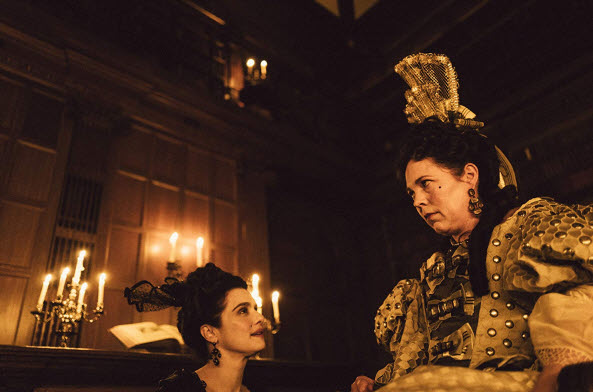
By the way, some of you will probably notice that my list does not include a number of acclaimed films of this year including “The Favourite”, “Green Book”, “If Beale Street Could Talk”, “Can You Ever Forgive Me?”, “Widows”, “Capernaum”, and “Happy as Lazzaro”. Many of them are not released in South Korea yet, so I cannot include them in my list, but I will review them as soon as possible once they come to South Korea in the next year. If the buzz surrounding them turns out to be genuine, I will surely be happy and excited about that, and I will definitely mention them at the end of the next year.

Posted in Movies | Tagged | Leave a comment

Minding the Gap (2018) ☆☆☆1/2 (3.5/4): Life and skateboarding in Rockford, Illinois

Documentary film “Minding the Gap” is a vivid, fascinating, and touching work you will not easily forget. While it initially interests us with a number of wonderful skateboarding scenes, the documentary looks closer at its struggling human subjects with considerable understanding and empathy, and the result is often powerful to say the least.

After the opening scene showing a trio of skateboarders zipping and zapping along streets and roads, the documentary introduces us to its two main human subjects who are also the close friends of director Bing Liu. They are Kiere Johnson and Zack Mulligan, and a series of old video footage clips shot by Liu show us how often they and Liu hanged around with each other during their adolescent years. Although he was a black kid living in a white neighborhood of Rockford, Illinois, Kiere was willing to skateboard along with other kids, and he and Liu subsequently became best friends to Zack, who was the de facto leader of the bunch.

Zack and Kiere are still enthusiastic about skateboarding, but they have struggled with reality as they grow up to be adults. In case of Zack, he recently became a father, and he attempts to raise his baby son well along with his girlfriend Nina, but he soon comes to face numerous difficulties. Although both he and Nina work hard to support themselves and their baby, they have barely made their ends meet, and they remain stuck in the ongoing economic depression in Rockford just like many other people in the city.

And it turns out that Zack is his own worst enemy. While he comes to us as a smart, likable guy who sometimes makes some self-conscious observation in front of Liu’s camera, we later learn more about his dark sides, and there is an uncomfortable moment when we listen to a recording of another domestic dispute between him and Nina, who eventually decides that enough is enough and then walks away from him along with their baby.

As observing how Zack often stumbles in his attempt to be a responsible adult and caring father, the documentary delves deep into the unhappy childhood years of Zack, Kiere, and Liu himself. At one point, Liu’s half-brother shows us their family house where they once lived with Liu’s stepfather, and he reminiscences about one hurtful moment when he was suddenly abused for no apparent reason. While Zack’s father was not exactly a model father to his son, Kiere still remembers well how frequently he was punished by his father who passed away several years ago, and it is implied that they and Liu were all damaged by each own experience of abuse.

As shown from Zack’s problematic relationship with Nina, it is not so easy to break oneself away from that toxic cycle of domestic violence, and it is often sad to see him letting down not only himself but also his girlfriend and their son. Later in the documentary, it looks like he and Nina are heading to reconciliation, but then they become estranged to each other again, and Zack eventually leaves the city and then tries a new start in Denver, Colorado. Although he looks better than before when he returns to Rockford, he is well aware of what a lousy father he has been to his son, and he has a heartbreaking moment when he makes a bitter observation on his messy life.

In the meantime, the documentary pays considerable attention to Nina, who also goes through her own struggle. She and her son fortunately come to live along with her kind aunt and uncle, but she has to deal with her rocky relationship with Zack, which turns quite sour when she demands the child support from him at the court. Although she still has some feelings toward Zack, her son has become her No.1 priority, and she gets what she demands in the end.

Nina’s story resonates a lot with the interview clips of two other substantial female figures in the documentary. While Kiere’s mother is not so eager to talk about her life, Liu’s mother comes to have a little honest moment as talking with her son, who asks her difficult questions from time to time. Frankly talking about several incidents of domestic abuse she suffered, Liu’s mother also admits that she could not leave her abusive husband because she was afraid of being alone again, and there is a poignant moment when she gives her son a sincere advice around the end of their interview.

Her advice is exemplified well by a moving scene where Kiere visits his father’s grave in a local cemetery and then expresses his personal feelings toward his father. Although he walked away from his father after a rough dispute between them, Kiere finds that his affection toward his father remains same as before, and we are touched as he gets a small but meaningful moment of emotional resolution through this visit.

On the whole, “Minding the Gap”, which deservedly won the Special Jury Prize at the Sundance Film Festival early in this year, is another terrific work from Kartemquin films, which has produced many excellent documentary films such as “Hoop Dreams” (1994) and “Abacus: Small Enough to Jail” (2016). Like those good documentaries, “Minding the Gap” is full of the sense of life and humanity, and I surely appreciate its numerous human moments to remember. In short, this is indeed one of the best documentaries of this year, and I wholeheartedly recommend to watch it as soon as possible.

Posted in Movies | Tagged , , | 2 Comments

Take Point (2018) ☆☆(2/4): Mindless and pointless with lots of shakings and shootings

South Korean film “Take Point”, which was released in South Korea as “PMC: The Bunker” yesterday, is a mindless and pointless action thriller movie filled with lots of shakings and shootings. To be frank with you, I am still confused about what exactly I saw from the screen during a screening I attended yesterday evening, so I hope you will forgive me if you find anything incorrect in my following description of its convoluted plot and non-descript characters.

Now let’s start with the premise of the movie, which is pretty simple at first. In 2024, the political situation between US and North Korea becomes quite tense as the supreme leader of North Korea, who is called ‘King’, refuses to shut down the nuclear weapon program although North Korea has recently been released from the UN sanction. As this problematic circumstance is decreasing the chance of his re-election, the US President orders a covert CIA operation whose success may turn the tide for him, and Agent Mackenzie (Jennifer Ehle) is ready to start what she has prepared for 6 years.

Because the highly sensitive nature of the operation, Mackenzie hires a group of mercenaries from some private military company, led by a South Korean guy named Ahab (Ha Jung-woo). Hiding inside a big underground tunnel/bunker located somewhere in the demilitarized zone (DMZ) between North and South Korea, Ahab and his group patiently wait for their target to arrive, and Ahab, who is commanding his team from his makeshift situation room, is quite confident that he and his group will succeed as usual. Once their target, a top-ranking North Korean general willing to give an important piece of information for his defection, is extracted from the operation site, they will instantly hand the general over to Mackenzie while getting paid well as promised, and she will then use the general’s information for increasing the chance of re-election for the US President.

However, not so surprisingly, the circumstance takes an unexpected turn. Several figures come from North Korea as expected, but the general is not among them, and someone more important comes instead of him for some unknown reason. That figure in question is none other than King, and, mainly because King has been one of the most wanted men in the world due to lots of bounty put on him by the US government, Ahab decides to change the plan, and he persuades Mackenzie to go along with that for their mutual benefit. Once he and his team are authorized to execute their changed mission, they make a swift attack on their new target, and it looks like everything is over once they capture King and then put his unconscious body in a big bag.

Of course, when Ahab and his team are about to leave, they suddenly find themselves in a very serious danger, and Ahab soon gets stuck in his situation room along with King’s unconscious body and a rookie member of his group. While his chance is decreased second by second, Ahab is determined to survive by any means necessary, and that means he must depend a lot on a North Korean doctor who happened to be with King during Ahab and his team’s sneak attack.

As Ahab and this North Korean doctor desperately try to reach for their chance of survival, the movie attempts to increase its level of intensity as serving us a series of loud, intense action sequences packed with heaps of shootings and explosions, but these action sequences are confusing and distracting while frequently mired in shaky camera work and choppy editing, and they soon become quite tiresome without giving us any sense of direction. Although there are some more stable visual moments in the film, they are presented with deliberately rough visual quality, and that puts more distance between us and whatever is going on the screen.

In addition, the movie also fails in terms of story and characters. It drags and stumbles especially during its middle part, and that only accentuates more of its sloppy handling of its cardboard characters. While it puts considerable emphasis on how Ahab and the North Korean doctor stick together for their survival, we do not sense much of whatever is developed between these two characters, and that is why we do not care much about the final action sequence in the film, which looks like a cheap imitation of a certain action sequence in “Mission: Impossible – Fallout” (2018).

The main cast members of the movie are seriously under-utilized on the whole. While Ha Jung-woo, who previously collaborated with director/writer Kim Byung-woo in “The Terror Live” (2013), is fairly adequate despite his strained delivery of English lines, Lee Sun-kyun often struggles with his thankless role, and Jennifer Ehle and Kevin Durand are totally wasted due to their bland supporting characters, though it was a bit amusing for me to notice Ehle holding a carton of milk from a well-known local milk company in South Korea at one point.

Overall, “Take Point” is utterly disappointing due to its many glaring flaws including its trite, superficial storytelling and increasingly wearisome action sequences, and it made me wonder whether I was a little too harsh on “The Terror Live”, which is at least tauter and more efficient in comparison. I was quite depressed as joylessly enduring its two hours of hollow sound and fury, and my only consolation in the aftermath was that there are still a few more new films to watch before the end of this year. Christmas already passed, but I am really wishing that I will quickly forget this dreary piece of work while watching them.

Posted in Movies | Tagged , , , | Leave a comment

Museo (2018) ☆☆☆(3/4): Two museum thieves in a big trouble

Mexican film “Museo”, which won the Silver Bear for Best Screenplay at the Berlin International Film Festival early in this year, is about two pathetic criminals who somehow manage to steal a bagful of priceless artifacts from one of the most prominent museums in their country. As far as I later came to learn from other reviews, the movie is a heavily fictional version of an infamous real-life incident in 1985, so I have no idea on how much it is actually close to its source of inspiration, but I can tell you at least that the movie is a deliciously offbeat comedy thriller which deftly mixes vibrant style and deadpan humor to our constant amusement.

The heroes of the movie are two lads named Juan Nuñez (Gael García Bernal) and Benjamin Wilson (Leonardo Ortizgris), and the first act of the movie focuses on their respective family lives which do not give them much cheer on Christmas Eve. While tasked with an unenviable job of being a Santa Claus for others instead of his recently deceased grandfather, Juan also has to spend Christmas Eve evening with his family members, and he does not particularly want to spend time with many of them because, like his doctor father, they constantly remind him of how much he has disappointed his family while remained to be stuck in his parent’s house as your average slacker.

In case of Benjamin, he has lived only with his father in their house, but his father has recently been quite ill, and it looks like that is the main reason why he decides to participate in what his friend Juan has planned after he worked for several months at the National Museum of Anthropology in Mexico City. When it turns out that they should execute their heist as soon as possible during Christmas Eve night, Juan and Benjamin hurriedly prepare for that, and the movie gives us several wryly humorous moments as observing how sloppy they are in their final preparation step.

Once Juan and Benjamin manage to get inside the museum without being caught by its security guards, the movie becomes tenser and more serious, though it continues to generate more amusement from how its two heroes somehow succeed despite their apparent incompetence. All they have are hammers, nails, several strands of wire, and a certain kind of chemical, but, as cheerfully and succinctly shown via the efficient staccato editing by Yibran Assaud, they successfully steal lots of invaluable artifacts including a jade stone mask, and they also luckily come to find a way out when they subsequently find themselves locked inside the museum.

Of course, as announced by a brief disturbing moment when Juan momentarily sees a Mayan god right in front of him, the situation becomes quite more serious for him and Benjamin when everybody in Mexico comes to learn of their crime in the next morning. As reflected by an angry comment from Juan’s father, their crime causes a national furor beyond their imagination, and the movie later makes an ironic point as observing that their crime leads to a lot more visitors to the museum than before.

And things get more absurd when Juan and Benjamin try to sell their stolen artifacts as quickly as possible. They have a friend who works as a local tour guide at the Mayan archeological site of Palenque in the Chiapas, and that friend may connect them to anyone willing to buy these stolen artifacts from them. They soon drive to Palenque by a car belonging to Juan’s father without telling him anything at all, and the movie serves us another amusing moment when they come across a group of soldiers at one point, who do not suspect them much even after looking into their luggage.

When Juan and Benjamin finally arrive in Palenque, their friend is handling a bunch of tourists, and there is a humorous scene where Juan deliberately interrupts that friend’s perfunctory lecture with a silly theory based on one of the well-known Mayan artifacts in Palenque. I once encountered that outrageous theory when I read a book on numerous wonders around the world during my childhood years, and I must tell you that I was a bit tickled by that funny scene while also delighted to see that famous artifact again.

Eventually, Juan and Benjamin come to have a private meeting with Frank Graves (Simon Russell Beale), a British art collector who instantly sees through them right from the beginning. As Graves talks for a while about an international dispute over the rights to a sunken Spanish galleon containing gold worth $500 million, the movie baffles us a bit as the camera temporarily focuses on what is inside the aquarium in Graves’ living room, but then it slowly dials up the level of comic intensity as Graves makes his point very clearly to Juan and Benjamin, who belatedly come to realize that what they stole is so famous that nobody wants to get involved with them at all.

While the movie mostly observes its two heroes from the distance, its two lead performers keep holding our attention through their good performance. While Gael García Bernal is compelling as usual without downplaying his character’s pathetic side at all, his co-star Leonardo Ortizgris complements his co-star well as also functioning as the narrator of the film, and Simon Russell Beale, Bernardo Velasco, and Alfredo Castro are also fine in their respective supporting roles.

“Museo” is the second feature film by director/writer Alonso Ruizpalacios, who drew many critics’ attention via his first feature film “Güeros” (2014). Although I have not seen that movie yet, it is clear from “Museo” that he is a talented filmmaker, and I admire its technical aspects including the cinematography by Damián Garcia and the score by Tomás Barreiro. The overall result is a lot different from what I expected, but I am satisfied on the whole even though I felt a bit impatient during my viewing due to its rather slow narrative pacing, and I am willing to revisit it again savoring its skillful moments more.

Posted in Movies | Tagged , , , | Leave a comment