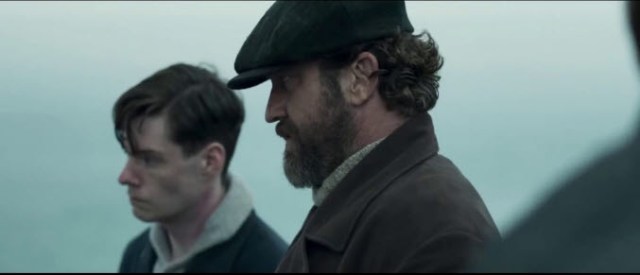
Mary Queen of Scots (2018) ☆☆1/2(2.5/4): A tale of two queens

maryqueenofscots01

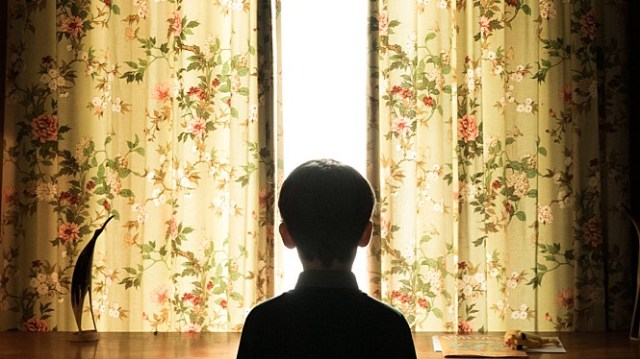
“Mary Queen of Scots” initially seems to have all the right ingredients for a compelling period drama. While it has two talented actresses at its center, it is also equipped with commendable technical aspects including authentic period atmosphere, so I enjoyed it to some degree, but it is unfortunately marred by its ponderous screenplay which tries to cram too many things into its two-hour running time. As a result, the overall result is rather tepid without enough wit and spirit, and it did not leave much impression despite the considerable efforts from its two leading actresses.

The movie mainly revolves around the tumultuous seven-year period in the life of Mary, Queen of Scots (Saoirse Ronan), and, right after the opening scene showing her execution in 1587, it shows us her arrival in Scotland, 1561. After her husband, who was the King of France, died, Mary decides to come back to her country, and she is quite determined to be a good ruler for her country while also hoping to be named as the heir apparent to the English throne, which is currently being occupied by her cousin, Queen Elizabeth I of England (Margot Robbie).

While Mary surely has the right to succeed Elizabeth, there is one significant problem. Because of her Catholic background, she has been a potential threat to not only Elizabeth but also many Protestants in England and Scotland, and she is virtually insulted by a hardcore Protestant cleric named John Knox (David Tennant) when she tries to show her country and its people that she has no problem with freedom of religion.

maryqueenofscots04

As Mary attempts to be friendlier with her, Elizabeth becomes more watchful for Mary even though she recognizes Mary’s sincerity. After discussing with her high-ranking officials including William Cecil (Guy Pearce), she decides to send Sir Robert Dudley (Joe Alwyn) to her cousin as a potential suitor, but Mary instantly recognizes Elizabeth’s intention, and, despite the strong objections from many others including her half-brother, she subsequently marries her distant cousin Lord Darnley (Jack Lowden) instead mainly because he looks far less ambitious in comparison.

This decision of hers soon leads her and her country into a number of troubles. Her half-brother and several other Scottish noblemen come to rebel against her while secretly supported by Elizabeth, and that certainly hurts Mary, who has trusted and depended on her half-brother. In addition, her husband turns out to be not that trustworthy right from their wedding night, but Mary has no choice but to try anything for bearing a son who may inherit both England and Scotland someday.

In the meantime, Elizabeth comes to recognize Mary more as her equal. Especially after she decides not to marry for living as the sole monarch of her country, she clearly discerns that Mary is indeed someone who can succeed her, but then Mary’s political position becomes less stable not long after she gives birth to her son James, and then she eventually becomes someone quite expendable as swept into the brutal intrigues inside her court. During one savage scene, she helplessly watches her favorite minstrel murdered by Lord Darnley and other noblemen, and there later comes another cruel moment as she is forced to marry again shortly after Lord Darnley’s death.

Around that part, the movie is supposed to engage us more into this tricky political circumstance surrounding Mary and Elizabeth, but the adapted screenplay by Beau Willimon, which is based on “Queen of Scots: The True Life of Mary Stuart” by John Guy, merely trudges from one narrative point to another without generating much interest for us. Even during the expected scene where Mary and Elizabeth finally meet each other, the movie feels flat and hollow, and the following ending is disappointingly anti-climactic without much dramatic impact to linger on our mind.

maryqueenofscots02

Anyway, director Josie Rourke, who has been mainly known for her stage works in Britain and makes a directorial debut here in this film, did a competent job of handling the technical aspects of her film. While I appreciate some notable period details in the film, I particularly like the striking visual contrast between the shady mood of Scotland and the brighter ambience of England, and cinematographer John Mathieson occasionally provides wide and gloomy landscape shots to be watched on big screen.

Although the movie is not exactly their best moment, two lead actresses of the movie did as much as they could with their respective roles. While Saoirse Ronan, who has constantly impressed us since her Oscar-nominated supporting turn in “Atonement” (2007), brings pluck and grace to her character as required, Margot Robbie, who was recently Oscar-nominated for her terrific performance in “I, Tonya” (2017), imbues her character with steely qualities as demanded, and it is a shame that the movie did not utilize well their talent. In case of the other notable performers in the film such as Guy Pearce, David Tennant, Jack Lowden, Joe Alwyn, Ian Hart, and Adrian Lester, they are seriously wasted in their thankless roles, and most of them do not have many things to do except looking dour and solemn throughout the movie.

On the whole, “Mary Queen of Scots” is not a total failure mainly thanks to Ronan and Robbie, but it failed to make me care enough about its story and characters. After I came out of the screening room, I became more curious about the 1971 film of the same name starring Vanessa Redgrave and Glenda Jackson, and I guess I will soon have to check out whether that film is better than this disappointing misfire.

maryqueenofscots03

Posted in Movies | Tagged , , , | 2 Comments

Mary Poppins Returns (2018) ☆☆☆(3/4): Long time no see, Miss Poppins

marrypoppinsreturns05.jpg

“Mary Poppins Returns” is as delightful and exuberant as you can expect from a sequel to “Mary Poppins” (1964). Although it is often too familiar to surpass its beloved predecessor, the movie still has enough charm and spirit to engage us mainly thanks to the game efforts from its cast and crew, and I became less cranky about its several notable shortcomings when I watched it along with a friend at last night.

Set in London of the early 1930s, the movie takes us back to 17 Cherry Tree Lane after its solid opening musical number “(Underneath the) Lovely London Sky”, and we soon meet its current occupants. Since his dear wife died one year ago, Michael Banks (Ben Whishaw) has struggled a lot to raise his three kids alone, but, despite the help from his sister Jane (Emily Mortimer) and their loyal housekeeper Ellen (Julie Walters), things have recently gotten worse for him and his family, and then there comes a very bad news. Due to his unintentional delay in the monthly repayment of a substantial amount of loan he took from the bank where he has worked for years, the bank now demands that the loan should be wholly repaid within a few days, and his family house will be repossessed if he and Jane fail to find a certain certificate which can save their family from this grim financial situation.

Although Michael and Jane try to hide their urgent financial matter from his children as much as they can, it does not take much time for his children to see what is going on. As they subsequently worry about what may happen to them and their father, there comes a sudden strong wind, which signifies, yes, the imminent arrival of Mary Poppins (Emily Blunt). As soon as she encounters Michael’s children, Poppins swiftly heads to 17 Cherry Tree Lane along with them, and she certainly surprises Jane and Michael, who marvel at how their favorite nanny looks pretty much same as before although around 20 years have passed since they saw her for the last time.

marrypoppinsreturns03

Right from her first hour at 17 Cherry Tree Lane, Poppins excites and enthralls Michael’s children with a series of fantastic moments as singing “Can You Imagine That?”, and that is just the beginning of more fun and adventures for them. Along with a young, dashing lamplighter named Jack (Lin-Manuel Miranda), who was once an apprentice of Dick Van Dyke’s character in the 1964 film, Poppins shows many other wondrous things to Michael’s children, and Micheal’s children become more joyous than before even though they are still well aware of their family’s desperate financial circumstance.

Later in the story, they go to the bank where their father works, and that is how they come to meet William Weatherall Wilkins (Colin Firth), who has run the bank instead of his very old uncle and, as already shown to us from the very beginning, is a mean, greedy guy who is quite ready to repossess the Banks family’s house. After their rather unpleasant encounter with Wilkins, Michael’s children try to warn their father about what Wilkins is planning to do, but, of course, Michael does not listen to his children much as mostly occupied with that gloomy possibility of losing their house.

While its story, written by David Magee, co-producer John DeLuca, and director/co-producer Rob Marshall, is pretty predictable to say the least, the movie cheerfully and colorfully bounces from one musical moment to another, and Marshall and his technical crew did a competent job of presenting these musical moments with enough amount of fun and excitement. While the production design by John Myhre and Gordon Sim and the costume design by Sandy Powell are top-notch, the score by Marc Shaiman jubilantly soars during several non-musical moments in the film, and it is also effectively mixed with a number of original songs written by Shaiman and Scott Wittman. Although their songs in the film are not as catchy as those infectious classic songs by the Sherman Brothers in the 1964 film, these songs are still pretty entertaining on the whole, and you may hum two or three of them after the movie is over.

marrypoppinsreturns04

Above all, the movie is held together well by the engaging lead performance from Emily Blunt, who has steadily impressed us since her juicy supporting turn in “The Devil Wears Prada” (2006). I must point out that she does not surpass Julie Andrews’ iconic Oscar-winning performance in the 1964 film (Well, how can that be ever possible?), but Blunt finds her own way to play Poppins, and she deftly handles a number of musical sequences in the film besides “Can You Imagine That?”. I was especially delighted as watching her dexterously performing a couple of vaudeville numbers along with Lin-Manuel Miranda, and I also liked how she shows some tenderness via Oscar-nominated song “The Place Where Lost Things Go” while never overlooking her character’s distant and unflappable attitude.

The other main cast members in the film fill their respective broad characters as much as required. While young performers Pixie Davies, Nathanael Saleh, and Joel Dawson are suitably plucky, Ben Whishaw, Emily Mortimer, Julie Walters, David Warner, and Colin Firth are under-utilized in their thankless roles, and Meryl Streep, Angela Lansbury, and Dick Van Dyke provide some extra fun via their cameo appearances. In case of Miranda, he certainly shows us why he has been one of the leading Broadway musical stars during recent years, and that is more than enough to forgive his questionable Cockney accent in the film, which, in my inconsequential opinion, sounds as strained as Van Dyke’s in the 1964 film.

While I am still not so sure about whether it is really necessary, “Mary Poppins Returns” is a well-made product packed with some goodies to be savored, and I was entertained by many of its highlights although they feel like redundant derivatives from the 1964 film from time to time. It did not exactly refresh me, but I had a fairly good time at least, so I will not complain here.

marrypoppinsreturns01

Posted in Movies | Tagged , , , | 2 Comments

Free Solo (2018) ☆☆☆1/2(3.5/4): Climbing up a rock alone – without rope

freesolo06.jpg

Watching Oscar-nominated documentary film “Free Solo”, which also won the People’s Choice documentary award when it was shown at the Toronto International Film Festival in last year, was a pretty terrifying experience to me due to my longtime fear of heights. There are a number of vivid, intense moments which bring us very close to one of the most perilous and challenging attempts in the history of rock climbing, and you will surely wince at times if you are afraid of high places just like me.

The documentary mainly revolves around Alex Honnold, a young rock climber who has been known well for his many successful rock climbing attempts. Since he became interested in rock climbing during his childhood years, he has devoted himself to it for many years, and he usually prefers to perform free solo climb, which is quite dangerous and demanding for good reasons. Without rope or any other particular gear to protect him, except a pouch containing fine powder for his bare hands, he climbs up alone those steep vertical rock walls of thousands of meters high, and he does not seem to be particularly scared even though he is well aware of that dreadful possibility of making a wrong move and then getting himself killed.

In 2016 Spring, Honnold decided to try a free solo climb on El Capitan, a huge granite rock in the Yosemite National Park, California. Nobody had ever succeeded in performing a free solo climb on El Capitan, but he had been quite obsessed with climbing that rock someday, and it looked like he was finally ready after successfully performing his free solo climbs on many other notorious rocks such as Half Dome, another notable rock in the Yosemite National Park.

freesolo02

We observe how Honnold patiently and thoroughly prepared for his free solo climb on El Capitan step by step. For instance, he climbed up El Capitan several times along with his colleague Tommy Caldwell for getting himself accustomed to every detail of its climbing route, and we later see him recording these details on his small notebook along with the exact physical movements to be performed during his free solo climb. Although Honnold and Caldwell were equipped with ropes and other safety gears during that time, there are some brief but striking moments conveying to us what might go wrong at every point during his free solo climb, and these moments will surely make your body tightened from time to time.

As following Honnold’s quest, directors/co-producers Jimmy Chin and Elizabeth Chai Vasarhelyi, who previously made acclaimed documentary film “Meru” (2015) together, wanted to capture Honnold’s free solo climb as closely and vividly as possible, but then they and their crew members, most of whom are experienced climbers, came to face obstacles and dilemmas during the shooting. While they could handle some demanding technical issues involved with cinematography and sound recording, they did not want to cause any interference or distraction during Honnold’s free sold climb, and they certainly worried a lot about the worst possible situation for them and Honnold.

However, Honnold was only concerned about whether this shooting process would affect his confidence and concentration, while not so worried about the considerable possibility of his death. During one amusing moment in the documentary, we see him getting an MRI scan on his brain, and we subsequently hear later that his amygdala in the brain is significantly less active, which means that he is inherently less susceptible to fear compared to others.

As he frankly tells to us, Honnold is not a very social person just like his father (it is suggested that his father had Asperger’s syndrome, by the way), but he sometimes works for a non-profit organization which helps those poor people in the developing countries around the world, and he has recently been in a stable relationship with a young woman named Sanni McCandless, who is not a very good climber but supports her boyfriend’s aspiration nonetheless. As he became more serious about his relationship with her, Honnold came to settle in a suburban area of Las Vegas instead of continuing to live in his small van as before, and we accordingly get a sweet moment as watching them doing some shopping at a local mall.

freesolo03

Meanwhile, Honnold’s quest was continued despite a series of setbacks. He happened to get himself injured twice, and the mood subsequently became gloomier when the death of a fellow climber was reported. When he tried to perform a free solo climb on El Capitan several months later, he did not feel that right for some reason during the early stage, so he had no choice but to give up and walk away from El Capitan.

Eventually, Honnold attempted to climb up El Capitan again in June 2017. It is not much of a spoiler to tell you that he succeeded in the end, but the last 20 minutes of the documentary is tense and breathtaking to say the least, and you will come to marvel again at how fearlessly single-minded Honnold is – and how skillfully Chin and Vasarhelyi and their crew did their job with considerable care and attention. While serving us numerous wide landscape shots as required, they never lose the palpable sense of enormous risk and challenge surrounding Honnold, and it goes without saying that the expected finale of the documentary is dramatically cathartic.

Overall, “Free Solo”, which recently won the Best Documentary award at the British Academy Film Awards, is worthwhile to watch for its many unforgettable moments, and it is definitely one of the most memorable documentary films of last year. I still cringe as reflecting on what I observed from the documentary, and I am glad that I am usually content with watching mountains and rocks from the distance without any particular urge to climb them.

freesolo01

Posted in Movies | Tagged , , , , | 4 Comments

Innocent Witness (2018) ☆☆1/2(2.5/4): Sincere but predictable

innocentwitness01

South Korean film “Innocent Witness” does not turn out to be worse than I feared. As a guy in the autistic spectrum, I was certainly concerned a lot about its depiction of autism before watching it, and I was relieved to see it handling its subject with sincerity and respect, though I was also often disappointed with its rather flat characterization as well as a number of plot contrivances.

Jung Woo-sung plays Yang Soon-ho, a lawyer who has worked for some prominent law firm. While there was a time when he was an idealistic man who fought for social justice, he is now a jaded realist who has conformed to the system, and we see him giving an exemplary legal counsel to an obnoxious rich client facing a big civil lawsuit at one point.

Not long after that, a senior partner of the law firm asks Soon-ho to handle a pro bono case instead of him. An old man who had lived alone with his housekeeper died under a rather suspicious circumstance, and his housekeeper was arrested for that although she claimed that she simply tried to stop the suicide attempt of her employer, who, according to her, had been quite depressed since his wife’s death. Because there is not any clear evidence against her besides the testimony of the sole witness of the case, all Soon-ho will have to do for his client is bringing reasonable doubt to the testimony at the trial, so he soon approaches to the witness for getting any chance for that.

The witness is an autistic adolescent girl named Ji-woo (Kim Hyang-gi), and the movie shows us how it is often difficult for her to go through every day of her daily life. While she is mostly comfortable at her home thanks to her caring parents, she is often ridiculed by many of her schoolmates outside, and we are not so surprised when it turns out later that her only school friend is not as nice as she seems at first.

innocentwitness02

After seeing how tactfully and thoughtfully the prosecutor assigned to the case handles Ji-woo for getting the testimony from her, Soon-ho does some study on autism. For instance, he checks out several books on autism (I was a bit amused to notice that famous guidebook written by Tony Attwood, by the way), and he also watches a YouTube video clip demonstrating how sensitive autistic people are to lights and sounds, which incidentally took me back to when I foolishly went to a Nine Inch Nails concert in 2007 and then had a traumatic experience there due to an overwhelming amount of lights and noises.

Although his first encounter with Ji-woo is pretty awkward to say the least, Soon-ho eventually befriends her bit by bit. As they interact more and more with each other through a series of math quizzes she is eager solve, Ji-woo comes to like Soon-ho, and so does Soon-ho, though he is well aware of that he is bound to cross-examine her if he convinces the judge presiding over the case to have her testify at the court.

It is not much of a spoiler to tell you that Ji-woo is subsequently brought to the court for her testimony and then Soon-ho finds himself going too far in his attempt to make her testimony look less credible. Director Lee Han, who adapted the story by Moon Ji-won with Hong Yong-ho, thankfully handles this part with considerable care and restraint, and the result is one of better moments in the film.

innocentwitness03

However, the story becomes less interesting after taking a predictable narrative turn after that point, and it is also hampered by several artificial elements. In case of Soon-ho’s old female colleague, she merely functions as the voice of conscience for him, and the same thing can be said about Soon-ho’s ailing father, who later writes a sentimental letter to Soon-ho for reminding him that, well, he is still a good man who can do the right thing. In addition, a brief scene showing the corrupted side of Soon-ho’s law firm is not necessary in my trivial opinion, because that aspect is pretty apparent to us right from the beginning.

Anyway, two main performers did their best for compensating for the weak points of their movie. Although his character is basically a colorless surrogate for the audiences, Jung Woo-sung diligently carries the film, and Kim Hynag-gi, who previously drew my attention via her wonderful performance in “Young-ju” (2017), is effective in her showier role. I must point out that her acting looks a bit strained at first due to her overt efforts on speech and behavior patterns, but she did a good job of imbuing her stereotype character with spirit and personality, and she confirms to us again here that she is indeed a new talent to watch. While they are mostly stuck in their thankless supporting roles, Lee Kyu-hyung, Yum Hye-ran, Jang Young-nam, and Park Geun-hyung are solid at least, and Jang, who plays Ji-woo’s concerned mother, has a small poignant scene when her character has a little private conversation with Ji-woo.

In conclusion, “Innocent Witness” works to some degree mainly thanks to its two good lead performers, but it does not wholly overcome its generic storytelling riddled with numerous clichés. Sure, it is made with good intentions, but it did not engage me enough during my viewing, and, to be frank with you, I would rather recommend you to watch HBO movie “Temple Grandin” (2010) instead, which is a far better film about autism with more understanding and empathy.

innocentwitness04

Posted in Movies | Tagged , , , | Leave a comment

4 Months, 3 Weeks and 2 Days (2007) ☆☆☆☆(4/4): One hard day in Romania, 1987

4months3weeksand2days01

I still remember well how much I was chilled by one particular moment in Cristian Mungiu’s “4 Months, 3 Weeks and 2 Days”, a stark, sobering drama film set in Romania during the final years of Nicolae Ceaușescu’s communist regime. At first, we merely watch a mundane conversation between its two main characters and someone they must deal with, but the mood gradually becomes intense and ominous step by step, and then there suddenly comes to us a gut-chilling moment of epiphany on the enormous price they will have to pay for getting what they need right now.

They are Otilia (Anamaria Marinca) and Găbița (Laura Vasiliu), two young female college students living together as roommates in some shabby college dormitory. As it is gradually revealed to us during the first act of the movie, Găbița has recently been pregnant, and she wants have an abortion as soon as possible, but there is no hospital or clinic for that. The time is 1987, and it has been more than 20 year since a strict state ban on abortion was enacted by Ceaușescu in 1966 just for getting more citizens to be oppressed and controlled under his brutal totalitarian rule.

As Găbița’s best friend, Otilia is certainly willing to help Găbița, and the opening sequence of the movie shows how resourceful Otilia is in getting what she and Găbița need. Because many commodities are quite difficult to get due to the poor economy of their country, black markets have thrived for many years, and we are a bit amused while Otilia busily goes around here and there in her dormitory for dealing with several other students willing to sell some simple commodities such as a bar of soap.

4months3weeksand2days05

It initially seems that all Otilia has to do for her friend is 1) making a good excuse for their two-day absence in the dormitory, 2) checking out the room reservation at a local hotel, and 3) staying besides Găbița while abortion is performed on her. Unfortunately, things do not go that well from the very beginning mainly thanks to Găbița’s utter incompetence. When Otilia comes to that hotel in question, she belatedly finds that the room reservation was cancelled because Găbița did not confirm it on the previous day, and she has no choice but to get a room in some other hotel instead at a rather expensive price. While Găbița was supposed to meet a guy who is going to perform an illegal abortion on her, she later becomes afraid and hesitant, so Otilia will go to a spot where that man will be waiting.

In addition, there is also a matter involved with Otilia’s boyfriend Adi (Alexandru Potocean). His mother is going to have a birthday party with her family and friends in the evening, and he wants Otilia to come to the party and then spend some time with him. Although she knows well that she will probably not have enough time, Otilia promises to him anyway that she will come to the party, while not telling him what she and Găbița are soon going to do.

The situation becomes more complicated after Otilia meets Mr. Bebe (Vlad Ivanov), the aforementioned illegal abortionist. While surely not so pleased about the unwanted changes in the circumstance, he comes into a hotel room Otilia manages to secure, and it does not take much time for him to discern how unprepared Otilia and Găbița are. For example, when he examines Găbița’s pregnant body, it immediately turns out that she lied to him about the current status of her pregnancy, and he coldly reminds her and Otilia that their legal risk is now much bigger because of that.

4months3weeksand2days02

As Mr. Bebe corners Otilia and Găbița word by word during their extended conversation scene, cinematographer Oleg Mutu’s handheld camera rigorously sticks to its unflinching position, and the tension growing beneath on the surface is palpable to say the least. Although he does not demand anything to them directly, Mr. Bebe relentlessly and mercilessly pushes Otilia and Găbița further toward a certain inevitable point, and you will soon get an experience akin to a light bulb turned on in your head to illuminate an awful fact right in front of you. Subtly revealing his character’s cold, heartless evil Vlad Ivanov is effectively despicable in his supporting role, and we become more shocked and repulsed as observing how his character phlegmatically does his job shortly after coercing Otilia and Găbița to make an impossible choice.

Once he leaves the room, the mood feels a bit less tense than before, but then we are served with more emotional gut punches. There is a calm but emotionally shattering scene between Găbița and Otilia, who is understandably quite exasperated and frustrated with her friend’s sheer stupidity while also devastated a lot by what happened to her and her friend because of that. There is a very uncomfortable sequence showing the birthday party for Adi’s mother, which will often make you cringe for what Otilia has to endure for her petty boyfriend and his family. And there is also a brief but shocking moment where Otilia faces the ultimate consequence of the choice made by her and Găbița, who does not take much of her responsibility even at that point and has her friend take care of her mess instead.

The movie is definitely not something you can casually watch on Sunday afternoon, but it keeps holding our attention with its realistic period atmosphere and details, which make us more immersed in the moody and oppressive society surrounding the characters in the film. Every scene in the film is presented via thoughtful scene composition and meticulous camera work, and many of them are presented in steady unbroken shot to generate maximum dramatic effects. In case of one particularly memorable long-take shot in the movie, it simply shows Otilia and her boyfriend stuck in the middle of his mother’s birthday party, but, as the camera tensely focuses on Otilia’s face for several minutes, we sense more of the accumulating anxiety, frustration, and exasperation behind her seemingly detached façade, and the movie also slyly makes a point on the apparent class/generation gap between Otilia and other characters in that scene.

4months3weeksand2days03

Above all, the movie is anchored well by the strong performances from Annamaria Marinca and Laura Vasiliu. As an ordinary but resilient woman who must handle an increasingly grim and frustrating situation for her friend as well as herself, Marinca is quite harrowing during some of the darkest scenes in the film, and she is superlative especially during a number of key moments which depend a lot on her plain pale face. While often overwhelmed by anger, despair and exhaustion, Otilia does not lose any of her courage, resourcefulness, and compassion, and Marinca masterfully balances herself well between her character’s strength and vulnerability while drawing more care and empathy from us.

If Otilia shows how defiant and selfless some people can be under an oppressive system, Găbița demonstrates how cowardly and selfish others can be under the same condition, and Vasiliu is believable in her mousy appearance while brilliantly complementing her co-performer. We cannot help but shake our heads whenever we behold how clueless and self-centered Găbița is, but Vasiliu somehow makes us have some sympathy toward her character, and we come to see why Otilia still stands by her friend even in the end. Although their friendship seems irrevocably damaged, it looks like Găbița will depend on Otilia as usual even after the fall of Ceaușescu’s communist regime in 1989, and the movie will probably remind you that you sometimes need to be cautious about having a friend.

Along with Cristi Puiu’s “The Death of Mr. Lăzărescu” (2005) and Corneliu Porumboiu’s “12:08 East of Bucharest” (2006), “4 Months, 3 Weeks and 2 Days” has been regarded as the starting point of the Romanian New Wave, which subsequently gave us a series of acclaimed works including “Police, Adjective” (2009), “Beyond the Hill” (2012), “Sieranevada” (2016), and “Graduation” (2016). While it is the bleakest one in the bunch, the movie is also one of the most magnificent achievements from the Romanian New Wave, and it looks more relevant now considering the recent rise of feminism during last several years. As one of my close friends said, the movie is often so painful to watch that you will probably never want to watch it again, but it is a great film you will not forget, and its many grim human moments will haunt you for a long time.

4months3weeksand2days04

Posted in Movies | Tagged , | 2 Comments

High Flying Bird (2019) ☆☆☆(3/4): A slick and smart NBA drama

highflyingbird01

Steven Soderbergh’s latest film “High Flying Bird”, which is released on Netflix today, is a slick and smart drama which makes some clear points on how flawed a major American sports business system has been. While never preachy or didactic at all, the movie gradually lets us get its points as constantly entertaining us with its efficient storytelling and solid performances, and it is surely one of more interesting offerings from Netflix during this year.

The story begins with the conversation scene between a sports agent named Ray (André Holland) and one of his big clients, who has been under a rather difficult financial circumstance due to the ongoing lockdown in the National Basketball Association (NBA). As the negotiation between the owners of NBA basketball teams and the National Basketball Players Association (NBPA) has not been going anywhere during last several months, Erick (Melvin Gregg) and many other NBA rookie players have suffered from their resulting financial stagnation without any game to play, and Erick needs some help and advice from Ray because he recently happened to get unwisely involved with a loan shark.

Anyway, things have been quite bad for Ray and his agency too because the agency has depended a lot on the commission fee from their NBA players clients. When Ray later meets his direct boss, his direct boss implies that Ray may be fired because of this ongoing lockdown, and it is clear to Ray that he must do something for solving this imminent problem.

highflyingbird02

Although it initially seems that there is nothing he can do about the lockdown, Ray slowly begins to make his moves. He meets an old, respectable basketball coach in South Bronx, and he promises to that coach that he will have Erick come to the upcoming local basketball event. He meets his old friend/colleague who also represents NBPA, and he comes to learn a bit more about the stalemate circumstance between NBPA and the owners of NBA basketball teams, neither of whom is particularly willing to step back for ending the lockdown. In addition, he also goes to Philadelphia, and he meets the mother of another prominent rookie member in Erick’s NBA team, who has worked as her son’s manager and agent for good reasons.

And there is also Sam (Zazie Beetz), who is officially Ray’s ex-assistant at present but still sticks to him nonetheless because she knows well that Ray needs her assistance right now. During their little honest conversation, it is pretty apparent that he has depended on her a lot more than he admits to her, but she has already been ready to move onto the next step of her professional career, and he respects that while showing some care and affection to her.

I will not go into details on how all these and other elements in the movie work together in the end because watching that process is the main pleasure of the film. While never hurrying itself at all, the screenplay by acclaimed playwright Tarell Alvin McCraney, who won an Oscar for “Moonlight” (2016), takes its time as gradually accumulating its narrative momentum, and it did a good job of succinctly conveying details and information to us. Even if you do not know much about basketball or NBA, you will get the clear sense of how the system has worked – and how it has also been very unfair to many NBA rookie players out there.

highflyingbird03

As dryly observing how its hero’s clever plan is executed step by step, the movie provides a number of nice visual touches under Soderbergh’s skillful direction. As he previously did in “Unsane” (2018), Soderbergh, who also unofficially worked as the cinematographer and editor of the film, shot the movie with an iPhone, so the result often feels a bit rough, but its raw quality coupled with flexible camera work is fairly impressive on the whole, and I can tell you that Soderbergh and his crew spent well their small production budget, which was around 2 million dollars.

As the center of the film, André Holland, a wonderful actor who previously collaborated with Soderbergh in TV series “The Knick” and has recently been more prominent thanks to his acclaimed supporting turn in “Moonlight”, ably carries the film with his charismatic lead performance. As smooth and likable as required, Holland dexterously moves from one scene to another, and you will certainly come to cheer for his character when his character’s ultimate goal is revealed during the final scene of the film.

Soderbergh assembles a number of good performers around Holland. While Zazie Beetz, who recently drew our attention via her supporting performance in TV comedy series “Atlanta”, has a juicy fun with her plucky character, Melvin Gregg is effectively earnest in his supporting role, and I also enjoyed the small but crucial supporting turns by various notable performers including Sonja Sohn, Zachary Quinto, Kyle MacLachlan, Glenn Fleshler, and Bill Duke, who surely enjoys himself a lot during several scenes in the film.

Although it is basically another modest technical experiment in Soderbergh’s filmmaking career, “High Flying Bird” is still a well-made piece of work which is both admirable and enjoyable in my trivial opinion. Like its hero, Soderbergh simply wants to shake up things a bit for showing us what can be possible, and that is certainly worthwhile to watch.

highflyingbird04

Posted in Movies | Tagged , | 1 Comment

The Unicorn (2018) ☆☆☆(3/4): Searching for their threesome partner

theunicorn01

“The Unicorn” is a little amusing sex comedy willing to go along with its two main characters who are eager to have more fun and excitement for their long relationship. As these two characters respectively try to figure about what they really want during their one-night sexual adventure, the movie gives us a series of witty and funny moments with some nice insights on love and relationship, and that is more than enough to compensate for its several small notable flaws including its rather overlong final act.

Lauren Lapkus and Nick Rutherford play Malory and Caleb, a young couple who has been engaged to each other for 4 years but still has not advanced much toward the next logical step. During the opening scene, Caleb shows Malory a ring in their car, but it is the ‘re-engagement’ ring made with his wisdom tooth, and she is fine with that because, well, both of them have been quite content with where their relationship is at present.

However, when they go to the residence of Malory’s parents for attending a house party celebrating the renewal of the marriage vow of Malory’s parents, Malory and Caleb feel that their relationship lacks something as watching how freely and passionately Malory’s parents love each other. After they happen to learn that Malory’s parents did threesome sex at times, a certain idea soon comes upon them, and, shortly after they go back to their motel room, they decide to try threesome sex as soon as possible for livening up their relationship.

theunicorn02

Of course, finding the suitable third member for threesome sex within a short time turns out to be difficult from the beginning, and the screenplay by Rutherford and his co-writers Kirk C. Johnson and Will Elliott, which is based on the story by director/co-producer/co-cinematographer John Schwartzman (He is the younger brother of Jason Schwartzman, by the way), generates good laughs as Malory and Caleb often bumble and fumble in their silly attempts. At first, they go to a bar right across from the motel, and then they encounter a girl who is quite open to them from the beginning, but, when they subsequently go to her house, she turns out to be not exactly what they want, and that leads to one of the most hilarious moments in the film.

Another main part in the movie is unfolded in a male strip club whose name looks rather puzzling but is actually pretty easy to pronounce. Not long after they enter this strip club, Malory and Caleb meet a guy who turns out to be quite more generous than expected, and he and they soon come to spend some time in a private place in the club. Caleb and Malory feel like being ready for anything, and so does that guy, but then Malory and Caleb come to have an important lesson on threesome sex instead; they must really know well how far they are willing to go with their sex partner.

While the movie leisurely slides from one episodic moment to another, we can easily discern where it is heading along with its two main characters, but the movie sometimes surprises us with unexpected moments. We get some chuckles as Caleb and Malory come to learn about each other’s sexuality more than they want, but the movie also recognizes how serious they are about doing whatever is necessary for boosting their relationship, and there later comes an inevitable point where they come to have doubts about their supposedly stable relationship.

Anyway, the movie steadily maintains its cheerful spirit from the beginning to the end, and Schwartzman and his co-cinematographer Michael Rizzi fill the screen with colorful nocturnal atmosphere, which is further accentuated by a bunch of numerous different pop songs on the soundtrack. During the key scene involved with a ‘massage therapist’, the mood is alternatively tickling and titillating to say the least, and Schwartzman did a commendable job of balancing this scene well between humor and sensuality.

theunicorn03

And it surely helps that the movie is anchored well by the good comic chemistry between its two engaging lead performers. Lapkus, who has been mainly known for her supporting role in TV series “Orange Is the New Black”, and Rutherford are always fun to watch whenever their characters pull or push each other on the screen, and they also provide sufficient gravitas to their characters as required. Right from their first scene in the film, we can instantly sense a long history between their characters, and they are constantly believable in the following relationship developments between their characters along the narrative.

The other performers surrounding Lapkus and Rutherford also fine in their respective supporting roles as providing extra laughs for us. While John Kapelos and Beverly D’Angelo are funny and vivacious as Malory’s loving and exciting parents, Lucy Hale, Beck Bennett, and Dree Hemingway have each own moment as three different characters met by Caleb and Malory, and Hale, who previously played a minor supporting role in “Scream 4” (2011), is particularly good when her character joyously baffles and confuses Malory and Caleb with her perky quirkiness.

“The Unicorn” is the second feature film by Schwartzman, who previously debuted with “Dreamland” (2016). I have not watched that film yet, but “The Unicorn” shows that Schwartzman is a promising new filmmaker to watch, and it will be interesting to see what will come next after this modest but fairly enjoyable work.

theunicorn04

Posted in Movies | Tagged , , | Leave a comment

February (2017) ☆☆☆1/2(3.5/4): As she struggles during cold winter days

february04

South Korean independent film “February” is a melancholic drama about one young woman’s Sisyphean struggle with her cold, harsh reality. While calmly observing her plight without any judgment or excuse, the movie works as a haunting character study accompanied with several quiet but powerful moments which make us understand and emphasize a lot with her, and that is why it is quite touching to see a small, tentative glimpse of hope at the end of the film.

The early part of the movie shows how things have been desperate for Min-kyeong (Jo Min-kyung). While she has barely made ends meet, she does not have enough money to pay her rent or the settlement money for her father who is currently in jail, and, to make matters worse, she loses her part-time job when her employer finds that she has stolen money from him bit by bit. When she cannot go to her current residence due to her continuing delay in paying the rent, she goes to an abandoned trailer instead, and we subsequently see her getting payed by a trucker named Jin-gyoo (Lee Ju-won) for being his occasional sex partner.

After she hears from a friend of hers that her former roommate Yeo-jin (Kim Sung-ryung), who attempted suicide due to depression some time ago, is recovering alone at a house belonging to her family, Min-kyeong goes there to see her friend, and Yeo-jin kindly lets Min-kyeong stay at her house. As they leisurely spend a few days together, it looks like Min-kyeong stays longer as Yeo-jin’s companion, and Yeo-jin’s boyfriend Yeong-bin (Park Youngb-in), who visits Yeo-jin from time to time, does not mind this at all.

february03

However, it is eventually revealed that Min-kyeong committed something bad around the time of Yeo-jin’s suicide attempt, and there is a hurtful scene where both Min-kyeong and Yeo-jin are suddenly confronted by that inconvenient truth. After running away from Yeo-jin’s house without anything, Min-kyeong goes back to that trailer, but then she becomes cold and sick, and that is how Jin-gyoo comes to help her. He subsequently takes her to a small apartment where he has lived with his young son Seong-hoon (Park Si-wan), and he even suggests that she should stay in his residence as someone who can take care of his son instead while he is busy and absent due to his work.

Min-kyeong is not particularly interested in Jin-gyoo’s suggestion at first, but then she soon finds herself settling in his apartment step by step. While her first encounter with Seong-hoon is awkward to say the least, they gradually get accustomed to each other, and it looks like Min-kyeong can be an alternative mother figure to Seong-hoon, who has a poignant moment when he frankly tells Min-kyeong how he feels about their relationship.

However, Min-kyeong is not so sure about whether she can completely settle with Jin-gyoo and his son. She surely comes to care a lot about Seong-hoon as watching how lonely and unhappy he is, but she also wants better things for her life. Although there is still not much money and time for her, she keeps preparing for the upcoming civil service examination nonetheless, and it goes without saying that she will not be able to take care of Seong-hoon anymore if she passes the examination and then gets employed as a civil servant. At one point, she attempts to walk away from Seong-hoon, but then she does not feel right about that, and she only finds herself getting closer to him after that attempt.

Jin-gyoo is certainly glad to see the growing relationship between Min-kyeong and his son, but then we see a serious flaw of his, which, not so surprisingly, leads to a devastating incident later. Discerning that she cannot just stay in Jin-gyoo’s apartment anymore, Min-kyeong does what she thinks she should do, and that leads to a couple of restrained but undeniably painful moments.

february05

As patiently following the ups and downs in its heroine’s unstable circumstance, the movie establishes well the moody wintry atmosphere on the screen as required, and director/writer Kim Joong-hyeon, who previously debuted with “Chocked” (2011), did a good job of bringing a considerable amount of verisimilitude and sensitivity to his film. While never overlooking the hard facts of life surrounding its heroine and other characters in the film, the movie provides a few small poetic moments to be cherished, and I particularly appreciate the lyrically hopeful tone of the last shot of the movie.

The movie is also supported well by its main cast members. Jo Min-kyung, a newcomer who made her debut here in this film, is remarkable in her unadorned nuanced performance, and she is fabulous as ably balancing her complex character well among many different human aspects. While she is capable of compassion and kindness, Min-kyeong sometimes shows her rather unlikable sides, and Jo effortlessly embodies her character’s contradicting human qualities without asking for any pity or sympathy from us. In case of the other main performers in the film, Lee Ju-won, Kim Sung-Ryung, and Park Young-bin are solid in their respective supporting roles, and the special mention must go to young actor Park Si-wan, who holds his own place well during his several scenes with Jo.

“February”, which had a premiere at the Busan International Film Festival in 2017 but had to wait for more than one year before it eventually got released in South Korean theaters early in this year, may be a little too dry and slow for you, but it is worthwhile to watch thanks to its thoughtful storytelling and superlative lead performance. In short, this is the first best South Korean film of this year, and you should not miss this small gem if you happen to come across it.

february06

Posted in Movies | Tagged | 1 Comment

At Eternity’s Gate (2018) ☆☆☆(3/4): Van Gogh’s last few years

ateternitysgate01

Julian Schnabel’s latest film “At Eternity’s Gate” looks around the last few years of Vincent van Gogh (1853-1890), who was surely one of the greatest painters in the 19th Europe but unfortunately did not receive much attention during his rather short artistic career. Although its loose, unconventional storytelling approach is sometimes challenging, the movie mostly succeeds in vividly presenting van Gogh’s humanity and artistry on the screen, and, above all, it is firmly held together by one of the best movie performances of last year.

The first half of the movie is set in 1888, when things were a bit better for Van Gogh (Willem Dafoe) mainly thanks to the constant support from his brother Theo (Rupert Friend). During his brief encounter with his fellow painter Paul Gaugin (Oscar Isaac), Gaugin advises him to go to South France for more inspiration, and he instantly follows Gaugin’s advice. Once he settles in a small shabby yellow house located in Arles, he goes around here and there for getting any inspiration, and we soon see him trying to draw what he sees and feels from those lovely landscapes of Arles.

While he feels happy and excited with his artistic activity, Van Gogh often clashes with local people due to his occasionally tumultuous temper, and he is later sent to a hospital after getting himself beaten hard by several local guys. As he frankly admits to Theo at the hospital, he knows well that there is the madness growing somewhere inside his mind, but he sometimes cannot help himself, and it looks like there is nothing he can do about that.

ateternitysgate04

Quite concerned about his brother, Theo requests Gaugin to come to Arles for staying with his brother, and the situation seems to get better for Van Gogh as he spends lots of time with Gaugin, but then we see how incompatible they are in many aspects. Besides their difference in personality, they have very different views on art and its philosophy, and that is particularly exemplified well by a brief scene where they happen to draw a portrait from the same model respectively. While Gaugin slowly and carefully sketches, Van Gogh roughly and rapidly draws without any hesitation, and he is not so pleased when he hears some criticism from Gaugin later.

Eventually, there comes a point where Gaugin decides to leave Arles for further advancing in his career, and Van Gogh is consequently devastated and then goes through another bout of madness. Wisely skipping over that infamous incident involved with his left ear, the movie goes straight to the aftermath of that incident, and we get a sobering conversation scene between him and his psychiatrist. As he calmly answers the questions from his psychiatrist, the movie silently focuses right on his face, the bitter confusion and devastation felt from his resigned attitude is palpable to say the least.

Van Gogh is later sent to a local asylum for more treatment, and it looks like he is recovering from his mental illness for a while, but, shortly after going outside the asylum, he gets himself into a trouble again. During one memorable scene, he talks with a priest who comes to evaluate whether he is seriously insane or not, and he says a lot about how difficult it is to be an under-appreciated painter born ahead of his time. He simply wants to convey his artistic viewpoint to others, and he surely feels good and alive whenever he tries to do that, but, alas, there are not many people interested in his paintings besides Theo, whose house is full of his brother’s numerous paintings as shown from a brief scene later in the film.

ateternitysgate05

Schnabel, who wrote the screenplay with Jean-Claude Carrière and Louise Kugelberg and also edited the film along with Kugelberg, did an admirable job of bringing considerable raw and intense quality to his subject. Although he and his cinematographer Benoît Delhomme go a bit too far at time as trying to emphasize Van Gogh’s unstable state of mind to us (the frequent shaky camera work throughout the film got rather tiresome for me, for instance), the movie works well whenever it closely looks at the face of Van Gogh or calmly looks over wide and beautiful landscapes, and we come to get the clear sense of what inspired and drove him till the end of his life.

It goes without saying that the movie depends a lot on Willem Dafoe, who deservedly received the Best Actor award at the Venice International Film Festival in last year and was also recently Oscar-nominated for his restrained but undeniably powerful performance here in this film. Although he is in fact quite older than Van Gogh around the time of his death, Dafoe effortlessly embodies his character’s artistic spirit, and the result reminds us again of how he has constantly been versatile during last four decades. In case of other main performers in the film, Oscar Isaac, Rupert Friend, Mads Mikkelsen, Mathieu Amalric, Emmanuelle Seigner, and Niels Arestrup are solid in their respective supporting roles, and they effectively function as various counterpoints to Dafoe’s performance.

In conclusion, “At Eternity’s Gate” is not wholly successful, but it is still worthwhile to watch for several reasons including Dafoe’s superlative acting, and I think it deserves to be mentioned along with other notable films about Van Gogh’s life and career such as Vincente Minnelli’s “Lust for Life” (1956) and Robert Altman’s “Vincent & Theo” (1990). While it definitely requires some patience from you as your typical arthouse film, the movie is a rewarding experience on the whole, and you may come to be more interested in Van Gogh’s body of work after watching it.
ateternitysgate02

Posted in Movies | Tagged , , , , | 2 Comments

The Lego Movie 2: The Second Part (2019) ☆☆☆(3/4): It’s less awesome – but still fun

thelegomovie2thesecondpart04.jpg

When “The Lego Movie” (2014) came in early 2014, it was one of major surprises during that year. I and others did not have much expectation at first, but, what do you know, the film turned out to be one of the most entertaining animation feature films of the 2010s, and it was really a shame that the film was somehow not nominated for Best Animated Feature Film Oscar, though its hideously catchy theme song “Everything Is Awesome” received an Oscar nomination at least.

And now, after “The Lego Batman Movie” (2017) and “The Lego Ninjago Movie” (2017), here comes “The Lego Movie 2: The Second Part”, which is as fun and entertaining as you can expect from a sequel. While it is understandably less refreshing as losing some of the novelty shown from the previous film, it is at least a solid product packed with a substantial amount of laugh, and, thanks to its smart and witty storytelling, it also delivers well a nice message for those young Lego fans out there in the end.

The story begins right after the ending of the previous film. When Emmet (voiced by Chris Pratt) and his friends have just saved their world, their world is suddenly invaded by a bunch of aliens from the Planet Duplo, and the situation has become quite rough for Emmet and others during next five years. As frequently attacked by these aliens, their world is turned into a sandy and barren apocalyptic one not so different from “Mad Max: Fury Road” (2015), but Emmet remains cheerful and optimistic as before in contrast to many others including his girlfriend Wyldstyle (voiced by Elizabeth Banks), who often feels frustrated with Emmet’s easygoing attitude.

On one day, there comes a new threat. A mysterious figure from another world suddenly appears, and that figure kidnaps Wyldstyle and several other figures including Batman (voiced by Will Arnett). For saving his friends, Emmet subsequently flies through a certain portal beyond his world, but he soon faces an imminent peril right after coming into the other side of the portal.

thelegomovie2thesecondpart03

And that is when a figure named Rex, who is also voiced by Pratt, comes to the rescue of Emmet and then takes Emmet to his big spaceship, which is operated by a bunch of Velociraptors from “Jurassic World” (2015). Wryly evoking Kurt Russell’s tough guy persona, Pratt has lots of fun with his other role in the film while also bringing earnest charm to Emmet as usual, and he gives us several amusing moments as deftly handling the comic interactions between his two different characters.

Meanwhile, Wyldstyle and other kidnapped figures are taken to the headquarters of Queen Watevra Wa-Nabi (voiced by Tiffany Haddish), the shape-shifting alien queen of the Systar System. Although the queen merely asks Wyldstyle and other kidnapped figures to attend a certain big wedding ceremony which is soon going to be held, Wyldstyle cannot help but suspicious about the queen’s real motive, and it seems her suspicion is right as she and other kidnapped figures are sent to a bright and glittering place which looks thoroughly fine and happy on the surface.

Briskly rolling various characters along its busy plot, the screenplay by Phil Lord and Christopher Miller, which is based on the story by them and their co-writer Matthew Fogel, throws lots of quick jokes and silly gags as expected, and most of their attempts are fairly successful on the whole. Although I did not laugh as much as I did while watching the previous film, I was constantly amused and entertained by its small and big funny moments at least, and I must admit that I was tickled by a hilariously manipulative musical sequence between the queen and a certain main character in the film.

thelegomovie2thesecondpart01

In case of technical aspects, the film is vibrantly colorful as providing some splendid visual moments. While there are a number of action sequences in the film which are as creative and exciting as required, the film sometimes lets us appreciate its fantasy world for a while, and it also remains true to the texture and physicality of Lego blocks just like the previous film. Several songs in the film including “Everything Is Awesome” are effectively utilized along with the score by Mark Mothersbaugh, and you may want to stay during the end credits for getting extra laughs.

While Pratt holds the center with his engaging duo voice performance, the other notable voice cast members of the film have each own moment around him. Elizabeth Banks, Will Arnett, Charlie Day, Alison Brie, Channing Tatum, Jonah Hill, Will Ferrell, and Nick Offerman are as funny as they were in the previous film, and Arnett steals the show again as giving a few uproarious moments to be savored. While Stephanie Beatriz keeps her voice acting as straight as demanded, Tiffany Haddish, who has been more prominent since her breakthrough turn in “Girls Trip” (2017), brings a lot of comic spirit to her character, and you will probably be also delighted by the cameo appearance of a certain famous actor, who acts here more than what he has done during recent years.

Although it is not that awesome compared to the previous film, “The Lego Movie 2: The Second Part” still have enough wit and humor, and director Mike Mitchell, who previously directed “Trolls” (2016), did a competent job on the whole. Because we have gotten a lot more accustomed to the Lego movie franchise thanks to no more than 4 films during last 5 years, I am not so sure about whether the franchise can go further in the future, but who knows? It may surprise us again like it did at the beginning.

thelegomovie2thesecondpart02

Posted in Movies | Tagged , , , | Leave a comment