Pulse (2001) ☆☆☆(3/4): Something creepy is happening on the Internet…

Kiyoshi Kurosawa’s 2001 film “Pulse”, which was released in South Korean theaters a few weeks ago, is as ambiguously creepy and disturbing as you can expect from Kurosawa. Being rather slow and opaque in terms of narrative, the movie certainly demands some patience from us at times, but its subtly uncomfortable sense of insidiousness is something you can easily forget after watching it.

The story begins with one strange incident which happens to Michi Kudo (Kumiko Asō) and her several friends who work with her at some plant shop in Tokyo. One of her friends, who has worked on a computer disk for their shop’s sales records, becomes suddenly disconnected from them for no apparent reason, so Michi visits a shabby apartment where he lives. At first, he seems mostly fine on the surface, but Michi senses something weird about him, and then she finds that he suddenly committed suicide.

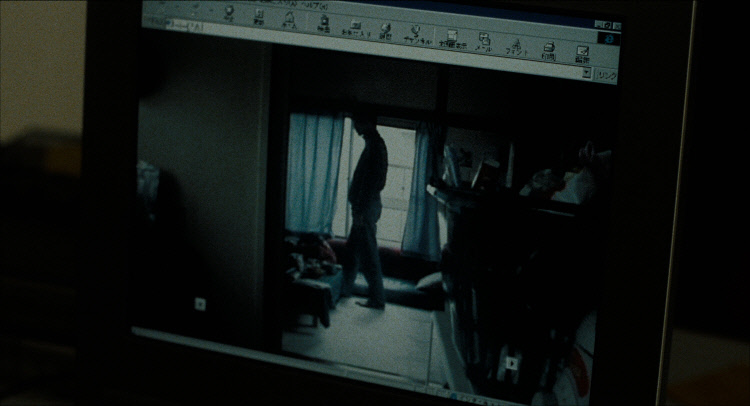
While baffled about this terrible incident, Michi and her other friends later discover something strange from that computer disk from that dead friend of theirs. There is a photograph showing not only that dead friend but also what looks like a ghost, and then Michi and her friends gradually find themselves going under the elusive influence of whatever drove that dead friend to suicide.

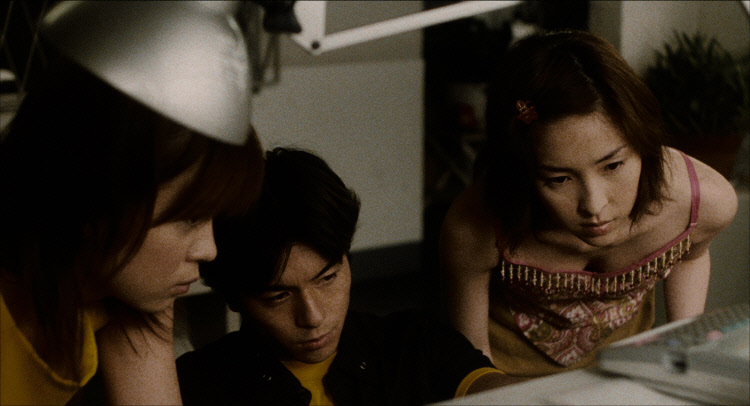
The story also introduces us to Ryosuke Kawashima (Haruhiko Kato), a college student who recently started to use the Internet even though he is not so good at using computers. While clumsily doing some online surfing, Ryosuke comes across a strange website showing a very disturbing video clip, and he is all the more baffled when his computer is turned on then connected to that odd website by itself. He subsequently requests some technical help from a female student who knows a lot more about computer than him, but she cannot provide any clear answer as this website turns out to be much weirder and more elusive than expected.

Meanwhile, things get more alarming around the main characters in the story. More people are suddenly vanished or commits suicide, and the city comes to feel more emptier and moodier than before. Michi and her friends naturally try to understand what is really happening around them, but whatever is coming upon them and many others in the city seems inevitable, and the movie accordingly gives a series of fearful moments as they are surrounded more and more by whatever is menacing them step by step. At one point, the camera of cinematographer Jun’ichirô Hayashi simply observes something slowly approaching to one of the main characters, but the result is undeniably tense and disturbing because of the overwhelmingly grim atmosphere, and we come to brace ourselves for what may happen next to that character.

The movie later gives us a sort of expository moment via one minor supporting character. According to this character, the realm of the dead has been probably over-popularized, so more and more ghosts slip into the realm of the living, and this disturbing trend seems to be more accelerated via the Internet. As living people see more of those dead people, they are more inclined to commit suicide, and this only exacerbates that problem. 

Still, the movie does not give any definite answer even when its two storylines eventually converge as expected. As the city gets slowly crumbled, the situation becomes more desperate for the remaining main characters, and the increasingly chaotic and gloomy mood surrounding them may remind you of those dystopian novels by J.G. Ballard. Although the ending is predetermined as reflected by the opening scene, the movie continues to hold our attention with the growing sense of doom and frustration, and it is not so surprising that the movie was intended to reflect “The Lost Decades”, a lengthy period of economic stagnation in Japan followed by the asset price bubble’s collapse in 1990.   

I must confess that I often felt distant to the story and characters throughout the film. The characters are more or less than mere plot elements to be manipulated according to the grim design of Kurosawa’s screenplay, and we usually do not care that much about them. Sure, we are unnerved a lot whenever they are terrified in one way or another, but we still observe their fear and desperation from the distance.

In addition, I also could not help but notice how the movie often looks dated from time to time. Because computer technology has advanced a lot during last 25 years, the computers and websites shown in the movie look quite old-fashioned to us, and you may become a bit nostalgic whenever you hear the sound of the old version of modem.

Nevertheless, “Pulse” is still fascinating to watch for several good reasons including its indelible mood and details to be appreciated, and it makes me admire more of the undeniable talent of Kurosawa, who has steadily advanced during last four decades with a series of interesting works ranging from “Cure” (1997) to “Wife of a Spy” (2020). Two years ago, he has become quite active as making not only the French remake of his 1998 film “Serpent’s Path” but also two other notable works “Cloud” (2024) and “Chime” (2024), and then he gives us “The Samurai and the Prisoner” (2026) in this year. I have not seen that film yet, but I and other South Korean audiences will soon see “Serpent’s Path” in movie theaters, and I guess that is a pretty good way of killing some time before watching “The Samurai and the Prisoner” later.
Posted in Movies | Tagged , , , | Leave a comment

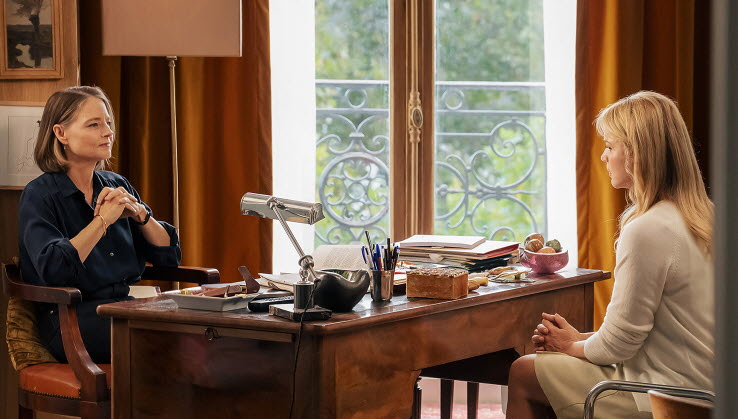
A Private Life (2025) ☆☆1/2(2.5/4): A psychiatrist under crisis

French film “A Private Life” is a lightweight thriller often toying with a number of uneasy uncertainties surrounding its middle-aged heroine. Steadily supported by its ever-reliable lead actress, the movie amuses us at times as lightly bouncing up and down along with its heroine, but it unfortunately fizzles during its last act with a little too many loose ends to my disappointment.

The heroine of the movie is Lilian Steiner, an American psychiatrist who has lived and worked in Paris for many years. At the beginning of the story, she is suddenly visited by one of her patients when she is waiting for the arrival of some other patient, and he turns out to have a little surprise for her. He decides to stop his session with her just because he can finally quit smoking thanks to some other therapist he recently met, and Lilian respects his decision even though she is not so pleased to learn that she has not helped him much on quitting smoking despite many sessions between them.

Not long after he left, Lillian gets another surprise news. She is notified that Paula (Virginie Efira), the patient she was going to meet at that time, recently committed suicide, and she later goes to the funeral of this patient, who is incidentally a married Jewish woman around her age. She simply wants to show condolence to Paula’s family, but neither Paula’s husband nor her daughter welcomes Lilian that much.

While she remains calm and composed as before, Lillian later finds herself gradually disturbed in one way or another. Her eyes frequently get teary for no apparent reason, so she goes to her ophthalmologist ex-husband Gabriel (Daniel Auteuil) for checking on her eyes, but he does not find anything particularly wrong with them. In addition, she finds herself have more questions on Paula’s death. As far as she checks on the recordings of their sessions, Paula was pretty okay besides being quite willing to talk about many things in front of Lillian, and that makes Lillian have more doubt and bafflement on Paula’s death.

In the end, Lillian decides to visit the aforementioned therapist. She is understandably skeptical at first, but, what do you know, she soon gets hypnotized, and then she finds herself wandering inside what seems to be the realm of subconsciousness somewhere inside her mind. As grasping for whatever has been repressed by her mind, she experiences what can be regarded as a memory from her former life, and she is startled to see the appearance of several people she knows – including Paula and Paula’s husband Simon (Mathieu Amalric).

The screenplay by director Rebecca Zlotowski and her co-writers Anne Berest Gaëlle Macé never clarifies what this strange moment actually means to its heroine, but it has some wry fun as Lillian becomes more convinced about whatever she experienced during that hypnosis session. She begins to believe that there are hidden connections between her and several others around her including Paula, and that certainly leads to a very awkward moment when she tells everything about her “former life” in front of her ex-husband and their young adult son later in the story.

As her psyche continues to tremble more and more, Lillian’s private/professional daily life also gets more disturbed along the story. While Paula’s daughter, who is incidentally around the age of Lillian’s son and has also been pregnant, seems to be fixated on getting any reason behind her mother’s death, Lillian begins to suspect Simon just because of what she supposedly saw as experiencing her “former life”, and her suspicion is more increased due to a series of alarming incidents happening around her. For example, somebody vandalizes her car, and she is subsequently shocked to discover that her residence is burglarized for no apparent reason.

As its heroine becomes quite obsessive about finding the truth behind her patient’s death, the movie seems to enter the area of those paranoid thriller films of Roman Polanski such as “The Ghost Writer” (2010). As a matter of fact, there is even a brief but humorous moment which is clearly influenced by the climactic scene of “The Ghost Writer”, and this is further accentuated by the presence of Mathieu Amalric, who not only worked with Polanski several times and but also resembles him to considerable degree.

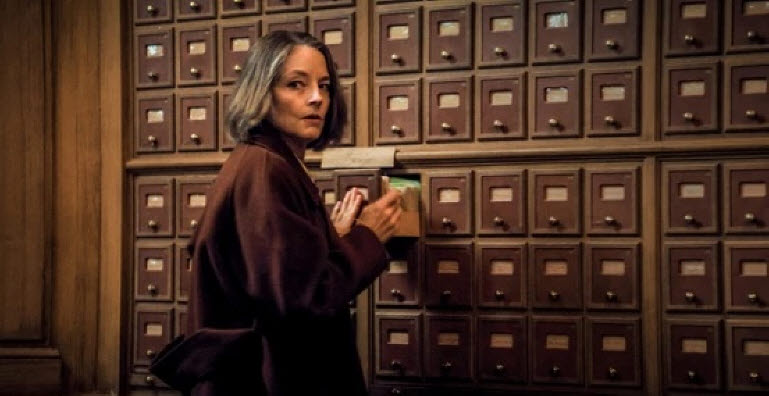
It is disappointing to see that the story arrives at the finale which feels too easy and contrived in my trivial opinion, but the movie is still fairy engaging thanks to the good performance from Jodie Foster, who has lost none of her talent and presence although it has been 35 years since her iconic Oscar-winning turn in “The Silence of the Lambs” (1991). Although I cannot tell how good her French speaking in the film actually is (She already tried a bit of French-speaking performance in “A Very Long Engagement” (2004), by the way), Foster looks natural in her interactions with several other main cast members surrounding her, and Daniel Auteuil and Virginie Efira ably handle each own juicy moments in the film while never overshadowing her at all.

On the whole, “A Private Life” has several glaring flaws which distracted me a bit too much during my viewing, but it is not wholly without fun and amusement at least. I still wish it had a naughtier fun with its supposedly preposterous story premise, but it held my attention up to a certain narrative point along with Foster, and I admire that to some degree.

Sidenote: There is a brief cameo appearance by Frederick Wiseman, a great documentary filmmaker who sadly passed away early in this year.

Posted in Movies | Tagged , , | Leave a comment

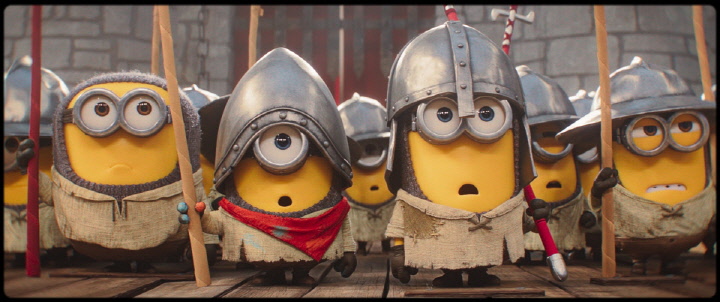
Minions & Monsters (2026) ☆☆☆(3/4): Minions go to Hollywood

Animation film “Minions & Monsters” is the first Minions flick I can wholeheartedly embrace without any shame or regret. Yes, these Minions are still a bunch of silly and wacky creatures which may annoy you a lot at times, but now they give us something much funnier and wittier than expected this time, and we can all rejoice for that.

Since their first appearance in 2010 animation film “Despicable Me”, the Minions have become quite popular that they had their own spin-off animation movie “Minions” (2015) and then the following sequel “Minions: The Rise of Gru” (2022). Although these two animation films are not exactly very good in my inconsequential opinion, they are fairly amusing and entertaining on the whole, and their considerable box office success certainly made the Minions all the more enduring than before, regardless of whether you have already got tired of them (FULL DISCLOSURE: I have – to some degree).

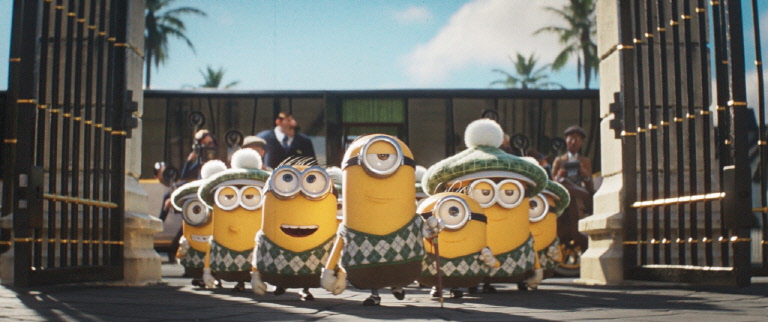
Fortunately, director/co-writer Pierre Coffin, who provides all those gibberish voices of the Minions as before, hits a relatively fresh ground for them. This time, the Minions come upon the Hollywood during the 1920s, and the film has a lot of fun with mixing their usual silly gags and actions with a heap of various movie references ranging from “Metropolis” (1927) and “Modern Times” (1936) to “Citizen Kane” (1941) and “Casablanca” (1943).

The story opens with a movie history museum employee, drolly voiced by Allison Janney, introducing a bunch of visitors to two certain Minions who actually played an important part in the movie history. They are called James and Henry, and then the movie gives us an amusing flashback sequence showing how they and their fellow Minions steadily searched for any big bad guy they could serve for many years. At one point, they attempted to work for a certain very big dude who may be a winking nod to the latest work from Christopher Nolan, but, not so surprisingly, their well-intentioned attempt led to a disastrous result mainly due to James and Henry.  

Anyway, after one failure after another during next several centuries, the Minions happen to end up arriving in Hollywood during the 1920s. Although they are not welcomed much at first, they inadvertently become very popular silent comedy movie stars, and James, who has been an aspiring storyteller, is particularly delighted as learning more and more about filmmaking from their movie director, who is warmly and humorously voiced by Christoph Waltz.       

However, once the twin brothers running their studio, both of whom are voiced by Jeff Bridges, begin to make talkies instead of silent films, the Minions soon find themselves unemployed and then abandoned. Nevertheless, James comes to have a possible movie idea which may help them get back in business, and he is encouraged more by his mentor, but there is one problem. He is going to make a big monster flick, so he needs some monsters to appear in front of his camera, but there is no monster available for him and his fellow Minions right now.

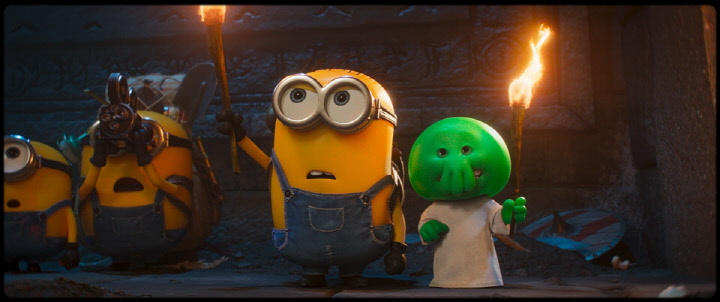
Fortunately, the Minions have kept a magic book which can summon various monsters from wherever they have been imprisoned (This is from one of many unfortunate former masters of theirs, by the way). When James, Henry, and their deaf Minion colleague Ed summon an entity nicknamed Goomi, they are not so impressed to say the least, but Goomi, who is mischievously voiced by Trey Parker, promises to give them the monsters they need, and they willingly go to a remote island along with him.  

Of course, it soon turns out that, as reflected by his actual name, Goomi has some other plan behind his back, and that eventually leads to a big climactic action sequence later in the story, but the film still maintains enough amount of wit and humor to amuse and entertain us. I like some nice Lovecraftian touches involved with Goomi and his cheerfully hideous monster colleagues, and I also enjoyed a subplot involved with one supporting character who will take you back to those old classic SF Hollywood movies such as “The Day the Earth Stood still” (1951). It seems at first that this figure, who is incidentally voiced by Jesse Eisenberg, can be another big bad dude for the Minions, but, what do you know, he turns out to be as soft-hearted as the grumpy “villain” hero of “Despicable Me”, and we get a couple of sweet moments from his unexpected love interest.  

Above all, I was tickled a lot by those numerous inspired movie references to be cherished by any serious movie fans like me. I love a very brisk but fun reference on the three great silent comedy films stars of Hollywood during the 1920s, and I had a big chuckle when one of the Minions struggles to deliver handle something not so far from the very famous opening scene of one of the greatest Hollywood films in the 1940s (The film is often quite anachronistic, as you have already noticed).

In conclusion, “Minions & Monsters” is more enjoyable than its two predecessors, and I think that is a notable achievement. In fact, I happened to watch it right after getting both exhausted and entertained by the sheer intensity and tension of South Korean film “Hope” (2026), and it somehow delighted and then recharged me enough to write the respective reviews on them immediately during this afternoon. That says a lot about its considerable entertainment value, isn’t it?

Posted in Movies | Tagged , , , , , | Leave a comment

Hope (2026) ☆☆☆(3/4): The very intense first chapter

South Korean film “Hope” will definitely grab you from the beginning to the end – and I am not joking at all. As a matter of fact, it is often so intense, thrilling, and captivating that I was actually let down a bit by the cliffhanger shot right before its end credits. To be frank with you, I came to learn later that the movie is in fact intended as the first chapter of the trilogy planned by its director, and I can only hope that the director will really surpass what is so strikingly presented on the screen.

However, I must tell you that, despite my reservation, I have some faith in director/writer/co-producer Na Hong-jin, who has always impressed me and many other South Korean audiences since his remarkable first feature film “The Chaser” (2008). I was instantly knocked out by the sheer intensity of that darkly brutal but undeniably electrifying thriller film, and I still remember several audiences around me gasping a lot when a certain minor supporting character in the film made a very fatal mistake to our devastation.

After his big career break via “The Chaser”, Na only made two films, “The Yellow Sea” (2010) and “The Wailing” (2016), before making a long-awaited comeback with “Hope” in this year, but he has not lost any of his cinematic mastery yet despite his 10-year absence. There are several superlative action sequences which will keep you stuck in your seat with a lot of tension and thrill, and they are all definitely worthwhile to watch on big movie theater screen.

And Na is so confident that his movie does not have much need for establishing its story and characters at first. Right from the opening scene, which is presented in deceptively slow pacing, the movie throws us into the ongoing situation surrounding its several main characters, and then it seldom slows down itself once their small world is suddenly swamped by a lot of mayhem and chaos beyond their control.

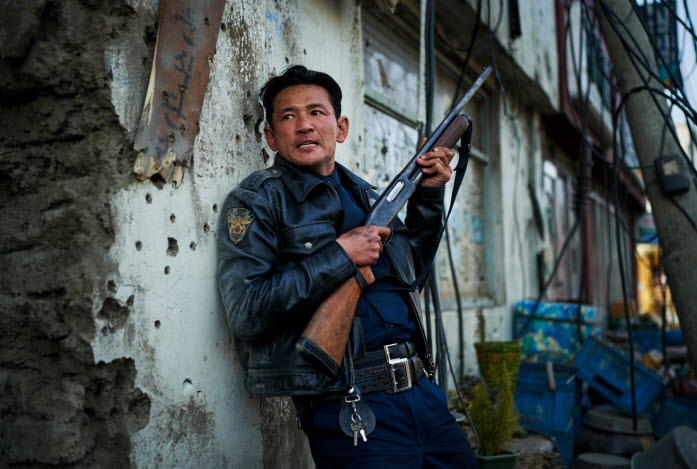
The main background of the story, which is set around the 1980s, is a little village located in the East Sea area near the demarcation line between South and North Korea. When he comes to see the carcass of a livestock animal on a road early in the morning, Beom-suk (Hwang Jung-min), the police chief of the village, is not concerned much at first, but he and others notice some strange things about this dead animal. It seems to be killed by some wild beast from a nearby forest, but they all have not seen anything like that, though they know that they should alert others as soon as possible.

Not long after that, the situation quickly becomes much more serious and dangerous than before. The village and its villagers are suddenly attacked by something quite unknown, and we are accordingly served with the first action sequence in the film, which is strewn with a lot of sound and fury as its main characters struggle to fight against this sudden big menace coming upon them. Although we often become more confused and clueless just like its main characters, the movie deftly and swiftly keeps things rolling without losing any narrative momentum at all, and we go along with that even though we do not totally understand what the hell is going on around its main characters.

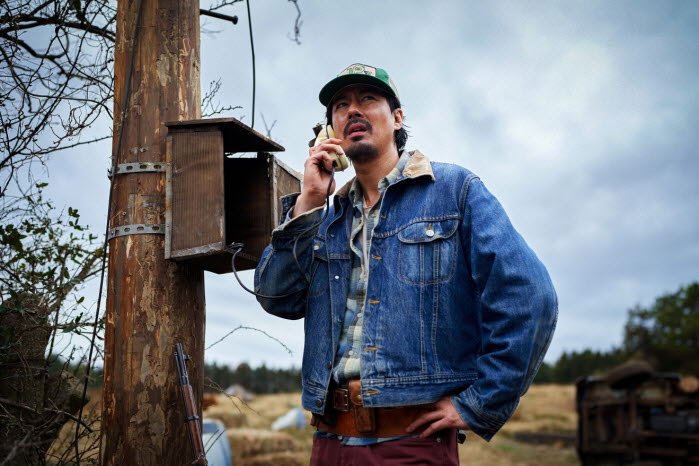
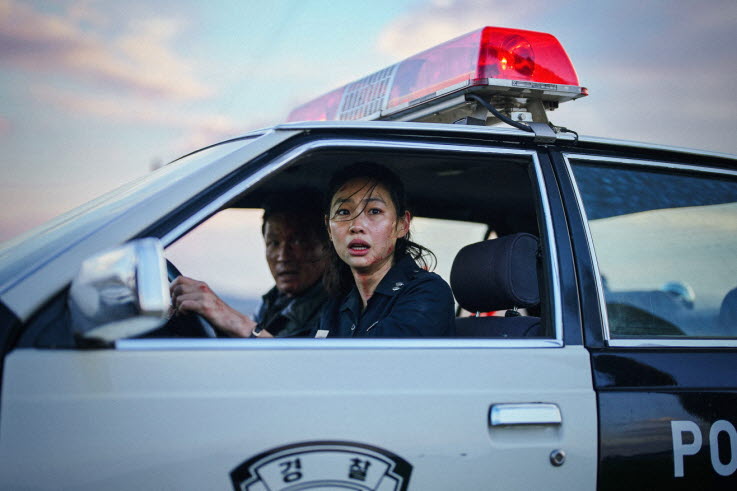
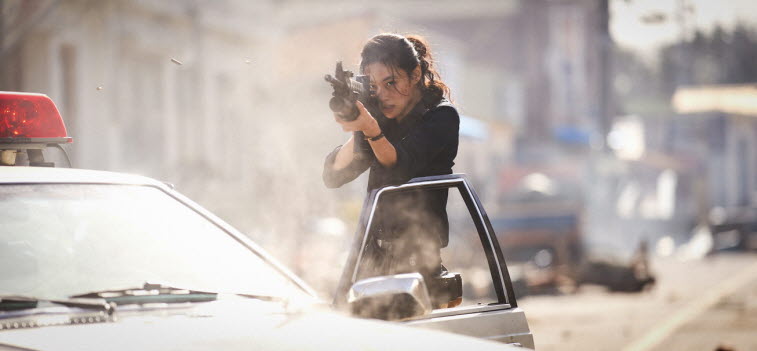
During its middle act, the story becomes bifurcated into two separate story lines. While Bum-seok and several others including a plucky (and brave) female police officer named Sung-ae (Jung Ho-yeon) try to get to the bottom of their situation, a bunch of hunters including Sung-ki (Zo In-sung) go into that nearby forest for catching whatever was responsible for the devastating attack on the village, but then they all find themselves quite overwhelmed by something they eventually discover later in the story.

And that is where the movie becomes rather shaky. When the movie was premiered at the Cannes Film Festival a few months ago, it received some criticism on its rather imperfect CGI, and I heard that Na and his crew worked more on their film besides doing some re-editing. I do not know how much the modified version currently being shown in South Korean theaters is different from the original version shown at the Cannes Film Festival, but I can tell you that 1) the editing by Kim Sun-min, who deserves some praise like cinematographer Hong Kyung-pyo and composer Michael Abels, is precise and efficient except a few notable glitches and 2) the CGI in the film is still not that good but mostly passable as far as I could see from the big screen of the Dolby Cinema screening room of a local theater.

Furthermore, I sometimes felt rather distant to its story and characters, who are more or less than plot elements to be driven as fast and urgently as possible. Although often limited by their thin characters, Hwang Jung-min, Zo In-sung, and Jung Ho-yeon dutifully fill their respective archetype, and they are also quite convincing during a bunch of nail-biting moments in the film including the climatic action sequence unfolded between a police patrol car and a horse running besides that. In case of Taylor Russell, Cameron Britton, Alicia Vikander, and Michael Fassbender, they simply lend their voices and appearances to those CGI figures in the story, which are incidentally the most generic element in the movie.

In conclusion, “Hope” is not entirely without flaws, but its strong aspects compensate for its many flaws enough in my humble opinion. Despite its rather long running time (156 minutes) and the disappointing cliffhanger ending, I must admit that I was not bored at all during the rest of the film, so I recommend it even though I subtract a half star from my initial rating during its first two hours. Anyway, let’s hope that Na will deliver as much as he promises to us here.

Posted in Movies | Tagged , , | Leave a comment

Keeper (2025) ☆☆1/2(2.5/4): Stuck inside a cabin

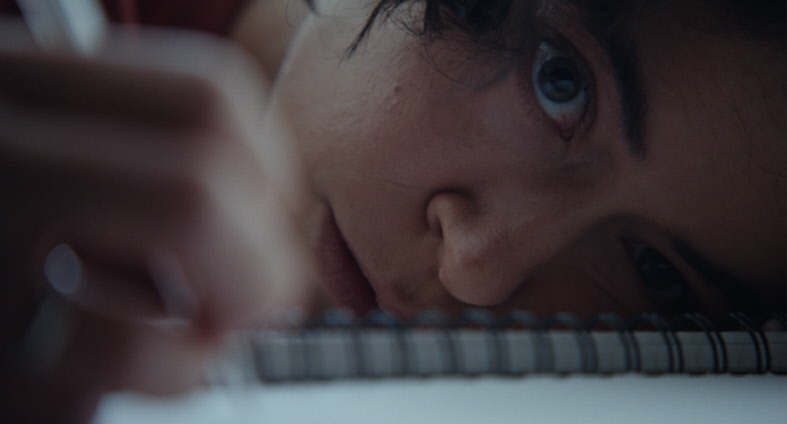
“Keeper”, another horror film from Osgood Perkins in last year besides “The Monkey” (2025), interested me at first, but then I found it rather underwhelming on the whole. Like many of Perkins’ previous works, it draws our attention with a subtle sense of anxiety at first, and that is certainly what we exactly expect from him. However, it ultimately feels bland and hollow due to its weak and deficient storytelling, and we come to observe the eventual moments of horror without much care.

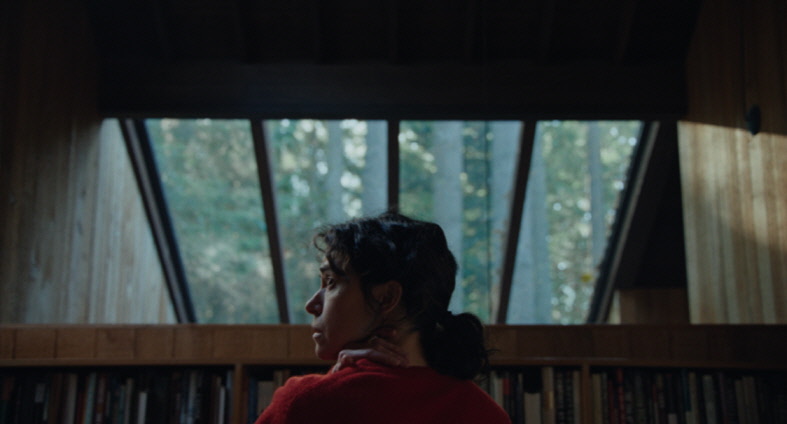
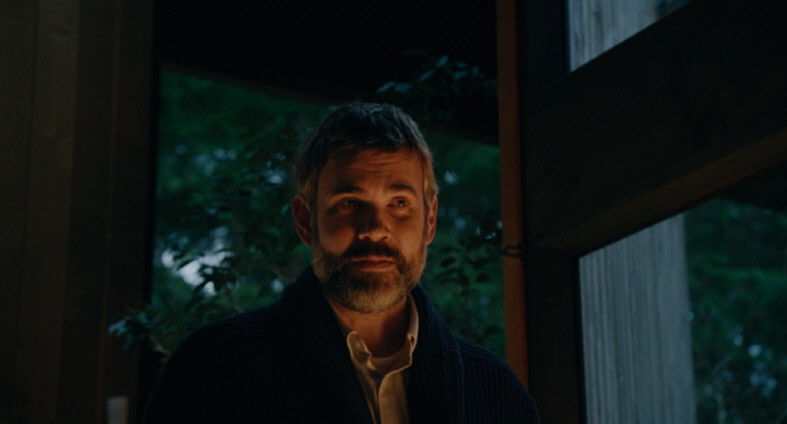
After the opening montage scene which will certainly become more meaningful later in the story, the story begins with its heroine arriving with her boyfriend in some remote forest area where his little cabin is located. As she talks with a friend of hers on the phone, we come to learn that Liz (Tatiana Maslany) has been in a relationship with Dr. Malcolm Westbridge (Rossif Sutherland) for about a year, and she is certainly looking forward to having a nice private time with him in his cabin. 

Needless to say, we cannot help but observe some little odd things about the cabin. For example, there is actually another cabin right next to the cabin, and, according to Malcolm, it belongs to a cousin of his. In addition, there is a rather suspicious gift box which turns out to contain a chocolate cake, and we come to have more suspicion when Malcolm deliberately makes Liz eat a piece of that cake during the following evening dinner, even though she does not like chocolate that much.

It also gradually becomes evident to Liz that there is something uncomfortable about the cabin and its owner. When she and Malcolm happen to be visited by his cousin, his cousin comes with some pretty foreign lady, and the mood becomes awkward due to his cousin’s rude words and behaviors, though he soon leaves along with his lady. On the next day, she somehow does not feel that right in her mind and body, and then she finds herself left alone in the cabin when Malcolm suddenly has to be absent for a while just because of one of his patients.

As Liz goes through a series of unnerving moments inside the cabin, the movie steadily builds up tension and uneasiness on the screen. The cinematography by Jeremy Cox remains mostly static and stable, but it subtly conveys to us more of the increasingly ominous atmosphere surrounding the heroine. We are not so surprised when the movie begins to reveal a bit more of whatever seems to be lurking somewhere inside the cabin, and there are several effective scenes where we see something happening right behind the heroine without being notice by her at all.

However, once the secret inside the cabin is eventually revealed during its second half, the movie becomes less interesting as losing much of its tension and suspense. Yes, we get to know a bit more about the long history of the cabin as expected, but that is delivered by a rather superficial expository scene. Furthermore, the screenplay by Nick Lepard does not seem to know what to do next, except providing us a lot of weird and grotesque things before arriving at its eventual ending.

Above all, the movie does not have much sense of fun. While it is pretty bleak and nasty to say the least, “The Monkey” sometimes tickles or horrifies us with its very dark and twisted sense of humor, and we can gladly go along with its diabolical fun. Compared to that, “Keeper” is relatively less enjoyable, even though it does have a few good moments which amuse us a bit with their deliberately gory aspects.

Nevertheless, the movie holds our attention to some degree thanks to the solid efforts from its lead actress. Tatiana Maslany, who previously collaborated with Perkins in “The Monkey”, is believable as her character is thrown into more isolation and paranoia along the story, and it is a shame that her good performance is often limited by her rather thin character. On the opposite, Rossif Sutherland, who is incidentally a son of Donald Sutherland, is unfortunately stuck with his thankless role, and the same thing can be said about Birkett Turton and Eden Weiss, who simply come and then go as required by the plot.

In conclusion, “Keeper” is a dissatisfying misfire which leaves us with growing empty impression in the end, and that is surprising considering how Perkins has steadily impressed us with his modest but interesting genre films. I admired “I Am the Pretty Thing That Lives in the House” (2016), and “Gretel & Hansel” (2020), and I also liked “Longlegs” (2024), which has many enjoyable things besides Nicholas Cage’s deliciously unhinged villain performance. In case of “The Monkey”, it shows that Perkins can be a bit more humorous in his own way, and I still remember how biting it is to the end.

Anyway, Perkins keeps going as usual at this point. Besides participating the production of “Backrooms” (2026), he has already been working on his next film to be released in this year, and it surely draws some attention due to several notable cast members including not only Maslany but also Johnny Knoxville and Nicole Kidman (Now that is an interesting combination). Although I was disappointed in this time, I sincerely hope that Perkins will satisfy me more in the next time, and that is all I can say for now.

Posted in Movies | Tagged , | Leave a comment

Network (1976) ☆☆☆☆(4/4): A media satire chillingly prophetic and vividly timeless

Sidney Lumet’s 1976 film “Network”, which is going to be 50 years old in this year, is chillingly prophetic and vividly timeless. Yes, its satiric materials are not so outrageous or shocking because, as we all know, our world has already surpassed them in very alarming ways. However, its sharply perceptive insights on media remain universal as before, and it still powerfully reminds us of how far media can possibly go down in the name of sensation and profit.

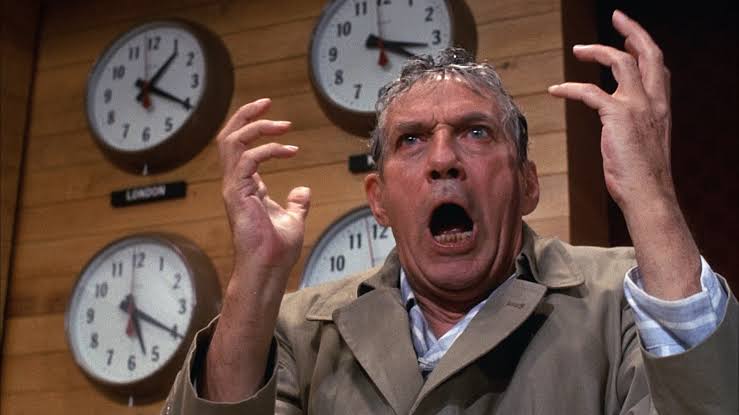
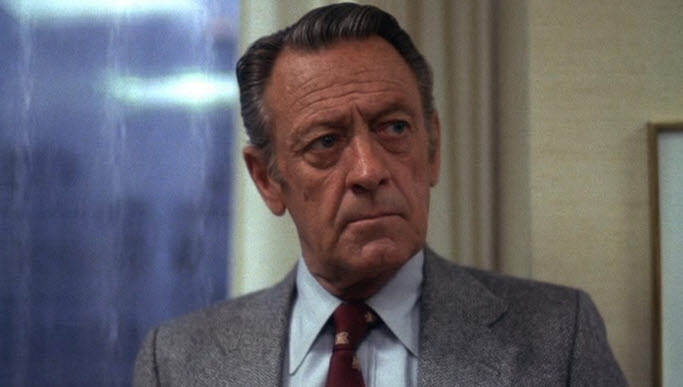
The story mainly revolves around UBS, a fictional national TV broadcasting company which has been struggling behind its several main competitors for years. Howard Beale (Peter Finch) has been a prominent anchorman of its daily evening news program, but he gets fired just because of the lousy rating. Mainly due to his deteriorating mental condition due to alcoholism and depression, he suddenly announces in the middle of his evening news program that he is going to kill himself on the very next day, and that certainly leads to a big headache for everyone in UBS including Max Schumacher (William Holden), who has been Beale’s close colleague and friend.

When Beale causes more trouble on TV later, he inadvertently draws more attention from millions of viewers out there, and that is quickly noticed by Diana Christensen (Faye Dunaway), one of the UBS executives who has supervised its programming department. Once she gets the permission to keep Beale on TV more, she becomes ready to go all the way for more rating and profit, and that is when Beale begins to cross the line between sanity and insanity. In the end, there comes that famous moment when he galvanizes his countless viewers with that immortal catchphrase: “I’m as mad as hell, and I’m not going to take this anymore!” 

Around that narrative point, the Oscar-winning screenplay by Paddy Chayefsky busily shuffles many different elements just like we casually switch from one TV channel or website from another. On one hand, there are several cheerfully prosperous scenes involved with a crazy TV program deal between Christensen and a bunch of radical left-wing organization members willing to provide her the footage clips of their latest acts of crime or terror. On the other hand, there are very serious dramatic scenes associated with Christensen’s “romance” with Schumacher, who becomes infatuated with her despite being a middle-aged married man old enough to be her father.

Mainly driven by a series of well-written individual moments, Chayefsky’s screenplay is inherently so scattershot that its wild centrifugal force definitely requires a very good director who can provide the centripetal force to complement that. Needless to say, Lumet is a master filmmaker known for considerable realism and verisimilitude, and his dexterous direction keeps holding everything in the film to the end. For example, he and his cinematographer Owen Roizman subtly establish a rough but realistic tone to draw our attention at the beginning, but then the movie gradually shifts onto a smoother and slicker tone as the story goes way over the top with its satirical elements. Eventually, we find ourselves all the more engaged in the accumulating maelstrom of greed and madness surrounding Beale, who is thrown into more insanity as he causes another big trouble for Christensen and other UBS executives.

As I watched the film again, I noticed how it often feels more dated than when I watched it for the first time in 2000. Yes, Beale’s evening news program surely looks quite tackier compared to our current ones (My late mentor Roger Ebert wrote in his Great Movie assay: “….a knotty-pine booth that makes it look like he’s broadcasting from a sauna.”), and so does the newsroom supervised by Schumacher (and then Christensen, of course). In addition, TV has become more like a past during last two decades thanks to the rise of online social media applications ranging from YouTude to Twitter. To be frank with you, I am really curious about how the movie will look and feel to my niece when she grows up enough to watch it around 10 years later.
Nevertheless, the messages delivered by the film are still bitingly relevant as it precisely perceives the timeless nature of media industry. Regardless of whether it is radio or TV or social media or whatever, rating always comes first, so sensationalism naturally comes with the territory, and the movie reminds us that, as being always driven by our endless thirst for sensation, those folks in media industry are inclined to do almost anything for higher rating. You may roll eyes a bit as watching how Christensen transforms Beale’s evening news show into a vulgar media circus which becomes a huge public sensation, but this is not so shocking at all compared to what we see on TV as well as social media everyday – or that unbelievable political rise of Donald J. Trump from a reality TV star to the US president.  

Under Lumet’s confident direction, the cast members of the film deliver many highlights to remember. Although her character is quite misogynistic at times, Faye Danaway, who deservedly won a Best Actress Oscar, is absolutely convincing as a cold but seductive goddess of media, and we see why Schumacher is alternatively attracted and repulsed by her. Peter Finch, who won a Best Actor Oscar not long after his death, is simply electrifying as his character lets out more of his despair and madness along the story, and William Holden, who was also Oscar-nominated for Best Actor, gives the best performance in the film as the weary and jaded moral center of the story. In case of a number of supporting performers in the film, Robert Duvall is equally impressive as an executive who may be more cynical and ruthless than Christensen, and Ned Beatty and Beatrice Straight also leave strong impression on us despite their rather brief appearance. As a matter of fact, both Beatty and Straight were Oscar-nominated for their respective supporting performances, and Straight actually won the award (It is still the shortest Oscar-winning performance, by the way).      
In conclusion, “Network” remains a great film to be admired and appreciated for numerous reasons, and it is certainly one of many notable achievements in Lumet’s long and illustrious career. Since his very first feature film “12 Angry Men” (1957), he steadily made a number of excellent movies during next several decades before he passed away in 2011, and, like some of these memorable works, “Network” shows him at the top of his craft. We cannot laugh easily now, but the movie still works enough to engage and then alarm us, and that says a lot about its undeniably enduring cinematic qualities.

Posted in Movies | Tagged , , | Leave a comment

Moana (2026) ☆☆(2/4): It doesn’t go far at all

“Moana”, which is a live-action remake version of 2016 Disney animation film of the same name, feels so thoroughly redundant from the beginning to the end that my mind frequently went stray here and there while I watched it at a local movie theater today. In fact, I was so bored and distracted that I actually welcomed the occasional chatters among the four little young boys sitting right next to me. They might have annoyed some audiences around them to some degree, but, what the heck, their chatters had a lot more life than whatever I observed from the screen.

And I must confess that I was also quite tempted to copy a lot of my 3-star review on the 2016 animation version. For describing a bit of the story and characters to you here within a minute, all I would have to do is copying and then pasting several paragraphs from that review of mine, though I would also have to change the names of the cast members except one certain member.

Yes, Dwayne Johnson, who provided the voice of Maui in the 2016 animation version and its following 2024 sequel, returns here to play the live-action version of his character, and all I can tell you is that he still has all the right stuffs for playing Maui as before. While he certainly has no problem in looking as bulky and muscular as required, he effortlessly brings some likable jolliness to his shapeshifting demigod character, and he surely lightens up the mood when he delivers that certain well-known musical number as expected.

However, as we all know, the center of the story is a young plucky girl named Moana (Catherine Laga’aia), who is a member of some Polynesian island tribe who has been governed by her village chief father for years. While her father prefers to maintain the status quo on their island as much as possible, Moana, who will succeed her father someday, has been aspiring to explore whatever is beyond their island, and her aspiration is gently encouraged by her father’s eccentric mother.

When the life on the island becomes quite endangered by some unknown dark force, Moana naturally tries to find any possible solution besides merely enduring that as her father suggests. Thanks to her grandmother, she comes to learn that her tribe actually sailed around here and there outside their island a long time ago, and this discovery eventually prompts her to sail beyond the island with a certain magical object which may be the key to restoring her world.

Of course, not long after she departs along with her wacky pet chicken, Moana eventually encounters Maui, who has been stuck in a small rocky island for many decades after he inadvertently caused that grave ongoing harm on Moana’s world. Although he is not so willing to help her at first, Maui eventually agrees to help Moana, and they soon go through several risky moments before eventually arriving at their destination.

The following action sequences during the second half of the film are mostly slick and competent, but they only remind me more of why live-action film can rarely surpass animation. For example, we can easily accept Moana’s pet chicken as a supporting character right from the start in case of the 2016 animation version, but we often cannot help but notice it as a mere CGI figure in case of the 2026 live-action version, and the same thing can be said about that giant crab character, which is voiced again by Jemaine Clement here in this film. Although Clement has some fun again with his delightfully vain monster character, his musical scene in the film feels less colorful and inspired in comparison, and that is another disappointment in the movie.

The overall quality of the soundtrack of the film is fairly good on the whole, but they are more or less than the adequate reproduction of the soundtrack of the 2016 animation version. The score by Mark Mancina and the songs by Mancina and his two collaborators Lin-Manuel Miranda and Opetaia Foaʻi are mostly fine here, but I must point out that most of its highlights depend on the previous materials from the soundtrack of the 2016 animation version. While Miranda provides a new song for the end title of the 2026 live-action version, I do not think it will linger on your mind as long as that Oscar-nominated song of the 2016 animation version.

Anyway, the overall result is not a total dud at least mainly thanks to the earnest lead performance from newcomer Catherine Laga’aia, who imbues her titular role with enough spirit and personality just like Auli’i Cravalho did in the 2016 animation film version. In case of several supporting performers in the film, John Tui and Frankie Adams bring some gravitas to the story as Moana’s caring parents, and Rena Owen, a New Zealand actress who is mainly known for “Once Were Warriors” (1994), steals the show during her brief appearance.

In conclusion, “Moana”, directed by Thomas Kail, is thankfully not as awful as I feared, but it still feels quite unnecessary as doing almost nothing except merely reproducing what was so enjoyably presented before. Folks, we already had to endure the passable live-action version of “Lilo & Stitch” (2002) and “How to Train Your Dragon” (2010) in last year, and now here comes a more redundant product my mind will soon forget without much regret. Like many of you, I have really been quite tired of these and many other pointless cases of live-action remakes during last several years, and I can only wish that there will soon come the end of this undeniably wasteful trend.

Posted in Movies | Tagged , | Leave a comment

The Piano (1993) ☆☆☆1/2(3.5/4): An extraordinary female drama by Jane Campion

Jane Campion’s 1993 film “The Piano”, which was re-released in selected theaters in South Korea a few weeks ago, is still an extraordinary female drama to mesmerize and then haunt you for a long time. Mainly revolving around its rather enigmatic but strong-willed heroine, the movie works as a sensitive and compelling tale of human emotions, and it is surely one of the high points in Campion’s remarkable filmmaking career.

After the prologue part which gives us a few bits of background information on its heroine, the story begins with her arrival at a remote region of New Zealand around the mid-19th century. Her name is Ada McGrath (Holly Hunter), and she comes from Scotland to this remote area for marrying a local father named Alisdair Stewart (Sam Neil). We are told that she somehow became mute during her early years, and she often depends on her young little daughter Flora (Anna Paquin), who translates her sign language for the communication with others around her.   

Right from their arrival on the beach near to Alisdair’s place, things do not look that good for Ada and Flora to say the least. They have to spend the following night alone together before Alisdair, his neighbor George Baines (Harvey Keitel), and several local indigenous people to carry their luggage eventually come on the next day. When Ada later requests that her piano also should be carried to his house, Alisdair callously ignores her request, and Ada becomes quite exasperated and frustrated, because the piano is the only tool for expressing herself besides writing and sign language.

As time goes by, it becomes apparent to us that Alisdair simply regards Ada as someone to put beside himself. Their following marriage ceremony is perfunctory at best and miserable at worst, and he does not show any affection or considerable to her at all. As a matter of fact, he does not hesitate at all when Baines offers a piece of good land in exchange for Ada’s piano, which is still left on the beach.

When Ada is subsequently sent to him for teaching him how to play piano, it gradually turns out that Baines is more interested in some other thing than learning how to play piano. While looking coarser even compared to Alisdair in many aspects, Baines turns out to be a lot more sensitive dude than expected, and he has an offer Ada cannot easily refuse. He tentatively approaches to her step by step (or key by key, shall we say), and we accordingly get a series of small but sensual moments as these two very different figures open themselves more to each other in one way or another.

Now this looks like your average pulpy romance tale, but the movie fills the story and characters with a lot vivid realistic details to engage us more. Campion and cinematographer Stuart Dryburgh did an impressive job of imbuing the screen with a palpable sense of life, and we are gradually immersed into the specific period background inhabited by the characters in the story. We initially wince more than once as observing all those moody and muddy moments unfolded on the screen, but our eyes are drawn more to the considerable realism behind these moments, while our minds are more attentive to the emerging emotional undercurrents around its main characters.   

Campion’s Oscar-winning screenplay alternatively surprises and touches us as these main characters show more complex human qualities along the story. Although she seemed to be mostly aloof and distant at first, Ada comes to show more sensitivity, passion, and determination as she silently follows what her heart desires, and there is an achingly poignant moment when she somehow shows a bit of defiance despite her body and mind being cruelly by her husband later in the story. While Baines and Alisdair turn out to be more than two mere opposing figures surrounding Ada, Ada’s daughter is not a passive bystander at all, and she often functions as another crucial element in the story – especially when she makes an impulsive decision which leads to a much more devastating consequence than she could imagine.

All of the four principal performers in the film are unforgettable in their respective strong performances. Holly Hunter, who deservedly received the Best Actress award at the Cannes Festival (The movie also garnered the Palme d’Or award, by the way) and then a Best Actress Oscar, is utterly superlative as subtly brimming with quiet emotional intensity, and she is also ably supported by the three other performers surrounding her. Despite his rather strained accent, Harvey Keitel clicks well with Hunter during several intimate scenes between them, and Sam Neil, who would become more recognizable to us thanks to not only this movie but also Steven Spielberg’s “Jurassic Park” (1993), is also effective as his unlikable character comes to show his own misery and despair. In case of Anna Paquin, who rightfully won a Best Supporting Actress Oscar, she did much more than holding her own place among her adult co-stars, and it is a shame that she has seldom surpassed her indelible achievement here in this film, though she has had a fairly respectable acting career during last three decades.  

Overall, “The Piano” is a sublime piece of work to be appreciated for many good reasons including mood, performance, and storytelling. Although her career seemed to go down a bit since “The Piano” came out, Campion recently made a triumphant comeback with “The Power of the Dog” (2021), which incidentally garnered her a Best Director Oscar. Since this another high point of her career, she remains rather inactive during last several years, but I sincerely hope that she will continue to impress us more as one of the best female filmmakers of our time.

Posted in Movies | Tagged , , , | Leave a comment

Ready or Not 2: Here I Come (2026) ☆☆☆(3/4): Another deadly game

“Ready or Not 2: Here I Come” tries another deadly game, and it mostly succeeds on the whole. Again, our heroine is hunted by a bunch of unlikable rich people willing to kill her within a limited amount of time, but what is being at stake for them and her is bigger than before, and the movie surely serves us a series of bloody and violent moments to jolt and then entertain us.

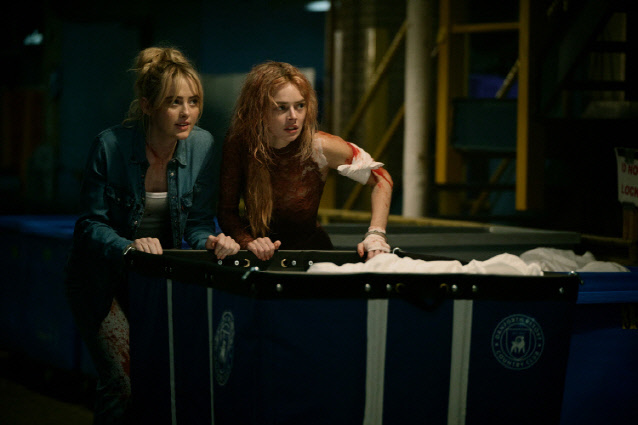
The story begins at the point not long after the ending of “Ready of Not” (2019). After she eventually won that deadly game with her despicable wealthy in-laws including her groom, Grace MacCaullay (Samara Weaving) loses her consciousness and then is taken to a hospital, but now she has to face all the bloody mess caused by that deadly game. Because all of her opponents died horribly, she finds herself becoming a murder suspect, and she is not consoled much by her younger sister Faith (Kathryn Newton), who comes to the hospital despite many years of estrangement between them.

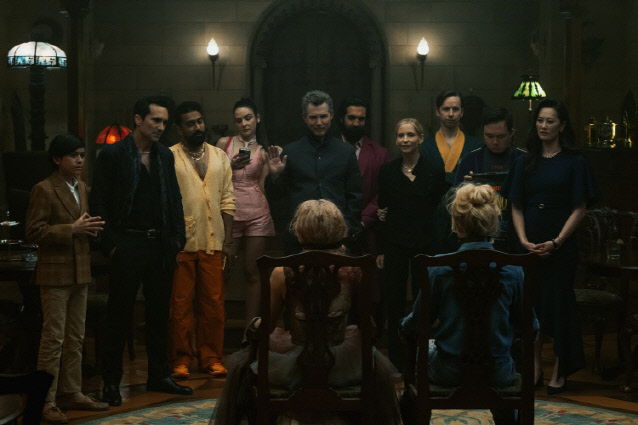
Meanwhile, the situation soon becomes a lot more problematic as Grace’s in-laws turn out to be members of some powerful secret organization. There are actually five other rich and influential families in this devil-worshiping organization, and all of these wealthy families are ready to take over the highest position once occupied by Grace’s in-laws.

Of course, according to a shady lawyer representing their infernal lord, there are some important rules on another deadly game targeting Grace, and we get to know these rules one by one. Again, Grace must survive till dawn once the game is started in a big place belonging to one of these five filthy rich families, and any organization member succeeding in eliminating Grace will be the leader of the organization.

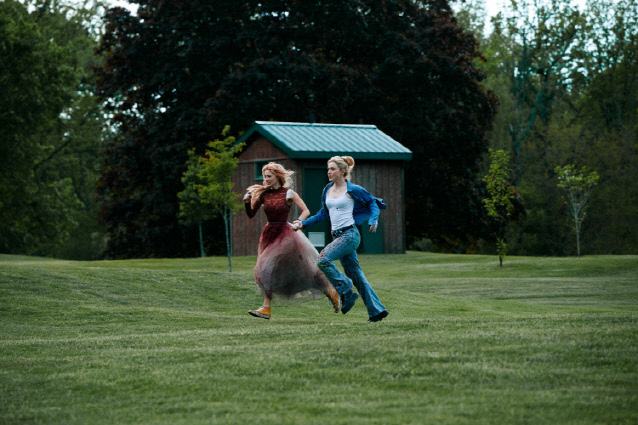
Because the previous film already showed us that Grace has enough pluck and determination for getting any chance for survival, the story adds new vulnerability to her via her younger sister, who also finds herself targeted by her older sister’s opponents. As they try to survive together in one way or another, Grace and Faith naturally come to confront the estrangement and resentment between them, and this certainly throws more tension on their increasingly perilous circumstance.

Anyway, the movie strikes us with a lot of blood and violence coupled with some wry sense of humor. Needless to say, all of Grace and Faith’s opponents show more of their unlikable aspects along the story, and you will surely cheer as they get eliminated or punished one by one while the lawyer solemnly presides over the progress of their game. In case of one of them, this figure is quite angry about Grace for a petty personal reason, and that leads to a rather amusing fight scene which eventually culminates to when our heroine uses something unexpected as a blunt instrument to strike her opponent really hard.

Although the screenplay by Guy Busick and R. Christopher Murphy, who previously wrote the screenplay for “Ready or Not”, loses some of its narrative momentum around its last act, the movie still holds our attention under the competent direction of directors Matt Bettinelli-Olpin and Tyler Gillett. As they previously did in “Ready or Not”, Bettinelli-Olpin and Gillett skillfully balance their movie between intense thriller and dark comedy, and we gladly go along with that even though we occasionally wince a lot for some of the most violent moments in the film.

It surely helps that the movie is anchored well by the strong presence of its lead actress. Samara Weaving, who has steadily built up her genre movie career since “Mayhem” (2017) and “The Babysitter” (2017), comfortably slips into her familiar character, and she is believable especially when Grace struggles with her traumas from the previous film early in the story. As Grace’s estranged younger sister, Kathryn Newton seems to be stuck in a rather thankless role at first, but she holds her own place well right next to Weaving, and we instantly sense a bitter old history between their characters right from their first scene in the film.

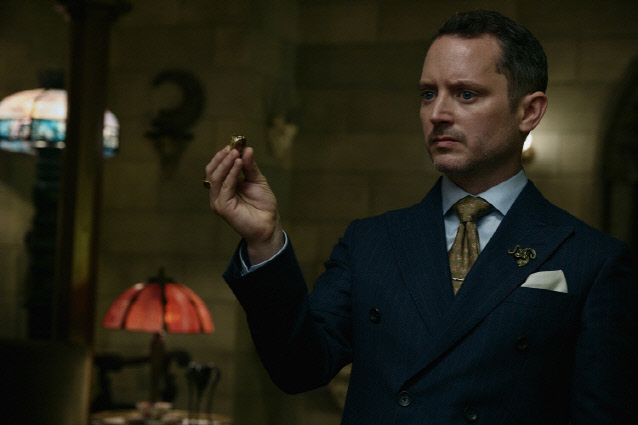
Compared to Grace and Faith, many of the other main characters in the film are more or less than broad caricatures we observe from the distance without much care, but some of these detestable figures leave some impression thanks to the game efforts from the performers playing them. As the treacherous twin siblings in the story, Sarah Michelle Gellar and Shawn Hatosy are quite effective in their respective roles, and the brief appearance of David Cronenberg, who incidentally plays their characters’ dying father, is pretty much like a cherry on the top of their juicy villain performance. In case of several other recognizable performers in the film including Néstor Carbonell and Kevin Durand, they are rather under-utilized in comparison, but they chew each of their moments as much as possible at least. Finally, Elijah Wood, who has often played offbeat characters as sailing away from the Lord of the Rings trilogy by Peter Jackson, is often fun to watch as his lawyer character remains mostly unflappable to every twist and turn in the game.

In conclusion, “Ready or Not 2: Here I Come” is less entertaining than its predecessor due to having less surprise for us, but it is still a fairly fun genre film which accomplishes its goal as much as intended. I prefer the more taut and intense entertainment of the previous film, but I had enough fun during my viewing, so I will not grumble for now.

Posted in Movies | Tagged , , | Leave a comment

EPiC: Elvis Presley in Concert (2025) ☆☆☆(3/4): He rules anyway

Baz Luhrmann’s documentary film “EPiC: Elvis Presley in Concert” is often excessive but undeniably electrifying in its vivid and impressive presentation of Elvis Presley as an entertainer. I must tell you that I am not a very big fan of Presley, but the documentary reminds me again of why he has been regarded as one of the biggest figures in the 20th American pop music history, and the documentary frequently pulls all the stops for emphasizing it to us with sheer energy and gusto.

It goes without saying that Luhrmann not only admires but also adores the main human subject of his documentary. After all, he already gave us Oscar-nominated film “Elvis” (2022), and the documentary was actually conceived from when he looked for the unseen footage of Presley for including it in that movie. While sixty-eight boxes of footage were eventually discovered, it was unfortunately without audio, and Luhrmann and his crew had to work extensively on restoring it with existing audio sources over the next two years.  

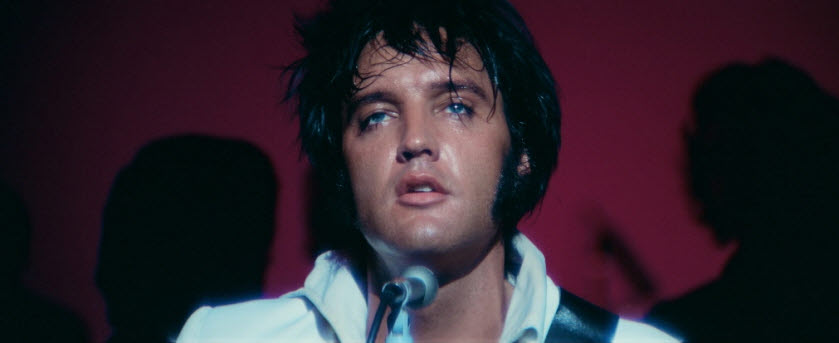
Their result may not be entirely perfect, but I must tell you that it is still magnificent to watch on big screen. Sure, many of those old footage clips in the documentary look old and grainy at times, but their visual qualities are quite good even on IMAX screen, and so are their audio qualities. To be frank with you, my eyes were often impressed by every crisp visual detail on the screen, and my ears were frequently overwhelmed whenever Presley galvanized his enthusiastic audiences on the screen.

Curiously, the documentary does not delve much into the life and career of Presley, probably because Luhrmann already explored that a lot in “Elvis”. Although that movie is quite flawed in my humble opinion due to a number of reasons including Tom Hanks’s heavy-handed supporting performance, it also has several good elements including Austin Butler’s Oscar-nominated lead performance, and it can be a fairly nice companion piece to the documentary. 

After briefly looking over the early years of Presley’s career at the beginning, the documentary goes straight to the later years of his career in Las Vegas during the 1970s. Although his career at that point was relatively less prominent compared to when he was the biggest American pop star during the 1950-60s, he still had enough charisma and talent to show off in front of many audiences, and you will be amazed to learn later on how tirelessly he worked day by day for what would be the last highlight in his career, though the documentary did not mention at all his serious health and addiction problem which probably led to his untimely death on August 16th, 1977 (He was only 42 years old at that time, by the way).

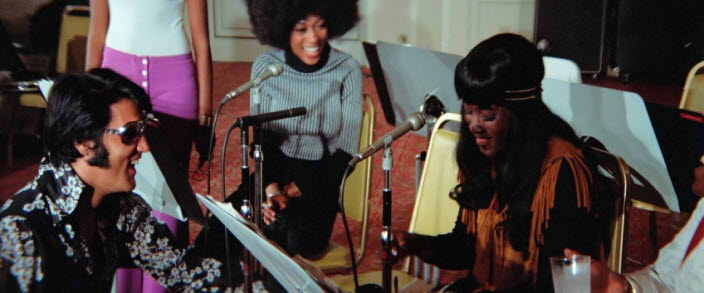
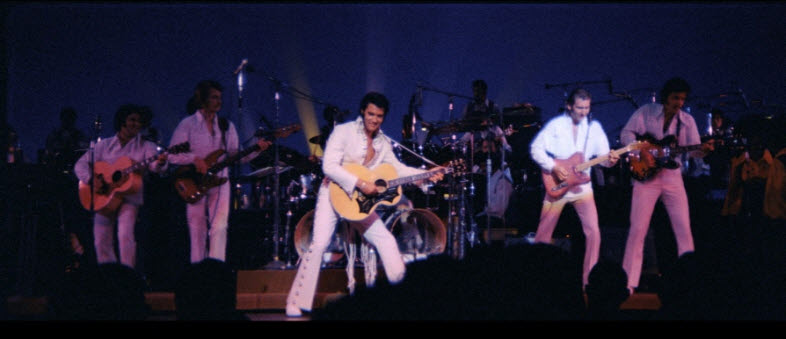
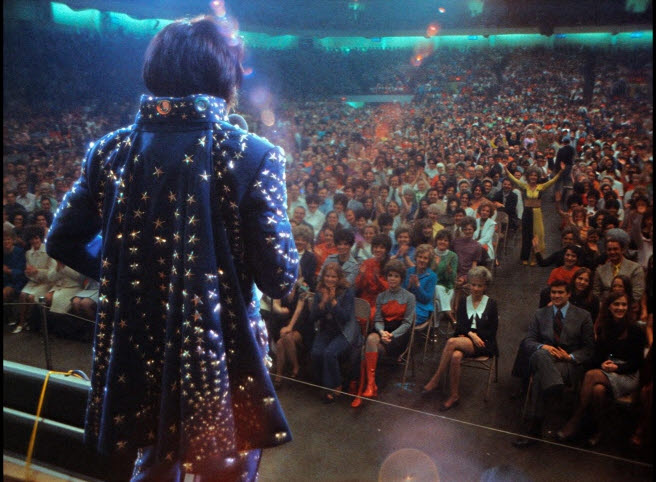
Anyway, the documentary shows a lot of what a committed professional entertainer Presley was. We see him closely and casually working with a number of singers and musicians for their rehearsal. We see him performing several famous songs such as “Love Me” on the stage with considerable energy and passion to mesmerize his audiences. As he frankly admits at one point, his singing style is influenced a lot by gospel and R&B, but he adds his own style and personality upon what he absorbed, and that was certainly what made him a huge pop music star during the 1950s.    

Thanks to the excellent restoration work by Luhrmann and his crew, we can observe every fine detail in the footage clips of Presley doing one concert after another. For example, I could not help but notice how sweaty often he looks on the screen, and this somehow took me back to how David Byrne also looks quite sweaty in Jonathan Demme’s great concert film “Stop Making Sense” (1984). Despite a lot of sweat and exhaustion, both Presley and Byrne are brimming with a lot of passion and excitement, and that is quite infectious to their respective audiences. 

In contrast to its superlative concert scenes, the documentary only ends up scratching the surface when it occasionally attempts to give us some glimpse into Presley as a human being. While it overlooks his problematic relationship with his fire wife Priscilla Presley (Please check out Sofia Coppola’s 2023 film “Priscilla” if you want to know more about her story), the documentary is also rather vague about Presley’s opinions on several social/political issues such as the civil rights movement and the Vietnam War during the 1960s.

This weak aspect of the documentary makes it feel a bit superficial at times, but, like many of Luhrmann’s previous works, the documentary seldom bores us. The editing by Jonathan Redmond is a bit too scattershot at times, but it is mostly tight and effective during the concert scenes at least, and it is certainly worthwhile to wait for what will be shown during the end credits, which incidentally looks as flamboyant as you can expect from Luhrmann.  

Overall, “EPiC: Elvis Presley in Concert”, which was released in selected theaters in South Korea a few days, is an engaging documentary which will definitely grab your attention right from the beginning along with its very charismatic human subject, and I am glad that I could enjoy its many big and vivid moments in the IMAX screening room of a local movie theater in my hometown. Yes, he still rules as before, and the documentary is certainly recommendable especially if you are more knowledgeable or enthusiastic about Presley than me.

Posted in Movies | Tagged , , | Leave a comment