The Journal of Musan (2010) ☆☆☆1/2(3.5) : A lonely man struggling at the bottom

You may not notice him while walking around the streets of Seoul. He is a lonely man downtrodden everyday at the bottom of South Korean society. He is usually quiet with passive attitude and his drooped head. He has silently endured his new world and its heartless people with belief and faith, but every day of his life is the struggle with a very little sign of hope, and his situation is getting more difficult. He is getting tired now.

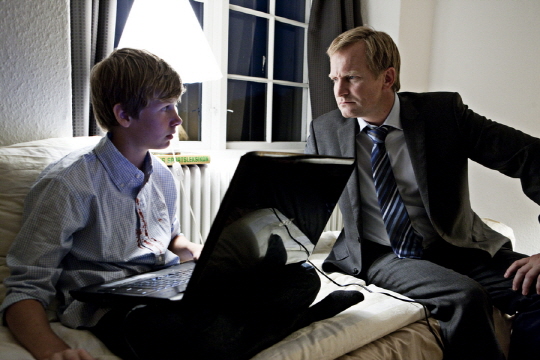
South Korean movie “The Journal of Musan” is about the harsh reality inside the daily life of one North Korean man who escaped from his country to South Korea for a better life. Seung-cheol(Park Jung-bum) is not so different from others in appearance, and he speaks the same language, but, like his fellow North Korean defectors, he is not welcomed in the society as much as illegal immigrants. Although he is at least officially a South Korean citizen, the first three digits of his citizenship identification number always remind others who he is. When a detective tries to help him get a better job, the employer says he does not want to employ him because of that.

When he says to others he will do his best, he really means it. He has been doing menial jobs, and the recent one is pasting up the posters advertising a nightclub on the walls. This job is not as easy as you think; it is hard to keep posters stuck to the walls, and there are also other people doing the same job for a different nightclub – some of them are not nice at all.  His boss is unkind; he frequently humiliates Seung-cheol while exploiting him.

Even his home is not a good resting place for him. He lives with his friend Kyeong-cheol(Jin Young-wook) in a small apartment. While Seung-cheol tries to live in an honest way, Kyeong-cheol is involved in some shady plan to swindle the money out of others. When he buys a windbreaker to Seung-cheol at the department store, he also steals other clothes for Seung-cheol, who refuses them and gives them back to the shop. He adamantly sticks to his principles – even when others including Kyeong-cheol regard him as a pathetic loser.

Nevertheless, there is a small but bright light in his life. He seems to be a sincere Christian(he reads the Bible every night before sleep), but his main purpose of attending the church meetings is watching Sook-yeong(Kang Eun-jin). He likes her, but he has been reluctant to approach to her. Usually at the back row, he just watches her singing hymns as a choir member.

One day, he finds where she works. It is a Noreabang in his neighbourhood, a Korean merrymaking place where you can sing and drink in Karaoke booths. He is hired by her while not telling her they go to the same church. She soon comes to learn about that, but that seems to make her a little closer to him. She asks him not to tell anything about her work to the people in the church. She says she temporarily manages the place due to her ailing father. It’s true, but I doubt whether it will be just ‘temporary’ for her.

The harsh reality keeps threatening Seung-cheol’s fragile existence in his world. Constantly pushed into the corner by others, he gets more exhausted and desperate than before. In addition, his friend gets stuck in a serious trouble with other North Korean defectors, and that also puts Seung-cheol’s life in  jeopardy. Now, his only comfort is a dog he is recently keeping, but there are lots of possibilities that their warm relationship also can be broken at anytime.

The director Park Jung-bum worked as an assistant director for Lee Chang-dong in “Secret Sunshine”(2007). The influence from Lee Chang-dong is apparently shown in his realistic approach. The rhythm of mundane daily life is captured in a calm but absorbing way, and, once you allow yourself immersed in it, you can feel the tension kept being mounted behind the screen little by little. The movie is sometimes suffocating, and I particularly remember a long take sequence where the camera closely sticks to the character. I was agitated while watching him, for I knew something could suddenly happen outside the screen.

While following Seung-cheol and understanding him, you will wonder when he will reach to the breaking point. He believes he can earn his living through honesty and diligency, but his belief is constantly shaken by the others unkind to him. The screenplay written by Park is a little bit manipulative(and possibly exploitive in others’ opinions) when pulling Seung-cheol toward melodramatic situation, but I recall what Roger Ebert said in his review for “El Norte”: “The lives of poor people are melodramatic from birth to death.” In our safer world, we sometimes forget how unstable their lives are.

With one of the worst haircuts since Anton Chigurh, Park Jung-bum gives a good understated performance. He does not say much unless it is necessary. We frequently see him from his behind in many crucial moments in the film. But we see a weary decent man who struggles to move on with lots of baggages inside him. When he finally lets out what has been inside him at the church meeting with his quiet voice, it is harrowing to observe him even though we only watch the back of his head.

Jin Young-wook is despicable but understandable as a selfish friend. He shamelessly asks for help to his friend even in the last meeting between them, in spite of all that have happened between them. Seung-cheol bitterly promises to help him – for a while. Kang Eun-jin is also good as Sook-yeong. She is quite unfair to Seung-cheol at one moment due to misunderstanding, but, like many of us, she is capable of realizing her error later and sincerely tries to compensate for that.

I learned later that the story was based on the experiences of a real life North Korean defector the director had known(The movie was dedicated to his memory; he died at the age of 30 due to stomach cancer). The people like Seung-cheol have a really hard time in North Korea, and we cannot probably imagine or understand what they experienced in their horrible condition. They put their lives at risk to come to our country, but we only accept them into our country and then ignore them like second-rate citizens. There is always possibility that North Korea can be suddenly collapsed – how will we treat millions of hungry, desperate people like Seung-cheol? And our clueless current government does nothing except waiting for North Korean to be collapsed by itself.

The film does not push its points to the audiences. In its objective attitude, it observes Seung-cheol and others without any judgements. Near the climax, there is the moment when Seung-cheol makes an important decision for his life as he follows his desire. The film does not tell you whether it is wrong or not; it only points out that his life gets a little better as a result. Is the last moment the symbolic expression of what he has lost inside him or another sad reality in his life? I have to think about it again, but I know for sure that he will move on – because he has to.

Sidenote: “Musan” is the name of Seung-cheol’s hometown in North Korea.

Posted in Movies | Tagged , , , , , , | Leave a comment

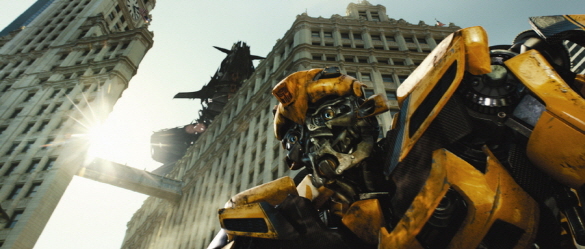
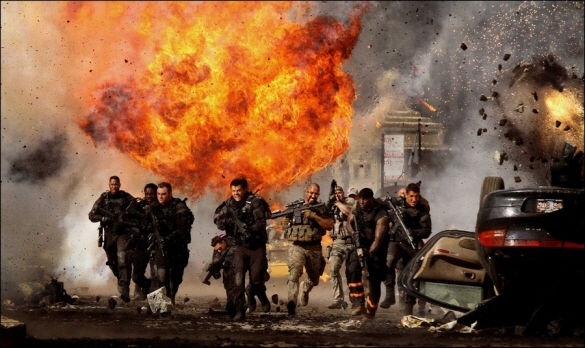
Transformers: Dark of the Moon (2011) ☆1/2(1.5/4) : Again, it’s messy, noisy, and ugly

One and only good thing about “Transformers: Dark of the Moon” is that it does not break any ground or bottom – and that is all you have to know to decide whether you will watch it or not. While not worse than the previous movie(Well, who is capable of accomplishing that?), the movie is as bad as the previous one, which, called by me and many others, the worst movie of 2009. Again, this is the endless, exhausting assaults on the sensory neuron system, and, while I was watching it, my mind did care very little about what happens on the screen while getting number and number.

In such a case, it is pointless to discuss the plot. The premise might be a nice idea, but the only reason of its existence is to provide the excuses for the tons of action sequences filled with CGI robots, their loud, disorienting rampages, and the human characters who happens to be there and are condemned to be overshadowed by these massive CGI shows. It is not always noisy, but these “relatively” quiet moments function as something no more than filler scenes to be sandwiched between the action scenes.

Its premise is introduced with the rapid montage juxtaposed with the historical moments in the 20th century, pumped up by that familiar style by the director Michael Bay. Accompanied with the utmost serious music by Steve Jablonsky, it explains us how the Apollo mission was actually a cover-up for the secret investigation of the alien spacecraft that crashed on the dark side of the moon. To make this plausible at least on the screen, they bring a very famous figure, who had a far wittier guest appearance in one episode of “30 Rock” in last year. By the way, didn’t I tell you that the movie got the full corporation from NASA?

The Autobots, our allies, come to know about its existence after another loud encounter with the Decepticons. To prevent it from fallen into the hands of their enemies, they quickly bring it back the spacecraft along with its pilot, Optimus Prime’s mentor Sentinel Prime(the voice of Leonard Nimoy, which justifies many cheap references to Star Trek in the film). But the Decepticons have a new scheme to take over the Earth, and you do not need to guess even for a second that you will hear lots of clashes and bangs and explosions as a consequence.

   Although I gave only 2.5 stars to “Transformers”, I fondly remember how the audiences and I had a good time with these robots at that time. Sometimes they are funny, and sometimes they are so serious that they are silly. Above all, it was entertaining to watch these robots freely changing their shapes between vehicles and their real appearances. I could not ignore its flaws, but I enjoyed its unadulterated charm and wonder with smile.

And I also remember how it lost most of its fun when the climax was decorated with bangs and clashes amid CGI characters. “Transformers: Revenge of the Fallen”(2009) horribly amplified and extended that negative aspect, and “Transformers: Dark of the Moon” continues that trend. While there is nothing new about these big, giant robots anymore, these big machines instead destruct lots of things while engaging in the battle to save the Earth and the humanity. Their activities pommel us in every way conceivable by the sound department and the special effect department people, and, thanks to a choppy editing, we do not have any clear sense of direction or space during most of its busy moments on the streets of Chicago. I recognized Wabash Street and LaSalle Street, but where the hell are they going?

Furthermore, the robots are too bland to hold our attention. Unless they are brightly colored like Bumblebee, I cannot distinguish Robot A from Robot B. The most distinct thing about them is they are big, metallic, and ugly – if they are Decepticons, they are big, metallic, and more ugly. After so many quick transformations of theirs, they are far more tiresome then solving Rubix cube. When they are in the action scenes, they become more rapid and messy, and our attention is quickly lost in the aural/visual predicament. At least, there is not anything as embarrassing as a robot humping on Megan Fox’s leg.

The director Michael Bay publicly admitted that he was not proud of his previous movie. He blamed the screenplay problem during its production, but, this time, he  will have a few excuses. It goes without saying that he got the bad screenplay, and he shows his worst sides. The drama is almost non-existent, the jokes hurled at us are uniformly bad(but we get some few laughs), and the characters are as lifeless as the CGIs engulfing them. While trying to be serious so hard with his usual bag of tricks(ponderous slow motion, for example), Bay sometimes goes too far. With the buildings and streets of Chicago bombarded by the Decepticons along with the people fleeing from the city and the papers falling from the sky, this disturbing images are more or less than a mere background for the loud actions. It is supposed to be a brainless entertainment, but watching the people getting blasted senselessly by robots is not something we can watch comfortably. This is the dark area for “War of the Worlds”(2005), directed by the executive producer Steven Spielberg, not for the movies like Transformer series.

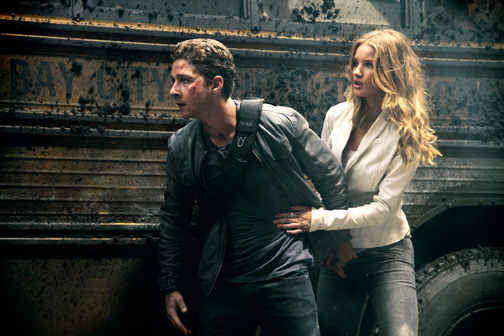
  I forgot to tell you about human characters and their story, for they are so trivial and uninteresting in this humongous mess that they did not matter to me. Regardless of whether they are talented or untalented, the actors are equally lost and wasted due to the lousy screenplay. Shia LaBeouf manages to survive, but he loses most of his likability due to his character who becomes less amiable than before(Blame unemployment). As his girlfriend, Rosie Huntington-Whiteley is  beautifully stiff and bland. Only she can do well is posing or walking in front of the camera, and I burst out a short laugh when she looked somewhere distantly. Megan Fox, please forgive us, we were too harsh to your talent.

It is also depressing to watch other performers. Josh Duhamel, Tyrese Gibson, Julie White, and Kevin Dunn appear just because of the continuity in the series. In case of John Turturro, he knowingly chews every moment he appears while supported by unstable Alan Tudyk. As LeBeouf’s boss, John Malkovich chooses the same way while getting his paycheck; as Huntington-Whiteley’s boss, Patrick Dempsey really needs to go back to Seattle Grace for the recuperation of his career. Ken Jeong, who has been amusing us with his comic ability, is embarrassingly frantic. I have no idea why Frances McDormand, who has always been no-nonsense in her movies, accepted her role, but, heck, it is cool to share the scene with the big robots, isn’t it?

In spite of so many sounds and furies, “Transformers: Dark of the Moon” is dull, insipid, and boring in the end. It is not as bad as I expected, but it is the same torturous experience I wanted to forget immediately in 2009. The audiences were silent and numb while assaulted by its tediously aggressive serving of so-called spectacles, and I do not know whether it is spectacularly bad or badly spectacular. Oh, by the way, I watched the movie in 2D, and I did not see anything wrong with that. If you are really determined to watch and endure it, save your money a little with 2D.

Posted in Movies | Tagged , , , , , | 1 Comment

Poongsan (2011) ☆☆1/2(2.5/4) : A Man between North and South

Some movies depend on very preposterous premise you cannot believe easily, and “Poongsan”, one of the latest South Korean movies, is a good case. How can he cross the border between South Korea and North Korea so easily? How can he go freely in North Korea while not noticed by soldiers? If you cannot accept this outrageous ability of his, then you will not believe at all what this invincible guy does to his opponents later in the story.

Fortunately, the movie has enough conviction to make me accept the premise and be amused by his activities throughout the running time. Starting as an art house movie version of action thriller, it eventually turns out to be both melodrama and, unexpectedly, symbolic black comedy on a long, destructive relationship between South and North Korea for more than 60 years. All factors do not work in its flawed screenplay, but it manages to keep our attention until it is stalled in a predictable plot progression during the second half, and it has a compelling character who, like other supporting characters, deserves a little better plot.

Like many heroes of the films directed by Kim Ki-duk, who produced this film and wrote its screenplay, the hero of “Poongsan”, played by Yoon Gye-sang, does not say anything. His name is never mentioned. We do not know anything about him – his past or how he comes to do his dangerous job. He lives alone in a shabby place somewhere in Seoul, and he seems to content with his solitary. Only one notable thing about him is that he likes North Korean cigarette named Poongsan, a North Korean canine breed.

There are many families separated by the division between South and North Korea. They desperately want to know where their loved ones are and send their messages to them. He is the guy they need. For delivering the messages, he secretly goes back and forth across the border heavily guarded and monitored by the soldiers on both sides. He carefully crosses the reed and the river with some preparations, including covering his body with mud to avoid being detected by the infrared cameras. And, at the last step, this is quite outrageous, he pole-jumps over the barbed iron fence. Don’t even ask me about how the hell he finds the people to receive the messages in North Korea so quickly.

Sometimes, he also brings the people to South. It is riskier than usual, but he seems not to mind about that, and he is ready to handle the unexpected situation when the troubles occur during his operation. Thanks to his services, his clients are happy to correspond with their lost family members beyond the border, while saddened by the lost years between them. In one poignant scene, an old North Korean lady only looks at the video camera without saying anything; her dying husband in South Korea is heartbroken by her silent image.

One day, he gets the attention of people from South Korean National Intelligence Service. They contact him because they want to bring some woman from Pyongyang. While pressed by them to write the report based on his valuable information(we never know what it is), a North Korean defect executive(Kim Jong-soo) under their protection demands them to bring the girl he adored, As soon as they ask him to deliver the girl, he instantly starts to work. He finishes his job within 3 hours.

Wait a minute, how that can be possible? Maybe we can accept that he is very, very good at locating people and evading the soldiers on the border, but, can you believe that he can go to Pyongyang and then come back to South Korea only during 3 hours? He does not even use the airplane – he just rides the bicycle or runs or walks. Is that really possible? Maybe he is a Korean version of Captain America, I guess.

Anyway, he succeeds again. He brings the woman, In-ok, played by Kim Gyoo-ree, to the South Korean agents. But they have other thoughts, so the situation becomes more complicated than usual. Plus, In-ok’s lover, paranoid about the assassination by North Korean and pressured by South Korea, senses there is something between In-ok and the man who brings her to him. Though she is in South Korea, In-ok feels like being trapped as much as she was in North Korea in her lover’s safety house, and that more stimulates his jealousy.

If you are familiar with Kim Ki-duk’s films, you now probably think of one of his works, “3-iron”(2004), which is about a triangular relationship between a man with unexplainable supernatural ability, a trapped woman, and her possessive man. The director Jeon Jae-hong, one of Kim’s protégé directors, did a good job to make us believe his hero’s unreal abilities while keeping things real. Later in the movie, his hero has to clash with many agents, and he somehow keeps going on even when he has been tortured a lot. Compared to Kim Ki-duk’s films, the level of violence is relatively mild in the torture scenes, but I have to say one brief scene will particularly make your sphincter cringe.

Despite a mute but defiant lead performance by Yoon Gye-Sang and other good things, the movie does not entirely overcomes its inherent flaws. The second half of the movie falls apart in a heavy-handed way while bitterly laughing on the incorrigible conflict that has broken common people’s hearts. There are some humorous moments in the film, but they usually make the supporting characters look rather silly. And, in case of Kim Gyoo-ree, her talent is wasted with flat characterization. Due to the lack of the chemistry between her and Yoon, I am not convinced about the relationship between them. In the scene where they try to show their feelings between them, I and other audiences could not help but giggle at this unintentionally hilarious scene. And I do not think its tacked-on finale works.

While I have lots of reservation toward “Poongsan”, I admire how the director and others sticks to its shaky premise with belief. Though it was made with relatively low budget in tight conditions, it is well-made and competent. Many of the actors and crews worked without guarantee, and I heard they could not have shot the last scene if they had made any mistake in only one take available to them. Like Kim Ki-duk, they are probably happy to know that, thanks to its success at South Korean theaters, they can be paid now.

Posted in Movies | Tagged , , , , , , , , | 1 Comment

The Devil and Daniel Webster (1941) ☆☆☆1/2(3.5/4) : A Faustian tale in New England

 Like many tales about the good vs. the evil, the evil mostly steals the show from the good again in “The Devil and Daniel Webster”(1941), a cautionary moral tale based on Stephen Vincent Benét’s short story which is sort of a New England version of the tale of Faust. Though it was made 70 years ago, the movie remains as a darkly enjoyable movie with the wonderful moments that can both amuse and chill us with the subtle creepiness pervading its rural background. Sure, we are happy to see the soul of an ordinary American luckily saved from the eternal damnation in the end, but, folks, can we deny that we had a fun with Mephistopheles before the obligatory finale?

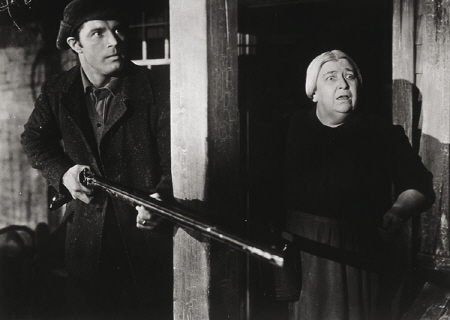
 In the opening scene after the formal opening credit equally introducing the cast and crews participating in the film, we see some suspicious stranger come to the country town in New Hampshire from his behind.He checks his ledger, and we get the brief basic information about our unlucky hero, a poor farmer named Jabez Stone (Jabez Stone, Cross Corners, New Hampshire, Age 27, married  two years, children none, credits none).

It is 1840, and Jabez(James Craig) is having a very difficult time like his neighbour farmers. There is some talk about forming the union among his neighbours, and there is also the news from Washington about the movement to support the farmers, mainly promoted by the local hero and famous orator/politician Daniel Webster(Edward Arnold). But Jabez desperately needs the money right now. Unless he pays the money to the local loan shark Miser Stevens(John Qualen), he and his family, his wife Mary(Anne Shirley) and his mother(Jane Darwell), will be evicted out of their home. Jabez’s plight came as something real to the audiences at that time, who experienced the bleak hardships due to the depression during the 1930s. Many people struggling with the current depression in US probably respond in the same way, too.

 With Mary and his mother at his side as the moral/spiritual support, Jabez has barely managed to maintain his farm, but in such a hardship like this, there is always one very bad day bound to come upon him. Fed up with the hard situation culminating with several bad lucks, he impulsively blurts out his anger: “Consarn it, that’s enough to make a man sell his soul to the devil. And I would for about the two cents!”
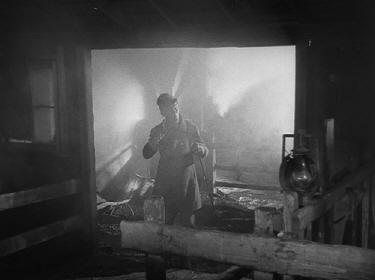
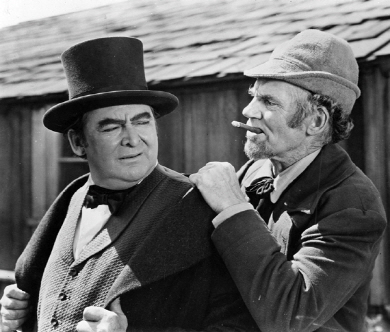
Talk of the devil – the devil(Walter Huston) himself instantly visits him as Mr. Scratch, a nickname used in New England among his many names in the human history. Accompanied with the subtle but eerie sound recorded from the telephone wires humming in the quiet early morning in the soundtrack, the sounds of disturbed animals in the barn, and the spooky simmering light lit behind Huston, this memorable appearance of Mr. Scratch is striking enough to remind us his unearthly nature.

 On the surface, Mr. Scratch is a jolly, smart-talking businessman who has the offer you cannot refuse easily. Jabez is frightened at first, but he is quickly drawn to Mr. Scratch’s offer. If he sells his trivial soul to Mr. Scratch(“A soul is nothing. Can you see it, smell it, or touch it?”), then Mr. Scratch will provide him the financial wealth and the luck for 7 years. Any sensible men know this is a horrible deal even without looking at a simple, impeccable contract drafted by Mr. Scratch, but who can blame desperate Jabez? In addition, the characters in the cautionary tales are destined to come into the danger while quite oblivious to it just because they want to give a lesson to us, aren’t they?

 As soon as the contract is signed by Jabez, the money and the fortune literally pour on him. First, the vast amount of Hessian gold coins is suddenly found under the floor at his barn. He can pay all of his debt to Miser Stevens. He can buy anything he wants for the farm and his family. Also, he gets the honor not only to get acquainted with Daniel Webster and but also to give a short but nice speech to his neighbors instead of Webster, who becomes ‘incidentally’ drowsy. Furthermore, only his crops survive from a sudden ‘natural disaster’, so his neighbors become his employees while borrowing money from him. As the time goes by, he gets richer and richer, and, as Mr. Scratch promises to him, he becomes the wealthiest man around his town. But soon, while becoming a greedy man far different from what he was, Jabez begins to realize he made a big mistake. He regrets, but most of promised 7 years has already passed – and Mr. Scratch will come to him for deciding whether there will be the renewal, which will require Jabez to do an unthinkable thing, or the termination, which will send him to…

Compared to the modern movies whose story associated with the devil, “The Devil and Daniel Webster” takes a more subdued approach to its dark elements mainly due to the restrictions during its era. As a matter of fact, the original title was officially changed to “All That Money Can Buy” before its original release to be distributed easily in the American South – and also not to be confused with “The Devil and Miss Jones”(1941). One of the amusing parts in the movie is that Jabez keeps saying ‘consarn it’ instead of ‘damn it’. I know, it’s the 19th century, but this remind me how much trouble Hollywood took to allow Clark Gable say ‘damn’ just for once in “Gone with the Wind”(1939) at that time.

 The film has the effective ways to tell its story while making a detour around the restrictions. While never directly mentioned, the fiendish aspects of the story are slyly implied to us. When Belle(Simone Simon), sent by Mr. Scratch right after Mary gives a birth to Jabez’s son, says she comes from ‘over the mountain’, we don’t have to wonder about where that place is. From Simon’s foxy face, it is easy to understand what disturbs the people around Jabez, especially Mary and his mother.

 The director William Dieterle was no stranger to the Faustian tale. Before he established the directing career in Germany, he worked as an actor, and he was one of supporting characters in F.M. Murnau’s great silent movie “Faust”(1926). After moving to US during the 1930s, he quickly settled in Hollywood with several notable films like “The Life of Emile Zola”(1937), which won a Best Picture Oscar, and “The Hunchback of Notre Dame”(1939).

The movie was made during the height of Dieterle’s career. Thanks to the cinematography by Joseph August and the special effects by Vernon L. Walker, there are many impressive moments in his film. When Jabez holds a big party in his huge mansion later in the story, the guests are not the ones he expects. The people from ‘over the mountain’ come instead, and they devour the food prepared. I could not help but think of zombies when Jabez is surprised to see their ominous faces outside the window. When they are allowed into the house, the sound manipulation and the cinematography generate the dreamy but chilly atmosphere even though the interior is brightly lit. The special effects, such as an object vanished in a flame in a second, are simple compared to the CGIs of our time, but they are effective as the parts of the story.

 Considering Dieterle’s career, it is not surprising to find the traces of German Expressionism from how he used light and shadows to create creepy atmosphere, exemplified by the brief scene when Mr. Scratch tempts Webster in the form of a big, overlooking shadow on the wall behind Webster. With music, lighting, and editing, the barn dance sequence is phantasmagoric. While Jabez is drawn to Belle’s temptation closer and closer amid the dancing people and shadows, the editing pace goes faster and faster as if it were led by the music performed by Mr. Scratch.

 The film was made only few months after “Citizen Kane”, made in the same studio(RKO) in the same year, and it has some interesting overlaps with Orson Welles’ masterpiece thematically and technically. Like Welles’ movie, the movie is also about the corrupting power of wealth, and it also shows in several technical aspects that Welles’ movie already began to influence the other movies. In fact, three of the main crews in “Citizen Kane” worked in this film: the editor Robert Wise, the sound technician James G. Stewart, and the legendary film music composer Bernard Herrmann, who won his only Oscar for this movie.

 It was his second work right after his stunning debut with “Citizen Kane”, and Herrmann got nominated for both in 1942(he was quite lucky; at that time, the Best Score category had 20(!) nominations). His inventively colorful score is one of few works in his career that can be described “joyful”. While providing merry barn dance melody for Mr. Scratch and idyllic music for New England background, he creatively generates the disturbing sounds for the supernatural sides of the story, such as aforementioned humming telephone wire sound or the eerie sound of glass harmonica. For the scene where Mr. Scratch gleefully plays the fiddle for the harvest dance at the barn, Herrmann created the performance of “Pop Goes Wiesel” beyond human ability by merging four different individual performances by one player into one single inhuman performance. That technique has been utilized many times since that; the recent notable example is Christopher Young’s “Drag Me to Hell”(2009).

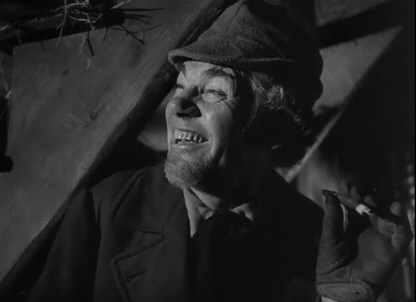
 There are two diabolically enjoyable performances in the film, and one of them comes from Walter Huston, who was deservedly Oscar-nominated for his devilish performance. Though Huston thought he overacted in the movie, his acting is relatively restrained. While cheerfully showing off Mr. Scratch’s mischievous side, he subtly reveals the ice-cold ruthlessness behind jolly facade. Mr. Scratch may be like a wily, funny old man played by Huston in “The Treasure of the Sierra Madre”(1948), but, when a fun time is over, he has no mercy for his clients at all, ready to collect their souls and put them in his vast pocket.

 As Belle, Simone Simon is alluring and sneaky as the Housemaid/Nanny/Temptress from the Hell. You instantly know her true identity from her first scene; like Huston, she appears with that spooky lighting effect behind her. The movie never fully depicts the relationship between Jabez and Belle, but, with her beguiling beauty, we do not have to be told that she gradually insinuates herself into the Stone household as Jabez’s mistress. Accompanied with the deadly waltz, or valse inferno, by Herrmann, She has a devious scene where she lures her target into dancing with her to the death. Around the time the movie was made, Simon’s career was stuck in Hollywood, but, thanks to her performance in this film, Val Lewton noticed her and she got another memorable role in his classic B-horror movie “Cat People”(1942).
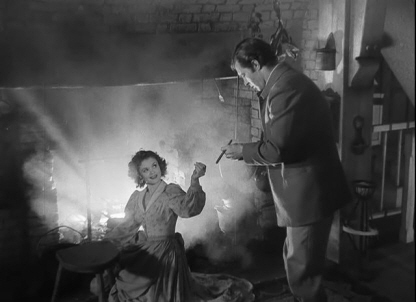
 In case of the other characters, they are naturally less fascinating, but the actors bring the life into their broad characters. As a young farmer and his devoted wife, James Craig and Anne Shirley have a warm, romantic scene in the bedroom with the twin beds. Right after her Oscar-winning role in “The Grapes of Wrath”(1940), Jane Darnell plays another rural matriarch, and, again, she is called ‘Ma’. As the counterpart to Huston’s performance, Edward Arnold, who replaced Thomas Mitchell(he was injured during the production), brings the humanity and integrity to Daniel Webster, who is depicted as a larger-than-life figure as much as Paul Revere in Longfellow’s poem. Even though he was against slavery, Webster helped passing the Fugitive Slave Law for keeping his country intact, and that’s why it is amusing to see his fictional version arguing in the movie that a man cannot be owned. I noted that, in one scene, Webster regards Missouri Compromise as something as equally important as the Constitution, Bill of the rights, and the Supreme Court(He has four horses named after them, respectively). Is it a subtle way of recognizing the contradictory difference between the history and the fiction?

 Arnold nearly sells the climax scene which is a little contrived. Determined to save Jabez’s soul, Webster demands a fair trial. Mr. Scratch instantly prepares the court in his twisted way, and Webster finds himself defending his client in front of “a jury of the damned”, consisting of the infamous cutthroats and traitors in the American history(and the court is presided by none other than Justice John Hathorne of the Salem witch trials, played by W.B. Warner). It is nearly hopeless, but, with his eleventh hour oratory, Webster succeeds in persuading the jury and the court to turn against Mr. Scratch and have mercy on Jabez.

 While I admit that he gives an eloquent oratory about simple good things in life, why it is proud to be an American, and why they, as fellow Americans, should give another chance to Jabez, I have to point out that this scene is a classic case of a well-known movie cliché, “the moving speech at the last minute”, which has lost some of its dramatic power for the decades. In addition, the patriotism far more unabashed than American apple pie inside that speech is not the dessert for the outsiders like me. Personally, I find Marge Simpson has a more persuasive argument for her husband in one of the Halloween episodes in “The Simpsons”(He sold his soul for a doughnut, by the way).
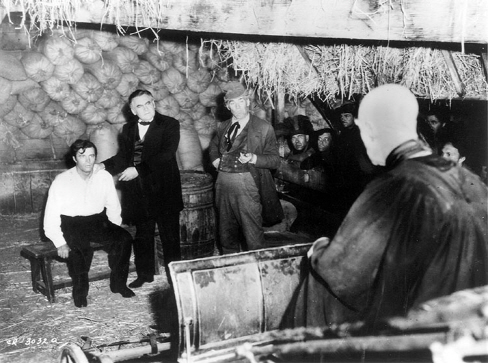
Maybe this rather sentimental ode to American democracy is only a lid concealing and complementing the dark undercurrents beneath “The Devil and Daniel Webster”, which far more hauntingly linger on my mind after the feel-good ending. A new day begins with dawn. The lesson is learned. Everyone gathers around the table for the hearty breakfast together. Everyone gets the last laugh with Ma’s peach pie. it is not easy to be cranky about that. In case of Mr. Scratch, well, he gets the last smile – with the prospect of new American clients. You know, he is your friendly neighbor.

“Foreign? Who calls me a foreigner? When the first wrong was done to the first Indian, I was there. When the first slaver put out for the Congo, I stood on the deck. Am I not still spoken of in every church in New England? It’s true the North claims me for a Southerner and the South for a Northerner, but I’m neither. Tell the truth, Mr. Webster – though I don’t like to boast of it – my name is older in the country than yours.”
Posted in Movies | Tagged , , , , , , , | Leave a comment

Super 8 (2011) ☆☆☆(3/4) : A respectful homage to Spielberg films with nostalgia

 J.J. Abrams’ new movie “Super 8” turns out to be not as good as what it can be, but it is as good as what it sincerely wants to be, and I liked that. As a respectful homage with nostalgia to the films directed or produced by Steven Spielberg during the 1980s, it does a nice job while trying to tell its own story in a way a little different from Spielberg, who incidentally produces this movie. It is not entirely successful, but there are lots of reasons to like the movie despite my reservations about it.

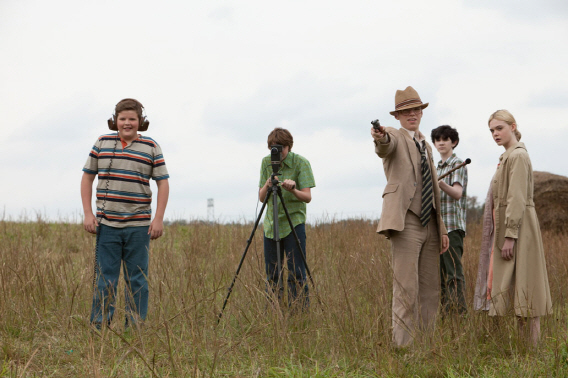
 One of the reasons is that it captures the atmosphere of one small town in Ohio quite well, which rightfully evokes that of Spielberg movies. In addition, there is unadulterated enthusiasm from the young characters at the center of the story – the school kids who try to make a short horror movie about zombies for the film festival with their super 8 camera. Their condition is far less ideal compared to our digital age; it is 1979, and, as one character says, it takes more than a day to confirm what they capture on the film even in the best situation. And their parents rarely care about what they are doing.

 But their enthusiasm does not falter. They sneak out from their houses at night, and, at the some empty train station outside the town, they prepare for the scene they plan to shoot. Though the makeup and other technical devices(and the acting skills) are as amateurish as them, they are serious about their work, and, like any filmmaking processes, interesting things happen during the production, especially in case of Joe(Joel Courtney), who mainly supplies special makeup and special effect with miniatures, and Alice(Elle Fanning), who is recently recruited as the leading actress of their film.

 And then the massive accident suddenly happens while they shoot the scene. Right after rapidly passing the station, the train gets derailed from the rail in catastrophic scale. There are lots, and lots of explosions and crashes as a consequence(I have no idea about how that possibly happened), but, fortunately, Joe and his friends barely manage to survive from the accident without serious injuries. They flee from the scene immediately with the camera which shot the whole situation.

It is apparent that something escapes from one of the freight cars of the derailed train. Soon, the military quickly comes to the accident scene to – what else? – get the situation under their control and cover up their secret. Strange things keep happening in the town, including frequent electricity problems and a considerable number of missing dogs around the town, which is conveyed to us with creepy fashion in one scene. Joe’s father, a deputy sheriff, senses something fish in the accident. It goes out without saying that the military does not welcome his interest.

 I will not reveal you anything about what will happen next, but I am sure you can easily guess about that without much difficulty. The writer/director J.J. Abrams faithfully follows the footsteps of Spielberg movies; you can amusingly observe the familiar elements from these movies(the nuclear family with troubles, mysterious entity, government conspiracy…) pop out here and there in the movie. As a matter of fact, the result is like an eclectic mixture of “E.T.”(1982), “Close Encounter of the Third Kind”(1977), and “Goonies”(1985) – peppered with Abrams’ style a la “Cloverfield”(2008).

 In the juxtaposition between Spielberg and Abrams, it is interesting to see how Abrams holds his areas while imitating Spielberg movies with respect. His approach is more restrained and less sentimental. The mysterious entity in Abram’s movie has good reasons to be very hostile; what it does in its private place is certainly not a pretty thing to look at(don’t worry, it’s a PG-13 movie). Abrams is an efficient craftsman who really knows about how to earn our expectation at the start; the train derailment sequence is spectacularly striking enough to do that job.

 However, though it does a good job during the first half, the movie begins to show its flaws during its second half, which becomes relatively flat compared to the first hour. The story becomes more driven by actions and accompanying explosions rather than the characters. CGI is good, but they rather feel bland, especially after the entity in question reveals itself. The adult characters, the weakest ones in the story, usually do whatever the plot requires them to do. The conflict between Joe’s father(Kyle Chandler) and Alice’s father(Ron Eldard) is resolved in a rather unconvincing way. You can see from the start that they have a history between them, but it later turns out to exist only for driving the plot. And I could not ignore that there are several questions that left unanswered or unexplained.

 In spite of these flaws, the heart of the film remains intact throughout the movie. The story is not perfect, but Abrams gives us well-drawn main characters, and the interactions between them are the best things in the movie. They are interesting, and we care about them even when things explode everywhere. Some of them will probably work in the movie business someday – especially Cary(Ryan Lee), a quirky kid who loves making explosives. I am sure he will love to work in those loud Hollywood blockbuster action movies made nowadays.

 These characters are convincingly portrayed by the child actors including Joel Courtney and Elle Fanning, who have a small, precious chemistry between them on the screen. Looking more mature than her fellow actors, Fanning proves again that she is as gifted as her elder sister.

 In short, “Super 8” can be called, as many people said, ‘Spielberg Lite’. It definitely does not reach to the level of Spielberg’s greatness, but ‘Spielberg Lite’ with heart is a lot better than at least 80% of the summer blockbusters we watch every year. And I smiled at what I saw after the movie is over – I was glad to watch a SF movie which cares more about what its characters try to do than the expensive special effects.

Posted in Movies | Tagged , , , , , , , , , , , | Leave a comment

Re-encounter (2010) ☆☆☆1/2(3.5/4) : She can’t abandon her past – like her dogs


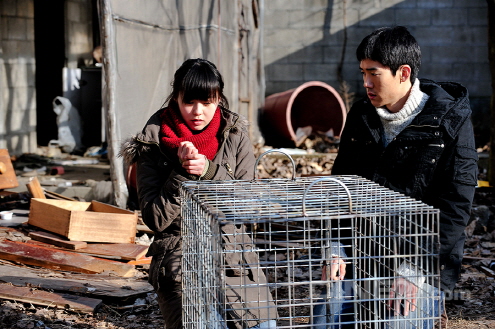
No matter how much we try to leave behind, it seems inevitable that our past always comes back to us – to be picked up by us again. In case of Hye-hwa,  a young heroine of South Korean movie “Re-encounter”, that happens as if it were fateful in her work. While working at a veterinary clinic as a dog beautician, she also takes care of the abandoned dogs or the ones that the owners cannot take care of any more. Her home is full of those puppies. Some of dogs freely move around in her shabby house; whenever she returns from the work, she has to take care of the excrement problem on the floor first.

The daily life of Hye-wa, gracefully played by Yoo Da-in, is simple. When she does not work at the veterinary clinic, she tries to rescue abandoned dogs around the deserted places(There is a man who goes around that place for catching them and selling them to the restaurants). Recently, she is particularly interested in a dog with a serious medical problem, but it is not easy to capture it despite her efforts. And she is comfortable to work at the clinic. Her employer is an amiable guy, and he is an widower with a young playful son who loves to play some pranks on her. When they are together at his home, they look like a happy family.

However, her mundane life is shaken by a sudden appearance of the man whom she has wanted to forget forever: her ex-boyfriend Han-soo(Yoo Yeon-seok). Five years ago, when they were in the same high school, she was impregnated by him, and, whether they wanted or not, they were bound to marry. However, Han-soo suddenly disappeared. Left alone and afraid, Hye-hwa gave birth to her precious baby who died on the next day due to heart failure.

 That was what her mother told her at that time, but Han-soo now tells his ex-girlfriend that it was a lie; their daughter was alive and she was adopted by some couple with the consents from both of their parents. He says he knows where she lives now, and he wants Hye-hwa to see her daughter just for once. She coldly rejects him at first, but the feelings kept inside her are awakened from the hibernation, along with their hurtful past told in the flashback sequences. In the past, she was full of perkiness and directness that sometimes overwhelmed young, shy Han-soo. But now, although she is still lovely and kind, Hye-hwa is far different from what she was, while trying to go through another day in her life with insouciant attitude.

While still hating him, She finds herself gradually drawn to his plea. However, while watching him, you cannot help but be unsure about Han-soo’s motive. Yes, he feels guilty about an unforgivable deed he had done to his ex-girlfriend, and he really wants to compensate for his wrong, but there is something not quite right about him. Having just been discharged from the military service due to the injury(he walks with the limp in one of his legs), he quietly goes back to his family home and then leaves home without a word even though his family is at home. And there is quite disturbing aspect in the scenes he tries to see the girl whom he assumes is their daughter. No wonder her parents respond to him in a rather harsh way – I think I can say that he deserves that treatment for the disturbance he foolishly causes, though he means no harm.

Thanks to his sincere but reckless choices, the story later goes into the more serious and suspenseful situation than we expected at first. The director/writer Min Young-geun does not hurry his story; he keeps it inside the boundaries of the real world we live in. Unlike Han-soo, who is so irresponsible that you cannot help yourself from shaking your heads while watching him cause another problem or annoyance, Hye-hwa tries to be sensible as much as we can do in her position. None the less, it is hard to deny for her what she feels about the young girl in question. At one point, she is even on the verge of committing something criminal before she fortunately comes to her sense.

Hye-hwa is mostly reticent throughout the story, but we can sense everything we have to know from the beautiful face of Yoo Da-in, who gives one of the best performances of this year. Some South Korean audiences, including me, remember her disastrous turn in “Mandate”(2008), one of the infuriating atrocities done in the South Korean movie industry in the last decade, but she definitely proves here that she has the right stuff to show us as a talented actress, after all. She creates a human being warm and loving to others while never losing her bitter attitude to the past represented by Han-soo. In one scene, when Hye-hwa briefly reveals and then quickly hides her feelings to her employer, the film requires her to be delicate and subtle, and Yoo delivers it with the precise timing.

Yoo Yeon-suck is also good as her hapless ex-boyfriend. It is a rather difficult job for him, for his character annoyingly clings to Hye-hwa while continuously causing the troubles in her stable life. I don’t want to give spoilers, so I will not go into the details about what he will do later, but I can say he will make you as angry as Hey-hwa. Though it later turns out that he did not tell her some fact which makes his deeds look less disastrous than they seemed, it goes without saying that he screwed up everything he intended to do while causing more harm to others. At least, he is not a bad guy, but he only makes his and her situation worse than before. Yoo Yeon-suck presents us a understandable troubled human being who desperately sticks to what he believes with the quality of a puppy dog. Even when you cringe at the sight of him, you feel sorry for this pathetic guy – that is why you can understand why Hye-hwa makes a certain crucial choice at the end of story. Considering its plot structure, the movie is like a bleaker version of “Blue Valentine”(2010) with a different direction.

 “Re-encounter” is a very engaging character drama with small, nice touches to amuse us. While calmly revealing the scars inside the main characters with its dry approach, it also finds its warmth and humor from small moments from time to time. I have to point out that the various dogs featuring in the film are really loveable creatures even though most of them look plain. While apparently, and effectively, working as the metaphor for their carer’s story, they are good extras – they remind us that we must love dogs.

Posted in Movies | Tagged , , , , | 1 Comment

Bleak Night (2010) ☆☆☆1/2(3.5/4) : “From where did it go wrong?”

South Korean movie “Bleak Night” evokes the memories of my high school years. Although I was a lot more comfortable at my science high school than the high school students depicted in the film, some boys I knew in the high school were not different from them. They beat me and threatened me because I was a little different from others due to my eccentricity. When I later went to the university/graduate school, Korean Advanced Institute of Science and Technology, along with some of them, I seldom or never talked with them unless it was necessary. It is more than 10 years ago at present, but, with cold indifference, I care little about where they are now. I don’t like to go to the class reunion even if others ask me to come.

While touching such bitter memories inside me, the movie also, above all, made me to ask myself a certain retrospective question: “Then, was I nice to them, who were probably as young and sensitive as I was?” Revealing the story behind three main characters step by step, the film presents to us the complicated relationship between them. Like many teenagers, they are smart but immature. They are also very clumsy in connecting with each other. And they can be really cruel to each other. As a result, an irreversible tragedy happened, which affects all of them.

The tragedy at the center of the story, the suicide of one main character, is never shown to us. Instead, after the opening sequence introducing main characters and other students, we meet the father of that dead student. Devastated and depressed by his only son’s suicide, he visits his son’s high school and meets the teachers. And then he meets one of the students who hanged around with his son for contacting with his son’s two close friends. As a widower and a father who was too busy to take care of his son due to his business, he wants to know what happened before the suicide in his quiet sadness.

His storyline is intercut with the flashback sequences for his son and others’ storyline in the past. In one scene, we see one student bullied by the other student, so we begin to wonder; was that student bullied his son? Did his son commit suicide due to such abuses like that from his colleagues? Will his father succeed in digging the truth behind the tragedy from the his friends? Then, what is he going to do once he knows about that?

 No, the movie does not allow its story flow into such a simple direction. Soon, we see that the bullied student, Hee-joon(Park Jeong-min) is alive well and ready for the university entrance exam as a senior student. He is approached by his deceased friend’s father and has a little chat with him. While he is courteous, Hee-joon does not tell much about his friend. He says he does know little about what happened, for, according to him, he transferred to the other school two weeks before the incident. He suggests to his friend’s father that he meet the other friend, Dong-yoon(Seo Joon-yeong), who did not show up at the funeral.

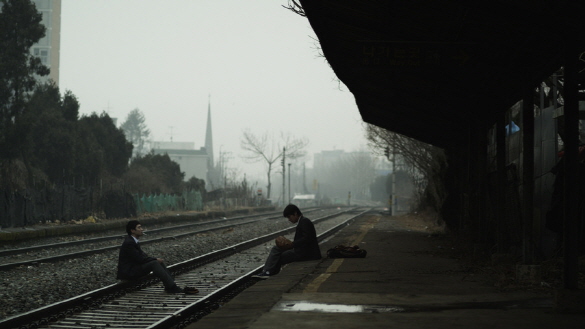
But Hee-joon knows more than what he tells to the father of his dead friend, Gi-tae(Lee Je-hoon), and so does Dong-yoon. Through Hee-jon’s and Dong-yoon’s memories unfolded on the screen, we come to learn more about their relationship with Gi-tae. At first, they look like good friends. They usually spend their time together at an abandoned train station. In the brightest part in the movie, while going out with the girls, they have a really good time at the Chinatown.

But their friendship is not entirely positive. As shown earlier, Gi-tea is sort of a bully(he has his own gangs at the school). Along with his gangs, he frequently harasses Hee-joon for no apparent reason, and Dong-yoon is not pleased about his friend’s behavior. Dong-yoon later angrily asks Gi-tae, “Why did you do that?”, but Gi-tae cannot give him a clear answer. Well, have you ever met a high school bully with a good reason for his vicious behaviors?

The relationship between them is more complex than we thought. As a matter of fact, behind his bravado, Gi-tae is a lonely, sensitive boy who does not want to reveal his barren apartment to his friends. His behaviors to his friends are not always unpleasant, and he really needs them. The problem is, he does not communicate with his friends well, and neither do they. When the bond between them no longer covers the cracks between them, the destructive cycle commences, where everybody is a victim as well as a perpetrator in the gray area. For instance, Hee-joon may be the most introvert type among them, but he can be really, really cruel with cold-blooded psychological violence more penetrating than physical one. Gi-tae destroys the Dong-yoon’s private relationship out of spite, and then Dong-yoon throws a truly painful blow to his friend as the revenge.

 Nobody is clean in their situations, about which they do not wholly understand. Everyone ends up with guilt and remorse. Because they do not understand even about themselves, they cannot get the answer for how they ruined their relationship . In one scene, one of them agonizingly asks to himself in front of his friend, “From where did it go wrong?” He only gets a cold, savage reply: “Nothing would have gone wrong if you weren’t here.”

The boys can be more vulnerable than girls. They can be easily hurt, and they can be easily angry to others. They are not wise, and they do foolish things, and they have not learned that others can be hurt as much as them. In addition, out of pettiness and anger, they cannot accept the apology even if it sincerely comes from the heart. Only after getting wiser(and older), they finally begin to grasp what they did to others, and ultimately to themselves. Alas, the water is spilt, and it is too late for them now.

This is a very impressive debut from the director/writer Moon Sung-hyeon. Throughout the story, he diligently maintains the vague, bleak atmosphere represented by the bland forest of the concrete apartment buildings. He firmly focuses on the world of his teenager characters; the adults including Gi-tae’s father always meander at the fringe of their problems, though they really want to know what happened. The dialogues are coarse and realistic, and there are several powerful conversation scenes crackling with intensity and savageness beneath the mundane setting.

 The sense of gloomy suffocation never leaves from the screen, and Moon does not even allow it to be diminished even at the finale, which could have been ventilated by a easy catharsis. That is the right choice; the point of movie is not the ventilation with an answer – it is the suffocation with no solution or redemption. In spite of its dry attitude, the movie cares about the characters, and, though I think it is mere self-absolution or self-reconciliation, it allows some small moment for consolation and forgiveness at the finale.

The main actors, including Cho Seong-ha, who plays Gi-tae’s father, are all good with their nuanced performances. Although their age has already passed the adolescence, the actors playing the teenagers in the film are rarely awkward as the average high school students in South Korea. As far as I know, the teenagers are always same in any place and anytime, and “Bleak Night” will probably make you ask whether you were as generous to others at high school as you think – even if you were not a bully at all. At least, most of us get a lot wiser when we step into the adulthood. When I went to the university, the first thing surprised me was that nobody bullied me anymore. If they were angry, they had a good reason. And I became far happier to be a quirky nerd than before.

Posted in Movies | Tagged , , | 2 Comments

The cats in my campus (2011/06/05)

 
It is getting hotter – the cats and their kittens in our campus want to rest.
Posted in Photos | Tagged , | Leave a comment

In a Better World (2010) ☆☆☆(3/4) : In two lesser worlds

 “In a Better World” presents us a question which cannot be easily answered in our imperfect world: how should we response to the violence and accompanying injustices? Yes, we usually say we can solve the problems with the communication and empathy between us, but, sometimes, there are the situations where non-violence does not seem to be an effective response. It goes without saying that the violence is bad, but some characters in the film are drawn to another option in such situations like that.

In case of a young boy named Elias(Markus Lygaard), he is tormented by a mean bully at his school every day. His mother, Marianne(Trine Dyrholm), knows well about that, but she cannot find the solution for her son even when she and her Swedish husband Anton(Mikael Pernsbrandt) have a meeting with school teachers. She is frustrated about the lack of communication between her and his son on this problem. Anton is not much help to his son, either, though he is a good dad to Elias and Elias’ younger brother.

Marianne and Anton are living separately from each other due to some recent painful incident in the past. Anton periodically visits their town in Denmark briefly for spending time with his sons, for he works at a Sudanese refugee camp in Africa as a doctor. In the tough world far different from a comfortable Danish town, he has to deal with the gruesome violence frequently done to innocent pregnant women, which makes a striking contrast with the background beautifully shot by the cinematographer Morten Søborg.

Meanwhile, when he is cornered again by the same bully in the bathroom, Elias is saved by Christian(William Jøhnk Nielsen), who recently moves to the town from England. Christian mercilessly attacks the bully with a blunt instrument, and then threatens him, collapsed on the floor, with his knife. The bond is quickly formed between Elias and Christian. Elias lies to cops and teachers about what happened, and he helps Christian hide the knife. He is happy to have a friend. Plus, after the formal reconciliation in front of the school principal, the bully never torments him again.

 Christian is a hostile boy full of unvented anger inside him. Recently losing his ill mother, he is particularly angry about his father(Ulich Thomsen). Christian does not forgive his father for lying to him about how much she was sick, and, at one point, he even accuses him of having wanted his mother dead. The father, who is also hurt by her death, tries to connect with his son despite his frequent absence due to his work, but he is at a loss in front of his son’s hostility.

In Christian’s angry view, the people deserve the punishment if they do wrong to others, and now his belief is headed to another target when he and Elias see Anton pushed and slapped by a very aggressive and unpleasant guy for a trivial problem between them. Christian thinks he needs to be punished, and Elias follows him without hesitation, but Anton rejects the idea of getting revenge on that guy(The original Danish title, “Hævnen”, means “Revenge”).

For showing the example to them with non-violent attitude,  he takes the boys to the auto repair shop where that man works. Though he manages not to lose his composure while bullied by him again, he is not successful with what he tries to do; he only confirms to them that how loathsome that guy is. Later, when he goes back to the refugee camp, his belief is shaken further. The wounded war lord comes for his medical help. He is the guy responsible for that terrible atrocity, but, as a doctor, Anton has to accept him like any of his patient, in spite of the objection from others working with him.

  The director Susanne Bier previously made intimate dramas about the people struggling with their difficult positions, such as “Brothers”(2004), which was nicely  remaked by Jim Sheridan a few years ago, and “Things We Lost in the Fire”(2007), her first attempt in Hollywood with the good performances by Halle Berry and Benicio Del Toro. She did a good job in this movie. The characters and their situations in the screenplay co-written by her are believably humane. The neat, polished cinematography provides the calm, objective base for story. Bier pulls the excellent performances from her ensemble. Especially in case of two child actors, they capably hold the center with the strong emotional bond between them shown on the screen. From their relationship, you cannot help but think about the shooting incidents at the American high schools reported in the media.

Their story is good enough to draw our attention, and so does the other story unfold in Africa. However, while trying to link them together through the blatant manipulation in the third act, the movie begins to lose its power, and I even wondered whether the latter is really necessary for the former. I have to admit that I was relived about how it ended for I came to care about the characters, but I also felt the ending disappointingly artificial; it resolves the conflict in a way too easy and predictable.

It has flaws, and I am still not so sure about some parts because of its shallowness, but “In a Better World” is recommendable to some degrees. It could have been a better movie in other better world, but it is good and sincere enough win Best Foreign Language awards at Golden Globe and Oscar early in this year, though I don’t think it is better than other nominees. As the movie suggests, we are not entirely incapable of making a better world. However, in my opinion, the one the movie wants to come will be possible only if the evolution process pushes us to more understanding and empathy in the future.

Posted in Movies | Tagged , , , , , | Leave a comment

The Illusionist (2010) ☆☆☆1/2(3.5/4) : A magician, a girl, and bittersweet melancholy

 Sylvain Chomet’s new animation “The Illusionist” deals with the gloomy subjects rarely told in the blockbuster animations. It is about the decay of one era, the desperation behind that, and the sorrowful acceptance and resignation in the end. The time has changed, the show cannot go on anymore, and there is very little place for him and others.

This sounds quite depressing, but “The Illusionist” is one of the most exquisite animations I have watched lately. The story is indeed depressing. It is like watching a small candlelight faded into the darkness, but it has bittersweet charm with a lovely style, and It amuses us with small warm, humorous moments with its graceful subtlety. The end is inevitable, but it is as inevitable as that of our lives. Its hero does what should be done for a girl he cares about. And then, he steps back gently into his remaining days.

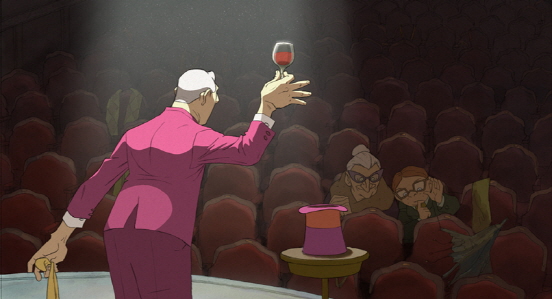
The year is 1959. The cultural change in the 1960s is about to sweep the Western Europe. A French magician is at the end of his career. He is not as popular as before in Paris, so he moves to London, but the trend is also being changed there, too – he is far less popular than a young pop band. Though he is still good in spite of his naughty rabbit(it bites, by the way), his few audiences are mostly old people who remember their pleasant times at music halls a long, long time ago. He also finds the job at some party, but nobody was much interested in his magics.

Fortunately, a drunken Scottish man notices his performance. He invites the magician to some remote beach town in Scotland where even a light bulb is something to behold to the town people(There are cars and boats, but the electricity is rare, and they do laundry without washing machines). The magician finds the right audiences in this town. He does a good job in entertaining jolly, drunken people at the tavern. He has the most satisfying day in recent years. However, even in this town, the change is coming to people’s life anyway. His performance is followed by the new music from a jukebox.

  After the performance, the magician gets the attention of a young girl, who is enthralled by his magic. When he leaves the town, she secretly follows him like a fan, so he accepts her as his companion. At the girl’s request, they go to Edinburgh, and they find their place in a shabby hotel where many other show business professionals like him lodge at. Some people are livelier than others, but  most of them are at the end of road. As in London, the jobs for him are sparse, and, even when he gets a job, the audiences in the music hall are not interested in him except his managers. For maintaining their life and buying the shoes and dresses for her, the magician tries to do any jobs he can find – he tries working at the garage without telling her about it. Meanwhile, the place for his profession and others’ continues to be smaller and smaller.

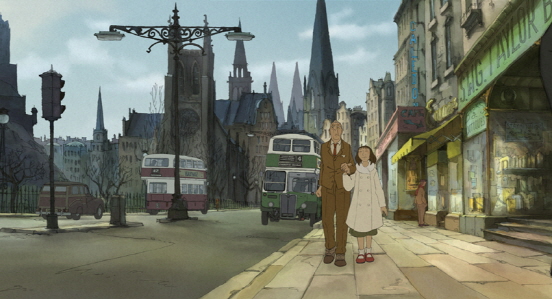
“The Illusionist” recognizes his hopeless situation and others’ with no discernable future. It is sometimes really bitter to see them down on their luck. It is surely melancholic, but the animation is melancholically beautiful to look at with lots of admirations. The countryside of Scotland looks lovely in cloudy/rainy atmosphere; the streets of Edinburgh are drawn with care and loving details. The characters are drawn broadly, and they do not talk much, but you can understand everything about them even if you do not know English, French, or Gaelic. The magician cannot speak or read English well, and the girl mostly speaks in Gaelic, but you can see that there is mutual affection between them.

The comic situations depicted in the animation work with the subtle timing in a way as droll as the magician’s performance. His rabbit has its funny moment while becoming not only his problem but everyone’s problem behind the stage. The way how the magician tries to take care of the problem he unintentionally causes at the garage is amusing to observe, and there is a humorous situation where the magician misunderstands about what the girl serves for a dinner to him.

 Chomet’s previous animation was “The Triples of Belleville”(2003), whose style and humor were compared by many critics to Jacques Tati’s movies. While there is not much dialogues(you won’t need the subtitle at all when you watch it), the situations in that animation are effortlessly funny while mixed with Chomet’s own dark, neurotic style. And it features one of the slowest(and the most amusing) car chase I have ever seen lately.

In “The Illusionist”, Chomet approaches more closely to Tati’s style. As a matter of fact, his screenplay is based on the one written by Tati himself. The magician’s appearance is a dead ringer to Tati’s famous character, Monsieur Hulot, and Tati’s “Mon Oncle”(1959) makes a cameo appearance later in the story. By the way, there is an interesting story behind Tati’s screenplay due to its autobiographical aspect(Jacques Tatisheff, the magician’s name, is Tati’s real name). Tati always felt guilty about an illegimate daughter he had abandoned a long time ago. He wanted to compensate for his deed with a movie based on that screenplay, but, according to Chomet, he gave up his plan because the story was too painfully personal for him.

From what I have heard and read, Chomet seemed to change several things in Tati’s original plotline during his adaptation process, and, as a result, there was the protest from Tati’s family member when the animation was introduced at the Cannes Film Festival in last year. Regardless of whether Chomet ruined Tati’s original intention or not, that does not change the fact that “The Illusionist” is a very good animation with lots of reasons to recommend; Chomet do a good tribute to Tati’s unique whimsy. I have some reservation about whether the kids like it or not because of the bleak side inside its story, but, to the adult audiences like me, this poetic, whimsical animation is pleasure with the details to be enjoyed – and the wistfulness that comes from the end of the show.

 Sidenote: I watched it for the first time in March, and watched it again in HD yesterday. Again, I realized how high-quality image can improve the experience. The animation looked far more lovely than before.

Posted in Movies | Tagged , , , , , | Leave a comment