Top Five (2014) ☆☆☆(3/4) : An interview during one day in New York

TopFiveFeat“Top Five” works best when it is driven by a good chemistry between its two engaging lead performers. Whenever we see their characters walking together along the streets of New York, we can sense that they really enjoy each other’s company, and it surely helps that they gradually become more interested in each other, though they are supposed to be tactful and professional in their respective positions as a celebrity and a reporter.

Chris Rock, who also wrote and directed the movie, plays Andre Allen, a popular comedy actor not so far from Rock’s familiar comic persona. While he is frequently recognized by people thanks to the box office success of a silly cop comedy film and its two sequels, Andre has been dissatisfied with the static status of his current career, and he has lost interest in making others laugh. Desiring for being recognized as a serious actor, he recently played the real-life leader of the Haitian Revolution in a historical drama film called “Uprize”, but the movie, which somehow makes him look like a cousin of Robert Downey Jr.’s character in “Tropic Thunder” (2008), is apparently bound for a critical and commercial failure even though he promotes it as much as he can.

He is soon going to get married to his superficial girlfriend Erica Long (Gabrielle Union), a reality TV show star who is determined to make their wedding day into a big broadcast highlight guaranteed to boost her celebrity status. The media has already paid lots of attention to their upcoming wedding, and Andre has no problem with marrying her although he does not love her that much. While it is nothing but an event for publicity, this marriage will benefit both of them anyway.

TopFive03The movie follows Andre’s one busy day around New York which will end with his bachelor party. After being interviewed by Charlie Rose in front of college students, he meets Chelsea Brown (Rosario Dawson), a New York Times reporter who is assigned to write a profile article on him. He is reluctant to open himself a bit to her during their first minutes, but they become a little relaxed as Andre recounts one embarrassing moment he experienced several years ago in Huston. While the following flashback sequence is pretty raunchy, it is also hilarious enough for us to overlook its unsavory details as Andre suddenly finds himself getting far more than he wished for during his casual tryst with two girls in his hotel room.

Moving around several places together, Andre and Chelsea reveal themselves more to each other in the process. They drop by Chelsea’s apartment where she lives with her mother and her young daughter, and they also visit Andre’s old neighbourhood, where Chelsea gets lots of interesting materials from Andre’s colorful childhood friends. Like him, she is a recovering alcoholic, and it later turns out that her current relationship with her boyfriend is not as good as it seemed at first.

They eventually decide to spend a private time for themselves while not accompanied by Andre’s loyal friend/assistant Silk (J.B. Smoove), and they come to approach to each other closer than expected. Chris Rock, who shows a little more serious side here as he did in Julie Delpy’s “Two Days in New York” (2012), is funny and likable with his usual acerbic sense of humor, and Rosario Dawson is warm and gentle as a smart woman who had a fair share of troubles and failures like her interviewee. Revolving around various subjects including their top five rappers, the conversation scenes between Andre and Chelsea are fun and interesting, and I often wished that the movie had simply kept watching whatever was being exchanged between them.

However, their characters are pushed into predictable plot turns around its third act, and that is where it becomes less interesting. Like many other romantic comedies, there comes the point where a mandatory conflict is induced between Andre and Chelsea, and then there is also an expected moment when Andre is on the verge of falling into the bottom he has so far avoided.

TopFive04But the movie is still sweet and funny enough to hold our attention thanks to Dawson and Rock, and it continues to serve us with nice comic moments. If you cringe at that flashback sequence mentioned above, I can assure you that you will definitely squirm during another raunchy flashback sequence later in the film, but you may also be amused by how we sometimes let ourselves oblivious to obvious signs just for maintaining our relationships.

While Tracy Morgan, Romany Malco, J.B. Smoove, Cedric the Entertainer, Gabrielle Union, Ben Vereen and Kevin Hart appear as the supporting characters in the film, many others briefly appear as themselves here and there throughout the movie. Luis Guzmán, Taraji P. Henson, and Gabourey Sidibe are the actors who unfortunately appeared in Andre’s movies, and Woopi Goldberg, Jerry Seinfeld, and Adam Sandler make a cameo appearance during Andre’s bachelor party scene. Sandler is far funnier than he ever was in those awful comedy films he made during recent years, and I must warn you that a certain famous rapper literally butchers one classic song during his cameo appearance around the finale of the film.

“Top Five” is the third movie directed by Rock, and this is an enjoyable one although its several unsuccessful parts could have been trimmed in my opinion (the bachelor party scene is too excessive at times, for example). Rock drew solid performances from the actors surrounding him, and I was often reminded of Richard Linklator’s Before Trilogy as watching his scenes with Dawson. I do not know whether the movie will belong to the top five moments in their respective careers, but it is entertaining to watch them, and I hope Rock will advance with more confidence as a director.


TopFive02

Posted in Movies | Tagged , , | Leave a comment

La famille Bélier (2014) ☆☆1/2(2.5/4): Her family cannot hear her singing…

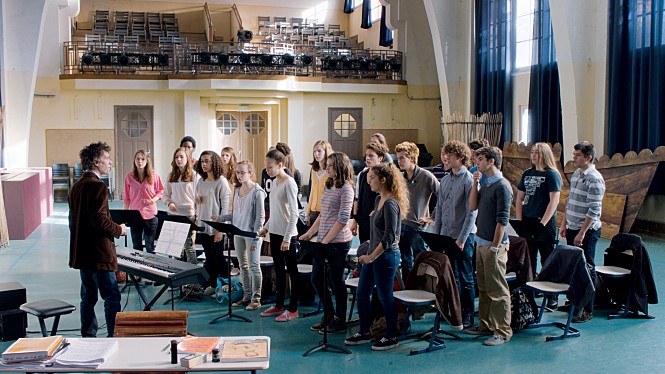
lafamillebelier01French film “La famille Bélier”, also known as “The Bélier Family”, is a mild crowd-pleaser which will give you as much as you can guess from its synopsis. Here, we have a young adolescent girl who happens to discover her hidden talent, and then we see how her growing aspiration comes to conflict with her parents, who cannot appreciate their daughter’s talent well due to an understandable reason. This is predictable to say the least, but the movie is not entirely without appeal, though it was not enough to prevent me from noticing its thin plot and other weak points during my viewing.

For Paula Bélier (Louane Emera) and her family, life has been good at their dairy farm in a rural town of Normandy, France. While her parents Gigi (Karin Viard) and Rodolphe (François Damiens) and her younger brother Quentin (Luca Gelberg) are congenitally deaf, she is the only family member born without hearing impairment, so it is her main duty to function as a communication line between her family and others. She can deftly go back and forth between speaking language and sign language, but that is not so easy sometimes. In one amusing scene at a local clinic, she has to handle some embarrassing details of her parents’ vigorous sex life, which is as noisy as their domestic life where sound is absent to everyone except Paula.

Meanwhile, the fall semester begins at Paula’s high school, and she and her best friend Mathilde (Roxane Duran) decide to take a choir class just because they are interested in Gabriel (Ilian Bergala), a good-looking boy who has recently moved to their town from Paris. The choir class is taught by Fabien Thomasson (Eric Elmosnino), and he is your average idiosyncratic music teacher whose eccentricity will surely be remembered by his students even after he is gone. Right from the first day of his class, he passionately emphasizes to his students how great Michel Sardou is, and it will not take a second for you to predict that at least one of Sardou’s works will be sung for dramatic effect later.

lafamillebelier05When Thomasson tests each student’s singing ability, Paula is surprised to realize that she is a good singer with potentials, and her teacher is willing to coach her for further developing her talent. She is paired with Gabriel for preparing for their duet performance in the upcoming class concert, and it does not take much time for them to sense something clicking between themselves during their singing practice, though their first chance to get a little closer to each other is ruined by the early biological signal of womanhood from her body.

As she gains more confidence on her talent day by day, Paula keeps hiding her singing lesson from her family, but she must make a choice as approaching to what may be a crucial point in her life. If she successfully passes the audition at a prestigious music school in Paris as her teacher hopes, she will then have to leave her hometown, and that will be a major change to not only her but also her loving family, who cannot possibly imagine the life without her.

In the meantime, Rodolphe begins his impulsive campaign for the mayor election in their town just because he does not like what the incumbent mayor is going to do in a nearby area. It seems nothing can stop this jolly guy who can be as stubborn as Chevy Chase in the National Lampoon’s Vacation movies, but, not so surprisingly, it turns out that he needs more than a sign language translator for his campaign – especially when he must convince his town people to vote for him instead of the mayor.

While Paula tries to decide on what is the best for herself, there eventually comes a big conventional moment involved with her class concert, and, of course, her parents come to see how talented their daughter is. In the middle of that moment, the movie dials down its soundtrack to emphasize the viewpoint of Paula’s family, and there is also a nice scene in which Rodolphe senses his dear daughter’s singing in a more direct way reminiscent of “Children of a Lesser God” (1986).

lafamillebelier03The screenplay by Victoria Bedos and Stanislas Carré de Malberg, later adapted by Thomas Bidegain and the director Eric Lartigau for the movie, is as sincere as these good moments, but it is also pretty heavy-handed and half-baked at times. The characters surrounding its heroine are more or less than caricatures, and most of them are not developed well enough to engage us. In case of Gabriel, he is merely an obligatory love interest in the story, and the relationship between him and Paula is one of the least convincing things in the movie. When she becomes a laughingstock at her high school probably because of him, she is naturally mad about him, but then they seem to forget all about it after he is conveniently absent for a while.

The more distracting element in the film is the broad depiction of its deaf characters. François Damiens and Karin Viard, who are not deaf in contrast to their young co-performer Luca Gelberg, play their characters with good humor and warm cheerfulness, but the movie mostly uses Rodolphe and Gigi as comic stereotypes while never fully developing them as real characters. I am also disappointed that the movie does not push enough its subplot associated with Rodolphe’s goofy mayor election campaign, which could be a rich ground for comedy considering the apparent obstacles Rodolphe and his family are bound to deal with.

While I hesitate to recommend “La famille Bélier”, I should point out that the lead actress Roxane Duran, who made a debut with this film, deserves all the attentions she received through her breakthrough performance (she won the Most Promising Actress Award at the César Awards ceremony early in this year). As a former candidate singer in the local reality TV show “The Voice”, Duran certainly sings well, and she is also very natural in her amiable performance. If the movie were as good as her, it could be something to remember along with other notable family drama movies involved with hearing impairment.

lafamillebelier02

Posted in Movies | Tagged , , , , , | 2 Comments

My Mother (2015) ☆☆☆1/2 (3.5/4): This is where her mother is going to leave

miamadre03It is always sad and painful to see your loved one going away from you forever, and Nanni Moretti’s new film “My Mother” calmly and sensitively depicts the emotional matters its heroine and her family members have to deal with after they hear the bad news about their loved one. Warm and humorous with its small, thoughtful touches, this delicate family drama subtly flows with their emotional undercurrents as their daily life goes on with that bad news hovering over them, and it eventually builds up to quiet but powerful moments as they must face the inevitability of their circumstance.

When we meet Margherita (Margherita Buy) at the beginning, she is busy with the shooting of her latest film. As a prominent movie director in Italy, she has been known well for her several serious works on social subjects, and the opening scene shows her and her actors and crew members trying to shot a riot scene in the absence of their American lead actor. During the shooting of a big scene like that, not many things go exactly as she wants, and she naturally becomes frustrated about the complications she has to confront on the set.

Meanwhile, she and her brother Giovanni (Nanni Moretti) are told that their mother Ada (Giulia Lazzarin), who has recently been hospitalized due to her pneumonia, does not have many days to live because of her weakening heart and lungs. As trying to deal with this sad news, Margherita begins to spend more time with her mother, but she is also reminded of how short the precious time with her mother will be.

Reflecting the emotional turmoil growing inside Margherita, the movie frequently slips into the dream and flashback scenes without any visible shift in its understated tone. This approach is a bit confusing at first, but it gradually works as Margherita’s troubled mind comes to reflect more on her life and her work and, above all, her relationship with her mother. She begins to feel that she has not been that close to her mother, and there is a hurtful flashback scene showing one moment in their past when she was a little too harsh to her mother, who simply wanted to feel that she was still all right for driving despite her age.

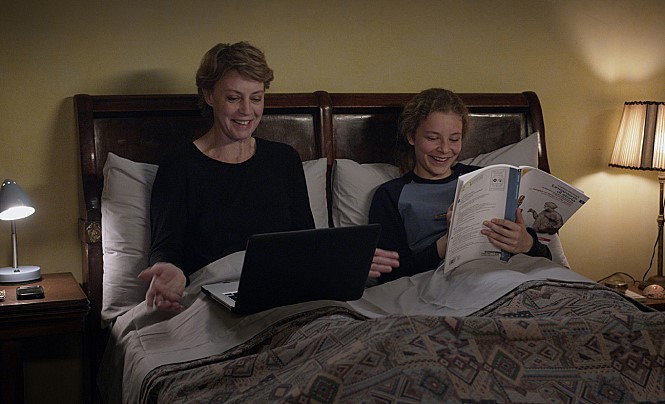
miamadre01The movie pays considerable attention to the other characters affected by Ada’s impending death. Giovanni, a caring son who worries about his mother as much as his sister, comes to feel no desire to go back to his job as devoting himself to his mother’s welfare, and he later quits his job even though his generous boss has no problem with Giovanni’s extending vacation. Livia (Beatrice Mancini), Margherita’s teenager daughter from her previous marriage, senses that her grandmother is less healthy than before although her mother did not tell her anything in details, and she comes to get an opportunity to spend more time with her grandmother as Ada gladly helps her granddaughter’s Latin study,

Margherita continues to focus on her work as before, but it is not easy for her to put aside her personal matters. In addition, she has to deal with her American lead actor who has finally arrived but causes more headaches for her and others on the set. Barry Huggins, drolly played by John Turturro with gusto and bravado, is certainly a good actor in case of the promotion of her film inside and outside Italy, but he is not so good at delivering Italian dialogues or following his director’s instructions. In one hilarious scene, he is supposed to deliver only a few lines but fails during every take mainly due to his incorrect pronunciation, and that surely exacerbates Margherita as she runs out of her patience.

And her mother’s condition keeps being deteriorated over the slow but unstoppable passage of time. Getting more extensive care and treatment, Ada begins to show the symptoms of being faded away from herself as well as her family, and then there comes the point where Margherita and others really have nothing to do for her mother except delaying the irreversible deterioration of her failing body as long as possible.

miamadre04Like his previous work “The Son’s Room” (2001), “My Mother”, which received Prize of the Ecumenical Jury award at the Cannes Film Festival in this year, was inspired by the director/co-writer Nanni Moretti’s personal experience. While he got an idea for the former when his son was about to be born, the idea for the latter came to him not long after his mother, who was also a scholar of Latin and Greek literature like Ada, passed away. Although he chose to tell the story through a female character, you may sense the personal aspects through his sincere and honest attitude in the film.

Thanks to his unadorned direction and the believable performances from his good actors, the movie lets its story and characters grounded in lots of intimacy and humanity, and they come to us as real people to empathize with. The conversation scenes between Margherita and Ava feel warm and tender while never resorting to cheap sentimentality, and it is poignant to see how Margherita becomes slowly closer to her daughter through her mother’s indirect help. Even Barry Huggins is allowed to show his better sides behind his vain, buffoonish appearance (did he really get a call from Stanley Kubrick?), and we cannot help but smile as watching him promptly energizing the mood for the people on the set during one pleasant scene. He may be a jerk, but he is a likable and entertaining one at least.

“My Mother” is a deeply moving film, and it effortlessly moves around humor and sadness before arriving at its short but emotionally resonating final scene, whose simple last line leaves us a small but profound note of hope and optimism. Death is a sad, unavoidable fact of our life indeed, but we can move on anyway – as waiting for our turn to come, of course.

miamadre02

Posted in Movies | Tagged , , , , | 3 Comments

Boulevard (2014) ☆☆☆(3/4) : Goodbye, Mr. Williams

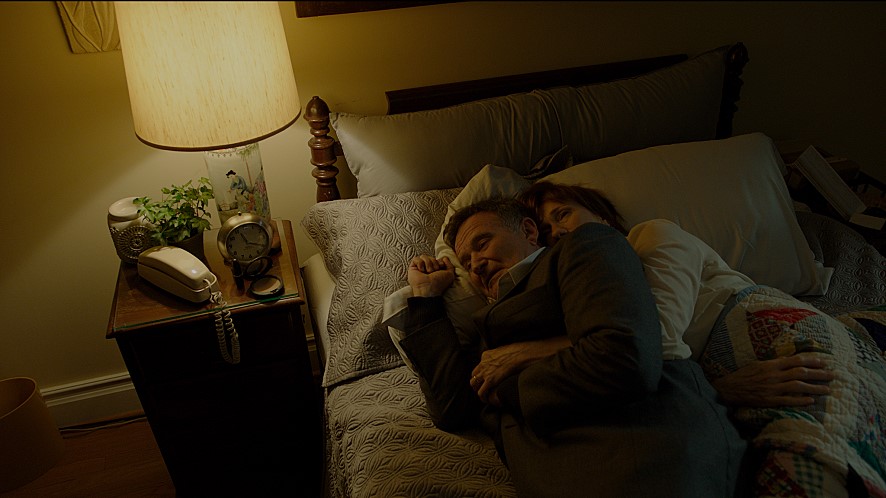
boulevard02Mainly because of Robin Williams’s death in last year, “Boulevard” comes to us as a bittersweet experience. Although this somber melancholic character drama will be likely remembered as a minor work in his long career, it is nice to see how subtle and delicate this great actor could be, and then we are reminded again that he did not often get such a good chance like this during his last years.

In “Boulevard”, Williams plays Nolan Mack, a middle-aged man who is about to enter a crucial point of his comfortable but monotonous life. He has worked at a local bank for more than 25 years with commendable work record and considerable reputation, but he does not look that happy at his work although he always responds to his boss and customers with gentle, courteous smile. When he is notified by his boss that he may be promoted to the position of a branch manager in other area, he is not sure about whether he wants the promotion, and he keeps going through his daily routines as usual.

His wife Joy (Kathy Baker) is another stable longstanding element in his life, but there is always the distance between them in their seemingly cozy domestic life. While they do not have any child between them, they sleep separately in each own private place, and that makes them look more like longtime roommates rather than a couple. Even though both of them are well aware of how hollow their relationship is, they have been accustomed to each other so much that it is nearly impossible for them to imagine the life without each other. They maintain their banal appearance in front of others around them, and they sometimes have a brief talk before sleep as if they wanted to remind each other that their relationship still works for both.

boulevard06We soon learn about the secret behind their relationship. During one night, Nolan goes to a hospital after being notified of his aging father’s sudden stroke. As returning from the hospital, he makes an impulsive decision when his car happens to be on a boulevard populated by prostitutes and hustlers during late night. He spots a young hustler named Leo (Roberto Aguire), and then they go together to a nearby motel. While Leo is willing to do whatever Nolan wants as long as he gets paid, Nolan simply prefers intimacy to sex, which is still an area he is not willing to enter.

As Nolan keeps meeting Leo, Nolan’s stable life is gradually disrupted. He is late for his work because he was waiting for Leo’s call during the last night, and then there come more troubles as he gets involved more in Leo’s life. While he manages to hide his affair from others, Joy is not oblivious to her husband’s small changes, but she chooses to not ask too much about how he spends late hours outside, for she does not want to face the truth which can destroy whatever is remained in their relationship.

As Nolan struggles to get out of his shell, the screenplay by Douglas Soesbe tentatively follows his uncertain emotional journey as taking its time to reveal what has been suppressed inside this deeply unhappy man. The low-key tone of the movie is seldom broken under the director Dito Montiel’s understated handling of mood and performances, and there are a number of subtle scenes glimmering with quiet emotions. During another private visit to his father, Nolan finally lets out what he has been hiding from others including his family since he was young, and a small gesture of Nolan’s father, who is unable to speak due to his illness, is more than enough for Nolan to see how his father feels about that. The scenes between Nolan and Leo are handled with restrained sensitivity, and Williams is convincing as his character clumsily reaches for what he begins to yearn for. As getting closer to Leo, Nolan wants to help him, but he only comes to realize that he should not expect too much from Leo, who may be touched by Nolan’s sincerity but cannot give him what he wants.
boulevard01Like late Roger Ebert often said, Williams was always effective whenever he dialed down his comic persona, and that was proven well though a diverse array of performances ranging from the warm, generous psychiatrist in “Good Will Hunting” (1997) to the devious psychopathic killer in “Insomnia” (2002). In “World’s Greatest Dad” (2009), Williams played a troubled high school teacher who decides to fabricate the circumstance surrounding his obnoxious teenager son’s death for his own desperate reason, and you may see a parallel between that character and Nolan; both thought that they could live with their own lie, but it becomes more and more apparent that they cannot fool themselves even if they can deceive others. Steadily holding his character’s calm façade, Williams’ nuanced performance ably carries the film, and his quiet face gradually exudes the deep sadness accumulated inside his character.
Williams is also surrounded by good supporting actors. While Leo is more or less than a catalyst for change in the story, Roberto Aguire is well-cast in his role, and Bob Odenkirk, who has been more recognizable thanks to his excellent works in the recent TV series including “Breaking Bad” and “Fargo”, brings some lightweight mood to the film as Nolan’s old friend who becomes serious about his latest romance. As a woman who is as unhappy as her husband but would rather stay with unhappiness, Kathy Baker has a nice scene with Williams later in the story, and we can clearly see how their characters have managed to live together under the same roof for many years.
While meandering at times, but “Boulevard” works thanks to Robin Williams’ performance. Yes, it is almost a cliche to say that nothing is too late as long as we are alive, but that familiar truth feels sincere and touching as we watch Williams’ face during the last scene of the film. Goodbye, Mr. Williams, it has been a pleasure to watch your good works including this one.

boulevard05

Posted in Movies | Tagged , , | Leave a comment

Factory Complex (2014) ☆☆☆1/2 (3.5/4) : The ongoing struggle of female workers

factorycomplex01It happened before, and it is still happening around here and other places. As South Korean documentary “Factory Complex” simply listens to various female workers, their individual stories draw together a sad big picture of many female workers who deserve better for what they sacrificed or are still sacrificing probably even at this point. Some of them fought hard against mistreatments and injustices, and there have been some changes, but, as quietly pointed out in this powerful documentary, it is still difficult for many women working out there.

During the 1960-70s, South Korea went through a rapid industrial development. That became the ground for its considerable economic status in the global community at present, but that economic advance was accompanied with many cases of cheap labor exploitation, which were not so far from the recent ones we have heard from China or any other recently rising developing countries.

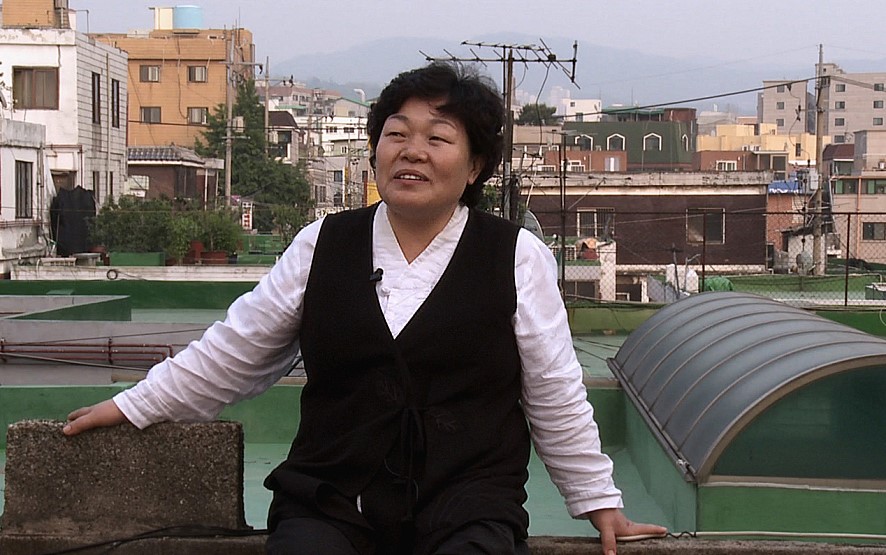
Several middle-aged female interviewees in the film candidly describe to us how difficult and exhausting their life was during that time. One of them tells us about how she and other young female workers had to sleep together in small rooms for a few hours before waking up and then working for more than 10 hours on next day, and we see that old place where they stayed. A woman who worked at a clothing factory reminisces about how much she wanted to buy Nike sneakers when she was about to begin her first workday – and how her innocent wish was quickly gone as she endured difficult work environment and low wage.

factorycomplex05When many workers protested against unfair treatments on them, the South Korean government trampled their protests hard in the name of nation and development. One of the most famous cases was the 1979 strike of YH Trading female factory workers, and the government’s brutal suppression on this strike was one of the darkest moments during the dictatorship era of Park Chung-hee, who is incidentally the father of the current South Korean president.

In such a rough, violent time, female workers were the most vulnerable labor members, but they were not protected much by male workers as shown from one of the most shameful moments in the South Korean labor history. In 1978, the female workers of Dong-il Textile Company got splashed all over with buckets of excrement just because many male workers did not welcome women’s presence in the union. A local photo studio owner, who is the sole male interviewee in the film, calmly describes that terrible moment when he was asked to photograph several female workers’ soiled appearance for evidence. We see a couple of his photographs as listening to him, and we cannot help but be saddened and angry about what happened at that time. What good is a union if it condones such a disgusting violence like that on the members it is supposed to protect?

Around the 1980s when the South Korean society took its first forward step to democratization, the workers’ rights began to be recognized more especially after the 1985 allied strike at the Gu-ro Industrial Complex in Seoul, which is turned into the Gu-ro Digital Complex now along with the accelerating advance of the digital era. A ceremony is held for the Statue of Export, and it looks like those hard years are merely a distant past remembered at times by old people.

factorycomplex03But I and other South Korean people know too well that there are still many workers struggling in their harsh reality. When three former Samsung employees appeared, I already knew what these women were going to tell, for I have been familiar with those sad stories about Samsung semiconductor factory workers who did not get any medical help from the company when they got sick because of their hazardous work environment.

While a number of shopping mall employees tell us how they were treated like expendable human resource at their workplace (they did not even get a room for rest, for example), we also hear about the stress and pressure call center employees frequently experience. They have to work as much as demanded while always nervous about the possibility of another rude, violent caller to hurl insults at them, and one interviewee becomes emotional as talking about her difficult situation which she may never get out of. It is always stressful for her to make ends meet, and she also feels guilty about not supporting her parents enough. In case of female flight attendants, you will not be shocked much by what they are demanded to do sometimes, if you have encountered that recent news about the unbelievably rude and thoughtless behaviors of a Korean Air executive.

Foreign workers coming into South Korea for earning money also experience many cases of mistreatment, and the documentary takes a look at their public protest held in Seoul at one point. I remember one South Asian worker who was one of the guys moving a big dining room table into my family home, and I sometimes wonder how he is doing now. Is he still working around here? Or did he return to homeland with enough money for his family as he hoped when he came to my country? What does he think about South Korea now?

factorycomplex02Meanwhile, the history repeats itself in a country far from South Korea. We meet three young Cambodian female workers going through their own hardship so similar to the one experienced by South Korean female workers during the 1960-70s, and there is a memorable long take sequence which looks around the busy work progress at a clothing factory full of working female employees. In last year, local workers protested against low wage and poor work environment, and a couple of shaky footage scenes show us how they were brutally crushed by the Cambodian government (it is no secret that this ruthless tactic was induced by the diplomatic/economic pressures from South Korea, Japan, and China, by the way).

Occasionally inserting archival footage or the poetic interlude scenes shot for the documentary, the director Lim Heung-soon slowly and carefully creates a narrative flow to absorb us, and the result is a sad, haunting work of art which not only reflects on the hardship in the past but also observes its another unjust cycle in the present. Many things get better than before in the South Korean society, but, as you will see from this documentary, there are still a lot to be changed for those hard-working people.

factorycomplex04

Posted in Movies | Tagged , , | Leave a comment

Alice in Earnestland (2014) ☆☆☆(3/4) : Sympathy for Lady Earnest

aliceinearnestland01South Korean film “Alice in Earnestland” is a dark comedy about one woman who has reached for a good life but instead finds herself being pushed down to more despair waiting for her. While occasionally violent and bloody, the movie is hilarious in its quirky mixture of humor and pathos, and we cannot help but laugh even while feeling sorry for her messy predicament.

When she was a young high school student, everything seemed to be hopeful for Soo-nam (Lee Jeong-hyeon). She believed that she would get rewards if she tried hard, so she put lots of efforts into typewriting for her future office job, but, alas, all of her efforts turned out to be pretty useless when she belatedly realized she had not studied anything for computers. When I was young, somebody argued that typewriting skill might be useful even in the age of computer, but you need more than typing skill for operating a computer, you know.

After experiencing her first moment of dashed hope, Soo-nam gets a menial office job at some shabby factory instead, and that is where she meets the love of her life. Gyu-jeong (Lee Hae-yeong), a young factory employee with hearing impairment, proposes to her not long after they begin their relationship, and Soo-nam gladly accepts his proposal without hesitation. Although their economic situation is not very bright, they are happy to be with each other, and they are ready to work harder for a better life for them – and their future child.

aliceinearnestland03Unfortunately, a bad accident happens to Gyu-jeong, who cannot work anymore due to his injury. While her husband is shamed and depressed by his inability to earn a living for them, Soo-nam stands by him as working as much as possible to support their life alone, but it seems there is no possible way for them to get out of their worsening economic situation. She tries to maintain her optimistic attitude for her as well as her husband, but then there comes another incident to strike their life.

Some time later, a redevelopment project is being planned in her district, it looks like Soo-nam will finally get a chance to solve her mounting debts and other problems once for all. The house belonging to her turns out to be located in the first area to redeveloped, and that means she will be able to sell her house at a considerably high price once the project is initiated as scheduled.

However, not so surprisingly, there is a big obstacle on her way. Kyeong-sook (Seo Young-hwa), a selfish local psychiatrist who is also the leader of district residents, is not so pleased about the redevelopment plan just because she is not the first one to benefit from it. Backed by a pompous ex-soldier and an unstable laundry shop owner willing to be her enforcers, Kyeong-sook will not step back easily, and she quickly becomes a major headache to a public servant in the charge of the redevelopment plan.

aliceinearnestland02At first, all Soo-nam has to do for getting her money seems to be collecting the signatures from her neighbors as asked by that public servant in question, but she unintentionally gets herself into a big trouble when she unwittingly visits one of the residents she should have been careful of. As already announced during the darkly absurd opening sequence, that is just the beginning for more problems to come to her, and we soon meet two detectives snooping around the neighborhood for any clue for their latest case.

This is the first feature film by the director/writer Ahn Gook-jin, and he maintains the morbidly cheerful tone of his movie well through edgy black humor and good comic timing. There are several amusing moments which emphasize the warped reality in the film, and I especially like a very funny scene showing how one small impulsive act slowly culminates to an unexpected consequence for our big laugh. As the story becomes darker, it does not hesitates to mix violence and humor together, and we get a couple of nasty scenes when Soo-nam happens to be imprisoned and tortured by a certain character at one point (Did I mention that Park Chan-wook helped the production of the film?).

aliceinearnestland04While her character keeps tumbling into more mayhem and madness, Lee Jeong-hyeon, who was terrific as a young incorrigible mother who happens to live with her problematic teenager son in “Juvenile Offender” (2012), gives an enjoyable performance dancing around absurd comedy and gloomy tragedy. Soo-nam is indeed an earnest woman equipped with a remarkable throwing skill for newspaper delivery, but she is only reminded again and again that good efforts do not always equal good rewards in her world, and Lee is superb as her character desperately holds onto her simple hope behind her innocuous façade.

The main job of the supporting actors is pushing Lee’s character in one direction or another, and they are effective in their respective caricature roles. While Lee Jeong-hyeon is gentle and decent as a nice guy who is the only light in Soo-nam’s difficult life, Seo Hae-yeong, Myeong Kye-nam, Lee Joon-hyeok, and Lee Dae-yeon are suitably unlikable in each own way, and Bae Je-gi and Ji Dae-han are a duo of dim detectives who have no idea on what their possible suspect is capable of.

“Alice in Wonderland” is a biting black comedy with uncomfortable laughs, and I had a fun with many of its barbed satiric moments. Although it could go further with its dark satire and its ending is weak and abrupt, I got enough good laughs from it, and Ahn Gook-jin and Lee Jeong-hyeon give us one of the impressive South Korean movie characters to remember in this year.

aliceinearnestland05

Posted in Movies | Tagged , , , | Leave a comment

White God (2014) ☆☆☆1/2 (3.5/4) : The Dogs of Revolution

white_god01You will be impressed by all those real dogs in Hungarian Film “White God”, which was chosen as Hungary’s official submission to Best Foreign Language Film Oscar in last year. Used under considerable care and caution during the production, the dogs in the film imbue the movie with a certain amount of raw, brutal power as its allegorical tale runs around different genres along with its canine hero and a young teenager girl who happens to be his owner. Somewhere between “The Incredible Journey” (1963) and “Rise of the Planet of the Apes” (2011), the movie is gripping to watch as generating powerful moments during its canine hero’s grim plight, and it strikes a right balance between gritty realism and unabashed melodrama as alternating between its two main characters.

After the visually striking opening scene in which an ominously empty street is suddenly filled with a bunch of running dogs, the movie quickly moves to the point where everything began. Because her professor mother is about to go abroad for a job opportunity with her new husband, Lili (Zsófia Psotta) has to live with her divorced father Dániel (Sándor Zsótér) for a while. Lili and her father, who works as a meat inspector at a local slaughterhouse, are not very close to each other, and their strained relationship is more apparent when he unsuccessfully tries to cheer her up while overlooking how much his daughter has grown up.

Not long after Lili moves into her father’s apartment, she and her father come to conflict with each other over her dear dog Hagen, who is seamlessly played by two dogs named Bodie and Luke. Because Hagen is an unregistered mongrel, Dániel will have to pay the additional tax besides getting a proper license if Hagen keeps being stayed in his apartment, and this petty guy with no love for his daughter’s dog does not want that at all. He would rather send Hagen to animal shelter, and Lili is certainly against that, but there is nothing she can do when Hagen is eventually abandoned on a road by her father.

white_god04After this painful moment, the movie sticks to Hagen’s viewpoint as following his harrowing journey around the city. He soon encounters other abandoned dogs in the city, and he quickly learns how to survive in his new environment which is pretty harsh to him as well as other dogs. Although they can get food easily as sniffing around the corners of streets, they are not welcomed much by human beings, and their wasteland lair is often attacked by animal control service guys ready to capture them all.

And then Hagen finds himself tumbled into a more dismal situation when he happens to be taken to a shady broker and then sold to a small-time criminal who tries his luck with dog fighting. Under his new owner’s cruel training process, Hagen begins to be transformed from his former gentle appearance step by step, and Hagen at the final stage of his transformation may remind you of that violent dog in Samuel Fuller’s “White Dog” (1982), a tragic monster irrevocably traumatized by the evil of men.

As soon as he is prepared, Hagen is thrown into a dog fighting as watched by his new owner and others. While making it sure that the dog fighting scene look quite real and vivid on the screen, the director/writer Kornél Mundruczó, who deservedly received Un Certain Regard Award for his film at the Cannes Film Festival in last year, does not go too far with bloody details, and you will be relieved to learn that no dog was harmed during the shooting. There is a brief wordless moment as Hagen looks at his defeated opponent at the end of their savage fight, and I find it more poignant as I reflect on that. Maybe they have no clear idea on why they were put into such a cruel situation like that, but their battered appearances are more than enough to convey to us how much they are crushed by human barbarity. Dogs are the creatures which have been programmed to trust and befriend us through the lucky coincidence of evolution, but, as shown in the film, we human beings frequently betray them as heartlessly pushing them into barbarity with no respect for them.

white_god0e

Meanwhile, the movie also observes Lili’s adolescent struggle on the other side. As being frustrated about her unsuccessful search for Hagen, she comes to have more conflicts with her father, and she even gets herself into a big trouble when she makes an unwise choice of attending a night party where alcohol and drug come handy. Young actress Zsófia Psotta is excellent as a smart girl coping with the emotional tumults inside her, and she is believable in her unadorned performance as her character goes through a rough transition period of her young age along the story. Sándor Zsótér is also good as Lili’s gruff father who has his own emotional problem, and he and Psotta have a touching moment when their characters become a little open to each other later in the story.

The storylines of Hagen and Lili eventually reunite during the climatic third act, where Hagen finally emerges with vengeance as the leader of a massive revolt started at an animal shelter facility. While the frequent use of handheld camera in the film makes some scenes look too shaky in my opinion, this approach works as it lets us immersed into the world viewed through Hagen and other dogs, and the result is all the more commendable considering that the filmmakers had to handle 274 dogs during the production. It goes without saying that Bodie and Luke and other canine actors in the film simply did acts as controlled in front of the camera, but Mundruczó and his crew drew effective performances out of their dogs, and we come to accept them as the characters as real as those vivid CGI ape characters in “Rise of the Planet of the Apes”. The movie also assures us at the beginning that the dogs got what they deserved for their substantial work: “All of the untrained dogs who perform in this film were rescued from the streets or shelters and placed in homes with help from an adoption program.”

Although it loses its momentum a bit around the finale as if it were not sure about how to end the story after throwing a series of mesmerizing moments at the audiences, “White God” is still a superlative work, and its ending, which could have been quite sappy due to a certain cliché element, resonates with its ambiguously haunting final shot. Sometimes we forget that we are no more than creatures who are just a little smarter than other animals, and the movie makes a good point of that as demanding some respect for dogs – or whatever they represent in the film.

white_god05

Posted in Movies | Tagged , , , , | 1 Comment

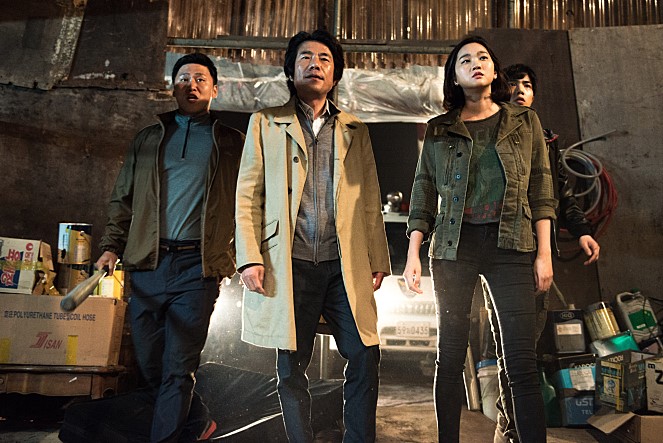
Veteran (2015) ☆☆1/2(2.5/4) : Tough cop Vs. Spoiled rich kid

veterant01South Korean film “Veteran” is slick and competent in its technical aspects, and it has a fair share of good moments which do show its fillmmakers’ considerable efforts put behind them. As a matter of fact, I would rather watch a documentary showing their work on the set, and I think that will be more interesting than the movie itself, which I did not enjoy enough while frequently distracted by its weak points including thin characterization.

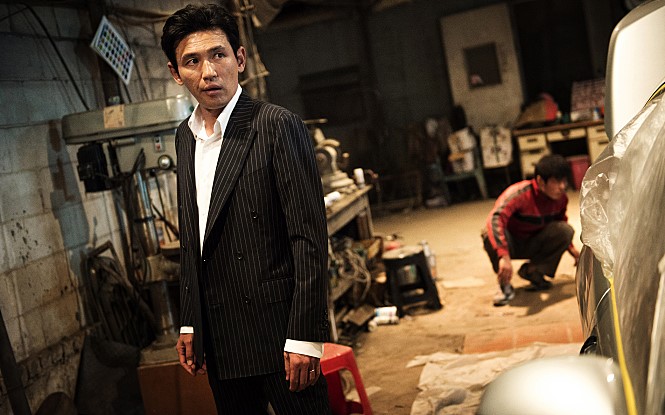
Hwang Jeong-min plays Seo Do-cheol, a tough, simple-minded cop who is in the middle of a sting operation when he strides into a shady used car shop during the opening sequence fluidly following his movement. After arresting a bunch of auto theft gangs later, Do-chelo and his fellow cops come to acquire the information about a bigger target to catch, and they immediately move onto the next step. When everything is set during one of the major action sequences in the film, Do-cheol and his colleagues immediately make a surprise attack on their suspects, and we get a nice chase scene when Do-cheol runs into a maze of containers for catching a couple of suspects.

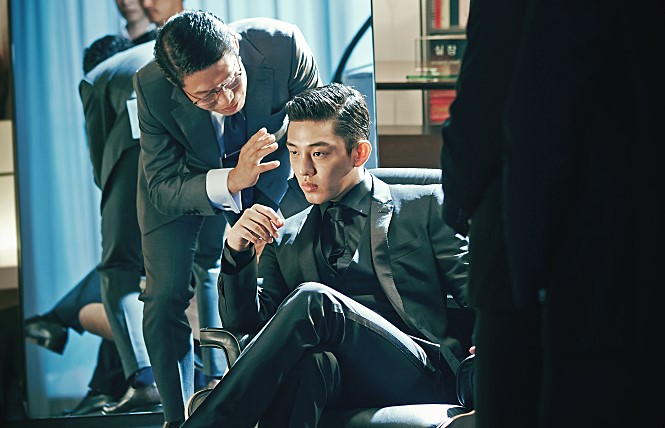
While enjoying the resulting success with his colleagues, Do-cheol is invited to a luxurious private party thanks to his involvement in the production of a popular TV cop drama, and that is how he is introduced to Jo Tae-oh (Yoo Ah-in), the young son of a very powerful plutocratic figure. Their first encounter is not very pleasant to say the least. Right in front of Do-cheol, Tae-oh cruelly and crudely humiliates two women sitting near him, and nobody dares to stop this spoiled rich prick because he is the one with money and power. It goes without saying that Tae-oh is another bad guy to catch for Do-cheol, who leaves rather quietly but gives an unsubtle warning to Tae-ho.

veterant02Of course, that warning does not deter Tae-oh from doing a very cruel thing to a trucker who was simply protesting against the unfair treatment on him and other truckers in front of Tae-oh’s family conglomerate building. After the trucker and his young son, who happens to be there with his father, are taken to Tae-oh’s office, Tae-oh gleefully pushes the trucker into a sadistic circumstance of utter humiliation, and he even forces the trucker’s son to witness it all during this very disturbing scene.

Shortly after that, the trucker’s unconscious body is found under a suspicious circumstance. After learning of this news, Do-cheol feels guilty about not being able to help the man who helped him a bit during his sting operation, and he becomes more determined to arrest Tae-oh for himself, but his direct boss and other superiors are understandably reluctant to delve into the case. Although Tae-oh’s father is currently under investigation, his family conglomerate still can pull the strings behind its back, and Do-cheol soon realizes how much powerful his opponent is. He is warned by his superintendent not to meddle with the case, and then he suddenly finds himself being interrogated by the internal investigation division. At one point, his long-suffering wife is approached by Tae-oh’s right-hand man, and he surely has something to give her only if she can do something for him in exchange.

As Do-cheol becomes more persistent in his pursuit of justice with increasing risk, “Veteran” serves us with a number of intense action scenes, and the director/writer Ryoo Seung-wan, who has been known well for his several entertaining action films such “The City of Violence” (2006) and “The Berlin File” (2013), does not disappoint us in his skillful handling of these action scenes. The busy physical fight scene unfolded within a shabby apartment is tense and brisk with its clear sense of space and movement, and you can see that the actors really put themselves into actions. The vehicle action sequence around the climax part is gritty and impactful as we watch real vehicles getting hit on the screen, and then it is quickly followed by another action sequence to watch.

veterant03While I appreciated these moments on the technical level, I also found it difficult to care about the story or characters. Hwang Jeong-min is an engaging actor, but he played more interesting cop characters before, and Do-cheol became pretty tiresome to me as I observed that his detective work mainly consists of swaggering and raising his voice in front of others. I can accept that he is not that smart, but he monotonously dashes toward his opponent again and again like a Duracell bunny, until someone finally presents an important clue to what really happened to the trucker (how can his feeble brain infer everything shown during a certain flashback scene from that clue, I wonder?).

Trying very, very hard in his against-the-type role, Yoo Ah-in diligently chews every minute of his scenes as if he warmed himself up for playing Tony Montana, but his character is merely repulsive and obnoxious in one-note fashion rather than formidable or menacing in interesting ways, and it is regrettable that the movie lets his character go downhill too easily in the end. The supporting roles in the movie are filled by a group of recognizable South Korean actors including Jeong Man-sik, Cheon Ho-jin, Song Yong-chang, Jin Kyeong, Yoo Hae-jin and Oh Dal-soo, and Oh Dal-soo and Yoo Hae-jin, two of the most dependable South Korean supporting actors at present, ably handle their thankless roles with their own distinctive screen presences.

I cannot recommend “Veteran” because of its aforementioned shortcomings which make it less enjoyable compared to Ryoo Seung-wan’s previous works, but, considering the reactions of the audiences around me during the screening I attended, I think you will probably enjoy it more than me if you do not have any problem with what bothered me in the film. After all, isn’t it always fun to see a 1% scumbag getting what he deserves?

veterant05

Posted in Movies | Tagged , , | Leave a comment

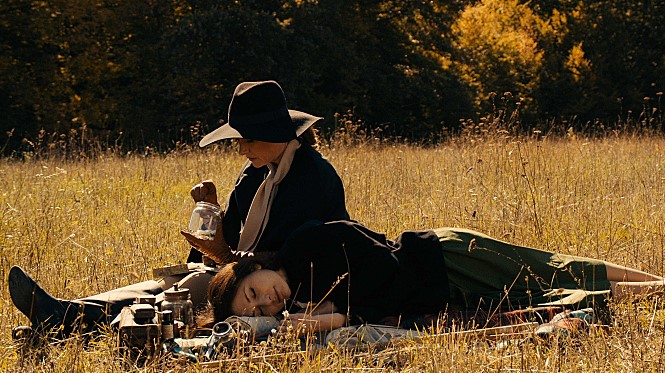
The Duke of Burgundy (2014) ☆☆☆1/2 (3.5/4) : Sex, fetish, and insects

thedukeofburgundy02Sometimes I watch movies with my mother, and she had to endure many challenging films thanks to my insatiable interest in various kinds of movies. During one late winter night of 2012, I happened to revisit David Lynch’s “Blue Velvet” (1986), and my mother was there when it was being played on our DVD player. Watching that infamous scene between Isabella Rossellini and Dennis Hopper, she asked me with the bewilderment she often had during our movie time, “What the hell are they doing on the floor?”

I am pretty sure that she will be confounded by “The Duke of Burgundy”, a peculiar but compelling film about sex, fetish, and insects. Simultaneously elusive and fascinating, the movie tantalizes us with its distant but elegant style and atmosphere, and it works as a superlative pastiche which transcends its trashy source of inspiration. While having lots of fun with many offbeat aspects of its strange setting, it delves into the kinky relationship of two different women having a little domestic problem between them, and the result is an intriguing mix of wry humor and delicate sensitivity to amuse and engage us.

The main background of the movie is an unspecified British rural town in the middle of autumn, and you will notice a number of odd things here and there in this small town. It looks like the late 20th Century on the surface, but the characters in the film do not seem to have cars (they usually walk or ride bicycle), and we do not see much of the outside of the town except the bucolic forest surrounding it. In addition, we do not see any male character in the town which does not seem to have many residents, and the movie does not particularly bother to explain this weird aspect to us at all.

thedukeofburgundy04In such a familiar but alien environment, the private relationship between Cynthia (Sidse Babett Knudsen) and Evelyn (Chiara D’Anna) looks like a conventional one. Before the main play in their bedroom, they go through a series of sadomasochistic acts as their foreplay after Evelyn comes back from the forest. Cynthia, a middle-aged lepidopterist, tries her best in playing a cold, mean mistress not so pleased by her maid’s sloppy works, but it is apparent that she is not particularly stimulated by this even though she wants to give whatever her young lover desires. Although they surely have a good time with their eventual sex, Cynthia begins to feel dissatisfied with their relationship which seems to approach to the stage of ennui just like many other relationships between lovers, and both Cynthia and Evelyn see that they need something to energize their sex life.

Many amusing moments in the film come from how they try to add more spices to their sexual routines. Evelyn gives Cynthia very detailed instructions on how Cynthia should abuse and punish her in their next trial, and she also suggests another kinky act as something new to try. At one point, a certain kind of expert comes to their house, and we get a deadpan conversation scene as Cynthia and Evelyn discuss with this expert on a special contraption for their bedroom. It looks like their sexual taste is not so uncommon at least around their neighbourhood, and the expert later suggests a funny alternative when Evelyn is very disappointed to learn that she will not get her bedroom equipment as soon as she wishes.

Meanwhile, Cynthia keeps focusing on her work while often assisted by Evelyn, who shares the same academic interest with her (the title of the movie comes from a European butterfly species which is usually found in grassy areas and woodland clearings, by the way). Reminiscent of William Wyler’s “The Collector” (1965), the walls of Cynthia’s office are covered with numerous specimens of moths and butterflies in display, and we cannot help but notice how exquisite they look in their fine, colorful appearances. There are also the recurring scenes showing the academic meeting held periodically at a local institute where Cynthia works, and we see Cynthia and other researchers reporting on their recent researches on moths and butterflies.

thedukeofburgundy05Although the movie is not very clear about what exactly those lepidopterological details represent or symbolize in the story, the director/writer Peter Strickland makes it sure that these moths and butterflies function as the main component of the tantalizing mood established well in the film. While his previous film “Berberian Sound Studio” (2012) was a mind-bending psychological horror film which paid a homage to the Italian giallo films during the 1970s, “The Duke of Burgundy” tips its hat to those cheap European sexploitaion films during the same period, and their influence on the film is instantly recognizable right from its tacky main title sequence which will take you back to the 1970s through its mellow main theme song. With his tongue-in-cheek spirit, Strickland deliberately makes his film look cheap at times, and I was especially tickled by how he lets us notice something quite obvious in the background while the camera pretends to focus on Evelyn and other researchers listening intently to Cynthia’s presentation.

Of course, as you can expect from a film inspired by skin flicks, there are plenty of scenes involved with its characters’ erotic impulses, and the movie handles them in tastefully erotic ways while never going too far with its carnal details. Looking sexy and attractive whenever that is required, the lead actresses Sidse Babett Knudsen and Chiara D’Anna keep their complementing performances straight to the materials they have to handle, and their nuanced acting holds our attention even when the movie goes wild along with their characters’ increasing emotional uncertainty during its second half. Faris Badwan and Rachel Zeffira, who are mainly known as an alternative pop duo “Cat’s Eye”, provide an intentionally old-fashioned score which works effectively during several key scenes in the film, and the cinematographer Nicholas D. Knowland presents a number of oddly beautiful moments amidst the peaceful atmosphere of autumn forest on the screen (the movie has the most beautiful shot of laundry water I have ever seen recently, for example).

One’s fetish can look pretty hilarious to others, and “The Duke of Burgundy” exemplifies that well with its sly amusement while also recognizing how seriously its characters care about their emotional matters. In the end, as reflected by the eventual change of season around the ending, they come to see that something must be changed in their relationship in one way or another, but is that really possible for them? Anyway, one thing very clear to them and us is that old habit seldom dies easily.

thedukeofburgundy01

Posted in Movies | Tagged , , | 2 Comments

Love & Mercy (2014) ☆☆☆(3/4) : Going down – and going up again

loveandmercy02Brian Wilson has lived an interesting life which is sometimes too dramatic to be believed. After ascending to the top with his legendary band at young age, he tried to move forward with his new ideas, but then he slowly descended to the bottom as suffering from his mental illness and other negative factors in his bumpy life. Fortunately, he came to rise from his lowest point to enter the new chapter of his life and career in the end, and he has lived long enough to see his works becoming more influential over many years.

“Love & Mercy” revolves around two different time periods in his life. While one storyline begins around the 1960s when young Wilson and his fellow members of The Beach Boys attained their wide popularity through their hit songs such as “Surfin’ Safari”, the other storyline starts around the 1980s when older Wilson led a reclusive life after managing to recover a bit from his messy time during the 1970s.

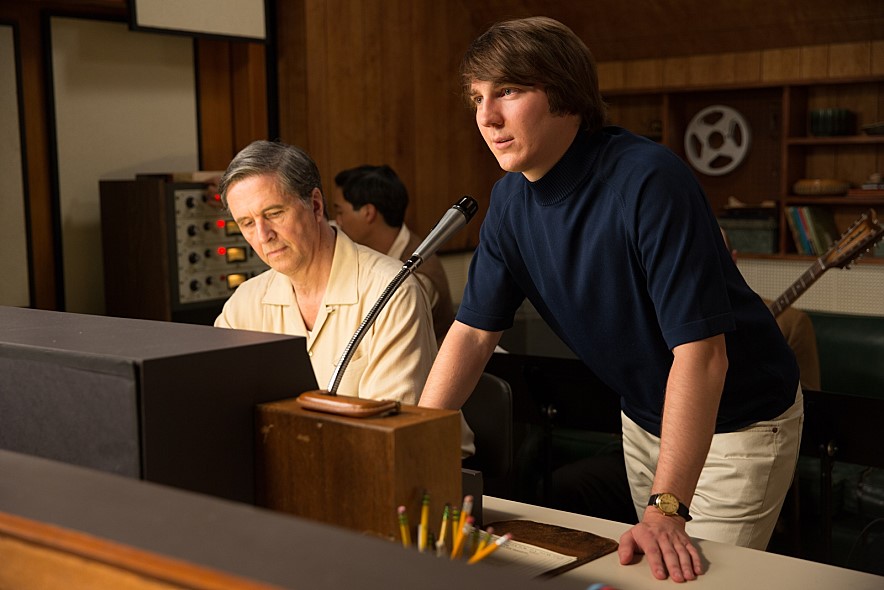
Played by Paul Dano, Wilson during the 1960s comes to us as a shy, nervous lad who is more comfortable with writing his songs than performing them at concerts. After a sudden panic attack he suffers during their recent concert tour, he decides to focus more on composition, and then he begins to believe that he and his colleagues must take a new direction for their future. Although his opinion is not welcomed much by his colleagues or his uncaring father Murry (Bill Camp) who was once their manager, Wilson really wants to push his ideas anyway, and we soon see him being ready for his musical experiment at a recording studio.

loveandmercy01Mainly shot through handheld camera, the recording studio scenes in the film feel authentic with the grainy texture of 16mm film, and it is interesting to watch the recreation of the production process of the Beach Boys’ 1966 album “Pet Sounds”. Closely collaborating with a group of veteran session musicians, Wilson keeps trying different things, and he never hesitates to incorporate more new elements into his arrangement if that just feels right to him. He often looks too fastidious, but the session musicians have no problem with going along with his perfectionism probably because they can see Wilson’s immense talent glinting from his eyes. When he finally gets his music played and recorded exactly he wants, it indeed sounds like something really good, and “Pet Sounds” has been regarded as one of the landmarks not only in Wilson’s career but also in the American pop music history.

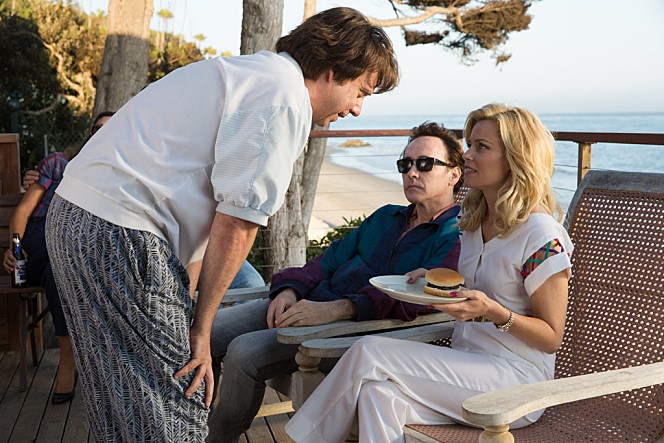
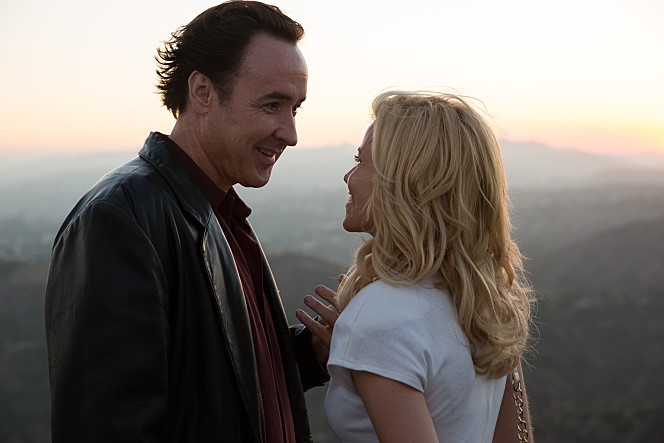
While enjoying the success from what would be the second phase of his career, Wilson becomes increasingly unstable and eccentric as time goes by. He starts hearing voices inside his head, and his exposure to alcohol and other substances only worsens his mental state. Wilson during the 1980s, played by John Cusack, mostly looks fine when we see him for the first time, but it is apparent that he is not fully recovered yet from his mental problem as we watch him mainly through the viewpoint of Melinda Ledbetter (Elizabeth Banks), a car dealer who comes across him by coincidence on one day.

As getting to know more about him, Ledbetter sees that Wilson is desperately in the need of help, but she is also disturbed by how much he has been manipulated and exploited by his therapist Dr. Eugene Landy (Paul Giamatti). Landy, who has been a Svengali-like figure to his only patient for years, is not going to allow her to interfere with his lucrative business based on Wilson’s money and talent, and it is possible that Wilson cannot escape from Landy’s abusive control even though he sees a chance through a good woman kindly approaching to him.

loveandmercy05Constantly going back and forth between these two storylines, the screenplay by Michael Alan Lerner and Oren Moverman gives us some insights on Wilson’s troubled artistic mind, and its seemingly scattershot narrative gradually gains the focus as the two storylines smoothly cross over each other under the competent direction of the director Bill Pohlad, who participated in the production of several notable Oscar-nominated films including “Brokeback Mountain” (2005), “The Tree of Life” (2011), and “12 Years a Slave” (2013). The period background for each storyline is recreated well on the screen along with distinctive mood, and many recognizable songs written by Wilson, including the very song which inspired the title of the movie, are effectively used on the soundtrack.

It is initially odd to see two different actors playing the same character in one movie, but this method works here better than expected. Like the multiple versions of Bob Dylan played by various actors in Todd Haynes’ “I’m Not There” (2007), young Wilson and old Wilson in “Love & Mercy” are simply two different versions of the same man, and Paul Dano and John Cusack are seamlessly connected with each other in their performances. While Dano, who resembles Wilson more than Cusack, naturally takes the stage as Wilson goes through ups and downs in his eventual descent, Cusack holds the ground with his understated acting, and he effortlessly conveys us his character’s damaged state through fine subtle touches.

loveandmercy03Although most of the supporting characters in the film are rather underdeveloped, Elizabeth Banks brings lots of warmth and spirit into her character, and she and Cusack have a number of tender scenes as Wilson and Ledbetter get closer to each other in spite of Landy’s interference. Although he looks a little too awkward with his hairpiece, Paul Giamatti is suitably slimy and despicable in his role; some of you may think his character is too exaggerated, but I heard that Landy was as horrible as how he is depicted in the film, and Wilson later said that he was actually terrified by Giamatti’s performance in the film (Landy died in 2006, by the way).

While basically being a typical biopic film about artist’s agony and ecstasy, “Love & Mercy” is a good one handled well with skills and performances to appreciate, and it also feels sincere and intimate in its unadorned storytelling. It does take familiar dramatic routes, but it also takes chances with many things in the process, and it even makes an indirect homage to “2001: A Space Odyssey” (1968) during one hallucinogenic sequence around the ending. It may be pretty weird, but it somehow works as an emotional climax amid its disorienting shots, and then you will be touched by Wilson’s concert clip shown during the end credit of the film. It is probably a cliché to say that he is saved by love and mercy, but that is really true in his case.

loveandmercy04

Posted in Movies | Tagged , , , , , , | Leave a comment