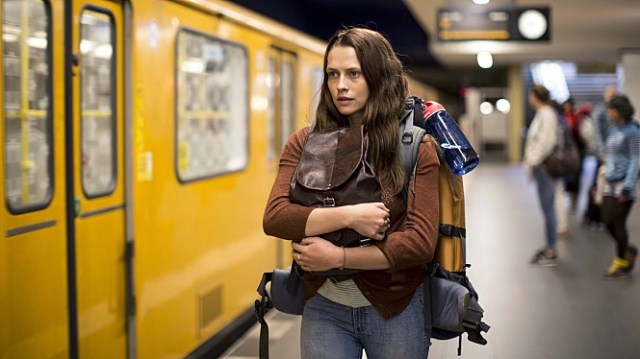
Berlin Syndrome (2017) ☆☆☆(3/4): A captive tourist girl in Berlin

berlinsyndrome.jpgDecidedly unnerving and uncomfortable, “Berlin Syndrome” calmly examines the disturbing relationship between its captive heroine and her twisted captor. Reminiscent of “The Collector” (1965) and many other similar thriller films, the movie is often very unpleasant to say the least, but it holds our attention via a good number of intense moments between its two main characters, and we come to observe their increasingly grim circumstance with horrible fascination.

When Clare (Teresa Palmer), a young tourist from Australia, arrives at Berlin, everything seems fine to her as she wanders around the city. She is an amateur photographer with some interest in architecture, and she is going to spend a few days in the city while searching for buildings old and beautiful enough to be captured on her camera.

After spending her first night at a hostel in the city, she comes across a local guy named Andi (Max Riemelt) on the next day. As they come to spend some together before he takes her back to the hostel, Clare becomes attracted to this total stranger, and she does not hesitate when they meet each other again on the following day. She lets him take her to his apartment located in a rather remote urban neighborhood, and they soon throw themselves into their mutual feeling.

However, things begin to go wrong for her right from the next morning. When Clare wakes up, Andi has already gone out for his work, and she finds herself locked up in the apartment. When he comes back around the evening, it merely looks like he made a mistake, but then she is again trapped inside the apartment on the following day, and his intention becomes quite clear to her as she comes to discover that his supposedly cozy apartment is more like a prison. No matter how much she tries, she cannot find any possible way to get out of the apartment while he is absent, and he has already taken care of her smartphone for preventing her from calling anyone for help.

berlinsyndrome02

As Clare becomes more scared and desperate, the movie shows how Andi hides his terrible secret behind his plain façade while going through his daily routine outside as usual. He is a school teacher, and his colleagues and students have no idea about what he is doing behind his back. He often visits his ailing father who teaches at a university, and there is a small chilling moment when he talks about Clare to his father while not going into details too much.

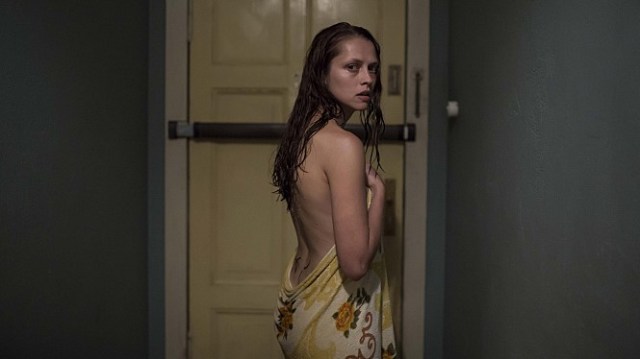
The screenplay by Shaun Grant, which is based on Melanie Joosten’s novel of the same name, wisely does not try to explain Andi’s disturbing behaviors (we can only guess he was not so happy with his mother when he was young), and it focuses instead on how Clare is slowly influenced by her captive status as she continues to be imprisoned by her captor. As alternatively oppressed and coaxed by him, she gradually looks desolate and submissive, and she often finds herself put into humiliating moments without much resistance. These moments are surely uncomfortable to watch, but they are deftly handled by director Cate Shortland with considerable restraint, and they convey well the horror of Clare’s ghastly circumstance to us while never feeling too sensational or exploitative.

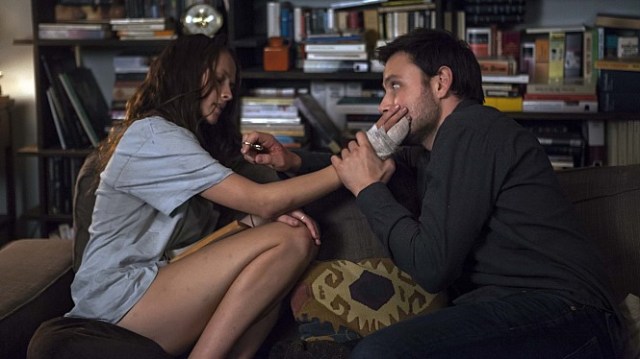
Shortland also skillfully modulates the level of tension as Clare and her captor’s relationship totters on the thin line between hostility and intimacy. The mood is always tense and unstable whenever they are together in the apartment, but they also become emotionally attached to each other as time goes by. When he needs some emotional support at one point, she willingly gives him what he wants, and that moment will surely remind you of Stockholm syndrome, a famous psychological term from which the title of the movie is apparently derived.
berlinsyndrome03

The movie is not without weak aspects. The second act of the movie loses its pacing at times, and I think the movie could be more taut and effective if this part were trimmed a little. In addition, the movie depends too much on contrivances during its third act, and I must confess that I still do not know how a certain supporting character manages to go inside Andi’s apartment building during the climax part, which feels a bit too hurried compared to what has been accumulated during the rest of the film.

Nevertheless, I appreciated its skillful aspects. Thanks to the chilly cinematography by Germain McMicking, the sense of dread is effectively established from the very beginning, and Bryony Marks’ moody score further accentuates that impression. As Clare comes to face more of Andi’s morbid side, the atmosphere inside Andi’s apartment becomes more ominous, and we come to fear more for our unfortunate heroine who may never get out of her prison alive.

Above all, the movie is supported by well by its two lead performers. Teresa Palmer, an Australian actress who was one of substantial supporting characters in “Hacksaw Ridge” (2016), willingly throws herself into her challenging role, and she is believable in every step as her character slowly descends into hopelessness and resignation while also trying to grasp for any chance of survival. Max Reimelt, a German actor who previously appeared in “Free Fall” (2013), is also fine in his effective performance, and his uneasy interactions with his co-star on the screen always keep us on the edge.

Although it does not bring anything particularly new to its genre territory, “Berlin Syndrome” has engaging story and characters to present, and it did its job well enough to compensate for its several notable flaws. It is probably not for everyone, but this is a competent piece of work with two good performances to watch, so I recommend it with some caution.
berlinsyndrome04

Posted in Movies | Tagged , , | Leave a comment

Ash Flower (2016) ☆☆☆(3/4): A tale of two girls

ashflower02

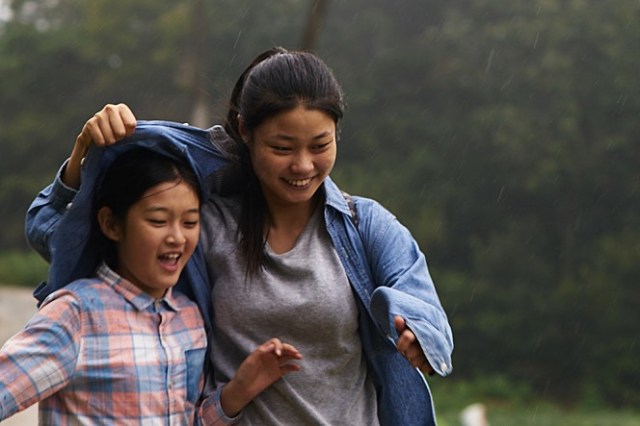
South Korean film “Ash Flower”, which is the last chapter of the Flower trilogy by director/co-writer Park Seok-yeong, is a simple but intimate character drama to admire for its sensitive and thoughtful storytelling. While it is mainly about two young girls who get close to each other after their accidental encounter, the movie also pays considerable attention to other few characters surrounding them, and there are several touching moments as the movie calmly observes all of them with care and empathy.

In “Steel Flower” (2015), which is the second chapter of the Flower trilogy after “Wild Flowers” (2014), Ha-dam (Jeong Ha-dam) struggled to earn her living alone in her harsh world, but her situation becomes a lot better when we meet her at the beginning of “Ash Flower”. Now she lives in some country village while working at a blueberry farm, and she also has a cozy, safe place to live. She has lived in a house belonging to a middle-aged woman named Sam-soon (Jeong Eun-kyeong), and she has been like an unofficial family member to Sam-soon, as reflected well by when Sam-soon refuses to take the extra payment from her lodger.

We also meet other characters in the film. Sam-soon’s son Cheol-gi (Kim Tae-hee) has saved a considerable amount of money along with his co-worker/friend Myeong-ho (Park Myung-hoon), and Cheol-gi wants the half of their saving now because he wants to use it for himself and his girlfriend Jin-gyeong (Park Hyun-young), a real estate agent who is eager to begin a new life through that money.

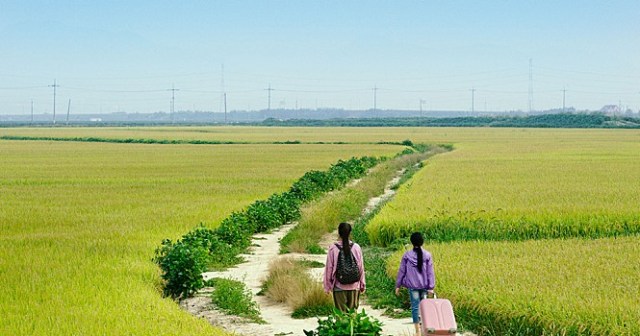
And there is Hae-byeol (Jang Hae-geum), an 11-year-old girl who comes to the village alone with her big suitcase for meeting Myeong-ho. After coming across Hae-byeol, Ha-dam takes this little girl to Myeong-ho’s house where he lives alone, and Myeong-ho gets a surprise news from Hae-byeol. According to her, he is her biological father, and she comes to him because there is no one to take care of her after her mother’s death.

ashflower03

Totally dumbfounded by this news, Myeong-ho tries to adjust himself to a new role he has never imagined before. While requesting a DNA test just in case, he decides to provide a more comfortable environment for Hae-byeol, and we get several humorous moments from his rather clumsy attempt. He does some digging in front of his house for making a flowerbed she wishes for. He buys a tent where she can sleep more comfortably. And he also comes to consider using all of the money saved by him and Cheol-gi for buying a new place for him and Hae-byeol.

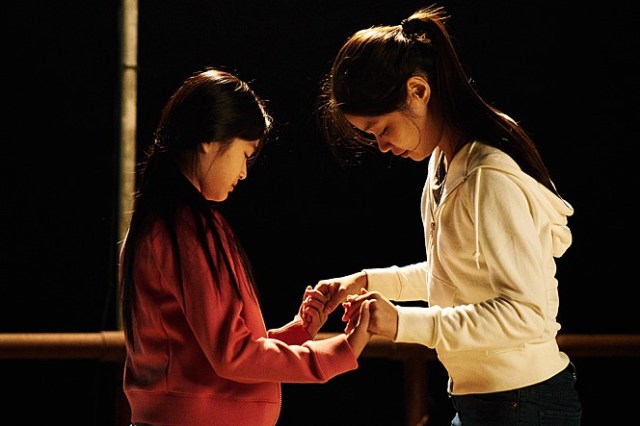
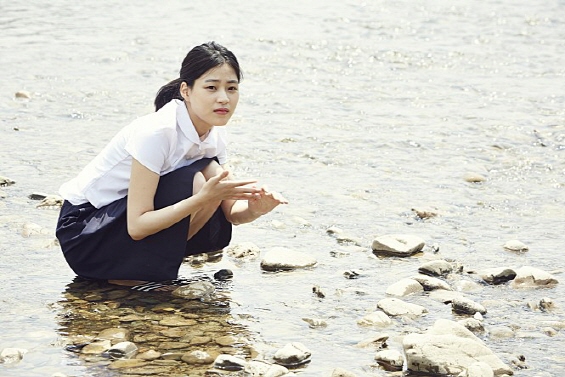
Meanwhile, Hae-byeol temporarily stays at Sam-soon’s house, and Hae-byeol and Ha-dam come to spend lots of time together around the village. At the blueberry farm, Ha-dam shows Hae-byeol how to pick blueberries, and she also takes Hae-byeol to a nearby river for their private picnic. Seeing a lot of herself from Hae-byeol, Ha-dam wants Hae-byeol to have a happy life, and that eventually prompts Ha-dam to commit a dishonest thing at one point.

This action of hers seems harmless at first, but, not so surprisingly, it inadvertently leads to a very serious circumstance, and that is where the movie becomes a little more intense than before. Not only Ha-dam but also some other characters in the film have to face the consequence of their actions in the end, and the movie firmly holds our attention as arriving at its expected climax moment.

It surely helps that the movie is supported well by its small group of performers. Jeong Ha-dam, who previously impressed me and other audiences a lot through her unforgettable performance in “Steel Flower”, did another terrific job here in this film, which is a warmer and gentler extension of what she demonstrated in “Steel Flower”. While she looks more outgoing and peaceful than before, Ha-dam is usually as reticent as before, and Jeong ably conveys her character’s thoughts and feelings to us via subtle touches of her nuanced performance.

ashflower01

In case of young performer Jang Ha-geum, she is plucky and likable in her unadorned performance, and she holds her own place well besides her co-performer. During a wonderful nocturnal scene involved with a certain object from “Steel Flower”, Jeong and Jang effortlessly show the growing relationship between their characters, and I could not help but touched by the sound made from that object, mainly because I still remember well how poignant it felt in “Steel Flower”.

The other cast members of the film are also solid in their respective roles. Jeong Eun-kyeong quietly radiates kindness and generosity, and the cordial relationship between her character and Ha-dam feels palpable even though the movie does not explain much about their relationship. While Park Myung-hoon and Kim Tae-hee are as simple-minded as required, Park Hyun-young brings some human complexity to her role, and she has a good scene when her character becomes conflicted about her unethical action later in the story.

Because I have not yet watched “Wild Flowers”, I cannot say whether “Ash Flower” is the best one in the trilogy or not, but I can tell you instead that it is another engaging work from Park Seok-yeong and Jeong Ha-dam. They give us one vividly human character to remember, and the movie is certainly a satisfying finishing touch to their trilogy on the whole.

ashflower04

Posted in Movies | Tagged | 1 Comment

The Day After (2017) ☆☆☆(3/4): A slight minor work from Hong Sang-soo

thedayafter01

Besides being one of the most prominent filmmakers working in South Korea, Hong Sang-soo is one of the most prolific ones. Like Woody Allen, he has usually made one or two works every year, and watching his new film has been a sort of annual event for me and other audiences, though it took some time for me to get accustomed to his plain, minimalistic storytelling style. While I was mildly amused by “Tale of Cinema” (2005), “Woman on the Beach” (2006), and “Night and Day” (2008), I came to enjoy his films a little more than before after watching “Like You Know It All” (2009) and “HaHaHa” (2010), and I became more enthusiastic around the time when “In Another Country” (2012), which is one of his best works to date in my inconsequential opinion, was released.

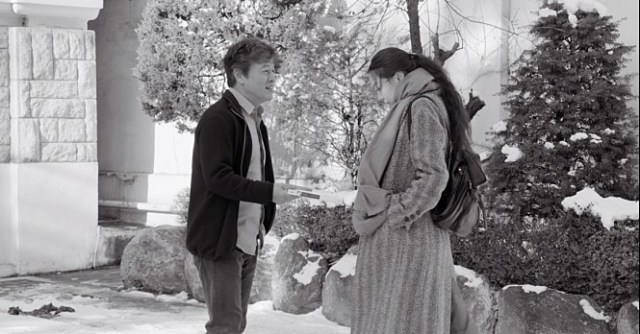
In case of “The Day After”, one of Hong’s three films in this year, it is mainly driven by a series of conversations scene like many of his other works, but it is more straightforward and less playful compared to his recent works. Shot in black-and-white digital film like “The Day He Arrives” (2011), the mood is drier then before, and I observed its few characters from the distance throughout the film like I did while I watched “Tale of Cinema” and “Woman on the Beach”. While the movie required some patience during my viewing, but there are several good moments to amuse me at least, and that is as much as I could expect from Hong’s work.

The movie opens with its middle-aged married hero beginning his another day early in the morning. Besides working as a literature critic at times, Bong-wan (Kwon Hae-hyo) runs a small publishing house, and the following flashback scenes show us the end of his affair with Chang-sook (Kim Sae-byeok), a pretty young woman who had worked under Bong-wan as his sole employee but recently walked away from her job as well as Bong-wan.

thedayafter05While it seems he is still not recovering from his break-up with Chang-sook, there comes another pretty young woman. She is Ah-reum (Kim Min-hee, who was terrific in Hong’s previous film “On the Beach at Night Alone” (2017)), and she comes to Bong-wan’s publishing house as his new employee. As shown from the first conversation scene between her and Bong-wan, she is genuinely interested in literature, and Bong-wan soon finds himself attracted to her. He later takes her to a restaurant for having a lunch and some drink together, and it looks like she is also attracted to Bong-wan while they talk more and more with each other.
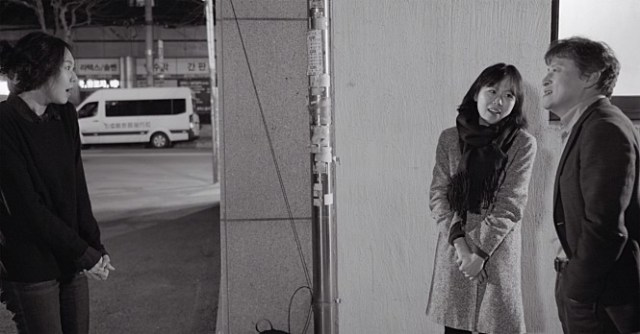
However, Bong-wan shows her his jaded superficiality as their conversation becomes more serious. When Ah-reum asks him about his belief and life philosophy, he does not give her any satisfying answer while not knowing what to say, and then this awkward moment is followed by a bitter flashback scene between Chang-sook and Bong-wan.

Not long after her lunch with Bong-wan, Ah-reum is confronted by Bong-wan’s wife Hae-joo (Jo Yoon-hee). Hae-joo has been suspecting her husband’s affair, so she comes to his workplace for facing the woman with whom he is involved with, but, unfortunately, she mistakes Ah-reum for Chang-sook. Sandwiched by Ah-reum and his angry wife, Bong-wan cowardly tries to avoid taking any responsibility for the mess caused by his infidelity, and, to our little amusement, that only makes him look all the more pathetic.

After this incident, Bong-wan buys Ah-reum a dinner as a sort of compensation for her bad first day, but the situation becomes complicated when he comes across Chang-sook around that point. After he takes both Chang-sook and Ah-reum to his publishing house, they drink together a bit like many characters of Hong’s films, and it seems Bong-wan and Chang-sook still have some feelings between them.

thedayafter04

This could be the solid beginning for whatever would follow next, but Hong’s screenplay simply stops there and then moves onto the epilogue part, which amusingly repeats one of the earlier scenes in the film. I guess its point is that our pathetic hero does not learn anything from his embarrassing mess as repeating himself again, but the movie does not make much impact for that as merely watching one of its main characters silently walking away from us.

Anyway, the movie is an engaging experience mainly thanks to the good performances from its small cast. Kwon Hae-hyo, who previously appeared in “Yourself and Yours” (2016) and “On the Beach at Night Alone”, is effective as a weak, flawed guy who seriously needs some self-awareness, and Kim Sae-byeok and Jo Yoon-hee are also competent in their respective roles. In case of Kim Min-hee, who recently drew lots of public attention due to her affair with Hong, she did an effortless job of filling her character with warmth and shrewdness, and that is why her character comes to us as the one we come to care about more than the other characters in the film.

“The Day After”, which was recently shown at the Cannes Film Festival along with Hong’s other film “Claire’s Camera” (2017), is not as enjoyable as “On the Beach at Night Alone”, but it is still another interesting (and amusing) work from Hong despite its rather slight aspects in terms of narrative and characterization. Although I did not chuckle as much as I hoped, I enjoyed its solid performances and spontaneous dialogue scenes, and maybe I will revisit it someday for getting more from it. After all, Hong’s films are a kind of acquired taste, aren’t they?

thedayafter06

Posted in Movies | Tagged , | 1 Comment

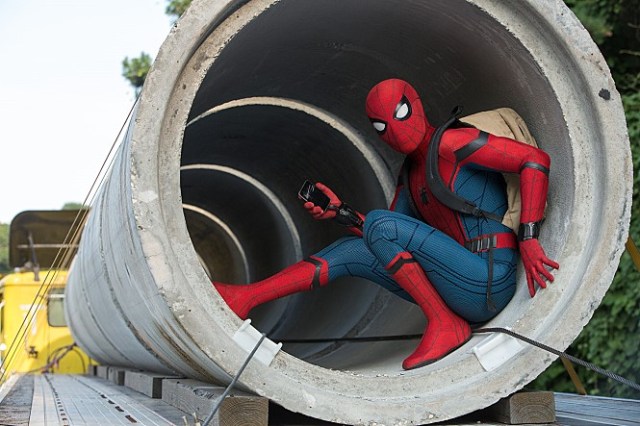
Spider-Man: Homecoming (2017) ☆☆1/2(2.5/4): Spider-Man with a bit of Iron Man

spidermanhomecoming02.jpg

After watching “Spider-Man: Homecoming”, I thought about how fast things come and go these days. We thought it was over when Sam Raimi completed his Spider-Man trilogy in 2007, but then there came “The Amazing Spider-Man” (2012) and its 2014 sequel, and now we get another reboot here, which is better than “The Amazing Spider-Man 2” (2014) or “Spider-Man 3” (2007) but frequently hampered by several weak aspects including thin plot and superficial characterization. In short, this is no more than a product to fill another spot in the Marvel Cinematic Universe (MCU) franchise.

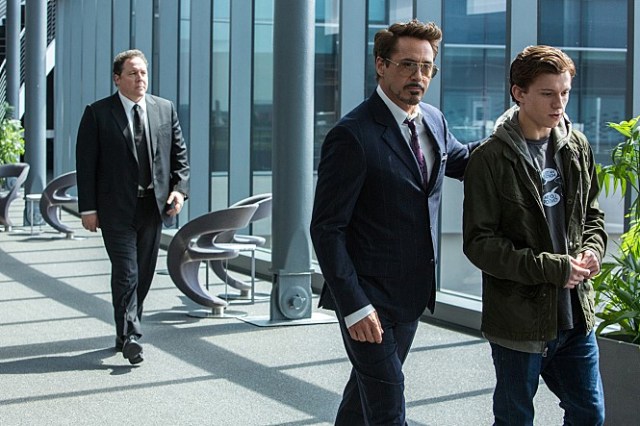
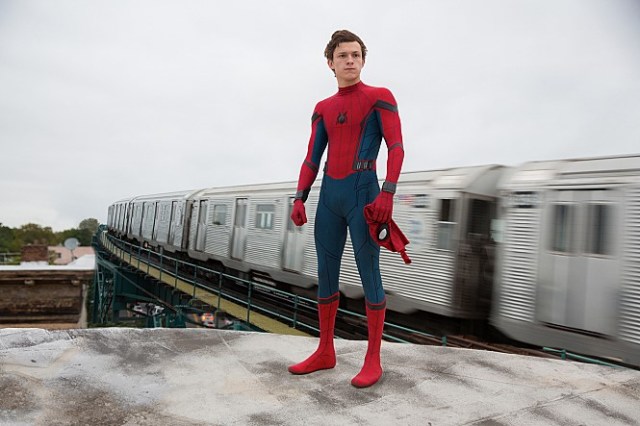
As many of you know, the movie is the first Spider-Man movie connected with the MCU franchise. After a deal was made between Sony and Marvel Studios a few years ago, Peter Parker/Spider-Man (Tom Holland) could be included in “Captain America: Civil War” (2016), and one early scene of “Spider-Man: Homecoming” summarizes what Parker went through in that movie via a series of video clips shot by him. While he is excited to be recruited by Tony Stark/Iron Man (Robert Downey Jr.), he is also thrilled to receive a new Spider-Man suit which is a lot better than what he has worn, and he is certainly eager to be a new member of Avengers.

However, Stark and his assistant Happy Hogan (Jon Favreau) think Parker is not ready for that, so Parker keeps doing his usual small heroic things around the city of New York while also trying to deal with several matters of his mundane adolescent life. He has been carrying a torch for a pretty girl named Liz (Laura Harrier), but he has hesitated to express his attraction to her although they have known each other as members of the academic decathlon team of their science high school. While he has managed to hide his superhero identity from others including Aunt May (Marisa Tomei), his close friend Ned (Jacob Batalon) finds it out on one day, and he surely shows lots of interest in Parker’s superhero abilities while mostly keeping his mouth shut.

spidermanhomecoming04

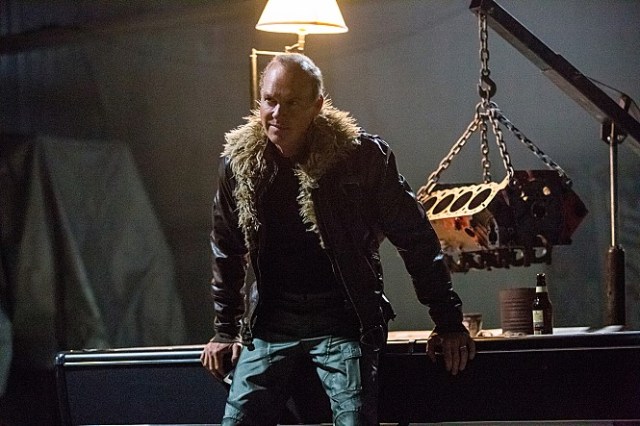
In the meantime, there comes a big trouble. Not long after he confronts a group of criminals armed with new kinds of weapons he has never seen before, Parker comes across Adrian Toomes/Vulture (Michael Keaton), who was initially a hard-working scrap scavenger but came to start his black market business with bits of alien technology after being pushed away from his big business opportunity by Stark Industries and the US government several years ago (Remember that massive alien invasion in “The Avengers” (2012)?). Watching Keaton appearing with a pair of big metallic wings on the screen, I could not help but think of his funny Oscar-nominated performance in “Birdman” (2014), but Keaton brings considerable intensity to his character nonetheless, who is not as memorable as Doctor Octopus or Green Goblin but feels menacing enough at least.

As Parker tries to stop his opponent, the movie gives us a number of action sequences, but most of them are not particularly impressive to say the least. Except a nice action sequence unfolded on a big ferry, the action sequences in the movie suffer from their rather mediocre special effects, and they are also little confusing at times due to choppy editing, which will be surely distracting especially if you watch the movie in 3D instead of 2D.

The director/co-writer John Watts, who previously made his first feature film “Cop Car” (2015), tries to keep things being afloat via light-weighted mood, and the screenplay written by him and his five co-writers succeeds to some degrees in case of several scenes involved with Parker and his school colleagues. These scenes feel genuine and enjoyable, and it surely helps that Holland, who is currently 21, looks young enough to play a teenager character. Beside conveying well his character’s irrepressible eagerness to prove himself, Holland is also believable as his character comes to learn some important lessons through his first big solo adventure, so nobody has to tell his character this time that with great power comes great responsibility.

spidermanhomecoming01

However, most of the supporting performers surrounding Holland are under-utilized to my disappointment. Robert Downey Jr. simply appears a few times in the film as required, and so do Jon Favreau, Gwyneth Paltrow, and Chris Evans, who gives us a short but humorous moment at the end of the movie. Although it is nice to see minor supporting roles in the film being played by various notable performers including Donald Glover, Tony Revolori, Kenneth Choi, Michael Chernus, Hannibal Buress, Bokeem Woodbine, Logan Marshall-Green, Jennifer Connelly, and Abraham Attah, they do not have many things to do except filling their respective roles, and Marisa Tomei is seriously wasted in her underdeveloped role. I guess the movie tries to do something different with her character, but Tomei feels too sexy and vibrant for her role, compared to Rosemary Harris in Raimi’s Spider-Man trilogy or Sally Field in “The Amazing Spider-Man” and its 2014 sequel.

“Spider-Man: Homecoming” will probably appeal a lot to the fans of MCU movies as usual, but it does not have enough personality to distinguish itself from other recent Spider-Man movies. It merely functions as a prelude to another Spider-Man movie as well as other upcoming MCU movies including “Avengers: Infinity War” (2018), and I left the screening room with growing tiredness in my mind when it was over.

Is superhero movie really approaching to eventual collapse, as many film critics worried around the time when “The Avengers” came out? While “Wonder Woman” (2017) and “Logan” (2017) thankfully showed that there are still some new grounds to be explored, that alarming trend seems to be continued as exemplified by “Spider-Man: Homecoming”. The movie is watchable but forgettable, and I wish I could care more about it.

spidermanhomecoming03

Posted in Movies | Leave a comment

Okja (2017) ☆☆☆1/2(3.5/4) : Save her super pig

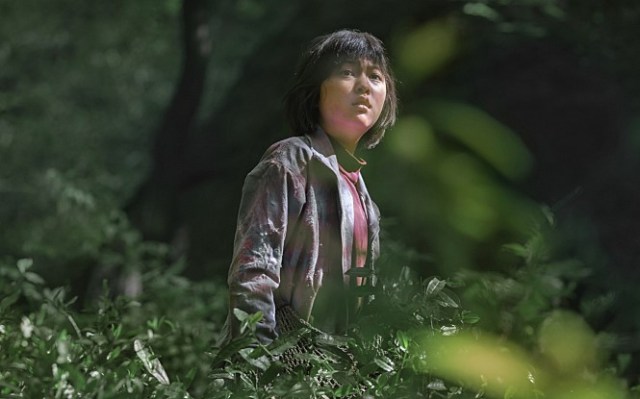
okja01What an odd work “Okja” is. Besides being an offbeat hybrid between South Korean film and American Hollywood film, this is also a quirky cross of several different genres which are somehow juxtaposed together in one curious bundle, and I enjoyed that a lot even though it is not wholly successful. The movie alternatively works as a zany adventure drama, a broad social satire, and a grim horror story, and it is rather amazing to see how the movie mostly balances itself well between its many contrasting and clashing genre elements as casually jumping from one narrative point to another.
Anyway, what the hell can I expect anything else from director Bong Joon-ho? Since his debut feature film “Barking Dogs Never Bite” (2000), he has consistently attempted his own fusion of different genres as shown from “Memories of Murder” (2003), “The Host” (2006), “Mother” (2009), and “Snowpiercer” (2013), and “Okja” is not so different from his previous works in that aspect. Like Bong’s other works, the movie is bountiful with many goodies to be appreciated, and we gladly go along with its eccentric ride as totally involved in one touching relationship at the center of its story.

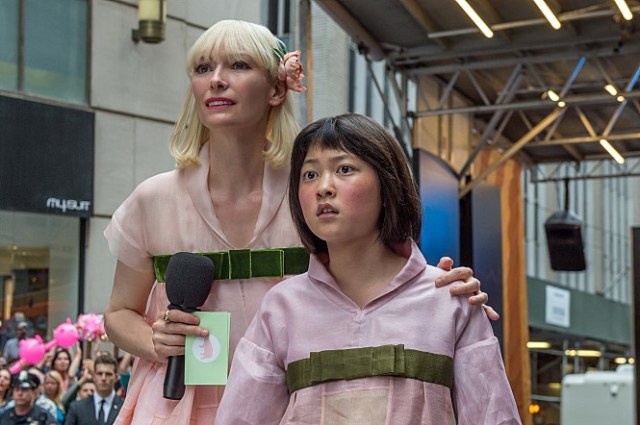
The movie opens with a big promotional event held by a multi-global corporation named Mirando, and its decidedly cheerful CEO Lucy Mirando (Tilda Swinton) introduces a new type of pig which is actually a genetically modified species but is promoted instead as a natural species newly found in Chile and then grown in Arizona. Emphasizing that this ‘super pig’ can be an answer to the increasing global demand for food, Mirando announces her ambitious plan; 26 of super pigs will be individually sent to various farmers around the world, and there will be a special event after 10 years, which will present the best one among the bunch.

okja03

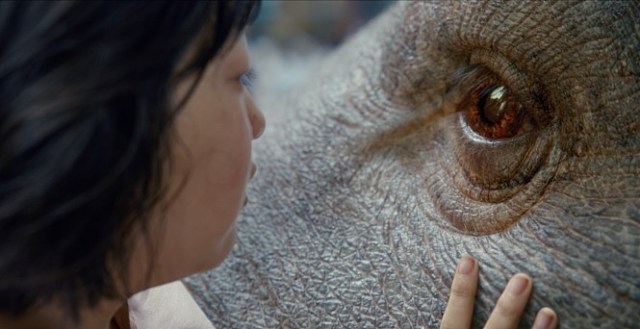
10 years later, we meet one of these super pigs, which was sent to a farmer living in a remote mountain area of South Korea. Looking like a cross between hippopotamus and manatee, this super pig, named Okja, has been under the care of Heebong (Byun Hee-bong) and his young granddaughter Mija (Ahn Seo-hyun), and the close relationship between Mija and Okja is apparent to us as we watch how they spend their free time together in a mountain forest surrounding Heebong and Mija’s little house. When Mija gives Okja some soothing words shortly after one precarious circumstance, we do not hear what exactly she is saying to her big friend, but we feel the intimacy established between them, and that makes the scene all the more emotionally resonant.

On one day, there come several visitors including Dr. Johnny Wilcox (Jake Gyllenhaal), a wacky zoologist and TV personality who has been a public representative of the Mirando Corporation. They come for evaluating Okja, and Okja is soon taken away from Mija because it is chosen as the best super pig to be sent to New York City. Understandably angry and furious about this, Mi-ja is determined to regain Okja by any means necessary, so she immediately goes to Seoul, where Okja is currently being prepared for being sent to New York City.

The plot gets thickened as Mi-ja inadvertently gets involved with a bunch of animal rights activists. Like Mija, they want to save Okja from the grim fate awaiting her in US, and there is an amusingly disjointed moment when they try to communicate with her via their translator, who turns out to be a little too eager about following their cause. While not knowing what is exactly going on, Mija subsequently finds herself sent to New York City along with Okja, and Mirando is fully ready to use them for promoting what may be her greatest business achievement.

okja02

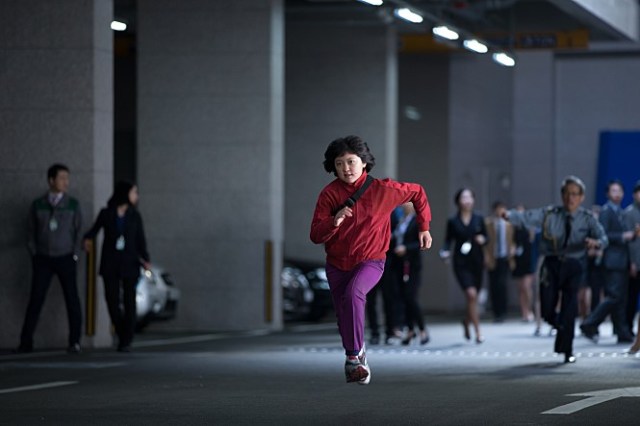
Going up and down along with Mija and other substantial characters, the movie serves us with several different moments to remember. In case of an action sequence unfolded in a downtown area of Seoul, it alternatively amuses and thrills us as peppered with nice details to notice (my favorite one is a big pork advertisement on the wall, by the way), and the farcical score by Jung Jae-il further accentuates the comical aspect of this sequence. In case of one particular scene later in the movie, it will surely make you think twice about eating pork or other kinds of meat, and that is why one small moment around the end of this gut-chilling scene feels tragically poignant.

While I admire how the screenplay by Bong and his co-writer Jon Ronson goes for many unconventional things, some parts of the movie do not work as well as intended, and the movie pushes its broad characterization a bit too far at times. It is rather fun to see notable performers like Tilda Swinton, Paul Dano, and Jake Gyllenhaal willingly hurling themselves into their caricatures roles under Bong’s deft direction, but not all of them are successful, and Gyllenhaal often looks too strained in his supposedly intentional over-the-top performance, though I must admit that Gyllenhaal drinking a bottle of soju is something we do not see everyday.

Nevertheless, the movie works on the whole as an entertaining mixed bag as its weak and strong elements are held together by the emotional power generated from its sensitive depiction of Mija and Okja’s relationship. Simple and direct in her sincere acting, Ahn Seo-hyun is believable in her scenes with Okja, and Okja is a convincing CGI creature imbued with life, personality, and some intelligence.

“Okja”, which is currently available on Netflix and is also being shown at a number of movie theaters in South Korea, can be described as a ‘flawed’ work, but it is equipped with so much of style and personality that I came to regard its many flaws and holes with affectionate amusement during my viewing. We need more of movies like that these days, you know.

okja04

Posted in Movies | 1 Comment

Anarchist from Colony (2017) ☆☆☆(3/4): An anarchist couple who stood by each other

anarchistfromcolony01

Based on a dramatic real-life story from the Japanese Occupation era, South Korean film “Anarchist from Colony” is more amusing and entertaining than I expected. While being as serious as required by its historical subject, the movie is also quite humorous as cheerfully bouncing along with its two spirited main characters, and we cannot help but admire their indomitable spirit while observing how they passionately and mischievously stand by each other in front of social injustice and oppression.

They are Park Yeol (Lee Je-hoon) and Fumiko Kaneko (Choi Hui-seo), and the early part of the movie shows us how they come to fall in love with each other in Tokyo during the early 1920s. When they come across each other via a mutual friend of theirs, something clicks between them right from when their eyes meet. We soon see them sharing feelings and thoughts as fellow anarchists with common socialistic belief, and there is a funny, heartfelt scene where they make a personal/political oath to each other.

While he seems to be a plain rickshaw driver on the surface, Park has been a member of an underground group involved with the Korean Independence Movement. As reflected by a few brief amusing moments, the activities of Park and his comrades are inconsequential to say the least, but they want to contribute to the movement as much as they can, and Park has considered a plan for throwing a big blow to the Japanese government.

Kaneko knows all about this because she also attends their secret meeting. Unlike many other Japanese people, she believes that Japan has been doing wrong things to Korea, so she is sympathetic to the cause of Park and his comrades, and she willingly goes along with her lover’s plan although she is not so pleased when she comes to learn that he does not share everything with her as promised to her before.

anarchistfromcolony02

However, not long after one of Park’s comrades is sent to Shanghai for getting a bomb, there comes an unexpected catastrophe. On September 1st, 1925, Tokyo and its surrounding areas are suddenly shaken by a big earthquake, and the city and its people are thrown into panic and chaos while a group of high-ranking Japanese officials are trying to get the situation under control. They eventually decide to declare the martial law, but false rumors about Koreans poisoning wells and burning buildings are spread around the city with their connivance, and that leads to the mass killing of Koreans. Officially, 231 Koreans were killed during the aftermath of this earthquake, but, as briefly mentioned at one point in the film, it is estimated that the actual number is around 6,000 at least, and this was indubitably one of many shameful moments in the 20th Japanese history.

As facing this grim consequence, Mizuno (Kim In-woo), a high-ranking Japanese official who actively spread those virulent false rumors, needs anything to divert public attention from this, and he and his men find a right target in Park and Park’s comrades, who happened to be arrested shortly after the martial law was declared. Having been on the watchlist for years, Park and his comrades certainly look like a menace to the establishment, and Misuno’s men already got a confession from the guy who was sent to Shanghai. Technically, Park and his comrades only prepared for their plan a little while not committing anything serious, but that is more than enough for Mizuno and his men to bring a charge of treason against them.

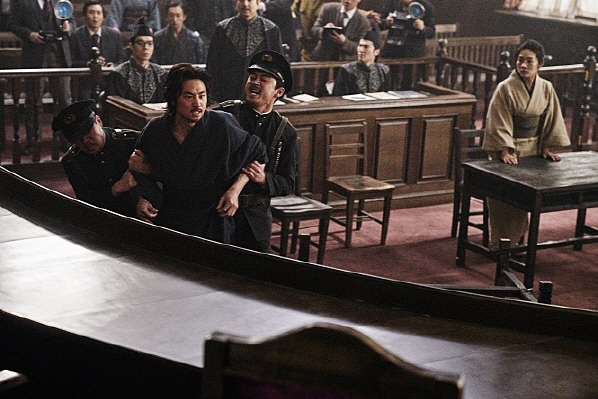
Knowing well what will happen regardless of whether he and his comrades resist or not, Park decides to confess, but he has a clever idea of how to utilize this supposedly hopeless circumstance for his political purpose. For protecting his comrades, he insists that he planned it alone from the start, and he also claims that he was planning to assassinate the crown prince of Japan. This ‘confession’ of his surely draws lots of attention from the media, and he becomes more determined to make the upcoming trial into a political show for him and Kaneko, who did not hesitate to get arrested along with Park and then gladly presents herself as her lover’s sole accomplice.

While they will likely be sentenced to death at their trial, Park and Kaneko are more bound to each other as strongly pushing their belief and love together in front of others, and the movie generates a number of humorous moments as these two defiant lovers give constant headaches to Mizuno and other Japanese government officials. On the first day of their trial, they cause public sensation as wearing traditional Korean costumes, and I can assure you that Park and Kaneko really did that in real life. The screenplay by Hwang Seong-gu sticks very close to the records of the real-life trial, and I heard that most of those politically charged statements made during the court scenes in the movie are exactly what Park and Kaneko said during their trial.

anarchistfromcolony06

It surely helps that the movie is anchored by two charismatic lead performances. While Lee Je-hoon, who drew my attention for the first time via his terrific breakthrough turns in “Bleak Night” (2010) and “The Front Line” (2011), balances his performance well between comedy and drama as demonstrating another side of his immense talent, Choi Hui-seo, who previously played a minor supporting character in director Lee Joon-ik’s previous film “DongJu: the Portrait of a Poet” (2015)“, is also wonderful as Lee’s equal acting partner, and the screen sparks with their undeniable chemistry whenever they are on the screen together. Thanks to their solid performances, Park and Kaneko come to us as vivid, enjoyable characters, and Lee and Choi are particularly good when Park and Kaneko indirectly confirm their love to each other via their individual statements during the trial. They do not say anything about their love, but their mutual affection is palpable as the camera looks at them, and that is why this moment is touching and poignant.

The other characters in the movie are less developed in comparison, but it is interesting to observe how some of Japanese characters besides Kaneko are presented as sympathetic figures. While Kim In-woo is suitably despicable in his broad villain role, Kim Joon-han is a no-nonsense judge who gradually becomes skeptical about his case, and Japanese actor Tasuku Yamanouchi deserves to be mentioned as Tatsushi Fuse, a conscientious lawyer who defended not only Park and Kaneko but also numerous notable Korean activists in real life and is in fact the only Japanese citizen who received the Order of Merit for National Foundation from the South Korean government.

Through his notable films including “Once Upon a Time in a Battlefield” (2003), “King and the Clown” (2006), “Blades of Blood” (2010), “The Throne” (2015), and “DongJu: the Portrait of a Poet”, Lee Joon-ik has shown his affinity toward historical subjects, and “Anarchist from Colony” is no exception. While it loses some of its bouncy spirit during its expected third act, this engaging period drama film still distinguishes itself with considerable personality, and Park and Kaneko remain to be interesting characters to watch regardless of what you think of them. They are indeed hardcore anarchists, but they are a pretty cool couple, aren’t they?

anarchistfromcolony03

Posted in Movies | Tagged , , | 1 Comment

American Honey (2016) ☆☆☆1/2(3.5/4): Selling and drifting on the road

americanhoney01

“American Honey”, which won the Jury Prize at the Cannes Film Festival in last year, gives us a vivid, realistic glimpse into a certain type of lifestyle which is not so familiar to many of us. Because I had never heard about its subject, I observed the movie with curiosity, and then I found myself gradually involved in its seemingly aimless journey with a bunch of young characters wandering around the American midwestern regions. I was excited by a number of small but wonderful musical moments brimming with life and spirit, and I also felt a bit saddened as observing that its characters will probably go on and on until they are no longer young.

In the beginning, we meet Star (Sasha Lane), a poor adolescent girl living in some town located in Oklahoma. Because her stepmother left her and her two younger siblings and her father is nothing but an alcoholic bum, she is the one in charge of taking care of her family, and the opening scene shows her searching a trash container and then eventually finding something fairly edible: a package of frozen chicken which is almost thawed now.

When she and her two younger siblings are around a town supermarket building, a van passes by them, and then she comes across Jake (Shia LaBeouf) and his fellow young drifters. When Rihanna and Calvin Harris’ song “We Found Love” is played in the building, these young people joyously dance to the music, and that brief moment of joy and freedom surely impresses Star. When she approaches to Jake later, he gives her a chance to join his bunch, and she grabs it as hoping for the escape from her poor neighbourhood.

Mainly through Jake, Star comes to learn how to earn money like other members in the bunch. Under the strict management by Krystal (Riley Keough), who is the forewoman of the bunch, they have to sell magazine subscriptions door-to-door during their work time, and Krystal emphasizes to Star that she will not be generous to anyone who does not earn enough.

americanhoney03

Jake has always been the number one salesman in the bunch, and Star watches how he works when they go together around a suburban neighborhood. When he rings the doorbell of one house, a teenager girl opens the door, and he quickly ingratiates himself with that girl. When that girl’s mother appears, he swiftly moves his focus to her, and we get a humorously tense moment as he tenaciously tries to persuade that woman to buy anything. The woman does not seem to be persuaded at all, but he keeps talking and talking while the woman’s daughter is having a fun, lively musical time with other girls outside, and this situation is eventually punctuated by Star when she refuses to go along with his tactic.

Instead of being plot-driven, the movie drifts around such good scenes like that as its characters move from one region to another. At one point, Jake and Star come across a trio of apparently affluent middle-aged guys, and this encounter leads to an amusing scene unfolded around the swimming pool of a big house. When Star and other members of the bunch approach to a group of oil field workers, we get another wonderful musical moment as the aforementioned song by Rihanna and Calvin Harris is played, and then it is followed by an unnerving private moment between Star and a worker who makes an offer she cannot refuse easily.

And we get to know the bunch a bit as feeling the sense of community around them. Besides vividly capturing small and big moments of natural beauty on the screen, cinematographer Robbie Ryan, who previously collaborated with director/writer Andrea Arnold in “Fish Tank” (2009) and “Wuthering Heights” (2011), did a splendid job of conveying the intimacy among characters whenever they spend time in their van, and the screen ratio of 1.37:1 furthers accentuates that. While Jake and Krystal are naturally more prominent in comparison, the other members of the bunch are colorful in each own way, and the performers playing these characters, most of whom are non-professionals, are believable as distinctive individuals to watch. McCaul Lombardi is particularly hilarious as a showier member of the bunch, and I also liked the gentle supporting performance by Arielle Holmes, who plays a shy, sweet girl in the bunch.

americanhoney05

In case of Sasha Lane, a non-professional performer who was picked by Arnold at the last minute, she is simply fabulous in her unadorned acting which is as memorable as Katie Jarvis’s equally impressive performance in “Fish Tank”. Beside a few early scenes which succinctly establish the world in which she has been stuck, the movie does not show or tell much about Star, but Lane makes every moment of hers in the film feel true and genuine, and she ably carries the movie even when the movie falters around its arrival point.

Shia LaBeouf and Riley Keough are also very good in their respective roles. Suitably looking wily, shabby, and charming, LaBeouf shows that he is still a good actor despite his recent career trouble, and he and Lane click well together as their characters are slowly drawn to each other. Tough as nails as required, Keough has a couple of juicy moments, and I appreciate how she indirectly suggests her character’s hardened humanity during these scenes.

“American Honey” is not entirely successful. While its heroine’s journey is the whole point of the movie, the movie becomes a little too repetitive during its second half, and, in my opinion, the finale does not work as well as intended. Nonetheless, I admired its authentic mood and commendable performances, and I think it is another fascinating work from Arnold.

americanhoney04


Posted in Movies | Tagged | Leave a comment

Yongsoon (2016) ☆☆☆(3/4): A country girl’s hot, problematic summer

yongsoon03.jpg

While it is uncomfortable to watch at times for good reasons, South Korean film “Yongsoon” comes to us as an engaging coming-of-age drama about its adolescent heroine’s hot, problematic summer. Although it is inarguable that she clings to a very inappropriate relationship, the movie maintains its non-judgmental view as closely observing her tumultuous emotional struggle, and we come to care and worry about her a lot while watching her recklessly swaying along with her hormone-charged feelings.

Yong-soon (Lee Soo-Kyeong) is an 18-year-old high school girl living with her widower father in some country village, and she tells us a bit about herself during the prologue sequence. Her mother died early when she was young, and she still remembers her last moment with her mother, who left her husband and then went to her first love when there was not much time left for her.

That probably made Yong-soon go for her first love, but the person in question is not so suitable to say the least. As summer begins, she joins the athletics team of her high school along with her close friend Moon-hee (Jang Haet-sal), and everything looks fine on the surface as she and other teams members go through training under their coach’s guidance, but it is gradually revealed that Yong-soon has been in relationship with the coach for a while. Although the movie never clarifies how far they have gone in their hidden relationship, they did spend time together several times, and, as reflected by her sincere present to the coach, Yong-soon is totally serious about her first romantic relationship like any girls around her age.

However, it turns out that the coach is less serious about their relationship. On one day, Yong-soon’s another close friend Pak-kyoo (Kim Dong-yeong), who has had some feelings toward her for years, shows her a video clip of the coach going inside a local motel along with an unidentified woman, and Yong-soon naturally feels angry about this. She becomes determined to find who that woman is, and Moon-hee and Pak-kyoo agree to help her although they have reasonable concern about their friend.

yongsoon01

The mood often becomes humorous as Yong-soon and her friends try to find the identity of that woman, but the movie does not overlook the serious aspect of Yong-soon’s circumstance. While it is undeniable that the coach did a wrong thing to her from the very beginning and he should have ended their relationship as soon as possible, he remains indecisive even when she makes clear to him that she is suspicious of him, and that makes her all the more exasperated and frustrated.

Meanwhile, Yong-soon’s father decides to marry a young Mongolian woman who has corresponded with him for a while, and this causes more emotional turmoil inside Yong-soon. Although Her father’s new wife is ready to be nice to her stepdaughter, Yong-soon is hostile to her stepmother right from their first encounter, and she frequently throws harsh words at her stepmother just because she has been angry and annoyed. As a woman genuinely cares about her husband and her stepdaughter, Yong-soon’s stepmother tries to be patient and understanding, but there comes a point where she decides that enough is enough.

The situation becomes more complicated when Yong-soon and her friends eventually discover the identity of the woman involved with the coach. As the movie arrives at a certain expected narrative point, we brace for what may happen among Yong-soon and some other characters when they happen to be in the same space, and this moment strikes us hard with considerable emotional intensity thanks to director/writer Shin Joon’s competent direction and his performers’ convincing performance.

yongsoon02

As the feisty center of the movie, Lee Soo-kyeong, who previously played a minor supporting character in “Coin Locker Girl” (2015), is commendable in her unpretentious performance, and she conveys well her character’s dynamic emotional state to us while never making any excuse on her character’s self-absorbed aspect. Simply not wanting to give up her first love, Yong-soon is willing to go as far as she can, but she only finds herself going down into more misery and unhappiness, and she surely gets some important lessons from that.

Lee is surrounded by several good supporting performers who are equally solid in their respective roles. While Jang Haet-sal and Kim Dong-yeong are likable as comic foils to Lee, Choi Deok-moon and Mongolian performer Janska have their own small tender moment as their characters’ relationship turns out to be deeper than we expected, and Park Keun-rok is adequately cast as a guy who certainly deserves what he gets in the end.

“Yongsoon”, which is developed from Shin’s short film “Yongoon’s Summer” (2014), is a modest character drama on the whole, but it deserves to be mentioned along with other recent notable adolescent drama movies such as “The Diary of a Teenager Girl” (2015) and “The Edge of Seventeen” (2016). Like “The Diary of a Teenager Girl”, the movie handles its rather sensitive subject well while never going too far, and it also captures well the emotional difficulties of adolescence as “The Edge of Seventeen” did. In short, this is one of interesting South Korean films of this year, and it is definitely a nice alternative to those brainless summer blockbuster films like “Transformers: The Last Knight” (2017).

yongsoon04

Posted in Movies | Tagged , , | Leave a comment

Transformers: The Last Knight (2017) ☆1/2(1.5/4): Another unbearable epic mess

transformersthelastknight

It is an understatement to say that “Transformers: The Last Knight” is a cinematic equivalent of blunt instrument. This is another unbearable epic mess as brainlessly loud and bombastic as three previous sequels following “Transformers” (2007), and it will relentlessly bludgeon your aural and optic nerve system for no less than 149 minutes while making no sense at all in terms of story and characters.

Accompanied with the narration by Anthony Hopkins, the prologue sequence of the movie ridiculously attempts to mix the legend of King Arthur and his knights with metallic CGI figures. When King Arthur and his knights are about to face a grim moment of certain death by their barbaric enemies, a guy named Merlin (Stanley Tucci) saves the day at the last minute through a little help from his big alien robot associates, and we are served with an outrageous moment featuring a flying dragon robot with three heads, while also being bombarded with lots of bangs and clangs to numb and bore us.

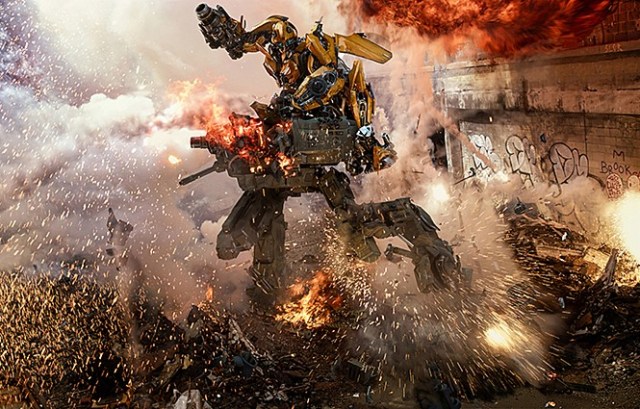
The movie subsequently moves forward to the present point not long after the events depicted in “Transformers: Age of Extinction” (2014). As more alien robots come to Earth, they are regarded as enemies to be destroyed as before, and Cade Yeager (Mark Wahlberg) has been accordingly hiding along with a bunch of robots including Bumblebee, but then he and Bumblebee happen to draw the attention of the US military and the Transformers Reaction Force (TRF) when they come across a young girl named Izabella (Isabela Moner) in an abandoned area of Chicago. Although it may be a bit amusing to see Bumblebee showing his hidden ability for a while, the movie indulges in lots of loud noises and frantic special effects again, and we only get more numbing confusion as a result.

transformersthelastknight03

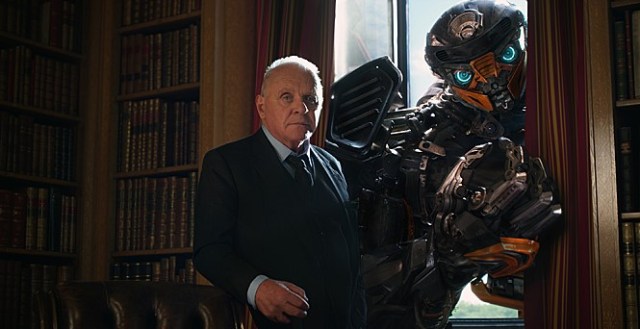
While saving Izabella and her little robot Sqweeks from their danger, Yeager comes to acquire a mysterious object, and that eventually leads him to a character played by Hopkins. This is surely a paycheck role to play for Hopkins and the movie does waste his undeniable talent, but he did what he could do with his role, and I can only tell you that he manages to maintain his dignity amidst heaps of nonsense and numerous silly cheap jokes. During his obligatory expository sequence, he looks as serious and authoritative as demanded despite its sheer nonsense, and he sells it to some degrees even though the movie annoyingly interrupts him more than once.

From Hopkins’ character, Yeager comes to learn about a big, imminent danger approaching to Earth, and he is accompanied with Vivian Wembly (Laura Haddock), a young professor who suddenly comes to realize her destined role in this very urgent circumstance. As they hurriedly search for a clue which will lead them to a certain old object belonging to Merlin, the movie mindlessly pushes them from one moment to another without any tangible sense of direction, and I must confess that I gave up discerning the exact details of how they eventually arrive at a certain underwater spot.

The movie tries to generate some sparks between Yeager and Wembly, but they do not have much human depth to engage us, and neither do other noticeable human characters in the film besides Hopkins’ character. For example, Yeager’s assistant is no more than your average black sidekick, and Izabella and her shabby robot often look like an insipid version of Rey and BB-8 in “Star Wars: The Force Awakens” (2015), though it should be mentioned that Isabela Moner brings some pluck into her rather bland character.

transformersthelastknight02

In case of the robot characters in the film, they do not interest me a lot as before. Bumblebee and other good robots including the ones voiced by John Goodman, Omar Sy, Ken Watanabe, and Steve Buscemi are just a little more distinctive and colorful than those bad robots led by Megatron (voiced by Frank Welker), who are mostly indistinguishable from each other in their uniformly ugly appearances. As the villainess who brainwashes Optimus Prime (voiced by Peter Cullen) for her diabolical plan, Quintessa (voiced by Gemma Chan) is not particularly scary or menacing, and that is one of the main reasons why the climax sequence of the movie does not work at all while merely being an incoherent series of CGI actions which are utterly joyless and unimaginative.

While I did not like “Transformers” enough to recommend it to others, I enjoyed it to some degrees, and it has been disappointing to see how the series has consistently gone down from that point. “Transformers: Revenge of the Fallen” (2009) is still the lowest point in the franchise thanks to many unforgettably awful things including that robot dog humping on Megan Fox’s leg, but the following two sequels are also pretty lousy to say the least while demonstrating the worst sides of director Michael Bay, whose recent cinematic aesthetics mainly consists of endless explosions and chaotic actions.

“Transformers: the Last Knight” is no exception, and watching it along with many audiences including a friend of mine was one of the most depressing movie-watching experiences I have ever had during recent years. I later apologized to him, but he said he disliked it less than me, and I am glad that this crappy piece of work did not hurt our relationship. I think I really should show him something a lot better someday.

transformersthelastknight04

Posted in Movies | Tagged , , | Leave a comment

Antiporno (2016) ☆☆☆(3/4): Another perverted exercise in style from Sion Sono

antiporno01

You cannot possibly expect anything normal from Sion Sono, who is surely one of the most interesting filmmakers working in Japan at present. “Cold Fish” (2010) was a bleak, disturbing psychological thriller about an ordinary family man gradually influenced by a diabolical serial killer he happens to be associated with, and I sort of admired how willingly that movie pushes its hero into the stark pit of evil madness. Although I cringed at many extremely violent scenes in “Why Don’t You Play Hell?” (2013), I could not help but laugh as excited by its manic comic spirit, and that movie remains to be one of the funniest (and bloodiest) movies I have ever watched during recent years.

In case of “Antiporno”, Sono tried another perverted exercise in style. Cheerfully morbid and colorfully stylish, the movie prances from one bizarre moment to another as deliberately disturbing and confusing us during its rather short running time (75 minutes). While I was not very comfortable with its sensational subject, I enjoyed its wild, bold madness surrounding its increasingly neurotic heroine, and you may also enjoy that if you are familiar with Sono’s other works and admire his own no-holds-barred approach.

During its first part, the movie seems to be about a virulent relationship between two different characters. Kyôko (Ami Tomite) is a popular novelist who has been known well for her unorthodox method of creating story and characters, and she does not seem to feel that well as trying to figure out what will be her next novel. Full of self-disgust and repulsion, she wildly bounces around in her apartment alone while heedlessly making supposedly feministic statements during the opening scene, and that further accentuates the stylized reality of the movie, which is mainly represented by the bold color scheme of her apartment and occasional gauzy shots.

antiporno03

It looks like Kyôko wants to write about female freedom this time, and that is certainly ironic considering how she cruelly mistreats her long-suffering assistant Noriko (Mariko Tsutsui). When Noriko comes to Kyôko’s apartment for notifying today’s schedule to her, Kyôko mocks and abuses Noriko a lot just because she can, and Noriko tolerates all these abusive behaviors from her boss while barely maintaining her meek, submissive appearance.

This sadomasochistic relationship of theirs is further explored when there come a bunch of chic female visitors to Kyôko’s apartment, who are going to interview and photograph Kyôko. Kyôko does not hesitate to show more of her cruelty to Noriko in front of them, and these visitors do not mind that at all. In fact, they willingly join her acts of cruelty, and there is a darkly absurd moment when they and Kyôko push Noriko into more humilation as Kyôko finally gets an idea for her new novel.

Around that point, “Antiporno” suddenly shifts itself onto a different situation, so now I advise you not to read further if you want to fully enjoy the movie. Its first 30 minutes turns out to be a part of a softcore film in production, and Kyôko and Noriko’s relationship is presented in a completely different light as they are revealed to be performers playing their respective roles. As the lead actress of the film, Kyôko tries to play her cruel character as believably as possible, but she cannot pull it off well to the frustration of everyone including her, and she is constantly bullied by not only the director but also her co-star Noriko, who could play Kyôko’s character instead considering how mean and uncaring she is to Kyôko in front of others on the set.

antiporno04

As Kyôko becomes more nervous, her state of mind gradually gets unhinged as the line between reality and fiction is blurred along with a series of weird moments. There is a hilariously blatant conversation on sex and pornography among Kyôko and her family, and then there comes a brief disturbing moment involved with Kyôko’s sister, whose fixation on butterflies leads to another odd moment to remember. These moments and other ones in the movie may reflect whatever has been suppressed in Kyôko’s mind, but then it is also possible that the second half of the movie is merely a fiction being written by Kyôko the author.

I must admit that the movie was a little too confusing for me from time to time, but I appreciated its mood and style at least. I was entertained to some degrees as the movie kept going on and on with its wry bad taste till the end, and I was often amused by the ironical use of classical music pieces throughout the film. The movie seems to be spinning its wheels around the ending, but then it jolts us with one hell of excessive moment as we can expect from Sono, and that is certainly a big finishing gesture to behold.

“Antiporno” is a part of the movie project in which Sono and four other prominent male Japanese filmmakers attempt to deconstruct and reconstruct Nikkatsu Roman Porno films, Japanese softcore films made by the Nikkatsu Studios during the 1970-80s. According to the pamphlet of “Antiporno”, the project intends to bring female perspective to softcore films, but I am not so sure about whether the movie is successful in that aspect. While it does work as a send-up and criticism of its subject, the movie still feels as gaudy and sensational as your average softcore film, and that makes me have some reservation on its overall result. Anyway, like Sono’s other works, the movie is something you cannot easily forget after watching it, and I recommend it with caution.

antiporno05

Posted in Movies | Tagged , , | Leave a comment