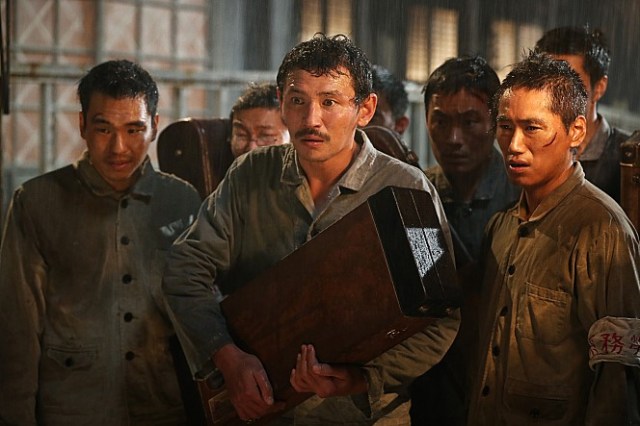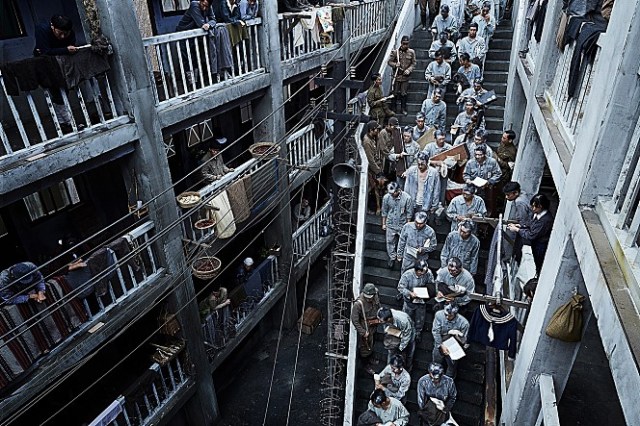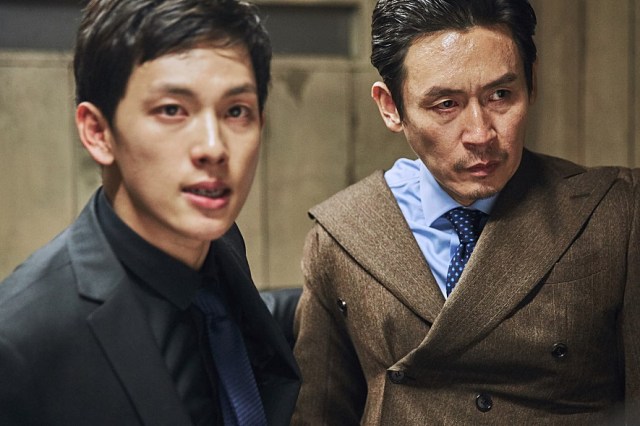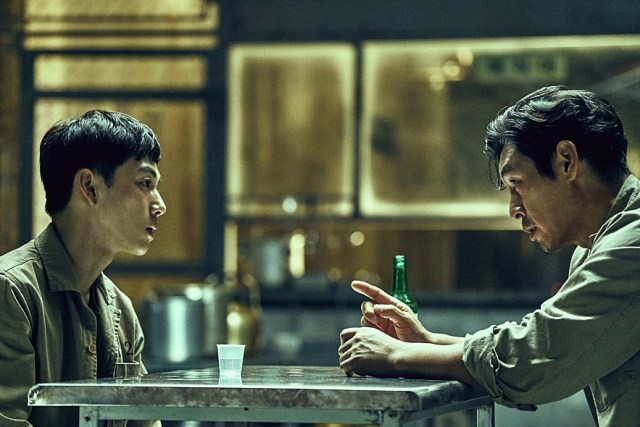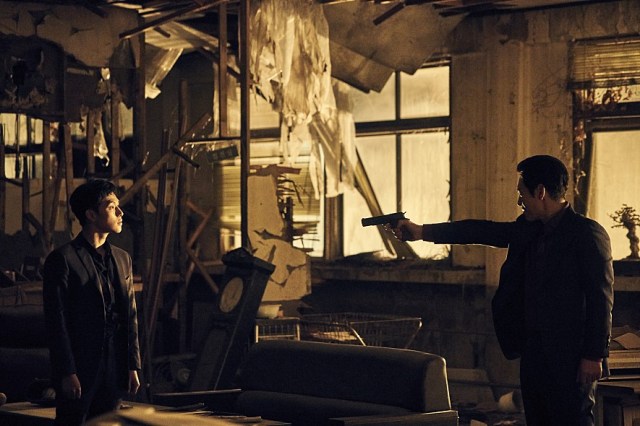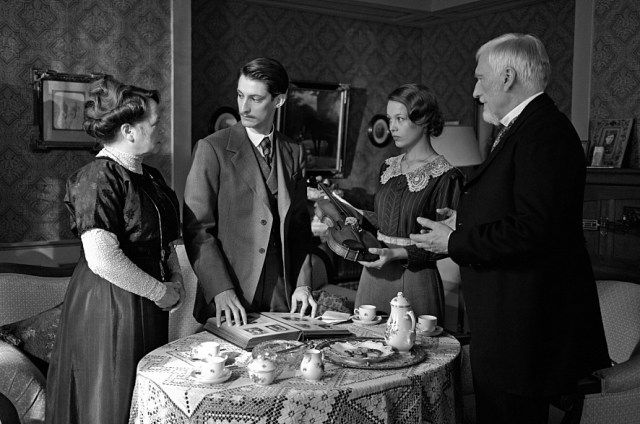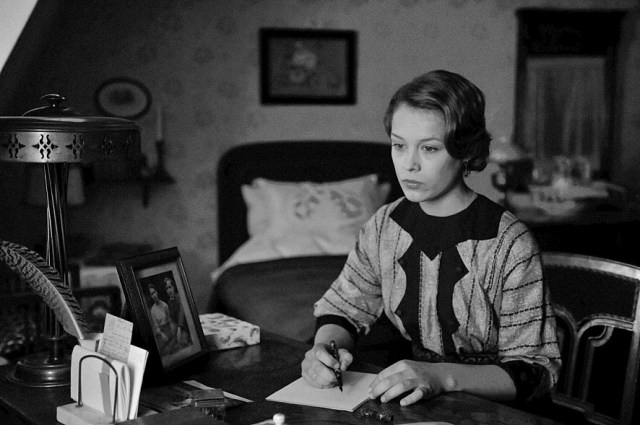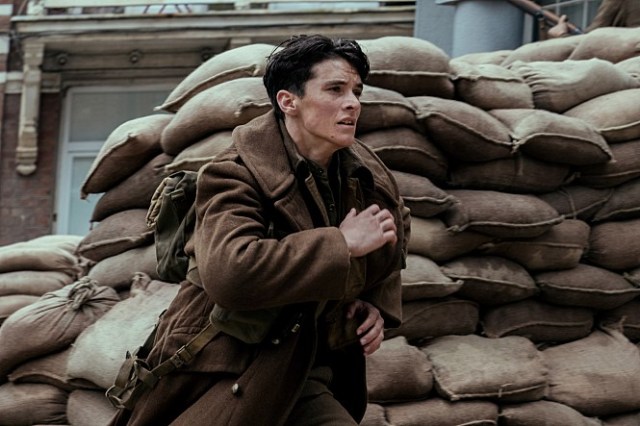
A Taxi Driver (2017) ☆☆☆(3/4): A taxi driver and his foreign passenger

ataxidriver05

South Korean film “A Taxi Driver” drives along a rather predictable route, but it knows well what it has to do for engaging us and then touching us. Although I still think it could be improved in several aspects, the movie has enough good things for recommendation, and it is also supported by another strong performance from one of the best performers in South Korea.

The movie begins with its everyman hero going through another ‘usual’ day of his plain daily life in Seoul, May 1980. Not long after the assassination of President Park Chung-hee in October 1979, General Chun Doo-hwan seized the power through his coup d’État, and he subsequently declared the martial law in the following year while further solidifying his political status. As many prominent political figures including Kim Dae-jung were accordingly arrested, lots of people demonstrated against Chun and his regime, and this unstable nationwide situation eventually culminated to a civil uprising in Gwangju on May 18th, 1980.

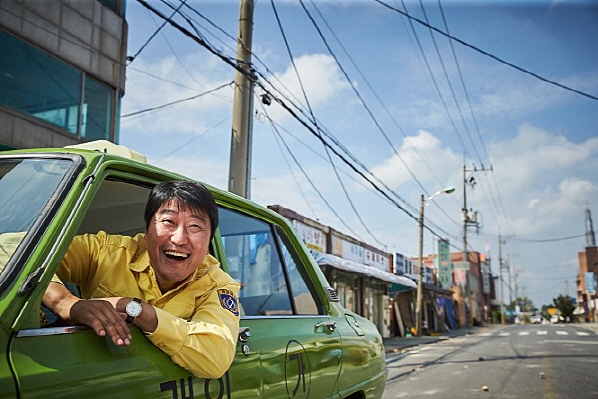
For Man-seop (Song Kang-ho),  who is one of many taxi drivers working in Seoul, frequent demonstrations in his city are simply an annoying problem blocking him from more money to earn. He does not care much about why those demonstrators are against the government, and all he cares about is earning enough money for him and his young daughter, who has been his only close family member since his wife died early not long after he came back from Saudi Arabia.

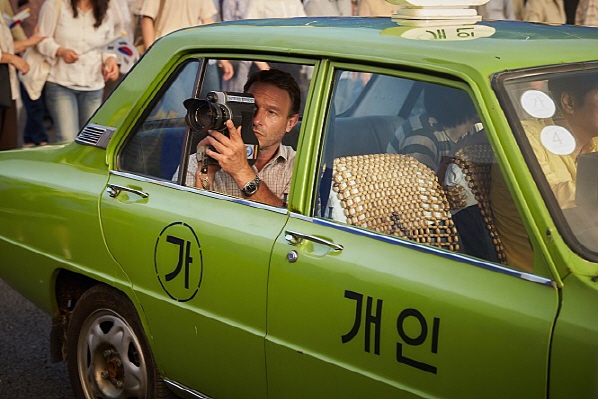
On one day, Man-seop happens to overhear a conversation about one foreigner who offers a considerable amount of money for a round trip between Seoul and Gwangju. Although he and others have heard rumors about what is going on in Gwangju, he instantly snatches that opportunity mainly because he has been behind several months in paying his rent, and that is how he comes to meet Jürgen Hinzpeter (Thomas Kretschmann), a German reporter who flies to Seoul from Tokyo after sensing something big from the ongoing situation surrounding Gwangju.
ataxidriver04

While everything looks fine at first as Man-seop gladly drives his taxi along a highway leading to Gwangju, he soon comes to realize that he inadvertently gets himself into a very serious circumstance. As he and Hinzpeter come close to Gwangju, they come across a warning sign on the road and then they come upon a makeshift military post where a bunch of soldiers are blocking the road. When they manage to arrive in Gwangju via a narrow detour, they behold the city mired in quiet unrest, and they soon come across a bunch of young demonstrators, who take Hinzpeter to a nearby local hospital which is filled with lots of people injured or killed by soldiers.

Man-seop tries to get out of Gwangju as soon as possible, but he only finds himself stuck along with Hinzpeter in the city, and, not so surprisingly, he come to witness the dark, brutal side of his country as Hinzpeter insists on recording more of what is happening in Gwangju. At one point, he watches a peaceful mass demonstration being savagely suppressed by soldiers, and that gut-chilling pandemonium certainly shakes up his belief in his country while also igniting his guilt on having been oblivious to the injustice inside his world.

While Man-seop is a fictional character, the movie is inspired by a dramatic real-life story of German journalist Jürgen Hinzpeter, who died early in last year. As shown from the movie, Hinzpeter managed to sneak into Gwangju thanks to an unknown taxi driver who bravely took the risk for his foreign passenger, and what Hinzpeter shot there has been one of a few visual records vividly showing the atrocities committed in Gwangju during that horrible period in 1980.

The screenplay by Eom Yu-na is often blatant especially during its melodramatic third act, but its earnest storytelling works on the whole. Its main characters are rather broad and simple, but they are depicted with recognizable human qualities nonetheless, and that is why the movie is better than “May 18” (2007), another major South Korean film about the Gwangju Uprising. While I merely observed that film from the distance due to its thin plot and stiff cardboard characters, “A Taxi Driver” held my attention via its more engaging storytelling, and I found myself caring a lot about Man-seop, Hinzpeter, and some other supporting characters in the film – even during the climactic part of the movie which requires a considerable degree of suspension of disbelief for good reasons.

ataxidriver01

Director Jang Hoon, who previously impressed me and other South Korean audiences with “Secret Reunion” (2010) and “The Front Line” (2011), did a competent job of steadily maintaining narrative momentum, and it surely helps that the period background and atmosphere in the movie mostly feel authentic on the screen. For instance, several South Korean pop songs from the 1980s are effectively used throughout the film, and my parents and other older South Korean audiences will certainly appreciate these aural period details more than me.

As the ordinary hero of the movie, Song Kang-go utilizes well his likable screen persona as he did before in several films including “Memories of Murder” (2003), “The Host” (2006), “Secret Reunion”, and “The Attorney” (2013), and he has a number of good scenes as his character earns understanding and empathy from us. His character’s gradual change over the story may be a pretty predictable character arc, but that process feels sincere and heartfelt thanks to Song’s excellent performance, and the movie surely confirms to us again that he is indeed one of the most interesting South Korean actors at present.

On the opposite, Thomas Kretschmann holds his own place well, and it is a pleasure to watch how his acting is mixed well with that of his South Korean co-performers. While Yoo Hae-jin is enjoyable as the de facto leader of taxi drivers in Gwangju, Ryu Jun-yeol is also fine as a young demonstrator who comes to befriend Man-seop and Hinzpeter by chance, and Park Hyuk-kwon, Choi Gwi-hwa, Ko Chang-seok, and Jeon Hye-jin fill their respective minor supporting roles as required.

“A Taxi Driver” is not without weak points. It could be more effective and interesting if it put more emphasis on its foreign perspective on the Gwangju Uprising, and I must point out that it is less colorful compared to what was achieved in “Scout” (2007), a small overlooked South Korean comedy drama film which is also about the Gwangju Uprising. Despite these and other weak aspects, the movie mostly succeeds in what it intends to do, and I often found myself becoming involved in its human drama more than expected during my viewing. In short, this is one of better South Korean films to watch during this summer season.

ataxidriver02

Posted in Movies | Tagged , , | 2 Comments

Despicable Me 3 (2017) ☆☆(2/4): When he meets his twin brother

despicableme302

A few weeks ago, one movie critic I have known said that he was not sure about whether he really watched “Despicable Me 3”, and now I can understand his confusion after watching “Despicable Me 3” two days ago. As its scattershot plot tries to juggle too many plot elements at once, the movie frequently plods and stumbles throughout its short running time, and the result is a bland, uninspired animation feature film which will be quickly faded from your mind once its end credits rolls.

As many of you know, our lovable villain Gru (voiced by Steve Carell) went through significant personal change through his three adopted girls in “Despicable Me” (2010), and he eventually came to leave behind his glorious villain career and then join the Anti-Villain League (AVL) in “Despicable Me 2” (2013). After working together for their secret mission, he and AVL agent Lucy (voiced by Kristne Wiig) came to live together along with Gru’s three adopted girls, and the opening sequence of “Despicable Me 3” shows Gru and Lucy in their another mission to stop villain.

The villain in question is Balthazar Bratt (voiced by Trey Parker), a former child performer who was once famous for his TV show during the 1980s but became a vengeful megalomaniac villain after his life and career went down to the bottom after the cancellation of his TV show. His heist attempt during the opening sequence, which is accompanied with Michael Jackson’s “Bad”, is one of a few amusing moments in the film, but this has already been exposed too much via the trailers of the film, so I only had a few chuckles while watching it.

despicableme301

Anyway, Gru and Lucy succeed in preventing Balthazar from stealing what he wants for his diabolical plan, but then they get fired by the new director of AVL for failing to capture Balthazar. While Gru wonders what he can do in this sudden circumstance, there comes an unexpected news for him; there is a twin brother who was separated from him a long time ago, and he wants to see Gru right now.

After confirming from his mother that he does have a twin brother, Gru and his family soon fly to a small European country named Freedonia for meeting his twin brother. If the name of this fictional country sounds familiar to you, I bet you have seen Marx Brothers’ great comedy film “Duck Soup” (1933), and it is really a shame that the film does not borrow anything else from that hilarious comic masterpiece.

Right after arriving in Freedonia, Gru and his family are wholeheartedly welcomed by Dru, who is also voiced by Carell but looks a bit different from Gru. Thanks to his lucrative family business, Dru has lived in a big, luxurious mansion filled with expensive stuffs, and that certainly impresses Gru and his family as they enjoy Dru’s hospitality.

Of course, it turns out that there is something Dru wants from Gru. Having yearned to taste a bit of villainy, he wants Gru to give him an exciting evil adventure. While he naturally objects to this at first, Gru feels tempted by being bad again – especially after having a big fun with a high-tech vehicle which originally belonged to his father, who was as infamous as Gru once was.

While Gru and Dru come to embark on their ‘evil’ plan, Lucy tries to be a good mother to Gru’s daughters. Margo (voiced by Miranda Cosgrove), the eldest daughter, gives a small advice to her, but Lucy applies it to a wrong circumstance, and that puts Margo in a rather awkward situation. In case of Edith (voiced by Dana Gaier) and Agenes (voiced by Nev Scharrel), they become obsessed with finding a unicorn in a nearby forest, and it is not much of a spoiler to tell you that they will get something else in the end.

despicableme303

Now some of you may wonder where the hell Minions are. Those little bumbling yellow creatures are excited when Gru informs them that he is fired from AVL, but they are disappointed to know that Gru will not revive his villain career despite that, so they all decide to leave for finding, well, anyone villainous enough for them. Of course, they get themselves into troubles not long after leaving Gru’s place, and they soon find themselves incarcerated in a prison.

All these things mentioned above might be developed together into something really funny, but the film fails to generate any real fun or excitement among its multiple storylines, which constantly impede each other’s flow until they predictably converge on the expected finale. While it surely throws lots of gags and jokes into its story, many of them feel flat and trite, and I became quickly bored and tired within its first 30 minutes.

Above all, the film does not draw anything new or interesting from its main characters. Steve Carell and Kristen Wiig try as much as they can with their respective roles, but their comic talent is mostly wasted, and the same thing can be said about Steve Coogan, Jenny Slate, Julie Andrews, and Trey Parker, who has done far more uproarious things in his TV animation series “South Park”.

While I did not like “Despicable Me” enough for recommendation, I appreciated its charm, and I was delighted to see that “Despicable Me 2” and “Minions” (2015) were more fun than expected, though I gave both of them 2.5 stars for not being better than “Despicable Me”. Compared to these three predecessors, “Despicable Me 3” seriously lacks wit and humor, so I gave it 2 stars, and I strongly recommend you to watch “Duck Soup” instead if you have not watched it yet.

despicableme305

Posted in Movies | Tagged , , , | Leave a comment

The Battleship Island (2017) ☆☆(2/4): Spectacle over history

thebattleshipisland06

While inspired by one of many dark tragedies during World War II, South Korean film “The Battleship Island” ultimately chooses spectacle over history. That could not be much of a problem if it were equipped with engaging story and characters we can care about, but the movie is frequently hampered by its scattershot narrative and thin characterization, and that only makes its action-packed third act troubling as well as superficial.

First, let me give you a little history lesson. The main background of the movie is a Japanese island called Hashima, which means “battleship” in Japanese. Lying around 15 km (9 miles) from Nagasaki, this small sea island was recently chosen as a UNESCO World Heritage site for being one of important sites of the Japanese Industrial revolution during the late 19th century, but the Japanese government has deliberately hidden the dark history of this island although it is supposed to recognize that. During the 1930-40s, many Korean and Chinese people were sent to the island and then forced to labor in the undersea coal mines of the island, and it is estimated that about 1,300 of them died due to their harsh, dangerous work environment.

After the prologue sequence involved with one desperate escape attempt at the island, the movie introduces us to a bandmaster named Kang-ok (Hwang Jeong-min) and his daughter So-hee (Kim Su-an). It is February 1945 and World War II is approaching to the end, but Korea is still dominated by Japan, and many Korean people are conscripted as workers or soldiers by the Japanese government. Kang-ok certainly wants to avoid getting conscripted, and that seems possible when he obtains a paper which will make him and his daughter as well as his band members safe while they stay in Japan.

thebattleshipisland01

However, the situation begins to go wrong as they arrive in Japan along with many other Koreans. Everyone is promptly taken to a freight train to Nagasaki, and they are subsequently sent to none other than Hashima Island. As soon as their ship arrives in the island, they are brutally handled by Japanese soldiers and Korean collaborators, and Kang-ok is helpless as watching his daughter taken along with several Korean women. After a medical examination, So-hee and these women are soon forced into prostitution, and there is a vile, disturbing scene where they have to accompany several Japanese guys during a drinking party.

Meanwhile, Kang-ok and other Korean men are sent to a shabby area where Korean laborers reside, and the movie looks deeper into the extreme condition of the undersea coal mines in the island. It is always hot and stuffy in those mine shafts, and laborers are constantly surrounded by many possibilities of hazards while also frequently mistreated by Japanese soldiers or Korean collaborators. Although they are told that they get paid as much as they work, their wage is always cut for various reasons, and we are not so surprised when it later turns out that they have been extorted a lot more than expected.

While Kang-ok tries to survive and protect his daughter as much as he can, someone sneaks into the island for a secret mission. He is a Korean OSS agent named Moo-yeong (Song Joong-ki), and his mission is extracting a certain important figure from the island. When Moo-yeong approaches to Kang-ok for some help from him, Kang-ok is initially reluctant, but he agrees to help Moo-yeong on the condition that he and his daughter also get out of the island along with that figure in question.

thebattleshipisland05

Now the movie probably reminds you of several classic World War II movies about prison escape, but the movie fails to muster enough tension for several glaring reasons. Most of characters in the film are too flat or broad to hold our interest, and Japanese characters and Korean collaborator characters are more or less than cartoon-like villains we are supposed to hate as much as we can. Besides its heavy-handed melodrama mixed with jingoism, the story of the movie is frequently trite and unfocused, and I must tell you that many of substantial supporting characters in the film are mostly indistinguishable from each other due to their uniformly grimy appearance.

The movie tries to overcome all these faults and other ones via its bombastic climactic action sequence, but, though that sequence is technically impressive to say the least, this further amplifies its inherent problems in terms of story and characters. I still did not care much about its cardboard characters, and I was also bothered by how its action spectacle overshadows an historical tragedy it supposedly intends to illuminate. At one of high points during the climactic action sequence, the movie even quotes Ennio Morricone’s score for “The Good, The Bad and the Ugly” (1966), and I am not so sure about whether that is appropriate or not.

The main cast members are mostly wasted due to their bland characters. While Hwang Jeong-min, who previously collaborated with director Ryoo Seung-wan in “The Unjust” (2010) and “Veteran” (2015), does not have many things to do except filling his role as required, So Ji-sub and Song Joong-ki are stuck in their respective one-dimensional roles, and Lee Jung-hyun manages to leave some impression although she is as under-utilized as her co-performers. In case of Kim Su-an, who was effective in “Train to Busan” (2016), she handles well her several melodramatic moments, and I think we can expect more from this promising young performer.

“The Battleship Island” is a disappointing failure, but it is not entirely without good things. I enjoyed its impressive production design by Lee Hoo-kyung, and I also admired the top-notch work by cinematographer Lee Mo-gae, who did a splendid job of establishing the vividly gloomy atmosphere around characters on the screen. It is too bad that these and other good elements do not serve a better story somewhere inside this mediocre piece of work.

thebattleshipisland07

Posted in Movies | Tagged , , | Leave a comment

Song to Song (2017) ☆☆1/2(2.5/4): Moment to Moment

songtosong01

Terrence Malick’s latest work “Song to Song” will surely confound many of you for good reasons. Like any other films by Malick, it reaches for something sublime and transcendent as gliding along a series of beautiful stream-of-consciousness moments, but it is never coherent enough to engage us on the emotional level, and we are only left with bewilderment and frustration in the end. Although I admired some of mesmerizing moments in the film and kept looking at the screen until the end credits began, I also felt confounded and frustrated a lot, and, to be frank with you, all I can do here in this review is writing down what I observed and thought during my viewing.

As far as I could see, the movie revolves around the relationship between a musician named BV (Ryan Gosling) and his girlfriend Faye (Rooney Mara). After accidentally encountering each other at a party, they fall in love with each other, and we soon see them enjoying themselves together around a number of different places including a rocky mountain peak, which becomes their special place.

However, there is a little trouble in their paradise, and that comes from BV’s music producer Cook (Micheal Fassbender), who, as he frankly tells BV at one point, knew Faye before BV met her. As a hedonistic guy who always gets whatever he desires, Cook does not mind having an affair with Faye, and that puts Faye into moments of doubts and conflicts. She does love BV, but she still finds herself getting involved with Cook as he continues to hang around her and BV, and there is a brief scene where she is put into a rather shameful situation along with Rhonda (Natalie Portman), a young waitress who becomes Cook’s latest object of desire after they come across each other at a cafeteria.

songtosong03

In the meantime, BV and Faye’s relationship is slowly deteriorated, and they eventually break up with each other. Faye decides to go further with her own musician career, and she also begins a new relationship after she meets a French woman named Zoey (Bérénice Marlohe). Not long after a career setback caused by his conflict with Cook, BV meets Amanda (Cate Blanchett), and they are quickly drawn to each other, but then they find themselves being frustrated with their relationship going nowhere.

As keeping wandering outside, the main characters of the movie constantly wonder inside their minds, and this is always accompanied with numerous visual moments to admire. Malick and his cinematographer Emmanuel Lubezki, who has steadily worked with Malick since “The New World” (2005), go here and there to capture wonderful moments as many as they can, and those moments certainly look wonderful on the screen. I enjoyed how Lubezki’s camera often emphasizes the smooth quality of the modern interior designs of various places appearing in the film, and I also appreciated several lovely outdoor scenes including a beach scene with a flock of seagulls in the sky.

The soundtrack of the movie is as eclectic as we can expect from Malick. Besides Zbigniew Priesner’s “Into the Abyss”, notable classic works of Gustav Mahler, Maurice Ravel, and Camille Saint-Saëns are used on the soundtrack, and it is interesting to see how this eclectic concoction is mingled with the pop music concert scenes which were shot during the 2012 Austin City Limits festival. In addition, several recognizable pop musicians including Lykke Li, Iggy Pop, and Patti Smith come and go throughout the film, and Smith has one nice scene when she gives some advice to Faye.

However, the movie feels superficial and incoherent as plodding in its supposedly ambitious attempt. Its main characters and their personal relationships are never fully established or developed, and we only come to observe these rather uninteresting characters from the distance while not caring much about them or their relationships.

songtosong0

Malick assembled a group of interesting performers for his film, but these undeniably talented performers do not have many things to do except filling their respective roles as required by their director. Ryan Gosling and Rooney Mara manage to generate some sense of intimacy during their early scenes, but then they are stuck with their undeveloped characters during the rest of the film, and the same thing can be said about Michael Fassbender. Natalie Portman, Cate Blanchett, Bérénice Marlohe, and Holly Hunter are woefully wasted in their one-dimensional roles, and Val Kilmer has a brief but amusing scene accompanied with a chainsaw.

“Song to Song” is disappointing in many aspects, but it is still a distinctive work from a filmmaker who gave us “Badlands” (1973) and “Days of Heaven” (1978), which are indubitably two great films from the 1970s. After “Days of Heaven”, Malick was silent for 20 years, but he eventually returned with “The Thin Red Line” (1998), and then there came “The New World” and “The Tree of Life” (2011), which I chose as the best film of 2011.

Since “The Tree of Life”, Malick has so far directed no less than four films during last 6 years, and he is already working on the next film to come. While it is certainly nice to see him being more prolific than ever, he seems to be repeating himself without much advance, and now I wonder whether he should take some break as he did before.

songtosong04

Posted in Movies | Tagged , , | Leave a comment

The Merciless (2017) ☆☆1/2(2.5/4): It’s merciless indeed…

themerciless01

South Korean film “The Merciless” is another South Korean gangster film which is as brutal and violent as you can expect. While it is not entirely without sense of humor and there is some interesting subtext glimpsed from its two main characters’ strained relationship, the movie does not fully develop its potentials enough to transcend its genre conventions, and it eventually becomes less engaging as its plot and characters become more predictable as demanded by its genre conventions.

During its first half, the movie goes back and forth between two different time points for gradually revealing what is going on between its two main characters. Jae-ho (Sul Kyung-gu) is a high-ranking member of a powerful criminal organization in Busan, but he was serving some time in a prison three years ago, and that was where he met Hyeon-soo (Im Si-wan). While he looks like a mere young inmate at first, Hyeon-soo shows his brash toughness to other inmates right from the start, and that surely impresses Jae-ho a lot.

While being under Jae-ho’s protection after that, Hyeon-soo comes to work for Jae-ho, and we see how Jae-ho has held considerable power over other prisoners through his exclusive distribution of cigarettes in the prison. When Jae-ho’s position is threatened by the appearance of another prominent criminal figure, Hyeon-soo earns Jae-ho’s trust as not only saving Jae-ho’s life but also providing a good idea for solving his imminent problem, and we subsequently get one cringe-inducing moment when Jae-ho executes his ruthless revenge upon his defeated opponent.

Not long after Jae-ho is released, Hyeon-soo also comes out of the prison, and he is wholeheartedly welcomed by Jae-ho, who is already ready to bring Hyeon-soo to his criminal organization. They soon meet Jae-ho’s boss Byeong-cheol (Lee Kyeong-yeong) and Byeong-cheol’s nephew Byeong-gap (Kim Hee-won), and it looks like Hyeon-soo is going to rise up quickly in their underworld under Jae-ho’s guidance.

themerciless02

However, there is something Hyeon-soo is hiding for several years. As a matter of fact, he is a member of a police investigation team which has focused on Byeong-cheol’s criminal organization, and the movie shows us how he was persuaded to do this difficult and dangerous job by his superior, who gives him an offer he cannot possibly refuse.

So far, everything has gone well for Hyeon-soo as planned, but then, not so surprisingly, the circumstance turns out to be a lot more complicated as more things between Hyeon-soo and Jae-ho are revealed to us. When Hyeon-soo is emotionally devastated due to a certain incident at one point, Jae-ho shows him unexpected kindness, and that actually touches Hyeon-soo. As getting more involved with Jae-ho, Hyeon-soo seems to be more conflicted than before, and this prompts his superior to do something quite drastic later for reminding him of what he should do as soon as possible.

Now the movie will remind you of many similar films including “Internal Affairs” (2002) and “New World” (2013). The screenplay by director Byun Sung-hyun cheerfully plays with its plot and characters at times, and there are a good number of humorous moments to entertain you. I chuckled during one brief scene accompanied with a silly commercial for the front company of Jae-ho’s criminal organization, and I also liked how the movie pulls off a nice surprise around the end of the opening conversation scene.

Like many South Korean gangster films, the movie serves us with several striking violent moments. In case of a particular action sequence in the middle of the film, it begins with one sudden act of violence and then eventually culminates to an impressive moment of physical action. As far as I could see, it looks like the actors in this sequence really put themselves into actions unfolded on the screen, and that certainly brings more visceral quality to this sequence.

themerciless03

However, while I was impressed by the slick technical aspects of the movie, I became distant to its plot and character especially during its last act, which feels relatively flat and trite compared to the rest of the film. Many characters in the film are mostly broad caricatures we do not care much about, and I was also bothered by how the movie thoughtlessly handles its few substantial female characters including Hyeon-soo’s superior.

The performers in the film do as much as they can with their respective roles. As the most interesting character in the film, Sul Kyung-gu has a good number of juicy moments to play, and he definitely brings considerable energy into the film whenever he appears on the screen. As his counterpart, Im Si-wan is naturally less colorful in comparison, but he is mostly adequate in his role, and I was occasionally amused by the homoerotic undertone between his character and Sul’s character, which is wryly conveyed via a few brief private moments between them. In case of the supporting performers in the film, Lee Kyeong-yeong and Kim Hee-won are as sleazy and duplicitous as required, and Jeon Hye-jin is unfortunately stuck with her underdeveloped role while not having many things to do except looking stern or exasperated.

While it is a competent genre piece, “The Merciless” does not bring anything particularly new to its genre field. You will probably enjoy it more than I did if you are not exposed much to its genre, but there are more enjoyable South Korean gangster films out there (“Nameless Gangster” (2012) is still the best of the bunch in my inconsequential opinion), and I would rather recommend them first instead of this film. It is indeed merciless, but, folks, I have already seen it many times before, and I am not that interested.

themerciless04

Posted in Movies | Tagged , | Leave a comment

Frantz (2016) ☆☆☆(3/4): Secrets, Lies, and Life

frantz02

Sometimes lie is less inconvenient than truth, and François Ozon’s new movie “Frantz” presents that tricky fact of life via its somber period melodrama. Although it is not wholly successful in making its points especially during the second half and I am not so sure about whether some of its parts really work as well as intended, the movie is still engaging mainly thanks to good mood and nice performances, and I observed its story and characters with care and curiosity.

The first half of the movie is set in a German town named Quedlinburg. It is the spring of 1919, and World War I was over, but its devastating effect still hangs around the town. While people go through their mundane daily life as usual, the sense of loss and grief is palpably felt from them at times, and the black-and-white cinematography by Pascal Marti further accentuates the melancholic mood surrounding the town and its residents.

In case of Anna (Paula Beer), she has grieved over the death of her fiancé Frantz (Anton von Lucke), who was killed in one of numerous battles during the war. Mainly because she does not have any close relative, she has lived with Frantz’s parents, and she has been like a daughter to them while also being someone with whom they can share their deep, silent grief as well as the memories of their dear son.

On one day, Anna encounters something unusual when she comes to Frantz’ grave located in a local cemetery. Someone put flowers on Frantz’s grave before she came, and then she later sees that person in question when she comes again to the cemetery. He is a young French guy named Adrien Rivoire (Pierre Niney), and it looks like he has something important to tell Frantz’s parents when he visits their house, but then he is harshly rejected by Frantz’s father Hans (Ernst Stötzner), a town doctor who is mostly gentle but is still angry about his son’s untimely death.

frantz01

Anyway, Anna becomes curious about Adrien, so she goes to a local hotel where he is staying and then invites him to the house of Frantz’s parents. While the mood is understandably awkward between him and Frantz’s parents, it soon becomes softened a bit as he tells them that he was close to Frantz when Frantz was in Paris before the war. He talks about how he and Frantz often spent time together in the Louvre, and he also mentions one particular painting by Claude Monet, which was their favorite painting.

While he tells Anna and Frantz’s parents about his good old time with Frantz in Paris, we get several flashback scenes shown in color, and some of these scenes, which feel quite intimate, ignite a few questions about the nature of the relationship between Frantz and Adrien. How does Adrien really feel about Frantz’s death? Is it possible that they were more than mere close friends?

As we wonder about his true motive, we observe how the life of Anna and Frantz’s parents is brightened up by Adrien’s presence. Anna takes him to a spot where she and Frantz spent their private time together, and she finds herself gradually attracted to him. Although Adrien said that he stopped playing violin after the war, he plays Frantz’s violin for Frantz’s parents, and Hans becomes a lot nicer to Adrien while accepting him as a surrogate son along with his wife Magda (Marie Gruber).

However, not so surprisingly, it turns out that there is something Adrien did not reveal to Anna and Frantz’s parents. I will not go into details here, but I can tell you instead that his secret is so transparent from the beginning that you may easily guess it even before he eventually confides to Anna around the end of the first half of the film.

frantz04

After that point, the movie is turned into a sort of low-key thriller as Anna decides to create her own lie for not only herself but also Adrien and Frantz’s parents. Not long after Adrien leaves the town, she goes to Paris for finding him, and that leads to another awkward situation as she comes to know more about Adrien, who turns out to be as unsure about his feeling as Anna about hers.

The movie is based on Maurice Rostand’s play “Broken Lullaby”, which was already made into the 1932 film of the same name by Ernst Lubitsch. I have not watched Lubtisch’s film yet, but I heard that the adapted screenplay by Ozon and his collaborator Philippe Piazzo changes several crucial elements in the original play including its main perspective, and his attempt to tell a different story succeeds to some degrees. Under its subdued atmosphere, the performers in the movie give understated performances as ably suggesting the emotional undercurrents churning beneath the screen, and Paula Beer, who received Marcello Mastroianni Award at the Venice Film Festival in last year, is wonderful especially when her character quietly tries to deal with her conflicted emotional state. While the occasional shift to color mode in the film feels a little too blatant in my opinion, it is quite effective at least during the poignant final scene, and Beer is terrific as silently expressing whatever her character comes to accept and live with in the end.

While less playful compared to Ozon’s other notable works including “8 Femmes” (2002) and “In the House” (2012), “Frantz” is decorated with admirable components, and I enjoyed it although I felt impatient at times during its relatively weak second half. This is not one of Ozon’s better works, but he tried something a bit different here, and the result is interesting enough to recommend despite its weak points.

Posted in Movies | Tagged , | Leave a comment

Dunkirk (2017) ☆☆☆1/2(3.5/4): A grueling but gripping war film from Christopher Nolan

dunkirk04

“Dunkirk”, an ambitious World War II movie directed by Christopher Nolan, instantly grabs us right from its first moment and then never loses its grip on us till the end credits. Although looking rather modest compared to Nolan’s previous works, the movie is equally bold and compelling in its attempt to present a big, vivid visual recreation of Dunkirk Evacuation, and it did a supreme job of taking us into that critical historical moment via first-rate filmmaking techniques and efficient storytelling.

At the beginning, the movie presents its three fictional narratives one by one after giving us a brief description of how the circumstance became quite bad for the Allies in May 1940. Not long after the German Army invaded Netherlands, Belgium, and France, a large number of Allied soldiers, mainly consisting of British and French soldiers, were surrounded by the German Army while virtually trapped in the seaside areas of Dunkirk, France, and they had no choice but to wait for ships which would come to rescue them, as the German Army approached closer to them day by day.

In “the Mole”, that desperate situation is presented mainly through a young British solider played by Fionn Whitehead. When he manages to arrive in a beach area of Dunkirk after going through one precarious moment, there are already thousands of soldiers waiting for evacuation on the mole and the surrounding beach, and they are also frequently attacked by German fighter planes swooping down on them. He and other soldiers try to get out of Dunkirk as soon as possible, but they only find themselves in more danger and desperation, and there is some horrible absurdity in how they get stuck in Dunkirk again and again during several days of their despairing struggle.

dunkirk02

In “the Sea”, we meet a middle-aged British civilian played by Mark Rylance, and this part focuses on one eventful day that man goes through. When his pleasure craft is requisitioned for Dunkirk Evacuation along with many other small ships, he willingly sails his ship for himself, and his son and his son’s friend join him for giving any possible help. As they get closer to Dunkirk, imminent danger becomes more palpable with British fighter planes passing above them in the sky, but he remains unflappable while more aware of what should be done.

In “the Air”, the movie depicts a short but very risky time period experienced by a British fighter plane pilot, who is played by Tom Hardy. He and his fellow pilots are ordered to prevent German fighter planes from attacking ships and soldiers, and everything looks mostly fine as they depart from England, but, of course, the circumstance soon becomes quite dangerous as they come across their opponents.

As dexterously going back and forth between these three temporally different narratives, Nolan’s screenplay succinctly establishes the historical background surrounding the characters in the movie and then steadily dials up the level of tension along with the constantly ticking sound from Hans Zimmer’s occasionally overpowering score. This is sometimes quite grueling to watch, but the movie keeps firmly holding our attention as thrusting us into several grimly striking sequences including the one starting with a sudden torpedo attack, and we become more involved in the characters’ urgent situations while sensing more of fear and chaos felt by them.

dunkirk03

The technical aspects of the movie are exemplary. Editor Lee Smith deserves to be praised for his lean, precise editing, and he and Nolan always make us hold onto the multi-narrative structure of the movie while never confusing us at all. Watching how the movie smoothly juxtaposes different time points for dramatic effects, you may be reminded of their phenomenal achievement in “Inception” (2010), and Nolan and Smith dazzle us with another superb cinematic juggling act here. As he did in his recent films, Nolan shot the movie in 70mm IMAX film, and cinematographer Hoyte van Hoytema, who previously collaborated with Nolan in “Interstellar” (2014), impresses us with many visually astounding moments to be appreciated in IMAX screening room. When I watched the movie at a plain local movie theater, I frequently felt the urge to watch it again at an IMAX theater – and I will certainly do that as soon as possible.

The performers in the film fill their functional roles as required while never drawing too much attention to themselves. Although notable performers like Kenneth Branagh, Cillian Murphy, Tom Hardy, and Mark Rylance are certainly recognizable from the start, but they are naturally mingled with other performers in the movie as functioning as key plot elements to engage us. While Hardy gives a competent performance even though his face is mostly covered by an oxygen mask throughout the film, Rylance effortlessly exudes his character’s human qualities, and Fionn Whitehead is also solid as holding his place well at the center of the movie.

Since his breakthrough film “Memento” (2000), Christopher Nolan has intrigued and entertained us with several memorable works including the Dark Knight trilogy, and, considering its top-notch technical aspects, “Dunkirk” is another grand achievement to admire. He confidently goes all the way for what he wants to achieve, and the result is one of the best films during this summer season.

dunkirk01

Posted in Movies | Tagged , , | 2 Comments

Much Ado About Nothing (2012) ☆☆☆(3/4): A little charming Shakespeare comedy

muchadoaboutnothing01.jpg

When I was young and wild, I vaguely knew about William Shakespeare. To me, he was just a famous British playwright who wrote several classic tragedies including “Hamlet”, and I only read the Korean translation version of “Hamlet” and his other three notable tragedies including that damn Scottish play. Although I gradually came to know a little about his many other works later, I have so far read only one Shakespeare play in English (it was “Twelfth Night”, by the way), and that has been one of my intellectual shames for many years.

Therefore, I may not be a model audience for Joss Weadon’s “Much Ado About Nothing”, but I can tell you at least that it is an interesting adaptation of Shakespeare’s famous comedy in terms of style and mood. Bouncing around its modest modern background along with its cast members, the movie is as witty and funny as you can expect from a Shakespeare comedy, and I often smiled during my viewing while enjoying a good number of humorous moments generated from its main characters.

While the background is changed from Tuscany around the 16th century to a modern suburban area of California, Weadon’s adapted screenplay is mostly faithful to Shakespeare’s play, and we are served with the amusing juxtaposition of old and new things. In contrast to their archaic dialogues, the characters in the movie look contemporary in their modern background, and this anachronistic aspect is particularly exemplified well by the opening title sequence. When Don Pedro (Reed Diamond), Prince of Aragon, is arriving in Messina after his victorious battle, he and his companions are riding on cars instead of horses, and Leonato (Clark Gregg), the governor of Messina, receives that news as he cheerfully talks with others in his big suburban mansion.

muchadoaboutnothing02

When Beatrice (Amy Acker), Leonato’s niece, hears that Benedick (Alexis Denisof), one of Don Pedro’s companions, also comes to the mansion, she instantly begins to talk about how much she despises Benedick. As soon as they come across each other not long after Don Pedro’s arrival, she and Benedick exchange some barbed words with each other, but it is quite apparent to us that they are actually attracted to each other while being too proud and stubborn to admit that to themselves. After all, how can they possibly keep being so vehemently obsessed with each other, if they really dislike each other as much as they say in front of others?

Meanwhile, Claudio (Fran Kranz), a young man who is another companion of Don Pedro and is also Benedick’s close friend, has hopelessly been in love, and his object of affection is none other than Hero (Jillian Morgese), Leonato’s only daughter. When he comes to learn of Claudio’s lovesick status, Don Pedro decides to give some help to Claudio, and everything seems to go smoothly as Don Pedro woos Hero on the behalf of Claudio during an evening masquerade.

However, there comes a small vicious scheme from Don John (Sean Maher), an illegitimate brother of Don Pedro. As your average grouchy villain, he wants to ruin Claudio and Hero’s happiness, and his two followers are willing to assist his scheme. All they have to do is setting up a right moment to ignite Claudio’s mistrust on Hero’s innocence (and virginity), and Don Jon is surely going to enjoy its dark consequence with gusto.

Meanwhile, there is another intrigue which is far less harmful in comparison. After succeeding in matching Claudio with Hero, Don Pedro thinks of another matchmaking to do, and he and a few other characters including Claudio and Leonato gladly join him for, well, extra entertainment before Claudio and Hero’s wedding. Knowing well what has been going on between Benedick and Beatrice, they give a little push to Benedick and Beatrice respectively via little white lies, and, what do you know, Benedick and Beatrice cannot be possibly happier in front of their possibility of love.

muchadoaboutnothing03

Of course, everything becomes more serious than before as Don John’s evil plan results in a big dramatic moment of anger and heartbreak, but the movie continues to glide along its plot. Although the misogynous aspect of Shakespeare’s play still leaves some sour taste, this thankfully remains to be a minor flaw in the film, and we gladly go along with the buoyant mood of the movie as it comes to arrive at the joyous ending filled with music and, yes, love.

As many of you know, Weadon made this film as a sort of vacation from the post-production period of “The Avengers” (2012). After assembling a small number of performers, he shot the movie at his house over 12 days, and the result surely shows that he and his performers had a lot of fun together during that short shooting period. While Amy Acker and Alexis Denisof click together well with each other during their comic scenes, the other performers around them are also fine in their respective roles, and the special mention must go to Nathan Fillion, who absolutely steals the show as Dogberry, a hilariously ineffectual policeman who somehow comes to play a crucial role during the last act.

Sandwiched between “The Avengers” and its 2015 sequel, “Much Ado About Nothing” looks trivial on the surface, but this is a more enjoyable work which demonstrates more of Weadon’s good handling of dialogues and performances. While I still prefer the exuberance of the 1993 film version directed by Kenneth Branagh, this modest version also has its own charm, and I was entertained enough by its mood, style, and performance. In short, this is a little pleasant experience to cherish, and we can say that Weadon had a productive vacation on the whole.

muchadoaboutnothing04

Posted in Movies | Tagged , , | 1 Comment

Maudie (2016) ☆☆☆1/2(3.5/4): Her artistry and their life

maudie01

Besides illuminating the undeniable artistry of its real-life artist heroine, “Maudie” focuses on small intimate moments from her plain, shabby life with a man she came to live with for many years. While it is interesting to get the occasional glimpses into her humble creative process, it is also poignant to watch how two different people get close to each other despite each own personal flaws, and the result is a somber but powerful drama filled with life and beauty.

When Maud Lewis (Sally Hawkins) was Maud Dowley, she was a lonely woman who had lived with her aunt in Digby, Nova Scotia since her parents died. In one early scene, she tries to get along with others at a local club, but she is not a very social person from the start, so that leads to another disappointing night. In addition, she has suffered from juvenile rheumatoid arthritis, and we cannot help but notice her odd gait whenever she walks.

On one day, she comes across a notice put by Everett Lewis (Ethan Hawke), a local fish peddler living in a nearby area. He wants to hire a live-in housekeeper who will take care of a small one-room house where he has lived alone, and Maud sees this as a chance to get out of her aunt’s house although she does not know much about housekeeping. She goes to his house for getting hired, and she soon comes to leave her aunt’s house as she wanted, but living with Everett turns out to be not a very easy task for her. Besides being quite gruff and antisocial, he is frequently callous and uncaring to Maud, and there is one particularly harsh scene where he slaps her hard just because she displeases him after his friend jokes about the relationship between Maud and Everett.

maudie04

While naturally feeling hurt by her employer’s abrasive side, Maud continues to work and live in his house nonetheless, and she slowly gets accustomed to her new environment while also bringing some change to it via her artistic activities. Everett does not seem to like this much, but he lets her do whatever she wants to do with brushes and paints, and the mood inside his house is gradually changed as she keeps drawing on whatever looks suitable to her. In addition to the interior walls of the house, she draws on windows and other objects in the house, and the house starts to look a little cheerier than before as it is filled with a growing number of her artistic outputs.

Meanwhile, the relationship between Maud and Everett becomes more intimate as they spend more time together in the house. At first, they just slept together in his sleeping loft, but, as they get more used to each other’s presence, they come to look more like a husband and a wife. While both of them are awkward and clumsy in expressing their mutual feeling, they eventually marry anyway, and there is a quietly sweet moment as they enjoy their unceremonious wedding day on a wide field.

As their relationship is developed further like that, Maud’s works get noticed bit by bit. After her painted postcards happen to draw the attention of one of Everett’s customers, Maud and Everett start to sell her paintings, and then there comes a point where she is introduced to a lot more people via a newspaper article and a TV report. It is accordingly followed by more demands for her paintings, and she even gets an order for two paintings from none other than US Vice President Richard Nixon.

Now this looks like a dramatic change, but nothing much was changed for Maud and Everett in real life as they kept selling her works at modest price, and the screenplay by Sherry White sticks to that factual aspect while leisurely rolling its story and two main characters along the passage of time. As seasons come and go, the sense of life between Maud and Everett becomes more palpable to us, and small colorful details in their house further emphasize that as we come to notice more of them.

maudie02

Mainly shot in Newfoundland and Labrador instead of Nova Scotia, the movie is imbued with authentic mood to admire. Cinematographer Guy Godfree did a terrific job of vividly capturing the melancholic beauty of wide and windy landscapes surrounding the characters in the movie, and production designer John Hand deserves to be praised for his excellent recreation of Maud and Everett’s house (The real one is currently preserved in the Art Gallery of Nova Scotia, by the way).

Above all, two lead performers of the movie give wonderful performances filled with human nuances to be appreciated. Alternatively amusing and touching, Sally Hawkins, who previous collaborated with director Aisling Walsh in BBC TV miniseries “Fingersmith” (2005), effortlessly exudes meek but irrepressible charm as a good-hearted woman who simply enjoys her unadulterated creative process, and Ethan Hawke effectively complements his co-star’s benign acting while looking quite rougher and shabbier than usual in his understated performance. Maud and Everett surely look like a mismatched couple in every aspect, but their seemingly rickety relationship somehow works for both of them, and Hawkins and Hawke are moving especially when their characters’ relationship turns out to be deeper than we expected.

Overall, “Maudie” is a small, pleasant gem to enjoy thanks to Walsh’s thoughtful direction, the commendable efforts from her crew members, and the superb performances from her two talented lead performers. While getting to know a bit about Maud Lewis’s works, I was touched a lot by the gentle human drama between her and her husband in the movie, and I also admired how deftly the movie drew emotional responses from the audiences around me including my mother. In my trivial opinion, this is one of the most satisfying movie experiences of this year.

maudie03

Posted in Movies | Tagged , , , , | 1 Comment

Cars 3 (2017) ☆☆1/2(2.5/4): Vehicles running on a clichéd route

cars301

“Cars 3” is a surprisingly conventional sequel from Pixar Animation Studios. While I chuckled several times along with a few audiences around me, it did not excite and amuse me enough during my viewing, and I walked out of the screening room while feeling not so satisfied with it. Although it is not entirely without charm and spirit, the film mostly runs on a clichéd route trodden by countless films before, and the result is another low point of Pixar Animation Studios after “The Good Dinosaur” (2015).

First, let’s talk a bit about the fantasy background of the series. While its world does not look so different from ours, its main inhabitants are anthropomorphic vehicles, and many amusing moments in the series come from little funny details mirroring our world. For example, one particular scene in “Cars” (2006) features a bunch of tractors behaving like cows on a field, and I was certainly amused when they appeared again in “Car 3”.

In this world, car racing is a big major event for everyone, and our hero Lightening McQueen (voiced by Owen Wilson), whose name is surely derived from Steve McQueen, has been on the top of his field for years, but then, of course, there comes a crisis as he suddenly faces the possible end of his career. After he is beaten by a newcomer named Jackson Storm (voiced by Armie Hammer), McQueen and his fellow old-timers find themselves pushed away as there come more newcomers who are as technically advanced as Jackson Storm, and the change seems inevitable no matter how much McQueen and his colleagues try. During the final race, he pushes himself too far while trying to beat his competitor, and that consequently puts him into a long recuperation period in Radiator Springs, a small town where he came to reside after going through his significant personal changes in “Cars” (2006).

cars302

While being still depressed due to his painful defeat, McQueen is determined to make a comeback. His new sponsor Sterling (voiced by Nathan Fillion) is reluctant about that although he welcomes McQueen when McQueen comes to a newly renovated training center in Florida. At one point, Sterling suggests that McQueen should retire and enjoy a comfortable life as promoting merchandises, but McQueen is adamant about returning to car racing, so he is allowed to prepare himself for what may be his last race.

For his training, McQueen is accompanied with Cruz Ramirez (voiced by Cristela Alonzo), a young trainer working under Sterling. Not so surprisingly, McQueen and Ramirez do not get along well with each other from the beginning, and we are accordingly served with a series of funny moments including the one involved with a high-tech simulation equipment, which turns out to be not so easy as it seemed to McQueen.

One of the main highlights in the film comes from when McQueen unwittingly takes Ramirez to a local demolition derby. As they try to evade many different vehicles eager to smash against each other, the film generates a naughty sense of fun from its muddy spectacle, and this is more colorful and exuberant than many of recent action films.

However, the story keeps running on its familiar course. McQueen decides to go to an old shabby town where his late mentor Doc Hudson (voiced by late Paul Newman) once lived because he needs some wisdom from Smokey (voiced by Chris Cooper), a rusty pickup truck who was Doc’s coach. Besides Smokey, we meet other old-fashioned vehicles who were Doc’s colleagues, and you will be excited to see them if you are a vehicle enthusiast.

cars306

Around that part, the film often makes its points too obviously. When Ramirez reveals her dashed aspiration in the past, it goes without saying that she will eventually come to revive her aspiration, and it is not much of a spoiler to tell you that McQueen comes to find a new possibility from her. When Smokey talks about one brilliant moment in Doc’s racing career, we can clearly see what we are going to get during the climax part, and the film delivers it as announced – without much surprise.

In addition, the film feels a little bland compared to two previous films. While “Cars” was predictable in many aspects, it had more charm in comparison, and it also had a touch of class mainly thanks to Paul Newman (His voice performance in “Cars 3” is assembled from the outtake recordings made during the production of “Cars”, by the way). In case of “Cars 2” (2011), which was criminally underrated in my humble opinion, went all the way for a bigger fun as hopping around different places, and it delighted me more than I expected.

Although “Cars 3” is one of lesser works from Pixar, I must point out that even lesser Pixar Animation films are usually better than most of animation films out there. I enjoyed its bright animation while appreciating its small nice details, and Owen Wilson and other voice performers in the film did a good job of bringing lively spirit to their respective animation characters. This is indeed a well-made product to entertain both young and old audiences, but it feels relatively inconsequential when you consider what Pixar has accomplished during last 22 years, and I am already waiting for something better to come next from Pixar.

Sidenote: Short animation film “Lou” is shown before the screening of the film. I think that film is a little more interesting.

cars304

Posted in Movies | Tagged , , | Leave a comment