A Ghost Story (2017) ☆☆☆1/2(3.5/4): An atypical ghost story

aghoststory01

“A Ghost Story” is not your average ghost story. Although it may initially look ridiculous due to its rather goofy premise, the movie slowly comes to engage us as its unconventional narrative rolls along with its ghost hero, and it ultimately comes to us a haunting poetic meditation on loss, grief, and that aching brevity of human existence. It is difficult to describe to you how the movie effortlessly explorers its ideas and feelings on the screen, but I will try as much as I can here for convincing you to watch one of the most interesting films of this year.

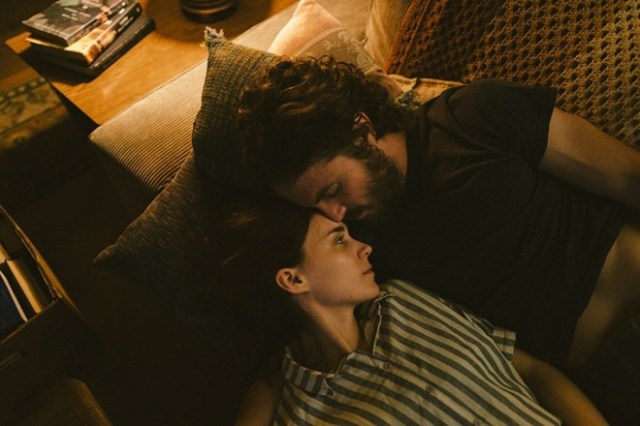
During its 10 minutes, we are introduced to ‘C’ (Casey Affleck) and ‘M’ (Rooney Mara), a young couple living in a suburban area of Texas. Although C has been struggling in his musician career, he and his wife are happy together in their cozy house, and that is evident from the first two scenes of the film, which are imbued with warm intimacy thanks to the natural chemistry between its two lead performers.

However, on one day, C dies because of an unfortunate car accident, and we soon see M looking over her husband’s dead body at a local hospital. After she leaves the scene along with an accompanying doctor, the camera keeps looking at C’s body from the distance, and then a strange thing happens. We see C slowly getting up, but he is a ghost now, and that is pretty clear to us as he is not noticed by anyone despite being shrouded in white sheet with two holes for his eyes. When a white shiny portal is opened up in front of him, he does not go inside that portal, and he chooses to go to his house instead.

aghoststory03

As haunting his house, he wordlessly watches his wife going through a long period of grief alone in the house. In one particular scene involved with a pie brought by an acquaintance of hers, we can sense her deep grief even though she does not say anything, and Rooney Mara, who has steadily risen since her Oscar-nominated performance in “The Girl with the Dragon Tattoo” (2011), did a commendable job of conveying to us her character’s quiet heartbreak. This scene could look silly, but she ably carries it with palpable emotions, and I was a bit amused to learn later that she only did one take when this scene was shot (you will know why when you see it).

M tries to move on, but many things in the house frequently remind her of her dead husband. At one point, she comes to the house with some guy, but she decides not to go to the next step. Of course, C watches everything as he continues to be in their house, and there eventually comes a moment when he indirectly expresses his anger to his wife.

Now some of you probably think you can see where the story is heading, but director/writer/editor David Lowery, who previously debuted with “Ain’t Them Bodies Saints” (2013), goes for more profound and unexpected things as pushing the promise of his story further. For example, I liked a small humorous moment involved with what C happens to glimpse from a house right next to his house, and I also appreciated a nice variation of genre conventions presented later in the story.

Above all, as constantly sticking to C’s viewpoint, the movie gives us that fleeting sense of the passage of time. Time seems to go a lot faster than before while C moves around here and there in the house, and the house accordingly goes through numerous changes. His wife finally decides to leave the house for moving onto what will be next in her remaining life. A family soon moves into the house as its new residents but then leaves not long after that. The house later becomes populated with many different people who come there for a drinking party, and we get a sublime scene as one of them muses on human existence and its legacy, which may ultimately signify nothing when the universe comes to the end but means something at least while we are still alive on our planet.
aghoststory02

As adamantly following its narrative logics, the movie provides us more unexpected things during its last 20 minutes, and the result is very poignant in a way I will not describe here in details. All I can say about that part is that I admire a lot how it eventually arrives at its neat ending, which features something as worthy of discussion as the last scene of “Lost in Translation” (2003).

The movie is also impressive in technical aspects. Shot in 1.33:1 ratio, the movie often feels stuffy, but Lowery and his cinematographer Andrew Droz Palermo always hold our attention through their deft handling of lighting and scene composition, and there are several excellent moments reminiscent of that natural beauty of Terrence Malick’s works. While usually maintaining its low-key attitude, the score by composer Daniel Hart, who previously collaborated with Lowery in “Ain’t Them Bodies Saints” and “Pete’s Dragon” (2016), becomes a little more prominent at times, and I was especially entertained by when a certain famous classical music piece is used on the soundtrack.

Although it will require some patient from us as your average arthouse film, “A Ghost Story” is quite a rewarding experience on the whole, and it confirms again that Lowery is a talented filmmaker to watch. Even when he quickly moved up to mainstream filmmaking in “Pete’s Dragon”, he retains his own cinematic sensibility shown from “Ain’t Them Bodies Saints”, and he easily returns to his usual ground here in “A Ghost Story”. I don’t know what will be next in his promising filmmaking career, but I think we can have some expectation on that.

aghoststory04

Posted in Movies | Tagged , | 1 Comment

Room No.7 (2017) ☆1/2(1.5/4): Witless and toothless

roomno704

Watching South Korean film “Room No.7” was one of the most tedious experiences I have ever had during recent years. As a comedy, the movie is not funny at all, and, as far as I can remember, the audiences around me merely reacted to a few moments of cheap comedy. As a thriller, the movie is too lazy and sloppy in its execution to generate enough tension for engaging us, and I felt depressed more and more by its plodding plot and hapless characters during my viewing. As a story with some social messages, the movie often feels superficial and condescending, and that was another major offence which annoyed me a lot.

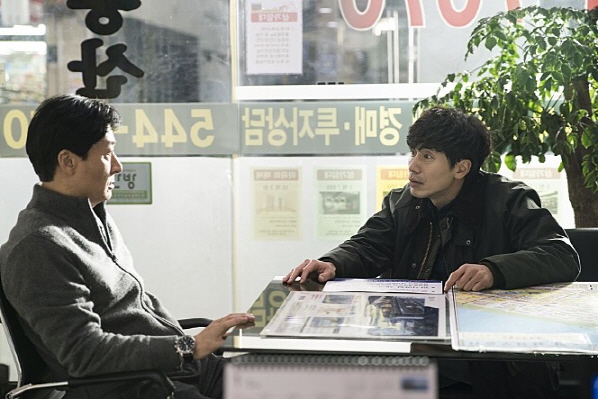
The first act of the movie focuses on its two main characters’ desperate financial circumstance. Doo-sik (Shin Ha-kyun) is the owner of a small DVD shop where you can rent and then watch DVD in one of its small booths, and he has struggled a lot in his humble business due to the lack of customers. In fact, he has been several months behind in rent, and he barely makes ends meet even though he also works as a proxy driver for drunken people at night.

Maybe he should shut down his business and then move onto whatever will come next, but that is nearly impossible for him at present. He already invested a considerable amount of money into his place, and, above all, there has not been anyone willing to buy his place with enough money for him. In addition, the neighborhood surrounding his place is not exactly a popular area for real estate business, and he only finds himself becoming angry and frustrated again when he talks with his real estate agent, who does not have any good news for him at all.

roomno702

Meanwhile, we also meet Tae-jeong (Doh Kyung-soo), a young man who has done a part-time job at Doo-sik’s DVD shop. Like his employer, he really needs money for his own reason, but there are not many options for him, and those few options are not that helpful. He attempts to pawn his old laptop computer, but he does not get as much as he wants. He later asks his employer to pay him his delayed salary right now, but, not so surprisingly, he is only told that he should wait more.

And then it looks like things will finally get better for Doo-sik. On one day, his real estate agent notifies him that there will soon be a potential buyer, and Doo-sik is certainly willing to do anything for selling his place to that potential buyer in question. Besides hiring another employee, he tries to make his place look good at least on the surface, and it looks like that potential buyer is really interested in buying the place at a reasonable price for Doo-sik.

However, a terrible accident happens at the DVD shop not long after that, and Doo-sik is thrown into panic as finding himself stuck with a dead body. Because the incident will likely make that potential buyer change his mind once it is reported to the police, Doo-sik decides to cover it up, so he comes to hide the body in one of the booths in the DVD shop and then locks up its door with several padlocks.

This is bad news to Tae-jeong, because he also hid something important in that booth before Doo-sik put the body there. Now he has to unlock its door and then retrieve that object in question as soon as possible, but that is not easy at all as his employer’s attention is constantly focused on that closed booth, which is even blocked by a DVD shelf later in the story.

roomno703

Their absurd situation may look like a good setup for comedy thriller, but the screenplay by director Lee Yong-seung repeatedly fails to develop anything interesting or compelling from that. Simply having its two main characters pulling each other in one direction or another, it does not accumulate any substantial narrative momentum, and then it becomes a lot more worse as it lets its setup crumble during the last act. As a matter of fact, the finale is so insipid and lackadaisical that I am still wondering whether I should have demanded refund.
Moreover, it is hard to care about its cardboard characters. Sure, the movie frequently emphasizes how desperate its two main characters are in their respective difficult positions, but they are more or less than bland puppets to be manipulated, and, most of all, they are not particularly likable or engaging. While Doo-sik is a pathetic jerk, Tae-jeong is your average sullen lad, and there is not any believable sense of character development in both cases.

Two lead performers do try, but they are stuck with their one-dimensional characters from the very beginning, and there is really nothing they can do about that. While he is surely a good actor as shown from “Thirst” (2009) and “The Front Line” (2011), Shin Ha-kyun is frequently demanded to be on shrill mode, and all I can remember from his performance here in this film is how often he raises his voice. In case of Doh Kyung-soo, I observed during the screening that there were many young female audiences eager to see this young popular entertainer on the screen, and I hope they were satisfied with whatever was done by him in the film.

While duly observing how witless and toothless “Room No.7” is, I could not help but think of South Korean film “A Hard Day” (2014). That thriller movie also has two conflicting main characters besides a dead body, but it does a far better job of amusing and exciting us, and I still remember how much I was entertained by its deviously twisted plot. Maybe I should revisit it someday for wiping out the bad memory of “Room No.7”.

roomno701

Posted in Movies | Tagged , , | Leave a comment

Justice League (2017) ☆☆☆(3/4): DCEU on recovery (sort of)

justiceleague01

While it is basically a 2-hour teaser, “Justice League” is a little better than expected. Although there are several glaring flaws due to its problematic storytelling, it is thankfully not as ponderous and joyless as that bloated mess called “Batman v Superman: Dawn of Justice” (2016), and it actually has enough entertaining elements to engage us while showing considerable potential for whatever will come after this.

As many of you know, “Justice League” is a part of the DC Extended Universe (DCEU), which started with “Man of Steel” (2013) and has been continued with “Batman v Superman: Dawn of Justice”, “Suicide Squad” (2016), and “Wonder Woman” (2017). While it is drenched in a gray moody tone not so far from that of “Man of Steel” and “Batman v Superman: Dawn of Justice”, “Justice League” attempts to bring some humor and personality to its story and character, and the attempt is mostly successful. Sure, it spends more than an hour in establishing its superhero characters as occasionally feeling overstuffed and overlong, but it eventually manages to find a right way to juggle them well after several narrative hiccups, and it remains effective even when it tumbles into your average overblown CGI climax sequence.

The story starts not long after what happened in that mindlessly overblown climax of “Batman v Superman: Dawn of Justice”. After Clark Kent/Superman (Henry Cavill) nobly sacrificed himself for saving the Earth and the humanity, the global community has been in a long mourning period, and, as blatantly shown in the opening sequence accompanied with Leonard Cohen’s song “Everybody Knows”, the world becomes gloomier than before with more violence and injustice. Along with Superman, hope symbolized by him seems to be gone forever, and that makes the humanity quite vulnerable to an approaching unknown menace implied at the end of “Batman v Superman: Dawn of Justice”.

justiceleague03

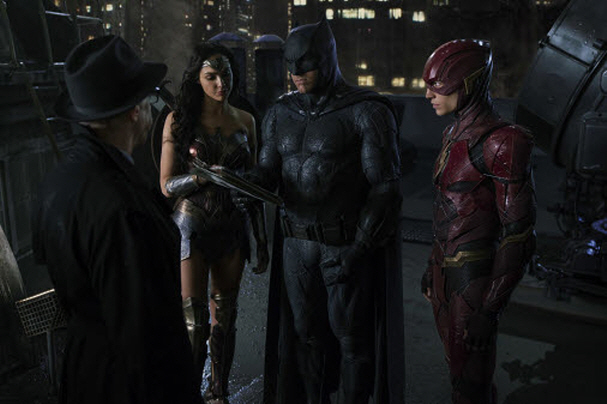
While feeling guilty about Superman’s death, Bruce Wayne/Batman (Ben Affleck) comes to decide that he must do something for not only saving the humanity but also honoring Superman’s ideal. He is going to assemble a team of superheroes, so he approaches to Diana Prince/Wonder Woman (Gal Gadot) first, who has been his colleague since their fateful encounter in “Batman v Superman: Dawn of Justice”. As already shown from that film and “Wonder Woman”, Gadot is captivating as effortlessly exuding her character’s glorious sexiness, admirable compassion, and, above all, strong sense of unadulterated justice, and we are treated with an awesome sequence when she swiftly overpowers a bunch of fanatic terrorists, who threaten London with a big bomb equipped with, surprise, a timer with red digital readout.

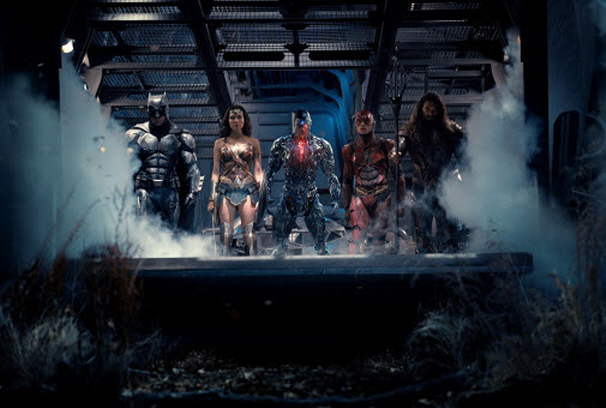
Based on the pieces of secret information he previous obtained in “Batman v Superman: Dawn of Justice”, Wayne tracks down three other superheroes: Barry Allen/The Flash (Ezra Miller), Victor Stone/Cyborg (Ray Fisher), and Arthur Curry/Aquaman (Jason Momoa). Although not all of them are eager to join the team at first, it soon becomes apparent to everyone that there is indeed a big menace on the horizon, so Wayne, Prince, and their new colleagues come to band together while, of course, trying to get along well with each other like those superheroes of “The Avengers” (2012) did.

The screenplay by director Zach Snyder and his co-writers Chris Terrio, and Joss Weadon, who took care of the production after Snyder understandably stepped down due to his recent personal tragedy, frequently fumbles during its first half, but it does not lose its sense of fun at least while maintaining its serious attitude as required, and the main performers have a good group chemistry among them as holding each own place well. While Gal Gadot remains the best part of the movie, Ben Affleck is adequate as functioning as the neutral ground for his co-performers, and Ezra Miller is constantly delightful in his nerdy performance. In case of Ray Fisher and Jason Momoa, their characters are relatively less developed, they are effective in their respective roles nonetheless, and Momoa has a small humorous scene when his gruff character happens to be a little more frank than usual.

justiceleague02

Compared to our righteous superheroes, the villain of the movie, who is played by Ciarán Hinds via motion capture performance, is far less colorful, and he is indubitably the weakest part of the movie. Like many numerous villains of recent superhero movies, he is a humorless dude merely driven to cause death and destruction in massive scale, and his big plan for that is not especially interesting either. Fortunately, our superheroes are engaging enough to make us care about what is at stake during the typically massive CGI action sequence in the third act, and I found myself willingly enjoying its expected deux ex machina moment.

In case of the other notable supporting performers in the film, they fill their respective small spaces as required. While Amy Adams and Diane Lane bring considerable sensitivity to their certain crucial scene later in the movie, Jeremy Irons looks like enjoying his unflappable role a bit more than before, and J.K. Simmons, Connie Nielsen, Billy Crudup, Amber Heard, and Joe Morton do as much as they can do with their rather thankless roles.

Compared to the refreshing drama of “Logan” (2017) and “Wonder Woman” or the jolly entertainment of “Guardians of the Galaxy Vol.2” (2017) and “Thor: Ragnarok” (2017), “Justice League” is one or two steps below them, but it shows that the DCEU franchise is on a sort of recovery as trying to balance itself between fun and seriousness, so I guess I can recommend it to you with some reservation. This is not a total success at all, but it made me have little expectation on next Justice League movie, and I hope I and others will be more entertained in the future.

justiceleague04

Posted in Movies | Tagged , , | Leave a comment

The B-Side: Elsa Dorfman’s Portrait Photography (2016) ☆☆☆(3/4): Her ‘B-photos’

thebside02.jpg

As watching Errol Morris’ latest documentary film “The B-Side: Elsa Dorfman’s Portrait Photography”, which is currently available on Netflix, I came to reflect on the fact that I have never used Polaroid or any other instant camera before. Sure, I knew about those instant cameras, but, thanks to the rapid advance of digital photography, they were becoming obsolete when I began to be a bit more interested in photography during the 2000s, and now they nearly belong to the past. While occasionally feeling elegiac as recognizing the end of an era, the documentary mostly feels lightweight thanks to its bright human center, and the result is a modest but engaging work to watch on the whole.

The center of the documentary is Elsa Dorfman, a professional portrait photographer who devoted herself to her profession for many years. In the beginning, we see her in her small workshop/archive, and the documentary spends most of its running time there as watching and listening to this interesting old lady, who surely has many things to tell as looking over her old photography works.

During the 1960s, young Dorfman left her hometown Cambridge, Massachusetts for working in New York City, and she came to be employed in Grove Press, which published the works from some of notable Beat Generation writers including Allen Ginsberg. As her interest in photography was developed, she got plenty of opportunities to meet various celebrity figures ranging from Bob Dylan to Jorge Luis Borges, and we see some of their black and white photographs shot by her during that period.

After several years, Dorfman got tired of the carefree urban lifestyle surrounding her, so she returned to Cambridge and then became a school teacher, but then she became more interested in photography after one coincidental moment. As shooting more photographs, she also sold her works for herself, and she tells us a funny episode about how she got into a little trouble when she tried to sell her photographs in front of a local supermarket.

thebside03

When Polaroid 20X24 camera came out, she went for it without any hesitation, and that big instant camera soon became the center of her aesthetics. While many other photographers are interested in whatever is behind images, she mostly cares about how her subjects look on the surface in her big photographs, and that simplicity is sometimes mixed with spontaneity as shown from many of her photographs presented in the documentary. She frequently photographed not only herself but also her husband and their son, and some of those photographs look particularly interesting as we notice the presence of an electric wire between her and her Polaroid camera, which somehow brings some personality to them.

While most of notable public figures shot by her are merely glimpsed in the documentary, Morris delves a bit into Dorfman’s friendship with Ginsberg, and she talks about how close they were to each other as friends for many years. When she happened to photograph him, they decided to go further than usual, and we later see an amusing photograph which shows naked Ginsberg standing in front of the other photograph showing him fully clothed. As Dorfman is looking over her dear friend’s photograph, an old telephone message from Ginsberg during his final days is played on the soundtrack, and that makes this scene quite poignant.

The documentary also looks around numerous photographs which are ‘less special’ in comparison. Neither the documentary nor Dorfman provides any additional information or context on these photographs, but we cannot help but curious about many different people shown in these photographs, and then there comes a brief but wonderful moment showing heaps of photographs stacked together in group.

thebside01

However, they and many other photographs in Dorfman’s archive may not last that long as she frankly admits. Some of her Polaroid photographs begin to show their age despite her preservation effort, and she also points out how vulnerable Polaroid prints are in many aspects. In addition, the circumstance has become more difficult for her since Polaroid Corporation declared bankruptcy in 2001, and its eventual decision to stop production was one of the main reasons why she recently decided to retire.

While understandably feeling bitter about her era coming to the end, Dorfman remains optimistic nonetheless, and Morris thoughtfully presents her on the screen while indirectly showing affection and respect at times. Although he seems to try a little too hard as reflected by the frequent utilization of skewed camera angles, Dorfman’s colorful personality steadily carries the documentary even when it looks like aimlessly flowing from one point to another, and she is certainly someone to whom you can listen for hours.

Compared to Morris’ notable works including “Gates of Heaven” (1978), “The Thin Blue Line” (1988), “Fast, Cheap & Out of Control” (1997), “The Fog of War: Eleven Lessons from the Life of Robert S. McNamara” (2003), and “The Unknown Known” (2013), “The B-Side: Elsa Dorfman’s Portrait Photography” feels like a minor work, but it is an admirable work at least. Although I often felt impatient during my viewing, it provides enough good moments during its short running time (75 minutes), and I certainly enjoyed watching Dorfman at work. Her time is being over indeed, but she has surely been happy with her work, hasn’t she?

thebside04

Posted in Movies | Tagged , , , | Leave a comment

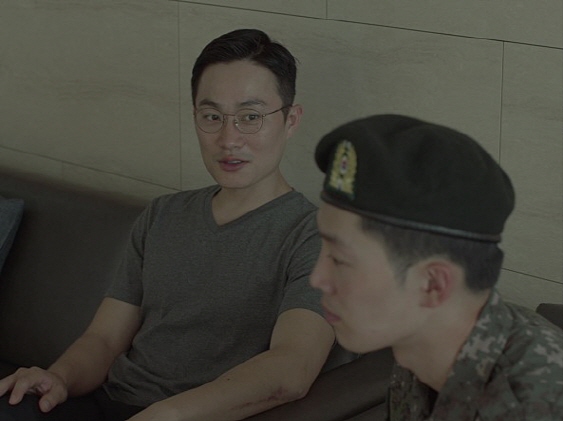
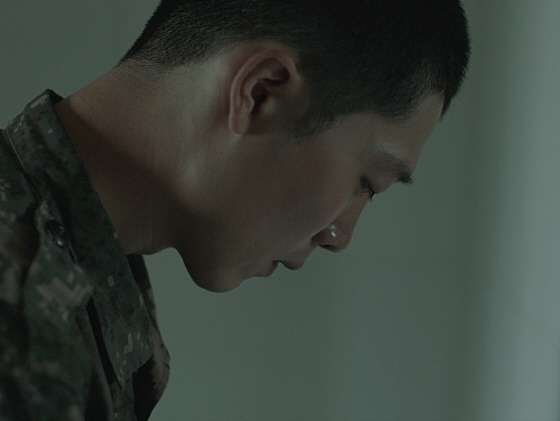
The Seeds of Violence (2017) ☆☆☆(3/4): A soldier’s hard day

theseedsofviolence01.jpg

Unlike many South Korean lads, I did not have to go through two years of mandatory military service. Because I was a graduate student studying in Korean Advanced Institute of Science and Technology (KAIST), all I had to do during late 2007 was spending 4 weeks in a training camp, and I and other KAIST graduate students were rather treated well by our generous instructors during those four weeks. Thanks to them, we could finish our training course without much problem, and I am sometimes amused by all those silly moments I endured during that period.

However, I also remember a few unpleasant incidents which showed me how harsh and brutal the South Korean military can be to young individuals put into its oppressive system. In case of a certain high-ranking prick who always made life miserable for us as well as our instructors, he was nothing but an arrogant, sadistic bully in my opinion, and I still remember well when that hateful bastard threatened us with disciplinary punishment just because of one recruit’s minor mistake. Because of that, I was thrown into total panic attack throughout that day, and it was fortunate that I and others did not get punished in the end.

And that is why I reacted strongly to a number of emotionally brutal scenes in South Korean independent film “The Seeds of Violence”, which coldly observes systemic violence not only from the South Korean military but also the South Korean society. While it is disturbing to watch how commonly physical/emotional violence is committed among young soldiers, it is also chilling to see how equally violent the outside world is in fact, and the movie eventually leaves us with a gloomy moment of reflection on this incorrigible social matter which seems to have no end in sight.

theseedsofviolence03

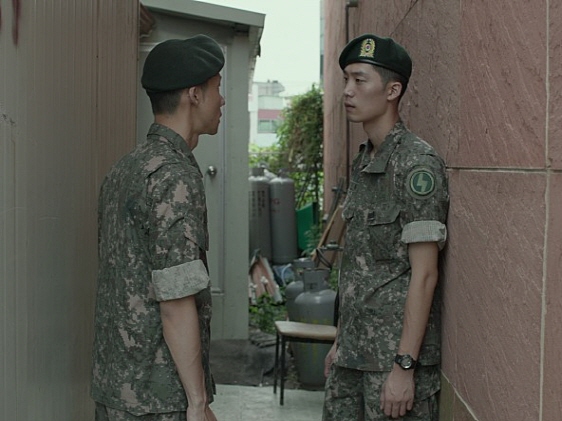
In the beginning, we are introduced to two young soldiers: Joo-yong (Lee Ga-seop) and Pil-rip (Jung Jae-yun). Compared to Joo-yong, Pil-rip is still a rookie, and the opening scene shows Pil-rip going through a silly test as ordered by their several senior soldiers. He must take off his military shoes and socks within half a minute, and we see him doing the job as quickly as demanded.

They are all allowed to spend a day outside their base, so the mood seems to be jolly on the surface, but there is apparent awkwardness among them as they later drink together outside the base. Because Pil-rip is older than his seniors, he is allowed to talk casually with them, but they are virtually bullying him as a matter of fact, and that is surely one of the most cringe-inducing moments in the film.

Meanwhile, it is gradually revealed to us that there is a big problem among these guys. Somebody sent a report on the physical abuse committed by one of the senior soldiers, and that senior soldier in question is not so pleased about this mainly because he is about to embark on his professional military career. He and other seniors are determined to find the culprit, and, at least in their view, there are only two possible suspects: Pil-rip and Joo-yong.

When they are about to face one of their seniors because of that, Pil-rip desperately requests Joo-yong to do something about this grave situation in which they will be punished in one way or another. Pil-rip adamantly claims his innocence, but there is nothing Joo-yong can do about that, even if he is the one who sent that report.

In a motel room, they are cruelly punished by that senior, who even forces Joo-yong to slap Pil-rip hard for not injecting enough discipline into him. In the end, Pil-rip is savagely beaten down by that senior as Joo-yong helplessly watches it all, and that is when a trouble occurs. One of Pil-rip’s teeth happens to be broken, and that serious injury must be covered up as soon as possible for avoiding more troubles.

theseedsofviolence02

Fortunately, Joo-yong can get help quickly because his sister Joo-ah (Kim Soy), who lives in a city near the base, is married to a dentist, but the situation becomes more frustrating for him and others as time goes by. While she is supposed to come to the base for meeting her brother, she does not even answer his phone call for some reason, so Joo-yong has no choice but to take Pil-rip to the city although they are technically not allowed to go that far. Shortly after they arrive in the city, they face another problem, and that surely frustrates Joo-yong a lot, who eventually becomes quite harsh and hostile to Pil-rip at one point.

After they manage to arrive at a dental clinic belonging to Joo-ah’s husband, Joo-young comes to notice something odd between his sister and her husband, and that ultimately leads to another moment of anger and frustration for Joo-young. As watching that moment, I was reminded of how casually violence and misogyny are allowed in the South Korean society, which has been filled with violent, unpleasant males invariably influenced by that toxic concept of masculinity during their military service years.

“The Seeds of Violence” is the first feature film by director Lim Taegue, and he did a commendable job on the whole. Reminiscent of the works of the Dardenne brothers, the movie steadily and patiently follows its conflicted hero via its handheld camera, and Lim also draws solid natural performances from his performers. Although it often feels limited by its low budget, the overall result clearly shows that Lim is a talented filmmaker, and I guess we can have some expectation on what will come next from him.

theseedsofviolence04

Posted in Movies | Tagged , | Leave a comment

Loving Vincent (2017) ☆☆☆(3/4): An impressionistic animation film a la Van Gogh

lovingvincent01.jpg

Animation feature film “Loving Vincent” gave me one of the most colorful experiences of this year. Vividly and authentically recreating that recognizable oil painting style of Vincent van Gogh, the film puts us right into its stylish world filled with numerous striking visual moments to remember, and I certainly relished its every frame even though I often noticed its rather thin story and characterization.

The film revolves around Van Gogh’s tragic death and its aftermath. As many of you know, Van Goug suffered from his mental illness during his last years, and he eventually died on July 29th, 1890 in Auvers-sur-Oise, France shortly after his botched suicide attempt. While he did not receive much recognition during his life, his artistic genius was belatedly recognized after his death, and he has been regarded as one of the early pioneers of modern art since that.
The story begins with one night in Arles, France, where Van Gogh lived before he moved to Auvers-sur-Oise for treating his mental illness. We see the night sky based on “The Starry Night”, and then we are introduced to a young man named Armand Roulin (voiced by Douglas Booth), who is going through another drunken night in a local cafe whose appearance is apparently based on “The Night Café”, which is one of many notable paintings drawn by Van Gogh during his stay in Arles.

Armand is the son of Joseph Roulin (voiced by Chris O’Dowd), a local postman who was very close to Van Gogh (voiced by Robert Gulaczyk). In fact, he and his family members were the models for Van Gogh’s several portraits, and you will be surprised when you later see how faithful the film is to the style and texture of those impressive portraits. Armand and Joseph in the film really look like figures coming right out of those paintings, and so do many other characters in the film, who are also based on Van Gogh’s other notable portrait figures.

lovingvincent02

As Joseph recollects one of Van Gogh’s worst days, we get a black-and-white flashback scene showing how Van Gogh’s friendship with his fellow painter Paul Gauguin came to a tumultuous end. When Gaugin came to Arles, everything looked fine at first, but then they did not get along with each other well in the end, and Gauguin eventually left to Van Gogh’s devastation. That led to that infamous incident involved with one of his ears, and, as more isolated and alienated from others as a consequence, Van Gogh came to leave Arles for the treatment of his mental illness.

It turns out that Joseph has Van Gogh’s last letter to Theo van Gogh, Van Gogh’s younger brother who had been his older brother’s main supporter for many years. Although it has been a year since Van Gogh died, Joshep requests Armand to deliver that letter to Theo, and Armand agrees to do that even though he did not like van Gogh a lot. To him, Van Gogh was a mere mad artist, and he could not understand what his father saw from Van Gogh.

Armand goes to Paris for meeting Theo, but he only comes to learn that Theo died not long after devastated by his older brother’s death. Julien “Père” Tanguy (voiced by John Sessions), an art supply shop owner who was one of few admirers of Van Gogh’s artistry and was memorably drawn in “Portrait of Père Tanguy”, tells Armand about how much Van Gogh struggled a lot before deciding to try painting – and how quickly he developed his own style and technique as hanging around various prominent artists in Paris including Monet and de Toulouse-Lautrec. Once he established his own style and technique, he never stopped after that, and he produced over 800 paintings over 8 years even while constantly struggling with poverty and mental illness.

After meeting Tanguy, Armand goes to Auvers-sur-Oise for meeting Dr. Gachet (voiced by Jerome Flynn), who was another person close to Van Gogh and was the model of “Portrait of Dr. Gachet”, which is incidentally one of the most valuable ones among Van Gogh’s works. While he cannot meet Dr. Gachet immediately, Armand meets several people who knew Van Gogh, and they give contradictory accounts on Van Gogh. To Dr. Gachet’s frigid housekeeper Louise Chevalier (voiced by Helen McCrory), Van Gogh was annoying nuisance to say the least, and she is rather glad that he is no longer with her employer. To Adeline Ravoux (voiced by Eleanor Tomlinson), the daughter of a local innkeeper, he was a nice gentle guy in contrast, and a local boatman (voiced by Aidan Turner) agrees to that while implying that there was something going on between him and Marguerite Gachet (voiced by Saoirse Ronan), the young daughter of Dr. Gachet.

lovingvincent04

As getting to know more about Van Gogh and the questionable circumstance surrounding his suicide attempt, Armand cannot help but wonder whether Van Gogh really tried to kill himself. As a matter of fact, Van Gogh said in his letter sent to Joseph shortly before his death that he felt better than before, and it seems possible to Armand that there was a foul play at that time.

Now you may get more intrigued, but I must tell you that the ‘mystery’ in the film is more or less than a plot device to hold our attention during its 94-minute running time, and you may be disappointed as it eventually comes to its anti-climactic arrival point. When Armand later comes to meet Dr. Gachet, he does give Armand an answer, but it is not so far from what most of us know about Van Gough, and we are only reminded again of what a great (and tortured) artist Van Gogh was.

Overall, “Loving Vincent” does not provide anything illuminating to you especially if you have the basic knowledge about Van Gogh’s life and career, but it is still an interesting visual experience, and I really admire what is achieved on the screen by a team of more than 100 painters under the direction of Dorota Kobiela and Hugh Welchman. According to the IMDB trivia, each of the film’s 65,000 frames is an oil painting on canvas, and their enormous efforts are surely evident on the screen. While it is a little dissatisfying in terms of story and characters, the film is a special piece of work to be appreciated nonetheless, and I think it is worthwhile to watch it on a big screen.

lovingvincent03

Posted in Movies | Tagged , , | 2 Comments

Gaga: Five Foot Two (2017) ☆☆☆(3/4): Gaga the entertainer

gagafivefoottwo04.jpg

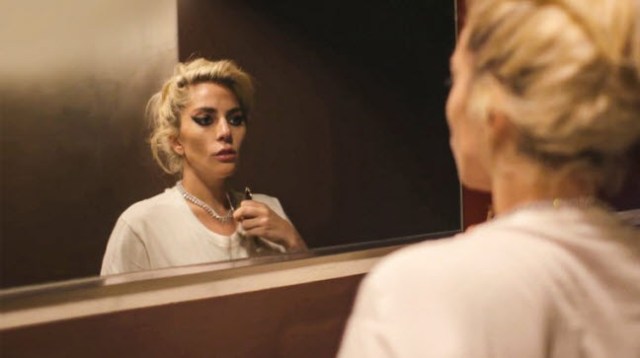
Although I do not know much about Lady Gaga, I found that Netflix documentary film “Gaga: Five Foot Two” is an interesting behind-the-scenes documentary about one of the most popular entertainers in the world at present. Although I was a bit disappointed that it does not delve deep much into its subject, there are some nice moments of admirable frankness, and I did come to appreciate Lady Gaga’s undeniable talent and her radiating star quality.

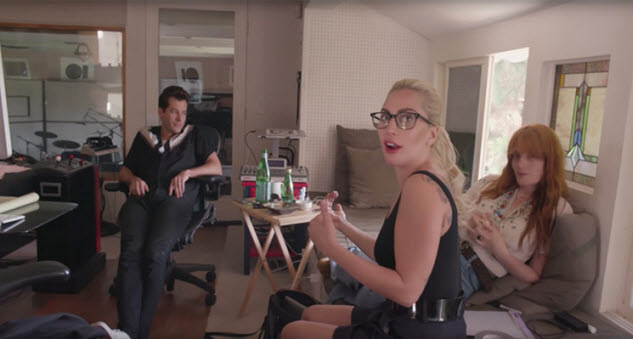
The documentary begins with Gaga beginning another day at her big house in California, where she resides along with her entourage. It is around 2016, and we soon see her going to a recording studio and then working on her fifth album “Joanne” along with others including her producer Mark Ronson. While taking a break, she has some frank conversation with one of technicians working in the studio, and we get an amusing moment when she expresses some bitterness toward Madonna, who does not appreciate her much although they are similar to each other in many aspects. Besides being very talented, both of them are known well for being bold and daring in public, and it can be said that Gaga is the rightful successor to Madonna considering that.
Gaga comes to us as a gentle woman of unadorned frankness and forthright attitude, and there is a notable moment when she talks with a couple of creative directors beside the swimming pool of her Californian residence. Because she wants to be a little more comfortable, she takes off her swimsuit while talking with them, and she does not seem to mind at all even when her bare breasts happen to be captured by the camera. Nothing feels particularly awkward on the screen, and she and others keep discussing about what new direction she will have to take for her ongoing career.

gagafivefoottwo02

Like many other American pop artists, Gaga has tried acting during recent years, and we see her working on the set of “American Horror Story: Roanoke”, the sixth season of TV series “American Horror Story”. I watched her previously appearing in “American Horror Story: Hotel”, and all I can tell you is that, though she is not exactly a great actress, she does have charisma to draw our attention. In fact, I sincerely wish that precious quality of hers will be utilized well in her upcoming film with Bradley Cooper, which is another remake of “A Star is Born” (1937).

We also meet Gaga’s family when they gather together for a family event, and we get a little more information about her family when she later visits her grandmother. We come to learn that one of the songs included in “Joanne” is inspired by Gaga’s aunt who struggled with illness during her short life, and the moment when Gaga plays the song to her grandmother is the most heartfelt moment in the film.

The documentary also pays considerable attention to Gaga’s chronic pain caused by fibromyalgia. She often needs to be massaged by her therapist before beginning her daily routine, and we see how much difficult it is for her to deal with this frequent physical pain. At one point, she cannot even get up from her couch while becoming quite moody, and that took me back to when I suffered from a sudden acute pain in my hip for a few days early in this year. I felt lots of pain whenever I moved, so I preferred to stay in my bed, and that certainly affected my mood a lot until the pain eventually went away.

Meanwhile, her status as a celebrity entertainer keeps demanding a lot from her as usual. Whenever she goes out, there is always a big bunch of paparazzi and her fans, and the documentary gives us a series of dizzy moments to reflect that swirling frenzy surrounding her fame. While it is surely difficult for her to maintain her integrity under such a condition like that, Gaga always moves forward with confidence, and she is also very nice to many of her eager fans out there.

gagafivefoottwo05

And, above all, she does her best whenever it is time to perform. At a party celebrating Tony Bennett’s 90th birthday, she gives a sincere performance for Bennett, and I was reminded of how awesome she was when she performed her Oscar-nominated song “Til It Happens to You” at the Academy Awards ceremony early in last year. When “Joanne” is released shortly after a rather unlucky incident, she gives a nice public performance for her fans, and the album turns out to be another success in her growing career.

The last part of the documentary is devoted to her Super Bowl LI halftime performance early in this year, and we get some glimpses into her preparation process. We observe her discussing with others on her costumes and choreography, and then we watch her doing some practice along with dancers. After their last full rehearsal, there eventually comes that big day in question, and she does not disappoint her audiences at all.

“Gaga: Five Foot Two” is directed by Chris Moukarbel, who did a competent job of presenting his subject well on the screen. Although I wish the documentary could have been more focused in its narrative, Gaga, who is incidentally one of the producers of the documentary, always holds our attention even during her most casual moments, and she is indeed an interesting entertainer to observe, though I had an impression that she does not show all about herself in this documentary. I guess that is the job of other documentaries to come in the future, and I recommend this documentary with some reservation.

gagafivefoottwo03

Posted in Movies | Tagged , , | Leave a comment

Bad Genius (2017) ☆☆☆1/2(3.5/4): A smart, exhilarating heist film from Thailand

badgenius01

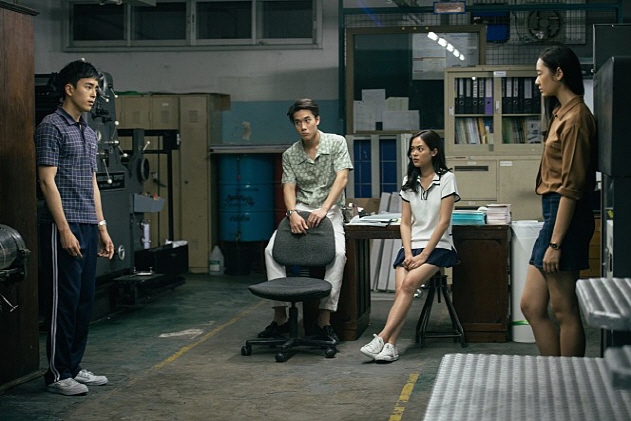
Thailand film “Bad Genius” surprised me a lot. Bringing some fresh air into its genre conventions via its seemingly mundane story material, this smart, exhilarating heist film is constantly electrifying as serving us a number of memorable moments to amuse and thrill us. It instantly grabbed my attention right from the beginning, it relentlessly dazzled me with its first-rate storytelling, and it totally satisfied me to the end.

The story begins with its adolescent heroine Lynn (Chutimon Chuengcharoensukying) during her interview with the headmistress of some prestigious high school in Bangkok. As a model student who is also a math prodigy, Lynn is surely someone who will be welcomed into this high school, and she certainly takes a full advantage of that. Instantly calculating how much her father has to pay every semester, she makes a good point on why she may not come to the school, and the headmistress eventually agrees to provide the full scholarship for her.

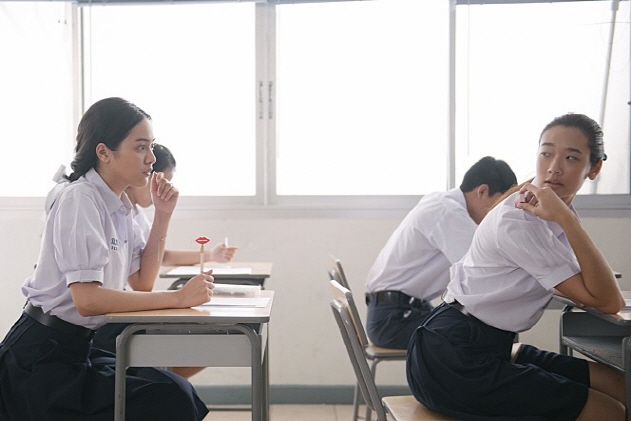
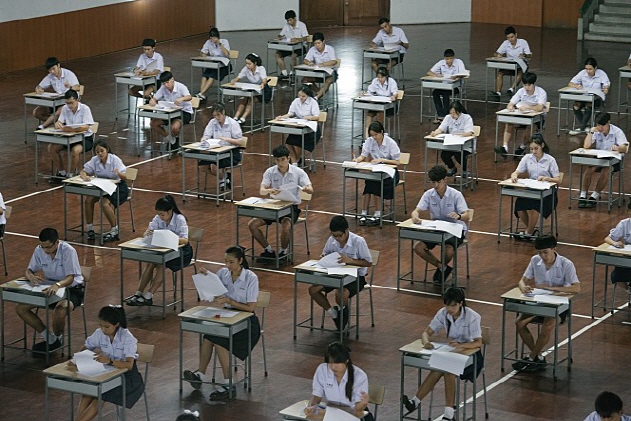
Not long after she begins her first year in the school, Lynn happens to befriend a classmate named Grace (Eisaya Hosuwan), and their friendship leads to what is probably the first serious transgression in Lynn’s life. When she comes to realize that their latest math examination is not as fair as it seems, Lynn decides to do an exam-cheating for her friend, and she has quite a brilliant idea for how to give all the answers to her friend during the examination. Thanks to precise editing and palpable sound effects, this scene is pretty intense to say the least, and we come to brace ourselves as watching how cleverly Lynn gets away with her transgression as the clock is literally ticking on the screen.

badgenius02

After this exam-cheating, Lynn soon finds herself helping not only Grace but also other students. Grace’s boyfriend Pat (Teeradon Supapunpinyo), who is your average spoiled rich kid, offers Lyn a considerable amount of money for more exam-cheating, and he also connects her to his several classmates, each of whom is willing to pay Lynn enough for her service. As the number of her ‘clients’ is growing, Lynn comes to devise another clever scheme based on something very simple, and how she and others execute that during their examinations is another superb moment to savor.

Now I have to be more careful about describing the plot for not spoiling your fun. All I can tell you is that the screenplay by director Vasudhorn Piyaromna and his co-writers Nattawut Poonpiriya and Tanida Hantaweewatana keeps raising what is being at stake for Lynn and her accomplices. At one point, Grace and Pat find themselves facing the consequence of their exam-cheating, but they decide to go further, so they request that Lynn should help them again. Lynn is reluctant, but she cannot resist the possibility of getting a lot more money than before.

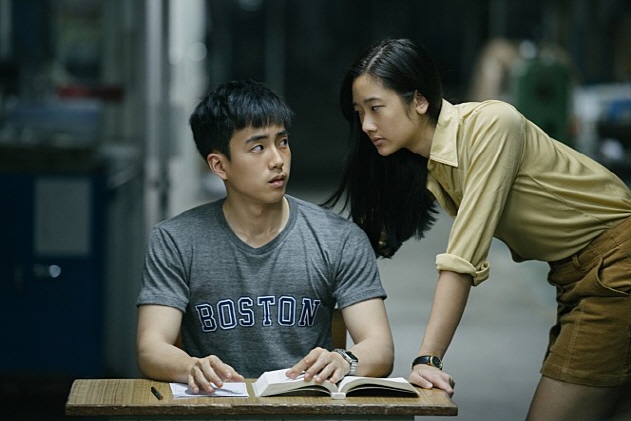
For the success of her new scheme, Lynn needs another accomplice who is as smart as her, and that is Bank (Chanon Santinatornkul), a poor kid whose dream of going to a university in Singapore is dashed due to a recent unfortunate incident. Bank is not so eager to participate in the scheme at first, but he eventually agrees to join the group, and we see him and others preparing for their scheme step by step.

As approaching to the expected climactic part, the movie seems to be on a predictable course, but then it keeps surprising us while diligently dialing up its level of tension. During the climactic part, there are several moments which will make your body tightened for their sheer suspense, and everything eventually culminates to a superlative sequence to admire for its effortless tautness.

badgenius05

I also like how deftly the final scene of the movie is handled. On the surface, it is merely the conversation between Lynn and the other main character, but it is clear to us that Lynn has to make an important choice for her future, and watching her hesitating between two options is as suspenseful as many other key scenes in the film.

The main cast members of the film are uniformly good in their unadorned natural performance. Chutimon Chuengcharoensukying, who makes a debut here as a movie actress, is excellent in her lead role, and she and her co-performer Chanon Santinatornkul have a good chemistry between them. In case of Eisaya Hosuwan and Teeradon Supapunpinyo, they function well as comic relief whenever that is necessary, and the movie often makes a sharp point on the social gap between their characters and Lynn.

Although this is only the second feature film in his career, Piyaromna did an impressive job on the whole, and his technical crew members surely deserve to be commended. While the cinematography by Phaklao Jiraungkoonkun is slick and fluid, the editing by Chonlasit Upanigki is flawless in its brisk pacing, and this is further fueled by the music by Hualampong Riddim, which is effectively mixed with several familiar pieces of classic music on the soundtrack.

Overall, “Bad Genius” is one of the most notable surprises of this year, and I was entertained a lot by the top-notch execution of its smart story idea. If you appreciate good thriller movies driven by story and character, you should not miss this hidden gem, and I guarantee that you will not regret at all once you watch it.

badgenius03

Posted in Movies | Tagged , , , | 1 Comment

Heart Blackened (2017) ☆☆1/2(2.5/4): Flawed but not without entertainment

heartblackened03.jpg

South Korean film “Heart Blackened” starts as a typical courtroom mystery tale but then later becomes something more serious than expected. As its plot often trudges around a number of predictable narrative turns, I frequently felt impatient during my viewing, but it is not entirely without entertainment thanks to its several good elements to appreciate, so you may enjoy it if you can overlook its notable weak points.

During the opening scene, we meet Im Tae-san (Choi Min-sik), the CEO of some powerful conglomerate in South Korea. He is going to formally introduce his young fiancée Yoo-na (Lee Honey) to his daughter Mi-ra (Lee Soo-kyung), but it is apparent that Mi-ra does not welcome Yoo-na at all, and we soon get a tense, awkward moment among these three characters when they gather together in a restaurant. Yoo-na, who is incidentally a famous entertainer, tries to be nice to Mi-ra, but Mi-ra remains angry about her father getting the second wife, and there is nothing Tae-san and Yoo-na can do about that.

After one year, the relationship between Tae-san and Yoo-na looks more intimate than before as they are soon going to marry, but then something happens at one night. While she is pretty drunk at a nightclub meeting with her friends, Mi-ra watches a salacious video clip associated with Yoo-na, and she immediately sends a message to Yoo-na. Several hours after they meet, Yoo-na is found at the parking lot of her apartment building while seriously injured, and she eventually died shortly after being taken to a hospital.

Everything in this serious situation points to Mi-ra, who cannot prove her innocence because she was so drunken that she cannot remember what exactly happened at that night in question. Although he does not have any crucial evidence, Dong Seong-sik (Park Hae-joon), the prosecutor assigned to her case, is ready to do everything he can do for proving her guilt, and this righteous guy is not swayed at all even when Tae-san personally approached to him at one point with a tempting offer for his legal career.

heartblackened04

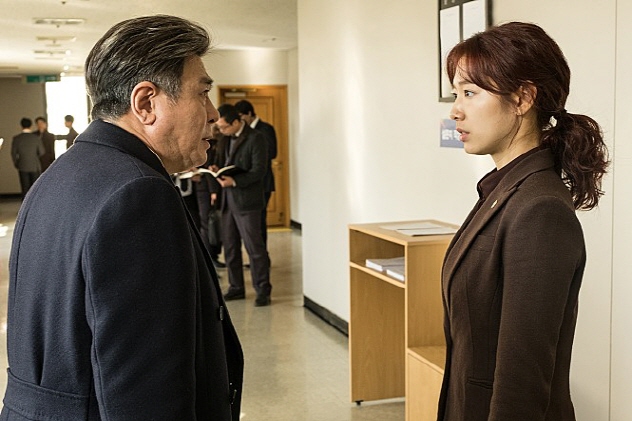
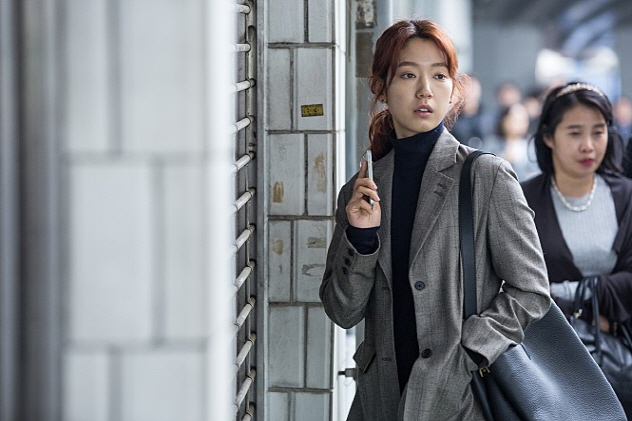
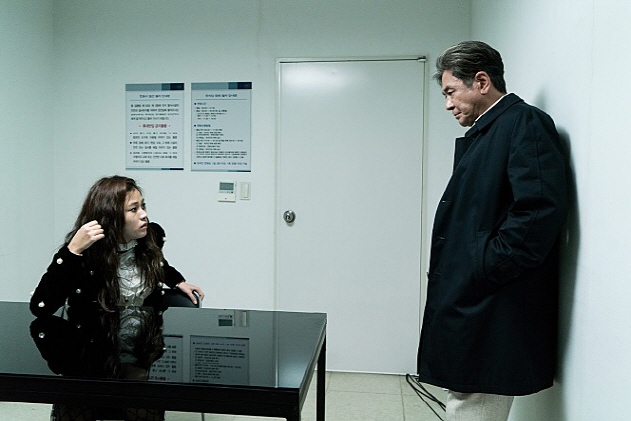
Meanwhile, Tae-san hires a plain lawyer named Choi Hee-jeong (Park Shin-hye) for his daughter’s upcoming trial. While naturally surprised to know that he chooses her instead of many lawyers more prominent than her, Hee-jeong does as much as she can. She becomes close to Mi-ra after their first meeting at a prison where Mi-ra is currently incarcerated, and she begins to search for any possibility to prove her client’s innocence.

Around that point, you may expect Hee-jeong to lead the story, but then the movie attempts to detour around genre conventions as focusing on not only her but also Tae-san. Clearly agonized over what happened to his fiancée as well as his daughter, Tae-san is determined to do whatever is necessary, and that leads him to a rather unpleasant encounter with a creepy lad who may have an important piece of evidence for the trial. As a guy with unhealthy obsession on Yoo-na, that lad in question certainly wants something in exchange for that evidence, and there accordingly comes a vile, uncomfortable scene unfolded at Yoo-na’s apartment.

Meanwhile, Hee-jeong also comes closer to the chance of getting that evidence as tracking down that lad. Not long after checking out his surveillance equipment shop, she happens to obtain a bag containing several computer hard drives, and her roommate gladly searches those computer hard drives for finding anything to be submitted at the court.

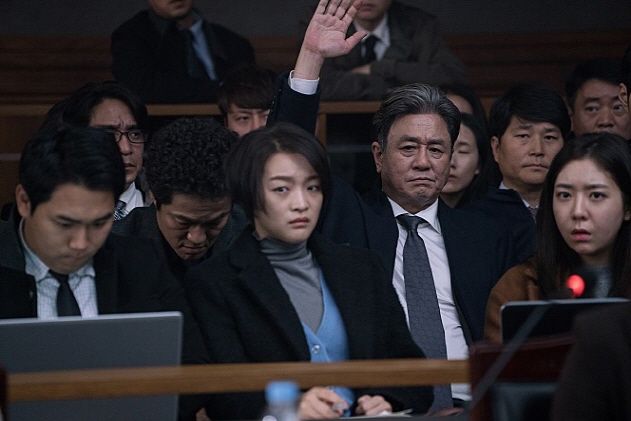
After eventually proceeding to the courtroom, the movie dials up its level of tension as expected, and the screenplay by director Jeong Ji-woo, which is based on Chinese film “Silent Witness” (2013), provides some good scenes for its main cast members, but the result somehow feels mediocre on the whole. Maybe because I am too familiar with its genre conventions, I could clearly see through its narrative turns, so I was not so surprised at all by what is revealed around its overlong melodramatic finale, which could have been shortened a bit without any serious change.

heartblackened05

Above all, most of the main characters in the film are not engaging enough to draw my attention. I guess we are supposed to care about Tae-san and Hee-jeong, but they are more or less than flat archetypes, and the same thing can be said about other characters around them. The movie tries to bring some personality to Hee-jong during her few scenes with her roommate, but these scenes only remain perfunctory in the end, and that is another disappointment in the film.

Anyway, the main cast members in the movie try to fill their roles as much as they can, and they mostly acquit themselves well as holding our interest to some degrees. While Choi Min-sik is reliable as usual, Park Shin-hye is effective as our surrogate heroine, and she and Park Hae-joon are convincing in their courtroom scenes. Although she only appears briefly, Lee Honey leaves considerable impression, and Lee Soo-kyung holds her own place well as her troubled character swings from one emotional moment to another.

Because I have not seen “Silent Witness” yet, I don’t know whether “Heart Blackened” is better than its original version, though I heard that the original version is also not without flaws. I was not that bored, but I was left with disappointment when the movie was over, and my mind soon shifted its focus to whatever would come next.

heartblackened01

Posted in Movies | Tagged , , , | 3 Comments

A Perfect Day (2015) ☆☆☆(3/4): The trouble with a well

aperfectday02.jpg

Leisurely alternating between comedy and drama, “A Perfect Day” works as an absurd farce about war and its tragic mess. While its story and background are specific, those human absurdities of war depicted in the film feel universal in many aspects, and we come to admire its main characters’ dogged determination to get their simple job done – even when we cannot help but amused by a number of loony situations which block them and frustrate them a lot.

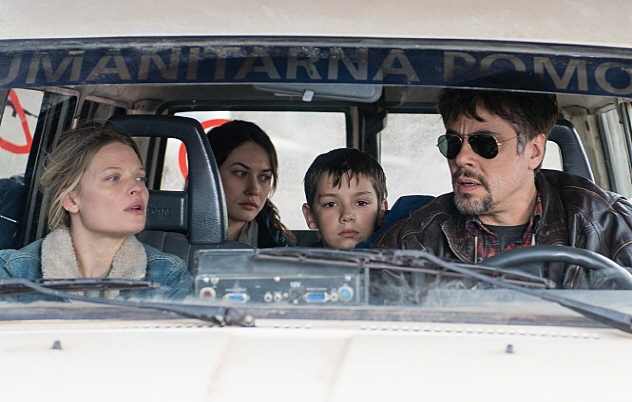
They are aid workers who are the members of a nongovernmental organization called Aid Across Borders, and the movie begins with their latest matter to be handled in some rural area in the Balkans, 1995. A corpse was purposefully dropped into a well important for many residents in that area, so Mambrú (Benicio Del Toro), who is from Puerto Rico as mentioned in the film, is trying to lift the body out of the well before it seriously contaminates the well, but, alas, the job turns out to be more difficult than expected. Because of the considerable weight of that body, the rope connected to that body is cut off during the process, and there is no other rope around the well.

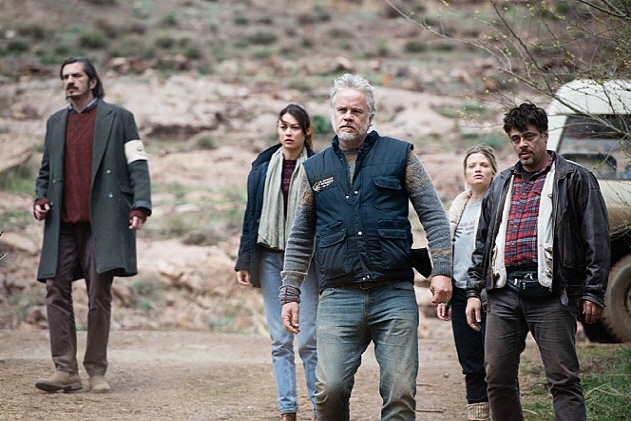
Not long after this annoying failure, Mambrú’s quirky colleague, nicknamed “B” (Tim Robbins) arrives with a young doctor named Sophie (Mélanie Thierry), who are not so amused by several unpleasant things as your typical rookie character. Although the conflict which has ravaged the Balkans is approaching to the end after cease-fire, there are still many possibilities of danger around the region, and that aspect is exemplified well by when B and Sophie happen to encounter the carcass of a dead animal while going to the well by their vehicle. Because it is quite possible that a mine is buried somewhere around the carcass, they may have to make a detour, but then B comes to execute a rather simple solution to their situation, and that is one of the most amusing moments in the film.

aperfectday05

Along with a local translator named Damir (Fedja Stukan), B looks around here and there for finding any rope long and strong enough for the body, but they only find themselves repeatedly blocked by absurd situations. Local people are uncooperative as they are wary of getting themselves into any trouble, and the UN army does not help much either while adamantly sticking to rules and regulations. When Mambrú and Sophie comes to a UN army base, they soon become more frustrated as they are instructed not to do anything about the well, and we are not so surprised when Sophie comes to attempt to do something about that frustrating circumstance.

Meanwhile, Mambrú has to deal with Katya (Olga Kurylenko), with whom he had an affair not so long ago. Although she comes mainly for evaluating the ongoing situation in the Balkans, it is evident from their interaction that there are still some feelings left between them, and they have to deal with their feelings as they come to spend considerable time along with Sophie, B, and Damir.

And there is a little local boy named Nikola (Eldar Residovic), who accidently encountered Mambrú and Sophie when they were going to the UN base. Because he can speak English quite well, Nikola later tells Mambrú and others that there is a place where they can find a rope good enough for them, but, of course, that rope turns out to be not so easy to obtain for a good reason, and we get another absurd moment to tickle us.

aperfectday04

While naturally reminiscent of “MASH” (1970) and other similar war movies, the movie does not overlook the horror and tragedy of war as shown from its several dark moments. At one point, it looks around a ruinous place which was once a nice family home, and then there comes an understated but gut-wrenching moment to strike us. When Mambrú and his colleagues come across a makeshift military checkpoint, they see a group of captured people, but there is nothing they can do about that – and they know it too well.

The main performers in the movie are convincing in their respective roles while imbuing their characters with life and personality. Effortlessly embodying his character’s world-weary attitude right from his first scene, Benicio Del Toro gives another engaging performance to watch, and I like how he humbly conveys the quiet sincerity behind his character’s seasoned appearance. Although he looks a little too goofy at first, Tim Robbins is gradually endearing in his whimsical performance, and he effectively complements Del Toro’s phlegmatic acting. While her role is rather thankless in comparison, Olga Kurylenko, who has steadily shown more of her talent since “Quantum of Solace” (2008), also gives a solid performance, and Mélanie Thierry brings considerable spirit to her character. In case of Fedja Stukan and Eldar Residovic, they hold their own places well among their more prominent co-performers, and I appreciate how the movie handles their characters and other local supporting characters with care and respect.

“A Perfect Day” is based on Paula Farias’ novel “Dejarse Llover”. Although I did not read the novel, I can tell you instead that director Fernando León de Aranoa, who adapted the novel for his film, did an adequate job on the whole. The plot often meanders, and it could have been sharper in its satire, but the movie does not lose its comic momentum thanks to its competent direction and good performance, and it will eventually arrive at a poetic finale more satisfying than expected. It is surely another frustrating day for them, but they keep trying, don’t they?

aperfectday01

Posted in Movies | Tagged , | Leave a comment