1922 (2017) ☆☆(2/4): The year when he killed his wife

192202.jpg

Since the considerable success of “Carrie” (1976), many of Stephen King’s novels and short stories were adapted into movies during last 41 years, but 2017 is quite an interesting year because we have no less than four feature films based on his fictions. First, there came “The Dark Tower” (2017), and then it was followed by “It” (2017), and then there came “Gerald’s Game” (2017), which was released via Netflix around the end of this September.

“1922”, which was released via Netflix in last week, is the latest film based on Stephen King’s fiction, and it is based on the novella of the same name included in “Full Dark, No Stars”, which I read several years ago. While the novella is not exactly my favorite one among the four novellas in that book (my favorite one is “Fair Extension”, which is the only one not adapted into a movie yet), I was entertained by its dark, chilling psychological horror which overwhelms its unreliable protagonist to the extreme, and it surely exemplifies King’s undeniable storytelling skill.

However, although it is mostly faithful to its source, the movie feels rather mediocre in comparsion. Besides lacking that gloomy sense of horror and suspense in the novella, the movie is considerably flat and bland in terms of story and characterization. While there are some well-made scary moments, they are not enough to hold our attention, and we only come to watch its protagonist’s predictable downward spiral without caring much about that.

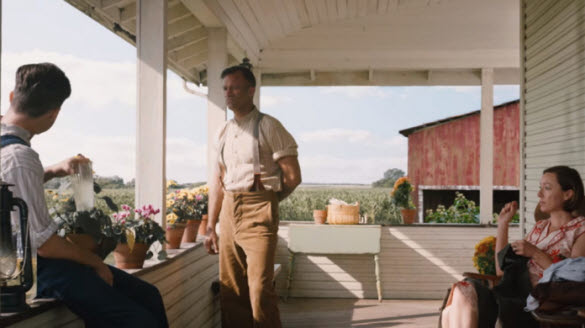
Thomas Jane plays Wilfred James, a grumpy corn farmer living in a remote rural area of Nebraska, 1922. Proud of his farming work, he wants to keep his corn field for passing it down to his adolescent sone Henry (Dylan Schmid), but his wife Arlette (Molly Parker) has a different thought. Recently inheriting a considerable size of land from her dead father, she wants to sell it along with her husband’s land to some big company and then move to Omaha for a new life, but that is certainly the last thing her husband wants.
192204

Because there is no way to prevent Arlette from selling what legally belongs to her, a certain dark temptation gradually grows in Wilfred’s mind. He decides that she must be eliminated by any means necessary, and that seems to be quite easy once he succeeds in persuading his son to join in his murderous plan. Although understandably reluctant at first, Henry agrees to help his father mainly because he does not want to be separated from his girlfriend who is the daughter of a neighbor farmer, and he becomes more willing to do that especially after he is harshly treated by Arlette at one point.

After setting an ideal situation in one evening, Wilfred and Henry eventually kill Arlette together, and everything seems to go as well as planned after that. After burying her body in a certain spot in their farm and then cleaning up the house, they lie to others that she left behind them. Although the sheriff and a lawyer representing the company are suspicious of a foul play, there is no way to prove that, and Wilfred is glad that he can still keep the land as before.

Of course, there eventually comes a sort of karmic justice as some of you have already guessed. While Wilfred tries to live as usual, he cannot help but be haunted by his crime, and there are several cringe-inducing moments involved with a bunch of rats, which keep appearing here and there after he happens to see his wife’s body covered with them. They may not be real, but Wilfred becomes agitated more and more as time goes by, and then he later finds himself facing a couple of ironic twists of life which will lead him to more misery.

192201

This is not much of a spoiler because the movie occasionally shows Wilfred writing his confession letter alone in a hotel room several years later, and I can tell you that the second half of the movie is stark and despairing as he is pushed further into his glum desolation and madness. He surely comes to regret what he did, but he already passed the point of no return, and there is nothing he can do except going down and down to the bottom waiting for him.

This could be darkly compelling, but the movie frequently suffers from its thin characterization and weak storytelling. Not only its unlikable protagonist but also other characters surround him remain artificial archetypes, and the movie does not generate enough narrative momentum as lazily trudging down its plot. It becomes more tedious especially during its finale, and the finale seriously lacks a dramatic punch while merely disturbing us a little.

The main cast members of the movie are unfortunately stuck with their cardboard characters. Thomas Jane mostly acquits himself well, but he often goes a bit too far with his rural accent, and that can be distracting for some of you. While Molly Parker and Dylan Shmid are wasted in their respective thankless roles, Neal McDonough and Brian d’Arcy James do not have many things to do except appearing on the screen from time to time, and neither does Kaitlyn Bernard, who looks suitably fetching as Henry’s girlfriend.

Compared to what was achieved in “It” and “Gerald’s Game”, “1922” disappointing in many aspects, and it reminds me again that not every film adaptation based on King’s fiction is worthwhile to watch. It is not that awful at least, so you may watch it if you just want to kill your free time via Netflix, but I recommend you “Gerald’s Game” instead.

192203

Posted in Movies | Tagged , , , , | Leave a comment

Joan Didion: The Center Will Not Hold (2017) ☆☆☆1/2 (3.5/4): Meet Joan Didion

joandidionthecenterwillnothold02

I value good documentary films presenting interesting subjects unfamiliar to me, and Netflix documentary film “Joan Didion: The Centre Will Not Hold” is one of such documentaries. Here is a smart, intelligent woman who has been leading a long, fascinating life and career, and the documentary does a commendable job of giving us an intimate and insightful glimpse into its human subject.

Her name is Joan Didion, and she has been one of the most prominent writers in US since her acclaimed essay book “Slouching Towards Bethlehem” was published in 1968. While she is soon going to be 83 this year and we cannot help but notice how fragile she looks during her interview in the documentary, she is still full of spirit as recollecting many interesting moments in her past, and we are amused as she often makes some big gestures in front of the camera.

Along with her, the documentary examines her life from the beginning. She was born to a family living in Sacramento, California in 1934, and we are told about a rather amusing piece of family history involved with the Donner Party. Her grandparents were the members of the Donner Party, but they decided to separate from the group at a crucial point during that arduous journey to California, and that decision luckily saved them from what would eventually happen to the Donner Party during that terrible winter of 1846-7.

Growing up well under her caring parents, Didion began to show considerable writing talent. When her mother showed her a copy of Vogue magazine, she spotted a section on the annual essay contest sponsored by Vogue, and she quickly set her goal. She later won the first place in that contest when she was studying in University of California, Berkeley, and that led to the beginning of her writing career in New York City.

Joan Didion: The Center Will Not Hold

After seven years at Vogue, Didion published her first book “Run River” in 1963, and then there came another important moment in her life. After becoming close to a fellow writer named John Gregory Dunne, she eventually married him in 1964, and they subsequently moved back to California, which was then the emblem of a cultural change the whole nation went through during the 1960s. As encountering many various cultural figures including Janis Joplin and Jim Morrison, Didion acutely observed the approaching end of the era, and then she wrote an article titled “Slouching Towards Bethlehem”, which was the basis of her famous essay book of the same title.

As she correctly judged, the end of the era did come, accompanied with a notorious incident which happened August 9th, 1969. Sharon Tate, who was Roman Polanski’s wife, and her four friends were brutally murdered by members of the Manson Family, and not only California but also the whole nation were certainly shocked by this horrific murder case. Didion still remembers when she received the news from Natalie Wood, and she was certainly chilled to learn later that those murderers actually passed by her house at that night.

During the 1970s, Didion and her husband kept moving on with more accomplishments. While Dunne wrote several books including “Vegas”, Didion wrote “Play It As It Lays” and “A Book of Common Prayer”, and she even wrote several screenplays. After reading James Mills’ novel “The Panic in Needle Park”, she decided to adapt the novel along with her husband, and that led to the 1971 film of the same name, which incidentally features the first notable lead performance by a young promising NYC actor named Al Pacino. In the next year, she adapted “Play It As It Lays” for Frank Perry’s 1972 film, but, as shown from an archival interview clip, she was not that satisfied with the final product.

joandidionthecenterwillnothold03

As the nation swung back to conservatism along with Ronald Reagan, Didion decided to do something new for her career. She and her husband went to El Salvador in 1983, and that led to “Salvador”, another impressive essay in her career. While observing how much willing the US government was to do anything for its geopolitical interest, Didion particularly noticed a high-ranking official named Dick Cheney, and many negative things she observed from him turned out to be pretty right as he later became the US vice president.

After leaving California, Didion and Dunne spent their later life in New York City, but a couple of sad incidents happened in 2003. Shortly before Christmas, their adopted daughter Quintana was taken to a hospital due to her sudden serious illness, and then Dunne unexpectedly died several days later. In next August, Quintana also passed away, and that further devastated Didion. While trying to process her immense grief, she wrote “The Year of Magical Thinking” and then “Blue Nights”, and the former was subsequently adapted into a Broadway play starring Vanessa Redgrave, who gives us a poignant moment as she and Didion talk about their dead daughters who left too early from them.

“Joan Didion: The Center Will Not Hold” is directed by Griffin Dunne, who is one of Didion’s nephews and is also known well for his acting/directing career. While appearing in front of the camera at times, he handles the subject of his documentary with affection and respect as expected, and the result is a warm, entertaining, and informative on the whole. I must confess that I did not know much about Didion before reading an article on the documentary a few days ago, but I came to learn many things during my viewing, and I am now willing to check some of her notable books.

joandidionthecenterwillnothold04

Posted in Movies | Tagged , , | Leave a comment

Thor: Ragnarok (2017) ☆☆☆(3/4): Thor stuck with Hulk

thorragnorok01

Among the superhero characters of Marvel Cinematic Universe (MCU), Thor is the least interesting one for good reasons. Merely a mighty alien god mainly defined by his brawny appearance and that big hammer, he does not have anything else to draw my interest, and it is no wonder that “Thor” (2011) and “Thor: The Dark World” (2013) are the most mediocre ones in the increasing bunch of MCU movies. Saddled with thin characterization and weak plot, both of them bored me to a considerable degree, and, to be frank with you, I did not feel any particular need to improve my vague memories of them before watching “Thor: Ragnarok”.

Nevertheless, I had some expectation on “Thor: Ragnarok” after watching its trailer several months ago, and I am happy to report that the movie is better than its two previous films. Although it often tries a little too hard, the movie is still amusing and entertaining on the whole, and I must admit that I laughed or chuckled several times while also appreciating how it distinguishes itself through a little bit of style and quirkiness.

As many of you know, Thor (Chris Hemsworth) decided to spend more time outside his home planet Asgard after what happened in “Thor: The Dark World”, and the movie begins at the time point not long after the finale of “Avengers: Age of Ultron” (2015). Right after his showdown with a giant fiery entity who is one of the old enemies of his father Odin (Anthony Hopkins), Thor returns to Asgard, and he soon faces his brother Loki (Tom Hiddleston, who is as shifty as before), who has ruled the planet after faking his death and then disguising himself as Odin. While phoning in his role as before, Hopkins is a little more fun compared to his completely wasteful appearance in “Transformers: The Last Knight” (2017), and we also get a small humorous moment featuring the unexpected cameo appearance of three certain performers.

thorragnorok02

After exposing Loki in front of everyone, Thor goes to the Earth along with Loki for finding their father, whom they soon meet thanks to the considerable help from Doctor Strange (Benedict Cumberbatch). As previously shown from “Doctor Strange”, Cumberbatch is well-cast in his role, and he surely has a wry fun with his character during his sole scene in the film.

Shortly after meeting his two sons, Odin warns them of a big impending danger coming to Asgard. For many years, Odin has suppressed the presence of someone who was once his right hand during their bloody period of wars and conquests, but now he cannot do that anymore, and that figure, named Hela (Cate Blanchett), soon appears right in front of Thor and Loki. As the villain of the story, Blanchet fills her role with considerable authority and charisma, and she certainly enjoys herself as making grand sullen gestures on the screen.

After his hammer is smashed by Hela during his fight with her, Thor happens to be tumbled down to a planet named Sakaar, which looks like the galactic version of trash burial site. He is immediately captured by a woman named Valkyrie (Tessa Thompson) and then becomes one of the fighters owned by Grandmaster (Jeff Goldblum), the megalomaniac ruler of the planet who occasionally holds a big fighting match for his people. Surrounded by the outlandish production design and costumes reminiscent of “Flash Gordon” (1980), Goldblum comfortably embodies his offbeat villain character, and Thompson, who has been more notable since her breakout role in “Dear White People” (2014), is suitably plucky in her role.

Anyway, Thor comes to confront Grandmaster’s undefeated champion in a huge arena, and that champion in question is none other than Hulk (Mark Ruffalo), who has somehow been stuck in Sakaar since the finale of “Avengers: Age of Ultron”. Their encounter in the arena is not so pleasant to say the least, but, after lots of bangs and crashes, our two superheroes manage to get along well with each other, and Hulk is later transformed back to Bruce Banner, who is understandably nervous and agitated as suddenly finding himself on an alien planet. While he has shown more interesting performances during his recent years, Ruffalo is engaging as usual, and he gets some funny moments as his character tries to help Thor while also trying to get his violent alter ego under control.

thorragnorok03

Of course, the movie eventually arrives at a big climatic CGI finale as required, and that was the point where I found myself becoming less interested than before. Although I enjoyed Blanchett’s performance, many of her scenes in the movie are more or less than perfunctory interludes to remind us of what is being at stake, and I was not so impressed by her character’s stock CGI soldiers or a big bad wolf which somehow reminded me of the Twilight Saga movies.

At least, director Taika Waititi, who previous directed “What We Do in the Shadows” (2014) and “Hunt for the Wilderpeople” (2016), did a good job of balancing his movie between humor and drama. Although the screenplay by Eric Pearson, Craig Kyle, and Christopher Yost frequently feels overcrowded and overstuffed while occasionally doing too much in its attempts in comedy, Waititi deftly handles many of farcical moments in the film, and Hemsworth delightfully wields his comic side which was previously utilized well in “Ghostbusters” (2016).

Overall, “Thor: Ragnarok” is a solid MCU product more enjoyable than its predecessors. I noticed its several shortcomings, and I also observed that it mostly plays safe with story and characters like many other MCU movies, but it has some distinctive style and personality to compensate for that. I still do not have lots of expectation on what will come next, but I guess I and other audiences will continue to get as much as we pay.

thorragnorok04

Posted in Movies | Tagged , | Leave a comment

One of Us (2017) ☆☆☆(3/4): Out of their insular community

oneofus01

Netflix documentary film “One of Us” looks closely into one insular religious community in New York City, and what it shows us is not so pretty at all. Here are three individuals who simply did not conform to the rigid religious rules of their former world, and the documentary gives us a number of powerful moments as observing the hefty price they have to pay for walking out of the world which once defined them.

The religious community in question is the Hasidic community in Brooklyn, and the opening scene of the documentary shows us a bunch of Hasidims spending afternoon together in their neighborhood. As reflected by their old-fashioned attire and appearance, their life is strictly and firmly defined by their ultra-Orthodox Judaism, and the documentary later shows us how insular their community has been for many years. For example, they have not only their own community school for education but also their own policemen and ambulance workers, and many secular things including Internet are prohibited in the name of faith.

In this extremely conservative community, women are expected to be dutiful wives who obey their husbands and raise their children, and so was an ex-Hasidic woman named Etty. After two perfunctory arranged meetings with a guy who would be her husband, she was instantly pushed to marriage, and she had to endure her abusive husband for several years before she finally came to decide that enough is enough. She called the police, and she eventually decided to leave her community as well as her husband along with her children.

However, she soon found herself relentlessly oppressed by her community. Not long after her husband left the house as ordered, her husband’s family members came for threatening her, and that tense moment is indirectly presented to us via the recording of her desperate call to 911. Since she broke the religious rules as reporting her husband to the police and trying to get a divorce, she was quickly ostracized by many others in her neighborhood, and she even experienced a possible direct threat to her life at one point.

oneofus03

At least, she gets some support from an organization named ‘Footsteps’, which has helped many ex-Hasidims like Etty. We see her attending a meeting with other ex-Hasidims, and the documentary makes a clear point on why it is quite difficult to leave the Hasidic community. Besides adapting to the outside world, they also have to build their whole life from the very bottom, and that is certainly hard for them, considering that they had no formal education or anything similar to that from the beginning. Not so surprisingly, only less than 2% of the Hasidic population leave their community every year, and that reminds us again of how difficult it was for Etty to make her important life decision.

Compared to Etty, other two people presented in the documentary are going through less difficult situations, but they also have each own problems and anguishes. In case of a young man named Ari, he openly shows that he does not have much faith, and he makes his position clear to others through cutting his hair. Open to many new things outside his community, he routinely checks Internet whenever he can, and he later tells us how he was particularly excited by Wikipedia.

However, we come to learn about the personal demons he has struggled with for years. He was molested by a rabbi when he was only 8, and he became more disillusioned as nobody around him took his words seriously. In addition, he came to have a serious addiction problem, and we later see him spending time at a rehabilitation center in Florida after going through a couple of overdose incidents.

Ari often talks with a local rabbi who kindly listens to him, and the rabbi later recognizes that the community does have problems. While trying to protect and preserve its culture and belief, the community has adamantly been out of touch with the outside world in many aspects, and something should really be done about that.

oneofus04

In case of a guy named Luzer, he is the most well-adjusted one. After deciding that he had to pursue an acting career, he left his family in Brooklyn and then moved to LA several years ago, and he says he is all right with his life at present, but we observe how shabby his life is. While living in an RV car, he works as an Uber driver for making ends meet, and his acting career has so far been going nowhere, though he does not lose his hope yet.

It is amusing to see how he once tried to be a Hasidic performer, but there is some sense of melancholy when he talks about his former life, and that is exemplified well by the scene where he shows us a neighborhood where he once lived with his ex-family. He might miss his former life which was a lot more stable, but he made his choice anyway, and he does not regret it.

“One of Us” is directed by Heidi Ewing and Rachel Grady, who were previously Oscar-nominated for “Jesus Camp” (2006). Although it is not exactly objective in its storytelling, the documentary lets us muse on its complex subject for ourselves while maintaining its calm, thoughtful attitude, and I especially admire its sensitive handling of Etty’s story, which is certainly the strongest part in the film. This is a solid documentary which deserves to be watched by more audiences, and I hope that its wider availability via Netflix will draw more attention to its subject.

oneofus02

Posted in Movies | Tagged , | Leave a comment

Mother! (2017) ☆☆☆(3/4): A no-holds-barred allegory from Darren Aronofsky

mother01

Regardless of whether you love it or hate it, “Mother!” is a no-holds-barred allegory which will shake you up a lot during your viewing. I must confess that I was baffled during its rather ponderous first act, but then I was amused during its viciously humorous second act, and then I was flabbergasted by its totally deranged third act. Seriously, I am still trying to sort out what I think and feel about the film, but this is surely an ambitious piece of work, and I sort of admire how it willingly challenges us by any means necessary.

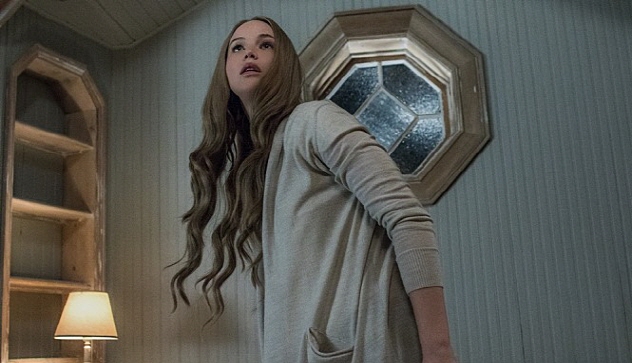
Right from its opening scene, the movie reminds us of its warped reality as introducing to us a couple at the center of its story: ‘Him’ (Javier Bardem) and ‘Mother’ (Jennifer Lawrence). They live together alone in a big house located in some remote area, and everything looks fine for them at first, but then we come to feel a subtle sense of strain inside the house. Him, who is a middle-aged poet, has been stuck in writer’s block for a while, and he does not feel that happy although he is mostly cordial to his young wife, who is usually occupied with re-decorating their house.

And then someone comes to their house on one day. While he initially presents himself as an accidental passerby, it is apparent that he wants something from Him, and, to Mother’s dismay, he will not soon leave the house as Him gladly allows that man to be in the house as long as he can. After all, how can he possibly say no to someone who seems to admire his work a lot?

The situation becomes more complicated when another uninvited figure appears at the front door of the house. That figure is none other than the aforementioned man’s wife, and, not so surprisingly, she also comes to hang around Him and Mother just like her husband, who turns out to have a serious health problem and is accordingly allowed to stay in the house along with his wife. As increasingly annoyed by these two strangers, Mother tries to be patient and polite to them, but they often seem to get on her nerve deliberately.

mother02

The first act of the movie feels tedious at times, but it is thankfully enlivened by two talented supporting performers in the film. While Ed Harris is subtly insinuating in his seemingly mild appearance, Michelle Pfeiffer chews every moment of her scenes with vicious gusto, and her darkly amusing supporting performance shows us that she has not lost any of her talent although it has been nearly 30 years since she drew our attention with her Oscar-nominate turn in “Dangerous Liaisons” (1988).

During the second act, the movie becomes more interesting in a way I will not describe in detail. Another unexpected thing happens in the house, and Mother subsequently becomes more frustrated and exasperated as that results in more disturbance in her house. She simply wants to have a quiet peaceful time with her husband, but that seems to be the last thing to come to his mind as he faithfully does what he is expected to do.

In the meantime, she finds herself often unnerved by some hallucinogenic moments. There is the ominous image of a pulsating object, which frequently appears throughout the film. And then there is a weird moment involved with a certain type of stain on the wooden floor, which eventually leads her to something hidden in the basement of the house.

Around its third act, the movie becomes darker and more twisted than before, and director/writer Darren Aronofsky pulls out all the stops for that. As cinematographer Matthew Libatique’s handheld camera fluidly moves here and there inside the house, we behold our unfortunate heroine pushed further into more madness and confusion, and there are several intense moments which will definitely make you cringe for good reasons.

mother05

If you are familiar with Aronofsky’s previous works, this overwhelming experience will probably not surprise you. As shown from “Pi” (1998), “Requiem for a Dream” (2000), “The Wrestler” (2008), and “Black Swan” (2010), he has always drawn to intense, feverish human condition, and his movies always left considerable impression on me and other audiences. When I recently revisited “Requiem for a Dream”, I was surprised again by how it vividly conveys the sense of addiction, and then I was emotionally overwhelmed again by its stark, despairing finale. While I did not like “Noah” (2014) a lot, I still remember a number of striking images in that film, and they often make me wonder whether I should have been less harsh in my two-star review.

Aronofsky usually demands considerable efforts from his lead performers, and “Mother!” is no exception. Although she stumbles a bit at times due to the contrived aspects of her character, Jennifer Lawrence is willing to go all the way as demanded, and the result is another interesting performance in her stellar career. In case of Javier Bardem, he functions well as the ground for his co-performer’s acting, and his performance will look more amusing if you reflect on his character later.

While it is less successful than “Requiem for a Dream” or “Black Swan”, “Mother!” is more interesting than “The Fountain” (2006) and “Noah”, so I recommend it with some reservation. Sure, it does not wholly succeed in its reach for greatness, but there are some memorable things to talk and discuss about in the film, and I think we should appreciate that at least.

mother03

Posted in Movies | Tagged , , | 1 Comment

It Comes at Night (2017) ☆☆☆1/2(3.5/4): Fear eats their soul…

itcomesatnight03

While firmly and intensely sticking to its minimalistic setting, “It Comes at Night” works as a terrifying psychological horror film. As its few characters struggle with fears and uncertainties in their gloomy circumstance, the movie pushes them further to its inevitable plot point, and we come to brace ourselves as dreading what will happen next to them.

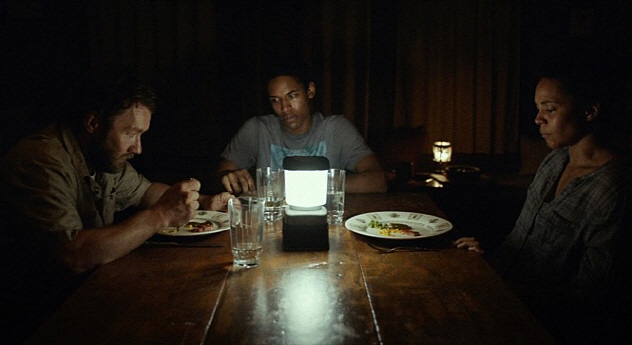
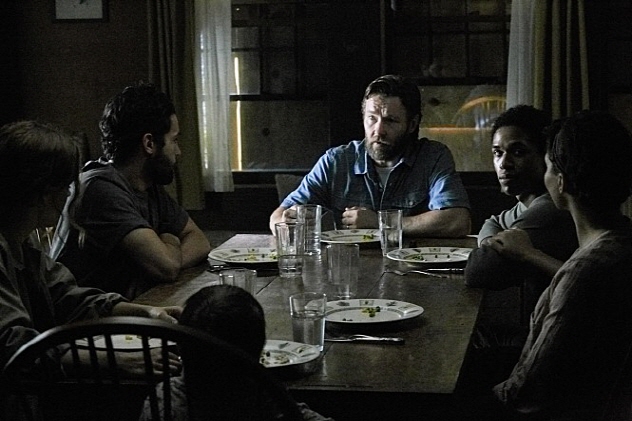
After the calm but chilly opening scene, the movie lets us slowly gather what has been going on in their world. As an unknown lethal plague was spread widely around the world some time ago, the human civilization was accordingly collapsed, and remaining survivors still have to be cautious about infection while they try to survive another day. In case of a guy named Paul (Joel Edgerton) and his few family members, they have been hiding alone in a boarded-up house located somewhere in the middle of a rural forest, and they have been strictly following Paul’s few rules for their safety. They never go outside at night, and they also never wander around alone outside during daytime. The house has only one door for entry, and this red-colored door is always locked whenever night begins.

However, things have recently been not very good for this family. As shown from the opening scene, Paul’s father-in-law happens to contract the disease, and Paul and his wife Sarah (Carmen Ejogo) have no choice but to kill him. While wearing gas masks for not getting infected, they give him some comforting words before Paul eventually executes a mercy killing on his father-in-law, and then he and his teenage son Travis (Klevin Harrison Jr.) take the body outside for burning it in a shallow grave.

itcomesatnight02

As a part of his life is gone forever along with his grandfather, Travis becomes morose and agitated. Although a family dog gives him some comfort at least, he often has nightmares associated with death, and there is a striking moment when the camera closely focuses on a copy of “The Triumph of Death”, a famous oil panel painting by Pieter Bruegel the Elder. Although the movie never shows us the world outside the forest, several disturbing elements in that painting are more than enough for us to feel the gloomy apocalyptic atmosphere surrounding its characters, and we come to wonder whether they will ever be free from their isolated status.

And then there comes an unexpected change. In the middle of one night, the family is awakened by the presence of someone intruding into their house, and that is how they meet a young man named Will (Christopher Abbott), who says that he is simply looking for water for his wife and young son. Paul does not trust this guy much, but he decides to check out whether Will’s words are true or not, and it turns out that Will does have a wife and a son. Although Paul has some reservation about letting strangers into his house, he allows Will and his family to stay in the house anyway, and the mood in the house becomes a bit brighter as these two families interact more with each other.

Of course, the movie eventually takes a dark plot turn later in the story, and director/writer Trey Edward Shults, who previously made a remarkable debut with “Krisha” (2015), dials up the level of tension more as doling out a series of nervous moments. Thanks to his cinematographer Drew Daniels, who previously collaborated with Shults in “Krisha”, many key scenes in the movie are imbued with moody creepiness, and the night scenes in the movie are visually striking for its impressive utilization of lights and shadows.

I should point out that “It Comes at Night” can be frustrating for you as adamantly refusing to give answers to a few questions in the story. For instance, we never get a clear answer on what exactly happens to the family dog at one point, and the movie is also rather ambiguous about one night when Travis comes across a couple of strange things.

itcomesatnight01

However, the movie gives us an intense experience as intently focusing on its characters, and the performers in the movie are believable as their characters are pushed more into fear, anxiety, and distrust. Joel Edgerton and Carmen Ejogo ably fill their archetype roles, and Christopher Abbott, who recently impressed me a lot with his breakthrough performance in “James White” (2015), is also solid as he deftly balances his character well between trustworthiness and being suspicion. Will is a mostly friendly guy, but it seems that he does not reveal everything to Paul and Paul’s family, and we cannot help but be suspicious about Will as much as Paul when he says something which does not fit well with what he said to Paul before.

In what may be a breakout turn in his burgeoning acting career, Kelvin Harrison Jr. is commendable as the harrowing emotional center of the film. While his character’s viewpoint becomes rather unreliable later in the movie, Harrison keeps engaging us through his unadorned natural performance, and we come to emphasize a lot with his character’s ongoing emotional turmoil, which is further fueled by what is going on inside his house.

“It Comes at Night” will dissatisfy you if you expect something like “28 Days later…” (2002), but you will enjoy it if you are well aware of what it intends to do in advance. As a guy who prefers mood and suspense to shock, I really appreciate what is achieved in the film, and I admire how Shults did his own things well while clearly influenced by many other horror films including “Night of the Living Dead” (1967) and “The Shining” (1980). Fear eats their souls indeed, and that will surely scare you a lot.

itcomesatnight04.jpg

Posted in Movies | Tagged , , | 1 Comment

Marjorie Prime (2017) ☆☆☆(3/4): An somber, intelligent SF chamber drama

marjorieprime01

“Marjorie Prime” is a somber, intelligent SF chamber drama which turns out to be more intriguing and thoughtful than I expected. While it shows its theatrical origin at times, the movie is an engaging intellectual experience nonetheless, and it is a small pleasure to observe how it neatly handles its cerebral subjects as leisurely moving from one narrative point to another.

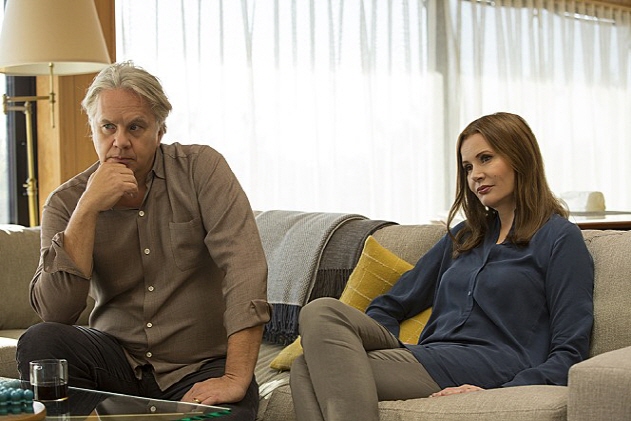
In the beginning, we meet an old woman named Marjorie (Lois Smith). While she mostly looks all right on the surface, she is in fact going through the early period of Alzheimer’s disease, and she is well aware of that at least as going through her peaceful daily life as usual in a nice beach house along with her daughter Tess (Geena Davis) and Tess’ husband Jon (Tim Robbins), who have taken care of Marjorie along with her personal nurse Julie (Stephanie Andujar).

While there is no one around her in the house, Marjorie frequently talks with her husband Walter (Jon Hamm), who died many years ago but has been a part of her daily life thanks to advanced computer technology. Whenever she needs him, the vivid hologram image of his younger self appears in front of her, and he is always ready to listen or talk to her.

Although she knows well that ‘Walter Prime’ is not real Walter, Marjorie cannot help but become nostalgic while sweetly talking to him, and their conversation usually revolves around her old memories of Walter. She talks about a family dog she and Walter once had. She recollects that precious moment when Walter proposed to her. And she also dearly remembers one beautiful winter day she and Walter had a long time ago, though it will be bound to be forgotten along with many other precious pieces of memories in her fading mind.

marjorieprime03

As comforting Marjorie as usual, Walter Prime comes to learn more about the man he is programmed to imitate, and he accordingly looks and feels more real to her as time goes by. Watching this rather uncanny progress, we cannot help but wonder. Can he be possibly regarded as something real? Is he merely a projection of how real Walter is remembered by Marjorie?

Meanwhile, the movie also pays considerable attention to Tess and Jon. While struggling with her own family problem, Tess feels more nervous as watching the growing relationship between her mother and Walter Prime, but she cannot deny that he will be more important to her mother as time goes by. In contrast to his wife, Jon is more supportive of Marjorie and Walter Prime’s relationship, and he even supplies additional facts about his dead father-in-law to Walter Prime during their private conversation.

Now I should be more careful about describing the plot, whose main entertainment comes from how it is developed into something more complex step by step. I will not dare to go into details here, but I can tell you instead that director Michael Almereyda, who previously impressed me with “Experimenter” (2015), did a good job of adapting Jordan Harrison’s Pulitzer Prize-nominated play of the same name. While many scenes of the movie are set inside the beach house in the film, the movie never feels stuffy or confined, and the occasional outdoor scenes do much more than generating the sense of place. Filled with gray melancholic mood, they effectively reflect the elegiac aspect of the story, and that is further accentuated by Mica Levi’s moody, tentative score on the soundtrack.

marjorieprime02

Like any movies based on stage plays, the movie depends a lot on the talent of its main cast members, and they are all solid in their respective roles. Lois Smith, an 86-year-old veteran actress who appeared in many notable films after making her debut in “East of Eden” (1955), certainly knows her character well because she previously played her character in the original production of Harrison’s play, and she effortlessly embodies her character right from her first scene. Thanks to her deft performance, Marjorie comes to us as a vivid human character to observe, and it is also interesting to watch how Smith brings subtle nuances to her performance later in the story.

On the opposite, Jon Hamm, who has recently been more familiar to us thanks to his acclaimed TV series “Mad Men”, is smooth and dapper as required, and he brings some poignancy to his artificial character who will certainly remind you of other similar SF films such as “Her” (2013). We can always feel the gap between Walter Prime and other characters in the film, but then we observe how much they project their human feelings onto him, and Hamm’s low-key performance effectively functions in that aspect.

As two other crucial parts of the story, Geena Davis and Tim Robbins show that they have lost none of their talent although they have been somehow less prominent during recent years. While Davis ably conveys to us her character’s troubled state of mind, Robbins gradually holds the ground for his co-performers, and Stephanie Andujar is also fine in her small supporting role.

Although it may require some patience from you due to its slow narrative pace, “Marjorie Prime” is rewarding on the whole thanks to its good mood, smart storytelling, and nuanced performances. As reaching to its modest goal, the movie intrigued me enough during my viewing, and I came to muse on its haunting finale for a while. It is not exactly refreshing, but it does its job as well as intended, and you may admire it as much as I do.

marjorieprime05

Posted in Movies | Tagged , , | Leave a comment

The Meyerowitz Stories (New and Selected) (2017) ☆☆☆(3/4): Life with their father

themeyerowitzstories03

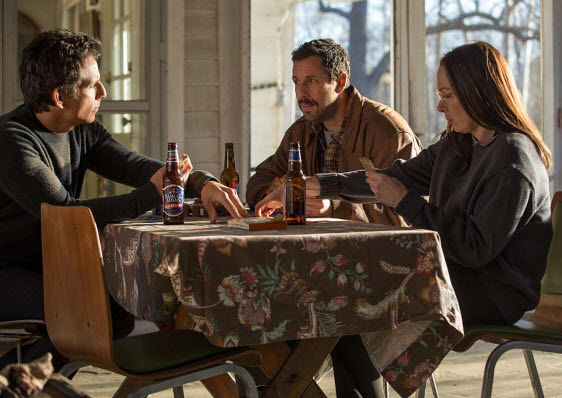
“The Meyerowtiz Stories (New and Selected)” is as amusing as its whimsical title suggests. As dryly depicting the rocky relationship dynamics among the members of one dysfunctional family, the movie entertains us with small humorous moments generated among them, and we gladly go along with that even though most of them are not very likable to say the least. Sure, they are more or less than broad archetypes, but they are engaging characters to watch nonetheless, and we come to understand their human flaws and pains even while we get laughs from how absurd and pathetic they are.

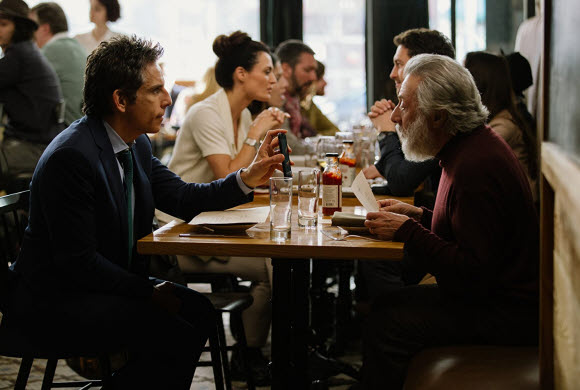
The movie is about Harold Meyerowitz (Dustin Hoffman) and his three adult children who were respectively born from his three previous marriages: Danny (Adam Sandler), Jean (Elizabeth Marvel), and Matthew (Ben Stiller). When Danny, who was recently divorced from his wife and has been recently unemployed, comes to stay at his father’s house for a while along with his daughter Eliza (Grace Van Patten), he initially seems to be welcomed by his father and his father’s new wife Maureen (Emma Thompson, who is deliberately goofy in her caricature role), but the gap between him and his father is evident when they later have a dinner with Maureen, Eliza, and Jean. As a guy who was one of prominent sculptors working in New York City, Harold expected a lot from Danny, but Danny came to disappoint him instead, and Harold frequently reminds Danny of that during their strained conversation.

Nevertheless, Harold needs his loser son mainly for boosting his remaining artistic ego a bit, and Danny is always ready for that because that is what he has done for many years since he was young. Perfectly fitting to his man-child character, Adam Sandler gets a chance to do some real acting here in contrast to his many recent forgettable movies, and the result is his best performance since “Punch-Drunk Love” (2002) and “Funny People” (2009). Deftly conveying to us his character’s arrested emotional state, Sandler is often surprisingly sensitive, and that aspect is exemplified well by his small musical scene with Grace Van Patten, who holds her own place well among her more prominent co-performers.

themeyerowitzstories05

Danny and Jean try to give their father a chance to exhibit his old artworks in public, but Harold is too proud to grab the chance, and he continues to be petty and self-absorbed as usual. When he and Danny come to his old friend’s special exhibition held at the Museum of Modern Art, he cannot help but feel envy as seeing his friend’s enduring success, and we accordingly get another funny moment in the film as he tries to hide his envy behind a series of half-baked critical comments. Dustin Hoffman, who is still one of the greatest actors in our time, has a wry fun with his incorrigibly egoistic character, and his performance is constantly amusing to watch that even though we often cringe at how callously his character treats others around him – and how selfishly he holds them around himself.

After the first part revolving around the relationship between Danny and Harold, the second part of the movie shifts the focus toward the relationship between Harold and Matthew, who has lived in LA while working as a successful financial manager. In contrast to Danny, Matthew prefers to stay away from his father as much as he can, but his meeting with Harold in New York City reminds him again that he is not totally free from his unhappy family past yet. After all, he has worked hard for proving himself to his father, hasn’t he?

As recently shown from “Brad’s Status” (2017), Ben Stiller, who previously collaborated with director/writer Noah Baumbach in “Greenberg” (2010) and “While We’re Young” (2014), is always good at playing neurotic characters insecure about themselves, and I enjoyed how Matthew is gradually agitated by his father’s constant annoyance. Eventually, there comes a point when Matthew decides that enough is enough, and we are not so surprised while observing that he has been emotionally damaged as much as his half-brother.

themeyerowitzstories01

Around its third part, the movie becomes more serious than before due to one certain incident, but the movie does not lose its sense of humor at all, and it finally gives some space to Jean, who, not so surprisingly, turns out to have her own emotional issues. Although she is rather under-utilized compared to Stiller or Sandler, Elizabeth Marvel gives a fine performance balanced well between pathos and humor, and she is particularly good when Jean reveals her old hurtful secret to her half-brothers.

Around his main cast members, Baumbach places several notable performers, and they are also solid in their respective small supporting roles. While Judd Hirsch plays Harold’s old friend, Rebecca Miller appears as the daughter of Hirsch’s character, and Adam Driver, who previously played a supporting character in “While We’re Young”, makes a brief cameo appearance as one of Matthew’s clients. As one of Harold’s ex-wives, Candice Bergen brings considerable warmth to her single scene, and we can really sense her character’s regret when she confides to Harold and Matthew that she was not a very good mother to her stepchildren.

While it stumbles a little during its epilogue part, “The Meyerowitz Stories (New and Selected)”, which is currently available on Netflix, is another interesting work from Baumbach, who drew my attention for the first time via his Oscar-nominated film “The Squid and the Whale” (2005). The movie is surely a typical dysfunctional NYC middle-class family drama which reminds us of many other similar films including Wes Anderson’s “The Royal Tenenbaums” (2001), but it distinguishes itself through sharp humor and smart storytelling, and I got enough laughs as appreciating its good performances. They are indeed one unhappy family, but they are fun to watch, aren’t they?

themeyerowitzstories04

Posted in Movies | Tagged , | 1 Comment

The Death and Life of Marsha P. Johnson (2017) ☆☆☆1/2(3.5/4): On their long struggle

thelifeandeathofmarthapjohnson01  Revolving around the mysterious death of one prominent sexual minority activist, Netflix documentary film “The Death and Life of Marsha P. Johnson” vividly illuminates an overlooked aspect of the LGBTQ activism in US during the 1970-90s. While it initially draws our attention via its mystery elements, the documentary ultimately functions as a touching tribute to its title figure and other remarkable trans women presented in the film, and their stories are inspiring to say the least.
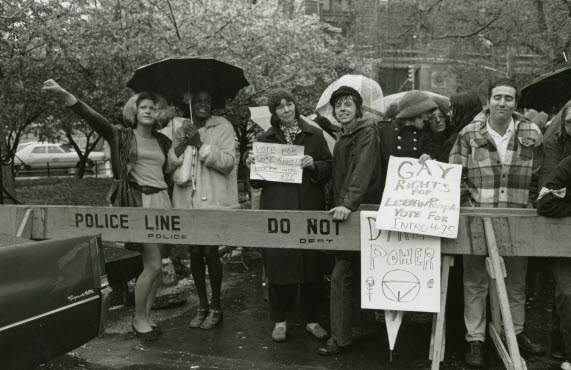

In the beginning, we get the basic details of the death of Marsha P. Johnson, a trans woman activist who was born in 1945 as Malcolm Michaels. On July 6th, 1992, her body was found floating in the Hudson River, and the police simply concluded that she committed suicide, but many people who were close to Johnson did not believe that at all. Sure, she did live a tough life on the streets of Greenwich Village in Manhattan just like many other trans women during that time, but she always went forward with her spirited attitude, and that was the main reason why some of her close friends suspected that she was murdered by someone.

Although more than 20 years have passed since Johnson’s death, Victoria Cruz, a trans woman who was one of Johnson’s friends, still wants to know what really happened to her friend. Although she is about to retire from her position in New York City’s Anti-Violence Project, she is determined to do as much as she could, and we see her patiently trying to get any bit of new information involved with Johnson’s death. She tries to contact the retired policemen who handled the case, but they all flatly reject her, and she cannot even get a copy of the autopsy report on Johnson’s body just because it seems to be lost somehow. Although she manages to get its partial copy later, that does not tell anything new about her friend’s death, and she understandably becomes frustrated.

thelifeandeathofmarthapjohnson02

Meanwhile, she visits not only Johnson’s family members but also several people who knew Johnson. Johnson’s two siblings fondly remember their sister, and there is a brief amusing moment when they laugh a bit about how terrible she was as a singer. Randy Wicker, who was Johnson’s roommate and colleague before her death, is as colorful as his flamboyant attire, and he tells us a story about how Johnson came and then began to stay in his apartment. At one point, Cruz goes to a prison for meeting a bulky trans woman incarcerated in that prison, and that trans woman also has her own story about Johnson, who was a sort of mother figure to many young trans people in Greenwich Village.

Although she is only presented via a mix of various archival materials, Johnson comes to us a spirited lady who did not step back at all while enjoying being herself. As a matter of fact, she and her close friend Sylvia Rivera were two of the principle figures of the Stonewall Riots in the summer of 1969, and they later founded Street Transvestites Action Revolutionaries (STAR) for promoting the civil rights of trans people. In a small shabby apartment in Greenwich Village, they provided a shelter for their fellow trans women, and they soon became prominent figures in their small community.

Of course, Johnson and Rivera went through many difficult moments like other trans women, and the documentary shows us how they were discriminated not only outside but also inside their world. While they were frequently mistreated and abused by policemen, they were also overlooked and ostracized as a minor group of LGBTQ community, and we see how they were unfairly prevented from being on the frontline of LGBTQ activism. As shown from one archival footage clip, Rivera tried as much as she could at a big public meeting, but she was constantly heckled during her short speech on the stage, and that painful experience eventually made her leave New York City for a while.

thelifeandeathofmarthapjohnson03.jpg

What happened to her after that is the most dramatic part in the film. Not long after Johnson’s death, River came back to New York City, but then she became an alcoholic homeless living around the spot where her friend’s body was found, and an old TV news report clip shows us how gloomy her life was during that time. Fortunately, she came to get some help from other trans women and then recovered, and she dedicated the rest of her life to LGBTQ activism until she died in 2002 due to liver cancer.

The documentary also pays considerable attention to Cruz, who is full of life and personality just like Johnson and Rivera. When she is in front of her former workplace, she tells us about how she came to be helped by the Anti-Violence Project after being sexually harassed by her co-workers, and the documentary reminds us of how frequently trans women have been assaulted or murdered in US every year. One of the most recent examples is the tragic death of a young trans woman named Islan Nettles, and Cruz and other activists are not so pleased when a young man responsible for Nettles’ death receives a lighter punishment than expected.

“The Death and Life of Marsha P. Johnson” is directed by David France, who was Oscar-nominated for his first feature documentary film “How to Survive a Plague” (2012), which is about the AIDS activism during the 1980-90s. Both of these two documentaries powerfully present the social progresses won by hard fights, and they will enlighten you on their serious social subjects while touching you a lot. Yes, there should be more progress for sexual minority people out there, and we should support them as fellow human beings.

thelifeandeathofmarthapjohnson03


Posted in Movies | Tagged , | Leave a comment

The War Game (1965) ☆☆☆☆ (4/4): “This is nuclear war.”

thewargame01

“Oh, where are you coming from, soldier, gaunt soldier,
With weapons beyond any reach of my mind,
With weapons so deadly the world must grow older
And die in its tracks, if it does not turn kind?”

– from “Song for Three Soldiers” by Stephen Vincent Benét

“The War Game” is one of the most terrifying films I have ever seen. Although it was made more than 50 years ago, its sobering presentation of nuclear war remains utterly gut-wrenching with many unforgettable moments of terror and despair. While the number of nuclear weapons around the world has considerably been decreased since the end of the Cold War, we are still living with thousands of nuclear weapons even at present, and, unfortunately, that dreadful possibility of nuclear war becomes a lot more possible than before as our world becomes more volatile and unpredictable during recent years.

Thanks to its austere docudrama approach, the first half of the movie feels like watching an alternative timeline we were fortunate enough to avoid. As the Vietnam War becomes more intensified, China comes to invade South Vietnam, and then US threatens to use nuclear weapons against China. After that point, the Soviet Union decides to blockade West Berlin for demonstrating its solidarity with China, and US and its NATO allies in Western Europe come to attack East Germany for breaking off the blockade.

During the opening scene, the narrator calmly explains why Britain will be particularly vulnerable if this alarming situation is ever escalated to the stage of nuclear war. We see numerous dots on the map of Britain, which are the sites of many airfields and military bases where nuclear weapons are deployed. And then we see how these military sites are not so far from several dense areas where a third of the entire population of Britain reside.

As the situation gets worse in Europe, the British government and its officials begin to prepare for the worst. Thousands of citizens in London and other major cities in Britain are ordered to evacuate to rural areas as soon as possible. The guideline for possible nuclear attack is quickly distributed in public, and so are other important items including ration cards and identification cards.

thewargame03

However, it is apparent that neither the British government nor its citizens are prepared much for what may happen sooner or later, and the movie makes a sharp point on that aspect. Several different citizens are interviewed, and they all have no idea on how hazardous nuclear fallouts can be. We later meet a citizen who seems to be fully prepared with heaps of sandbags, but, as many of you know, his preparation will be useless if a nuclear bombing happens near his house. As the full-scale nuclear attack from Russia is imminent, the narrator informs us that there will be no more than 2.5 minutes left for the people in Britain even in the ‘best’ situation, and we get the most ironic line in the film as the siren eventually goes off: “This could be the way the last two minutes of peace in Britain would look.”

The horror of nuclear war is soon unfolded in front of our eyes. We see people blinded by sudden flashes of nuclear bomb explosions, and the narrator phlegmatically describes how severely their eyes and skins are burned by those blinding flashes which are 30 times brighter than daylight. Not long after one family hurriedly hides into their house, the house is shaken up by the massive shockwave resulted from a couple of nuclear bombs, and the close-up shot of this terrified family is one of the scariest moments in the movie.

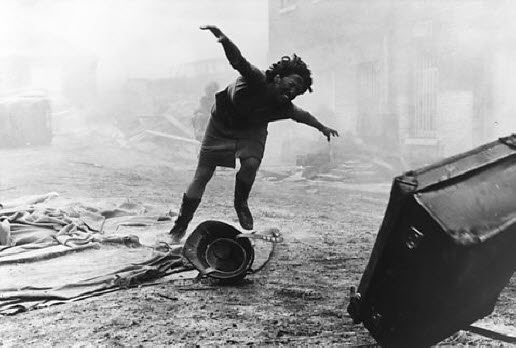
While it is implied that the situation could be a lot worse, the consequence of the nuclear attack is enormous to say the least, and the movie puts us into right into the situation as it focuses on what happens after three one-megaton nuclear warheads are detonated over the county of Kent. We see a huge firestorm engulfing buildings and streets, and we are told that the temperature of its center is no less than 800 ℉ (427 ℃). As the firestorm virtually burns everything in sight, it also generates a mighty wind of 100 miles (161 km) per hour, and we see many firemen and civil defense volunteers blown away by this powerful air current. Around the end of this hellish happening, a lethal amount of carbon dioxide, methane, and carbon monoxide are released into the air, and we get another chilling moment in the film as people is being asphyxiated to death one by one. Some of you may think the movie exaggerates, but the narrator reminds us that what we see is based on what happened after the bombing of Hamburg, Dresden, Tokyo, and Hiroshima.

In a local hospital, we see doctors and nurses who have to handle lots of casualties brought to their hospital after the nuclear attack, and one exhausted doctor tells us that, due to the shortage of equipments and medicines, they have no choice but to divide the casualties into three categories. While the casualties of the first two categories may get the treatments they need, the ones in the last category, who are in terminal states, are simply placed in a ‘holding section’, where they are left to die without much help unless mercy killing is executed on them.

thewargame02

In case of survivors without serious physical injury, they may look relatively fine in comparisons, but most of them are apparently traumatized by what they experienced during the nuclear attack, and there is no psychiatric help available to them. As we see them still suffering from their horrible experiences (one of them is barely able to eat a dish of soup given to him, for example), the narrator impassively observes: “This, too, will be the legacy of thermo-nuclear war.”

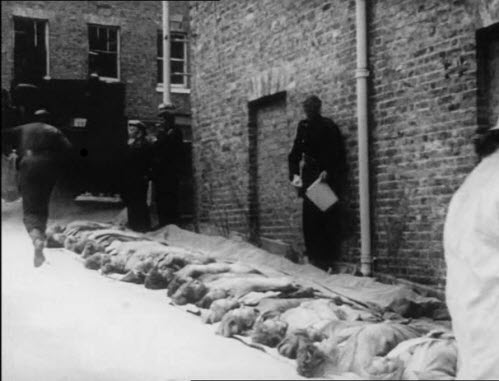
The situation looks a bit less grim a few days later, but the horror continues as before. One morose soldier tells an interviewer that there were so many dead bodies in buildings that they had no choice but to burn those bodies all together instead of burying them. We are told later that wedding rings were taken off from bodies for identification, and we get a stark moment of emotional gut-punch when a guy shows us a bucketful of wedding rings.

Meanwhile, the society slowly begins to crumble with increasing chaos and anarchy. The shortage of food leads to a number of violent riots, and policemen are allowed to shoot civilians if that is necessary. An expert tells us about how decent ordinary middle-class people can develop the indifference toward the laws during and after war, and we soon see a textbook example from one housewife who pilfered several cans of food right after the attack on a Government Food Control center.

Around four months after the nuclear attack, Christmas comes, but nothing looks hopeful at all. During his Christmas mass, a pastor tries to make the mood a little brighter through music, but everyone remains silent and hopeless. We later meet a group of young orphans, who give us the most heartbreaking moment in the film when they are asked about what they want to be in the future. One of them says “I don’t want to be nothing”, and, to our horror and sadness, everyone else gives the same reply one by one.

thewargame05

“The War Game” is written and directed by Peter Watkins, who did an astonishing job of depicting his subject with sheer authenticity and verisimilitude. Shot in rough black and white newsreel film, the movie often looks like genuine archival footage, and its shaky handheld camera further accentuates its frightening realism. In addition, Watkins often intercuts some of the most horrific moments in his film with the faux interview clips of several authority figures in favor of nuclear weapons, and you will roll your eyes as they make their outrageous statements in front of the camera (Believe or not, these statements were based on genuine quotations).

Not so surprisingly, the movie generated lots of controversies around the time when it was scheduled to be broadcast on TV in October 1965. Because it was clear that the movie was intended as a criticism against the nuclear weapon policy of the British government during that time, the BBC showed it to a group of senior government officials in advance, and then the film was banned from being broadcast because, according to the official statement from the BBC, it was judged to be “too horrifying for the medium of broadcasting”. Fortunately, because the ban only forbade television broadcast, the movie could be released in movie theaters instead, and it eventually won Best Documentary Oscar in 1967 although it is technically not a documentary film. (After this rather odd case, the Academy of Motion Picture Arts and Sciences changed their rules regarding eligibility for the category in question, by the way).

After “The War Game”, the Cold War continued during next 25 years, and it should be noted that there were a number of notable movies about nuclear war during the 1980s. “The Day After” (1983) surely shocked thousands of American TV viewers (and me later), but it has nothing on the eviscerating emotional power of BBC TV film “Threads” (1984), which is probably the only movie on a par with “The War Game”. In case of theatrical films, “Miracle Mile” (1988) is still scary for good reasons, and “Testament” (1983) does not lose any of its sad dramatic power thanks to Jane Alexander’s Oscar-nominated performance.

While the nightmarish situations imagined in “The War Game” and these terrifying films may belong to the past now, I must remind you that there are still 14,930 nuclear warheads around the world at present according to Federation of American Scientists. In his 1967 review on “The War Game”, Roger Ebert said that the movie “should be shown to the leaders of the world’s nuclear powers, the men who have their fingers on the doomsday button.” Considering the current political situation around the world, I cannot possibly agree with him more.

thewargame04

Posted in Movies | Tagged , | Leave a comment