Paterno (2018) ☆☆☆(3/4): His rapid fall from grace

paterno04

Joe Paterno’s rapid fall from grace during his final year can be regarded as a cautionary tale about how one’s achievements of lifetime can be so quickly tarnished and ruined by a single scandal. He dedicated himself to his profession for more than 60 years as establishing his legendary status, but, alas, everything fell down as he suddenly found himself getting associated with a shocking case of child sex abuse, and his legacy has been always remembered along with that heinous crime.

Closely looking into what happened around Paterno during that eventful week of November 2011, HBO movie “Paterno” tries to give us some glimpses into his state of mind during that period, and the result is a modest but fascinating drama with several good things to admire. Although it is rather ambiguous about how much Paterno was responsible for the cover-up of many incidents of child sex abuse which were committed by one of his close associates, the movie is still engaging as intensely focusing on the mounting tension and pressure on Paterno and others around him, and it is also anchored well by the solid lead performance from one of the great actors in our time.

Paterno in the film is played by Al Pacino, and the movie opens with Paterno going through a medical examination for his serious health condition. As he is being examined by an MRI machine, his mind goes back to when he and many others around him were virtually on the top of the world on October 29th, 2011. On that day, he won his 409th game as the head coach of the Penn State Nittany Lions football team, and this record-breaking victory was certainly another moment of glory to be added to the long, illustrious sports career of this aging but feisty coach who was soon going to have his 85th birthday.

paterno03

However, there was a very big trouble coming to not only him and his team but also the Penn State University. Not long after a local newspaper reporter named Sara Ganim (Riley Keough) wrote an article on the allegation of child sex abuses committed by Jerry Sandusky, who served as an assistant for Paternto for 30 years before his retirement in 1999 and had remained closely associated with Paterno and the Penn State University since that. Although her article did not draw much public attention at first when it came out, it eventually led to the grand jury investigation of this allegation, and the scandal subsequently broke out a few days later as Sandusky was officially indicted for his alleged crime.

The main part of the movie revolves around how the situation became worse for Paterno and his family day by day after that point. While a bunch of reporters are eagerly waiting outside his residence for any comment from him or his family, his family try to find any possible way for distancing the family from the scandal, but Paterno chooses to stick to what he has recently been occupied with: his team’s upcoming game with the Nebraska State University team. To him, the scandal seems to be a minor trouble which he and his team and family can endure, and it is pretty clear to us that he does not understand much how big and serious this scandal is going to be.

As the media focuses more and more on whether Paterno was aware of Sandusky’s crime from the beginning, Paterno’s family comes to hire a consultant from a crisis management firm, but the consultant flatly delivers the bad news to Paterno. There is no other way out for Paterno except his immediate resignation, and the Penn State University will fire him anyway for saving its reputation even if he does not do that. While certainly feeling exasperated, Paternto eventually agrees to leave his position after the end of the ongoing season, but then the Penn State University fires him immediately, and this leads to what will be remembered as one of the most shameful moments in the history of the Penn State University.

paterno01

Meanwhile, the movie also pays considerable attention to Ganim’s continuing work on the scandal. She often meets one of Sandusky’s early victims and the victim’s mother, and she comes to learn more about how Sandusky’s crime has been neglected and covered up for many years. The victim and his mother tried as much as they could for exposing Sandusky’s crime, but that led to more pain and torment for them, and that will remind you of those many sexual abuse victims who were unjustly disregarded before the recent #MeToo movement.

As more of Sandusky’s crime is exposed in public, Paterno becomes a more distant figure to us due to his apparent obliviousness to the consequence of his serious negligence, but Pacino’s nuance acting still holds our attention. Dialing down his usual intense presence, Pacino, who previously collaborated with director Barry Levinson in another HBO film “You Don’t Know Jack” (2010), is fabulous as subtly suggesting whatever is being churned inside his character’s mind, and he is also supported well by good supporting performers including Riley Keough and Kathy Baker, who holds her own small place as Paterno’s distraught wife.

Although it does not illuminate anything new about Paterno or the Penn State University child sex abuse scandal, “Paterno” is still worthwhile to watch, and Pacino shows here that he can still be as compelling as before. Although he is approaching to 80 now, this great actor continues to work as usual even at this point, and I certainly hope that he will soon get another nice opportunity like “Paterno”.

paterno02

Posted in Movies | Tagged , , , , | Leave a comment

Yi Yi (2000) ☆☆☆1/2 (3.5/4): As they live day by day

yiyi03

Edward Yang’s last film “Yi Yi”, which was recently released in South Korean movie theaters, is a calm, thoughtful meditation on life. Although it surely demands considerable patience from you considering its long running time (173 minutes) and leisurely narrative pacing, it is quite rewarding on the whole thanks to its small episodic human moments from its main characters, and you will come to reflect more on life and how we go through it day by day.

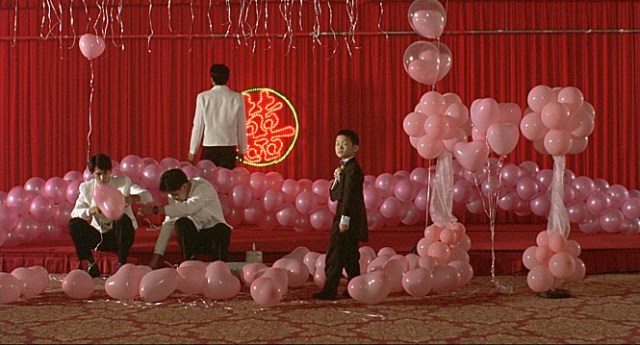
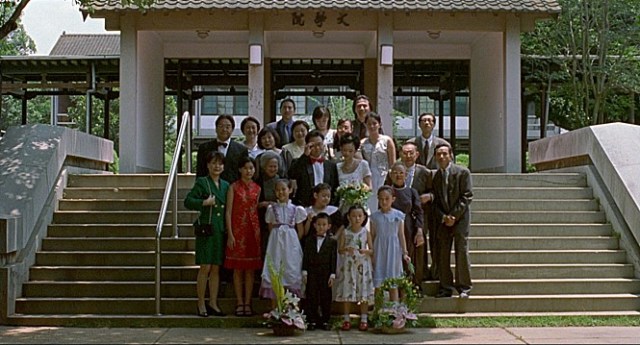
The movie mainly revolves around a middle-aged man named NJ (Wu Nien-jen) and his two family members: his adolescent daughter Ting-Ting (Kelly Lee) and his young son Yang-Yang (Jonathan Chang). During the opening scene, they and other family members including NJ’s wife and mother-in-law are attending the wedding ceremony of his brother-in-law, and we get a comical moment when a woman appears and then becomes quite emotional in front of the groom’s mother. It turns out that NJ’s brother-in-law left his girlfriend to marry a woman who got pregnant because of him, and it looks like his former girlfriend still feels emotionally attached to him (“It should have been me marrying your son today!”).

Not long after that, another incident happens. When NJ and his wife and children come back from the wedding banquet, they find that his mother-in-law went into a comatose state while she was left alone in their apartment. After spending several days in a local hospital, his mother-in-law is sent back to their apartment while still being comatose, and there is nothing they can do except taking care of her as waiting for her recovery.

yiyi05

The movie calmly observes how each family member in the apartment tries to deal with this changed circumstance. While NJ maintains his phlegmatic attitude as usual, his wife cannot help but regretful as helplessly watching her mother on the bed and then glumly looking back on her life, and there is a sad, bitter moment when she confides to her husband how much she has been feeling empty since her mother’s sudden illness. In the end, she comes to decide to have her own private time at a Buddhist temple outside the city, and that means NJ has to take care of the household for a while instead of her.

In the meantime, NJ also has to deal with two other matters. While he was attending the wedding banquet, he happened to encounter a woman who was his girlfriend when they were young, and he begins to wonder what would have happened in his life if he had made a different choice during that time. Both of them have respectively lived a fairly good life since their separation, but they find themselves being willing to spend time together when they happen to get a chance for that later in the story. As they talk more with each other, something seems to be revived between them, but they are also reminded of why they ended their relationship, and we get a small poignant moment when NJ reminds her that things would have turned out to be the same even if he had acted differently.

At NJ’s workplace, the situation is not particularly good for everyone including him, and he is asked to handle a very important deal with a prominent Japanese business man. Although he is not so eager to do that, he and the Japanese businessman in question sense honesty and decency from each other right from when they meet, and there is a lovely moment when the Japanese businessman demonstrates his musical ability in front NJ and others at a nightclub.

Meanwhile, Ting-Ting finds herself in a rather tricky circumstance due to a girl living right next to her apartment. The girl, who is living with her single mother, has been in a relationship with some boy, but she eventually becomes distant from him for some unknown reason, and then the boy becomes quite close to Ting-Ting. At one point, she and Ting-Ting attempt to move onto the next step, but she sees that what they are going to do is not right, so they come to step away from each other.

yiyi02

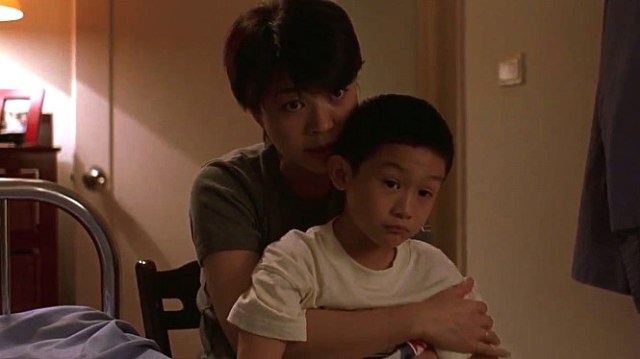
In case of Yang-Yang, he is not aware much of his grandmother’s illness, but he has his own matter to deal with. At his elementary school, he is sometimes bullied by other kids, but he soon comes to find something he can enthusiastically focus on. When his father gives him a camera to play with, he becomes fascinated with what he can possibly capture with it. At first, he tries to photograph a mosquito, and then he tries to photograph the backside of several people including his father because, as reflected by his conversation scene with his father, he comes to feel the need to show what others cannot see.

So far, I have only described a part of what I observed from the movie, and I can only tell you how effortlessly it presents its subjects under Yang’s masterful direction. Nothing is particularly emphasized, but we are slowly drawn to the lives of its main characters thanks to its vivid sense of life felt from the screen, and I especially appreciate its frequent utilization of reflections on windows for subtle dramatic impacts.

On the whole, “Yi Yi”, which won the Best Director Award at the 2000 Cannes Film Festival, is a sublime piece of work I am willing to watch again for more appreciation. I am not that sure about whether it is as great as Yang’s unforgettable masterpiece “A Brighter Summer Day” (1991), but this is still a very good film, and I am certainly glad that I could watch this admirable film on a big screen today.

yiyi01

Posted in Movies | Tagged , , | Leave a comment

Incredibles 2 (2018) ☆☆☆1/2 (3.5/4): The family back in action

theincredibles201

“Incredibles 2”, which is a long-awaited sequel to “Incredibles” (2004), is as fun and exciting as its predecessor. Although its story and characters are understandably a bit less fresh in comparison, it does not lose any sense of fun and excitement at all as cheerfully and exuberantly presenting another eclectic mix of style, humor, and action, and the result is another entertaining animation feature film from Pixar Animation Studios.

In the previous film, Bob Parr/Mr. Incredible (voiced by Craig T. Nelson) and his loving superhero family had to hide and suppress their superhuman abilities for years just like many other superheroes because the populace was not so pleased about the inadvertent collateral damages caused by the heroic acts of superheroes. However, the situation was changed as they later faced the diabolical plot of a megalomaniac villain, and they eventually embraced their identity as shown from the final scene which shows them quite ready to fight against another villain.

The story of “Incredibles 2” begins at the point not long after that scene. Although Mr. Incredible, his wife Helen Parr/Elestigirl (voiced by Holly Hunter), their children Violet (voiced by Sarah Vowell) and Dash (voiced by Huck Milner), and Mr. Incredible’s close friend Lucius Best/Frozone (voiced by Samuel L. Jackson) did their best, the villain in question manages to run away with lots of money stolen from a big bank, and the public opinion on our superhero characters is not exactly good due to the messy aftermath of this incident.

theincredibles202

While Mr. Incredible and his family are worrying about their uncertain future because they are no longer helped by Superhero Relocation Program, there comes an unexpected offer from Winston Deavor (voiced by Bob Odenkirk), the CEO of a big telecommunication corporation named DevTech. He and his sister Evelyn (voiced by Catherine Keener), who has developed many different technologies for their company, have a plan for reforming the public image of superheroes, and they need the cooperation from not only Mr. Incredible and Elastigirl but also several other superheroes including Frozone.

Mr. Incredible and Elastigirl accept the offer because Evelyn and Winston are willing to provide anything Mr. Incredible and his family need, but Mr. Incredible is disappointed when his wife is chosen as the key part of Winston and Evelyn’s plan instead of him. According to the statistics, Elastigirl is less likely to cause collateral damage compared to him and other superheroes, and she certainly presents herself and her superhuman ability well during a sudden perilous situation involved with a runaway high-speed train, which later turns out to be orchestrated by a mysterious villain who seems quite willing to challenge her.

Meanwhile, Mr. Incredible tries to take care of his children in their new residence while his wife is busy with her new work, but he soon comes to see how demanding and exhausting this domestic task is. For example, Violet has been rather sullen as a boy she has liked does not recognize her at all even though they already met before, and there is nothing Mr. Incredible can do about that. In case of Dash, he remains your typical troublemaker, and he also really needs some help for doing his math homework. In addition, Jack-Jack (voiced by Eli Fucile), the youngest member of the family, still requires lots of care and attention, and his burgeoning superhuman abilities further complicate the situation.

theincredibles206

As smoothly going back and forth between these two storylines, the film generates lots of humor and excitement. The action sequence unfolded around the runaway high-speed train is thrilling and breathtaking as required, and that is just the appetizer for other impressive action sequences in the film. The movie also has lots of fun with Jack-Jack’s many different superhuman abilities, and I particularly like the slapstick sequence involved with an unlucky racoon. In the end, everything in the story culminates to a big action climax just like many other superhero movies, but the film never loses its wit and spirit even during that obligatory part, and what we eventually get here is much better than, say, “The Avengers” (2012) and its equally ponderous sequels.

The voice cast members are impeccable to say the least. While Craig T. Nelson brings considerable gruff charm to his character, Holly Hunter has a number of juicy moments as her character constantly amazes us with her incredible flexibility, and Sarah Vowell and Huck Milner are also solid in their respective supporting parts. Samuel L. Jackson, who is no stranger to superhero genre due to his routine appearance in “The Avengers” and its sequels, holds his own place as usual, and the same thing can be said about Bob Odenkirk, Catherine Keener, Isabella Rossellini, and director/writer Brad Bird, who delightfully plays his scene-stealing supporting character as he did before in the previous film.

Overall, “Incredibles 2” is not on a par with its predecessor or Bird’s previous animation films including “The Iron Giant” (1999) and “Ratatouille” (2007), but it is at least two or three steps above the lesser recent works from Pixar Animation Studios such as “The Good Dinosaur” (2015) and “Cars 3” (2017), and I enjoyed its distinctive style and personality, which is further accentuated by the hyperkinetic score by Michael Giacchino. In short, this is the best sequel product from Pixar Animation Studios since “Toy Story 3” (2010), and I certainly have some expectation on whatever will come next after this.

theincredibles204

Posted in Movies | Tagged , , , | 4 Comments

The Wizard of Lies (2017) ☆☆☆(3/4): All Falls Down

thewizardoflies04.jpg

As a guy who only knows vaguely about the Madoff investment scandal, I had some curiosity on HBO film “The Wizard of Lies”, which attempts to present a sobering glimpse into those enormous ramifications of the Madoff investment scandal. Although the movie keeps its distance from its loathsome but fascinating hero and we do not get enough insight on what makes him tick or how he could commit the largest financial fraud in the US history, it is still a darkly engaging drama thanks to a number of solid performances, and I had a fairly good time with it despite several noticeable weak aspects.

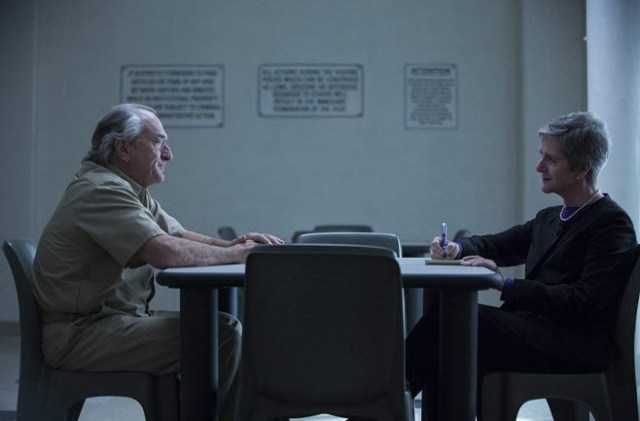
The movie, which is based on the nonfiction book of the same name by Diana B. Henriques, opens with the prison interview between Barnard L. Madoff (Robert De Niro) and Herniques, who plays herself in the film. As a journalist, Herniques certainly has many questions about Madoff’s scandalous financial crime which resulted in the loss of 64.5 billion dollar, and Madoff looks quite willing to answer her questions.

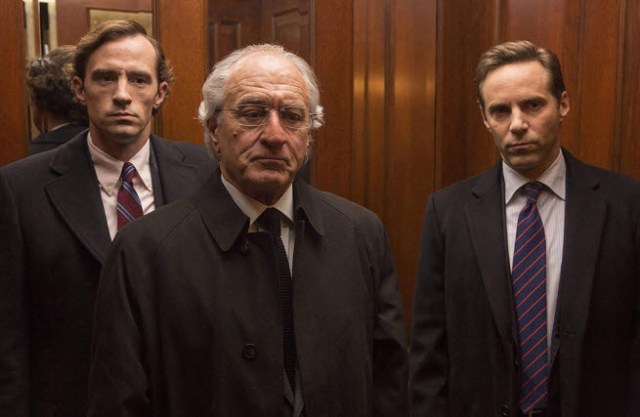
Their interview mainly revolves around when all fell down for him and others closely associated with him in December 2008, and the early part of the movie shows us how his two sons Andrew (Nathan Darrow) and Mark (Alessandro Nivola) belatedly come to know about what their father has been doing behind his back for many years. When their father says there is something he wants to tell them in private, they naturally become worried as fearing for the worst, but the situation turns out to be far worse than they expected. Their father assures them that he will turn himself in to the police once he takes care of everything for his family and others close to him, but, as two high-ranking employees of their father’s investment company, Andrew and Mark must report their father’s crime to authorities for avoiding any possibility of getting arrested along with him, and they eventually agree to do that.

thewizardoflies02

Not long after they report to the police, two federal agents come to Madoff’s penthouse apartment, and Madoff is quite phlegmatic about this in contrast to his wife Ruth (Michelle Pfeiffer), who is still shocked and flabbergasted by what her husband revealed to her and their sons. He is soon taken to a jail in Manhattan, and Ruth becomes quite frustrated when their sons refuse to help her bail out their father. Eventually, Madoff is bailed out on the condition of temporary house arrest, but he and Ruth come to face their growing notoriety in public. He was once one of the most respectable figures in Wall Street, but now he is destined to be remembered as one of the biggest crooks in the US history, and there are thousands of angry people who lose lots of money because of him.

Meanwhile, Andrew and Mark try to distance themselves from their father as much as possible, but, not so surprisingly, it turns out to be virtually impossible for them to dissociate themselves from their father’s crime. Like their parents, they frequently find themselves surrounded by reporters, and this certainly takes a toll on their respective private lives. While Andrew tries to keep going on as usual, Mark becomes more morose and depressed as days go by, and this moody condition of his later leads to a devastating consequence.

The movie also tries to depict how Madoff could swindle the money out of his numerous clients for many years without getting caught, but it does not give us much substantial information on that. For example, we only get a rather superficial depiction of how his criminal activities were done in a certain section of his investment company, and the movie also does not delve much into how these criminal activities of his were not noticed by the US Securities and Exchange Commission (SEC).

thewizardoflies03

Nevertheless, the movie mostly works as a character study, and it is anchored well by Robert De Niro’s adamantly elusive but undeniably compelling performance. Although this may not be one of his best performances, De Niro reminds us here again that he is still a wonderful actor to watch, and he is especially good when he subtly conveys to us what may be behind his character’s mild but increasingly creepy façade. Although he admits his crime without any hesitation, Madoff maintains his calm, distant attitude in front of the catastrophic consequence of his crime, and we come to wonder whether he actually feels guilty about what he did to his family and many others out there.

The supporting performers surrounding De Niro ably fill their respective roles as required. While Michelle Pfeiffer brings some sympathy and understanding to her character, Alessandro Nivola and Nathan Darrow also give fine supporting performances, and Nivola is particularly heartbreaking as his character is slowly pushed toward the eventual downward spiral. As Madoff’s sleazy right-hand guy, Hank Azaria is relatively under-utilized, and I think the movie could be better if it showed more of how his character operates under Madoff.

Although it is not wholly satisfying, “The Wizard of Lies” remains interesting enough to watch, and director Barry Levinson, who recently directed another HBO film “Paterno” (2018), did a competent job on the whole. I still have some reservation on the movie, but it is surely nice to see De Niro doing something more respectable than “Dirty Grandpa” (2016), and that is enough for recommendation in my trivial opinion.

thewizardoflies01

Posted in Movies | Tagged , , , | Leave a comment

The Insult (2017) ☆☆☆1/2(3.5/4): A gripping courtroom drama from Lebanon

theinsult03

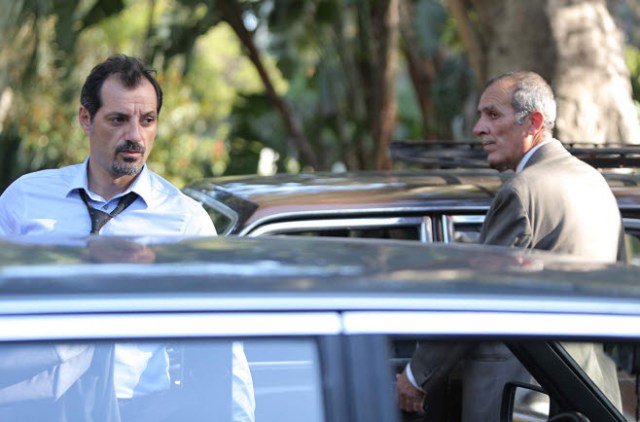
Lebanese film “The Insult”, which was nominated for Best Foreign Language Film Oscar early in this year, is a gripping courtroom drama about a complex legal conflict between two different men. At first, it is just a simple human matter of anger and resentment, but the situation becomes a lot more complicated as their conflict is subsequently brought into the court, and it is quite compelling to observe how their conflict is amplified through social/historical context. While their trial goes on, we come to learn more about not only these two guys but also the dark, tragic past which still lingers on their society, and we come to regard them with understanding and empathy even though we do not wholly side with either of them.

In the beginning, we meet Tony Hanna (Adel Karam), a Christian Lebanese who is a devoted member of the Christian Party in Lebanon as shown from the opening scene. He is the owner of a small garage in his urban neighborhood, and he and his wife Shirine (Rita Hayek) have been eagerly waiting for the birth of their daughter. Although we sense some strain in their relationship when they disagree with each other on their current residence, they are mostly happy to be with each other, and Tony certainly wants to do as much as he can for providing a safe and comfortable environment for his pregnant wife.

On one day, a construction crew happens to work right in front of the apartment building where Tony and Shirine live, and the crew comes across an annoying problem involved with a gutter below the veranda of Tony’s apartment. Yasser Abdallah Salameh (Kamel El Basha), the Palestinian foreman of the crew, decides to put a new gutter below the veranda, but Tony promptly smashes this new gutter, and he even does not allow Yasser and his crew to come into his apartment just because he does not want Shirine to be disturbed by any noise. Naturally becoming exasperated by this frustrating circumstance, Yasser hurls an insult at Tony, and Tony soon comes to Yasser’s direct boss for demanding the apology from Yasser.

theinsult04

Yasser’s direct boss tries to take care of this trouble without any unnecessary fuss. While convincing Yasser that he must give Tony what he wants, he also goes to Shirine for persuading Tony to be less adamant in his position, but, unfortunately, both Tony and Yasser come to make the situation worse than before. When Yasser and his direct boss come to Tony’s garage, Tony happens to be listening to the aggressive propaganda of his right-wing party as usual, and he does not even hide at all his hostility toward Yasser and other Palestinian people in Lebanon. When Tony says something quite hateful and insulting to Yasser, Yasser finally loses his calm control, and then he throws a hard punch at Tony.

After getting seriously injured because of this, Tony tries to sue Yasser, but he only finds himself becoming angrier than before. After submitting himself to the police a few days later, Yasser is soon brought to a trial on the charge of battery, but neither Yasser nor Tony is willing to talk about what prompted Yasser to commit that act of violence, and the judge presiding over the case eventually decides to close the case while allowing Yasser’s release.

When another unfortunate thing happens later, Tony decides to go further for getting what he wants, and he luckily gets a pro bono legal service from a prominent lawyer who previously defended the leader of the Christian Party. While meeting Tony along with a bunch of assistants, the lawyer emphasizes to Tony how difficult the new trial will be, and Tony does not hesitate at all to accept the offer.

Meanwhile, Yasser and his wife Manal (Christine Choueiri) also hires their own lawyer, a liberal who surely opposes to the conservative viewpoint of Tony’s lawyer. When these two lawyers eventually face each other at the court, the tension between them is palpable to say the least, and then there comes an unexpected moment of surprise and amusement when the judge presiding over this new trial inadvertently blurts out a certain fact about these two ferociously competing lawyers.

theinsult02

Now I should be more careful about describing how deftly the movie handles its story and characters for maximum dramatic effects. Thanks to the fluid cinematography by Tommaso Fiorilli and the efficient editing by Dominique Marcombe, the movie constantly holds our attention as vividly capturing the dynamic interactions among its main characters during the trial scenes, and it further dials up the level of tension as Tony and Yasser come to face the growing ramifications of their personal conflict. While their respective lives are seriously affected by the trial, the Lebanese society is shaken up a lot by this trial due to the growing animosity between Palestinians and the members of the Christian Party, and that eventually brings out the old painful memories of the civil war during 1975-1990.

The main case members of the movie are flawless in their nuanced acting. While Kamel El Basha deservedly won the Volpi Cup for Best Actor at the Venice International Film Festival in last year, Adel Karam gives an equally superlative performance, and Rita Hayek, Camille Salameh, Diamand Bou Abboud, Christine Choueiri, and Julia Kassar are also excellent in their respective supporting roles.

“The Insult” is directed by Ziad Doueiri, who also wrote the screenplay with his co-writer Joelle Touma. His previous film “The Attack” (2012), which is about a Palestinian doctor agonizing over his wife’s unexpected act of terror, was incidentally one of the best films I saw during 2013, and the powerful human drama of “The Insult” confirms to me that Doueiri is indeed an interesting filmmaker to watch. This is a terrific work on the whole, so I wholeheartedly recommend it to you.

theinsult01

Posted in Movies | Tagged , | 1 Comment

The Divine Order (2017) ☆☆☆(3/4): A small fight for women’s suffrage.

thedivineorder02

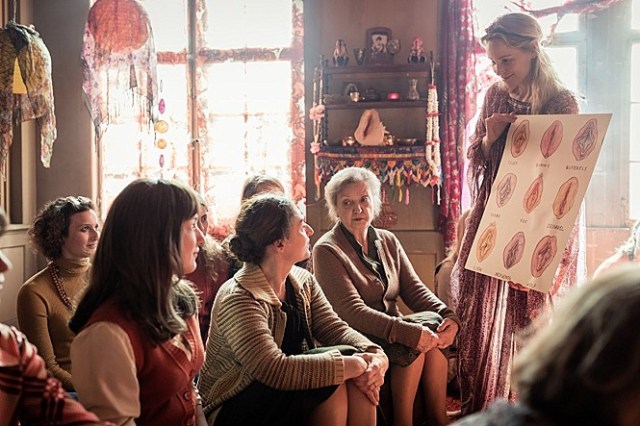
Some of you will probably be surprised while watching Swiss film “The Divine Order”, which was selected as the Swiss entry for Best Foreign Language Film Oscar in last year. As depicted from the movie, Swiss women did not have a right to vote before their suffrage was officially approved by a referendum in 1971, and the movie later informs us that it took another 20 years for them to earn their complete victory. Through its conventional but intimate fictional drama, the movie shows us how difficult it was for many women willing to fight for their democratic rights during that time, and it gives us several moving moments while delivering its timeless social message as required.

The early part of the movie depicts how much a small rural town in Switzerland has been insulated the rapid social changes during the late 20th century. To Nora (Marie Leuenberger) and many other women in the town, sexual revolution and feminism are something quite alien and distant from them, and they have been all sticking to their conservative ideas and values as supporting their men and children without much complain. With her good husband and two nice sons, Nora has been mostly fine with her life, and she naturally does not show much interest when she hears about the upcoming referendum on women’s suffrage for the first time.

However, she comes to open her eyes to women’s rights after reading a number of leaflets given to her, and she becomes more aware of the prevalent gender inequality in her small world. She wants to get a job for being more than a mere housewife, but her husband flatly rejects her suggestion, and that surely reminds her again of how unfairly she and other women in the town are treated. In case of her sister-in-law Theresa (Rachel Braunschweig), she has been stuck in her unhappy marriage for many years while always demanded to take care of the family farm instead of her disinterested husband, and she is virtually powerless when her husband decides to send their daughter to a correctional facility just because of her unruly behaviors.

thedivineorder03

When Nora voices her opinion on women’s suffrage for the first time in front of other women, no one initially seems to be particularly interested in what she wants to start, but then she gets a few supporters. Vroni (Sibylle Brunner), an old lady who has been interested in women’s suffrage as much as Nora, approaches to Nora for doing more activities for their cause, and then they are joined by Graziella (Marta Zoffoli), a spirited Italian woman who incidentally acquires a restaurant formerly owned by Vroni.

Although Nora is understandably not so sure about whether she and her two colleagues can really bring a change into their society, she becomes more confident as making more forward steps with Vroni and Graziella. At one point, they go to Zurich together for attending a demonstration for women’s suffrage along with many women, and they later have an amusing moment of female empowerment while participating in a meeting which turns out to be quite enlightening for them. When she has to make her first public speech in front of many town people, Nora becomes very nervous for good reasons, but she manages to present herself well, and this bold public action of hers comes to touch something inside many of town women.

Eventually, Nora and her colleagues decide to begin a group strike for showing their men why they cannot be ignored at all. After Nora leaves her house just like her colleagues, her husband comes to see how much he has depended on his wife, and we accordingly get a couple of humorous moments as he tries to do some housework for himself and his two sons.

thedivineorder01

Of course, there soon comes a male backlash as expected, and the situation becomes more serious for Nora and her colleagues later in the story, but the movie does not lose its lightweight spirit much even during that part. Although it often feels a bit too thin in terms of story and characters, the screenplay by director/writer Petra Volpe balances itself well between drama and humor, and it particularly did a good job of conveying to us the growing solidarity among Nora and her colleagues. As these ladies firmly stick together for their cause, they come to feel freer and happier than ever, and there is a quietly poignant moment when Theresa confides to Nora why her marriage has been so unhappy.

Under Volpe’s competent direction, the main cast members of the movie give a solid ensemble performance to enjoy. As the main center of the movie, Marie Leuenberger ably conveys to us her character’s gradual change along the story, and Rachel Braunschweig, Sibylle Brunner, Marta Zoffoli, and Bettina Stucky are also fine in their colorful supporting roles. As Nora’s confused husband, Maximilian Simonischek brings some decency and sincerity to his functional role, and he has his own small moment as his character finally comes to accept the change represented by his wife.

In conclusion, “The Divine Order” is a good film which tells us a lot about how much our human society has advanced for solving gender inequality – and how much we still need to do more for that. Although it looks rather modest in its achievement, it is both entertaining and enlightening on the whole, and you will have a fairly good time with it as reflecting more on its subjects.

thedivineorder04

Posted in Movies | Tagged , | Leave a comment

The Killing of a Sacred Deer (2017) ☆☆☆(3/4): Time to pay

thekillingofasacreddeer03

“The Killing of a Sacred Deer”, the latest film from acclaimed Greek filmmaker Yorgos Lanthimos, is an odd, disturbing thriller which may baffle you at first and then will chill you a lot in the end. As the movie announces to us something dark and unpleasant right from its opening scene, we become curious about what can possibly happen among its main characters, and it does not disappoint us as sternly and ruthlessly driving them to an extreme situation. Although this is not a very pleasant experience to say the least, the movie is gripping nonetheless thank to its sheer conviction and dramatic power, and its grim sense of inevitability will linger on you for a while after it is over.

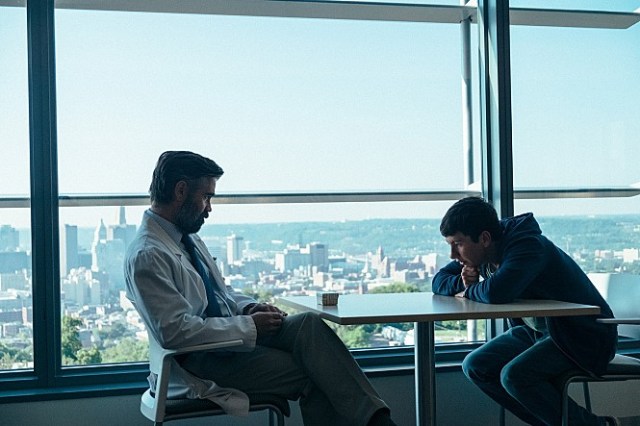
In the beginning, we meet a successful cardiologist named Steven Murphy (Colin Farrell), and the early scenes of the movie show us the details of his daily professional and private life. We see him having some mundane chat with his colleague not long after he finishes his latest surgery, and we later watch him having a dinner at his big suburban house along with his two children and his wife Anna (Nicole Kidman), who has also achieved her own success as a medical expert. While there is some friction among this family, they all look fine and happy in their home, and Steven seems to be a man who has everything he wants in his life.

However, there is an elusive relationship between Steven and a teenage boy named Martin Lang (Barry Keoghan). They often meet each other in private, and Steven seems to care a lot about this boy for some hidden reason. At one point, he gives Martin an expensive wristwatch, and Martin looks grateful about that. When Martin later suggests that Steven should have a dinner with him and his single mother, Steven agrees to go to Steven’s house, but the situation becomes uncomfortable as it is apparent that Martin’s mother is interested in getting a bit closer to Steven.

thekillingofasacreddeer02

Meanwhile, Steven invites Martin to his family house. While not knowing a lot about Martin, Steven’s wife and children cordially welcome him, and Martin comes to have a private moment with Steven’s two children. As your typical inquisitive kid, Bob (Sunny Suljic) asks Martin a rather amusing question involved with body hair, and Kim (Raffey Cassidy) is clearly attracted to Martin as your average adolescent girl, who, as respectively mentioned by her and her mother, had her first menstruation recently.

So far, everything seems normal on the surface, but the movie constantly reminds us that something is not so right among its main characters. While the cinematography by Thimios Bakatakis frequently gives us a slightly distorted viewpoint via the deft utilization of wide-angle lens, the soundtrack always keeps us on the edge whenever dissonant music is played in the background, and I was particularly impressed by how the classic works of Franz Schubert, J.S. Bach, and György Ligeti are used for striking dramatic effects.

I will not go into details on what happens next in the story, but I guess I can tell you instead that Steven soon finds himself stuck in a very serious circumstance along with his family after he happens to show less care and attention to Martin, who is revealed to have a good reason for being angry and vengeful. He flatly demands that Steven should make a certain big sacrifice for stopping what is happening to him and his family, and that is the point where the movie becomes a weird mix of psychological and supernatural horror. As we observe more cracks generated inside Steven’s family, their accumulating ordeal often looks like the outcome of some divine wrath, and the movie even mentions the story of King Agamemnon and his daughter Iphigenia during one brief scene.

thekillingofasacreddeer04

Although nothing much in this urgent but baffling situation is explained in the movie, Lanthimos, who wrote the screenplay with his usual collaborator Efthymis Filippou, keeps its attitude straight from the beginning to the end. While everything in the movie is presented with dry, plain realism, it also slyly suggests a certain mysterious force cornering Steven and his family step by step, and that insidious aspect is amplified further when they come to be isolated within their house with more desperation and frustration. No matter how much he tries hard to endure this situation, Steven is reminded again and again that he must make an impossible choice as demanded, and there eventually comes a horrifyingly absurd moment when he clumsily attempts to do that.

Under Lanthimos’ confident direction, the main performers in the movie never make any misstep to break the accumulating tension behind the screen. While Colin Farrell, who previously collaborated with Lanthimos in “The Lobster” (2015), is terrific as suggesting the gradual implosion behind his character’s adamant attitude, Nicole Kidman, who recently appeared along with Farrell in “The Beguiled” (2017), is dependable as usual, and Barry Keoghan, who played a small supporting role in “Dunkirk” (2017), is utterly chilling at times in what may be a breakout turn in his growing acting career. As Steven’s two children, Raffey Cassidy and Sunny Suljic hold their own small place well, and Bill Camp and Alicia Silverstone are also fine in their small supporting roles.

Like Lanthimos’ previous films “Dogtooth” and “The Lobster”, “The Killing of a Sacred Deer”, which received the Best Screenplay Award at the Cannes Film Festival early in last year (it shared the award with Lynne Ramsay’s “You Were Never Really Here” (2017), by the way), is another fascinating work from him, and I admire what it achieves on the screen even though I am not as wholly enthusiastic about it as some other critics. It is surely a tough stuff, but I assure you that you will not forget it easily once you watch it.

thekillingofasacreddeer05

Posted in Movies | Tagged , , , | Leave a comment

Let the Sunshine In (2017) ☆☆☆(3/4): As she searches for love

letthesunshinein01

Life can be pretty disappointing especially when you are looking for someone to love you, and French film “Let the Sunshine In” examines that undeniable fact of life with considerable amount of humor, intelligence, and sensitivity. Closely observing the ups and downs in its heroine’s frustrating pursuit of love and happiness, the movie alternatively amuses and touches you via a series of nice intimate moments, and it surely earns its tentative optimism in the end as making us reflect on life and love for a while.

Juliette Binoche, a great French actress who has always impressed us with her natural grace and exceptional talent, plays a middle-aged artist named Isabelle, and the opening scene of the movie shows her in the middle of the sex with her current boyfriend Vincent (Xavier Beauvois, who is mainly known as the director of “Of Gods and Men” (2010)), a married banker who has had an affair with her for some time. While both of them try as much as they can for more intimacy and pleasure for them, they do not feel that satisfied when their copulation is eventually over, and Isabelle’s frustration feels palpable to us when the camera looks closely at her face.

And she keeps becoming dissatisfied and disappointed with her lover, who is gradually revealed to be your average self-centered prick. When she comes to his office at one point, Isabelle demands more attention and affection from him, but he only evades her demand while never getting closer to her, and his selfish attitude to her culminates to another level during one amusing scene unfolded at a bar. While quite fastidious about what he drinks (he even demands ‘gluten-free olive’, by the way), he flatly tells her why he cannot possibly leave his wife despite being in love with Isabelle, and he even impertinently suggest that they continue to meet each other as before. As the camera of cinematographer Agnès Godard fluidly moves back and forth between Isabelle and Vincent, the movie slowly presents the wryly humorous aspect of their situation, and Binoche and Beauvois are effortless as their characters pull and push each other behind the surface.

letthesunshinein03

Eventually, Isabelle decides to end her relationship with Vincent, but, alas, it looks like there are not many good guys around her. At one point, she comes to have a dinner with an actor whom she is interested in working with, and this dude seems to be attracted to her as talking a lot about himself and his failing married life, but then he is not so eager to move onto the next step when he later takes her to her residence. Isabelle tries to get more response from him, but he keeps preventing himself from saying what he really wants, and this certainly frustrates her a lot.

Anyway, they come to have sex when they finally come into her residence together, but he subsequently tells Isabelle that he cannot continue their relationship, and that gives us another amusing moment in the film. As the camera looks at them from the distance, we sense how awkward he is as struggling to express his thoughts and feelings clearly to her – and how much she is disappointed again.

Meanwhile, there is a nerdy guy whom Isabelle often comes across at a local fish shop. He is evidently interested in getting closer to her when he suggests that she should spend some time in his cozy place outside Paris, but she is not attracted to him at all, and she finds herself getting closer to her ex-husband instead, who, not so surprisingly, comes to disappoint her in the end despite the considerable familiarity between them.

letthesunshinein02

Later in the story, she goes to an art event held outside Paris, and that is where she comes across a guy who is seemingly plain but somehow attracts her attention. As Etta James’s “At Last” is played in the background, something seems to click between them, and she looks as if she were having the happiest moment in her life, but there soon comes harsh reality as she is later reminded of how much they are different from each other as having no particular common ground between them.

While frequently amusing us with this series of ups and downs in her love life, the movie is also quite sincere and serious about its heroine’s growing doubt about her life. As experiencing disappointment again and again, Isabelle comes to wonder whether there is not any opportunity for real love during her current stage of life, and the finale shows her trying something rather irrational for dealing with her anxiety. I will not describe this moment in detail for not spoiling your entertainment, but I can tell you instead that I admire how director Claire Denis, who adapted “Fragments d’un discours amoureux” by Roland Barthes with her co-writer Christine Agnot for her film, pulls out something unexpectedly funny and sublime from this moment, and Binoche and a certain famous French performer did a terrific job during this moment.

Although it is relatively less impressive than her recent memorable works such as “35 Shots of Rhum” (2008) and “White Material” (2010), “Let the Sunshine In”, which received the SACD Prize at the Directors’ Fortnight section of the Cannes Film Festival early in last year, is another interesting work from Denis, and I was entertained by its lightweight mood and sensitive moments. To be frank with you, love is still something too abstract for me, but the movie gave me some insights to appreciate, and I am grateful for that.

letthesunshinein04

Posted in Movies | Tagged , | Leave a comment

Oh Lucy! (2017) ☆☆1/2(2.5/4): When she falls for her English teacher

ohlucy01

When I went to a local arthhouse movie theater for “Oh Lucy!”, I did not expect much, and the movie did not surprise me much. While the movie had some humor and pathos to engage me to some degree, I felt impatient at times dues to its adamant low-key mood and slow narrative pacing, and I must confess that my mind kept coming back to my smartphone which were being charged outside the screening room.

After the opening scene whose calm atmosphere is suddenly disrupted by a shocking incident, we observe another usual working day of Setsuko, a middle-aged Japanese office worker living in Tokyo. Although one of the colleagues at her workplace is about to retire, she does not particularly care about that, and we later see how lonely she is in her solitary daily life. While she has been unmarried for years, she is still not so interested in dating someone, and she lives alone in a small apartment packed with many different stuffs. Watching this messy residence of hers, I could not help but think of the similar residence belonging to the Japanese heroine of “Kumiko, The Treasure Hunter” (2014), whose life in Tokyo is as dreary and miserable as Setusko’s.

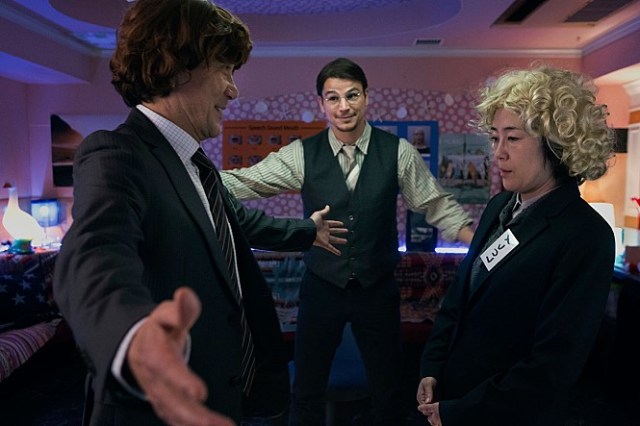
And then, of course, there comes an unexpected change into her life on one day. Her niece Mika (Shiori Kutsuna) calls, and she later asks Setsuko to do something for her. There is an English lesson center where she recently learned English, but there is a small money trouble to be taken care of, and she wants her aunt to solve this trouble. In addition, she suggests to her aunt that she should also try to learn English, and, though she is not so eager about that, Setcuko eventually goes to that English lesson center, which, to our amusement, looks more like a red-light district place with its dim lighting and gaudy interior design.

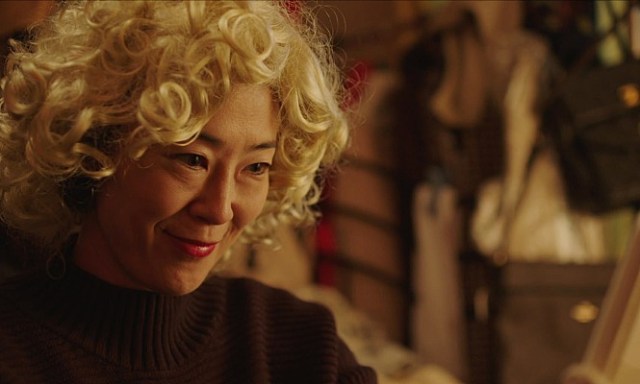
ohlucy02Once she enters one of the booths in this rather silly place, Setsuko meets an American English teacher named John (Josh Hartnett), whom Mika already introduces to her via a calling card. While emphasizing that they speak English only during their lesson, John gives her an English name, and now she is called ‘Lucy’ while also wearing a blonde wig as instructed by John. This partially reminds me of an English conversation class I attended during my adolescent years; I did not wear any wig, but I chose my English name as required, and it was Ellery (Damn those mystery novels by Ellery Queen!).

Right from their first lesson, John hugs Setsuko for showing more of how American speakers interact with each other, and that physical gesture touches something inside Setsuko. While her fellow student Takeshi (Kōji Yakusho) seems to be interested in her, she finds herself more attracted to John, and then she is quite disappointed when she happens to find that John is in a relationship with Mika, who eventually flies away to California along with John without saying any word to her mother Ayako (Kaho Minami).

After being visited by Ayako, Setsuko decides to go to California for finding Mika, and Ayako also goes with her although she is not particularly close to Setsuko or Mika. Using a postcard sent to Setsuko by Mika, they manage to arrive at John’s current residence, but Mika is already gone, and, not so surprisingly, Setsuko comes to see what a lousy man John is in many aspects.

Anyway, the movie shifts its gear to road movie mode as Ayako and Setsuko continue to look for Mika while accompanied with John, who comes to function as a sort of a local guide for them. There is an amusing scene where they try to order at a diner, and the audiences around me had a few chuckles from what Setsuko and Ayako eventually come to order.

ohlucy05

Meanwhile, in spite of what was going on between John and Mika, Setsuko comes to desire John more than before. Although he is not that interested in her, John cannot say no to her when she actively approaches to him during their brief private moment at a parking lot, and that later leads to a small bold act she never imagined before.

And then there comes another unexpected narrative turn, and the movie becomes less effective than before, but Shinobu Terajima ably carries the film as before. Thanks to her strong performance, Setsuko is an interesting human character to observe even when she is quite pathetic, and Terajima did a fine job of subtly conveying her character’s gradual changes along the storyline.

The supporting performers surrounding Terajima do not have many things to do in comparison, and they are mostly fine as filling their respective roles as demanded. While Josh Hartnett is suitably cast as your average hunky American English teacher, Kaho Minami functions as a good counterpoint to Terajima, and Shiori Kutsuna is plucky as Setsuko’s precarious niece. Although he is woefully under-utilized in his thankless role, Kōji Yakusho has a sincere scene with Terajima, and Megan Mullally provides a little fun as a passenger who happens to sit between Setsuo and Ayako.

Overall, “Oh Lucy!”, which is the expanded version of director/co-writer Atsuko Hirayanagi’s 2014 short film of the same name, is a conventional comedy drama with some notable offbeat touches. I do not like it enough for recommendation, but Hirayanagi makes a fairly admirable debut with her first feature film, and it will be interesting to watch what will be the next step in her promising filmmaking career.

ohlucy04

Posted in Movies | Tagged , , | Leave a comment

Herstory (2018) ☆☆☆(3/4): A long, difficult legal struggle for their closure

herstory03

It is hard for me not to be emotional about the infuriating injustice reflected by the fictional drama of South Korean film “Herstory”, which is inspired by one significant real-life lawsuit against the Japanese government. During the World War II, many young Korean women were taken away from their families and then sexually exploited by the Japanese Army as ‘comfort women’, but the Japanese government has adamantly refused to apologize for this atrocity, and the remaining survivors are still suffering from their sad, painful past even at this point. Steadily focusing on the long, difficult process of that real-life lawsuit, the movie handles its subject with care and respect, and it often gives us emotionally powerful moments as watching how much its main characters try hard for their closure

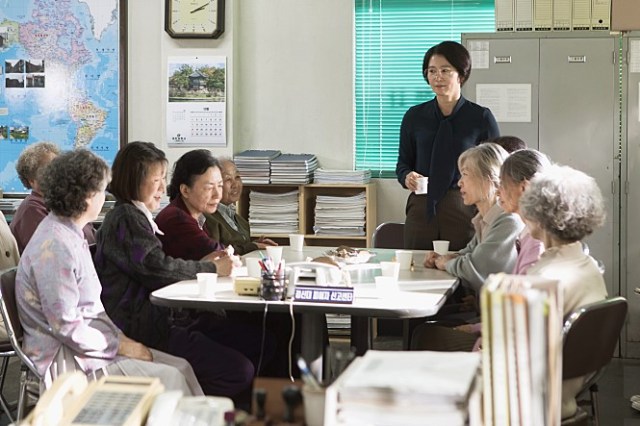
Its story is mainly depicted through the viewpoint of Jeong-sook (Kim Hee-ae), a successful businesswoman running a travel agency in Busan, 1991. When she sees a TV news report on old women who were comfort women during the World War II, Jeong-sook does not care much about them while showing a little pity like many others would, but then she is asked by one of her friends to do more for those poor old ladies, and she reluctantly agrees to do that mainly for improving the public image of her travel agency, which recently gets into a legal trouble for a certain illegal activity for Japanese tourists.

And that is how she comes to learn a lot more about her old housekeeper Jeong-gil (Kim Hae-sook), who comes to Jeong-sook’s travel agency on one day for telling a secret she has kept to herself for more than 45 years. Naturally shocked by this unexpected revelation from Jeong-gil at first, Jeong-sook comes to regard Jeong-gil and many other survivors from a changed viewpoint, and she becomes more passionate about helping them than before. She actively searches for more surviving comfort women who are willing to talk about their horrible experiences, and then she come to represent Jeong-gil and several other survivors including Soon-nyeo (Ye Soo-jung), Gwi-soon (Moon Sook), and Ok-joo (Lee Yong-nyeo), who is apparently going through the early stage of dementia but still remembers well the horror she endured during that terrible time.

herstory01

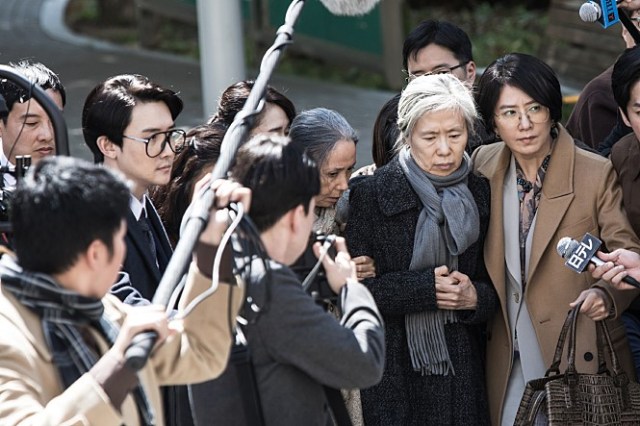
Of course, Jeong-sook soon faces a number of difficulties as putting more time and effort to this passionate social activity of hers. For examples, she loses a big Japanese client just because the client in question disapproves of what Jeong-sook is doing for Jeong-gil and other surviving comfort women, and her travel agency is considerably affected by this huge loss as a result. In addition, she frequently receives harsh responses from other South Koreans, and there is a bitter scene where she meets a survivor who had to exploit her fellow comfort women for her survival. Yes, what that woman committed is inexcusable indeed, but who can possibly blame her?

In the meantime, Jeong-sook meets Lee Sang-il (Kim Jun-han), a Korean Japanese lawyer willing to provide a pro bono legal service to Jeong-gil and several other survivors. He finds that there is a good opportunity for the lawsuit against the Japanese government, and, although there is not much chance of winning the lawsuit, Jeong-sook is ready to provide the full financial support for whatever is necessary for this very important lawsuit.

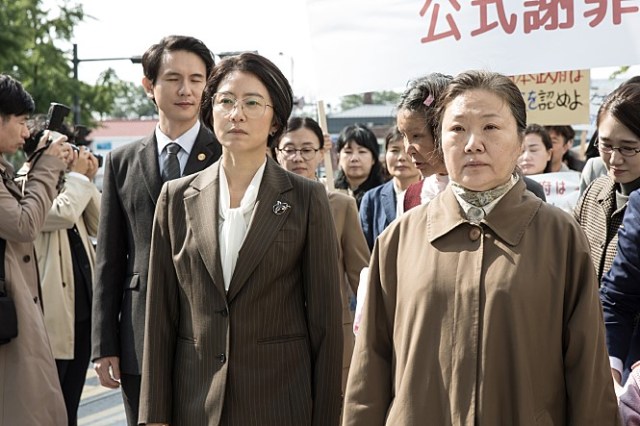
However, as the lawyer warns Jeong-sook, things do not go well for Jeong-sook and Jeong-gil and three other survivors from the very beginning when they arrive in a Japanese port city named Shimonoseki for attending the trial. While they have some local supporters, they are not so welcomed much by many Japanese people, and, above all, the process of the trial turns out to be far slower and longer than expected. They have to go back and forth between Busan and Shimonoseki more than ten times during next several years, and they accordingly become more frustrated and exasperated as wondering whether they can actually make a difference through this lawsuit.

herstory04

Although there are a number of obligatory dramatic court scenes including the one involved with a conflicted Japanese witness, the movie maintains well its calm, respectful attitude as conveying to us the pain and sadness of Jeong-gil and other surviving comfort women. When one of them phlegmatically talks about her unspeakable experience in the past, the movie simply listens to her along with other characters in that scene, but the result is one of the most touching moments in the film. While I think its last act is a little contrived, the movie continues to hold our attention nonetheless as arriving at the expected finale, and I appreciate its subdued but moving ending which reminds us again of the strong bond among Jeong-sook and the survivors.

Director/co-writer Min Gyoo-dong, who previously directed “All About My Wife” (2012), utilizes well his talented main cast members. While Kim Hee-ae holds the ground as required, Kim Hae-sook, Ye Soo-jung, Moon Sook, and Lee Yong-nyeo are commendable in their respective roles, and Kim Jun-han, who recently appeared in “Sunset in My Hometown” (2017), is also fine in his earnest performance.

Like other recent South Korean films “Snowy Road” (2015) and “I Can Speak” (2017), “Herstory” is a good movie which presents well one of many dark tragedies during the World War II, and it will make you reflect more on its subject via its thoughtful storytelling. I was well aware of what it intends to do, but I could not help but touched by its story and characters, and that is more than enough for me to recommend this solid drama film.

herstory02


Posted in Movies | Tagged , , | 1 Comment