First Man (2018) ☆☆☆(3/4): Inside Neil Armstrong

firstman02.jpg

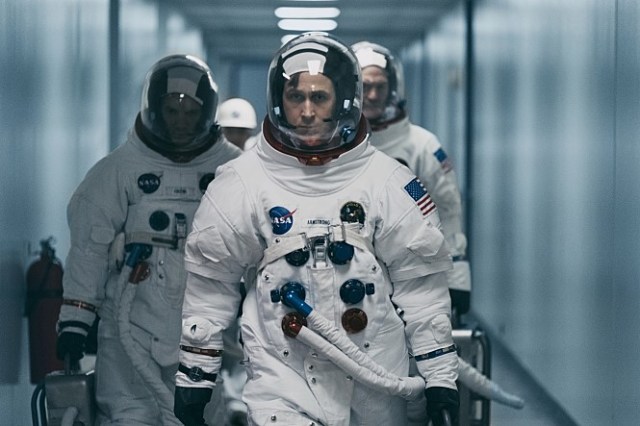
“First Man” is an ambitious but curiously detached drama about an elusive man who took one small step which was also a giant leap for mankind. While there are superlative moments vividly showing what he went through during his long progress culminating to that monumental moment of the human history, the movie sometimes loses its focus as trying to draw a big historical picture surrounding its adamantly distant hero, and it is rather dissatisfying at times as we do not get much insight on what makes him tick.

The movie looks around several years of the life and career of Neil Armstrong (Ryan Gosling), who was, yes, the first man who walked on the Moon. In 1961, Armstrong was just one of many test pilots willingly risking their lives during those highly risky test flights, and the opening sequence, which is alternatively exciting and terrifying, shows him in the middle of his latest test flight. As his career seems to be going nowhere after that test flight and he and his wife struggle to cope with the early death of their dear young daughter, Armstrong decides to try a new start, so he grabs an opportunity to participate in the Project Gemini of NASA in the next year, and we soon see him and several other trainees preparing for their mission step by step under the supervision of Deke Slayton (Kyle Chandler), a no-nonsense guy who is the Chief of the Astronaut Office.

While things do not look exactly good as their country is still behind Russia in the ongoing space race, Armstrong and other members of Project Gemini do their best anyway, and the movie pays considerable attention to their slow but steady progress during next several years. We get a very dizzy scene involved with a certain big training device which made me cringe for good reasons, and then we get a brief moment showing how much they study for their mission, and then we eventually watch Armstrong and his partner put into Gemini 8 before its launch.
firstman01

Throughout the following launch sequence, the movie steadily sticks to Armstrong’ viewpoint, and the result is quite intense from time to time. With frighteningly realistic sound details including creaking metallic sounds, the movie did a commendable job of immersing us into every risky moment Armstrong and his partner have to deal with, and we are relieved a bit when the movie later gives us an understated lyrical moment which is clearly influenced by that famous scene in Stanley Kubrick’s “2001: A Space Odyssey” (1968).

The movie also focuses on a number of problems and setbacks Armstrong and others in NASA faced during that time. There is a scary scene where Armstrong and his partner are thrown into a sudden danger around the end of their mission, and it surely reminds us of how things can go wrong in the space at any moment. Fortunately, Armstrong and his partner managed to handle well that perilous situation, and NASA moved onto Project Apollo with more confidence, but then there came a tragic accident which caused the death of its three astronauts on January 27th, 1967.

We subsequently get some glimpse into how the public opinion on space programs became more negative than before due to that disastrous accident, but the movie does not delve much into that. It only gives us a series of short moments showing the negative opinions on space programs during that time, and these moments feel rather superficial while not being mixed quite well along with the rest of the film.

Furthermore, the movie is often frustrating as constantly maintaining its distance from Armstrong, who rarely allows himself to express whatever is churning behind his calm, reserved appearance. It is clear that he is deeply hurt by the loss of his dear daughter, and the movie indirectly suggests that his quietly focused professionalism is his own way of driving himself away from grief, but we never feel like getting to know him even though cinematographer Linus Sandgren’s handheld camera frequently stares into his face.

firstman03

Nevertheless, Ryan Gosling, who previously collaborated with director Damien Chazelle in “La La Land” (2016), is commendable in his nuanced performance which subtly embodies his character’s decency and humanity without any unnecessary emphasis. At one particular point during the expected climactic part involved with the Apollo 11 mission, Gosling gives us a small but masterful example of low-key acting which poignantly implies his character’s private feeling, and that reminds us again of why he is one of the most versatile performers working in Hollywood.

Although the other characters surrounding Armstrong is underdeveloped in comparison, they are mostly played well by a bunch of notable performers including Claire Foy, Kyle Chandler, Corey Stoll, Pablo Schreiber, Jason Clarke, Christopher Abbott, Patrick Fugit, Lukas Haas, Shea Whigham, Brian d’Arcy James, Cory Michael Smith, Ethan Embry, and Ciarán Hinds. While Stoll, who has been more prominent since his supporting performance in the first season of TV series “House of Cards”, steals the show as Buzz Aldrin, Chandler and Hinds are dependable as usual, and Foy, who recently rose to stardom thanks to her acclaimed performance in TV series “The Crown”, is also solid as Armstrong’s supportive wife.

While it did not excite me as much as “The Right Stuff” (1983) and “Apollo 13” (1995), I recommend “First Man” for its considerable technical achievement. To be frank with you, I still feel distant to its detached storytelling to some degrees, but I enjoyed many of its highlights anyway, and it certainly deserves to be appreciated via big screen. It could be more compelling and revealing in my trivial opinion, but it is admirable at least.


firstman05

Posted in Movies | Tagged , , , | 3 Comments

Ex Libris: The New York Public Library (2017) ☆☆☆(3/4): More than books

ExLibrisTheNewYorkPublicLibrary05

Frederick Wiseman’s documentary film “Ex Libris: the New York Public Library” is an experience both challenging and engaging. Like many of Wiseman’s notable works, the documentary simply observes without providing any background information to us during its long running time (206 minutes), and you may get quite frustrated with its clinical approach, but it is at least interesting to watch how it gradually presents its big picture as looking into one of the best public libraries in the world.

Mainly shot inside the main building and many other places of the New York Public library for 12 weeks, the documentary shows us various activities inside this huge institute which has served the public for more than 120 years. In the beginning, it shows us a public interview with Richard Dawkins at the lobby hall of the main building of the library, and then we look at the mundane daily work of several library employees, and then we observe a management meeting among the director of the library and his colleagues.

As listening to the words being exchanged among the director of the library and his colleagues during their management meeting, we come to learn a bit about how the library has been stably funded for many years. While the library depends a lot on its government funding, the private funding is equally important because it can not only provide more money for the library’s many different programs but also stimulate further the financial support from the government, so it is always important for the library to maintain this positive financial feedback. While focusing a lot on getting more private and public funding, the director of the library and his colleagues also pay lots of attention to what they can possibly do with their annual funding, and we can sense their passion and dedication from their long discussion.

ExLibrisTheNewYorkPublicLibrary01

Besides providing many people books to read, a library does other public services, and we see how the New York Public Library has played a very important role in public education via numerous programs. During a small class at one of branch sites of the library, a teacher tries to generate curiosity and interest from young kids via a computer game, and kids certainly have a fun with that. At the branch in Chinatown, a group of old people learn how to use computers, and that reminds us that a good library is always open to anyone willing to learn more.

The library provides many opportunities for the public to get closer to art and knowledge. One lecturer gives an informative lecture on Islam and slavery in Africa during 18-19th century, and that moment later resonates with a subsequent lecture scene where a curious association between slavery and Marxism is mentioned. At one point, we watch a guy reciting his rap poem during his lecture, and the camera lingers on him for a while as he enthusiastically delivers every verse of his rap poem.

In the meantime, many different prominent figures are invited to the library, and they surely have a lot of things to talk about in front of their audiences. We see Elvis Costello entertaining his audiences as talking about some of his songs, we see acclaimed poet Yosef Komunyakaa explaining a bit why his artistic work is inherently poetical, and we see Ta-Nehisi Coates, the renowned author of “The Beautiful Struggle: A Father, Two Sons, and an Unlikely Road to Manhood” and “Between the World and Me”, sharing his thoughts on social/racial problems with his audiences.

These notable moments are intercut with more mundane activities inside the library and its branches. There is a brief moment showing how old books are carefully photographed page by page, and then there is a short but wonderful scene which shows how returned books are systemically handled one by one. In case of the newspaper archive section of the library, we get a glimpse into its long history as watching people checking microfilms containing old newspaper articles ranging from New York Post to New York Times, and we come to appreciate more of the importance of public library functioning as an archive of history.

ExLibrisTheNewYorkPublicLibrary02

Around the end of the documentary, there is a scene which shows a community meeting held at a small branch site located in one of black neighborhoods of the city, and that is one of memorable moments in the documentary. As several residents of this black neighborhood express each own thoughts and opinions, we come to understand more of what they and their neighborhood really need, and we are also reminded of how a public library can provide a platform for public opinion.

As observing how all these and other things in the documentary are fluidly presented during more than 3 hours, I admired Wiseman’s effortless handling of his subject, but the overall result is less impressive than his recent previous films such as “At Berkeley” (2013) and “National Gallery” (2014). While those two documentary films make a lasting impression on us via their more tangible narrative flow and focus, the documentary feels rather scattershot at times, and I must confess that I often felt impatient during its last hour.

Nevertheless, “Ex Libris: The New York Public Library”, which received the FIPRESCI Prize at the Venice Film Festival in last year, is still a good work on the whole, and I am certainly glad to see that Wiseman, who is soon going to have his 89th birthday, is keeping on as usual. Since his first documentary film “Titicut Follies” (1967), he has constantly impressed us during last 51 years, and, as a matter of fact, he has already moved onto his latest work “Monrovia, Indiana” (2018). He is one of the best documentary filmmakers of our time, and I hope he will go on as much as he can.

ExLibrisTheNewYorkPublicLibrary04

Posted in Movies | Tagged , , | Leave a comment

Apostle (2018) ☆☆1/2(2.5/4): A tense, brutal period drama thriller

apostle01

Right from its very first shot, “Apostle”, which was recently released on Nexflix, announces to us that it is going to be pretty grim and intense. This is a tense, brutal period drama thriller packaged with several striking moments of extreme violence to jolt and shock us, and it will not disappoint you at all if you are ready for its dark, gruesome journey into madness and horror.

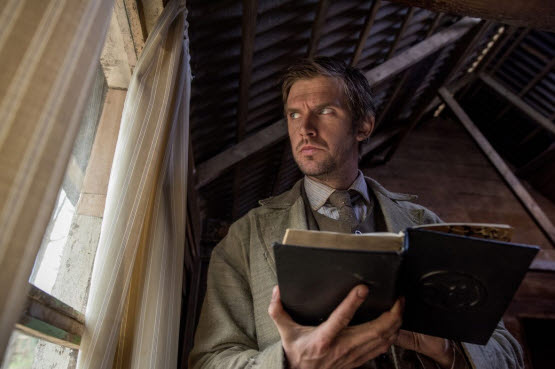
During the opening scene, the movie quickly and succinctly establishes its tone and background, which is England around the early 20th century. We meet a young British man named Thomas Richardson (Dan Stevens), and he is going to a remote Welsh island for getting back his sister, who was recently kidnapped by a cult which has resided in the island for many years. That cult group demanded to his father the ransom money for his sister, but his father has been too ill to do anything about that, so Thomas came to decide to go to the island instead for rescuing his dear sister.

As soon as he arrives at a dock where several new members of the cult are ready to get on a boat to the island, Thomas senses danger, so he decides to hide his identity, and it soon turns out he was right about that. Not long after he and others arrive in the island, a bunch of menacing guys come to the boat, and they take away some other guy instead of him thanks to Thomas’ last-minute tactic.

As he begins to spend his first day in the island, Thomas gets to know more about the cult and its leader Preacher Malcolm (Michael Sheen). According to Malcolm, he and his two associates Frank (Paul Higgins) and Quinn (Mark Lewis Jones) were saved by the goddess of the island after being shipwrecked on the island a long time ago, and he emphasizes how much he and his followers have prospered thanks to her grace. Freely living outside the control of their former society, they have so far lived well together in their isolated community, and they have been certainly happy about not having to pay any tax to the King of England and his government.

apostle02

However, it is subsequently revealed to us that things have not been going quite well in the community during recent years. Their land, which were quite fertile for many years, somehow becomes barren, and Malcolm and his two close associates have been worrying a lot about that as their community is running out of food day by day. As a matter of fact, their kidnapping of Thoma’s sister was their desperate measure to solve this serious problem, so they become more desperate as they still do not get the ransom money.

Meanwhile, Thomas slowly embarks on the search for his sister, and he soon gets a few possible allies to help him. There is a young boy who happens to encounter Thomas not long after having a private time with a young girl he loves at one night, and Thomas manages to persuade that boy to help him. When Thomas happens to save Malcolm from the latest threat against him, Thomas earns some trust from Malcolm, and he also comes to befriend Malcolm’s daughter Andrea (Lucy Boynton), who is probably the most sensible person in the island but still believes in her father’s good sides.

As Thomas continues to try find any chance to save his sister and then escape along with her, the movie gradually accumulates tension while also imbuing the screen with considerable amount of eeriness. As watching a number of spooky moments including the one involved with a barn located in a nearby forest, we come to wonder whether what is believed by Malcolm and his followers is actually real, and the circumstance becomes quite spookier especially when Thomas encounters something scary in an underground tunnel later in the story.

apostle04

During its third act, the movie becomes more intense than before, and director/writer/editor Gareth Evans, who has been known mostly for “The Raid: Redemption” (2011) and the following 2014 sequel, willingly pushes his story and characters into lots of blood and violence. There is a cringe-inducing scene featuring a certain sadistic device for public execution, and then there comes a gory fight scene accompanied with the graphic depiction of body mutilation.

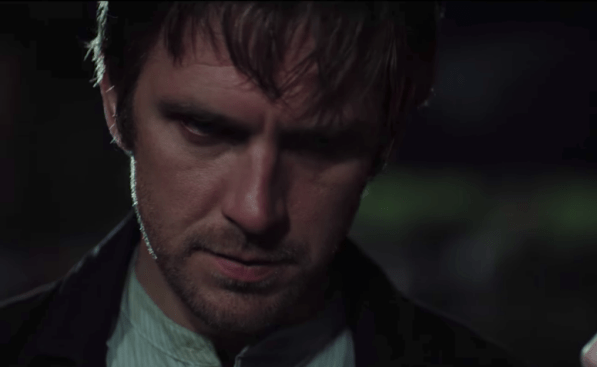
The movie will certainly be appreciated a lot by some genre fans for its considerable intensity as well as its no-hold-barred approach to extreme violence, but I must confess that I felt rather numb and exhausted around its third act while not caring much about its main characters, most of whom are more or less than broad archetypes to be bloodied one way or another. Dan Stevens, who is no stranger to horror genre considering his chillingly entertaining performance in “The Guest” (2014), looks as intense as required, but his character feels rather monotonous in his brooding mood, so we come to watch his character’s predicament from the distance without much care. In case of several notable supporting performers around Stevens, Michael Sheen acquits himself well without any overacting, and Lucy Boynton, Mark Lewis Jones, Paul Higgins, and Elen Rhys fill their respective roles as much as demanded.

Overall, “Apostle” is rather unsatisfying as being hampered by its flaws including weak storytelling and characterization, but I admire its technical aspects including its palpably moody atmosphere and realistically grimy period details. In my inconsequential opinion, the movie could be better if around 20 minutes were trimmed from it, but this is still a competent genre piece, and you may enjoy it more than me if you are looking for something very intense and bloody.

apostle03

Posted in Movies | Tagged , , , | 1 Comment

Miss Baek (2018) ☆☆☆(3/4): She just wants to save this desperate girl…

missbaek03

South Korean film “Miss Baek” is a glum tale of a woman who simply wants to help a young little girl who is not so different from who she once was. While it is often uncomfortable to watch due to several dark, horrific moments associated with domestic abuse, the movie mostly works well as a gritty but sincere drama, and we come to care a lot about two desperate characters at the center of the story.

The movie opens with the discovery of the death of some old lady who had lived alone in a small shabby apartment. She was the mother of Baek Sang-ah (Han Ji-min), and Sang-ah is soon notified of her mother’s death, but she does not give a damn about that because she still feels hurt about how much she was abused by her alcoholic mother who also struggled with depression problem.

We come to learn a bit about how Sang-ah’s life has been hard and difficult since she was eventually abandoned by her mother. Several years ago, she was arrested for attacking a guy who tried to assault her sexually, and she was unfairly treated by the police and the media just because that guy in question was someone with power and connections. At least, she has been helped by a sympathetic cop who sincerely wants to get closer to her as a friend, but she does not want anyone to get closer to her, and there is the considerable gap between her and the cop as shown from one scene between them.

missbaek01

And then something happens during one evening. When she is returning to her apartment building after another day of hard work, Sang-ah comes across a young little girl named Ji-eun (Kim Si-ah) outside the apartment building. After discerning that Ji-eun is cold and hungry, Sang-ah takes the Ji-eun to a nearby food stand, and she notices scars and bruises on Ji-eun’s body. Although Sang-ah remains cold and distant as usual, we can clearly sense that she feels some pity toward Ji-eun, and we get a little warm moment when she opens her heart a bit to Ji-eun

Eventually, Ji-eun is taken away to where she lives with her father and his current girlfriend, and we feel chilled and disgusted as observing the abusive domestic environment surrounding Ji-eun. As your typical alcoholic bum, Ji-eun’s father Il-gon (Baek Soo-jang) spends most of his time on alcohol unless he is occupied with playing online game, and he often beats his daughter whenever he gets quite drunk. In case of his girlfriend Mi-kyeong (Kwon So-hyun), she does not just care much about Ji-eun; she really hates Ji-eun, and there are a couple of restrained but undeniably gut-chilling moments showing her brutally mistreating Ji-eun.

When Sang-ah meets Ji-eun later, Ji-eun remains sad and desperate as before, so Sang-ah decides to take her to a local amusement park, and that leads to one of a few bright moments in the film. As spending more time with Sang-ah, Ji-eun becomes a little more cheerful than before while also appreciating Sang-ah’s kindness, and Sang-ah comes to see more of her younger self from Ji-eun, while also reminded of her last happy moment with her mother.

When Sang-ah and Ji-eun come back to their apartment building, Il-gon and Mi-kyeong are pretty drunk in their apartment, and they also try to abuse Ji-eun again. Angered by their despicable behavior, Sang-ah comes to clash with Il-gon and Mi-kyeong , so she and they are eventually taken to a local police station, but Sang-ah soon gets frustrated with to see that policemen do not pay much attention to what has been happening to Ji-eun. Even when Ji-eun came to the police station for herself, policemen simply sent back to Il-gon and Mi-kyeong, and, not so surprisingly, they lazily overlook Ji-eun’s desperate circumstance again. They have no problem with believing the false explanation from Il-gon and Mi-kyeong, and they also distrust Sang-ah just because of her previous trouble.

missbaek02Although knowing well that Ji-eun will be mistreated again as usual, Sang-ah sees that there is really nothing she can do for Ji-eun. She decides to move away to somewhere else, but then she comes to change her mind during a rather unlikely moment, and she soon finds herself reuniting with Ji-eun, who needs Sang-ah’s help more than ever.

Around that narrative point, the movie falters to some degrees, but it is still supported well by its main cast members at least. Han Ji-min is impressive while ably conveying to us her character’s strength and vulnerability, and young performer Kim Si-ah is also solid as holding her own place well besides her co-performer. In case of other notable performers in the film, Lee Hee-joon is suitably cast as a decent cop who genuinely cares about both Sang-ah and Ji-eun, and Kwon So-hyun, who drew my attention for the first time via her harrowing performance in “Madonna” (2014), and Baek Soo-jang are effective in their respective loathsome roles.

“Miss Baek” is written and directed by Lee Ji-won, and this is her first debut feature film. Although there are several notable weak aspects including a number of plot contrivances in the story, the movie is still engaging to watch despite its uncomfortable subject, and it also distinguishes itself with a strong, independent heroine to remember. In my trivial opinion, this is one of more interesting South Korean films of this year, and I think you should check it out someday.

missbaek05

Posted in Movies | Tagged , | 1 Comment

22 July (2018) ☆☆☆1/2(3.5/4): A sobering docudrama on the 2011 Norway attacks

22july01

Paul Greengrass’s new film “22 July”, which was released on Netflix yesterday, is a sobering docudrama on the 2011 Norway attacks. While it is often very uncomfortable to watch especially during its first part which shows us what happened on that terrible day, the movie thankfully avoids sensationalism as calmly and thoughtfully handling its subject, and there are several quiet but undeniably powerful moments to remember.

During the first half of the movie, we see Anders Behring Breivik (Anders Danielsen Lie), a right-wing extremist who was responsible for the 2011 Norway attacks, going through the last step of his horrible terror plan. After making his bomb at a barn outside Oslo on July 21st, 2011, he brings it to Oslo by his vehicle, and he parks that vehicle in front of one of the government buildings in the next morning. Not long after he drives away from the scene, the bomb is exploded, and now he is going to his next target: a camp for adolescents which is located in an island located outside the city.

In the meantime, we also watch how everything looks fine for everyone in that island on July 21st. After arriving in the island, many adolescent boys and girls cheerfully begin their first day in the camp, and they soon have a meeting where they make a speech about what they are going to do as future leaders. When they hear about the bombing incident in the next morning, many of them are certainly alarmed, and the camp staff members are relieved when they hear that a policeman is coming to the island for security.

However, that policeman in question is Breivik wearing a police uniform. Right after arriving in the island, he kills two camp staff members, and the following pandemonium unfolded on the screen is horrifying to say the least. As boys and girls are desperately running or hiding for their life, Breivik ruthlessly shoots down anyone within his shooting range, and there is a gut-chilling moment when he spews out his xenophobic/ideological hatred while killing a group of people hiding inside a camp building.

22july02

After Breivik is eventually arrested by the police who belatedly arrive in the island, the movie focuses on the aftermath via three narrative lines, and one of them mainly revolves around Jens Stoltenberg (Ola G. Furuseth), the Prime Minister of the Norwegian government. While shocked and surprised as much as others, Stoltenberg promptly makes a public statement as trying to keep the situation under control, and he also authorizes an independent investigation on how the attacks could happen. When it is later revealed by the investigation team that the attacks, which claimed a total of 77 lives while also injuring more than 200 people, could be prevented, Stoltenberg takes the responsibility for his government’s blunder without making any excuse, and he sincerely apologizes to the victims’ family members when they meet in private.

The second narrative line centers on Breivik’s trial. Quite ready for the trial from the beginning, Breivik chooses Geir Lippestad (Jon Øigarden) as his lawyer just because Lippestad once handled a case involved with some notable right-wing figure, and Lippestad is not so pleased about that. It is apparent from their first meeting that he abhors Breivik and everything Breivik stands for, but he maintains his cool professionalism nonetheless, and he tries to do his best for defending his despicable client even though he knows well that he will be as hated by many people as Breivik.

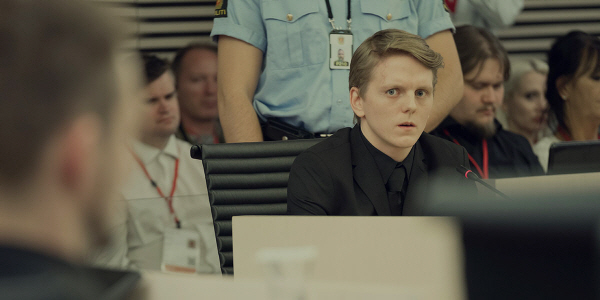
During the trial, Breivik initially pleads insanity as advised by Lippestad, but then he changes his mind, and he attempts to use the trial as a platform where his virulent ideology can get spotlights. While never overlooking his character’s human dimensions, Anders Danielsen Lie, who was unforgettable in “Oslo, August 31st” (2011), did a good job of subtly conveying to us his character’s vile, monstrous aspects, and we cannot help but disgusted more as watching his character trying to cause more damage to his society.

22july03

The third narrative line is about a teenage boy who survived during the attack in the island. Although he was pretty lucky despite being shot several times, Viljar Hanssen (Jonas Strand Gravli) has to recover from not only physical damages but also psychological ones, and there are a number of harrowing moments showing his difficult and painful progress to his recovery. His parents and his young brother, who was also in the island during the attack, try to help and support him as they can, but they are helpless as watching him struggle day by day, and that leads to considerable strain and conflict in the family.

Nevertheless, Hanssen gradually recovers in the end, and he also becomes quite determined to make a stand against Breivik’s evil through his court testimony. While never overemphasizing his bravery, the movie presents his court testimony scene with admirable restraint, and Jonas Strand Gravli is commendable in his unadorned natural performance which eventually functions as the heart and soul of the film.

Like Greengrass’s other docudrama films “Bloody Sunday” (2002) and “United 93” (2006), “22 July” is a visceral and thoughtful work packed with considerable realism and verisimilitude, and I admire what is achieved by Greengrass and his cast and crew. Yes, it is not something you want to watch again, but it is a powerful stuff nonetheless, and you will not forget it for a long time after it is over.

22july04

Posted in Movies | Tagged , , , , | 1 Comment

A Star Is Born (2018) ☆☆☆1/2(3.5/4): It’s old-fashioned indeed – but it still works

astarisborn201801

“A Star Is Born” is your typical old-fashioned show business melodrama which is quite familiar to the bone. A successful male star entertainer comes across an unknown girl with talent and potential, and then they fall in love each other as the latter rises to the top, but then there come struggle and conflict as the former slides down to the bottom.

As a matter of fact, this is the third remake of the 1937 classic film of the same name starring Janet Gaynor and Fredric March, which was subsequently followed by the 1954 version starring Judy Garland and James Mason and the 1976 version starring Barbra Streisand and Kris Kristofferson. While mostly staying close to the basic storyline of its three predecessors except several notable changes for its contemporary background, the 2018 version brings a substantial amount of spirit and energy to the screen, and the result is a pretty entertaining one which deserves to be placed right below the 1954 version, which is still the best of the bunch.

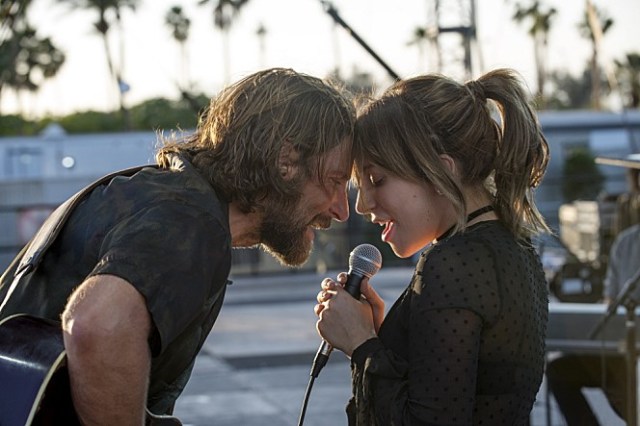
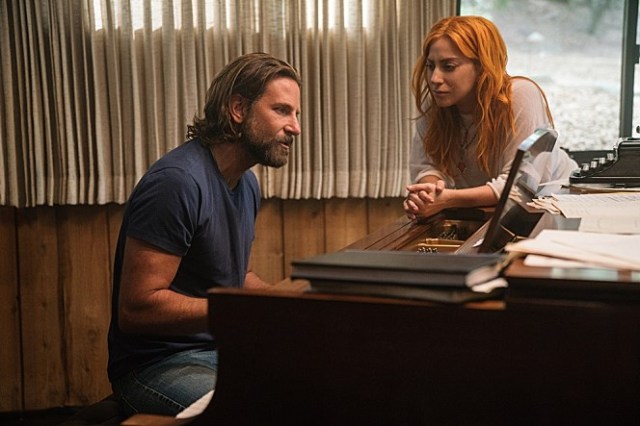
In the beginning, we see the ongoing music concert of Jackson Maine (Bradley Cooper), a star singer-songwriter who is apparently struggling with his drug and alcohol addiction problem. After he manages to perform well during the concert despite his inebriated state, he happens to drop by a drag queen bar for drinking more, and that is where he meets Ally (Lady Gaga), a struggling singer-songwriter who happens to give her first performance at the bar during that night. Although her performance looks rather modest on the surface, Jackson senses something special from her, and they eventually spend the night together while getting to know each other more.

astarisborn201802

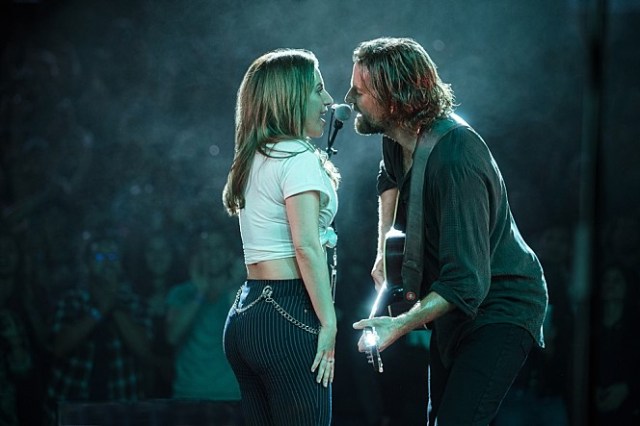
As discerning more of Ally’s talent and potential, Jackson decides to do something special for her. He invites her to his next concert, and she agrees to go there although being reluctant at first. In the middle of the concert, Jackson performs her latest song and then has her sing it along with him on the stage, and their performance soon goes viral on YouTube. As gaining more confidence, Ally becomes more prominent than before, and, not so surprisingly, she comes to be regarded as a new talent to watch.

And her relationship with Jackson is developed further in the meantime. Although she becomes more aware of how messy he has been due to his growing addiction problem, they still love each other, so they get married shortly after he makes an impromptu proposal to her, and it seems they will get over their problem through their love.

Of course, things do not go well for them as Ally goes up and up while Jackson goes down and down in contrast. Watching his wife’s rising status, Jackson cannot help but jealous, and then he hits another bottom of his addiction. He embarrasses himself as well as Ally during what is supposed to be her important moment to shine, and then there inevitably comes a bitter moment when he comes to realize that he has become an impeding factor in her life and career.

While predictably moving from one narrative point to another, the movie keeps engaging us with a number of excellent music performance scenes. As cinematographer Matthew Libatique’s camera fluidly moves around here and there, the music performance scenes in the film are presented with lots of excitement and verisimilitude, and it certainly helps that the original songs in the film are effective and enjoyable on the whole.

astarisborn201803

In addition, the movie is sincere and sensitive in depicting the dynamic relationship between its two main characters, and Bradley Cooper and Lady Gaga, who may be strong Oscar contenders in next year, are believable as their characters pull and push each other. Cooper, who not only directed and produced the movie but also wrote the screenplay with Eric Ross and Will Fetters, shows another side of his talent via his solid musical performance scenes (Like Gaga, he wrote several songs for the film, by the way), and he is tragic and devastating as required during the last act of the movie. Opposite to Cooper, Gaga is simply magnificent as exuding her own star quality which was previously demonstrated in the fifth season of TV series “American Horror Story”, and she also did a commendable job of conveying well to us her character’s gradual development and transformation along the story.

Around him and his co-star, Cooper places several notable performers, who provide some extra personality to his film. Sam Elliot is Jackson’s long-suffering older brother who has been tired of taking care of his younger brother’s numerous troubles, and he has a brief poignant moment with Cooper when their characters have a little honest conversation later in the movie. While Dave Chappelle provides some relief as Jackson’s retired musician friend, Andrew Dice Clay, who previously surprised us with a solid supporting turn in Woody Allen’s “Blue Jasmine” (2013), plays Ally’s caring father, and I was also delighted to see Ron Rifkin, Michael Harney, Greg Grunberg, and Barry Shabaka Henley in minor supporting roles.

Thanks to its competent direction, first-rate performance, and impressive soundtrack, “A Star Is Born” successfully attains its own spot around its predecessors in my inconsequential opinion, and I enjoyed and appreciated what was achieved in the film. Yes, it is often conventional and clichéd, but it still works, and I had a very good time with it.

astarisborn201804

Posted in Movies | Tagged , , , , | 3 Comments

Mandy (2018) ☆☆☆(3/4): A crazy, violent exercise in style and mood

mandy01.jpg

Before watching “Mandy”, you should know what you are going to get from it. As a crazy, violent exercise in style and mood, the movie intends to strike you hard by any means necessary and some of you may not like its brutal, vicious moments, but I sort of admire its no-hold-barred attitude fueled by its exaggerated style, and I will not deny that I was occasionally amused by several outrageous scenes such as the one featuring two chainsaws.

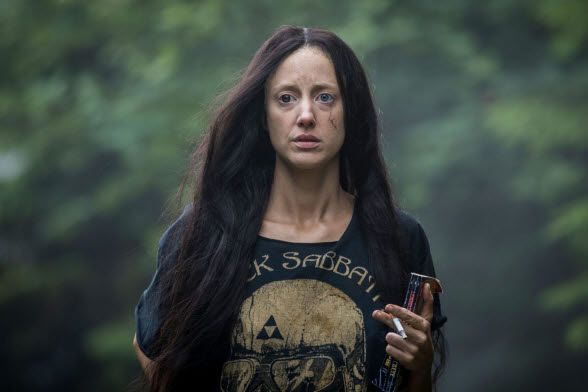
The first half of the movie is about how one ordinary couple’s life happens to be shattered by a group of evil people. It is 1983, and Red (Nicholas Cage) and his wife Mandy (Andrea Riseborough) are living a happy life together in their nice house located in the middle of some remote forest area, but Mandy happens to be spotted by a mysterious cult leader named Jeremiah (Linus Roache) and his followers on one day. While she only passes by their vehicle without giving any attention to them, Jeremiah somehow becomes obsessed with her, so he orders his followers to prepare for their latest act of violence. First, they summon some biker gang members who are as crazy as them, and then they all go together to Red and Mandy’s house.

When Mandy and Red wake up to find themselves surrounded by these evil people, it is already too late for them, and Mandy is promptly sent to Jeremiah while her husband remains tied up on the floor. As Mandy is forced into a drugged condition, the movie goes further with its nightmarish ambience boosted by its frequently colorful lighting effects, and we accordingly get one hell of weird moment as Jeremiah tries to make Mandy into his latest sexual conquest via his mumbo-jumbo on faith and music, which is eventually punctuated in a rather funny way.

mandy03

Enraged by his failure to submit Mandy to his will, Jeremiah orders his followers to kill her, and Red is forced to watch her horrible death. Once he manages to free himself after Jeremiah and others are gone, Red becomes quite determined to revenge his wife’s death, and he is not swayed at all even when his friend Caruthers (Bill Duke) warns him of how dangerous it is to confront those biker gangs and Jeremiah’s cult group. Seeing that his friend is ready to go all the way for killing them all, Caruthers provides some help to Red, and Red soon starts his quest for vengeance once he is equipped with his weapons including a crossbow.

During the second half of the movie, we are served with a number of striking moments intended to jolt and shock us. After dialing up its level of intensity with a savage action sequence featuring a degenerate thug with a very sharp object on his certain body part, the movie goes further with more blood and violence, and we eventually get that memorable scene with two chainsaws, which somehow took me back to that deranged chainsaw duel scene in “Motel Hell” (1980).

These and other things presented on the screen are not pleasant to watch to say the least, but the director/co-writer Panos Cosmatos, who wrote the screenplay with Aaron Stewart-Ahn, decorates his movie with heaps of stylish touches, and the overall result is often admirable in technical aspects. While cinematographer Benjamin Loeb did a commendable job of establishing the phantasmagoric atmosphere surrounding the characters in the film, the ambient score by Jóhann Jóhannsson, who sadly passed away early in this year, constantly unnerves us throughout the film, and his score contributes a lot to the feverish qualities of the movie.

mandy02

In what may be his most intense performance since “Joe” (2013), Nicholas Cage willingly hurls himself into his role. Although he has wasted his talent in a bunch of forgettable films during recent years, Cage is still a talented actor capable of good acting, and it is entertaining to watch how he gradually increases intensity as his grieving character executes his revenge step by step. Around the finale of the movie, he goes into a full manic mode as required, and he does not disappoint us at all while also firmly holding the film as demanded.

Like Cage, the other substantial performers in the movie keep their acting straight without a wink. While Linus Roache is effectively despicable in his villainous role, Andrea Riseborough, a wonderful British actress who drew my attention for the first time via her harrowing performance in “Shadow Dancer” (2012), fills her character with considerable life and personality, and her fine performance leaves a lasting impression despite her character’s absence during the second half of the film. Although he appears in only one scene, Bill Duke, a veteran character actor who also directed several films including “A Rage in Harlem” (1991), gives a small but fine supporting performance, and it is certainly nice to see that he is still dependable as before.

I must emphasize again to you that “Mandy” is not a film for everyone, but it is a well-made work which does its job as much as intended. To be frank with you, I often felt distant to all these loony moments in the film during my viewing, and I eventually got tired of its adamant excessiveness in terms of style and mood, but I remained impressed enough by its style and mood at least. In other words, this is not something you see everyday, and you may watch it if you are willing to take a chance with it.

mandy04

Posted in Movies | Tagged , , , , | 1 Comment

Leave No Trace (2018) ☆☆☆1/2(3.5/4): Father and daughter in the wood

leavenotrace02

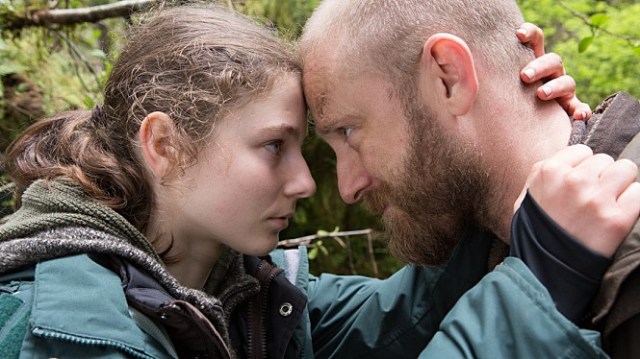
Understated but undeniably powerful, “Leave No Trace” drew my attention right from its very first moment and then engaged me more through its intimate depiction of the strong relationship between its two main characters. As closely living with each other in their solitary world, they are happy and contented together, but there suddenly comes a moment of change, and the movie phlegmatically but empathetically depicts how their relationship is gradually affected by that.

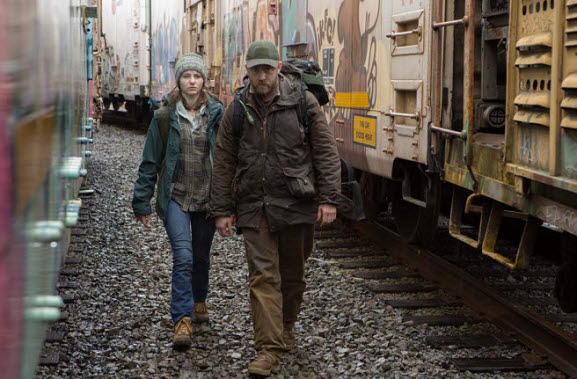
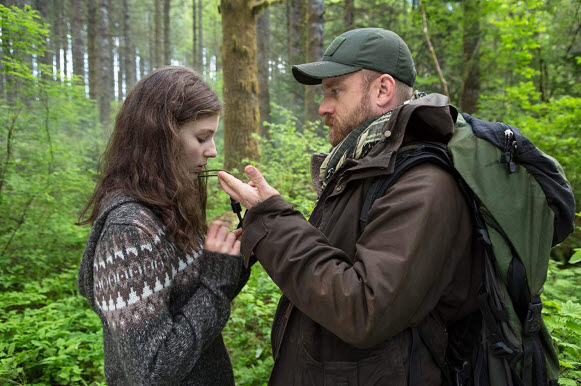
During the first act of the movie, we observe the isolated daily life of Will (Ben Foster) and his teenage daughter Tom (Thomasin Harcourt McKenzie), who have lived together somewhere in a national forest park located in Oregon. Although he does not tell much about himself, we come to gather that Will is a war veteran who has suffered from post-traumatic stress disorder (PTSD), and it is apparent that he prefers to live quietly in this remote area without getting any stress from the outside world. Except when they need to buy some food and other necessary things, he and his daughter stick to their self-sufficient lifestyle, and the movie does a good job of vividly presenting their way of life on the screen. As watching them going through their daily routines in and around their camp hidden inside the forest, we come to sense many years of life between them, and we also come to feel more of how much they are attached to each other.

While his daughter has never had any formal education for years, Will has taught her pretty well. Besides how to read and write, Tom has learned many other things from her father for living in forest along with him, and she is a smart and curious girl as shown from when she spends her free time with a big encyclopedia book.

leavenotrace04

And that is the moment when she happens to make a minor mistake, which unfortunately leads to the discovery of their camp by the park police. While Will is subsequently arrested because it is illegal to reside inside the park, Tom is sent away to a facility, and Will sees that he has no choice but to try to readjust himself to the outside world for being with his daughter again. After going through some evaluation period, he and his daughter eventually reunite, and they are soon taken together to a local tree farm where he is going to work for supporting them.

They certainly feel awkward in their new environment, but there are some generous people willing to help them. While the social workers assigned to them are kind and generous, the owner of the tree farm provides a cozy place where Tom and Will can stay for a while, and Tom later has a pretty nice time when she happens to encounter a cute rabbit and its owner.

As enjoying more of the outside world, Tom begins to be drawn to a lifestyle more stable than her former one, but her father becomes more nervous and restless as days go by. He clearly wants to go back to his former lifestyle, but his daughter becomes less willing to do that, and that creates subtle but considerable tension between them.

I will not describe here in details on how their drama is developed further later in the movie, but I can tell you that the movie keeps engaging us via a number of intimate moments generated between them, and director Debra Granick, who also adapted Peter Rock’s novel “My Abandonment” for her film with Anne Rosellini, deserves praises for her thoughtful handling of mood, story, and characters. While the story effortlessly moves from one narrative point to another along with its main characters, cinematographer Michael McDonough effectively establishes the palpably realistic atmosphere on the screen, and I was particularly impressed by how deftly he captures the clear and crisp ambience of the forests shown in the film.

leavenotrace03

The movie is also firmly anchored by two good lead performers who give two of the best performances of this year. While never overstating his character’s personal demons, Ben Foster, who dials down himself from his usual level of intensity here in this film, is often sad and heartbreaking in his nuanced performance, and he is especially good when his character flatly answers to questions given to him as a part of psychological evaluation. Although the movie watches him from the distance, we can see how uncomfortable Will is during that scene, and we come to have more understanding of his damaged state of mind.

On the opposite, Thomasin Harcourt McKenzie, a young New Zealand performer who previously played a minor role in “The Hobbit: The Battle of the Five Armies” (2014), holds her place well besides her co-performer while giving an equally compelling performance which is definitely one of the notable breakthrough performances of this year. Thanks to McKenzie’s flawless natural acting, her character’s gradual growth along the story is convincing from the beginning to the end, and it surely helps that she and Foster has a natural onscreen chemistry between them.

“Leave No Trace” is the third feature film from Granik, who previously made “Down to the Bone” (2004) and “Winter’s Bone” (2010), an Oscar-nominated film which gave Jennifer Lawrence a career breakthrough. Like “Winter’s Bone”, the movie is quite unforgettable in many aspects, and it confirms to us again that Granik is one of the most interesting American filmmakers of our time. In short, this is one of the best films of this year, and I wholeheartedly recommend it to you.

leavenotrace01

Posted in Movies | Tagged , , , | 2 Comments

Eighth Grade (2018) ☆☆☆1/2(3.5/4): Before high school

eighthgrade03.jpg

I like movies making me emphasize with people different from me, and “Eighth Grade” is one of such good films. Although its teenage heroine’s tumultuous emotional journey feels rather alien to me because my adolescent years were less eventful in comparison, the movie made me feel and understand her angst and confusion via its sensitive and humorous depiction of her emotional struggle for being herself, and I found myself rooting for her a lot as watching her arriving at another turning point of her adolescent life.

When we meet Kayla Day (Elsie Fisher) for the first time, she is making a YouTube video in which she talks about many things including how to be cool and confident in front of schoolmates, but, not so surprisingly, this middle school girl who is about to finish her eighth grade year turns out to be anything but cool and confident. At her school, nobody pays attention to her much as she is usually shy and passive, and she certainly feels ashamed when she is selected by her schoolmates as the quietest girl in the school. At least, she has a supportive father who has raised her since her mother was gone several years ago, but they do not interact much with other despite his sincere attempt to get closer to his daughter. During their dinner, he wants to talk more with his daughter, but she is mostly occupied with her smartphone, and that results in a very awkward moment between them.

Meanwhile, Kayla happens to be invited to the birthday party of a popular girl in her school. While she surely wants to get along well with that popular girl and other schoolmates invited to the party, she does not know how to do that, so she becomes quite anxious as she is taken to the party by her father, and we get a cringe-inducing moment as she tentatively approaches to her schoolmates at the party. Like any introverted teenagers, she is not so comfortable with herself, and her insecure mood is visibly contrasted with many boisterous activities happening around her.

eighthgrade02

However, Kayla cannot help but enthralled when she sees a handsome boy on whom she has a crush for a while. After the accidental encounter between them during the party, she decides to go a bit further toward him, and we get an amusing moment when she inadvertently comes to promise to him that she will do a certain act of sex for him although she has never done that before. She later searches the Internet for finding, uh, a guideline, and that leads to one of the most hilarious moments in the film.

In the meantime, the days of her eighth grade are being over, and we see Kayla and her schoolmates taken to a nearby high school for getting to know what it feels like being at high school. She is soon assigned to a generous high school girl who is quite willing to talk about anything with her, and she certainly feels excited as finally finding someone who is not only cool but also friendly to her. When she later talks more with that high school girl, she invites Kayla to a meeting with her high school friends, and Kayla does not hesitate at all to accept the invitation.

When she meets her new friend and other high school kids, Kayla is eager to learn more from them, and we observe with amusement how she is often overwhelmed by the dynamic interactions unfolded in front of her. In her view, they all look quite confident about themselves, and she only finds herself becoming passive and quiet as usual as trying to follow whatever is being exchanged between them.

The movie later takes a sobering narrative turn when Kayla is being taken back to her home by one of these high school kids, who seems nice at first but then approaches to her a little too closer at one point. As feeling quite uncomfortable, she comes to see how vulnerable and unprepared she is, and she consequently feels quite hurt and humiliated, though she avoids the worst possible outcome from that painful moment at least.

eighthgrade01

While emphasizing with its heroine’s pain and confusion, the screenplay by director Bo Burnham smoothly moves back and forth between comedy and drama, and there are many small nice moments which give us a vivid, realistic glimpse into your average middle school life. I like a scene involved with a time capsule box which Kayla prepared during her sixth grade year, and I also appreciate a wryly humorous moment showing Kayla and her schoolmates going through a certain type of drill under the guidance of a police officer.

Burnham also draws good performances from his main cast members. Elsie Fisher, a young actress who previously did a voice performance in “Despicable Me” (2010) and its 2013 sequel, is simply terrific in her unadorned acting, and I hope her likable performance here in this film will lead to more good things in her promising acting career. Other performers in the film are also believable in their respective roles, and the special mention goes to Josh Hamilton, who plays Kayla’s patient and understanding father and has a very poignant moment when his character comes to have a frank conversation with his daughter.

In conclusion, “Eighth Grade” is a superlative coming-of-age drama which reminds us of how it is often hard and difficult to grow up during adolescent years. This is surely one of better adolescent movies during recent years, and, in my inconsequential opinion, it deserves to be watched by many adolescent kids out there for good reasons. They will recognize themselves from Kayla, and they will see they are not alone at all.

eighthgrade04

Posted in Movies | Tagged , , | 1 Comment

Three Identical Strangers (2018) ☆☆☆(3/4): Far stranger than fiction

Film Three Identical Strangers

Documentary film “Three Identical Strangers” starts with an incredible real-life story and then reveals a far more unbelievable thing which remains shrouded in questions even at present. I will try not to reveal too much here in this review, but, just in case, I recommend you not to read the following paragraphs if you are going to watch the documentary.

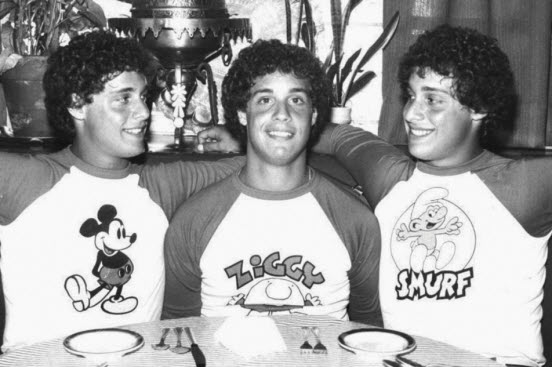
If you have already seen the trailer of the documentary, you surely know that it is about three twin brothers who had never known each other’s existence before they accidently came to learn of a hidden fact about their birth. In the autumn of 1980, a 19-year-old lad named Bobby Shafran started his first semester at a community college located in the Catskills area, and he noticed something weird on his very first day at the college. Many students said hi to him even though he never met them before, and he became more puzzled as they kept calling him Eddy.

Shortly after he went to his dormitory room, Shafran came to see what was really going on. He somehow looked exactly like a student named Eddy Galland, and, through one of Galland’s friends, he soon contacted with Galland, who was at his family home at that time. As confirming that both of them were born on July 12th, 1961, they came to discern that they are identical twin brothers, and they became quite excited as getting to know each other more during their first encounter.

And then a more amazing thing happened when their dramatic story was subsequently reported on newspapers. David Kellman, the adopted son of a Jewish immigrant family living in New York City, was quite surprised when he read a newspaper article about Shafran and Galland, and he immediately approached to them. He also looked exactly like Shafran and Galland, and, surprise, it turned out that he was also born on the same day at the same hospital before sent to his parents via the same adoption agency which handled the adoption of Shafran and Galland.

threeidenticalstrangers03

While these three identical twin brothers and their families were quite astonished by this incredible news, the brothers quickly drew far more attention from the media than before, and a series of archival footage clips show their sudden fame resulted from their unbelievable reunion. In addition to appearing in a number of TV talk shows, they had many wild nights in the downtown area of New York City as enjoying their new status as celebrities, and they later started a restaurant business together in the city, which was quite successful mainly thanks to their fame. In addition, they all got married and then began each own family life, and it seemed they would happily be together for the rest of their life.

In the meantime, the triplet’s parents were not so pleased as their adoption agency, Louise Wise Service, told them nothing at the time of adoption. When they went to the adoption agency together, they demanded the explanation for what exactly happened at that time, but they only received a formal apology, and it looked like the adoption agency was hiding something from them.

During its second half, the documentary goes further into what was possibly covered up by the adoption agency and some people associated with the adoption agency, and what is eventually presented to us is often disturbing to say the least, while also making us reflect on that interesting question on nature and nurture. Sure, the triplets had many common things between them despite their different childhood backgrounds, there were also considerable difference among them as pointed out later in the documentary, and we cannot help but notice how Shafran and Kellman look different from each other at present despite the remaining similarities between them.

threeidenticalstrangers02

Both Shafran and Kellman want to know why they and their other twin brother came to be separated from the beginning, but, like their parents, they find themselves facing the dead end. Some clues may be found from the certain records stored in the archive of Yale University, but these records in question have remained sealed from public, and it turns out to be pretty difficult to get a permission to access to these records.

While the exact purpose behind their separation is still vague even at present, the documentary suggests that the triplets were considerably affected by their separation in one way or another. They often became anxious during their infant period probably because of being separated from each other, and they all had each own dark time as struggling with their respective mental problem, which might have been inherited from their biological mother. In case of Galland, he had a pretty hard time when the relationship among him and his two twin brothers later became quite deteriorated due to the growing conflict among them, and that eventually led to a hurtful moment for everyone close to him.

“Three Identical Strangers”, which won the Special Jury Prize when it was shown at the Sundance Film Festival early in this year, becomes less compelling as making its points a little too often during its second half, and it also stumbles a bit in its rather plain storytelling approach, but it is still engaging thanks to director Tim Wardle’s deft mix of interview and archival footage clip. In short, this is a fairly good documentary which raises some thought-provoking questions via its unforgettable human subjects, and I assure you that you will have an entertaining time with it.

threeidenticalstrangers04

Posted in Movies | Tagged , , , | Leave a comment