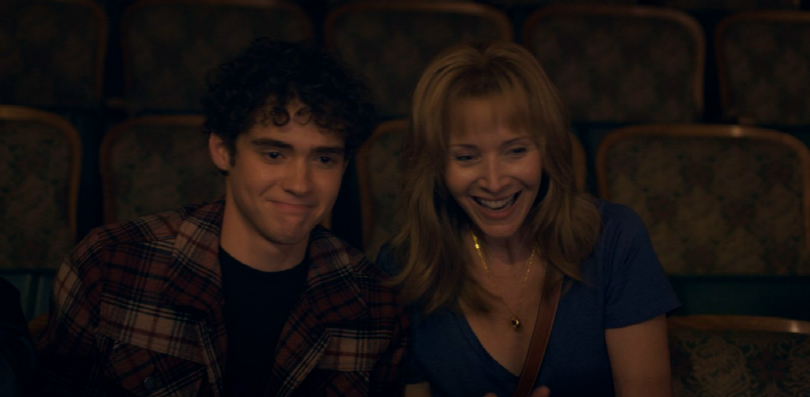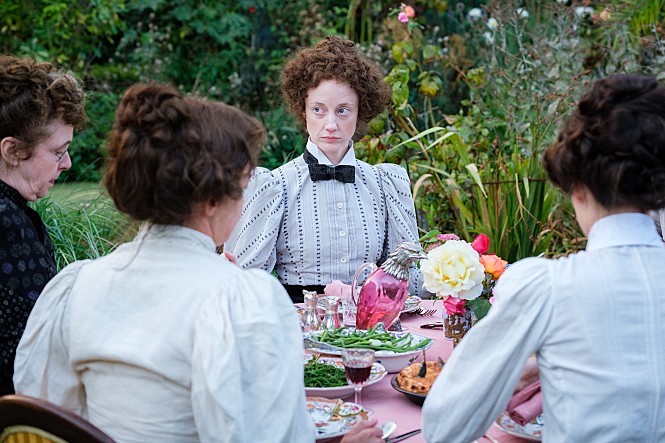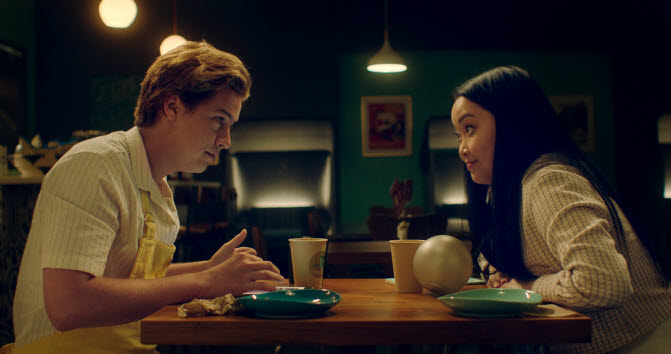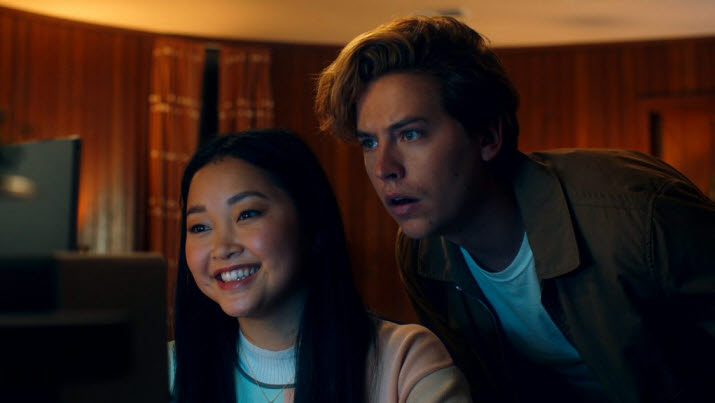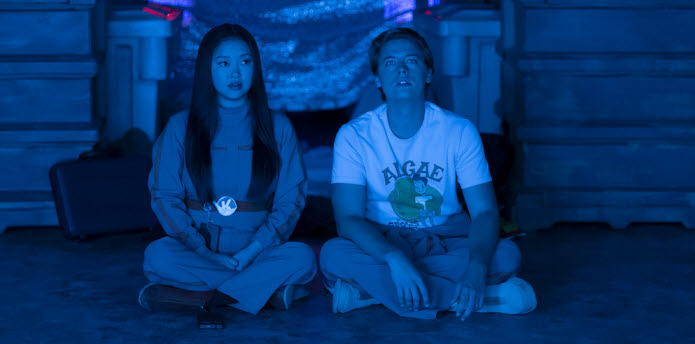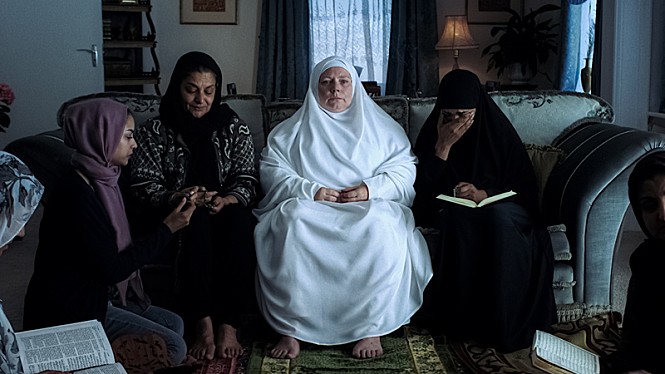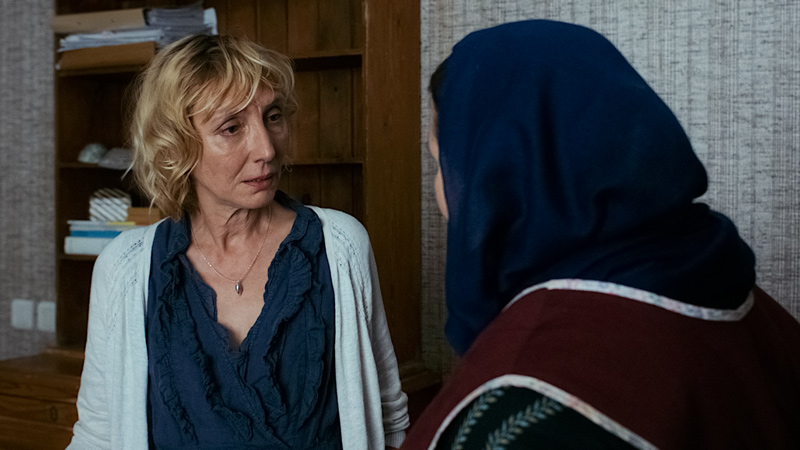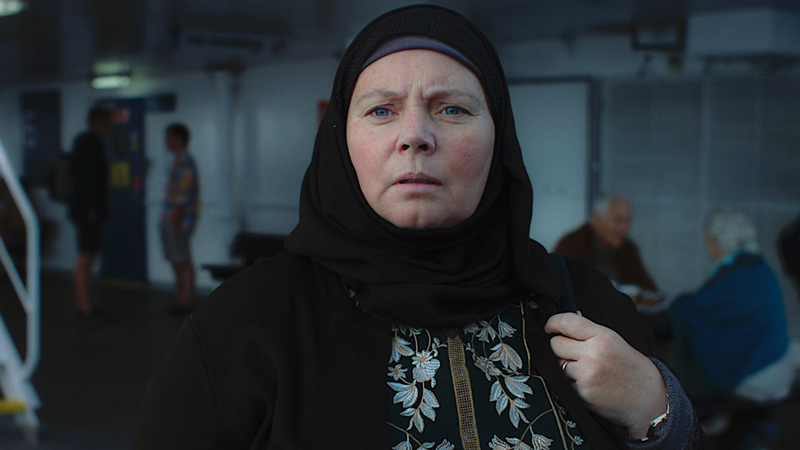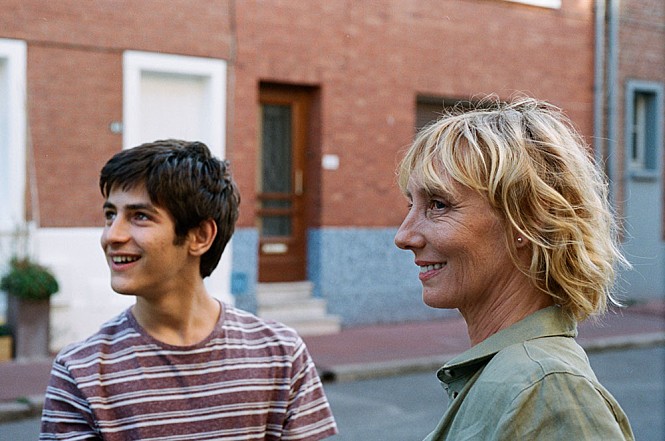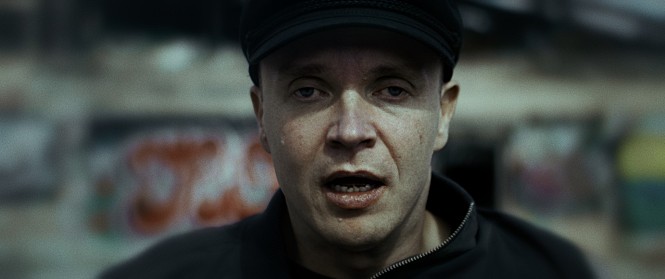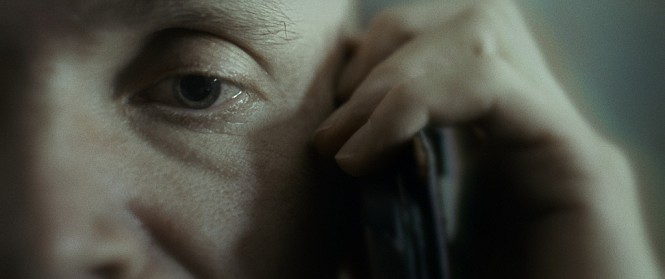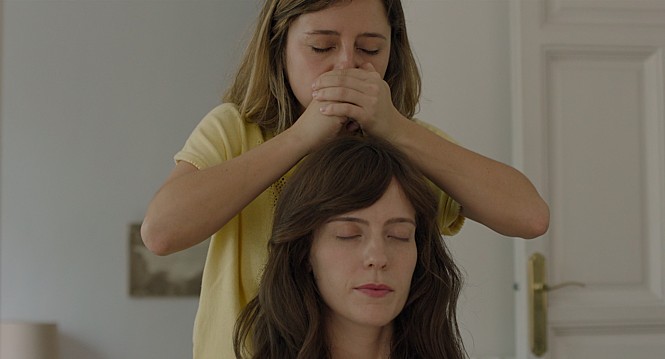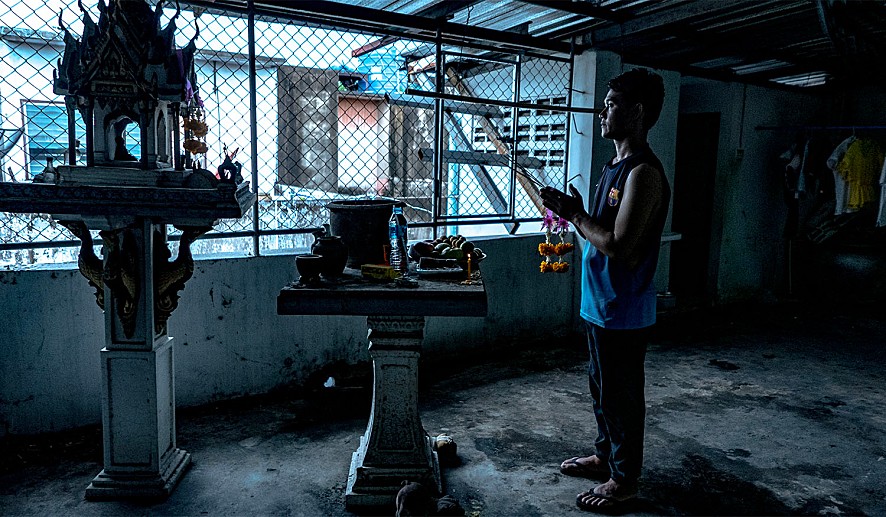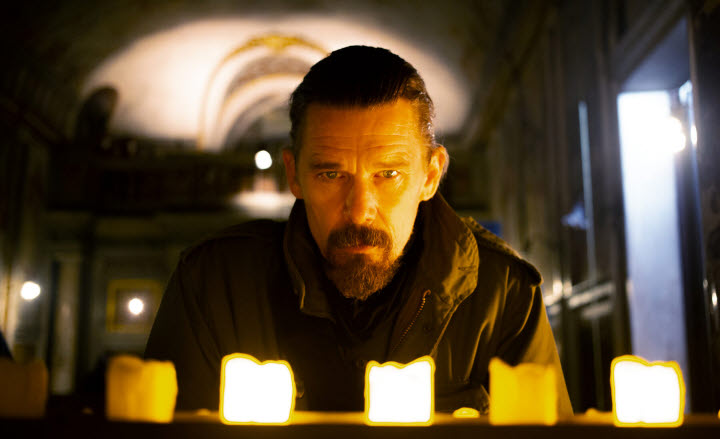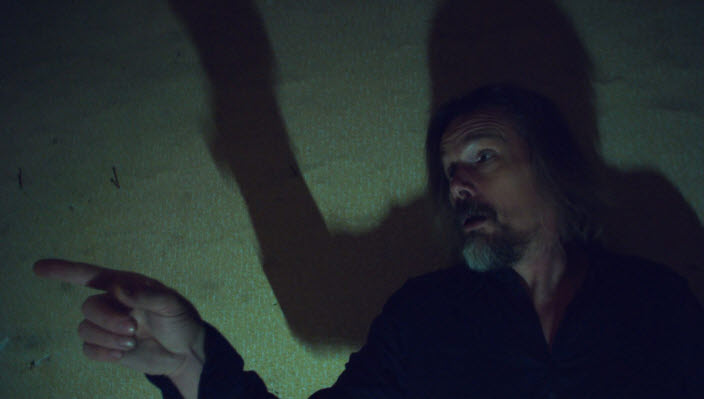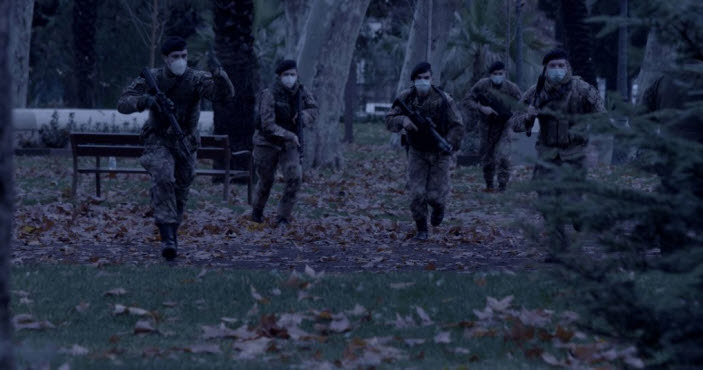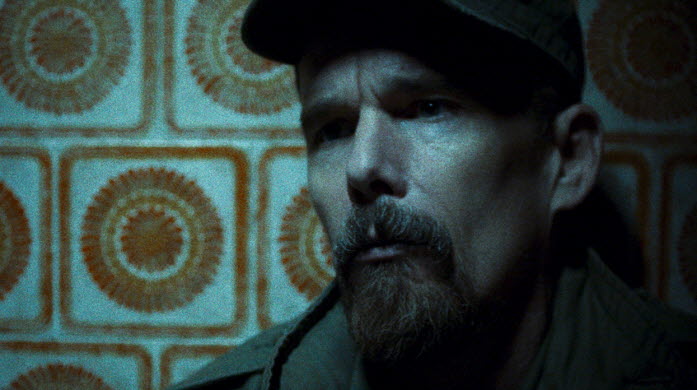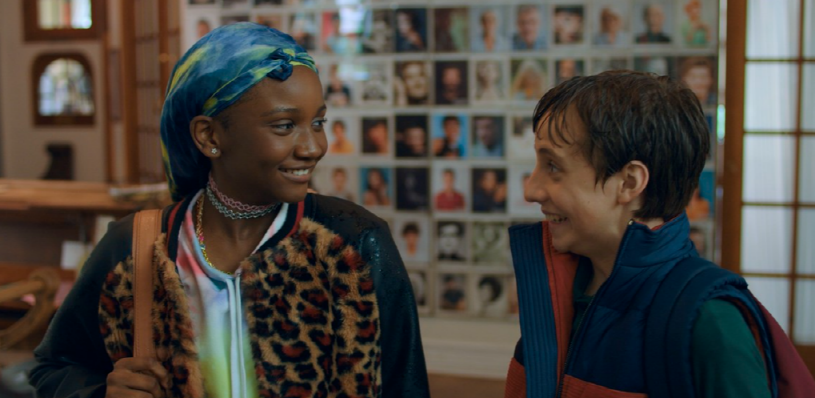
Master (2022) ☆☆(2/4): A racially tame campus horror flick

“Master”, which was released on Amazon Prime two days ago, feels rather tame in its incoherent mix of racial issues and supernatural elements. The movie initially seems to be ready to tackle these sensitive issues in addition to trying to scare and unnerve us a lot, but the overall result is not particularly successful in either of its two different attempts, and it does not leave much impression on us in the end except a few thought-provoking moments which are unfortunately left underdeveloped without much dramatic impact.

At first, the movie alternates between two different African American women in some prestigious New England college with lots of historical background. As the first colored female master in the campus, Gail Bishop (Regina Hall) is determined to bring some fresh air of change into the campus, and it looks like everything will go well for her as another semester is started in the campus. Besides getting the full support from the faculty staff whose members are mostly Caucasian, Gail has a fairly productive time with those students under her charge during their first meeting, and she is also willing to support more her friend/colleague Liv Beckman (Amber Gray), who is incidentally the only other African American female faculty member in the campus besides Gail.

One of the students under Gail’s charge is a young African American woman named Jasmine Moore (Zoe Renee), and her first day in the campus is not exactly pleasant to say the least. As one of a very few colored students in the campus, she feels rather daunted right from when she arrives in front of her dormitory building, and her fellow students do not welcome her that much when she happens to be assigned to a certain notorious room. According to an old rumor in the campus, that room has been haunted by the ghost of a woman hanged for witchcraft in the 17th century, and Jasmine later came to learn a bit about how the first African American female student in the campus killed herself in that cursed room many years ago.

Anyway, Jasmine tries to keep focusing on her study, but she cannot help but feel more unnerved about whatever is hovering around her dormitory room. She often has disturbing dreams which may be associated with that malicious ghost, and that accordingly affects her relationship with her Caucasian roommate. They are not exactly close to each other, but her roommate comes to notice that something is going wrong with Jasmine, and the mood accordingly becomes more awkward between them.

Meanwhile, Jasmine also comes to have a trouble at Liv’s literature class. While she tries her best on the latest essay homework, Liv give her an F just because she does not approve of what Jasmine wrote, but she inexplicably does not have much problem with what Jasmine’s roommate casually wrote without much thought, and that eventually makes Jasmine file a complaint against Liv’s class. This puts both Liv and Gail in a rather awkward situation, because Liv is about to be evaluated for her tenure while Gail is supposed to stand by Jasmine even though Gail is also expected to provide some support to Liv.

The screenplay by director/writer Mariama Diallo could delve more into this interestingly tricky circumstance among its three main characters, but the movie instead comes to focus more on terrorizing not only Jasmine but also Gail, who also begins to experience odd and disturbing things day by day. At one point, she is aghast as suddenly encountering a serious pest problem in her campus residence, and that is just the beginning of what will come next for her.

While frequently emphasizing the old historical background of the college, the movie attempts to make some points on how the systemic racism from the past is alive and well under the surface, but these points are often delivered in rather heavy-handed ways. There are a few effective scenes which will make you cringe with indirect racist undertones (I particularly appreciate the evening dormitory party scene where Jasmine has to endure a bunch of Caucasian boys and girls casually appropriating some African American rap music just for fun), but there are also a number of glaringly contrived moments such as when Gail comes to learn of a hidden secret behind one certain supporting character later in the story, and we even get a big burning cross to remind us of how bad things are in the campus.

Furthermore, the movie does not work well as a horror flick either. While we surely get lots of ominous moments as both Gail and Jasmine are disturbed in one way or another, these moments did not add up much to something impactful enough for us, and the movie sadly under-utilizes the considerable presence and talent of Zoe Renee, who admirably tries her best with the bland materials given to her. In case of several other main cast members in the film, Regina Hall demonstrates more of the serious side of her talent as she previously did in “Support the Girls” (2018), but there are not many things to do for her except looking concerned or frightened, and Amber Gray, Talia Balsam, and Bruce Altman are simply required to fill their respective supporting parts.

In conclusion, “Master” is quite disappointing in its failed attempts to mix horror elements with race issues, and its regrettable failure makes me admire more what Jordan Peele accomplishes in his Oscar-winning debut film “Get Out” (2017), which was a bit underrated by me but, as I correctly predicted at that time, has become more iconic during last several years. To be frank with you, I would rather recommend you to watch that seminal film or Netflix TV series “The Chair”, which did a better job of handling race issues in its similar campus background. Believe me, you will have a better time with either of these two special works.

Posted in Movies | Tagged , , , , , | Leave a comment

Cats’ Apartment (2020) ☆☆☆(3/4): They need more than care…

South Korean documentary film “Cats’ Apartment” observes a bunch of cats inhabiting in a big old apartment complex located at the eastern end of Seoul. While it is often amusing to watch how these cute cats live day by day, the documentary also focuses on that fragile relationship between cats and human residence regions, and that is why it is sometimes poignant to see how several activists try to help these cats as much as possible.

That big old apartment complex in question was already the main subject of other recent South Korean documentary film “A Long Farewell” (2017). As told to us in that wistful documentary, the apartment complex area is now gone due to the extensive redevelopment process during 2018-2019, and the neighborhood will look certainly different with new and bigger apartment buildings around the end of this year.

Director Jeong Jae-eun, who has been mainly known for several acclaimed urban documentaries besides that wonderful female coming-of-age drama film “Take Care of My Cat” (2001), spent several years in the apartment complex for the shooting of her documentary, and the result, which was incidentally edited from several hundred hours of raw footage clips, is often vivid and intimate to say the least. Although these apartment buildings no longer exist at present, the buildings and their neighborhood exude a palpable sense of history and life on the screen, and it is rather bittersweet to observe them gradually emptied before the eventual beginning of redevelopment.

While all the residents in the apartment complex came to leave one by one, lots of stray cats remained in the neighborhood without having any idea on how much their habitat would be changed during next several years. According to a rough estimation, there were at least 250 ~ 300 stray cats living here and there throughout the apartment complex, and several people who had often taken care of these stray cats were certainly quite concerned about what would happen to these stray cats during the upcoming redevelopment period.

As many of these people try to help these stray cats in one way or another, the documentary sometimes focuses on some of these stray cats, who have each own personality besides their distinctive appearances. In case of one certain cat, it has been a beloved fixture of a local pharmacy, and we cannot help but smile as observing how calmly and playfully it is sitting outside the pharmacy, but the mood becomes rather melancholic as it still occupies its spot even after the pharmacy is shut down forever as its owner leaves just like many of his customers.

And we are also introduced to several other interesting cats in the neighborhood. I was constantly amused and touched as watching how friendly many of these cats are to people without fearing people at all, but I also observed that they could not possibly understand what was going on in their little world right now. I am now reminded of what W.G. Sebald once said: “Men and animals regard each other across a gulf of mutual incomprehension.”

Nevertheless, despite that undeniable mutual incomprehension between them and the stray cats, a number of people who really cared about the stray cats in their disappearing neighborhood tried their best anyway. Besides constantly feeding the stray cats day by day, they also organized their little public association together, and we later see them attending a public meeting for showing many others how important their cause really is.

Of course, they could not possibly save all these stray cats in their neighborhood, but they kept going nonetheless. For controlling the cat population in the neighborhood, they often captured male stray cats for getting them neutered and then releasing them. For making stray cats move to safer habitats, they planned on how to move away their feeding spots bit by bit, and we hear a bit of their sincere and passionate discussion on that.

In addition, they also had some of stray cats adopted after domesticating them a bit during several weeks. While some of them were quite friendly from the beginning, others were not so cordial to say the least, and you will be amused a lot by one particular stray cat, who did not like to be patted on its body at first but then became quite perky and friendly thanks to its temporary owner’s patient efforts.

Meanwhile, the time for redevelopment finally came, and the situation became more difficult for the stray cats. The apartment complex got almost isolated from the surrounding area, and those apartment buildings were demolished one by one, but many stray cats were still not accustomed to how things were drastically changed for them. At one point, we see one of them attempting to return to its old habitat, and then we gasp a bit when it nearly gets itself killed.

On the whole, “Cats’ Apartment” will occasionally melt the hearts of cat lovers for good reasons, but it also works as a thoughtful meditation on our rather problematic relationship with stray cats and other urban animals. In my humble opinion, we should pay more attention to them considering how much their life is affected by our activities, and the documentary will surely make you reflect more on that.

Posted in Movies | Tagged , , , , , | Leave a comment

In Our Prime (2020) ☆☆☆(3/4): His special math tutor

South Korean film “In Our Prime” is an engaging mix of familiar stuffs which dutifully and entertainingly sticks to its formulas from the beginning to the end. While it is pretty apparent that the story and characters are derived a lot from Gus Van Sant’s “Good Will Hunting” (1997) and “Finding Forrester” (2000), the movie is mostly effective as efficiently applying the formulas to its own materials, and you may find yourself rooting for its two very different main characters more than expected.

At first, the movie focuses on how things have been not that good for Han Ji-woo (Kim Dong-hwi), a teenage boy who has just started his first year at a prestigious high school in Seoul. Although his widow mother is very poor in addition to being too busy with earning her living day by day, Ji-woo has tried really hard to study and then excel himself, and that is how he was accepted by this respectable high school without much concern on paying the tuition.

However, he has been an outcast as a poor kid depending on social service support in contrast to many other schoolmates who are quite affluent, and even his class teacher does not help him much just because his grades are not entirely satisfying on the whole. Ji-woo is not particularly good at math, so his math test scores have been rather low compared to many of his classmates, and his teacher condescendingly recommends him to move to some other school just because his imperfect grades can possibly affect the considerable reputation of the school.

When he later happens to be suspended from the school dormitory because of a minor transgression, Ji-woo comes to stay in a little place belonging to the security guard working in the school, who is incidentally the very person who caught Ji-woo on the spot for that transgression. The security guard, who is nicknamed “People’s Army” just because he is a North Korean defector, is rather antisocial to say the least, but he takes a pity on Ji-woo, so he lets Ji-woo stay longer in his place even though he does not welcome Ji-woo much.

This North Korean defector is played by none other than Choi Min-sik (Remember his unforgettably grand performance in Park Chan-wook’s “Oldboy” (2003)?), so you can instantly sense right from his first appearance in the film that this character is not just your average old security guard. As a matter of fact, he was once a renowned math prodigy during his time in North Korea, and he surprises Ji-woo via quickly solving all of those demanding math problems given to Ji-woo and his classmates as their homework.

Because he really needs to improve his math test scores, Ji-woo asks the security guard to give him some extra teaching. Of course, the security guard is reluctant because he simply prefers to live in solitude just like Sean Connery’s character in “Finding Forrester”, but he comes to accept Ji-woo’s request under a few conditions, and Ji-woo soon begins to study math more under his secret math tutor at every night.

It is not much of a spoiler to tell you both Ji-woo and his secret math teacher come to gain a lot from each other, but the movie thankfully does not overplay that aspect while conveying to us a convincing sense of teaching and learning. At one point, the security guard gives Ji-woo a thoughtful lesson on why math is a lot more than memorizing formulas and then solving problems, and that actually made me reflect on how aimlessly I learned math during my high school and college years. Yes, I was fairly smart enough to memorize and then handle all those numerous constants and variables for solving one math problem after another, but my head eventually stopped when I later came to wonder more about why and how math mattered to me – and that was when I recognized my limit.

Around the point where it enters the last act, the movie starts to stumble more than once as attempting some blatant melodrama. Yes, our young hero is unjustly accused of what he did not do. Yes, the security guard turns out to have a very painful past behind his gruff appearance. Yes, both of them should make a choice which will affect their respective lives in one way or another. Yes, we surely get a dramatic big speech moment which is not so far from the finale of “Finding Forrester” while also borrowing a bit from “Scent of a Woman” (1992) and “A Beautiful Mind” (2001).

Nonetheless, the movie still works thanks to its sincere and competent storytelling, and it is supported well by its main cast members. Besides selling that dramatic finale as well as demanded, Choi Min-sik fills his character with enough wit and gravitas, and his seasoned appearance is complemented well by Kin Dong-hwi’s earnest performance. In case of several other cast members, Park Byung-eun, Park Hae-joon, and Jo Yun-seo are well-cast in their respective supporting roles, and Jo brings some charm and spirit to her rather thankless role.

In conclusion, “In Our Prime”, directed by Park Dong-hoon, is not exactly fresh in terms of story and characters, but it is still engaging enough to overlook its several short comings including its heavy-handed last act. I did not expect much from the beginning, and it does not exceed my expectation at all, but I will not grumble for now because it did its job as well as intended in addition to being fairly entertaining.

Posted in Movies | Tagged , , , , , | Leave a comment

Turning Red (2022) ☆☆☆1/2(3.5/4): Her big red secret

Animation feature film “Turning Red”, the latest work from Pixar Animation Studios which unfortunately goes straight to Disney+ instead of being released in theaters, is a delightful female coming-of-age tale peppered with distinctive cultural touches to be appreciated. Like several recent Disney animation films such as “Encanto” (2021) and “Raya and the Last Dragon” (2021), it embraces and embodies its cultural background with gusto and energy in addition to gleefully brandishing female empowerment and solidarity, and the result is another welcoming dose of fresh air of diversity into Disney animation.

The story, which is set in Toronto, Canada in 2002, mainly revolves around Meilin “Mei” Lee (voiced by Rosalie Chiang), a plucky 13-year-old Chinese Canadian girl who could be my nemesis if my adolescent self were in her middle school. When I was around her age, I was your average Asian overachiever not so different her in many aspects, and I still remember a lot how I was frequently occupied with maintaining a continuous stream of high test scores to impress and please my parents and teachers more. Yes, unless my mind was resting via books and movies, I was often zealously (and psychotically, perhaps) obsessed with being at the top of not only my class but also the whole school, and the World War III could have been possible if I had ever happened to compete with a truly worthy match like Meilin.

Everything in Meilin’s daily life is constantly under control by her strict and overprotective mother Ming (voiced by Sandra Oh), and Meilin has been mostly content with that, but, just like her several close school friends, she cannot help but feel helplessly swooned in case of a certain very popular boy group consisting of five very handsome dudes. They are all excited when they learn that the upcoming concert of that boy group will soon be held in their city, and Meilin is quite determined to attend the concert along with her friends even though she does not tell anything to her parents yet.

However, there comes an unexpected change on one day. Not long after her personal romantic feelings toward a certain boy in the neighborhood get exposed to everyone, Meilin goes through lots of emotional upheavals throughout the following night, and her very intense emotional experience happens to trigger something hidden inside herself. When she wakes up, she is shocked to find herself transformed into a big red panda, and that accordingly causes lots of trouble at her home as well as her school.

Once they find out what happens to their dear daughter, Meilin’s parents belatedly reveal a little family secret. For many centuries, the female members of her old family could transform into big red pandas due to their mystic connection with red pandas, and all Meilin will have to do is holding her emotions under control for avoiding another transformation before eventually going through a magical ritual for getting normal again.

However, of course, it is not so easy to control emotions for Meilin because, after all, she is an adolescent girl susceptible to all those strong emotions associated with adolescence. While never hesitating to generate plenty of gags from her emotional/physical struggles, the film also finds some poignancy from how Meilin’s school friends come to provide support and help once they happen to learn of Meilin’s extraordinary situation, and it is often exhilarating to watch them working together for getting what they are wanting so eagerly.

After cheerfully bouncing from one inspired comic moment to another, the film becomes a bit more serious during its climax part, but the story by director Domee Shi, who previously won an Oscar for her short animation film “Bao” (2018), and her two co-writers Julia Cho and Sarah Streicher never stops rolling. Besides being often rich and interesting in case of small and big cultural/ethnic details, the film depicts its story and characters with considerable wit, care, and affection, and we gladly go along with that as alternatively tickled and touched along the story.

The main cast members of the film are all solid in their effective voice acting. While young performer Rosalie Chiang effortlessly functions as the heart and soul of the film, Ava Morse, Hyein Park, Maitreyi Ramakrishnan are well-cast as Meilin’s best friends, and the unadorned rapport among them and Chiang constantly energizes the screen. While Sandra Oh, an ever-reliable Korean Canadian actress who has seldom disappointed us since her breakthrough supporting turn in Alexander Payne’s “Sideways” (2004), brings an ample amount of personality and humanity to her archetype role, Orion Lee, whom you may remember for his gentle performance in Kelly Reichardt’s “First Cow” (2019), humbly stays in the background as demanded, and it is certainly nice to see that James Hong, a great Chinese American character actor who appeared in many different films ranging from “Chinatown” (1974) to “Big Trouble in Little China” (1986), is still working as usual.

In conclusion, “Turning Red” is another successful work from Pixar Animation Studios, and it is a shame that we cannot watch it on big theater screen. To be frank with you, I am willing to watch it again sooner or later for appreciating its numerous goodies more, and, as you know, that is a definite sign of excellent animation film.

Posted in Movies | Tagged , , , , | 2 Comments

The Adam Project (2022) ☆☆1/2(2.5/4): It is pretty predictable, you know.

Shawn Levy’s Netflix film “The Adam Project”, which was released on this Friday, does not have much surprise for us. Although it is entertaining to some degree thanks to the game efforts from its main cast members, the movie does not bring anything particularly new to its genre territory except some mumbo-jumbo about the futuristic technique in the story, and the result is another safe and colorless product you can expect from Netflix.

After the opening scene set in 2050, the movie moves back to 2020, and we are introduced to a 12-year-old boy named Adam Reed (Walker Scobell). While he and his single mother Ellie (Jennifer Garner) are still emotionally struggling with his scientist father’s death in 2018, Adam often gets bullied by a couple of bigger kids, and that has been the constant source of headache for his mother, who has tried hard to maintain their cozy residence located in the middle of a local forest in addition to earning their living outside.

When Adam is going through the first day of his latest suspension from his school, something seems to crash onto a spot not so far from his house, so he goes outside for finding what really happens, and then he comes across a man who clearly needs some help due to his physical injury. As letting this dude into the house and then listening to what he says, Adam quickly intuits that this dude is none other than his older self from the future, and he is certainly excited by this unbelievable situation.

Anyway, it soon turns out that Older Adam (Ryan Reynolds) does not come to 2020 for merely meeting his younger self. There is a big issue which he believes he can fix before it is too late, and, as already shown from the opening scene, he is being pursued by a bunch of bad guys sent by a certain figure who is incidentally associated with Adam’s dead father. We accordingly get several action scenes as expected, but I must point out that the result depends on CGI so much that it is a bit hard to care about what is being at stake for Adam and his older self or some other characters in the story including a crucial supporting character played by Zoe Saldaña.

Meanwhile, the movie generates some interest from how Older Adam helps his younger self a bit despite their awkward interactions. He surely comes to step forward when his younger self happens to be bullied again, and he also gives a little pep talk to Ellie when they happen to encounter each other at one point. Even though they still bicker with each other at times, Adam and his older self come to discern that they are not so different from each other despite that big gap between them in terms of time and space, and they certainly stick together in front of that main villain of the story.

It is not much of a spoiler to tell you that Adam and Older Adam subsequently go back to 2018 for meeting their father, because, as many of you already know, their father is played by Mark Ruffalo. One of the few refreshing aspects of the film is that, mainly thanks to his lifelong academic interest in the physics of time travel, it does not take much time for Adam’s father to accept that the two different figures in front of him do come from the future, and Ruffalo has some little fun with his character’s neurotic but understandable concern over many possible dangers of time travel.

In the end, the story expectedly culminates to the climactic action sequence packed with lots of flashes and noises, and that is where the movie becomes less fun and entertaining than before. Although it does not lack substance in case of action, the movie is rather bland and unimaginative in case of handling its ever-intriguing science fiction story promise, and that is the main reason why the sentimental finale feels perfunctory instead of being genuinely poignant.

At least, the movie works in case of the rocky relationship development between Adam and Older Adam. Ryan Reynolds, who also participated in the production of the film along with Levy, is mostly on his usual sarcastic attitude he has honed since “Deadpool” (2016), and I must confess that that was a bit tiresome for me from time to time because I am not a big fan of “Deadpool” at all, but he and young actor Walker Scobell complement each other well on the whole. As ably swinging back and forth between drama and comedy together, they carry the film to the end, and their effortless comic chemistry on the screen is certainly the best thing in the movie.

Besides Ruffalo and Saldaña, the two other notable cast members in the film are not utilized that well to my disappointment. Jennifer Garner manages to overcome her thankless role with her warm natural presence, but Catherine Keener is unfortunately stuck in her bland supporting character, and her de-aged appearance later in the story somehow took me back to how she was much more fun and interesting in her saucy Oscar-nominated supporting turn in “Being John Malkovich” (1999).

In conclusion, “The Adam Project” is not as bad as I feared at first, but it is not so distinctive or impressive, and that is a major letdown considering several major Hollywood talents gathered here in the film. I do not regret spending my free time on this passable piece of work, but my mind moved onto the next thing to watch right after the movie was over, and that is all, folks.

Posted in Movies | Tagged , , | Leave a comment

Happening (2021) ☆☆☆1/2(3.5/4): It’s happening to her…

French film “Happening”, which won the Golden Lion Award at the Venice International Film Festival, often feels like a hard empathic gut-punch. Firmly sticking around its young heroine who happens to be in a very unfortunate situation, the movie gradually lets us immersed in her increasingly desperate status step by step, and we come to understand and empathize more with that as bracing ourselves for whatever she may have to endure along the story.

The movie, which is based on Annie Ernaux’s confessional essay “L’événement”, immediately put us into its young heroine’s world without much background explanation. The main background is some college campus in France of the early 1960s, and the opening scene shows Anne (Anamaria Vartolomei) preparing for having another fun evening along with her two close college friends. We subsequently see them entering a local bar full of young people just like them, and we sense a trouble as Anne finds herself attracted a bit toward of one of those young men at the spot.

However, it soon turns out that she has already been in a big trouble. Having been quite disturbed by having no menstruation at all for more than one month, Anne goes to a doctor, and, what do you know, she turns out to have been pregnant for several weeks. Anne naturally cannot believe this news at first, but her body does not lie, and she comes to experience more signs of pregnancy as days go by.

As a smart and intelligent student who wants to study more for realizing her aspiration, Anne naturally does not want her life and dream to be ruined by this unwanted pregnancy, but, unfortunately, there is not any easy option for her from the beginning. Believe or not, abortion was strictly forbidden by the French government during that period, and any attempt on illegal abortion could lead to a criminal prosecution followed by incarceration.

What follows next is not so far from what millions of women are silently and miserably suffering around the world even at present. While not so willing to tell anyone about her ongoing pregnancy, Anne tries to find any possible way to get an abortion, but, not so surprisingly, she often finds herself against the wall more than once. Her doctor is sympathetic to her to some degree, but he does not want to get into any trouble. Her close college friends feel sorry for her when she finally confides her pregnancy to them, but they do not want to know more once she tells them about abortion. The lad responsible for her pregnancy is certainly caught off guard by the news, but this prick is not so willing to help her while evading his responsibility. In case of some other doctor she later visits for a second opinion, well, all I can say is that I still want to pummel and then strangle this m*therf*cker for a good reason.

As the situation gets direr for her, Anne tries to keep things under control as before, but her state of mind is gradually overwhelmed by her growing dread and anxiety, and that affects her relationships with several figures who care about her a lot. She begins to underachieve in her recent tests, and her professor, a caring educator who has noticed her for a while, personally asks her whether there is any problem, but she cannot possibly answer. Because her parents have had lots of expectation on her, she cannot tell them about her pregnancy either, and that results in considerable emotional strain between her and her mother.

Around the point where our heroine finally gets an opportunity to have an abortion, the movie continues to maintain its austere storytelling approach under the skillful direction of director Audrey Diwan, who also adapted Ernaux’s essay with Marcia Romano and Anne Berest. As cinematographer Laurent Tangy’s handheld camera constantly focuses on our heroine during many key extended scenes in the film, we come to sense more of her biological clock ticking day by day, and her palpable sense of desperation and suffocation is further accentuated by the screen ratio of 1.33:1.

This is surely not something easy to watch, but the movie does not let its heroine and itself merely mired in misery and despair, and, above all, it is strongly held together by the powerful lead performance by Anamaria Vartolomei. While ably conveying to us many different feelings and thoughts swirling inside her character, Vartolomei balances her performance well between vulnerability and resilience, and she is the main reason why we keep focusing on the screen during several certain harrowing scenes in the film. These scenes will definitely make you wince more than once, but you will also admire how deftly Diwan and her cast and crew members handle these scenes with considerable restraint and skill while not pulling their punch at all.

Around Vartolomei, Diwan assembles a number of good performers. You may instantly recognize more notable cast members including Kacey Mottet Klein, Sandrine Bonnaire, and Fabrizio Rongione, but they dutifully stay in their respective spots without overshadowing Vartolomei at all, and the special mention goes to Anna Mouglalis, who brings some life and personality to a no-nonsense illegal abortionist who comes to help our heroine more than expected.

On the whole, “Happening” strikes us hard as much as other similar acclaimed female drama films such as Christian Mungiu’s “4 Months, 3 Weeks and 2 Days” (2007) and Eliza Hittman’s “Never Rarely Sometimes Always” (2020). This is indeed a very tough stuff, but it is still worthwhile to watch for not only its ever-relevant main subject but also its considerable technical achievement and emotional power, and it surely earns its haunting finale after its grueling but gripping emotional journey.

Posted in Movies | Tagged , , | 1 Comment

Sophie’s World (2021) ☆☆☆(3/4): Four days in Bukchon

South Korean independent film “Sophie’s World” reminds me again of how influential Hong Sang-Soo’s films have been during last two decades. Although it is not made by or associated with Hong, its several notable aspects including its very plain title design may fool you enough to mistake it for Hong’s latest work, and the only difference between this film and Hong’s works is that its running time is a bit too long in comparison.

Like some of Hong’s best films, the movie is mainly set in the Bukchon neighborhood of Seoul while mostly revolving around a few main characters. One of them is a young married woman named Soo-yeong (Kim Sea-byuk), and the opening scene shows her casually checking an online travel blog belonging to her foreign friend Sophie (Ana Ruggiero), who happened to stay at Soo-yeong’s residence around two years ago.

As Soo-yeong reads what Sophie wrote during that brief period, the movie moves back to when Sophie was going through her first day in Soo-yeong’s cozy residence located somewhere in Bukchon. Sophie’s main purpose of visit to Seoul is meeting an old South Korean friend of hers who means a lot to her for an unspecified personal reason, and, as far as she knows, this dude is supposedly running a bookstore in Bukchon, but she does not know where that bookstore exactly is. Right from the morning of her first day, she tries to find it while going around here and there in Bukchon, but she still cannot find him or his bookstore, and even a couple of generous local guides she come across at one point cannot help her at all.

Meanwhile, Sophie gradually notices a domestic conflict between Soo-yeong and her husband Jong-goo (Kwan Min-gyoo). At one point, she happens to hear them arguing a lot over something, but she cannot understand at all because she does not know Korean much, and then we see their argument in detail as Soo-yeong looks back on that difficult time between her and her husband. At that time, they happened to have a serious financial problem due to the sudden illness of one of his family members, so they had no choice but to move out from their residence sooner or later, and both of them felt bad about that while also clashing a lot with each other.

During one extended scene, the camera simply looks at the ongoing argument between Soo-yeong and her husband from its static position, but the growing tension on the screen feels more palpable to us as Soo-yeong tries to handle her husband’s petty anger as much as possible. No matter how much she tries, her husband, who has been mired a lot in pathetic self-pity, cruelly lashes her more and more, and she is eventually driven to her breaking point while he belatedly comes to discern the consequence of his pettiness.

While Soo-yeong and her husband struggle to deal with their domestic problem behind their back, Sophie continues her search for that dude as before, and the movie shows us more of what a nice and neighborhood Bukchon is. I must confess that I have never been there, but many sites look pretty familiar thanks to Hong’s films, and, as shown from a number of key conversation scenes in the movie, director Lee Jae-han and his crew members did a good job of imitating that dry but subtle comic tone of Hong’s films.

It is not much of a spoiler to tell you that Sophie eventually discovers where that dude and his bookstore is, but the movie still has some surprises for us before that narrative point. I enjoyed an absurd encounter between Sophie and Soo-yeong’s landlady, and I was also entertained by the quiet but cheerful sequence unfolded between Sophie and another old friend of hers. They just simply spend their time together, but they feel good to be around each other, and Sophie is certainly disappointed when that friend of hers happens to be unavailable on the next day.

When it arrives at its rather melancholic finale, the movie also shows a bit of optimism. Although Sophie’s brief journey in Bukchon did not satisfy her much, what she observed during that short period makes Soo-yeong look back on what happened between her and husband, and there is a little poignant moment as Soo-yeong and her husband come to reflect on how much they have been matured since that point.

Lee draws unadorned but solid performances from his small cast. While Kim Sae-byuk, who is incidentally no stranger to Hong’s films, and Kwak Min-gyoo are believable as a couple with some issues, Ana Ruggiero holds her own place well as another main character in the story, and several other supporting performers including Kim Woo-kyum and Moon Hye-in are also fine in their small respective parts.

In conclusion, “Sophie’s World” emulates fairly well what works in many of Hong’s films, though, in my inconsequential opinion, it does not surpass what was already achieved by a bunch of similar films ranging from “Worst Woman” (2016) to “Lucky Chan-sil” (2020). At least, I was amused and entertained enough during my viewing, and you will appreciate its enjoyable elements if you have admired many of Hong’s films like I have, but please do not expect too much from this modestly engaging piece of work.

Posted in Movies | Tagged , , , | Leave a comment

Lucy and Desi (2022) ☆☆☆(3/4): On their life and partnership

Amy Poehler’s documentary film “Lucy and Desi”, which was released on Amazon Prime in last week, is sincere and respectful toward a famous couple behind their groundbreaking American TV sitcom series. While cheerfully examining how exceptional their achievement on TV was at that time, the documentary also focuses on their rather imperfect romantic relationship which remained strong throughout the rest of their life, and the overall result is both entertaining and touching as it shows us more of their extraordinary life and career.

The couple in question is Lucille Ball and Desi Arnaz, the two well-known stars of classic American TV sitcom “I Love Lucy”. When “I Love Lucy” was shown during the 1950s, Ball and Arnaz were virtually at the top of the world thanks to the enormous success of “I Love Lucy”, and this unexpected big success was so influential that it continued to influence their respective lives and careers even after they were no longer a couple inside and outside TV.

During its early part, the documentary informs us on the respective early lives of Ball and Arnaz. Because of a very unfortunate accident which caused a serious financial blow to her family in New York state, Ball was determined to earn money for her family as much as she could, and that was how she later came to enter show business in New York City around the early 1930s. Although she was not that great as a dancer or an actress, Ball was ready to grab any opportunity for her nascent show business career, so she did not hesitate when she came across an accidental chance to go to Hollywood.

She did not expect much at first, but, what do you know, she soon became a fairly prominent studio actress several years later thanks to her diligent efforts. While she was usually assigned to those B-movies, Ball also came to have a good reputation among her notable peers ranging from Ginger Rogers to Katharine Hepburn, and, above all, she earned enough for supporting her family a lot more than before.

And then there came an unexpected romance via Arnaz, who had steadily rose during last several years as a popular Cuban musician. When he fled to Florida after his affluent family lost everything due to the Cuban revolution in 1933, Arnaz was literally penniless, so he had to earn money via many menial jobs including cleaning canary cages, and then he tried on his musical talent later. Although the beginning was not so successful to say the least, he kept trying and learning nonetheless, and that eventually led to a big career break. He subsequently started to work in Hollywood because of not only his musical talent but also his dashing Latino appearance, and that was how he happened to work along with Ball in a musical film named “Too Many Girls” (1940).

Although their first encounter was not exactly romantic, it did not take much time for Ball and Arnaz to fall in love with each other, and, despite their notable racial difference, they soon got married to the surprise of everyone in Hollywood. While they were quite happy to be with each other at first, they subsequently came to feel the growing estrangement between them as both of them were often busy with their respective show business careers, and that estrangement was more increased when Arnaz joined the US Army in the middle of the World War II.

Nevertheless, they searched for any possible solution for their strained married life, and, what do you know, there came a very good chance. During the late 1940s, Ball came to have an unexpected success from a CBS radio show titled “My Favorite Husband”, and she was later requested to appear in a TV show developed from that. Ball accepted the request, but there was one condition she would not give up at any chance. She insisted that her husband should play her character’s husband, and, despite understandable reservation from those executives of CBS, she and Arnaz eventually appeared together as a wife and a husband in front of the TV camera.

Besides their undeniable comic chemistry which was already tested on stage in advance, Ball and Arnaz turned out to be a peerless duo in many aspects. Ball was a sheer perfectionist who strenuously prepared for every comic scene in their TV show in advance. In addition to being an effective straight figure in many comic moments between them, Arnaz also passionately worked as a producer behind the camera. As a dude with a shrew sense of business, he knew well how to negotiate with those executives of CBS and sponsoring companies, and he was also pretty keen in selecting the right crew and cast members for their TV show.

As a result, “I Love Lucy” was pretty successful in its first season, but that was almost nothing compared to much more success Ball and Arnaz had during the following season. Although there later came a big trouble due to Ball’s inconsequential connection with the Communist Party in the past, Arnaz managed to get Ball’s innocence guaranteed by none other than FBI director J. Edgar Hoover, and American people came to love them more than before.

Ball and Arnaz had many breakthrough moments together as they diligently brought laughs to millions of audiences, and their independent TV production company later became a crucial part of the American TV history as producing a number of various TV series ranging from “Mission: Impossible” to “Star Trek”, but they eventually decided to end their marriage in 1960 after having more domestic conflicts between them. Both of them came to have a second spouse not long after that, but they remained to be close with each other to the end while enjoying each own life and career, and the documentary pays some attention to how Ball generously encouraged and supported her juniors on Broadway during her later years.

On the whole, “Lucy and Desi” is an engaging documentary thanks to Poehler’s competent handling of archival footage clips and interview clips, and it is clearly a labor of love for Poehler, considering that she has been one of the most popular comedians on American TV and surely owes a lot to Ball just like many other American female comedians of her generation. In short, this solid documentary can be a good companion piece to Aaron Sorkin’s recent Oscar-nominated film “Being the Ricardos” (2021), and you will surely appreciate more of Ball and Arnaz’s ever-delightful achievement more.

Posted in Movies | Tagged , , , , , | Leave a comment

Tina (2021) ☆☆☆1/2(3.5/4): As she looks back on her life and career

HBO documentary film “Tina” gives us a wide and insightful look on the life and career of Tina Turner via herself and several others willing to talk about her. As many of you already know, Turner had quite a hard time due to her toxic relationship with her ex-husband who was also her main artistic collaborator, but the documentary shows much more than that, and it is often touching to observe how she regained the control on her life and career – and how she eventually walked away with enough success and satisfaction.

The first chapter of the documentary naturally focuses on how Turner came to work with Ike Turner during the 1950s. At that time, he was a pretty popular musician thanks to his hit song “Rocket 88”, and she was just a plain young woman from a small village in Tennessee, but he came to notice her considerable talent thanks to her persistence. Not long after that, she became a crucial part of his band, and that is how she, who was incidentally born as Anna Mae Bullock, became Tina Turner.

That changed name was actually forced upon her by her husband, who was already quite determined to control everything in Turner’s career mainly due to his deep fear and insecurity. Because he had got pushed away from considerable success more than once before he met Turner, he was often afraid of losing that big opportunity via Turner, and he eventually married her as a part of his selfish plan on her.

Anyway, things went fairly well for both of them as they enjoyed lots of success during next several years. As a good songwriter, Turner’s husband steadily provided a series of hit songs to be performed by her, and she still remembers well how she became more experienced and hardened as often facing his strict perfectionism along with other musicians working with them. Besides spending lots of time in recording studios, they also worked a lot in an endless series of concerts every year, and she still feels regrets on how she could not spend much time with her kids at their home.

Meanwhile, her husband came to abuse her more and more as time went by. As a matter of fact, he was quite abusive to her even at the beginning of their married life, but Turner chose to stick to him as she promised to him from the beginning of her career, and she really tried hard to hide her growing marital problem while keeping her face straight and confident whenever she was in front of her audiences.

In the end, there finally came a point where Turner came to decide that enough is enough. On one day of 1976, her husband hit her again just because of a minor complaint of hers, but, this time, she did not just let herself beaten by him again. Although she did not have much money for herself at that time, she soon left him without any hesitation, and that was followed by their divorce in 1978.

At the time of their divorce, Turner chose to give up every right on whatever she made with her husband for avoiding more pain and headache, but she did not step back at all in case of her stage name. She was quite determined to going her way alone as Tina Turner, and she was not afraid of performing at any place for earning enough for herself and her kids.

Turner did struggle a lot during her first few years without her ex-husband, but she endured and then prevailed in the end. Thanks to her new manager who really believed in her, she got an opportunity to make and then release her first solo album “Private Dancer” in 1984, and that album was a phenomenal success with that memorable song “What’s Love Got to Do with It”.

In the meantime, Turner also became quite open about how much she was frequently abused by her ex-husband. Although she was certainly very afraid of revealing her traumatic period to many others out there (After all, it was more than 35 years before the #MeToo movement, you know), she received enormous amount of support and empathy from the public, and that helped a lot her healing process along with her Buddhist belief.

And her solo career rapidly rose during next several years. Besides receiving several Grammys for “Private Dancer”, she also gave a solid supporting performance in George Miller’s “Mad Max Beyond Thunderdome” (1985), and her real-life story associated with her ex-husband was made into the 1993 film “What’s Love Got to Do with It”, which garnered well-deserved two Oscar nominations for the electrifying lead performances by Angela Bassett and Laurence Fishburne.

Although her time with her ex-husband still hurt her a lot even during that period (She could not watch that movie at all, for instance), she kept going as usual in addition to finding a new love from her second husband with whom she is currently living in Switzerland, and she could let her old pain and trauma go a bit around the time when her ex-husband died in 2007.

On the whole, “Tina” is an excellent documentary illuminates more on its remarkable human subject, and directors Dan Lindsay and T. J. Martin, who won an Oscar together from the 2011 documentary film “Undefeated” (2011), did a commendable job of presenting Turner’s life and career with enough care and respect. Now she is going through the closing chapter of her life and career, but it is evident from the documentary that she is still in full control over her life and career, and that is really moving to watch, you know.

Posted in Movies | Tagged , , , | Leave a comment

Zappa (2020) ☆☆☆1/2(3.5/4): Much more than a rock musician

I have only once heard about Frank Zappa (1940-1993) during my old college years. During that cold winter semester of 2001, I attended a philosophy class just for getting extra credits, and its young lecturer introduced to us a bit on Zappa and his music on one day. At that time, it seemed to me that Zappa was just your typical rock musician in the 1960s, but, probably because of that lecturer’s genuinely enthusiastic presentation, Zappa has somehow stayed in the corner of my brain even though I just merely remembered his name without much interest in his artistic career.

That is why I became interested in Alex Winter’s documentary film “Zappa” when I heard about it around the end of 2020, and I had a very enlightening time when I belatedly watched it in this morning. At first, it feels like your average musician biography documentary, but then it freely examines many different interesting aspects of this famous musician, and the overall result is alternatively informative and entertaining through the 127-minute running time.

After the opening part showing Zappa’s 1991 concert in Prague, Czech, the documentary moves onto Zappa’s early life. After becoming quite interested in music during his adolescent years, he absorbed various kinds of music ranging from R&B to avant-garde orchestral music during his following self-taught period, and he soon started to work as a rock band member although his parents did not approve of that much.

In 1965, Zappa came to have his own band, and this band, named the Mothers of Invention, gradually gained its status with its first two albums: “Freak Out” and “We’re Only In it for the Money”. As a musician influenced a lot by modern avant-garde composers such as Edgard Varèse, he never hesitated from doing anything new or experimental, and that drew more attention from not only many rock music fans but also a number of notable musicians such as the Beatles, who actually attempted to emulate Zappa’s musical style in case of one certain famous album of theirs.

The carefree mood of the 1960s in California was eventually shattered by that infamous incident involved with Charles Manson and his murderous followers, and then Zappa’s career took a downturn when he was suddenly attacked by some crazy dude during a stage concert in 1971, but that did not daunt him at all. While he had to be wheelchair-bound for a while due to his physical injury, he never stopped pursuing his musical passion, and he also made a number of stop-motion animation short films just because he got very interested after meeting one enthusiastic animator.

During the 1980s, Zappa was not so amused by the prominent commercialization in the American music industry, but that did not stop from his accidental artistic collaboration with one of his four children. As his wife Gail points out during her interview, he was not exactly a model husband and father to his family for many years, but he later came to spend more time with his family, and, to everyone’s delight and excitement, what he made along with his daughter became a popular hit song which subsequently garnered them a Grammy nomination.

He also became an unlikely defender of artistic freedom when some right-wing American politicians and activists attempted censorship on the American music industry. For persuading many people out there, Zappa made himself much more presentable than before, but that did not affect his sharp wit and intelligence at all, and he certainly drew lots of public attention on his cause, though the outcome was not entirely satisfying for him due to a bit of compromise.

As entering the 1990s, Zappa was ready for the next chapter of his life, but then there came a bad news. He was diagnosed to have pancreas cancer, and his treatment seemed to work well for a while, but it eventually turned out that he did not have much time to live not long after when he did a concert performance in Prague in 1991. Nevertheless, he kept working as usual before he died in 1995, and we get a poignant moment when the Kronos Quartet plays one of his later works composed during that period.

It is clear that Winter, who has been mainly known to us for “Bill & Ted’s Excellent Adventure” (1989) and its two sequels, has lots of respect and affection to the main subject of his documentary, and he skillfully mixes a bunch of interview clips and archival footage clips for giving us a vivid and interesting portrayal of Zappa’s life and career. Many interviewees in the documentary willingly and candidly talk about Zappa and his music as his friends and collaborators, and I was particularly interested to see Ian Underwood, who is not only one of Zappa’s close collaborators but also, as any film music enthusiast like me will gladly tell you, a frequent keyboardist in many works of late James Horner.

In conclusion, “Zappa” is a commendable tribute to Zappa’s life and career, and you will have some interest in his works even if you have not heard much about him. To be frank with you, I do not love all those works of his appearing in the documentary, but I was still impressed a lot by how dexterously he swung over many different musical genres, and I am actually considering checking out some of his other works later. That says a lot about how much the documentary works for me, isn’t it?

Posted in Movies | Tagged , , , , | Leave a comment