After Yang (2021) ☆☆☆1/2(3.5/4): Farewell to Yang

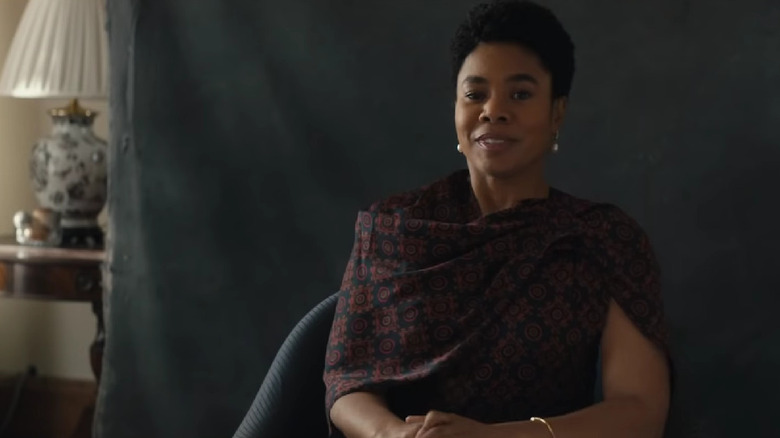
I value good films which make me reflect on life and existence, and I am glad to report to you that Kogonada’s latest film “After Yang” is one of such cases. As a simple but undeniably sublime science fiction tale, the movie has a number of quiet but poignant human moments to haunt your mind for a long time, and I am still admiring how Kogonada pulls off that via his thoughtful handling of story and character.

The movie, which is based on Alexander Weinstein’s short story “Saying Goodbye to Yang”, is set in a near-future world where androids are quite common thanks to considerable technological advance. For their Chinese adopted daughter Mika (Malea Emma Tjandrawidjaja), Jake (Colin Farrell) and his wife Kyra (Jodie Turner-Smith) bought a secondhand android named Yang (Justin H. Min), and Yang has been a good nanny for years while occasionally giving Mika valuable knowledge associated with Chinese heritage. As warmly reflected by the opening scene, he has been more or less than the fourth member of the family, and we subsequently get an unexpectedly spirited moment as they joyously dance together in their house as a part of their daily routine.

However, Yang happens to have a sudden malfunction problem not long after that, and Jake tries to get Yang repaired as soon as possible for his daughter, but it seems there is nothing he can do for fixing Yang. Because Yang is a secondhand product, it is not possible to get any helpful service from the manufacturing corporation, and even an illegal repair shop recommended by one of Jake’s close neighbors cannot help that much as Yang turns out to be a more sophisticated machine than expected. Considering that Yang’s physical status is getting deteriorated day by day, it may be better for him to be donated to a science technology museum where he will be preserved and then analyzed for the better understanding of “techno-sapiens”.

Being well aware of how much his daughter has been emotionally attached to Yang, Jake is naturally reluctant about donating Yang to that science technology museum, but he also becomes quite interested in accessing to whatever has been stored in a hidden memory bank inside Yang. When he subsequently checks Yang’s memory bank, it turns out to contain thousands of recorded private moments from not only his family but also many other people, and, as checking one recorded moment after another, he comes to notice a young woman who seems to be very special for Yang.

While searching for that young woman, Jake also comes to reflect more on how his family lived with Yang, and Kogonada’s adapted screenplay begins to flow freely between their personal memories of Yang and Yang’s recorded moments. Using two different screen ratios, the movie initially draws the line between Yang’s recorded moments and flashback scenes, but both of them come to resonate with each other along the story, and we later get a powerful visual moment when Jake delves further into Yang’s memory bank for getting to know and understand Yang more.

Under Kogonada’s serene but confident direction, the movie steadily engages us as thoughtfully exploring its main subjects without sentimentalizing them at all. While it is moving to see Yang often providing advice and comfort to Jake and his family, he is still basically a machine driven by programs, and he has been always conscious of that, as reflected by a private conversation scene between him and Jake at one point. He surely induces a new professional passion inside Jake as seriously discussing with Jake on how he came to choose his profession, but what exactly he ‘feels’ from that is rather elusive even to himself, and the same thing can be said about his supposedly private relationship with that young woman.

Leisurely rolling from one interesting human moment to another, the movie gradually exudes tranquil qualities to engage and then soothe us. The cinematography by Benjamin Loeb is static but observant thanks to precise camera angle and scene composition, and the resulting meditative atmosphere is gently enhanced by the score by Aska Matsumiya and Ryuichi Sakamoto. The futuristic background details of the film are rather plain and simple on the whole, but they look and feel realistic enough on the screen, and we become more immersed in the world inhabited by its main characters.

The performances from the main cast members are finely tuned to the overall low-key tone of the film. Colin Farrell, who has been one of the most interesting movie actors of our time as demonstrating the wide range of his acting talent, diligently holds the center via his understated acting which feels quite different from his sleezy villain performance in Mat Reeves’ recent Batman movie. Jodie Turner-Smith, who recently drew our attention for her breakout turn in “Queen & Slim” (2019), Malea Emma Tjandrawidjaja, and Justin H. Min are equally solid as the other crucial parts of the story, and several other cast members including Haley Lu Richardson, Sarita Choudhury, and Clifton Collins Jr. also have each own moment to shine.

In conclusion, “After Yang” is another fantastic work from Kogonada, who previously made an impressive feature film debut in “Columbus” (2017). These two films show that he is indeed a talented filmmaker with distinctive personal touches to be admired and appreciated, and I will certainly have some expectation on whatever will come from him next.

Posted in Movies | Tagged , , , | 1 Comment

Fresh (2022) ☆☆☆(3/4): I recommend you to watch it fresh (If you are ready)

It is not so easy to tell you what and how “Fresh” is really about. Because its effectiveness mainly depends on a series of twisted surprises popping up along its diabolical plot, I will try as much as possible for avoiding any substantial spoiler, but I sincerely recommend you not to read further if you want to watch it fresh while also being ready to be entertained or repulsed.

The opening part of the movie, which is incidentally around 30 minutes, initially shows its heroine’s rather unhappy status. While she does not hesitate to try any opportunity for romantic relationship via those dating online applications, things have been not that good for Noa (Daisy Edgar-Jones), and her blind date with some young guy only results in bitter disappointment as she comes to discern what a crummy dude he really is. Besides casually wielding his sexist viewpoint, this prick also insults her in more than once, and that makes Noa wonder more about whether she will have to focus on herself and her life more instead of trying to find any good boyfriend for her.

And then there comes an unexpected surprise for her on one day. While she is doing some shopping at a local supermarket, Noa comes across a handsome guy named Steve (Sebastian Stan), and she soon finds herself smitten with him as they come to talk a bit with each other. When she eventually gives him her phone number, she does not expect much, but, what do you know, he calls her a few days later, and she becomes more attracted to him as they come to spend more time with each other.

However, as her best female friend Mollie (Jonica T. Gibbs) later points out, there is something strange about Steve. For example, he says he is a plastic surgeon working in some hospital, but he is not so specific about where he exactly works, and he does not even use any social media application at all although any successful plastic surgeon is supposed to have an Instagram account for showing off his works at least.

Nevertheless, Noa cannot possibly break up with Steve because, well, he is simply wonderful and charming. Yes, he is surely a bit too good to be true, but she is still helpless in her growing attraction toward him, and it looks like he is also drawn to her a lot. Not long after they eventually move onto the next step of their developing relationship, he suggests that they should go somewhere for having a nice private time together, and she does not mind this at all while feeling more blissful than usual.

Around that point, there are already several bad signs here and there. For example, Steve suddenly changes their plan at the last minute, and then he takes Noa to his residence which happens to be located in the middle of some remote area. The area is actually so remote that her smartphone is virtually useless, and that makes Noa a little nervous even though she remains cheerful on the surface.

Of course, it eventually turns out that Steve has a horrendous intention behind his back, and Lauryn Kahn’s screenplay naturally enters the grim territory of a certain horror exploitation genre. I must warn you that, due to Steve’s unspeakable nature, there are a number of brief but gruesome moments which will make you cringe and wince a lot for good reasons, and you will also come to brace yourself more as often horrified by what our unfortunate heroine will have to endure.

With its heroine’s horrifying ordeals, the movie is quite unpleasant to say the least, but it is also equipped with wit and gravitas at least. While dutifully following its genre conventions, it often wields its own naughty sense of black humor, and that aspect is particularly evident when our heroine must hold herself well in front of a demented offer she cannot possibly refuse. The relationship dynamics between her and Steve is engaging enough to hold our interest, and the movie also pays some attention to several other characters in the story, though I must point out that it could delve more into Steve’s deranged domestic relationship with a certain female character in the story

Above all, the movie relies on the uneasy onscreen chemistry between its two lead performers, who click well with each other right from their first scene and then willingly hurl themselves into the devilish mix of loony humor and stomach-churning horror. While Daisy Edgar-Jones, a British actress who has been more notable thanks to TV miniseries “Normal People”, gives a solid performance which functions as a strong emotional anchor onto which we can hold, Sebastian Stan, who has been demonstrated that he can do a lot more than appearing in those Marvel Cinematic Universe flicks, effortlessly goes back and forth between his character’s demented generosity and demonic nastiness, and several other main cast members including Jonica T. Gibbs, Charlotte Le Bon, and Andrea Bang are also well-casted in their respective supporting roles.

Again, I empathize to you that “Fresh” is definitely not for everyone, but this is a fairly well-made genre product, and director Mimi Cave and her crew members including cinematographer Pawel Pogorzelski deserve some praise for presenting its many gruesome moments with enough skill and personality on the screen. Yes, I do not want to see it again soon, but I must admit that it does work as well as intended, so I recommend it with some reservation.

Posted in Movies | Tagged , , | Leave a comment

Against the Ice (2022) ☆☆1/2(2.5/4): Two Men Against the Ice

Netflix film “Against the Ice”, which was released on March 2nd of this year, works best whenever it focuses on the coldly grueling plight of two real-life figures at the center of the story. As watching their despairing struggles on the screen, I often wondered whether I could survive if I were in such a harsh situation like theirs, and that often made me chilled and terrified during my viewing, though I also frequently observed several glaring weak aspects including its rather ponderous narrative.

The movie, which is based on Danish polar explorer Ejnar Mikkelsen’s memoir “Two Against the Ice”, opens with the ongoing expedition led by Mikkelsen (Nikolaj Coster-Waldau) in 1909, and we gradually gather the main purpose of this expedition in North-Eastern Greenland. Two years ago, a Danish expedition was sent there for getting a definite topographical evidence to disprove the claim of the US government on North-Eastern Greenland, but this previous expedition only resulted in the death of all of the expedition members. Because it is quite possible that these ill-fated expedition members might have left anything good enough to be used as the evidence against the claim of the US government, Mikkelsen and his expedition members have been trying to locate the dead bodies of the previous expedition members, but there has been much progress yet, and they come to have more doubt on whether they can really succeed in the end.

Nevertheless, Mikkelsen refuses to give up because he found an important clue during his first search attempt. When he discovered the frozen body of one of the previous expedition members, there was also a journal, which says that the previous expedition members did accomplish their mission before their eventual death. Their records are kept at a certain spot out there, and all Mikkelsen will have to do is going to that spot along with anyone willing to accompany him.

However, not so surprisingly, many of his expedition members are not so eager to join him due to what Mikkelsen’s right-hand guy suffered and endured during his previous search attempt. In the end, a lad named Iver Iversen (Joe Cole) volunteers mainly because he simply wants to be more useful, but he is seriously inexperienced compared to most of expedition members, and that is pretty apparent to everyone else as he clumsily tries to prepare for Mikkelsen’s second search attempt on the next day.

Anyway, Mikkelsen has no choice but to depend on Iversen, and Iversen is determined to help and support Mikkelsen as much as possible, but, of course, he soon comes to realize how much he is unprepared for their long and difficult journey across North-Eastern Greenland. Besides the harshly cold weather which they have to endure every day and night, they also have to be constantly careful about a number of possible dangers such as glacial crevices hidden under snow, and Iversen later comes to get one particularly painful lesson as warned in advance.

After several weeks later, Mikkelsen and Iversen finally arrive at that certain spot (Is this a spoiler?), and they are excited to find what they are searching for, but, alas, it subsequently turns out that they are going to suffer much more and longer than they thought at first. While there is still some possibility of survival, their situation becomes more despairing day by day, and we are not so surprised when Mikkelsen becomes increasingly unhinged despite his desperate efforts on keeping things under control for him and Iversen. As he often dreams of his longtime lover, his sense of reality gets deteriorated bit by bit, and he eventually finds himself frequently talking with her in his mind.

In the meantime, the movie also pays attention to what is going on in Denmark. Two of Mikkelsen’s expedition team members try to convince their government to help finding and then rescuing Mikkelsen and Iversen, but their request is flatly rejected because almost everyone in the country believes that Mikkelsen and Iversen died. Although he briefly appears in a few scenes in the film, Charles Dance smoothly steals the show as a stern and unflappable government minister, and that says a lot about what a wonderful veteran performer he really is.

During its last act, the movie comes to lose its narrative momentum as trudging from one expected moment to another, and I often found myself becomes impatient during this part, but I still admired its commendable technical aspects. Director Peter Flinth and his crew members including cinematographer Torben Forsberg utilized many different real locations in Iceland and Greenland, and their result shown on the screen looks pretty vivid and realistic to say the least. Sure, they surely used CGI in several key scenes including the ones involved with polar bear attack, but the icy sense of remoteness and hopelessness surrounding the two main characters of the film is always palpable to us, and that is the main reason why the movie can hold our attention to the very end.

In case of the two main performers of the film, they look convincing as going through one hardship after another along the story. While Nikolaj Coster-Waldau, who also wrote the adapted screenplay with Joe Derrick in addition to participating in the production of the movie, ably supports the ground with low-key intensity, Joe Cole holds his own place well beside his co-actor, and they click fairly well with each other enough to compensate for their broad archetype characters.

In conclusion, “Against the Ice” does not bring anything particularly new to its genre territory, and it does not overcome its rather trite storytelling enough in my inconsequential opinion, but it is at least enjoyable to some degree thanks to its good production qualities and the solid efforts from Coster-Waldau and Cole. I am still hesitating to recommend it due to my considerable dissatisfaction with it, but I will not stop from you spending your free time on it, and I am sure that you will be not disappointed if you just want a competent adventure drama film to chill you a lot.

Posted in Movies | Tagged , , , , | Leave a comment

The Weekend Away (2022) ☆☆(2/4): Her BFF is vanished…

Netflix film “The Weekend Away”, which was released a few days ago, is a run-of-the-mill thriller flick which will not surprise you much if you are a seasoned moviegoer. For example, we are supposed to be quite surprised at a certain narrative point later in the story, but that sudden moment of revelation is pretty contrived and predictable to say the least, and I bet that you will already expect something else to occur next because the movie still has more than 10 minutes to be filled in one way or another.

The movie opens with its heroine’s arrival in a popular tourist city in Croatia, and its first act quickly establishes her long relationship with her best friend. Because things have not been that good between her and her husband, Beth (Leighton Meester) decides to refresh herself a bit as spending some free time along with Kate (Christina Wolfe), and Kate is already ready to have lots of fun with Beth right from when Beth arrives at a house where they are supposed to stay during next several days. Although she and her rich husband are going through a divorce, Kate can still spend lots of money freely, and Beth does not mind her friend’s luxurious hospitality at all.

However, the mood becomes rather unnerving when they try to enjoy their first night in the city. There is a little problem with Kate’s credit card, and then Beth witnesses Kate having an argument with someone on the phone. Despite these two troubles, Kate remains vivacious as before, and she later takes Beth to a local nightclub for more fun and drinking.

Of course, not long after they encounter a couple of local guys in the nightclub, Beth becomes unconscious for no apparent reason, and, what do you know, she subsequently finds herself waking up at her staying place in the next morning. Quite perplexed and confused, Beth naturally looks for her friend, but her friend is not in the house, and then Beth notices a few suspicious signs including a broken wine glass on the floor.

As her friend remains to be missing during next several hours, Beth goes to a local police station, but a couple of local detectives assigned to her are not particularly interested in finding her friend. After all, Kate is not the only person who got recently vanished in their area, and, as suggested by her cynical ex-husband, it is quite possible that she is simply hiding herself for getting more attention from others around her as before.

Nevertheless, Beth cannot possibly believe that her friend is pulling a naughty prank on her because her few fragments of memory from that confusing night clearly suggest that something bad happened to her friend. Besides, it looks like Kate was hiding some serious secret from her best friend, and that may be involved with her missing.

As she tries to get to the bottom of the situation, Beth comes to get an unexpected help from Zain (Ziad Bakri), a Syrian refugee taxi driver who already met Beth when she had just arrived in the city. Looking quite sympathetic to her trouble, he comes to help her more than expected as a guy who can speak Croatian besides English and Arabic, and, thanks to his invaluable assistance, Beth comes to acquire a few things which might give her the answer to what really occurred during that night.

Considering what is already shown in the very first shot of the film, I guess it is not much of a spoiler to tell you that the circumstance becomes more desperate and complicated for our heroine. As thrown into more confusion and paranoia, Beth cannot trust anyone around her, and even Zain turns out to have something hidden behind his back besides his painful past involved with the ongoing Syrian Civil War.

Around that narrative point, the screenplay by Sarah Alderson, which is based on her novel of the same name, attempts to catch us and its heroine off guard more than once, but the result is not that successful on the whole. For example, we instantly come to have suspicion on a creepy local lad running the house, so we are not so surprised by what is revealed later in the story. Above all, the movie dutifully follows the time-honored Law of Economy of Characters, so you will come to regard a certain character in the story with more suspicion for good reasons.

While I got disappointed more and more with its lackluster storytelling, I reflected more on how much the main cast members of the film try to keep us interested, though their fine efforts are not always successful enough to compensate for broad characterization. Leighton Meester, who has been mainly known for TV drama series “Gossip Girl”, acquit herself well despite being often demanded to look merely panic and desperate, and Christina Wolfe and Ziad Bakri are mostly effective as filling their respective spots as much as required.

Overall, “The Weekend Aways” is not awfully bad at all, and director Kim Farrant and her cast and crew members did try their best with the materials given to them, but the movie still does not entertain me much. As a matter of fact, it has already been getting forgotten in my mind, and my mind is already ready to move onto whatever I am going to watch next.

Posted in Movies | Tagged , , | Leave a comment

The Batman (2022) ☆☆☆(3/4): A very noirish Batman movie

“The Batman” is palpably drenched in sheer darkness and grittiness from the beginning to the end, and I admire and appreciate that even though I have some reservation on its relentlessly grim style and rather sprawling narrative. I am not sure whether this can be described as fun or entertaining, but I must admit that I was often enthralled by its considerable style, mood, and details in addition to being more interested in the story and characters. Therefore, I guess I can conclude that the movie does work fairly well despite its several notable weak aspects.

As a reboot, the movie is thankfully being disconnected from any recent DC Extended Universe (DCEU) movie for now, and its early part establishes the uneasy status of Bruce Wayne/Batman (Robert Pattinson) in Gotham City. It has been two years since he began to fight against crime on the streets and alleys of Gotham City, but the city is still getting worse and worse due to poverty and crime, and Wayne wonders more about whether it is really worthwhile to continue his secret nocturnal activity.

While Wayne struggles with his growing conflict, there comes a horrible incident which shocks the whole city. A certain prominent figure is brutally murdered, and the perpetrator behind this incident does not hide at all his intention. It is apparent that he is going to strike again, and, not so surprisingly, his diabolical plan happens to include Batman, who must deduce his opponent’s ultimate goal from a series of riddles and clues left by his opponent before it is too late for him and everyone else in Gotham City.

As it gradually turns out that there is the long shadow of past all over the case, Wayne delves more into the underworld of Gotham City, and the movie naturally becomes quite noirish as evoking a number of neo-noir films ranging from Roman Polanski’s “Chinatown” (1974) to David Fincher’s “Se7en” (1995). As a matter of fact, many key scenes in the film are as murky and rainy as “Se7en”, and the main antagonist of the film, who is chillingly played by Paul Dano, will surely take you back to not only “Se7en” but also “Zodiac” (2007), Fincher’s another neo-noir movie about serial killing.

Struggling both internally and externally, Wayne comes to depend more on the only two people whom he can trust in Gotham City. His loyal butler Alfred Pennyworth (Andy Serkis) often provides assistance and advice as usual, and Lieutenant James Gordon (Jeffrey Wright) lets Batman help his ongoing police investigation even though, unlike Alfred, he does not know the true identity of Batman just like many others in the city.

And there is Selina Kyle (Zoë Kravitz), a masked cat burglar who is virtually the Catwoman of the story and also quite determined to find out what really happened to a close friend of hers. The answer seems to be held by her sleazy boss and a certain powerful crime figure behind that dude, and that is how she comes across Batman. As he tries more to figure about what these two shady figures are hiding behind them, he finds himself getting more involved with Selina, and it goes without saying that there comes a point where both of them come to realize that they are attracted to each other more than they can admit. After all, as two troubled black-clad figures, they look like a pretty good match to each other, don’t they?

Meanwhile, the screenplay by director/co-producer Matt Reeves, who previously impressed us a lot with “Dawn of the Planet of the Apes” (2014) and “War for the Planet of the Apes” (2017), and Peter Craig keeps things rolling as before, and Reeves and his crew members including cinematographer Greig Fraser, who was recently Oscar-nominated for Denis Villeneuve’s “Dune” (2021), gives us a series of intense moments including the stupefying action sequence where the Batmobile in the movie makes its first appearance. Although I must point out that the movie frequently looks a bit too dark and murky (I really recommend you to watch it in a big Dolby Cinema screening room, by the way), its action scenes are presented well with enough physical and dramatic impact, and Michael Giacchino’s brutal orchestral score adds extra thrill and excitement on that.

The main cast members of the film are believable as the gloomy inhabitants of Gotham City. Robert Pattinson, who has been quite more interesting since he left those Twilight flicks, conveys to us his character’s emotional conflict well even though he is mostly masked throughout the film, and his intensely brooding performance is certainly an improvement over Ben Affleck’s rather colorless acting in those recent several DCEU flicks. While Zoë Kravitz, who recently demonstrated more of her acting talent in Steven Soderburgh’s “Kimi” (2022), holds her own place well in addition to having a nicely understated chemistry between her and Pattinson, Andy Serkis and Jeffrey Wright are dependable as usual, and John Turturro and Colin Farrell, who is quite unrecognizable under lots of makeup, have some nasty fun with their respective supporting roles.

Despite its glaring flaws including its overlong running time, “The Batman” does not reach to the greatness of Christopher Nolan’s monumental Dark Knight trilogy, but it is still an interesting superhero hero packed with style, ambition, and personality, and that makes it much more distinctive than most of recent superhero movies. When a friend of mine asked whether he could show it to his little young son, I recommend him not to do that because it is a bit too dark and intense for kids in my humble opinion, but his son may admire it a lot when he grows up enough to watch it several years later.

Posted in Movies | Tagged , , , , | 3 Comments

Kimi (2022) ☆☆☆(3/4): It is useful indeed…

Steven Soderbergh’s latest film “Kimi” is as taut and efficient as you can possibly expect from him. As usual, he made it with a relatively modest amount of production budget, but it is another distinctive work of his to be admired for the skillful handling of mood and narrative, and I was surprised to find myself more engaged than expected even though I could clearly discern what it was going to do right from the very beginning.

After the prologue scene which gives us some background information on what its story is about, the movie focuses on the daily life of a young female technician named Angela Childs (Zoë Kravitz). Due to some bad incident in the past, she has struggled with anxiety and agoraphobia, and her psychological condition has been considerably worsened due to the ongoing COVID-19 pandemic. At least, she can do her work at her apartment, but that is not so easy at times due to the frequent noises from the apartment right above her residence, which happens to be going through a remodeling period.

Her employer is a promising technology company which has been getting lots of attention in public thanks to its smart speaker product named “Kimi”. Angela’s main job is handling numerous verbal communication errors between Kimi devices and their buyers, and we watch how she monitors and then solves one case after another for the more accurate verbal communication between Kimi devices and their buyers.

Because the audio data streams delivered from millions of Kimi devices out there are usually full of mundane stuffs ranging from paper towel to a certain song by Taylor Swift, Angela does not pay much attention to her latest case at first, but then her ears come to sense something odd. Although loud music is played in the background, she confirms that there is really something wrong in what she has just heard, and what follows next is a neat variation of that famous audio manipulation scene in Francis Ford Coppola’s “The Conversation” (1974). As she focuses more and more on that disturbing sound in question, she is convinced that some unknown woman was seriously assaulted as accidentally recorded by her Kimi device, and she comes to feel that she must do anything about that right now.

However, Angela soon finds herself facing a number of obstacles in front of her. Because of her current psychological problems, she is not so willing to go outside, and she does not even want to go to her dentist even though she is advised that she must go to her dentist considering her increasingly serious dental problem. She actually has been sexually involved with a young dude who happens to be a prosecutor, but, alas, he is currently unavailable due to his busy schedule. When she reports what she discovered to her supervisor, his supervisor is not so amused because he does not want to get the company into any possible legal trouble. After all, as shown from the prologue scene, the company is about to have a very important moment which will bring much more money to the company, and its CEO has been quite occupied with maintaining its promising appearance as much as possible.

Nevertheless, Angela becomes more determined to get to the bottom of the situation, and the screenplay by David Koepp gradually builds up tension around her. Thanks to a friendly co-worker of hers, she can access more to whatever was recently recorded from that Kimi device in question, and what she comes to uncover is not so pleasant at all. There is indeed a conspiracy, and it is not much of a spoiler to tell you that Angela consequently finds herself in a big danger as she attempts to report this to anyone who might help her.

As the mood becomes more urgent and desperate along the story, Soderbergh, who also edited and shot the movie for himself under pseudonyms as before, accentuates the heroine’s growing anxiety and paranoia via a number of nice technical touches including deliberately tilted camera angles. As our heroine desperately tries to evade the figures apparently chasing after her, the movie provides us several tense scenes including the one unfolded around a big public demonstration, and the level of suspense on the screen is steadily maintained by the effective score by Cliff Martinez

In the end, everything in the story predictably culminates to a climactic scene where our heroine must be more active for her survival, but Soderbergh and Koepp still have some good surprises for us. At one certain point, our heroine cleverly uses her Kimi device for her considerable advantage, and that actually made me consider buying a smart speaker just in case, though I still do think smart speakers are still not good enough for recognizing my mumbling speech pattern.

As the center of the movie, Zoë Kravitz, who appeared in a number of notable recent films including “Mad Max: Fury Road” (2015), ably carries the film as giving what may be the best performance in her growing acting career. Never exaggerating her character’s vulnerable aspects, she also brings enough pluck and intelligence to her character, and that is the main reason why we come to brace ourselves for what is being at stake for her character during the climactic scene.

On the whole, “Kimi” is an enjoyable genre piece to be savored for its slick efficiency as well as Kravitz’ solid lead performance, and Soderbergh delivers another small but commendable achievement here. Although he may never reach again to the level of that huge critical/commercial success of “Erin Brokovich” (2000) and “Traffic” (2000), he has been quite steady and consistent during last 20 years, and that is pretty admirable to say the least, you know.
Posted in Movies | Tagged , , , , | 1 Comment

Ted K (2021) ☆☆☆(3/4): The detached observation of one disturbed figure

“Ted K” is a dry but intense film which will surely unnerve you for good reasons. As an austere character study based on the real-life story of one notorious bomber who is thankfully being incarcerated in a state penitentiary at present, the movie is often uncomfortable to watch for being as single-minded as its terrible hero, but it is handled with enough skill and tactfulness at least, while also anchored well by the presence and talent of its lead performer.

Sharlto Copley, who has steadily advanced since his breakout turn in Neill Blomkamp’s “District 9” (2009), plays Ted Kaczynski, a former college professor who has been known to us more as the “Unabomber”. As told to us at the beginning of the film, Kaczynski was once a promising math prodigy, but, mainly due to his antisocial personality coupled with his sexual frustration with women, he eventually threw away almost everything in his life in addition to quitting his college job. In 1971, he started to live alone in a self-made cabin located in the middle of some remote area of Montana, but his psychological condition only got worse during next several years. This came to fuel his disdain toward modern technology more and more, and that was the main motive of a series of horrible crimes committed by him later.

At first, the movie simply observes Kaczynski’s solitary lifestyle mainly revolving around his cabin. He does not interact with anyone else except some few persons living in a neighboring region, and he is mostly fine with that, but he is often furious about all the noises interrupting his own small world. For example, the loud noises from a nearby lumber mill annoy him at lot everyday, and he also hates the sonic booms caused by airplanes frequently flying over his territory.

We see how he responds to all these and other annoyances in his twisted ways. He happens to be annoyed by some winter vacationers on one day, so he invades into their vacation house not long after they left, and then he damages the house to considerable degree. When he later works at that lumber mill for earning a bit, he comes to hate that lumber mill more than before, and he eventually commits an act of sabotage at one night.

Whenever Kaczynski pours his angry thoughts and feelings on paper, the screenplay by director/co-producer/co-editor Tony Stone and his co-wrtiers John Rosenthal and Gaddy Davis delves a bit into its troubled hero’s mind as quoting the excerpts from the actual writings from Kaczynski. Although he is clearly a smart and intelligent guy, his writings are more or less than the angry ramblings of a lunatic shouting against the wall, and he comes to feel more like a ticking bomb as his writing becomes more hostile and aggressive with growing anger and malice toward modern technology.

Unfortunately, there is no one to help or stop Kaczynski, and the movie frequently emphasizes his increasingly isolated status to us. At one point, we see him talking to his mother on the phone, but we do not hear whatever she is saying to him. Later in the story, he calls his brother and then asks him to send some money, but he does not ask nicely at all, and we can only imagine how much that disturbs his brother at the other end of the line.

There are actually a few moments of respite for him via a certain female figure, but the movie promptly reveals how delusional his mind really is, and we subsequently get several intense scenes showing more of his growing paranoia about modern technology. Even at that point, the movie still maintains some distance between itself and its hero, but Copley, who also participated in the production of the film, thoroughly embodies his character’s mental confusion and torment, and we come to regard Kaczynski with more dread and nervousness as he goes further with his act of terror.

During its second half, the movie naturally focuses on what Kaczynski committed during 1978-1995, but it wisely avoids any cheap thrill while sharply recognizing the horrific aspects of his serious crimes. There is a chilling scene where he targets some ordinary guy just because this guy happens to be running a computer shop, and we are chilled further as observing how Kaczynski casually moves from one target after another without getting caught for many years.

Of course, there eventually comes a point where he makes a big misstep as demanding more attention from the public, but, again, the movie sticks to its detached attitude as usual. When Kaczynski comes to learn that his 35,000-word manifesto is presented to the public via two major newspapers as demanded, he is naturally exalted, but that does not change his pathetic existence at all. In case of the expected finale, this part is presented with considerable restraint, and I appreciate how the movie does not resort to any unnecessary sensationalism even at that point.

Overall, “Ted K” is definitely not something you can casually watch on Sunday afternoon, but I recommend it mainly for Stone’s competent direction and Copley’s committed acting. Like Justin Kurzel’s recent film “Nitram” (2021), which is also a cold-blooded character study inspired by one very disturbed real-life figure who committed an atrocious act of terror, the movie simply observes with objective detachment, but the result is disturbingly tense and powerful to say the least, and you will not forget it easily after watching it.

Posted in Movies | Tagged , , , , | Leave a comment

Nitram (2021) ☆☆☆(3/4): A distant but chilling character study by Justin Kurzel

Jusitn Kurzel’s new film “Nitram” is a distant but chilling character study based on the real-life figure who perpetrated a shocking mass shooting incident in Tasmania, Australia in 1996. Although it is a pretty uncomfortable experience to say the least, the movie works mainly thanks to its dry and austere storytelling approach and several good performances to be appreciated, and I admired its strong elements even while often horrified and repulsed by its many disturbing moments during my viewing.

During its early part, the movie gradually establishes the constantly troubling daily life of a deeply disturbed lad named Nitram (Caleb Landry Jones). Although his parents, played by Judy Davis and Anthony LaPaglia, have tried their best for having their son under control, they are usually frustrated and exasperated whenever their son makes another trouble, and all they can do at present is tolerating his frequent mood swings in addition to occasionally taking him to his psychiatrist for his medication.

As his parents have one headache after another due to his uncontrollable behaviors, Nitram tries a bit to be more social and useful, but his pathetic attempts only show us more of what an unpleasant creep he really is. He tries to do surfing just like other local lads, but, as his mother dryly points out, he does not know how to surf, let alone how to swim. He also attempts to earn some money for him via lawn-mowing, but nobody is particularly eager to hire him in his neighborhood.

And then there comes an unexpected change for him when he comes to a house belonging to a middle-aged woman named Helen (Essie Davis). She hires him without asking much, and he does some lawn-mowing as expected while spending more time in her house. He soon comes to leave his parents’ house and then begins to stay in her house, and his parents are certainly flabbergasted, though they do not expect that much from this change.

What follows next is a sort of morbid variation of “Sunset Boulevard” (1950). Although she is a former actress who has been behind her glory days, Helen is affluent enough to support herself and her many pets in the house, and Nitram seems content to be kept by her because she is impulsive and childish just like him. Although the movie does not delve that deep into how much they are actually close to each other, their relationship seems to be working well for both of them, and we get some cheerful moments as Helen wields her flamboyant sides in front of Nitram.

However, their happiness does not last that long, and the second half of the movie observes how Nitram becomes more disturbed step by step as living with his parents again. After devastated by the failure of his business plan, his father becomes quite ill, and there is a shocking scene where Nitram makes a drastic attempt to make his father get up from a couch. What happens not long after that seems to sadden and devastate Nitram, but he makes another disastrous choice, and that puts more distance between him and his mother, who has already given him up after enduring so much anger and frustration for years.

Once Nitram happens to get a certain horrible idea later, the movie calmly shows his following preparation process, and it thankfully sticks to its restrained attitude during the inevitable finale. What he eventually commits is not shown much on the screen, but the final moment of the film still feels chilling and devastating nonetheless, and we are more chilled as coming to learn that gun control remains to be a serious issue in Australia despite some fundamental changes of gun control laws resulted from that horrible mass shooting incident.

Shaun Grant’s screenplay adamantly maintains its detached viewpoint on its hero without telling us much on what actually makes him tick, but Caleb Landry Jones, a young American actor who has been more notable thanks to his solid supporting turns in “Get Out” (2017) and “Three Billboards Outside Ebbing, Missouri” (2017), holds our attention via his committed acting, which incidentally received the Best Actor award when the movie was shown at the Cannes Film Festival in last year. Right from his very first scene, Jones effectively embodies many unnerving aspects of his increasingly alarming character, and the creepy intensity of his strong performance is one of the main reasons why the movie works.

In case of several other main cast members of the film, they did more than merely being counterpoints to Jones’ character. While Judy Davis, a wonderful Australian actress who has been always dependable since her breakout turn in “My Brilliant Career” (1979), is quietly unflappable as demanded, Essie Davis, who is incidentally Kurzel’s wife, has a very good scene with Davis as their characters have a little private conversation, and Anthony LaPaglia holds his own small place well as another substantial character in the story.

Although I have some reservation, “Nitram”, whose title is the first name of that real-life figure in backward, can be regarded as a sort of better alternative to “Joker” (2019) for handling its story and characters with more restraint and thoughtfulness, and it is surely another interesting work from Kurzel, who previously drew my attention with his two previous films “Macbeth” (2015) and “True History of the Kelly Gang” (2019). I recommend it mainly for its commendable acting and several admirable technical aspects, but I must emphasize to you again that this is a truly tough and disturbing work, so I will let you to decide whether you will watch it or not.

Posted in Movies | Tagged , , | 1 Comment

Cyrano (2021) ☆☆☆(3/4): A mild musical elevated by Dinklage

What an interesting actor Peter Dinklage is. Since his memorable breakthrough turn in “The Station Agent” (2003), this little but undeniably versatile actor has steadily impressed us during last 19 years, and Joe Wright’s new film “Cyrano” reminds us again of Dinklage’s sheer talent and presence. Although the movie does not always work well, Dinklage’s enjoyable performance carries it to the end nonetheless, and that is more than enough for overlooking several glaring problems including its rather uneven second half.

The movie is based on the 2018 stage musical of the same name written by Erica Schmidt, who is incidentally Dinklange’s wife and also adapted her stage musical for the film. That stage musical was based on French poet and dramatist Edmond Rostand’s 1897 play “Cyrano de Bergerac”, and Rostand’s play was loosely based on the life of Cyrano de Bergerac (1619-1655), who has been regarded as an immortal literature figure of unrequited love for many decades thanks to the popularity of Rostand’s play.

In Rostand’s play, Cyrano is often hesitant about expressing his romantic feeling to a woman he loves just because he is always conscious of his rather big nose. In case of Dinklage’s Cyrano in the film, he is afraid of being rejected by her due to his short height, but his dwarfism does not stop him at all from being bold, brave, and eloquent in front of others, and the opening sequence shows how he daringly interrupts a stage performance because he cannot possibly allow the audiences to suffer another bad evening.

One of the audiences is a young woman named Roxanne (Haley Bennett), and she is the one for whom Cyrano has carried a torch for years. When she later comes to him for telling him that she has fallen in love with someone she saw in that eventful evening, he is quietly devastated to know that she is actually attracted to not him but Christian de Neuvillette (Kelvin Harrison Jr.), a young man who recently joins his regiment. Nevertheless, he promises to Roxanne that Christian will be under his protection, and, what do you know, he comes to befriend Christian faster than he expected.

Discerning that Christian has been genuinely smitten with Roxanne since their accident encounter during that evening, Cyrano decides to help Christian wooing Roxanne more. Despite his sincere affection and passion, Christian is not so good at writing anything romantic enough to charm and dazzle Roxanne, so Cyrano comes to ghostwrite Christian’s letters to be sent to her, and, as a witty and articulate wordsmith, he does not disappoint both Roxanne and Christian at all.

The mood becomes more comical when Christian attempts to attract Roxanne more with Cyrano hidden from her sight, but then the situation becomes more complicated due to another man attracted to Roxanne. As a rich and powerful nobleman, De Guiche (Ben Mendelsohn) can coerce Roxanne to be his wife, and Roxanne tries to be tactful with this despicable dude as much as she can, but then there comes a point where she makes a choice which will affect Christian as well as Cyrano forever.

As these four main characters bounce off each other during its first half, the movie provides a series of musical scenes, and Wright and his crew members including cinematographer Seamus McGarvey, who previously collaborated with Wright in “Atonement” (2007) and “Anna Karenina” (2012), work a lot for bringing a considerable amount of visual energy into these musical scenes. As often conscious of its showy technical aspects, we come to discern more of its artificial aspects, but, thanks to Wright’s competent direction, the movie is at least more tolerable than whatever we had to endure in Tom Hooper’s “Les Misérables” (2012).

In case of the music and lyrics of the film, which are written by Aaron and Bryce Dessner of the National, I must tell you that they are not memorable enough to linger on your mind, but Dinklage and several other cast members of the film sing their songs mostly well on the whole. In addition, there is also a nice surprise from Oscar-winning musician Glen Hansard (Remember “Once” (2006)?), who briefly appears at the beginning of a gloomy musical sequence in the second half of the movie.

I was a bit disappointed to see that the movie comes to fizzle during the expected ending, but Dinklage still holds the center as before, and his fellow main cast members are well-cast in their respective parts. While Haley Bennett, who has been more notable thanks to her harrowing performance in “Swallow” (2019), shines with enough pluck and spirit, Kelvin Harris Jr. is effective as a clueless but likable lad, and they are believable in their characters’ innocent obliviousness to what is going on among them and Cyrano. In case of Ben Mendelsohn, this wonderful Australian character actor demonstrates again that he is indeed born to play mean and petty villains, and I especially enjoyed how he deftly handles his sole musical scene with gusto and intensity just like Jeremy Irons did in Disney animation film “The Lion King” (1994).

Overall, “Cyrano” is a mild but entertaining musical movie thanks to the game efforts from its cast and crew members, and Dinklage did a commendable job of presenting his own version of Cyrano. While he will always be remembered for his Emmy-winning performance in HBO TV drama series “Game of Thrones”, he can certainly do many other things besides that, and, as my late mentor/friend Roger Ebert suggested at the end of his review on “The Station Agent”, there is no good reason why Dinklage could not play Braveheart.

Posted in Movies | Tagged , , | 1 Comment

Strawberry Mansion (2021) ☆☆☆(3/4): A dreamland to be audited

It is difficult to describe what I saw from “Strawberry Mansion”, which is probably one of the quirkiest works I have ever seen during several recent years. Essentially a series of offbeat moments developed from its simple story setting, the movie will alternately baffle and amuse you from the beginning to the end, and you may scratch your head at times during your viewing, but you will also come to wonder what may come next from the filmmakers behind this impressively whimsical piece of work.

Right from the opening scene, the movie throws us into its strange futuristic background. It is around the 2030s, and, thanks to considerable technological advance, almost everything in human dream can be recorded and then taxed by the government. The hero of the story, James Preble (Kentucker Audley), has worked as a government auditor checking on whatever is dreamed by his human subjects, and, probably because of being well aware of how taxable dream can be, his dream is always unfolded inside a small and monotonously colored interior space. This solitary subconscious space of his is always visited by a jolly figure who often talks like a walking advertisement machine, so we are a bit amused to see James eating and drinking certain commercial stuffs recommended by this figure in his latest dream.

As James goes through another day as usual, there comes an unexpected change via his latest task. He goes to a house located in the middle of the remote spot, and this house belongs to Arabella Isadora (Penny Fuller), an old lady who baffles James a lot right from when she comes to see him at the front door of her residence. He is supposed to audit on many dreams of hers which have been left unchecked by his agency for years, but it turns out that she has recorded her dreams on heaps of VHS tapes (If you do not know what they are, please do some search on Google), and that means he is going to spend lots of time in her house for doing his job as usual.

While he stays at Arabella’s house for several days, James checks her past dreams one by one via a special equipment provided by her. As scanning one taxable object after another, he comes to notice a young woman who is clearly Arabella’s younger version, and he finds himself gradually smitten with her even though he knows well that she is just a fragment of Arabella’s subconscious experience.

In the meantime, the movie often catches us off guard as doling out one odd moment after another. There is a little humorous moment involved with a dancing skeleton, and there is also a weirdly romantic scene between Arabella’s younger self and a mysterious figure whose whole body is covered with lots of grass. As Dan Deacon’s synthesizer score is played on the background, we become more aware of how artificial these and other dreamy moments look on the screen, but we still observe them with curiosity nonetheless thanks to their vivid mood and details to be admired. Although it is clear that the production budget of the movie is considerably small, the movie still impresses us through numerous inventive touches reminiscent of those quirky works of Terri Gilliam and Michel Gondry, and we are not so surprised when the movie delves further into its fantasy background along with its hero later in the story.

For not spoiling your entertainment, I will not go into details on what happens during its second half, but I can tell you that the mood becomes darker with the appearance of a supporting character played by Reed Birney, a veteran character actor who recently drew our attention as one of the four main performers of “Mass” (2021). While his character looks courteous on the surface at first, it does not take much time for James to sense a sinister intention behind this character, and his negative impression on Birney’s character is wildly amplified as James subsequently comes to swing back and forth between dream and reality more than once.

Although it occasionally feels like running out of its narrative momentum during its second half, the movie remains anchored by enough gravitas under the competent direction of directors/writers/editors Albert Birney and Kentucker Audley, who previously worked together in “Sylvio” (2017). The story falters a bit during its climatic part, but Birney and Audley’s imaginative style goes wild as before, and I especially like a key scene where our hero must fight against what has been blocking his mind for years.

In case of Audley and several other main cast members in the film, they simply occupy their respective roles without overshadowing whatever is unfolded on the screen. As Audley is humbly holding the center as required, Penny Fuller and Grace Glowicki are convincing in their positive aura on Audley’s character, and Linas Phillips is also effective as another crucial supporting character in the story.

To be frank with you, I am not as enthusiastic about it as other reviewers and critics, but “Strawberry Mansion” is one of more distinctive works of this year, and it certainly deserves to be compared to many other offbeat fantasy films ranging from Gilliam’s “Brazil” (1985) to Gondry’s “The Science of Sleep” (2006), I still think the movie is more or less than a modest test run by its two filmmakers, but the overall result surely shows that they are talented filmmakers to watch, so I guess I can have some expectation on their next work.

Posted in Movies | Tagged , , , | Leave a comment