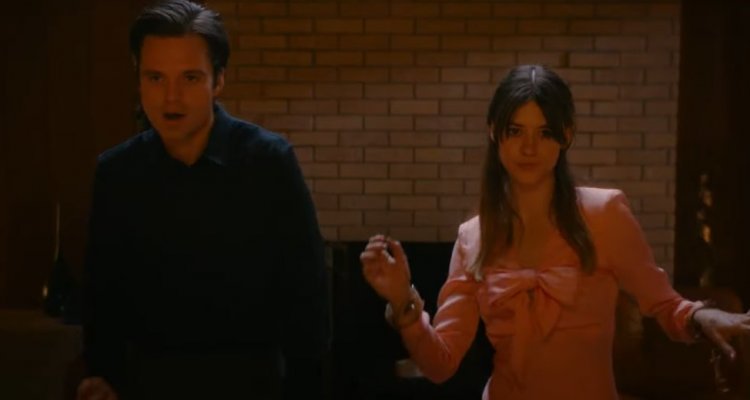
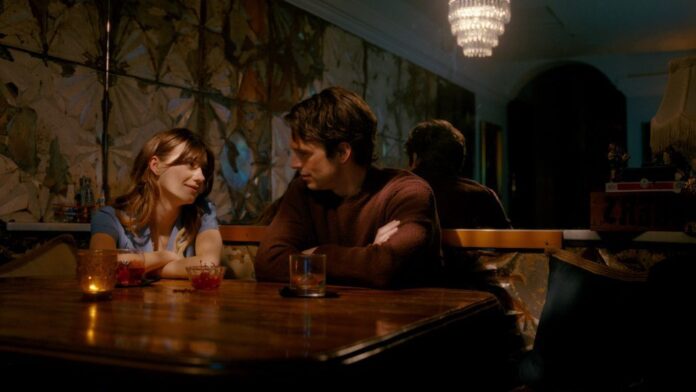
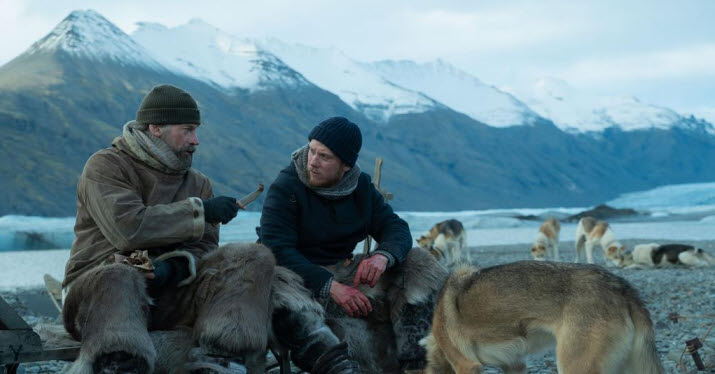
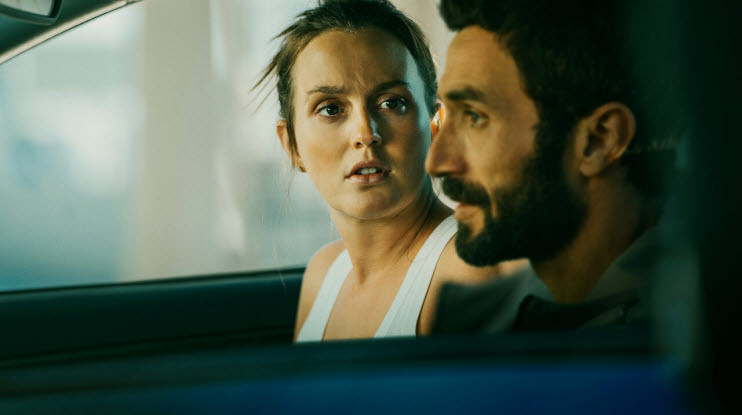
Together Together (2021) ☆☆☆(3/4): A little witty comedy about surrogate mother

I have some strong opinions on the gender ethical issues involved with surrogate mother, but I enjoyed a number of witty comic moments in “Together Together”. While never overlooking the complex nature of its two main characters’ relationship, this little but charming work lightly swings back and forth between comedy and drama as they respectively try to handle their complicated situation during their bumpy emotional journey, and the result is more sensitive and thoughtful than expected.

The two main characters of the film are Matt (Ed Helms) and Anna (Patti Harrison), and the early part of the film gradually establishes their tricky circumstance. While he is a divorced man in the 40s, Matt wants to have a child to raise without marrying someone again. Just because he prefers to have his own biological offspring instead of adoption, he comes to hire Anna, and she has no problem with being pregnant with his baby for next several months as a young healthy woman without any fertility problem. As a matter of fact, she once got pregnant and then gave up a baby several years ago, and it looks like she can do that again without much regret as before.

As everything is ready for him and Anna, Matt talks about that to several people around him including his parents, but, to his bafflement, Anna prefers to keep their deal to herself at least for a while, even though she will eventually not be able to hide her pregnancy anymore after the second trimester. While she is going to pay attention to her pregnancy as much as possible, she also wants to live her own life as usual, and we get a little amusing moment when Matt comes to learn that she can have an active sex life without much problem just like any other average pregnant woman.

Anyway, Matt tries as much as he can for supporting Anna and then getting a healthy baby of his own in the end. Besides preparing a room for the baby in his residence, he and Anna often go to a specialized therapist for more advice and counsel, and he also begins to attend a support group meeting while she attends the one for surrogate mothers like her.

Needless to say, Matt is basically exploiting Anna’s body in exchange of money, and that aspect is more apparent to us as we observe more of how he is on the verge of crossing the boundaries between them at times. Although they are supposed to stick to each other’s business, he gets involved into Anna’s private life more than he is allowed by her, and she is not so pleased because she has her own matter to deal with. She wants to restart her college education, and she is going to use the money from Matt for that, but she is still not so sure about her future, while also coping with all those emotional problems involved with her ongoing pregnancy.

As its two main characters comically struggle to set boundaries and then balance themselves within these boundaries, the screenplay by director/writer Nikole Beckwith, who previously made a feature debut with “Stockholm, Pennsylvania” (2015), leisurely moves from one episodic moment to another with considerable wit and humor. At one point later in the story, the mood becomes quite cheerful as Matt holds the baby shower party to be attended by his friends and family members, and even Anna and her parents are invited, but then we come to sense some strain when Anna becomes more aware of how others around her pay more attention to her baby than how she has been doing. After all, she is the one who carries the baby all the time, but she is not so appreciated much on the whole, and that certainly affects her relationship with Matt.

As the time for Anna’s delivery is getting closer and closer, the situation becomes more serious between her and Matt, but the movie wisely avoids rolling them into romantic situation. While Matt actually considers that possibility a bit, Anna makes it clear to him that getting more involved with each other emotionally is not practical to both of them at all. Sure, he comes to care about her with more appreciation for her biological labor, and she certainly appreciates that, but she sticks to her boundaries nonetheless.

During the expected finale, the movie remains true to its two main characters while leaving some unresolved matters to be handled by them in one way or another, and its two lead performers did a commendable job of conveying their complicated emotional status to us. Although he has been mainly known for a number of comedy films including “The Hangover” (2009), Ed Helms demonstrates a more serious side of his talent here, and his nuanced performance is matched well with an equally good performance by Patti Harrison, who ably takes the center along with Helms throughout the film. Helms and Harrison are also supported well by several notable supporting performers including Tig Notaro, Sufe Bradshaw, and Fred Melamed, and the special mention goes to Julio Torres, who often steals the show as Anna’s flamboyant gay co-worker.

In conclusion, “Together Together” is a modest but solid mix of comedy and drama, and I like how it handles its rather sensitive main subject with enough tactfulness and sensitivity. Around the end of the story, you will notice how much its two main characters are changed under their complex situation, and you may also wonder what they are going to do next. Sure, nothing is certain for them, but each of them did learn something, and that is important, isn’t it?

Posted in Movies | Tagged , , | Leave a comment

Together (2021) ☆☆☆(3/4): Stuck together during the ongoing pandemic

Stephen Daldry’s BBC TV movie “Together” simply observes an ordinary couple who happens to be stuck together during the lockdown period caused by the COVID-19 pandemic in 2020. Although it often feels theatrical as its two main characters frequently break the fourth wall for speaking directly to us, the movie is supported fairy well by the good performances from its two talented lead performers, and we come to observe their characters’ dynamic relationship development with more emotional involvement.

The story begins on the first day of the lockdown in UK in 2020. Right from when they enter the screen, it is pretty apparent to us that the couple, played by James McAvoy and Sharon Horgan, is having relationship problems, and both of them willingly tell us how much they are different from each other – and how much they cannot stand each other. Although they have been together for several years while also having a young son between them, it seems that they could be separated from each other without any hesitation if the lockdown were not imposed on them and many others out there.

As they keep talking to each other or us, we get to know more about a number of differences between them, which are clearly the source of their frequent personal clashes. While he is a businessman who has a rather conservative viewpoint despite having a working-class background, she is your average left-wing liberal who has worked in some charity organization, and it is rather amusing to see how they push and pull each other over several social and political issues.

To both of them (and many people in UK), it looks like the lockdown will be soon over, and he has a silly episode of his to tell. For his young son who incidentally has some signs of autism, he tried to buy aubergines at a local supermarket, but he could not buy aubergines just because the aubergines sent to the supermarket happened to be handled by an infected person. As the camera simply focuses on him for a while, McAvoy, who has been one of the most interesting British actors since his breakout supporting turn in “The Chronicles of Narnia: The Lion, the Witch and the Wardrobe” (2005), steadily holds our attention as his character recounts more of his funny episode, and we are reminded more of how much our world was thrown into sheer panic as COVID-19 virus was swiftly spread around the world during that time.

As the lockdown is continued week by week, the couple certainly becomes more concerned than before, and she is particularly worried about her aging mother, who had been taken care of by a hired caregiver at her home but then eventually moved to a facility for old people mainly thanks to the caregiver’s persuasion. When her mother is subsequently taken to a local hospital due to COVID-19, she naturally comes to fear for the worst, and she finds herself more emotionally depending on her partner. As a matter of fact, they have become friendlier to each other as being stuck together with their son during last several weeks, and it seems that they may continue to live together even after the end of the lockdown.

However, the frustration and exasperation from the lockdown as well as the ongoing pandemic keep getting accumulated between them. While he comes to lose his computer business, she becomes devastated when there comes a time when she has to say goodbye to her mother, and we later get an intense monologue scene where she lets out her churning feelings in front of the camera. The screenplay by Dennis Kelly is rather blunt and heavy-handed during this scene, but this scene still works because Sharon Horgan, an Irish actress who has been mainly known for TV comedy series “Pulling” and “Catastrophe”, skillfully handles the whole gamut of her character’s emotions with care and empathy.

Around the narrative point where everything seems to be getting a bit better after vaccines finally come, the couple begins to think more about whether they can actually continue their relationship, but, not so surprisingly, there come a series of emotionally hurtful moments when they reveal several issues they have been hiding from each other, respectively. Truth indeed hurts, and both of them become quite morose, confused, and depressed while struggling to decide what to do with their relationship.

The movie, which was shot during only 10 days while the cast and crew members followed COVID-19 protocols as required, was set mostly inside one single setting, but it does not feel that stuffy while never losing the sense of confinement around its main characters. As the camera is often placed close to them, we come to feel more like another figure in the house, and, mainly thanks to the charismatic presence of its two lead performers, we do not mind listening to them even when they talk directly to us.

While it is basically a modest two-hander, “Together” is worthwhile to watch due to the good chemistry between McAvoy and Horgan on the screen. Considering that the COVID-19 pandemic is still an ongoing issue, I wonder whether the movie can have more perspective and insight if it is made several years later at least, but it will probably be remembered as one of notable films from the COVID-19 era, and I hope we will soon see the day when it will mildly remind us of how much many of us struggled during the pandemic.

Posted in Movies | Tagged , , , | Leave a comment

Scream (2022) ☆☆☆(3/4): A slashing legacy sequel its franchise deserves

During last several years, we are served with a bunch of reboots and legacy sequels ranging from the recent Star Wars trilogy to “Ghostbusters: Afterlife” (2021) and “Candyman” (2021), so it is rather fateful that now we come to get “Scream”, which is a legacy sequel to the 1996 film of the same name directed by late Wes Craven. While it surely plays another self-conscious (and bloody) genre game just like its four predecessors, the movie is an improvement compared to the disappointment of “Scream 4” (2011) as gleefully and thrillingly slashing at plenty of genre clichés and conventions, and it is probably the most enjoyable sequel in the franchise since “Scream 2” (1997).

After the clever opening scene which is basically a variation of that shocking opening scene of the 1996 film, the movie introduces us to its new heroine, who is surely bound to be the final girl who will have to endure and struggle a lot during the rest of the movie. For a hidden personal reason to be revealed later in the story, Sam Carpenter (Melissa Barrera) has been separated from her mother and younger sister for several years, but, after hearing the news on what happened to her younger sister, she immediately returns to her hometown, which has been rather notorious thanks to not only what happened in the 1996 film and the following three sequels but also a well-known popular horror film franchise inspired by that. As a matter of fact, that franchise has been continued more with the recent eighth flick, which will make you chuckle a lot at one point if you remember that toxic and unproductive hoopla surrounding a certain recent Star Wars movie.

Anyway, those golden rules of that franchise (and the Scream franchise, of course) make Sam quite watchful of a number of other characters around her. First, there is her boyfriend who volunteers to come to her hometown along with her, but Sam cannot trust him totally because, well, she is well aware of what happened in the first film and that incident behind it. In case of several high schooler characters who are incidentally her younger sister’s close friends, any of them can be a suspect, and they are all conscious of that as being quite familiar with that franchise.

Meanwhile, a bunch of horror films are constantly mentioned throughout the story, and that reminds me of how horror films has been more mainstream during last two decades. I will not deny that I smiled a bit when “The Babadook” (2014) and “It Follows” (2014) were mentioned at the beginning of the film, and there is even a humorous nod to a notorious classic horror film directed by Alfred Hitchcock.

Of course, the movie is surely ready for blood and violence whenever it suddenly shifts itself onto horror thriller mode, and we accordingly get several intense scenes including the one unfolded inside a curiously understaffed local hospital. Again, that scary figure in that familiar attire and mask comes and goes as terrorizing Sam or anyone who unfortunately happens to be a target to be taunted and then killed, and directors Matt Bettinelli-Olpin and Tyler Gillett, who previously made “Ready or Not” (2019), skillfully plays with our expectation on whatever will happen next. As they gradually build up tension and narrative momentum on the screen, there comes one nice surprise after another, and then the movie surprises and delights us more as everything in the story eventually culminates to the climax part incidentally unfolded at a spot looking familiar to anyone who has watched the 1996 film.

The main characters of the movie are mostly broad archetypes as expected, but the screenplay by James Vanderbilt and Guy Busick depicts them with enough wit and gravitas. While the strained relationship between Sam and her younger sister functions as the emotional anchor of the story, those high schooler characters around them are not just bland cardboard figures, and several familiar characters associated with the Scream franchise turn out to be much more than a perfunctory addition to the story.

As the center of the film, Melissa Barrera, who has been more notable thanks to her vibrant supporting turn in “In the Heights” (2021), gives a solid performance which diligently carries the film to the end, and she and Jenna Ortega are convincing as their characters struggle to deal with their old family issue along the story. Jack Quaid, Mason Gooding, Mikey Madison, Dylan Minnette, and Jasmin Savoy Brown have some fun with their respective supporting roles, and Brown is especially hilarious as a character not so different from Jamie Kennedy’s character in the 1996 film.

In case of several familiar performers associated with the Scream franchise, I will not go into details here, but I can tell you instead that they do a lot more than merely evoking nostalgia. While Neve Campbell, Courteney Cox, and David Arquette will instantly draw your attention as usual, I also enjoyed the brief appearance of Heather Matarazzo and Skeet Ulrich, who provide some extra connection between the movie and its four predecessors.

Overall, “Scream”, which only got limited theatrical release while also being available on local streaming services in South Korea in last week, is a fairly entertaining reboot/legacy sequel, and I was not so surprised to learn later that they are already planning to make another sequel. I have no idea on what we will get, but, considering how successful “Scream” is in many aspects, I guess I can have some expectation on that while also dreading the possibility of another Scary Movie flick.

Posted in Movies | Tagged , , , , | Leave a comment

Downfall: The Case Against Boeing (2022) ☆☆☆1/2(3.5/4): The downfall of Boeing

Netflix documentary film “Downfall: The Case Against Boeing”, which was released two days ago, may make you think twice about getting on a Boeing airplane. As many of you know, the Boeing Company dominated the airplane manufacture industry for several decades since the era of the Jet Age began in the middle of the 20th century, but a couple devastating accidents in 2018 exposed what was going seriously wrong inside the company. Mainly pursuing for more profit and stock market value, the company willfully discarded its safety and manufacture standards step by step, and the resulting negligence tarnished its prestigious status a lot in the end.

At the beginning, the documentary focuses on what tragically happened on October 29th, 2018. Shortly after taking off from the Soekarno–Hatta International Airport, Indonesia, Lion Air Flight 610 crashed into the Java Sea, and that resulted in the death of all of 189 passengers and crew aboard. This was a big shocking news mainly because that airplane was the latest model from Boeing and, above all, it was actually manufactured only several months ago.

Garima Sethi, the widow of Lion Air Captain Bhavye Suneja, calmly tells us how everything looked fine and normal during her last morning with her husband – and how much she was flabbergasted to hear the news on the crash not long after her husband left for his flight. She and many other people subsequently went to the airport as fearing for the worst, and then they were all devastated to learn that their worst fear turned out to be true.

As the following investigation was begun, many experts including Andy Pasztor, who worked as an aerospace reporter of Wall Street Journal at that time, were baffled as they looked into the flight record of Lion Air Flight 610. It is apparent that Captain Suneja and his co-pilot tried their best when their airplane kept being turned downward to the sea for some unexpected malfunction inside the flight control system, and Pasztor and other experts naturally wondered about how that fatal malfunction could happen.

The investigation eventually exposed a very serious flaw inside the new model from Boeing. There was a hidden safe measure called known as MCAS (Maneuvering Characteristics Augmentation System), and, though this safe measure could lead to disastrous situations, Boeing deliberately hid the existence of MCAS from numerous commercial airlines and pilots as well as the US government just because it wanted its new model to be approved and then sold a lot as quickly as possible.

Of course, the executives of Boeing tried to avoid any accountability as much as possible, and they even had their lobbyists manipulate the public and media opinion on the crash of Lion Air Flight 610, but then there came another shocking incident only five months later. On March 10th, 2019, Ethiopian Airlines Flight 302 crashed into the ground not long after its take-off from the Addis Ababa Bole International Airport, Ethiopia, and, again, all of 157 passengers and crew aboard were killed as a consequence. Because Ethiopian Airlines Flight 302 was also the same new model manufactured by Boeing, much more public attention was drawn to what was really wrong in its new model, and that eventually led to a US congressional inquiry headed by Peter DeFazio, a Representative of Oregon.

Along with several other interviewees in the documentary including Captain “Sully” Sullenberger, whose remarkable real-life story was the basis of Clint Eastwood’s “Sully” (2016), DeFazio and Pasztor willingly explain to us how things went seriously wrong in Boeing for many years. During its heyday period in the late 20th century, Boeing had floated on its prestigious status, but then it started to go down as competing with several other major companies including Airbus. When Boeing was merged into McDonnell Douglas, it looked like there would be a new period of success for Boeing, but, alas, that was when Boeing began to discard many of its safety and manufacture standards in the name of more profit and efficiency.

Several former Boeing employees interviewed in the documentary tell us how much their work environment was changed in Boeing. Mainly occupied with how to keep the stock market value of their company as high as possible, those new executives of Boeing decided to move the headquarters from Seattle to Chicago just because they did not want any interference from engineers and technicians in making important business decisions, and they also swiftly downsized the company just for decreasing the cost for manufacturing airplanes. As a result, the company was driven more toward profit rather than innovation, and there is a brief but amusing moment which shows us how that new model of Boeing is just a variation of one certain old model like many of its predecessors.

As calmly doling out one alarming fact after another, director Rory Kennedy also pays considerable attention to the family members of the victims of the two crashes, and the most emotional moment in the documentary comes from when some of these grieving people stand up together in the middle of the aforementioned US congressional inquiry. They did not say anything, but their silent presence certainly gave more shame for the CEO of Boeing, who happened to be there for his testimony in front of DeFazio and several other congress members presiding over the inquiry.

In conclusion, “Downfall: The Case Against Boeing” presents its case as effectively as intended during its rather short running time (89 minutes), and what is later told to us in the epilogue will make you reflect more on its main issues for good reasons. Although it is only February, I can assure you that this is one of the better documentaries of this year, and I sincerely urge you to check it out as soon as possible.

Posted in Movies | Tagged , , , , | 1 Comment

Blood Brothers: Malcolm X & Muhammad Ali (2021) ☆☆☆(3/4): Their complicated friendship

Netflix documentary film “Blood Brothers: Malcolm X & Muhammad Ali”, which was released in last September, examines the complicated friendship between two famous African American figures in the 1960s. Starting from their respective early years, the documentary shows us how they came to befriend each other as two angry African American men and then became separated several years later, and the overall result is another engaging look into the African American history in the 1960s.

These two figures in question are none other than Malcolm X and Muhammad Ali, and the early part of the documentary alternates between the early chapters of their respective life stories. Even when they were very young, both Malcolm and Ali, who was Cassius Marcellus Clay Jr. during that time, often saw and experienced infuriating cases of racism onto African Americans, and that certainly shaped their defiant non-conforming attitudes toward the American society in the future.

In case of Ali, he initially tried his best as a young promising boxer when he participated in the 1960 Rome Olympics, and he won a gold medal there, but there came a shock on the system for him. While he was in Rome, he was surprised by the absence of racial segregation which he and many black people had to face in US everyday, and then he was quite disillusioned when he later came to see that winning the gold medal did not change anything in his constantly discriminated status.

While he let himself sponsored by a group of rich old white people, Ali slowly began his own rebellion behind his back. When he happened to encounter a big black Muslim organization called the Nation of Islam, he found himself drawn more to the Nation of Islam and its leader Elijah Muhammad, and he subsequently met Malcolm X, who was already a very prominent figure in the Nation of Islam around that time. There was a time when he was nothing more than a small-time street criminal, but Malcolm became quite devoted to the Nation of Islam during his incarceration period, and it did not take much time for him to become one of Muhammad’s closest associates thanks to his natural charisma and considerable intelligence.

Although their first meeting was not exactly cordial, Ali and Malcolm got closer to each other as they hanged around more with each other, and then there came a very important moment in Ali’s athletic career in Miami at one night of February 1964. Many people expected that he was just another challenger to be defeated by defending champion Sonny Liston, but, what do you know, Ali came to glory in a surprise upset, and the documentary suggests that Malcolm’s presence around Ali was crucial in that unexpected outcome.

However, though he came to Miami as a supportive friend, Malcolm also had the other motive behind his back. Due to his very unwise public comment on the assassination of President John F. Kennedy in November 1963, he got suspended by Muhammad and the Nation of Islam, and he really needed somebody to help him regaining his position, so he opened himself more to Ali for getting Ali drawn more to the Nation of Islam – and him. As a matter of fact, before that historic match, he brought his whole family to Miami for introducing them to Ali, and he did not even hesitate to publicize his supposedly strong relationship with Ali.

As admitted in the documentary, what exactly happened between Ali and Malcolm around that time remains to be unclear even at this point. Shortly after becoming the new champion, Ali and Malcolm had a celebration party along with many others including Ali’s several friends including Jim Brown and Sam Cooke, and then they spent the rest of the day along with these several friends of Ali in a motel room. Whatever was exchanged among Ali, Malcolm, and several figures in the room where it happened is still a big question mark, and that later became the main inspiration for Kemp Power’s acclaimed stage play “One Night in Miami”, which was subsequently made into the 2020 feature film directed by Regina King.

After that point, Ali recognized his new religious belief while also getting that new name under Muhammad’s blessing, but, to Malcolm’s disappointment, he only got more distant from Malcolm. When Malcolm officially left the Nation of Islam, Ali sided with Muhammad and the Nation of Islam, and he did not say any kind word to Malcolm when they came across each other while separately touring around a number of African nations in 1964. While Ali openly criticized Malcolm more, Malcolm became more critical of Muhammad and the Nation of Islam, and that eventually led to his tragic death in February 1965.

I must point out that it falters a bit when it attempt to summarize Ali’s life and career during next 50 years within its last few minutes, but “Blood Brothers: Malcolm X & Muhammad Ali”, which is based on Randy Roberts and Johnny Smith’s nonfiction book “Blood Brothers: The Fatal Friendship Between Muhammad Ali and Malcolm X”, is fairly interesting on the whole, and director Marcus A. Clarke did a competent job of juggling a bunch of different interview clips and archival materials. Although it does not go beyond what I have learned from a number of documentaries and movies associated with Malcolm and Ali, it did its job as well as intended at least, so I will not grumble for now as mildly recommending it.

Posted in Movies | Tagged , , , , , , | Leave a comment

Parallel Mothers (2021) ☆☆☆1/2(3.5/4): Two mothers’ complicated situation

Pedro Almodóvar’s latest film “Parallel Mothers” is another fascinating work to be added to his long and illustrious career. Because, like many of Almodóvar’s notable works such as “Talk to Her” (2002), the movie engages us to a surprising degree as delicately taking a number of unexpected plot turns, I will be very discreet in the next several paragraphs, but I suggest that you should stop reading my review and then watch the movie now, if you want to be entertained as much as possible.

At the beginning, the movie just seems to be about its heroine’s old family history. When she is doing her latest job as a professional photographer, Janis Martínez Moreno (Penélope Cruz) comes to befriend a famous forensic archaeologist guy named Arturo (Israel Elejalde), who is incidentally the one to be photographed by her for some magazine. As they spend more time together, Arthuro shows a genuine interest in not only Janis but also her longtime wish to excavate a certain rural spot where her great-grandfather and several other local people were killed and then buried in the middle of the Spanish Civil War in the 1930s, and they soon find themselves in a close romantic relationship even though he is a married man.

Some time later, we see Janis pregnant with her lover’s baby. For a reason to be revealed later in the story, she decided to raise the child alone, and she is totally fine with that even though she becomes more anxious as her delivery date is approaching day by day. At least, she gets some support from a young pregnant woman named Ana Manso Ferreras (Milena Smit) as they share the same hospital room, and they become closer to each other after finally giving birth to their respective daughters on the same day.

After that point, the movie alternates between its two main characters’ respective mothering periods. With some help and assistant from her two employees, Janis pays full attention to raising her little daughter in her house packed with those distinctively colorful touches by Almodóvar, and she does not mind at all when Arthuro subsequently comes to see her as well as their baby. In case of Ana, she has to depend a lot on her actress mother Teresa (Aitana Sánchez-Gijón), but then Teresa becomes unavailable due to her upcoming tour, and Ana has to raise her little daughter alone in Teresa’s house while occasionally helped by Teresa’s maid.

However, there comes a little problem. When he finally sees Janis’ daughter, Arthuro is initially delighted, but then he says the baby does not feel or look like their child. Although she naturally does not believe at first, Janis comes to have more suspicion as she reflects more on this rather incredulous issue, and she eventually comes to take an active action for that.

Now you may think you know where the story is heading, and Almodóvar’s screenplay simply follows the logical consequence of Janis’ aforementioned action for a while, but then it surprises us via a series of unexpected story developments between Janis and Ana. Coming to care more about Ana than before, Janis becomes more conflicted about how to handle a very complicated situation between them, but she only finds herself more emotionally entangled with Ana, and Ana still has no idea about what is going on behind Janis, while also getting much closer to Janis than before.

I will not go into details here, but I can tell you at least that I appreciated how Almodóvar masterfully handles his story and characters. As subtly accumulating the tension around its two main characters’ melodramatic circumstance along with Alberto Iglesias’ graceful Oscar-nominated score, the movie impresses us a lot via its delicate mood and colorful details, and Almodóvar certainly does not disappoint us at all with his skillful utilization of bright colors on the screen. I must confess that the epilogue part felt rather redundant to me at first, but this part becomes gradually poignant, and the last shot of the film will linger on your mind for a while.

The dramatic suspense of the movie depends a lot on the dynamic interactions between its two main actresses, and both of them are simply fabulous as they constantly revolve around each other. While Penélope Cruz, who received the Best Actress award when the movie was shown at the Venice International Film Festival in last year and then deservedly received an Oscar nomination in last week, ably holds the center with another excellent performance in her remarkable acting career, Milena Smit holds her own place well besides Cruz during their several key scenes in the film, and they are also supported well by several different supporting performers including Israel Elejalde, Aitana Sánchez-Gijón, and Rossy de Palma, who steals the show a bit from Cruz and Smit whenever she enters the screen.

On the whole, “Parallel Mothers” is an admirable piece of work to be savored for its mood, detail, and performance, and that reminds me again of how Almodóvar has been a consistently interesting filmmaker to me since I watched “High Heels” (1991) and “All About My Mother” (1999). As touchingly reflected by his previous film “Pain and Glory” (2019), he is surely going through what will be the last chapters of his life and career, but “Parallel Mothers” demonstrates that his artistic spirit remains as vivid and vibrant as before, and we are certainly lucky to watch another good film from him.

Posted in Movies | Tagged , , | 3 Comments

BigBug (2022) ☆☆1/2(2.5/4): Another whimsical work from Jean-Pierre Jeunet

A few days ago, I was rather amused to see that many people remember Sam Raimi for a number of recent horror flicks produced by him instead of the Evil Dead trilogy or “Drag Me to Hell” (2009), and now I am wondering whether these people know Jean-Pierre Jeunet. Like Terry Gilliam or Tim Burton, this French filmmaker delighted me and other audiences via a series of whimsically offbeat works, and I was certainly charmed by “Amélie” (2001) again when it happened to be re-released in South Korean theaters a few months ago.

As reviewing “Amélie”, I checked Jeunet’s recent filmmaking activities, and I was a little depressed to see that he was not so successful or prominent during last decade. After “A Very Long Engagement” (2004), there came “Micmacs” (2009) and “The Young and Prodigious T. S. Spivet” (2013), but they did not draw as much attention as his more successful works, and that was followed by quite a long period of absence before he worked on his latest film “BigBug”.

After coming to learn that “BigBug” would be soon released on Netflix, I was certainly intrigued, but, alas, I only got mixed feelings when I watched it at last night. Sure, the movie has all those distinctively whimsical touches you can expect from Jeunet, and I accordingly felt a bit nostalgic during my viewing, but I also have to tell you that the movie is too thin and shallow in terms of story and characters as often spinning its wheels in its small fancy playground.

The story, which is set in a suburban area outside Paris around the middle of the 21st century, is your average comic dystopian tale, and the opening scene catches us off guard with a bizarre reality TV show showing people letting themselves treated like animals by android robots. In this futuristic world, almost everything is taken care of by robots and computers, and the early part of the movie gives us several amusing moments as its several human main characters are casually enjoying themselves inside a house while frequently served by their dutiful robots.

Not long after a few more human figures come into the house, something strange begins to happen. At first, the people in the house are not so alarmed by a TV news report on the inexplicable traffic jam in the city, but then they belatedly come to realize how serious the situation really is outside. For some rather unspecified reason, a bunch of android robots called “Yonyx”, who incidentally look a lot like the robot hero of “RoboCop” (1987) without helmet, suddenly start a big-scale dominion on humans with no mercy or consideration, and this sudden emergency leads to the quick lockdown on the house and everyone inside it by the computer system in the house.

What follows next is a quirky cross between the works of Jacques Tati and Luis Buñuel. Helplessly stuck inside the house just like those bourgeois characters of Buñuel’s “The Exterminating Angel” (1962), the human characters try to find any possible way to get out of the house, but, not so surprisingly, their desperate attempts fail again and again to our little amusement. For example, they try to break the glass of the windows, but, of course, these glass windows turn out to be nearly unbreakable, and we later get a funny scene where they try again with a much bigger object.

In the meantime, several robots in the house try to serve the humans in the house as much as they are programmed to do, and then they come to have a sort of evolution process as getting to know more about humanity. Although humanity remains an alien concept to them as before, they still try their best for understanding and then embracing it, and that leads to their silly conversation on some corny matters of existence.

As frequently going back and forth between its human and robot characters, the movie tries to generate more fun and laugh, but it is not always successful in my humble opinion. Several comic scenes involved with the carnal desire of the human characters are rather repetitive and tiresome instead of amusing and tickling us, and there is not enough depth or intrigue on the ‘emotional development’ of the robot characters along the story, which is mostly perfunctory without much surprise for us. Furthermore, both the robot and human characters in the film are more or less than broad neurotic caricatures, and we come to observe them from the distance without much care or interest, though I must tell you that the robot characters are much more colorful than the human characters at least (I actually grew fond of that little cute white robot, by the way).

During its second half, the movie becomes a bit darker and more serious with the appearance of a certain robot figure, and, sadly, that is where it becomes more predictable and pedestrian. Although I enjoyed how the human characters execute a rather brilliant plan involved with lots of frozen clothes, the following action sequence did not engage me much as merely destroying lots of stuffs in the house, and the finale feels pretty contrived to say the least.

Overall, “Big Bug” shows that Jeunet is still a colorful filmmaker who gave us “Delicatessen” (1991) and “Amélie”, but it is a disappointing misfire as being merely quirky and whimsical without much substance to hold our attention. I would rather recommend the two aforementioned films instead, but it is nice to see another work from Jeunet, and I sincerely hope that he will soon get another chance to make a movie.

Posted in Movies | Tagged , , | Leave a comment

Lucky Grandma (2019) ☆☆☆(3/4): Can she really be lucky?

“Lucky Grandma” is a little comedy film which also works as an engaging mix of crime thriller and character drama. Mainly revolving around one cantankerous old Chinese lady, the movie delves into its distinctive cultural background as humorously going up and down along with its aging heroine, and it is further enhanced by the very enjoyable performance from its exceptional lead actress who has steadily worked during last several decades.

At the beginning, the movie, which is mainly set in the Chinatown area of New York City, shows its old heroine checking out the current status of her luck from her frequent fortune teller. When her fortune teller tells her that she will be soon very lucky, she promptly decides to test on how lucky she is going to be, and we later see her withdrawing all the cash in her local bank account before she gets on a bus going to some casino outside the city.

Things look quite good as she tries on her supposedly good luck again and again at the casino, but then, not so surprisingly, the situation takes an unexpected downturn, and then there comes what can be regarded as another moment of good luck for her. When she is going back to New York City by the same bus, she happens to sit right next to some guy, and, due to a rather unfortunate incident for him, she later finds that a bag belonging to this guy is full of cash. Firmly believing in her luck, she does not hesitate to snatch this bag while nobody is looking around her, and she succeeds in bringing this bag to her little residence without any trouble.

It seems that all she will have to do is quietly keeping the money to herself for a while without telling anyone, but, what do you know, she soon comes to realize that she may be in a very big problem. A couple of thugs belonging to some local criminal organization come into her residence on the very next day, and she staunchly denies everything without revealing anything, but these two thugs are already suspecting her even though they do not know where she is hiding the money at present.

Knowing quite well that these two thugs are going to keep harassing and menacing her, our old heroine decides to do something about that. She later approaches to some other local criminal organization, and she requests protection in exchange of a bit of the money. It takes some time before she and this criminal organization reach to the full agreement on who is going to protect her as well as how much she is going to pay, but she eventually gets what she wants at a ‘discounted’ price, and she is soon constantly accompanied by a hulking young dude.
For a while, the situation seems to be under control for her, but, of course, the circumstance turns out to be much more complicated than our old heroine expected at first. From a close friend of hers, she comes to learn that the owner of the bag had actually worked under a very powerful local criminal organization, and it does not take much time for her to discern that not only its ruthless boss but also many other criminal figures in the Chinatown area are searching for the bag and the money inside it.

Around that narrative point, you can easily see where the story is going, and the movie will probably not surprise you much in the end, but it continues to engage us as patiently building up the tension around its old heroine. While persistently holding the money behind her just because she still believes in her good luck, she naturally gets herself into a series of dangers, and we become more interested in how she can possibly get out of her increasingly perilous situation without getting herself maimed or killed.

In the meantime, the screenplay by director Sasie Sealy, who incidentally made a feature film debut here after making several short films, and her co-writer Angela Cheng slowly reveals more human depth from its old heroine. Although she is your average cranky chain-smoking granny, we come to understand its old heroine more especially when she finally reveals what has been churning behind her sullen façade for years, and that is the main reason why we come to care about what is being at stake for her around the end of the film.

Above all, everything in the movie is held up well together by Tsai Chin, a veteran Chinese actress who has been known to us mainly for her substantial performance in Wayne Wang’s film “The Joy Luck Club” (1993). Although she is approaching to 90 at present, Tsai Chin is still working as recently shown from her brief supporting turn in “Shang-Chi and the Legend of the Ten Rings” (2021), and “Lucky Grandma” certainly gives her a rare opportunity to take the center stage. While never making any excuse on her character’s behaviors, she effortlessly fills her role with a palpable sense of life and history, and I particularly admire how she deftly handles the aforementioned emotional moment without asking for any pity or sympathy on her character from us.

Overall, “Lucky Grandma”, which got released in US and then quickly forgotten a few years ago, is a little overlooked gem which deserves more attention for several good reasons including Chin’s colorfully unforgettable lead performance, and I also appreciated its distinctive ethnic background details a lot. Like Lulu Wang’s “The Farewell” (2019), this is surely one of notable Asian American films during several recent years, and I assure you that you will never forget its old heroine after watching it.

Posted in Movies | Tagged , , | Leave a comment

Lunana: A Yak in the Classroom (2019) ☆☆☆(3/4): A new teacher comes to the town

You cannot possibly be grouchy about Bhutanese film “Lunana: A Yak in the Classroom”, which was Bhutan’s submission to Best International Film Oscar in last year and then garnered a surprise nomination on last Tuesday. While it is pretty plain and simple in terms of story and characters, the movie is packed with a considerable amount of good will and soothing charm in addition to being a fairly good drama movie, and you will find yourself alternatively amused and touched as observing a small real world quite different from ours.

At first, we are introduced to Ugyen Dorji (Sherab Dorji), a young man who has lived with his grandmother in Thimphu, the capital of Bhutan. While he has worked as a teacher during last four years, Ugyen is not particularly interested in teaching, and he has yearned for going to Australia someday for pursuing his musician career. As a matter of fact, he has already applied for the visa for that, and it seems that he will just have to wait for several more months before the end of his mandatory teaching period.

However, there comes an unexpected situation. During his routine meeting with his director supervisor, Ugyen is notified that he is soon going to be transferred to a small village called Lunana, and he is not so pleased to hear about that for a good reason. Lunana is actually one of the most remote spots in Bhutan, and it will take at least eight days to go there. Furthermore, the village lacks many modern stuffs including Internet, and that means Ugyen will be nearly isolated from the outside world during next several months.

The following sequence shows us how remote Lunana really is. At first, Ugyen takes a bus going to the closest town to Lunana, and he is greeted by two guys from the village after the bus arrives in its destination, but, to his frustration, he now has to walk up to the village during next several days along with these two villagers. When the first day of their long journey is over, they come to stay at a mountainous spot only occupied by one generous family, and this family’s shabby daily life reminds us more of how much this region is separated from our modern world.

When Ugyen finally arrives in Lunana, many villagers including their chief are already waiting for him outside the village, and they are all eager to greet him because they finally get a new teacher to teach their kids after several months. Understandably being aghast at how poor living condition is in the village, Ugyen soon comes to consider leaving the village as soon as possible, but he is going to be stuck in the village during next several days anyway, and he has no choice but to work as a teacher as requested at least for a while.

Of course, he is not so enthusiastic about doing his duty right from his first day, but he cannot possibly say no to those little kids so excited about learning new things from their teacher. Although their classroom does not even have a blackboard or papers and pencils, they are quite ready to be good students, and Ugyen eventually comes to try his best for his little pupils as days slowly go by in the village.

It is not much of a spoiler to tell you that our disgruntled hero comes to love and care about the village and his students much more than expected. The screenplay by director/writer/co-producer Pawo Choyning Dorji simply has the story and characters leisurely rolling from one episodic moment to another, and the movie lets us gradually immersed more in its tranquil ambience. We are often tickled and fascinated as it vividly observes numerous realistic details including those yaks around the village (You will get some laugh from one of their useful aspects, by the way), and Dorji and his cinematographer Jigme Tenzing did a splendid job of presenting a number of impressive landscape shots on the screen.

Meanwhile, the movie also focuses a bit on the relationship between Ugyen and a young female herder in the village, who kindly sends an old yak to his classroom later in the story. After listening more to her performing folk songs to soothe her yaks, he comes to pay more attention to the village and his students, and, to our little amusement, he takes some active actions for educating his students more. We see how he and several villagers make a blackboard and pieces of chalk for his classroom, and the mood is brightened up more when he later receives a number of useful stuffs for his students’ education as well as their entertainment.

Dorji and his crew members actually shot their film in Lunana, and he just let a group of real villagers, who incidentally had no movie acting experience before, play themselves more or less. Their line delivery feels rather monotonous at first, but we come to sense more of their gentle humanity exuded from their unadorned acting, and their good performances surely bring considerable spirit and personality to the film as Sherab Dorji’s humble lead performance earnestly holds the center as required.

Personally, I value movies which can take us to different worlds and people out there with empathy and understanding, and “Lunana: A Yak in the Classroom” is certainly one of such good films. While it may look pretty modest compared to its fellow Oscar nominees including “Drive My Car” (2021) and “The Worst Person in the World” (2021), this is still a solid piece of work to be admired and savored for mood and details, and I think you should check it out when you have some free time to spend.

Posted in Movies | Tagged , , | 1 Comment

Licorice Pizza (2021) ☆☆☆1/2(3.5/4): A charming coming-of-age tale a la Paul Thomas Anderson

Paul Thomas Anderson’s new film “Licorice Pizza”, which recently received 3 Oscar nominations including the one for Best Picture, is his sweetest work since “Punch-Drunk Love” (2002). At first, the movie seems to be just another familiar mix of coming-of-age drama and romantic comedy with some dose of nostalgia, but then it smartly avoids rote genre clichés and conventions as freely bouncing from one episodic moment to another along with its two different main characters, and it eventually becomes more humorous, charming, and poignant than you may expect at the beginning.

Set in the San Fernando Valley area of the LA county, California in 1973, the movie opens with an offbeat variation of Meet Cute moment between its two main characters. When he is preparing for his high school picture day along with his schoolmates, Gary Valentine (Cooper Hoffman) comes across a young woman working as the photographer’s assistant, and he is instantly smitten by this lass even though she is 25 while he is only 15. Although she is just mildly amused by his innocent approach at first, Alana Kane (Alana Haim) subsequently lets herself getting involved more with him, and that is the beginning of their unusual relationship.

While Alana still puts some distance between Gary and herself, they become close friends instead, and she gladly functions as a babysitter/chaperon for him whenever his mother is too busy with her work. Gary has occasionally worked as a child actor, so we later see him flying to New York City along with Alana for participating in one TV show performance led by a popular actress who is clearly the fictional version of Lucille Ball, and we get a little amusing moment when he tries to throw one naughty joke for Alana right in front of the camera.

However, Alana and Gary soon find themselves drifted from each other when one of Gary’s fellow child actors shows his interest toward her, and that hurts Gary’s feeling a lot, though they remain close to each other despite that. When he decides to start his own small business, Alana willingly participates in his business operation, and we get another big laugh when she boldly attempts to try to sell his product to one hesitating customer on the phone.

Meanwhile, she also decides to try on movie acting career, and Gary is certainly willing to help her a bit, but that does not go so well as he and Alana come to argue with each other on how much she is ready to show herself in front of the camera. They become distant to each other again after one brief but hilarious moment, and that is how Alana finds herself getting involved with an aging actor who is apparently the fictional version of William Holden. Although he has rarely tried comedy since his Oscar-nominated comic turn in Woody Allen’s “Sweet and Lowdown” (1999), Sean Penn demonstrates that he can be really funny, and his cameo appearance is further enhanced by the brief but equally uproarious appearance of Tom Waits, whose character is somewhere between Mark Robson and John Huston.

As its two main characters continue to revolve around each other as before, Anderson’s screenplay keeps doling out small comic moments as usual. In case of the sequence involved with a supporting character drolly played by Bradley Cooper (This character is based on a real-life film producer Jon Peters, who, as mentioned in the film, was Barbra Streisand’s boyfriend around that time), the mood becomes a bit tense, but then there comes an unexpectedly thrilling payoff moment, which I will simply let you see for yourself without spoiling your entertainment at all.

While things eventually become a bit more serious during its last act, the movie still maintains its lightweight tone under Anderson’s masterful direction. He and his co-cinematographer Michael Bauman vividly and tenderly establish the authentic period mood on the screen, and the resulting ambiance is further elevated by its wonderful soundtrack, which deftly utilizes a number of recognizable old pop songs from the 1970s as well as the sparse but gentle score by Jonny Greenwood (He had a very productive year as also working on “The Power of the Dog” (2021) and “Spencer” (2021), by the way)

The movie depends a lot on the charm and charisma of its two lead performers, and they constantly click well with each other throughout the film although they never acted before. Cooper Hoffman, who is incidentally the son of late Philip Seymour Hoffman, demonstrates here that he is a good actor with considerable potential, and it will be interesting to see whether he will have a solid acting career just like his father. On the opposite, Alana Haim, who has mainly been known for her pop rock band Haim, imbues her character with enough spirit and pluck, and I sincerely hope that we will see more of her acting talent in the future.

While reminiscent of many other similar films such as George Lucas’ “American Graffiti” (1973), “Licorice Pizza” is as distinctive as you can expect from a Paul Thomas Anderson film, and it surely reminds me again of how unpredictably interesting his filmmaking career has been during last two decades. After “Punch-Drunk Love”, there came “There Will Be Blood” (2007) and “The Master” (2012), and then they were followed by “Inherent Vice” (2014) and “Phantom Thread” (2017), and now he takes another turn to our delight and entertainment. I do not know where he will go next, but I am sure that he will interest us as much as before.

Posted in Movies | Tagged , , | 4 Comments