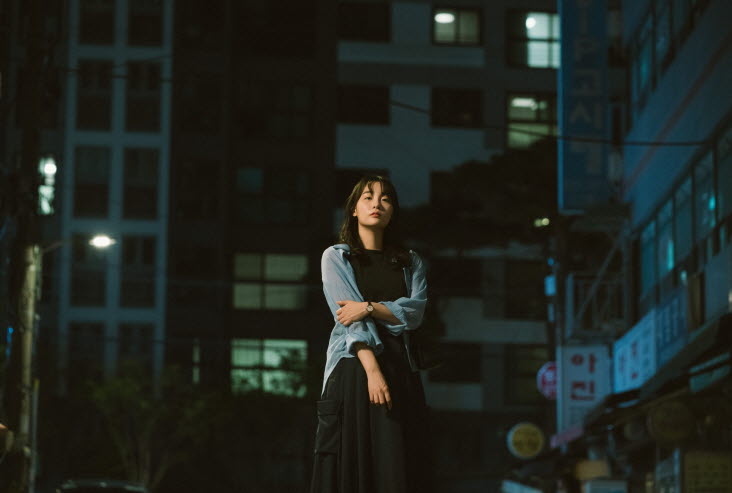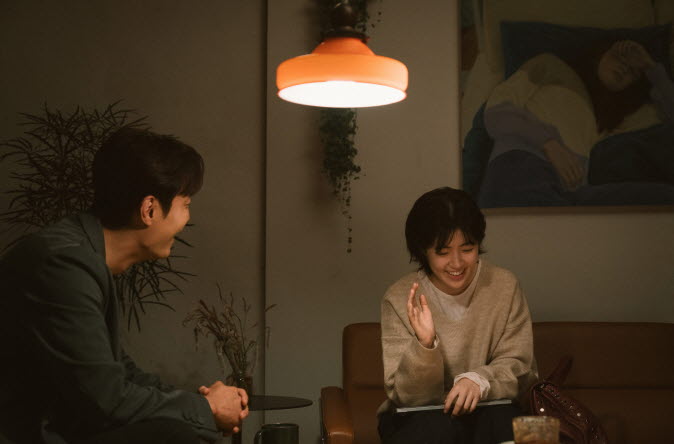
South Korean film “The Table: Day and Night” presents four different vignettes unfolded inside one little cozy coffee shop. While they are loosely connected with each other via the owners of the coffee shop, each of these vignettes are interesting with each own different mood and personality, and it surely helps that they are supported well by a group of good performers assembled here in this movie.
The first part, which is titled “A Midsummer Night’s Dream”, alternates between two separate conversations at the coffee shop. At first, we meet two young women having some talk with each other, and then their cheerful evening conversation is intercut with an afternoon conversation between two young men at the same spot. On the surface, it seems that there is not any connection between these two different narratives, but then they get connected with each other a bit to our little amusement.
The second part, which is titled “People Who Are Still Me”, develops a rather absurd happening between a man and a woman supposed to be an old school friend of his. When she suddenly approaches to him, the man is surely baffled and surprised even though he can recognize her, and then it soon turns out that she is under a sort of paranoia as they talk more with each other. According to her, many of others around her may not be what they seem on the surface, and, not so surprisingly, he regards her with reasonable doubt, even when she frantically insists that he should believe her.
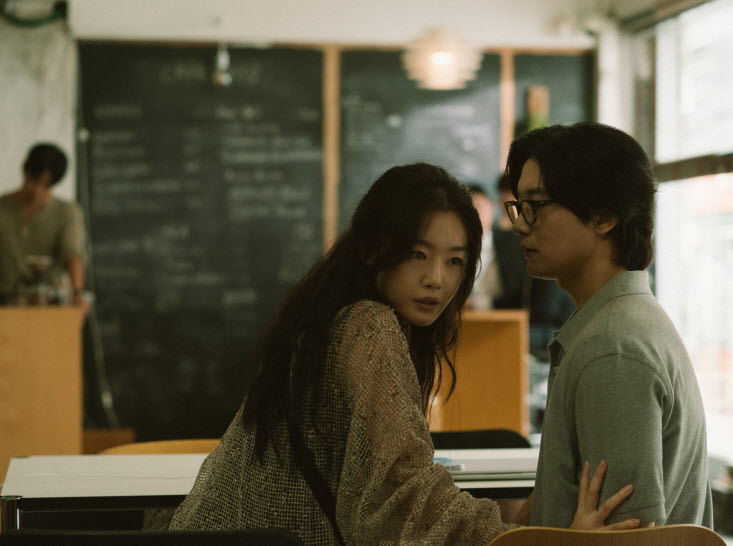
Although we can easily anticipate a punchline moment to be delivered later, this increasingly tense vignette keeps holding our attention as its two main characters constantly push and pull each other for around 15 minutes. The two performers on the screen steadily click well with each other from the beginning to the end, and you may come to smile a bit when that punchline moment in question eventually arrives.
The third vignette, which is titled “Yi.Soon.Bull.”, is equally amusing as providing some nice amusement along with a bit of stylish touches to be noticed. This time, the mood inside the coffee shop is heightened a little with the effective utilization of light and shadow, and this little stylish approach accentuates the overall comic tone of this vignette.
At first, we watch the conversation between some prominent female web novelist and her female agent, who eagerly insists that the novelist should meet a certain prominent male independent filmmaker supposedly interested in making a move based on one of the novelist’s recent works. Although the novelist is not particularly willing to meet that dude, she eventually agrees to meet that filmmaker dude, and it does not take much time for her (and us) to notice that this dude is more interested in getting closer to her.
While we are not so surprised by what is happening between these two main characters, we are frequently amused as they toy with each other in one way or another, and the comic tone of this vignette is buoyed further by the nice comic chemistry between the two performers on the screen. It is really fun to watch them effortlessly swinging back and forth across several different modes, and then we get a little unexpected moment of possible romance right after their story is over.
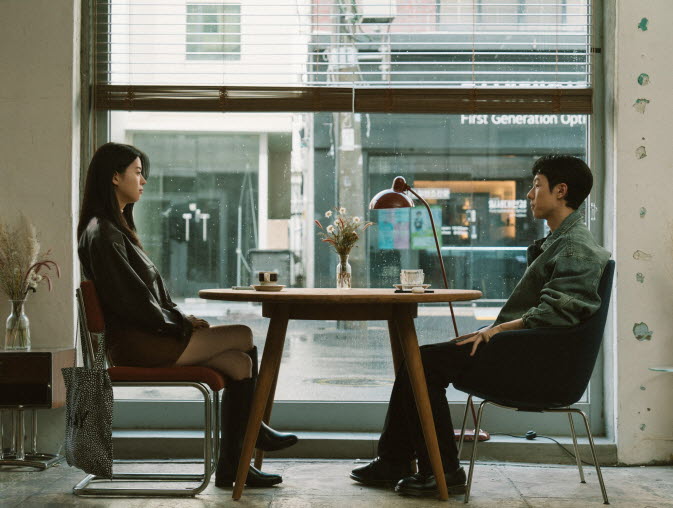
The fourth vignette, “Autumn Story”, shines with bittersweet poignancy to be savored as calmly observing the separation of a plain young couple. While the young woman has been enjoying a modest success in her entertainment career, the young man has embarked on a new professional career for him since he finished his mandatory military service period, and you may get a little amused when he talks about how he came to decide to pursue that professional career in question during his military service period.
It is undeniable that their paths will be parted from now on, but they cannot help but feel bitter and regretful as they still care about each other even at this point. Considering their courteous breakup under mutual agreement, they may remain as good friends for a while at least, but it is apparent to us that they will be more distant to each other as time goes by.
Right before the end credits, the movie throws a little epilogue part which emphasizes its artificial aspects to some degree, but all of its four vignettes are handled well under the competent direction of director/writer Kim Jong-kwan, who previously made “Worst Woman” (2016) and “The Table” (2017). Like “The Table”, which also consists of several individual vignettes unfolded at one same spot, the movie depends a lot on the presence and talent of its main cast members including Kim Min-ha, Joo Jong-hyuk, Han Sun-hwa, Chang Ryul, Shim Eun-kyung, Lee Hee-jun, Jeon So-young, and Kim Dong-hwi, and they all have each own moment to shine in the film.
In conclusion, “The Table: Day and Night”, which was premiered at the Busan International Film Festival early in last month before being eventually released in South Korean theaters a few days ago, is a fairly engaging work to be cherished for its good mood, storytelling, and performance, and its rather short running time (79 minutes) will easily pass by as you enjoy each of its four vignettes one by one. In my humble opinion, it is one of the more interesting South Korean films of this year, and I think you should give it a chance someday.