South Korean independent film “Manok” is a likable queer comedy drama boldly waving its rainbow spirit across the screen. While its cheerful mix between humor and drama often feels rather uneven especially during its second half, the movie has a lot of spirited fun with how its brash lesbian heroine goes all the way for her modest but significant goal without hiding herself at all, and this surely tickled me and other audiences around me more than once.
At the beginning, we are introduced to Man-ok (Yang Mal-bok), a middle-aged lesbian woman who has run a little lesbian bar at the Itaewon-dong neighborhood of Seoul for around 20 years. When she belatedly realizes that her bar has not actually been that popular among her fellow lesbians including her longtime companion Geum-ja (Kim Jung-young), she cannot help but lash out at several others including Geum-ja, and she eventually decides to shut down her business not long after being informed that her estranged mother died and then left their old family house to her.
Although she knows well that she will not be welcomed much due to her checkered past, Man-ok returns to her rural hometown for staying at her family house at least for a while. Needless to say, this instantly raises the eyebrows of everyone in the village including her ex-husband Cheol-joo (Park Wan-kyu), who married a local hairdresser not long after their divorce and has also incidentally been the village chief during last several years.
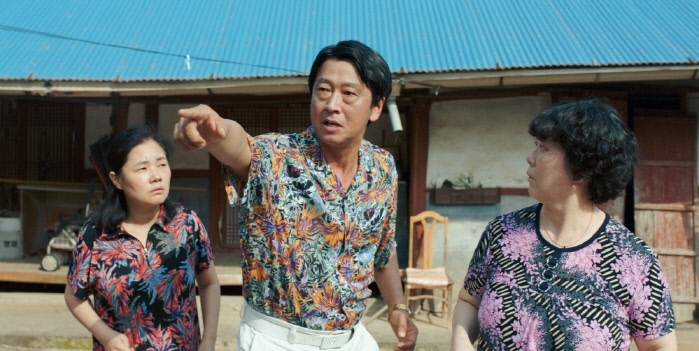
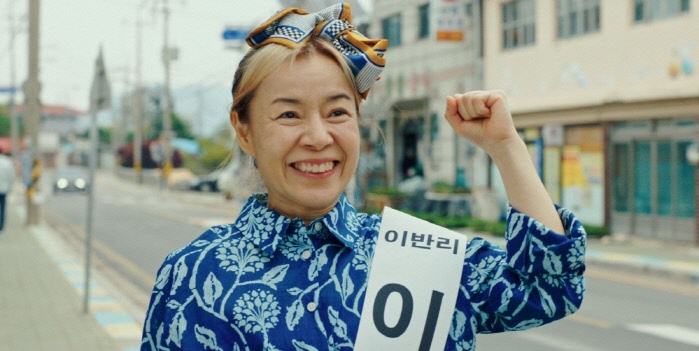
All Man-ok wants is living quietly without drawing much attention from the others in the village, and several village people are actually nice to her without asking too much, but she soon finds herself blocked by Cheol-joo’s petty personal resentment in one way or another. After getting encouraged a bit by some other villagers who have been quite discontent with Cheol-joo’s leadership, she eventually decides to challenge him in the upcoming election for the village chief, and Cheol-joo is certainly not so amused at all.
Because neither Man-ok nor her several supporters do not have any particular election campaign experience, they soon find themselves stumbling more than once, but they finally find a right campaign strategy for appealing more to those voters out there. It turns out that many of the villagers are not so pleased with how Cheol-joo has been running their village, and Man-ok eventually succeeds in presenting herself as a possible good alternative.
However, Man-ok remains not so open about her homosexuality to the villagers, and she becomes all the more conflicted due to Jae-yeon (Sung Jae-yun), a local queer teenager who is actually the only daughter of Cheol-joo and his current wife. After seeing how Jae-yeon, who is apparently more comfortable with being a boy, has kept his sexual identity to himself in a little private place which once belonged to her, Man-ok is willing to come closer to Jae-yeon as a possible mentor figure to lean on, but she also hesitates at times due to her ongoing election campaign.
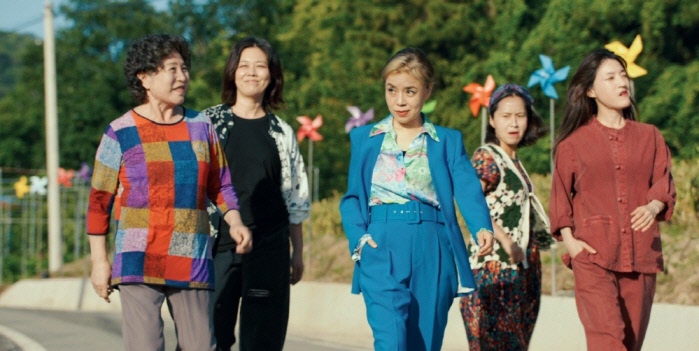
And things become a bit more complicated as Geum-ja and her and Man-ok’s female transgender friend Seon-ah (Saek Ja) come to the village later in the story. Both Geum-ja and Seon-ah certainly draw a lot of attention from the villagers not long after their arrival in the village, and this naturally generates more inner conflict for Man-ok, though she is still happy to see them again.
Yes, the story eventually arrives at the inevitable moment when Man-ok’s homosexuality is fully disclosed to the villagers (Is this a spoiler?), and the mood accordingly becomes more serious, but the movie keeps its spirit high as frequently swinging back and forth between comedy and drama. Although the subplot involved with the conflict between Jae-yeon and Cheol-joo is a bit too dark, the movie thankfully bounces from that with more spirit, and you may come to overlook some artificial aspects of its predictably uplifting finale. Yes, considering how conservative your average South Korean rural town can be, it may feel too unrealistic, but you will not easily look away from a lot of hope and optimism exuded from this genuine feel-good moment.
Furthermore, the movie is fully supported by the strong presence and talent of its charismatic lead actress. Yang Mal-bok, who was alternatively terrifying and electrifying as an unabashedly lousy but undeniably strong-willed mother in “The Apartment with Two Women” (2021), grabs our attention right from her very first moment in the film, and she demonstrates again that she is one of the best actresses in South Korean cinema at present. Ably balancing her character between determination and vulnerability, she gives us another vivid and complex heroine to remember, and her solid performance holds everything in the film together even when it falters a bit.
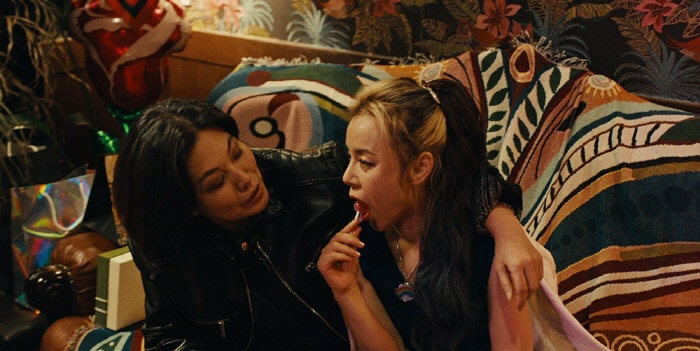
Around Yang, director/writer/co-producer Lee Yu-jin, who incidentally made a feature film debut here after making several short films, assembles colorful supporting performers. Sung Jae-yun, Park Wan-kyu, Kim Jung-young, and Saek Ja all did a good job of bringing enough life and personality to their respective roles, and Kim and Yang have a couple of sweet moments which show us more of their enduring romantic relationship.
Along with many other recent South Korean queer films such as “3670” (2025), “Manok” shows how much the South Korean society has been changed for its LGBTQ+ citizens – and how far it still will have to go for more inclusion and acceptance. Although I have some doubt and skepticism as a seasoned gay dude, the movie amusingly and touchingly reminds me of the importance of keeping going with more hope and optimism, and I sincerely hope that the movie will not only empower its target audiences but also enlighten many other audiences out there.