Remembering Tom Dark

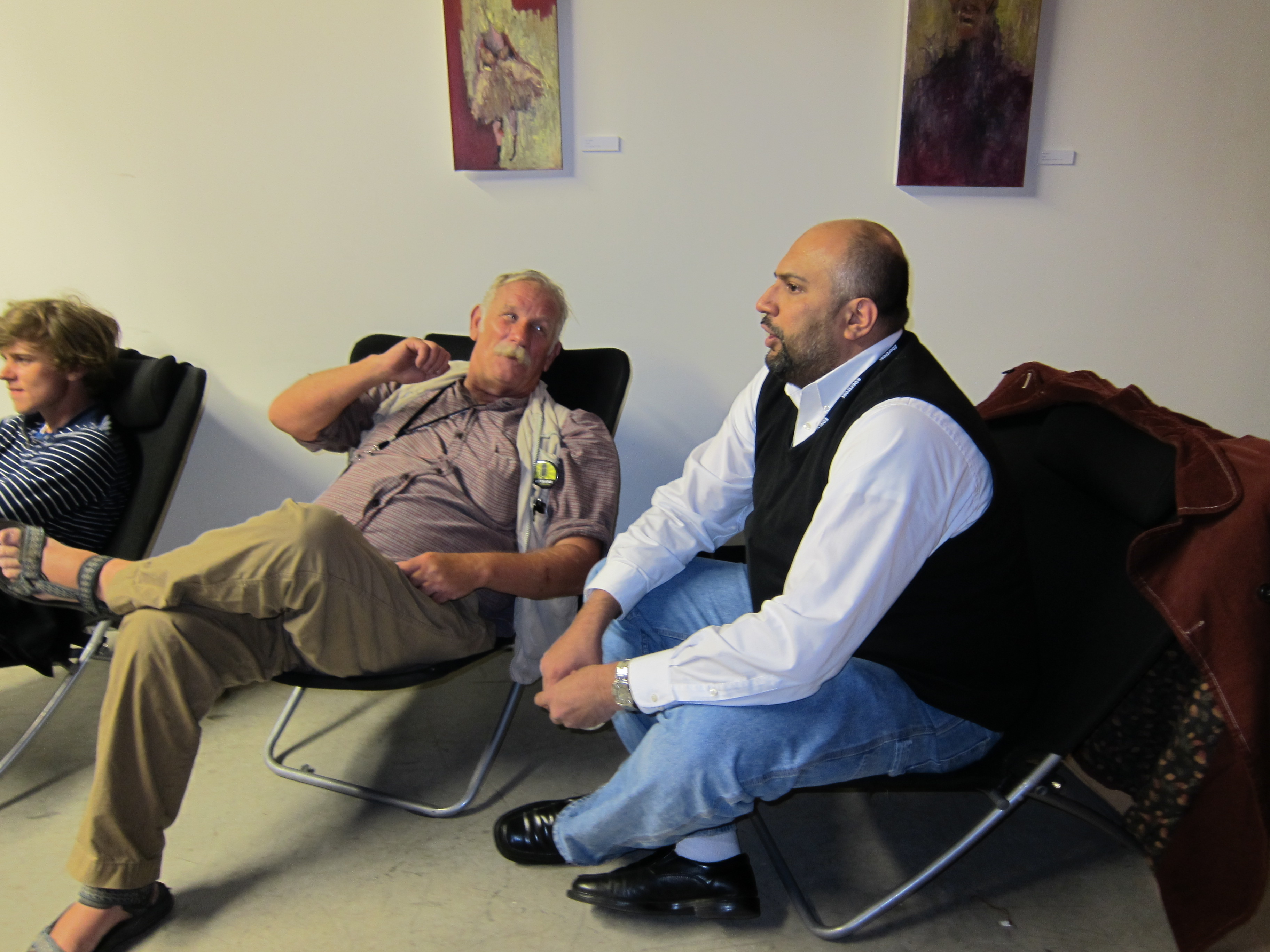
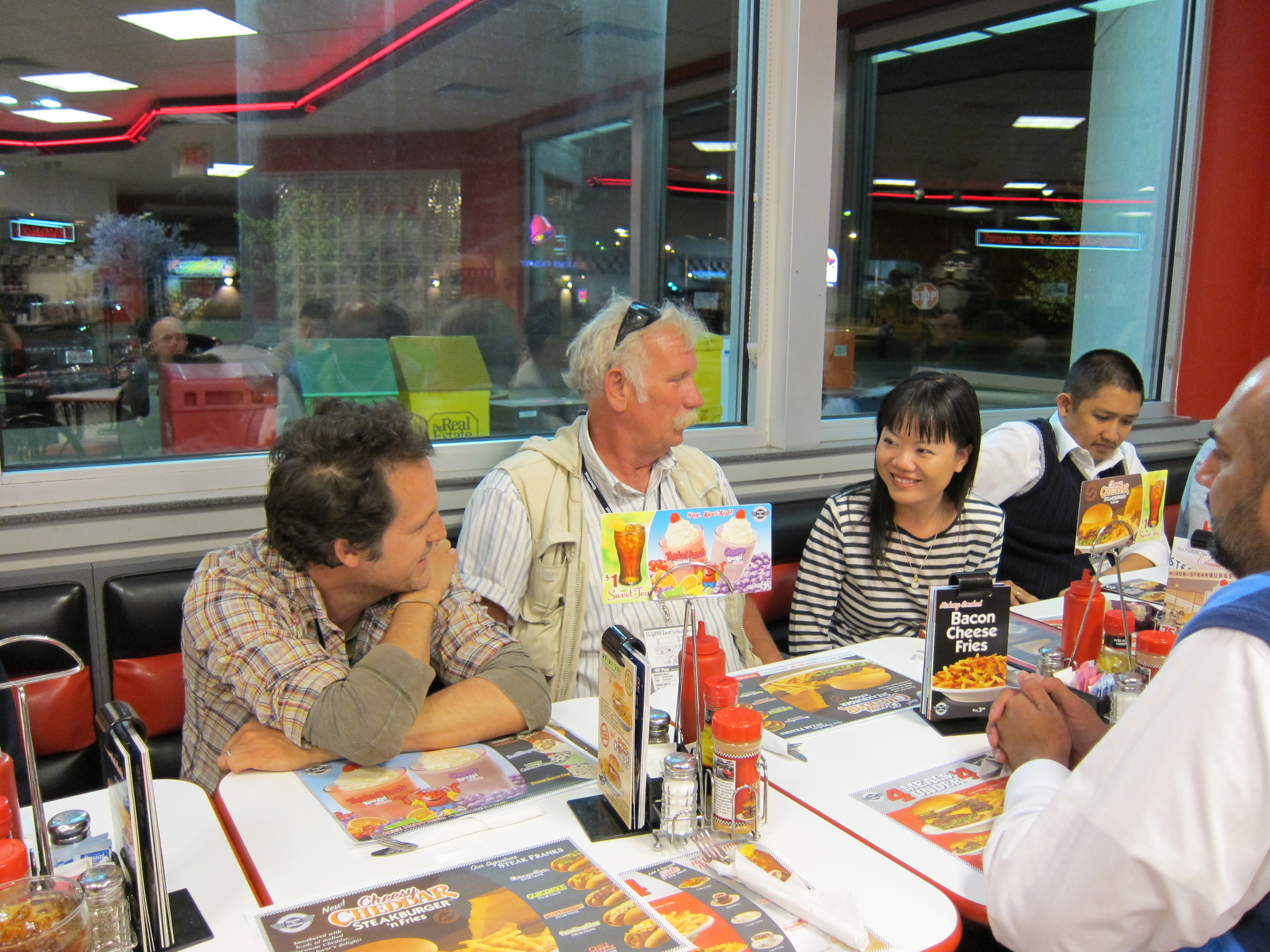
Tom Dark(left) and Omer M. Mozaffar during 2010 Ebertfest

Tom Dark(left) and Omer M. Mozaffar during 2010 Ebertfest

In case of some people, you miss them dearly when you are apart from them, but then you remember how unpleasant they can be when you are near them. I do not know much about Tom Dark, whom I met for the first time during 2010 Ebertfest, but he was definitely an opposite case in my opinion. I enjoyed his presence during those five days of 2010 April in Urbana-Champaign, Illinois, and I have wanted to meet him in person again since the festival was over, but I also remember how much I have been baffled and annoyed by his strange comments and behaviors on Internet. To be frank with you, whenever I received his latest e-mail on his dreams or whatsoever along with my Far-flung Correspondent fellows, I frequently felt like a rookie archaeologist sweating over newly discovered ancient hieroglyphs, and I kept asking myself what the hell he really tried to talk about.

However, as others will attest, he was not a mean guy at all – he just had a tendency to grate on me and others when he communicated with us on Internet despite his good, huggable nature in real life. When I happened to watch one episode of TV series “Frasier” featuring Cliff Clavin and other main characters from “Cheers”, I noticed how similar Tom was to Cliff in several aspects. Cliff is also a nice guy, but conspiracies and other bizarre things he talks about are pretty weird to say the least, and he keeps talking about such things all the time in front of others. As a guy who had to pay attention to what Tom said or wrote as a friend while resisting the urge to block this eccentric codger who seems to have some private issues, I must say I felt really sorry for other characters ‘abused’ by Cliff while watching that episode.

Yes, I did not know what to do with his twitter comments or e-mails, but there were also good times, and that was why he was a little more than a disposable acquaintance to me. While he showed me and others those nice pictures of his horses and the environment around his residence, he also gave me some nice pep talks during our short conversation on twitter when I was depressed by my failed status as a banished graduate. In addition, I fondly remember how he was amused by the poster of “Bluebeard”(1972) posted by me(“That is truly scandalous.”).

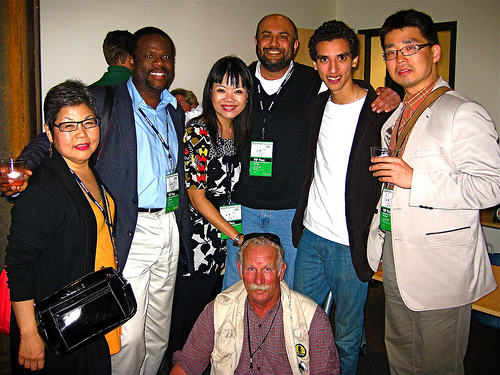
From left to right) James Mottern, Tom Dark, Grace Wang, and Michael  Mirasol

(From left to right) James Mottern, Tom Dark, Grace Wang, and Michael Mirasol

And he was surely one of the most interesting persons to watch at 2010 Ebertfest. I saw him for the first time during the Opening gala at President’s House, but I just passed by him and Grace Wang, one of FFC members, for it was apparent that this old guy was platonically infatuated with her. Who knows what would have happened if Tom had been unmarried and as young as Grace.

The first movie shown at 2010 Ebertfest was “Pink Floyd the Wall”(1982), which was a depressingly electrifying experience, and we all got relaxed as Ali Arikan, Christy Lemire, and Tom Dark led the discussion and following Q & A session. I do not remember a lot about their talk or following questions, but Tom attracted my attention when he mentioned Peter Medak’s cult film “The Ruling Class”(1972) during the discussion, and I was willing to discuss about that hilarious film if I got a chance to have some private talk with him.

However, due to my introverted personality, I merely hanged around him and others during the rest of the festival while not talking much with him. He once jokingly commented that I was the only guy who did not like to be hugged, and that is pretty much true considering that, even though I talked a lot about movies with others at that time and enjoyed every minute, I was frequently shy and distant compared to others as far as I can remember. Not so surprisingly, my psychiatrist diagnosed later that I had Asperger’s syndrome, and the diagnosis turned out to be indeed correct after the formal evaluation.

I’d love to meet Tom again at the Ebertfest, but, sadly, that is not possible now. Yesterday morning in my time, my FFC friend Omer M. Mozaffar notified me and others that Tom Dark died on this Monday after falling into coma on last Friday due to a diabetic problem even he did not know, and I instantly expressed my condolence on Twitter. Though I am still not so sure about whether I really knew him, I will miss this old guy like I have missed my late friend/mentor Roger Ebert. Tom may be an old cantankerous jerk, but he was our old cantankerous jerk none the less, and I sort of liked him anyway.

4560604674_6cae2f46c1

Posted in Ebertfest | Tagged | 13 Comments

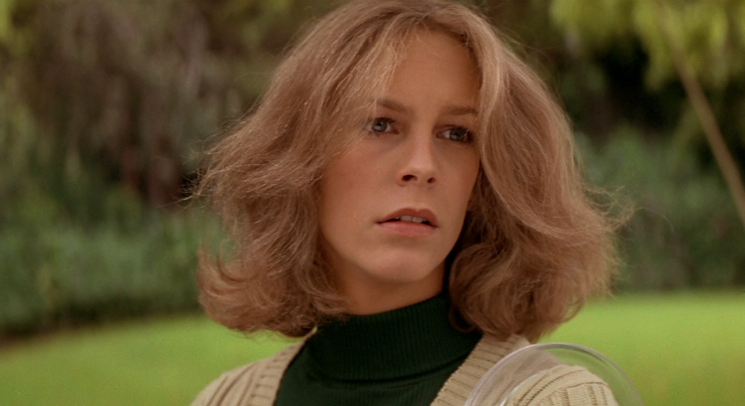
Halloween (1978) ☆☆☆1/2(3.5/4) : “It *was* the boogeyman.”

small-halloween06

“More than once during the movie I looked around just to make sure that no one weird was sitting behind me.”

 – from Gene Siskel’s 1978 review on “Halloween”

When I watched John Carpenter’s “Halloween” for the first time in 2003, it was surely one of the most suspenseful horror films as I heard, and I still remember holding my breath during one particular moment which is a classic example of the suspense once defined by Alfred Hitchcock. We see the danger itself walking toward our heroine step by step, and the movie clearly shows that she will be killed if she cannot escape in time through the door which is unfortunately locked at that very moment. She still has a chance to survive at least, but the time is short, and it is running out second by second as she watched in horror a murderous entity approaching to…

 I felt my body tightened as before during that scene in 2009, and I felt the same dread again when I revisited the movie early in this week. Although it has been 35 years since it was made, “Halloween” remains as a superlative horror masterwork armed with the skill and power to touch upon our deepest fear, and it deserves its own place right below Hitchcock’s “Psycho”(1960) as one of the rightful successors. Like “Psycho” and many other classic shockers, the movie knows well the value of mood and suspense as the backdrop for shocks to come, and the repeated viewing will induce more admiration toward its skills and techniques after the initial shock from the first viewing.

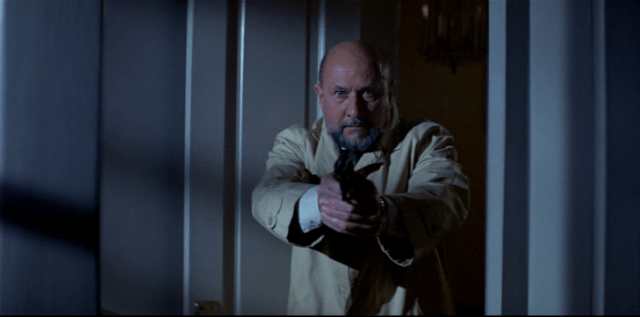
Its premise is so simple that it is more or less than the description of its whole plot. The opening sequence, which was shot by a handheld camera functioning as the view of a deranged murderer, jolts us with a terrible murder shown in front of us and then shocks us with his identity revealed in the end. After 15 years, he escapes from the mental institution at the very moment when his watchful psychiatrist arrives at the facility for another routine evaluation ordered by court, and Dr. Sam Loomis(Donald Pleasence) is quite certain that his homicidal patient is returning to his hometown: Haddonfield, Illinois.
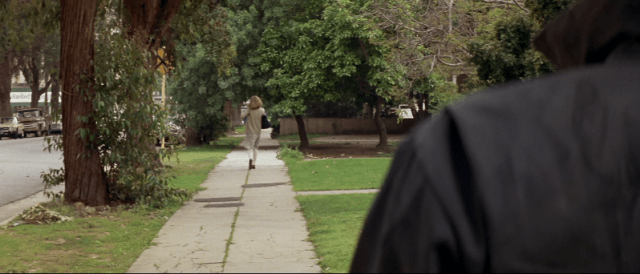
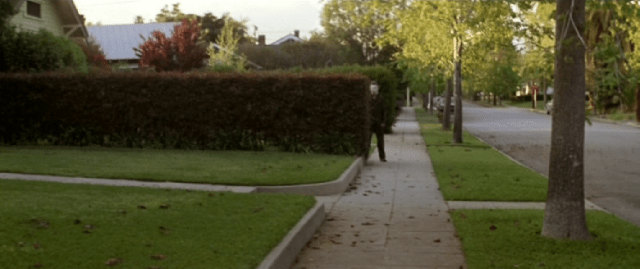
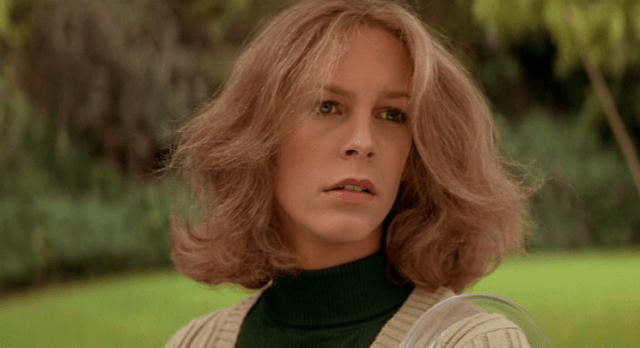
small-halloween02We have encountered many variations of this familiar premise in countless films featuring mad killer driven to kill anyone in his sight, but “Halloween” is a far more absorbing experience. After setting its ominous tone to signify that something bad is about to happen sooner or later, it subtly handles its suspense level below the screen as establishing its characters amid the mundane daily rhythm of their comfortable and peaceful environment. During its first half, it feels just like your average Halloween day for every resident of Haddonfield, and Laurie Strode(Jamie Lee Curtis) and her high school friends are going to spend their Halloween night as babysitters. Their night will be a little less boring thanks to horror films shown on TV, and some of them plan to have a more fun night once kids are asleep.

Well, we already know that this night will be far less boring than they have ever imagined, and the movie skillfully plays with our expectation as it places many little but ominous signs here and there around its widescreen. As the camera slightly moves its viewpoint, we notice odd or weird things appearing in or out of the characters’ views, and Laurie also vaguely feels something is not quite right even though she cannot exactly discern what it is. She surely feels anxious when noticing a mysterious figure who keeps appearing in her sight and then disappearing in the next second, but everything around her looks fine and usual – except the occasional appearances of the creepy synthesizer score composed by John Carpenter on the soundtrack.

Halloween night finally begins, and we are more conscious of the unknown danger hovering around Laurie’s neighbourhood as it gets dark. While that ominous figure, who has been one of the most popular characters in the horror genre since the movie was released, is merely named “The Shape” in the end credit, the movie gives a little more information on him including his name through Dr. Loomis, who fortunately, or unfortunately, finds that his intuition was correct not long after he arrived in the town. According to him, his patient is simply an unstoppable evil force of nature as relentless as, say, the shark in “Jaws”(1975), and Donald Pleasence, who would be forever associated with his role in this film and its subsequent unnecessary sequels, is especially good during the scene where Dr. Loomis calmly talks about his patient’s diabolical nature observed by him for many years. Even when he savagely stabbed his elder sister for no apparent reason, he already showed the alarming signs of a merciless psychopathic killer who knows no compassion or morality, and he is certainly far more dangerous than ever as an evil monster on the loose. He is as remorseless as ever, and there is a chilling moment when he seems to look at his latest victim with detached wonder/curiosity right after killing him.
small-halloween03While it becomes more apparent that he is preying on Laurie and her friends outside, the movie keeps building suspense and dread on its situation instead of hurrying itself, and the director/co-writer John Carpenter masterfully manipulates our reactions through effective thriller devices including several good false alarms, which are placed well around the plot to maintain the tension or relax us a bit for a while. The movie is not entirely devoid of warmth and humor, and Laurie and her friends come to us as likable young girls rather than cardboard characters to be eliminated, and the interactions between Laurie and the kids to be babysit by her are depicted with natural intimacy.

The movie eventually pulls out all the stops for its last 20 minutes, and we cannot help but be gripped by the terrifying execution of its climax scenes. Despite being less bloody and less violent compared to other well-known slasher horror films, its scary moments are still quite effective even after 35 years thanks to Carpenter’s taut direction, and we become more frightened than before as our heroine suddenly realizes that she is facing a grave danger she may not escape from.

While Laurie’s perilous situation is a textbook case of ‘woman in danger’, Carpenter and his co-writer Debra Hill gives us a sensible heroine we can care about, and Jamie Lee Curtis, who got a career breakthrough with this film, gives a humble performance which nicely fits with her ordinary character and the mundane environment. Like anyone would in her situation, Laurie is terrified when her world is turned upside down by the sudden invasion of abnormality, but she tries her best to deal with it, and one of the surprises in the film is how she turns out to be more resourceful than we expected as she rises to the occasion in front of the unfathomable evil. When she sees a possible chance to turn the table in the nick of the time, this smart girl quickly grabs it and then uses it to full extent, and that is enough to make her a lot different from those boring and colorless characters in Dead Teenager movies. After appearing in other horror films including “Halloween II”(1981), Curtis moved to better things including “A Fish Called Wanda”(1988), but, like Pleasence, she has always been associated with “Halloween” although it is actually a minor performance if you look over her fruitful acting career.
small-halloween04This was John Carpenter’s third film, and, sadly, he has never attained the same level of success during the rest of his illustrious career while establishing himself as a distinctive talent of the minor league in Hollywood. “Halloween” is certainly the pinnacle of his directing career, but he has also had lots of fun while going around various genres including SF, horror, thriller, and action. While he stroke us with a sticky claustrophobic fun in “The Thing”(1982), he surprised us with an exceptionally gentle SF drama “Starman”(1984), and then he went for naughty B-movie sensibility in the amusing but flawed films like “Big Trouble in Little China”(1986).

Carpenter also composed the scores for his films at times, and his unforgettable score for “Halloween” has solidified its own classic status along with the movie. It mainly consists of simple repeating rhythms expressed by elementary instrumentation, but the unnerving mood it creates on the screen is undeniable to say the least, and we always get nervous whenever it is played to suggest the evil lurking at corners.

After its enormous box office success(as an independent film, it costed only $320,000, and then it grossed over $65 million during its initial theatrical release), “Halloween” virtually initiated slasher film genre which is mainly represented by its sequels and other cheap slasher horror films including those infamous Friday the 13th movies. Unfortunately for us, none of them has succeeded in reaching to the sheer intensity exemplified in “Halloween” – and many of them were quite bad enough to be forgotten into obscurity while their well-crafted senior has remained on the top of the scale as usual.

I must say I was sunken to despair and frustration many times as watching these crappy slasher films mindlessly and monotonously bludgeoning us with shocking violence and gory details, and that is why my appreciation on the mastery of shock and suspense in “Halloween” has been growing with repeated viewing. A good shock always requires the considerable amount of suspense before it arrives on the screen, and I can assure you that “Halloween” is amply packed with such good moments to remind you of that lesson during many Halloween nights to come.

small-halloween05

Posted in Movies | Tagged , , , , | 3 Comments

The Gatekeepers (2012) ☆☆☆1/2(3.5/4) : Their secret jobs and their serious concerns

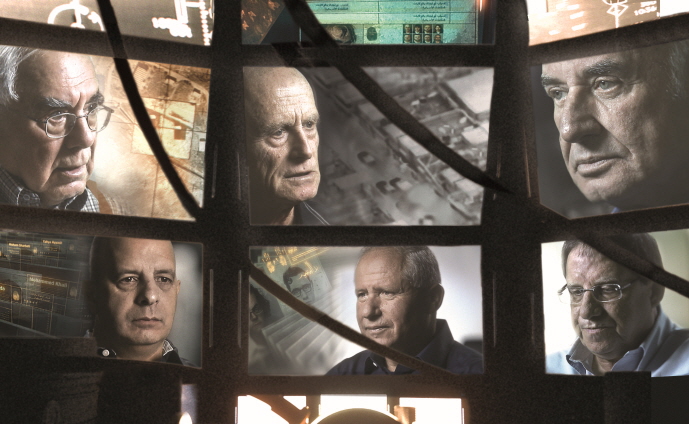
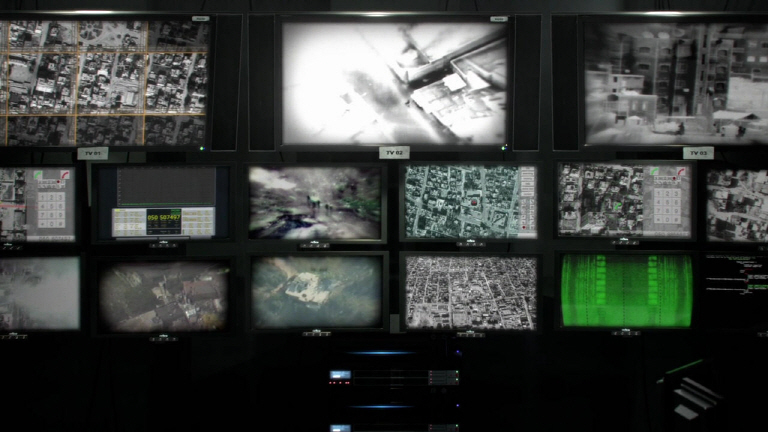
small_gatekeepers04The interviewees of Oscar-nominated documentary “The Gatekeepers” have fascinating stories to tell. They worked behind the scenes as the soldiers of a long, messy conflict still continuing at this point, and they are quite willing to talk about those turbulent years of their secret agency – and their serious concerns over the future of their country.

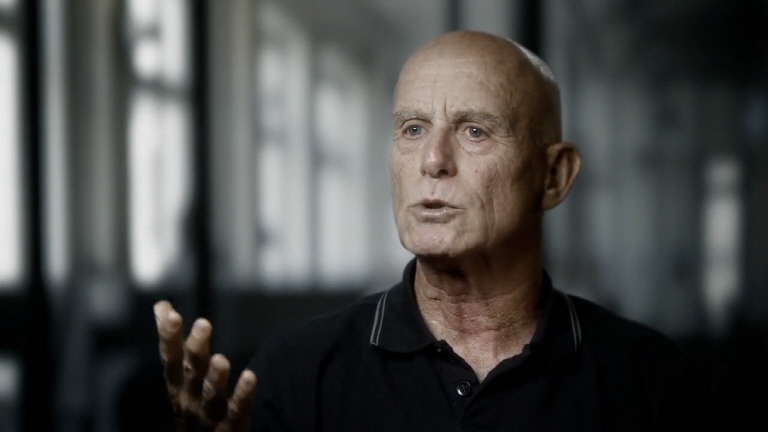
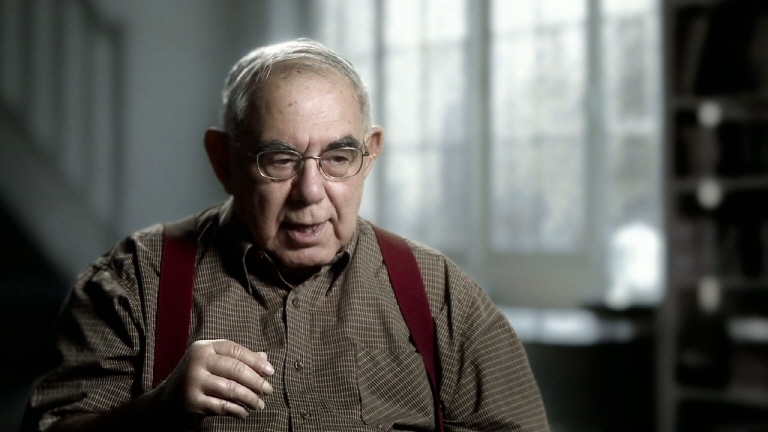
They are Avraham Shalom, Yaakov Peri, Carmi Gillon, Ami Ayalon, Avi Dichter, and Yuval Dichter, and they all are the ex-directors of Shin Bet, the Israel Security Agency(ISA). Since it was formed in 1949, the agency has mainly taken care of the internal security issues including terrorist threats or protection of high-ranking government officials, and most of its operations were kept in secret along with its covert agents as reflected by its motto “the unseen shield”.

While shuffling between these six interviewees, visual records, and CGI recreations, the documentary presents us a sober picture of the ongoing conflict between Israel and Palestine viewed through these interesting people, who are quite candid about each own circumstances and deeds during their tenures. They do not evade or deny at all as describing what they had to do as their duties, and the director Dror Moreh only throws a few questions around the end when it seems necessary.

As listening to their stories, we come to know more about how the conflict was initiated and then has been developed into such a mess frequently reported on the global media. Not long after the Israeli army took over the Gaza strip and the West Bank area during the Six-Day war in 1967, Israel faced the resistance of the residential Palestinians in these two territories, and Shin Bet started to take the main role in this conflict. They monitored possible threats as creating the massive profiling database of any suspicious Palestinians to watch, and they also diligently searched for any useful sources of valuable information among their enemies.

small_gatekeepers03The system itself worked as the major force at the front line of this hidden war, but the surrounding situation got worse along with the escalating violent responses exchanged between Israel and Palestine, and the interviewees tell us how they succeeded or failed as recognizing the gray moral aspects of their works. While torture became an available option for gaining information during interrogations, they found themselves on the thin line between saving and killing people. One of the interviewees talk about one uncertain situation where the matter of life and death can be irreversibly decided by their single decision; if there is the possibility of collateral damage, should they approve of the attack to save their civilians or abort the mission to avoid the possible failure/disaster which can cause more than public humiliation for Shin Bet?

They also had the other problem besides resisting Palestinians, and one of the interesting things shown the documentary is how Israeli government has indirectly induced and nurtured its own extreme factions to only make their circumstance worse later. The Israeli government deliberately overlooked its illegal settlers who pushed into the West Bank and Gaza Strip with no consideration of Palestinians, and the far-right wing zealots could get away with their terror attempts on Palestinians mainly because these guys were mostly connected well with the government; even when they were arrested by Shin Bet and then tried at the court, they only received minor sentences and soon returned to the society while assuming their prominent social roles again.

Some of them look alarmingly fanatical when they talk in front of the reporters, and we are told that there was actually the horrible plan of a big, sensational terror on Muslims, which, if they had succeeded, would certainly have made Israel as unpopular as, say, Osama bin Laden after 9/11. Around the time Yitzhak Rabin was assassinated, they kept voicing their strong, aggressive opposition against the Oslo I Accord, and some politicians, including the current Israeli Prime Minister Benjamin Netanyahu, indirectly propelled this blind hostility based on that familiar sectarian mentality of “It’s us or them.”

small_gatekeepers02The death of Yitzhak Rabin, who is respected and admired by all of the interviewees, threw a big shock on Shin Bet for their failure to prevent the assassination, and the problems to be handled by them kept growing as ever while that small but precious chance of peace and coexistence was blown away. Yasser Arafat and PLO belong to the past now, but more extreme factions such as Hamas fill the space, and they are more difficult to handle; how can you deal reasonably with a group of fanatics ready to die for their cause with no compromise?

There have been some successes while they tried to eliminate the main members of these terrorist groups through various means(In one famous case, it was executed through a small but lethal bomb planted on the cellular phone belonging to the target), but nothing has been accomplished except more chaos and violence between Israel and Palestine since the Oslo I Accord was virtually broken. All of the interviews agree that Israel has been unwisely pushing itself into more difficulties(“we win every battle, but we lose the war.“), and, though individually expressing different thoughts and opinions, they all strongly emphasize the need of the open talk as attempted by Rabin and Arafat.

“The Gatekeepers” is a detached but engaging documentary both informative and revealing to us. As the story told from the Israeli perspective, the documentary makes an interesting contrast compared to another excellent documentary “5 Broken Camera”(2011), a sad, touching visual chronicle of Palestinian farmer which was incidentally Oscar-nominated along with “The Gatekeepers” early in this year. While they are opposite to each other in their respective positions, they ultimately hope for the same thing, and both powerfully remind us that the circumstance is not hopeless yet. It still looks not that good in Palestine, but there is always hope considering that people can learn and open their eyes even if they are not changed.

small_gatekeepers01

Posted in Movies | Tagged , , , , , | 1 Comment

Rough Play (2013) ☆☆(2/4) : An actor’s rough rise and fall

roughplay05As a story about the rise and fall in the heartless world of entertainment business, “Rough Play” is naturally an unpleasant film to watch, but it is not interesting enough to hold my attention. Although it becomes a little more interesting later thanks to its few good supporting performances, it is too late for us, and its sketchy narrative flow does not help much covering its many weaknesses including its tepid depiction of success, corruption, and, of course, price.

Lee Joon plays Oh Yeong, a young unknown actor who frequently invests himself too much into his roles to play. He seems to be not that good, but the line between reality and performance is blurred at times in his mind, and the disorienting opening scene goes back and forth between his disturbing performance on the stage in the past and his loony apologetic behavior with a female mannequin in public.

The story is about what happened to him and his career between these two moments. Ignoring his lines and the direction during that stage performance, Yeong goes too far on the stage, and that upsets not only his co-actress but also the director. While hiring another actress, the director, who has every right to be furious about Yeong’ willfulness, gives him the second chance, but Yeong spectacularly ruins the play again as hopelessly losing himself in his performance and almost straggling the actress to death. I know some good actors lose themselves at times for better performance, but I think this guy seriously needs discipline regardless of how good he is as a performer.

Fired immediately after this disastrous incident, Yeong is approached by a seedy manager named Kim Jang-ho, who says Yeong really has a raw talent to develop and he can help boosting Yeong’s career. Yeong shows little interest in Jang-ho’s tempting offer at first, but it does not take much time for him to accept it, and, after a small but crucial appearance in one film, he quickly rises to the stardom as promised.

roughplay03But, not so surprisingly, there is a price for his success, and, as expected, the movie shows us the dark sides of show business world as Yeong goes up and up in his career. Jang-ho’s boss is more or less than a thuggish mob boss bullying and exploiting everyone ‘owned’ by him, and there is a heavy price to pay when he is very unpleased. Just because it will guarantee the further success in Yeong’s career, Jang-ho brokers a meeting between Yeong and some rich and powerful middle-aged woman, who is interested in Yeong and wants to go upstairs with him for their private time.

Whatever he feels about the price he has to pay for his career advancement, Yeong is slowly intoxicated with the resulting success. He was already a bit self-centered guy from the beginning, but he becomes more egoistic and arrogant as the time goes by, and that makes his close friend Geun(Kang Shin-hyo), who later replaces untrustworthy Jang-ho as Yeong’s new manager, more estranged from him even though Geun tries his best as his loyal friend/manager.

The rest of the story drones on as Yeong is driven to more arrogance and subsequent depravity. The screenplay by Kim Ki-duk is hampered by static dialogues, underdeveloped characters, and awkward story development, and the characters increasingly feel like the plot devices for emphasizing its points. As a result, we cannot care about the characters or what will happen to them, and the plot just marches on its main character arc with predictable turns.

roughplay04The actors try hard, but, sadly, they leave a little impression on us despite their efforts. While he does not hesitate from looking very unlikable in many moments and I appreciate that, Lee Joon’s lead performance feels flat and uninteresting, and Seo Beom-seok does not have many things to do except throwing some sneering lines to Lee Joon while looking sinister and despicable as a shifty manager. Seo Yeong-hee, who was great in “The Chaser”(2008) and “Bedevilled”(2010), is regrettably wasted in her minor role, and I am not sure about what exactly happens between her character and Yeong around the ending.

On the other hand, several supporting actors relatively acquit themselves well. Kang Shin-hyo is good as the most sympathetic character in the story although his character is not utilized enough, and Yang Dong-geun has his moment as a callous senior star actor, and Ma Dong-seok is dependable as usual as a real mob boss who turns out to be nicer than we thought.

While constantly making darkly interesting films, Kim Ki-duk has sometimes written the screenplays for other young directors, and the results have been mixed to say the least. “Poongsan”(2011) had several interesting things including its mute, mysterious hero who has a superhero ability to go freely back and forth between North and South Korea for the unfortunate families separated by the Korean War, but it was not entirely successful despite its strong points. In case of “Rough Cut”(2008), which can be viewed as a predecessor to “Rough Play”, it was also interesting as a story about acting and filmmaking, but it never overcame thin characterization and weak plot, though it certainly helped the career of its director Jang Hoon, who later directed more successful films including “Secret Reunion”(2010) and “The Front Line”(2011).

“Rough Play” was directed by Shin Yeon-shick, who previously directed “Fair Love”(2009). It was a small comedy about one middle-aged guy belatedly and awkwardly having the first romantic relationship in his lonely life, and I found it funny and amusing. I have heard good words about his other recent work “The Russian Novel”(2012), and, after disappointed by this film, now I want to watch that movie more than ever.

roughplay01

Posted in Movies | Tagged , , | 2 Comments

The Mill and the Cross (2011) ☆☆☆1/2(3.5/4) : Into one famous painting and its era

themillandthecross02 Watching “The Mill and the Cross” sometimes feels like attending a 1.5-hr visual lecture at art museum. Focusing on one famous painting from the renaissance era, the movie presents its historical background and its small but crucial details to us as it looks around here and there in the world reflected by the painting. This may sound boring to you, but, as one big artistic vision is gradually developed in the wide landscape, we see step by step how the people at that time and their society inspired that vision, and this is a slow but absorbing experience.

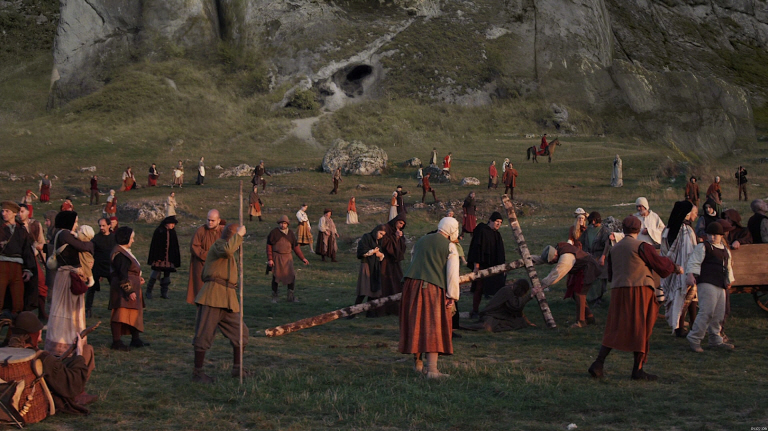
The painting in question is “The Procession to Cavalry”, which was painted by Flemish renaissance artist Pieter Bruegel the Elder in 1564. Its major subject is the biblical image of Jesus Christ carrying his cross, but, as you will see from the painting, he is surrounded by so many other figures in the painting that his suffering looks rather inconsequential even if you finally spot him at the center. While there are familiar figures including his mother Mary, who is placed on the right foreground with others, most of the people in the picture just seem to be occupied with each own matters, and they show no particular interest to what is happening to their fellow human being.

It is also notable that they are all presented as the people of the 16th century, and the movie shows us how Pieter(Rutger Hauer) got that interesting idea through its calm, meditative observation on the daily lives in the Flanders area of Belgium during the 16th century. Around the dawn, everyone in the town begins to wake up one by one as the light comes inside their residences, and we see several domestic sights from different households. A young couple happily begins another day while confirming their mutual endearment to each other, and we later see them preparing to leave their home with a calf. In Bruegel’s house, we see his children being awakened on their common bed, and they have some fun together before having a breakfast in the dining room.

small_themillandthecross02We also see an old couple at the mill, and their place is one of the most impressive sights in the film. Their mill/residence is located inside a tall pinnacle, and we also see a long, dizzy stairway zigzagging from the ground to a big windmill built on the top of the pinnacle. I do not know whether the construction of such things could be possible at that time, but the windmill is one of the crucial elements in Bruegel’s painting, and the movie gives us a fascinating sight of how the mill is operated. After the windmill is untethered by the miller’s assistant, it starts to be slowly turned by the wind, and then the wheels on the ground are turned accordingly to grind grains as the miller’s wife silently watches the progress.

Everything in the landscape looks nice and peaceful as people go through their morning routine, but, as observed by Bruegel and his wealthy patron Nicolaes Jonghelinck(Michael York), it is not a very good time for everyone. As mentioned during their conversations, Flanders and its neighbouring areas were ruled by Spain, and the persecution on resident Protestants was a usual business at that time. We see a woman buried alive by Catholic priests, and we also observe an atrocity committed by the mercenaries wearing red tunics, who suddenly catches a young man and then savagely whip him, kick him, and beat him. Later, we see his body bound to the wheel on the top of a tall wood stick, and you may hope he is already dead considering what happens next. Whatever he committed, he does not deserve such cruelty, like his wife does not deserve her sorrowful pain caused by that.

Life goes on for everyone else, and the same thing can be said about Bruegel and Jonghelinck, who have their brief conversations on Bruegel’s work in progress from time to time. Probably inspired by that horrible incident described above, Bruegel juxtaposes the biblical image with his contemporary environment, so we later get a re-imagined version of the last excruciating hours of Christ decorated with the 16th century background.

small_themillandthecross05 The movie is mainly driven by its images and the feelings and thoughts evoked by them, and its beautiful moments, which are usually wordless, are compelling to watch. In case of the opening scene which shows many various figures of “The Procession to Calvary” set in the background before Bruegel and Jonghelinck come into the scene, we come to realize that some are CGIs while others are actors in front of the green screen. The movie dexterously mixes special effects with live action to give us the detailed moments reminiscent of Bruegel’s paintings, and this odd, distinctive mix creates its own reality to draw our attention.

It also gives us some nice insights to how Bruegel planned his work on the painting, and there is a terrific moment when he holds his view in suspension for a moment. He signals to stop the windmill, which is more like God’s windmill/wheel in his artistic view, and everyone is held in their respective spots as soon as it stops. Although we clearly see some actors moving a little bit in this scene, it still feels spellbinding none the less.

The director Lech Majewski, who adapted the screenplay with Michael Francis Gibson from Gibson’s art history book with the same name, made a haunting film I kept thinking about long after watching it. Although I do not have much background knowledge associated with its subject, but its images fascinated me and intrigued me a lot, and I willingly followed it to the end. As expressed in Bruegel’s painting, we have frequently been cruel or indifferent to our fellow human beings throughout the human history, but, as shown during the last moments of the movie, we are at least capable of something far nicer than that.

small_themillandthecross01

Posted in Movies | Tagged , , , | 1 Comment

Captain Phillips (2013) ☆☆☆1/2(3.5/4) : A taut, intense hostage situation on the sea

captainphillips06 “Captain Phillips” is a gripping thriller tightly holding our attention as it is relentlessly sailing on its tumultuous course. Rigorously maintaining its realistic approach to the story and the characters based on a real-life hijacking incident, the movie forcefully accumulates the tension on the screen through its intense heart-pounding moments packed with an ample amount of verisimilitude, and we cannot help but watch how its plain hero and his captors come into their increasingly impossible circumstance which will not be resolved easily at all.

The movie opens with Captain Richard Phillips(Tom Hanks) preparing to leave for his work abroad at his home in US. While he is going to the airport with his wife(Catherine Keener in a brief appearance), we get a little background information about him and his current state during his short conversation with his wife. He does not like to work outside US, and his job puts more difficulty on their live than they expected, but he does his job as demanded by his company: going to a port in Oman and taking the command of MV Maersk Alabama, which is ready for its sail to Mombasa, Kenya after fully loaded with its cargos.

Meanwhile, we also observe a group of Somalian pirates in some poor beach village on the coast of Somalia. As soon as they are ordered by a local warlord, a former fisherman Muse(Barkhad Abdi) and other pirates go out to the sea with their skiff boats. Searching for any suitable target on the sea, they come to target Maersk Alabama, and their approaching boats are soon detected by the radar on the ship on April 8th, 2009.

Phillips is well aware of this kind of danger prevalent in his sail course, and he does as much as he can do for blocking them with various measures including water hoses, but his ship is eventually taken by the pirates. At least, thanks to his quick response, most of his crew safely hide inside the ship, though Phillips and two other crew members are held as the hostages by Muse and his gangs.

captainphillips02From that point, the story develops into a volatile situation of constant threats and persuasions exchanged between Phillips and Muse, who casually nicknamed him “Irish”. The director Paul Greengrass and his dependable crew including the cinematographer Barry Ackroyd and the editor Christopher Rouse keep the tension crackling on the screen; while shaky handheld camera is abundantly used throughout the film and this may feel distracting at first, this approach amply provides the quickening rhythm of urgency pulling us into the perilous circumstances depicted in the film. The hijacking sequence is lean and dynamic enough to create the sense of imminent emergency, and the movie becomes more suspenseful as Muse searches for the crew members hiding inside the ship and Phillips carefully tries to outwit his opponent, and the suspense level in the film gets further increased as it focuses on the grueling uneasiness surrounding Phillips and his captors later in the story.

While there have been controversies on whether Phillips was indirectly responsible for the hijacking incident(there was even a lawsuit on his negligence of safety during the incident), Billy Ray’s screenplay, which is based on “A Captain’s Duty: Somali Pirates, Navy SEALS, and Dangerous Days at Sea” written by Stephen Talty and Phillips himself, presents Phillips as an ordinary guy doing his job and duty as a professional in spite of the enormous pressure on him, and Tom Hanks effectively dials down his star presence to embody the role in his understated but powerful performance which will probably get him an Oscar nomination in the next year. Phillips maintains a calm, stable, and sensible attitude on the surface while he is threatened by the gun-toting pirates, but we gradually sense increasing agitation and desperation barely contained behind his face as the time goes by, and Hanks is terrific to watch when his character should be more careful and tactful in dealing with the dangerous and unpredictable guys who can shoot him at any moment.

The other supporting actors also give credible natural performances along with Hanks without stepping out of their lines, and the special mention must go to Barkhad Abdi and other three actors playing Somalian pirates(Barkhad Abdirahman, Faysal Ahmed, and Mahat M. Ali), who did a good job despite their lack of acting experience before appearing in this movie. Muse and his gangs are indeed the bad guys of the story, but, while they are surely brutal and violent, the movie presents them as the human beings driven to crime and violence by their poor environment. They become scared and cornered as much as their captive as their situation is getting in way over their heads, and that makes them more dangerous than before.

captainphillips04After US Navy comes into the picture, the movie heads into the expected point, but its tension level still remains high during the climactic scene reminiscent of “Zero Dark Thirty”(2012). It eventually culminates to the nail-biting moment which has been dreaded by both Phillips and the pirates, and Greengrass, who has built considerable reputation as an intelligent action film director through “The Bourne Supremacy”(2004) and “The Bourne Ultimatum”(2007), gives us a clear picture of what is going on at the different spots in the murky background as the movie busily goes back and forth between them under his taut, precise direction.

On the whole, “Captain Phillips” is a superlative thriller pulsating with nerve-cracking intensity. Like Greengrass’ gut-wrenching masterpiece “United 93”(2006), it never stops once everything is set and ready after its rather slow but economic beginning, and it is thankfully devoid of usual Hollywood heroics while presenting the powerful moments of human vulnerability and resilience under extreme pressure during its many high points. The movie also captures a few nice character moments when it becomes relaxed a bit at times, and there is a scene indirectly suggesting the tragic side of the circumstance of Phillips and his captors in a wider view. “There’s got to be something other than being a fisherman or kidnapping people,” says Phillips while trying to persuade them to be more reasonable. Muse curtly replies to him; “Maybe in America, Irish, maybe in America.”

  Sidenote: while watching the movie, I was reminded of a Danish film “A Hijacking”(2012), which I incidentally watched around two months ago. While there are some overlapping areas between them due to their shared subject, they are a lot different from each other in many aspects because they respectively set out to do each own things from the start, and both of them are excellent works. It will be a very interesting, if not exhausting, experience to you if you are willing to watch them together.

captainphillips08

Posted in Movies | Tagged , , , , | 1 Comment

Cats and kittens on Sunday afternoon (2013/10/20)

null null null null null null null null null null null null null null null null null null null null null null null null null null null null null null null null null
It was sunny, and they pleaded for food..
Posted in Photos | Tagged , | 1 Comment

Gravity (2013) ☆☆☆☆(4/4) : It’s really terrifying to be floated alone in the space

gravity01 One of the sweet memories during my trip to Chicago in 2010 was watching movies with my friend and mentor Roger Ebert during one sunny Thursday afternoon. We watched three movies together along with his lovely wife Chaz and his nurse Millie, and the last one was an short 3D IMAX film “Hubble 3D”(2010), which gave us a vivid sight of NASA astronauts working on the Hubble Space Telescope in May 2009. The Earth looked blue and beautiful on the giant screen, and the space looked awe-inspiring with its dark vastness, and it was also exciting to see real astronauts doing their jobs in this vast, beautiful canvas still feeling alien to many of us.

But I was acutely aware of how harsh and dangerous the environment surrounding astronauts is even when I was awed by those amazing moments shot in the space. This is a cold vacuum place where the possibility of survival is almost zero if you do not have any equipment to protect and sustain you, and, under the condition of zero gravity, Newton’s laws of motion are mercilessly applied on your every movement.

That was the main reason why Alfonso Cuarón’s technical tour-de-force “Gravity” instantly grabbed my attention from the beginning. Starting with a deceptively simple premise unfolded in the space, the movie strikes and dazzles us with its top-notch technical mastery to pull us into its urgent matter of life and death as well as the wondrous alien environment outside the Earth, and the result is an unforgettable visual mix of awe, suspense, beauty, terror, and poignancy you must experience for yourself at the movie theater along with other audiences.

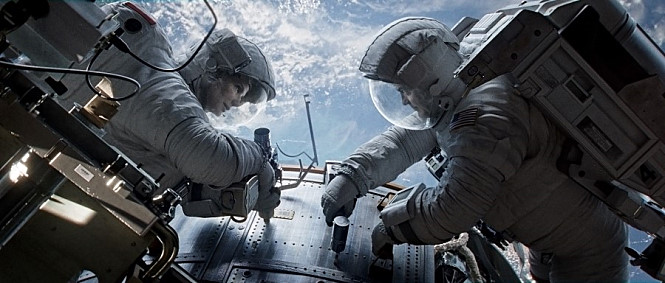
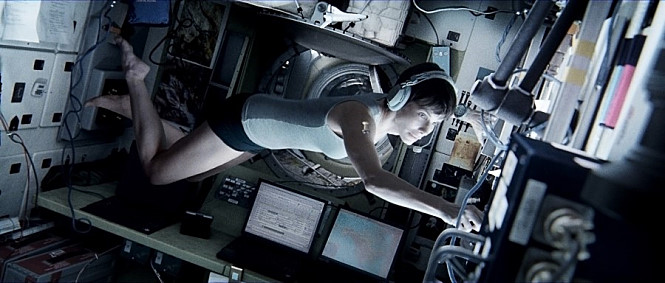
gravity03The movie quietly begins like a calm, peaceful moment before storm. Around 600-km above the Earth, the Hubble Space Telescope is undergoing the latest repair service by NASA, and the mission is almost finished as Matt Kowalski(George Clooney), a veteran astronaut enjoying the last spacewalk in his career, and Dr. Ryan Stone(Sandra Bullock), a bio-medical engineer on her first space mission, and their fellow crew members are going through the last step in their mission. The opening sequence showing their work outside their space shuttle is stunning to say the least; it is certainly filled with lots of CGIs, but everything on the screen feels as real as what we have seen from many documentaries on space missions, and the camera gracefully floats here and there around the objects and characters in the space during this astonishing long-take sequence.

It is apparent that something bad will happen when the mission control center at Huston notify them of the debris of a destroyed Russian satellite approaching in high speed, and it does happen as the camera dynamically and chillingly captures this hair-raising moment with no blink. I heard later that such a disaster is not possible in the real world for several reasons, but its chaos feels plausible and palpable, and the movie firmly sticks to its realistic approach; its sound effects are sparse even though there are many clashes on the screen(no one can hear you having an accident in the space, you know), and the atmospheric score by Steven Price instead provides the urgent sense of danger on the soundtrack.

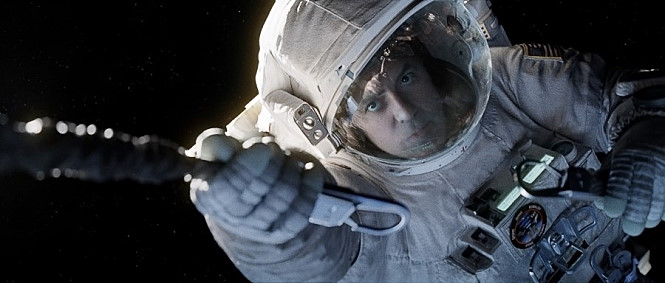
While all other crew members instantly died during this unprecedented disaster, Stone and Kowalski manage to survive, but their situation is not very good although they are still on the orbit around the Earth. The space shuttle is beyond repair, and the oxygen in their space suits is running out minute by minute, and only thing they can rely on for their possible survival is Kowalski’s thruster pack. At least, we can say that their bad circumstance is a little better than that terrifying moment in Stanley Kubrick’s “2001: A Space Odyssey”(1968); remember when one of the astronauts in the movie was helplessly flown away into the vast space during the last moment of his life?

gravity02As Stone and Kowalski struggle for their survival, the screenplay by the director Alfonso Cuarón and his co-writer Jonás Cuarón builds a familiar type of character drama on this perilous situation. The movie is essentially a universal story about facing an extreme situation alone, and the wide space surrounding the characters ironically feels claustrophobic and oppressive as desperation is accumulating inside them. The dialogues between Stone and Kowalski during their long, arduous struggle initially sound conventional at first, but we come to see two people helping and leaning on each other for survival, not the conventions.

The movie depends a lot on the performances of its two actors, and Sandra Bullock and George Clooney fill their respective roles with enough humanity to hold our attention. While Clooney’s role is substantial in the story, Bullock becomes the emotional center of the movie as going through many challenging moments where she should carry the story by herself. The movie becomes a bit sentimental when she tells about how much she was depressed by the loss of her young child, but it wisely holds itself with Bullock’s strong performance, and we gradually notice a certain irony inside her journey for survival.

With such a simple but solid drama as their foundation, Cuarón and his crew continue to provide terrific moments to be appreciated on big screen. The special effects supervised by Tim Webber in the movie are flawless, and the cinematographer Emmanuel Lubezki, who did an amazing job in Cuarón’s previous film “Children of Men”(2006), will probably get an Oscar nomination for his another innovate work here in this film. I particularly love the moment when the camera smoothly moves into Stone’s helmet to present her subjective view to us and then effortlessly moves out into the space; it is certainly helped by special effects and editing, but it is done so well that we are not much aware of its technical aspects while identifying more with her crisis.

gravity05

Many people have already said that “Gravity” should be watched in 3D, and my experience with the 2D version on Thursday night confirmed again my personal opinion on 3D; as shown in “Avatar”(2009), “Hugo”(2011), and “Life of Pi”(2012), 3D is an effective visual tool as long as it is handled by the filmmakers with a clear vision of how to use it. Although I am happy to report to you that there was no particular problem with watching the movie in 2D and saving extra charge, I could clearly sense during the screening that its visceral moments could be improved a lot by 3D or 3D IMAX.

As a matter of fact, I watched it again at the 3D IMAX screening room on Saturday morning, and its 3D effect is indeed another case of the effective use of 3D for bringing you closer to how characters see and feel on the screen(A note to filmmakers: 3D is for immersing the audiences into more intimate or more vivid experience, not for something big, blasting, and busy like blockbuster action films). While you sometimes see lots of objects being floated on the screen as expected, these effects mostly serve for the dramatic effects in the story. One particular scene feels more desperate if you watch it in 3D; I will not describe that scene in details, but let’s say I liked the way how Cuarón makes that scene very memorable just with one droplet of some salty liquid.

“Gravity” is a Space film both thoughtful and entertaining, and it is the best cinematic experience of this year. As he successfully did in “Children of Men”, Alfonso Cuarón immerses us into the reality of his story and characters, and the movie seldom loses the human dimension amid its technical details thanks to his masterful direction and two talented performers. While watching the Earth and its thin atmosphere on the screen, I thought about how precious and fragile our planet is in the middle of the space – and how small and insignificant we are compared to its seemingly endless scope.

As my mind goes around the great moments of “Gravity”, I keep recalling that nice moment of watching “Hubble 3D” along with Ebert. Like many of you, I miss him more as I have kept watching new films he would probably be excited about, and I frequently wondered about what he would think of them. I am not sure about anything, so I cannot say anything, but I just wish you were watching “Gravity” somewhere, Roger.

gravity04

Posted in Movies | Tagged , , , , , | 4 Comments

Blancanieves (2012) ☆☆☆1/2(3.5/4) : Snow White told through silent movie

blancanieves04 Spanish silent film “Blancanieves” is an enchanting work which will show you that silent film is always ready for embracing you if you give a chance. Inspired by one of the famous fairy tales from the Brothers Grimm, the movie freely moves between horror, comedy, melodrama, and romance with its charming style reminiscent of the silent films of the 1920s, and the result is a wonderful achievement both darkly gothic and lightheartedly magical.

Like recent Hollywood films “Mirror Mirror”(2012) and “Snow White and the Huntsman”(2012), the movie tells us a variation of Snow White tale, and it is more refreshing and creative compared to other two films, which were not so terrible but flawed despite their respective good aspects. While retaining several elements in the original story such as that infamous poisoned apple, the movie incorporates new elements including bullfighting(no kidding) and other interesting things into its story, and it is entertaining to watch how it decorates the story with its own flavor while staying true to the light and darkness of its inspiration.

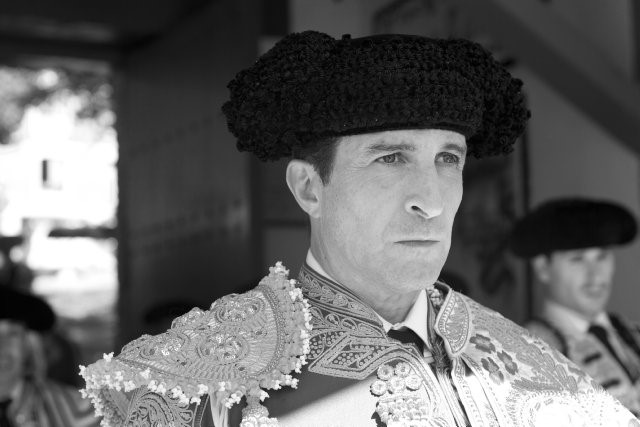
At the beginning, we are introduced to Antonio Villalta(Daniel Giménez Cacho), a bullfighter at the top of his profession – or the king of his profession, shall we say. We see him confidently handling five wild bulls one by one while his lovely pregnant wife Carmen(Inma Cuesta) and other audiences in the arena are grasped by the suspense and thrill on the field, and now he is going to confront the last and toughest one, which will be the grand finale for this event.

blancanieves01Unfortunately, to everyone’s horror, it goes terribly wrong for Antonio. While he barely survives, his body becomes permanently paralyzed by his severe injury, and, to make the matter worse, his shocked wife dies as giving an early birth to their daughter Carmen shortly after her husband’s accident. Devastated by this news, Antonio becomes morose and isolated while not caring much about his infant daughter, who is eventually taken care of by her grandmother.

And that is where nefarious Encarna(Maribel Verdú) comes into the picture as, well, the wicked stepmother. She initially comes to Antonio as one of the nurses at the hospital, and, as soon as she learns that he is rich and alone, she quickly works on him, and it does not take much time for her to become his personal nurse – and then his second wife. Not so surprisingly, she puts her husband into more misery while doing whatever she wants at his vast mansion, and the movie tickles us with the humorously perverted moments associated with Encarna’s sadomasochistic side.

Young Carmen, played by amiably innocent Sofía Oria, has been away from her stepmother’s evil influence while growing up under her grandmother’s care, but, after the grandmother suddenly dies, she has no choice but to be sent to his father’s mansion. Encarna certainly does not welcome her stepdaughter right from their first encounter; she greets Carmen with the hostile and sinister manner not that different from that of Mrs. Danvers in Alfred Hitchcock’s “Rebecca”(1940), and then she immediately sends Carmen down to a dirty basement room. That is just the beginning of her many vicious treatments of Carmen, and Maribel Verdú clearly relishes her juicy villainous role in the film – especially during that deliciously horrible moment involved with Pepe, Carmen’s feisty pet rooster.

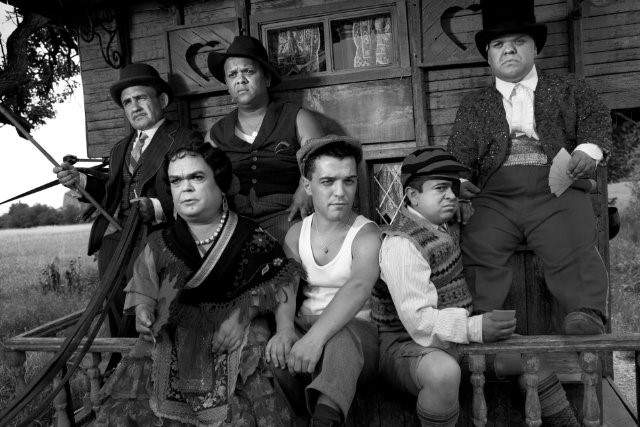
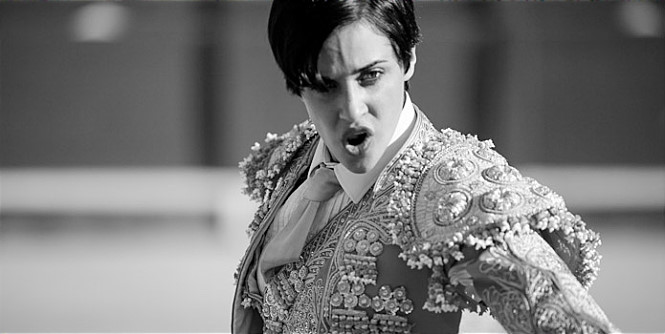
blancanieves07In spite of all the hardship and cruelty inflicted upon her, Carmen never loses her bright, lively personality while having a brief but touching moment of reconnecting with her withered father, who saw the potential inside her and taught her some valuable things about bullfighting. Not long after he dies, Encarna tries to kill Carmen, who now becomes a young lady after several years, but her bumbling servant/driver/sex slave Genaro(Pere Ponce) fails to kill Carmen, and she is saved by a traveling troupe of dwarves(they are six, not seven, by the way). Although she lost her memory when she was almost killed by Genaro, she soon shows her bullfighting skill to impress the dwarves and others, and her popularity as “Blancanieves”(it means “Snow White” in Spanish) quickly rises while our bitchy stepmother is infuriated to learn that the girl is still alive.

The story itself is an engaging fairy tale with humor and heart, and the director/writer Pablo Berger effectively presents it through the painstaking recreation of the ambience of the silent films during the 1920s. Compared to Oscar-winning silent film “The Artist”(2011), which cheerfully danced on the thin line between loving tribute and playful parody, the movie is a little more serious in its approach; its performances and technical aspects are mostly feel authentic, and only sound we hear on the soundtrack is the terrific score by Alfonso de Vilallonga, which fluidly flows around grand orchestral gestures and exciting dance music while coloring the black and white screen of 1.33:1 Academy ratio with various moods and feelings.

blancanieves02The actors in the film did a fine job here in their performances full of gestures and emotions which can overcome any language barrier. While Maribel Verdú definitely has the most fun as the villain of the story, young actress Sofía Oria is adorable and plucky as a young heroine we can care about, and her performance is flawlessly connected to the performance by Macarena García, who plays older Carmen during the second half of the film. Ángela Molina is warm and caring as the grandma who still knows the joy of living despite her old age, Daniel Giménez Cacho convincingly goes between contrasting moods only with his face, and Sergio Dorado interacts well with García while a certain tentative feeling grows between Carmen and his character.

Some people may think silent films are merely artifacts to be studied by film scholars, but good silent films can transcend time and languages to reach to the contemporary audiences, and “Blancanieves” reminds us of their timeless power through its sincere homage. The movie also remains true to the dark, twisted spirit of the Brothers Grim tales, and the ending after its grand fateful finale is a rare moment which simultaneously feels sad, romantic, perverted, and, above all, poignant. After all, didn’t someone say that perverts are sometimes much more romantic than us?

blancanieves06

Posted in Movies | Tagged , , , | 1 Comment

Disconnect (2012) ☆☆☆(3/4) : Only connect…

disconnect04  I am sometimes amazed by how much our society has been changed by the rapid advance of Internet technology during recent years. Thanks to the development of various Internet services for communication, we can contact far more easily with someone we have never met before, and our world certainly feels far smaller than before as we keep interacting with others through Facebook or twitter in real time. Whenever I walk around in my campus, I can always see students operating their smartphones, and some of them are probably communicating with their ‘friends’ on the other parts of the Earth.

But most of us are still not very good at being connected with others despite such technological advance, and “Disconnect” depicts that human fault through its three different interlocking stories associated with the possible problems of our digital era. While we can clearly sense how it pulls its strings as it juggles its plots, the movie sometimes moves us with its genuine emotional moments, and the result is an experience both compelling and thought-provoking despite its shortcomings.

Among its three plots gradually revealed to be interconnected through a few main characters, the most harrowing one belongs to Ben Boyd(Jonah Bobo) and his family. While he is a nice boy with passion for music, Ben looks nerdy and creepy with his long hair and introverted attitude, and that makes him an instant target for cyberbullying when he is spotted by two boys. After quickly finding Ben’s Facebook page, Jason(Colin Ford) and Frye(Aviad Bernstein) approach to Ben as ‘Jessica Rhony’, and Ben immediately accepts ‘Jessica’ as a Facebook friend without doubting her identity at all. You may think this is stupid, but think about what happened to Manti Te’o, an American football player who was fooled to have an online relationship with a nonexistent woman and even believed her death before everything was exposed early in this year.

disconnect06It is just a prank to Jason and Frye at the beginning, but they eventually commit a very cruel thing to Ben. After establishing an online relationship for a while, they induce Ben to send them a nude picture of himself, and then they spread it around their schoolmates. Shocked and humiliated, Ben attempted suicide, and his family is devastated by this sudden tragedy. Ben’s lawyer father Rich(Jason Batesman) becomes remorseful after realizing how much he has neglected his son while occupying with his work, and he becomes obsessed with finding any clue on why his son tried to kill himself.

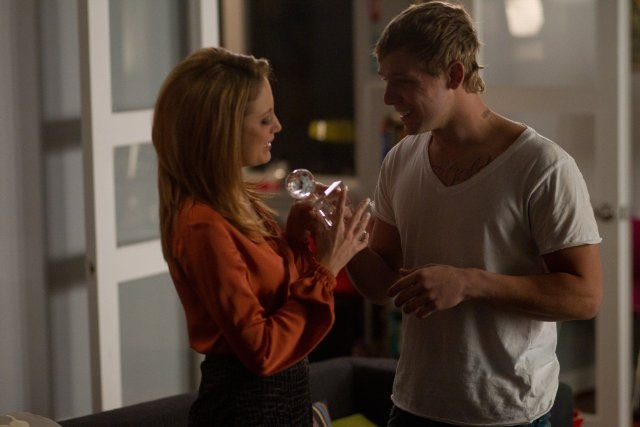
Meanwhile, an ambitious TV reporter named Nina Dunham(Andrea Riseborough) gets involved with Kyle(Max Thieriot), an underage chatroom stripper she encounters while looking for any possible material for her upcoming report on those illegal adult websites employing minors. She approaches to him as a client at first, and then they meet each other in person, and she persuades him to be her interviewee while promising that she will keep his identity in secret.

Things work out well as she promised to him, and her career gets a boost after her news is broadcast, but she soon finds herself in a serious trouble when FBI is interested in the identity of her source. She is conflicted about whether she should betray Kyle’s trust as demanded by FBI, but it becomes clearer that she has already exploited a boy who really likes her, and her sense of guilty only makes the situation worse.

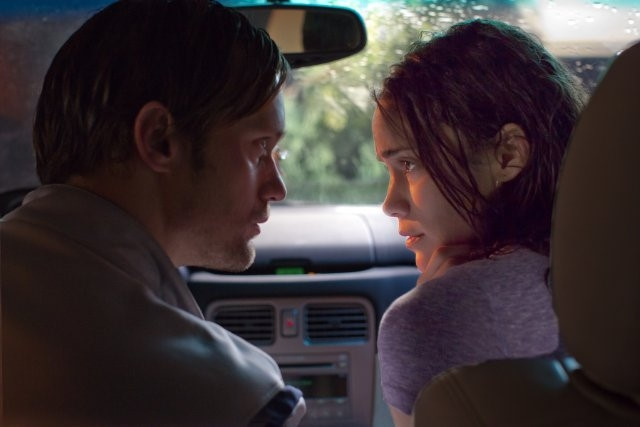
The least successful part of the movie is about a young couple coping with their estranged relationship. Derek(Alexander Skarsgård) has not interacted much with his wife Cindy(Paula Patton), and Cindy, still grieving about their baby’s recent death, finds a small solace from a chatroom site where she talks a lot with some guy who recently lost his wife. Their relationship becomes more strained when they suddenly become the victims of identity theft, and they are frustrated to know that things will not be solved quickly although they hire a private investigator.

disconnect03

This part becomes less convincing as they try to take care of the matter through their amateurish detective work, but the director Henry Alex Rubin, who previous co-directed Oscar-nominated documentary “Murderball”(2005), imbues a considerable amount of realism into the screenplay by Andrew Stern, and his actors come to us as real people facing the problems we can identify with. As watching Derek and Cindy being notified of their credit card problems in the movie, I remembered how much I was shocked and flabbergasted to learn that someone stole and used my credit card during this summer(thanks to the quick measures of my credit card company, I suffered no financial loss in the end)

The actors give solid performances. Jason Batesman, usually known for his comedy films, is effective as a guilt-ridden father, and Frank Grillo is a no-nonsense ex-cop/private investigator who shows more care to his clients than his own son. While Jonah Bobo is heartbreaking as a bullied victim, Colin Ford is also good as a boy belatedly realizing what he has done and being tormented by subsequent guilt. Andrea Riseborough and Max Thieriot play off each other nicely even when they are physically separated, and Alexander Skarsgård and Paula Patton are believable as a couple with lots of emotional issues even when their story gets less interesting.

Like “Crash”(2004) or “Bable”(2006), the movie eventually gathers its interlocking stories together for the finale, but it falters during its climax decorated with jarring slow-motion shots. This feels like overkill rather than emotional catharsis, but “Disconnect” remains to be a good movie presenting its interesting social subject through its excellent individual moments, and it powerfully reminds me that, in spite of all those technological advantages, we are still struggling to do what was emphasized in E.M. Forster’s novel “Howards End” – Only Connect.

disconnect02

Posted in Movies | Tagged , , , , , | 1 Comment