A Girl at My Door (2014) ☆☆☆1/2(3.5/4) : Can she help this desperate girl?

agirlatmydoor03 South Korean film “A Girl at My Door” has an uneasy undercurrent behind its seemingly plain rural background, and that becomes more palpable as things get complicated for its distraught heroine and a young, problematic girl she pities and cares about. She just wants to help the girl in the need of the kindness of a stranger, but, as observing them and other people in their village, the movie gradually pushes these two lonely tarnished souls into the dark, uncomfortable territory of country noir. While we see the unpleasant sights from a human society surrounding and suffocating them, they are not entirely innocent in their gloomy circumstance, and they may pay a big price for their actions if they are not careful.

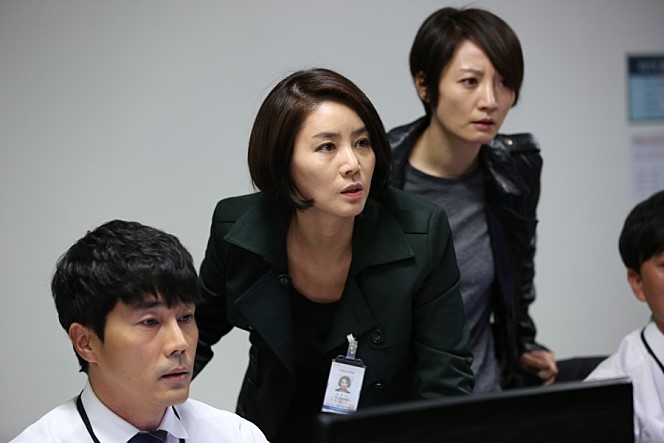
For Yeong-nam(Bae Doona), it was initially a simple matter of keeping herself quiet when she began her first day as the new precinct chief of some beach village. Through her meeting with the superintendent at headquarter, we can only guess that she is transferred from Seoul to this remote rural area because of some personal matter of hers. Neither she nor the superintendent directly mentions it during in their private conversation, but it is clear that she is not so pleased about this downturn of her career. She is cordially welcomed by the village people, and they hold a welcoming party for her during the evening, but she rather wants to be alone, while showing alarming signs of a typical alcoholic including hiding soju in fresh water bottles.

As she gets accustomed to her temporary staying place, Yeong-nam comes to pay attention to a young teenager girl named Do-hee(Kim Sae-ron). While their first encounter was not very pleasant at first, Yeong-nam saves Do-hee when she sees Do-hee being bullied by her schoolmates on one day, and then she learns about how much this young girl has been mistreated by not only her abusive stepfather Yong-ha(Song Sae-byeok) but also others in the village. Yong-ha beats his stepdaughter whenever he gets drunk(he usually does), and there is no one to stop him in his home; Do-hee’s mother left her husband and daughter several years ago, and Yong-ha’s aging mother never cares about her son’s domestic violence. As a matter of fact, she also beats Do-hee whenever she thinks Do-hee deserves to be punished.

agirlatmydoor07 As the precinct chief, Yeong-nam is determined to do something about this problem, but others are not very willing to assist her. Her policemen in the precinct understand her concern, but they also remind her that their village depends a lot on Yong-ha, who has been supplying illegal immigrants to the village which does not have many young guys to work. The village people have turned on a blind eye to Yong-ha’s despicable behaviors because of that, and we also see how they and Yong-ha have been enslaving and exploiting those poor illegal immigrant workers. When Yong-ha savagely beats one of them, everyone near him just stands by while doing or saying nothing, and that makes this cruel moment all the more disgusting.

Yeong-nam is not going to ignore these injustices in the village, and that is certainly not welcomed by Yong-ha and others, who do not like their ‘ordinary’ way of life to be interrupted by an outsider. Some of them frankly express their sexist view even when she is near them, and Yong-ha remains rude and arrogant as before – and he keeps abusing his stepdaughter even after being warned by Yeong-nam at one point.

And then something happens under a rather suspicious circumstance. I don’t dare to detail what it is, but I can tell you that it leads to more development of the relationship between Yeong-nam and Do-hee. When the summer vacation begins not long after that incident, Do-hee starts to stay at Yeong-nam’s home, and Yong-ha does not seem to mind about that at all. After all, he does not give a damn about his stepdaughter even when he beats her, and he sees no problem in someone taking care of her instead.

Now I should be more discreet about describing the movie because the main pleasure of the movie is watching how it reveals what is below the surface as steadily rolling its plot and characters. This is the first feature-length film by the director/writer July Jung, who is also known as Jeong Ju-ri in South Korea, and she did an impressive job of establishing a realistic rural mood for her movie. The Characterization may be a little too simplistic in case of the supporting characters, but they feel like real people you may meet in any country town in South Korea – or any other countries. These ‘ordinary’ people in the movie condone the violation of human rights just because it benefits them and their village, and we all know such a thing has been committed around our world countless times in the name of common good or any other convenient excuses.
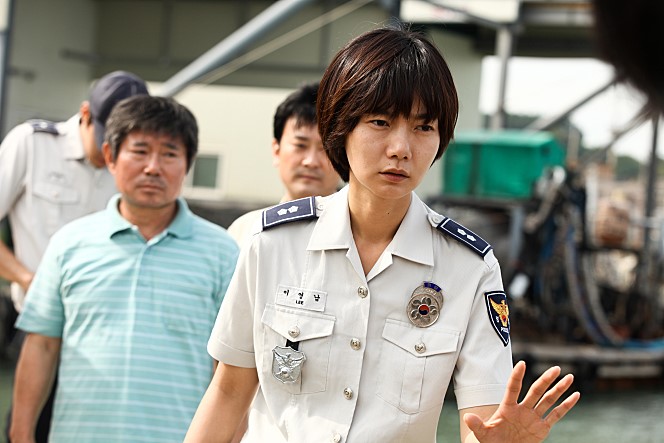
agirlatmydoor01 Disgusted by this banal evil inside the village, Yeong-nam feels more need to protect and help Do-hee, but, like any flawed/damaged noir characters, she has a secret she does not dare to tell to others. Around the time we get to know more about it, Yong-ha also happens to discover Yeong-nam’s secret by chance, and that makes her situation more difficult. Will she be able to do the right thing even if he will expose her secret to everyone?

And then we begin to observe some questionable aspects of the growing relationship between Yeong-nam and Do-hee. While she is still a child with pieces of innocence left inside her, Do-hee has hidden troubled sides as shown during a striking moment of hysterical self-abuse, and her increasing affection toward Yeong-nam feels rather unwholesome especially when she shows her strong need to be loved under Yeong-nam’s care.

As observing their scenes, we naturally wonder about what exactly Yeong-nam feels about Do-hee, and Bae Doona is superb in her understated performance which implies a lot about what is possibly imploding behind her mostly calm face. There is a terrific scene in which Yeong-nam cannot simply answer yes or no to a very insensitive question hurled at her, and we can sense both anger and shame behind her face even while she maintains her tight composure on the surface. Yes, it goes without saying that she did a right thing for Do-hee when she let Do-hee stay at her house, but we also know that her time with Doo-hee was not wholly innocent even in objective view – and so does she.
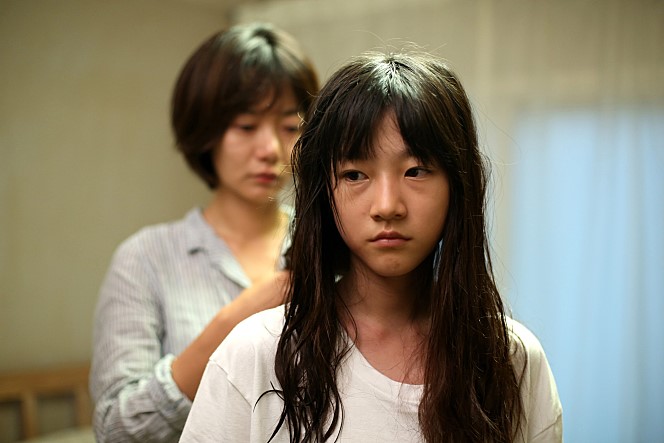
agirlatmydoor04 The performance by Kim Sae-ron, a 14-year-old actress who previously made a breakthrough with her remarkable debut performance in “A Brand New Life”(2009), is also crucial to the film. As an abuse victim, Do-hee surely deserves care and help, but she gradually turns out to be not as innocent as she seemed to be at the beginning. She may be innocent enough to throw her protector into a serious trouble, but, as one supporting character points out, she is a lot different from other kids at her age, and we slowly begins to feel the darkness somewhere inside her elusive bruised heart as watching her unsettling behaviors. Look at her face closely when she realizes something should be done at one point – and look at how she subsequently follows the logic of her situation with no hesitation or guilt.

We are accordingly disturbed by what she does during one quiet but intense scene, but we are not surprised because we have somehow been aware of what she is capable of. This scene is uncomfortable to watch for good reasons, but it is thankfully handled with care and restraint, and Kim Sae-ron proves again that she is a genuine talent to watch, as deftly modulating her performance somewhere between innocence, boldness, and wiliness.

While generating nervous chemistry between their very good performances, Bae Doona and Kim Sae-ron are surrounded by good supporting actors. Song Sae-byeok is truly loathsome as the scumbag villain of the movie, and you will probably want him to be struck by lightning sooner or later. Some of you may think Song is too over-the-top in his slimy performance, but I must tell you that I have seen a number of very rude Korean animals like him during my daily life in South Korea – and they usually chew their scenes without any inhibition to hold them. Moon Seong-geun and Kim Min-jae briefly appear as Yeong-nam’s superiors, and Jang Hee-jin has a revealing scene as a minor character who visits the village to meet and talk with Yeong-nam for their unfinished matter.

Not long before it was released in South Korea, “A Girl at My Door” was also shown at the Cannes Film Festival of this year, and it has been receiving positive reactions from both sides. Some critics pointed out that the movie could have dug deeper into its social subjects, but the movie is effective as a very compelling mix of character drama and shady noir tale thanks to its good mood and performances, and the ambiguous tone of its ending will leave you something to think about after watching it. There were actions, and then there are consequences, so what will happen next? I do not have an easy answer for that, but I did care about the story and its characters, and that is more than enough to recommend this wonderful debut work, which will be remembered for a long time with the special performances from its two talented actresses.

agirlatmydoor02

Posted in Movies | 1 Comment

Godzilla (2014) ☆☆1/2(2.5/4) : It roars in its lumbering steps

godzilla05 Gareth Edwards’ much-anticipated film “Godzilla” is a big monster flick wearing a big gray suit of disaster movie, and that combination feels awkward at times in spite of its several inspired moments to be watched. The movie intends to focus more on how it would feel like for us if a big, towering creature suddenly breaks into our world, and it is sometimes terrifying while reminding us of how helpless we would be in front of a gigantic unstoppable disaster to crush us all. Unfortunately, its story lacks human interest solid enough to support its interesting attempt while merely following its scheduled course, and our big diva steals the show from its inconsequential human extras as usual, as we want more from this humongous creature.

Rather than fully showing Godzilla from the beginning, the director Gareth Edwards wisely chooses to build tension gradually along with a touch of mystery and dread, and he did a lot better job than Roland Emmerich in that dreadful 1998 film on the whole. His film also begins with an ominously busy main title sequence mainly consisting of nuclear bomb test footages, but, compared to that hideously unentertaining film, it is more effective in making us curious and fearful about what will be soon revealed on the screen.

Its first act revolves around a lone obsessive search by Joe Brody(Bryan Cranston), an American engineer who was working at a nuclear power plant in Japan on that unforgettable day of his life. Not long after he detected from his latest data that something strange was happening and it might endanger his nuclear power plant sooner or later, a big disaster happened as he feared, and this catastrophic incident devastated not only his family but also the surrounding area as a result.

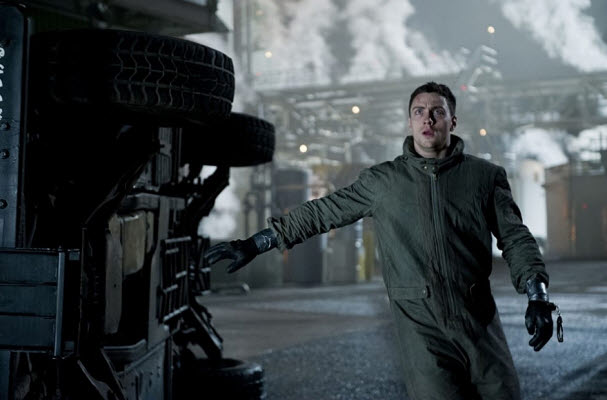
Strongly believing that it was not just an unfortunate accident, Brody has been trying to find the truth behind it by any means necessary, and that has naturally made him estranged from his son Ford(Aaron Taylor-Johnson, who looks thicker and beefier than usual) for many years. Although he witnessed that disaster happening right in front of his eyes when he was young, Ford has been moving on with his own life as a lieutenant of US Army(he is an expert in defusing bomb), and his loving wife and their young son in San Francisco are expecting to have a nice time with him when he is about to return after his tour of duty.

godzilla02 Despite the estrangement between them, Ford immediately comes to Japan when he hears that his father needs his help. They later go inside the restricted area to retrieve some important computer data still remaining at their old home(your children may want to ask you about a certain old-fashioned storage medium when they see it), and it does not take much time for them to discover what exactly happened at that time – and what is going on right now.

It turns out that Dr. Ichiro Serizawa(Ken Watanabe) and his assistant Vivienne Graham(Sally Hawkins) have been studying on Godzilla and other big creatures in their secret research project, and we get some basic information about their origin and life style. According to Dr. Serizawa, these monsters are creatures of ancient times feeding on radioactive materials, so nuclear weapons are more or less than little nice snacks for these creatures although the military guys in the movie still think nuclear weapon can be used in emergency. As listening to their talks, I naturally began to wonder about whether there is a possible evolutionary advantage in feeding on radioactive materials or generating big electromagnetic pulse, but I guess that is one of many preposterous things the movie willingly ignores as being true to that goofy spirit of those old Godzilla movies.

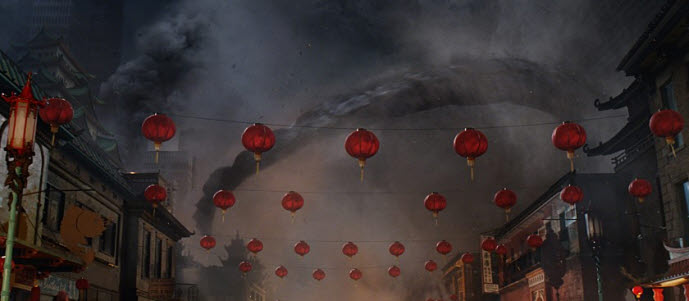
As the story converges on the spot to be crushed and pulverized, we get a number of good moments as tiny human characters are swept by this unprecedented disaster, and it is chilling to watch sometimes because we get the sense that people are really injured or killed amidst the Pandemonium of crumbling buildings and collapsing bridges. There is a striking wide shot during the Honolulu airport sequence as people watching in horror the loud, explosive havoc in progress, and then we get a terrifying scene at the Golden Gate Bridge which sort of reminded me of one brief shot during the prologue sequence from “Pacific Rim”(2013), another big monster movie which was incidentally released in last year. During its climax sequence, the movie gives us a memorably eerie moment showing a group of soldiers skydiving into the center of disaster for their urgent special mission. It is initially progressed through the view of one of them as he and others rapidly approaching to their landing site, and then the movie eventually looks at their risky descent into the city from the distance with grim, apocalyptic beauty which is effectively enhanced by György Ligeti’s “Lux Aeterna” on the soundtrack.

godzilla03 But then, human characters in the film, who are more or less than two-dimensional stock characters from the start, become less interesting than before, and the screenplay by Max Borenstein and Dave Callaham keeps inhibiting the movie mainly due to its weak drama and characterization. The actors in the film seem to be willing to accept their thankless roles and ridiculous dialogues, but they have a few things to do besides looking serious or scared. While Ken Watanabe solemnly warns or advises to others including Admiral William Stenz(David Strathairn), Sally Hawkins is completely wasted as looking fretful all the time, and the same thing can be said about Aaron Taylor-Johnson and Elizabeth Olsen, who plays Ford’s young nurse wife. While Bryan Cranston and Juliette Binoche are good in conveying the emotional bond between their characters only with a couple of scenes between them, but the movie has so many things to juggle around the world that they do not leave much impression to us, and you may wish that they would also have played something far bigger than their characters.

We eventually get a payoff as promised when Godzilla finally appears in its full massiveness during the third act, but it is less exciting than expected, and we do not see a lot of Godzilla even at this point. I like the mythic quality of a short moment when Godzilla directly faces a human character and then disappears into the shroud of smoke and ashes, and I am glad that the movie is not entirely devoid of humor while also not resorting to bland, weightless CGI spectacles, but I was not amused or excited enough to be interested in its story and its well-made spectacles. At least, I was mildly amused by what I saw around the end of its climax, and I duly wrote down in my mental pad: “So I guess that was what probably happened to that poor drummer guy in ”This is Spinal Tap“(1984).

Gareth Edwards previously made “Monsters”(2010), a small-budgeted monster film which was in a far smaller scale compared to “Godzilla”. While I admired how he convincingly created a familiar but different world where big monsters become a mundane subject of daily TV news, I gave it only two stars at first as complaining about its rather rudimentary plot, but the second viewing changed my opinion and I wrote a three-star review in the end. Considering that I make a similar complaint about “Godzilla”, I will probably change my opinion later when I watch it again, but I have some doubt despite my admiration.

godzilla04


Posted in Movies | Tagged , , , | 2 Comments

Ginger & Rosa (2012) ☆☆☆(3/4): A turning point in their relationship and their world

gingerandrosa01 While we still have more than enough atomic bombs to wipe out the whole civilization of ours, there has not been any moment as fearful as the Cuban Missile Crisis in 1962. Not long after seeing how destructive a small atomic bomb could be at the end of the World War II, people around the world became scared by the possibility of apocalypse as watching two powerful leading nations in the middle of their nuclear poker game, and some people knew well that nothing could possibly help them and others if the nuclear attack began.

With such a terrifying time as its period background, Sally Potter’s “Ginger & Rosa” tells a coming-of-age drama revolving around one girl who happens to go through painful moments as opening her eyes to her own small world and the world outside. Her name is Ginger(Elle Fanning), and she was born in 1945 when the World War II was about to end with two atomic bombings in Japan. Her best friend Rosa(Alice Englert, a daughter of Jane Campion) also happened to be born at the same time in the same hospital, and now they become spirited teenager girls who are ready to embrace the change to be brought in the 1960s. They enjoy their evening together whenever they get a chance, and sex and alcohol come handy to them if they want.

Of course, their mothers are not so pleased about this. Ginger’s mother Natalie(Christina Hendricks) has sacrificed many things during her unhappy married life with her husband Roland(Alessandro Nivola), and she begins to worry about her daughter because Ginger can make the same mistake she made when she was at Ginger’s age. There was indeed the time when Natalie loved Roland a lot, but she has been having a fair share of disillusionment thanks to her husband who has not been much of help to her hard management of their household. While Roland has a job(he teaches students at some university while writing articles and other things), his salary is not enough to support his family, and he does not seem to appreciate much his wife’s efforts. When she shows her wish to be loved and appreciated during one dinner, he gives her a rather cold response at first but then reluctantly comforts her after belatedly realizing that she feels really hurt about that.

gingerandrosa02 Roland is a care-free guy with charm and intelligence, and Ginger naturally worships her dad. As a guy valuing freedom and independent thoughts, he is happy to see his daughter maturing with more thoughts of her own, and she is also encouraged by Roland’s liberal friends including Bella(Annette Benning) and Mark and Mark Two(Timothy Spall and Oliver Platt), a gay couple who are also Ginger’s godfathers.

Through their influence, Ginger’s attention is drawn to the campaign against nuclear weapon, and she begins to think more seriously about what can happen to the world because of atomic bombs. The government tries to assure to citizens that they can be all right if they follow emergency protocols, but, like Ginger and others, most of us know well that it is wiser to be killed at the ground zero if full nuclear attack is about to happen. Seriously, who can possibly want to survive among the ruins covered with radioactive ashes?

As her mind is being occupied with this social/political matter threatening the world outside, her private world also begins to be shaken. Her parents goes through another period of separation, and it seems to be the end of their marriage in this time. Ginger chooses to live with her dad as she wants, but she only finds that she is not so treated well just like her mother. Her dad is busy with his works as usual, and she is only reminded that her presence is more like a burden to him although that does not mean that he does not care about her.

Meanwhile, she also finds that Rosa becomes less friendly than before as their difference becomes clearer to both of them. Unlike Ginger, Rosa thinks her personal feeling is more important than what is going on in the world outside, and it is pretty apparent to us where her feeling is heading even before Ginger realizes what is going on between her friend and her dad during one night when they are together on his boat.

gingerandrosa03 Along with the Cuban Missile Crisis, an unexpected revelation from her friend puts Ginger in more anger and confusion, and that eventually results in an expected melodramatic scene involved with all of the main characters. The director/writer Sally Potter draws good performances from her cast, and Alessandro Nivola is particularly unlikable during that scene as a self-absorbed man who should have seen how much pain he has casually inflicted on others. Even when he is confronted by others for what he has done, Roland only hides behind petty ideological excuses, but then he learns a really painful lesson about himself in the end as facing the consequence.

Needlessly to say, the center of the movie is Elle Panning, who previously gave a breakout performance in Sofia Coppola’s “Somewhere”(2010) and recently appears in the upcoming film “Maleficent”(2014). She is very believable here in this film as a smart, sensitive girl struggling with her emotionally difficult time, and her excellent performance confirms that she is becoming a wonderful actress like her elder sister Dakota Fanning.

While it may be a little too short to give enough space for other talented actors surrounding Fanning, “Ginger & Rosa” did its job well within its short running time as a familiar but engaging coming-of-age drama. Its ending feels a bit abrupt, but we can sense that Ginger has grown up a lot through her pains as recognizing that things will never be same as before. Maybe she cannot change the world as she wants, but she now knows that she can do something at least for herself – and her life to live.

gingerandrosa06

Posted in Movies | Tagged , , , , | Leave a comment

Approved for Adoption (2012) ☆☆☆1/2(3.5/4) : An outsider between two countries

approvedforadoption01Some animation films try different things outside the usual territory for young audiences, and little Belgian animation feature film “Approved for Adoption”, which was released as “Couleur de peau: Miel” in Europe, is one of such works. It is not only about a sad, shameful fact in the modern South Korean history but also about an outsider who has been always conscious of his status since the first day in his new country, and its engaging mix of animation and autobiography generates genuine moments of deep emotions while he looks back on his childhood and adolescence years as a grown man still feeling awkward between two countries either of which he has never entirely belonged to.

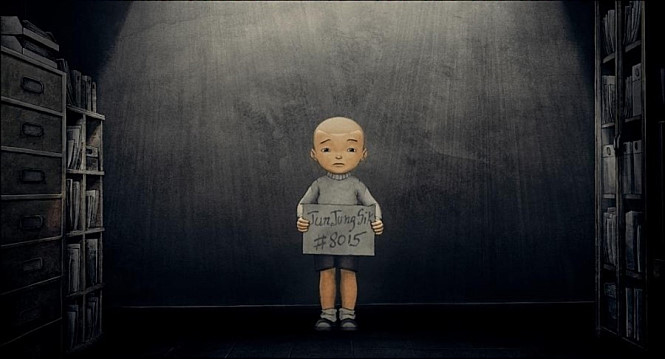
When he was around 5, Jung Henin, the co-director of this film who also wrote the autobiographic graphic novel adapted by him and his co-director Laurent Boileau, was a homeless kid in South Korea during the 1970s. His father was unknown to him, and he did not remember well his mother who abandoned him, and he is not even sure about whether his recorded Korean name, “Jun Jung-sik”, was his real name at birth. With no document to tell more about him or his mother, Jung only speculates that he was an illegitimate child, which was a hefty social stigma to any South Korean woman during that time(and it still is, by the way).

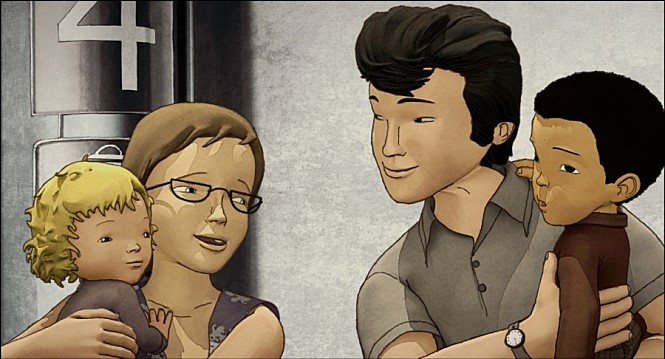
Since the Korean War, around 200,000 South Korean children were sent to US, Canada, Europe, and Australia for adoption, and Jung was one of those kids. After he was taken to an orphanage by a kind policeman who noticed Jung on the street, he was adopted by a Belgian couple through the Holt International Children’s Services, and Jung dryly tells us that it was a fancy trend to adopt Asian orphans during that time in Belgium. In fact, he was not the only Asian kid in his adoptive parents’ neighbourhood, and they adopted another South Korean orphan a few years later.

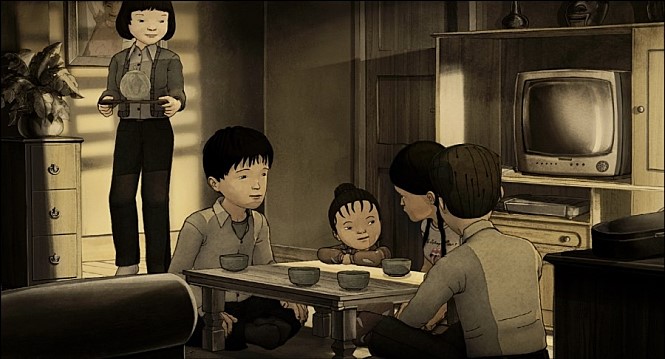
approvedforadoption03 Jung’s adoptive parents are not that good enough to receive the Parents of the Year award, but they provided him a fairly nice home environment, and Jung’s new brothers and sisters got along well with him. While the main story is depicted through the lovely animation influenced by the simple but intimate hand-drawn style of Jung’s graphic novel, the movie also shows us the home video footage which was really shot during that period, and we see young Jung enjoying happy times with his new family. He surely felt awkward as a boy with different skin color(“Couleur de peau: Miel” means “Color of Skin: Honey” in English), but his new life was certainly far better than living the life of a social outcast in South Korea.

As growing up, Jung became more and more accustomed to his new home. He soon learned to speak French(and a bit of Flemish), and his original language was forgotten as the time went by. He became especially friendly with one of his new siblings, and, like any other boys, he began to be interested in girls. He was not very pleased about learning ballet instead of soccer due to his adoptive mother’s instruction, but he had good opportunities to see girls more closely during ballet lessons, so we have an innocently naughty sequence of his fanciful fantasy involved with one of them.

But there was always something empty inside his heart. He tried to distance himself from who he was, but that only made him unhappier while making him more troubled during his adolescent years. While he received some pretty harsh treatments from his parents and other adults, young Jung was not an innocent victim at all, and Jung is frank about the fact that he sometimes deserved the punishments for his rebellious deeds.

Fortunately for him, he developed his artistic talent while spending lots of time on imagining and drawing many things including his own biological mother. One of his schoolmates, who was also adopted from South Korea, recognized his talent while befriending him, and she later introduced him to a South Korean couple who kindly showed him a few things about the country he had nearly forgotten for years.

approvedforadoption05 Jung finally visited South Korea in 2011, and we sometimes watch him looking around the streets and alleys of Seoul as following his story. Silent in his observation of the city and its people, he looks like an ordinary South Korean middle-aged man as surrounded by others, but he still feels like an outsider just like he has been in Belgium, and his gentle, reflective face looks sad and melancholic at times.

While he was lucky enough to go through his difficult years and then move onto to adult life with considerable artistic success, we are told later that some of the adoptive kids he knew were not as fortunate as him while struggling with their own identity matter. There was a dark point when he hit the bottom during his wandering years, but then he realized something important through a poignant moment between him and his adoptive mother, who dearly loved him more than expected despite all the imperfect sides of hers.

Like Marjan Satrapi’s “Persepolis”(2007), “Approved for Adoption” is one of good examples of how talented artist can be both personal and imaginative with animation genre. This is a simple but moving story told from an interesting viewpoint, and I was particularly touched by how Jung eventually arrived at the end of his long emotional journey. His somber conclusion on who he really is may sound simple, but we understand well how hard it has been for him to reach to that simple conclusion – and how much he feels better about himself in the end.

approvedforadoption06


Posted in Movies | Tagged , , , , , | 2 Comments

Narco Cultura (2013) ☆☆☆1/2(3.5/4) : Bloody culture of drug, violence, and ballad

narcocultura01 One of the memorable scenes in the American TV series “Breaking Bad” was a music video opening scene for one of its episodes. While three musicians, who are the members of Los Cuates de Sinaloa, perform a cheerful Spanish ballad, many horrific images of guns, drugs, and dead bodies are intercut with their performance, and you will probably get some pretty good idea about what these guys in black clothes are singing about even if you don’t speak Spanish.

When I later heard about Shaul Schwarz’s debut documentary “Narco Cultura” and its disconcerting subject in last year, that musical scene immediately came to my mind, and I come to learn more about “narcocorrido”, a recent variation of the Mexican northern ballad genre. While ‘non-narco’ corridos in the past were usually about revolutionary fighters like Pancho Villa, narcocorridos, which dates back to the 1930s, are about drug gangs, and the lyrics of these songs are quite disturbing to hear sometimes because they frankly depict those horrific real-life criminal activities over the Mexico-US border region. I must confess that my eyes were rolling while reading the translated lyrics in the film, and I was not so surprised about this sub-genre being compared to hip-hop or gangster rap.

Whether you like it or not, it is undeniable that this questionable music genre reflects the immense social problem affecting both Mexico and US even at this point, and the documentary shows us gut-chilling sights while looking around the hopeless bloody chaos caused by this problem. Senseless and ruthless violence committed by drug cartels reigns over streets and alleys as terrifying ordinary citizens no end, and its latest rampages become a source of inspiration for criminal ballads, and they are popular among not only criminals but also others who can be next victims or next criminals – and it goes on and on.

narcocultura04 The documentary focuses on two people who cannot possibly be more different from each other. Richi Soto has been working as a crime scene investigator in Juárez, Mexico, and his phlegmatic narration tells us about how his city has been turned into a war zone where he and other policemen should be very careful whenever they go out(they usually wear masks during their work for not being identified, for example). When he was younger, the city was relatively safe if not affluent, but now it becomes one of the worst cities in Mexico because of the expanding influence of Sinaloa Cartel, one of the most powerful drug cartels in Mexico. According to the documentary, the amount of money collected through drug and other illegal businesses by this cartel is so enormous that its former boss, who was arrested early in this year, was even ranked as one of the most influential businessmen around the world by the Forbes Magazine(Of course, the Mexican government was outraged by this in public).

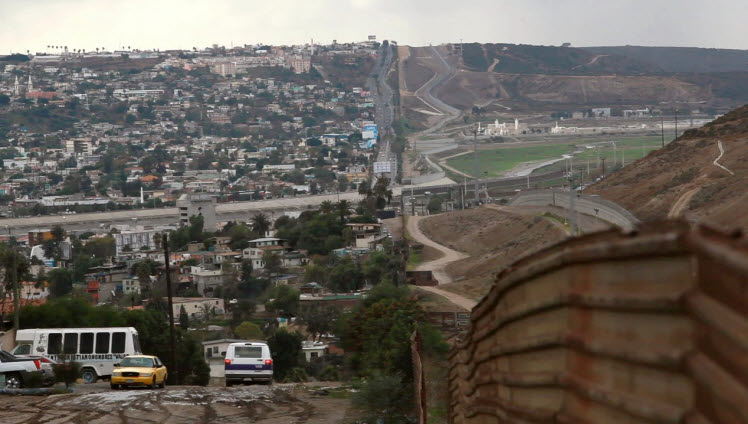
During 2008, the number of murder incidents in Juárez was 1,623, but then it was increased to 3,622 during 2010. That makes a striking contrast to El Paso, its neighboring American city which has been one of the safest cities in US and where only 5 murder incidents happened during 2010. These two cities are only separated by the Mexico-US border, and they look like heaven and hell when the camera beholds these two contrasting cities together in its wide view.

After watching Soto struggling with his ever-frustrating police work on the streets of Juárez every day, we later see him spending some free time in El Paso, and that makes a striking change of mood. He can be relaxed for a while as not worrying about any possible sudden attack, but he muses on how comfortably alien the city feels to him. He sometimes thinks about moving to El Paso with his girlfriend, but he likes his job despite the constant danger he has to face everyday, and he still cares about the city where he has been living since his birth.

On the opposite, we meet Edgar Quintero, a young member of a popular narcocorrido band named Bukans de Culiacan. He was once in prison, but now he become a family man living in LA, and he is willing to use his musical talent for earning money for him and his family. Like others, he gets inspiration for his songs from latest criminal incidents(there is even a website providing him and others all those grisly details about them), and he sometimes directly deal with street thugs when they need his service. We see him and other band members doing performances in LA and other cities, and, as far as I can see, they are good musicians, though they go a little too far when they bring a big bazooka(no kidding) on the stage during one of their concerts.

narcocultura07 As they go around the country, we meet other musicians in their rather shady music industry which has been known to be associated with prominent Mexican drug cartels. Most of them are popular among Mexicans and the Spanish-speaking population in US, and it is uncomfortable to see those violent criminal stories in their songs being embraced by their fans. Sure, there is not anything heroic or romantic about being criminal, but any opportunity to get out of poverty looks cool to many people living in poor environment, and they are all wiling to be the next big-time drug lord, although they will be replaced by others sooner or later even if they make it to the top.

Regardless of what I think about his songs, I think Quintero is a nice man who seems to have his own lines not to cross due to his past experience, but he is not above acting like a gangster wannabe while looking as harmless as, say, Tupac Shakur. His motive for his ‘pilgrimage’ to the area under the control of Sinaloa Cartel may be just searching for another source of inspiration, but we cannot easily laugh when he is near guns and bags of methamphetamine crystals or tries some cocaine in front of the camera(I guess there will not be much legal trouble with that when you do it in Mexico).

And then there is a memorable scene in which he visits a big cemetery previously shown in “El Velador”(2011), another interesting documentary about Mexican drug culture. Many drug lords were buried in this place, and we see various mausoleums for these criminal millionaires here and there in the cemetery. These crypts are usually two or three stories tall while decorated with domes, crosses, and bulletproof windows, and they make the cemetery look like a morbidly fancy town for the dead when you look at them from the distance.

narcocultura03 While struggling to survive in their poor and unsafe environment, the living keep suffering from crime and violence as usual meanwhile. Even when there is a massive angry civilian protest against the increasing number of gang-related murders, there come the latest murder incidents to be handled by Soto and his colleagues. A concerned newspaper reporter tells us that only 3% of the murder cases are properly handled by the police, and she also bitterly points out that perpetrators usually get away with their crimes even in that case.

“Narco Cultura” is a dark, harrowing documentary which alarms us and then fascinates us with the long connection between one controversial Mexican music genre and the ongoing bloody tragedy reflected through it. It is easy to blame those narcocorrido musicians for packaging horrible crimes into popular songs, but those musicians may be just the messengers to tell us how things are getting worse and worse – and how that environment generates another bad influence through twisted market logic. As you know, crime sells even if it does not pay, and there is always supply wherever there is need.

narcocultura05


Posted in Movies | Tagged , , , , | Leave a comment

The Unknown Known (2013) ☆☆☆1/2(3.5/4) : What can be known from Mr. Rumsfeld?

theunknownknown01 “There are known knowns; there are things we know that we know. There are known unknowns; that is to say, there are things that we now know we don’t know. But there are also unknown unknowns – there are things we do not know we don’t know.”  

– Donald Rumsfeld

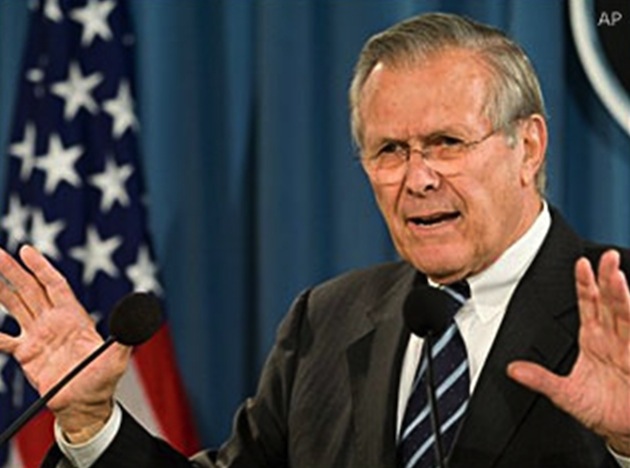
  As a man with an illustrating political career, Donald Rumsfeld surely tells many things to amuse or fascinate us in Errol Morris’ new documentary “The Unknown Known”, which I watched on my second(and last) day at 2014 Jeonju International Film Festival. He seems to be ready to answer to anything, and he never becomes aggressive or hostile to several hard questions thrown upon him,  but we only get the sense of something inscrutable behind his amiable smiling face which feels increasingly sneaky as we spend more time with him. Here is the man who bombarded his people with lots of memos during his tenure, and those memos of his, which were jokingly nicknamed “snowflakes”, only seem to lead Morris and us to more bafflement and more uncertainty – even when some of the unclassified ones are read by Rumsfeld himself on the screen.

Nevertheless, we cannot help but watch Rumsfeld talking about himself and his career during the interview. After establishing his political career as a young conservative US Congressman from Illinois, he became a key member of the Nixon administration, but he was not regarded well by Richard Nixon and his inner circle in the White House because they thought he was too friendly with the Washington Post and the New York Times. He was eventually transferred to an oversea post, but that turned out to be a blessing in disguise; not long after he began to work at the NATO headquarter in Brussels, the Watergate scandal broke out, and he could easily come back to Washington as a close confidant of Gerald R. Ford, who soon appointed him as the White House Chief of Staff.

And then there was a time when he really could have been on the way to the President of the United States. When Ronald Reagan was about to choose his running mate before the 1980 presidential election, Rumsfeld was ready to receive Reagan’s call but was only told later by Reagan that he chose George H.W, Bush instead, who eventually became the president after Reagan. Showing no particular hard feeling about that crucial moment as describing it, Rumsfeld only seems to be mildly amused when he is asked by Morris about how things could have been turned out differently.

theunknownknown05 During the 1980-90s, Rumsfeld turned his career to business field, and he went through the top positions of several prominent pharmaceutical corporations. In 2001, he was appointed to the Secretary of Defense by George W. Bush, and there is a certain dark irony in the fact that he mentioned the Pearl Harbor attack as a “failure of imagination” in the nation’s defense establishment, not long before 9/11 happened.

As many of you know well, the situation has been getting worse for the American government and its people since that terrible incident. The immediate invasion of Afghanistan in 2001 was soon followed by the invasion of Iraq in 2003, and both wars have cost America trillions of dollars and countless lives of its soldiers. With no clear end in sight, War on Terror has only deteriorated the oversea image of America, and things still do not look that well even after Osama bin Laden was found and killed in 2011.

On the surface, Rumsfeld candidly tells us about his serving time in the Bush administration. It is surely interesting that he was in the Pentagon building when one of the hijacked planes crashed into the building, and it is rather funny that he learned about the president’s decision to invade Iraq only after Dick Cheney notified it to the Saudi Arabian ambassador. In his view, captured terrorists and other detainees could not be regarded as prisoners of war as defined by the Geneva Convention, and he emphasizes to us that the Guantanamo Bay Detention Camp was a proper place to handle detainees and extract any useful information from them.

theunknownknown02 While he does not deny that he authorized ‘enhanced interrogation techniques’ to be used at the Guantanamo Camp, he tells us that he was also surprised and disturbed by what happened at the Abu Ghraib prison. He was fully ready to take the responsibility as the Secretary of Defense when the Abu Ghraib scandal shocked not only America but also the whole world, and he offered his resignation twice to the president, but both of his requests were denied(he was eventually fired later).

These things are what most of us already know, and you will not get anything new or significant from Rumsfeld if you expect him to tell more about how America was tumbled into the most disastrous political quagmire since the Vietnam War. He is mostly in good mood in front of camera, and he is a smooth, fluent talker with sharp intelligence despite his age, but there is something obfuscating what we want to know from him while we are watching and listening to him. The more he tells, the less we feel enlightened, so to speak.

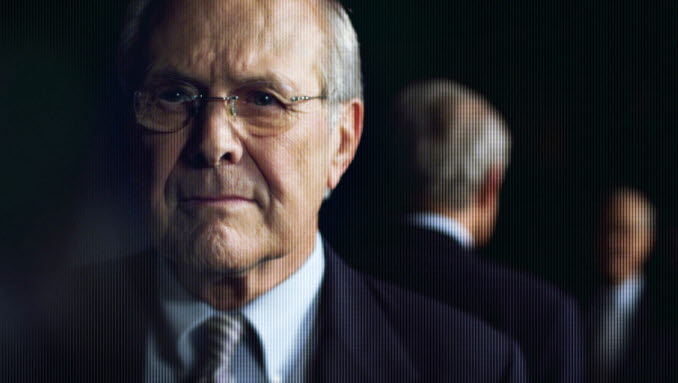
Does he really feel any regret or responsibility for what he and his government caused? The camera sometimes focuses on his silent face for a while during the interview, and we naturally wonder about what he is thinking behind his face. At one point, he talks about his personal experience with a wounded solider at Walter Reed hospital, and he becomes a little emotional about that experience as depicting it, but, as watching his face on the screen, I began to wonder whether it was just a superficial attempt to evade Morris’ question. When he is asked about how the invasion of Iraq will be regarded in the future, he only gives a typical banal answer we have heard from so many politicians: “Time will tell”.

theunknownknown04 That maddening obscurity inside Rumsfeld’ face gradually becomes the ambiguous center of the documentary, and the director Errol Morris, who is no stranger to the enigmatic side of humanity as shown from his many acclaimed documentary films including “Gates of Heaven”(1978) and “Fast, Cheap & Out of Control”(1997), gives us a confusing but oddly compelling experience while throwing off-camera questions to Rumsfeld more frequently than usual. As Rumsfeld speaking directly to the camera, the crisp images provided by the cinematographer Robert Chappell and various archival records and footages accompany his words from time to time, and Danny Elfman’s elegantly minimalistic score adds extra ambiguity to the mood of the film while signifying little on the surface.

“The Unknown Known” has been compared to Morris’ Oscar-winning documentary “The Fog of War”(2003) by many reviewers, and that is not so surprising considering how they feel so different from each other despite the overlapping areas between them. While there are certainly many things he chooses not to talk about, Robert S. McNamara in “The Fog of War” frankly reveals and reflects on the successes and failures during his political career, and his insightful introspection has a number of valuable lessons to learn for any high-ranking politician in the world. Rumsfeld is surely an interviewee as smart and engaging as McNamara, but, as Morris said, he is “deeply unreflective” while McNamara was “deeply reflective”. He left many memos for something to be learned from them later, but it seems there is nothing much to be learned from them, and his curious obsession with definition of words only blurs what can be possibly revealed from them, as reflected by the recurring image of snowflakes obscuring what is inside a glass ball.

In contrast to McNamara, who operated in a political world with clearly defined lines, Rumsfeld belongs to a different political world where nothing is clear or definite, and only possible lesson implied through the banality of his memos is alarming to say the least. His words can be pretty flexible and bendable in their meanings(“The absence of evidence is not the evidence of absence”), and he and others have conveniently distanced themselves from the consequence while taking no direct responsibility for that – and that may happen again if we are not cautious.

In the end, we are still quite unsure about whether there is anything unknown about Rumsfeld we do not know – or whether there is anything unknown about him that he actually knows while believing he does not know. During the final scene, Morris asks Rumsfeld why he agreed to be interviewed from the beginning. Again, he evades the question with his usual jolly smile: “I’ll be darned if I know.”

Sidenote:

1. Morris dedicated this documentary to film critic Roger Ebert, my friend and mentor who had championed Morris’ works since “Gates of Heaven”.

2. Here is the link to “The Certainty of Donald Rumsfeld”, the recent New York Times article written by Morris.  http://nyti.ms/1j0voUO

theunknownknown03

Posted in Movies | Tagged , , | 1 Comment

At Berkeley (2013) ☆☆☆1/2(3.5/4) : Scenes from Berkeley

atberkeley02 Frederick Wiseman’s “At Berkeley” demands a certain amount of patience to its audiences because all this extraordinary documentary do during its 4 hours is merely looking around the University of California, Berkeley. We are just supposed to sit and watch what the camera observes, and it does not even have any helpful narration or title card to tell us how we should view its scenes.

I guess some of you are already reluctant to watch this documentary, but, if you are ready to give it a try and go along with its slow but steady rhythm, there will be many things to intrigue or enlighten you in this vast, vivid portrayal of one of the leading public universities in US. We see administration people going through meetings and discussions. We watch students going through lectures and lab works. We also witness other small and big things within the campus. And we come to reflect on their functions in the system as days go by as usual for everyone in the campus.

Maybe because I am a guy who has spent more than 14 years at the campus of KAIST(Korean Advanced Institute of Science and Technology), the scenes which attracted my attention most are the ones involved with students. In case of one scene featuring a professor conducting an open discussion with her students, their discussion on the recent increasing poverty in the American middle class sparks with spontaneity and intelligence as moderated by the professor from time to time. The students openly express their thoughts in front of others while the camera stays close to them as if it were one of the participants in the classroom, and our attention is gradually drawn to their passionate discussion.

atberkeley01 The lecture scenes in the documentary reminds me a lot of several professors at KAIST who were really ready to impart their passion and knowledge to me and others(but I and others were a lot more passive than UC Berkeley students, unfortunately). At one point, we see some prominent biologist giving a nice special lecture on cancer genes, and her scene took me back to the fond memories of several special lectures I had to attend during my graduate years. The lecturers used to lighten up the mood with a few funny pictures to tickle us, and the biologist in the film also got a good chuckle from me at the end of her scene. There is also the scene showing a lecture given by Robert Reich, a Berkeley professor who recently appeared in acclaimed documentary “Inequality for All”(2013), and he is as engaging to watch as he was in that informative documentary. In the middle of his lecture, Reich humorously describes how inefficient his faculty meeting is, and the audiences around me laughed along with his students on the screen.

And then there are the moments involved with ongoing academic researches in the campus. We get an interesting sight of engineering graduates developing a walker device for paraplegic, and then we listen to their discussion with the adviser professor and a paraplegic volunteer who willingly gives enthusiastic graduates some helpful information for their project. As a biology major, I instantly smiled to myself when a biology lab appeared; the conversation between a graduate and her adviser professor on the student’s upcoming paper during that scene is not so far from what has been exchanged between me and my long-suffering adviser professor for many years.

Wiseman’s camera continues to observe other things. We look at several notable buildings in the campus, and we sometimes hear the clock tower chiming. A singing group performs in front of gathering crowd during one afternoon, and then there is a noisy night event at the square, and then we get a very funny musical performance which throws a satirical jab at our current Facebook era.

As being true to its open-minded spirit, the UC Berkeley has opened its gate to various students, and we encounter some of them. During a small private meeting, students of different racial types frankly talk about how they were perceived by others based on their races. There is a scene showing a number of war veteran students at their group meeting, and they mainly talk about their initial experience at the campus. I once heard some student saying that studying was the easiest thing in his life, but these veterans has a different opinion; they think preparing for exams is harder than being in combat(they have a good point, by the way).

atberkeley08 The documentary also looks closely on the administration people in the campus. The situation has been especially difficult for the American public education system mainly due to the recent economic depression, and the UC Berkeley is no exception; they must deal with the reduced support from the government, and there are other matters to deal with besides that. We see these people frequently discussing on how they should improve their administrative system for more efficiency – and what direction their university should take for the future. With apparent care and dedication, they openly talk and discuss with each other a lot in front of the camera, and I was particularly impressed by a small moment in which one of them gives others a familiar but insightful explanation on why it is always hard for them to bring changes into their bureaucratic system.

One of the main current problems in the UC Berkeley is the tuition fee which has been increased since the 1960s, and the students in the campus are not silent about that problem at all. We see them marching down the campus roads during their protest, and they later occupy the campus library while demanding the response from the campus administration. Even at this point, the documentary maintains its calm, objective position while going back and forth between students and administration people; students keep themselves steady inside boundaries, and administration people sensibly handle the situation while being cautious of any possible danger which might happen during the protest.

Watching all these moments and many other things in the documentary, we are slowly absorbed into the mood of the campus. We sometimes come across same spots or same people again, and they become more familiar to us as the time goes by. Trivial things like a janitor sweeping dirt from one stair feels as significant as, say, a big football game at the campus stadium, and we cannot help but focus on the crumbs of dirt falling from the stair to the basement floor.

atberkeley07 Frederick Wiseman, an 84-year-old director who has been active since his debut work “Titicut Follies”(1967), previously made “Crazy Horse”(2011), an engaging documentary about the famous strip show club in Paris. Although I was not very familiar with Wiseman’s other works when I watched it in early 2012, I enjoyed it for its wonderful presentation of those fantastic nude performances in the club, and I also admired Wiseman’s dry, objective approach in the film. He steps back as maintaining the distance from his subject, but he effortlessly let us observe and appreciate for ourselves what is shown through his austere approach.

Like “Crazy Horse”, “At Berkeley” keeps holding its distant attitude to its subject, but this reticent work vividly presents its subject as observing its many different parts, and its 4-hour running time is a big canvass wide enough for encompassing all of them together. Although the movie looks like a bunch of scenes randomly captured from the campus at first, the sense of passing time is gradually emerged as we follow after the gaze of Wiseman’s camera, and you may appreciate his subtle narrative flow behind the scenes. During one certain lecture scene, I somehow began to sense that the film was approaching to its ending, and then, to my satisfaction, it did arrive at the ending not long after that.

While watching the film at the Jeonju International Film Festival, I saw many audiences around me walking out in the middle of the screening, and I even heard someone snoring behind my back. That was an understandable reaction considering its slow pace and long running time, but this is one of those films which can give you rewarding experience if you are well aware of what exactly you will get from them. I surely felt my patience decreased at times, but my eyes were always fixed on the screen, and my mind was wholly involved with what was observed through Wiseman’s camera. Yes, it still feels long to me in spite of that, but, folks, no good film is too long, and this is a singular work you may give a chance.

atberkeley03

Posted in Movies | Tagged , | 1 Comment

The Target (2014) ☆☆1/2(2.5/4) : Less speedy and less efficient

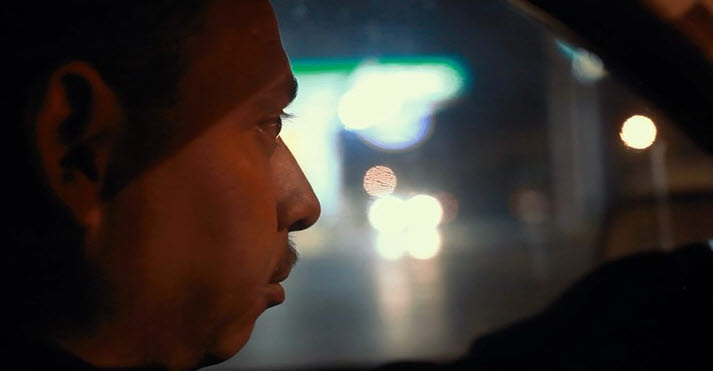
thetarget01 Judged on its technical aspects, South Korean film “The Target” is not a bad action thriller film, but I could not concentrate well on it although the movie was not as tedious as I worried. It is a competent remake, and it runs fairly well toward the expected finale, but it is less speedy and less efficient compared to “Point Blank”(2010), the original French film it is based on. While I appreciate that it tries different things while being faithful to the original version, not many of them work well unfortunately, and the movie accordingly begins to lose its steam even before arriving at its climax.

When an injured guy is brought to the hospital at one night, young doctor Tae-joon(Lee Jin-wook) senses that there is something suspicious about his new patient. There is a gun wound on his unconscious body, and then he happens to witness an attempt to kill his patient. Although he does not see a perpetrator well at that point, he manages to save his patient’s life right after that, and then he happily returns to his home when his shift is over.

In the next morning, somebody breaks into their home when he and his loving wife Hee-joo(Jo Yeo-Jeong), a psychiatrist currently taking maternity leave, are about to have a nice breakfast together. The intruder knocks out Tae-joon on the head and kidnaps Hee-joo, and Tae-joon finds himself in a very serious situation when he wakes up later. The intruder is holding his wife as a hostage somewhere, and he demands to Tae-joo that he should get his patient out of the hospital as soon as possible.

Driven by panic, Tae-joo decides that he must do anything to save his wife, but his situation keeps getting more complicated. While the police are already paying attention to his patient because of a murder case which happened nearby during that night, his patient is not very cooperative to say the least, and there are also some guys chasing after his patient.

thetarget04Meanwhile, we get to know more about that murder case and its prime suspect as the police investigation is being continued. As many of you have already guessed, Tae-joon’s patient is framed for that murder, and it turns out that he is someone you cannot possibly mess with. Yeo-hoon(Ryoo Seung-ryong) is a former marine and mercenary who worked for many years outside South Korea before he recently returned to the country, so I guess there is nothing surprising about his ability to run and fight as well as Liam Neeson even when he has just gotten up from his hospital bed.

Around that point, the movie begins to lose its balance in characterization, and it never recovers from that. Lee Jin-wook tried as much as he could with his thankless role, but his character does not have many things to do except running along with his patient, and he is frequently upstaged by his co-actors in the film. Although Tae-joon does come across a couple of perilous moments in the movie, but he is more like a bystander in many cases, and I am reminded of how his counterpart played by Gilles Lellouche in “Point Blank” was far more active in comparison. I still remember one particular moment in which Lellouche’s character did something I hope I will never have to do for the rest of my life, and, to my big disappointment, the remake version does not have any single moment equivalent to that.

The movie puts more dramatic weight to Yeo-hoon instead, and we even get a sentimental flashback scene for him. Ryoo Seung-ryong, who has been one of the leading South Korean actors since his breakout performances in “The Front Line”(2011) and “War of the Arrows”(2011), imbues his character with formidable presence, and his steely performance is one of the main reasons why the movie works well sometimes. While other characters are frantically moving inside the hospital during one chase sequence, Yeo-hoon patiently makes his moves as watching out for any possible danger, and we can see through his smart maneuver that Yeo-hoon will be one or two steps ahead of others as long as he can endure.

thetarget03 With Ryoo’s forceful acting and its nice action scenes, the movie injects considerable amount of intensity into the plot, but that does not hide its number of glaring weaknesses. While Kim Seong-ryeong and Jo Eun-ji are feisty as two tough female cops chasing after their prime suspect, Yoo Joon-sang feels like overacting at time as another crucial police character, and Jin Goo is not very believable as a mentally unstable supporting character. I witnessed several audiences giggling when his character went through his another fit during one scene, and I must confess that he somehow looked like having hiccups to me.

As expected, the climactic action sequence of the film is decorated with lots of bangs to excite audiences, but it feels dragged in the end, and it only magnifies the implausible aspects of the plot. It is rather hard to believe that a certain building in the movie can be so easily emptied like that before the showdown to be unfolded, and I personally think there is a far less damaging(and far more effective) way for its main characters to outwit their opponents – but then the movie would end too soon without much noise if it headed toward that direction.

“Point Blank” was a run-of-the-mill action thriller film to be watched and then forgotten, but the people behind it handled its story and action with commendable efficiency, and I still could enjoy it when I revisited the film before watching the remake version. “The Target” has a few good things including Ryoo Seung-ryong’s strong performance, and I was not that bored during the screening at last night, but the movie is weaker than the original version mainly due to its unbalanced characterization and other flaws in the adapted screenplay. The movie is not a total failure, but I cannot think of any reason to recommend it to you for now considering that there is a little better version.

thetarget02

Posted in Movies | Tagged , , , , , , | 1 Comment

Le Week-End (2013) ☆☆☆(3/4) : A couple’s imperfect weekend in Paris

leweekend01 They are not young anymore, and they have problems to deal with. As following their rather imperfect weekend, “Le Week-End” initially draws our attention with those lovely sights of Paris and then gradually reveals an honest picture of two aging people who have known and lived with each other for many years. While amusing us with the warm moments of how they try to energize their long relationship, the movie does not step back from the darker moments of discontentment and resentment which have been nurtured inside them, and then it eventually goes deeper than expected in the end.

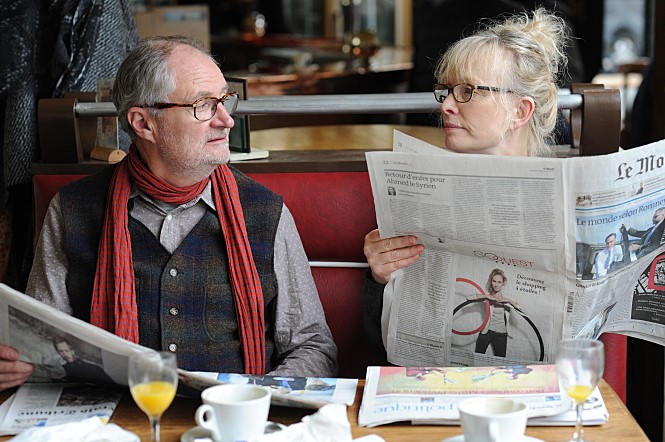
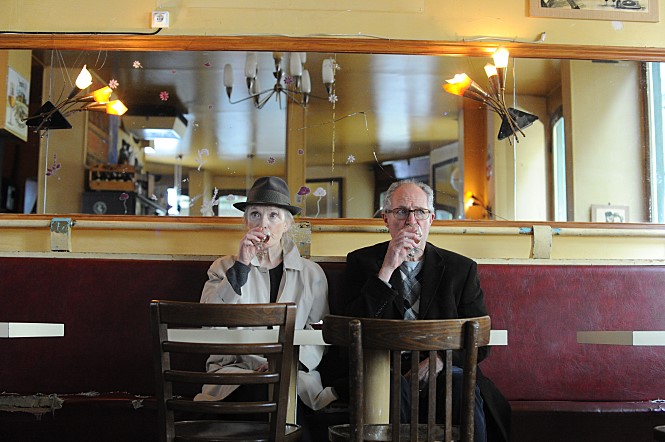
As we listen to Nick(Jim Broadbent) and Meg(Lindsay Duncan), we get to know about this plain middle-aged British couple bit by bit. Nick is a philosophy professor of some university in Birmingham while Meg is a professor teaching biology. They have been living together for more than 30 years since their wedding, and, like many couples, there are a number of problems in their life including their son who is an unemployed pothead and will probably move back to their house. They decide that they need some fresh air of change in their life, and they hope their weekend trip in Paris will rekindle their good old romantic feeling they once experienced during their honeymoon.

When they arrive, Paris looks as lovely as before, but things do not go as well for them as planned from the beginning. When they arrive at a hotel where they stayed during their honeymoon, they stand aghast at how much the hotel has been changed, and Meg instantly dislikes their reserved room which is quite smaller than they remembered(she complains to her husband, “You want me to sleep in coffin.”). At her insistence, they go to another hotel which looks a lot better but a lot pricier, and they come to stay in an suite room which surely looks too expensive for a middle-class couple like them(the manager tells them that Tony Blair once stayed in this room).

leweekend03Anyway, they walk around the city and have a good time together. They visit the Basilica of the Sacré Cœur although it becomes harder for them to climb the steep stair to that famous church, and they also go to the Montmartre cemetery where famous writers such as Charles Baudelaire, Samuel Beckett, and Jean-Paul Sartre were buried. They look around several restaurants until they settle on one nice restaurant, and, as enjoying their meal with a glass of fine wine, they come to feel more enlivened than before.

However, as Nick and Meg are more relaxed and opened to each other, we see more of the frictions between them. Nick confesses to Meg that he was forced to accept early retirement due to a minor but insensitive mistake during his lecture, and he also reflects on how disappointing his life has been. There was a time when he was young, ambitious, and hopeful, but now he becomes a passive middle-class guy who prefers to be steady and stable, and he feels his emotional need to love and be loved more than ever.

While caring about her husband in spite of her rather frigid manner, Meg has a different thought about their relationship. After their children grew up enough to leave their house, they are now alone together as they were in the beginning, and she begins to wonder about whether she should try different things for her life, if not for their life. While her husband clumsily tries to approach to her, she feels more dissatisfaction while not entirely rejecting him, and the level of discord between them gets louder as they continue to bicker with each other. It was merely a matter of bathroom tile at first, and then the circumstance becomes more serious when they begin to have more doubt and bitterness about their relationship.

leweekend02 Jim Broadbent and Lindsay Duncan are constantly engaging to watch while the mood between their characters keeps being shifted throughout the movie, and Nick and Meg comes to us as a three-dimensional couple rather than a couple of British stereotypes. They are not as young and passionate as they were, and it becomes more apparent that their bond is not as strong as it seemed at first, but they still can have some fun together. After they attempt runaway at a restaurant after their expensive dinner, they cannot help but feel young and romantic again, and they gladly seize and embrace the moment even though it is just a temporary one to pass away soon.

The director Roger Michell and the screenplay writer Hanif Kureishi previously worked together in “Venus”(2006), which gave late Peter O’Toole a chance to give his last great performance to be remembered. That film was about an aging man’s last attempt at romance, and its candid, unpretentious attitude toward its subject made the film both poignant and humorous along with O’Toole’s last Oscar-nominated performance.

While it is sunnier than that winter romance film in comparison, “Le Week-end” has its own moments of hard honesty inside its gentle autumn mood as its main characters facing the hurtful possibility of separation around its third act. Nick and Meg incidentally come across Nick’s old friend Morgan(Jeff Goldblum) during their first day in Paris, and they are invited to Morgan’s dinner party to be held on the next day. As they separately talk with Morgan and others at Morgan’s apartment, they feel more estrangement between them due to their quarrel right before the party, and that situation is followed by a very awkward moment for both of them as well others around them. Duncan and Broadbent fully captures the emotional undercurrent between their characters during that painful scene, and Goldblum is also good in his droll performance complementing his co-actors’. Morgan may be one of those shallow intellectuals who just happen to be luckier than others, but the movie does not resort to making him into a simple-minded buffoon. He is indeed silly and superficial, but he is also a nice guy who is aware of his limits to some degrees, and there is an amusingly insightful moment in which Morgan confides to Nick on how he still feels insecure inside even after marrying his new wife for a new start.

“Le Week-End” is a small film both thoughtful and enjoyable, and it certainly helps that Paris looks nice in the film as much as it did in other notable films. I have not had any serious relationship yet, but the movie tells me several valuable things about long-term relationship, and it came to my mind that my parents will probably enjoy this film more than me. Considering that they have been married for 34 years and recently traveled a lot around the world, they may smile to each other while watching Nick and Meg on the screen.

leweekend04


Posted in Movies | Tagged , , , | 1 Comment

Joe (2013) ☆☆☆1/2(3.5/4) : Cage and Green back in their element

joe01 With its stark rural background and the people who really look like its squalid inhabitants, David Gordon Green’s new film “Joe” feels real at every minute. As we are absorbed by how it takes its time to establish its mood and characters, the movie leisurely but thoughtfully moves around not only its distinctive characters but also their gloomy world where they do not see much hope of escape amid ever-present violence and poverty in their shabby daily life. This is surely not a pleasant sight at all, but its gritty character drama is compelling to watch as closely observing despair and struggle from its human characters, and it gradually moves toward the ending which is not a mere arriving point but an inevitable payoff.

Gary(Tye Sheridan) is a teenager living in a rural town somewhere in Texas, and the life has been very difficult for this young boy. His father Wade(Gary Poulter), who is also known as G-Daawg, is an alcoholic abuser who is no help to his family, and the main occupation of this useless bum is taking any money he can find in the house. Gary’s mother(Brenda Isaacs Booth) has turned a blind eye to her husband’s abusive behaviors in her helpless position, and Gary’s young sister Dorothy(Anna Niemtschk) has been mute for some unknown reason(I suspect that her father was probably responsible for it, but that is just my speculation).

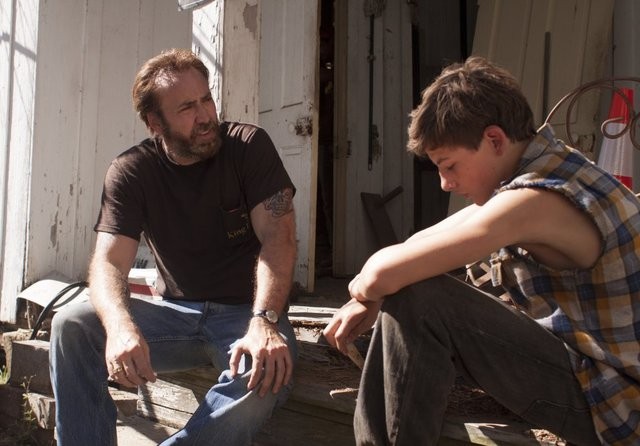
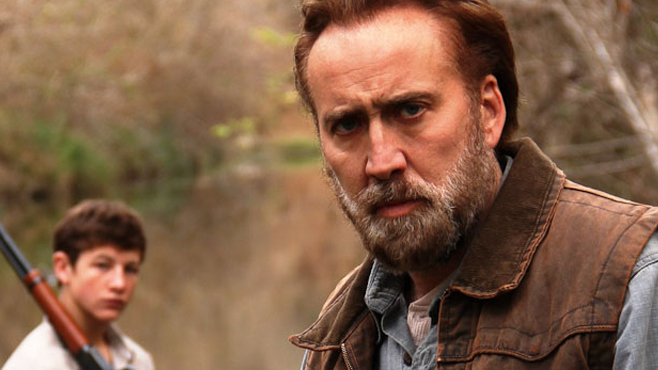
Although he is frequently beaten by his father as shown during the opening scene, Gary is a tough kid ready to get any job for supporting his family, and that is how he comes to meet Joe(Nicholas Cage), an ex-con operating on behalf of some local lumber company. He and the laborers hired by him poison the trees in a local forest, and, once their job is done, the company is allowed to clear the area for planting more profitable trees later. This is not exactly a respectable job, but Joe and his crew are glad to get a chance to earn money, and they do their job well as depicted in their work scenes.

While not entirely free from his past, Joe is a diligent and principled man trying to make his life better, and we can sense how much his crew like and respect him even when they are just talking about mundane matters. Not so surprisingly, he soon becomes a father figure to Gary while he works under Joe’s supervision, and Joe comes to care a lot about Gary while helping him as much as he can. When Gary suggests a deal on Joe’s used vehicle, he gladly accepts the deal, and he also suggests a reasonable price for Gary.

joe04But not everything looks good in their world. As Gary struggles with his family matter more than before, Joe is also reminded of his dark history of violence again as facing the fact that he must do something to save Gary from the same fate he was fallen into a long time ago. As a guy who experienced a hard time at the state penitentiary, he has been trying to stay out of troubles while quietly living alone with his pet bulldog, but his dark side still remains inside him, and he cannot help himself sometimes even though he is well aware of that he can possibly be sent back to jail if he is not careful.

Nicholas Cage, who has recently been mired in a number of forgettable/atrocious films, is surprisingly calm and restrained as the title role. While he may deserve some spanking for appearing in bad films such as “Season of the Witch”(2011) and “Trespass”(2011), Cage has been an interesting actor wildly going up and down in his career, and he is always terrific to watch whenever he tunes himself right to good movies such as “Leaving Las Vegas”(1995) and “Adaptation.”(2002).

As he previously did in Werner Herzog’s “The Bad Lieutenant: Port of Call – New Orleans”(2009), Cage proves here again that he has lost none of his talent, and the result is one of the best performances in his bumpy but solid career. He fully immerses himself into his character to give us the touching portrayal of a conflicted man, and the small details in his nuanced performance tell us a lot about what is inside Joe even when he does not say much. He also keeps his acting under control even when his character is driven to emotionally critical point during several moments, and it is a testament to his talent that he looks as realistically plain as the other actors in the film. His co-actor Tye Sheridan, who has been a new young talent to watch since his performances in “The Tree of Life”(2011) and “Mud”(2012), holds his own place besides Cage, and the development of the relationship between Joe and Gary is natural and convincing thanks to the unaffected interactions between Cage and Sheridan.

joe3 The movie is also sort of a comeback work for the director David Gordon Green, who made a breakthrough debut with “George Washington”(2000) as a new exciting American independent filmmaker and then suddenly took a left turn with commercial comedy film “Pineapple Express”(2008). I must confess that his ludicrous comedy “Your Highness”(2011) was one of my worst movie experiences during 2011, but, as he openly admitted, Green has just been doing whatever he wanted to, and it is nice to see that he is back in his usual territory with “Prince Avalanche”(2013) and this movie, which is based on the screenplay adapted from Larry Brown’s novel by Gary Hawkins.

Like his contemporary Jeff Nichols, Green is very good at capturing the vivid mood of American rural landscapes in his films, and his cinematographer Tim Orr, who has been working with Green since “George Washington”, captures several hauntingly beautiful moments in the film as looking around its shabby background and various people living inside it. Green also hired non-professional local actors as before, and that helps giving more genuine local flavor to his film. They are mixed well with experienced actors on the screen, and Gary Poulter is particularly excellent as Gary’s abusive father who keeps surprising us with how loathsome he can be while making others and himself more miserable. Poulter was actually a homeless guy who happened to be noticed by Green before shooting, and his effectively shaggy performance sometimes feels poignant if you know the fact that he died not long after the shooting was finished.

As I am frequently disappointed with those big blockbuster films, I sometimes encounter small but good films worthwhile to watch, and “Joe” is one of such cases. Rather than going through predictable plot points, it focuses on its mood and characters instead through organic storytelling, and it also shows some sense of light humor at times while never disrupting its overall tone. This is a powerful human drama with good atmosphere and performances, and I am very glad to see Cage and Green back in their element.
joe02

Posted in Movies | Tagged , , | Leave a comment