Jumanji: Welcome to the Jungle (2017) ☆☆☆(3/4): Another game begins…

jumanjiwelcometothejungle01

There was a time when my taste in movies was rather immature. Around 1995, I became more serious about movies after getting exposed to the works of Alfred Hitchcock, but I also enjoyed some silly Hollywood blockbuster films such as “Independence Day” (1996) and “Starship Troopers” (1997), and I will not deny that I watched those movies more than once at local movie theaters, though I have no particular desire to revisit them as a grown-up with a more, uh, sophisticated taste in movies.

“Jumanji” (1995) was one of such movies, so I did not expect much when I watched the trailer of its sequel “Jumanji: Welcome to the Jungle”, but, to my delight, it turns out to be more entertaining than I expected. While injecting a number of good ideas into its original premise, the movie provides us solid entertainment as bouncing one expected narrative point to another along with its main characters, and it maintains well its sense of fun while never overlooking what is being at stake for its main characters.

In the beginning, the movie opens with that last shot of the previous film. That mysterious board game, named Jumanji, is found by someone again, but it does not draw much attention because board games become too old-fashioned for kids, so it is eventually transformed into a video game card, which instantly intrigues the teenage son of the guy who found it.

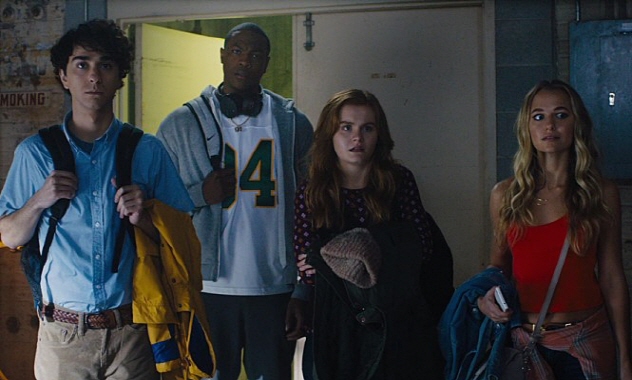
After indirectly showing what happens right after that boy begins the game, the movie promptly flashes forward to 20 years later and then introduces its four different main characters one by one: Spencer (Alex Wolff), Fridge (Ser’Darius Blain), Bethany (Madison Iseman), and Martha (Morgan Turner). While Spencer is your average nerdy teenager, Fridge is your typical high school jock, and he has depended on Spencer a lot for getting good grades for being allowed to play in the school football team. While Bethany is one of the most popular girls in the school, Martha is a quintessential loner who does not get along well with others, and she is certainly not someone to draw the attention of a self-absorbed girl like Bethany.
jumanjiwelcometothejungle02

The early part of the movie is about how these four teenagers happen to be punished together in a way reminiscent of “The Breakfast Club” (1985). While Spencer and Fridge are caught after Spencer writes an essay instead of Fridge, Bethany is sent to the principal’s office for insolently using her smartphone during a class test, and Martha is also sent there after defiantly refusing to participate in her physical education class. They all get detention, and the principal instructs them to work together in a basement room filled with many things including stacks of old magazines.

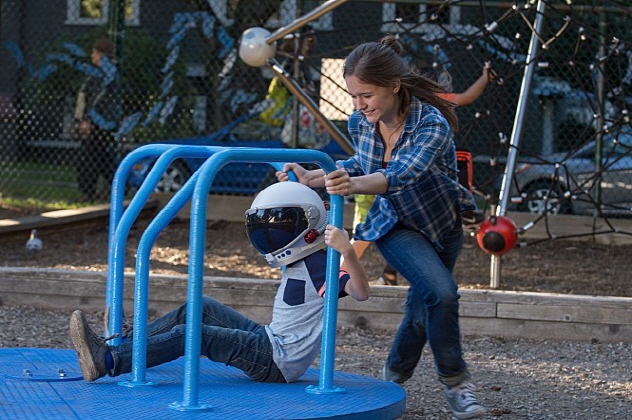
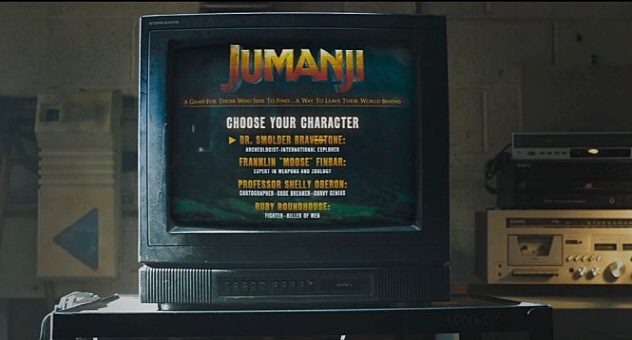
In the basement room, they find that video game in question, and they are immediately sucked into the game once they choose each own’s game avatar, and they are shocked to find themselves transformed into their respective game avatars. Spencer is changed into a hulking, muscle-bound adventurer named Dr. Smolder Bravestone (Dwayne Johnson), Fridge is turned into Dr. Bravestone’s meek sidekick Franklin “Mouse” Finbar (Kevin Hart), Martha is changed into a sexy female fighter named Ruby Roundhouse (Karen Gillan), and Bethany is turned into, to her horror, a guy named Professor Sheldon “Shelly” Obero (Jack Black).

While trying to get accustomed to their changed status, they gradually get to know the rules of the game. There is a perilous mission they must accomplish for finishing the game and then getting out of it, and each of them has each own ability which may be useful during the following game stages, which are full of dangers including various kinds of lethal animals and an aggressive gang led by Van Pelt (Bobby Cannavale), who is the big bad guy of the game as explained by one of functional game characters in the film.

jumanjiwelcometothejungle03

The movie keeps things rolling as they move from one game stage to another, and director/co-writer Jake Kasdan, who is the son of Lawrence Kasdan and previously made “Orange County” (2002) and “Walk Hard: The Dewey Cox Story” (2007), balances his movie well between comedy and action. While the movie often becomes a bit too intense, its well-made action sequences are always accompanied with lighthearted spirit, and we are frequently amused even during its most frantic moments. The movie is also peppered with numerous comic touches, and I particularly like the one associated with Finbar’s certain weakness, which turns out to be quite more serious than you may think.

The four main performers of the movie have lots of fun with their respective characters, and each of them has each own moment to shine in the film. While Dwayne Johnson, whose comic talent I have come to appreciate more and more during recent years, deftly goes back and forth between comedy and action, Kevin Hart, whose irrepressible manic comic persona has become sort of endearing to me, has several uproarious moments which will draw some chuckles from you. In case of Jack Black, he gives us wry comic scenes as his character finds himself (or herself, shall we say) attracted to a certain substantial male character played by Nick Jonas, and Karen Gillan is quite funny when her character clumsily tries to be a decoy to distract a couple of goons at one point.

In conclusion, “Jumanji: Welcome to the Jungle” is definitely an improvement over the 1995 film, and I had a lot of good laughs along with the audiences around me when I watched it at last night. Yes, this is indeed one of those typical Hollywood blockbuster products, but it is packed with spirit and humor at least, and I do not regret spending 2 hours on it.
jumanjiwelcometothejungle04

Posted in Movies | Tagged , , , | Leave a comment

Good Time (2017) ☆☆☆(3/4): Desperate hours

goodtime02

What a witless and hapless guy the hero of “Good Time” is. He thinks he can handle his messy situation, but things keep going wrong for him, and he only comes to find himself mired in more panic and desperation. While it is not exactly pleasant to watch this pathetic guy tumbling from one narrative point to another as causing more troubles, the movie works a darkly amusing and electrifying thriller, and it is also firmly anchored by one of the most notable performances of 2017.

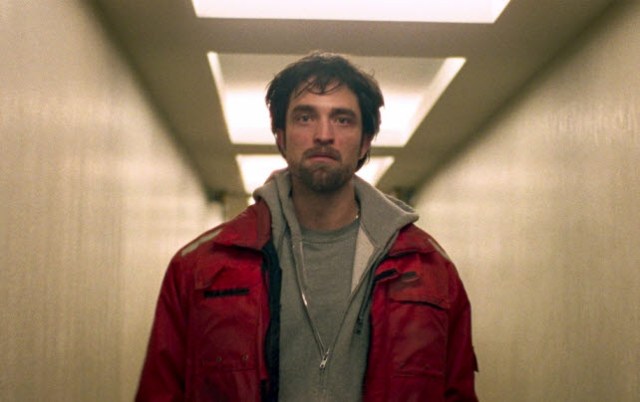
In the beginning, we meet a mentally handicapped guy named Nick (Ben Safdie, who is the co-director and co-editor of the movie), who is going through a session with his therapist in a building located somewhere in Manhattan. Their session shows some progress as he mumbles the answers to his therapist’s questions, but then his older brother Connie (Robert Pattinson) suddenly comes into the therapist’s office, and he promptly takes Nick away from the office because he needs his brother for his criminal plan for a better life for them.

Along with Nick, Connie is going to rob a bank, but they turn out to be pretty inept and sloppy. When they come into the bank while wearing a rather silly mask, nobody seems to be alarmed by their appearance, and a bank teller who happens to be confronted by them does not seem to be particularly threatened by them. Not so surprisingly, they find themselves pursued by the police as soon as they leave the bank with money, and Nick is eventually caught by police officers while Connie manages to evade them.

goodtime01

Because he still has that stolen money, Connie tries to get his brother out of the jail through paying the bond, but the situation turns out to be a lot more difficult than expected. His stolen money is not enough for paying the bond set for Nick, and he needs no less than $10,000. He tries to get a help from his rich girlfriend, but, of course, she cannot help him much, and he becomes more desperate when he learns that his brother is sent to a hospital after being injured in the jail.

The rest of the story focuses on how Connie tries to take care of the situation as much as he can, and I don’t dare to reveal anything to you, but I can tell you instead that I was entertained by how the screenplay by the co-director Josh Safdie and his co-writer Ronald Bronstein, who also edited the film with Ben Safdie, gives us a number of wryly humorous moments. Connie desperately wants to believe that there is still a way out for him and his brother, but it is pretty apparent to us that his fate is already determined especially after one certain narrative point. We accordingly come to observe his plight from the distance, but we are also amused by his unfortunate moments which are a sort of cross between “Dog Day Afternoon” (1975) and “After Hours” (1985).

In addition, the movie is drenched in stylish touches to accentuate its hero’s urgent circumstance. Cinematographer Sean Price Williams did a solid job of establishing the nightmarish atmosphere on the screen through the effective utilization of lights and shadows, and I especially admired a visually striking sequence unfolded in an empty amusement park later in the movie. Whenever it is played on the soundtrack, the pulsating electronic score by Oneohtrix Point Never, which deservedly received the soundtrack award at the Cannes Film Festival early in last year, instantly dials up the level of tension, and its aggressive style may remind you of those synthesizer scores of John Carpenter’s films.

goodtime05

Like many similar thrillers, the movie depends a lot on its lead performer, and Robert Pattinson shows here that, like Kristen Stewart, he is too talented to be associated forever with Twilight movies. As Stewart have done during recent years, Pattison has put himself in a number of more respectable films, and the result has been so far successful enough to distance himself away from Twilight films. While I did not like David Cronenberg’s “Cosmopolitan” (2012), he was suitably cast as its superficial hero, and his performance was surely one of its few admirable elements. In case of James Gray’s “The Lost City of Z” (2016), he completely immersed himself into his supporting character, and I appreciated how he aptly supported his co-star Charlie Hunnam while never drawing attention to himself.

In “Good Time”, Pattinson is as intense and dogged as required while looking as plain and shabby as demanded. As the camera frequently focuses on his face, he constantly holds our interest while ably conveying to us his character’s increasingly frantic state of mind, and he is especially wonderful during several tense scenes where his character has to think and act as fast as he can. When the movie eventually arrives at the expected finale, the camera merely looks at his face, but that is more than enough to generate an intended dramatic effect, and I would not complain if the movie ended there instead of going a bit further with the following epilogue scene.

Pattinson is supported well by a group of supporting performers, who fill their functional roles as much as they can. While Ben Safdie mostly acquits himself well in his rather stereotype role, Jennifer Jason Leigh has a brief juicy moment early in the film, and Taliah Webster, Buddy Duress, and Barkhad Abdi are also fine as the substantial parts of the movie.

Overall, “Good Time” sometimes feels like a cold exercise in style, but it is at least slick and efficient enough to engage me, and that nervous energy of Pattinson’s performance is something worthwhile to appreciate. Along with “The Lost City of Z”, the movie fully convinces me that he is a good actor to watch, and that is a considerable achievement in my trivial opinion.

goodtime03

Posted in Movies | Tagged , , , , | Leave a comment

Call Me by Your Name (2017) ☆☆☆1/2(3.5/4): That bright romantic summer

callmebyyourname02

“Call Me by Your Name”, the latest work from Luca Guadagnino, brims with the sensuous sense of love and romance in its bright, breezy summer atmosphere. While its first half closely and intimately observes its two heroes tentatively approaching to each other, its second half is decorated with tender and sensitive moments of joy and excitement as they feel happy and rapturous in their secret romance, and we are both amused and touched even though we are well aware that their lovely summer days will not last long.

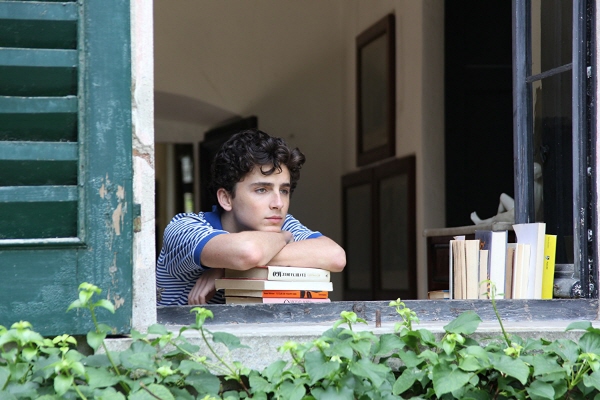
The story of the movie, which is based on the novel of the same name by André Aciman, is mainly about one unforgettable summer of a 17-year-old American boy named Elio Perlman (Timothée Chalamet). It is the summer of 1983, and Elio has been idly spending the summer along with his parents in their summer house located in some rural area of Northern Italy, but there comes a change he does not welcome much. His archaeology professor father, played by Michael Stuhlbarg, needs someone to assist him in his ongoing work, so he invites one of his graduate students to his summer house, and that guy is going to stay in Elio’s bedroom for several days.

His name is Oliver (Armie Hammer), and we cannot help but notice how much he looks different from Elio in many aspects. While Elio is a lanky, introspective teenager boy still not so sure about himself, Oliver is a sturdy, outgoing lad full of confidence and intelligence, and Elio’s father and his French wife Annella (Amira Casar) certainly enjoy spending time with this smart, handsome young man. When Elio’s father and Oliver discuss about the origin of a certain word at one point, their academic passion feels palpable on the screen, and we come to sense that we are watching a rare movie about real characters who are really intelligent and interesting enough to observe.

callmebyyourname03

Mainly because he has to sleep in the other bedroom next to his bedroom, Elio does not like Oliver a lot, but then he cannot help but feel attracted to Oliver. Although he is currently in the relationship with some French girl and Oliver seems to be mostly interested in girls, he finds himself more and more infatuated with Oliver, so he tries to draw Oliver’s attention whenever Oliver is around him, and then there eventually comes a point when he discovers that the feeling between him and Oliver is quite mutual.

While Elio and Oliver tactfully push and pull each other during the first half, the adapted screenplay by James Ivory leisurely rolls its plot, and Guadagnino, who showed his top-notch mastery of mood and visual previously in “I Am Love” (2010) and “A Bigger Splash” (2015), delights us with numerous lovely moments to admire and enjoy. His cinematographer Sayombhu Mukdeeprom, who was one of the cinematographers of Apichatpong Weerasethakul’s “Uncle Boonmee Who Can Recall His Past Lives” (2010), did a commendable job of establishing the vivid, comfortable ambience of summer days on the screen, and we sometimes feel like having a cozy vacation along with the characters in the film. Consisting of various pieces of music, the soundtrack works as the effective aural reflection of the thoughts and feelings under the surface, and that makes the movie more emotionally resonant on the whole.

Because it is the 1980s, Elio and Oliver are understandably hesitant in taking a forward step toward to each other, but then they cannot help but swept by their mutual feeling once they admit it to each other, and the second half of the movie accordingly gives us a number of erotic moments between them. While these scenes are filled with passion and excitement as demanded, they are also depicted with lots of tenderness and intimacy as required, and it is particularly touching to see the scene associated with the very title of the movie.

callmebyyourname05

Under Guadagnino’s superlative direction, the main cast members of the movie give wonderfully nuanced performances. Timothée Chalamet, who is one of the notable breakthrough performers of last year, is simply phenomenal in the performance which will probably garner an Oscar nomination, and he did a very good job of conveying to us his character’s intelligence and sensitivity. While I must confess that I will never forget a certain raunchy scene of his which deserves to be compared with that infamous moment in “American Pie” (1999), I appreciate how deftly he handles that scene and many other key scenes in the movie while never taking any misstep, and he effectively functions as the pulsating heart of the movie.

On the opposite, Armie Hammer utilizes well his clean-cut screen persona while subtly depicting the emotional states of his character, and the result is his best performance since his breakthrough turn in “The Social Network” (2010). Thanks to their good chemistry on the screen, he and Chalamet click well together right from their first scene, and that is the main reason why the bittersweet finale works with considerable emotional effects.

Revolving around Chalamet and Hammer, the other main performers in the movie are believable in their respective small roles. While Amira Casar is gentle and caring as Elio’s mother, Esther Garrel holds her own small place well as Elio’s girlfriend, and Michael Stuhlbarg has a sublimely poignant moment when his thoughtful character gives Elio a wise, heartfelt advice as a man who understands well how enthralling first love can be – and how heartbreaking it also can be.

I must confess that love and romance are still something alien and abstract to me despite a number of recent carnal experiences, but I can observe good romance movies with curiosity and amusement at least, and “Call Me by Your Name” is one of such films. This is a sheer cinematic pleasure, and I was surely enthralled and entertained by its mood, performance, and storytelling. It may be your average gay romantic coming-of-age tale, but the movie handles its story with impressive sensitivity and sensuality, and it is indeed one of the most memorable romance films during recent years.

callmebyyourname04

Posted in Movies | Tagged , , , | 2 Comments

Wonder (2017) ☆☆☆(3/4): A sentimental but sincere family drama

wonder01

“Wonder” wants to move our heart, and it did its job well. Sure, I could see through its intention right from its first scene, but then I found myself touched by its many sentimental but sincere moments which made me really care about not only its plucky young hero but also several other characters around him. Although I must point out that its drama falters a bit during its last act, it survives its clichéd finale in the end, and I will not deny that I felt a bit good as walking out of the screening room.

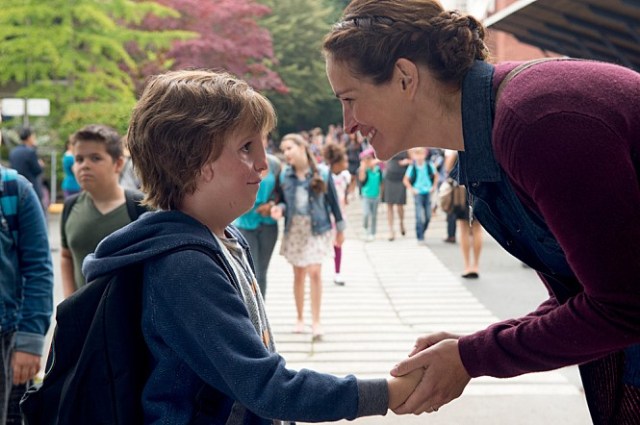
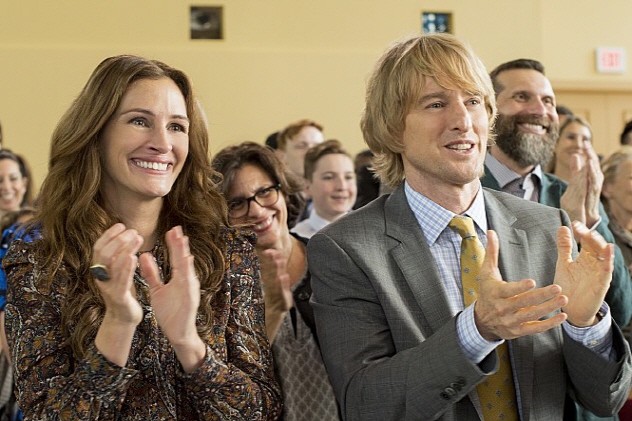
The movie is about a 10-year-old boy named August “Auggie” Pullman (Jacob Tremblay), who was born with the serious congenital facial deformity caused by a rare genetic disease called Treacher Collins syndrome. As he tells us via his narration, he had to go through no less than 27 plastic surgeries during next 10 years, but he has been loved and supported well by his parents Isabel (Julia Roberts) and Nate (Owen Wilson) and his older sister Via (Izabela Vidovic), and it is no surprise to us at all that he grows up to be a bright, spirited kid who is eager to go up to the space someday.

Although he has been schooled at home by his mother during several years, she decides that it is the time for her son to spend time with other kids around his age, so he soon comes to begin his first days at a preparatory school. While fully supported by his family as usual, he is understandably nervous as being without his precious astronaut helmet which usually shields his face, and he surely draws lots of attention right from when he steps inside the school. He instantly becomes a target to be bullied and ridiculed by a mean kid in his classroom, and no student in the school particularly wants to have a lunch with him at the school cafeteria.

wonder04

Nevertheless, things are not that bad for him, and he gradually gets accustomed to his new environment. The teachers in the school including his classroom teacher Mr. Browne (Daveed Diggs) are good, caring teachers, and he has a lot of fun in his science class. He also comes to befriend one of his classmates, named Jack Will (Noah Jupe), and they soon spend a lot of time together, though Auggie later happens to feel hurt much by his new friend’s thoughtless words.

Gentle and sensitive in its thoughtful storytelling, the screenplay by director Stephen Chbosky and his co-adaptors Jack Thorne and Steve Conrad, which is based on the novel of the same by R.J. Palacio, depicts its characters with care and understanding, and it also pays considerable attention to some other characters besides Auggie as partially presenting the story via their respective viewpoints. In case of Via, she understood well from the beginning that she had to take care of herself alone while her parents were mostly occupied with her dear younger brother, but, as she frankly admits to us, she often feels neglected by her parents, and that feeling of hers is further exacerbated by the sudden distance between her and her best friend Miranda (Danielle Rose Russell). Miranda was quite close to not only Via but also Via’s family, but she becomes rather distant to Via when they begin a new semester in their school, and Via certainly feels confounded about that.

At least, Via comes to befriend Justin (Nadji Jeter), a boy whom she comes across when they join the drama club of their school. When there comes the audition for the school stage production of Thornton Wilder’s “Our Town”, Justin encourages Via to participate in the audition, and it is not much of a spoiler to tell you that this eventually leads to a nice dramatic moment which will bring some smile to your face.

wonder03

Although the movie becomes less engaging after that point in my inconsequential opinion, the movie keeps holding our attention thanks to its strong lead performance by Jacob Tramblay, a very talented young actor who previously gave an unforgettable breakthrough performance in “Room” (2015). While virtually unrecognizable due to the make-ups on his face, Tremblay ably conveys his character’s bumpy emotional journey to us, and that is why several key scenes in the film are genuinely touching. With his fabulous performance here in this movie, Tremblay surely proves again that he is a major talent to watch, and I think we can expect more from him in the future.

The other performers surrounding Tremblay are also solid on the whole. While Julia Roberts exudes warm affection and decency as a mother devoted to her son’s well-being, Owen Wilson smoothly balances himself well between humor and drama, and Izabela Vidovic holds her own place well between her two co-performers. Noah Jupe, Mandy Patinkin, Daveed Diggs, Danielle Rose Russell, and Nadji Jeter are effective in their respective supporting roles, and I was especially delighted to see Sonia Braga briefly appearing during one certain flashback scene.

Like Chbosky’s previous work “The Perks of Being a Wallflower” (2012), “Wonder” is a well-made coming-of-age drama equipped with good storytelling and engaging performance, and I was entertained and touched enough for recommendation during my viewing. This may be not one of the most impressive movies of this year, but it is a nice heartfelt drama to be enjoyed by family audiences nonetheless, and I am glad that it is my last movie of this year.

wonder02

Posted in Movies | Tagged , , | 1 Comment

10 movies of 2017 – and more: Part 3

Now here are 12 South Korean films of this year. Continue reading →

Posted in Movies | Tagged | Leave a comment

10 movies of 2017 – and more: Part 2

And here are the other 5 movies in my list – with other films good enough to be mentioned. Continue reading →

Posted in Movies | Tagged | Leave a comment

10 movies of 2017 – and more: Part 1

Here are the first 5 movies in my list. Continue reading →

Posted in Movies | Tagged | Leave a comment

10 movies of 2017 – and more: Introduction

DSLO4OCUMAAfIDR

2017 has been another terribly eventful year for many of us. As I and many others worried from the beginning, Donald Trump and his corrupt cronies have tarnished and demolished what makes the American society great, and those frequent news about their deplorable deeds surely made me more worried and depressed like those recent alarming news about North Korea did. Are things really falling apart as many of us has dreaded since Trump’s shocking victory in the US Presidential election of last year?

Anyway, there are still many good things in the world which make me go through another day, and I am glad that I watched and then reviewed more than 180 films during this year. Although there was another big change in my life and career, I felt all right while enjoying and analyzing good movies, and I was excited whenever I could share my inconsequential opinions with my online critic friends including Michael Mirasol, Michał Oleszczyk, and Nathaniel Hood, a young promising guy who somehow usually found time for talking about many trivial things with me.

Before talking about my favorite films of this year, I have to remind you of something I told you many times before. Because I live in South Korea, I have not yet watched a number of notable movies released in this year, but I will probably watch “Call Me by Your Name”, “Lady Bird”, “The Shape of Water”, “Three Billboards Outside Ebbing, Missouri”, “The Florida Project”, “The Darkest Hour”, “The Post”, “I, Tonya”, “Disaster Artist”, “Phantom Thread”, “Coco”, and “Jane” during next two months. I will review them as soon as I watch them, and, if they are as excellent as many critics said, I will surely mention them at the end of the next year.

Posted in Movies | Tagged | Leave a comment

1987: When the Day Comes (2017) ☆☆☆(3/4): That eventful year in South Korea

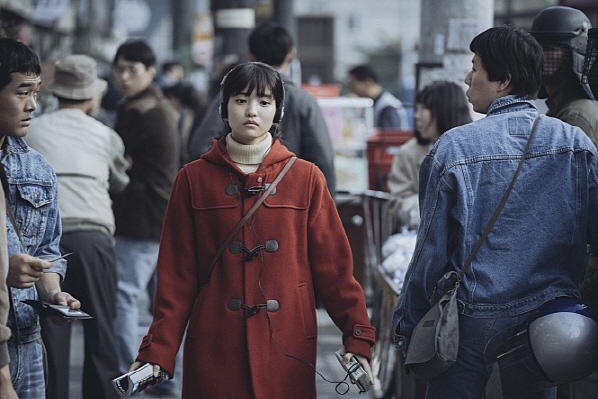
1987whenthedaycomes01

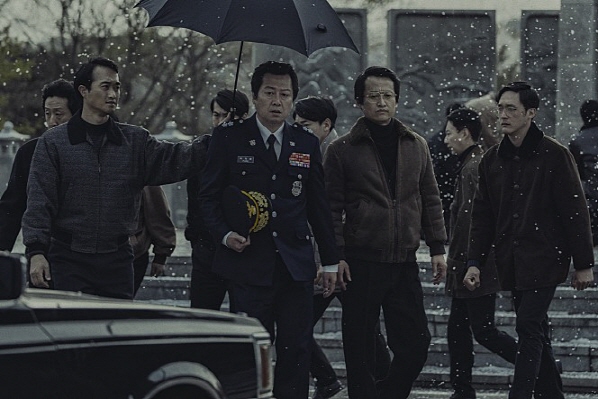
1987 was quite an eventful year in South Korea. After the tragic death of a young college student/activist named Park Jong-chul on January 14th, 1987, the public demand for democratization in South Korea became bigger, wider, and fiercer than before during next several months, and that eventually brought down the dictatorship of President Chun Doo-hwan. Although the result of the following presidential election was not exactly a happy ending, 1987 has been remembered as an important year in the modern South Korean history nonetheless, and I and many other South Korean people recently witnessed its spirit soaring again when we demanded the impeachment of President Park Geun-hye early in this year.

While there are some fictional elements, South Korean film “1987: When the Day Comes” mostly stays true to that eventful time in South Korea, and the result is a well-made historical drama which is not only admirable but also engaging enough to hold our attention. Although it has several visible weak points, the movie compensates for these flaws via efficient storytelling and solid performance, and it succeeded in making me involved in its busy plot even though I was well aware of how the story would end.

The movie opens with a group of security police agents facing the dire consequence resulted from their brutal torture of Park Jong-chul. After belatedly realizing what they have just done, they hurriedly fetch a doctor and a nurse to their interrogation center, but it is already too late, and now they and their direct chief have to cover up this incident as soon as possible.

1987whenthedaycomes02

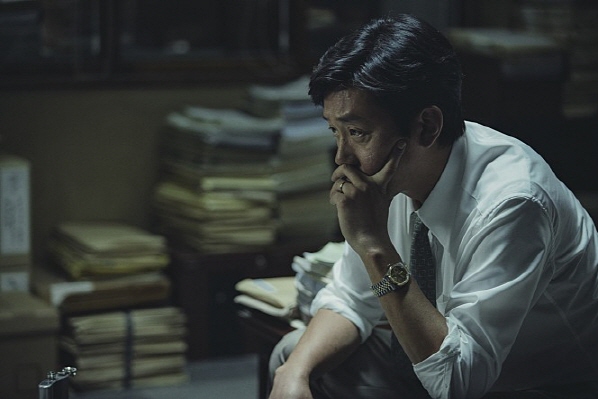
At first, that seems to be an easy job which can be done within 24 hours, but then they are blocked by a prosecutor who is supposed to give them a quick permission to cremate Park’s body. Mainly because he has been not so pleased about those roguish security police agents, the prosecutor insists that Park’s body should be autopsied according to the law, and he becomes more adamant as he is more pressured from many people including his direct boss. The autopsy on Park’s body is eventually done as he demands, but, not so surprisingly, he comes to pay the price for sticking to his defiant position to the end.

However, he succeeds in drawing the attention of the media at least. Once Park’s death is reported on a major newspaper via his sly tactic, the cover-up of Park’s death becomes virtually impossible, and there is an amusing moment when a high-ranking police official makes an impertinent official statement on Park’s death in front of many reporters. His ridiculous words on the cause of Park’s death may sound quite unbelievable to some of you, but, believe me, this is exactly what was said in real life, and I must confess that I could not help but have a little bitter laugh while watching that scene.

Around that point, the movie shifts its focus to one of those reporters, who is determined to find the truth behind Park’s death. He surely tries hard as reflected by one scene in which he surreptitiously contacts the doctor who was brought to the interrogation center, but he is eventually blocked along with many other reporters by security police agents, who also cruelly prevent Park’s family from saying a proper goodbye to him. Once the autopsy is finished, Park’s body is promptly cremated, and Park’s grieving father is forced to scatter his dead son’s ashes over a river.

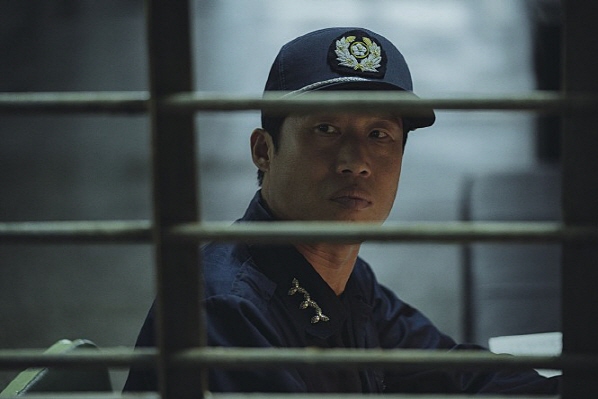
The movie continues to expand its scope as adding two other main characters into the plot. A prison guard sympathetic to the ongoing democratization movement is asked to deliver something involved with Park’s death to a prominent activist who has been hiding from security police agents, and, after almost getting exposed at one point, he asks his niece to do the job instead. His niece does not want to get involved with any kind of trouble, but she becomes conflicted as being more aware of what has been going on in her society, and she later finds herself in a very serious situation where she must make a choice.

1987whenthedaycomes03

As fluidly hopping from one main character to another, the screenplay by Kim Kyeong-chan steadily builds its narrative momentum before eventually reaching to the expected climax which is associated with another notable real-life incident. Although it feels a little too artificial, that part mostly works as giving us a big, dramatic payoff moment as required, and I will not deny that I was touched by that.

Director Jang Joon-hwan, who previously gave us “Save the Green Planet!” (2003) and “Hwayi: A Monster Boy” (2013), assembled an impressive cast for his movie, and the cast members of the movie bring life and personality to their characters, who are essentially more or less than plot components. While Kim Yun-seok instantly draws our attention as the chief villain of the story, Ha Jung-woo, Yoo Hae-jin, Park Hee-soon, and Lee Hee-joon also give fine performances, and Kim Tae-ri is suitably plucky in her substantial role. In case of several notable South Korean performers who briefly appear in the film, I enjoyed how they are utilized well as small parts of the story, so I will let you spot them for yourself.

Although it does not exceed my expectation, “1987: When the Day Comes” is a competent piece of work which provides a vivid, compelling look into the South Korean society during the 1980s. The movie does its job as much as intended at least, and it surely reminded me of how much my country has advanced since that – and how much it still needs to go further for true democracy.

1987whenthedaycomes04

Posted in Movies | Tagged , , , , | Leave a comment

A Brighter Summer Day (1991) ☆☆☆☆(4/4): A great movie never too long

abrightersummerday

Edward Yang’s “A Bright Summer Day”, which recently happened to be released in South Korea, is a singular masterpiece to be admired for numerous reasons. On one level, it is a tragic adolescent drama inspired by a notorious real-life incident in Taiwan during the 1960s, and it is devastating to watch how it slowly but inexorably arrives in its finale. On the other level, it is also a vivid, complex social period drama which takes us right into the world inhabited by its young hero and many other characters around him, and we come to understand how they helplessly or aimlessly drift in their nervous social atmosphere filled with uncertainty and agitation. As social drama and individual drama are organically intertwined with each other again and again during its 237-minute running time, its big, ambitious picture of the Taiwanese society during the 1960s gradually emerges in front of our eyes, and this grand cinematic tapestry resonates further with its sad, unforgettable closing scenes.

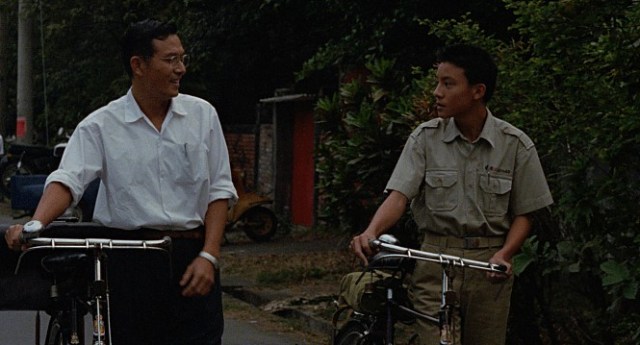
The movie opens with the prologue scene set in Taipei, 1959. Mainly due to his low score in Chinese, Chang Chen (Chang Chen in his first major role), a 13-year-old boy who is usually called by his nickname Xiao Si’r (it means “Little Four” in Chinese, by the way), is going to be assigned to a nighttime school instead of a daytime school, and his father, played by Chang’s real-life father Chang Kuo-chu, tries to persuade Xiao Si’r’s teacher to do anything for changing that decision, but there is really nothing he can do about that. The teacher emphasizes to Xiao Si’r’s father that Xiao Si’r’s test result cannot be changed, and Xiao Si’r seems rather disinterested in what will be next in his future.

The story moves forward to 1960, and we soon see why Xiao Si’r’s father worries about his son being in a nighttime school. Many of nighttime school students are delinquents, and it does not take much time for Xiao Si’r and his two close friends to get involved with one of local adolescent gangs in their neighborhood. As explained to us a bit around the beginning of the film, the Taiwanese society went through a grey period of uneasiness during the 1950-60s after Chiang Kai-shek and his government fled from Mao Zedong’s communist government to Taiwan along with millions of Chinese people in 1949, and that nervous social atmosphere affected not only adults but also young people like Xiao Si’r, many of whom were prone to join gangs as wandering in their confusing search for any guidance for their uncertain future.

abrightersummerday03

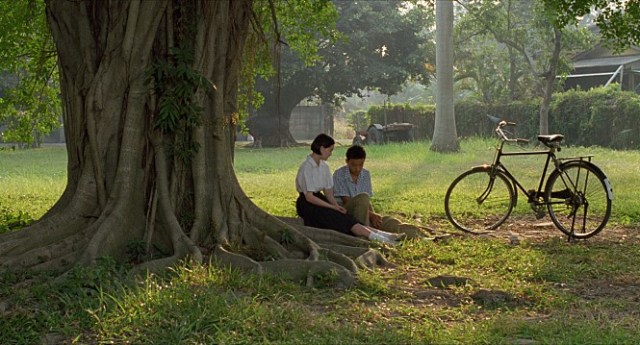
The leader of the gang with which Xiao Si’r happens to be associated is Honey (Lin Hung-ming), but he recently goes into hiding for a reason not explained well in the film, and his girlfriend Ming (Lisa Yang) is not so pleased about that. After accidentally encountering Ming for the first time, Xiao Si’r comes to have a crush on her, and it looks like Ming also likes him. At one point, they have a small private time near a military training site, and we get one of the most sensitive moments in the film as they show a bit of their mutual feeling to each other.

Of course, things do not go well for them later as the conflict between Honey’s gang and some other rival gang becomes more intensified. Honey, who turns out to be a nice, thoughtful guy and does not mind his girl being close to Xiao Si’r, tries to solve this problem as peacefully as he can, but his attempt only leads to one of a few shocking moments of violence in the film, and the story gets darker when his gang later decides to have their revenge for that. While firmly maintaining its phlegmatic attitude even during that part, the movie smoothly dials up the level of tension through its effective utilization of lights and shadows, and the result is quite striking to say the least.

Meanwhile, we also observe the troubles inside Xiao Si’r’s family. Xiao Si’r’s father has a strong belief in personal integrity, but then he finds himself crushed by the government just because he is labeled as someone subversive for some unknown reason, and there is a sad wordless moment between him and his wife not long after he goes through several days of arduous interrogation. His pride is clearly shattered, and his family becomes more unstable as reflected by the following incidents including the one involved with his wife’s precious watch.

abrightersummerday05

How do all these things and many other things depicted in the film affect Xiao Si’r? The movie does not give us any simple answer, so some of you may remain bewildered even in the end, but at least you will appreciate what a rich and compelling experience it is in many aspects. Because of its frequent utilization of wide/medium shots, the movie often feels distant, but every shot in the film effortlessly holds our attention via its meticulous camerawork and precise mise-en-scène, and, as far as I could see during my viewing, there is not any single redundant or unnecessary shot during its 237 minutes. Although the movie certainly demands some patience and attention due to its rather slow narrative pacing and numerous supporting characters surrounding its hero, I never got bored and confused during my viewing, and I could accordingly let myself immersed more into its authentic mood and dexterous storytelling.

Because the original Taiwanese title of the movie is “Youngster Homicide Incident at Guling Street”, I guess it is not much of a spoiler to tell you that its story ends with a murder, but I will let you see for yourself how the movie succinctly and effectively delivers a dramatic gut punch to linger on your mind – and how it calmly but powerfully amplifies the resulting sadness after that. Because I read the novel version of the movie before, I knew in advance what would happen, but I gasped nonetheless when that happened on the screen, and I was both chilled and saddened as the camera detachedly observed the irreversible consequence for a while.

My late friend/mentor Roger Ebert once said, “A good movie is never too long, and a bad movie can never be too short.” “A Brighter Summer Day” is certainly a good movie never too long, and it is surely one of the most memorable movie experiences I have ever had during recent years. To be frank with you, I don’t think I understand everything in it, but I did feel during my viewing that it is a great movie, and I am willing to spend my precious four hours for experiencing it again.

abrightersummerday02

Posted in Movies | Tagged , , , | Leave a comment