Billy Lynn’s Long Halftime Walk (2016) ☆☆(2/4): A soldier’s long day

BillyLynnsLongHalftimeWalk01

“Billy Lynn’s Long Halftime Walk” attempts to do many things together, but it seems as confused and distracted as its conflicted wartime hero. On one level, it aims to be a sincere war drama, but then it also wants to be a broad social satire on the other level, and it is often frustrating to see the movie pointlessly swaying in one direction or the other one without much depth or insight in terms of story and characters.

Joe Alwyn, a young, talented British actor who would subsequently advance further with several notable films including “The Favourite” (2018), plays Billy Lynn, a Texan lad who accidentally becomes a wartime hero along his squad comrades after their latest moment of peril and valor in Iraq happened to be captured by a reporter’s abandoned camera. It is 2004, and the public opinion on the ongoing war in Iraq has not been that good, but they excite the media and the public a lot as valiant war heroes, and they all are ready to have a great time when they are invited to a big and important American football game by a Texan business mogul named Norm Oglesby (Steve Martin), who may benefit them a lot if he decides to buy their story and then produce a movie based on it.

However, unlike the other members of his squad, Billy cannot enjoy this supposedly glorious moment as much as he hoped. As he and the other squad members are constantly told about how much they sacrificed for their country, his mind frequently goes back to his time in Iraq, and it is apparent that he feels quite guilty about not being able to save Shroom (Vin Diesel), who was the leader of the squad with Dime (Garrett Hedlund) as his second-in-command. As shown from a series of flashback scenes, Shroom showed lots of care and attention to Billy as teaching him some discipline and integrity, and Billy came to appreciate that a lot while often spending time along with Shroom.

BillyLynnsLongHalftimeWalk04

We see how difficult and dangerous it was for Billy and the other squad members to do their missions in Iraq. Besides coping with the language barrier between them and those Iraqi people out there, they also had to be constantly watchful for what might suddenly happen upon them. Not so surprisingly, Billy cannot help but become nervous from time to time even though he and his squad comrades are now back in their country, and it looks like he really needs some serious medical help as shown from a brief scene where he requests a bottle of certain medicine.

His increasingly agitated mind also drifts to when he visited his family not long after coming back to his country along with his squad members. His sister Kathryn (Kristen Stewart), who is often quite frank about her liberal viewpoint in front of their conservative family members, instantly sensed that her brother is not that all right in his mind probably due to post-traumatic stress disorder (PTSD), but Billy keeps sticking to enduring whatever has been eating his mind, and he adamantly ignores his sister’s continuing suggestion on psychiatric help.

Meanwhile, he and his squad comrades go through a series of public moments as requested. At one point, they are interviewed by a bunch of reporters in a conference room, and the movie provides a little absurd moment as Billy imagines his squad comrades giving very frank answers to those reporters instead of the trite ones for maintaining their clean-cut public appearance. When the time for the halftime show at the stadium comes, they are demanded to wear their combat uniform just for looking better and, yes, more patriotic in front of cameras, and they come to feel rather embarrassed when the showtime eventually comes, though some of them cannot help but excited to see a certain celebrity singer performing right in front of them.

BillyLynnsLongHalftimeWalk05

The movie subsequently arrives a crucial private moment between Billy and Oglesby, but the screenplay by Jean-Christophe Castelli, which is based on the novel of the same name by Ben Fountain, fails to be coherent enough to accumulate considerable dramatic tension for that. In case of a part showing what exactly happened to Billy and his squad members during that perilous moment in Iraq, it is handled fairly well in terms of technical aspects, but, unfortunately, there is not much emotional impact as we come to observe these characters from the distance, who are more or less than broad archetypes without much life and personality.

When it came out in three years ago, the movie drew lots of attention for being the first ever feature film using an extra-high frame rate of 120 frames per second. Although I cannot say anything about that technical aspect because I only watched the film in standard hi-definition, I must tell you that I could not help but notice a number of curiously distracting visual choices made by director Ang Lee and his cinematographer John Toll. For instance, I was quite distracted by how unnecessary most of frequent close-up shots of the characters in the film are, and they would probably look more bothersome if I watched the movie in the way intended by Lee and his crew members.

In case of the main cast members, they did as much as they could with their respective roles. While Alwyn manages to hold the center with his earnest lead performance, Garrett Hedlund, Steve Martin, Tim Blake Nelson, Kristen Stewart, and Chris Turker mostly acquit themselves well on the whole, and it is certainly nice to see Vin Diesel do a lot more acting than whatever he did in those disposable Fast and Furious flicks.

Overall, “Billy Lynn’s Long Halftime Work” is a well-intentioned but ultimately disappointing work which does not show or tell anything particularly new to us compared to a number of recent war drama films such as “Flags of Our Father” (2006) and “The Hurt Locker” (2009). Considering that Lee has seldom disappointed me since “The Wedding Banquet” (1993), this is a major letdown, and I can only hope that he will soon bounce from this low point of his admirable filmmaking career.

BillyLynnsLongHalftimeWalk03

Posted in Movies | Tagged , | Leave a comment

Toni Morrison: The Pieces I Am (2019) ☆☆☆(3/4): Morrison on her life and career

ToniMorrisonThePiecesIAm01

I must confess that the works of Toni Morrison, a great African American female author who sadly passed away two months ago, have been a glaring blind spot in my reading list. Although I came to know a bit about her fifth novel “Beloved” through its 1998 film adaptation directed by Jonathan Demme, I have somehow never touched any of her novels, and her first novel “The Bluest Eye”, which was recommended by an acquaintance of mine a few years ago, is still waiting to be read along with heaps of untouched books on my bookshelf (Shame on me!).

Because of my regretful ignorance, I was a bit nervous before watching documentary film “Toni Morrison: The Pieces I Am”, but the documentary turns out to be not only informative but also insightful enough to engage and touch me. As listening to Morrison as well as other notable figures willing to talk about her immense influence on American literature, the documentary gives us an intimate and respectful presentation of Morrison’s life and career, and it will certainly make you more interested in reading her novels.

Mainly revolving around the interview clips of Morrison, the documentary lets her talk about many things including the personal memories of her early life. She was born in a small town in Ohio, 1931, and she still remembers well when she began to learn how to write at the age of 3 thanks to her cousin. At one point, she reminisces about when she and her cousin innocently attempted to write a certain slang and then got scolded by her mother for that, and that was how she became more aware of the power and influence of words.

ToniMorrisonThePiecesIAm02

After her high school graduation, Morrison went to Howard University in Washington D.C. and then moved onto the graduate school at Cornell University in New York state. Shortly after her graduation school period, she worked as an English teacher for a while, but then, in 1965, she got hired as an editor at L. W. Singer in Syracuse, New York, which was a textbook division of Random House.

A few years later, she came to work as a new editor at Random House in New York City, and she happened to be at the right time and place. Thanks to the Civil Rights Movement during the 1960s, the social and cultural position of African Americans became a lot more prominent than before, and Morrison was surely a right person who could draw a number of interesting African American figures ranging from Angela Davis to Muhammad Ali, who had a small amusing episode with Morrison when she made it very clear to him that she was not someone he could ignore at all.

While busily working as a teacher, an editor, and, above all, a mother to her two young sons, Morrison gradually came to draw attention as a new writer in the town as publishing her first novel “The Bluest Eye”, which was then followed by “Sula” and “Song of Solomon”. The latter won the National Book Critics Circle Award, and its considerable critical and commercial success eventually prompted her to become a full-time writer.

The documentary examines each of these three books of hers in terms of themes and details, and a number of notable figures such as Walter Mosley and Robert Gottlieb tell us how significant these three books were at that time. While there were already a number of notable African American writers such as James Baldwin and Ralph Ellison before her, Morrison directly explored African American life and history via female perspective, and that was certainly a ground-breaking achievement to say the least.
ToniMorrisonThePiecesIAm03

However, it took some more time for her to be recognized fully for her growing contribution to American literature. When Morrison published “Sula”, critics praised her book while condescendingly pointing out her ‘limited’ perspective, and this racist and misogynous trend was continued even when she published her fifth novel “Beloved”, which won the Pulitzer Prize in 1988. When she subsequently won the Nobel Prize in Literature in 1993, some people openly complained and grumbled that she won the prize mainly for political correctness, probably because, in their prejudiced viewpoint, she did not deserve to be regarded as someone equal to a few American Nobel Prize laureate writers such as Ernest Hemingway and William Faulkner, who are all incidentally Caucasian males, by the way.

After receiving the Nobel Prize, Morrison kept going on as publishing five more novels, and her status in American literature continued to grow. Several years ago, she received the Presidential Medal of Freedom from President Barack Obama, and that was just one of numerous prestigious recognitions she got during her later years. Although she would pass away not long after being interviewed for the documentary, she looks brimming with life and personality on the screen nonetheless, and it goes without saying that she surely lived her life well.

Freely flowing from one moment to another along with Morrison, the documentary gradually generates a consistent narrative flow under the skillful direction of director Timothy Greenfield-Sanders, and he did a good job of mixing his interview clips with a bunch of various artworks and archival materials. In short, “Toni Morrison: The Piece I Am” presents its human subject with deep respect and affection, and you will surely appreciate it that if you have admired Morrison’s works.

ToniMorrisonThePiecesIAm04


Posted in Movies | Tagged , , , | Leave a comment

The Traitor (2019) ☆☆1/2(2.5/4): An Honorable Traitor

thetraitor03

“The Traitor”, which was recently selected as the Italian entry for Best International Feature Film Oscar, is a sprawling crime drama film which is not wholly successful in its ambitious but flawed narrative. While occasionally fascinating us with its compelling real-life criminal hero, the movie does not engage us enough due to its rather scattershot storytelling and shallow characterization, and I must tell you that I frequently felt confused and distant during its 151-minute running time.

The movie mainly revolves around the later years of Tommaso Buscetta (Pierfrancesco Favino), who was once one of the most prominent members of Sicilian Mafia but later became the first Sicilian Mafia boss testifying against his organization. During the opening scene unfolded in a private meeting held somewhere in Southern Italy, 1980, we are introduced to not only him but also a number of other Sicilian Mafia bosses, and the movie also informs us a bit on how powerful their criminal organization was at that time. Although Buscetta has been technically a fugitive who escaped from a prison several years ago, he has been lived comfortably along with his third wife and their children in Brazil, and he still has considerable influence on his organization while also heavily involved in its international drug trafficking.

However, things gradually get worse for him and many of his close associates during next several years. As one of the top-ranking Mafia bosses decides to go for more power and domination, more than 100 figures including two of Buscetta’s sons get killed as a consequence, and Buscetta comes to see that he must do something about this increasingly unstable circumstance, though he simply wants to lead a peaceful daily life with his third wife and their children without any interference.

thetraitor04

And then he suddenly gets arrested by the Brazilian Police, which treat him and his wife in a quite harsh way as shown from a brief but brutal montage sequence. He subsequently finds himself extradited to Italy, and then he encounters Judge Giovanni Falcone (Fausto Russo Alesi), an unflappable man of principle and integrity who is very determined to bring down the Sicilian Mafia through Buscetta’s collaboration. Although he is understandably not so eager to collaborate with Judge Falcone, Buscetta eventually finds himself talking to Judge Falcone more than expected because of his longtime disillusionment with what has been going on in the Sicilian Mafia, which, in his view, has betrayed and corrupted its code of honor as pursuing more money and power.

Thanks to Buscetta’s testament, Judge Falonce can indict a bunch of Sicilian Mafia bosses for their crimes, and the middle act of the movie, which is the best part of the film in my trivial opinion, is often amusing for a number of absurd moments unfolded during the following trial. While confined behind bars, those Sicilian Mafia bosses frequently show impertinent behaviors, and they certainly give lots of headaches to the judge presiding over the trial as turning the trial into a sensational public circus.

Nevertheless, the mood becomes a bit calmer when Buscetta finally presents himself at the trial and then bravely confronts some of his old associates. Although he gets insulted and ridiculed a lot as expected, he mostly maintains his phlegmatic appearance pretty well, and he certainly makes a better impression compared to another Sicilian Mafia member who also came to testify for a similar personal reason. As the strong center of the movie, Pierfrancesco Favino is electrifying with his subdued but charismatic presence, and he is particularly wonderful during a few moments during the trial when his character cannot help but become a bit aggressive and sarcastic.

thetraitor02

In the end, most of accused Sicilian Mafia bosses come to receive heavy punishment, and Buscetta and his family are put into the witness protection program as promised to him from the beginning, but then there comes an urgent circumstance requiring his testament again several years later. Although he is well aware of the considerable danger in going back to Italy, he decides to come into spotlight again, and there is a sad scene where he comes to learn of what exactly happened to his two dead sons.

Unfortunately, the movie loses more of its narrative momentum around that point, and we become more distant to its story and characters without much care and attention. Although Buscetta remains to be a compelling hero as before thanks to Favio’s solid performance, the screenplay written by director Marco Bellocchio, who previous made “Vincere” (2009), and his four co-writers does not bring much humanity or personality to various characters surrounding Buscetta, and it is also often uneven and confusing as trying to cover the 20 years of Buscetta’s life with too many details.

Considering how steadily Bellocchio has worked during last 57 years since he made his first feature film in 1962, “The Traitor” is an admirable effort to be appreciated to some degree for its considerable technical competence, but it is still dissatisfying on the whole, and I would rather recommend you several better Italian crime drama films such as “Gomorrah” (2008). It is a shame that I cannot like “The Traitor” enough for recommendation despite a number of good elements in the film, but I sincerely hope that Bellocchio will keep going on as usual while giving us better works.

thetraitor01

Posted in Movies | Tagged , , , | Leave a comment

Maggie (2018) ☆☆☆(3/4): A sweet and whimsical comedy featuring a talking catfish

maggie01

South Korean independent film “Maggie”, which actually means ‘catfish’ in Korean, a sweet and whimsical comedy which gives us a number of odd and quirky moments to be savored while also quite sensitive and thoughtful about its subjects. As we often get tickled by its numerous offbeat moments, the movie makes some sharp points on its various story elements including social trust, and you may come to reflect on them for a while after its open-ended final shot.

The movie is basically a series of short comic vignettes, and the first one is about a very embarrassing situation surrounding a certain salacious X-ray photograph which happened to be shot in the X-ray room of some private hospital located somewhere in Seoul. When that X-ray photograph in question is shown to everyone in the hospital later, everyone wonders about the identity of the two figures shown in that X-ray photograph, and Yoon-yeong (Lee Joo-young), one of the nurses working in the hospital, becomes nervous because she and her boyfriend Seong-won (Koo Gyo-hwan) recently had sex in the X-ray room. Although many other hospital staff members have often had their carnal fun in the X-ray room, she cannot help but suspect that she and her boyfriend were photographed at that time, and we get a small hilarious moment when they look closer at that X-ray photograph for getting any detail to confirm their suspicion.

Still feeling uncertain and nervous, Yoon-yeong comes to consider quitting her job, especially after her private conversation with Kyeong-jin (Moon So-ri), who is one of the doctors working in the hospital. Kyeong-jin seems to be suspecting that Yoon-yeong is involved with that X-ray photograph, and she suggests that Yoon-yeong should take some vacation for a few days, but then Yoon-yeong only becomes quite determined to keep her face straight and then go through what is supposed to be her last day at the hospital.

maggie02

However, a weird thing happens on that day. When Yoon-yeong comes to the hospital in the morning, all of the hospital staff members except Kyeong-jin are not in the hospital, and they all turn out to have each own reason for taking a day off. While Yoon-yeong accepts this rather strange circumstance without much doubt, Kyeong-jin, who is more seasoned and cynical compared to Yoon-yeong, suspects that their colleagues are having a day off with false excuse, so they decide to check two hospital employees randomly chosen from the list of the hospital staff members. I will not go into details on what happens next, but I can tell you instead that there are several nice comic moments including a sudden unexpected scene where Yoon-yeong and Kyeong-jin has to deal with a matter of trust and doubt, and you will surely get good laughs from them.

The movie later takes a weirder turn as finally presenting its titular entity on the screen, which is a pet catfish belonging to one of hospital patients and also functions as the narrator of the film (Chun Woo-hee, who was unforgettable in “Han Gong-ju” (2013), is effective in her deadpan narration). Not long after it gets agitated without any apparent reason, Seoul is suddenly struck by a number of unlikely sinkhole incidents, and Seong-won, who has been unemployed for a while, is delighted to get employed as one of the laborers to work on those sinkholes.

When he and his two colleagues are about to leave their workplace as usual on one day, Seong-won belatedly discovers that he has lost a small ring his girlfriend gave him some time ago, so he and his colleagues try to find that ring for a while, but they still cannot find it, and then he comes to suspect one of his two colleagues when he notices something from that guy later. Although this segment lags a bit as eventually arriving at its expected punch line moment, the movie keeps maintaining its spirited sense of humor, and I particularly like a farcical long-take shot smoothly going around a sinkhole site which Seong-won and his two colleagues are working on during one night.

maggie04

In the meantime, Yoon-yeong becomes quite uncertain about her relationship with Seong-won after she noticed his missing ring, and then she comes to distrust him more after a small incident involved with a very steep stair. As their relationship accordingly becomes strained, Yoon-yeong seeks some advice from Kyeong-jin, and then she makes a certain decision, but then she is not so sure about whether she made a right decision or not.

Steadily baffling and tickling us with these and many other whimsical moments, the movie, which is the latest work commissioned by National Human Rights Commission of Korea, tactfully delivers its social messages on trust and doubt, and director/co-writer/co-editor/co-producer Yi Ok-seop competently handles the story and characters while also drawing the excellent comic performances from her three main cast members. While Lee Joo-yong, who previously appeared in “Jane” (2016), is plucky and charming, Moon So-ri, who already showed her considerable comic talent in her directorial debut film “The Running Actress” (2017), has several juicy comic moments to be appreciated, and Koo Gyo-hwan, who also worked with Yi as her co-writer/co-editor/co-producer, shows another side of his talent which is quite different from his memorable transgender character in “Jane”.

Overall, “Maggie” is funny and engaging for its distinctive mix of offbeat comedy and social messages, and I enjoyed its colorful mood and details a lot during my viewing. In short, Yi gives us an entertaining debut feature film which is also another notable South Korean film of this year, and it will be interesting to see what will come next from her during next several years.

maggie05

Posted in Movies | Tagged , , , | 1 Comment

Our Body (2018) ☆☆☆1/2(3.5/4): Running after her

ourbody01

As your average chubby overweight guy, I frequently exercise at a local gym for getting healthier, and my eyes sometimes cannot help but notice how fit and muscular some guys at the gym look. Whenever I briefly stare at their brawny bodies from time to time, I always feel envy and fascination in my heart, and that usually gives some motivation for me although it seems their level of fitness is beyond my reach.

That is why I instantly felt close to South Korean independent film “Our Body”, which revolves around the ambiguous emotional state of a young disaffected woman who finds herself obsessed with someone who looks healthier than her in many aspects. The movie initially amuses us as the subtle emotional undercurrents between its two main characters, but then it catches us off guard with more subtlety and elusiveness during its second half, and I came to admire its deft storytelling more as watching how dexterously it arrived at its final scene.

Choi Hee-seo, a wonderful South Korean actress who drew our attention for the first time with her electrifying breakthrough performance in “Anarchist from Colony” (2017), plays Ja-yeong, a young woman who has spent no less than 8 years as trying to pass the Public Administration Examination. Exhausted and frustrated with having failed again and again during last 8 years, she has become rather distant to everything including her life and herself, and she eventually decides to give up preparing for the examination again, though she does not know what to do next for her life.

Mainly because she will have to pay the rent for her one-room residence and she does not want to go back to her family home, Ja-yeong seeks for any good part-time job, and, fortunately, she soon gets employed as a part-time employee at a bank where her old school friend works. It seems she will later be promoted to internship if she works hard there for a while, but she is not particularly interested in that unlike her younger co-workers, and she does not even try to befriend them.

ourbody05

Meanwhile, the movie observes a small but significant change in Ja-yeong’s life. After accidentally encountering a young female jogger around her age during the opening scene, Ja-yeong comes to notice more of this young woman as time goes by, and she subsequently decides to become a new member of the small jogging group to which this young woman belongs. Although she struggles a lot at first as trying to run as hard as other members, Ja-yeong gradually gets improved while running more and more, and, not so surprisingly, everyone around her notice some positive change in her.

In addition, Ja-yeong gets closer to the aforementioned young woman. Although she does not talk that much about herself or her life to the other members of her jogging group, Hyeon-joo (Ahn Ji-hye) is quite friendly to Ja-yeong from the start, and she even lets Ja-yeong come into her neat residence at one point, which surely makes a big contrast with Ja-yeong’s messy residence. As they drink together, they become more relaxed and comfortable, and they soon come to share some personal things with each other.

Around that narrative point, we become more aware of Hyeon-joo’s healthy body as Ja-yeong cannot help but notice more of Hyeon-joo’s physical details, and the movie alternatively baffles and tantalizes us with its interesting female gaze on female body. Yes, it is apparent that Ja-yeong feels envious of how Hyeong-jook looks fit and attractive, but neither she nor the movie gives us a clear answer on what exactly she feels and thinks. Does she simply covet Hyeong-joo’s health and confidence? Or, does she actually desire Hyeon-joo’s sensual body?

ourbody06

And then there comes a sudden plot turn, which takes the movie and its heroine into more weird emotional territories which may tickle you a lot if you are a big fan of the works of Alfred Hitchcock and Patricia Highsmith. As our heroine wanders from one narrative point to another, we get a number of fascinating moments including an unnerving scene in which she spends a night alone in Hyeon-joo’s empty residence, and the movie also builds up some tension after she happens to do something rather inappropriate at her workplace later in the story.

Looking alternatively forthright and elusive as required, Choi is simply fantastic as running up and down along her character’s tricky emotional journey, and she and Ahn Ji-hye are compelling to watch whenever they interact with each other on the screen. Although we can only guess how Hyeon-joo really feels about Ja-yeong, she still comes to us as a vivid human character thanks to Ahn’s nuanced performance, and Ahn is especially memorable during one brief but effective shot which looks at Hyeon-joo from the distance but implies a lot about whatever is churning behind her seemingly calm, detached façade.

“Our Body” is the first feature film of director/writer/editor Han Ka-ram, and her commendable achievement in this movie reminds me again that the future of South Korean cinema indeed lies on those talented female filmmakers including her, who have given us many of the most interesting South Korean films during last several years. Although it looks rather plain and modest on the surface, it is indubitably one of the best South Korean movies of this year, and I really hope that Han and many other talented South Korean female filmmakers will advance further as the new and refreshing artistic voices of South Korean cinema.

ourbody04

Posted in Movies | Tagged , , | 1 Comment

Late Night (2019) ☆☆☆(3/4): A plucky comedy writer and her fastidious boss

latenight01

“Late Night” is often so predictable that you can see through the whole story right from the beginning, but it is a fairly enjoyable comedy film nonetheless thanks to its two colorful female lead performers. Whenever they share the screen together, they elevate the movie to considerable degree through their undeniable comic chemistry, and you will surely get enough laughs for overlooking a number of weak spots in the movie.

Emma Thompson plays Katherine Newbury, a middle-aged British lady who has been one of the most successful late-night talk show hosts in US for around 30 years. While everything seems to be going well on the surface, she belatedly comes to realize that her late-night talk show has been seriously declining in its popularity during last several years, so she becomes determined to find any possible way to recharge and save her talk show, but, alas, no one around her is particularly willing to talk about what to do in front of her mainly because of her harsh and fastidious attitude.

It soon becomes clear to Katherine that she needs someone different from a bunch of male comedy writers who have dully worked under her for many years, and that is how a young Indian woman named Molly Patel (Mindy Kaling) comes into the picture. While she has worked in a chemical plant for several years, Molly has aspired to be a comedy writer someday, so she did not hesitate at all when she happened to get a chance for applying for a new position in Katherine’s writing staff, and she certainly gets excited when she is instantly hired by Brad (Denis O’Hare), who is Katherine’s long-suffering right-hand guy and knows well Katherine more than anyone else except Katherine’s husband Walter (John Lithgow).

latenight02

Of course, it does not take much time for Molly to discern how difficult and demanding it is to work under Katherine. After learning that the current season may be the last one for her talk show, Katherine demands lots of focus and attention from her writing staff, and Molly soon finds herself facing some harsh treatments from her boss, who may like Molly’s honest and forthright attitude but does not hesitate to criticize her comments at all. In addition, Molly often feels awkward while not welcomed that much by her male colleagues including Tom (Reid Scott), and there is an amusing running gag involved with the toilet for women in their workplace.

However, as many of you already expected, there soon comes a moment of breakthrough for our heroine. When Molly sensibly handles a bunch of reporters eager to get a comment from Katherine after her rather unpleasant incident with a social media star, she surely impresses Katherine a lot, and she also gets a good advice from Walter during their accidental encounter. Although they still do not interact that well with each other, Katherine comes to respect Molly’s aspiration and talent, and that eventually leads to a number of notable changes which make Katherine’s talk show a lot more popular than before.

Although the screenplay by Mindy Kaling, who also co-produced the film, lags a bit during its third act before arriving at the predictable finale, the movie maintains its lightweight mood well, and it also solidly establishes some emotional ground for more serious moments later in the film. While there are some genuinely funny moments such as the one where Katherine finds her groove back through her impromptu stand-up comedy performance, there are also several heartfelt scenes such when Katherine comes to recognize to Molly that she really needs Molly (Is this a spoiler?), and director Nisha Ganatra did a solid job of balancing the film well between humor and drama.

latenight03

Above all, the movie depends a lot on Kaling and her co-lead performer. As shown from her performance in American TV sitcom series “The Office”, Kaling is a likable comic actress with considerable talent and personality, and she surely brings enough spirit and warmth to her likable character. On the opposite, Emma Thompson, who can be effortlessly hilarious as shown from a number of her comic turns during recent years (I still fondly remember her quirky supporting character in “Harry Potter and the Prisoner of Azkaban” (2004), by the way), is steadily unflappable as having a lot of fun with those bitingly juicy moments throughout the film, and I was not so surprised to learn that Kaling wrote the role of Katherine specifically for Thompson.

In case of the other notable main cast members of the film, most of them fill their respective supporting roles as much as demanded. While Hugh Dancy and Amy Ryan are relatively under-utilized, Reid Scott and Denis O’Hare manage to have each own moment to shine, and John Lithgow, who has been one of my favourite character actors since I watched “Raising Cain” (1992) 23 years ago, has a sincere moment later in the movie when Walter and Katherine come to have a serious talk on their long marital relationship.

On the whole, “Late Night” is funny and engaging enough for recommendation, and I appreciate how it brings some fresh air to its genre territory via its two strong lead female characters. Although I still think it could push its story and characters harder for edgier laughs, the movie confirms to us Kaling’s comic talent again, and I certainly hope she will soon move onto better things in the future.

latenight04

Posted in Movies | Tagged , | Leave a comment

Joker (2019) ☆☆(2/4): This is no laughing matter

joker01

“Joker” is alternatively depressing and alarming to watch. Monotonously grim, morbid, sour, unpleasant, and vicious from the beginning to the end, it attempts to thrust us into the warped state of mind of a very disturbed man bound to be one of the most infamous villains in the American comic book history, but it merely presents its adamantly realistic details without any depth or insight or attitude, and that is why I am really concerned about the possible toxic influence of this messy character study outside the screen.

Set in Gotham City in 1981 (You may be a bit amused by a brief shot later in the film which shows a movie theater showing two notable American films of 1981, by the way), the movie begins with one bad day of a clown guy named Arthur Fleck (Joaquin Phoenix). While doing his latest job on a street outside, Fleck happens to be teased and then beaten by a group of juvenile delinquents, and he gets his wage cut by his boss because of that. When one of his colleagues later offers him a gun for protection, he is understandably reluctant, but he eventually accepts it, and that reminds me of what Anton Chekhov once said: “If you say in the first chapter that there is a rifle hanging on the wall, in the second or third chapter it absolutely must go off.”

Fleck’s shabby and melancholic private life mainly revolves around his ailing mother Penny (France Conroy), who has probably been the only person he really cares about. She has kept sending letters to a certain prominent billionaire who is about to do the campaign for the upcoming mayor election in the city, and, for a melodramatically loony reason which will not surprise you much when it is eventually revealed later, she desperately believes that billionaire in question will help her and her son someday, though her son is rather skeptical about that.

joker03

We see how things get worse and worse for Fleck and everyone else in the city. Due to the ongoing strike of city garbage collectors, the city has become dirtier day by day, and its many citizens become angry and resentful due to the economic depression as well as the growing social gap between them and those rich, powerful guys including the aforementioned billionaire, who seems to be willing to do anything for making the city better but does not hide his condescending attitude at all to those poor people out there including Fleck and his mother.

In addition, Fleck’s mental condition, which has been quite problematic as shown from his occasional bursts of uncontrollable laughing, becomes more deteriorated as he cannot get any medical support from the city government, and his mood becomes far worse as he happens to get fired for a serious mistake he makes while he is supposed to entertain sick children at a local hospital. As he cannot get any counseling or medication anymore, he becomes quite more troubled and disturbed before, and that finally leads him to the expected breaking point, which will surely strike you hard with remorseless brutality.

After that narrative point, the screenplay by director Todd Phillips and his co-writer Scott Silver goes for more morbidity and darkness while also trying to be grounded in gritty realism. The movie frequently evokes the works of Martin Scorsese and William Friedkin during the 1970s in many aspects, and Fleck’s increasingly deluded and alienated state will surely remind you of Travis Bickle in “Taxi Driver” (1976) and Rupert Pupkin in “The King of Comedy” (1982). As a matter of fact, Robert De Niro, who memorably played these two characters, appears in the film as the host of a popular talk show with whom Fleck has been obsessed, and there is even a scene reminiscent of a certain delusional moment in “The King of Comedy”.

joker04

However, Fleck does not have much interesting human quality to engage us compared to Bickle or Pupkin. Although the movie establishes its hero’s mental state rather well with numerous disturbing details, Fleck still remains to be a merely vile and dangerous guy, and the movie often blatantly forces us to sympathize with his sickening viewpoint in a way not so far from what Stanley Kubrick did in “A Clockwork Orange” (1971). Furthermore, the movie shows no particular attitude or opinion on its hero’s festering evil, and, to make matters worse, it actually looks like getting intoxicated with that as his violent actions throw the city into more violence and chaos during its last act.

In case of Joaquin Phoenix, who is no stranger to troubled heroes as shown from “The Master” (2012) and “You Were Never Really Here” (2017), he shows considerable commitment as usual, but his admirable effort is not supported well by the movie, and he often looks like doing your typical Oscar season stunt on the screen. The movie also seriously under-utilized its several notable cast members including De Niro, and Frances Conroy and Zazie Beetz are particularly wasted in their thankless roles.

Overall, “Joker”, which somehow won the Golden Lion award when it was shown at the Venice International Film Festival in last month (It also won the Graffetta d’Oro Award and Premio Soundtrack Stars Award, by the way), is just mean, cruel, and obnoxious, and I walked out of the screening room as feeling quite glum and depressed. Yes, it is surely a deeply troubled movie destined to come out of our equally troubled time, and audiences and critics will understandably talk a lot about it, but, folks, does it really make any point on whatever it wants to be about?

joker02

Posted in Movies | Tagged , | 1 Comment

Strange But True (2019) ☆☆1/2(2.5/4): When she comes into their life

strangebutrue01.jpg

“Strange But True” starts with an absurd but interesting mystery but then it is turned into something less engaging as eventually arriving at a resolution too easy and contrived to say the least. While I am still reluctant to recommend it due to my big disappointment with its final act, the movie is watchable to some degree mainly thanks to its several main cast members, who surely try to make their respective characters as plausible as possible and ably carry the film well on the whole.
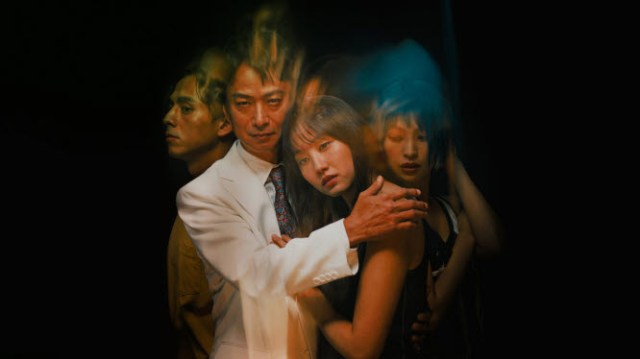
The story begins with the sudden appearance of a young woman named Melissa (Margaret Qualley) in front of Philip (Nick Robinson) and his mother Charlene (Amy Ryan). Five years ago, Philip’s brother Ronnie (Connor Jessup) died due to some unfortunate accident, and Philip and Charlene are still struggling with their loss and grief over Ronnie’s death, but now they are baffled as Melissa, who was Ronnie’s girlfriend at that time, comes into their life again with an unbelievable news. It is quite apparent that she has been pregnant for several months, and, for some reason, she firmly believes that her baby’s father is Ronnie, who, according to her, actually contacted with her from the other side and then somehow impregnated her.

Of course, Charlene and Philip cannot possibly believe Melissa at first, but then they cannot help but wonder about whether Melissa is really pregnant with Ronnie’s child. At one point, Charlene goes to a local library for getting any information on a certain possibility, and she comes to have some suspicion on her ex-husband Richard (Greg Kinnear), a gynecologist who has currently lived with his second wife in Florida since their bitter divorce after Ronnie’s death. Although his physical condition is not exactly ideal due to a recent accident, Philip also starts his own investigation, and that eventually leads him to a psychic who gave Melissa an experience to remember (She delivers the most humorous line in the film during her meeting with Philip, by the way).

strangebutrue02

Meanwhile, we also get to know about Bill (Brian Cox) and Gail (Blythe Danner), an old couple who has provided Melissa a place to stay. As revealed later in the story, Melissa broke up with her parents due to her belief on the other side some time ago, but then Bill and Gail kindly let her live in a guest house near their residence located at some remote spot outside her suburban neighborhood, and she really appreciates their generosity as shown from the warm interactions between her and them, though she has not told them anything about her baby’s father yet.
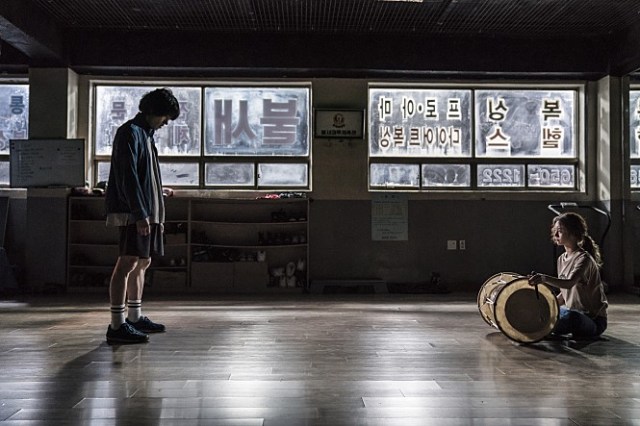
As Charlene and Philip continue to delve further into their ongoing situation, Richard eventually enters the picture for talking more with his ex-wife, and he surely has something to reveal to his ex-wife. Despite his rather thankless role, Greg Kinnear, who has been always reliable since his Oscar-nominated supporting turn in “As Good As It Gets” (1997), ably fills his role with human nuances, and the same thing can be said about Amy Ryan, who has seldom disappointed us since her unforgettable Oscar-nominated supporting turn in “Gone Baby Gone” (2007).

And then the story takes a dark narrative turn as announced in advance by the very first shot of the film. I will not go into details here for avoiding any possible spoiler, but I must say that I was quite disappointed to see that the screenplay by Eric Garcia, which is based on the novel of the same name by John Searles, is devolved into a run-of-the-mill thriller during its final act. While we surely get the answer to the mystery surrounding Melissa in the end, it feels rather artificial in my humble opinion, and I was also dissatisfied with how the story delivers the ending too conveniently.

strangebutrue03

At least, director Rowan Athale did a competent job of establishing a tense and unnerving mood around the characters in the film, and I enjoyed the performances from some of the main cast members including Kinnear and Ryan. While Nick Robinson and Connor Jessup are adequately cast in their respective youthful roles, Blythe Danner and Brian Cox are effective as bringing a substantial amount of life and personality to their characters, and you may notice the brief appearance of Mena Massoud, who has recently been more prominent thanks to his leading role in “Aladdin” (2019).

Above all, the movie depends a lot on the ambiguous acting of Margaret Qualley, who is the daughter of Andie MacDowell and has recently drawn more attention from us as appearing in a number of notable films such as “The Nice Guys” (2016), “Novitiate” (2017), and “Once Upon a Time… in Hollywood” (2019). While frank and forthright on the surface, Melissa often disturbs us with her strange obliviousness to her outrageous claim, and Qualley deftly balances her character between elusiveness and earnestness as constantly suggesting whatever lies behind her character’s seemingly tranquil appearance. Although it is a shame that the movie does not utilize her character that well during its last act, Qualley leaves a considerable impression here, and it will be interesting to see more of her undeniable talent in the future.

In conclusion, “Strange But True” does not work as well as intended, but it is not a total bore at least because of the admirable effort from Qualley and several other talented performers in the film. Although it is indeed flawed in many aspects, I admire it to some degree how it toys with its preposterous story promise, and you may have a fairly entertaining time with it if you do not expect much from it.

strangebutrue04

Posted in Movies | Tagged , , | Leave a comment

Amazing Grace (2018) ☆☆☆1/2(3.5/4): Amazing indeed

amazinggrace01

“Amazing Grace”, a music documentary film which was shot by Sydney Pollack in 1972 but then had been kept in vault for more than 40 years due to not only technical problems but also legal issues, is amazing indeed. Even though you have no particular background knowledge on Aretha Franklin and R&B or gospel music like me, you will soon appreciate what an extraordinary singer Franklin was, and you may also find yourself swaying along with the spirited excitement generated by Franklin and others around her on the screen.

At the beginning, we see people gathering at the New Temple Missionary Baptist Church in LA during the evening of January 13th, 1972. Around that time, Franklin reached to the height of her career with a series of famous R&B hit songs such as “Respect” and “I Never Loved a Man (The Way I Love You)”, and she decided to take a forward step into gospel music, which was incidentally the main musical background of her early years when she grew up under her father Reverend C. L. Franklin. Accompanied by the Southern California Community Choir and Reverend James Cleveland, she performed in front of a bunch of audiences at the New Temple Missionary Baptist Church on January 13th and 14th, and the live recording of this two-day performance of hers was later turned into her 1972 album “Amazing Grace”.

In the meantime, she and her album producers also collaborated with Warner Brothers for making a concert film based on this two-day performance of hers. Pollack, who was still establishing his filmmaking career around that time, was hired to film the whole recording process with five 16mm film cameras, and he and his crew members came to shoot no less than 20 hours of footage, but there was one big unfortunate problem. Due to his inexperience with making music documentary films, he happened to shoot without clapper boards snapping shut at the beginning of each take to help synchronize sound and picture in post-production, and, once it seemed that there was not any possible way to salvage the project before the release of Franklin’s album, Warner Brothers decided to abort the production while shelving the footage in its vault.

amazinggrace02

Since that regrettable happening, Pollack had often tried to solve the technical problems of the film and then release it during next 35 years, but he did not have enough time for that as often busy with making or producing other films, and he eventually handed it to producer Alan Elliott before his death in 2007. Elliott subsequently completed its post-production, but then, alas, he came across another problem due to a legal dispute with Franklin herself, who did not allow the film to be released until her recent death in last year.

In the end, the film was released in New York City during last November after Franklin’s family gave a permission for that and later released worldwide early in this year, and I can assure you that it is one of the most memorable music documentary films I have ever watched during last several years. Although it surely often looks rather plain and grainy in terms of technical aspects, it goes without saying that Franklin shines whenever she holds the center of the screen, and you may wonder why the hell she refused to have the film released in public, because, as far as I can see, there is nothing she would be ashamed of in the film.

I must confess that I only remember her for her cameo appearance in “The Blue Brothers” (1980), but Franklin left a considerable impression on me nonetheless when I watched that film in 1994, and “Amazing Grace” certainly showed me more of her authentic talent and star quality. Although the beginning of the first day of the performance feels rather modest at first, it does not take much time for her to grab my attention with the opening song, and then everything goes smoothly for her and her accompanying musicians and singers, while the audiences enthusiastically go along with that.

amazinggrace04

At the end of the first day of the performance, everything culminates to that famous gospel song known well to many of you. It is really wonderful to watch Franklin singing all the way for delivering the mood and spirit of the song, and, like those audiences in the film, we cannot help but be swept by what is palpably conveyed by her powerful singing voice.

This is surely the highpoint of the film, but, as Reverend Cleveland promises at the end of first day of the performance, the second day gives us more fun and excitement. Again, Franklin excites and enraptures her audiences, and the documentary amuses us a bit as spotting Mick Jagger and Charile Watts in the audiences, who were incidentally finishing their latest album in LA around that time. When Franklin’s father, who was invited along with Clara Ward, gives a summon around the end of the performance, the mood becomes a bit serious, but he delivers the summon with spirit and some sense of humor, and that is soon followed by the final song, which is performed with sheer gusto and abandon by Franklin and her singers and musicians.

On the whole, “Amazing Grace” provides us a vivid, exciting glimpse on one of Franklin’s many career highlights, and it is certainly worthwhile to watch even if you are not that familiar with Franklin and her career. Now I am considering checking out that album of hers, and you may have the same thought once you watch this excellent documentary.

amazinggrace03

Posted in Movies | Tagged , , , , | Leave a comment

Memory: The Origins of Alien (2019) ☆☆☆(3/4): The untold origin story behind “Alien”

memorytheoriginsofalien01

Documentary film “Memory: The Origins of Alien” gives us a close look into how “Alien” (1979) was conceived and then produced step by step. If you are already quite familiar with the long production history behind this great science fiction horror film which has lost none of its sheer wonder and terror even after 40 years, the documentary will probably not enlighten you that much, but it is still engaging on the whole as providing you some interesting insights on the production of “Alien”, and you may want to revisit “Alien” after watching this modest but solid documentary.

Everything started with a simple story idea conceived by Dan O’Bannon, who wrote the screenplay of “Alien” with Ronald Shusett. Since his childhood years in Missouri, O’Bannon had been quite fascinated with science fiction, and his wife Diane and several other interviewees tell us how much he was influenced by numerous pulpy science fiction stories and movies during his early years. He subsequently wrote a number of science fiction tales for himself, and the documentary shows us a short comic book story written by him, which was clearly a predecessor to “Alien”.

During the 1970s, O’Bannon became a screenplay writer, and he came to collaborate with John Carpenter in “Dark Star” (1974), a small offbeat science fiction film which was the starting point for their respective Hollywood careers. Although they did not collaborate well with each other during its production, its modest success led O’Bannon to Alejandro Jodorowsky at least, and we see several sketches made during the time when he and Jodorowsky tried to adapt Frank Herbert’s acclaimed SF novel “Dune”.

memorytheoriginsofalien04

Unfortunately, as shown in documentary film “Jodorowsky’s Dune” (2013), things did not go well for them in the end, but their aborted collaboration turned out to be a fertile ground for one particular story idea conceived by O’Bannon. He tried to write a story about a bunch of spaceship crew members facing an unknown alien menace in the outer space, and his story idea soon came to draw the attention of 20th Century Fox.

O’Bannon happened to be at the right moment for developing his story into a movie. Since Stanley Kubrick’s “2001: A Space Odyssey” (1968) came out, Hollywood had gone all the way for making other science fiction films such as Steven Spielberg’s “Close Encounters of the Third Kind” (1977), and 20th Century Fox was certainly more enthusiastic about what was proposed by O’Bannon after the gigantic success of George Lucas’ “Star Wars” (1977).

During the pre-production period, O’Bannon searched for anyone to help him realize his vision in detail, and that person was none other than H.R. Giger, a Swiss artist who had drawn considerable attention for his grotesque style. Both O’Bannon and Giger luckily happened to share the common enthusiasm toward those unnerving gothic horror tales of H.P. Lovecraft, so they fluidly collaborated with each other during their creative process, and Giger came to create a number of boldly disturbing artworks which would be developed into those memorable images in “Alien”.

memorytheoriginsofalien03

Giger’s final result was understandably welcomed that much by 20th Century Fox, but Giger and O’Bannon were luckily supported by Ridley Scott, who was selected as the director of “Alien” after Walter Hill, who was supposed to direct the film at the beginning, chose to make “Southern Comfort” (1981) instead. Although he had just made a feature film debut with “The Duelists” (1977), Scott soon came to gain the trust and confidence from his cast and crew members, and some of them eagerly tell us how skillfully Scott handled the production of the movie. They reminisce about how he paid lots of attention to the realistic mood and details of the film, and the documentary certainly does not disappoint us as showing us how Scott and his crew members prepared and then shot a certain infamous scene in the movie.

The documentary also explores how “Alien” was influenced by ancient myths – and how it has influenced many other films during next several decades. As reflected by the opening scene of the documentary, the Furies in Aeschylus’ “The Eumenides” are connected to O’Bannon’s story to some degree, and we also hear about how Giger’s artworks for “Alien” were considerably inspired by Egyptian myth in addition to the artworks of Francis Bacon. Once it came out in 1979 and then had an enormous box office success, “Alien” became a standard for a number of subsequent science fiction horror movies such as John Carpenter’s “The Thing” (1981), and even Scott himself returned to the world of “Alien” as making its two prequels “Prometheus” (2012) and “Alien: Covenant” (2017).

Although it stumbles during its last part where several movie experts busily delve into a number of ideas and subjects embedded in “Alien”, “Memory: The Origins of Alien”, directed by Alexandre O. Philippe, is as entertaining and informative as intended, and, as your average amateur movie reviewer, I enjoyed a number of nice moments in the documentary including the one which showed me how much “Alien” resonated with the audiences in the late 1970s like many other notable films of that period such as “Apocalypse Now” (1979) or “Kramer vs. Kramer” (1979). Sure, in terms of technical aspects, this is as plain as a DVD/blu-ray supplement, but I had a fairly good time with it at least, so I will not grumble about its weak points for now.

memorytheoriginsofalien05

Posted in Movies | Tagged , , , | Leave a comment