Jackie Brown (1997) ☆☆☆(3/4): Tarantino in leisure

jackiebrown01

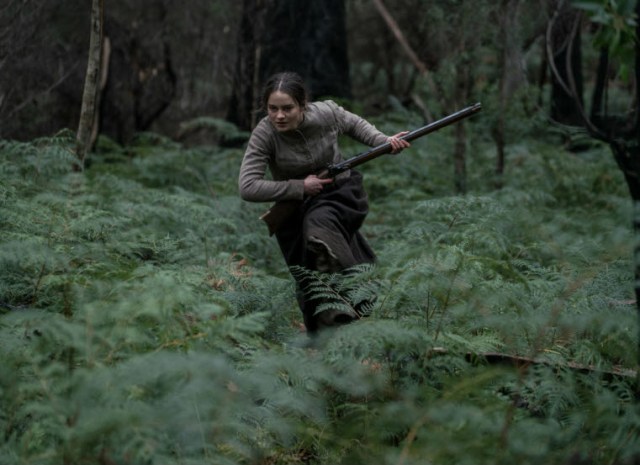
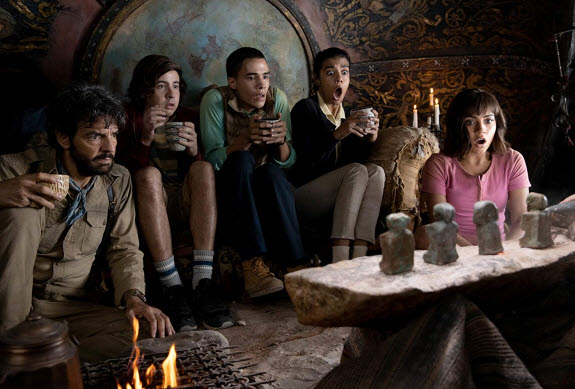
“Jackie Brown” occupies a rather odd place in Quentin Tarantino’s filmmaking career. Sandwiched between “Pulp Fiction” (1994) and “Kill Bill: Vol. 1” (2003), the movie may look mild and conventional in comparison, but it is still an enjoyable work equipped with smart storytelling and a number of stellar performances, and I am glad that I could get a chance to revisit it thanks to the recent re-release of Tarantino’s several films in South Korea.

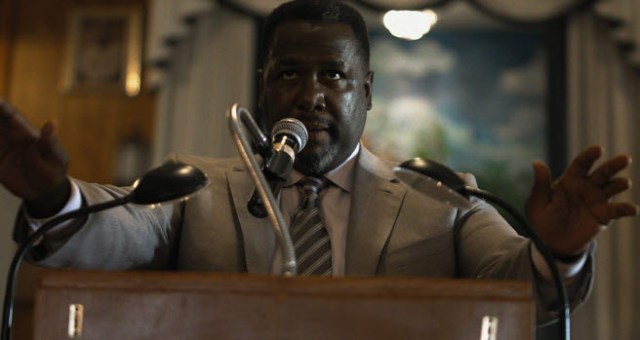
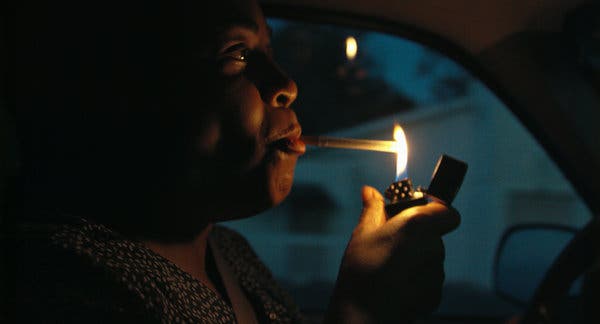
During the opening scene clearly reminiscent of that famous opening scene of “The Graduate” (1967), we are introduced to Jackie Brown (Pam Grier), a 44-year-old flight attendant who turns out to be working for a local criminal figure named Ordell Robbit (Samuel L. Jackson). So far, she has delivered money well to Ordell while going back and forth between Mexico and LA during her worktime, but she is caught by federal agent Ray Nicolette (Michael Keaton) on one day, and the situation becomes worse when Nicolette later discovers something else besides money in an envelope supposed to be delivered to Ordell.

While pressured a lot by Nicolette, Jackie knows too well that she must be very careful under this circumstance. As a matter of fact, Ordell has already eliminated a small-time criminal who told Nicolette about Jackie for not going to jail, and she must think of any possible way for her survival before getting killed by Ordell, who is ready for protecting his money and business by any means necessary. Fortunately, she is a pretty smart woman who can outwit her opponents, and we soon see her embarking on a risky balancing act between Ordell and Nicolette.

jackiebrown02

And then she finds an unlikely ally from Max Cherry (Robert Forster), a weary middle-aged bail bondsman who was hired by Ordell to pay the bail for her after her arrest. When he sees her coming out of a prison, Max finds himself quite infatuated with her, and he comes to get involved more with her than expected after their subsequent accidental encounter at a shopping mall. With a plan soon to be executed, she really needs Max’s help, and Max is willing to take some risk for a woman who brings unexpected excitement to his mundane life, though both he and she do not directly express the growing mutual affection between them.

Meanwhile, we also get to know Ordell’s two associates: Louis Gara (Robert De Niro) and Melanie Ralston (Bridget Fonda). Although she is one of Ordell’s girlfriends, Melanie does not mind seducing Louis, and that leads to a rather amusing moment between Louis and Ordell, who is actually not so surprised by what happened between Louis and Melanie. He does not trust Melanie much, but he still keeps her around him nonetheless because she is still a pretty attractive girlfriend to have and he is always aware of how treacherous she is.

Once it fully establishes its main characters, Tarantino’s screenplay, which is based on Elmore Leonard’s novel “Rum Punch”, leisurely rolls them along its straightforward plot, and its main pleasures come from how it effortlessly glides from one expected point to another while occasionally throwing some surprises to jolt us. Like its heroine, the movie does not seem to hold anything behind its back, but then we are caught off guard by several unexpected moments generated among its main characters, and we cannot help but be amused by how effectively they are delivered for our big laughs.

jackiebrown04

While steadily sticking to his unusually restrained storytelling approach, Tarantino trusts us enough to let us process what is going on in the story for ourselves. There is a terrific wordless scene where we gradually gather necessary information along with a certain main character, and I admire how flawlessly the movie conveys to us everything we need to know. In case of a certain key sequence later in the story, it is presented more than once via several different viewpoints, but we never get confused as clearly discerning what will inevitably happen in the end, and everything consequently culminates to a climactic scene where one short line results in the neat resolution for everyone in the story.

Above all, the movie is packed with lots of personality to be savored. Like many of Leonard’s crime novels, “Rum Punch” is filled with vivid, strong characters whose verbal interactions are pretty entertaining to read, and Tarantino’s screenplay wisely remains faithful to Leonard’s novel while adding several notable changes and modifications to the novel. After all, Leonard’s territory is more or less than a comfort zone for Tarantino considering their common elements, and it can be said that Tarantino is simply having some leisure here in this film.

Tarantino also draws excellent performances from his various main cast members. While Samuel L. Jackson, who won the Best Actor award at the Berlin International Film Festival, surely gets a number of juicy moments as the most talkative character in the film, Pam Grier is equally fine as ably functioning as the center of the story, and so are the other notable cast members in the film including Michael Keaton, Robert De Niro, Bridget Fonda, Chris Tucker, and Robert Forster, who was deservedly Oscar-nominated for his seemingly plain but rich performance which always engages us with nuances and details to be appreciated behind his calm, no-nonsense façade.

Although it may not be as great as “Pulp Fiction” or “Inglourious Basterds” (2009), “Jackie Brown” has a fair share of fun and excitement on the whole, and its nice moments have grown on me after I watched it at a local movie theater at last night. In my humble opinion, it is too good to be regarded as a minor work in Tarantino’s filmmaking career, and I think you should give a chance to this relatively overlooked work someday.

jackiebrown03

Posted in Movies | Tagged , , , | Leave a comment

Tickled (2016) ☆☆☆1/2(3.5/4): It will tickle you – and then it will disturb you

tickled01

Documentary film “Tickled” will tickle you at first and then will disturb you a lot. While it is initially quite funny and amusing as examining an absurd but curious type of sexual fetish, the documentary subsequently delves into a very twisted case of exploitation and blackmail, and you will be amazed and horrified as watching its filmmakers’ persistent attempt to delve further into the case.

The documentary begins with when co-director David Farrier, who works as a journalist in New Zealand, came across a website promoting “competitive endurance tickling”. There were a number of video clips posted on this website, and these video clips showed young men getting tickled as, uh, competition participants, and that certainly induced lots of curiosity from Farrier, who came to decide to write an article about this bizarre competition.

The website was owned by Jane O’Brien Media Company in US, so Farrier sent an e-mail to this company, but, to his bafflement, he received rather hostile and insulting responses from a representative of this company. Along with co-director Dylan Reeve, he continued to investigate Jane O’Brien Media Company, and it soon turned out to them that there was something quite shady about this company, which happened to owned by some suspicious company in Europe.

Meanwhile, Jane O’Brien Media Company started to threaten Farrier and Reeve with the possibility of lawsuit. A letter was sent to them from some well-known lawyer in New York City, and a trio of American lawyers subsequently came to New Zealand for meeting Farrier and Reeve, but these lawyers vaguely warned Farrier and Reeve without clarifying why their client was so pissed about Farrier and Reeve’s attempt to investigate Jane O’Brien Media Company.

tickled02

Instead of stepping back, Farrier and Reeve became more determined to go further for their documentary, and we soon see them arriving in LA for more investigation. They tried to contact those young people appearing in the video clips of Jane O’Brien Media Company, but everyone except one declined to be interviewed. A lad named TJ, who is the only person agreeing to talk in front of the camera, tells us about how he was lured by money and then came to let himself tickled in front of the camera, and he also recounts on how his life was subsequently turned upside down when he happened to provoke someone in Jane O’Brien Media Company.

Meanwhile, Farrier and Reeve came to discover that there is actually a small but considerable market for tickle fetish pornography, and they met Richard Ivey, a tickle fetishist who frankly and eagerly tells us how he has been doing his naughty business for many years. At one point in the documentary, we see a place which functions as his studio, and then we come to behold how Ivey shoots his tickle fetish video along with a young hunky guy, who is willing to be tickled for more than 2 hours while manacled on a special recliner.

And then a shady figure mentioned by Ivey drew the attention of Ferrier and Reeve. Like Ivey, this figure in question was quite interested in shooting tickle fetish videos, but this person was quite mean and vicious to say the least, and two journalists, Hal Karp and Debbie Scoblionkov, tell us how this person, who was eventually exposed in public by their diligent investigation, cruelly exploited and then blackmailed many young men lured to appear in tickle fetish videos through money and expensive presents.

tickled04

However, believe or not, this person only received very light punishment in the end because of money and connection, and, as observing how much this person is similar to whoever is behind Jane O’Brien Media Company in many aspects, Ferrier and Reeve came to suspect that this person actually owns Jane O’Brien Media Company, though both its lawyers and this person’s lawyers denied that. Later in the documentary, we come to learn about how the company reached to many other places besides LA, and a young man named Jordan Schillaci, who once worked as a recruiter for the company, tells us how easy it was for the company to recruit many poor young men in his impoverished neighborhood in Michigan.

In the end, Ferrier and Reeve attempted to confront their target figure, who resided in a posh neighborhood in Long Island. Not so surprisingly, they did not get much success although they met the figure by chance, but then there came a reversal of fortune which fully exposed what this figure had been doing for several years, and we eventually arrive at a calm but revealing moment to illuminate more of this figure’s twisted sides. Not long after the documentary had its premiere at the Sundance Film Festival early in 2016, Ferrier and Reeve faced again the possibility of lawsuit thanks to this person and this person’s associates, but then everything was suddenly ended due to this person’s unexpected death in the very next year.

On the whole, “Tickled” is a funny, compelling, and disturbing investigative documentary, and Ferrier and Reeve did a commendable job of presenting their stranger-than-life investigation story with considerable amusement and curiosity. Yes, I giggled and rolled my eyes as watching those absurd moments in the documentary, but then I was also chilled and disturbed by the dark sides of human nature glimpsed from the later part of the documentary, and that was surely an experience I will not forget easily.

tickled03

Posted in Movies | Tagged , , , , | Leave a comment

Scary Stories to Tell in the Dark (2019) ☆☆☆(3/4): Stories that hurt

scarystoriestotellinthedark03

“Scary Stories to Tell in the Dark” is a little creepy horror flick which serves us a number of good scary moments within our expectation. As a sort of hybrid between “Final Destination” (2000) and “Goosebumps” (2015), the movie does not bring anything particularly new to its genre territory, but those scary moments in the film are presented with enough style and substance at least, and that surely distinguishes itself a bit from other similar genre works.

The story is set in a small rural town in Pennsylvania during the autumn of 1968. While many of town residents are mostly occupied with the upcoming presidential election, the kids in the town pay more attention to what they are going to do in Halloween evening, and Auggie (Gabriel Rush) and Chuck (Austin Zajur) are eager to have lots of fun and excitement along with their high school friend Stella (Zoe Colletti), who is your average nerdy girl as shown from her room filled with various items associated with comic books and horror movies.

However, Stella is not that eager to enjoy Halloween evening unlike her two friends. Some time ago, her mother suddenly left her and her father for an unspecified reason, and many people in the town have gossiped about her inexplicable disappearance. This certainly hurts Stella a lot, and she has consequently felt lots of guilt about not only her mother’s disappearance but also her father’s rather depressed status.

Anyway, Stella eventually joins Auggie and Chuck, and then they find themselves in a big trouble when they try to pull a prank on their school bully and his cronies. When they are running away from that school bully and his cronies, they fortunately come across a lad who happens to stay in the town for a while, and they later take him to a certain haunted house in the town because, well, it is Halloween evening.

scarystoriestotellinthedark04

Once they arrive at that place along with Ramón (Michael Garza), they tell him (and us) a long bad history behind it. Around a century ago, the house belonged to a wealthy and powerful family whose big business was virtually the foundation of the town, but the family happened to have an eccentric daughter who was shameful in their view, and they kept her in a hidden basement in the house for a long time. When she was later accused of murdering several children, the family did not do anything at all for her, and, according to what has been told for many following years, she eventually committed suicide when angry town people came together to the house for killing her.

Of course, it does not take much time for our young main characters to discover the entrance to that hidden basement, and, what do you know, Stella soon notices a book containing stories which seems to be written by that woman. She is not concerned much when she and others later get out of the house along with that book, but then, not so surprisingly, strange things start to happen as new stories are added to the book by some malevolent supernatural force, and it becomes quite clear to Stella and others that they must do something before it is too late for all of them.

Steadily dialing up the level of creepiness on the screen, the movie, which is based on the children’s book series of the same name by Alvin Schwartz, doles out its several key sequences one by one, and director André Øvredal, who previously directed “Trollhunter” (2010) and “The Autopsy of Jane Doe” (2016), and his crew members skillfully handle them on the whole. In case of an expected sequence involved with a shabby scarecrow in a cornfield, there is a little nice twist to surprise us, and I also like the horrifying sequence involved with a bulging spot on a certain character’s face.

scarystoriestotellinthedark02

In the meantime, the screenplay by Dan and Kevin Hageman, which is developed from the story by co-producer Guillermo del Toro and his two co-writer Patrick Melton and Marcus Dunstan, also takes some time in establishing story and characters we can care about. While Stella’s personal drama and Ramón’s hidden past give some gravitas to the film, Auggie and Chuck become more than comic relief characters as we get to know more about them, and it certainly helps that Zoe Colletti, Michael Garza, Gabriel Rush, and Austin Zajur are engaging in their respective roles. They are likable enough to make us care about what is being at stake for their characters, and they are also supported well by several veteran performers including Dean Norris, Gil Bellows, and Lorraine Toussaint.

In the end, everything eventually culminates to a climatic sequence unfolded in that haunted place (Is this a spoiler?), and the movie deftly goes back and forth between two different viewpoints without losing any narrative momentum. Although the ending is a bit too convenient in my inconsequential opinion, it fits with what is emphasized to us at the beginning of the movie, and the tentative optimism at the end of the story feels poignant as we muse on how things are indeed changed for its main characters.

In conclusion, “Scary Stories to Tell in the Dark” is a suitable horror movie for chilly autumn evening, and I was entertained enough by its creepy mood and solid storytelling even though I could clearly see from the start how it was going to provide me. It did not terrify me that much, but I cherished its good moments nonetheless, so I will not grumble for now.

scarystoriestotellinthedark01

Posted in Movies | Tagged , , , , | Leave a comment

Taipei Story (1985) ☆☆☆1/2(3.5/4): Lost in Taipei

taipeistory02

Edward Yang’s “Taipei Story”, which was released in South Korean theaters a few days ago, is a melancholic urban drama about loneliness and disconnection. Although it initially requires considerable patience from us due mainly to its slow narrative pacing and detached storytelling, the movie slowly lets us immerse into its calm, realistic presentation of the Taiwanese society during the early 1980s, and you may reflect on a number of dry but undeniably haunting moments in the film after it is over.

The movie, which is set in Taipei during the early 1980s, mainly revolves around a woman and a man who have known each other for a long time: Chin (Tsai Chin) and Lung (Hou Hsiao-hsien). Chin has worked in some small construction company, but the company is recently acquired by some bigger company, and Chin’s position in the company has been quite uncertain especially after her direct superior left the company. Lung, who has been one of Chin’s close friends since their childhood years, has run a small textile business, but things have not been going particularly well for him, and he is seriously considering going to US and then working with his brother-in-law there.

After being reminded again that she will be demoted to the position of a mere secretary, Chin eventually leaves the company, but she is frustrated again with how uncertain her life is at present. Her former direct superior, who is considering starting her own company now, may hire her someday, but she does not promise anything to Chin, and Chin comes to wonder whether she should move to US along with Lung.

However, it turns out that Lung’s current situation is not exactly good enough for him and Chin. When Chin’s father desperately needs lots of money due to his recent considerable business failure, Lung is willing to help him as much as he can for old times’ sake, but Chin is not particularly pleased about this because she does not love her father much as reflected by her small private scene with her mother, who is mostly wordless but speaks volume via her phlegmatic silence.

taipeistory01

And it is revealed to us that Chin’s personal life has been rather complicated. While she lets Lung stay in her neat apartment from time to time, she has also been emotionally involved with a certain male employee in the company. At one point, she and that guy, who is incidentally married, has some private talk while having a dinner outside, and that later leads to a little ironic moment which brought chuckles from me and some other audiences around me.

Discerning that she cannot go further with that guy, Chin tries to get closer to Lung, but it only becomes more apparent that they are incompatible with each other regardless of whether they really love each other or not. While Lung often clings to those good old days in the past, Chin wants to move onto the next step of her life as soon as possible, and their personal difference becomes more evident when he happens to join a drinking party along with her and her colleagues.

After realizing that Lung is not that willing to go further along with her, Chin chooses to try something different later in the story. She goes to an abandoned place where her younger sister and some other young people have stayed without permission, and she subsequently has some fun time along with them, but then she only finds herself sensing the generation gap between her and these young people, though she gets a bit closer to one of them and subsequently has a little nice time along with him outside the city.

taipeistory03

As leisurely moving from one episodic moment to another, the movie gradually establishes the realistically drab but vivid urban atmosphere on the screen, and Yang and his cinematographer Yang Wei-han effortlessly conveys to us the sense of loneliness and disconnection via thoughtful scene composition and smooth camera work. For example, I particularly like a certain brief shot early in the film which effectively emphasizes the emotional gap between Chin and one supporting character, and I also appreciate the melancholic poignancy of a key scene unfolded at a rooftop during one evening. Although the mood becomes a bit more intense during its last 30 minutes, the movie firmly sticks to its calm and detached attitude as before, and what eventually happens in the end is quietly devastating to say the least.

Most of the main performers in the film, who are uniformly solid on the whole, are not particularly familiar to many of us, but I must say that it is rather amusing to see Hou Hsiao-hsien, who would become one of the leading Taiwanese filmmakers just like Yang as making a number of acclaimed films such as “A City of Sadness” (1989), “Three Times” (2005) and “The Assassins” (2015). In case of Tsai Chin, who married Yang around the time when the movie came out (They later divorced in 1995, by the way), she holds her spot well beside Hou, but, so far, she only appeared in two movies after this film.

On the whole, “Taipei Story” is your typical arthouse film just like many of Yang’s works including “A Brighter Summer Day” (1991) and “Yi Yi” (2000). Although it looks rather modest compared to “A Brighter Summer Day” and “Yi Yi”, it is an admirable work with interesting aspects nonetheless, and I was glad to watch it at a local arthouse theater at last night. Yes, it is one of those ‘slow’ films, but it will impress you a lot once you accept what it is about as well how it is about.

taipeistory04

Posted in Movies | Tagged | Leave a comment

Maurice (1987) ☆☆☆(3/4): A sumptuous queer period drama

Maurice01

James Ivory’s 1987 film “Maurice”, which happens to be released in South Korean in this week, is a sumptuous queer period drama to be admired and appreciated. Based on the novel of the same name by E. M. Forster, the movie calmly and elegantly observes the repressed romantic passion inside its titular hero, and it is often poignant to see how he struggles with the feelings forbidden by the world to which he belongs.

After the amusing prologue scene between a young boy and his teacher who explains to him a bit about man, woman, and sex, the movie, which is mainly set in Britain during the early 1910s, moves forward to several years later. That boy, Maurice Hall (James Wilby), grows up to be a lad currently studying at Cambridge, and we see him attending a private meeting with several other students and their dean. During that meeting, he happens to draw the attention of one of the other students, and that later leads to his encounter with a senior student named Clive Durham (Hugh Grant), who instantly gets along well with Maurice right from the beginning.

As they spend more time with each other, Maurice comes to feel something more than friendship between him and Clive, and Clive also turns out to be attracted a lot to Maurice. Although they have to step back right after they become more direct about their mutual attraction to each other for the first time, Maurice decides to take a bold forward step toward Clive at one night, and Clive willingly accepts Maurice’ declaration of love, though he prefers to keep their burgeoning relationship somewhere between friendship and platonic love.

Maurice03

And we see how their relationship is continued even after their college years. After deciding to quit his college education due to a little matter with the dean, Maurice begins to work as a stock broker just like his dead father, though his mother and sisters are not particularly pleased about his decision. Once he completes his education course at Cambridge, Clive studies more to be a barrister, and many people including his family members expect a lot from him as he advances further for his future political career. Although they are respectively taking different paths now, Maurice and Clive remain close to each other nonetheless, and Clive is always ready to accept Maurice as a guest of his big country manor.

However, both of them are constantly aware of how their love is forbidden by their conservative British society, which regards homosexuality as a depraved crime to be punished. At one point, one of their former  schoolmates is arrested for homosexuality, and Clive helplessly watches that person ruined and humiliated at the court. More scared about what may happen to his life and career, he eventually decides to conform to the social expectation on him, and that certainly hurts Maurice a lot, who consequently throws a harsh and cruel lie to one of his sisters just because she is clearly interested in Clive.

Clive later marries some respectable young lady, but he still wants to keep Maurice around him as a close friend, and Maurice becomes more agonized over his increasingly repressed relationship with Clive. Feeling more desperate than before, he consults with his family doctor, but, not so surprisingly, the doctor shows nothing but disgust and contempt, and his subsequent private sessions with a therapist in London do not help much, though the therapist shows some compassion and understanding to Maurice in the end.

Maurice02

Meanwhile, Maurice comes to notice more of Alec Scudder (Rupert Graves), a handsome gamekeeper working in Clive’s country manor. While he hesitates to get closer to Alec, Alec already senses Maurice being attracted to him, and that leads to a moment which resonates with the similar moment between Maurice and Clive early in the film. Maurice surely likes how willingly Alec goes forward for mutual carnal pleasure in contrast to Clive, but there is a considerable social gap between him and Alec, and he may have to give up everything in his respectable life because their love crosses more than one social boundary.

The adapted screenplay by Ivory and his co-writer Kit Hesketh-Harvey eventually arrives at an ending which may feel too convenient and impractical to some of you, but the movie is still worthwhile to watch. While its production quality is impeccable in terms of mood and details (it was nominated for Best Costume Oscar, by the way), the main cast members are suitably cast in their respective roles, and they all give engaging performances on the whole. James Wilby and Hugh Grant, who received the Best Actor award together at the Venice Film Festival, are convincing in their discreet romantic interactions, and the other notable main casting members in the film including Rupert Graves, Denholm Elliott, Simon Callow, Billie Whitelaw, Barry Foster, Judy Parfitt, and Ben Kingsley are also solid in their supporting parts.

In conclusion, “Maurice” is less impressive compared to Ivory and his longtime partner/producer Ismail Merchant’s other notable works such as “Room with a View” (1986), “Howards End” (1992), and “The Remains of the Day” (1993), and I must say that I felt a bit impatient during my viewing due to its slow narrative pacing and long running time (140 minutes), but it is still recommendable for its good mood, performance, and storytelling. Sure, it may look old-fashioned and introverted compared to many recent queer films which are more honest and forthright in comparison, but, boy, look at how exquisitely and courteously repressed its hero is.

Maurice04

Posted in Movies | Tagged , | Leave a comment

Doctor Sleep (2019) ☆☆☆(3/4): An eclectic sequel between King and Kubrick

doctorsleep01

Mike Flanagan’s new film “Doctor Sleep” is an eclectic sequel sandwiched between two contrasting sources of inspiration: Stephen King and Stanley Kubrick. While officially based on King’s novel of the same name which is a sequel to his famous horror novel “The Shining”, the movie also intends to be a sequel to Kubrick’s 1980 film adaptation of “The Shining”, and it is fun and interesting to see how the movie attempts its tricky artistic reconciliation between two very different masters.

The story starts at the time point not long after what happened at the end of Kubrick’s film. While he and his mother luckily escaped from the Overlook Hotel and his father’s murderous madness boosted by that evil haunted place, young Danny Torrence, played by Roger Dale Floyd, still finds himself terrorized by nightmares and ghosts, and then he is visited by Dick Hallorann (Carl Lumbly), the former chef of the Overlook Hotel who previously shared with Danny some knowledge on their common supernatural ability called ‘The Shining’. Although he is dead at present, Hallorann teaches Danny how to handle those malevolent ghosts frequently harassing him, and Danny’s daily life with his mother consequently becomes more uneventful than before.

However, after around three decades, Danny, now played by Ewan McGregor, is turned into a guy about to hit the bottom of his addiction as struggling with his personal demons. At one point, he is befuddled to wake up right next to the unconscious body of a young woman he encountered during another wild night of booze and drug, and he certainly feels lousy as stealing some money from her wallet and then leaving her alone with her little child.

doctorsleep05

Fortunately, when he later happens to tumble into a small town in New Hampshire, Danny meets a couple of local guys willing to help him. When he happens to come across Danny, Billy Freeman (Cliff Curtis) instinctively discerns that Danny really needs help, and he helps Danny settle in the town in addition to bringing him to a local AA meeting. Thanks to the kind support from Freeman and Dr. John Dalton (Bruce Greenwood), Danny comes to recover step by step while working in a local hospice, where he is subsequently nicknamed ‘Doctor Sleep’ as often comforting those dying patients during the last minutes of their lives in his own special way.

Meanwhile, Danny senses someone who has the same supernatural ability out there, and that person in question is a young girl named Abra Stone (Kyliegh Curran). Although she lives with her parents in a suburban neighborhood a bit far from where Danny currently resides, they can often correspond with each other thanks to their common supernatural ability, and she turns out to be more powerful than him as she grows up year by year.

Unfortunately, the growing presence of Abra’s immense power comes to attract the attention of a group of dangerous entities led by Rose the Hat (Rebecca Ferguson). For maintaining their nearly immortal status, they sometimes track down and then feed on young people who ‘shine’, and there is a chilling and disturbing sequence where they kidnap their latest victim and then commit unspeakable things for eating as much as they can.

After accidentally detecting Rose the Hat and her fellow evil entities during that horrific moment, Abra seeks help from Danny, who is initially reluctant but eventually agrees to help her. As he tries to help and protect her as much as he can, his dark past comes back to him along with his supernatural ability, and it is not much of a spoiler to tell you that he subsequently returns to the Overlook Hotel along with Abra for their final confrontation with Rose the Hat.

doctorsleep02

Although it feels a bit too long and slow as slowly establishing its main characters during its first half, the movie steadily accumulates its narrative momentum, and Flanagan, who has constantly impressed me since he drew my attention for the first time with “Oculus” (2013), provides us a series of effective moments of horror without resorting to cheap shocks. As recently shown from his Netflix supernatural horror series “The Haunting of Hill House”, he knows how to engage and thrill us via good mood and storytelling, and I particularly enjoyed how deftly he balances his film between King and Kubrick with his own stylish touches. The overall result is a little overwrought at times, but, if you are a fan of both “The Shining” and its movie version like me, you will constantly be amused by heaps of small and big details strewn throughout the film.

Flanagan also draws good performances from his main cast members. While Ewan McGregor humbly holds the center, Kyliegh Curan is spirited and feisty as required, and the other notable cast members including Cliff Curtis, Carl Lumbly, Bruce Greenwood, Henry Thomas, Jacob Tremblay, and Rebecca Ferguson are well-cast in their respective roles. In case of Ferguson, she plays her seductive but lethal character with charm and gusto, and her deliciously diabolical moments in the film surely remind me that horror films are as good as their villains.

In conclusion, “Doctor Sleep” is not something as great and memorable as its predecessor, but it is still a competent piece of work packed with goodies to be savored, and its rather long running time (152 minutes) went by faster than I expected during my viewing. Sure, it is less perfect than its predecessor, but it distinguishes itself well on the whole as paying homage to both King and Kubrick as demanded, and I like that.

doctorsleep04

Posted in Movies | Tagged , , , | 1 Comment

Luce (2019) ☆☆1/2(2.5/4): They need to talk about their adopted son…

luce01

“Luce” is supposed to be a complex and compelling drama on race and identity, but it somehow left me with considerable dissatisfaction. While raising several interesting questions to reflect on, the movie often feels contrived and heavy-handed in terms of story and characters, and I was particularly disappointed with its expected finale, where it blatantly and clumsily spells out its themes and subjects without overcoming its stagy aspects.

The movie, which is adapted by director Julius Onah and his co-writer JC Lee from Lee’s stage play of the same name, mainly revolves around the four main characters: Amy Edgar (Naomi Watts), her husband Peter (Tim Roth), their adopted son Luce (Kelvin Harrison Jr.), and his high school history teacher Harriet Wilson (Octavia Spencer). During the opening scene, we see how promising Luce is as your average model student, and Amy and Peter are certainly proud of him as watching him confidently delivering a nice speech in front of teachers and students and parents. When Luce later introduces his adopted parents to Miss Wilson, we sense some subtle tension between Luce and Miss Wilson, who regards him with stern reservation while being courteous to Amy and Peter on the surface.

On the next day, Miss Wilson contacts with Amy, and it turns out that she has something serious to discuss with Amy. A few days ago, Miss Wilson gave an essay assignment to Luce and other students in her class, and Luce submitted a solid essay written from the imagined viewpoint of a certain radical figure. Although the movie never shows us what exactly he wrote in his essay, the essay seemed to unnerve Miss Wilson a lot for how it regards violence as an acceptable option for solving problems, and then she found a very alarming thing when she subsequently searched Luce’s locker.

luce02

After her meeting with Miss Wilson, Amy talks to Peter, and both of them come to wonder whether their sincere efforts on their son come to nothing. When they adopted him several years ago, he was an ex-child solider from Eritrea, and they did everything they could do for his rehabilitation and subsequent adaptation to his new environment, but now it is quite conceivable that their son has a hidden side to which they have been oblivious.

When he eventually comes to learn of what Miss Wilson talks to his parents, Luce understandably denies what she accuses him of, and Amy and Peter become more confused and conflicted about what to do under this complicated circumstance. Is their son as dangerous as his teacher suggests? Or, are they unfairly treating their son just like his teacher only because of his dark, violent past he is supposed to leave behind?

As the tension among these four main characters is accumulated more and more, the situation becomes more complicated than before. After talking with an Asian American female student who is one of the students attending Miss Wilson’s class along with Luce, Amy comes to have more doubt on whether she and her husband really know and understand their son. Miss Wilson senses some hostility from Luce, and she is certainly disturbed when she and her mentally unstable sister unexpectedly come across Luce at one point.

In the meantime, Onah and Lee’s adapted screenplay tries to present Luce’s viewpoint to some degree, but, unfortunately, Luce is more or less than a plot element to be interpreted in one way or another. There is a thought-provoking moment between him and a bitter schoolmate who lost his precious scholarship because of a minor transgression reported by Miss Wilson, but the movie does not advance further from that as adamantly sticking to its ambivalent attitude to Luce, and that is rather frustrating for us.

luce04

Moreover, the movie is a little too artificial and manipulative during its last act. Although I do not mind being manipulated, the movie depends a lot on several distracting plot contrivances in my opinion, and I quickly discerned what would be bound to happen sooner or later around its finale, which did not surprise me much while only leaving hollow impressions in the end.

At least, the main cast members are solid although they are hampered by their thin archetype roles at time. Kelvin Harrison Jr., who drew my attention for the first time with his good supporting performance in “It Comes at Night” (2017), did more than required by his bland thankless role, and I am sure that this talent young actor will soon move onto better things to come. Naomi Watts, Tim Roth, and Octavia Spencer are reliable as usual, and I enjoyed how Spencer brings some harshness to her usual no-nonsense persona. In case of other main cast members in the film, Norbert Leo Butz and Marsha Stephanie Blake are unfortunately stuck with their under-developed roles, and so are Brian “Astro” Bradley and Andrea Bang, a Korean Canadian actress who has been mainly known for her supporting role in Canadian TV sitcom series “Kim’s Convenience”

While initially drawing my attention for its interesting subjects, “Luce” ultimately fails in delivering something coherent enough to linger on my mind, and I only came to wonder whether its story and characters can be more effective and plausible on stage. The movie was not a total waste of time at least, but now I really want to watch its stage version someday – and that is not a good sign at all, you know.

luce03

Posted in Movies | Tagged , , | Leave a comment

This Changes Everything (2018) ☆☆☆(3/4): Why they need more women in Hollywood

thischangeseverything04.jpg

Documentary film “This Changes Everything”, which is currently being shown as “Woman in Hollywood” in South Korean theaters, attempts to illuminate a longtime gender issue in Hollywood. Although it does not go that far beyond what I have learned on its subject during last recent years, the documentary reminded me again that there should be more efforts and acts for the real changes which will lead to more balance in gender representation on media, and I came to appreciate and support the ongoing efforts for inclusion and equality in Hollywood much more than before.

At the beginning, the documentary shuffles around a number of various female performers and filmmakers in Hollywood, and one of the most prominent figures in the bunch is Geena Davis, who surely has lots of things to talk about as an actress/activist who has been quite actively pursuing gender equality in Hollywood via her media research institute during recent years. According to the startling data assembled by her media research institute, the gender inequality in Hollywood has been quite a serious problem, and we hear about how that leads to the negative influences on female audiences as well as male audiences. Even at present, females in movies and other media forms are frequently objectified without much human quality, and they are usually supporting characters around male characters, who occupy the center far more often than female ones. As a result, both male and female audiences come to acquire sexism on unconscious level, and this further amplifies this toxic gender inequality on media.

Davis and other prominent Hollywood actress including Meryl Streep, Marisa Tomei, Cate Blanchett, Reese Witherspoon, Jessica Chastain, Taraji P. Henson, and Natalie Portman tell us how much they have struggled to retain their female artistic voices in their male-dominant workplace environment. While Streep reminisces about how she tried quite hard to present her character in “Kramer vs. Kramer” (1979) with humanity and personality, Davis recollects when she was cast in a small supporting role in “Tootsie” (1982) just because she looked good in underwear, and Henson talks about how she was often typecast once she played a poor African American character in “Baby Boy” (2001).

thischangeseverything02

When “Thelma & Louise” (1991), for which Davis was Oscar-nominated along with Susan Sarandon, came out, it looked like things would become different with more inclusion of female performers and filmmakers, and the movie was followed by a series of notable female films such as “A League of Their Own” (1992) and “The Joy Luck Club” (1993), but, not so surprisingly, things did not change much in the end with more gender inequality. Female performers and filmmakers kept getting marginalized, and the documentary later shows us how infrequently female filmmakers have been allowed to get opportunities to advance in their careers during last several decades. For instance, Kimberly Peirce received lots of acclaims for her debut feature film “Boys Don’t Cry” (1999), but it took no less than 9 years for her to make her second film.

The documentary also shows us the old origin of the gender inequality in Hollywood, which was actually packed with numerous female performers and filmmakers during its early years during the early 20th century. Once Hollywood came to be regarded as another big profitable industry especially after the introduction of sound films around the late 1920s, men with power and money soon took over Hollywood, and their sexism consequently drove out many notable female performers and filmmakers.

Of course, there were a number of attempts to fight against this unfairness during next several decades, but none of them led to any big significant change while casually disregarded by the US government as well as Hollywood. As a matter of fact, the Directors Guild of America, which is male-dominant even at this point, played an active part in suppressing the complaints and protests from its female members, and I do not think I will ever forget how rude and insensitive a certain famous male director was when he and other male peers of his happened to have a meeting with several defiant female filmmakers.

thischangeseverything01

At least, it looks like things are really changed now as shown in the later part of the documentary. More female performers and filmmakers are allowed to have chances to go further thanks to the diligent and persistent efforts of many notable figures such as Shonda Rhimes, and this trend has been further boosted by the ongoing #MeToo movement, which has exposed more of the prevalent sexism inside Hollywood. While the shocking political rise of Donald J. Trump certainly put some dent on this trend, many women have kept stepping out for more gender equality, and that has certainly influenced Hollywood as shown from the production of “Wonder Woman” (2017) and “Captain Marvel” (2019), two major female superhero films which received enthusiastic supports from both male and female audiences.

Although the documentary comes to lose its focus a little as trying to cover too many things during its last 20 minutes, director Tom Donahue did a respectable job of presenting its sharp points on gender inequality, though the inclusion of several male interviewees in the documentary is rather unnecessary in my inconsequential opinion. After all, the documentary is supposed to be all about what women have to endure and fight against in Hollywood, isn’t it?

Anyway, “This Changes Everything” delivers its messages as well as intended, and I sincerely hope that everything will be changed a lot for many talented women out there in Hollywood, but I cannot help but feel cautious and skeptical because, as Davis points out in the documentary, the fight has not been over yet. When she recently received the Jean Hersholt Humanitarian Award at the Governors Awards presentation a few days ago, many people noticed that Nate Parker, an African American male filmmaker who is an alleged rapist, was invited to the ceremony, and that surely reminded me of how much Hollywood needs to be changed even at this point. It is still a steep uphill for them, and we should support and encourage them more than ever.

thischangeseverything03

Posted in Movies | Tagged , , , , | Leave a comment

Terminator: Dark Fate (2019) ☆☆☆(3/4): Redundant but entertaining

terminatordarkfate02

“Terminator: Dark Fate” is a redundant but surprisingly entertaining sequel whose strong elements compensate for its weak ones to some degree. While it stumbles at times as an action flick, the movie manages to recharge its story formula via some interesting changes, and the overall result is the best entry in its franchise since “Terminator 2: Judgment Day” (1991).

First, let me explain a bit about what is changed in the timeline of this sequel. We already saw several alternative timelines in “Terminator 3: Rise of the Machines” (2003), “Terminator Salvation” (2009), and “Terminator Genisys” (2015), but the movie completely ignores them (This is not much of loss, by the way), and it re-starts its story at the time point not long after the ending of “Terminator 2: Judgement Day”. As many of you remember, Sarah Connor (Linda Hamilton) tries to find some peace for her life after saving the human civilization from the upcoming doom to be caused an evil artificial intelligence named Skynet, but, alas, it turns out that she will continue to battle against her enemy which sends more of assassin robots called Terminators, and there is a devastating moment when she suffers a big price for what she did for saving the humanity.

Anyway, the judgment day Sarah feared for a long time does not come in 1997, and the human civilization subsequently enters the 21st Century, but, unfortunately, the development of an evil artificial intelligence fatefully occurs several decades later. As explained in the middle of the film, the evil artificial intelligence in this timeline, named Legion, is also defeated by the human rebel in the end, but, of course, it sends its own advanced Terminator, called Rev-9 (Gabriel Luna, who is as stoic and formidable as Robert Patrick in “Terminator: Judgment Day”), back to Mexico City, 2020 for eliminating a certain person holding the key to the victory of the human rebel in the future.

terminatordarkfate03

That person in question is a young Mexican girl named Daniella “Dani” Ramos (Natalia Reyes), who suddenly finds herself thrown into a very perilous situation as Rev-9 approaches closer to her with single-minded ruthlessness. Fortunately, a mechanically enhanced soldier named Grace (Mackenzie Davis) is already sent from the future for protecting Dani, and she and Dani soon come across Sarah, who, for a reason explained later in the story, is ready to come to rescue when Grace and Dani are being cornered by Rev-9 during a big vehicle action sequence which may take you back to one of the key action sequences in “Terminator 2: Judgment Day”.

Although there is not much trust between Sarah and Grace, they band together anyway for protecting Dani, and they and Dani soon leave for a certain spot located in Texas. As watching them taking their risky journey across the Mexico-US border along with thousands of people trying to cross the border, I could not help but think of Cary Joji Fukunaga’s unforgettable immigrant drama film “Sin Nombre” (2009), and I was not surprised to learn later that the footage from that movie is actually used here in this film.

After managing to cross the border, Dani and her protectors eventually arrive at their destination in Texas, and, as already shown in the trailer of the film, they meet one of those several other robots sent from the original future. Since becoming purposeless many years ago, this robot, played by, of course, Arnold Schwarzenegger, has led a normal human life as ‘Cal’, and it has already been waiting for the appearance of Dani and her protectors at the front door of its house.

Sarah understandably does not trust Cal much due to her old anger and resentment, but she is also well aware of that she and her two companions need any possible extra help, and Cal turns out to be quite helpful in more than one way. Besides having a storage room full of many various firearms, Cal is determined to protect Dani along with Sarah and Grace as much as possible, and we soon see them and Grace hurl themselves into more dangers caused by Rev-9.

terminatordarkfate01

Steadily maintaining its narrative pacing, the movie continues to provide us big action sequences, and we seldom get bored as a result, but director Tim Miller, who previously directed “Deadpool” (2016), somehow fails to generate enough fun and excitement. Although these action sequences in the film are not as dreadful as whatever we saw from those awful Transformers movies by Michael Bay, I must point out that they depend on a bit too much of choppy editing and shaky camera work, and I found myself getting more exhausted instead of excited during the climactic part of the film.

Nevertheless, the movie still works fairly well thanks to the strong presence of its good main cast members. While Arnold Schwarzenegger is as dependable as he was in the previous films, Linda Hamilton is as tough and gritty as required, and it is fun and interesting to how these two performers handle their respective roles with some nice touches and nuances. In case of the other notable cast members in the film, Mackenzie Davis, who is quite different here from her perky comic performance in “Tully” (2017), and Natalia Reyes are well-cast, and they and Hamilton are convincing in the rocky relationship development among their characters along the story.

In conclusion, “Terminator: Dark Fate” looks relatively plain compared to “The Terminator” (1984) and “Terminator 2: Judgment Day”, but it is more satisfying than its recent predecessors including “Terminator: Genisys”, which I finally happened to watch a few days ago but did not remember much nonetheless. Yes, it is not entirely successful, but, at least, the movie does not forget what made the first two Terminator films so successful and memorable, and I am sort of glad about that.

terminatordarkfate04

Posted in Movies | Tagged , , , | Leave a comment

Weathering with You (2019) ☆☆1/2(2.5/4): Rain, Rain, Rain…

weatheringwithyou01.jpg

I think I am a little too grounded in reality to enjoy Japanese animation film “Weathering with You”, which was recently selected as the Japanese entry for Best Foreign Language Film Oscar in this year. While it surely looks fantastic for a number of grand and lovely depictions of weather and its urban background on the screen, I felt often impatient with its thin storytelling accompanied with occasional melodramatic plot contrivances, and I only came to admire it from the distance without enough emotional involvement in its story and characters.

The story mainly revolves around Hodaka (voiced by Kotaro Daigo), a 16-year-old high schooler who runs away from his isolated rural island home for Tokyo. Although he soon comes to realizes how tough and difficult it is to live alone in Tokyo for a young boy like him, he fortunately gets some help from Keisuke (voiced by Shun Oguri), a writer who happened to be save Hodaka on a ship going to Tokyo and subsequently gave Hodaka his calling card. It turns out that Keisuke has run a cheap magazine dealing with anything sensational or interesting enough to draw its readers’ attention, and Hodaka soon gets employed as an intern writer even though he is a little too young for that.

While he is looking for any good material for his magazine article, Hodaka comes to hear about a young girl with the mysterious ability to change the weather. Because Tokyo has somehow been under the rainy weather for more than one month without any possibility of sunny day at present, many people are curious about who that girl in question is, but nobody knows her identity yet. Seeing an interesting opportunity, Hodaka begins to search for that girl, and, what do you know, he soon comes across that girl, who turns out to have already encountered him before under a rather desperate situation for him.

Her name is Hina (voiced by Nana Mori), and she is about to be forced into a certain unpleasant job when she encounters Hodaka again. Although she does not mind this circumstance at all, Hodaka takes an active action to help and save Hina because, well, he comes to have a crush on her even though they do not know each other much, and she appreciates that despite her perplexity.

weatheringwithyou03

Anyway, after coming to see that Hina does have the power to change the weather, Hodaka suggests that they should do a certain service business together on the Internet. All she has to do for bringing sunny weather is just praying hard in her mind, and their business quickly becomes quite successful as they frequently receive heaps of requests everyday. While she can only change the weather temporarily in a small area, everyone is quite pleased to see the blue sky as well as the shining sun after so many cloudy days, and Hodaka comes to feel more attraction toward Hina, who also comes to sense the growing mutual feeling between them.

Of course, things become a lot more serious later in the story. The police are looking for Hodaka not only because of running away from his home but also because of a certain criminal object he happened to possess, and Hodaka decides to run away along with Hina and her little brother, but there is one big problem. As it is already revealed to us in advance, Hina’s supernatural power comes with a big price to be paid sooner and later, and that means Hodaka and Hina may never see each other again.

Around that narrative point, the story becomes quite melodramatic as expected, and the screenplay by director/writer Makoto Shinkai, who previously made “Your Name” (2016), goes all the way along with its main characters as required, but I did not agree well to its blindingly sentimental viewpoint on love. Sure, love is bound to come first for you when you are madly in love with someone, but what its two main characters ultimately commit in the name of love during the finale is not handled with enough gravitas, and the consequence of their action is handled too lightly in my humble opinion.

weatheringwithyou02

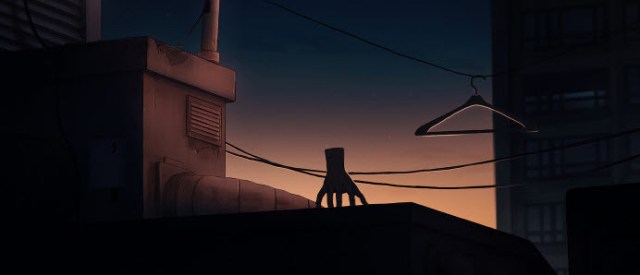
Anyway, the film looks pretty fabulous with those memorable moments generated from its painstaking cell animation. As shown from “Your Name”, Shinkai really knows one or two things about how to present urban landscapes with mood and details to be savored, and these gorgeous urbane landscapes in the film look all the more fantastic thanks the vivid visual presentation of several different weather conditions in the sky. As a result, the streets and alleys of Tokyo under rainy weather look as poetically gloomy as you can imagine, and the film always dazzles us whenever a bright ray of sunshine comes up this constantly melancholic background.

However, this excellent visual aspects in the film do not wholly compensate for a number of weak aspects in the story. Besides its superficial narrative which occasionally feels stretched out a bit too much, I was distracted a lot by several plot contrivances during the last act, and I was also not so uncomfortable with how the film regards Hina and several other female characters in a rather voyeuristic way from time to time.

On the whole, “Weathering with You”, whose original title is “Child of Weather”, is another well-made animation film from Shinkai, but, like “Your Name”, it does not particularly appeal to me that much. I cannot recommend it because I felt dissatisfied too often during my viewing, but I will not stop you if you are simply looking for anything different from those mediocre Hollywood digital animation films out there.
weatheringwithyou05

Posted in Movies | Tagged , , , , | Leave a comment