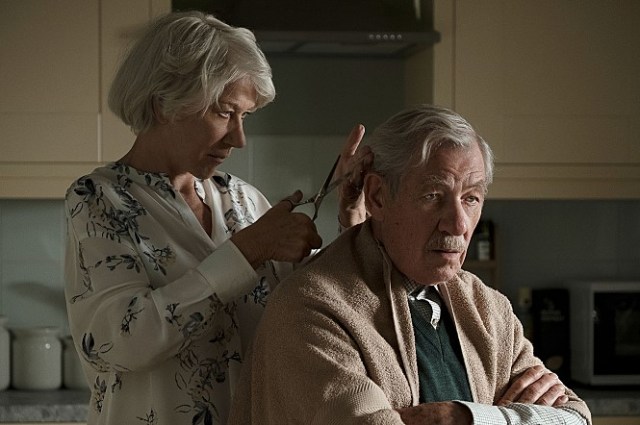
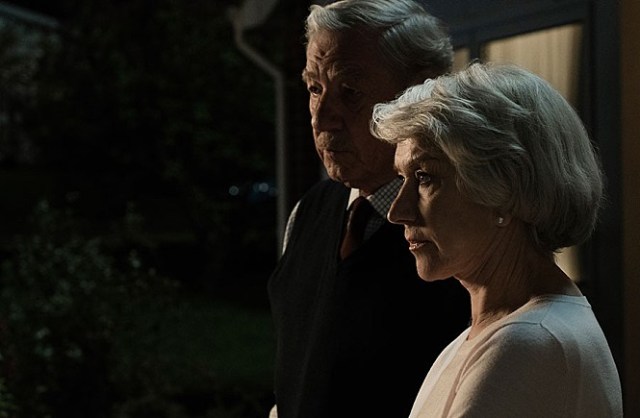
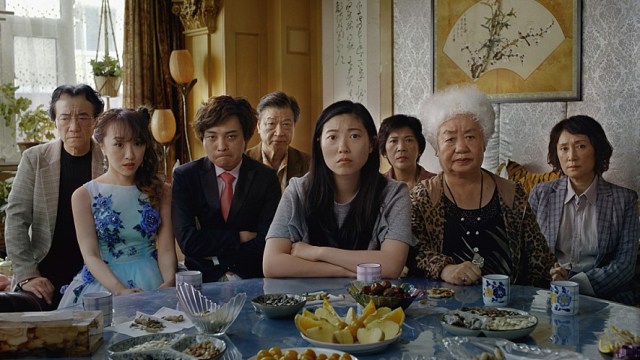
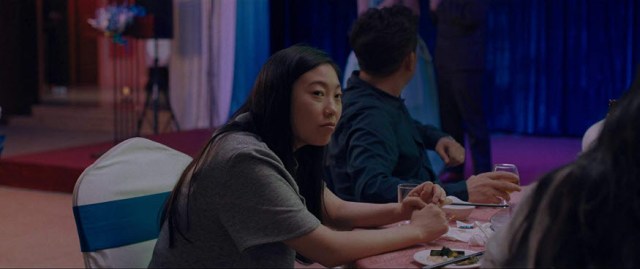
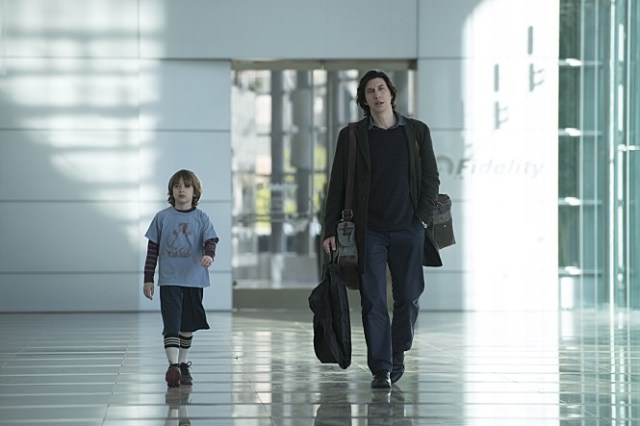
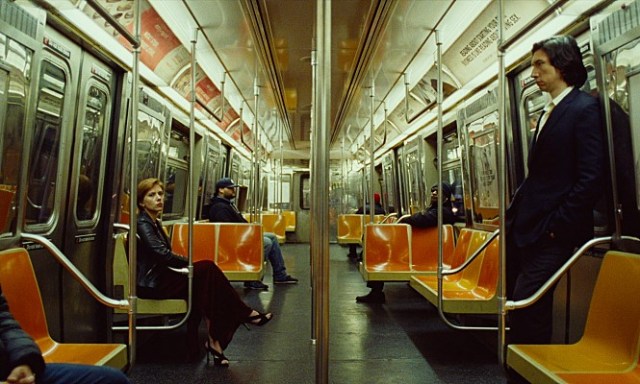
The Irishman (2019) ☆☆☆1/2(3.5/4): A dry, long gangster elegy presented by Martin Scorsese

theirishman02

Martin Scorsese’s latest film “The Irishman”, which was released in South Korea a few days ago and will be available on Netflix on next Wednesday, is a dry, long elegy to a cold, mean, and violent criminal world in the past. Although it certainly requires some patience considering its long running time (209 minutes), the movie firmly gripped my attention just like many of Scorsese’s notable works when I watched it along with a friend of mine yesterday, and I appreciated its many strong aspects although it did not excite or intrigue me as much as “Goodfellas” (1990) or his several works during recent years.

In the opening scene, which is accompanied with “In the Still of the Night” by the Five Satins being played on the soundtrack, we are introduced to a very old dude named Frank “The Irishman” Sheeran, played by Robert De Niro who looks a bit more aged and frail than usual at this point. Many years ago, Sheeran did numerous dirty jobs for some powerful figures in the underworld of Philadelphia while officially working as a high-ranking official of the Teamsters’ Union, and his sprawling recount on the past in front of the camera sets the main frame for what is going to be told and shown for us during next 3 hours.

The movie subsequently moves back to the early 1950s, when Sheeran, who is still played De Niro in a much younger appearance thanks to a nearly flawless digital de-aging process on his face and body, worked as a mere truck driver but then came to enter the world of crime as getting himself associated with Russell Bufalino (Joe Pesci, who is de-aged a bit but looks older than De Niro in the film). At first, Sheeran simply does some small favors for Bufalino, but then he gradually becomes one of Bufalino’s close associates, and Bufalino is willing to protect and benefit Sheeran in more than one way. When Sheeran inadvertently gets himself into a tricky circumstance at one point, Bufalino fortunately steps in the situation for him in the last minute, and Sheeran accordingly becomes more loyal and dedicated to Bufalino than before.

theirishman01

Around the 1960s, Sheeran is introduced to James Riddle “Jimmy” Hoffa (Al Pacino, whose appearance is also considerably de-aged here in this film), the president of the Teamsters’ Union who was also one of the most famous and powerful figures in US at that time. With Hoffa and Buffalino on his back, everything goes pretty well for Sheeran’s life, and he is always ready to do whatever is ordered by Buffalino or Hoffa, who soon becomes a close friend of Sheeran and his dear family just like Buffalino.

Of course, their good time does not last that long. Hoffa subsequently becomes the main target of a big federal government investigation, and his trouble continues even after he is consequently sent to prison due to his clash with several other big figures in the Teamsters’ Union, who are also associated with Bufalino and his criminal associates in one way or another. In the end, it becomes quite clear to Bufalino as well as Sheeran that something must be done as soon as possible, and we already know what will inevitably happen because, well, the movie announced it to us right from when Hoffa entered the picture early in the story.

While I have no idea on how much of the screenplay by Steven Zaillian, which is based on Charles Brandt’s questionable nonfiction book “I Heart You Paint Houses”, is fictional, the movie steadily engaged nonetheless with mood and details to be appreciated, and it is compelling to watch how it gradually reveals its big criminal picture as smoothly moving from one expected narrative moment to another. Because everything in the story is presented with dry detachment, we come to observe Sheeran and many other characters in the film from the distance without much care, but Scorsese and his technical crew members including editor Thelma Schoonmaker and cinematographer Rodrigo Prieto effortlessly establish enough atmosphere and narrative momentum for us, and we are seldom bored during a number of key moments in the film including the one where Hoffa’s fate is irreversibly sealed via the wordless interactions among Sheeran and a few other characters around him. In addition, the movie shows a sense of dark humor from time to time, and you will be particularly amused by its frequent emphasis on when and how many of numerous supporting characters in the film will eventually die, which becomes a sort of morbid running gag while also resonating with the main themes of the story.

theirishman03

The movie drew lots of attention for gathering its three big main performers together, and they respectively show that they still can be at the top of their game as before. While De Niro diligently holds the center with what will be regarded as his best performance during last two decades, Al Pacino, who previously appeared along with De Niro in “Heat” (1995) and “Righteous Kill” (2008), deftly handles his showier role with gusto and nuances, and Joe Pesci, who has been in semi-retirement during last two decades, surprises us with his understated but rich performance, which certainly makes a big contrast with his volatile Oscar-winning supporting turn in “Goodfellas”.

In case of many other notable performers in the film, they simply fill their respective spots as much as demanded. While Bobby Cannavale, Stephen Graham, and Harvey Keitel (remember when he appeared in Scorsese’s three great films “Mean Streets” (1973), “Taxi Driver” (1976), and “The Last Temptation of Christ” (1988)?) are dependable as bringing some life and personality to their supporting characters, Ray Romano is quite convincing in his more serious acting, and I also enjoyed the brief appearances of several other recognizable performers including Jack Huston, Jesse Plemons, Steven Van Zandt, Jim Norton, Domenick Lombardozzi, and Anna Paquin, who functions as a silent but substantial female perspective at the fringe of the story.

On the whole, “The Irishman” achieves as much as expected from its ambitious attempt, and Scorsese demonstrates here that he is still one of the best filmmakers working in our time, but it somehow feels less special to me compared to his recent works such as “Hugo” (2011), “The Wolf of Wall Street” (2013), and “Silence” (2016). I am not so sure about its greatness even at this point, but I still respect how Scorsese and his crew and cast members reach for greatness, and I am glad that I watched it on a big screen.

theirishman04

Posted in Movies | Tagged , , , | 2 Comments

Frozen 2 (2019) ☆☆☆(3/4): A watchable sequel with several good things

frozen204

When Oscar-winning Disney animation film “Frozen” (2013) came out six years ago, I was not as enthusiastic as many other audiences and reviewers, but I did appreciate a number of good things in that unexpectedly popular animation film. Besides its unforgettable original song “Let It Go”, I was entertained by its several wondrous visual moments as well as its colorful main characters, and I was also amused by how it brought some fresh air to its genre conventions as mixing many different modern elements into its eclectic story, which initially seems to be a typical Disney princess story partially inspired by Hans Christian Andersen’s famous fairy tale “The Snow Queen” but then becomes something quite different and refreshing in the end.

In case of “Frozen 2”, it attempts different things just like its predecessor, and it succeeds to some degree. Although some of you may disappoint to see that it does not reach to the level of its predecessor, it is still fairly enjoyable mainly due to a number of good things to be savored, and I was entertained by these good things even though I noticed its glaring weak aspects from time to time during my viewing.

After their adventure in “Frozen”, things have been mostly good for Elsa (voiced by Idina Menzel) and her younger sister Anna (voiced by Kristen Bell) during next three years, and we see them spending some cozy evening time along with Anna’s boyfriend Kristoff (voiced by Jonathan Groff) and a sentient snowman named Olaf (voiced by Josh Gad), but Elsa still feels awkward about herself and her current position as the queen of their kingdom. Sure, she can fully control her magical power now, and her younger sister is always ready to stand by her for comfort and support, but it seems to her that her destiny belongs to somewhere out there, especially when she suddenly hears a mysterious singing voice on one day.

frozen205

Because of the prologue scene of the film, we already have a pretty good idea on where that singing voice comes from. When Elsa and Anna were kids, their father told them the story about an enchanted forest located at the far north side of the kingdom, and then their mother sang a lullaby which is rather moody in its message. Still remembering what their parents told them many years ago, Elsa goes all the way as following her growing sense of destiny, and that leads to an exuberant musical scene accompanied with “Into the Unknown”, which will be definitely compared with “Let It Go”.

However, there soon comes a serious consequence upon the kingdom, and Elsa and Anna instantly discern that they must go to the enchanted forest for saving their kingdom, and they subsequently start their journey to the enchanted forest along with Kristoff and Olaf. As usual, Olaf constantly talks a lot as your average comic relief, but he somehow remains endearing as before, and Josh Gad did a solid job of delivering some nice comic moments which surely tickled young audiences around me.

When our four main characters eventually arrive at the enchanted forest, Elsa and Anna come to discover that an old problem of the past told in their bedtime story still remains unsolved. When Elsa and Anna’s grandfather built a big dam in the enchanted forest many years ago, it looked like his kingdom could peacefully exist along with a tribe living in the enchanted forest, but that opportunity for peaceful coexistence was lost due to an unknown incident, and a powerful spell was consequently put upon the enchanted forest as the kingdom’s soldiers and the members of the tribe came to clash with each other. Although Elsa and Anna do not know exactly what they should do for removing the spell from the enchanted forest, it seems that a certain remote spot mentioned in their mother’s lullaby holds a clue to the solution, and Elsa is already quite determined to go there at any cost.

frozen202

Around that narrative point, the story begins to lose its focus, but director/co-writers Chris Buck and Jennifer Lee, who previously wrote and directed “Frozen” together, keep engaging us while diligently providing to us a series of fantastic moments. While there is an exciting action scene involved with a magical entity which turns out to be far less menacing than expected, we also get an awe-inspiring moment featuring a bunch of giant figures, and the sequence where Elsa bravely attempts to go to the final destination of her journey is as spectacular as expected from the trailer of the film.

And there are also a number of other good original songs besides “Into the Unknown” thanks to Kristen Anderson-Lopez and Robert Lopez, who previously won an Oscar for “Let It Go”. While Idina Menzel surely takes the center as usual with “Into the Unknown” and “Show Yourself”, Kristen Bell and Jonathan Groff have each own moment for demonstrating well their respective musical talents, and I was particularly amused by Gad’s comical performance of “When I Am Older”, which makes a resonating narrative contrast with an unexpected moment of poignancy later in the story.

In conclusion, “Frozen 2” is less special than its predecessor in comparison, but it is still recommendable because it did its job mostly well in addition to giving its young audiences wholesome messages on doing right things and accepting inevitable changes to come in their life. Although I sometimes felt impatient because of its rather thin narrative and underdeveloped supporting characters, I will not deny that I was not bored at all thanks to those terrific visual moments and effective original songs in the film, so I will not grumble for now even though I still have some reservation about it.

frozen203

Posted in Movies | Tagged , , , , , , , | 1 Comment

Bikram: Yogi, Guru, Predator (2019) ☆☆☆(3/4): Two faces of a yoga guru

BikramYogiGuruPredator04

Netflix documentary film “Bikram: Yogi, Guru, Predator”, which was released on this Wednesday, presents a very disturbing case of sexual predation revolving around a yoga guru who was once quite popular for many years in US. While it is interesting to observe how quickly he rose to fame and success as drawing lots of followers eager to learn and improve themselves, the documentary also gives us a number of harrowing moments as listening to several different people who were influenced and then exploited by him, and I guarantee you that yoga will never look same to you after watching the documentary.

At the beginning, we get to know a bit about Bikram Choudhury and his yoga training method. After coming to US around the 1970s, this Indian guy drew lots of attention as frequently demonstrating his yoga skills on TV, and his yoga school subsequently attracted a lot of people interested in healing themselves physically and psychologically. Although his yoga training method was pretty demanding to say the least, many of those pupils of his were willing to be pushed further by him, and some of interviewees in the documentary tell us how much they were improved in many aspects as a result.

However, we cannot help but notice the rather uncomfortable aspects of Choudhury’s yoga training method. He and his pupils always went through their training sessions in hot, stuffy environment while only wearing swimsuits, and, as shown from archival footage clips and recordings, he did not hesitate from verbal harassment at all while behaving as if he were a marine drill instructor. Moreover, while his pupils sweated and panted a lot in the room temperature around 50℃ (around 120°F), he usually sat on a big throne above them, which was incidentally equipped with an air conditioner.

BikramYogiGuruPredator02

Anyway, more people kept coming for learning yoga from Choudhury because what he sold them did mostly work as much as he promised to them, and his yoga training business grew and advanced a lot during next two decades. Around the late 1990s, he routinely supervised 9-week training sessions for anyone who wanted to be a yoga teacher, and those people did not mind at all paying him no less than $10,000 for that. Thanks to this big business success, Choudhury and his family lived in a big house in Beverly Hills, and he frequently showed off his fame and success in public while basked in his extravagant lifestyle along with his family.

However, as already shown to us from the very beginning of the documentary, Choudhury turned out to have dirty rotten sides behind his charisma and flamboyance. In case of one female interviewee in the documentary, she tells us about how he approached to her more than once in very inappropriate ways, and two other female interviewees respectively recollect their traumatic experiences caused by his sexually predatory behaviors.

Not so surprisingly, they and many other victims of Choudhury were usually silenced by people around him. While his wife had turned a blind eye to what her husband was doing behind his back just because she did not want to give up her luxurious life, other people benefiting from him in one way or other did not believe these women’s claims much as being under his considerable influence, and some of them even accused these women of lying.

Bikram: Yogi, Guru, Predator_Bikram instructs his students.

Although he is mainly presented via archival footage clips and recordings, it is pretty clear to us that Choudhury is nothing but a scoundrel who is also a sexual predator intoxicated with power and dominance, and we are not so shocked to see that many things claimed by him are not true at all. For example, he was never a yoga champion in his country, and there was not even any yoga competition around that time. While he did study under a respected yoga guru in Mumbai, what he claimed to be his own yoga training method was more or less than what he learned from that yoga guru, and we get a little amusing moment involved with one of the pupils of that yoga guru, who is still pissed about how Choudhury deceived many people in US for years.

Ironically, things got fallen apart in the end mainly thanks to Choudhury’s sheer idiocy and megalomaniac delusion. He could have gotten himself off the hook easily when several allegations on his sexual abuse came onto the surface a few years ago, but he only came to tumble deeper into his growing trouble as clumsily and arrogantly denying everything, and then he was sued by his former legal adviser, who did not stand back at all when she was unjustly fired by him. She eventually came to throw a big blow to Choudhury and his yoga business, but then Choudhury managed to find a loophole, and, as shown at the end of the documentary, he is still in business as before.

Considering the ongoing #MeToo era, the subject of “Bikram: Yogi, Guru, Predator” is certainly important to say the least, and director Eva Orner did a good job of presenting Choudhury’s several victims in the documentary with enough compassion and respect. I must point out that the documentary may not inform you much if you have already watched other recent notable documentary films about sexual abuse and predation such as “Leaving Neverland” (2019) or “Untouchable” (2019), but it is still a fairly engaging documentary on the whole, so I give it mild recommendation.

BikramYogiGuruPredator01

Posted in Movies | Tagged , , , , | Leave a comment

Moonlit Winter (2019) ☆☆☆1/2(3.5/4): A letter from her first love

moonlitwinter01

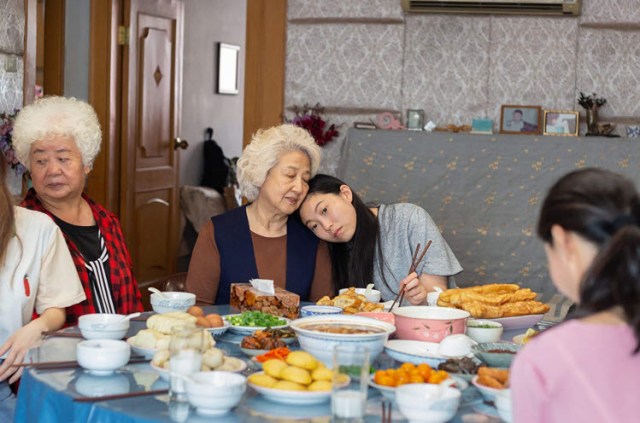
South Korean film “Moonlit Winter” reminds me that it is always more compelling to observe star-crossed lovers in agony and restraint. Here are two very unhappy women who have quietly yearned for each other since they were separated from each other a long time ago, and the movie calmly observes their respective inner struggles as giving us a number of sensitive moments to be appreciated. Although they do not reveal themselves much on the surface, we come to emphasize more with their repressed romantic feelings, and that is why it is poignant to watch how they eventually take a tentative forward step to each other despite many years of fear and hesitation.

The story begins with a letter sent from a small town in Hokkaido, Japan. The letter is written by a middle-aged Japanese woman named June (Yuko Hokkaido), but she hesitates to send it, and then her aunt Masako (Kino Hara), who has lived with June for a long time since her parents’ divorce, sends it for herself without telling her niece.

The recipient of the letter is Yoon-hee (Kim Hee-ae), a middle-aged South Korean woman who was a high school friend of June during the time when June lived with her Japanese father and South Korean mother in South Korea. After her recent divorce, she has lived alone with her high schooler daughter Sae-bom (Kim Sohye) in their small apartment, and we also see how she earns her meager living via a laborious job without much reward or future.

moonlitwinter05

When the letter arrives at Yoon-hee’s apartment building, it happens to be taken by Sae-bom, and she cannot help but curious about her mother’s past after reading it. Because she is soon going to a college in Seoul, she suggests to her mother that they should travel together to somewhere, and, what do you know, she and her mother subsequently arrive in the town where June and Masako reside, which happens to reach to the peak of its winter season with lots of snow here and there in the town.

Meanwhile, the movie also shows what is going on around June. Her father recently died, and she cannot help but feel sad even though she and her father have been estranged to each other for years. When a cousin of hers later suggests that she should meet some guy to date, she flatly rejects, and then we get an awkward moment between her and her cousin after her cousin tries to persuade her more.

Now you may clearly see where the story is going, but the movie takes its time as slowly building up its mood and emotions through small but intimate moments generated around its main characters. Although they do not talk that much with each other, Yoon-hee and Sae-bom know and understand each other well, and the same thing can be said about June and Masako. I was touched by a heartfelt moment when June and Masako warmly remind each other of how much they care about each other, and I was amused by a little humorous moment between Yoon-hee and Sae-bom, who resemble each other more than they admit as reflected by a certain common vice shared between them.

moonlitwinter02

And the movie looks lovely with a number of gorgeous visual moments. Those snowy landscapes of Hokkaido are beautifully presented on the screen with a palpable sense of places and people, and the cinematography by Moon Myung-hwan, who previously collaborated with director/writer Lim Dae-hyeong in “Merry Christmas Mr. Mo” (2016), is superlative for simple but elegant shots to be savored for its precise camera work and scene composition. While some of notable details in the film such as the occasional appearance of train throughout the movie may feel a bit too symbolic at first, they still work as the dramatic elements of the story without never disrupting the overall low-key tone of the film, and we later get a wonderful moment of restrained feelings accentuated by the bright moon in the winter sky and a certain familiar piece of jazz music composed by Glenn Miller.

In the end, the movie culminates to a moment expected from the very beginning, but Lim wisely sticks to his restrained storytelling approach, and this moment feels all the more moving as we get to know more about what has been repressed for many years inside Yoon-hee and June. Steadily maintaining their respective positions, Kim Hee-ae, who previously drew my attention for her solid performances in “Thread of Lies” (2013) and “Herstory” (2017), and Yuko Nakamura effectively convey to us the unspoken feelings around their characters, and they are also supported well by Kim Sohye and Kino Hana, who respectively hold each own place well around Kim and Nakamura as bringing some extra humor and warmth to the film.

Overall, “Moonlit Winter” is another fabulous work from Lim after “Merry Christmas Mr. Mo”, which I initially underrated a bit but then came to choose as one of the best South Korean films of 2017. Yes, the movie may be a little too dry and restrained compared to many queer romance films during recent years, but this is an exquisite one packed with classical touches and genuine emotions nonetheless, and its many beautiful moments have been lingering on my mind since I watched it at last night. In addition to being another notable South Korean female drama film of this year, the movie confirms again to us that Lim is a new talented South Korean filmmaker to watch, and I will be eager to watch whatever will come next from him.

moonlitwinter03

Posted in Movies | Tagged , , , , | 1 Comment

Good Boys (2019) ☆☆☆(3/4): Kids say and do darndest things

goodboys02

As far as I can remember, I was a pretty mild child before I officially entered adolescence in 1996. Sure, I was a rather nerdy and quirky boy whose mind was usually occupied with books and movies, but I usually stuck to whatever was demanded to me by my parents and teachers, and those adult matters including sex were more or less than abstract knowledge to be absorbed just like many other things I encountered via books and movies. For example, I learned about condom when I was about 10, and I had no idea on why my parents were upset to hear that word uttered from my mouth.

And that is the main reason why I could not help but amused a lot by “Good Boys”, an R-rated comedy film revolving around three sixth grade kids who do and say lots of darndest things throughout the movie. While I occasionally winced and cringed during my viewing for good reasons, I found myself chuckling for a number of uproarious moments in the film as appreciating its sweet and lightweight aspects, and I was a bit touched as observing how its three young characters come to learn some lessons and grow up at the end of their innocently naughty journey.

The three young heroes of the movie are Max (Jacob Tremblay), Lucas (Keith L. Williams), and Thor (Brady Noon), who have been close to each other as frequently hanging around with each other in their suburban neighborhood. Calling themselves ‘Beanbag Boys’, they are eager to be as cool as those popular kids in their elementary school, and Max is particularly interested in a certain pretty girl in the school, but, like many kids around his age, he hesitates as he does not know anything about how to approach to her.

goodboys04

And then there comes an opportunity to Max one day. He is invited to an evening party to be held at the house of one of the coolest kids in the school, and it seems that he may get a chance to kiss that girl in question, though he has never kissed a girl before. Lucas and Thor, who are also allowed to come to the party, are certainly willing to help their friend, and that leads to an amusing scene where they try Google search and then unintentionally encounter something very inappropriate for their age.

They later use a drone belonging to Max’s father for watching on an older girl who may demonstrate how to kiss, but, not so surprisingly, they soon get into a problematic situation which gets messier as they try to handle it as much as they can, and the movie continues to provide silly but funny scenes to draw more laughs from us. For example, there is a running gag involved with our three young boys’ clumsy attempt to unscrew the child safety cap of a certain medicine bottle, and then, thanks to Thor’s parents who happen to have a rather kinky sexual taste, we see our three young boys innocently handling a number of sexual objects including a sex doll, which incidentally gives us more than one wacky moment.

As maintaining its cheerful mood, the screenplay by director Gene Stupnitsky and his co-writer Lee Eisenberg, who also participated in the production of the film along with Evan Goldberg and Seth Rogen, adds some seriousness to its story and characters. While Max is really serious about what may be his first romance, Thor is afraid of going further with his singing talent behind his cocky attitude, and Lucas often feels confused and depressed as facing his parents’ divorce.

Taking several predictable steps during its third act, the movie accordingly comes to lose some of its narrative momentum, but it does not lose its sense of humor at least while also providing some depth to some of its broad supporting characters. In case of two older girls who happen to antagonize our three boys, they turn out to be less mean than expected, and they even give our three boys some advice on growth and friendship later in the story.

goodboys03

The three main young performers in the film are splendid in their effortless comic performance. Jacob Tremblay, who was simply unforgettable in “Room” (2015), demonstrates again that he is indeed a very talented actor to watch, and, considering of the range of his talent shown from “Room” and this film, it will be interesting to see whatever he will do as an adult performer in the future. While Brady Noon ably conveys his character’s innocence and vulnerability behind all those swaggers of his on the screen, Keith L. Williams is constantly engaging in his relatively low-key acting, and he and Noon are fun to watch whenever they push and pull each other with Tremblay in the middle.

The supporting performers surrounding the three main young performers in the film bring colorful personality to their respective roles. While Molly Gordon and Midori Francis have a few juicy moments as the two aforementioned girls, Will Forte is hilariously serious as a father who cares about his son a little too much, and Lil Rel Howery and Retta, who play Lucas’ divorcing parents, have a priceless comic moment when their characters tactfully explain to Lucas on why they decided to divorce.

Although it is surely a comedy film targeting adult audiences, I am now wondering how kids around the stage of the sixth grade respond to “Good Boys”. Of course, I am not particularly willing to recommend it to them, but, considering that most of them are more knowledgeable than we think these days, I guess they will enjoy it as much as adult audiences.

goodboys01

Posted in Movies | Tagged , , | Leave a comment

Sub-Zero Wind (2018) ☆☆☆(3/4): Her bleak adolescent years

subzerowind01

South Korean film “Sub-Zero Wind” is as bleak as its very title suggests. Like many of recent South Korean coming-of-age drama films, the movie is often shrouded in stark and gloomy realism, but its story and characters are thoughtfully handled with enough sensitivity and empathy at least, and we come to care a lot about its young heroine’s increasingly desperate struggle with her harsh world.

During its prologue part, the movie quickly establishes the changed situation surrounding Yeong-ha (Moon Seong-an), a 12-year-old girl living somewhere in Seoul. As her mother Eun-sook (Shin Dong-mi) recently divorces and then begins to live with a guy named Yeong-jin (Park Jong-hwan), Yeong-ha is soon going to be sent to her father’s residence, and she is not so happy about this because that means she is going to be separated from her cousin Mi-jin (Park Seo-jin), who has also been her schoolmate/friend for several years.

However, Yeong-ha’s father has disappeared for some unknown reason, so she has no choice but to live with her mother and Yeong-jin instead. Although he has not married Eun-sook yet for a certain personal reason, Eun-sook have already accepted Yeong-jin as her second husband, and Yeong-ha has no problem with regarding him as her new father while settling in her mother’s current residence.

3 years later, things seem to look a little better than before for Yeong-ha, who is now played by Ahn Jin-hyun, and her family. Having studied and worked a lot for becoming a Christian preacher someday, Eun-sook hopes that she will soon have her own parish which will probably provide more income for her poor family, but Yeong-jin is not particularly enthusiastic about that, and neither is Yeong-ha.

subzerowind03

Meanwhile, we get to know a bit more about the hard situation of Mi-jin, who is now played So Yoo-jin. Besides Eun-sook and Mi-jin, there is no one to help Mi-jin and her ailing grandmother, so Eun-sook tries as much as she can for helping Mi-jin and her ailing grandmother, but then she is often reminded of how poor she and her family are. Shortly after the eventual death of Mi-jin’s grandmother, she attempts to persuade Mi-jin’s family members on a certain financial matter which may benefit her a bit, but that only results in a very awkward moment between them.

When Eun-sook subsequently comes to decide to make another new start in Busan, Yeong-ha is not so pleased as she would rather be with Mi-jin instead of her mother and Yeong-jin, but there is nothing she can do about that. Four years after, things still do not look any better for Yeong-ha, who is now played Kwon Han-sol, and her mother, and Yeong-jin begins to drink more often than before as mired with his own frustration and desperation.

And then something happens around the end of Yeong-ha’s last high school year. When she comes back to her home early in the afternoon, Yeong-jin happens to be loitering as usual, and he suggests that they should drink together just for, well, feeling good. The mood becomes a bit lively as they drink some beer, but then Yeong-ha gets tired and then asleep in her room, and then…

I will not go into details here, but I can tell you instead on how much Yeong-ha is emotionally troubled as a consequence. She becomes quite distant to her mother for a while, and then she tearfully confides her incident to her mother, who is certainly shocked and enraged but then only comes to show what a lousy mother she is. Discerning that there are not many options in her circumstance, she even considers ignoring whatever happened to her daughter, and she consequently lets down her daughter more than ever.

subzerowind05

At least, Yeong-ha finds some solace from Mi-jin, who is now played by Ok Soo-boon. Although she has been busy with preparing for getting a job after her high school graduation, Mi-jin is willing to be with Yeong-ha in Busan for a while at least, and Yeong-ha is certainly glad to be with Mi-jin as before. After leaving her home, they rent a small room in a private dormitory building for people preparing for examination, and Yeong-ha begins to work at a nearby bar for earning their living while Mi-jin continues to prepare for upcoming job interviews.

However, there is still not much hope for Mi-jin and Yeong-ha, and the movie calmly observes their respective struggles as steadily maintaining its dry and stark realistic tone as before. In addition, director/writer Kim Yu-ri, who previously made several short films before making a feature film debut here in this movie, draws good natural performances from her main cast members. While Shin Dong-mi and Park Jong-hwan are effective as two substantial adult characters in the story, Kwon Han-sol, Ahn Jin-hyun, and Moon Seong-an are flawlessly connected together in their acting, and the same thing can be said about Ok Soo-boon, So Yoo-jin, and Park Seo-jin.

On the whole, “Sub-Zero Wind” is another interesting South Korean film of this year, and it also reminds me again that the future of South Korean cinema indeed lies on those talented South Korean female filmmakers out there. I think Kim Yu-ri is another good female South Korean filmmaker to watch, and I certainly hope that she will make more movies after this solid first step of hers.

subzerowind02

Posted in Movies | Tagged , , , , | Leave a comment

One Child Nation (2019) ☆☆☆1/2(3.5/4): Memories of Policy

onechildnation01

Documentary film “One Child Nation”, which won the Grand Jury Prize when it was shown at the Sundance Film Festival early in this year, is often powerful and heart-wrenching in its sobering but intimate presentation of one brutal family policy in China during 1979-2015. Because I read a number of columns on its subject many years ago, I knew what I was going to get from the documentary, but it still disturbed me from time to time as sharply reminding me of how a system can be cruel and heartless to its individuals in the name of ‘greater goods’.

At the beginning, Nanfu Wang, who directed and produced the documentary along with Jialing Zhang, tells us how she came to be interested in the subject of their documentary after one important moment in her life. Several years after she left China and then settled in US, she happened to have her first child, and her experience with her child subsequently made her muse a lot on how much her childhood life in the 1990s was dominated by propagandas emphasizing the one-child policy of the Chinese government. Quite determined to quench the increase in the population of China by any means necessary, the China government put numerous restrictions upon any couple trying to have more than one child, and it had no qualms about resorting to a number of drastic measures such as compulsory abortion or sterilization.

For getting to know more about the ramifications of the one-child policy during that time, Wang went back to her rural hometown in China along with her baby, and she came to reflect more on her childhood past. Disappointed to have a daughter instead of a son, her parents tried quite hard for getting the permission to have another child, and they were eventually allowed to do that five years later. Due to the Confucian patriarchic belief to which they and many other people in China and many other Asian countries firmly stick, everyone in the family including Wang’s grandparents desperately wished that it would be a boy this time, and her younger brother says with bitter amusement that he would have been abandoned by his family instantly if he had been a girl.

onechildnation02

There were many people in the village who were less fortunate than Wang’s parents, and an old man who was the village chief during that time tells about how he simply followed whatever was instructed by the government officials above him. While he feels regret over what he committed to some of his village people, he also emphasizes that he had no choice from the beginning. The Chinese government periodically evaluated the population increase in many towns and cities, and local officials like him got rewarded and punished according to whether they successfully suppressed the population increase of their towns and cities or not.

While not many people in the village are very willing to talk for understandable reasons, there are several people who do not hesitate at all to talk in front the camera. An old midwife, who is incidentally a friend of Wang’s family, still remembers numerous women on whom she performed abortion or sterilization, and there is a little touching moment when she reveals to us how much she has tried to atone for her horrible deeds on thousands of women and unborn babies during that time. She knows well that the past will never go away from her, but she finds some consolation from those many banners of gratitude sent from her clients during recent years, and she is certainly proud of how she helped them a lot.

In case of an old woman who was once a famous public emblem of the one-child policy, she is also quite frank about what she did during that time, but she shows no regret or guilty at all in contrast. In her view, she and many other government officials were in an important war for the prosperity of their country in the future, and it goes without saying that they did their job quite effectively considering that the Chinese government came to turn itself away from its one-child policy after 2015.

onechildnation04

However, it is also undeniable that the lives of millions of families were damaged and ruined during that time. Two of Wang’s aunts had to abandon their baby daughters, and the documentary later shows us how many of those countless baby girls abandoned by their parents were sent to orphanages and then subsequently handed to couples from the Western countries. Moreover, government officials even took away babies and small kids, and there is a heartbreaking case of a poor country girl who got separated away from her twin sister, who later turns out to be residing in US at present.

As steadily maintaining their calm and focused storytelling approach, Wang and Zhang gradually present a disturbing big social picture which often looks like the flip side of that of the American society, which has put pretty heavy legal regulations and restrictions on abortion in contrast. As pointed out around the end of the documentary, both of these two contrasting cases are serious infringement upon women’s reproductive rights, and that surely reminds us again of how much women have been mistreated and discriminated throughout the human history.

In conclusion, “One Child Nation” works as not only a moving work of personal introspection but also a sharp reminder of what should not be forgotten, which is accentuated more by an ironic moment at the end of the documentary. The Chinese government recently changes its family policy without looking back at that terrible past at all, and you may wonder whether the past will be completely wiped out in the end. At least, Wang and many others in China still remember, and the documentary will probably last for a long time as a record of the past.

onechildnation03

Posted in Movies | Tagged , , , , | 1 Comment

Adopt a Highway (2019) ☆☆1/2(2.5/4): As he struggles to adjust

adoptahighway01

As watching “Adopt a Highway” at last night, I often become a bit reflective on the long, illustrious acting career of Ethan Hawke. At the time of “Dead Poets Society” (1989) and “Reality Bites” (1994), he initially drew our attention with his youthful energy and talent, and then we see him being matured step by step during next two decades as he went through a number of various notable films ranging from “Training Day” (2001) to “Boyhood” (2014), and now he is a dependable actor who can always interest us regardless of whether a movie in which he appears is bad or not.

In case of Logan Marshall-Green’s debut feature film “Adopt a Highway”, Hawke embodies his character’s shy, introverted nature right from his very first shot, and he is often poignant as vividly reflecting how his character, an ex-con named Russell Millings, has unjustly been punished for many years. In the 1990s, Russell was arrested just for possessing an ounce of marijuana, but, due to the “three strike law” during that time, he was unfairly sentenced to a long period of imprisonment, and he is released from the prison only after the law is reversed in California around 20 years later.

Russell happens to get hired at a local fast food restaurant, and he also comes to have his own place at a nearby motel, but many things in the outside world feel new and alien to him. As he tries to adapt himself to his new environment outside the prison, the movie gives us a series of sensitive personal moments accompanied with some low-key humor. During his latest meeting with his parole supervisor, he is told that he can use e-mail for routine report and correspondence, but, not so surprisingly, he does not have an e-mail address, and that leads to a funny scene where he learns how to use the Internet and make an e-mail account for him.

The Walrus - Day 2

Things seem to get better as he diligently works at that local fast food restaurant, but, as a man whose emotional growth has been considerably stunted, Russell cannot help but feel lonely and lost as there is no one around him. Both of his parents died many years ago, and it looks like there is not any close family member to support and help him. At one point, we see him wandering here and there around in a local amusement park, and there is a bittersweet moment when he tries to feel free and happy just like many others around him.

And then something occurs to him on one day. When he is going through the last hour of his worktime before his following day off, Russell happens to hear someone crying from a dumpster, and, what do you know, he soon finds a little baby girl inside the dumpster. Although he does not know what to do with the baby, Russell comes to take the baby to his residence, and, as understandably sympathizing with the baby, he comes to take care of the baby more than expected. He initially feeds the baby with several edible things he got from his workplace, and then he later goes to a local supermarket for getting whatever the baby needs right now.

He is quite clumsy at first, but Russell becomes more accustomed to taking care of the baby during next 48 hours. He later takes the baby to a nearby beach for watching the ocean together, and there is a lovely moment as the camera calmly observes him talking a lot about himself and his life while holding the baby in his arms with care and affection.

Of course, there eventually comes a point where Russell faces what should be done for the baby as soon as possible. Before coming back to his workplace, he reports to the police and Child Protective Services (CPS), but he does not want to tell everything, and that leads to a very awkward moment for him. Not long after being interrogated, he is notified that he loses his job, and that subsequently prompts him to do something he is not allowed to do at present.

adoptahighway03

As abruptly pushing its hero into a different situation, Marshall-Green’s screenplay becomes less focused than before, and that is the point where my level of interest begins to decrease. While a small episodic scene involved with a young woman Russell happens to befriend is a little amusing, it does not add much to the overall drama, and a redemptive moment presented around the end of the movie feels artificial to say the least.

Anyway, Hawke’s good performance holds together everything in the movie fairly well, and I appreciate numerous human touches and nuances in his solid acting. Without any once of exaggeration, Hawke, who also participated in the production of the film, quietly conveys his character’s tentative struggle for adaptation and redemption, and he is also surrounded by a number of good performers including Betty Gabriel and Chris Sullivan, though most of them are just demanded to fill their respective supporting roles without many other things to do.

Although I am not wholly satisfied with its overall result, “Adopt a Highway” works as a character study to some degree, and Marshall-Green, who has been mainly known for his notable performances in “Prometheus” (2012) and “Upgrade” (2018), makes a nice directorial debut here in this film. While still looking like a plain test run, the movie shows some considerable potential from him as a filmmaker, and it will be interesting to see where he will go next in his burgeoning directing career.

adoptahighway02

Posted in Movies | Tagged , | Leave a comment

The Dead Center (2018) ☆☆1/2(2.5/4): In the Mouth of Death

thedeadcenter04

“The Dead Center” intrigued me at first and then came to frustrate me later. While it initially comes to us as an interesting mix of H.P. Lovecraft and Bill S. Ballinger, the movie unfortunately begins to trudge during its trite third act, and I was left with mild disappointment and dissatisfaction even though I appreciated how much it attempts to push its insidious story premise despite its low production budget.

Shane Carruth, who is mainly known for his intriguing two feature films “Primer” (2004) and “Upstream Color” (2013), plays Dr. Daniel Forrester, a psychiatrist working in the ward for the mentally ill in some big hospital. While he is trying to do his best for his patients as usual on one day, an unidentified guy is found in the ward, and it soon turns out that this guy does not remember anything about himself as well as how the hell he managed to sneak into the ward. Forrester later examines and evaluates this mysterious guy after making him relaxed a bit, but the guy remains to be a blank enigma, and it looks like there is nothing Forrester can do except having this guy under his supervision for a few more days.

Meanwhile, we get to know a bit about how things have been messy for Forrester’s private life. It is clear that he and one of his colleagues in the ward have some history between them, but the colleague does not want to get emotionally involved with him again even though knowing well that he has been rather emotionally vulnerable behind his phlegmatic professional appearance due to his traumatic childhood past. When he calls the colleague at one night for some emotional support, the colleague shows compassion to him as much as possible, but that is all.

thedeadcenter02

The story subsequently takes a dark turn when, as expected, Forrester’s mysterious patient comes to reveal a hidden dark side barely being contained inside him. According to him, he has been possessed by an entity of unknown evil, and he even committed suicide more than once for getting himself free from that entity as well as protecting others around him, but he only came back to life again and again while being more helpless in front of the grim possibility of getting himself swallowed by that entity once for all. Forrester does not believe much his patient’s words, but then a series of disturbing incidents happen in the ward, and it becomes more apparent to Forrester that he must do something before more bad things happen.

The movie does not leave any room for doubt because, well, its opening scene shows Forrester’s patient suddenly waking up in the morgue of the same hospital shortly after his supposedly dead body was taken to the hospital. A medical examiner scheduled to perform the autopsy on the supposedly dead body of Forrester’s patient is naturally flabbergasted, and then he decides to delve more into this strange problem. Besides talking with a cop assigned to the case involved with Forrester’s patient, he looks into a place where Forrester’s patient once lived with his diseased wife and their two children, and he also meets the concerned parents of Forrester’s patient, who are currently taking care of their grandchildren instead of him.

While the medical examiner comes to see more of what has troubled Forrester’s patient, Forrester becomes more obsessed with his patient, and the movie accordingly provides us several tense moments as slowly dialing up the level of creepiness. Around the point where Forrester finally beholds whatever is lurking inside his patient, the mood becomes more intense and ominous than before, and we come to sense that our doctor may be recklessly dashing toward a peril way over his head.

thedeadcenter03

His storyline and the medical examiner’s storyline eventually converge during the last act, but the movie somehow fails to maintain its narrative momentum, and, to our disappointment, its finale does not shock or surprise us much as going through one predictable moment to another. In addition, Forrester’s gradual mental downward spiral caused by his patient is not so believable as riddled with several awkward plot contrivances, and we only come to observe his increasingly troubled status without much care and attention.

Anyway, the movie works to some degree mainly thanks to Carruth, who is convincing in his understated presentation of his character’s slow but eventual mental implosion along the story. He and Jeremy Childs, who did a good job of handling his rather tricky character, are constantly intense in their characters’ strained interaction, and they are particularly wonderful when both of their characters are respectively on the verge of breakdown later in the story. In contrast, the other substantial performers in the film including Poorna Jagannathan and Bill Feehely are stuck with their poorly developed characters, and I was especially disappointed with the half-baked depiction of the complicated personal/professional relationship between Jagannathan’s character and Forrester.

“The Dead Center” is the second feature film of director/writer/co-producer Billy Senese, who previously made “Closer to God” (2014). I have not watched that film yet, but, as far as I can see from “The Dead Center”, he is a competent filmmaker who knows one or two things about how to engage us via mood and performance, and I sincerely hope that he will soon move onto better things in the near future.

thedeadcenter01

Posted in Movies | Tagged , , | Leave a comment

Zombieland: Double Tap (2019) ☆☆1/2(2.5/4): More zombies with less fun

zombielanddoubletap01

I laughed often while watching the first half of “Zombieland: Double Tap”, but those funny moments in the film only reminded me that I laughed more and harder when I watched its 2009 predecessor ten years ago. Although it has a fair share of fun and amusement and its four main cast members are as delightful and spirited as before, the movie still feels like more or less than a mere reprise without providing anything particularly new for us, and that is the main reason why I came to laugh less during its rather lukewarm second half.

As shown at the end of “Zombieland” (2009), Columbus (Jesse Eisenberg), Tallahassee (Woody Harrelson), Wichita (Emma Stone), and Little Rock (Abigail Breslin) came to form a sort of alternative family after their gory but funny adventure in a post-apocalyptic world full of flesh-craving zombies, and things have been fairly nice for all of them during next 10 years. Now residing in the White House, they occasionally kill zombies just for recreation, and, as usual, Columbus’ narration tells us a number of their silly but useful rules for safety and survival, in addition to how some zombies have been evolved to be more dangerous than before.

However, there also have been some discontent and ennui among our four main characters. Because he has been pretty close to Wichita for last 10 years, Columbus is eager to move their relationship to the next level, but Wichita is reluctant about that, and that certainly results in considerable strain in their relationship. While Tallahassee has no problem with continuing his carefree lifestyle in the White House, Little Rock, who is not that little girl in the previous film anymore, wants to explore more of the outside world as your average adolescent, and that generates friction between her and Tallahassee, who is not exactly a good father figure for her.

zombielanddoubletap03

Eventually, Wichita and Little Rock decide to leave the White House together, and Columbus and Tallahassee are caught off guard when they suddenly find themselves alone in the White House. They manage to continue their daily life in the White House for next several weeks, but then they come across another survivor at a local shopping mall, and then the situation becomes more complicated when Wichita unexpectedly returns alone. It turns out that Little Rock left Wichita behind just because she wanted to go to a certain famous spot in Tennessee along with some hippie lad, and Tallahassee eventually decides to track down Little Rock along with Wichita and Columbus because, well, he does care about Little Rock’s safety and welfare.

As Columbus, Tallahassee, and Wichita are going through their another journey across the US continent, director Ruben Fleischer, who previously made “Zombieland” and then got a considerable commercial success thank to “Venom” (2018), throws a bunch of gags besides numerous moments of zombie kill. While we frequently see lots of zombies getting eliminated in various ways as expected, there are also a few absurd scenes presented as “the Zombie Kill of the Year”, and I particularly like the one involved with a certain well-known tourist spot in Italy.

Moreover, the movie tries to expand its world a bit via the introduction of several new characters including the aforementioned survivor, who manages to survive for years despite being far less clever and cautious than our four main characters. Although her supporting role feels a little too broad and superficial at times, Zoey Deutch generates some good laughs via her irrepressible comic energy, and I came to like her character even though shaking my head at her incorrigible thoughtlessness from time to time.

zombielanddoubletap02

In case of the other new characters in the film, they are less colorful in comparison. While Rosario Dawson is well-cast as a feisty motel owner to whom Tallahassee finds himself attracted gradually, her character is no more than a plot element to function, and the same thing can be said about Luke Wilson and Thomas Middleditch, who briefly appear as a duo not so different from Tallahassee and Columbus in many aspects.

There are also new kinds of zombies, but, seriously, they will not scare or amuse you much if you have ever seen “The Dawn of the Dead” (1978) or “28 Days Later…” (2002). They simply slouch or run toward our four main characters and other living characters, and I was not that excited by the eventual climactic sequence unfolded in a place which may remind you of a similar one shown in “The Land of the Dead” (2005).

At least, Woody Harrelson, Jesse Eisenberg, Emma Stone, and Abigail Breslin, who have respectively advanced a lot since “Zombieland”, enjoy each other’s company whenever they happen to share the screen together. Although no less than 10 years have passed, they still effortlessly click well with each other, and it is a shame that the movie does not utilize their unchanged comic chemistry well compared to its predecessor.

Although I was seldom bored during my viewing, I give “Zombieland: Double Tap” 2.5 stars for being less amusing and entertaining than its predecessor, which I gave three starts without hesitation for several good reasons including the hilarious cameo appearance by a certain famous actor. Sure, I did not feel like wasting my time and money as walking out of the screening room at last night, but it still feels like a rather pointless retread in my inconsequential opinion, and that is all.

zombielanddoubletap04

Posted in Movies | Tagged , , | Leave a comment