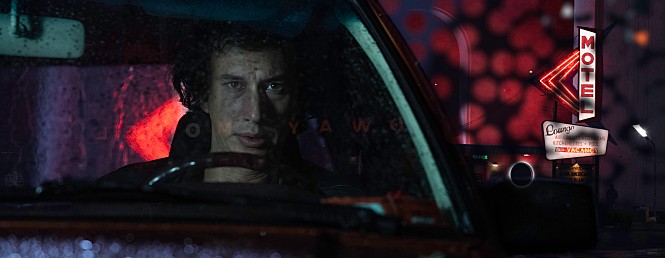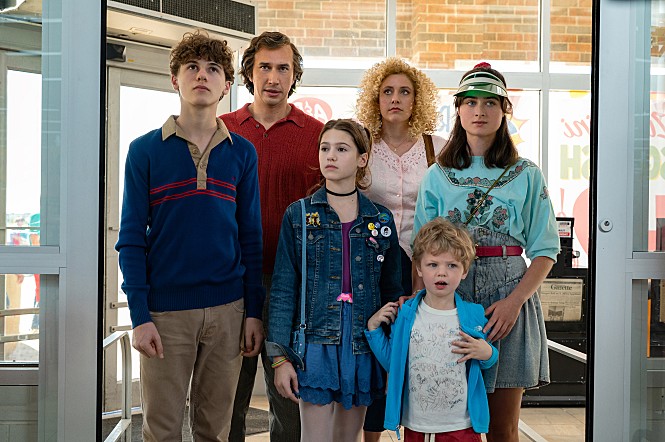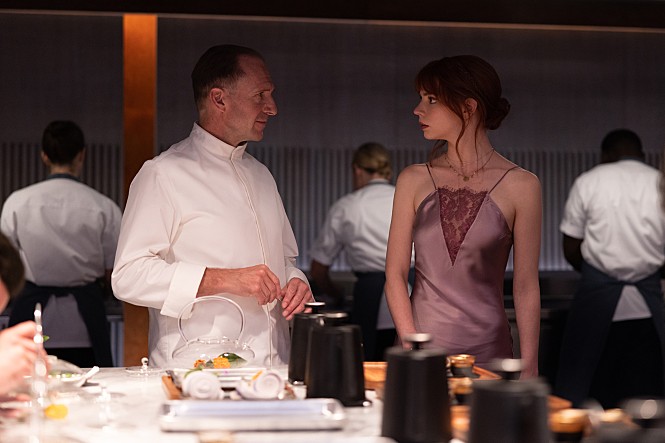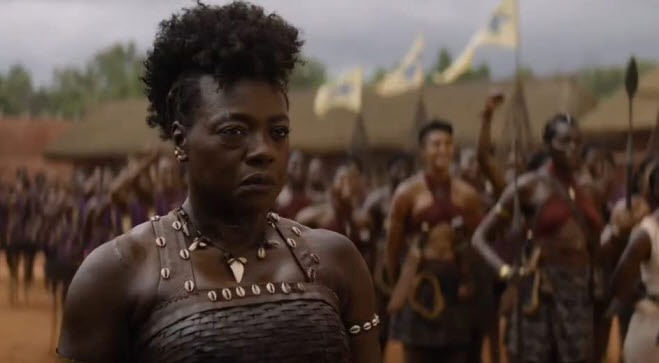
The Cave (2021) ☆☆☆(3/4): His wife and his first love

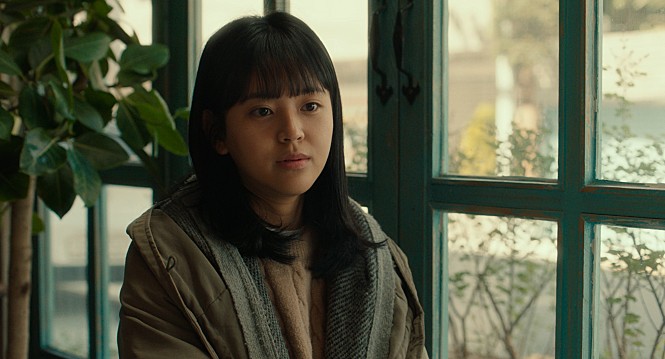
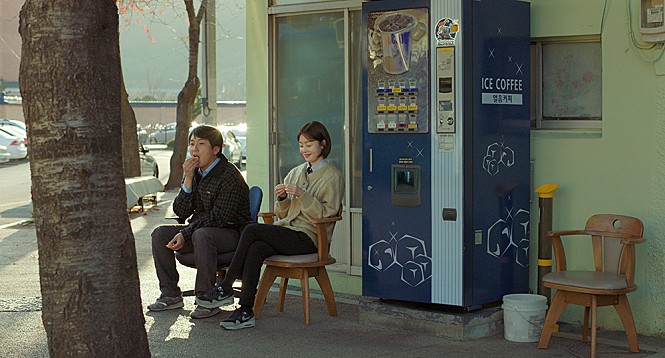
I could not help but chuckle a bit at times while watching South Korean film “The Cave”. At first, it comes to us as a calm and intimate story about loss and healing, but it also can be quite amusing and melodramatic as its two main characters try to cope with their complicated emotional circumstance, and you may appreciate how the movie pulls off its warm and tender ending after frequently going up and down along with its main characters.

At the beginning, the movie succinctly establishes how much Min-hee (Yoo Da-in) has been devastated by her husband’s unexpected death during his routine visit to his hometown in Jeju Island. Regardless of whether it was actually a suicide or an accident, her husband’s death makes Min-hee reflect more on how much they were estranged from each other before his death, and that only leads to more sorrow and grief for her. Without him, her daily life becomes empty and barren with no one to lean on, and, above all, she does not know what to do next for her life.

While rummaging the stuffs belonging to her husband later, Min-hee comes to learn about his longtime wish to live at a certain place in his hometown. It is just one of several houses in one neighborhood, but Min-hee becomes curious about why her husband wanted to live there, and her curiosity is increased more after she sees several photographs he never showed her, which are apparently shot by somebody else.

Eventually, Min-hee moves into that house several months later, and that is how she encounters Mok-ha (Jo Eun-ji), who incidentally lives right next to Min-hee’s house. Besides running a little nearby cafe, Mok-ha also teaches yoga to some of her neighbors, and we get a little amusing moment as she gladly provides a bit of yoga practice to Min-hee during their first encounter.

As drawn to Mok-ha’s gentle and vivacious personality, Min-hee gets to know a bit about Mok-ha’s personal life. Whenever she is not paying attention to yoga and cafe, Mok-ha usually spends her time on taking care of many different plants filling her cozy house, and she also has a little private spot where she has a small but nice garden of her own. That spot also has a tiny cave, and it does not take much time for Min-hee to notice that the cave is identical to the one shown in one of her husband’s photographs. Talking more and more with Mok-ha, she comes to realize that Mok-ha was actually the first love in her husband’s life, and she also comes to notice a significant resemblance between her husband and Mok-ha’s young adult son.

Gradually discerning what her husband was hiding from her during all those years, Min-hee become more furious and confused than before, but she does not know what she should do with this fact, and neither does Mok-ha, who instinctively guesses what her new neighbor is hiding from her but does not say anything yet. No, she and Min-hee’s husband were not that close to each other for years after being separated from each other a long time ago, and letting his wife into her life is the last thing she wants now, but she still does not know what to do with Min-hee – especially when Min-hee begins to approach closer to her son later in the story.

Even when the conflict between these two ladies grows step by step, the movie sticks to its usual calm attitude. The circumstance becomes quite tricky as Min-hee looks like being willing to do more than encouraging the artistic aspiration of Mok-ha’s son, and we accordingly get a series of blatantly melodramatic moments including the one where our two ladies attempt a sort of catfight between them, but the movie still shows lots of care and understanding toward them. While Min-hee is basically an annoying intruder coming into Mok-ha and her son’s fairly good life, we understand her grief and confusion, and we come to brace ourselves when she may cross some lines a bit. In case of Mok-ha, we come to sense how much she has endured and prevailed for years as raising her son alone, and we are not so surprised when she shows some bitter feelings toward her first love, who was never there for her or her dear son.

Although the screenplay by director/writer Lee Young-ha stumbles a bit during the last act, her two lead actresses steadily carry the movie to the end, and they surely demonstrate here that they are two of the most interesting South Korean actresses at present. While Yoo Da-in, who has steadily advanced since her unforgettable breakthrough turn in “Re-encounter” (2010), deftly handles her character’s emotional turmoil along the story, Jo Eun-ji, who has been endearing to me since her delightful scene-stealing supporting turn in “My Scary Girl” (2006), ably holds the ground for her co-star, and they are also supported well by a few main cast members including Jung Yong-sub and Ha Kyung, a young promising actor who holds his own small place well as Mok-ha’s son.

Overall, “The Cave”, which is released in South Korean theaters as “Day and Moon” in this week, is an engaging character drama equipped with good mood and thoughtful storytelling in addition to solid performances. Besides its two lead actresses’ stellar acting, I also enjoyed the serene winterly atmosphere of Jeju Island, and I admire how the movie builds and then develops its main characters via small and big details under its palpable local ambience. Although this is only her first feature film, Lee surely shows that she is another talented South Korean filmmaker to watch, and it will be interesting to see what she will give us in the future.

Posted in Movies | Tagged , | Leave a comment

Black Adam (2022) ☆☆(2/4): Dwayne Johnson is just being there…

I still remember how inconsequential Dwayne Johnson’s brief appearance in “The Mummy Returns” (2001) was. While the trailer emphasized this hulking star wrestler’s participation in the film to considerable degree, whatever he did for the film did not amount to much on the whole, and he did not often seem to be on the screen at all as mired in lots of special effects.

Strange to say, I got a similar impression when I watched Johnson’s new film “Black Adam” at last, the latest product from the DC Extended Universe. Since “The Mummy Returns”, Johnson has risen as a major Hollywood star actor during next two decades, and I came to appreciate his star quality to some degree while really enjoying some of his films, but he simply occupies the screen here without generating much sense of fun and entertainment. As a result, his character often feels like being no more than a floating wooden CGI, and his monotonously gloomy seriousness frequently clashes with occasional clumsy self-conscious attempts for some amusement in the film.

Because the movie is your average superhero origin story, its opening part naturally presents the background story for Johnson’s superhero character Teth-Adam, who was originally a plain common person in an ancient kingdom named Kahndaq. Thanks to a certain powerful local mineral and some interventions from several powerful magicians, Teth-Adam came to acquire his superpower and then fought against an evil king who had exploited and oppressed the people of his kingdom, but his big showdown with that evil king led to a long, long, and long imprisonment in one big stony tomb because of a reason to be explained later in the movie.

Anyway, Teth-Adam happens to be released at last thanks to a young local woman named Adrianna Tomaz (Sarah Shahi), who has been looking for where he has been buried for a desperate reason of hers. Kahndaq has recently been occupied by some powerful international criminal/military organization, and she sincerely believes that the return of Teth-Adam, who has still been regarded as a legendary local hero, will bring a new hope to those oppressed people of Kahndaq just like that old ancient time.

However, Adrianna soon comes to find that Teth-Adam is not as heroic or righteous as she and many others in Kahndaq believed. He turns out to be a mighty killing machine full of anger and fury, and we are accordingly served with a big sequence of mass destruction a la Zack Snyder as Teth-Adam casually and brutally kills a bunch of mercenary soldiers unwisely standing on his way.

When Teth-Adam is later brought to Adrianna’s apartment, Adrianna’s young son Amon (Bodhi Sabongui) cannot possibly be more excited about that as your average superhero fan. We see lots of DC superhero stuffs in his bedroom, and we are not so surprised as observing how eagerly this plucky boy attempts to give Teth-Adam some advices on being a cool superhero.

Meanwhile, the movie also brings several other superhero characters into the story. Once the presence of Teth-Adam is detected, the four members of the Justice Society are swiftly sent to Kahndaq for handling and then containing him, and what we get next is a more violent version of what we already saw from “The Avengers” (2012). As these four Justice Society members try to suppress their mighty opponent in the middle of Kahndaq, lots of things are destroyed here and there, but all these actions do not feel that impactful as drenched in lots of bland and uninspired CGI. To be frank with you, I am now missing when a certain climactic moment of “The Avengers” unintentionally took me back to “The Human Centipede” (2009).

It is not much of a spoiler to tell you that the superhero characters in the movie eventually band together in front of a certain big threat against not only Kahndaq but also the whole world, but the movie does not give us much reason to care about that due to its deficient storytelling and characterization. While Teth-Adam remains quite uninteresting even after he reveals a painful personal story behind his glum attitude, the other superhero characters in the film are mostly defined by their respective superpowers rather than each own personality, and they sometimes look like the cheap imitations of many other superhero characters ranging from Professor Xavier to Deadpool. In case of the villains of the film, they are all the more colorless, and that is the main reason why the climactic part of the film feels quite hollow and redundant to say the least.

To make matters worse, many of the cast members in the film are wasted as often looking like simply waiting there for getting their respective paychecks. Although he can be a bit more serious and intense as shown from “Faster” (2010), Johnson is curiously stiff and lifeless here in this film, and it is rather distracting to see how he seems to emulate Arnold Schwarzenegger’s robotic acting in “The Terminator” (1984) at times. While Sarah Shahi and Bodhi Sabongui manage to acquit themselves well, Aldis Hodge, Noah Centineo, Quintessa Swindell, and Pierce Brosnan are criminally under-utilized without many things to do, and Brosnan frequently seems to be content with merely filling his spot and then getting paid later.

Overall, “Black Adam” is utterly disappointing compared to other recent successful superhero flicks or director Jaume Collet-Serra’s more enjoyable works such as “The Shallows” (2016). Seriously devoid of fun and personality, the movie is just a bloated teaser for whatever will come next, and, folks, I do not give a damn for now.

Posted in Movies | Tagged , , | Leave a comment

Ticket to Paradise (2022) ☆☆1/2(2.5/4): Clooney and Roberts still have it, though

“Ticket to Paradise” made me a bit nostalgic during my viewing due to its two charismatic lead performers. Although more than 20 years have passed since they rose as major Hollywood star performers, George Clooney and Julia Roberts still shine with each own charm and presence as before, and my mind occasionally went back to when they appeared together in Steve Soderbergh’s “Ocean’s Eleven” (2001) and two following sequels. It is a shame that “Ticket to Paradise” ends up being merely passable and predictable compared to that jolly time, but it is occasionally buoyed by their fairly commendable efforts nonetheless, so it was not a total waste of time for me at least.

Clooney and Roberts play David and Georgia Cotton, a longtime divorced couple who still cannot stand each other despite many years of separation between them. Being with each other is certainly the last thing they want to do, but they agree to put aside their old mutual resentment for a while because of their dear daughter Lily (Katilyn Dever), who is going to work at a prominent law firm in Chicago after her upcoming law school graduation. Knowing too well that how much her parents still resent each other, Lily tries her best for making the situation as amiable as possible, and her parents also do try, but, not so surprisingly, they cannot help but clash with each other right from when they happen to sit right next to each other during the graduation ceremony.

Once Lily leaves for Bali, Indonesia for a little respite along with her best friend Wren (Billie Lourd) before eventually beginning her career at a prominent Chicago law firm, it looks like David and Georgia will not have to meet again at least for some time, but, alas, something quite unexpected happens. Not long after arriving in Bali, Lily meets a handsome local lad named Gede (Maxime Bouttier), and they quickly fall in love with each other during next several weeks. When they subsequently announce their upcoming wedding to David and Georgia, both David and Georgia are certainly caught off guard, and they become all the more concerned because their daughter is going to give up her promising future just for love.

As they subsequently go together to Bali, David and Georgia agree that they must try to stop the wedding by any means necessary, so they embark together on working together against their daughter’s marriage, though that turns out to be not easy at all. While receiving the warm hospitality of their future in-laws, they also see how happy their daughter really is, and their future son-in-law turns out to be a lot more than his good-looking appearance. After all, he has been running a fairly successful seaweed farm for years, and, as far as I could observe, his family seems very affluent considering how much they prepare for the upcoming wedding.

Now you have already discerned where the story is going, and The screenplay by director Ol Parker, who previously directed “Momma Mia! Here We Go Again” (2018), and his co-writer Daniel Pipski does not surprise us much on the whole, but Clooney and Roberts have some juicy fun together from time to time. There is an amusing scene where their characters deliberately sabotage the official engagement ceremony for Lily and Gede, and I also enjoyed the sequence where David and Georgia willingly throw themselves into sheer silliness as having an evening drinking match with Lily and Gede.

Of course, the mood becomes more serious when David and Georgia come to wonder what is really the best for their daughter’s happiness, and that is where the movie becomes more predictable than before. Yes, there comes an inevitable moment when Lily comes to learn of what her parents have been doing behind their back. Yes, there comes a reflective moment when David and Georgia begin to look upon what has been lying beneath their longtime mutual resentment. Yes, there comes an expected moment of big speech in the middle of the wedding ceremony when David and Georgia must be really supportive of their daughter as well as their future son-in-law.

Fortunately, Clooney and Roberts handle these and several other very predictable moments well. Although his career has been going down mainly due to the critical/commercial failures of his recent directorial works, Clooney is still capable of exuding his usual charming screen persona, and I wish the movie utilized more of his wily comic sides. On the opposite, Roberts skillfully alternates between sunny likability and barbed wit, and she surely demonstrates here that she can still be funny as she was in many romantic comedy films including “Pretty Woman” (1990).

In case of several other cast members in the film, they are mostly stuck in their respective thankless supporting roles. While Kaitlyn Denver and Maxime Bouttier are often limited by their blandly wholesome roles, Billie Lourd and Lucas Bravo do not have much to do except providing occasional comic relief, but Lourd is allowed to throw a few funny one-liners for our amusement at least.

Overall, “Ticket to Paradise” will not impress you much especially if you are a seasoned moviegoer like me, but it is nice to see Clooney and Roberts bringing some breeziness to those numerous conventional moments in the film. They deserve better in my inconsequential opinion, but they try their best with their materials anyway, and that is sort of admirable.

Posted in Movies | Tagged , , , , | Leave a comment

Anaïs in Love (2021) ☆☆☆(3/4): In her irrepressible pursuit of romance

French film “Anaïs in Love” is a wryly delightful comedy about one irrepressible young woman who cannot help but drawn to more possibility of romance. You may roll your eyes as observing how headless she can be, but you will also see how she can get away with many things thanks to her undeniable natural charm, and you will certainly get some good laughs as she bounces from one amusing moment to another throughout the film.

When we are introduced to Anaïs (Anaïs Demoustier) at the beginning of the film, she is around the end of the relationship with her boyfriend, who recently moved out of her apartment. Although she is currently behind several months in case of paying the rent to her landlady, she is so vivacious and excited about a little private party she is soon going to attend, and her landlady cannot possibly say anything bad to her while flatly reminding Anaïs of her ongoing rent problem and then giving a fire alarm for her apartment.

At some other apartment building where that party is being held, Anaïs comes across a middle-aged guy named Daniel (Denis Podalydès), who also happens to be about to attend that party just like her. When they subsequently interact more with each other at the party, both of them cannot help but attracted to each other, and, what do you know, they soon begin a little affair between them even though Daniel has actually lived with a prominent female novelist for more than 10 years since he left his first wife.

Meanwhile, we get to know a bit more about Anaïs’ personal life. When she reveals to her boyfriend that she has been actually pregnant for several weeks, they come to argue a lot with each other, and that is the official end of their relationship. For taking care of that little matter of hers, Anaïs visits her hometown, and that is when she comes to learn that her mother may not live that long due to the recurrence of her cancer. As she struggles to sort out her complicated feelings alone, the score by Nicola Piovani swells as required, but it does not take much time for her to get back to her usual carefree mode before having an abortion as planned.

However, there comes another trouble for her when Anaïs is reminded again of how Daniel is not as committed about their relationship as she is. He says he loves her, but he is still not so willing to leave his current partner just because he does not want to disrupt the status quo between them at all, and that eventually becomes a deal-breaker for Anaïs, who promptly ends her relationship with him without any hesitation.

After that, Anaïs decides to be more serious about completing her graduate course, but then she finds herself gradually fascinated with Daniel’s partner Emilie (Valeria Bruni Tedeschi) after reading one of Emilie’s novels. Even though she has some big tasks to handle right now, she goes down to a small rural hotel where Emilie is attending a little meeting for writers, and then she actively approaches to Emilie, who gladly receives her unadorned adoration while also becoming quite curious about her.

What eventually happens next between these two ladies does not surprise us much, but the screenplay by director/writer Charline Bourgeois-Tacquet often tickles us as they playfully swirl around each other step by step. When they have to come across a little hidden room which is incidentally full of erotic and kinky stuffs, Anaïs becomes all the more attractive to Emilie than before, and Emilie does not reject her at all as having some fun with her, though, like any other thoughtful matured women, she remains tentative and reserved while keeping her feelings and thoughts to herself.

In the meantime, Anaïs continues to charm several people around her besides Emilie. In exchange of paying less for her staying at the hotel, she agrees to do some menial works along with a young temporary employee named Yoann (Jean-Charles Clichet), and Yoann seems to be interested in getting closer to her, but it does not take much time for him to see that she has the other fish to fry. When Daniel later enters the picture again (Is this a spoiler?), he is not so amused at all to say the least, but he still does not know what to do with Anaïs, and she does not give a damn at all about whatever he is going to do.

In the end, the story culminates to a point where Anaïs and Emilie become much more honest about their rather complicated situation, and the movie alternatively amuses and touches us when Emilie subsequently gives a calm and sensible analysis on not only their relationship but also themselves. Both of them are smart and intelligent enough to discern what may be the best for both of them, but they are still helpless in front of their matter of heart, and that is why the last scene between them comes with a bit of naughty humor. Besides generating an effortless romantic heat between their characters, Anaïs Demoustier and Valeria Bruni Tedeschi ably complement each other throughout the film, and they are also supported well by several other main cast members including Denis Podalydès and Jean-Charles Clichet.

In conclusion, “Anaïs in Love” is your average witty French romantic comedy film packed with enough intelligence and amusement, and I must confess that I chuckled more than once as observing what a force of nature its endearingly flawed heroine really is. Regardless of whatever will happen next after the ending of the film, she will always move forward for joie de vivre, won’t she?

Posted in Movies | Tagged , | Leave a comment

Sunday League (2020) ☆☆(2/4): A tedious league of their own

South Korean independent film “Sunday League” tries a lot, but it did not amuse or move me much on the whole. As a sports comedy drama, it may intrigue you a bit with its sport of choice, but it handles its story and characters so predictably and tediously that its short running time (83 minutes) actually felt much longer to me, and I remember more of how frequently I checked the time throughout the screening.

The first act of the film shows us what a pathetic loser its hero is. As shown from the opening scene, Joon-il (Lee Sung-wook) was a promising soccer player during his college period, but his aspiration was soon broken due to an unexpected physical injury, and now he works as a coach at a local soccer academy for kids without much hope or prospect. Besides being a lousy coach barely tolerated by his boss who is incidentally former colleague, he is also about to get divorced, and his house has been pretty messy since his wife left along with their young son.

After Joon-il makes another mess at his workplace, Joon-il’s boss gives him an offer he cannot refuse. He recently begins an amateur futsal club for adults, and he already has two guys willing to join the club. When he asks Joon-il to work as the coach for these two guys, Joon-il is not so eager to do that, but he has no choice from the beginning because he will get eventually fired if he refuses this offer.

Joon-il’s very first day with his two team players does not look that promising to say the least. Both of them show genuine enthusiasm, but their athletic skills are pretty hopeless in addition to not having any sense of teamwork, and this does not change much even after some other guy, who needs to play more outside due to his manic depression, joins the team as its third member. Although they quickly form the friendship among themselves, Joon-il’s team members remain quite amateurish, and Joon-il becomes all the more disinterested while drinking a lot as usual.

Of course, things gradually come to change as the team members keep trying day by day. At one point, they come to devise their own way of practicing a certain movement for their upcoming first game, and that is one of a few moments in the film which actually feel amusing to me. In case of their first game which is a part of a local amateur futsal tournament, this part does not work that well in contrast because it lacks comic momentum from the beginning, and the movie also fails to generate enough excitement as simply observing how crummy Joon-il’s team members are on the field. Okay, as a mini-version of soccer which only requires three team members, futsal may be inherently less exciting than soccer, but how this part is executed on the screen feels as clumsy as Joon-il’s bumbling team members.

Above all, none of Joon-il’s team members are not particularly developed well in each case. In case of the aforementioned team member who has a manic depression problem, he is usually defined by his glaring introverted appearance, and the movie does not delve much into whatever he has been actually struggling with. In case of the two other team members, they are no more than broad caricature figures to be used for cheap laughs, so we come to observe them from the distance without much care even when they become a bit more active later in the story.

Furthermore, Joon-il is not an interesting figure to watch. To be frank with you, this guy is pretty unlikable as often mired in self-pity and irresponsibility, and that is the main reason why a series of melodramatic moments during the second half of the movie does not work at all. We are supposed to feel sorry for him, but we only see him behaving like a big jerk, so his expected moment of penance and redemption does not ring that true to us at all.

In the end, the movie ends up being a typical drama of male midlife crisis without much to distinguish itself, and you may also its notable lack of substantial female characters. As a matter of fact, there is only one female character in the story besides Joon-il’s wife, and she only comes and then goes in one single scene without leaving much impression. In case of Joon-il’s wife, she only functions to remind us of how lousy he has been to his wife and their son, and a subplot involved with their son is trite and contrived without conveying to us the real sense of father and son relationship.

Anyway, the main cast members of the film do try as much as possible with their broad characters. While mostly limited by his flat character, Lee Sung-wook dutifully carries the movie as required, and several supporting performers surrounding him, Shim Woo-sung, Lee Soon-won, Oh Chi-woon, and Kang Young-gu, occasionally show some comic potential which is unfortunately not so utilized well in the film.

Overall, “Sunday League”, written and directed by Lee Sung-il, is disappointing in terms of storytelling and characterization, and my mind is already thinking of several similar but better South Korean films out there. I particularly want to recommend “The King of Jokgu” (2013), and, believe me, you will have a lot more entertaining time with that little but enjoyable sports comedy drama movie.

Posted in Movies | Tagged , , , | Leave a comment

Smile (2022) ☆☆☆(3/4): It Smiles

“Smile” is a little spooky horror film which has some nasty fun with its heroine’s very unfortunate supernatural situation. Although it is reminiscent of many other horror films ranging from “Ring” (1998) to “It Follows” (2015), the movie did its job fairly well as effectively unsettling us more than once along its story, and it is also supported well by the strong acting by its talented lead actress.

Sosie Bacon, who is the daughter of Kevin Bacon and Kyra Sedgwick, plays Dr. Rose Carter, a young psychiatrist who has been devoting herself a little too much to her work. Tirelessly working at the psychiatry department of a big local hospital, she often cares too much about her emergency patients’ welfare and health, and that sometimes leads to occasional conflicts between her and her direct supervisor, who is sincerely concerned about how selflessly she has overworked since she came there.

Not long after handling a very problematic patient, Rose is assigned to an equally troubled young woman named Laura Weaver (Caitlin Stasey), who has just been sent to Rose’s ward due to her extremely hysterical status. During Rose’s private interview with her, Laura frantically confides to her that something unknown has been tormenting and stalking her for years, but, just like others, Rose does not believe that much while trying to be reasonable with Laura.

In the end, something terrible happens right in front of Rose’s eyes as Laura already warned her. After suddenly going through some weird physical convulsion, Laura comes to commit a gruesome suicide with a very disturbing smile on her face, and that certainly shocks and devastates Rose a lot. When two detectives, one of whom later turns out to be her ex-boyfriend, come later, there is really nothing she can reveal to them, and her mind remains shaken by the incident even when she returns to her residence where she lives with her fiancé.

Anyway, Rose tries to go on with her life and work as usual, but, of course, she soon comes to sense that something is going wrong around her. Just like Laura told her right before her suicide, she feels like being watched by someone from somewhere, and a series of odd things happen around her. For example, somebody seems to break into her residence at one night, but the police do not find anything suspicious inside and outside the residence, and things become more unnerving as Rose often sees the hallucination of Laura with that hideous smile on her face.

Around that point where her life and career begin to crumble because of this eerily inexplicable circumstance, Rose naturally become convinced that what Laura told her was indeed true, but, of course, nobody around her believes what she desperately tries to tell. While her relationship with her fiancé becomes more strained than before, her older sister becomes quite angry due to one horrific incident between them, and her psychiatrist tries to be more reasonable with her just like Rose did with Laura.

As Rose becomes more vulnerable and unnerved as days go by, the screenplay by director/writer Parker Finn, which is based on his 2020 short film “Laura Hasn’t Slept”, begins to show more of an old trauma from which she has been trying to look away for many years. Haunted by the dark memories of her mentally disturbed mother who happened to die when she was very young, Rose wonders whether she is actually going crazy, but whatever is menacing her with that scary smile feels quite real nonetheless, and she eventually attempts to get any clue to what is really tormenting her.

What she gradually comes to discover thanks to some reluctant unofficial help from her ex-boyfriend is not so pleasant to say the least. It seems that there is a way to escape from her ongoing plight, but that requires a big cost from her, and she becomes all the more conflicted than before – until she comes to think of another possible option later in the story.

If you are a seasoned moviegoer like me, you can easily see where the story is heading, but Finn and his crew members do as much as they can for holding our attention before the movie eventually arrive at its inevitable finale. While cinematographer Charlie Sarroff provides a number of unsettling shots shrouded in unnerving tension beneath the surface, the cacophonic score by Cristobal Tapia de Veer brings extra nervousness to that as constantly making us uneasy from the beginning to the end.

Above all, the movie depends a lot on Bacon’s talent and presence. While Rose is another usual horror movie heroine in grim danger, Bacon’s intense performance gives flesh and blood to her archetype role, and that is the main reason why we come to fear more for her character along the story. In case of several substantial supporting performers, Kyle Gallner and Caitlin Stasey are well-cast in their respective roles, and Rob Morgan is dependable as usual even though he only appears in a single scene later in the film.

In conclusion, “Smile” may not surprise you much if you are familiar with its many other senior horror films, but it is a competent genre piece on the whole, and I was not so surprised as occasionally observing how several audiences around me actively responded to its several key moments at last night. Sure, it does not break any new ground in its genre field, but it did its homework enough to scare us, so I will not grumble for now.

Posted in Movies | Tagged , , | Leave a comment

The Man Who Paints Water Drops (2021) ☆☆☆(3/4): Understanding his artist father

Documentary film “The Man Who Paints Water Drop” attempts to look into the life and artistry of one acclaimed Korean painter who painted water drops for almost 40 years. As steadily maintaining its calm and restrained attitude, the documentary gradually delves into its human subject with considerable care and respect, and it will constantly fascinate and enlighten you even if you do not know that much about him and his works.

At first, the documentary observes the daily life of Kim Tschang-yeul (1929-2021), who incidentally passed away not long after the documentary was completed. Despite his old and fragile physical appearance on the surface, Kim looks quite focused while working in his big studio full of various paintings of water drops, and his artistic activity is not interrupted much by even the occasional intrusion of his young grandchildren, who happen to visit his residence in Seoul along with Kim’s two sons from France.

Kim is mostly gentle and endearing to his grandchildren, but Kim’s younger son Kim Oan, who made the documentary along with his co-director Brigitte Bouillot, remembers how his father was often rather distant to him and his older brother. While he looked as benign as Santa Clause, he felt more like Sphinx as being frequently reserved and distant, and that is why his two sons still remember well when he became very angry and harsh to them due to a big misbehavior of theirs many years ago.

For getting to know and understand his father more, Kim’s younger son asks some questions to his father while also interviewing his several family members including Kim’s younger brother, and the documentary shows and tells us a bit about Kim’s painful past. Around the time when Kim was a promising lad who showed considerable artistic talent, Korea was divided into North and South Korea, and he and most of his family members, who were in North Korea at that time, had to flee down to South Korea. Not long after Kim’s father went back to North Korea for a family matter, the Korean War broke out, and that was another personal trauma for Kim as he happened to witness many horrors of the war shortly after enlisted in the South Korean Army.

After the war was over, Kim focused again on his artistic career, and the documentary showed us some of his early works which are clearly the reflections of survivor’s guilt in his mind. When he later moved to New York City for some change, he came to try more of abstract painting style, and several works of his from that period convey to us how much he felt alienated as an isolated outsider surrounded by strangers quite different from him in many aspects.

In 1969, Kim moved to Paris without much expectation, but that accidentally led to a big breakthrough for his artistic career. On one day, he happened to get a moment of inspiration from water drops on one of his previous paintings, and that was the beginning of his lifelong artistic obsession with painting water drops. As he drew more and more paintings of water drops in various abstract styles, he became quite more notable around the world, and he also became known well in South Korea.

As simply listening to Kim during his interviews, the documentary slowly lets us gather that those water drops in his paintings are his own artistic way to deal with his traumas, which is mostly based on some Buddhist philosophy. Like one certain legendary Buddhist monk he often talked about, he is driven to more focus and dedication for understanding and accepting his life and the world, and that is why those water drop paintings of his look all the more poignant than before, though they still do not seem to be signifying anything particular to us.

In the meantime, Kim comes to us as a distant but undeniably gentle person capable of showing warmth and affection to others around him. Whenever he is not working or reading, he spends some playful time with his grandchildren, and we later get a little sweet moment between him and the infant kid of his younger son, who is glad to see that his father shows some genuine love and care to his little kid. In case of his French wife, whom he married shortly after coming to France, we can sense the deep bond between them even though they say much about their relationship, and it is clear to us that she has always stood by her dear husband throughout their long married life.

Nevertheless, the past still does not go away for Kim, and there is a bittersweet scene where Kim’s younger son shows his parents a satellite photograph of Kim’s old hometown in North Korea. Kim says he does not want to see the photograph more, but he cannot look away from it, and we can only guess whatever is churning behind his ever-phlegmatic façade. He can be quite emotional as attested by his younger brother, but he keeps feelings and thoughts to himself as usual, and that is all.

Overall, “The Man Who Paints Water Drops” works not only as a meditative essay on Kim’s life and artistry but also a respectful personal tribute from his younger son, who also provided the score for his documentary besides serving as its co-writer/co-producer/co-editor/co-cinematographer. As a matter of fact, I am actually ready for checking out more of Kim’s works, and I am sure you will do the same thing once you watch this solid documentary.

Posted in Movies | Tagged , , , , | Leave a comment

#AfterMeToo (2021) ☆☆☆(3/4): They won’t be silent again

South Korean documentary film “#AfterMeToo” examines how things have become a little different for many women out there in the South Korean society since the #MeToo Movement in 2017. Sure, there are still lots of things to be changed for them even at present, but several female figures in this documentary remind us that women in South Korea will not be silenced anymore no matter what will occur next, and that is surely touching to see at least.

The documentary actually consists of four individual short documentary films respectively directed by four different female South Korean filmmakers, and the first one, which is directed by Park So-hyeon, focuses on a small but significant gender movement at one certain female high school in Seoul. There was some male teacher who has been notorious among students for his very inappropriate attitude and behavior to them for years, and several anonymous graduates of 2019 willingly tell us about how they and many other students came to show their support for a schoolmate of theirs who bravely came froward for exposing that sexual predator. Emboldened by the ongoing #MeToo movement, they proudly expressed their solidarity on the windows of their school building, and that led to a conflict between them and the faculty staff of their school, who seemed to care more about securing the public image of their school.

Nevertheless, the students were not deterred at all to the end. On one day, an unknown graduate of their school did a little demonstration at the school for showing more support for their movement, and that was just a tip of the enormous support they received from the outside. In the end, that sexual predator was prosecuted and then sentenced to several years of imprisonment, and the students were proud of their righteous activities against the injustice which should have been eradicated many years ago.

The second documentary, which is directed by Lee Som-yi, pays attention to a middle-aged woman who writes “I become healthy in my body and mind.” more than once everyday. On the surface, this woman is just a plain working-class person, but there is an old sexual trauma she has not let out from the deep corner of her mind for years, and now she is going to go down to her rural hometown for finally revealing that outside.

Of course, despite lots of preparation for her public speech, she is understandably afraid and hesitant even when she is about to begin her speech in her hometown, but she eventually comes to speak out during next several minutes. Although nobody seems to listen to her words amplified by a number of speakers which are placed here and there around her hometown, her speech comes to function as a sort of exorcism for her personal demons, and that repeatedly written phrase of hers comes to feel a bit different than before as she keeps going with her life as usual.

Directed by Kangyu Ga-ram, the third documentary introduces us to several local female artists who began each own #MeToo movement in their artistic fields as a number of prominent South Korean male artists including Kim Ki-duk were exposed for many years of sexual violence and exploitation hidden behind their artistic careers. They and many other female artists in South Korea joined together for bringing more gender equality and sensitivity to their artistic fields, and they actually made some progress thanks to their passionate efforts.

However, they are still frustrated about how their artistic fields are not changed much even at present, and they also show some personal concern on their individual careers. While they have been willingly devoting themselves a lot to their urgent causes, they also recognize their growing exhaustion, and they often wonder whether they really should focus more on their careers for a while at least. After all, they all are artists first before being activists, aren’t they?

In case of the fourth documentary, which is directed by Kim So-ram, it simply listens to four anonymous interviewees who honestly tell us about how they were sexually abused or exploited in their pursuit of desire and love. In case of one interviewee, she was very frank about what she desired from the beginning, and she did not hesitate much in case of having a quick sex with man. Not so surprisingly, that was not always pleasant to say the least due to the insensitivity of many of her male sex partners, and she still feels hurts as remembering some of her very unpleasant sexual experiences.

Interestingly, the documentary later broadens its main subject a bit more via its last interviewee, a young gay man who also has his own unpleasant sexual experience just like the other ones in the documentary. When he was approached by some guy via an online dating application, he did not worry much just because this guy said he simply wanted to give some massage, but, what do you know, their subsequent private encounter turned out to be very disagreeable to say the least. To be frank with you, as a guy who had a considerable number of various sexual experiences during last six years, I understand him to some degrees, and I must confess that I still feel disgusted whenever I think of some central Asian dude who often handled my body like a sex doll during several sexual encounters between me and him.

On the whole, “#AfterMeToo” is an earnest presentation of how far South Korean women come via the #MeToo movement, and it is certainly worthwhile to watch considering how the South Korean society remains quite insensitive to gender issues in addition to allowing male backlashes against women. As shown from the epilogue part, women in South Korea still need to fight and struggle a lot for gender equality, but they will not step back at all, and they surely deserve more support and solidarity in my trivial opinion.

Posted in Movies | Tagged , , , | Leave a comment

Hellraiser (2022) ☆☆1/2(2.5/4): Creepy but redundant

“Hellraiser”, a reboot of the horror film franchise which began with the 1987 film of the same name, does not impress me that much to my little disappointment. Sure, it does try to bring new life and spirit to its familiar sadomasochistic tale of pain and pleasure, but it still feels rather redundant despite some effective creepy moments, though it is much more competent than many of sequels following the 1987 film.

Although I do not like it a lot, the 1987 film, which is based on its director/writer Clive Barker’s novella “Hellbound Heart”, has remained iconic in its field mainly thanks to a number of gruesome moments and the striking presence of hideous supernatural entities called “Cenobites”. Whenever somebody solves a mysterious ancient puzzle box, they immediately come to bring extreme pain and pleasure upon that person in question before eventually taking that person to their realm of darkness, and its leader, who is nicknamed “Pinhead” due to lots of pins stuck on the head, has been known as well as other familiar horror movie characters such as Freddy Kruger or Michael Myers.

The main reason why I am not a big fan of the 1987 film is its glaring deficiency in terms of story and characters, and, unfortunately, the 2022 reboot version also has the same problem. Many of its main characters are mostly sketchy at best, so we do not care that much about whatever will happen to them in the end, and, besides being rather overlong, the movie often trudges especially during its last act, where it is supposed to deliver some big bloody moments for its target audiences.

After the opening sequence involved with a certain substantial supporting character played by Goran Višnjić, the movie moves forward to several years later, and then we are introduced to a young woman named Riley McKendry (Odessa A’zion), whose life has been rather messy due to her serious addiction problem. Although she has been sober for a while, she still does not pull herself well together on the whole, and that certainly makes her conflict a lot with her concerned older brother Matt (Brandon Flynn), who has let her stay at his apartment because she has nowhere else to go at present.

Matt is especially worried about the possible bad influence of Riley’s current boyfriend Trevor (Drew Starkey), and, of course, he turns out to be right about that. Trevor later suggests to Riley that they should sneak into some abandoned warehouse for stealing whatever is being stored in one big container, and Riley does not hesitate to join her boyfriend at all, though she is baffled to see that container in question does not have anything inside it except one big safe.

It is not much of a spoiler to tell you that Riley eventually finds what is inside that safe and take it away without much thought. When she subsequently clashes with her older brother again, she quickly leaves his apartment along with her stuffs, and, what do you know, she comes to play with that object in question a bit not long after falling into the pit of addition again.

Of course, Riley soon comes to experience very spooky things, but the screenplay by Ben Colin and Luke Piotrowski, which is based on the story written by them and co-producer David S. Goyer, changes the rules of the 1987 film a bit. As usual, several Cenobites, led by “The Priest” (Jamie Clayton), appear, but they demand Riley that she should give them several victims in exchange of leaving her alone, and she must find a way to save herself as well as several others around her.

As Cenobites get their victims one by one along the story, Riley becomes all the more cornered just like many other horror movie heroines, but the movie sadly fails to develop her as an engaging character to root for, and it also falters a lot in case of handling several supporting characters around her. They are more or less than mere targets to be tortured and then killed by Cenobites, and I was especially dissatisfied with a certain key scene involved with the supporting character by Hiam Abbass, whom I still fondly remember for her wonderful supporting turn in Tom McCarthy’s “The Visitor” (2007). She is reliable as usual, but, alas, she does not have much to do here except looking weary and scared as required, and it is too bad that the movie does not utilize her considerable presence well.

In case of the Cenobites in the film, they surely look as creepy and grotesque as demanded, but, probably due to wearing lots of digital special effects on them, they are not very impressive compared their seniors in the 1987 film. At least, Jamie Clayton has some fun with her juicy role, and her good work here in this film often steals the show from Odessa A’zion and several other main cast members who are unluckily stuck with playing plain cardboard characters.

On the whole, “Hellraiser” is not as bad as I feared at first, but it does not reach to the distinctive qualities of the 1987 film or the intense terror of Barker’s novella, which remains better than both of two film versions in my humble opinion. Director David Brucker, who previously directed “The Night House” (2020) and his crew members, did a competent job of generating enough creepy vibe to hold my attention during 2 hours, but I only ended up wanting to read Barker’s novella again, and I think you will have a more satisfying time if you read that novella instead. Sure, the fans of the franchise may respond to it more positively than me, but, seriously, is there anything they never beheld before?

Posted in Movies | Tagged | Leave a comment

Orphan: First Kill (2022) ☆☆1/2 (2.5/4): A little killer coming into US

“Orphan: First Kill”, a belated prequel to “Orphan” (2009), attempts to present the backstory of that little creepy but compelling villain of the 2009 film. Although it unfortunately stumbles more than once during its second half after steadily building up enough tension and creepiness during its first half, the movie works to some degree thanks to two good lead actresses, and it is a shame that it does not explore that much of the morbid relationship between their characters before heading to its expected finale.

The early part of the film revolves around how its titular character came into US several years before what happened in the 2009 film. Due to a certain rare medical condition of hers, Leena Klammer (Isabelle Fuhrman) looks like a young girl on the surface, but she is actually 31, and she is also a very dangerous psychopath who has been locked up in a mental hospital in Estonia before eventually making a bloody escape. Once she becomes free again, she immediately searches for a possible way to go to US, and we soon see her disguising herself as a certain American girl who was gone missing for several years.

Once Leena is “found” in Russia as Esther Albright, Esther’s mother Tricia (Julia Stiles) quickly comes to Russia to reunite with her lost daughter, and Leena certainly tries a lot to convince Tricia, who happens to be a very rich woman who can afford to fly right into Russia via a private jet plane. Although their first encounter is pretty awkward to say the least, Tricia soon comes to embrace Leena as her daughter, and they instantly go back to Tricia’s home in Connecticut while welcomed by Tricia’s artist husband and their teenager son.

At first, everything goes fairly well for both Leena and her new family. Although she still does not like being treated like a child as usual, Leena maintains her disguise in exchange of all the luxuries she can get as “Esther”, and Tricia’s husband is absolutely delighted when she demonstrates considerable artistic talent. As they come to spend more time together, Leena cannot help but attracted to him as an adult woman, and that accordingly makes her stay in his house longer than she planned at first.

In the meantime, things become a little more tense around Leena as several people notice something odd about her. In case of a psychiatrist who was once close to real Esther, she came to have some reasonable doubt as observing how “Esther” seems quite matured despite her young age. In case of a local cop who handled the case of real Esther’s missing at that time, he also has some reservation on the girl’s unlikely return, and it does not take much time for Leena to discern that she should be very discreet whenever she interacts with him or her psychiatrist.

Now this looks like more or less than a variation of what we already saw from the 2009 film, but then the movie suddenly takes a left turn in the middle point of the story. I will not go into details here for not spoiling anything to you, but I can tell you instead that our little lethal protagonist subsequently finds herself stuck in a situation which is quite twisted to say the least. As a matter of fact, you may become interested in how the hell she can possibly get away from that, even though you will also often be horrified by her sheer nastiness.

However, to my disappointment, the movie does not develop this changed circumstance of hers that much before eventually hurrying itself toward its foregone conclusion. While we are surely served with a series of creepy moments, they are mechanically doled out one by one without much thrill or excitement, and the finale feels contrived instead of generating any lasting dramatic impact.

Anyway, Isabelle Fuhrman, who was incidentally 12 when the 2009 film came out, shows admirable commitment here in this film. Besides looking as short and young as she was in the 2009 film thanks to the skillful utilization of make-up, body double, and forced perspective shots, she delves into her character’s morbid nature with lots of gusto, and you can see why she willingly plays her character despite being no less than 25 at present. Yes, Leena is not so likable to say the least, but she is rather fun to watch thanks to considerable personality and sophistication, and that certainly distinguishes her from a lot of run-of-the-mill psychopathic killers in movies.

In case of several performers around Fuhrman, most of them are stuck in their respective thankless roles, but Julia Stiles, who is no stranger to dealing with a bad seed considering her appearance in “The Omen” (2006), manages to bring more to her character than required. She functions mostly well next to Fuhrman, and I particularly enjoyed a little nasty moment of her, which somehow took me back to a certain memorably gruesome moment in “What Ever Happened to Baby Jane?” (1962).

In conclusion, “Orphan: First Kill” feels unnecessary for not being as creepy and entertaining as the 2009 film, but it is not a total waste of time due to the good efforts from Fuhrman and Stiles. Because I gave the 2009 film three stars, I give “Orphan: First Kill” 2.5 stars, but you may want to check it out someday if you really liked the 2009 film and are quite interested in its little vicious heroine’s past.

Posted in Movies | Tagged , , | Leave a comment