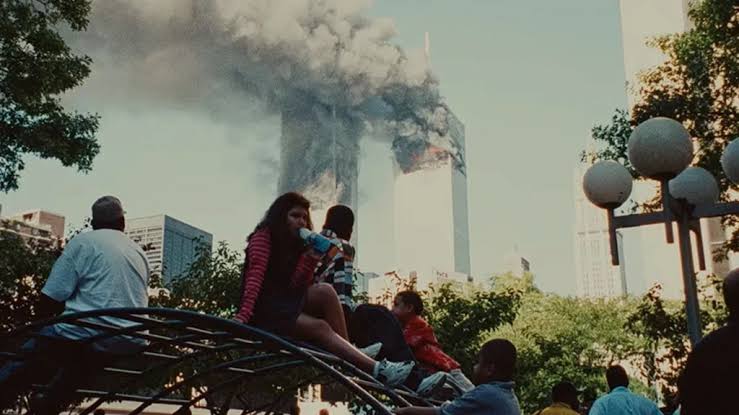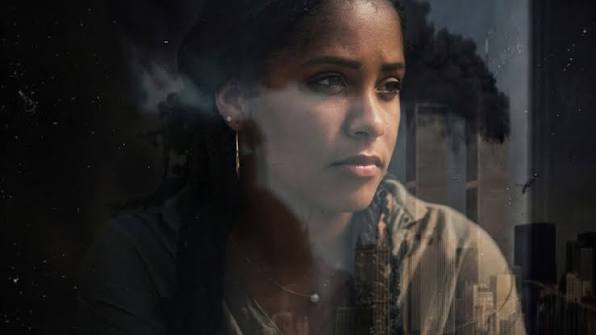
Netflix documentary “Turning Point: Generation 9/11” attempts to look over how things have changed for a particular generation during last 25 years since the 9/11 terror incident in 2001. Mainly because its main subject is too enormous to be packed into its 97-minute running time, the documentary merely scratches the surface of its main subject at times, but it is also difficult for us not to be touched by some powerful human moments presented in the documentary.
Just like many of you, I remember how much I was confused and shocked by what happened on that day in September 2001. Because it was the late night in South Korea at that time, I merely studied and then slept for the next day just like many others in my university campus, and I belatedly came to learn about the incident around the noon of the very next day. I initially thought it was just a minor accident, but it did not take much time for me to realize how serious it really was, and I could not help but feel numb or anxious at times even though I kept going in my academic daily life as usual.
Not so surprisingly, the best parts of the documentary mainly come from a bunch of various interviewees deeply affected by the 9/11 incident in one way or another. Their lives were changed forever by this dreadful incident, and a series of rough but undeniably visceral archival footage clips give us a closer look into how shocking and devastating the incident was to them and many others in US at that time. Yes, everyone was just mildly baffled when the first airplane crashed into one of the twin towers of the World Trade Center, but then there came the second attack around 20 minutes later, and things did change forever for not only US but also the whole world after that point.
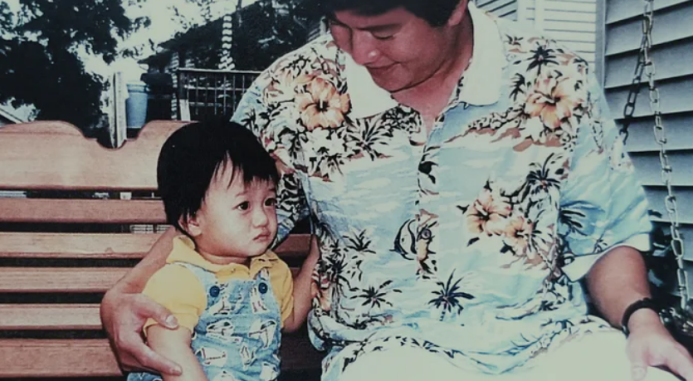
Several young interviewees in the documentary, many of whom were very young or born after the 9/11 incident, openly talk about how their lives have been shaped by that. In case of Laurel Homer, her father was the co-pilot of United 93, and she willingly tells us how much she has been haunted by her personal loss as well as the 9/11 incident. In case of An Nguyen, his South Vietnamese immigrant father happened to be working inside the Pentagon at that time, and he still remembers vividly when he saw his dear father for the last time in the early morning of that day.
As the whole country was shaking in shock, confusion, fear, and anger, the US government led by President George W. Bush instantly went all the way for the following War on Terror, which turned out to be far longer than expected while only causing a heap of ramifications to deal with. First, they invaded Afghanistan mainly for capturing Osama bin Laden, and then they went after Iraq on the false excuse of Weapons of Mass Destruction (MWD). As all of us know too well, this led to more chaos and violence while not making the country or the whole world safer at all. Even after bin Laden was finally located and then eliminated, chaos and violence continued to reign in Afghanistan and Iraq, and this unfortunately opened the door for something worse than Al-Qaeda.
Most of all, the American society has become much more oppressive to its own people. More power and authority were handed to the US government in the name of national security during next several years since the 9/11 incident, and the documentary sharply points out how this eventually led to the blatantly hostile policies on millions of immigrants in US, which have become all the worse under President Donald J. Trump and his equally deplorable cronies. In addition, the 9/11 incident also caused the alarming increase of conspiracy theory and political polarization, and this surely contributed a lot to Trump’s unbelievably shocking political rise in the middle of the 2010s.
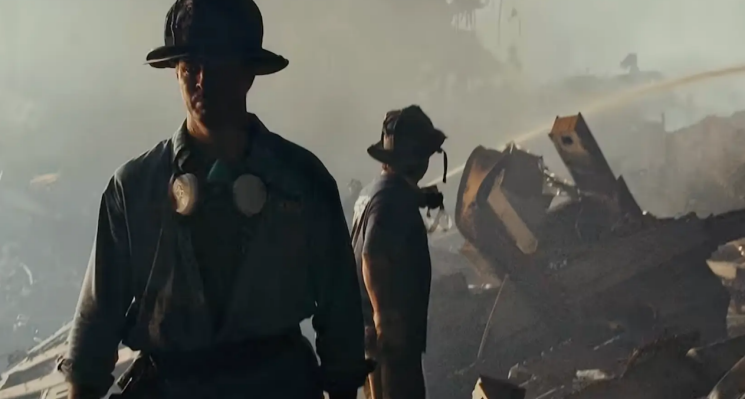
The second half of the documentary mainly focuses on what was supposed to be the end of the War on Terror. In 2021, the US government decided to withdraw its soldiers from Afghanistan, and everything rapidly crumbled as the Taliban army swiftly took over many parts of the country within a few days. Needless to say, Kabul, the capital of Afghanistan, and many of its citizens were soon thrown into fear and panic, and the documentary shows thousands of Afghanistan people desperately trying to get out of the country at a big airport under the control of the US Army.
I must say that it is often devastating to observe their sheer panic and desperation at that time. Many of them were blocked at a certain spot near the airport as frequently threatened by those Taliban soldiers, and, to make matters worse, the American soldiers guarding this spot were not so prepared for this immense emergency from the start.
Some of these soldiers, who incidentally represent another side of the 9/11 generation in US, frankly talk about that time in front of the camera, and it is apparent to us that they are still haunted by what they saw and experienced. When they joined the army, they all certainly believed that they were doing the right thing for their dear country, but now they have a lot of doubt and disillusionment about what they and many other American soldiers really fought for during last two decades.
In conclusion, “Turning Point: Generation 9/11”, which is directed by Brian Knappenberger, is engaging to some degree, but it would be more insightful and interesting if it were a docuseries instead just like several other Turning Point docuseries on Netflix. Sure, it is sincere and respectful about its main subject, but it does not enlighten me that much on the whole, and that is a bit disappointing for me.