
Documentary film “Oasis: Don’t Look Back in Anger”, which was released in South Korean theaters shortly after being premiered at the Venice International Film Festival, is a powerful experience you should not miss even if you are not so familiar with its main subject (FULL DISCLOSURE: I am one of such persons). Closely following the 2025 comeback tour of English rock band Oasis, the documentary mostly stays focused on the two contrasting figures at its center, and it is often touching to observe how their eventual reconciliation led to something very special for not only themselves but also many others out there.
They are Liam and Noel Gallagher, the two brothers who founded Oasis in their hometown Manchester, UK in 1991. The beginning of their band was pretty humble to say the least, but, thanks to their considerable talent, it did not take much time for Oasis to become one of the most popular rock bands in not only UK but also many countries around the world, and the early part of the documentary shows how popular their band really was during the 1990s.
However, due to their undeniable personality difference, Liam and Noel also constantly clashed with each other, and the increasingly tense conflicts between them certainly affected their band in one way or another. In the end, their collaboration was suddenly aborted in the middle of their another tour in 2009, and that seemed to be the irreversible end of one of the most successful British rock bands in the history.
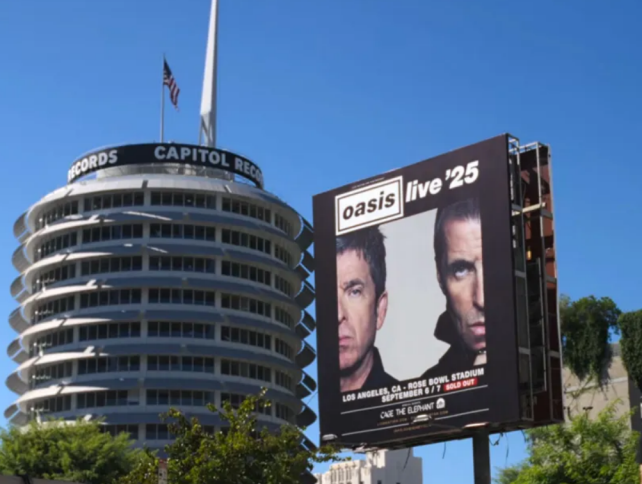
During next 15 years, Liam and Noel never tried to approach to each other in public or private, but both of them subsequently changed their mind. Regardless of how angry or bitter they were about each other, they somehow agreed to put their old band back in action, and that accordingly led them to the preparation for the worldwide tour in 2025.
Of course, working together again after many years of estrangement and resentment were not so easy for both Noel and Liam, and we get some uneasy amusement as observing how they and several other musicians including their old friend/colleague Paul “Bonehead” Arthurs did their rehearsals. While he begins the rehearsal first along with his colleagues, Noel is still not so sure about whether Liam will eventually come, because he knows too well how capricious Liam can be. Fortunately, Liam later arrives at the spot, but the remaining tension and awkwardness between him and Noel is palpable to us even though they tactfully maintain some distance between them throughout their rehearsal.
Nevertheless, they and their colleagues gradually work together more and more, and the documentary sometimes juxtaposes this compelling process with the interview recordings of Liam and Noel. While being quite frank about their personality difference, both of them often become reflective about their life and career, and there is real human poignancy from how they get closer to each other bit by bit via their common artistic passion.
Needless to say, the documentary also pays attention to how their comeback excited millions of their fans around the world, who certainly contributed a lot to the huge success of the 2025 tour of Oasis. Noel, Liam, and their band members were enthusiastically greeted by their fans right from the first day of their tour, and this surely galvanized them more as they did one concert after another around the world.
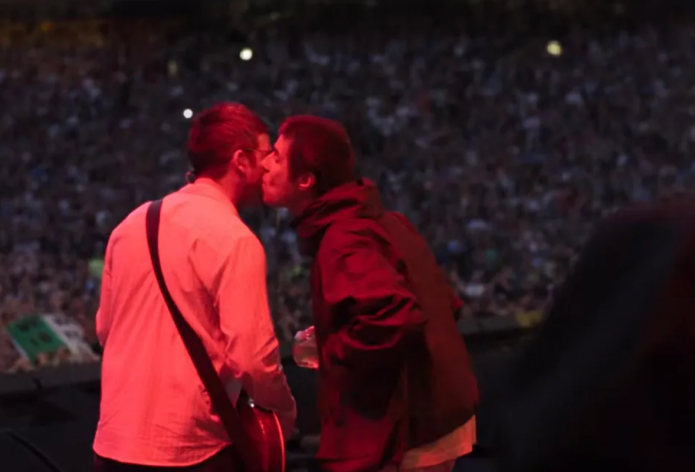
While the documentary surely shows a lot of enthralled audiences during the concerts, it becomes more interesting when it listens to a number of various Oasis fans around the world. To each of them, those very popular songs from Oasis mean a lot for their respective personal reasons, and they all have each own interesting story to tell. I was amused a bit as observing a Brazilian lady eagerly introducing a pet dog named after one of the band members, and I was also touched as listening to a South Korean “haenyeo” talking about how she got a lot of emotional comfort and support from those Oasis songs.
And it is also moving to watch how Liam and Noel became all the closer to each other during the tour of their band. As recognizing and accepting more of their many differences, they came to work together more harmoniously than before, and that accordingly brought more affection and respect from both sides. When we later see them doing an interview together, the mood between them feels quite more casual and relaxed compared to their strained first steps toward reconciliation, and their restored relationship becomes all the more evident to us when they show more appreciation and support to each other around the final concert of their tour.
Overall, “Oasis: Don’t Look Back in Anger” is one of the best music documentaries of this year, and directors Will Lovelace and Dylan Southern, who previously directed “Shut Up and Play the Hits” (2012) and “Meet Me in the Bathroom” (2022), did a stellar job of presenting their main subject on the basis of what was planned by co-producer/writer Steven Knight. Although the condition of a small screening room where I watched the documentary along with a few audiences including my boyfriend yesterday was not exactly ideal, I soon got interested and then excited within less than 30 minutes, and I also began to consider checking on several albums from Oasis later. This says a lot about how effective the documentary was to me, doesn’t it?