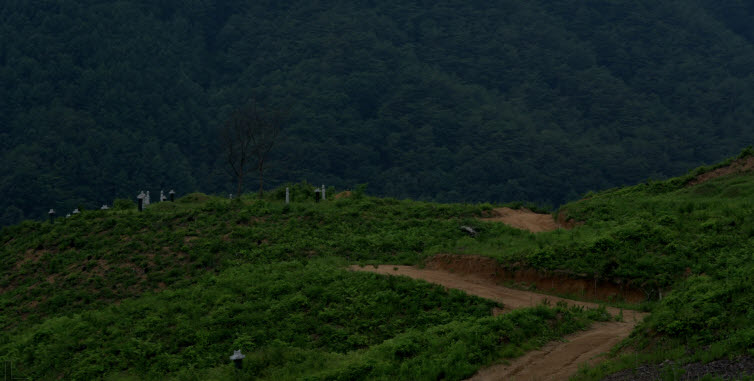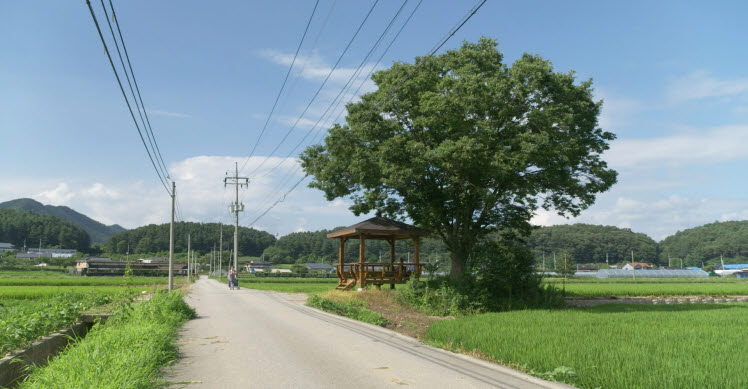
It may take some time for you to sense and then process what and how South Korean independent film “Last Summer” is about. Leisurely establishing its vividly realistic rural atmosphere across the screen, the movie gradually blurs the line between fiction and nonfiction for intriguing and then engaging us more, and you will feel more of the underlying sense of ongoing life around the people and locations shown in the film.
The movie, which follows several months in a little real-life rural village, begins with the opening shot showing the beginning of one hot summer day, and then we see several villagers who are about to work on their rice paddies. While the sun is shining, the temperature is pretty hot, and, as reflected by the title of the first chapter (“Drought”), there has not been much rain during last several weeks. Needless to say, the villagers are quite concerned about their rice paddies, but they can only hope that they will have some rain before they eventually run out of water supply.
Meanwhile, we get to know a bit about one of these villagers. He is a middle-aged widower living with his aging mother and his adult son, who has incidentally worked as a local public servant for a while. When we later see his son at his workplace, it is apparent that he does not like working there much, and we are not so surprised when he subsequently quits his job and then begins to help his father’s farming work instead.
While this naturally causes some tension in the family later in the story, the movie does not overplay this at all, and it simply observes the son’s uncertain situation at present. He surely knows that he must make a decision sooner or later, but he still does not know what to do next for his life, and his father patiently hopes for the best for the son.
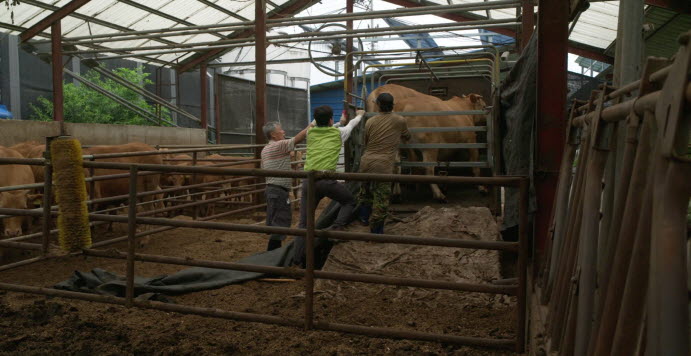
The son sometimes hangs around with a close friend of his, who seems to be quite content with his current status in contrast. Besides running a pet shop along with his wife, the son’s friend also works at a local cattle farm belonging to his father, and we often see him diligently working at his father’s farm. It looks like he genuinely cares about the cows in his father’s farm, but, as reflected by one sobering scene later in the story, the movie sharply recognizes that all these cows are bound to be sold or slaughtered someday.
As slowly building up its story and few main characters, the movie also pays attention to not only their little world but also its many other residents at times. Usually sticking to its calm and static position, the camera simply observes the people and places in the village, but then we gradually find ourselves immersed more in its mood and background. While appreciating a series of crisp landscape shots, we come to focus more on whatever can be glimpsed from the occasional individual moments from the villagers, which often approach to the considerable level of verisimilitude observed from good documentary film.
Not so surprisingly, director/writer/co-producer/editor Choi Seung-woo, who incidentally made a feature film debut here, actually had a bunch of real-life villagers play the minor supporting characters in his movie. As far as I could observe from the film, they all look natural and spontaneous while just playing more or less than themselves on the screen, and they are also mixed fairly well with several professional performers in the film playing the main characters in the film, who are not showy at all in their low-key acting.
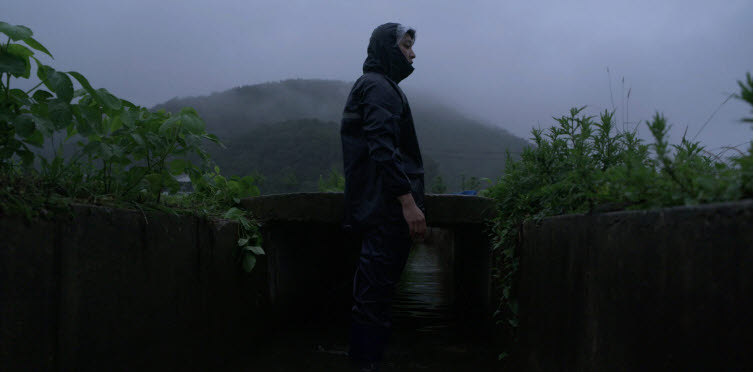
Around the end of the second chapter (“Rainy Season”), the movie takes a little unexpected turn, but it still sticks to its phlegmatic tone even at this point while showing more sensitivity and thoughtfulness than before. At one point, the camera just looks at the son merely cutting his toenails inside his family house for a while, but then we somehow sense some change inside him, and the movie did a splendid job of conveying that to us via a rather simple but undeniably effective visual touch.
And we observe more of how life keeps going in the village as usual. When the movie eventually arrives at its final chapter (“Harvest”), we cannot help but notice how the village looks different with its rice paddies turning yellow day by day, and you will also reflect more on what one farmer says around the end of the movie. Sure, it is one of those familiar words on farming, but we cannot possibly agree to that more.
In conclusion, “Last Summer” is commendable for its subtle storytelling and sublime mood and details to be admired and appreciated. Although it was premiered in the Busan International Film Festival in 2023, the movie had to wait for no less than three years before it is eventually shown to me and other South Korean audiences in this year, and Choi already showed his next feature film at the Busan International Film Festival in last year (He also made a short documentary about revisiting the village and its residents shown in “Last Summer”, by the way). I have seen neither of his next two works yet, but I can tell you at least that he is another new promising South Korean filmmaker to watch, and I will certainly have some expectation on his burgeoning filmmaking career.