The Image Book (2018) ☆☆(2/4): Godard still rambled and babbled even at the end

I guess I am not an audience for whatever Jean-Luc Godard did during his last two decades. Sure, he has occupied a big and irreplaceable spot in the history of cinema along with those legendary filmmakers of the French New Wave during the 1960s, and he did made several masterworks such as “Breathless” (1960) and “Vivre sa vie” (1962), but then he somehow became far less cool and interesting as trying to be cool as before during next several decades, and his later years look rather pathetic compared to how some of his notable colleagues such as Agnès Varda actively lived and worked to the end while he made himself all the more inaccessible and impenetrable with his perpetual self-absorbed attitude.

His late feature film “The Image Book”, which received the “Special Palme d’Or” at the 2018 Cannes Film Festival simply because, in my inconsequential opinion, he was Godard, will definitely frustrate and annoy you a lot if you dislike “Film Socialisme” (2010) and “Goodbye to Language” (2014) as much as I did. As he did in these two previous works of his, he made a supposedly cerebral video essay consisting of many different bits of sound and image, but, seriously, do all of these stuffs actually gel together to mean or signify anything? I still have no idea even at present, so I will just simply describe what I observed and felt when I tried to give it another chance today.

What I noticed first is that the film surely amasses lots of excerpts from a bunch of various films ranging from “Vertigo” (1958) and “Seven Samurai” (1954) to “Johnny Guitar” (1954) and “Salò, or the 120 Days of Sodom”. Many of these excerpts are often accompanied with baffling intertitles or Godard’s aimless ramblings on many different subjects such as the history of cinema or the Middle East politics, and the result may look interesting for a while, but I eventually found it as frustrating as James Joyce’s “Finnegans Wake”. One of my online friends once argued that Joyce actually made a fun of critics and reader in that oddly jumbled work, and now I come to suspect more that Godard’s later works during his last several decades were in fact a sort of one-upmanship jokes on critics and audiences out there.

Anyway, the last part of the film gets a bit more interesting when Godard seems to focus more on not only the Middle East politics but also the numerous obscure Middle East films out there, but you may be still as baffled as before. Sure, it is nice to get some glimpses into the history of Middle East cinema, but I doubt whether this will actually enlighten you to considerable degree, though it will be probably more appreciated by Middle East critics and audiences because of their local background knowledge.

Godard might have been sincerely passionate about Middle East cinema and the Middle East politics, but he somehow gives me the impression of a haughty white European intellectual who has nothing but lots of time and privilege to waste. Sure, he did not have much influence on the Middle East politics, but I must point out that he could have been as active as, say, Martin Scorsese, who, as many of you know, has always been not only very passionate but also quite active about the restoration and preservation of many different movies around the world.

In case of his rambling musing on the Middle East societies, this feels rather condescending at times. Especially when he says the Middle East is more philosophical than the West, he makes the same racially insensitive mistake which hundreds of western intellectuals made on many non-Western countries for more than a century, and whatever he shot along with his cinematographer/co-editor Fabrice Aragno in the Middle East areas do not help much even while glimmering in striking visual quality from time to time.

Even in the end, Godard keep rambling without looking like actually going anywhere. As a matter of fact, the most interesting moment in the film is when Godard seems to sound rather fragile in the middle of another rambling of his a few minutes before the film is finally over, but you cannot be entirely sure about whether he really shows a little more of himself and his declining health to us, and you will not be that surprised when the movie eventually ends with the same image shown at the very beginning.

On the whole, “The Image Book” does not leave much impression on me as only reminding me again of how Godard seemed to be tumbling down to nowhere during his last two decades. After enthusiastically devouring his works during the 1960-70s, I instantly moved onto “In Praise of Love” (2001) and “Notre musique” (2004) as your average young passionate cinephile in the early 2000s, but I only became quite disillusioned instead, and I later agreed with one older cinephile wholeheartedly that Godard was not making cinema anymore.

Even at this moment, I still think so, and the hollow impression of “The Image Book” somehow made me remember more of what a sh*tty prick he was to Varda in Varda’s Oscar-nominated documentary “Faces Places” (2017). Instead of contributing a bit to his old colleague’s little precious project, he deliberately sabotaged her project in addition to blatantly hurting her feelings a lot, and that has been more memorable to me than whatever he did during his last two decades. He was indeed one of the greatest filmmakers in the history of cinema, but, let’s face it, he was not that good as a person in real life, and I personally think what he cruelly did to Varda will be remembered a lot more than his last several works.

Posted in Movies | Tagged , | Leave a comment

The Dream Songs (2022) ☆☆☆1/2(3.5/4): Two girls on one day

The emotional power of South Korean film “The Dream Songs” mainly depends on how much you know about a certain disastrous incident which shook the whole South Korean society on April 16th, 2014. I think the story itself will still come to you as a touchingly intimate coming-of-age tale even if you do not know that much, but, considering its understandable restraint on what it is really about, you should do some homework in advance for feeling and understanding more of how many South Korean audiences will respond to the movie.

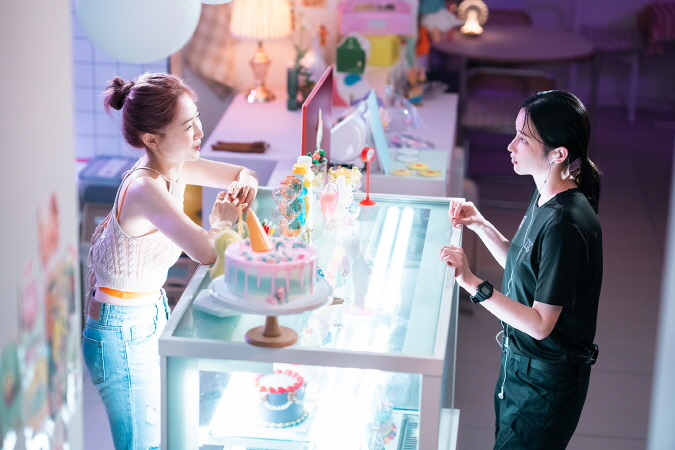
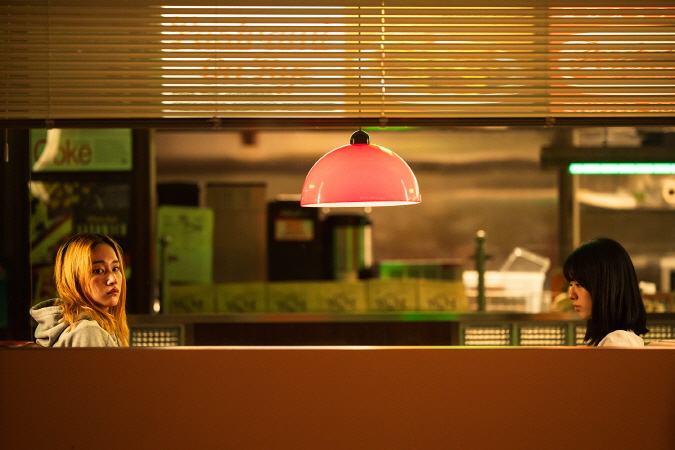
The story mainly revolves around the relationship between two high school girls named Se-mi (Park Hye-soo) and Ha-eun (Kim Si-eun), and the movie opens with Se-mi waking up from a brief sleep she had in the middle of her another school day. While not exactly remembering the details of her dream, Se-mi cannot help but worry about Ha-eun as her best friend, and she decides to leave the school earlier for seeing Ha-eun, who happens to be staying at a local hospital for a minor physical injury of hers.

When Se-mi comes to see Ha-eun at the local hospital, Ha-eun is rather discontent for an understandable reason. Many of her schoolmates will have an excursion trip to Jeju Island on the very next day, but she cannot go due to not only her current physical injury but also not having enough money for the excursion trip. Nevertheless, Se-mi really wants Ha-eun to join her and others, so they decide to get the money via selling a used camcorder belonging to Ha-eun’s father.

As they try to sell this camcorder, the movie leisurely move along with them for a while, but we seldom get bored because the screenplay by director Cho Hyun-chul, who was mainly known for his acting career before making a feature film debut here, and his co-writer Jung Mi-young provides a series of authentic dialogues to be appreciated. As far as I can see, Se-mi and Ha-eun really talk like many ordinary South Korean high school girls in real life and, not so surprisingly, Cho actually observed a lot of how high school girls talk as working at a private academy for a while.

The mood between Se-mi and Ha-eun are casual and playful at first, but we gradually sense a certain degree of strain beneath their interactions. It becomes more apparent to us that Se-mi wants to be more than Ha-eun’s best friend, but she does not know how to reveal her growing romantic feelings to Ha-eun, and she only finds herself more agitated by whatever Ha-eun has not told her yet. It seems that Ha-eun has been involved with some older lad, and Se-mi cannot help but become more jealous when she notices a nickname written on one page of Ha-eun’s little notebook. Is it possible that this nickname is for someone with whom Ha-eun has been currently involved?

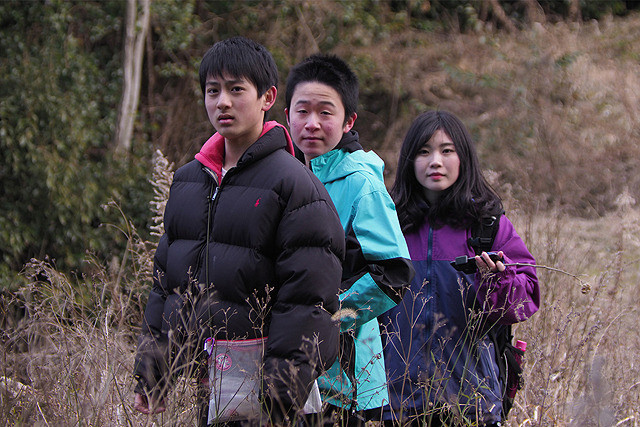
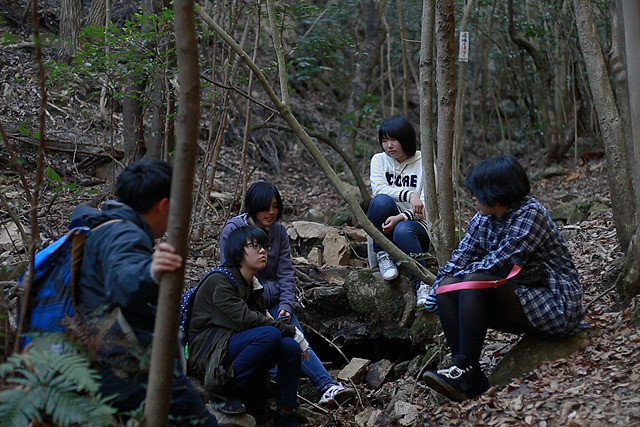
Things become a little more serious when Se-mi and Ha-eun eventually argue a lot with each other for rather petty matters, and then Ha-eun is gone missing for no apparent reason. Se-mi and several other friends of theirs subsequently search for any clue to Ha-eun’s whereabouts, and Se-mi becomes more suspicious when it looks like Ha-eun has been really hiding something from Se-mi.

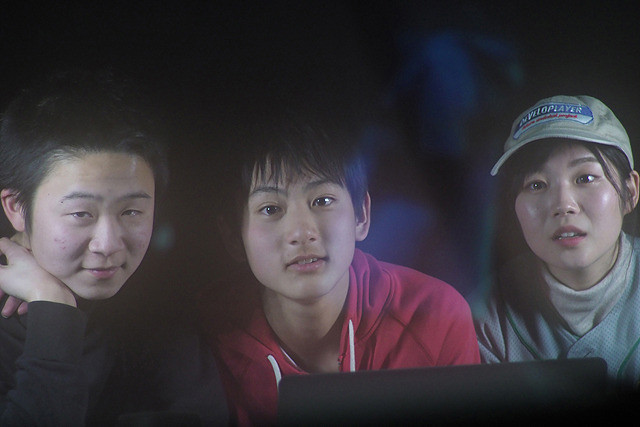
The movie does not hurry itself as taking more time in character development, and we get to know and feel more of Se-mi’s romantic feelings toward Ha-eun along the story. At one point in the middle of the story, she lets out some of her personal feelings when she and two friends drop by a karaoke booth, and her deeply emotional singing is soon accompanied with a little poignant fantasy moment projected on the monitor of the karaoke machine.

In the meantime, Se-mi also comes to have some emotional maturation as coming to learn more about not only Ha-eun but also herself. As one of her friends sharply points out later in the film, she can be quite self-absorbed at times, and she belatedly come to realize that her friends including Ha-eun have each own issue to deal with just like her.

As depicting the story and characters as realistically as possible, the movie sometimes catches us off guard via the sudden insertions of unexpected story elements. There is a recurring image of a clock showing the same time, and then there is a seemingly coincidental subplot involved with a missing dog, which comes to resonate a lot with Ha-eun’s dead pet dog as well as a little parrot belonging to Se-mi.

Most of all, the movie never loses its focus on the relationship between Se-mi and Ha-eun, and the eventual climax of their drama is quite moving with lots of emotional intensity. Even at this narrative point, the movie wisely restrains itself despite shedding some tears as required, and I particularly appreciate how it deftly lays out a subtle mournful undertone in the background during one key scene between Se-mi and Ha-eun around the end of the story.

As the center of the story, Park Hye-soo and Kim Si-eun surely give two of the best South Korean movie performances of this year. Right from the beginning, they effortlessly click with each other as movingly illustrating their characters’ emotional bond, and I enjoy how their unadorned natural acting is flawlessly mixed along with several other female performers who play Se-mi and Ha-eun’s schoolmates in the film. Although he appears in only one scene, Park Jeong-min, who has steadily advanced since his breakout supporting turn in “Bleak Night” (2010), ably steals the scene as he recently did in “Dr. Cheon and Lost Talisman” (2023), and Park Won-sang briefly appears as Se-mi’s father.

In conclusion, “The Dream Songs” may feel a bit opaque to you if you are not very familiar with the main subject hidden under the surface, but it is still a very good adolescent drama to be admire for the sensitive and thoughtful handling of its story and characters. In short, this is one of the best South Korean films of this year, and I sincerely urge you to check it out when you get a chance to watch it.

Sidenote: If you are not familiar with that real-life incident, please check out this Oscar-nominated South Korean documentary.

Posted in Movies | Tagged , , , , | 1 Comment

A Table for Two (2022) ☆☆☆(3/4): Their honest conversation on anorexia

South Korean documentary film “A Table for Two” plainly focuses on one complicated mother and daughter relationship exacerbated further by an unfortunate case of mental disorder. As its two main figures reflect more on how things went wrong between them during last several years, the documentary gradually reveals their old emotional pains and regrets, and it is poignant to see how they eventually become ready to move on as facing their complex past with more honesty and understanding.

At first, the documentary introduces us to a young woman named Chae-young, and she is asked about how she has been during several recent years. She seems fairly okay while living her own life for herself, but then we come to learn that she actually suffered a serious case of anorexia during her adolescent years. As a matter of fact, her case was actually reported on TV at that time, and her mother Sang-ok did not know how to deal with her daughter’s ongoing problem before eventually sending Chae-yeong to a big mental hospital in Seoul.

10 years later, Chae-yeong is fully recovered from her serious eating disorder, but we come to sense considerable estrangement between her and her mother when she later comes to a remote rural area where her mother has worked and lived as a schoolteacher for many years. Chae-yeong is still not that comfortable to be around her mother due to how her mother was unintentionally insensitive to her eating disorder during that time, and Sang-ok has thought a lot about how she could have done more for her daughter, though she still does not entirely grasp why and how her daughter suffered during that time.

When Chae-yeong later moves to Australia for working there for a while, Sang-ok comes to muse more on her rather flawed relationship with her daughter in the past. After throwing herself into numerous left-wing activities during the 1980s, she came to have her daughter shortly after marrying her husband (The documentary does not tell much about him, by the way), but then she worked a lot outside for supporting herself and her daughter without him, and it is suggested that this was the origin of their longtime emotional distance.

Sang-ok did not hesitate at all when she received a job offer from the school in that rural area, and this environmental change led to more negative effects on Chae-yeong’s young mind. Like any young girl around her age, she desired some attention and affection from her mother, but Sang-ok was usually busy with handling her school students, and she and her daughter also did not have much private space for themselves as living inside the school dormitory.

Their following gloomy period associated with Chae-yeong’s anorexia is presented mainly via her personal diary and several simple sketches drawn by her during that time, and what these records convey to us is pretty harrowing to say the least. Just because she believed anorexia was simply a matter of willpower, Sang-ok inadvertently hurt her daughter’s feelings in one way or another, and it is evident that Chae-yeong is still reeling from those painful memories with suppressed anger and resentment.

After coming to learn much more about anorexia, Sang-ok naturally came to feel lots of guilt and regret. She has sincerely tried to understand how she came to hurt her daughter, and she comes to think more about her estranged relationship with her mother, which might be another main factor in her problematic relationship with her daughter. As she frankly admits at one point, she was not loved that much by her mother, and, to our little surprise, her mother is later revealed to have her own mental issues not so different from what Chae-yeong suffered.

Several months later, Chae-yeong returns to South Korea due to the COVID-19 pandemic, and then she stays in her mother’s residence for some time. Again, the mood feels rather strained between them, but they slowly come to open themselves more to each other during one long private conversation, and that eventually culminates to a somber but undeniably cathartic moment of understanding and acceptance between them.

While steadily and closely following both Chae-yeong and Sang-ok, director Kim Bo-ram, who came to know and learn about them as doing some research on anorexia after making her acclaimed documentary “For Vagina’s Sake” (2017), presents their achingly human aspects with enough consideration and respect. As the camera often stays around them without any interference, the documentary becomes more immersed in their personal circumstance, and we accordingly pay more attention to their emotional interactions full of small ups and downs.

In the end, Chae-yeong and Sang-ok come to accept and understand more of not only their private issues but also themselves, and the mood becomes more relaxed and comfortable as they later prepare together for a little traditional ceremony for Sang-ok’s mother. In addition, Sang-ok’s little pet cat briefly steals the show during this moment, and I will not deny that I was tickled a bit as observing this cute cat’s little naughty act on the screen.

Overall, “A Table for Two” is another modest but engaging work from Kim, and it may be quite enlightening for you if you are not that familiar with anorexia. Just like mental depression, anorexia surely needs lots of help, support, and understanding, and, considering how mental illness has been often disregarded and stigmatized in the South Korean society, the documentary surely deserves more audiences in my humble opinion.

Posted in Movies | Tagged , , , , , | 1 Comment

The Killer (2023) ☆☆☆(3/4): “Stick to your plan”

David Fincher’s new movie “The Killer”, which was released in South Korean theaters in this week before being released on Netflix in a few weeks later, is a thriller as cold, ruthless, and efficient as you can expect from him. Mainly driven by the strong presence of its lead actor, the movie smoothly and precisely moves from one narrative point to another, and you can clearly discern that Fincher has some twisted fun with that while keeping everything as straight as possible on the surface.

The titular character, who uses a number of different aliases throughout the film, is played Michael Fassbender, who has been always good at playing intense and unpleasant characters as shown from his utterly uncompromising performance in Steve McQueen’s “Shame” (2011). His coldly slick appearance is a perfect match for Fincher’s dry and detached approach to the story and characters, and his phlegmatic narration quickly sets the tone as his character meticulously prepares for his latest job step by step.

As your typical professional, Fassbender’s killer character has been very proud and dedicated while also being quite aloof about the heinous nature of his profession. He has killed lots of people, but it goes without saying that everything is strictly business for him from the beginning to the end, and he even justifies his work as regarding himself as a skillful predator around the top of the Darwinian food chain inside the human society.

“Stick to your plan” is his main motto, and we observe how the killer is quite calm and careful even at the very last step of his latest job. He makes sure that everything is prepared well for him without any problem, and now all he will have to do is simply focusing on his deadly tunnel vision for a while and then pulling the trigger once the right moment comes at last.

However, things suddenly go quite wrong at the very last minute, and now the killer has to face the consequence of his disastrous failure, but, again, he does not lose any of his phlegmatically controlled attitude. First, he swiftly gets away from the scene while not drawing much attention, and then he quickly leaves for a little private place of his in the Dominican Republic, where he has resided along with his girlfriend.

Of course, the situation turns out to be much worse than expected. The client behind the killer’s latest job wants to clean up the circumstance as much as possible, and that includes eliminating the killer himself, and the killer eventually decides to do some counterattack for his safety and survival. He tracks down a number of figures associated with his current trouble one by one, and it goes without saying that he will not be that nice to these persons in question.

Some of these figures are played by notable performers such as Charles Parnell, Arliss Howard, and Tilda Swinton, and they surely have some fun with playing against Fassbender’s unforgivingly unflappable position. In case of a supporting character played by Kerry O’Malley, she is quite scared at first, but then she makes a practical deal with the killer even though she will definitely be killed in one way or another, and the killer shows her a little mercy later.

In case of the part involved with a literally brutal figure played by New Zealander actor/stuntman Sala Baker, Fincher goes all the way for intensely remorseless violence, and he demonstrates to us that he can make a pretty good John Wick movie if he wants. Although the physical action during this part is mainly unfolded in a rather dim space, every punch and blow is accompanied with considerable physical impact, and you can see Fassbender and Baker really throwing themselves into action without any hesitation.

Even as the screenplay by Andrew Kevin Walker, which is based on the French graphic novel series of the same name by Alexis “Matz” Nolent and Luc Jacaman, arrives at its expected final chapter, the movie firmly holds our attention as before thanks to Fincher and his first-rate crew members. He and his cinematographer Erik Messerschmidt, who won an Oscar for Fincher’s previous Netflix film “Mank” (2020), deftly brings a subtle but constant sense of uneasiness to the screen, and the editing by Kirk Baxter, who won two Oscars along with Angus Wall for Fincher’s two previous films “The Social Network” (2010) and “The Girl with the Dragon Tattoo” (2011), steadily maintains the narrative momentum. While the electronic score by Trent Reznor and Atticus Ross, who also won an Oscar for “The Social Network”, often unnerves us, a number of songs from English rock band The Smiths are effectively utilized during several key moments in the movie, and you may look for these songs after watching the film.

Overall, “The Killer” looks relatively modest compared to Fincher’s more ambitious works such as “The Social Network” and “Mank”, but it is inarguably his another distinctive work to be cherished for the mood, storytelling, and performance. As he previously did in “Panic Room” (2002), he seems to want to do some casual exercise before whatever he will do next, but the result is often skillful enough to earn our admiration, and it is certainly one of better offerings from Netflix during this year. Just like the hero of his film, he does stick to his plan, and the result is pretty rewarding for us.

Posted in Movies | Tagged , , | 1 Comment

Goodbye to Language (2014) ☆☆1/2(2.5/4): Godard rambles and babbles again…

There was a time when Jean-Luc Godard films were pretty cool. He became one of the prominent members of the French New Wave during the 1960s thanks to his first two feature films “Breathless” and “Vivre sa vie” (1962), and he made a series of interesting films after these two immortal masterpieces during next 10 years, but then his subsequent works began to look quite opaque and pretentious in my inconsequential opinion. To be frank with you, many works of his later career years did not click me that well, and my growing disillusionment with him has grown more during last two decades after I was quite annoyed and frustrated with “In Praise of Love” (2001) and “Notre musique” (2004).

While he seemed to hit the bottom in case of “Film Socialisme” (2010), Godard was embraced by many reviewers and critics when he came back with “Goodbye to Language”, which won the Jury Prize along with Xavier Dolan’s “Mommy” (2014) when it was premiered at the 2014 Cannes Film Festival. It looked like he tried some interesting stuffs including 3D effects, but, alas, the movie itself is not different from many of his baffling previous works, and I remained distant and dissatisfied throughout its rather shorting running time (69 minutes) when I finally watched it today.

As many of you know, it is pretty futile to explain whatever Godard attempted here, because he constantly makes his audiences baffled and disoriented via many different bits of images and sounds. Many scenes shot by his co-editor Fabrice Argano are often accompanied with deliberate aural/visual manipulations, and that is the main reason why we become more distant to what seems to be the main narrative line of the film. While it sometimes focuses on a young woman and her romantic relationship with some guy, we never get to know them much because, as you already expected, their lines mostly consisting of Godard’s philosophical/political babblings which do not look like going anywhere in my trivial opinion. Oh, Godard surely has lots of various stuffs to say here and there throughout the film, but many of his statements do not mix well together much without any sense of coherence we can hold onto.

Probably that is probably how the world seemed to be more chaotic and incomprehensible to him during the last years of his life, which was incidentally ended when he died in last year. Yes, he surely looked like a cool filmmaker/intellectual during his prime period, but then he became far less cool than before, and his later films may be the artistic reflection of his cranky intellectual mind trying to make any sense of how the world was drifted away from his grasp day by day.

And that is probably why the recurring image of the movie is a big ship ready to depart and sail away to somewhere. The camera simply observes the ship from the distance, and we are again flabbergasted as wondering what exactly Godard intends here, but this recurring image of the film feels a bit more melancholic as I reflect more on what exactly I watched from the film. Did Godard come to feel that he finally had to get off from a ship called life?

In case of the 3D effects in the movie, as far as I could observe from the 2D version, they look less fancy after the end of another peak period of 3D effect in the history of cinema, but we can see that Godard has a little naughty fun with what he can do with 3D effect for realizing his artistic vision. The frequently superimposed intertitles of the film are surely intended for 3D, and there are a number of amusing visual moments which may look more interesting if you watch the 3D version.

I forgot to tell you that there is the other memorable thing in the film, and that is none other than Godard’s pet dog Roxy, which deservedly received the Prix Special Palm Dog Award at the Cannes Film Festival. As a matter of fact, my interest was more increased whenever the camera focused on Roxy, and now I wonder whether the movie was actually intended as a sincere love letter to this likable dog. While it still makes one hollow statement after another even during Roxy’s scenes, I sensed a bit of Godard’s affection toward his dog, and that made me less grouchy about the film for a while in fact.

On the whole, “Goodbye to Language” is not a totally boring experience, but it still feels like merely existing as a homework for many cinephiles out there. Yes, the movie has been analyzed and interpreted a lot since it came out, and I understand why it has excited and fascinated many of critics and reviewers during last several years, but I am still not so impressed while only coldly admiring how Godard tried to go his own way till his last film “The Image Book” (2018). Several years ago, I heard from a close friend of mind that the movie did not generate much excitement among the audiences when it happened to be shown at the beginning of the 2015 Ebertfest, and now I really want to tell them that they are not alone at all.

Anyway, “Goodbye to Language” is worthwhile to watch to some degree if you are a serious cinephile like me, and you may come to see more than I did. While he was one of the greatest filmmakers in the movie history, I bet that he will be remembered more for “Breathless” and his early films instead of those supposedly cerebral cinematic doodlings in his later years, and I am already considering revisiting these early films of his sooner or later.

Posted in Movies | Tagged , | Leave a comment

The Boy and the Heron (2023) ☆☆☆(3/4): Miyazaki returns…

Hayao Miyazaki’s much-anticipated comeback animation film “The Boy and the Heron” feels more like an exercise than an entertainment. It is surely filled with lots of Miyazaki’s personal style and touches to admire, and there are certainly a number of powerful visual moments to linger on your mind. However, is it actually as awesome and glorious as we have wished since the announcement of his comeback? Folks, I must confess that my mind was not exactly enthralled during my viewing even while my eyes observed its visual beauty with lots of respect and admiration.

Like his previous animation film “The Wind Rises” (2013), which was incidentally supposed to be his final work at that time, “The Boy and the Heron” is connected with the World War II, and, in contrast to the rather mushy attitude of “The Wind Rises”, it really seems to try to face the reality of the wartime during the opening part. Not long after we are introduced to its young hero Mahito (voiced by Soma Santoki), the film strikes us hard with an air raid scene which may remind you of the similar scenes in Isao Takahata’s great animation film “Graves of the Fireflies” (1988), and we can really sense here how much Mahito is devastated as facing his mother’s unfortunate death.

One year later, Mahito and his father move to a rural area which is also his mother’s hometown. His father is going to manage an arms factory there, and he also recently married his dead wife’s sister Natsuko (voiced by Yoshino Kimura). Natsuko’s close physical resemblance to Mahito’s mother understandably makes Mahito rather uncomfortable right from when she greets Mahito and his father at a local train station, and Mahito is not so pleased to learn that Natsuko is soon going to give birth to another child of his father.

Anyway, Natsuko tries to do as much as she can as Mahito’s aunt/stepmother. She takes him to a big family manor mainly consisting of an older traditional house and a western house built right behind it, and Mahito gets a room in the latter which once belonged to his mother. In addition, the employees of the manor including seven old (and very wrinkled) maids of the manor, who are somehow reminiscent of those seven dwarfs in “Snow White and the Seven Dwarfs” (1937), are mostly welcoming to Mahito, and it looks like he will eventually get accustomed to this new environment of his.

However, Mahito is still haunted by the memories of his mother’s death, and then he begins to hear and see strange things around the manor. There is a mysterious abandoned spot involved with one prominent ancestor in the family, and the old maids are willing to tell Mahito more about how strange and weird this spot really is. In addition, there is also a big heron which can somehow speak to Mahito, and this heron often taunts him with the possibility of meeting his dead mother somewhere beyond the world.

When Natsuko is suddenly gone missing later, things get more interesting for us. Along with one of the old maids, who can be called “Grumpy” in my humble opinion, Mahito looks for Natsuko, and then they come upon that mysterious spot which turns out to be the portal toward a hidden fantasy world. Shortly after confronting that heron, Mahito and the old maid are suddenly sucked into this fantasy world, and then Mahito finds himself alone and lost without anyone to help him.

Fortunately, there soon comes a young feisty woman for his rescue, and Mahito gets to know this strange fantasy world a bit while getting some help from this young lady. At one point, you may wince a lot as watching them trying to gut a big grotesque fish they caught from the sea, and then you will be delighted as a bunch of small white globular entities floating one by one to the sky, which may remind you of that little enchanting moment of numerous tiny forest creatures in “Princess Mononoke” (1997).

Because of its leisurely narrative pacing and rather thin characterization, you may wish the film developed and pushed the story and characters more, but Miyazaki seems to be simply enjoying himself without much concern or pressure, and he demonstrates here that he has not lost any of his skill and talent yet. As before, I often marvel at all the painstaking details accompanying his distinctive cell animation style, and I was also quite tickled by his wry black humor associated with those big talking parrots appearing later in the story.

However, the film somehow did not click with me well in terms of story and characters. While Mahito merely functions as a blank canvass for more colorful figures in the story, many of the main characters in the story are no more than archetypes without much human personality or depth, and that is the main reason why its eventual climactic party is not as emotionally resonating as Miyazaki intends. In addition, the historical background of the story is regrettably pushed aside as Miyazaki focuses more on fantasy and other metaphysical stuffs in the story, and now I begin to wonder whether Miyazaki is an artist too mild and gentle to handle the grim reality of the World War II in contrast to Takahata, who did not pull any punch at all in “Grave of the Fireflies”.

To my little dissatisfaction, “The Boy and the Heron”, which is released as “How Do You Live?” in Japan and South Korea, is another minor footnote after “The Wind Rises”, but I still recommend it for the undeniable artistry in its top-notch visual qualities. As many of you know, Miyazaki is already working on his next project, and I sincerely hope that he will entertain me more in the next time.
Posted in Movies | Tagged , , , | 2 Comments

Past Lives (2023) ☆☆☆1/2(3.5/4): Scenes from an “In-yun”

Good human drama films can not only interest but also energize me sometimes, and Celine Song’s remarkable debut feature film “Past Lives” is one of such fantastic examples. When I watched it, I was not so sure about whether I could watch one more film due to some physical exhaustion at that time, but, what do you know, I soon found myself thoroughly captivated by its exquisite handling of story, mood, and characters, and I was quite touched as observing how effortlessly and powerfully it pulls out a sublime finale to remember in the end.

After the opening part which introduces its three main characters, the movie goes back to 24 years ago. Na Young (Seung Ah Moon) and Hae Sung (Seung Min Yim) were two elementary school kids living in Seoul, South Korea, and their first scene succinctly establishes how much they have been close to each other. Although they often fiercely compete with each other in school examinations, Hae Sung wants to be more than a classmate to Na Young, and it looks like the feelings are mutual between him and Na Young as they are returning together after another day at their school.

However, as subtly reflected by the last shot of this little sweet moment, they are soon going to be separated from each other. Na Young’s parents decides to immigrate to Canada probably for making a new start for them as well as their kids, and Na Young does not like this change much as her feelings toward Hae Sugn gradually grow. At least, her mother understands this well, so she lets her daughter spend some time with Hae Sung before eventually leaving South Korea with her family.

That seems to be the end of a little romance between Na Young and Hae Sung, but they have an accidental encounter between them 12 years later thanks to Facebook. Now Na Young becomes Nora (Greta Lee), and she has been aspiring to become a playwright in New York City. In case of Hae Sung, now played by Teo Yoo from this point, he has been studying at a college in Seoul for becoming an engineer someday, and he is certainly delighted when his online search for his old childhood sweetheart is unexpectedly succeeded.

For a while, Nora and Hae Sung frequently talk with each other via online communication services, but, not so surprisingly, their rekindled feelings are gradually burdened by the distance between them. While Nora is more occupied with her future playwriting career, Hae Sung also has to pay more attention to his study and future professional career, and there eventually comes a point where they agree to have some period of separation.

That seems to be the end of their second romance, but we see how much Nora and Hae Sung are connected with each other even 12 years later. Now Nora is happily married with a writer dude she met a rural retreat for writers, and it is clear that she and her husband have lots of genuine love and understanding between them, but she cannot help but excited when Hae Sung is going to come to New York City for meeting her again.

As Nora and Hae Sung meet and then speak with each other, Song’s screenplay makes a delicate balancing act between romance and nostalgia. Nora and Hae Sung become more aware of their old feelings as they enjoy more of each other’s company, but they also clearly recognize how things have changed between them during last 24 years. As Hae Sung phlegmatically points out later in the story, Nora is now quite different from a girl he used to know, though, as Nora points out in response, that girl remains as a shared memory between them.

Nevertheless, they still feel attracted to each other as sensing more of their emotional connection, which may be associated with what Koreans often call “In-yun”. “In-yun” means a fateful connection in the past lives of two different people, and, as Nora casually explains to her soon-to-be husband at one point, it is just a common term often used by Korean guys trying to seduce girls, but she and Hae Sung cannot help but wonder about whether they are actually soulmates bound together via “In-yun” – and how things could have turned out differently if Nora and her family had not left South Korea.

Without making any attempt to push its two main characters into conventional romantic plot, the movie confidently saunters from one point to another along with them, and Song and her crew members including cinematographer Shabier Kirchner often tinge the screen with subdued but lasting visual beauty. I like how they vividly presents Seoul during the late 1990s with authentic mood and details to be noticed by South Korean audiences like me, and the result is good enough to be mistaken for being made by a South Korean filmmaker. In case of the New York City part of the film, it looks plain and unadorned on the surface, there are a number of wonderful poetic moments to be appreciated, and it surely demonstrates Song’s considerable filmmaking skill and talent.

Above all, Song’s two lead performers are absolutely terrific in their low-key natural performance. Greta Lee gracefully embodies her character’s complicated emotional journey without signifying too much on whatever is going behind her gentle appearance, and Teo Yoo, who recently made a brief appearance in Park Chan-wook’s “Decision to Leave” (2022), is believable as her equal match, though, as many of my South Korean acquaintances pointed out, Hae-sung is too good to be true at times considering thousands of deplorably misogynistic free-range male rudes out there in the South Korean society. As Nora’s decent husband, John Magaro dutifully hangs around the fringe of the story without drawing too much attention, and there is a brief but poignant moment when he silently conveys to us how his character is rather frustrated for a good reason even while sincerely respecting his wife’s longtime relationship with Hae Sung.

In conclusion, “Past Lives” is a superlative piece of work which turns out to be more emotionally complex behind its seemingly simple tale, and Song delivers a considerable breakthrough which may led to more good works to come from her during next several years. Folks, here is a truly exceptional human drama you should not miss at any chance, and it is certainly one of the best films of this year.

Posted in Movies | Tagged , , | 2 Comments

You Hurt My Feelings (2023) ☆☆☆1/2(3.5/4): A pretty good NYC comedy drama from Holofcenter

Nicole Holofcenter’s new film “You Hurt My Feelings” is basically another typical urban comedy drama set in New York City, but it is a pretty good one nonetheless. Mainly revolving around human relationship issues surrounding truth and lie, the movie often makes a funny and shrewd point on its main subjects without any condescension on its main characters, and we come to laugh more as seeing more of ourselves from them.

Julia Louis-Dreyfus, who has been like a more sardonic sister of Tina Fey to me since I watched her hilarious Emmy-winning performance in HBO comedy series “Veep”, plays Beth, a New York City writer who has been working on her latest work since making a modest success from the memoir based on her childhood verbal abuse. Although there has been not much progress for her yet despite a series of drafts, Beth’s life is mostly fine and comfortable as you can expect from your average affluent middle-class New Yorker, and we later see her happily celebrating their wedding anniversary with her husband Don (Tobias Menzies, who looks much more down-to-earth compared to his sternly regal Emmy-winning supporting turn in the third and fourth season of Netflix TV drama series “The Crown”).

However, there soon comes a crack in her small private world. While Beth is spending some free time with her sister Sarah (Michaela Watkins) outside, they happen to spot Don talking with Sarah’s husband Mark (Arian Moayed) and then come to eavesdrop on the conversation without noticed by Don or Mark. Don happens to be talking about Beth’s work in progress, and Beth is shocked and devastated to realize that Don has been lying about his actual feelings and thoughts on her novel. He does not like her novel at all in fact, but he has lied to her for, yes, not hurting her feelings.

Of course, Beth feels hurt a lot as a result, and that makes her reflect more on not only her relationship with Don but also her current status as a writer. While her supposedly acclaimed memoir seems fairly good despite its rather rote title, she has not published anything notable since the memoir, which is now almost forgotten as reflected by an amusing moment between her and her writing class students. Maybe she really needs some honesty and truth from her husband for any resolution to the current dead end in her work in progress, but she also finds herself quite reluctant about openly discussing that with Don, as still wincing from that hurtful moment of revelation.

Meanwhile, the movie also focuses on several people around Beth – and how their life and relationships are often maintained by small and big white lies. As a psychiatrist, Don wants to help his patients as much as possible, but most of them do not seem to appreciate his help and support much, and he even later finds himself cornered by one very problematic couple. While he prefers to pull punches in case of giving some hard counsel, there eventually comes a point where he begins to doubt his professional ability, and we get some amusement when his wife casually assures that he is still good as before. Regardless of what she thinks of his professional ability, she simply gives him some perfunctory support as his spouse, and, as arguing more on their respective white lies later in the story, both she and Don come to discern that a good relationship sometimes needs a bit more than mere honesty and trust. Truth is always important indeed, but it surely hurts a lot sometimes, and any good couple knows well that consensual lie can be a better option at times, even though they may have to face truth someday.

Their relationship is often compared with Sarah and her husband’s relationship, which is often shaken up by the matters involved with his longtime professional insecurity. As Sarah admits, Mark is not always good in his acting, but she does not tell anything bad to him as understanding well his insecure ego, and she is certainly ready to support him more when he gets suddenly fired from his latest play and then seriously considers quitting his acting career.

Without judging its main characters at all, Holofcenter’s screenplay illustrates them with loving care and sharp attention. Although they are flawed in one way or another, they come to us as engaging characters with recognizable human details, and we come to care about them more even while having some good laughs on the absurdities generated from their human flaws.

Holofcenter also draws solid comic performances from her main cast members. While bringing lots of life and personality to her character, Louis-Dreyfus is deft and precise in her natural comic timing in her several key scenes, and Tobias Menzies complements her performance well with his low-key acting in addition to having his own moments from a series of psychiatric session scenes in the movie (Amber Tamblyn and David Cross are particularly hilarious as the aforementioned troubled couple in therapy). On the opposite, Michaela Watkins and Arian Moayed are effective as a counterpoint to Louis-Dreyfus and Menzies, and Owen Teague and Jeannie Berlin are also fun to watch as Beth’s son and mother, respectively.

Overall, “You Hurt My Feeling” is another delightful work from Holofcenter, who previously made “Please Give” (2010) and “Enough Said” (2013) and then received an adapted screenplay Oscar nomination for “Can You Ever Forgive Me?” (2018). Although it stumbles a bit around its rather abrupt epilogue part, the movie is still quite funny and insightful as a human comedy, and it is surely one of more enjoyable films of this year.

Posted in Movies | Tagged , , , | 1 Comment

Are You There God? It’s Me, Margaret. (2023) ☆☆☆(3/4): An enjoyable adaptation of Judy Blume’s classic middle-grade novel

“Are You There God? It’s Me, Margaret.”, the adaptation of the iconic middle-grade novel of the same name by Judy Blume, has enough sincerity and sensitivity besides being a witty coming-of-age dramedy film to enjoy. While it may look relatively tame and modest compared to many of recent coming-of-age dramedy movies out there, the movie is still engaging for its deft and thoughtful handling of story and characters, and you may find yourself rooting more for its plucky young heroine more as she is more prepared to take her first step into adolescence around the end of the story.

Mainly set in a suburban area of New Jersey during 1970, the movie tells the story of Margaret Simon (Abby Ryder Fortson), an 11-year-old girl who suddenly finds herself moving from New York City to New Jersey along with her parents Barbara (Rachel McAdams) and Herb (Benny Safdie) not long after coming back from a summer camp. Because she has been totally fine with living in New York City, Margaret is not so happy about this abrupt change, but she still can sometimes visit her jolly Jewish grandmother Sylvia (Kathy Bates, who has had no problem at all with becoming Shelley Winters of our time) in New York City at least.

Anyway, right from her first day in New Jersey, Margaret comes to befriend Nancy (Elle Graham), a popular neighborhood girl who is going to be in the same classroom in their local elementary school. Nancy gladly introduces Margaret to several members of her little circle, and the movie gives us a series of humorous moments as Margaret and her new friends talk about a number of stuffs including boys and the signs of adolescence to come. As talking more about menstruation and breast growth, they are all eager to experience these typical adolescent physical changes, and we surely get some good laugh when they innocently try something which somehow reminds me of Sharon Tate’s certain infamous moment in “Valley of the Dolls” (1967).

In the meantime, we get to know a bit about several other new classmates of Margaret. There is a rather unpopular chubby kid who often looks like a little underage version of my late mentor Roger Ebert, but he often seems to be oblivious to his current circumstance at least, while also being less miserable than a girl who has been ridiculed by others for growing up a bit faster than others. With her early signs of early adolescence, this girl surely stands out among others, and Nancy and her girls often make a fun of this girl behind back even though they cannot help but envy this girl’s faster physical maturation.

While she is trying to find out what she wants to do next for her own life, Margaret’s mother also sincerely pays attention to her daughter like any good mother would, and that leads to another funny moment in the film. So eager to wear a certain piece of female underwear, Margaret asks her mother to take her to a female underwear shop in the local shopping mall, but, alas, she only comes to learn more about why some women do not want to wear it at all, besides being reminded that her body has not grown much yet.

As empathically handling its young heroine’s bumpy emotional/physical journey toward adolescence with a wholesome sense of humor tinged with poignancy and honesty, the screenplay by director/writer Kelly Fremon Craig, who previously made “The Edge of Seventeen” (2016), also focuses on Margaret’s growing conflict on faith and religion. As reflected by the very title of the film, she often tells a lot to God as if God actually existed, but she is not so sure about her choice of religion as the child of an interfaith couple. While Margaret’s grandmother is willing to draw her more to Judaism, it does not seem to fit with her, and the same thing can be said about Christianity, which is mainly represented by the estranged parents of Margaret’s mother.

We naturally see a trouble right from when Barbara’s parents eventually come from Ohio and then meet not only Margaret but also Sylvia, but the movie is too smart to resort to any simple resolution for Margaret’s ongoing conflict on her choice of religion. Later in the story, she comes to have an unexpected moment of comfort at a certain religious place, but that does not make anything definite for her, and we come to see that she will make an active choice someday although nothing is certain for her yet.

I think the movie is a bit too loose in its episodic narrative structure, but it still holds our attention thanks to its solid storytelling and the good performances from its main cast members. While young actress Abby Ryder Fortson earnestly holds the center as required, Rachel McAdams, Kathy Bates, and Benny Safdie dutifully support her while having each own moment from time to time, and several young main cast members including Elle Graham and Isol Young are also effective in their respective supporting part.

In conclusion, “Are You There God? It’s Me, Margaret.” may not feel as fresh or groundbreaking as Blume’s middle grade novel was at the time of its first publication in 1970, but it is fairly recommendable to young female audiences around Margaret’s age and their parents. Incidentally, the movie happened to be released in US not long after documentary film “Judy Blume Forever”, and I am sure that the movie will make a nice double feature show along with that excellent documentary.

Posted in Movies | Tagged , , , , | 2 Comments

The Pigeon Tunnel (2023) ☆☆☆1/2 (3.5/4): The last words from John le Carré

Errol Morris’ latest documentary “The Pigeon Tunnel”, which is currently available on Apple TV+, focuses on the life and the works of John le Carré via le Carré himself, who incidentally passed away in 2020 not long after interviewed by Morris. While he remains mostly discreet and elusive throughout the documentary, le Carré is still a fascinating figure nonetheless, and it is often engaging to observe how he and Morris subtly push and pull each other as Morris attempts to draw more from him.

At first, the documentary mainly revolves around how the early years of le Carré’s life made him ready for writing as well as that cold world of espionage. He was born as David John Moore Cornwell, and he frankly recollects on how his early years were often rocky thanks to his criminal father, whose big financial schemes frequently threw his family into one trouble after another. As a matter of fact, le Carré’s mother left her husband and her son without never looking back because of not only this but also his frequent womanizing, and le Carré reunited with his mother only after he came to know her whereabouts many years later.

At least, le Carré’s father made sure that his two sons got good education at prestigious private schools, but le Carré always felt like an outsider even though he mostly went along well with his schoolmates. Constantly aware of his rather shameful family background, he usually felt like an imposter in the bunch, and it goes without saying that this was how he was shaped up to become ideal for espionage later.

Not long after he began to study in Oxford University, le Carré was secretly recruited by a member of the British intelligence agency. At first, he worked for MI5, but then he moved to M16, which handles international matters in contrast to MI5 handling the domestic ones. While he officially worked as a diplomat in Berlin on the surface, he often did some espionage works behind his back as watching the construction of the Berlin Wall in the early 1960s, and that was the main inspiration for his third novel “The Spy Who Came in from the Cold”, which put him right on the top of espionage fiction thanks to its huge commercial/critical success.

As reminiscing about how he worked for MI6 during that time, le Carré dryly observes on the qualities necessary for being a spy. Besides being able to become a liar and con man, a good spy is also required to have enough loyalty for serving his/her master all the way, and le Carré happened to have the right stuffs for that. While he had much more integrity than his father, he was also not so different from his father in some aspects, and he indirectly recognizes his less wholesome aspects as reflecting on how he was pretty good at deception just like his father.

During the same time, le Carré also went through more development as a storyteller, and his direct experience with the Cold War espionage was certainly a rich source for his considerable storytelling talent. Even when he was young, he was quite interested in creating narratives out of his life, and he frankly admits how he sometime deceived even himself in that way. For example, one of his writings describes a rather Dickensian moment involved with his father’s imprisonment, but that moment never happened actually. As le Carré sharply points out, this surely exemplifies well how much we easily deceive ourselves for making any sense out of our usually messy life.

While still not liking his father that much even at present, le Carré let himself often take care of his father’s small and big problems, though there eventually came a point where he decided that enough is enough. His longtime desire for a better father figure led to the creation of his famous spy character George Smiley, but you can see bits of le Carré himself from Smiley when he occasionally reveals his strong sense of morality – especially in case of one moment when he sharply talks about a certain infamous British double agent who is clearly the main model for the mole character in his acclaimed novel “Tinker Tailor Soldier Spy”.

Although seemingly telling a lot about his life and career, le Carré remains as a deeply private person not so willing to tell everything in front of the camera, and we come to sense more of the underlying tension between him and Morris as Morris occasionally asks some questions to le Carré. While admitting that what he has told to Morris may not be entirely true, le Carré does not go further even when nudged a bit by Morris, and the remaining ambiguity surrounding him is further accentuated by the coldly rhythmic score by Philip Glass and Paul Leonard-Morgan.

On the whole, “The Pigeon Tunnel”, which is derived from le Carré’s usual temporary title for his work in progress, may disappoint you to some degree because it does not reveal everything about le Carré’s life and career, but it is still worthwhile to watch mainly thanks to le Carré’s fascinatingly reserved presence, and Morris did a skillful job of mixing le Carré’s insightful words with a number of various archival records and clips, while often peppering the resulting mix with the recurring images associated with the origin of that temporary title of le Carré. Morris may not wholly succeed in his approach to le Carré, but le Carré is indeed one of the most interesting human figures interviewed by Morris, and that is more than enough for me for now.

Posted in Movies | Tagged , , , , | Leave a comment