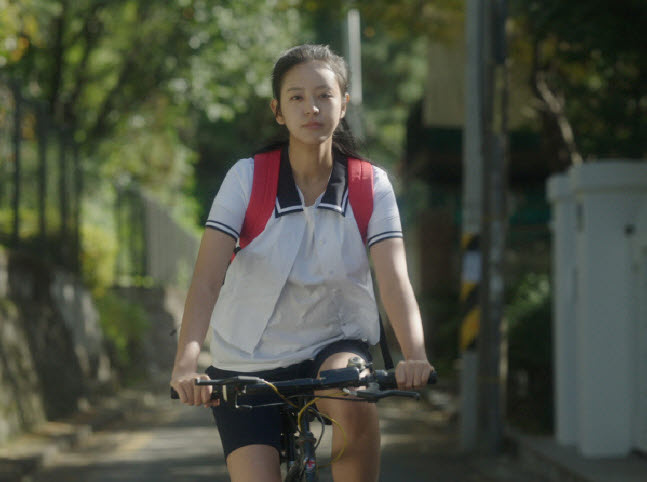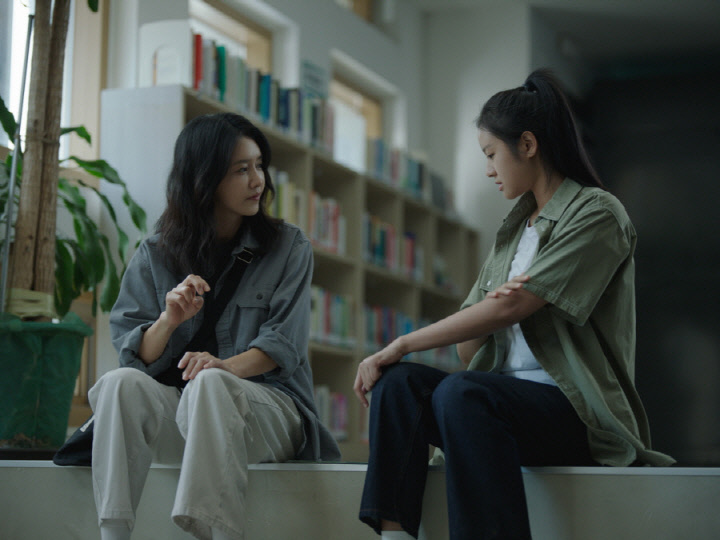
South Korean independent film “Soar” is an earnest coming-of-age tale about one desperate adolescent girl who wants to escape from her very unhappy environment. Calmly and sensitively observing how much she struggles to hold onto a rather unlikely opportunity for love and stability, the movie lets us have more understanding and empathy on her, and then we are moved by a bit of hope and optimism shown at the end of her emotional journey.
The early part of the film succinctly establishes the troubling daily life of its adolescent heroine. Hyeon-jae (Hwang Bo-un) lives in an apartment along with her parents and her younger brother, and the movie opens with her sleeping along with her mother and younger brother in one room after another domestic violence from her abusive father. Mainly because of her financial dependence on her husband, Hyeon-jae’s mother simply tolerates his abusive behaviors as usual, and Hyeon-jae certainly does not like this at all.
While she seriously considers escaping from her home someday, Hyeon-jae happens to encounter a lady named Hae-in (Chae Jung-an), who has been looking for her little daughter since she went missing ten years ago. Sincerely feeling sorry for this woman, Hyeon-jae shows some compassion to her, and Hae-in also comes to show a bit of concern when she notices a sign of domestic abuse from Hyeon-jae. When Hyeon-jae and her family later suffer another incident of domestic abuse, Hyeon-jae gets some help from Hae-in, and Hae-in willingly lets Hyeon-jae into her house.
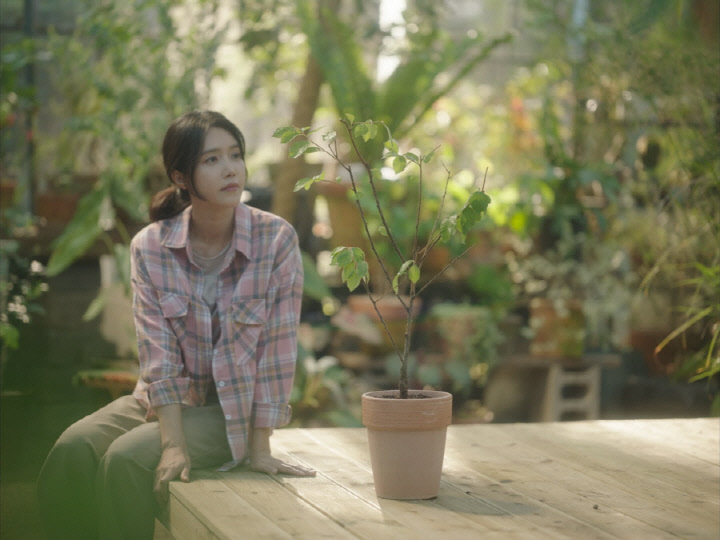
As staying in Hae-in’s house, Hyeon-jae surely feels a lot safer and more comfortable than before. Hae-in has incidentally worked as a horticulturist, and her house is filled with many different flowers and trees, which certainly bring some soothing atmosphere to her house. As days go by, Hyeon-jae and Hae-in become more accustomed to each other, and it seems possible that Hyeon-jae will be a surrogate daughter for Hae-in.
However, Hae-in still cannot forget her lost daughter. She keeps looking for her as before, and Hyeon-jae willingly helps Hae-in, though she cannot help but want to get more attention from Hae-in. As her mother suggests that she should return to their home, Hyeon-jae becomes more anxious about her future, and this naturally leads to a growing conflict between her and Hae-in later in the story.
Needless to say, the screenplay by director/writer Kim Da-som subsequently becomes quite melodramatic as the conflict between Hyeon-jae and her benevolent guardian gets more intense. We see more anger and desperation from Hyeon-jae, and then we also sense more of how Hae-in still does not totally recover from that old emotional wound despite her longtime efforts.
Everything in the story eventually culminates to a crucial scene where Hyeon-jae and Hae-in go together to a certain place for a small possibility of closure for Hae-in. I will not go into detail here, but what follows next is emotionally harrowing to say the least, and then we get a little touching moment which speaks volumes in its delicate silence.
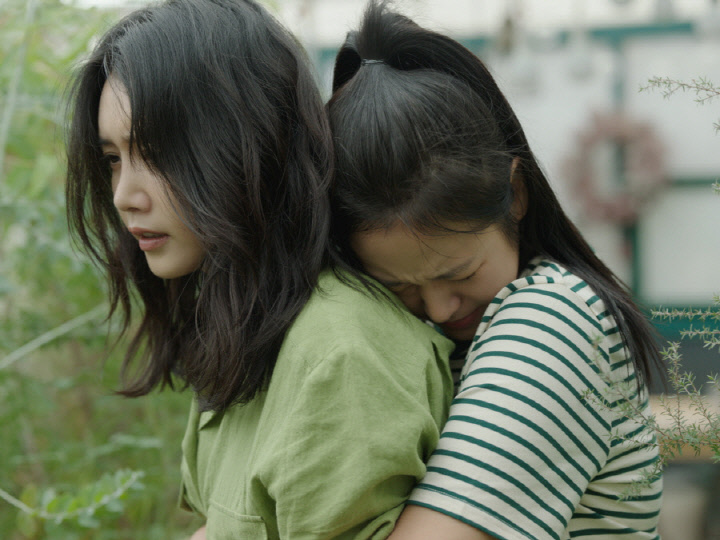
The movie certainly depends on the solid performances from its two main cast members, who did a commendable job of filling their respective roles with considerable human details to be appreciated. Hwang Bo-un, who was memorable in “Nobody’s Lover” (2021), is compelling even when her conflicted character does not signify much on the surface, and she is particularly good when Hyeon-jae finally lets out all of her desperation at one point later in the story. On the opposite, Chae Jung-an’s more restrained acting functions well as a stable counterpart for her co-star, and she also has her own moments as her character shows some gentle sides of hers along the story.
Around these two good actresses, several other main cast members in the film hold each own small place well on the whole. As Hyeno-jae’s long-suffering mother, Min Hyo-kyong has a heartbreaking scene where her character comes to face more of her difficult situation, and Bae Min-soo is also effective as a close friend of Hyeon-jae. In case of young performer Kim Geon-u, he provides a bit of cheeriness to the story as Hyeon-jae’s brother, who is mostly innocent but knows how bad things are in their home.
Overall, “Soar” is rather modest in terms of story and characters, and it could have explored more of its character details including Hyeon-jae’s choir activity, but it is still engaging thanks to Kim’s competent direction. She incidentally makes a feature film debut here after making several short films, and, as far as I can see from her result, she is another promising new South Korean female filmmaker to watch.
By the way, her achievement here in this film reminds me more of how much the future of South Korean cinema really depends on the considerable talent of many wonderful female filmmakers out there. Since the remarkable achievement of Bong Joon-ho’s Oscar-winning film “Parasite” (2019), South Korean cinema has mostly gone downhill during last several years, but there is still some possibility of rejuvenation considering the recent significant efforts of a bunch of notable South Korean female filmmakers such as Yoon Ga-eun, and I can only hope that they will advance further for South Korean cinema as well as me and many other South Korean audiences.