In Our Day (2023) ☆☆1/2(2.5/4): The 30th film by Hong Sang-soo

The most memorable thing in Hong Sang-soo’s 30th feature film “In Our Day” is one fluffy (and plumpy) cat, which always steals the show whenever it appears on the screen. Probably because the movie is relatively less interesting than Hong’s better works such as “HaHaHa” (2010) or “Right Now, Wrong Then” (2015), my mind often got disinterested in whatever was going on the screen during my viewing, and I could not help but want to see more of that cat instead of really engaged in the story and characters.

That cat belongs to a woman named Jeong-soo (Song Seon-mi), and the first scene establishes her relationship with her friend Sang-won (Kim Min-hee), who has stayed in Jeong-soo’s little residence for a while. As they casually talk with each other, Jeong-soo’s cat enters the screen, and the mood becomes a bit more playful as Sang-woo briefly plays with Jeong-soo’s cat, which does not mind her attention at all as exuding its natural cuteness on the screen.

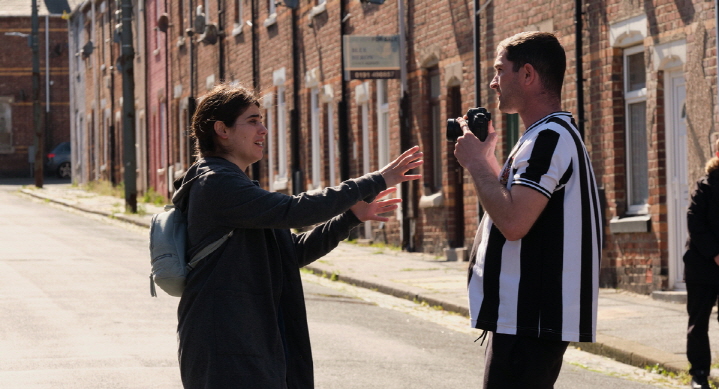
Meanwhile, the movie also focuses on an aging male poet named Eui-joo (Ki Joo-bong), who is visited by a young female documentary filmmaker named Ji-soo (Park Mi-so). Eui-joo is willing to tell anything in front of Ji-soo’s digital video camera, but her project does not seem to be going that well despite her plucky enthusiasm, and he does not have much to say probably because he is advised to stop drinking and smoking due to his health problem. Considering how often the male characters of Hong’s films drink or smoke, Eui-joo’s ongoing abstinence is a bit amusing to us at first, but Eui-joo seems mostly fine with his abstinence, and that is sadly less fun for us.

Anyway, Eui-joo is later visited by Jae-won (Ha Seong-guk), a guy who has seriously considers trying on acting. I do not know why this guy wants to seek some advice on acting from Eui-joo even though Eui-joo has not acted before, but Eui-joo does have several things to tell in front of Eui-joo and Ji-soo, and the mood becomes a little more humorous as Eui-joo frequently emphasizes on honesty and integrity.

The two different parts of the film are later connected via Ji-soo, who visits Jeong-soo’s residence at some point in the middle of the film. As she talks with Jeong-soo and Sang-won, we observe Sang-won showing a certain odd way of ramen, which is also demonstrated by Eui-joo in front of Ji-soo during one earlier scene in the film. Does Sang-won actually know Eui-joo, even though she does not tell anything about him to Eui-joo? I have no idea in fact, but now I wonder whether these two characters have some personal elements from Hong Sang-soo and Kim Min-hee, who has been personally involved with Hong not long before “On the Beach at Night Alone” (2017) came out.

However, the movie curiously does not attempt to connect its two different parts more without generating much synergy between them. When Jeong-soo’s cat is suddenly gone missing for no apparent reason, the mood becomes a bit suspenseful, but this urgent situation is quickly resolved in an anti-climactic fashion. In case of Eui-joo’s part, the atmosphere becomes a little silly when he eventually decides to try a bit of smoking and drinking along with Ji-soo and Jae-won, but this moment does not lead to any good laugh for us, even when Eui-joo and the other two characters subsequently attempt an absurd drinking game together.

As observing this curiously lackadaisical moment, I found myself wondering whether the movie is actually Hong’s admission on being less artistically motivated than before. After all, he has kept going in his small artistic territory for more than 25 years since his first feature film “The Day a Pig Fell Into the Well” (1996), and he has recently tried to do something different as shown from “The Woman Who Ran” (2020) and “In Front of Your Face” (2021), but then he previously gave “In Water” (2023) early in this year, a literally blurry piece of sh*t which is his worst film in my inconsequential opinion. I might have been too harsh and mean as writing in my review on “In Water” that my anoscopy looks sharper and more detailed besides being in focus as required, but, boy, I definitely do not want to re-evaluate “In Water” at any chance as still wincing from one of the most boring and exasperating movie theater experiences during last several years.

Regardless of whether his artistic energy is actually declining these days, Hong is still capable of drawing good performances from his performers, and the small cast of “In Our Day” is as natural and spontaneous as you can expect from his performers. While Kim Min-hee, Song Seon-mi, and Park Mi-so are particularly effective when their characters happen to occupy the screen together during one long conversation scene, and I wish the movie could utilize more of their effortless interactions on the screen. In case of Ki Joo-bong, who is also one of Hong’s frequent performers, he brings some sense of humor to his weary character, and Ha Seong-guk is also solid as a dude who does not even know well what to ask in front of Ki’s character.

On the whole, “In Our Day” is rather dissatisfying mainly due to its weak narrative, but it has some bright spots including that cute cat, and, above all, Hong will move onto his next film to direct sooner or later. As I told you before, I am not a big fan of his works, but I admire how he has been steady and productive for many years, and I sincerely hope that I will be soon more entertained in the next time.

Posted in Movies | Tagged , , , | Leave a comment

The Nightmare Before Christmas (1993) ☆☆☆1/2(3.5/4): When Halloween meets Christmas

Animation film “The Nightmare Before Christmas”, which was somehow released in South Korean theaters a few days ago probably because of its 30th anniversary, is still a joy to behold. When I watched it for the first time via a video tape copy in late 1995, I zealously savored its every wonderfully enchanting moment as a young nascent cinephile, and this lovely memory of mine came back to me again as I found myself drawn back quickly into its memorably creative fantasy world at a local movie theater during last evening.

As many of you know, the story idea of the film came from none other than Tim Burton, who also served as one of its producers. He needed someone good enough to realize his imaginative story and characters on the screen via stop-motion animation, and that was Henry Selick, who would be more prominent as making several other notable stop-motion animation feature films such as “James and the Giant Peach” (1996) and “Coraline” (2009). Just like Burton, Selick has his own dark and twisted artistic sensibility, and that surely made him quite an ideal partner for Burton.

After the brief prologue scene introducing the fantasy world consisting of several different towns representing traditional holidays such as Easter or Thanksgiving Day, the film immediately establishes Halloween Town and its various grotesque denizens including Jack Skellington (voiced by Chirs Sarandon). Under Jack’s confident leadership, everyone in the town has a ball as going through another Halloween as shown from the opening musical sequence of the film, but it subsequently turns out that Jack has been rather tired of doing same things again and again for years. As a result, he cannot help but yearn more for something different enough to excite him out there, so he soon walks out of Halloween Town as dolefully singing his lament.

What do you know, he soon finds what really intrigues and excites him. Jack comes across a mysterious portal spot already introduced to us at the beginning of the film, and then he is sucked into one of several portals, which takes him to Christmas Town. As so agitated and impressed by how much Christmas looks different from Halloween in many aspects, Jack decides to show Christmas to his fellow Halloween denizens, and he even comes to attempt to replace a certain important figure of Christmas Town, whom he incidentally calls “Sandy Claws” to our little amusement.

As Jack and the denizens of Halloween try on Christmas, we surely get a deliciously morbid variation of many stuffs associated with Christmas. We get lots of naughty laughs as observing how Christmas is twisted here and there by your average Halloween fashion, and I particularly like a literally electric moment involved with the creation of the equivalents to those Christmas reindeers by a local mad scientist.

Meanwhile, the film also shows some sincerity and poignancy via a living rag doll named Sally (voiced by Catherine O’Hara), who comes to care more about Jack after witnessing his personal frustration with old Halloween routines early in the story. She is willing to help Jack at first, but then she becomes quite concerned after having a rather disturbing premonition, and, unfortunately, Jack does not listen to her much while mostly occupied with replacing “Sandy Claws” as much as he can.

All these and other things in the story are presented via the meticulous stop-making animation of the film, and the efforts by Selick and his crew members including cinematographer Pete Kozachik do not feel dated at all even at present. Sure, the stop-motion animation techniques have advanced a lot since the film came out, but Selick and his crew members’ painstaking attention to mood, style, and detail is still a marvel to behold, and the film deservedly garnered an Oscar nomination for its special effects (Unfortunately, it had to compete against that big dinosaur movie from Steven Spielberg in that year).

In addition, Tim Burton’s artistic contribution is often evident throughout the film, and that aspect is particularly evident from the score and songs composed by his usual collaborator Danny Elfman, who also sang several songs by Jack instead of Chirs Sarandon. Just like many of Burton’s early works such as “Beetlejuice” (1988) and “Batman” (1989), the film brought out the best from Elfman’s immense talent, and I must say many of his songs in the film such as the opening song “This Is Halloween” are quite catchy to say the least. As a matter of fact, the soundtrack album of the film is one of the earliest ones I purchased as a young enthusiastic fan of film music, and my personal favorite is “Kidnap the Sandy Claws”, which still tickles a diabolical sense of humor I have privately nurtured for more than 30 years since I was a little precocious smart-ass.

In conclusion, “The Nightmare Before Christmas” is an excellent classic animation film which has distinguished itself a lot as a wry crossover between the Halloween and Christmas season, and it will satisfy you regardless of whether you are drawn more to one or the other. Sure, it may look rather modest in terms of scale and technique compared to many notable stop-motion animation films during last 30 years, but the film does not lose any of its awe and wonder at all in my trivial opinion, and I sincerely hope that more local audiences will see it at movie theater during next several days even though it is also currently available on Disney+.

Posted in Movies | Tagged , , , | Leave a comment

Free Chol Soo Lee (2022) ☆☆☆1/2(3.5/4): The injustice upon one Korean immigrant

Documentary film “Free Chol Soo Lee” presents the harrowing real-life story of Chol Soo Lee, a Korean American immigrant who was wrongfully accused of the murder he did not commit and then was unjustly incarcerated for that. It is touching to see how he was eventually vindicated thanks to lots of civilian efforts from the Asian American immigrant communities, but it is also saddening to observe how he and his life were irrevocably damaged by the sheer injustice of the American legal system.
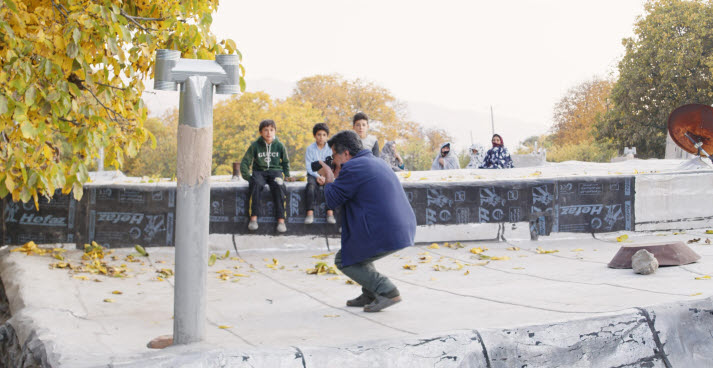
Everything began with a shocking murder case which happened in the middle of the Chinatown area in San Francisco, 1973. It was clearly another Chinatown gang murder during that time, but the San Francisco Police promptly swooped on Lee just because of a recent little gunshot incident involved with him, even though he did not have any connection with those Chinatown gangs. Once he was identified by a couple of rather unreliable witnesses, the San Francisco Police labeled him as the culprit without any hesitation, and he soon found himself at the court as being charged for the murder in the first degree.

As the documentary gradually shows us along its narrative, that was just another very unfortunate thing in Lee’s rocky life story. He was born as the illegitimate child of his unmarried South Korean mother in the middle of the Korean War, and his mother simply left to him to his aunt and uncle when she went to US after marrying a US soldier. Although he lived fairly well under his uncle and aunt, he was taken to San Francisco by his mother shortly after her divorce several years later, and he certainly had lots of trouble as struggling to adjust to his new society which did not treat him that well from the beginning. Besides, he also did not get much love from his mother, and the documentary later reveals more about her complicated emotional relationship with her son, which was originated right from when he was conceived.

Eventually, Lee came to live on the streets of Chinatown day by day instead of living with his mother, and that was when he got wrongfully arrested for that murder. No matter how much he protested, nobody in the legal system did not pay much attention, and he only came to receive a life sentence at the end of his trial. To make matters worse, he was sent to one of most notorious maximum-security state prisons in California, and his following struggle to survive everyday as the only Asian inmate in his block unfortunately later led to an incident of manslaughter, which subsequently sent him to the death row of the San Quentin State Prison.

Meanwhile, Lee’s close friend Ranko Yamada and several other local activists in the local Asian American community embarked on their little civilian project for Lee’s acquittal and discharge, and their efforts subsequently reached to a prominent Sacramento journalist K.W. Lee, who was also a Korean immigrant and naturally took a personal interest in the case. As looking more into the case, the journalist became more determined to help Lee as much as possible, and his several articles on Lee’s case surely boosted more public interest on Lee’s case in the Asian American communities.

Although the following trial on Lee’s manslaughter in the prison ended with the jury members finding Lee guilty, Yamada and many other local activists and Asian community members did not give up at all. They continued to do more protest and fund-raising, and their efforts were certainly appreciated a lot by Lee. While still facing the serious possibility of getting executed or imprisoned for the rest of his life, he had some hope and support at least, and that was certainly something he never had before.

In the end, there came a cathartic moment for Lee and his friends and supporters after his lawyers including Tony Serra made a successful argument on why he was not guilty of that murder case, and Lee was subsequently released in 1983 to everyone’s joy. At that time, it looked like things would only get better for him from the point, and he was certainly willing to try a lot for that.
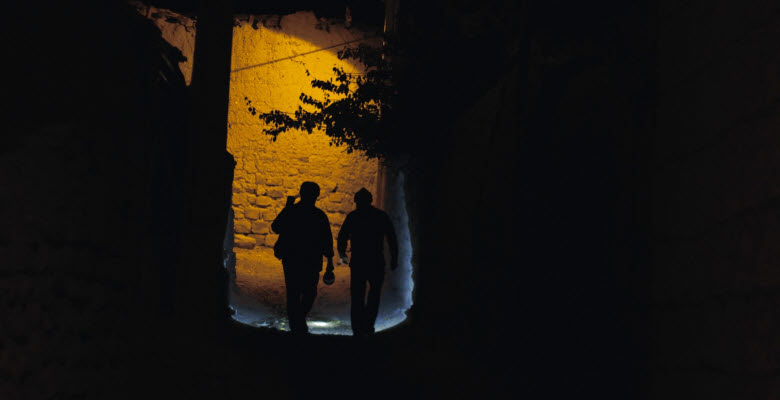
Now this sounds like your average feel-good real-life story, but, besides his struggle for adjusting himself to his changed circumstance, Lee also had to struggle a lot with the personal demons associated with those dark years of imprisonment of his, which consequently led him to the painful downward spiral for him to the dismay of many others who really cared about him. Not long after his release, he came to let them down a lot, and he surely came to have lots of regret around the time when he came to hit another bottom of his life.

Mainly driven by the words from Lee himself, the documentary gradually fills out here and there in its unadorned portrayal of its human subject, and that is the main reason why its final part associated with Lee’s later years is quite moving. I will not go into details here, but I can tell you instead that directors/co-producers Julie Ha and Eugene Yi present this part with considerable compassion and understanding, and Lee’s later years may remind you of what Wiliam Faulkner once said: “I believe that man will not merely endure, he will prevail.”

Overall, “Free Chol Soo Lee”, which was incidentally released in South Korean theaters a few days ago, is a modest but powerful documentary about one specific case of social justice and racism which sadly feels quite relevant in the American society even at this point. In short, this is one of better documentaries of last year, and I am glad to see it introduced to South Korean audiences at last.

Posted in Movies | Tagged , , , , | Leave a comment

A Tour Guide (2023) ☆☆☆(3/4): The loneliness of one North Korean defector

South Korean independent film “A Tour Guide”, which was released as “A Person to Trust” in South Korea, follows the struggles of one North Korean female defector in the middle of the South Korean society. No matter how much she tries, she comes to face one obstacle or another as the world constantly change around her, and the sense of isolation around her feels more palpable to us as we become more aware of her accumulating loneliness.

At first, things look a little hopeful for Han-yeong (Lee Seol), who has just succeeded in obtaining a tour guide license for working at a small tour agency in Seoul, 2015. Because she stayed in China for a while not long after escaping from North Korea, she could speak both Korean and Chinese, so she looks ideal for handling those numerous Chinese tourists visiting South Korea.

However, the situation turns out to be less rosy than Han-yeong. Due to the local outbreak of a dangerous virus strain in South Korean at that time, not many Chinese tourists are willing to come to South Korea, and then there comes a serious diplomatic conflict between the Korean and Chinese government, which leads to the more decrease in the number of Chinese tourists. As learning a bit from some other employees of her tour agency, Han-yeong tries to be a better tour guide as much as possible, but she is still around the bottom of the rank compared to many employees in the tour agency, and that makes her more frustrated than before.

In addition, Han-yeong has a serious private matter to deal with. She has a brother who came to South Korea earlier than she did, but her brother has been gone missing for some reason, and Han-yeong does not know where to find him. At least, she has a fellow North Korean female defector who has been a close friend of hers for a while, and she also has a sympathetic supervisor who does not ask too much while trying to help her as much as possible, but she still finds herself feeling more isolated with more loneliness.

Some time later, a Chinese friend of hers, who provided a staying place for Han-yeong and her brother during that time, comes to South Korea, and the mood becomes lightened up a bit, but it soon turns out that her friend does not come to South Korean just for meeting Han-yeong. Just like Han-yeong, she wants to work here for earning enough money for realizing a better life for herself, and Han-yeong is surely concerned as much as we are – especially when she comes to see how her friend is going to work in South Korea without getting any labor visa. At least because she is officially a South Korean citizen with an occupational license, Han-yeong could get a decent job, but her friend does not have any advantage from the beginning, and we already sense troubles even before her friend eventually leaves for working somewhere without telling much to Han-yeong.

Around the point where the story moves to 2018, things remain hard and difficult for Han-yeong as before. For trying to earn more money to stabilize her economic situation, she comes to break some laws, and, not so surprisingly, this leads to losing her job. As a result, she subsequently finds herself doing a part-time job which pays her less than her previous job, and that makes her resort to more illegal activities. Besides supporting herself day by day, she also needs to save enough money for taking her mother out of North Korea, and, alas, that still looks impossible to her no matter how much she tries.

Furthermore, Han-yeong becomes lonelier as she does not have anyone to lean on. Her aforementioned fellow North Korean defector later decides to leave the country for immigrating to some other country along with her husband, and there is a bittersweet moment as they enjoy what may be the last private moment between them. In case of her supervisor, he still cares about her a lot as before, but then there eventually comes a point where he courteously notifies to her that he is not soon going to be around her anymore.

As a result, we are not so surprised when Han-yeong is tempted to do something she could not possibly imagine when she came into South Korea. Sure, going back to North Korea sounds quite irrational to many of you, but there have been actually the reports about North Korean defectors attempting to go back to North Korea after miserably failing in their adjustment in the South Korean society, which has often regarded them as second-rated citizens like it did to those numerous Korean Chinese people working in South Korea.

Despite its dry and restrained tone, the movie continues to engage us thanks to not only director/writer Kwak Eun-Mi’s thoughtful direction but also another solid performance by Lee Seol, who was also impressive as the lead actress of another recent South Korean independent film “On the Sand House” (2021). Behind her seemingly phlegmatic attitude, we come to feel more of Han-yeon’s frustration and desperation along the story, and Lee presents her character with enough integrity and dignity without resorting to any cheap pity or sympathy.

Overall, I appreciate how Kwak, who previously made a feature film debut in “Today, Together” (2019), handles the story and its heroine with enough care and respect. It has been more than 10 years since I watched Park Jung-bum’s harrowing North Korean defector drama “The Journals of Musan” (2010), but “A Tour Guide” reminds me that things have not changed that much for those North Korean defectors out there in South Korea even at present, and the movie certainly makes me reflect on its relevant social issue after I watched it yesterday. In short, this is another notable South Korean independent film of this year, and I sincerely recommend you to check it out if you can.

Posted in Movies | Tagged , , | Leave a comment

Killers of the Flower Moon (2023) ☆☆☆1/2 (3.5/4): An epic crime drama from Martin Scorsese

Martin Scorsese’s new film “Killers of the Flower Moon”, which was released in South Korean theaters on this Thursday, is a stunningly epic piece of work vividly looking into one massive injustice against a Native American tribe during the early 1920s. While often touching on the recurring personal themes of many of Scorsese films, the movie also firmly stays focused on the devastatingly tragic aspects of its real-life story, and the underlying pain and sadness of its ambitious tale will linger on your mind for a while after it is over.

The opening part of the movie succinctly establishes its historical background. In the late 19th century, a midwestern Native American tribe called Osage was forced to leave their territory and then settle in a barren region of Oklahoma by the US government, but this later turned out to be a blessing in disguise. Once oil was found there in the early 20th century, many of Osage members became quite wealthy, and their area naturally attracted lots of White people willing to profit from them by any means necessary.

Ernest Burkhart (Leonardo DiCaprio) was one of such people, and the movie steadily follows how he gets involved into an insidious conspiracy against the Osage tribe because of his uncle William King Hale (Robert De Niro), who is incidentally one of the most powerful and influential local figures in the area. While he is pretty close to many prominent figures in the Osage tribe, Hale is also connected with not only numerous local businessmen but also many rotten crooks to do any dirty work for him, and you will be more chilled and disgusted as the story gradually reveals how he pulls strings here and there for his own benefit behind his seemingly benevolent façade.

To Hale, Burkhart is someone who can be easily persuaded and manipulated under his influence, and Burkhart just goes along with that without much thinking. While Burkhart works as a taxi driver, Hale slyly suggests that Burkhart should get closer to a pretty young Osage woman named Mollie (Lily Gladstone), and Burkhart soon finds himself romantically involved with her not long after he actively tries to befriend her. They eventually get married after more courtship from Burkhart, and this seems to help and benefit Mollie and her wealthy family more as they become closer to Hale via her marital relationship with Burkhart.

However, we also see how things have been getting worse for Mollie and her family and tribe. Their people keep dying or getting killed under suspicious situations, but nothing much has been investigated yet, and Mollie becomes alarmed all the more than before as her close family members die one by one. She and many other members of her tribe surely try as much as possible for getting any help, but, of course, they only find themselves becoming more desperate and frustrated as facing the racism and prejudice against them in one way or another – until a bunch of federal agents from Bureau of Investigation (BOI), which was the precursor of FBI, finally come to the region later in the story.

As the screenplay by Scorsese and his co-writer Eric Ross, which is based on the nonfiction book of the same name by David Grann, patiently builds its narrative momentum with a lot of details and insights to muse on, the movie constantly engages us via its top-notch technical aspects. While the cinematography by Rodrigo Prieto, who previously worked in Scorsese’s several recent works including “The Irishman” (2019), often provides striking visual moments including the one reminiscent of the fire sequence in Terrence Malick’s “Days of Heaven” (1978), the production design by Jack Fisk and the costume design by Jacqueline West are superlative as the crucial parts of the authentic period atmosphere of the film, and the smooth and precise editing by Scorsese’s longtime collaborator Thelma Schoonmaker keeps things rolling along with late Robbie Robertson’s quietly throbbing score. Although its running time is more than 3 hours, the movie seldom lags as diligently advancing the story and characters, and its overall result surely shows Scorsese at the top of his craftmanship as usual.

It goes without saying that Burkhart’s growing sin and guilt in the story is certainly your average typical Scorsese element, but the movie takes a rather detached position to that while slowly focusing more on what Mollie and many other Osage members had to suffer and endure during that time. Thankfully free from any kind of cheap sentimentality, the movie remains calm and sobering till the epilogue part, which is unexpectedly witty at first but then ultimately shows more of where Scorsese’s heart lies.

The main cast members of the film are impressive to say the least. While Leonardo DiCaprio and Robert De Niro, who once appeared together in “This Boy’s Life” (1993) 30 years ago, are stellar as effortlessly embodying their characters’ toxic relationship, a bunch of various supporting performers including Jesse Plemons, John Lithgow, and Brendan Fraser have each own moment to shine, and Jason Isbell, who plays Mollie’s brother-in-law, is particularly good during his one brief key scene with DiCaprio. In case of Lily Gladstone, who was achingly unforgettable in Kelly Reichardt’s “Certain Women” (2016), this wonderful Native American actress’ unadorned but powerful performance becomes as the moral center of the story, and many other Native American cast members in the film are also solid in their respective supporting parts.

In conclusion, “Killers of the Flower Moon” is another fascinating masterwork from Scorsese, who has always kept advancing for more than 55 years since he made a feature film debut in “Who’s That Knocking at My Door?” (1967). While cinema may be really declining to its eventual demise, Scorsese, who is soon going to have his 81st birthday, is fortunately still around us to remind us of how artistically powerful cinema can be, and the sheer cinematic qualities of “Killers of the Flower Moon” certainly remind me again of why I still go to movie theaters. In short, this is one of the best films of this year, and I really think you should take a chance with it at any nearby movie theater around you.

Posted in Movies | Tagged , , , , , , | 2 Comments

The Exorcist: Believer (2023) ☆☆(2/4): Friedkin Wept

“The Exorcist: Believer”, the latest installment of the series which started with William Friedkin’s “The Exorcist” (1973), did not scare or disturb me at all. While it surely tries to bring some freshness into its utterly familiar genre formula, the result is messy and mediocre to say the least, and it is not even as unintentionally hilarious as John Boorman’s “Exorcist II: The Heretic” (1977), which is incidentally still the bottom of the series.

This time, no less than two young girls are possessed, and we get to know a bit about one of these two young girls and her widow father during the first act of the film. Since he lost his wife who gave birth to their daughter shortly before her unfortunate death caused by a big earthquake in Haiti, Victor Fielding (Leslie Odom Jr.) has been quite protective of his adolescent daughter Angela (Lidya Jewett), but he has not talked that much about her mother, and that eventually leads Angela to a little attempt on the world of spirits. Without telling her father anything, she and her classmate Katherine (Olivia O’Neill) go into a local forest area for performing a small ritual for contacting with the spirit of Angela’s mother, and then they are gone missing for no apparent reason.

Naturally, their respective parents are quite concerned as fearing for the worst, and then the girls are eventually found a few days later. However, it does not take much time for not only Victor but also Katherine’s parents to realize that something is going very wrong with the girls. Both Angela and Katherine begin to show one disturbing behavior after another, and their parents are more unnerved as a number of other weird things happen around them.

Of course, there eventually comes a point where the girls’ parents come to see that the girls are going through something much more disturbing than they thought at first, and that is where Victor’s neighbor Ann (Ann Dowd) gets herself more involved into this increasingly alarming circumstance. As a nurse who was also an ex-nun, she instantly sees that the girls are possessed by some powerful demon, and she later recommends to Victor that he should consult with someone who knows much about demons and exorcism rituals.

That figure in question is none other than Chris MacNeil (Ellen Burstyn), who was that tormented mother in “The Exorcist”. After going through what happened in the “The Exorcist”, MacNeil has devoted herself on studying many different rituals of exorcism besides the one practiced by the Catholic Church, and she surely has a lot to tell when Victor visits her residence later in the story. Although she merely functions as a link between the movie and “The Exorcist”, Burstyn, who is soon going to have the 91st birthday, acquits herself mostly well while playing her material as straight as possible, and I hope that we will continue to see her more during at least next several years.

Just like Burstyn, the screenplay by director David Gordon Green and his co-writer Peter Sattler, which is developed from the story by Green, Danny McBride, and Scott Teems, tries to be as serious as possible, but its rather overblown attempts often lead to hollow silliness. When the story eventually arrives at its expected climactic part, the movie applies no less than three different religions on this part, but they do not mesh well together instead of generating any kind of dramatic synergy, and their mushy result only makes me wonder whether there will be a rabbi or an imam or a Buddhist monk in the two planned sequels after the movie.

In case of the devil in the film, who is, not so surprisingly the same one who possessed that poor girl in “The Exorcist”, the movie surely throws lots of grotesque moments you can expect from a case of demonic possession, but none of them particularly sticks on my mind much as often resorting to lots of digital special effects. As a matter of fact, this reminds me again that the climactic part of “The Exorcist” may look a bit dated at times but still retains its utterly disturbing qualities even at present thanks to the deft utilization of practical effects.

In addition, the screenplay feels flat and quotidian in case of character development, and many of its notable main cast members are often wasted while struggling a lot with their cardboard roles. Leslie Odom Jr. who has been steadily moving onto TV and movie since his Tony-winning performance in Broadway musical “Hamilton”, is suitably earnest, and he and young performer Lidya Jewett are convincing in their several scenes early in the film, but then the movie simply push their characters into more misery and horror without any substantial narrative development. In case of Jennifer Nettles, Norbert Leo Butz, and Ann Dowd, they fill their superficial parts as much as possible, and young performer Olivia O’Neill surely looks as committed as Jewett during the climactic part.

Overall, “The Exorcist: Believer” is not as awful as I feared, but it is still a disappointing opener for whatever may come next, and I came to reflect more on the undeniable artistic achievement of “The Exorcist”, which I happened to revisit not long after hearing about Friedkin’s death a few months ago. That film still makes us believe in its intense depiction of demonic possession because we come to believe in its realistic story and characters first, but “The Exorcist: Believer” does not have anything to make us believe in its story and characters from the beginning, and I also must point out that there have already been many better horror films about demonic possession out there since “The Exorcist” came out. Seriously, I do not know whether there will actually be some improvement in the next film, but, so far, “The Exorcist: Believer” just depressed me instead terrifying me, and that is all, folks.

Posted in Movies | Tagged , , , | Leave a comment

Blue Giant (2023) ☆☆☆(3/4): All for Jazz

Japanese animation film “Blue Giant” is simply riveting whenever it conveys to us that ecstatic quality of jazz music performance. Probably because of being singled-minded as its main characters’ artistic pursuit for sublime perfection, the movie often feels a bit too thin in terms of storytelling and characterization, but its every weak aspect is almost forgiven as it reaches for more musical intensity and excitement, and I found myself quite enthralled more than once even while recognizing its weak aspects from time to time.

At first, the film introduces us to a 18-year-old lad named Dai Miyamoto (voiced by Yûki Yamada), and it quickly establishes this lad’s considerable artistic passion and dedication as observing his lonely saxophone practice in the middle of one cold winter night. As he later reveals, he only started to play a saxophone just for a few years, but he is evidently quite confident as well as very talented, and we are not so surprised when he subsequently leaves his small hometown for going to Tokyo. Right from his first day in Tokyo, he starts to search for any suitable outdoor spot where he can practice alone, and he surely feels exalted when he finally finds the right spot for him.

Of course, Dai needs a place to stay while pursuing his big dream of becoming a great jazz musician, and it turns out that there is a hometown friend currently living in Tokyo. Although he does not welcome Dai much at first, Shunji Tamada (voiced by Amane Okayama) lets Dai into his small residence, and Dai shows some appreciation via paying some rent to Shunji once he begins to do a part-time work at a construction site.

Things seem to be going nowhere for Dai for a while, but there come a couple of fortunate encounters for him. As looking for any suitable jazz club, he happens to enter a little jazz bar owned by a nice middle-aged lady, who gladly allows him to practice there after sharing their common passion toward jazz between them. When he attended a small jazz concert during one evening, he happens to spot a young pianist named Yukinori Sawabe (voiced by Shôtarô Mamiya), and it does not take much time for them to befriend each other as they later talk a lot about their artistic passion with each other.

Both Dai and Yukinori soon come to feel that they really need a drummer to hold the ground for their respective performances, and, what do you know, Shunji suddenly finds himself trying on playing drum. Although he does not have any previous experience, Shunji comes to discover his own musical passion while supporting Dai and Yukinori as much as possible, and Dai gladly encourages his friend despite Yukinori’s skepticism. After all, their main goal is performing at a certain prestigious jazz club in the downtown area of Tokyo, and it goes without saying that Shunji can be a major handicap for them.

It is not much of a spoiler to tell you that Shunji actually improves his drumming skill more and more while constantly practicing as hard as, say, the hero of “Whiplash” (2014) – and that he and his two colleagues eventually give one hell of performance to surprise and impress a bunch of audiences. Director Yuzuru Tachikawa and his crew members have a field day as dynamically illustrating a number of performance scenes in the film, and their stylish result is lovely and exhilarating to say the least with the effective score provided by Hiromi Uehara.

However, what is supposed to be the center of the story feels bland and hollow in my inconsequential opinion. Besides his irrepressible artistic passion and dedication, we never get to know much about Dai except a few personal details, and the film comes to distance itself from him more as occasionally inserting the interview clips of several supporting characters reminiscing about him. They keep saying how awesome his talent is, and, to our disappointment, that is all they can tell us about him.

Instead, I come to care more about the other two characters surrounding him, who actually have more interesting narrative arc. Although he knows well that he may not be as good as his two colleagues, Shunji continues to push himself more and more, and his efforts eventually get some respect and admiration from audiences while also having a fulfilling artistic experience of his own. In case of Yukinori Sawabe, he seems to be almost flawless as Dai, but then he later gets a painfully honest criticism on why his performance still cannot reach to the level of sheer distinction just like Dai, and that certainly frustrates him a lot for some time until he comes to realize how to lose and open himself for more artistic expression.

During the last act, the story becomes melodramatic as taking a sudden left turn, but that does not dampen the mood at all as its main characters are still willing to go further for, yes, a performance to remember. The finale might have looked a bit too contrived and preposterous in live-action film, but it works better than expected in the context of animation film, and you will certainly root for them more than before while also being more exhilarated than before.

In conclusion, “Blue Giant” is another solid Japanese animation film of this year after “The First Slam Dunk” (2022) and “Suzume” (2022), and I enjoyed its good mood and style even though the story and characters sometimes feel plain and predictable compared to that. Yes, it sounds a little too familiar in terms of genre conventions, but it knows and plays its music well on the whole, and I certainly left the screening room with enough entertainment satisfaction.

Posted in Movies | Tagged , , , | Leave a comment

The Caine Mutiny Court-Martial (2023) ☆☆☆(3/4): William Freidkin’s last work

Willaim Friedkin’s last film “The Caine Mutiny Court-Martial”, which incidentally came out a few months after his death, is a modest but engaging legal drama to watch. While looking inherently theatrical at times, the movie is also compelling enough to hold our attention to the end, and it is certainly nice to see that Friedkin was still a good filmmaker even during the last chapter of his long and illustrious filmmaking career.

The movie is based on Herman Wouk’s 1953 play of the same name, which was adapted from his 1952 Pulitzer-winning novel “The Caine Mutiny”. Wouk’s novel was later adapted into Edward Dmytryk’s Oscar-nominated 1954 film starring Humphrey Bogart, and that was followed by several TV movie adaptations of Wouk’s play including the one made by Robert Altman in 1988. Besides moving its period background to the post-9/11 era, Friedkin’s adapted screenplay mostly sticks close to Wouk’s play, so, like Altman’s 1988 version, it simply focuses on what is going on during its titular court-martial till the eventual finale.

At first, the case of its titular court-martial looks pretty simple on the surface. A US Navy ship under the command of Lieutenant Commander Queeg (Kiefer Sutherland) happened to have an extreme case of emergency in the middle of the sea area between Iran and Saudi Arabia, and one of Queeg’s officers, Lieutenant Maryk (Jake Lacy), quickly decided to relieve Queeg of his post because he had believed that his commander was not mentally fit enough to command the ship. In the end, the ship and everyone inside it managed to avoid a possible disaster, but now Maryk is charged for mutiny, and he may end up being incarcerated for more than 10 years at least.

Maryk’s only chance for avoiding that dire consequence is his defending lawyer Lieutenant Greenwald (Jason Clarke), who comes to handle the case with understandable reluctance as nobody else is willing to defend Maryk. Unlike Maryk, Greenwald apparently has a clear understanding of not only how that incident happened on the ship but also what he should do as Maryk’s lawyer, and we gradually come to sense that he is not so eager to do his unenviable task despite his compassion on Maryk.

Friedkin’s dryly unobtrusive direction allows his main performers to shine in one way or another along the story. Cinematography Michael Grady’s camera usually observes the performers from steady positions, and I appreciate how subtly it focuses on them bit by bit as we listen to their words. As Maryk and several other crew members including Lieutenant Keefer (Lewis Pullman) and Lieutenant Kieth (Tom Riley) testify one by one, we get a fairly good idea on how things went wrong under Queeg’s command, and we come to wonder more about whether Queeg was really unfit for commanding the ship as believed by Maryk during that nearly catastrophic happening. While Jake Lacy is effective as a simple-minded dude who still does not have much understanding of his situation even around the end of the story, Lewis Pullman and Tom Riley are also solid as the two other officers on the shop, and Jay Duplass, Elizabeth Anweis, and Francois Battiste have each own small moment as several experts brought to the court-martial.

Queeg is surely a key witness at the court-martial, and, thanks to Greenwald’s wily strategy, the court-martial comes to focus more on Queeg’s questionable mental state instead of the confirmation on Maryk’s supposedly mutinous act. Keefer Sutherland, who can be quite intense as shown from TV drama series “24”, deftly dials up and down his character’s apparent neurotic side during his two substantial scenes, and he is quietly devastating when Queeg belatedly comes to realize how he gets himself exposed and embarrassed in front of the others at the court-martial.

As Greenwald and the lead prosecutor, who is played well by Monica Raymund, often clash against each other throughout the court-martial, the head judge, played by late Lance Reddick, intervenes between them with stern authority at times. Although his supporting role looks rather thankless, Reddick, who was an ever-reliable character actor as recently shown from “John Wick: Chapter 4” (2023), firmly holds the ground, and he is particularly good when his character makes a bit of admonition on Greenwald’s morally murky strategy later in the film.

Greenwald surely goes for the jugular at the court-martial as much as required, but there is some bitter undertone in Jason Clarke’s seemingly straightforward acting, and that is evident especially when his character makes the final statement in front of the judges presiding over the court-martial. Greenwald keeps his attitude straight and unflappable, but his feelings about the case are more palpable to us than before, and this later culminates to a scathing dramatic moment at the very end of the movie.

Overall, “The Caine Mutiny Court-Martial” may look like a mere footnote compared to many notable works of Friedkin such as “The French Connection” (1971) and “The Exorcist” (1973) but Friedkin did a competent job of bringing Wouk’s acclaimed play to the screen with enough skillful touches to be appreciated. Although his prime period unfortunately passed after “To Live and Die in L.A.” (1985), he kept working at least as making a few more good films such as “Bug” (2006) and “Killer Joe” (2011), and “The Caine Mutiny Court-Martial” surely deserves to be included in that bunch.

Posted in Movies | 1 Comment

Leap of Faith: William Friedkin on the Exorcist (2019) ☆☆☆(3/4): How he made it

William Friedkin, who sadly left us a few months ago, has always been associated with “The Exorcist” (1973), one of the iconic classic horror films in the 1970s. To be frank with you, I was not so scared when I watched it for the first time around 27 years ago, but I came to appreciate more of its skills and techniques as becoming your average serious cinephile, and my recent revisit to “The Exorcist” confirmed me again of how memorably disturbing the result of the efforts from Friedkin and his cast and crew members is.

Alexandre O. Philipp, who is no stranger to film analysis documentary considering his previous film “78/52: Hitchcock’s Shower Scene” (2017), simply lets Friedkin talk in front of the camera. While he surely has lots of things to talk about his monumental horror film, Friedkin is also a first-rate raconteur who knows how to engage and then entertain us, and it is seldom boring to watch him reflecting or recollecting on the making of “The Exorcist”.

While he may not have much faith, Friedkin believes in fate a lot, and he dryly muses on how he accidentally got into movie business. During his childhood years in Chicago, his parents took him to a local movie theater for the first time, and that was how he became drawn to the power of cinema. Several years later, he happened to encounter Orson Welles’ “Citizen Kane” (1941), and this great film made him become all the more determined to become a filmmaker someday.

After his modest career beginning in the 1960s, Friedkin made a number of documentaries and feature films including Oscar-winning movie “The French Connection” (1971), which made him into one of the most prominent directors working in Hollywood during the 1970s. Now he could choose whatever he wanted to do next, and then there came a fateful moment via William Peter Blatty, who handed him his new novel, yes, “The Exorcist”. Right from when he read Blatty’s novel, Friedkin got the idea of how he could make it into a movie, and then he went all the way with his cinematic vision once he got attached to the following movie production by the Warner Bros. Pictures

When I recently revisited “The Exorcist”, I was quite impressed by how the movie subtly sets the unnerving tone via the prologue scene set in Northern Iraq, and Friedkin enthusiastically tells us about how he conceived and then shot it at the real locations in Northern Iraq. Nothing much is explained during this part, but a number of small and big touches on the screen generate the ambiguously disturbing undertone, which lingers beneath the seemingly mundane atmosphere of the first half of the film.

For filling the first half of the film with documentary-like verisimilitude, Friedkin and his crew members including cinematographer Owen Roizman made everything on the screen look as realistic as possible, and he also paid lots of attention to the casting. Except Max von Sydow and Ellen Burstyn, nearly all of the other cast members in the film including Linda Blair and Jason Miller were not recognizable performers, and this certainly contributed a lot to the considerable realism in the film.

As a filmmaker more drawn to spontaneity and improvisation, Friedkin prefers to do a few takes unlike Stanley Kubrick or David Fincher, and he is pretty frank about how he pulled out right moments from his performers by any means necessary at that time. For example, he used a gunshot for making Miller really startled in front of the camera, and he also suddenly hit a certain cast member for getting the right emotional reaction during the shooting of a key scene (That cast member thanked him because, as a non-professional performer, he could not play his part that well before Freidkin took that drastic measure).

In case of Mercedes McCambridge, who provided the voice of the devil in the film, she and Friedkin were ready to push the envelope as much as possible. Once her strenuous efforts were combined with some sound manipulation, the result was much more disturbing than before, and the documentary clearly shows us the difference as comparing between the two different versions respectively featuring McCambridge’s and Blair’s voice.

Friedkin also tells us an amusing episode on the music of “The Exorcist”. He initially approached to Bernard Herrmann, but then he and Herrmann came to disagree a lot before he eventually let Herrmann go. He subsequently hired Lalo Schifrin, but then the result was not exactly what he wanted, so he finally decided to stick to his temp track consisting of various kinds of works including Mike Oldfield’s “Tubular Bells” (There are actually less than 20 minutes of music in the film, by the way).

Under Philipp’s competent direction, “Leap of Faith: Willian Friedkin on the Exorcist” works as an engaging supplement essay to “The Exorcist”, and it is worthwhile to watch mainly thanks to Friedkin’s engaging presence. Although I wish the documentary asked Friedkin anything about how he feels about all those redundant sequels and countless imitators made after “The Exorcist”, I also understand that the documentary intends to be all about the making of “The Exorcist”, so I will not complain at all.

Posted in Movies | Tagged , , , , | Leave a comment

The Conference (2023) ☆☆☆(3/4): A deadly conference

Swedish Netflix film “The Conference”, which was released a few days ago, is a viciously violent but undeniably amusing at least. Although its setting is derived from many other similar genre films ranging from “Friday the 13th” (1980) to “Severance” (2006), the movie competently handles the story and characters with enough humor and suspense, and you may actually come to care a bit about who will survive in the end.

The movie opens with the arrival of a group of civil servants at a spot located in the middle of some remote rural region. Because their department recently permitted the construction of a big shopping mall in this region, they will do some preparation work in advance via their little conference, and they are also going to have a fun time together as being served by the small staff of their staying place.

However, some of them are not particularly eager to have a fun as we get to know more about them. In case of a young woman named Lina (Katia Winter), she recently returned to her job after recovering from some unspecified trouble at her workplace, and it is apparent that she would rather be alone instead of hanging around with her co-workers. Furthermore, she and several colleagues of hers do not feel that comfortable with how their department gave the permission for building the shopping mall despite lots of objection from local residents, who incidentally did not get much benefit or compensation for this huge change in their living environment.

Not so surprisingly, it turns out that one of those local residents is quite pissed about how the shopping mall is going to ruin their region. Although the identity of this figure is mostly hidden throughout the film, we can clearly sense the murderous intention of this figure right from his very first scene in the film, and the mood soon becomes quite disturbing as this figure subsequently begins to eliminate the staff members in grisly ways one by one.

In the meantime, the movie provides a series of absurdly humorous moments as Lina and her colleagues casually go through their conference schedule under their haughty but ineffectual supervisor. At one point, the supervisor eagerly presents a cheesy promotional video clip for the shopping mall, and many of other employees show understandable skepticism without much interest, but the supervisor does not listen to any of them at all as mostly occupied with the upcoming ceremony for the construction of the shopping mall.

And Nina becomes more suspicious about how Jonas (Adam Lundgren) got the job done during her absence. As looking more into a number of documents associated with the permission on the construction of the shopping mall, she comes to have more doubt, but the supervisor willingly looks away for avoiding any unnecessary trouble, and most of other employees do not have much problem with that.

Meanwhile, the mysterious killer continues his murderous plan. When this figure later comes across the head of a silly mascot representing the shopping mall, we can instantly see that this object will function in the same way as Jason Voorhees’ infamous hockey mask did in many of Friday the 13th sequels, and that brings more absurd creepiness to this figure. When this figure later appears in front of the company employees while wearing the head of that mascot, they think it is just a little prank at first, but then…

What follows next is often pretty gory to say the least, and director Patrik Eklund and his crew members have a lot of bloody fun with dispatching one main character after another along the story. In case of one particularly horrific moment involved with a motorboat engine, you will surely wince a lot, but you may also laugh a bit as appreciating how the movie cheerfully handles this extremely violent moment.

In addition, the screenplay by Thomas Moldestad, which is based on the novel of the same name by Mats Strandberg, pays some attention to character development. Many of its main characters are more or less than targets to be eliminated by the killer in the story, most of them have much more personality compared to those forgettable young victims in the Friday the 13th movies, and that is why some of those killing scenes in the film are dramatically effective. In case of the killer, the movie does not reveal that much about this figure even in the end, but this figure has a lot more understandable human motive than Jason Voorhees, and it goes without saying that some of the victims in the film actually deserve to be punished.

While Katia Winter comes to hold the center as the most sympathetic figure in the bunch, several other cast members of the film are also solid in their respective roles. Adam Lundgren makes a good contrast with Winter as the most unlikable member in the group, and you will surely have some dark laugh on how his character is punished much more than several other victims in the story.

In conclusion, “The Conference” mostly stays inside its genre territory, but it does provide enough fun and entertainment via its well-balanced mix of horror and comedy. As a matter of fact, I am even considering showing the film to my co-workers at our upcoming workshop during this weekend, and I am really interested in how they will respond to it.

Posted in Movies | Tagged , , | Leave a comment