Steven Spielberg’s new film “Disclosure Day” feels like watching a maestro handling his familiar repertoires with expected but undeniably impressive deftness. While it does not have the unadulterated awe of “Close Encounters of the Third Kind” (1977) or the sheer terror of the first half of “War of the Worlds” (2005), the movie is still a very compelling science fiction movie packed with ideas and intrigues, and you can instantly sense from the very first shot that you are at the hand of a masterful storyteller who can interest and then engage us a lot more than expected.
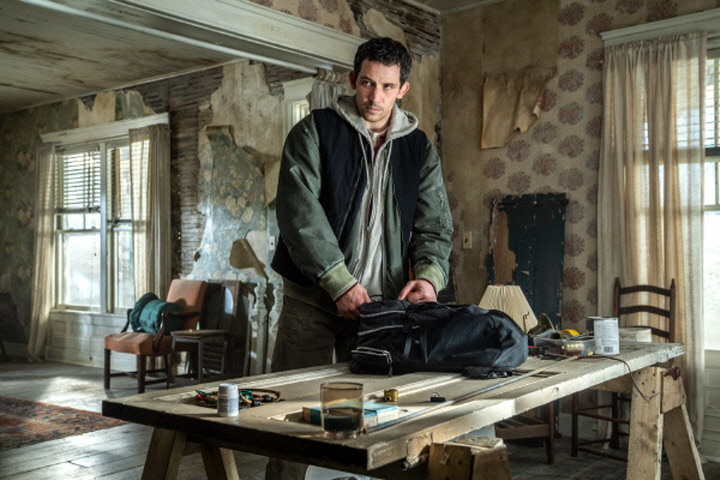
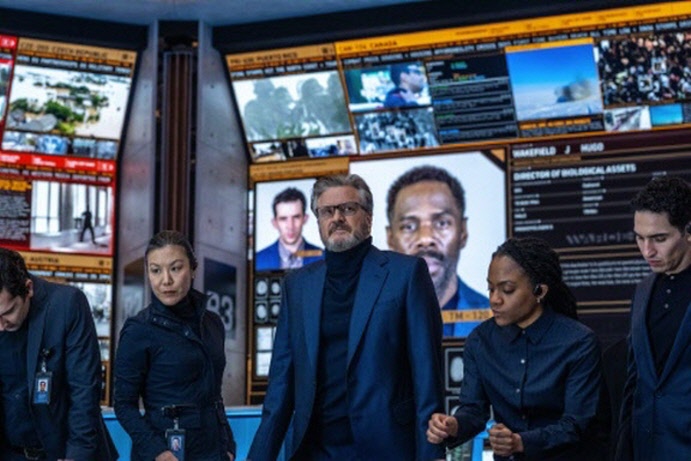
The story premise of the movie is quite familiar to say the least. Since that famous incident Roswell, New Mexico in 1947, the existence of alien entities from the outer space has been steadily and thoroughly covered up by a powerful agency called Wardex during next several decades, but now this hidden truth is on the verge of being fully disclosed in public thanks to a small group of defectors inside Wardex including Daniel Kellner (Josh O’Connor). Needless to say, those Wardex agents led by Noah Scanlon (Colin Firth) are quite determined to stop Kellner by any necessary, and the opening scene throws us right into an urgent situation surrounding Kellner.
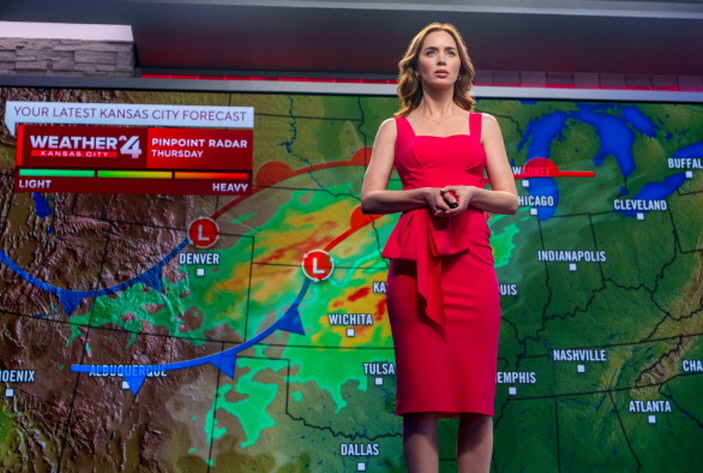
As Kellner keeps running away from the Wardex agents along with his girlfriend Jane (Eve Hewson), the movie also focuses on what happens to a Kansas City TV meteorologist named Margaret Fairchild (Emily Blunt). For some inexplicable reason, Fairchild suddenly finds herself capable of not only speaking several foreign languages but also sensing every personal detail of whoever she is looking, and she becomes all the more frightened and confused when another strange thing happens to her later.
While it is not much of a spoiler to tell you that these two main plots eventually converge around the middle act of the story, the screenplay by David Koepp, which is developed from the story by Spielberg himself, does not hurry itself much as occasionally exploring its thought-provoking main ideas. If alien entities really exist out there, can the humanity possibly process this surprising fact well? And how much will it actually affect our religious and existential beliefs?
The movie wisely avoids giving any definite answer to these and other questions arising from its story, while only emphasizing the undeniable value of empathy and open-mindedness. At one point later in the story, Jane, who was once a nun, asks some big questions to one of the nuns in her former convent, and that nun’s thoughtful reply is certainly something we should remember if the existence of alien entities in the outer space turns out to be real in our life.
Meanwhile, the movie steadily keeps things rolling for engaging us more. Spielberg and his crew members including his longtime cinematographer Janusz Kamiński give us a series of splendid moments including the one where Scanlon attempts a sort of mind control via an alien device, and each of these superb scenes functions as a building block for the considerable dramatic power of the expected climactic part.
Some of you may think the finale is a bit anti-climactic, but I admire how skillfully and thoughtfully Spielberg handles this part. Some of the special effects in the film are not very realistic on the surface, and those alien entities and their spaceships in the film are not so far from what we have seen countless other similar stuffs including, yes, “The X-files”, but these elements are handled with a lot of confidence and competence at least. In the end, we become focused more on the human reactions amply presented on the screen, and the score by John Williams, who is thankfully active even at present despite being over 90, carefully modulates the complex emotional undercurrents swirling below the screen.
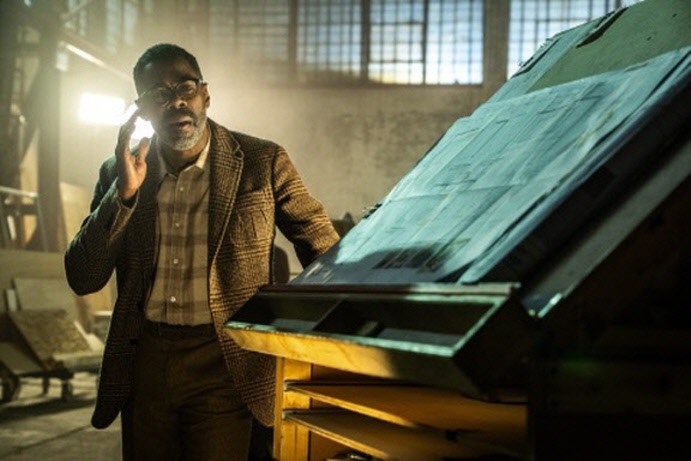
The main characters of the movie sometimes feel like more or less than plot elements, but Spielberg has a number of talented performers who can fill their respective roles with enough presence and personality. While Emily Blunt’s solid acting gradually occupies the center of the story as required, Josh O’Connor is also effective in his character’s inner struggle along the story, and Colin Firth and Colman Domingo complement each other well as the two opposing supporting characters in the story (It is really nice to see Domingo doing something much better than his embarrassingly cartoonish supporting turn in that disposable Michael Jackson biography film which came out several weeks ago, by the way). In case of Eve Hewson and Wyatt Russell, they manage to overcome their rather thankless parts, and Hewson is particularly impressive during a certain key scene of hers with Firth.
In conclusion, “Disclosure Day” does not reach to the greatness of “Close Encounters of the Third Kind” or “E.T. the Extra-Terrestrial” (1982), but it is definitely another terrific masterwork from Spielberg. Yes, he was once a young but talented director ready to impress us more in “Close Encounters of the Third Kind”, and, considering how much he has changed and evolved during last several decades, that time will never come again. Nevertheless, he demonstrates here that he can still handle his old familiar science fiction materials pretty well, and that is especially evident from the very last moment of the film. I instantly sensed where the movie must cut to the end credits, and, to my small delight, it did that at that exact point. That is something I cannot experience that often, you know.