South Korean film “Hope” will definitely grab you from the beginning to the end – and I am not joking at all. As a matter of fact, it is often so intense, thrilling, and captivating that I was actually let down a bit by the cliffhanger shot right before its end credits. To be frank with you, I came to learn later that the movie is in fact intended as the first chapter of the trilogy planned by its director, and I can only hope that the director will really surpass what is so strikingly presented on the screen.
However, I must tell you that, despite my reservation, I have some faith in director/writer/co-producer Na Hong-jin, who has always impressed me and many other South Korean audiences since his remarkable first feature film “The Chaser” (2008). I was instantly knocked out by the sheer intensity of that darkly brutal but undeniably electrifying thriller film, and I still remember several audiences around me gasping a lot when a certain minor supporting character in the film made a very fatal mistake to our devastation.
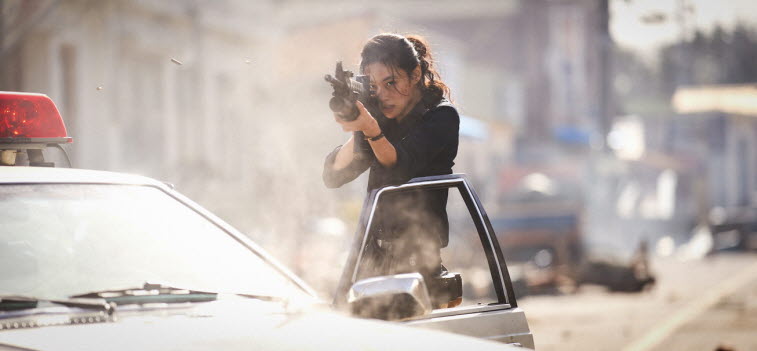
After his big career break via “The Chaser”, Na only made two films, “The Yellow Sea” (2010) and “The Wailing” (2016), before making a long-awaited comeback with “Hope” in this year, but he has not lost any of his cinematic mastery yet despite his 10-year absence. There are several superlative action sequences which will keep you stuck in your seat with a lot of tension and thrill, and they are all definitely worthwhile to watch on big movie theater screen.
And Na is so confident that his movie does not have much need for establishing its story and characters at first. Right from the opening scene, which is presented in deceptively slow pacing, the movie throws us into the ongoing situation surrounding its several main characters, and then it seldom slows down itself once their small world is suddenly swamped by a lot of mayhem and chaos beyond their control.
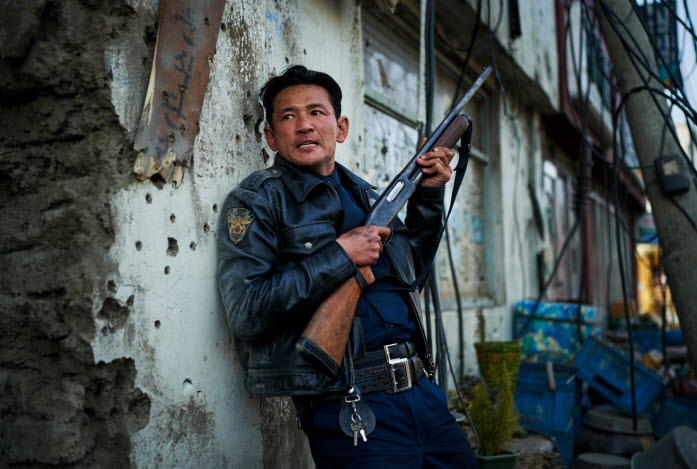
The main background of the story, which is set around the 1980s, is a little village located in the East Sea area near the demarcation line between South and North Korea. When he comes to see the carcass of a livestock animal on a road early in the morning, Beom-suk (Hwang Jung-min), the police chief of the village, is not concerned much at first, but he and others notice some strange things about this dead animal. It seems to be killed by some wild beast from a nearby forest, but they all have not seen anything like that, though they know that they should alert others as soon as possible.
Not long after that, the situation quickly becomes much more serious and dangerous than before. The village and its villagers are suddenly attacked by something quite unknown, and we are accordingly served with the first action sequence in the film, which is strewn with a lot of sound and fury as its main characters struggle to fight against this sudden big menace coming upon them. Although we often become more confused and clueless just like its main characters, the movie deftly and swiftly keeps things rolling without losing any narrative momentum at all, and we go along with that even though we do not totally understand what the hell is going on around its main characters.
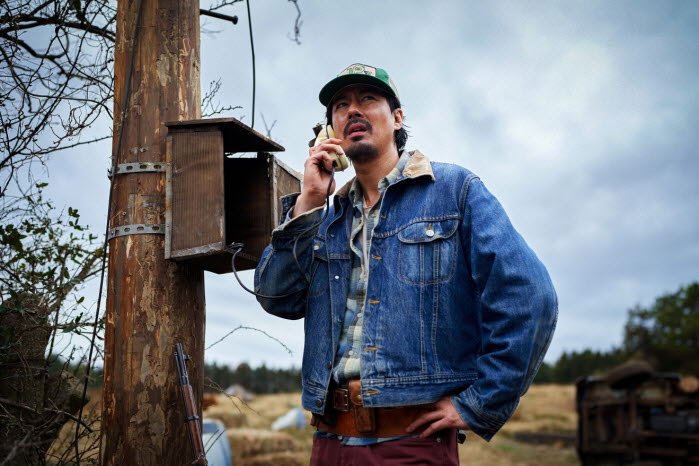
During its middle act, the story becomes bifurcated into two separate story lines. While Bum-seok and several others including a plucky (and brave) female police officer named Sung-ae (Jung Ho-yeon) try to get to the bottom of their situation, a bunch of hunters including Sung-ki (Zo In-sung) go into that nearby forest for catching whatever was responsible for the devastating attack on the village, but then they all find themselves quite overwhelmed by something they eventually discover later in the story.
And that is where the movie becomes rather shaky. When the movie was premiered at the Cannes Film Festival a few months ago, it received some criticism on its rather imperfect CGI, and I heard that Na and his crew worked more on their film besides doing some re-editing. I do not know how much the modified version currently being shown in South Korean theaters is different from the original version shown at the Cannes Film Festival, but I can tell you that 1) the editing by Kim Sun-min, who deserves some praise like cinematographer Hong Kyung-pyo and composer Michael Abels, is precise and efficient except a few notable glitches and 2) the CGI in the film is still not that good but mostly passable as far as I could see from the big screen of the Dolby Cinema screening room of a local theater.
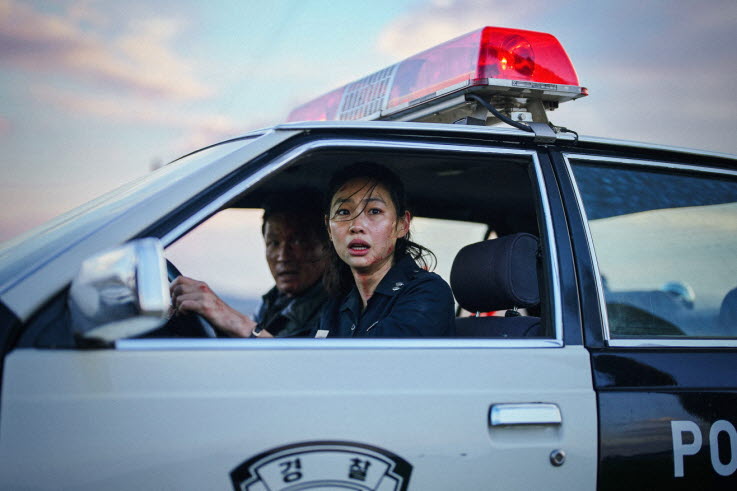
Furthermore, I sometimes felt rather distant to its story and characters, who are more or less than plot elements to be driven as fast and urgently as possible. Although often limited by their thin characters, Hwang Jung-min, Zo In-sung, and Jung Ho-yeon dutifully fill their respective archetype, and they are also quite convincing during a bunch of nail-biting moments in the film including the climatic action sequence unfolded between a police patrol car and a horse running besides that. In case of Taylor Russell, Cameron Britton, Alicia Vikander, and Michael Fassbender, they simply lend their voices and appearances to those CGI figures in the story, which are incidentally the most generic element in the movie.
In conclusion, “Hope” is not entirely without flaws, but its strong aspects compensate for its many flaws enough in my humble opinion. Despite its rather long running time (156 minutes) and the disappointing cliffhanger ending, I must admit that I was not bored at all during the rest of the film, so I recommend it even though I subtract a half star from my initial rating during its first two hours. Anyway, let’s hope that Na will deliver as much as he promises to us here.