Tokyo Twilight (1957) ☆☆☆1/2(3.5/4): A bleak family melodrama from Ozu

Yasujirō Ozu’s final black and white film “Tokyo Twilight” is quite bleak compared to many of his gentler movies. Yes, as I observed in my recent review on “Tokyo Story” (1953), there is always a subtle sense of sadness and melancholy under the surface in Ozu’s films, but “Tokyo Twilight” is willing to go much further with darker family drama materials, and it even approaches to the grimly harrowing territory of the works of Ozu’s fellow Japanese filmmaker Kenji Mizoguchi at times.

At the beginning, the movie slowly establishes several family characters at the center of the story. We meet a middle-aged senior bank employee named Shukichi Sugiyama (Chishū Ryū), and then we are introduced to his two adult daughters Takako (Setsuko Hara) and Akiko (Ineko Arima). Although she married a professor some time ago, Takako recently moved back to her family house along with her infant daughter, and it seems that she is not going back to her husband at least for now. In case of Akiko, both her father and his sister have wanted her to marry some nice lad someday, but she does not look so interested in marriage, and we later see her looking for someone here and there in a nearby area filled with bars and gambling sites.

We gradually gather that Akiko has been looking for her boyfriend due to a very serious matter, and we are not so surprised by how callously he responds to her when she finally meets him and then reveals to him that, yes, she is pregnant. With no one to discuss with on this serious matter of hers, Akiko becomes quite desperate, and the only consolation for her is that she can quickly take care of her problem with some money behind her back, though this does not make her feel any better about her current plight.

Of course, both Takako and Shukichi begin to sense that there is something odd about Akiko, but they only get more baffled as Akiko keeps quiet about her problem, and then there comes another big family matter to deal with. When Akiko drops by a local mahjong parlor, she comes across a middle-aged woman who works there, and, what do you know, this woman turns out to be her mother, who left the family with some other guy a long time ago. Although both Akiko and Akiko’s mother do not realize at first, Takako later comes to learn about her mother’s current status, and that naturally leads to a melodramatic moment between her and her mother.

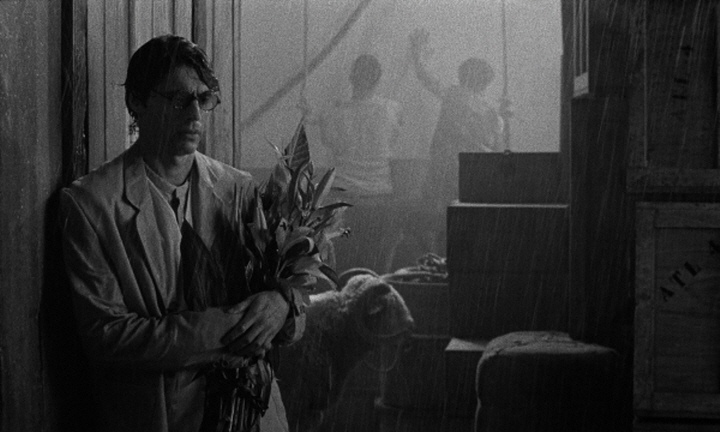
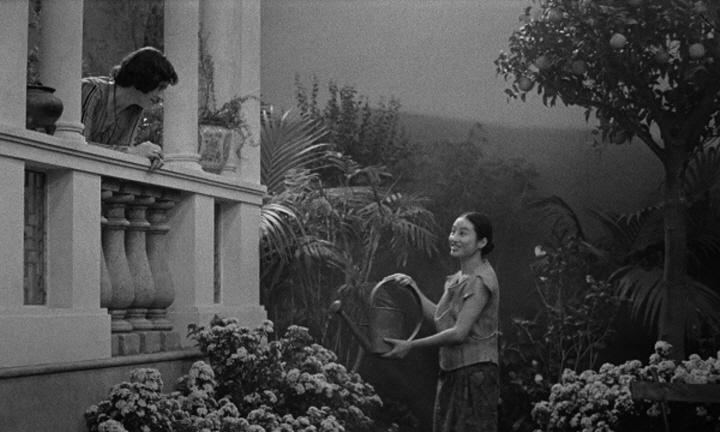
As usual, Ozu slowly rolls the story and characters under his calm and reflective direction, but the mood feels much starker here compared to many of his other films such as “Tokyo Story” (1953). Again, every shot in the movie is carefully composed in the screen ratio of 1.33:1 ratio, but Ozu and his cinematographer Yuuharu Atsuta deliberately fill the screen with barren darkness in most of the nocturnal scenes in the film, and this visual strategy further accentuates the despair and loneliness felt by the main characters. As a matter of fact, there are even a number of striking visual moments instantly evoking the moody and pessimistic qualities of noir films, and you can clearly discern that Ozu is really trying to do something much darker here in this film.

Meanwhile, the story gets gloomier as its main characters become more distant to each other with more failure to communicate. At one point in the middle of the film, Shukichi attempts to make his younger daughter talk more about whatever she is struggling with, but he only ends up being too stern and angry to Akiko. Takako also tries to talk more with Akiko as her younger sister, but they only become more distant to each other, and the situation between them gets worse when Akiko comes to learn about what her older sister tries to hide from her.

Even when the story eventually reaches to the finale, Ozu does not soften anything in the movie, and the following ending is quite bitter to say the least. In “Tokyo Story”, we are often saddened by how an aging couple become more distant to their children, but there are also some poignant moments of family love which console not only us but also the aging couple. In case of “Tokyo Twilight”, we are devastated by how Shukichi and his family members are shattered up to the point of no return in the end, and we cannot help but observe how his house feels much barren than before – and how his life may be filled with more loneliness and emptiness during the rest of his life.

Like “Tokyo Story”, “Tokyo Twilight” is packed with Ozu’s frequent performers, and it is interesting to watch how several performers from the former feel quite different in the latter. While Chishū Ryū did a flawless job of embodying his patriarch character as he did many times for Ozu, Ineko Arima and Sestuko Hara are heartbreaking in their characters’ respective dramatic arcs along the story, and several other familiar cast members including Isuzu Yamada, Haruko Sugimura, and Nobuo Nakamura are also excellent in their substantial supporting roles.

Overall, “Tokyo Twilight” is a relatively tough stuff which surely stands out as being sandwiched between “Early Spring” (1956) and “Equinox Flower” (1958) in Ozu’s remarkably consistent filmmaking career. I may not love it as much as “Tokyo Story” or “Floating Weeds” (1959), but I admire it as another Ozu film which needs more attention in my inconsequential opinion, and you should certainly check it out as soon as possible if you have admired Ozu’s films as much I and many others have.

Posted in Movies | Tagged , | Leave a comment

Saving a Dragonfly (2022) ☆☆☆(3/4): Painfully personal

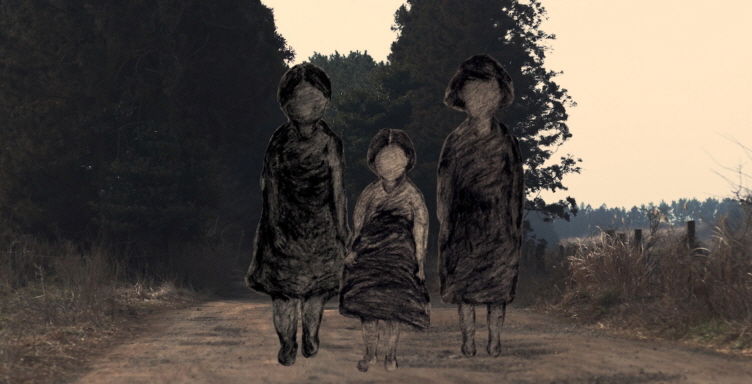
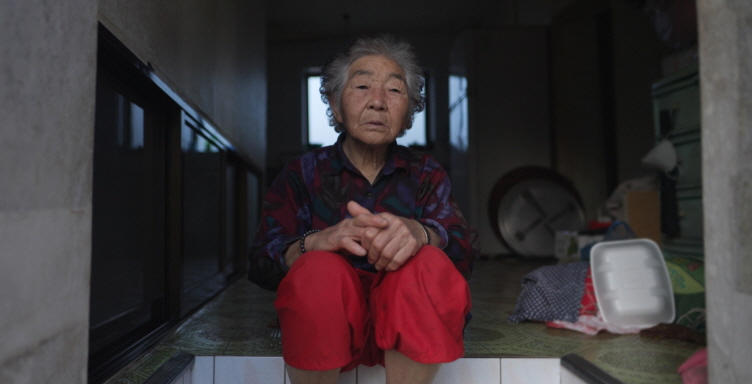
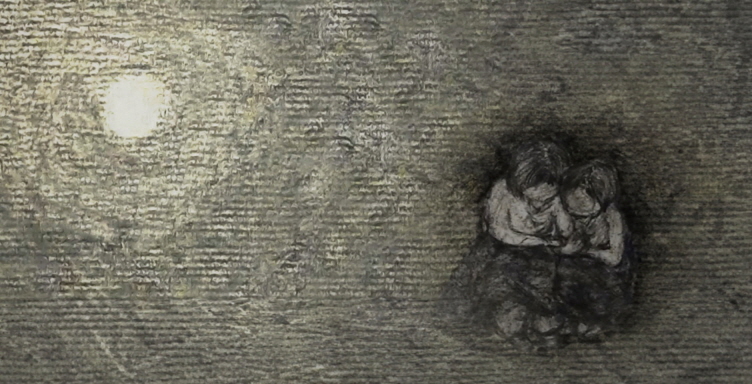
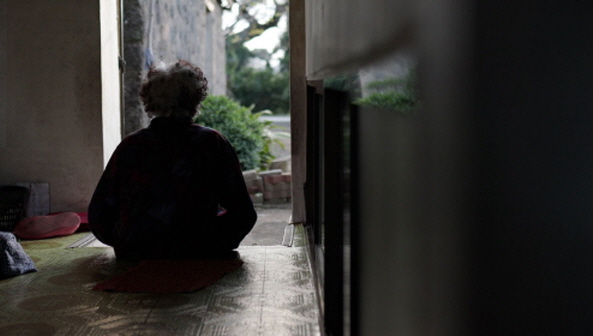
South Korean documentary film “Saving a Dragonfly” is painfully personal at times. It initially looks like as an innocuous personal project recording what was the most important period in the director and her classmates’ last high school year, but it comes to focus more on how things were often hard and difficult for many of them even after that period, and you will probably reflect more on how many of young South Korean students are pressured and then ground by their demanding education system even at this point.

In 2014, director Hong Da-ye was a 17-year-old high school girl, and the first half of the documentary mainly consists of a series of raw footage clips shot by her video camera around November 2014. As some of you know, thousands of senior high school students in South Korea take the national college entrance examination in the middle of every November, and we see how Hong and her classmates were both excited and nervous while the examination was approaching day by day. Nevertheless, quite hopeful about her future, Hong decided to record her classmates for her little project, and her classmates willingly let her do that even though they were not exactly pleased about that as revealed later in the documentary.

After the examination, Hong and her close friends surely felt less pressured than before, but Hong and some of her friends subsequently experienced lots of disappointment due to their dissatisfying examination results. In case of Hong, she had to take another chance in the next year, and there is a brief moment showing how the situation was quite stressful for her as she prepared for the examination of the next year.

Anyway, Hong eventually succeeded in getting a good examination score for attending some prestigious art college where she could study on filmmaking, but she still felt a lot of anxiety and frustration as struggling to adjust herself to her new environment. Like many young people around her age, she believed that everything would go well for her once she went to a college (Full Disclosure: I also did as beginning my first undergraduate year at the Korean Advanced Institute of Science and Technology), but she soon came to face one big difficulty after another as a young adult, and that only made her more insecure and depressed than before.

Needless to say, many of Hong’s classmates also struggled a lot in one way or another. There is a particular friend of hers who is not named here in the documentary in contrast to many of her classmates, and this friend often called for some help and support to Hong. Although she was usually willing to help and support this friend at first, Hong eventually got tired and frustrated with this friend mainly because of struggling with her own mental instability, and this eventually led to the breakup between them.

The documentary presents Hong’s serious personal problems during that time without any hesitation. Often mired in self-hate and depression, she sometimes committed a serious act of harming herself just for feeling like being alive and in control, and she also actually considered suicide more than once. At one point, she reminisces about when she failed to jump from one of those big river bridges in Seoul due to a rather absurd reason, and that incidentally took me back to when I miserably failed in my first suicidal attempt during my high school year (I attempted to kill myself just because I felt quite depressed by my utterly disastrous mathematics test score, by the way).

Nevertheless, Hong kept recording small personal moments from her and others around her during next several years, and you will be often impressed by the honesty and sincerity observed from her earnest filmmaking process. At one point later in the documentary, she and her camera simply observe her parents from the backseat of her father’s car, and the conversation between her and her parents gradually becomes emotionally intense as they frankly talk about her mental struggles during last several years. While they might not have been always there for Hong, Hong’s parents tried their best for their dear daughter, and there is a little touching moment showing a number of sincere personal notes from Hong’s mother.

As looking back at all those raw footage clips shot by her around the last year of her high school period, Hong naturally becomes more reflective more about how she tried to capture what turns out to be a lot more fleeting than expected as time keeps going by. While she is quite different from her younger self at present, she has also grown up with some emotional maturation in addition to being ready to go forward with her life, and so have many of her close friends. Around the end of the documentary, her two friends gladly provide some reflective comments on what Hong shot during last several years, and you will see how much they have changed just like their friend.

In conclusion, “Saving a Dragonfly”, which incidentally comes from the one symbolic recurring moment in the documentary, is worthwhile to watch for its thoughtfully intimate presentation of personal memories and experiences, and, as a guy who has had a lot of problems involved with self-help and depression, I think the documentary will help many high school students out there in the South Korean society, who will come to see that they are not alone at all after watching this good documentary. That may not look like a big help, but it will mean a lot to them, I assure you.

Posted in Movies | Tagged , , , , , | Leave a comment

Paper Man (2023) ☆☆☆(3/4): A life on cardboard

South Korean independent film “Paper Man” works best when it humorously focuses on its pathetically desperate hero’s efforts for restarting his life. While we are sometimes amused by his comic struggles along the story, we come to care about this rather unlikable dude and a few people around him, and it is sad and harrowing to watch when they get another harsh dose of their grim reality later in the story.

The opening part of the movie quickly establishes how things get much worse for In-mok (Kwak Jin). There was a time when he was a promising young wrestling player who won a gold medal at some major international competition as shown from an old photograph of his, but his life has been going down and down since that brief moment of glory, and now he finds himself evicted from his current residence for failing to pay the rent for some time. Because he is almost penniless without anyone to help him, he considers becoming a Buddhist monk, but that turns out to require a lot of things besides enough qualification, and that makes his situation all the more desperate than before.

In the end, In-mok has no choice but to stay under a shabby bridge at least for a while, and there comes one seemingly nice idea via an unexpected encounter. It turns out that an old man has already been living under the bridge, and this old man has a pretty simple lifestyle. He just lives on a portable mat made from cardboard boxes, and he has earned his meager living day by day as collecting used cardboard boxes here and there in a nearby neighborhood.

This looks pretty easy to a younger man like In-mok, but, of course, it turns out to be more challenging than expected. First, he has to spot used cardboard boxes as quickly as possible, and he also has to compete with several other old collectors in the neighborhood besides the old man. Fortunately, things get a bit easier for him once he happens to acquire a handcart, and he also recruits a mentally disabled man in the neighborhood as his helper, who gladly helps In-mok in exchange for the steady supply of his favorite snack.

As In-mok gets more accustomed to his new job and lifestyle, we see how things get better for him bit by bit. He constructs his own little private space with several used cardboard boxes, and he also finds some clever ways to improve his little business more. In addition, he also gets a little friendly with a woman who runs a local junk shop alone by for herself, and it seems that he may get closer to this lady if they continue their mutually beneficial business relationship.

However, In-mok is eventually reminded again of the harsh reality surrounding him after this brief period of hope and happiness for him. Just like those old competitors pushed away by him, he also gets pushed away by a bunch of younger people ready to earn money by any means necessary. In addition, selling used cardboard boxes soon becomes less profitable than before, and that certainly frustrates him a lot.

Furthermore, there is a young adolescent girl who comes to stay around him longer than expected. She is one of those many young boys and girls who have been cruelly exploited in one way or another, and her boss, who was incidentally one of In-mok’s junior athletes, is quite determined to make her pay for her temporary absence.

Around the point where In-mok belatedly comes to learn about the girl’s secret, the movie naturally becomes much darker with more despair and frustration, but the screenplay by director/writer Ki Mo-tae, who makes a feature film debut here, stumbles more than once during its contrived last act. For example, the scene between In-mok and a certain figure from his past feels too artificial to be as cathartic as intended, and the movie also resolves In-mok’s anger and despair too conveniently without much dramatic impact.

Nevertheless, the movie is supported well by the commendable lead performance from Kwak Jin. Although we do not get to know a lot about how much In-mok has struggled for years, Kwak embodies well what has been accumulated behind his character’s gruff appearance, and he also did a good job of balancing his character between humor and pathos without making any cheap excuse on his character’s more abrasive sides.

Several other main cast members of the movie also leave some impression as dutifully filling their respective spots around Kwak. While Kang Han-na brings enough sense of life and spirit to her supporting role, Jang Hyun-jun is gradually endearing as revealing more heart and soul behind his mentally disabled character, and Kang Dae-wook steals the show even when his character simply occupies his own place as usual.

Overall, “Paper Man” is alternatively bitter and humorous as realistically looking into the economic hardships of its hero and several main characters, and I enjoyed its story and characters enough to overlook its several weak aspects including its dissatisfying finale. Although his overall result is not totally successful, Ki shows considerable potential at least as another new talent to watch, and it will be interesting to see whatever may come next after this promising beginning for his filmmaking career.

Posted in Movies | Tagged , | Leave a comment

No Heaven, But Love (2023) ☆☆☆(3/4): A modest high school queer romance film

I could not help but get distracted more than once as watching South Korean independent film “No Heaven, But Love”. While it mostly works as a modest but intimate high school queer romance film, the movie is rather uneven on the whole as trying to unfold two different strong narratives together, and I am not so sure about whether its second half works as well as intended, though I still recommend it to you for its strong points.

At the beginning, the story, which is incidentally set in 1999, establishes how things have been hard and difficult for Joo-yeong (Park Soo-yeon), a female high school student who is also a member of her high school taekwondo team. Not long after she and other team members finish their latest training session, they get checked on their weight for the upcoming competition, and it is painful to see how Joo-yeong gets harassed by not only her abusive coach but also several other team members just because she fails to gain a few more kilograms for her qualification.

We observe how she often feels quite alone as there is no one she can really talk with about her serious issue of bullying. While Joo-yeong’s mother, who works as a counselor for juvenile delinquents, is often too busy to pay more attention to her daughter, Joo-yeong’s best friend Seong-hee (Shin Gi-hwan), who happens to be the most prominent member in her taekwondo team, is always ready to support Joo-yeong along with a certain mutual male friend of theirs, but Joo-yeong cannot possibly tell anything about her ongoing predicament to Seong-hee for now, mainly because Seong-hee prepares for an important match for her athletic career.

On one day, someone else comes into Joo-yeong’s life. As a part of her program for juvenile delinquents, Joo-yeong’s mother lets a girl around Joo-yeong’s age stay at their house, and, what do you know, Joo-yeong actually encountered that girl more than once before. Her name is Ye-ji (Lee Yoo-mi), and she and Joo-yeong met each other for the first time at a local fast-food restaurant where Ye-ji works as a part-time employee. In addition, Ye-ji later happened to save Joo-yeong from her latest trouble, and Joo-yeong certainly appreciated Ye-ji’s kindness, but she feels a bit awkward about sharing her bedroom with Ye-ji during next several weeks.
Nevertheless, Joo-yeong soon finds herself sexually attracted to Ye-ji. While she is at a loss with what to do with her romantic feelings toward Ye-ji, she and Ye-ji subsequently spend a little country vacation along with her two friends thanks to Ye-ji’s aunt, and that is when she comes to discover that the feelings between them are quite mutual. Although they still do not know what to do with their mutual feelings except simply going along with that, Joo-yeong feels much happier than before, and she and Ye-ji come to spend more time together.

Meanwhile, we get to know more about how the situation gets worse for Joo-yeong’s taekwondo team members including Seong-hee because of their abusive coach. When Joo-yeong and Ye-ji unexpectedly discover what has actually been happening to Seong-hee, Joo-yeong takes a decisive action for her friend, but, alas, the situation only gets worse for them because nobody believes what Joo-yeong and Ye-ji witnessed during that time.

And Joo-yeong and Ye-ji’s romance soon gets interrupted as expected. When she belatedly comes to learn about her daughter’s romantic relationship with Ye-ji at one one night, Joo-yeong’s mother, who is your average hardcore Christian, does not approve of that at all, and that inevitably leads to a moment of heartbreak for both Joo-yeong and Ye-ji.

During its second half, the story becomes a lot more melodramatic with more cruelty against Joo-yeong and Ye-ji, and this feels a bit too jarring compared to the sensitive depiction of the development of their romantic relationship during the first half. In addition, their story is sometimes eclipsed by the other main narrative involved with Seong-hee’s serious plight, though her narrative is equally important considering how things were often pretty bad and unjust for many young girls like her before the #MeToo era.

At least, director/co-writer Han Jay, who will give us her second feature film “Favorite Restaurant” (2024) in the next year, handles her main characters with enough care and respect, and her two lead actresses generate enough chemistry between them whenever they share the screen together. While Park Soo-yeon is convincing in Joo-yeong’s gradual awareness of her sexuality along the story, Lee Yoo-mi effectively complements her co-star with her more confident appearance, and they are also supported well by several good main cast members including Kim Hyun-mok and Shin Gi-hwan.

In conclusion, “No Heaven, But Love”, which is released as “We Can’t Go to Heaven but Can Love” in South Korean theaters, is not wholly without flaws, but it is fairly engaging thanks to its good direction as well as the good chemistry between its two lead performers. Compared to several other recent South Korean queer films such as “The Handmaiden” (2016) or “Love in the Big City” (2024), it does not go that far with its queer story elements, but it is surely nice to see another well-made queer drama film available to many South Korean audiences out there, and I sincerely hope that it will put another dent on the prejudice against the LGBTQ+ people in the South Korean society just like many of its senior South Korean queer films have done during last several years.

Posted in Movies | Tagged , , , , , | Leave a comment

Debt (2023) ☆☆1/2(2.5/4): A little comedy about debt

When I saw South Korean independent comedy film “Debt” early in this morning, two audiences sitting behind me, who were incidentally the only other audiences in the screening besides me, frequently chuckled from the beginning to the end. I wish I could join in their frequent amusement, because I do not think the movie is as funny as they felt during that time. Sure, I am not a totally humorless dude at all, but, in my humble opinion, the movie is more or less than an extended one-joke comedy which keeps spinning its wheels without much development for bigger laughs.

First, we are introduced to a lad named Hong-min (Mun Yong-il) and several members of an odd survivalist group he recently joined. The opening scene shows them making bows and arrows together for hunting some wildlife animals, but, to our little amusement, they turn out to be quite ineffectual from the very beginning, and their clumsy animal trap only catches Hong’s father Dae-bok (Go Sung-wan), who happens to drop by for bringing some food for his son.

While he worries a lot about whatever will happen in his son’s life, Dae-bok has a much bigger matter to deal with. His little store, which located in some rural town, has been riddled with a serious finance problem, and he needs some cash right now for paying his rent as well as giving a monthly alimony to his divorced wife. Although his older daughter visits later, she is not particularly willing to help her father because she is busy with earning living for herself, and, just like two old busybody ladies in the neighborhood, she also does not have anything good to say to her father or her younger brother.

Actually, Dae-bok has someone who must pay him a lot as soon as possible. He is a local thug named Won-chang (Seung Hyung-bae), and it turns out that he has the cigarette debt of at least 3 million won to be paid to Dae-bok. When Won-chang’s underling drops by Dae-bok’s store for getting another carton of cigarette, Dae-bok eventually decides that enough is enough, so he refuses to hand out any cigarette to Won-chang.

Won-chang is naturally pissed off about this, but, what do you know, he turns out to be much softer and gentler than his beefy body suggests. When Won-chang’s underling complains about his impossible situation between Dae-bok and Won-chang, Won-chang immediately throws some harsh words at his underling, but he soon regrets because, well, he has the only one underling working for him at present. He comes to mull on how to apologize to his underling, and that is presented shown in black and white film just for emphasizing that imaginary aspect of this moment (This happens more than once during the rest of the film, by the way).

However, Won-chang eventually comes to clash with Dae-bok as they adamantly stick to their respective positions, and that leads to the most amusing moment in the film. As they have a big argument between them, the camera simply observes their growing conflict, and you may get a little more amused as those two old ladies phlegmatically regard Won-chang and Dae-bok’s argument from the distance.

When he comes to learn that his father was threatened by Won-chang, Hong-min naturally becomes quite furious, so he later takes an immediate action on Won-chang. However, not so surprisingly, he only comes to make a fool of himself in front of Won-chang, and that leads to another clash between his father and Won-chang.

Now this feels like a solid comic setting for more laughs to come, but the screenplay by director/writer Ko Bong-soo, who previously made several small independent films including “Humidity Alert” (2021), somehow never flies off from that. Instead, it simply goes on and on with its one-joke story premise without much development in terms of narrative momentum or characterization, and you may feel rather impatient with its thin comic plot, which is not enough even for its relatively short running time (76 minutes).

Around its last act, the movie eventually tries a bit of gravitas, but it does not work as well as intended mainly because it does not bring much depth to its main characters. While we come to like Dae-bok and Won-chang a bit more than expected, we still never get to know them that much even in the end, and that is why the sudden sentimental finale feels rather superficial to us.

At least, Ko knows one or two things about how to direct his performers, who manage to fill their respective spots fairly well on the whole. Go Sung-wan shows considerable comic potential as your average grumpy old South Korean guy, and he and Seung Hyung-bae, who is also effective in his supporting role, click well with each other during several key scenes in the film. To be frank with you, I wish the movie utilized more of these good actors’ comic talent, and the same thing can be said about Mun Yong-il, who is mostly demanded to look dim and clumsy throughout the film.

Overall, “Debt” is not totally without enjoyable elements, but it could be improved via adding more substance and personality to the story and characters. It is occasionally funny and amusing to some degree, but I still think the reactions from those two audiences behind me is more amusing, and that is all I can say for now.

Posted in Movies | Tagged , , , | Leave a comment

A Normal Family (2023) ☆☆☆(3/4): They need to talk about their kids

South Korean film “A Normal Family” is a darkly tense drama about the two different couples facing a serious moral issue involved with their respective kids. As they become conflicted more over their shared matter, the movie coldly exposes more of how superficial and hypocritical its four main characters can be in each own way, and we are alternatively chilled and repulsed while observing some morbid irony in their ethical struggles along the narrative.

At the beginning, we get to know about how these two couples have led a fairly affluent middle-class life. Jae-wan (Sol Kyung-gu) is a very successful lawyer, and he and his young second wife Ji-su (Claudia Kim) live comfortably in a big and cozy house along with their infant kid and an adolescent daughter from his first marriage. Jae-wan’s younger brother Jae-gyu (Jang Dong-gun) is an equally successful pediatrician, and he and his wife Yeong-kyung (Kim Hee-ae) live in their nice apartment with their adolescent son and his aging mother, who may soon have to be sent to the facility for old people considering her worsening dementia.

Jae-wan and Jae-gyu have routinely had a dinner at some high-end restaurant along with their wives, but both Jae-gyu and his wife do not like much spending time with Jae-wan and his wife. While Jae-gyu is annoyed with how his older brother often shows off his more affluent status, his wife still finds it difficult to accept Jae-wan’s second wife as a family member, and we sense more strain among these four people as they are seemingly courteous to each other at their dinner table.

And then there comes an unexpected trouble. When these two couples are having another dinner time together as usual, Jae-gyu’s son and Jae-wan’s daughter go outside for having some fun and drink together at the night party held at one of her friends. When they are later going back to their respective houses, they are quite drunk to say the least, and that is when they commit something quite serious which is reported on TV on the very next day.

After subsequently coming to learn of what these two kids did, their parents are certainly horrified, and they are also quite concerned as the police are already looking for the culprits. Although their criminal deed happened to be recorded by a nearby surveillance camera, the kids are not totally identified yet, so Jae-wan begins to consider covering up everything as much as possible. After all, there has not been any incriminating evidence yet, and Jae-wan believes that he and his younger brother really should focus on protecting their kids from any possible legal trouble.

In contrast to his older brother, Jae-kyu cannot help but feel more conflict about what he should really do about their difficult circumstance. His wife insists that they should worry about protecting their son’s supposedly promising future, and he is painfully reminded again that he has not paid much attention to his son as often caring more about his young patients.

After taking some time in establishing and then developing its four main characters during its first act, the screenplay by director Hur Jin-ho and his co-writers Park Eun-kyo and Park Jun-seok, which is based on Dutch novelist Herman Koch’s “The Dinner” (It was already adapted into three films including Oren Moverman’s “The Dinner” (2017), by the way), delve more into their respective inner conflicts. As Jae-kyu becomes more troubled about his son, his wife comes to show more of her hypocrisy, and this certainly strains their supposedly stable and amiable relationship. Although he seems unflappable at first, Jae-wan comes to feel more doubt and uncertainty later in the story, and the same thing can be said about his second wife, who becomes more watchful for her stepdaughter for an understandable reason.

These four people’s troubling personal circumstance is sometimes mirrored by another situation involved with both Jae-gyu and Jae-wan. Jae-wan defends the son of some wealthy man who recently caused a serious car accident, and Jae-gyu happens to be assigned to a young girl severely injured by this horrible accident. After watching his client’s sheer amorality, Jae-wan is more disturbed to see the same attitude from his daughter. As watching how much that injured young girl and her mother suffer, Jae-kyu feels more guilt about covering up his son’s crime, but he only ends up wondering more about whether his son deserves the second chance, and that eventually leads to an ironic moment between him and his older brother later in the story.

Although the finale is too heavy-handed in my inconsequential opinion, the four principal cast members did a solid job of carrying the film together under Huh’s good direction. While Sol Kyung-gu is dependable as usual, Jang Dong-gun’s more expressive acting complements well Sol’s restrained performance, and Kim Hee-ae and Claudia Kim hold each own spot well around Sol and Jang. Their characters are not particularly likable to say the least, but the four main members give us credible human figures to observe, and that is the main reason why we keep paying attention to the end of the story.

Overall, “A Normal Family” is not definitely something you can casually watch on Sunday afternoon, but it is recommendable for its engaging storytelling and competent direction. Although his recent films such as “Forbidden Dream” (2019) were less impressive compared to his early films such as “Christmas in August” (1998), Huh shows here that he has not lost his touch yet, and the movie will probably make you reflect on its main subjects for a while after it is over.

Posted in Movies | Tagged , , , , | 1 Comment

Dirty Money (2024) ☆☆(2/4): A clumsy genre product

I do not mind watching movies about unlikable characters, but South Korean thriller film “Dirty Money” did not engage me at all. The movie is not only utterly contrived but also quite mediocre in terms of story and characters, and I did not care much about whatever is going to happen, while only observing that they had it coming from the beginning. 

The guy at the center of the story is Myung-Deuk (Jung Woo), a corrupt detective who happens to come across a chance to change his life once for all. Via a bit of information from one of those criminals associated with them, he and his partner Dong-hyeok (Kim Dae-myung) come to learn that there has been the secret transaction of a huge amount of dirty money from some big local Chinatown gang to their big boss in China, and they become more tempted when they later get more information about when and where this criminal activity has been done. Because both of them are in each own desperate need for cash right now, Myung-Deuk suggests to his partner that they should rob those Chinatown gangs, and Dae-myung agrees to that despite his initial reluctance.

At first, all they will have to do looks pretty simple. First, they need an accomplice who can supply a pair of firearms to be used for robbery, and they easily recruit a young policeman who has been eager to get some extra money behind his back. Besides stealing the firearms from his police station, this lad also provides an abandoned place for hiding the money they are going to steal, and then we see he and his two accomplices prepare a bit together for their big criminal plan.

Of course, their plan soon goes pretty wrong once they attempt an ambush on those Chinatown gangs. As the consequence of their criminal action leads to a full police investigation led by their team, Myung-deuk and Dong-hyeok naturally become a lot more nervous than before, and then there comes an old colleague of Myung-deuk, who knows a lot about how much Myung-deuk has been corrupted after one wrong decision which ruined his career.  

What naturally follows next is a cat and mouse game between Myung-deuk and that detective, but the movie seriously lacks personality and competence in many aspects. Both Myung-deuk and Dong-hyeok are not particularly developed well as main characters, and a melodramatic subplot involved with Myung-deuk’s very ill daughter is shamelessly manipulative for trying to make us feel some pity and sympathy for him. Sure, he does have an understandable human reason behind his corruption, but the movie often overplays that too much in my humble opinion, and that makes the last act look all the more predictable.

In addition, most of the other substantial characters in the story are more or less than cardboard figures to be moved here and there just for plot necessity. For example, that detective character who suspects Myung-deuk more along the story seems to have some complicated feelings about his opponent, but, the movie eventually discards that later in the story without much thought. In case of a bunch of ruthless Chinatown gangs who also come to suspect Myung-Deuk more, they are bland and unpleasant stereotype figures who look like the leftovers from “The Yellow Sea” (2010) and “The Outlaws” (2017), and their several moments of extreme violence do not add much to the story and characters while only leaving a bad taste on us.

Above all, the movie failed to surprise me as I could easily guess its every move in advance. Yes, Myung-deuk and his partner eventually find themselves in a very tricky situation as they desperately try to find a way out for them in one way or another, but they only keep doing unwise things to cause more mess around them. In my humble opinion, the movie could be a bit more entertaining if it depicts their pitiful struggles with a sense of ironic humor, but the movie is solemnly serious about that from the beginning to the end, and it even fails to generate enough suspense to hold our attention. As a result, we only become more distant to the story and characters, while being more aware of its half-baked plot machination.

The main cast members do try a lot for filling their respective parts, but many of them are not particularly charismatic enough for that. While Jung-woo is often limited by his flat and uninteresting hero character, Kim Dae-myung provides some levity as Myung-deuk’s pathetic partner, and Park Byung-eun does not have much to do as merely looking tense and menacing as required. In case of several other cast members including Cho Hyun-chul, Teo Yoo, and Han Hye-ji, they are regrettably wasted due to their superficial supporting roles, and I can only hope that the movie will just be a minor blip in Yoo’s promising acting career, which has been recently boosted by his stellar leading performance in Oscar-nominated film “Past Lives” (2023).       

On the whole, “Dirty Money”, directed by Kim Min-soo, is thoroughly disappointing for its uninspiring handling of genre elements, and I must confess that my mind often searches for better South Korean genre flicks such as “A Hard Day” (2014), which is also about a corrupt cop hero’s desperate struggle for any possible way out from his increasingly problematic situation. Although I observed its rotten hero’s increasingly messy plight from the distance, I had a fair amount of fun and thrill from “A Hard Day”, and I still fondly remember that entertaining experience even at this point. As a matter of fact, you should check this out instead, and you will definitely thank me for that.

Posted in Movies | Tagged , , , | Leave a comment

Worlds Apart (2024) ☆☆1/2(2.5/4): As life goes on for her and her aunt

Japanese film “Worlds Apart” simply strolls along with its two very different main characters who somehow find a way to get along with each other as respecting each own boundary. While the movie itself is mostly mild and gentle on the whole, its two main characters and their story do not feel particularly realistic to me, and I must confess that my mind often went somewhere during my viewing instead of getting really engaged in how life goes on for them.

The movie opens with a very devastating incident for a young adolescent girl named Asa Takumi (Ikoi Hayase). Her parents get killed due to a sudden car accident which happens right in front of her eyes, and we soon see her going through the identification of her dead parents and then the following funeral for them. Amid those attending relatives gossiping about their parents, she continues to grieve over her immense personal loss, and, as shown from a brief imaginary moment of hers, she feels totally alone by herself.

And that is when Makio Kodai (Yui Aragaki), the estranged younger sister of Asa’s mother, comes forward. Although, as she frankly tells Asa later, she has always hated Asa’s mother, Makio decides to take care of Asa as her temporary guardian after sensing that Asa really needs someone around her, and Asa does not have any problem with her aunt’s decision even though she does not know her aunt that well.

While their initial interactions are awkward to say the least, Asa gets accustomed to her new environment more easily than expected, and Makio turns out to be more caring than she seems on the surface. Although she honestly admits that she is not exactly a responsible adult, she becomes more serious about taking care of her young niece as consulting with her ex-boyfriend who is incidentally a lawyer, and her best friend Nana Daigo (Kaho) is delighted to see how things become a little different in Maiko’s little apartment thanks to Asa. Once she sees that her aunt’s apartment needs some cleaning, Asa willingly does the job without hesitation, and her aunt surely appreciates that while focusing more on her writing (She wrote a popular book whose following success was big enough for buying her apartment, by the way).

Of course, Asa sometimes misses her parents, and the movie observes how she still struggles with her ongoing grief. Due to her best friend Emiri Nara (Rina Komiyama), everyone in her school comes to learn about her tragic incident right after their graduation day, and Asa becomes quite furious about that as clashing a lot with Emiri.

Nevertheless, like many other people in grief, Asa gradually recovers as her aunt wisely stands apart from her without any unnecessary interference. Because she still hates her older sister even after her older sister’s death, Makio understands Asa’s emotional status to some degree, and she just patiently waits for her niece to process her lingering sadness and then have a moment of reconciliation with her best friend.

Around that point, the screenplay by director/writer Natsuki Seta, which is based on the popular manga book of the same named by Tomoko Yamashita, becomes more episodic. While Makio keeps focusing on her writing, Asa begins her first year at high school along with her best friend, and she comes to join a school rock band even though she is not so sure about her musical talent. Nevertheless, she becomes more passionate about writing some lyrics, and she surely gets some advice from her aunt.

It goes without saying that Makio and Asa’s issues involved with Asa’s dead mother will eventually come back during its last chapter, but the movie is sometimes too unfocused to bring enough human depth to its story and characters. While we get to know a bit more of several schoolmates around Asa, they simply come and go without much impression, and I wish the movie delved deeper into her friendship with Emiri, which gets seriously tested when Emiri reveals her little personal secret to Asa later in the story.

Above all, both Asa and Makio are rather flat archetypes without much realistic human quality even though Ikoi Hayase and Yui Aragaki try their best in filling their respective roles with some sense of life. We often see Makio trying to write a few words at least, but we never get to know much about her writing process, and her relationship with her older sister turns out to be less complicated than expected. In case of Asa, she swings back and forth between innocence and maturation so frequently that she is more like a product of creative writing than a real human figure to observe, and you may feel some urge to take her to a psychiatrist whenever she feels harshly judged by her dead mother inside her young mind.

Several supporting characters around Makio and Asa are also superficial in my inconsequential opinion, but the supporting performers acquit themselves fairly well. Kôji Seto, Kaho, Rina Komiyama, and Guin Poon Chaw manage to compensate for their cardboard roles, and Guin Poon Chaw, who plays Makio’s concerned mother, has a sincere moment when her character comes to have a little private conversation with Makio around the end of the movie.

Overall, “Worlds Apart” did not engage me enough, but it has some good elements including its gentle and sensitive mood at least. I must point out that Shô Miyake’s recent movie “All the Long Nights” (2024) is a better and more realistic example of your average Japanese healing drama, but you may enjoy “Worlds Apart” more than I did, especially if you have read that popular manga book it is based on.

Posted in Movies | Tagged , , , | Leave a comment

Single8 (2023) ☆☆☆(3/4): One little summer filmmaking

Japanese film “Single8” will bring a smile to anyone who has ever been fascinated with filmmaking. Like many similar films such as other recent Japanese film “It’s a Summer Film” (2020), the movie is brimming with the joy and excitement of filmmaking, and we gladly go along with that while often being tickled a lot by many silly aspects of the micro-budget filmmaking process of several main characters in the movie.

The story is set during the summer of 1978, when millions of Japanese audiences belatedly joined the enormous global enthusiasm toward George Lucas’ monumental SF film “Star Wars” (1977). After watching that great movie, our high school student hero Hiroshi (Yû Uemura) has been quite eager to recreate its magnificent opening shot, but, alas, he still does not know how to do that with his old 8mm movie camera.

However, he eventually finds a rather brilliant idea on how to make his model spaceship look bigger and wider for the camera, and this eventually reignites his passion for filmmaking. Along with one of his friends and a college student who is the part-time employee of a local camera/photograph shop, Hiroshi comes to hone his filmmaking skill more as learning about how to operate a movie camera more skillfully, and, what do you know, his final result shows considerable improvement compared to several initial trials.

And then there comes an unexpected opportunity for Hiroshi. When his classmates discuss what they should do for the upcoming school festival to be held not long after the summer vacation, he impulsively suggests that they should make a little movie even though he does not have any idea on what kind of movie he is going to make. Mainly thanks to Natsumi (Akari Takaishi), a pretty female student he has liked a lot since their middle school period, their classmates eventually agree to Hiroshi’s suggestion, and he soon embarks on his first official movie project along with his two friends.

What follows next is a series of amusing scenes where Hiroshi and his two friends struggle through something equivalent to pre-production process. First, they must get the approval of their classroom teacher, and, fortunately, their classroom teacher turns out to be quite more supportive than expected. For example, the teacher emphasizes the importance of a narrative to engage their audience, and we soon see Hiroshi and others doing some brainstorming on the story and characters for their movie.

As it was already decided from the beginning, Hiroshi and his friends are going to make a SF movie, and they manage to complete their screenplay before their due date, but there is one big problem. While one of his friends is willing to be the lead actor of their film, they also need a girl who will be their lead actress, and Hiroshi is determined to persuade Natsumi, but she is not so willing to do more for them than showing some support along with many other classmates.

However, Natsumi eventually changes her mind at the last minute to the delight of Hiroshi and his friends, and they all try their best during the following shooting period. There naturally come a number of small and big technical challenges, but Hiroshi and his friends always find a solution in one inventive way or another to our little amusement, and they become all the more spirited as getting assisted by several classmates of theirs, who are also quite excited about being behind and in front of the camera.

Meanwhile, Hiroshi comes to feel more attraction to Natsumi, but he still cannot reveal his old feelings toward her even when he gets a chance to act a bit along with her during the following post-production step. While she sometimes seems to be aware of this, Natsumi does not cross the line between them at all, and that certainly frustrates Hiroshi a lot, though he continues to throw himself into filmmaking along with his friends as usual.

As reflected by what is shown to us in the middle of the end credits, the movie has some autobiographical elements derived from the early filmmaking years of director/writer Kazuya Konaka (He has been mainly known for making Ultraman movies and TV series episodes, by the way), and his personal affection toward the story and characters is evident especially when Hiroshi’s movie is finally completed and then shown to many of his schoolmates at the school festival. What Hiroshi and his friends made is quite amateurish to say the least, but their creativity and enthusiasm are palpable between frames nonetheless, and you will not be surprised much by the following responses from their audiences.

The young main cast members of the movie carry well the film together with their earnest acting. While Yû Uemura diligently holds the center, Noa Fukuzawa and Ryuta Kuwayama provide extra humor as Hiroshi’s two different friends, and Akari Takaishi brings charm and presence to her rather under-developed supporting character.

On the whole, “Single8” is an amiable mix of filmmaking and coming-of-age drama, and I must confess that I often found myself silently chuckling while also touched at times by the unadorned enthusiasm of Hiroshi and his friends. While he may never reach to the ultimate goal of his burgeoning filmmaking career, he is still ready to step forward for making something better and greater, and you will surely root for him in the end.

Posted in Movies | Tagged , , , , | Leave a comment

The Notebook (2004) ☆☆☆(3/4): Sappy but still effective

“The Notebook”, which happened to be re-released in South Korean theaters in this week probably because of its 20th anniversary, is inherently sappy but undeniably effective as before. Yes, this is basically your average romance story, but it is still a well-made product which can actually engage us via its solid storytelling and several fine performances, and that is more than enough for me to put aside my cranky sides at least during its running time.

The opening part of the film is so transparent that some of you can easily see through its plot machination from the very beginning. First, we meet two aging figures residing at some nice facility for old people, and the main narrative of the movie is slowly unfolded as one of these two old people tells a little but precious romance story to the other person, who is revealed to be not so well later in the story.

That romance story, which is set in a little Southern country town during the early 1940s, is about two young people who were very, very, very different from each other in many aspects but fell in passionate love with each other right from when they came across each other for the first time. Although Allie (Rachel McAdams) is dating some other guy at that moment, Noah (Ryan Garner) boldly approaches her without any hesitation just because he felt something special about her, and that leads to a big amusing moment to remember between them.

As they subsequently get to know each other more, Noah and Allie are reminded again and again of how different they really are besides their apparent personality difference. Noah’s family is rather poor, and he works in a local lumber mill for earning the living for him and his father. In contrast, Allie is the only daughter of one of the wealthiest families in the area, and the path of her life is almost determined by her parents, who do not object to Allie dating Noah but still expect her to marry a lad suitable for their social class someday.

Nevertheless, Noah and Allie become drawn more to each other as time goes by. When Noah later shows her a big but abandoned house he has hoped to purchase and then renovate for her, Allie cannot help but get more touched by his sincerity and passion, but then there comes a cold dose of reality from her mother, who sternly disapproves of them going further in their relationship.

Eventually, Allie comes to leave the town along with her parents, and then the World War II is started as she and Noah get separated more and more from each other. When the war is over several years later, both of them seem to be changed a lot on the surface, but, of course, they still yearn for each other, even when they respectively get romantically involved with someone who looks more suitable for each of them.

During its second half where our two lead characters fatefully come across each other again, the screenplay by Jeremy Leven and Jan Sardi, which is based on the novel of the same name by Nicholas Sparks, becomes quite melodramatic as expected, but its sappy sides are compensated well by what has been built up so well along the story. Although they are more or less than archetype figures, Allie and Noah’s relationship development is handled with enough care and sensitivity under the competent direction of director Nick Cassavetes (Yes, he is the son of John Cassavetes), and the same thing can be said about the subplot between the two aforementioned old persons, who, this is not much of a spoiler at all, gradually turn out to be a lot more crucial for the story than they seemed at the beginning.

Above all, the movie depends a lot on the chemistry between its two charismatic lead performers. Rachel McAdams and Ryan Gosling are simply effortless as their characters pull or push each other in their romantic struggles, and their youthful appearances in the film will make you feel a bit nostalgic at times in addition to reminding you of how much they have advanced during the last two decades since this film came out. With this film and “Mean Girls” (2004), McAdams quickly established herself as a new talented actress to watch, and that led to a series of other stellar works including her Oscar-nominated turn in “Spotlight” (2015). Right after his darkly electrifying performance in “The Believer” (2001), the movie demonstrated another side of Gosling’ undeniably versatile talent, and he has kept impressing us since then as recently shown from his hilarious Oscar-nominated supporting turn in “Barbie” (2023).

The supporting performers in the film including James Marsden, David Thornton, Sam Shephard, and Joan Allen are also well-cast in their respective parts, and the special mention must go to James Garner and Gena Rowlands, who, like Shephard, are no longer with us at present. Both Garner and Rowlands, who is incidentally Cassavetes’ mother and has been mainly known for her legendary collaborations with her husband, bring some class and dignity to their roles, and that is the main reason why the rather contrived finale works on the emotional level.

In conclusion, “The Notebook” is an enjoyable genre piece which turns out to be more enduring than many other movie adaptations of Sparks’ novels such as “Message in a Bottle” (1999) or “Dear John” (2010). No, I have not touched any of Sparks’ novels yet, and I doubt whether I will ever do that during the rest of my life, because, as many of you know too well, there are hundreds of books much more worthwhile to read out there. Nonetheless, I understand and accept the appeal of “The Notebook”, and I will not deny that I was moved a bit again as before.

Posted in Movies | Tagged | 1 Comment