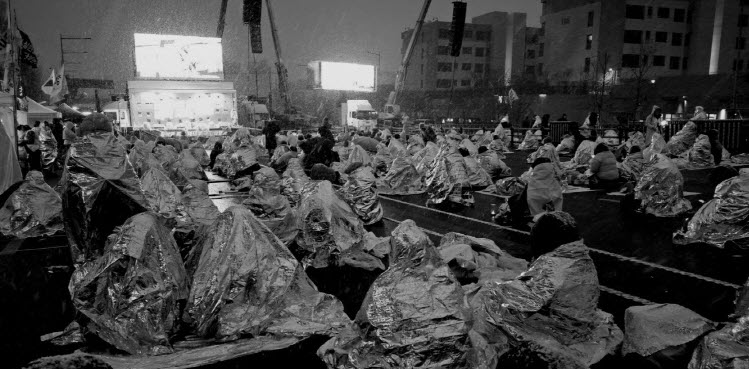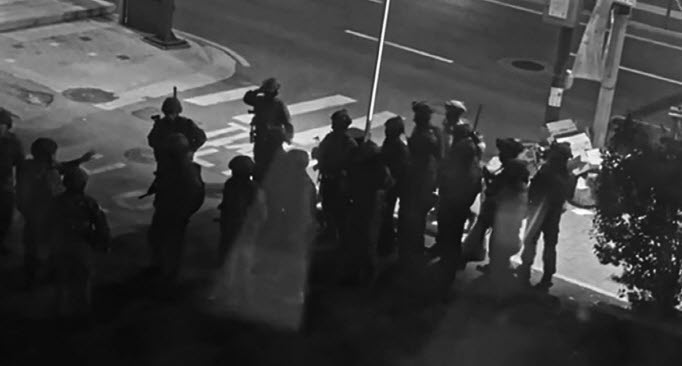
South Korean documentary film “Ran 12.3” has a number of raw moments which still disturb me and many other South Korean citizens a lot even at this point. On December 3rd, 2024, President Yoon Seok-yeol suddenly declared the martial law on TV just for eliminating all those political opponents of his once for all, and it is really dreadful to imagine what could have happened if his impulsive (and possibly drunken) coup d’état attempt had not been quickly prevented by a lot of brave citizens and politicians several hours later.
I must confess that, because I happened to sleep rather early on that day, I belatedly came to learn about everything when I woke up early in the very next day. I was certainly perplexed as checking on several news outlets and social media services, and I and many other South Korean citizens have been reminded again and again of how fortunate we and our country were at that time.
Therefore, the documentary interested me right from when I heard about it a few months ago, but, alas, it does not satisfy or enlighten me much on the whole. While what is at the center of the documentary does have enough emotional power to hold our attention, it does not present anything new or revealing about that shocking day. Moreover, it is occasionally quite distracting due to its heavy-handed approach to the main subject, so I ended up feeling more distant instead of getting more engaged during my viewing.
The early part of the documentary hurriedly hurls at us a lot of background information about how President Yoon planned a coup d’état along with a bunch of his cronies. Many of them were in his cabinet, and these rotten people did not object to his dangerous plan at all mainly because of their cowardice and incompetence. In fact, many top figures in the South Korean Department of Justice including the Chief of the Supreme Court were ready to go along with him without any hesitation right from the very beginning.
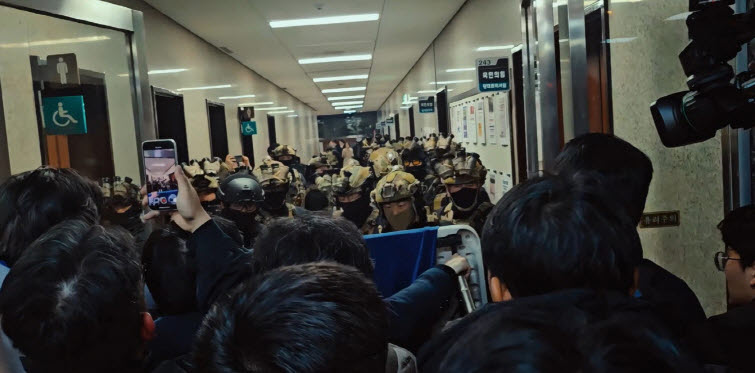
It was really lucky for us that many members of the South Korean Parliament could respond to Yoon’s sudden martial law declaration gather at the National Assembly within a few hours. Besides the chairman of the parliament, more than 150 congressmen and congresswomen, nearly all of them were incidentally the members of the opposing parties, managed to enter the National Assembly in one way or another despite the considerable interference from the South Korean police and military under Yoon’s command, and hundreds of citizens and reporters also quickly came to the spot for not only supporting their politicians but also protesting against those police officers and soldiers.
Needless to say, President Yoon and his cronies knew well that those congressmen and congresswomen gathering inside the National Assembly would stop his martial law under their due process. He directly ordered those soldiers and police officers to stop those parliament members by any means necessary, and several raw footage clips in the documentary chillingly show us how urgent and perilous the situation was at that time.
Around that point, South Korean democracy could have been irrevocably destructed at any chance. For example, if those helicopters carrying a bunch of special force soldiers had been allowed to fly over the National Assembly a few minutes earlier, President Yoon could actually have succeeded in overthrowing South Korean democracy once for all. In addition, the chairman of the parliament and his fellow members of the parliament did their best as firmly sticking to their due process despite the accumulating pressure and anxiety upon them, and their dedicated staff members were determined to hold their ground for protecting South Korean democracy to the end.
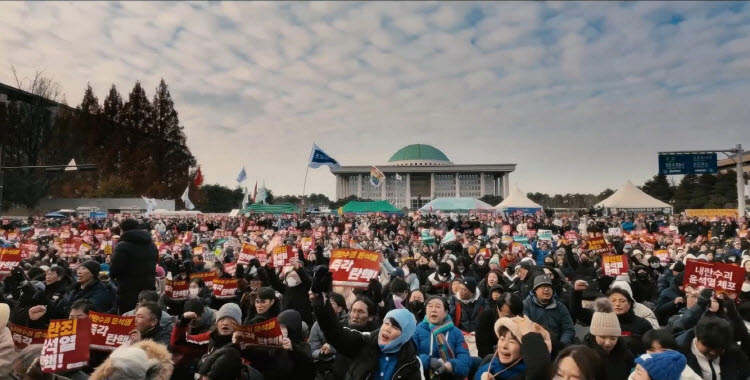
And there were numerous ordinary citizens who were also ready to fight for South Korean democracy no matter how long their righteous fight would be. Once the martial law was officially overturned by the South Korean Parliament early in the morning of December 4th, they were certainly overjoyed, but this was just the beginning as President Yoon and his cronies attempted to get away with many serious legal offenses during next several months. In the end, this truly deplorable figure got impeached early in April 2025, and then he and his cronies were recently found guilty of a bunch of charges against them, but the South Korean society is still not so totally free from their crimes and influences.
The documentary may be worthwhile to watch for that reason, but I must point out that it has several glaring flaws to notice. Maybe you can overlook the frequent utilization of AI images and animation throughout the documentary, the overall result is still very clumsy and juvenile to say the least, and director/co-producer Lee Myung-se, who has mainly known for his notable films such as “ Nowhere to Hide” (1999) and “Duelist” (2005), uses too much music and editing for manipulating our emotions in one way or another. Furthermore, I was also bothered by its misogynistic attitude to President Yoon’s wife, who is equally despicable regardless of whether her past before marrying her husband is as checkered as, say, Eva Perón’s.
In short, “Ran 12.3” is a well-intentioned but overcooked documentary which is not good enough for compensating for its several negative aspects including its controversial executive producer, a vile and superficial man who does not deserve to be regarded as a journalist in my trivial opinion. I guess Lee wants to make his documentary “cinematic”, but it could deliver its relevant points more calmly and soberingly just with those powerful raw footage clips in the documentary. You know, they are certainly more than enough for us to get alarmed and then infuriated, and we really do not need all those bells and whistles at all.