The Old Woman with the Knife (2025) ☆☆1/2(2.5/4): Old but lethal

South Korean film “The Old Woman with the Knife” looks promising at first but ends up being quite bland and middling to my disappointment. While it is carried to the end by the strong performance from its lead actress at least, the movie is also often hampered by a number of glaring flaws including blatant plot contrivance and clumsy melodrama, and I found myself caring less and less about the story and characters especially during its second half.

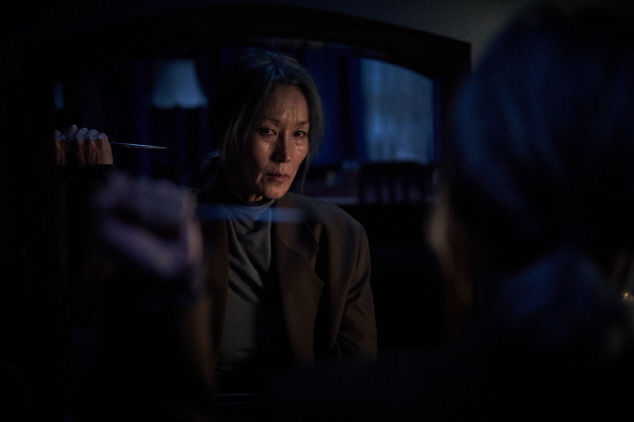
The story mainly revolves around an old but lethal lady called “Hornclaw” (Lee Hye-young), who has worked as a professional killer for one clandestine agency. Since she was saved and then trained by the founder of this agency around 50 years ago, she has killed a lot of bad people who deserved to be eliminated for good reasons in the viewpoint of her and her agency, and the opening scene shows how she deftly and quietly handles her latest job.

However, it also turns out that things have not been that good for Hornclaw. Although she has tried to keep her body fit and healthy as much as possible, she is frequently reminded of how her aging body becomes more fragile and unreliable day by day. While she is still respected as the godmother of the agency, she does not like how the current leader of the agency, who is incidentally her junior, has managed their agency, and he does not like her that much either.

As a matter of fact, he has been looking for any new employee willing to kill for the agency, and we are soon introduced to a lad nicknamed “Bullfight” (Kim Sung-cheol). After getting rid of a bunch of gangs involved with human organ trafficking. Bullfight is recruited by the agency for his considerable killing skills, but Hornclaw is not particularly impressed a lot, and she surely shows him that she is not someone he can easily mess with.

Meanwhile, Hornclaw is ordered to take care of the problematic aftermath of one simple task which became a bit messier than expected. At first, all she will have to do is killing a certain figure who was one of her colleagues, but she gets seriously injured in the end, and then she finds herself helped a lot by a kind local veterinarian she previously met for the matter of an injured stray dog. Even after learning more about who she is, this decent dude still wants to help her more, and, what do you know, she finds herself caring about him more than expected, even though she is supposed to eliminate him for avoiding any possible loose end.

It is not much of a spoiler to tell you that our killer lady subsequently finds herself in a very tricky situation due to her friendship with her unlikely friend. After watching over what is going on between them, Bullfight embarks on cornering Hornclaw in one way or another, and, despite her frequently failing physical status, she must fight against his nasty tactics for protecting her friend and his dear little daughter.

This surely looks like a familiar but solid ground for more thrill and action, but the movie often interrupts its narrative flow with unnecessary flashback scenes and several contrived plot turns. In case of a number of flashback scenes between Hornclaw and her mentor, they only add more melodrama to the story without much character development, and they also often disrupt the narrative momentum of the story. Furthermore, the movie becomes all the more melodramatic as the hidden personal connection between Hornclaw and Bullfight is revealed later in the story, but this does not work as well as intended mainly because of weak characterization. While he is supposed to be the antagonist in the story, Bullfight is merely unpleasant and vicious without much human depth or personality, and we accordingly do not care a lot about his personal motive.
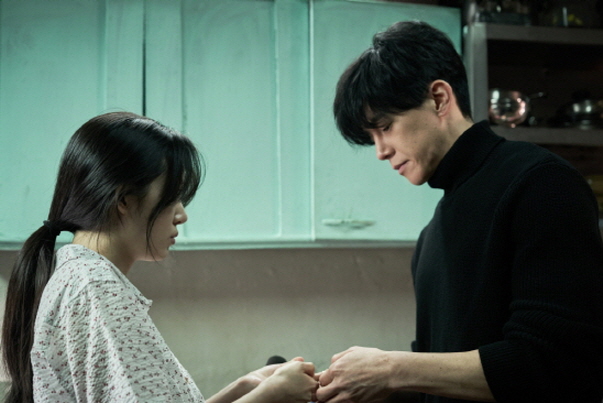
In case of several action scenes in the film, they are fairly competent on the whole, but they did not engage me enough due to being mainly driven by plot necessity instead of characters. The climactic action sequence unfolded at a certain abandoned place is overlong and heavy-handed in my humble opinion, and it eventually becomes more tedious as mired in more melodrama without generating any emotional effect on us.

Nevertheless, I admire the committed acting of Lee Hye-young, who has been mainly known for her appearances in several recent works of Hong Sang-soo. Here in this movie, she looks and feels completely different as filling her role with steely will and determination, and she is also believable whenever she has to throw herself into a lot of action as demanded.

In contrast, several supporting performers around them are wasted due to their under-developed roles. While Shin Si-ah manages to shine as young Hornclaw during several flashback scenes, Kim Sung-cheol is unfortunately often pushed into Overacting 101, and Yeon Woo-jin does not have much to do except looking nice and generous. In fact, the best supporting performer in the movie is that rescued stray dog, which adorably steals the show whenever it appears on the screen.

Directed by Min Kyu-dong, who previously directed “Herstory” (2018), “The Old Woman with the Knife” is incidentally based on the novel of the same name by Gu Byeong-mo, whose English translation version has been already available in US. I have not read the novel yet, but now I wonder more whether the novel is better than its movie version, and I am certainly willing to check it out as soon as possible.

Posted in Movies | Tagged , , , | Leave a comment

On Becoming a Guinea Fowl (2024) ☆☆☆1/2(3.5/4): A family funeral

Runagno Nyoni’s second feature film “On Becoming a Guinea Fowl” is about a family funeral of one middle-class Zambian family. Mainly following one of the younger family members, the movie gradually reveals the secrets and traumas suppressed inside this family, and it is interesting to observe how it earns a glimmer of hope and determination as deftly balancing between drama and comedy.

The movie begins with the discovery of a body by its heroine. When she is returning to her home from some evening party by her car, Shula (Susan Chardy) spots that body on the road, and that turns out to be an uncle of hers. Naturally, she notifies this to her family and then the local police, but she only finds herself waiting there during next several hours along with one of her cousins, who also happens to pass by the spot.

Anyway, on the next morning, Shula returns to her home after seeing the police taking care of the body of the uncle. When the funeral is about to be begun, she instantly moves to a local hotel for taking care of some important work to handle, but then she is interrupted by several aunts of hers. It is apparent that she is not so willing to participate in the funeral, but the aunts firmly insist that she should help them handling the funeral, and she eventually follows their demand.

While Shula takes care of many things including picking up her mother at a local airport, the movie looks into how she and her many other family members go through the first several days of the funeral. Her aunts and many other older family members wail as much as possible for supposedly mourning for the death of the uncle, but it soon turns out that they are more occupied with how to handle the matters involved with his very young wife. They do not like her a lot to say the least, and they are already ready to blame her for her husband’s death just for taking away all the assets belonging to him later.

Meanwhile, Shula is frequently busy with whatever is demanded to do in the meantime. Along with several other family members, she has to prepare and then serve the meals to many different family members and visitors, but, not so surprisingly, her efforts are taken for granted without being appreciated much. At least, she gets some rest as occasionally spending time with several cousins of hers, but that does not last that long as there is always something to be handled by her.

We also get to know more about a certain deplorable family secret involved with her uncle. In fact, he sexually abused at least two cousins of hers, and one of them actually tries to kill herself not long after the beginning of the funeral. Needless to say, her mother and aunts have known everything for a long time, but they simply ignored that just for maintaining the patriarchy order of their family, and their hypocrisy becomes more evident when they actively repress Shula and one of her cousins in the name of family love.

As reflected by the occasional moments of hallucination, Shula turns out to have a fair share of secret and trauma behind her seemingly phlegmatic appearance. No matter how much she wants to look away from that, her mind cannot help but haunted by a few fragmented memories of her trauma, and her accumulating anger and frustration are often accentuated by the nervous score by Lucrecia Dalt.

Continuing to alternate between dark absurdity and harrowing personal pain, the movie immerses us more into its heroine’s increasingly conflicted circumstance. Although we do not get to know a lot about many of her family members, they are depicted with enough personality and presence, and their interactions throughout the film feel vivid and naturalistic enough to engage us more. As a result, we come to sense more of how suffocating her family can be to Shula, and we also pay more attention to how things are despairing for her uncle’s young wife, who was virtually groomed by him when she was just a little underage girl and is now quite scared and helpless as frequently harassed by Shula’s aunts.

Everything dramatically culminates to the finale where a big meeting is held not long after the funeral, but the movie wisely avoids unnecessary melodrama under Nyoni’s skillful direction, and then it powerfully ends the story at an exactly right moment. While recognizing a lot of uncertainty in front of Shula, the movie subtly conveys to us that she will not be silent anymore, and that is further accentuated by a little symbolic act of hers, which is incidentally associated with the very title of the film. Gradually taking the center of the movie with her earnest natural performance, Susan Chardy functions as the beating heart of the film, and she is also supported well by a bunch of good supporting performers including Elizabeth Chisela, who is poignant when her character later comes to reveal more of the old personal pain behind her carefree attitude.

On the whole, “On Becoming a Guinea Fowl”, which received the Best Director award when it was shown at the Un Certain Regard section of the Cannes Film Festival early in last year, is another compelling work from Nyoni, who previously made a wonderful feature film debut with “I Am Not a Witch” (2017). With these two impressive works, she demonstrates that she is another talented filmmaker to watch, and it will be interesting to see what may come next from her in the future.

Posted in Movies | Tagged , , | 1 Comment

Gondola (2023) ☆☆☆(3/4): A romance on gondola

“Gondola” is a simple but charming romantic comedy film to be cherished. While it often feels more like an extended short film especially during its second half, the movie thankfully has enough wit, style, and personality to fill its 82-minute running time at least, and you will be frequently tickled by its many humorous moments.

The movie is set in some rural mountain village in the Georgian mountains, and it begins with the return of a young woman named Iva (Mathilde Irrmann). Her father recently died, and there is no one to welcome her in the village, but she decides to settle in the house belonging to her father, and she eventually begins to work as a conductor of the cable car line in the village just like her father did for many years.

Set between the two mountain peaks, the cable car line is operated by a rather mean dude who does not pay that much to Iva and Nino (Nino Soselia), who is another female cable car conductor. Day by day, Iva and Nino handle their respective cable cars on the line, and we frequently see how their respective cable cars go back and forth in the opposite direction throughout the story.

As time goes by, it becomes apparent to us that Nino and Iva are quite attracted to each other, and the movie has some fun with the wordless depiction of the developing mutual attraction between them. As a matter of fact, the movie does not have any dialogue from the beginning to the end, and it almost feels like a silent film even though it frequently uses sound for dramatic or comic effects.

Once they come to sense more of the romantic feeling between them, Nino and Iva become more expressive about that. At first, they interact with each other via a chess game, but then they entertain each other more and more whenever their cable cars pass by each other. At one point, they do a little costume play just for showing more of their mutual affection to each other, and then they subsequently go further as they playfully decorate their cable cars (Don’t ask me how they can possibly do that for themselves within such a short time).

It goes without saying that these two ladies eventually arrive at the expected moment when they open themselves a lot more to each other than before, but, of course, there comes a couple of obstacles. As already shown to us during the early part of the film, Nino has aspired to get out of the village and then become a flight attendant someday, and she is certainly delighted when an opportunity finally comes to her on one day, but this inevitably causes a conflict between her and Iva later in the story.

And there is also that unpleasant boss of theirs. When his lecherous approach to Nino is failed, this despicable dude subsequently tries to get closer to Iva, and that is certainly the last thing Nino and Iva want. When he later discovers how playfully Iva and Nino have worked together, he is not so amused to say the least, and Nino and Iva come to dislike him more than before.

Nonetheless, the movie continues to maintain its cheerfully pleasant mood as before. Considering how conservative its main background looks, it is unlikely that two young women can enjoy their openly homosexual romance, but the movie mostly sidesteps this issue as never stopping amusing us more and more along the narrative. Besides Iva and Nino, we get to know a bit about several other town folks, and we get an extra chuckle from a little subplot involved with two young kids in the village.

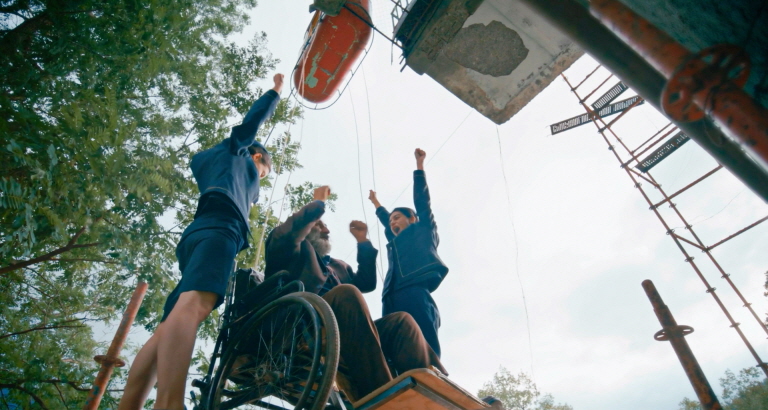
The most entertaining moment in the film comes from when Nino and Iva show a little generosity to one disabled dude. Just because he is bound in his wheelchair, he is cruelly rejected by Iva and Nino’s boss, but Nino and Iva later find a clever way for having him enjoy a cable car ride, though I must say that this is not so recommendable for anyone despite some safety measures.

And there is also a lovely sequence where Iva and Nino come to have a little romantic evening together on one of their cable cars. Watching them having a good time up in the air, you may wince a bit if you have acrophobia like me, but you will also be tickled a lot for good reasons. For the music to accompany this romantic moment, several town folks gladly help bit by bit, and that is another fun moment in the film.

Above all, the movie is carried well by the solid chemistry between its two lead actresses. Although they do not say at all throughout the film, Mathilde Irrmann and Nino Soselia interact well with each other during their several key scenes, and it is engaging to observe how their acting flawlessly swings between comedy and drama along the story. As the villain of the story, Zuka Papuashvili is suitably obnoxious, and you will certainly cheer for how his character gets a deserving comeuppance in the end.

While it is occasionally a bit too thin as a feature film, “Gondola” always bounces up with more fun and amusement for us thanks to the competent direction of director/writer Veit Helmer, a German filmmaker who made several films since his feature debut film “Tuvalu” (1999). It is still pretty simple and modest on the whole, but I enjoyed it more than expected, and that is surely enough for recommendation.

Posted in Movies | Tagged , , | Leave a comment

The Other Way Around (2024) ☆☆☆(3/4): A separation comedy

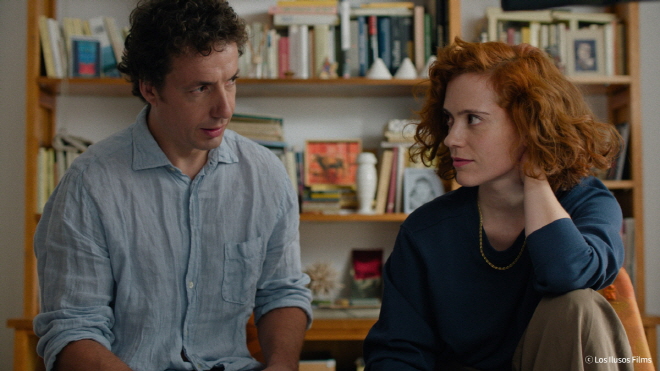
Spanish film “The Other Way Around” is a lightweight comedy about one young couple who suddenly decides to have a “happy” separation for no apparent reason. As they prepare for their separation step by step, the movie provides a series of humorous moments to enjoy, and it even becomes cheerfully self-conscious just like its two main characters.

They are Ale (Itsaso Arana) and Alex (Vito Sanz), who are a filmmaker and an actor, respectively. For more than 10 years, they have happily lived together as a couple, but then Ale suggests that they should break up with each other during one night, even though they do not have any particular problem between them at present. Alex is a bit surprised, but he and Ale eventually agree on separation, because, well, both of them have been rather bored about their fairly happy status.

And they decide to make their separation as joyous and painlessly as possible. They embark on planning the celebration party for their separation, and that leads to a number of absurd scenes where they freely talk about their separation plan to others around them. Needless to say, their friends and acquaintances are quite baffled by Ale and Alex’s sudden separation, and they are all the more confused as they are cordially invited to Ale and Alex’s celebration party.

Ale and Alex get the idea of their celebration party from Ale’s aging father, who once casually said about how separation should be as happy as, say, marriage. However, even Ale’s father is caught off guard by what his daughter and her boyfriend is planning, though he is willing to provide his residence for their upcoming celebration party.

Meanwhile, Alex and Ale keep working on their joint movie project, which turns out to be about their ongoing separation process. More than once, the movie blurs the line between reality and fiction along the story, and we naturally come to wonder more about the real thoughts and feelings of Ale and Alex. Are they really serious about their ongoing separation process? Or, are they actually enjoying this change suddenly coming into their rather plainly stable private life?

Regardless of whatever Ale and Alex respectively feel and think about their upcoming separation, the movie keeps dancing as becoming more self-conscious about their circumstance along with them. With its considerable intimacy shown from their domestic life, the movie often evokes Ingmar Bergman’s great film “Scenes from a Marriage” (1973), and we are not so surprised when a friend of Ale shows a deck of tarot cards inspired by Bergman’s works. At one point later in the film, more than one famous classic Hollywood comedy film about divorce is mentioned, and that certainly brings some extra amusement to the story.

Needless to say, around the time their movie project is nearly completed, Alex and Ale become less certain about whether they can actually celebrate their separation as planned. As the time for their celebration party gets closer and closer, we sense the growing strain between them, and there is a brief private moment giving us a little glimpse into how Ale feels about the approaching official end of her relationship with Alex.

Nevertheless, the movie does not lose any of its bouncy comic momentum and lightweight sense of humor even at that narrative point. There is a funny scene where Ale and Alex’s friends and colleagues give some comments on the rough cut of Ales and Alex’s movie, and this works as a sly self-conscious wink from director Jonás Trueba, who incidentally developed the screenplay with his two lead performers. Around the point where Alex and Ale’s celebration party is finally started, we get more laughs as the movie goes back and forth between fiction and reality more than before, and you will gladly follow its free-flowing narrative line without much complaint.

It helps that the movie is constantly supported well by the good chemistry between its two lead performers. Although we do not know that much about the long past shared between their respective characters, Itsaso Arana and Vito Sanz click well with each other from the beginning to the end, and they did a good job of conveying to us the comfortable sense of intimacy between their characters while subtly shaping up their characters more along the narrative. While Arana imbues her role with a lot of charm and spirit, Sanz complements his co-star with his laid-back acting, and they are also surrounded by a number of good supporting performers including Fernando Trueba, who is Trueba’s father and is also known well as for directing several notable films including “Belle Epoque” (1992) and “They Shot the Piano Player” (2023).

In conclusion, “The Other Way Around”, whose Spanish title is “Volveréis” (It means “You Will Return” in English, by the way), is an enjoyable romantic comedy thanks to its witty storytelling and engaging performance to be savored. Although my condition was not exactly good when I watched the film yesterday, I soon found myself quite amused and entertained to the end, and its ending took me back to the last scene of “Scenes from a Marriage”. No matter what will happen to them next, Ale and Alex come to have a better understanding of themselves and their relationship in the end just like the couple in “Scenes from a Marriage”, and they will certainly appreciate that more in the future.

Posted in Movies | Tagged , , | Leave a comment

A Minecraft Movie (2025) ☆☆(2/4): A goofy beginning

I must confess that I am not a target audience for “A Minecraft Movie”. Even when I was young and wild, my mind was mostly drawn to movies and books instead of playing video games, and, yes, I am not changed much even at this point. As a matter of fact, I have rarely touched video games during the last three decades, even though I occasionally check on the current trend of video games via the reviews written by others (Being out of touch is the last thing I want, folks).

While there are a number of goofy comic moments for my little amusement, “A Minecraft Movie” did not engage me a lot mainly because I was often frustrated with how shallow and predictable it is in terms of story and characters. Sure, it simply wants to have much fun with its video game world, its world is not very interesting and refreshing to me, and I simply followed one narrative stage after another as being more aware of my dwindling interest in the film.

Nonetheless, its target audiences will definitely be delighted by all those familiar stuffs unfolded onto the screen right from the opening part, which shows us how a plain dude named Steve (Jack Black) happened to enter a fantasy world called the “Overworld”. Although he is quite baffled by this odd world at first, it does not take much time for Steve to learn how to wield his creative power onto this world, and he certainly becomes much happier compared to when he was just a middling salesman.

However, the Overworld is subsequently threatened by Malgosha (voiced by Rachel House), the evil ruler of the Nether. Using a certain magical object obtained by Steve, Malgosha tries to conquer the Overworld, but, before he eventually gets captured and then imprisoned, Steve manages to hide that object thanks to his royal wolf, which comes over to Steve’s world and then hides it somewhere inside his house.

And the movie shifts its focus onto several other main characters in the story. Following their dead mother’s wish, Natalie (Emma Myers) and her younger brother Henry (Sebastian Hansen) move to a little town in Idaho, but Henry is not particularly happy about this as your average nerdy kid. Right from his first day in a local elementary school, he feels more like a loner, and then he inadvertently causes a big trouble for both him and his older sister.

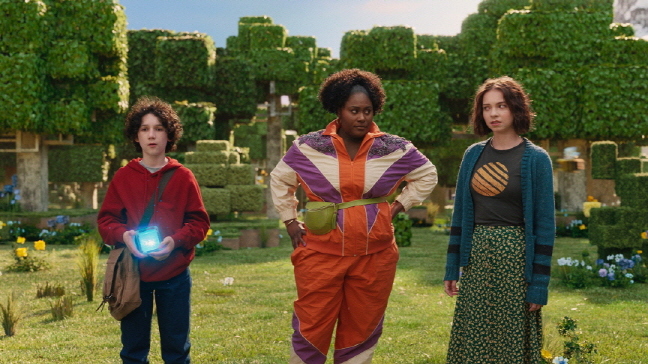
Meanwhile, Henry happens to befriend Garrett “The Garbage Man” Garrison (Jason Momoa), a former video game champion who has been struggling to run his shabby little video game store. Among Garrett’s recently acquired stuffs, Henry notices one strange object, and, of course, that turns out to be that magical object belonging to Steve. Once Henry activates that object, he and Garrett get themselves pulled into the portal to the Overworld, and Natalie and her real estate agent Dawn (Danielle Brooks) also come to follow them by coincidence.

Meanwhile, Steve returns to the Overworld because Malgosha demands that he should retrieve that magical object for her, but he soon joins Henry and his group for stopping Malgosha. As they move onto one stage after another, they certainly face a number of challenging situations, and Steve sometimes functions as their guide and instructor.

Now this is pretty much like what we previous saw from “Jumanji: Welcome to the Jungle” (2017) and its following 2019 sequel, but “A Minecraft Movie” fails to generate enough interest to hold our attention mainly due to its deficient storytelling. While the drama involved with the strained relationship between Henry and his older sister is half-baked to say the least, the unexpected comradeship between Steve and Garrett is mostly used for a series of cheap gags, and a subplot involved with the school vice principal by Jennifer Coolidge feels rather distracting. At least, Coolidge, who has always been game for anything funny, goes all the way for this redundant part, but I think several little audiences around me did not get much of her blatantly silly moments in the film.

In case of several other main cast members in the film, they fill their respective roles as much as possible, and some of them acquit themselves well. While Emma Myers and Sebastian Hansen do not have much to do as being stuck in their thankless straight parts, Danielle Brooks, who deserves better considering her recent Oscar-nominated supporting turn in “The Color Purple” (2023), manages to bring some extra humor to the story, and Jack Black and Jason Momoa willingly go over the top for more silliness. Both of them are certainly no stranger to looking goofy and exaggerated, and Momoa, who also participated in the production of the movie, gleefully and shamelessly chews every moment of his from throughout the film.

On the whole, “A Minecraft Movie” left me without much to remember, and that is a considerable disappointment compared to the previous works of director Jared Hess. I did not like his breakthrough work “Napoleon Dynamite” (2004) that much, but I sort of understand its offbeat charm to some degree, and I was subsequently delighted by “Ninety-Five Senses” (2022), a weirdly funny Oscar-nominated animation short film from him and his wife. Considering that it has been earning a lot more than expected, there will surely be at least one sequel, and I sincerely hope that I will be more entertained by whatever may come after this mildly ludicrous product.

Posted in Movies | Tagged , , | Leave a comment

Bullet Train Explosion (2025) ☆☆☆(3/4): A Thriller on Bullet Train

Japanese Netflix film “Bullet Train Explosion”, which was released on this Wednesday, provides enough fun and thrill along as your typical disaster film. While its course is predictably bumpy to say the least, the movie diligently and excitingly rolls its conventional story and characters from one expected moment to another, and that is more than enough to compensate for its several weak aspects.

The movie does not waste any time at all as quickly establishing its story premise. Not long after a Shinkansen, which is also colloquially known as Bullet Train in English, bound from Shin-Aomori to Tokyo departs, somebody calls the train company in Tokyo. It turns out that there is at least one bomb on that train, and the bomb will be exploded if the train is slowed down under 100 km per hour. Once it becomes quite evident that the train is indeed in serious danger, everyone at the control center quickly responds to this emergency, and they are soon joined by several other figures including a detective assigned to the case and a haughty government official. 

Now you may be reminded of “Speed” (1994) and some other similar action thriller films, but the movie is actually a sequel to the 1975 film “The Bullet Train”. Although I have not seen that movie yet, the movie thankfully shows several clips from that movie as the detective and his men compares their ongoing case to what happened in that movie, and you may be amused a bit as observing how that movie looks rather dated compared to its slick junior.

Anyway, the figure who planted the bomb on the train later demands the ransom, but the demand baffles the people at the control center a lot. While the ransom is no less than one hundred billion yen, it should be collected from the individual donation from every person in Japan, and that certainly feels preposterous, considering that there is not much time for the train and its passengers from the beginning.

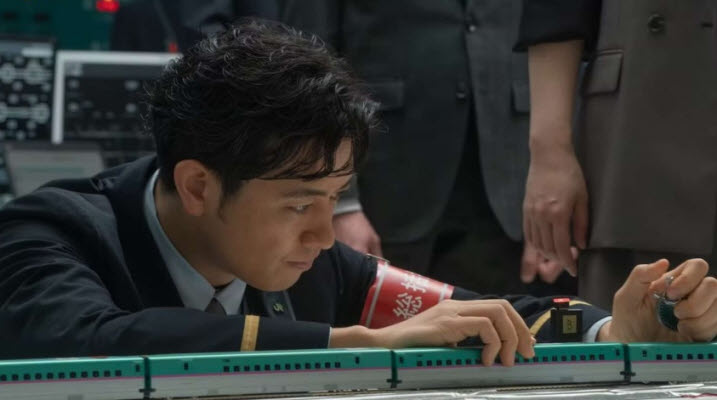
For buying more time, the people at the control center, led by its confident general manager, clear the course for the train, and its driver slows down the train as much as possible, but, of course, there comes one obstacle after another for generating more suspense along the story. There is a nail-biting scene where the train must change its track while maintaining its high speed as before, and everyone at the control center naturally becomes quite nervous as bracing for what may happen in the worst case.

In the meantime, the movie also focuses on what is happening inside the train. Its unflappably dedicated train manager tries as much as possible for preventing any unnecessary incident of panic among his passengers, but, of course, it turns out to be quite difficult for him to get more than 300 passengers under control, and the passengers get more anxious as the time keeps running out for them minute by minute.

And we get to know a bit more about some of the passengers as expected. They are 1) a prominent politician who wants to leave behind her recent scandal as soon as possible; 2) a popular online influencer who becomes quite active for gathering the ransom money from all the people in Japan as quickly as possible; 3) a rather suspicious dude who does not want to be recognized by others; and 4) a quiet and introverted high school girl who got on the train along with her teacher and a bunch of schoolmates. 

Occasionally giving some attention to these and several other characters in the story, the movie keeps rolling during its first half, which eventually culminates to a very risky rescue attempt which surely demands a lot of precision from everyone participating in that. I will not go into details here for not spoiling your fun, but I can tell you instead that director Shinji Higuchi and his crew members including cinematographers Yusuke Ichitsubo and Keizō Suzuki did a good job of making this moment look as vivid and realistic as possible. As a result, we are more engaged in what is happening across the screen, and that leads to more excitement and suspense for us.

However, I must point out that the second half of the movie is relatively less gripping than the first half. After the identity of the bomber is finally revealed (You can easily guess that in advance, by the way), the movie slows down itself to some degree for some extra melodrama, and that is where my level of interest began to decrease. The mood becomes tense again as required when several main characters are thrown into an impossible circumstance, but that is not compelling enough mainly because its main characters are mostly broad archetypes without much human depth. Fortunately, the movie eventually regains its speed along with the train later, and the following climactic sequence will certainly not disappoint you.

 In conclusion, “Bullet Train Explosion” is not entirely without flaws, but it is still one of the more entertaining products from Netflix during this year. I would like it more if its second half were shorter and tighter, but its overall result is fairly good enough for recommendation, and, above all, it touches my soft spot a bit. Yes, I love fun train movies such as, say, “Train to Busan” (2016), and I must admit that, despite some distracting bumps on its course, the movie is a little better ride than I expected.

Posted in Movies | Tagged , , , | Leave a comment

Havoc (2025) ☆☆(2/4): Merely bloody and violent 

Gareth Evans’ latest film “Havoc”, which was released on Netflix yesterday, is merely bloody and violent without bringing anything new to its familiar genre territory. If you simply want a lot of extremely brutal action and mayhem, the movie will probably not disappoint you, but, folks, I want more than that, and that is why I became more distant to whatever is happening on the screen.

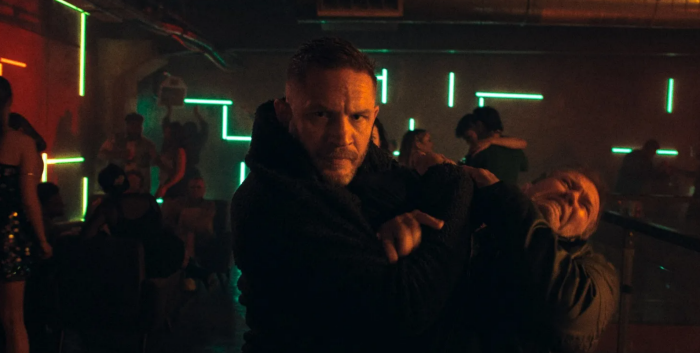
Tom Hardy, who also participated in the production of the film, plays Patrick Walker, a police detective working in some big anonymous city. During the early part of the film, the movie emphasizes how messy his professional and private life has been, but that is quite typical to say the least. Yes, he has some shady past about which he feels quite guilty. Yes, he has been estranged from his family as well as his colleagues. Yes, he hates himself as often reminded that he cannot do anything about his messy status. And, yes, he is not so nice to a young female cop who recently becomes his new partner.

Meanwhile, a mass shooting incident occurs at a spot belonging to a big Chinese criminal organization. As already shown to us at the beginning, it is involved with a bunch of young criminals who stole a large amount of drug for this criminal organization, and one of them happens to be the son of a prominent but corrupt businessman who has incidentally been running for the mayor of the city. Because he previously did some dirty work for this businessman, Walker immediately goes to him, and he makes a deal with this businessman in exchange of finding and then saving his son.

As Walker tries to retrieve the businessman’s son, the situation gets more and more complicated than before. One of the victims of that shooting incident was the only son of the female boss of that criminal organization, and she is quite furious to say the least. Right from her arrival in the city, she vows for revenge for his son, and she certainly has a bunch of ruthless thugs willing to do anything under her command. In addition, there are some other dangerous figures looking for the businessman’s son, and they are also quite ready to find and then kill him by any means necessary.

Needlessly to say, Walker soon finds himself pursued by both these two dangerous groups, and what follows next is a series of remorselessly brutal action scenes which often get quite gory and bloody. This is not so surprising at all if you remember how extremely violent Evans’ previous films including “The Raid: Redemption” (2011) are. I admired “The Raid: Redemption” to some degree mainly for its technical competence, but I was often distracted by its superficial handling of story and characters, and this problem was only amplified further with more blood and violence in its 2014 sequel.

At least, both of these two very violent actions films have some ambition and style, but “Havoc” is seriously deficient compared to that while looking surprisingly cheap and bland. For instance, the opening vehicle action sequence is drenched in so much CGI that it actually looks more unrealistic than whatever we saw from recent Fast and Furious flicks at times. In addition, the city in the film also looks quite mediocre without generating any real urban atmosphere, and I must say that the wallpaper of the desktop computer at my workplace has much more style and substance in comparison.

In case of the physical action scenes in the film, I certainly appreciate how Hardy and many other performers throw themselves into a lot of intense physical action, but, alas, the overall result is not particularly memorable. The performers surely shoot or fight a lot, but there is not much thrill and excitement as the movie hurriedly moves onto one action after another, and we are only left with some bad aftertaste as observing how many figures are casually eliminated like your average video game extra figures.

Above all, the movie lacks the characters we can care about. Hardy is an engaging actor who usually brings something interesting to observe to his movies, but his efforts are unfortunately undermined by thin characterization and sloppy writing. The dramatic arc of his character along the story is so predictable from the very beginning that there is not much narrative momentum to hold our attention, and we are only bored more even when the movie goes for more blood and violence during its expected finale.

Furthermore, the movie seriously wastes several other notable performers besides Hardy. While Forest Whitaker and Timothy Olyphant are thoroughly wasted due to their flat supporting roles, Luis Guzmán, who has been one of the most dependable character actors in our time, manages to bring some spirit to his thankless part. As the fearsome female boss of the Chinese criminal organization, Yeo Yann Yann quietly chews every moment of hers in the film as demanded, and she actually leaves a bit more impression than many of the other main cast members.

In conclusion, “Havoc” is disappointing because it virtually has nothing to offer besides its extremely violent action scenes, and it actually made me wonder whether I was too unkind to “The Raid: Redemption” and its sequel. While both of them aimed high at least, “Havoc” is just another Netflix product to be consumed and discarded, and I was already quite ready to move onto the next film to watch when it was finally over. No, I do not mind the extreme violence in the movie, but I was quite dissatisfied with how it is presented on the screen, and it is simply not worthwhile to watch at all in my inconsequential opinion.

Posted in Movies | Tagged , , , | Leave a comment

I Am Not a Witch (2017) ☆☆☆1/2(3.5/4): An absurd drama about African witchcraft hunt

You will not easily forget Rungano Nyoni’s 2017 feature debut film “I Am Not a Witch”. Following the plight of one little girl accused of witchcraft, the movie presents a somber but powerful contemporary story about an outrageous social injustice inflicted upon many unfortunate women out there in Africa, and the result is alternatively absurd and harrowing with a little but precious touch of magic realism.

The movie, which is mainly set in a rural area located somewhere in Zambia, opens with several tourists stopping by a spot where “witches” are presented in front of them. All of the witches, who are mostly elderly women, are tied to each own large spool of white ribbon, and you may roll your eyes when the guide explains the reason to those tourists.

 We are subsequently introduced to a little quiet anonymous girl who is later named Shula (Maggie Mulubwa). Just because they are disturbed by her mere presence, many people in the area come to believe that she is a witch, and she is eventually taken to a local police station. While many of them willingly accuse Shula of witchcraft, a female police officer tries to handle this situation as sensibly as possible, but a government official named Mr. Banda (Henry B.J. Phiri) soon comes, and that is followed by another absurd moment in the film.

In the end, Shula is “officially” confirmed as a witch, and then she is promptly sent to a camp belonging to the witches. She certainly does not want this at all, but she is already tied to her own spool of white ribbon, and she gradually gets accustomed to her changed circumstance. Just like the other witches, she is often forced to work on fields, and there is a darkly amusing moment when Mr. Banda eagerly announces that he gets a new big truck to carry them to the fields.

The situation becomes more absurd for Shula when Mr. Banda decides to use her more as a “government property”. At one point, she must help him on a little case of theft, and she will have to pick out the culprit from a bunch of suspects. Thanks to some advice from her fellow witches, she manages to accomplish her tricky task, and Mr. Banda is willing to use her more for his own benefit. At one point, he presents her in front of many audiences at a local TV show, and we are more saddened as observing how her thoughts and feelings are casually ignored by him and everyone else around her.

Meanwhile, we get to know a bit more about the witches as they and Shula go through their hard reality day by day. When the daughter of one of the witches drops by their camp, she is not welcomed much by her mother for a good reason, but the other witches are willing to buy what she offers to them nonetheless. In case of the wife of Mr. Banda, she turns out to be a former witch, but, not so surprisingly, she still cannot hide her social stigma as shown from one brief scene later in the story.

The story becomes a bit tense when the area and its people come to suffer a rather long dry season, but the movie takes its time as before, while looking closer into its young heroine’s inner conflict. As exploited by Mr. Banda in one way or another, Shula feels more miserable and discontented, and she naturally begins to show some defiance, but her spool of ribbon constantly reminds her of her limited status. She may cut it if she wants, but she is told that she will be turned into a goat if she ever does that, and it seems she really believes that just like the witches. 

That is certainly a silly superstition for many of us, but the superstitious belief of the characters in the film feels strong to us nonetheless, and this often makes a contrast to how much the area looks modernized. Despite considerable modernization, many people in the area still stick to their longtime tradition and superstition, and so are the witches, who had no choice but to stick together as social pariahs from the beginning.

I must confess that I have no idea on how much the story actually reflects the reality in Africa, but I can tell you instead that Nyoni did a commendable job of filling the screen with vivid mood and details to be appreciated. After being inspired by several actual stories of witchcraft accusations in Zambia, she did some research as visiting a real witch camp in Ghana, and her efforts are clearly showed from the considerable realism of the film. In case of the main cast members, most of them are non-professional performers with no movie acting experience, but they give unadorned natural performance under Nyoni’s skillful direction, and Maggie Mulubwa’s earnest lead performance is supported well by several substantial supporting performers including Becky Ngoma and Becky Ngoma.

In conclusion, “I Am Not a Witch” is a modest but undeniably impressive debut work by Nyoni, who recently made her second feature film “On Becoming a Guinea Fowl” (2024). While it requires some patience due to its slow narrative pacing at first, the movie is a very rewarding experience on the whole thanks to Nyoni’s confident handling of mood and details, and I was particularly touched by how it shows some little hope coupled with an unexpected moment of magic realism during its rather ambiguous finale. In my humble opinion, this is small film is too good to be overlooked, and I assure you that it will linger on your mind for a while after it is over.

Posted in Movies | Tagged , | Leave a comment

The Iron Claw (2023) ☆☆☆(3/4): It’s a tough family business…

What a tragically pathetic family the Von Erichs are. While they attained some fame and recognition in their sports field, whatever they achieved during that short period came with a lot of pain and misery, Sean Durkin’s latest film “The Iron Claws” is often harrowing even as calmly and clinically examining how they rose to the top and then fell hard to the ground.

The story, which is set between the late 1970s and the early 1990s, mainly revolves around Kevin Von Erich (Zac Efron), the second-oldest son of Jack “Fritz” Von Erich (Hold McCallany). As shown from the prologue scene, Fritz was once a promising professional wrestler, and he has driven his four sons into sports in one way or another while running his own professional wrestling business. While Kevin and his older brother David (Harris Dickinson) are already working as professional wrestlers, his younger brother Kerry (Jeremy Allen White) becomes an university athlete, and Mike (Stanley Simons), the youngest one in the bunch, shows some potential even though he is more interested in playing music.

Fritz initially tries to promote Kevin more, and Kevin is surely willing to prove himself more to his stern father. However, his important match for attaining the WWE championship turns out to be not as successful as they hoped, and Fritz subsequently recruits Kerry, who has been quite frustrated after he and many other American athletes cannot go to the 1980 Moscow Olympics due to a political reason involved with the Afghanistan War.

Once Kerry joins his two older brothers, it seems that they and their father will finally be closer to what their father has hoped for. After they become a lot more successful than before, David is chosen as the one going for the WWE championship, and Kevin does not mind this at all despite some disappointment, but there unexpectedly comes a devastating incident not long after he marries a young woman named Pam (Lily James).  

After that point, the mood becomes moody and disturbing as several other unfortunate incidents happen upon the Von Erichs. Kevin and several other family members certainly come to struggle a lot with the resulting shock and grief, but they do not get much help or support from Fritz, who is your average macho dude who does not allow himself and his sons to be emotional at all. Still occupied with making any of his sons gain that champion title someday, he pushes Kevin and his other sons harder than before, and they must obey him as enduring his constantly disapproving stare.

Although he begins to sense more of what is wrong with him and his brothers, Kevin still finds himself quite helpless under the toxic male influence from his father. Unlike his brothers, he has the wife willing to stand by him for more emotional support at least, but Pam eventually becomes quite frustrated with how her husband often fails to open himself more to her.

Considering his two previous films, Durkin is certainly no stranger to toxic personal relationships. His first feature film “Martha Marcy May Marlene” (2011) is about a young woman struggling to recover from the virulent influence of a charismatic cult leader she unfortunately got involved with. His next film “The Nest” (2020) observes one plain family gradually getting angry and frustrated with its patriarch’s another irresponsible financial plan, and you may see some parallel between the family in that film and the Von Erichs.          

You will probably be disappointed to see that the movie presents a number of wrestling scenes without much thrill or excitement on the whole. Instead, Durkin focuses more on what is being exchanged among Kevin and several other main characters, and their growing pain and frustration become palpable to us even when they do not express much on the surface. We are not so surprised when Kevin finally decides that enough is enough, and it is poignant to see when he is later reminded that it is really okay to show more emotion to the people close to him.

Durkin’s screenplay stumbles more than once as hurriedly moving from one incident to another during its second half (It also omits another son in the Von Erichs, by the way), and it has a little too many characters to juggle during its 132-minute running time. As a result, some of its main cast members are often under-utilized to our dissatisfaction, but they all give solid performances on the whole. Zach Efron surely tries a lot here for distancing himself from his usual image as much as possible, and his strong acting holds the ground to the end. While they are often limited by their underwritten characters, Jeremy Allen White, Harris Dickinson, Stanley Simons click well along with Efron, and they and Efron are always believable as brothers who have really been close to each other for years. Although they are stuck with their respective thankless supporting parts, Lily Collins and Maura Tierney hold each own small place well, and the special mention goes to Holt McCallany, who does a fabulous job of embodying toxic patriarchy and masculinity.

Overall, “The Iron Claw” is another interesting work from Durkin even though it is less successful compared to his two previous films. I wonder whether it could be a richer and more complex human story if it were a TV miniseries instead, but it is still fairly engaging for Durkin’s competent direction and several good performances, and that is enough for recommendation in my trivial opinion.

Posted in Movies | Tagged , , , , , , | Leave a comment

The Boys in the Boat (2023) ☆☆1/2(2.5/4): The rowing underdogs

George Clooney’s latest film “The Boys in the Boat” is a typical underdog sports drama which does not have much surprise for us. As a story about one underdog sports team which surprises everyone as going up and up against all odds, it has almost every necessary element to be inspiring, but these elements in the story somehow do not row that well together in the movie compared to those boys in the boat.

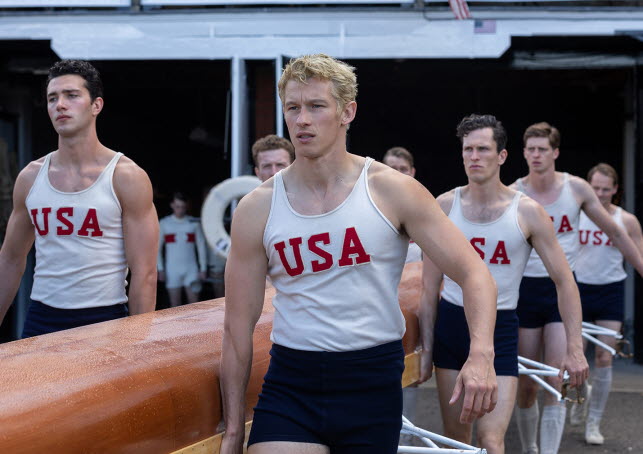
At first, the movie starts with the introduction of Joe Rantz (Callum Turner), a plain lad studying at the University of Washington in 1936. Like many other people during that time, Rantz is quite poor to say the least, and we see his daily struggle between his college study and his frequent hardships outside the university. While he really wants to graduate and then become an engineer someday, he is constantly reminded of his current economic status everyday, and things become more desperate for him when he must pay more money for his college education.

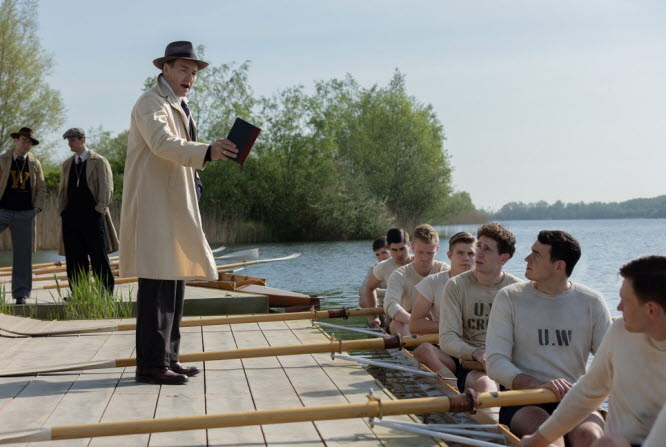
While looking for any possible option for him along with his close friend, Rantz comes across a notice on the tryout to be held by the rowing team of the university. Mainly because of the considerable economic benefits from becoming a rowing team member, Rantz and his friend decide to apply for the tryout without much thought, but, what do you know, the competition turns out to be quite stiff, and they and many other young men are soon subjected to a series of arduous physical tests conducted by Al Ulbrickson (Joel Edgerdon), the coach of the rowing team.

Although he is your average unflappable coach, Ulbrickson knows too well how important the upcoming season is, and he and his staff members are ready to try their best as much as possible. At the end of their tryout, 8 young men including Rantz and his friend are selected as the junior group of the team, and then Ulbrickson and his staff members embark on testing their new team members more. As carefully checking up the strong and weak points of each of their new team members, they must find the right arrangement of the boys on their new boat, and it is naturally followed by a series of trials and errors before Ulbrickson comes to realize what is really necessary for his boys. They need a really good coxswain who can lead and boost them for more power and strength, and Ulbrickson knows the right one, though that person in question is a bit too headstrong for him at times.

Once everything clicks well together for Rantz and his colleagues, his team starts to surprise not only their coach but also everyone else. In their first official competition, they beat one of their main competitors, and this surely excites everyone in the University of Washington. After observing how the boys excel a lot more than expected, Ulbrickson comes to have much more confidence on them than before, and he eventually decides to do a rather risky gamble with them, though his bold decision is not welcomed that much by many people in the university.

It is not much of a spoiler to tell you that Ulbrickson and his boys come to distinguish themselves more as the surprising underdog team of that year. However, Mark L. Smith’s screenplay, which is based on the nonfiction book of the same name by Daniel James Brown, simply sails on their athletic advance without much development in terms of story and character, and that is the main disappointment in the film. While Rantz and many other main characters including Ulbrickson are more or less then broad archetypes, the movie does not delve that much into the human aspects of Rantz and several other colleagues, and a romantic subplot involved with Rantz’ girlfriend is redundant at best and superficial at worst.

At least, the movie does not disappoint us in case of the competition sequences, which are certainly its main highlight as expected. Clooney and his crew members including cinematographer Martin Ruhe and editor Tanya M. Swerling did a good job of bringing enough tension and verisimilitude to these key moments including the climatic one unfolded in the 1936 Berlin Olympics, and the actors on the boats are mostly convincing with their sweaty efforts vividly shown on the screen.

The main cast members of the movie try their best in filling their respective roles. While Callum Turner humbly holds the center as required, Peter Guinness, Jack Mulhern, and James Wolk have each own moment along the story, Joel Edgerton, who has been one of ever-dependable character actors during last two decades, ably imbues his very typical character with a bit of life and personality. Although we are not so surprised when his character gives a big motivation speech in front of Rantz and several other team members around the end of the story, Edgerton deftly handles this clichéd moment with enough sincerity, and the result is a little more dramatically effective than expected.

On the whole, “The Boys in the Boat” is a conventional sports drama film which will not impress you that much especially if you are a seasoned moviegoer like me, and you may also want to check out the two better movies directed by Clooney. After making a promising directorial debut with “Confessions of a Dangerous Mind” (2002), he seemed to advance further with his second feature film “Good Night and Good Luck” (2005), but his next several films including “The Monuments Men” (2014) were not particularly memorable in comparison, and neither is “The Boys in the Boat”. Considering that his prime period seems to be over these days after he won two respective Oscars for “Syriana” (2005) and “Argo” (2012), the lackluster result of “The Boys in the Boat” is not so surprising, but I sincerely hope that he may do better in the next time.

Posted in Movies | Tagged , , , | Leave a comment