
Victor Erice’s “Close Your Eyes”, which is incidentally his comeback work after “Dream of the Light” (1992), takes quite a time as slowly revealing what and how it is about. This surely requires some patience from you, but the movie is an undeniably rewarding experience on the whole. Looking back at its long journey as well as the final destination, you will appreciate how subtly it handles its story and characters to make a point on the power of cinema in the end, and you may also agree that the movie is one of the notable highlights of this year.
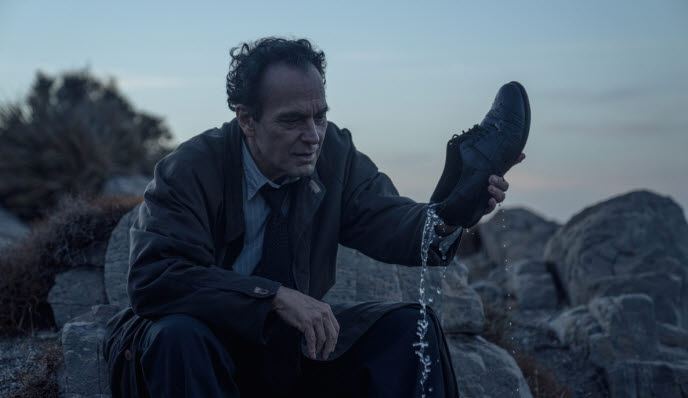
The movie opens with the prologue part which turns out to be one of the two completed scenes from an unfinished film in the story. The scene is set in somewhere outside Paris in 1947, and the hero of the movie comes to a big country manor, which is called Triste Del Rey (It means “the sadness of the king” in Spanish, by the way). He meets an old man in the manor, and then they come to have a long conversation as the old man requests the hero to find the old man’s lost daughter who ran away to Shanghai, China some time ago.
The hero of the movie was played by an actor named Julio Arenas (José Coronado), who was quite popular when he participated in the shooting of that unfinished film, which is incidentally called “The Farewell Gaze”. Not long after the two scenes of “The Farewell Gaze” were shot, Arenas was suddenly disappeared for no particular reason, and this certainly ruined not only the movie itself but also the filmmaking career of his novelist friend Miguel Garay (Manolo Solo).
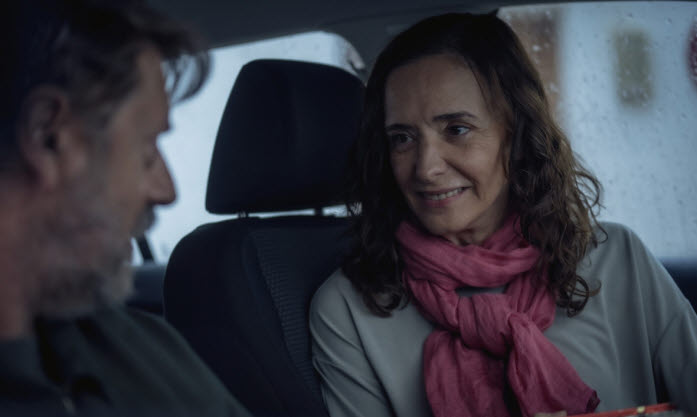
After 22 years have passed since that disaster, Garay is approached by the female host of a popular TV program named “Unsolved Cases”, which is, as you can easily guess from its very title, one of those sensationalist TV programs focusing on many cold cases mired in mystery. Around that time of Arenas’ disappearance, everyone including Garay was quite baffled to say the least without having any idea on what exactly happened to Arenas, and Garay hopes that his collaboration with that TV program will bring some closure to the memories of his friend and their unfinished film at least.
The movie patiently follows Garay as he tries to gather a bit more possible clues from several people in the past before having an interview for that TV program. First, he goes to Max (Mario Pardo), an old friend of his who once worked as his editor and is currently running a little place where numerous films including Garay’s unfinished movie are stored under his care. As he and Garay talk a bit about how people are less interested in preserving movies in physical form as movies become more and more digitalized, you may sense some bitter feelings about the current trend of cinema from Erice himself, and that will probably remind you more of the importance of film preservation.
In case of Arenas’ daughter Ana (Ana Torrent), she does not have any hard feeling on her father’s disappearance, because, well, she hardly knew her father even before his disappearance. Although she believes that her father was dead at that time, there is some bitter wistfulness behind her phlegmatic façade while she talks with Garay about her father’s disappearance, and the movie lets us gather that she has been haunted by Arenas’ disappearance as much as Garay.
By sheer coincidence, Garay later comes to have a little private meeting with Lola (Soledad Villamil), a woman who was romantically involved with him and Arenas, respectively. As they talk more and more with each other, they come to reflect more on how many things in their lives have gone away into the past, and that makes Garay more obsessed with what really happened to Arenas at that time.

However, the screenplay by Erice and his co-writer Michel Gaztambide, which is developed from the story written by Erice, does not hurry itself at all before taking an unexpected plot turn during its second half. I will not go into details here, but I can tell you instead that I admire how the movie steadily and thoughtfully builds up its narrative momentum for its sublime finale, which incidentally reminded me of what Ingmar Bergman once said: “For me, the human face is the most important subject of the cinema.”
And the movie does depend a lot on the faces of its main cast members, which speak volumes even when they do not seem to signify much to us on the surface. While Manolo Solo diligently holds the center with his somber sincerity, José Coronado is equally terrific as often hovering around the screen just like his character does around the story, and I will let you behold for yourself how much his indelible presence in the first half of the film resonates during the finale. Soledad Villamil, Mario Pardo, Helena Miquel, and María León, and Ana Torrent are also effective in their respective supporting roles, and Torrent’s supporting performance willl feel quite poignant to you if you have seen Erice’s first feature film “The Spirit of the Beehive” (1973), where she gave one of the greatest child performances in the history of cinema.
In conclusion, “Close Your Eyes” may feel a bit ponderous to you considering its slow narrative pacing and rather long running time (169 minutes), but it is definitely worthwhile to watch if you have appreciated how cinema has entertained and touched us for many years. Maybe the end of cinema is near as many people have said these days, but the movie movingly reminds us that it is still a powerful tool for human emotions, and we surely need to remember that more, no matter what will happen to cinema in the future.


Pingback: 10 movies of 2024– and more: Part 1 | Seongyong's Private Place