
Marielle Heller’s 2024 film “Nightbitch”, which is currently available on Disney+ in South Korea, is an uneven genre mix which seems to be often confused about how it is about. While it is clearly intended to be a suburban mix between satire and fantasy, the result feels jumbled and disjointed in terms of mood and narrative, and it is a shame that its lead actress tries really hard for making it work as much as possible.
At first, the movie shows us how things have been quite frustrating for its heroine, who is simply named “Mother” in the end credits. Before her two-year-old son was born, she was a very promising artist, but she chose to focus on raising her son instead once she became pregnant, and now she wonders whether she made a big mistake from the very beginning. Every day is a constant struggle for her as she tries to take care of her son, but her husband is virtually absent due to his frequently busy job, and he does not seem to appreciate much of her efforts whenever he is at their home.
The satiric aspects of the story work best as observing how much its heroine feels still frustrated even when she is with several other mothers in her suburban neighborhood. Many of these mothers look mostly fine and well while also being happy and content with their children, and this makes her feel all the more inferior about herself. She really wants to let out her feelings and thoughts churning inside her mind, but she only comes to deliver occasional internal monologues to herself and us instead.
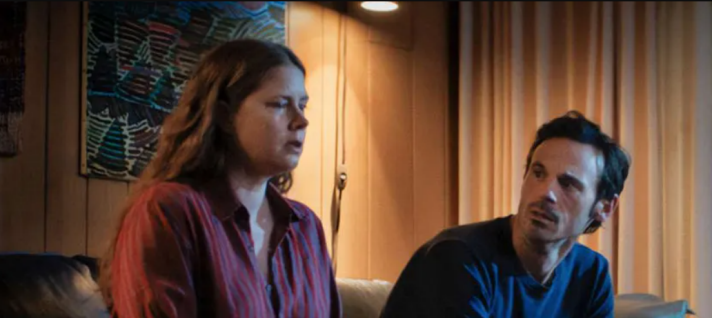
In the meantime, something weird begins to happen on her body. At first, her body shows a rather abnormal growth of hair, and that is just the beginning of several other odd changes on not only her body but also her mind. While being often driven by a sudden bout of primal urge, she comes to have a much more sensitive sense of smell, and she becomes more aware of those barking dogs outside the house whenever she tries to sleep at night.
Eventually, she comes to sense that she is being transformed into something like… a dog. Quite flabbergasted about this truly preposterous case of body horror, she naturally tries to understand and process it, and that is how she becomes interested in checking out all those myths about women turned into animals. Is this simply a delusion propelled by all the accumulating anxiety and stress inside her? Or…
There are several disturbing moments including when its heroine is shocked to find a lot of dead animals in front of her house, but the movie somehow remains to be merely ridiculous instead of becoming unnerving or amusing instead. When its heroine finally reaches the logical outcome of her transformation process, this moment is supposed to be dramatically liberating, but it simply feels silly and outrageous without adding that much to the story and characters.
Heller’s screenplay is based on the novel of the same name by Rachel Yoder, and I was a bit alarmed when I came across a certain literature term while getting some information on Yoder’s novel. It seems that the novel depends a lot on magic realism, and, as some of you know well, magic realism is something quite tricky to be translated onto the screen. Many preposterous moments in the movie may be fairly believable in the novel, but these moments are just plainly weird instead of drawing us more into the story and characters.
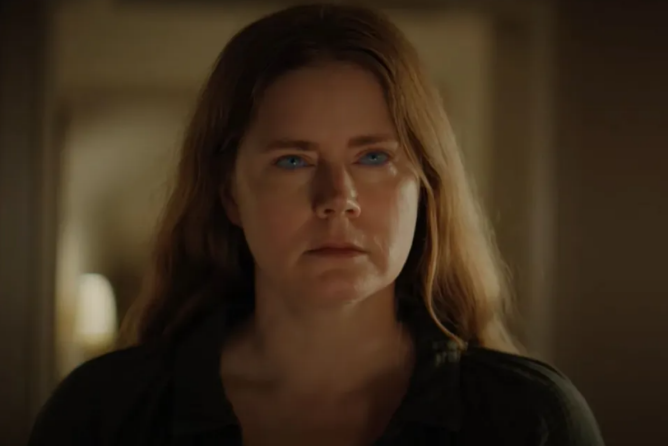
Above all, we never get to know that much about its heroine, who remains more or less than a symbolic figure representing all the struggling mothers out there. While the movie provides a bit of her personal and professional background, the flashback scenes involved with her and her mother are mostly superficial, and the same thing can be said about a scene involved with her former professional colleagues, whose sole function is reminding more of how much she gave up just for becoming a mother.
The overall result becomes all the more frustrating because there are actually a few effective moments around its last act. When its heroine eventually opens herself more to those fellow mothers of hers, she and they come to share each own anxiety and frustration from motherhood, and this actually helps her reflect more on what she really wants to do about her life.
However, Heller’s screenplay frequently swings from one extreme end to another without any moderation, and so does its lead actress’ performance. Since her Oscar-nominated breakthrough turn in “Junebug” (2005), Amy Adams has been steadily engaging throughout her career, but the movie is unfortunately one of her few missteps. She surely shows some professional commitment as her character is driven to several extreme moments, but her admirable efforts are limited by her thin character more than once, and she is also not supported well by several notable supporting performers including Scoot McNairy, who are sadly wasted in their under-developed roles.
On the whole, “Nightbitch” is a big disappointment in addition to being two or three steps down from the considerable achievement of Heller’s several previous films such as “Can You Every Forgive Me?” (2018). I appreciate it to some degree as an exploration on motherhood via female perspective, but there are several other films which did the job much better in comparison, and I would rather recommend them instead.