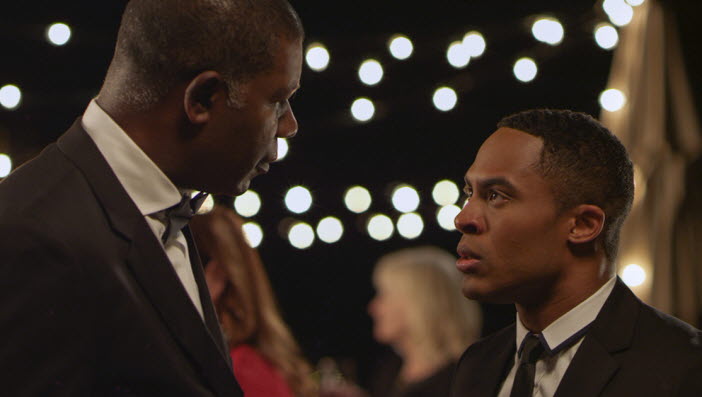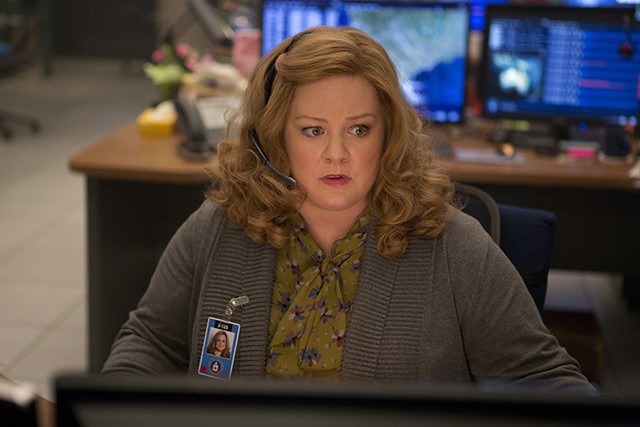
Spy (2015) ☆☆☆(3/4) : An uproarious action comedy fueled by Melissa McCarthy

spy01Let me tell you one thing: “Spy” is an exhilarating hybrid of action and comedy a lot funnier than whatever its very simple title suggests. With its brash, indomitable comic spirit ready for more outrageous things coming along the plot, the movie busily bounces around many uproarious moments shining with sharp wit and good comic timing, and I could not help laughing along with the audiences around me as observing some of the funniest scenes in the film.

Melissa McCarthy, who collaborates with the director/writer Paul Peig again after their considerable successes in “Bridesmaids” (2011) and “The Heat” (2013), plays Susan Cooper, a timid and chubby CIA analyst who has been assisting Agent Bradley Fine (Jude Law, who looks as classy as James Bond in his sly performance) for many years. As shown during the opening sequence, she takes care of everything for him including his escape route during their latest mission or a small domestic matter involved with his gardener, but her dedication and efforts have been not appreciated much by Fine or others. Along with her best friend/co-worker Nancy (Miranda Hart) and their fellow desk-bound workers, she is stuck in a basement office which is in the serious need of the extra budget for pest control, and it looks like this is where she will spend the rest of her CIA career.

But then Fine is unexpectedly killed in the next mission. While mourning for the loss of one of their best agents, Susan and others in CIA have a big serious problem to deal with. Fine was tracking a stolen nuclear bomb before his death, and they must find the bomb before it falls into the wrong hands. The problem is that the information of every top field agent of CIA has been recently leaked to the outside, so they need someone else for this urgent mission.
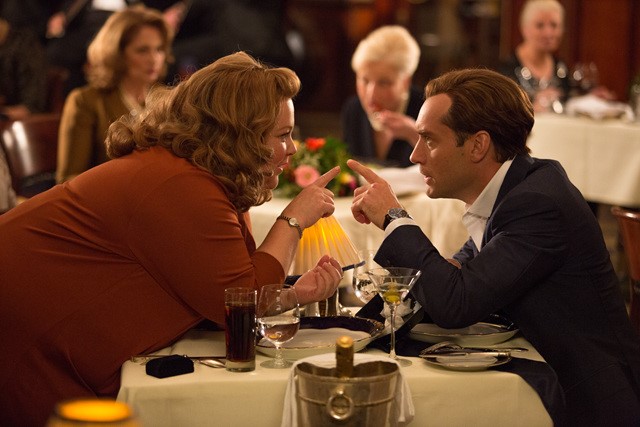
spy04When Susan volunteers even though she has only handled missions through her monitoring computer, Agent Rick Ford (Jason Statham), a bullheaded guy eager to get the revenge of his close colleague in spite of his current exposed status, instantly scoffs at that, but Deputy Director Elaine Crocker (Allison Janney) seriously considers Susan’s volunteering on second thoughts. After all, Susan is smart enough to be an analyst, and she actually showed considerable potentials during her training period in the past, though what impresses Crocker is not exactly Susan’s proudest moment during that time.

After accepting what will be her own first mission, Susan is soon dispatched to Europe. Her mission is spying on De Luca (Bobby Cannavale), a well-known international broker who is going to intermediate the deal with Raina Boyanov (Rose Byrne) and whoever bids the highest price for the atomic bomb currently in Raina’s possession. The mission looks pretty tame at first, but it turns out there is more danger than she expected, and then there is also another complication because of Ford, who has gone into rogue mode to take matters into his own hands.

Now this is indeed a classic case of ‘fish-out-of-water’ setting which has been one of the time-honored tools among comedies, and I must also point out that “Spy” is not exactly fresh considering other recent similar movies like “Get Smart” (2008), but Peig’s zany screenplay does not merely dwell on its familiar premise. The screenplay diligently throws many clever and hilarious gags as cheerfully making a fun of many spy movie conventions such as that typical introduction scene of spy gadgets, and it also makes big, sharp laughs out of how Susan is usually overlooked and underestimated by others just because of the way she looks. I enjoyed the main title song sequence which is apparently a tongue-in-cheek homage to James Bond movies, and I and other audiences were tickled a lot by the scene where Susan gets her false passport and the gadgets specifically prepared for her, which is one of the most hilarious moments in the film. There are also a few gross moments, but I can assure you that, like that infamous sequence in “Bridesmaids”, they are funny enough while never going too far, and I actually found myself reflecting at one point on how a certain human organ gets relaxed not long after death (that’s biology, you know).

spy02Above all, the movie gives us the heroine we can easily identify with, and Melissa McCarthy, who has been the force of nature since her breakout Oscar-nominated turn in “Bridesmaids”, did a splendid job in another firecracker comedy performance to watch and enjoy. As going through more dangers and adventures, Susan is surprised to see herself becoming more daring and resourceful than she has ever imagined, but we already saw the feisty fiber inside her through McCarthy, and we cheer more for Susan as she goes forward for getting her job done no matter what happens to her.

McCarthy also looks convincing during her action scenes, and Peig is a skillful director who knows how to make good action scenes as deftly modulating them between tension and humor. This reminds me of why the action scenes in “Kingsman: the Secret Service” (2014), another spy action film attempting to be a joke on spy movies, did not engage me enough; they were just intense and violent, and they were not as funny or exciting as intended because they had nothing new besides that. While the action scenes in “Spy” is often quite intense with lots of bullets and explosions, the movie balances well itself between violence and laugh even at its most intense points such as a silly variation on the airplane scene in “Goldfigher” (1964), and one physical fight scene shows us that McCarthy can be as resilient as, say, Charlize Theron in “Mad Max: Fury Road” (2015) while still making us laugh hard.

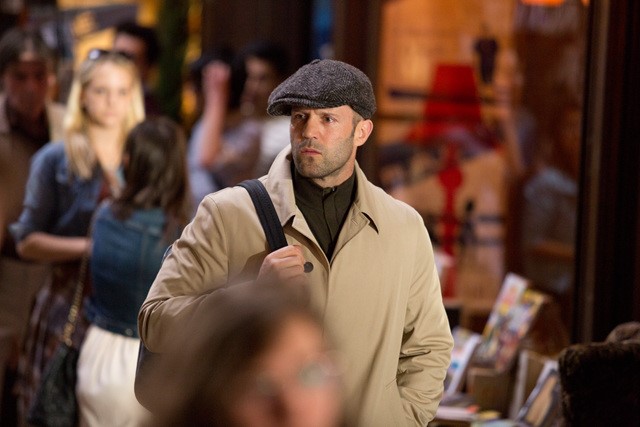
The supporting actors surrounding McCarthy have each own juicy fun in their respective roles. While Jude Law keeps his face straight and serious with nice comic effects, Jason Statham relentlessly pushes his tough guy persona way over the top, and you cannot help but amused by not only Statham’s unexpected comic side but also how his character brags more and more about his increasingly preposterous field experiences guaranteed to make your eyes roll in incredulity.
spy03On the opposite, Bobby Cannavale suitably looks oily for his nefarious character, and Rose Byrne virtually chews her scenes with gusto as a haughty girl who behaves like a spoiled, murderous high school queen bee. The accidental relationship development between her character and McCarthy’s later in the story is far more engaging than whatever was shown from the boys in “The Interview” (2014), and their edgy but somehow sweet relationship dynamics prove that ladies can often do better than boys in case of comedy. Allison Janney, who is always a welcome presence, is acerbic as usual as Susan’s no-nonsense boss, Peter Serafinowicz is effectively ludicrous as an Italian agent who may be Italy’s answer to Pepé Le Pew, and Miranda Hart brings down the house every time as Susan’s mousy co-worker who also has to rise to the occasion like her friend. (One of her best moments is involved with the nice cameo appearance by a certain well-known rapper, by the way).

“Spy” is a bit longer than necessary in its running time, and it eventually loses some of its loony comic momentum to some degrees as the story approaches to the obligatory climax action sequence during the last 30 minutes. At least, that weakness does not seriously hurt its entertaining aspects, and the movie is constantly enjoyable thanks to its witty screenplay fueled by the strong female personality at its center. I come to admire more of McCarthy’s immense talent, and she is simply terrific here as her talent is fully utilized – and I guess we will see more of her during many years to come.

spy05

Posted in Movies | Tagged , , , | 1 Comment

Alive (2014) ☆☆☆1/2 (3.5/4) : Alive in despair and desperation

Alive01

Life is hard and difficult for the desperate hero of South Korean independent film “Alive”, a gloomy social drama about the endless struggle and frustration in the gray harsh world where people are bound to find themselves against the wall in one way or another. He tries hard as he always did before, but nothing is changed for him. And then he decides to be far harder and tougher than before, but he is still at where he has been – with more despair and frustration. This is utterly hopeless and suffocating, but what alternative does he has, besides trying to be alive in this overwhelmingly exhausting human condition?

It is around the middle of winter, and Jeong-cheol (Park Jung-bum) is in a very difficult circumstance. He has been working at a construction site along with his mentally retarded friend Myeong-hoon (Park Myeong-hoon), and Myeong-hoon’s older brother, who was the foreman at this workplace, recently ran away with a substantial amount of wage which was supposed to be given to Jeong-cheol and his co-workers. Because his connection with Myeong-hoon, the co-workers begins to be suspicious of Jeong-cheol, and they even accuse him that he is involved in this theft. Just for proving his innocence, Jeong-cheol commits a cruel, heartless thing when he and others visit the nearly abandoned residence of Myeon-hoon’s brother and then find that it is occupied only by the young son of Myeon-hoon’s brother.

And this problem is only one of many difficulties in Jeong-cheol’s daily life in a rural mountain area far from Seoul. His family home, seriously damaged by a natural disaster during last summer, is barely maintained despite his efforts (he usually sleeps in a tent set inside the house), and the same thing can be said about his depressing family life. His parents died not so long ago, and his mentally unstable sister Soo-yeon (Lee Seung-yeon) is a lousy mother to her daughter Hana (Shin Haet-bit). As a young girl who grows up too early in her deficient childhood environment, Hana has no illusion on her problematic mother, and she mostly depends on her uncle, who has been more like a father to his niece in the absence of her father she never knew.

Alive02Soo-yeon has some aspiration for acting career, but, at least in my opinion, she is not a good actress, and she pushes method acting too far during one disturbing scene. She prepares herself through beating herself hard with wooden branches, but that does not work well for her when she goes to one audition for a stage play. In addition, she frequently runs away and then returns later as her mental illness becomes more serious, and Jeong-cheol is running out of patience even though he feels obliged to take care of her as her brother.

When there seems to be no way to earn money for Jeong-cheol and his family, there comes a chance which may make his life a little better if he uses it well. Soo-yeon has recently worked as a maid for the owner of a local soybean malt factory, and Jeong-cheol manages to convince the owner to hire him and Myeong-hoon. Once he sees that there is another opportunity to make more money for him, he becomes determined to go further – even if that means he must be very harsh to other poor people who are economically desperate just like him.

Such a sad, despairing struggle in grim reality like that is a familiar territory for the director/writer Park Jung-bum, who previously made an impressive debut with “The Journal of Musan” (2010). That harrowing film, which I chose one of the best South Korean films in 2011, is a melancholic tale about one North Korean defector in the lower stratum of South Korean society, and the fact that it was partially inspired by a real North Korean defector’s short life makes the movie sadder. The society welcomed him when he crossed the border as risking his life, but now it disregards him as if he were an expendable second-rate citizen, and his story feels all the more tragic as he eventually comes to accept that he must do anything for his social survival.

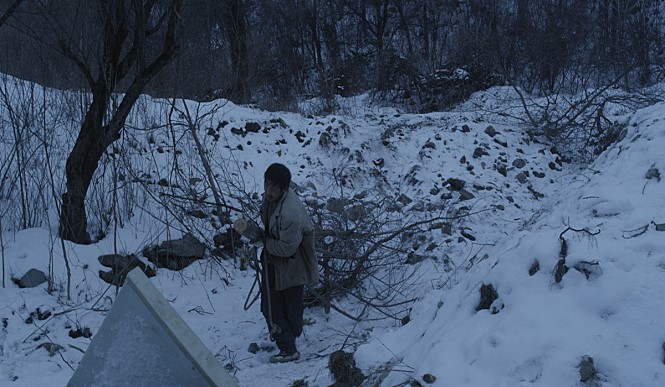
Alive04Like his previous film, “Alive” gives us the gray impression of hard life mainly through its plain, realistic approach to its story and characters. Park and the other actors playing the daily workers in the film look convincing as low class workers struggling to earn every day of their difficult life, and the cold, barren ambience of wintry backgrounds further accentuates the aura of desperation and hopelessness surrounding the characters in the film. While the cinematographer Kim Jong Seon’s camera usually sticks close to characters under Park’s austere direction, there are a number of visually haunting moments such as when Jeong-cheol is doing woodcutting alone in a remote winter forest covered with snow.

While providing the emotional center to hold through his restrained lead performance which refuses any pity or sentimentality, Park also drew good performances from most of his cast members. Lee Seung-yeon and Park Myeong-hoon ably handle their difficult characters with more complex sides than expected, Lee Eun-woo is Jeong-cheol’s frigid girlfriend who has no problem with getting any chance to earn more, and Park Hee-bon is a woman who can be more ruthless to her father’s factory employees in the name of survival. Young actress Shin Haet-bit is also excellent as a young girl who has a fair share of her own disappointment and frustration just like her uncle, and she is particularly wonderful when the movie relies solely on her performance during a couple of crucial scenes.

Its running time, which is around 170 minutes, is a little too long, and I became a bit impatient as it often stumbled during its imperfect third act. There are other small flaws including a couple of strained supporting performances which feel awkward compared to the other ones in the film, but “Alive” remains as the commendable second work from a promising South Korean filmmaker to watch. It is hardly a pleasant experience, but it lets us have empathy on its struggling hero and a few other characters, and it surely earns a small glimmer of hope and redemption during its understated finale reminiscent of that powerful ending of the Dardenne brothers’ “The Son” (2002). Life can be very difficult, but that does not mean you have to lose the capability of kindness and compassion to others. As you will see, that simple but important moral lesson is learned in a hard way in the end.

Alive03

Posted in Movies | Tagged , , | Leave a comment

Patang (2011) ☆☆☆1/2 (3.5/4) : The Day of the Kites

patang01

What a lovely little film “Patang” is. With no need to follow conventions, this small, vibrant independent film freely floats around many wonderful moments closely observed from one Indian city and its people during their joyous festival days. As we get to learn more about its several characters bit by bit through its subtle, intimate touches, the movie gradually comes to us as a poetic visual tapestry as lively and gorgeous as those countless kites flown above the city. They may look small individually, but they create together an unforgettable sight to watch through their colorful buoyance up in the sky, and we cannot help but enthralled just like the characters in the film.

It is January 13th, and Ahmedabad, the former capital city of the Gujarat state in India, is busily preparing for one of its major annual festivals to be celebrated. January 14th is the day of Uttarayan, and its big annual kite festival signifies the end of winter and the beginning of spring as the Sun crosses the Capricorn on its celestial path (this is why it is one of few Indian traditional festivals held according to the Gregorian Calendar, by the way). The sky above the city will be filled with lots of kites once it starts, and there will also be more fun and excitement to be had along with lamp, firework, food, and many other things during this big, exuberant festival day which attracts not only Indian people but many visitors from other countries.

The plot of the movie mainly revolves around the visit of Jayesh (Mukund Shukla) to his family in Ahmedabad, whom he has not seen for several years. This affluent middle-aged man left the city a long time ago for a better business opportunity in Delhi, and now he is coming back to his old family house along with his grown-up daughter Priya (Sugandha Garg), who is not that enthusiastic about visiting her father’s hometown city but often shoots the streets and people of Ahmedabad with keen interest using her chic pink super 8mm camera.

The family home is located in the corner of a small, quiet alley. It surely looks tarnished and weathered here and there, but it is not without charm in its plain but soothing appearance. Its interior looks cozy and comfortable with the sense of long history reflected by furnitures and decorations, and you will agree to Jayesh’s small comment on this house: “Every room says something.”

patang06Most of the family members heartily greet Jayesh and Priya. Jayesh’s aging mother Ba (Pannaben Soni) is happy to see them again, and so is his widow sister-in-law Sudha (Seema Biswas, a veteran Indian actress who is well known for her performances in “Bandit Queen” (1994), “Water” (2005), and “Midnight’s Children” (2012)). In case of Sudha’s son Chakku (Nawazuddin Siddiqui, who would soon rise further with “Gangs of Wasseypur” (2012) and “The Lunchbox” (2013) after this film), it is apparent that this young man has lots of grudges against his uncle, right from when he spots Jayesh’s arrival on the street. We come to gather that there was some unspecified family conflict between Jayesh and Chakku’s diseased father Umesh, and Umesh’s unseen presence, mainly represented by his photo, is constantly felt in the household as he is remembered or mentioned by others.

We also meet other characters. Hamid (Hamid Shaikh), a little boy who sometimes hang around Chakku with other kids, is hired to deliver a bunch of kites Jayesh orders for the next day, but a number of coincidences put him in a difficult situation, which leads to a sad moment when he comes back to his home at late night. Bobby (Aakash Maherya), an easygoing lad working at his father’s shop, is eager to brandish his kite flying skill on the next day, and we later see him very excited to get his kite in the middle of a busy market place, which is full of various kites of different colors and shapes to be bought during the eve of Uttarayan. At one point, we get a small glimpse into how strings to be attached to kites are strengthened and sharpened by glistening glue and sparkling ground glass (ouch), and you may notice later that many kite fliers in the film have their fingers covered in bandages for protection.

The Day of Uttarayan begins quietly with calm morning air at first, but it soon becomes energized more and more as the sun goes up in the sky. There are just a couple of kites in the air during the first hour, but then, as more people gather on the rooftops, we see thousands of kites flown into the sky with lots of cheer and joy felt from the below. Some of them are already prepared for their ferocious kite fight, and everyone looks up to the sky with thrill and excitement as many kites going down as casualties. Festival food is prepared and ready for guests in the meantime, many talks and gossips are exchanged, and the mood around people fluctuates at times just like the kites soar into the sky and then plummet into the ground.

For vividly capturing that enrapturing atmosphere of the kite festival with the realistic sense of place and people, the director/co-screenplay writer Prashant Bhargava, an Indian American filmmaker who grew up under his immigrant parents in the South Side of Chicago, went through lots of preparation before moving onto the shooting process. After visiting Ahmedabad during the kite festival in 2005, he was determined to capture its rapturous spirit on the screen, and that was the beginning of his long journey which took no less than 7 years. He spent 3 years in the city to get himself immersed into the daily rhythm of the city (the occasional 8mm film footage shots in the film were actually shot by him), and his efforts are clearly shown in the final product which almost approaches to the level of documentary for its considerable authenticity.

patang05In case of the kite flying scenes in the film, they were shot right before and during the kite festival, and they are indeed the most exciting part of the movie as accompanied with the tumultuous rhythm of fun and excitement spontaneously exuded from the real environment. After watching the film for the second time, I searched the Internet for the photos and videos shot during the kite festival, and I can tell you that Bhargava achieved exactly what he aimed for his film (“Rich or poor, Hindu or Muslim, young or old — together they look towards the sky with wonder, thoughts and doubts forgotten,” he said when he talked about the film with late Roger Ebert in 2011. “Kite flying is meditation in its simplest form”)

And the story slowly takes its shape as we get absorbed into its world and the people occupying it. The documentary-like approach of the film, exemplified by its intimate but unobtrusive camera work, makes us feel like an unseen observer watching closely on the people on the screen. The screenplay written by Bhargava and his co-writer James Townsend only shows or suggests what is going on between the main characters while never blatantly spelling it out. We listen with more attention to what they say or imply in their interactions, and the screenplay subtly and organically fleshes them out as real people we are willing to observe with interest and care. Chakku may be a bum with no future as his uncle views him with the condescending disapproval barely hidden inside his words, but he is a sort of nice big brother to Hamid and other plucky street urchins, and one brief moment succinctly tells us how much he still feels hurt by his father’s death. Although he has attained almost everything he wants in his life, Jayesh still feels dissatisfied, and we come to sense a growing gap between him and Priya, who prefers to go around the city rather than sit beside him or other family members.

The actors in the film are believable in their scenes, which were mostly improvised from Bhargava and Townsend’s script on the spot. Although they are relatively more recognizable to some of you, a few professional performers in the cast embody their roles as naturally as many non-professional performers in the film. Seema Biswas has a beautiful scene of restrained grace and delicacy when Suhda has a frank talk with her brother-in-law when they happen to have a private moment together, and you may be surprised to know that the movie is actually the first film for her co-actor Mukund Shukla, whose understated performance is another key element to carry this scene.

Young lovely actress Sugandha Garg has a nice flirtatious chemistry with Aakash Maherya as their characters become attracted to each other after their chance encounter. The scene in which Priya and Bobby spend their time together near the river in the sunset is handled well with bittersweet sensitivity. Feeling the love toward her, Bobby believes they can have live together as a couple, but Priya knows better as a more practical girl. She does enjoy his company, and she does feel romantic like him, but that is all because they only met each other just several hours ago, as she shrewdly points out during their last minute.

patang07The festival goes on as the day is being over for them and others. Lamps and fireworks soon decorate the darkening evening sky, and there is still excitement remaining in the air, but then, like any festival, everything comes to the end. The next morning begins with sleepy exhaustion, and we see many kites stuck on wires and cables, which look like ragged laundries hung on wash lines. People go back to their usual business, and so do Jayesh and his family, who will probably have a more pleasant time together in the next year if they just try with more understanding.

The director Prashant Bhargava died at the age of 42 in this month due to his heart problem, so “Patang” becomes the sole feature film in his short directing career. Thanks to Ebert’s enthusiastic response to the film, he and his father, who was incidentally a student of Ebert’s film class and produced his son’s movie along with other family members, were invited to 2012 Ebertfest for the screening of the film, and it is sad to watch Bhargava in the YouTube video clip of the Q&A session held right after the screening. With his open, gentle face which now looks more poignant due to his recent untimely death, he looks hopeful about taking another forward step after his impressive debut work, and he did made the next step as making a short music film “Radhe Radhe: Rites of Holi” with Vijay Iyer in last year.

In spite of the positive responses it received from Ebertfest and other major film festivals, “Patang” did not get enough exposure it deserved except the limited theatrical release in US during June 2012. There was not any news on its DVD/Blu-ray release for a while after that, but then it has been available on Vimeo with both streaming and download options since the last year, though it has not been released on DVD/Blu-ray yet.

When I checked Ebert’s 2011 blog post on “Patang” yesterday, its two latest comments drew my attention, and they were from none other than Bhargava. He put a link to his memorial piece on Ebert which was written not long after Ebert’s death in April 2013, and then he notified us of the wider availability of his film in June 2014. He made only one feature film, but he flied it high as much as he could, and, as more touchingly reflected by its final shot now, it is really something worthwhile to keep and appreciate for what it accomplished.

Sidenote: Here is the link for where you can watch the film. Click Here.

patang04

Posted in Movies | Tagged , , | Leave a comment

Trash (2014) ☆☆(2/4) : Brazilian Slumdogs, so to speak

trash01

Somewhere between “City of God” (2002) and “Slumdog Millionaire” (2008), “Trash” has right elements required for its story to tell, but it somehow feels flaccid and uneven in its execution. The movie wants to take us to the bottom of the society where its young heroes struggle to survive along with many other people in poverty, and it is successful to some degrees in that aspect, but it never accumulates enough momentum necessary to hold our interest. Besides its thin characterization and plodding narrative, the movie is riddled with predictable and contrived elements to distract your viewing experience, and the bland and tedious handling of a mystery supposed to drive its plot does not help much either.

For the people living in a slum area near some landfill outside Rio de Janeiro, their work hour begins with the arrival of dump trucks full of the garbage from the city. Whether it is an empty plastic bottle or an old video game, nothing is too valueless to scavenge for these people, because they cannot afford to lose any chance to earn more in their life. Watching them rummaging through heaps of thrash, I was reminded of Oscar-nominated documentary film “Waste Land”, which memorably shows the low class life revolving around a landfill not so different from the one shown in “Trash”.

On one day, Raphael (Rickson Teves), one of street-smart kids living in this slum neighborhood, happens to find a wallet during his another usual scavenging hour, and he and his friend Gardo (Eudardo Luis) come to see that it is more valuable than it seemed at first. Not long after his discovery, the police arrive in the landfill to search for the very wallet in question, and Raphael decides that they should hide the wallet for a while to get a bigger reward. Raphael and Gardo go to their friend Rat (Gabriel Weinstein), and Rat agrees to keep the wallet in his sewer shelter on the condition of having his own share in the reward they will get later.

trash02

And then Raphael becomes curious about several things inside the wallet besides the money they quickly spent. There is a coin locker key, and there are also the other objects which may also be the clues to something valuable. Fortunately, Rat knows where the key comes from, and that is the first step of their adventure, which is soon followed by the appearance of another important clue for them. Watching them going around several places, you may notice the similarity to the director Stephen Daldry’s previous work “Extremely Loud and Incredibly Close” (2011), which is about a young precocious kid’s journey around many different people and places in New York through the clues left to him by his diseased father.

We already have a pretty good idea about what they may discover at the end of their journey, and that accordingly means we are always two or three steps ahead of the boys, if not the plot. That key belongs to José Angelo (Wagner Moura), and, as shown during the opening part, Angelo was about to initiate a secret plan before he is captured and then killed. He has been associated with a powerful and corrupt politician named Santos (Stepan Nercessian), and Santos needs to retrieve something which Angelo managed to snatch and hide from Santos before his death. The police are ready to do anything as ordered from Santos, and so is Detective Gonz (Selton Mello), a vicious cop who will get his job done by any means necessary.

Gonz becomes very suspicious about Raphael right from their first encounter, and that leads to the darkest moment in the film which is also quite disturbing to watch for the brutal and cruel violence inflicted on our helpless young hero. This scene does intend to make us disturbed, and it is effective for its purpose, but I instead became more conscious of the strings pulled behind it – especially when it goes back and forth between Raphael’s grim ordeal and the frustration experienced by the other characters searching for him.

trash03That could have been forgivable or acceptable if Daldry and his screenplay writer Richard Curtis, who adapted Andy Mulligan’s novel with the same name, had handled their story and characters well enough to engage us. While the local background and atmosphere are captured well on the screen by the cinematographer Adriano Goldman, the movie curiously lacks the sense of urgency or tension as a thriller, and it also fails to generate the substantial amount of suspense during a number of chase sequences which are mediocre and unexciting to say the least. The score by Antônio Pinto is vibrant and spirited as demanded, but it sounds like it is for something more exciting than what is tediously presented on the screen.


Furthermore, the plot suffers from many contrivances and coincidences which are sometimes too much to be accepted. I may accept how Father Julliard (Martin Sheen) and Sister Olivia (Rooney Olivia), two good Americans who really care about our young heroes and others in the slum neighborhood, are rather oblivious to what is going on behind their back for a while. I may also have no problem with how Detective Gonz is no more than a cardboard villain who conveniently appears whenever the story needs his creepy villainy. But there is no way I can possibly believe a certain revelation around the climax. I will not go into details about that, but let’s say it made me question again the practicality of Angelo’s plan, which has too many plot holes in itself to be believed.

trash05The main actors try their best, but their performances are often arrested by the flawed screenplay, and their characters feel more like the cogs inside plot machinery as a result. While young actors Rickson Teves, Eduardo Luis, and Gabriel Weinstein are as natural and lively as we can expect from them, they are sometimes forced to handle some unconvincing moments in the film, and I have a doubt on whether their occasional video scenes are really necessary besides 1) providing expository interludes and 2) assuring us that they will be all right in the end. In case of their adult co-stars, Martin Sheen, Rooney Mara, Wagner Moura, and Selton Mello are wasted in their thankless roles, but at least they did their jobs as required while humbly allowing the young actors to take the center in the film.

Compared to “City of God” and “Slumdog Millionaire”, “Trash” is a disappointing work that pales into insignificance in many aspects. It is far behind that gritty, crackling intensity shown in “City of God”, and it also fails to reach to the level of that dizzy, exuberant spirit of “Slumdog Millionaire”, which is a much better crowd-pleasing film in comparison. Both “City of God” and “Slumdog Millionaire” brim with the undeniably palpable sense of life and reality in each own way, but, sadly, the same thing cannot be said about “Trash”, which sincerely tries but fails in the end without much impression to leave behind.

trash04

Posted in Movies | Tagged , , , , | Leave a comment

While We’re Young (2014) ☆☆☆(3/4) : While they are not that young

Whileweareyoung01    Getting older does not always mean getting wiser. I am now over 30, and I got a Ph.D degree at last early in this year with a job ready for me, but I still do not know well which next step I want to take. Many younger people at my workplace think I know better, but I am at loss whenever they want something from me, and I often become wistful about things I did not do during my good old campus years, like learning more, for instance.

While my age puts me somewhere between two different couples in Noah Baumbach’s “While We’re Young”, I observed them with sober moments of amusement and recognition. As watching the younger couple, I was reminded that I was once there when I was younger, though I was far less outgoing in comparison. As watching the older couple, I mused that I will soon enter their territory within years, probably with someone as my partner or spouse.

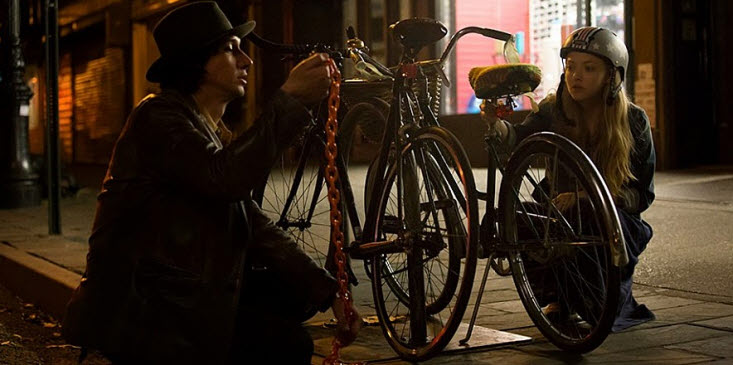
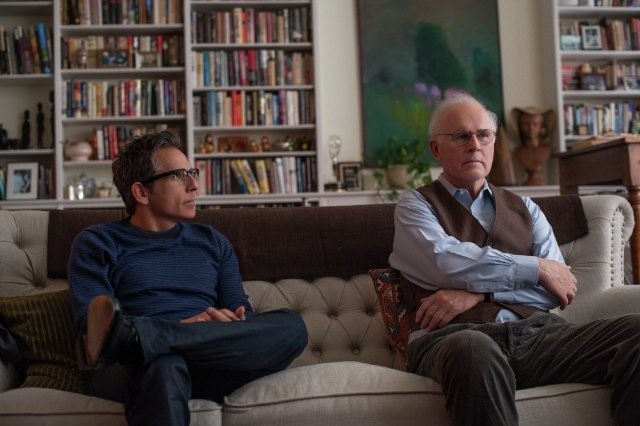
The movie mainly focuses on the older couple, so we see the story mostly through their view. Josh (Ben Stiller) is a documentary filmmaker who has been working on his personal project for 10 years without any significant development, and the fact that he is the son-in-law of a legendary documentary filmmaker pressures him everyday. His wife Cornelia (Naomi Watts), who works as the producer for her father, suggests her husband that he should get some help from her father, but that is the last thing wanted by Josh – even when he runs out of money to pay his faithful editor Tim (Matthew Maher).

On one day, Josh accidentally encounters Jamie (Adam Driver), who approaches to Josh at the end of his small lecture on documentary filmmaking. As a young guy eager to start his own career, Jamie wants to learn more from Josh, and Jamie and his girlfriend Darby (Amanda Seyfried) soon get closer to Josh and Cornelia, who cannot help but attracted to the youthful energy of Jamie and Darby. They surely feel the generation gap between them and their new friends, but they feel younger whenever they hang around with Jamie and Darby, so they begin to spend more time with them. Whilewereyoung03

Jamie and Darby are living a life full of fancy retro styles, and one of the most amusing moments in the film is a montage sequence going back and forth between their daily life and Josh and Cornelia’s to present many ironic contrasts between these two different couples. While Josh and Cornelia are pretty comfortable with many digital tools represented by CD, MP3, and online streaming services like Netflix, Jamie and Darby prefer more analog things as reflected by their vast collections of LP, VHS, and (gasp) cassette tape. Jamie says he even bought a VHS copy of Josh’s old documentary through an auction website, and Josh comes to like more this young man who looks willing to learn anything from him, though he does not have many things to tell as a guy still desperate to prove himself as a documentary filmmaker of independent voice.

And then there comes an unbelievably good opportunity for Jamie not along after Josh reluctantly agrees to assist Jamie’s own small documentary project. Watching Jamie getting onto the way which may lead to more career success, Josh naturally becomes envious and unhappy about this changing circumstance. It is fun to be with Jamie, but Jamie’s growing potential as a documentary filmmaker painfully reminds Josh of where he is currently stuck in, and he becomes more aware of that he is not that young anymore. Marina (Maria Dizzia) and Fletcher (Adam Horovitz), who were Josh and Cornelia’s best friends before the arrival of Jamie and Darby, have recently moved onto the next stage of their life as the parents with a baby, and there is a funny scene when Josh is informed by his doctor that middle age is probably a lot closer to him that he thought.

In case of Cornelia, she also experiences similar things through her encounter with Jamie and Darby. She wanted to have a baby several years ago, but she and her husband eventually decided not to have a baby after a number of painful failures. She and Josh think they can still be happy despite that, but, as watching Jamie and Darby, she misses when she and her husband were more passionate toward each other, and that leads to an unfortunate incident when she and Josh participate in a psychedelic ritual along with Jamie and Darby. While everyone becomes dopey and nauseous as warned, she happens to reveal her deep wish to a wrong person, and that mistake results in another strain in the relationship between her and her husband.

Whilewereyoung06The witty, sharp screenplay by the director Noah Baumbach, who previously directed “The Squid and the Whale” (2005) and “Frances Ha” (2012), establishes well engaging, if not likable, characters to watch. The mutual interactions between them are funny and insightful thank to his lightweight but acerbic humor, and the soundtrack, which consists of various classic music pieces and contemporary pop music pieces, works as a delightful accompaniment as the cinematographer Sam Levy’s camera watches the characters casually roaming around the streets of New York.

The actors in the film are suitably cast in each case. Ben Stiller, who previously collaborated with Baumback in “Greenberg” (2010), and Naomi Watts have a good chemistry between them, and I and the audiences around me especially enjoyed an effortlessly warm, humorous scene where their characters come upon a chance to have a little fun together through one spontaneous moment. Considering their rising status as new young actors to watch, Adam Driver and Amanda Seyfried are ideal counterparts to their co-stars; Driver is wryly deadpan as Jamie, who eventually turns out to be quite banal and self-absorbed, openly reveals what is deemed by Josh as evil and unethical, and Seyfried does more than what is demanded from her rather underdeveloped role. Maria Dizzia and Adam Horovitz are also good as a couple who has their own problems, and Charles Grodin has a juicy supporting part as Josh’s father-in-law, who cannot be easily outraged as a seasoned master who has seen all in his field (Small trivia: Grodin was a small but crucial supporting performer in “Rosemary’s Baby” (1968), which is incidentally mentioned in the middle of the film).

Although its third act arrives at the ending in a way a little too easy and abrupt and some of its supporting characters are too broad and cartoonish to be accepted, “While We’re Young” is a nice intimate comedy film with charm and wits in spite of its uneven sides. I had a fair share of laughs and amusements, and, after the movie was over, I wondered how I will regard this film 10 years later. I really hope I will be a little wiser to deal with my own matters at that point. Whilewereyoung02

Posted in Movies | Tagged , | 3 Comments

Mad Max: Fury Road (2015) ☆☆☆1/2 (3.5/4) : Mad Max strikes back again

madmaxroadfury06“Mad Max: Fury Road”, indubitably the best work in the Mad Max series, is a superb action film fully charged with enormous vigor and sparky excitement to overwhelm you to the very end. Mixing old and new elements together in its volatile concoction, this superlative sequel is the magnificent return with vengeance from a director who set a new standard for action films more than 30 years ago, and his stupefying artistic/technical achievement reminds us that many Hollywood blockbuster action films dream too small as aiming too low in these days.

After the breakthrough success of his low-budget debut feature film “Mad Max” (1979), the director George Miller put his iconic hero into wider and gloomier backgrounds in the following sequels “Mad Max 2: The Road Warrior” (1981) and “Mad Max Beyond Thunderdome” (1985), and the premise of “Mad Max: Fury Road” is not very different from that. In the future not so distant from our time, the modern human civilization we know is completely collapsed due to some big global war. Severely affected by the devastations of the war, the humanity is regressed into poverty and barbarity, and cruelty and misery are usual things in this barren, unforgiving post-apocalyptic world without much hope or promise for the future.

And there is a lonely man wandering alone around vast wastelands as struggling to survive like many others. Although he does not reveal a lot about himself, that does not matter much even if you have not seen the previous films, for Max Rocktatansky, who was originally played by Mel Gibson and is now competently filled by Tom Hardy, is a quintessential reticent action movie hero who speaks volume through his actions. The opening scene succinctly introduces him along with his vague past which constantly haunts his mind through occasional flashback shots, and then it is followed by the first action scene in the film when he happens to encounter a bunch of vicious guys working for a megalomaniac warlord named Immortan Joe (Hugh Keays-Byrne, who previously played the vile biker gang leader in “Mad Max”). After captured by them, Max is imprisoned as a valuable asset for his universal blood type, and he finds himself becoming a living blood bag for Nux (Nicholas Hoult), a sick young man who is one of Immortan Joe’s fanatic soldiers called ‘War Boys.’

madmaxroadfury03Always wearing a gas mask to breathe and survive, Immortan Joe is a very twisted man as monstrous as his gruesome appearance, and we see more of his barbaric reign mainly maintained by his full control of clean water, which has been the most important resource for everyone besides oil. There is a memorable scene where he momentarily pours down water onto the desperate crowd right below his headquarters placed on the top of one of several giant rocks, and we cannot help but notice that these rocks look far greener than the surrounding desolate environment.

Like Noah Cross in “Chinatown” (1974), Immortan Joe wants to own the future as well as water, and it turns out that he has held a group of female captives as ‘breeders’, who will bear him normal healthy children to succeed his reign. Furiosa (Charlize Theron), a feisty female warrior who is one of his top-lieutenants, has the other plan for these unfortunate women; after hiding them inside her big oil tank rig, she is going to take them to a safe place far from Immortan Joe’s area, and she is ready to take any risk for what she has probably planned for years as her revenge/redemption. As soon as he learns that Furiosa has betrayed him, Immortan Joe and his War Boys immediately chase after Furiosa’s heavily-armed rig, and Max reluctantly becomes Furiosa’s ally after literally pushed forward into this trouble (if you are a fan of “Mad Max 2”, you will surely appreciate how that happens).

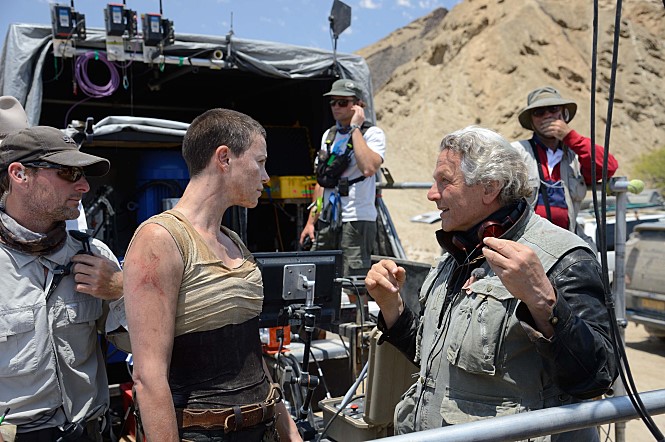
Once it shifts its gear into the full throttle mode around that point, “Mad Max: Fury Road” swiftly drives through the relentless series of spectacular action sequences brimming with sheer metallic power and crackling intensity guaranteed to smack you down. There are naturally a lot of bangs and crashes here and there in their propulsive flow of non-stop action, but we seldom get lost thanks to Margaret Sixel’s dexterous editing, which always maintains the clear, forthright sense of overall direction even when the actions become quite busy and frantic amid lots of sound and fury. The Oscar-winning cinematographer John Seale, who came out of retirement for this film, did a splendid job of making the action sequences look visceral and epic on the screen, and there are some beautiful background shots based on the strikingly bright colors of blue sky and endless desert landscapes, which contrastingly accentuate the gray, metallic texture of the film.

madmaxroadfury04While some of its most explosive moments are apparently assisted by CGI like Furiosa’s prosthetic arm, the movie mostly depends on real stunt actions. The stunt actions in the film are phenomenal to say the least, and their gritty verisimilitude generates vibrant hyperkinetic mood along with the impactful sound effect design on the soundtrack. Sure, I did enjoy those big, goofy CGI spectacles in recent Fast and Furious movies, but, compared to many furiously stupendous sights in “Mad Max: Fury Road”, they just look like Sunday afternoon picnic. I was absolutely blown away by how the first major action sequence culminates to its grand highpoint peppered with the extra dose of awe by the courtesy of CGI, and then I was more impressed by how the movie accelerates itself further during the following action sequences, which are respectively equipped with each own thrills and goodies as the individual chapters of the story.

This is indeed exhausting at times, but we are totally absorbed into the actions none the less, and we also come to get a more acute sense of what is at stake emotionally and physically in the characters’ situations. Most of the characters in the film are simple and broad, but their distinguishable personalities are quickly established through their striking appearances or amusing names such as Rictus Erectus (Nathan Jones), The Bullet Farmer (Richard Carter), The People Eater (John Howard), and The Organic Mechanic (Angus Sampson).

While Tom Hardy’s solid lead performance functions well as a stoic anchor to hold the wild, brutal spirit of the movie, his co-stars are equally convincing in their good performances. Hugh Keays-Byrne is effective as a loathsome villain who will stop at nothing for getting what he is obsessed with, Nicholas Hoult gradually earns our sympathy as a lackey desperate to earn recognition from his big boss, and Charlize Theron is commendable in her committed performance as another strong dramatic center in the story. The movie is ultimately as much about Furiosa as about Max, and her character arc along the story is economically and effectively conveyed through several quieter (and slower) moments in the film. In addition, Immortan Joe’s breeder women, played by Rosie Huntington-Whiteley, Zoë Kravitz, Riley Keough, Courtney Eaton and Abbey Lee, are not just helpless damsels in distress, and it is nice to see Huntington-Whiteley doing a lot more than her hilariously empty stare in “Transformers: Dark of the Moon” (2011).

madmaxroadfury09Miller and his crew also put a considerable amount of care and effort into the looks of the world his characters inhabit, and I was not surprised to learn that they already had the detailed grasp of how the characters and their world look right from the beginning of the production. While the dystopian world depicted in the film certainly looks as shabby and ragged as we can expect, it does not feel merely ugly and grimy, and it is decorated with small and big interesting details to make this world look curious and plausible (I was particularly impressed by the sight of a bunch of workers working on the giant cogged wheels to operate a big lift, for instance). Many vehicles in the film do look like they were assembled from rusty junkyard scraps, but they are imbued with distinctive aspects as metallic characters, and there is even a big vehicle carrying not only a group of war drum players but also an electronic guitar player who maniacally performs music along with the actions unfolded in front of him. This looks pretty outrageous, but, as I muse on this absurd detail, I am reminded that 1) it is an amusingly deranged but logical extension of primal tribalism augmented with the remnants of modern technology and 2) it definitely works as an extra boosting factor for Junkie XL’s overpowering score.

Since “Mad Max Beyond Thunderdome”, George Miller seemed to leave behind his Mad Max movies during last 30 years. After directing “The Witches of Eastwick” (1987) and “Lorenzo’s Oil” (1992), he produced beloved children’s film “Babe” (1995), and then he directed criminally underrated “Babe: Pig in the City” (1998) and Oscar-winning animation film “Happy Feet” (2006), which was followed by its rather unsuccessful 2011 sequel. While recently having his 70th birthday early in this year, Miller shows us here that he is still the same bold, uninhibited, and talented director who can drive the audiences up to the level of pure thrill and exultation, and he also succeeds in topping himself as well as what has followed since his Mad Max movies. He has a nice action movie plot to drive forward, he really knows how to push the envelope with advanced filmmaking techniques, and he does deliver one hell of electrifying work which makes many lesser action movies look trivial and forgettable instantly. 2015 is far from being over at this point, but I think “Mad Max: Fury Road” will be the best action film of this year.

madmaxroadfury08

Posted in Movies | Tagged , , | 1 Comment

Coin Locker Girl (2015) ☆☆☆(3/4) : Two tough women in Chinatown

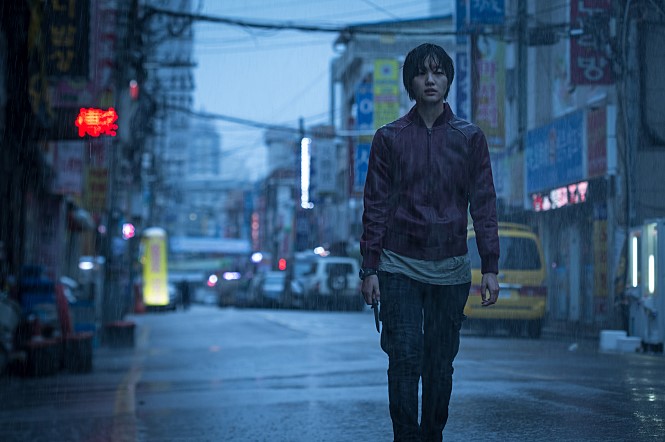
coinlockergirl02South Korean film “Coin Locker Girl”, which was released in South Korea as “China Town” a couple of weeks ago and will soon be shown at the upcoming Cannes International Film Festival, applies one fresh setting on its genre conventions. Although the movie is essentially a typical South Korean crime noir film, the story looks different while being more interesting thanks to its atypical premise, and it is supported well by two good performances functioning as a compelling emotional center to hold our attention amid its grim, violent mood.

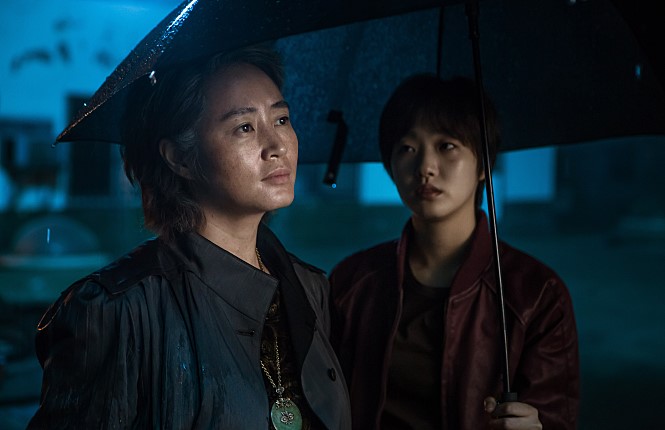
Right from when she was born, Il-yeong (Kim Go-eun, who was wonderful as a teenager girl who becomes an object of desire and inspiration for the artist hero in “A Muse” (2012)), had no one to take care of her. Not long after her birth, her mother abandoned her in one of the coin rockers in the Incheon subway station, and she was found by a bunch of beggars living in the station. After several years of growing up among the beggars who raised her, she was taken to Mom (Kim Hye-soo) along with a number of homeless kids, and they soon began to work for Mom’s crime organization which is mainly operated in the Chinatown area of Incheon.

Another several years have passed, and Mom is still a powerful crime boss in her area while Il-yeong and others remain to be under her command. Their main business is handling illegal immigrants from China, but they are also involved in loansharking business, and Mom does not hesitate at all whenever it looks like something should be done to some of her pathetic debtors. Although she may look like a mere grown-up tomboy, Il-yeong can be both tough and ruthless as Mom’s top lieutenant, and she is surely not someone you can mess with, as reflected by one violent scene where a rude debtor makes a fatal mistake of underestimating her. In case of hopeless debtors beyond the possibility of redemption, Woo-gon (Eom Tae-goo), Hong-joo (Cho Hyun-chul), and other gang members make it sure that these debtors pay off their debts through a merciless measure, and we see how they do their grisly job swiftly as ordered by their boss.

coinlockergirl04Il-yeong, Woo-gon, Hong-joo, and Song (Lee Soo-kyeong) are more or less than Mom’s loyal children in her organization, and they and Mom come to us as a sort of alternative criminal family. As your typical elusive crime boss, Mom seldom lets others around her know what she feels or thinks behind her steely façade, but it is clear that she is a woman who has probably survived for many years through her strength and will. It can be said that Mom sees a lot of herself from Il-yeong, but Mom remains aloof even when she shares a private moment with Il-yeong, who also has her own private feelings but would rather keep them to herself.

On one day, Il-yeong visits an apartment belonging to one of Mom’s long-time debtors, and that is how she happens to encounter Seok-hyeon (Park Bo-geom), the debtor’s young son who has no idea on what kind of serious trouble his father put him into. Their first encounter is not ended well, but it seems Seok-hyeon’s innocent decency touches somewhere inside the tarnished heart of Il-yeong, who has never experienced such warm, direct kindness like that in her whole life. Diligently working as a cook in some fancy restaurant, Seok-hyeon is always hopeful and optimistic despite his difficult daily life, and Il-yeong begins to show her gentler sides as she gets to know a bit more about him.

Not so surprisingly, there eventually comes a heartless moment of harsh reality for both of them, and that leads to a conflict which is going to shake up the world of Mom and Il-yeong and others. After making a certain choice at the crucial point, Il-yeong soon finds herself running away from Mom and other shady denizens of her underworld including vile ex-cop Tak (Jo Bok-rae), and Mom is ready for whatever she should do in her position – and whatever will happen as a consequence in the end.

coinlockergirl03This is the first feature film made by the director/writer Han Jun-hee, who did a competent job of handling story and characters while giving some notable stylish touches to his debut work. There is always that grey, melancholic sense of fatality surrounding the characters on the screen, and the seedy sides of their lowlife environment feel palpable and authentic in every scene. While it is melodramatic as expected, the movie is relatively more restrained in its dry, gritty presentation of violence, and the complex emotional relationship between its two heroines makes the film look quite distinctive compared with many recent South Korean crime noir films usually centered on male characters.

As the center of the film, Kim Hye-soo and Kim Go-eun ably carry their movie in their effective performances complementing each other. While Kim Hye-soo has a juicier role in comparison, Kim Go-eun is also dependable as a young resilient woman who comes to rebel against her mentor/mother figure for survival, and the movie is always more engaging whenever these two talented actresses interact with each other on the screen. Most of the supporting performers in the film are also cast well in their respective roles, and the special mention must go to young actor Kim Soo-An, who holds her own place as young Il-yeong during the prologue part.

“Coin Locker Girl” is not entirely without flaws, and some of them are glaring at times. Seok-hyeon is more like a plot device than a character, and the same thing can be said about a number of functional supporting characters in the film. Although the narrative pace is maintained well, the plot is less satisfying at several points while leaving some blanks to be filled, and I have a feeling that the movie could have done more with its interesting characters. In spite of such imperfections, “Coin Locker Girl” is still an entertaining variation of familiar genre conventions, and it does feel like a fresh air breathed into its genre. In its mean world, anyone must be tough to survive, and it surely shows that ladies can be as tough and interesting as guys.

coinlockergirl01

Posted in Movies | Tagged , , | 1 Comment

Headhunters (2011) ☆☆☆1/2(3.5/4) : When a hunter gets himself hunted

headhunters03Norwegian film “Headhunters” is a tense, exciting thriller movie which will grab you tightly through its many gripping moments of pure fun and suspense. The movie is usually one or two steps ahead of us as relentlessly driven by its devious plot, and we come to keep wondering what will be its next move, while being involved a lot in what is being at stake in the story. There will eventually be only one possible outcome at the end of the deadly cat-and-mouse game between its two main characters, and we are well aware of that either of them is capable of turning the table at any point.

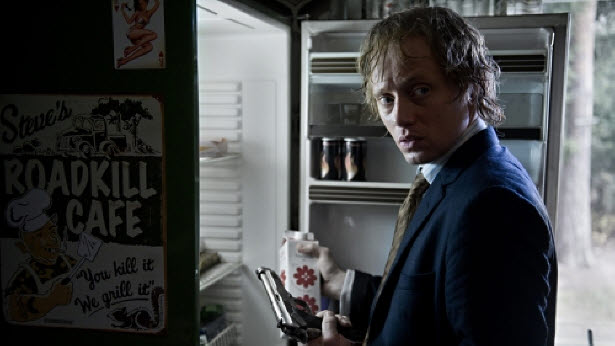
On the surface, Roger Brown (Aksel Hennie) seems to have everything he wants in his life. He works in some respectable headhunting company, and he has established considerable professional reputation as a resourceful headhunter very good at getting right persons of talents his company’s clients are looking for. He also has a sexy and beautiful wife named Diana (Synnøve Macody Lund), and he has done everything to give his wife a comfortable and luxurious environment for their married life. They are living in a very expensive modern house, and he constantly lavishes pricey gifts on her even though he has already spent too much.

That is the main reason why he has another job to earn extra money. The people to be evaluated or scouted by him are usually affluent guys who may have at least one valuable artwork in their residences, and it is pretty easy for Roger to extract needed information from his potential targets during his seemingly mundane interviews with them. Once everything is ready for his theft, Roger quickly but carefully does his job as assisted by his accomplice Ove (Eivind Sander), a surveillance company employee who can take care of security system during Roger’s operation.

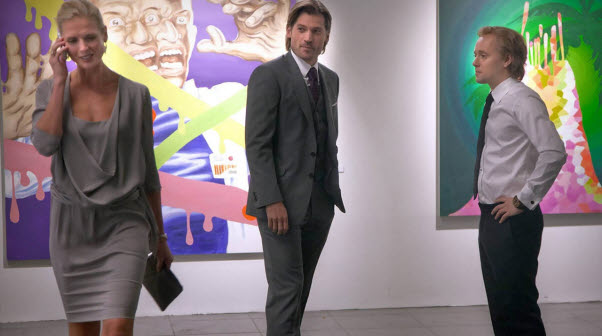
headhunters01However, this criminal part-time job is still not enough for covering the mounting deficit he has been hiding from his wife, and then there comes a big, lucrative chance he cannot possibly ignore. When he comes to an evening event held at Diana’s posh modern art gallery, she introduces him to Clas Greve (Nikolaj Coster-Waldau), a Danish guy who recently comes to Norway for his family matter. Through Diana, Roger learns that there is an invaluable Rubens painting in the house of Clas’ deceased Norwegian grandmother, and that certainly looks like a golden opportunity to solve Roger’s ongoing financial problem once for all.

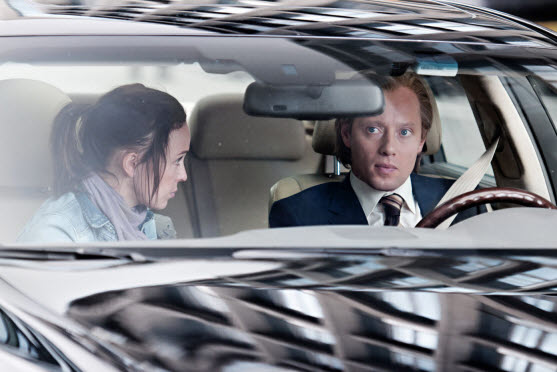
And Clas approaches to Roger more actively than expected. It turns out that Clas is interested in getting hired by a certain technology company which is incidentally Roger’s current client. While getting to know everything he needs from Clas through their meeting, Roger sees there is no problem with that at all. Clas’ previous position was the head of development department in another well-known company in the same industry, and he is a talented guy with quite an impressive resume. Besides having lots of experience with tracking technology, he was an exemplary member of a special military unit specializing in tracking, and one scene implies that the cutthroat world of corporate business has nothing on whatever he experienced during his tough military years.

It is clear that Clas is a target who must not be underestimated, but then Roger learns something about his wife by coincidence, and that unsettles him a lot even though he has believed for a long time that Diana lives with him just because of the luxury provided by him. As a man with deep personal complex on height, he does not think Diana loves a short guy like him even without money and comfort, and that is probably why he does not mind having an affair with Lotte (Julie Ølgaard), his mistress who has recently become more burdensome to him than before.

headhunters02

Lest you should think I told you too much about the movie, I must point out that I have not even delved into its main parts yet. All I can tell you is that things will become quite messy and complicated for Roger especially after he makes a certain choice at some point, and what follows after that is the series of heart-stopping moments crackling with accumulating tension and dread on the screen. Tracked down by his opponent minute by minute, Roger must find a way to get out of his nightmarish peril by any means necessary, and there is a particularly memorable moment in which there is only one way for him to evade his opponent at a rural farm where he goes to hide. It is definitely something any of us is not very willing to do, but he follows the inexorable logic of his urgent circumstance without any hesitation, and he surely does it well as you will see.

“Headhuters” is based on Jo Nesbø’s novel with the same name. I have not read it yet, but I can say that the adapted screenplay by Lars Gudmestad and Ulf Rysberg functions well as a solid basis for the taut, efficient direction by the director Morten Tyldum, who recently got more recognition along with a Best Director Oscar nomination through his next film “The Imitation Game” (2014). This is a slick, handsome movie with good mood and commendable performances, and it is nothing short of exhilarating to see how everything in the story culminates to the neat, satisfying conclusion accompanied with a suitable finishing touch.

I watched “Headhunters” for the first time around early 2012, and, though I did not write the review at that time, I mentioned it again later as one of the best thriller films I watched in that year. Although the recent viewing of the film was understandably less gripping, I could still have lots of fun and thrill with its highlights, and I appreciated again how its plot fabulously works at its every tricky turn. The movie is a first-rate thriller driven by good story and characterization as well as admirable filmmaking skills, and you will not be disappointed at all with this terrific entertainment.

headhunters06

Posted in Movies | Tagged , , , , | 1 Comment

Last Days in Vietnam (2014) ☆☆☆1/2(3.5/4): The last chapter of the Vietnam War

lastdaysinvietnam05

Looking closer into the last chapter of the Vietnam War, Oscar-nominated documentary “Last Days in Vietnam”, which was broadcast on PBS in last week, gives us a riveting tale which tells and shows more of what happened during those chaotic and turbulent days before the Fall of Saigon on April 30th, 1975. This is surely a very compelling documentary film to watch, and it also feels all the more resonant mainly because America has been currently going through the consequences of another war as misguided and disastrous as the Vietnam War.

After the First Indochina War (1946-1954) was ended with North Vietnam’s victory over France in 1954, the Second Indochina War, more commonly called the Vietnam War, began in the next year between North Vietnam and South Vietnam. As a part of its Cold War strategy, the US government naturally supported South Vietnam to prevent the spread of communism around the Indochina area, and its involvement escalated especially after the Gulf of Tonkin incident in 1964. The US government continued to send more troops and armaments to Vietnam over the following years, but North Vietnam remained persistent as ever, and American people became less supportive as they began to see that their government should have not involved in this war from the very beginning.

The US government began to look for a less humiliating way to step out of this long, torturous war which had given it nothing but enormous loss and damage, and that eventually led to the Paris Peace Accords in 1973, which was, as one of the interviewees in the documentary wryly points out, a “masterpiece of ambiguity”. Through the careful negotiations done by the Nixon administration and Secretary of State Henry Kissinger, North Vietnam and South Vietnam agreed on the cease-fire which would be followed by the gradual withdrawal of the US troops from Vietnam, but the situation was a lot less stable than it looked on the surface. The cease-fire could be broken at any chance, and the US government certainly did not want to get involved into another war again, though the Nixon administration promised to support South Vietnam in case of emergency.

lastdaysinvietnam03

North Vietnam initially hesitated to attack South Vietnam because President Richard Nixon might respond with total war, so things seemed to be all right in Vietnam for a while, but then there came an abrupt change in Washington D.C. Nixon resigned due to the Watergate scandal in August 1974. North Vietnam wasted no time in grabbing its chance; it commenced the invasion into South Vietnam in March 1975, and South Vietnam got rapidly crumbled like a house of cards as the North Vietnam forces continued to occupy its main areas and cities one by one as ominously reflected by the occasional map scenes in the film.

From Henry Kissinger and Ron Nessen, who was the White House Press Secretary for President Gerald Ford, we hear about how the US government was as helpless as South Vietnam in this unstoppable emergency. President Ford tried hard to get the aid of 722 million dollar which might save South Vietnam, but the anti-war sentiment was prevalent in the Congress around that point. Regardless of their political inclination, none of congressmen was willing to vote for that aid mainly because they and their American people had been tired of the war and its devastating outcomes, and their adamant opposition frustrated Ford and his people a lot as it became more and more apparent that the end was really coming to South Vietnam.

Although many people in the US Embassy clearly perceived in advance that they had to start the evacuation as soon as possible, Graham Martin, the US Ambassador to South Vietnam, was reluctant about that due to his serious misjudgment on the ongoing circumstance. Even when the North Vietnamese troops began to surround Saigon step by step with no sign of cease, he still believed that there could be a way to save South Vietnam, but then he belatedly realized later how much close the danger was to him and other Americans in Saigon – and thousands of South Vietnamese associated with them.

lastdaysinvietnam02

While Ambassador Martin hesitated on evacuation, “black ops” were already started behind his back. US Army Captain Stuart Herrington and other people in the US Embassy frequently slipped their South Vietnamese friends into cargo planes leaving for Philippine, and we hear about a number of episodes on how they helped several South Vietnamese officials and military officers leave the country along with their families. This covert process was continued for a while, but then the airport near Saigon was heavily attacked by North Vietnam during the early morning of April 29th, and the city was quickly thrown into panic as many of its citizens tried to escape by any means necessary. Lots of people gathered around the US Embassy, and some of them managed to get inside it, but they could only hope that they would be lucky enough to be evacuated along with Americans.

As explained in details, there were initially four possible options for the evacuation plan, but they had to choose the least favorable one which is not so recommendable unless it is really, really urgent. A bunch of helicopters had to fly back and forth between the US Embassy building and the US navy ships waiting on the sea outside Saigon, and there were only around 24 hours left for them. Refusing to go first, Ambassador Martin allowed more chances for many Vietnamese to be evacuated, and other US Embassy people also tried their best, but, sadly, they eventually had to accept that they could not help all of these desperate refugees. Herrington, who was one of the few remaining Americans during the final hours, recollects when he had no choice but to lie to the people he and his colleagues would abandon, and you can sense from his voice how that regretful but necessary deed still haunts him even after many years.

The director Rory Kennedy, who is the youngest daughter of Robert F. Kennedy, did a terrific job of generating a gripping narrative through the deft mix of archival footage and interview clips. It is fascinating to hear directly from a group of American and Vietnamese interviewees who were at the center of the growing chaos in Saigon, and their tales become more vivid as we watch many striking images presented through the archival footage from various sources. We see a number of photos which palpably capture the sense of urgency and desperation around the US Embassy during its last days, and we also learn that a certain famous photo was actually taken at the other spot in the city, not the US Embassy as widely believed. At one point, we get a sad sight of big ships full of refugees, and the fact that these desperate people had no option besides waiting for help makes it look a lot more tragic.

lastdaysinvietnam01One of the most memorable parts in the documentary is about the USS Kirk, a US navy ship which happened to function as a landing spot for many helicopters fleeing from the country with lots of refugees. Because the USS Kirk was a small ship with only one landing space, its crew had to push each helicopter overboard as soon as possible once it served its purpose. In one particular case, the helicopter turned out to be too big to land on the ship, but its pilot tried a daring way to solve his difficult situation, and this unbelievably dramatic moment almost feels like a scene from Hollywood action movie (and nobody got hurt, by the way).

“Last Days in Vietnam” is both informative and revealing in its calm but ultimately powerful presentation of a historical moment and the people inside its frustrating turmoil, and we come to see how desperate it was for many people during that time – and how messy the Vietnam War was from the beginning to the end. A sad thing is, as many of you know, America has not learned much from that.

 Sidenote: The “American Experience” version broadcast on PBS is around 15 minutes longer than the theatrical version. The additional scenes are mainly involved with another evacuation in Can Tho, which was led by Consul General Francis Terry McNamara. This part feels redundant at least in my opinion, and I see why they did not include it in the theatrical version, but it does not hurt the overall picture.

lastdaysinvietnam04

Posted in Movies | Tagged , | 2 Comments

Dear White People (2014) ☆☆☆(3/4) : A witty college comedy on race and identity

dearwhitepeople01
“Dear White People” is a witty college comedy ready to talk openly about its rather sensitive social subject which, to be frank with you, I am not that familiar with. While there are a number of scenes I had to watch again for fully understanding the humor and insights inside them (it took some time for me to digest the meaning of ‘oofta’, for instance), I was frequently amused by its sharp sense of humor, and I was engaged enough to care about its young, smart African American characters who still have more to learn about what they want to be – or who they really are.

They are all the students of Winchester University, a prestigious institution filled with the regal aura you can sense from any Ivy League school. In the campus predominantly Caucasian, our young characters certainly belong to a minority group, and one of the residence halls in the campus, Armstrong-Parker House, has been mainly for African American students like them, though that trend has recently become a bit flexible thanks to the Randomization of Housing Act initiated by President Hutchinson (Peter Syvertsen).

While Troy Fairbanks (Brandon Bell), the current head of Armstrong-Parker House, does not see any problem with that, Samantha “Sam” White (Tessa Thompson), a student of mixed race who is very outspoken about her opinions and thoughts, thinks differently. She has been doing a campus radio show named “Dear White People”, and she pulls no punch during her radio show as throwing acerbic commentaries on Caucasian people’s many incorrect or misguided attitudes toward her and her fellow African Americans. When one caller asks how she would feel if someone started “Dear Black People”, Sam replies with a snappy answer which contains some biting truth about the American medias, and you will see that you are watching a smart, intelligent film which does not hesitate from anything in its open talks on race and racism.

dearwhitepeople04When Sam unexpectedly defeats Troy, who is incidentally her ex-boyfriend, in another election for the head of their house, she and her radio show get more attention, and that becomes a major problem for not only Troy but also Colandrea “Coco” Conners (Teyonah Parris), a sassy girl who has been trying to get the attention of a visiting reality TV show producer. While she is not so pleased when the producer, who is an African American guy, wrongly labels her as a girl from ‘the hood’, Coco is willing to go along with whatever she is expected to look like by others, and she begins to take a more direct step to get more attention like Sam, though it must be said that they are quite different in their respective approaches.

In case of Troy, losing the election makes him think more about where his life is being directed to. He also has to deal with his stern father, who is none other than the Dean of his university. While not very happy about his son’s defeat in the election, Dean Fairbanks (Dennis Haysbert, who looks both smarmy and authoritative with his thick, rigid voice) sees a possible trouble from Sam, who promises to the students of Armstrong-Parker House that she will “bring black back to Winchester”. As a man who knows well how the system works, Fairbanks firmly believes that he and his son must play along with it, and Sam is surely someone to be taken care of in his viewpoint – especially when the university desperately needs big financial supports from its rich backers who will not ignore any racial trouble in the campus.

And there is Lionel Higgins (Tyler James Williams, who was wonderful in TV sitcom series “Everybody Hates Chris”), a shy, quiet lad who is my favorite character in the film. While he instantly draws our attention with his impressively bushy hairdo, Lionel is a social wallflower who does not get along with others much, and being an African American gay male makes him more insecure and uncertain about himself because that makes him a sort of double minority member. At one point, he imagines himself being in one group and then the other group, but then he soon comes back to reality as reminded again that he is still a loner drifted around the campus. None the less, he eventually finds his starting place through a well-regarded university newspaper which nobody seems to read, and he even comes across the possibility of romantic relationship in that process.

dearwhitepeople02

While his debut work is reminiscent of other similar college movies such as John Singleton’s “Higher Learning” (1995), the first-time director/screenplay writer Justin Simien has his own story to tell, and he effectively presents it with confidence as a talented filmmaker. Many key scenes in his film show thoughtful scene compositions and camera angles to be appreciated; watching one conversation scene between Coco and the reality TV show producer, I noticed its interesting way of handling indirect two-shot, and I was also amused later by one particular shot which somehow took me back to one of the memorable shots in Stanley Kubrick’s “The Shining” (1980).

The movie flows freely along with its various characters while observing the shifting dynamics between them, and that is not so far from many works by Robert Altman (it slyly recognizes that aspect at one point, by the way). The dialogues are clever and funny in precise delivery (my favorite line: “You’re more Banksy than Barack.”), and Kathryn Bostic’s music, which is adapted from many familiar classical music pieces, cheerfully enhances the comic moments in the film.

Simien’s screenplay gradually reveals the main characters’ complex sides as it is apparent that nothing is simple in their attempts to define themselves in terms of race and other matters. While raising race issues together with the members of Black Student Union, Sam also becomes attracted to a nice Caucasian student named Gabe (Justin Dobies), and she finds herself worrying about how that will make her look in front of her colleagues. It also turns out that Troy has his own private things he would rather keep to himself, and we get a funny awkward moment when Lionel happens to witness one of Troy’s different sides.

dearwhitepeople03As announced in the prologue part, everything finally comes together when a very misguided fraternity party is held by Kurt (Kyle Gallner) and his Caucasian staff members of Pastiches, a popular satirical magazine in the campus. Kurt, who is also the son of President Hutchinson, initially conceived this event as a humorous response to Sam’s radio show, but this doofus and his dim cronies really have no idea on how wrong his plan can be, let alone how unfunny he actually is in his attempts to be funny and daring. When you make jokes about someone with power and privilege, that can be pretty funny, but it is not so funny at all when you make jokes about someone below you.

Not so surprisingly, Kurt’s party becomes quite offensive with the guests who are disturbingly oblivious to how racist they look in their costumes and make-ups. You may think this part looks too absurd, but then the photos shown during the end credits of the movie will show you how often such despicable events like that really happened around American universities during recent years. That is more than enough for us to be reminded that racism is still a problem to talk and discuss about in the American society, and the movie makes a good argument for that around its ending.

“Dear White People” received the U.S. Dramatic Special Jury Award for Breakthrough Talent at the Sundance Film Festival in last year, and it also received Best First Screenplay prize at the Independent Spirit Awards early in this year. Although I observed it from the distance as a foreign audience outside US and I might fail to notice some of its specific details, but it works as an enjoyable satire with recognizable human behaviors while supported by the lively ensemble performance from its cast, and I was personally tickled at times by its numerous movie references. After all, not many comedy movies can toy with both “Coming to America” (1988) and “The Birth of a Nation” (1915), you know.

dearwhitepeople05

Posted in Movies | Tagged , , , , | 1 Comment